Pulitzer Prize Board 2023-2024
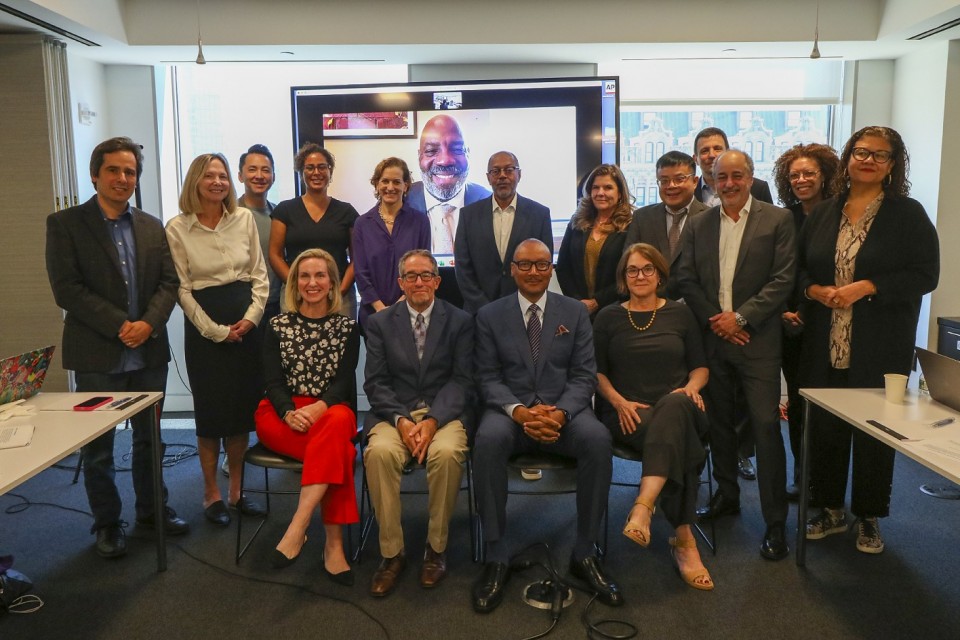
front row (sitting) left to right: E. Ramshaw, N. Brown, T. Shelby, M. Miller; back row left to right: C. Lozada, N. Barnes, V. T. Nguyen, K. Lytle Hernández, A. Applebaum, J. Cobb (on screen; attending virtually), K. Merida, N. Carroll, S. Chan, D. Remnick (slightly behind S. Chan), G. Escobar, G. Thompson (slightly behind G. Escobar) and E. Alexander (absent: M. Shafik). (Photo by Jose R. Lopez)

The Trustees of The Andrew W. Mellon Foundation have elected Elizabeth Alexander to be the Foundation’s next President, effective March 2018. Alexander will succeed Earl Lewis, who has served as President since 2013.
Alexander, a renowned writer, poet, and scholar, is recognized as one of the nation’s leading voices in modern literature and a bold visionary in the academy. Over the course of a distinguished academic and artistic career, she has developed a number of complex, multi-arts and multi-disciplinary teams, departments and partnerships, and dedicated herself consistently to creating, building and sustaining highly successful institutions – from the Poetry Center at Smith College, to a major rebuilding of the African American Studies department at Yale University, from the poetry non-profit Cave Canem, to the Ford Foundation’s programs in journalism, arts and culture.
“The Mellon Foundation is dedicated to the enrichment of the arts and humanities, both inside and outside of colleges and universities; these practice areas are fundamental to strengthening not only our learning institutions, but also the human spirit,” said Danielle Allen, Chair of the Mellon Foundation Board. “Through her work as a professor and mentor, Elizabeth knows the academic system well, and as an architect of interdisciplinary programs, she has deep experience in cultivating partnerships that extend and amplify creative vision. A poet who brings an artist’s forward-looking energy to institutional purpose, Elizabeth is the right person for our times as the Foundation seeks to widen the community of stakeholders committed to the arts and humanities and to increase the resources dedicated to this work.”
The Mellon Foundation, the nation’s most generous and active supporter of the humanities, is committed to five core program areas: higher education and scholarship in the humanities; arts and cultural heritage; diversity; scholarly communications; and international higher education and strategic projects. The Foundation believes that the health of arts and humanities is critical to the success of higher education, to the human spirit and societal well-being, and to civic preparation. The Foundation seeks to broaden the role the humanities play in education, innovation, and civic discourse, by providing grants and strategic guidance to support educational and cultural institutions, research, and public humanities engagements.
“I have lived my entire life with art, culture, and scholarship as companion, guide, and discipline,” said Alexander. “I am guided by the justice values of increasing access to the power of higher education to open and strengthen minds, encourage human exchange, and thus transform lives. I am deeply honored to have been selected to lead Mellon, an institution that has been devoted to these areas across its history, and to have been called to the crucial work of building community within and across discipline and institution. The humanities show us deeply who we are and what it means to move through life by the light of cultural vision. I am excited for the work ahead of elevating the truth, beauty and rigor of the arts and higher learning and making them more accessible to all.”
Most recently, Alexander served as the Wun Tsun Tam Mellon Professor in the Humanities in the Department of English and Comparative Literature at Columbia University. Prior to assuming her position, she served as the Director of Creativity and Free Expression at the Ford Foundation.
While at the Ford Foundation, Alexander co-designed the Art for Justice Fund, a $100 million fund seeded by philanthropist Agnes Gund to transform the criminal justice system and all of its inequities through art and advocacy.
“Elizabeth is one of the brightest lights in the academy and a remarkable artist. She made an invaluable contribution to the arts program at Ford and I’m confident that she will be a great leader of the Mellon Foundation,” said Darren Walker, President of the Ford Foundation.
Alexander spent 15 years on the faculty of Yale University, beginning in 2000. She was appointed the inaugural Frederick Iseman Professor of Poetry in 2015, and served as the Thomas E. Donnelly Professor of African American Studies and as the Chair of the African American Studies Department. Prior to those appointments, she was a professor in the departments of African American Studies, American Studies and English. She served as the inaugural Director of the Poetry Center at Smith College, and taught for seven years at the University of Chicago, where she won the Quantrell Award for Excellence in Undergraduate Teaching. She also taught at New York University’s Graduate Creative Writing Program.
“The unique qualities that make Elizabeth Alexander the creative and intellectual force we have been so proud to welcome to Columbia will undoubtedly serve her well in her new leadership role at the Mellon Foundation,” said Columbia President Lee C. Bollinger. “While our university community will miss the first-hand benefit of her relentless commitment to conveying and improving the human condition, we are delighted by her ascent in the philanthropic world and look forward to working with her in her new mission of scholarship and service.”
“She will be a passionate spokesperson for the ideas of Mellon and the humanities and the arts; this is what she does every day. She is visionary. She has the ability to embody and communicate the value of liberal education, the humanities and arts, access, diversity, and to do it with poetry,” said Peter Salovey, President of Yale University.
Said outgoing Mellon Foundation President Earl Lewis, who is returning to the academy, and launching a new initiative, The Center for Social Solutions, to focus efforts on three core areas of concern – race and diversity, water, and the future of work, “Elizabeth is a highly regarded academic thought leader and proven philanthropist; she is also someone I admire deeply. I wish her well as she assumes her new role as President of The Andrew W. Mellon Foundation. Her appointment comes at a time when the work of advancing the fundamentals of a prosperous democracy needs forward-looking leaders.”
Lewis delivered the Foundation’s first ever strategic plan and brought grant-making program areas into closer collaboration. Under his leadership, the Foundation brought new institutions into the fold and developed a broader network of partners across the many sectors of the higher education landscape. Lewis also launched significant Presidential initiatives including the Mellon Research Forum and the Our Compelling Interests book series focused on diversity and social connectedness.
In her new role, Alexander will lead the Mellon Foundation in drawing new partners in to support the arts and humanities and in refining the Foundation’s distinctive blend of a commitment to the arts and humanities for social purposes and for their own sake. She expects to build on the Foundation’s success to date in supporting diversification of educational, scholarly, and cultural organizations with an innovative focus on cultivating institutional capacity for inclusive leadership; and she seeks to widen and deepen the impact of the Foundation’s support for a vision of an inclusive America. Linking the Foundation’s international work to its core strategic priorities will also be an important objective.
Alexander is the author of the New York Times bestseller The Light of the World, a memoir on love and loss, which was a finalist in 2016 for both the Pulitzer Prize and the National Book Critics Circle Award. She is also the author of six books of poetry, including American Sublime, a finalist for the 2005 Pulitzer Prize, and two collections of essays – The Black Interior and Power and Possibility.
In 2009, Alexander wrote and recited an original poem, “Praise Song for the Day,” at the inauguration of President Barack Obama, becoming the fourth-ever poet to read at a presidential inauguration.
Additional works include: Praise Song for the Day; Crave Radiance: New and Selected Poems 1990-2010, winner of the Patterson Prize for Poetry and a nominee of the Hurston-Wright Foundation Award for Poetry; The Black Interior, a finalist for Best Non-Fiction, Hurston-Wright Foundation; and Body of Life. Her work has been translated into seven languages.
The recipient of numerous awards and fellowships, Alexander has been recognized with the Anisfield-Wolf Award for Lifetime Achievement in Poetry, the inaugural Jackson Prize for poetry, the John Simon Guggenheim Memorial Foundation Fellowship, a National Endowment for the Arts Fellowship, three Pushcart Prizes for Poetry, and the George Kent Award, presented by Gwendolyn Brooks.
Alexander is a Chancellor of the Academy of American Poets and serves on the Pulitzer Prize Board and on the Advisory Board of the African Poetry Book Foundation.
“Elizabeth Alexander is one of the most remarkable poets of her generation. Her extraordinary poems move across the registers from ode to elegy in contemplation of the many rich layers of African American history, and its many vital forms of community. Having been moved and consoled by her work as an artist, I am thrilled to see what her talents will bring about in her new role at the Mellon Foundation,” said Tracy K. Smith, U.S. Poet Laureate.
Alexander received her Ph.D. in English from the University of Pennsylvania. She earned her Master of Arts in English (Creative Writing) from Boston University, and a Bachelor of Arts in English from Yale University. She holds honorary doctorates from Haverford College, Simmons College, and the College of St. Benedict.
Alexander joined the Pulitzer Prize Board in 2016.
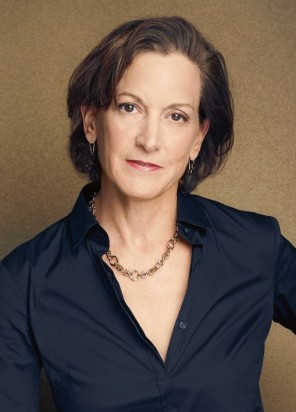
A prize-winning historian with a particular expertise in the history of communist and post-communist Europe, Anne Applebaum is the author of several books, including "Red Famine: Stalin’s War on Ukraine" (2017); "Iron Curtain: The Crushing of Eastern Europe" (2012); and "Gulag: A History" (2003), which won the 2004 Pulitzer Prize for General Nonfiction. Both "Gulag" and "Iron Curtain" were finalists for the National Book Award.
A columnist for The Washington Post for fifteen years, she is a former member of The Washington Post editorial board, a former deputy editor of the Spectator magazine in London, and a former Warsaw correspondent of The Economist magazine and the Independent newspaper. She also has written for the New York Review of Books, The Wall Street Journal and Foreign Affairs and currently holds the position of senior fellow at the SNF Agora Institute at Johns Hopkins University, where she co-leads ARENA, a research project on disinformation and 21st century propaganda.
Applebaum is a graduate of Yale University and received an M.Sc. in international relations from the London School of Economics. She also was a Marshall Scholar at Oxford University and holds honorary doctorates from Georgetown University’s School of Foreign Service and Kyiv Mohyla University.
Applebaum joined the Pulitzer Prize Board in 2021.
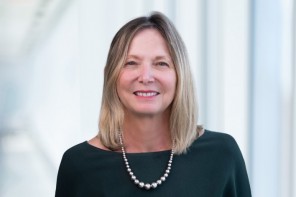
Nancy Barnes is the editor of The Boston Globe. A veteran journalist who has held the top job at news organizations across the country, Barnes has produced journalism of the highest caliber. Prior to joining the Globe, she was the SVP/News & Editorial Director of NPR from 2018 through 2022, where she led a team of more than 500 journalists and newsroom executives and oversaw NPR's journalism across platforms and around the world. Barnes has a proven track record of elevating metro news outlets to their highest potential. As SVP/News for Hearst Texas newspapers and Executive Editor of The Houston Chronicle from 2013 to 2018, the paper won its first Pulitzer Prize and earned three Pulitzer Finalist nods. As SVP & Editor of the Minneapolis Star Tribune from 2007 to 2013, she led the newsroom to win multiple national awards, including a Pulitzer Prize in local reporting. She is a past president of the News Leaders Association and a member of the Pulitzer Prize Board. A native of Massachusetts, she has an undergraduate degree from the University of Virginia and an MBA from the University of North Carolina.
Barnes joined the Pulitzer Prize Board in 2017.
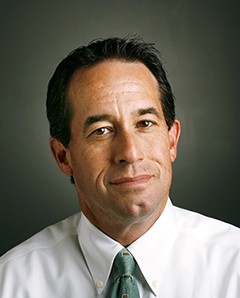
Neil Brown is the president of The Poynter Institute. He joined Poynter in September 2017, after serving as the editor and vice president of the Tampa Bay Times.
He was named editor of the Times (formerly the St. Petersburg Times) in May 2010, and in that capacity oversaw the journalism published in the Times, on its website tampabay.com, and in related products including a daily tabloid called tbt*.
During Brown's tenure leading the Times news staff, the paper won more national and state awards than at any time in its history, including six Pulitzer Prizes in the last eight years. He also launched PolitiFact.com, the fact-checking website that has been replicated nationally and inspired similar efforts worldwide.
Brown first joined Times Publishing in 1988, serving as managing editor in Washington, DC at Congressional Quarterly, a former Times affiliate company. He came to the Times in 1993 as world editor in charge of national and international news and then as managing editor and executive editor. He was named to the Times Publishing Company's board in 1997 as a director and was made a vice president in 2001.
A native of Chicago, Brown is a graduate of the University of Iowa, Phi Beta Kappa, with a bachelor's degree in political science and journalism. He began his newspaper career as a reporter and editor at The Miami Herald, covering government and politics in Miami and working in bureaus in Key West, Tallahassee and West Palm Beach.
In 2015, Brown was elected to the Pulitzer Prize Board. He previously served four years as a Pulitzer Prize nominating juror in journalism. He is past president of the Florida Society of News Editors and served six years on the Board of Directors of the American Society of News Editors. In 2010, he was inducted into the Hall of Fame at the University of Iowa School of Journalism.
Brown lives in St. Petersburg with his wife, journalist and author Gelareh Asayesh. They have two children.

Nicole Carroll joined the ASU Media Enterprise on May 1, 2023 as executive director of a new initiative focused on reimagining local journalism. Carroll is also a professor of practice in the Cronkite School of Journalism and Mass Communication. She is an alumna of the Cronkite School and an inductee to its Hall of Fame.
As the head of the ASU Local Journalism Initiative, Carroll will work with Arizona State University's Media Enterprise team, the Walter Cronkite School of Journalism and Mass Communication and other university departments to develop new strategies for reporting on local communities, as well as innovations and business models to help local news operations thrive. Carroll brings more than three decades of journalism experience and a track record of success in leading newsrooms at some of the nation's top publications.
ASU Media Enterprise is a nonprofit, nonpartisan collection of media outlets that empowers, engages and educates. The organization’s public service mission seeks to share stories that enlighten and enrich communities and focus on topics ranging from science and technology to the arts and social change.
As editor of The Arizona Republic, where she spent almost 20 years, Carroll led a project on the proposed U.S. border wall that won a 2018 Pulitzer Prize. In addition, she led breaking news coverage recognized as a Pulitzer Prize finalist in 2012 and 2014. Carroll was named editor-in-chief at USA Today in 2018. That same year, she was named the Benjamin C. Bradlee Editor of the Year by the National Press Foundation. USA Today and The Arizona Republic are owned by Gannett, Co., for which Carroll also served as president of news.
Carroll is also a member of the Pulitzer Prize Board (which she joined in 2018) and a four-time juror of the prestigious journalism prize.

Sewell Chan joined The Texas Tribune as its editor in chief in October 2021. Under his leadership, the nonprofit newsroom was awarded an Edward R. Murrow Award for general excellence among large digital news organizations and an Online Journalism Award for breaking news coverage of the 2022 school shooting in Uvalde.
Previously, Chan was a deputy managing editor and then the editorial page editor at the Los Angeles Times, where he oversaw work by Robert Greene on criminal justice reform that was awarded the Pulitzer Prize for Editorial Writing in 2021. Chan was also the lead author of an editorial reckoning with the newspaper’s failures on race, which the Society of Professional Journalists recognized with a special citation.
Chan worked at The New York Times from 2004 to 2018, as a metro reporter, Washington correspondent, deputy Op-Ed editor and international news editor. He was the founding bureau chief of The Times' local news blog.
Chan began his career as a local reporter at The Washington Post in 2000, where he covered city government, social services and public education.
A native of New York City, a child of immigrants, and the first in his family to graduate from college, Chan graduated from Harvard with a degree in social studies in 1998 and received a master’s in political science from Oxford, where he studied on a British Marshall Scholarship, in 2000. He is a graduate of the Executive Program in News Innovation and Leadership at the CUNY Craig Newmark Graduate School of Journalism. He is a member of PEN America, the Council on Foreign Relations and numerous journalism organizations. He also serves on the boards of Freedom House, the Columbia Journalism Review and the News Leaders Association.
Chan was a Pulitzer Prize juror in 2020 (Local Reporting) and jury chair in 2021 (International Reporting). He has also served as a judge for the Selden Ring Award for Investigative Reporting and the Los Angeles Times Book Prizes. An avid reader and museum-goer, he lives in Austin and enjoys photography and travel.
Chan joined the Pulitzer Prize Board in 2022.
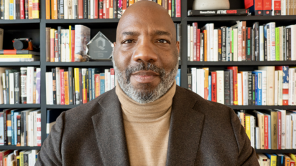
Jelani Cobb joined the Columbia Journalism School faculty in 2016 and became Dean in 2022. He has been a staff writer at The New Yorker since 2015. He received a Peabody Award for his 2020 PBS Frontline film Whose Vote Counts? and was a finalist for the Pulitzer Prize in Commentary in 2018. He has also been a political analyst for MSNBC since 2019.
He is the author of The Substance of Hope: Barack Obama and the Paradox of Progress and To the Break of Dawn: A Freestyle on the Hip Hop Aesthetic. He is the editor or co-editor of several volumes including The Matter of Black Lives, a collection of The New Yorker’s writings on race and The Essential Kerner Commission Report. He is producer or co-producer on a number of documentaries including Lincoln’s Dilemma, Obama: A More Perfect Union, Policing the Police and THE RIOT REPORT.
Dr. Cobb was educated at Jamaica High School in Queens, NY, Howard University, where he earned a B.A. in English, and Rutgers University, where he completed his M.A. and doctorate in American History in 2003. He is also a recipient of fellowships from the Ford Foundation, the Fulbright Foundation and the Shorenstein Center at Harvard University’s Kennedy School of Government. He currently serves on the Board of Directors of the American Journalism Project and the Board of Trustees of the New York Public Library. He received an Honorary Doctorate for the Advancement of Science and Art from Cooper Union in 2022, and an Honorary Doctorate of Letters from Rutgers University in 2024. York College / CUNY and Teachers College have honored Dr. Cobb with medals.
Dr. Cobb was elected to the American Academy of Arts & Sciences in 2023.
Cobb joined the Pulitzer Prize Board upon assuming his current role in 2022. The Dean serves as an ex officio/non-voting member of the Board for the duration of his, her or their appointment.
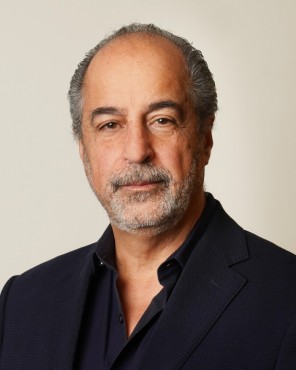
Gabriel Escobar is the editor and senior vice president of The Philadelphia Inquirer, which was founded in 1829 and is one of the oldest continuously published newspapers in the Western Hemisphere. The Philadelphia Inquirer LLC has multiple brand platforms, including Inquirer.com, newspapers, e-editions, apps, newsletters and live events, that reach more than 10 million people a month.
He spent 16 years at The Washington Post, as a reporter on the local and national staffs, a foreign correspondent based in South America and as city editor. At the Inquirer he has worked as managing editor, deputy managing editor for Metro and as assistant managing editor for news. Escobar also worked at The Hartford Courant, the Philadelphia Daily News and The Dallas Morning News, where he was an editorial writer and columnist.
Born in Bogota, Colombia and raised in New York City, Escobar has a B.A. in creative writing from Queens College, CUNY, and a master’s degree in journalism from the University of Maryland.
Escobar joined the Pulitzer Prize Board in 2021.

Carlos Lozada is an Opinion columnist and cohost of the weekly “Matter of Opinion” podcast for The New York Times, based in Washington, D.C.
What I Focus On
I write about politics, culture, history and policy, mainly through the prism of nonfiction books or other texts, like Supreme Court opinions, congressional investigations or commission reports. I’m especially intrigued by how public figures reveal themselves, intentionally or unwittingly, through their writings. When I write about campaign books, political biographies or Washington memoirs, people often say to me, "You read those books so we don’t have to!" True, you don’t have to — but trust me that there is much to learn in them. I try to avoid armchair opinion-mongering. Instead, I try to give a fair hearing to a variety of ideas and arguments and then help readers draw their own conclusions, as I draw mine.
My Background
Before joining The Times in 2022, I spent 17 years at the Washington Post, where I was the nonfiction book critic, Outlook editor, national security editor and economics editor. Previously, I was the managing editor of Foreign Policy magazine. Early in my career, I was a consultant at the Inter-American Development Bank and an analyst in the research department at the Federal Reserve Bank of Atlanta. I studied economics and political science at the University of Notre Dame and did graduate studies in public policy at Princeton University and in journalism at Columbia University. I was born in Lima, Peru, and became a U.S. citizen in 2014. I received the Pulitzer Prize for criticism in 2019 and currently serve on the Pulitzer Board.
Journalistic Ethics
I strive for fairness, honesty and depth. I believe that there is something called truth, and I do my best to approximate it. My overriding value is skepticism. Along with all Times journalists, I am committed to upholding the standards of integrity outlined in our Ethical Journalism Handbook.
Contact Me
You can reach me via email or on the platform formerly known as Twitter.
Email: [email protected]
X (Twitter): @CarlosNYT
Lozada joined the Pulitzer Prize Board in 2019.
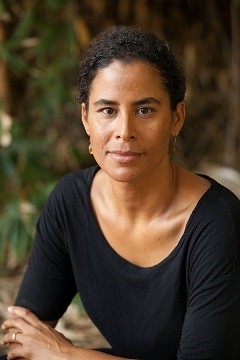
Kelly Lytle Hernández holds the Thomas E. Lifka Endowed Chair in History at UCLA. One of the nation’s leading experts on race, immigration, and mass incarceration, she is the author of the award-winning books Migra! A History of the U.S. Border Patrol (University of California Press, 2010), City of Inmates: Conquest, Rebellion, and the Rise of Human Caging in Los Angeles (University of North Carolina Press, 2017), and Bad Mexicans: Race, Empire, and Revolution in the Borderlands (Norton, 2022). She also leads the Million Dollar Hoods research initiative, which maps fiscal and human cost of mass incarceration in Los Angeles. For her historical and contemporary work, Professor Lytle Hernández was named a 2019 MacArthur “Genius” Fellow. She is also an elected member of the Society of American Historians, the American Academy of Arts and Sciences, and the Pulitzer Prize Board.
Lytle Hernández joined the Pulitzer Prize Board in 2020.

Kevin Merida is the former executive editor of the Los Angeles Times. He took the helm of the largest newsgathering organization in the West in June 2021 and oversaw the newsroom as well as Times Community News and Los Angeles Times en Español. He left The Times in January 2024.
As editor, Merida reorganized the newsroom, creating a successful Fast Break team of nearly three dozen journalists to quickly pounce on stories in order to give its digital editions a greater sense of urgency and scope. The Times in 2023 produced three of the nation’s Top 10 news stories, in terms of engagement, according to the technology firm Chartbeat.
He bolstered news and enterprise coverage in science, environment, entertainment and accountability journalism. He experimented with storytelling innovations to nudge the paper beyond its print roots, including forming a team of social media journalists, called the 404 by LA Times, and De Los, an online news vertical providing news and commentary to engage Latinos “through a shared sense of culture and identity.”
Merida also pushed for greater diversity throughout the newsroom and made key promotions and hires to its leadership as part of that mission.
During his tenure, The Times won three Pulitzer Prizes, including in 2023 for breaking news reporting for its coverage of a leaked audio recording that exposed L.A. City Council members making racist comments and plotting to consolidate power during the redistricting process.
Before joining The Times, Merida was a senior vice president at ESPN and editor in chief of the Undefeated, a multimedia platform that explored the intersections of race, sports and culture. Merida arrived at ESPN in November 2015 and launched the Undefeated in May 2016. Under his leadership, the Undefeated gradually expanded across Walt Disney Co. with a content portfolio that ranged from award-winning journalism to documentaries and television specials, from albums and music videos to live events, digital talk shows and two bestselling children’s books.
During his time at ESPN, he also oversaw the investigative/news enterprise unit, the television shows “E:60” and “Outside the Lines,” and chaired ESPN’s editorial board.
Before joining ESPN, Merida spent 22 years at the Washington Post as a congressional correspondent, national political reporter, longform feature writer, magazine columnist and senior editor in several roles. He led the national staff for four years during the Obama presidency and was managing editor overseeing news and features coverage for nearly three years. During his tenure as managing editor, he helped lead the Post to four Pulitzer Prizes, and the newspaper embarked on a digital transformation that made it one of the fastest growing news organizations in the country.
Prior to the Post, from 1983 to 1993, Merida worked at the Dallas Morning News as a special projects reporter, local political writer, national correspondent based in Washington, White House correspondent covering the George H.W. Bush presidency and assistant managing editor in charge of foreign and national news coverage. In 1990, Merida was part of a Morning News team that was a Pulitzer Prize finalist in explanatory journalism for a special report on the world’s “hidden wars.” Merida began his career at the Milwaukee Journal, where he worked from 1979 to 1983 as a general assignment reporter.
Merida is co-author of “Supreme Discomfort: The Divided Soul of Clarence Thomas” and the bestselling “Obama: The Historic Campaign in Photographs.” He is a contributor to and editor of the anthology, “Being a Black Man: At the Corner of Progress and Peril,” based on an award-winning Washington Post series he led.
Merida’s honors include being named Journalist of the Year in 2000 by the National Assn. of Black Journalists, receiving the Missouri Honors Medal for Distinguished Service in Journalism in 2018 and receiving NABJ’s Chuck Stone Lifetime Achievement Award in 2020. He is a 1979 graduate of Boston University and of the Summer Program for Minority Journalists at UC Berkeley.
He serves on the Pulitzer Prize Board, the Boston University Board of Trustees and the boards of the Kaiser Family Foundation and the Philip Merrill College of Journalism at the University of Maryland.
He lives in Los Angeles with his wife, award-winning writer and former Washington Post columnist Donna Britt. They have three sons: actor Darrell Britt-Gibson and screenwriter Justin Britt-Gibson, who also live in L.A., and podcast host and producer Skye Merida.
Merida joined the Pulitzer Prize Board in 2020.
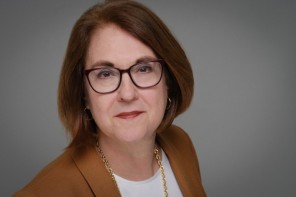
Marjorie Miller, previously vice president and global enterprise editor at The Associated Press, was named administrator of the Pulitzer Prizes after a broad search. The appointment, effective April 11, 2022, was announced by the Pulitzer Prize Board and by Lee C. Bollinger, then president of Columbia University, which is home to the administration of the prestigious prizes in journalism, letters, drama and music.
Miller has had a long and celebrated career in journalism. She was a correspondent for the Los Angeles Times in Latin America, the Middle East and Europe, before becoming Foreign Editor. Under her editorship, the paper won a Pulitzer Prize for Russia coverage and was a finalist for Iraq War coverage. Miller also wrote editorials on international affairs.
In 2010, Miller joined the AP in Mexico City as regional editor for Latin America and the Caribbean, where her staff won U.S. and international prizes for coverage of violence in Central America and Mexico. In 2015 she moved to New York to oversee enterprise and investigative projects in all formats, including work from Yemen that won the 2019 Pulitzer Prize for International Reporting.
Miller serves on the boards of the Overseas Press Club, the CUNY Craig Newmark Graduate School of Journalism Foundation and the Maria Moors Cabot Prizes.
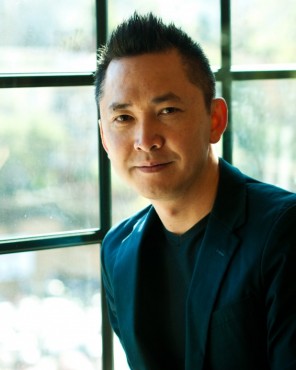
Viet Thanh Nguyen is a University Professor, Aerol Arnold Chair of English, and Professor of English, American Studies and Ethnicity, and Comparative Literature at the University of Southern California. He is the author of Race and Resistance: Literature and Politics in Asian America (Oxford University Press, 2002) and the novel The Sympathizer, from Grove/Atlantic (2015). The Sympathizer won the 2016 Pulitzer Prize for Fiction, the Dayton Literary Peace Prize, an Edgar Award for Best First Novel from the Mystery Writers of America, the First Novel Prize from the Center for Fiction, the Carnegie Medal for Excellence in Fiction from the American Library Association, le Prix du meilleur livre étranger (Best Foreign Book in France), a California Book Award, and the Asian/Pacific American Award for Literature in Fiction from the Asian/Pacific American Librarians Association. It was also a finalist for the PEN/Faulkner Award for Fiction and the PEN/Robert W. Bingham Prize for Debut Fiction. The novel made it to over thirty book-of-the-year lists, including The Guardian, The New York Times, The Wall Street Journal, Amazon.com, Slate.com, and The Washington Post. The foreign rights have been sold to twenty-seven countries.
He is also the author of Nothing Ever Dies: Vietnam and the Memory of War from Harvard University Press (2016, foreign rights to four countries), which is the critical bookend to a creative project whose fictional bookend is The Sympathizer. Nothing Ever Dies, a finalist for the National Book Award in nonfiction and the National Book Critics Circle Award in General Nonfiction, examines how the so-called Vietnam War has been remembered by many countries and people, from the US to Vietnam, Laos, Cambodia, and South Korea. Kirkus Reviews calls the book “a powerful reflection on how we choose to remember and forget.” It has won the the John G. Cawelti Award for Best Textbook/Primer from the Popular Culture Association/ American Culture Association and the Réné Wellek Prize for the Best Book in Comparative Literature from the American Comparative Literature Association. Foreign rights have been sold to four countries.
His current book is The Committed, the sequel to The Sympathizer.
Other books include The Refugees, a short story collection from Grove Press (2017, foreign rights to fourteen countries), and The Displaced: Refugee Writers on Refugee Lives, which he edited. He has written for The New York Times, Time, The Guardian, The Atlantic, and other venues. Along with Janet Hoskins, he co-edited Transpacific Studies: Framing an Emerging Field (University of Hawaii Press, 2014). His articles have appeared in numerous journals and books, including PMLA, American Literary History, Western American Literature, positions: east asia cultures critique, The New Centennial Review, Postmodern Culture, the Japanese Journal of American Studies, and Asian American Studies After Critical Mass. Many of his articles can be downloaded here. Most recently, he has also edited the Library of America volume for Maxine Hong Kingston, his former teacher.
He has been a fellow of the American Council of Learned Societies (2011-2012), the Radcliffe Institute for Advanced Study at Harvard (2008-2009) and the Fine Arts Work Center (2004-2005). He has also received residencies, fellowships, and grants from the Luce Foundation, the Mellon Foundation, the Asian Cultural Council, the James Irvine Foundation, the Huntington Library, the Djerassi Resident Artists Program, the Bread Loaf Writers’ Conference, Creative Capital and the Warhol Foundation. Most recently he has been the recipient of fellowships from the Guggenheim and MacArthur Foundations, appointed as a Chevalier de l’Ordre des Arts et des Lettres by the French Ministry of Culture, and received honorary doctorates from Uppsala University, Colgate University, and Franklin and Marshall College.
His teaching and service awards include the Mellon Mentoring Award for Faculty Mentoring Graduate Students, the Albert S. Raubenheimer Distinguished Junior Faculty Award for outstanding research, teaching and service, the General Education Teaching Award, and the Resident Faculty of the Year Award. Multimedia has been a key part of his teaching. In a recent course on the American War in Viet Nam, he and his students created An Other War Memorial, which won a grant from the Fund for Innovative Undergraduate Teaching and the USC Provost’s Prize for Teaching with Technology. It is also archived at the USC Library.
Nguyen joined the Pulitzer Prize Board in 2020.
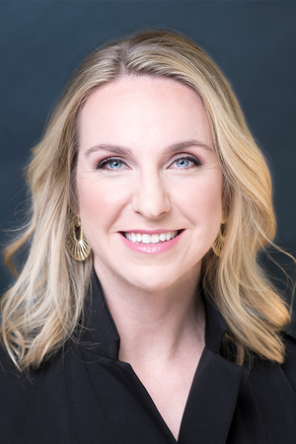
Emily Ramshaw is the co-founder and CEO of The 19th. She was previously editor-in-chief of The Texas Tribune, an award-winning nonpartisan digital news startup that now boasts the largest statehouse reporting bureau in the country and the nation’s most successful business model for local news. A Washington, D.C., native, Emily started her career at The Dallas Morning News. She is the youngest member of the board of the Pulitzer Prize. A graduate of Northwestern University, Emily lives with her husband and daughter in Austin.
Ramshaw joined the Pulitzer Prize Board in 2016.

David Remnick has been the editor of The New Yorker since 1998 and a staff writer since 1992. He has written hundreds of pieces for the magazine, including reporting from Russia, the Middle East, and Europe and Profiles of Barack Obama, Bill Clinton, Katharine Graham, Mike Tyson, Bruce Springsteen, Ralph Ellison, Philip Roth, Benjamin Netanyahu, Leonard Cohen, and Mavis Staples. He also serves as the host of the magazine’s national radio program and podcast, “The New Yorker Radio Hour.”
Remnick began his reporting career in 1982, as a staff writer at the Washington Post, where he covered stories for the Metro, Sports, and Style sections. In 1988, he started a four-year assignment as a Washington Post Moscow correspondent, an experience that formed the basis of his 1993 book, “Lenin’s Tomb: The Last Days of the Soviet Empire.” In 1994, “Lenin’s Tomb” received both the Pulitzer Prize for nonfiction and a George Polk Award for excellence in journalism.
Under Remnick’s leadership, The New Yorker has become the country’s most honored magazine. It has won more than fifty National Magazine Awards during his tenure, including multiple citations for general excellence. In 2016, The New Yorker became the first magazine to receive a Pulitzer Prize for its writing, and now has won six Pulitzers, including the gold medal for public service. Remnick was elected to the American Academy of Arts and Letters in 2016.
Remnick has written seven books: “Lenin’s Tomb,” “Resurrection: The Struggle for a New Russia,” “King of the World” (a biography of Muhammad Ali), and “The Bridge” (a biography of Barack Obama), along with “The Devil Problem,” “Reporting,” and “Holding the Note,” which are collections of some of his pieces from the magazine. He has also edited or co-edited many anthologies of New Yorker articles, including “The Matter of Black Lives,” “The Fragile Earth,” “Life Stories,” “Wonderful Town,” “The New Gilded Age,” “Fierce Pajamas,” “Disquiet, Please!,” and “Secret Ingredients.”
Remnick has taught at Princeton University, where he received his B.A., in 1981, and at Columbia University. He lives in New York with his wife, Esther Fein; they have three children, Alex, Noah, and Natasha.
Remnick joined the Pulitzer Prize Board in 2019.

Nemat (Minouche) Shafik became the 20th president of Columbia University on July 1, 2023. President Shafik is a distinguished economist who for more than three decades has served in senior leadership roles across a range of prominent international and academic institutions. She also currently holds the title of professor of international and public affairs at Columbia's School of International and Public Affairs.
Shafik was born in Alexandria, Egypt. When she was 4 years old, her family fled the country during the political and economic upheaval of the mid-1960s. Her father, a scientist, found work in the United States, where he had done his PhD. Shafik and her sister attended numerous schools in Florida, Georgia, and North Carolina, and she graduated summa cum laude and Phi Beta Kappa from the University of Massachusetts-Amherst with a Bachelor of Arts in economics and politics in 1983. She was awarded a Master of Science in economics from the London School of Economics and Political Science (LSE) in 1986, followed by Doctor of Philosophy in economics from St Antony's College, Oxford University, in 1989.
A Career in Global Development
Following her Oxford years, Shafik began her career at the World Bank. By age 36, she had become the bank’s youngest-ever vice president. During the early 2000s, she held academic appointments at the Wharton Business School of the University of Pennsylvania and the Economics Department at Georgetown University. In 2008, she was appointed Permanent Secretary of the U.K.’s Department for International Development, where she led an overhaul in British foreign aid. Next, she served as Deputy Managing Director of the International Monetary Fund and then as Deputy Governor of the Bank of England, where she sat on all the monetary, financial, and prudential policy committees and was responsible for a balance sheet of over £500 billion (equivalent of approximately $605 billion). In 2017, she returned to academia as president of the London School of Economics and Political Science.
Throughout her career, Shafik has been at the center of efforts—often during pivotal, high-stakes moments—to address some of the world’s most complex and disruptive challenges. At the World Bank, she worked on the institution’s first-ever report on the environment and later advised governments in Eastern Europe after the fall of the Berlin Wall. At the height of the “Make Poverty History” campaign, Shafik helped secure the UK’s commitment to giving 0.7% of GDP in aid and focused it on fighting poverty in the poorest countries in the world. She worked on both the European debt crisis and the Arab Spring while she was at the IMF. At the Bank of England, she led work on fighting misconduct in financial markets and was responsible for the contingency planning around the Brexit referendum. At LSE, she has encouraged academic work on how to rethink the social contract for the modern economy.
“I have had jobs that are about doing good, such as fighting poverty or leading educational institutions as well as jobs that are about preventing bad things from happening, like at the IMF and Bank of England,” Shafik has said of her career. “Both are vital if we are to make and secure progress for humanity.”
Editor, Author, and Scholar
Shafik has authored, edited, and co-authored a number of books and articles. In her writings and speeches, she has been clear eyed in how leading global institutions must transcend technocratic expertise to engage more fully with the people they serve. She has called for a better social contract to underpin our economic system, most notably in her recent book, What We Owe Each Other: A New Social Contract (2021, Princeton University Press), in which she challenges institutions and individuals to rethink how we can better support each other to thrive. In addition, she has written articles for a number of publications, including Oxford Economic Papers, Columbia Journal of World Business, The Middle East Journal, Journal of African Finance and Economic Development, World Development, and the Journal of Development Economics. Shafik serves or has previously served on numerous boards including as Deputy Chair of the Trustees of the British Museum, board member of the Supervisory Board of Siemens, the Bill and Melinda Gates Foundation the Council of the Institute for Fiscal Studies, and BRAC. In recognition of her public service, she was made a Dame Commander by Queen Elizabeth II in 2015 and a cross-bench peer in the House of Lords in 2020. She is also an Honorary Fellow of the British Academy, St Antony’s College at Oxford University, and a Fellow of the Academy of Social Sciences.
She was awarded Honorary Doctorates from the University of Warwick, the University of Reading, the University of Glasgow, and the American University in Beirut, and was selected “Woman of the Year” at the Global Leadership and Global Diversity awards in 2009. She also was named Forbes “100 Most Powerful Women” in 2015, “100 Women in Finance European Industry Leader” in 2018, and “100 Most Influential Africans” in 2021 by New African magazine.
She is married to Raffael Jovine, a molecular biologist, with whom she has two college-age children and three adult stepchildren.
President Shafik joined the Pulitzer Board upon assuming her current role in 2023. The president of Columbia University is a permanent voting member of the Pulitzer Board for the duration of his, her or their appointment.
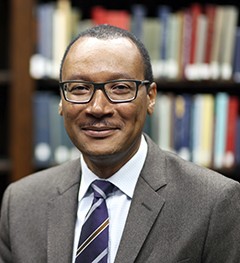
Tommie Shelby is an Africana studies scholar whose writings focus on racial and economic justice and on the history of black political thought. He is the Caldwell Titcomb Professor of African and African American Studies and of Philosophy at Harvard.
Shelby’s first book, "We Who Are Dark: The Philosophical Foundations of Black Solidarity" (2005), explores the relationship between race, identity, solidarity and justice through a philosophical reconsideration of leading African American thinkers from the era of slavery to the post-Jim Crow era. He coedited "Hip Hop and Philosophy: Rhyme 2 Reason" (2005), which brings the classic debates of Western philosophy to a general audience through the idiom of hip-hop culture, and "To Shape a New World: Essays on the Political Philosophy of Martin Luther King, Jr." (2018).
He is also the author of "Dark Ghettos: Injustice, Dissent, and Reform" (2016). Characterized by Columbia University philosopher Robert Gooding-Williams as "a major, groundbreaking contribution to both philosophical and public policy discourse about the ghetto poor," it received the 2016 Book Award from the North American Society for Social Philosophy.
Shelby’s numerous academic articles have appeared in journals such as Philosophy & Public Affairs, Ethics, Political Theory, Critical Inquiry, Du Bois Review and Daedalus. He has also written for The New York Times Book Review, Boston Review, The Root and The Chronicle of Higher Education. From 2006 to 2014, he was co-editor of Transition, a literary and cultural magazine with a focus on Africa and its Diaspora.
A native of Jacksonville, Fla., Shelby received his B.A. from Florida A&M University and Ph.D. from the University of Pittsburgh. He began his academic career as an assistant professor of philosophy at The Ohio State University. He has been on the faculty at Harvard since 2000.
Shelby is married to the writer and editor Jessie Scanlon. They live with their daughter and son in Cambridge, Mass.
Shelby joined the Pulitzer Prize Board in 2015.
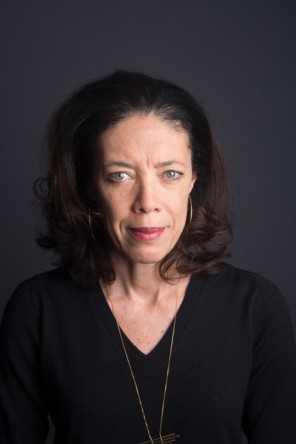
Ginger Thompson is ProPublica's chief of correspondents. A Pulitzer Prize winner, she previously spent 15 years at The New York Times as the Mexico City bureau chief and as an investigative reporter. Her work has exposed the consequences of Washington’s policies in Latin America, particularly policies involving immigration, political upheaval and the fight against drug cartels.
Thompson also served as a Latin America correspondent at The Baltimore Sun, where she co-wrote a series of stories about U.S. support for a secret Honduran military unit that kidnapped, tortured and murdered hundreds of suspected leftists; work that was a finalist for the Pulitzer Prize. She also parachuted into breaking news events across the region, including Cuba, Haiti and Venezuela.
Her work has won the Maria Moors Cabot Prize, the Selden Ring Award for investigative reporting, an InterAmerican Press Association Award, and an Overseas Press Club Award. She was part of a team of national reporters at The Times that was awarded a 2000 Pulitzer Prize for the series “How Race is Lived in America.” She was also part of a team of reporters at ProPublica whose coverage of the Trump Administration’s Zero Tolerance policy won numerous other awards, including a Polk Award, a Peabody Award, a Tobenkin Prize, and was a finalist for the Pulitzer Prize for Public Service.
Thompson graduated from Purdue University, where she was managing editor of the campus newspaper, The Exponent. She earned a Master of Public Policy from George Washington University, with a focus on human rights law.
Thompson joined the Pulitzer Prize Board in 2022.