Pulitzer Prize Board 1994-1995
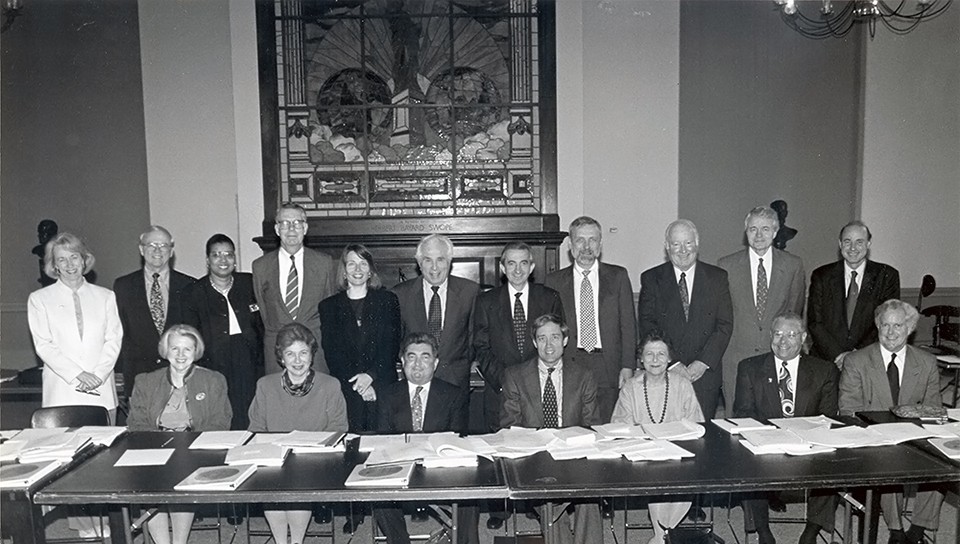
front row, left to right: S. Bok, J. Konner, B. Osborne, G. Rupp, M. Greenfield, J. Dotson, E. Seaton; back row, left to right:S. Rowe, J. Risser, M. Yarbrough, W. Rugaber, G. Overholser, S. Topping, L. Boccardi, J. Fuller, J. Driscoll, J. Carroll, P. Kann (absent from photo: H. Vendler)
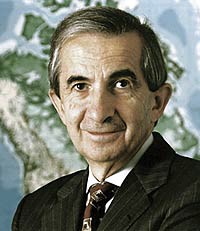
Louis D. Boccardi, president and chief executive officer of Associated Press, has been elected chair of the Pulitzer Prize Board. His selection was announced by President George Rupp. Columbia University awards the annual prizes on the board's recommendation.
Boccardi has been president and chief executive officer of Associated Press, the world's largest news organization, since 1985. Prior to assuming the presidency, he served one year as executive vice president and chief operating officer and 10 years as executive editor in charge of AP's news operations.
Born in New York City, Boccardi holds a B.A. degree from Fordham College and a master's degree in journalism from Columbia. He joined the AP as executive assistant to the general news editor in 1967 after eight years with New York newspapers, during which he rose to the position of assistant managing editor of the World-Telegram and Sun and its successor newspaper, The World Journal Tribune. He was appointed AP managing editor in 1969, executive editor in 1973 and vice president in 1975.
In 1990 Boccardi was elected a fellow of the Society of Professional Journalists, the highest honor SPJ awards journalists for public service. He has received the William Allen White Foundation Award for Journalistic Merit, the Overseas Press Club Lifetime Achievement Award, and the Columbia University Graduate School of Journalism Award and was elected a Distinguished Service Member of the American Society of Newspaper Editors. Boccardi and the AP were awarded the 2001 John Peter and Anna Catherine Zenger award for Freedom of the Press and the Public's Right to Know.
Boccardi is a member of the national advisory board of the Freedom Forum Center for Media Studies, the board of trustees of the Newseum, and the board of visitors of Columbia's Graduate School of Journalism, and is an honorary trustee of the William Allen White Foundation at the University of Kansas.
Elected to the Pulitzer Prize Board in 1994, Boccardi succeeds Edward Seaton, editor in chief of The Manhattan (Kan.) Mercury, who has retired from the board after having served as chair. Members of the board serve a maximum of nine years.
Columbia University press release published May 08, 2001
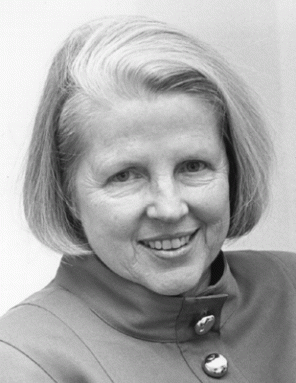
Sissela Bok, Senior Visiting Fellow, a writer and philosopher, received her B.A. and M.A. in psychology at the George Washington University in 1957 and 1958, and her Ph.D. in philosophy at Harvard University in 1970. She was formerly a Professor of Philosophy at Brandeis University. The third edition of her book “Lying: Moral Choice in Private and Public Life” (1978) was reissued in 1999 with a new preface. Other books include “Secrets: On the Ethics of Concealment and Revelation” (1982, 1989); “A Strategy for Peace: Human Values and the Threat of War” (1989); “Alva Myrdal: A Daughter’s Memoir” (1991); “Common Values” (1996, reissued in 2002 with a new preface); and “Mayhem: Violence as Public Entertainment” (1998). With John Behnke, Bok has co-edited “The Dilemmas of Euthanasia” (1975) and, with Daniel Callahan, “Ethics Teaching in Higher Education” (1980). With Gerald Dworkin and R. G. Frey, she has co-authored “Euthanasia and Physician-Assisted Suicide” (1998).
(courtesy of the Center for Population and Development Studies at the Harvard University T.H. Chan School of Public Health)
***
The election of writer and philosopher Sissela Bok to the Pulitzer Prize Board has been announced by Michael I. Sovern, president of Columbia University.
Dr. Bok's election fills a vacancy on the 17-member board created by the departure of Hanna Gray, president of the University of Chicago, who had completed eight years of service.
Dr. Bok has written extensively on issues of ethics and morality and is the author of the books "Lying: Moral Choice in Public and Private Life" and "Secrets: On the Ethics of Concealment and Revelation." She is co-editor of "The Dilemmas of Euthanasia" and "Ethics Teaching in Higher Education." Her biography of her mother, Alva Myrdal, the 1982 Nobel Peace Prize recipient, published in Sweden in 1987, is being translated into English. (Her father, Gunnar Myrdal, received the Nobel Memorial Prize in Economics in 1974. She holds a Ph.D. in philosophy from Harvard University and B.A. and M.A. degrees in psychology from George Washington University. She is an associate professor in philosophy at Brandeis University and has lectured frequently at Harvard and other universities. She is a member of the editorial boards of a number of professional journals. She is the recipient of several awards for her book "Lying" and of honorary doctorates from Mount Holyoke College and George Washington and Clark Universities.
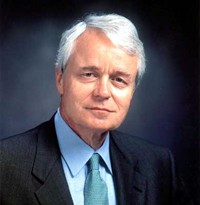
John S. Carroll, 60, has been editor and executive vice president of the Los Angeles Times since 2000 and vice president of Times Mirror since 1998.
Previously, he was editor of The Baltimore Sun and senior vice president of The Baltimore Sun Company for nine years. Prior to that he served as editor, vice president and executive vice president at the Lexington Herald-Leader.
The Rhode Island native spent two years in the military after earning a bachelor's degree in English literature from Haverford College. He later studied as a Nieman Fellow at Harvard University and as a Visiting Journalist Fellow at Oxford University, in the late 1980s.
His first reporting job was as staff reporter at the Providence Journal-Bulletin in 1963. He went on to become a reporter and later a foreign correspondent at The Baltimore Sun and worked as an editor at the Philadelphia Inquirer in the 1970s.
Named Editor of the Year by the National Press Foundation in 1998, Carroll also has a longtime affiliation with the American Society of Newspaper Editors, having served on the organization's board of directors and its Writing Awards Board.
Carroll was elected as a Pulitzer Prize Board member in 1994. Carroll has also served as a Pulitzer Prize juror.
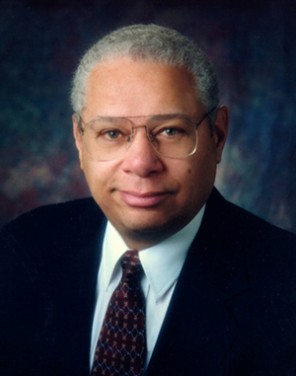
Prior to joining the Akron Beacon Journal, John Dotson was publisher of the Daily Camera in Boulder, Colo.
In prior positions, he was director of night operations at the Philadelphia Inquirer, transportation and circulation administration manager of the Philadelphia Daily News, and executive assistant to Philadelphia Newspapers, Inc., President Sam Keel. He also worked in several editorial departments of the Inquirer.
John joined PNI in 1983 after 17 years at Newsweek, where he held posts as Los Angeles bureau chief and senior editor/news editor in New York. He also worked at the Newark Evening News and Detroit Free Press.
As news editor at Newsweek, John coordinated the magazine's worldwide network of correspondents for seven years. He also handled Newsweek's logistical arrangements for the Republican and Democratic national conventions in 1976 and 1980.
He is a member of the board of visitors of the John S. Knight Fellowship Program, which offers working journalists a year's study at Stanford University in California. He also is a director of the Institute for Journalism Education, which runs several training programs for minority journalists, and is a member of the ANPA Minority Opportunity Committee. John also serves on the advisory boards for the schools of journalism at University of Colorado, University of North Carolina and University of Southern California.
In Boulder, he is chairman of the Boulder Chamber of Commerce's Economic Futures Panel. He also is a member o the development committee of the San Juan Family Learning Center, and agency devoted to aiding disadvantaged families in Boulder.
John is a graduate of Temple University in Philadelphia. He received an honorary doctorate from Temple in 1981. He is married and is the father of five.
(June 10, 1991)
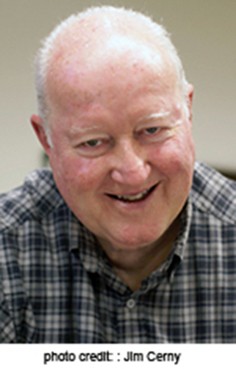
Jack Driscoll was named editor of The Boston Globe in December of 1987.
He was Globe executive editor from 1982 to 1987. As a managing editor for several years before that, he was supervisor or reporter in several prize-winning efforts, including involvement in five Pulitzers, Associated Press Managing Editor's Public Service Award, Sigma Delta Chi, the George Polk, Sidney Hillman and Sevellon Brown Awards, New England's top honor. In 1987 Driscoll was awarded the Yankee Quill Award by the New England Chapter Society of Professional Journalists, Sigma Delta Chi. He has been on reporting trips to Europe, the Middle East, the Far East, Africa, the Soviet Union and Latin America.
In 1977 he was a member of the national team investigating Arizona corruption after the death of reporter Don Bolles.
From 1976 to 1982, Driscoll was managing editor of the Evening Globe, the daily Globe and the Sunday Globe.
He is a member of the American Society of Newspaper Editors and the Associated Press ManagingEditors Association, a member of the Board of Directors of the Boston Globe and was elected to the ASNE Board of Directors in 1990. He also is on the Advisory Board of the Nieman Foundation. For 12 years he was an assistant to former editor Thomas Winship. Prior to that he was night editor, a copy desk editor and sportswriter at the Globe. He has previously worked at United Press International, the Manchester (NH) Union Leader and the Haverhill (MA) Journal. His ASNE activities have included: chairman, Writing Awards Committe; member Program and Education Committee; participant in Editor-in-Residence Program since its inception; participant in Soviet-ASNE Exchange Program, contributor to ASNE Bulletin.
A graduate of Northeastern University, Driscoll is married and has four daughters. A longtime resident of Melrose, he resides in Topsfield, Massachusetts.
(June 10, 1991)
(Courtesy of the Newberry Library)
Jack William Fuller was born in Chicago, Illinois, on October 12, 1946. The son of Ernest Fuller, a financial reporter for the Chicago Tribune, and Dorothy Fuller, he followed his father into journalism, beginning as a copyboy at the Chicago Tribune at age 16. He received his BS degree in Journalism from Northwestern University in 1968, and also attended Yale Law School, receiving his JD degree in 1973.
Fuller's law studies were interrupted when he was drafted into the United States Army during the Vietnam War. From 1969-1970 he served as a Vietnam correspondent for Pacific Stars and Stripes. During the summer of 1972, Fuller wrote for the Washington Post.
From 1973-1975 he worked as a general assignment reporter for the Chicago Tribune, but left the paper to join the U.S. Department of Justice as special assistant to Attorney General Edward Levi. Fuller rejoined the Tribune as Washington correspondent in 1977, and in 1978 returned to Chicago as an editorial writer. He served as Editorial Page Editor from 1981-1987, was appointed Executive Editor in 1987, and Vice President and Editor in 1989. From the late 1980s to the early 1990s, he devoted the bulk of his writing to jazz criticism for the Tribune. Fuller was named Publisher of the newspaper in 1994, and President of the Tribune Publishing Company in 1997. He was named to the board of directors in 2001.
Fuller simultaneously pursued a writing career, and published six novels: Convergence, 1982; Fragments, 1984; Mass, 1985; Our Fathers' Shadows, 1987; Legend's End, 1990; and The Best of Jackson Payne, 2000. Fuller also authored the nonfiction News Values: Ideas for an Information Age, published in 1996.
Fuller was married to Alyce Tuttle from 1972-2002 and the couple had two children, Timothy and Katherine. Fuller married Debra Moskovits in 2004.
In 1986, Fuller won a Pulitzer Prize for his editorial writing on constitutional issues. Though he retired from the Tribune Company in 2004, he continues to write editorials for the paper as well as lecture on various journalistic issues. In 2005 Fuller was named to the Board of Directors of the John D. and Catherine T. MacArthur Foundation, a private, independent grantmaking institution based in Chicago. He also serves as a Trustee of the University of Chicago and the Field Museum.
Post Editor, Newsweek Columnist Meg Greenfield Dies
By J.Y. Smith
Special to The Washington Post
Friday, May 14, 1999; Page A1
Meg Greenfield, 68, the Pulitzer Prize-winning editor of the editorial page of The Washington Post and a columnist for Newsweek magazine, died of cancer yesterday at her home in Washington.
An astute and principled observer, Greenfield spent her professional life writing about the events that shaped the second half of the 20th century. She brought to the task a rigorous intellect, a broad insight into the human condition and a conviction that life is not as simple as one would like. She distrusted shortcuts and the idea that it is always possible to reconcile differing points of view. In her world, there were losers as well as winners.
Most of all, Greenfield loved irony -- the disjunction between reality and appearance in this or that bit of the day's news. Nothing pleased her more than pointing out the difference between what actually happened or was proposed in a given situation and the spin with which one interested party or another might describe it. She conveyed her findings to readers with gusto and a fine eye for detail and character.
For more than 30 years, Greenfield helped shape The Post's views on issues ranging from war and peace to home rule for the District of Columbia and the proclivity of some drivers to run red lights. Katharine Graham, a former chairman of the board of The Washington Post Co. and one of Greenfield's closest friends, described her as "independent and uninfluenced by trends or molds. Her judgment is very dispassionate."
Topics that particularly interested Greenfield included nuclear strategy, military preparedness, politics and civil rights.
In a statement issued at the White House, President Clinton said, "Hillary and I were deeply saddened to learn of" her death. "In her work for The Washington Post and Newsweek," the president said, "Meg perfected the art of the newspaper column. Her essays were invariably tightly reasoned, forcefully stated and deeply felt. She called on those who work in government to pursue far-sighted public policy and bipartisan solutions. Her voice of eloquence and reason will be sorely missed."
Although she played one of the defining roles in the Washington drama in which the protagonists are the government and the media, Greenfield was an intensely private person. She avoided the television appearances and interviews by which many of her colleagues were known and limited herself to perhaps three appearances a year, usually in university settings. She disliked talking about herself and believed her job was to understand and record the news, not make it.
A Perfectionist Editor
Greenfield joined The Post as an editorial writer in 1968 and was named deputy editor of the editorial page in 1969. In 1978, she won the Pulitzer Prize for editorial writing for pieces about international affairs, civil rights and the press. She became editor of the editorial page in 1979.
In 1974, she began a biweekly column in Newsweek, which is owned by The Washington Post Co. It dealt primarily with Washington life, a subject that, "contrary to widespread belief," she explained, "does not exclude everything human."
Her work was full of the context and underlying texture of events. She was interested in precedent as well as where an issue would go next. She had a knack for finding the nub of complicated situations. She loved argument and continued a tradition under which Post editorials avoided hortatory calls to action in favor of making points by marshaling facts.
The Post's editorial board represents the publisher, Donald E. Graham, in matters of opinion. It is entirely separate from the news department, whose function is reporting on events rather than commenting on them. In practice, the distinction is sometimes blurred, but The Post's view is that readers should be able to tell at a glance whether they are reading fact or opinion. To this end, the news and editorial staffs at the newspaper are organized into entirely separate hierarchies. Greenfield dominated the editorial function in the same way that Leonard Downie Jr., the executive editor, or Benjamin C. Bradlee, his predecessor, have dominated the news side.
She described the editorial board as a collective tending to middle age and having "the sensibility of 1950s liberals." By that, she meant it was generally conservative on foreign policy and national defense and generally liberal on social issues. She noted that liberals frequently said the paper was too conservative while conservatives at one time called it an arm of the Communist Party.
One of Greenfield's most important tasks took place entirely out of public view. This was presiding over the daily meeting at which the next day's editorials are thrashed out. A small but commanding figure (she was 5-foot-1) at the head of a long table, she was gracious, witty, skeptical and given to the Socratic model of analysis by question. Although she said the process was give-and-take among "intelligent and forgiving friends," it was not really democratic.
She always had the final word.
"People ask questions that tell me they presume something much more exotic, and often sinister, than it is," she told an interviewer. "I don't think it's sinister at all. We try to keep -- without much success -- a certain amount of discretion, because . . . I don't know, Washington being Washington . . . you hear, 'Well, they said this, but the only reason they said this was that she hates that one and the other hates this, and this one lost the argument and the other one wept,' and so on. And all this stuff is almost invariably completely wrong."
The board's decisions were confidential and sometimes, as in the case of endorsing presidential or other political candidates, were guarded with great care until they were published.
Besides editorials, Greenfield was responsible for the letters to the editor; the op-ed page; the "Free for All" page on Saturdays, which carries letters from readers; and the "Close to Home" page on Sundays, which carries longer local pieces by readers.
As her staff could attest, she was a perfectionist and a ferociously hard worker. Nothing got on her pages without her approval. When she traveled, she would have material faxed or read to her over the telephone. She once called in changes from Saudi Arabia. The only exception to her sway was Herblock, the cartoonist, who is regarded at The Post as a kind of force of nature. He reports to no one.
Greenfield was always on the lookout for interesting new writers. Among those she brought to the op-ed page were the columnists George Will, whom she encouraged to abandon academia for a career in journalism, and Charles Krauthammer, a psychiatrist turned commentator.
Will recalled in a column how he had once telephoned Greenfield to say he couldn't get to the matters of state he usually wrote about because he had to baby-sit. She told him to write about what it was like to stay home from work and care for a child. The resulting piece drew a wide response from readers.
The Power of the Pen
Although the influence of Post editorials is hard to gauge at any given time, it has been a factor in some local elections. Local politics also illustrate the editorial board's willingness to change its mind about candidates and issues.
In 1978, for example, The Post backed Marion Barry, a council member and former civil rights leader, for mayor over the incumbent, Walter E. Washington, who had previously had the paper's support. The endorsement followed meetings between the editorial board and each candidate and a review of records, positions, qualifications and other material. Barry won handily.
The Post also endorsed Barry in 1982 and 1986 with decreasing levels of enthusiasm. By 1988, the editorial page was deploring his "propensity for scandal" and "huge capacity for self-indulgence," characteristics which it said tarnished "the accomplishments of those serious government workers and political appointees who have labored to make the city work."
In 1990, Barry was convicted of a misdemeanor drug violation and sentenced to six months in federal prison. In that year, The Post gave its mayoral endorsement to Sharon Pratt Dixon (she later became Sharon Pratt Kelly), a power company executive who was a newcomer to politics, and she won. Four years later, the paper backed Carol Schwartz, a Republican, in the mayor's race. She lost to Barry, who returned to the mayor's office that year. Barry had been elected to the D.C. Council in 1992.
Greenfield described the extent of The Post's influence in these terms:
"What we tend to notice here is the great number of wise suggestions we make that are rejected at the polls, and in the agencies, and in the U.S. Congress, and in the District school board, and if there's someplace I've left out, remind me -- so that we don't feel the Republic or the environs are in any terrific danger of being [controlled] by the Washington Post editorial page. Much as we try."
On the other hand, she said, "this is a town where people like to say to you, 'I never read editorials,' and then complain in minute detail about one that was in yesterday. This is a town where opinions are in conflict, at war in various ways."
The hazard of editorial writing, she once wrote, is complacency.
"There is a little Mussolini in every editorial writer," she said. "Pompous, meddlesome, pretentious, a figure of fun to everyone but himself . . . issuing grandiose orders that have no effect on anything at all . . . to which an ungrateful nation will reply, 'Oh, knock it off.' "
Early Journalism
Greenfield was born in Seattle on Dec. 27, 1930. Her parents were Lewis James Greenfield and Lorraine Nathan Greenfield. Her father ran an antique furniture business. Her mother died when she was 12. She majored in English at Smith College, where she was elected to Phi Beta Kappa and graduated summa cum laude in 1952. She then spent a year at Cambridge University studying the poetry of William Blake on a Fulbright Scholarship.
In the 1956 presidential election, she was director of research for the New York committee of Adlai E. Stevenson, the Democratic candidate. The following year, she joined the Reporter, a magazine of political commentary. She was assigned to its Washington bureau in 1961, and in 1965 she was named Washington editor. She stayed in that job until the Reporter ceased publication in 1968 and The Post hired her.
Making her way in a male-dominated industry was largely a matter of "accidents and non-decisions," she said. She described herself as a wobbly spear-carrier in the feminist march. "I was an English major who couldn't decide what to do," she told an interviewer. "I wasn't trying to strike a blow for sisterhood." Although she supported "what's serious about the [feminist] movement," she resisted suggestions that there is a woman's perspective on general issues.
"For example," she told Shop Talk, the Post employees' publication, "the women in the House of Representatives reflect the whole political spectrum, and my own opinion is often at variance with the female politicians."
Greenfield was equally wary of political correctness. She detested the term "Ms." and preferred to be called Miss Greenfield. She once gave an address in Seattle decrying speech codes and calling on her audience to "fight like tigers against government attempts to substitute its judgment for ours." She added, however, that she regretted opposing efforts in Maryland to outlaw the word "fatso." (She worried about her weight.)
Nothing disturbed her more than suggestions that The Post was open to the blandishments of Washington's vast and well-heeled public relations industry. In 1982, she sent a memo, which was later widely quoted outside The Post, to Bradlee, the executive editor, complaining that PR firms "seem to be promising, among other promises, that they can get The Post to 'help' " their clients.
"The reason for saying no to these wolves is plain and very strong," she continued. "Why should we be in their goddam memo traffic as exploitable or exploited 'resources'? Why should we be in their campaign plans as something 'deliverable' by their various agents who can 'reach' us?"
Her solution was to proclaim what she called "the irrational Greenfield rule." This stated that the editorial staff would not accept any manuscript or interview request that came from a "flack firm." It proved unworkable and soon lapsed.
Ethics and Responsibility
Over the years, Greenfield frequently made working trips with Katharine Graham, and in the course of their travels, they had meetings with a number of world leaders. In 1988, with other Post and Newsweek staff members, Greenfield and Graham interviewed former Soviet President Mikhail Gorbachev in Moscow.
In 1986, Greenfield published a piece describing her observation that humdrum, ordinary life goes on even under extremely repressive regimes. "You don't encounter absolute rule," she wrote, "and it is the fault of a kind of Achtung delusion that you even expect it. For nobody and no group, not even the driven, arrogant Chinese government, can entirely control a nation's life."
Some of Greenfield's most powerful writing concerned ethics and how people respond to life's various imperatives. This was the subject of her first Newsweek column, which dealt with the disgrace of Spiro T. Agnew. The Maryland governor, he became vice president under Richard M. Nixon and a leading administration spokesman against all forms of wrongdoing. He resigned from office after an extensive federal investigation into allegations of bribery and extortion.
The question Greenfield raised was whether he and his like ever were aware of their own duplicity and hypocrisy. "Was it like being a double agent?" she asked. "Do you offer yourself a great crooked wink in the mirror every morning?
"I think not. My speculation is that Mr. Agnew and the other lapsed preachers of our public life didn't make the connection -- didn't make the connection between their own crimes and those committed by other, 'lesser' people."
In a column in 1989, she wondered whether the decline of civility and the growing number of false and unproved accusations in politics weren't dulling the nation's ability to react to real scandal.
"All day long around here, we . . . go around implying that the other fellow is lying, trimming, gouging, feathering his nest, murdering the innocent and otherwise violating everything that upright people hold dear. The effect of this constant play is that we lose the ability to recognize a genuine moral dereliction when we see one."
In a 1998 column, she wrote about public and private behavior and President Clinton's sexual relationship with a White House intern, Monica S. Lewinsky.
"What is real," she said, "and what we have been trying so hard to avoid all these months, is the one overarching question that we keep raising in our arguments and then fleeing because it is so complex and hard: What is the proper relationship of a public figure's personal behavior and private life to his conduct of public business?
"It is a very large part of politics to try to get these relationships right, to rationalize them in a human and practical way to the extent we can -- to know where the lines should be drawn and to draw them. People say we should do this for our children. We should do this for ourselves, for our own self-respect."
At the very least, she said, Clinton should be forthright in taking responsibility for his actions.
In private life, Greenfield had a wide acquaintance in Washington and elsewhere. She loved parties. She was responsible for introducing Warren E. Buffett, the noted investor, to Bill Gates, the founder and head of Microsoft Corp. Buffett was a guest at the house she built on Bainbridge Island near Seattle, and she took him to a party given by Gates's mother, an old friend.
Greenfield described herself as a "passionate, failed gardener." She was a former volunteer at St. Ann's Infant Home in Hyattsville. She swam at Georgetown University and studied Latin for fun. Sometimes she and Katharine Graham would sneak out of the office and go to a movie.
"I read, I fall asleep," she told the Washington Journalism Review. "I realize as I read the newspaper that I lead a really dull life. I gotta tell you I just read in The Washingtonian about a book that's coming out that says Mamie Eisenhower and Buster Keaton were having an affair. These things always make me think, God, you know, I just thought everybody went home and read magazines."
Greenfield was a past co-chair of the Pulitzer Prize board, and she was a member of the American Society of Newspaper Editors. She held honorary degrees from Smith College, Williams College, Georgetown University, Wesleyan University and Princeton University.
She leaves no immediate survivors.
© Copyright 1999 The Washington Post Company
Peter R. Kann is the former chairman of Dow Jones & Company and editorial director of Dow Jones’ publications.
In 1967, Mr. Kann became The Journal’s first resident reporter in Vietnam. From 1969 through 1975, he continued to cover the Vietnam War, as well as other events across Asia, as a roving reporter based in Hong Kong. He was awarded a Pulitzer Prize in 1972 for distinguished reporting on international affairs for his coverage of the 1971 India-Pakistan War.
In 1976, Mr. Kann was named the first publisher and editor of The Asian Wall Street Journal, headquartered in Hong Kong. After 12 years in Asia, Mr. Kann returned to the U.S. in 1979, and in 1980 he was named associate publisher of The Journal and a vice president of Dow Jones. Later that year he was named president and chief operating officer of Dow Jones. He became chief executive officer in January 1991 and served in that role through January 2006. He served as the Journal’s publisher from 1989 until July 2002.
Mr. Kann is a member of the board of trustees of the Institute of Advanced Study in Princeton. He is a former member of the Pulitzer Prize board.
A native of Princeton N.J., Mr. Kann graduated from Harvard University with a bachelor’s degree in government. He began his newspaper career in high school as a copy boy for the Princeton Packet.
Joan Konner has a B.A. from Sarah Lawrence and received her M.S. from Columbia. She has been a reporter, editorial writer, and columnist for the Bergen (N.J.) Record; a producer, reporter, host and editor, at WNET/Thirteen; a documentary and news producer, writer, director and program director at NBC News; an executive producer for national public affairs programs, and executive producer of "Bill Moyers’ Journal." She has also been vice president, director of programming and executive producer for the Metropolitan Division and senior executive producer for national public affairs, WNET/Thirteen. In addition, she was president and executive producer, Public Affairs Television Inc., in partnership with Bill Moyers.
She is the former Dean of the Graduate School of Journalism, Columbia University and the publisher, Columbia Journalism Review. Awards include 13 Emmys from the National Academy of Television Arts and Sciences; Peabody Award, 1980); Alfred. I. duPont Award, 1989; three American Bar Association Awards; Outstanding Broadcast Journalism Educator, from the Association for Education in Journalism and Mass Communication, 1996.
-- http://www.journalism.columbia.edu/profile/331-joan-konner/
Burl Osborne, president and editor of The Dallas Morning News, has overall responsibility for the operation of the newspaper, including direct supervision of the news and editorial departments.
In October, 1980, Osborne joined The Morning News as executive editor, with responsibility for all news gathering and editing. In 1981 he became vice president and executive editor and in 1983 he was named senior vice president and editor. He was named president and editor in 1985.
Osborne came to The Morning News after 20 years with the Associated Press, where he was managing editor. As managing editor of the AP, Osborne had responsibility for the daily AP news report, plus direct supervision of the national reporting and editing staffs based in New York. He also supervised the national news file, which is generated from news bureaus throughout the U. S. by a staff of more than 1,000 reporters and editors.
Osborne began his career with the AP in 1960 as a correspondent in Bluefield, West Virginia. He became an editor-reporter in Charleston, West Virginia, in 1962 and in 1964 moved to Spokane, Washington, where he had news responsibility encompassing parts of three states.
In 1967, Osborne became news editor for Colorado and Wyoming, based in Denver. He moved from Denver to Louisville, Kentucky, in 1970, where he oversaw the news, administrative and business activities of the AP in Kentucky. He was promoted to chief of the AP's Ohio bureau in 1972 with overall responsibility for that state and production responsibilities in adjoining states.
Osborne was named assistant chief of the AP's Washington bureau in 1974. In Washington, AP's largest news operation, he supervised the news staff and developed the AP's Washington news report. During that time, Osborne helped plan the AP's coverage of the 1976 presidential election.
In 1977, Osborne was promoted to the position of managing editor, based in New York City. Prior to joining the AP, he was a reporter for the Ashland, Kentucky Daily Independent and for WHTN-TV in Huntington, West Virginia.
Osborne holds a bachelor's degree in journalism with a minor in mathematics from Marshall University in Huntington, West Virginia and a master'd degree in business from Long Island University. He is a graduate of the Harvard Business School Advanced Management Program.
(June 9, 1986)
(Current biography as of March 2016)
Geneva Overholser is a senior fellow at the Democracy Fund. She is also a senior fellow at the Center for Communication Leadership and Policy at the USC Annenberg School for Communication and Journalism. She was until 2013 director of the USC Annenberg School of Journalism, and is now an independent journalist in New York City, speaking and writing about the future of journalism. She serves on the boards of the Academy of American Poets, the Rita Allen Foundation and the Women’s Media Center, and on the advisory council of the CUNY Graduate School of Journalism.
Previously she held the Curtis B. Hurley Chair in Public Affairs Reporting for the Missouri School of Journalism, where she was based in the school’s Washington bureau. From 1988 to 1995, Overholser was editor of the Des Moines Register, where she led the paper to a Pulitzer Prize for Public Service. While at the Register, she also earned recognition as Editor of the Year by the National Press Foundation and was named “The Best in the Business” by American Journalism Review.
In addition, Overholser has been ombudsman of the Washington Post, a member of the editorial board of The New York Times, a syndicated columnist for the Washington Post Writers Group, and a reporter for the Colorado Springs Sun. She has been a columnist for the Columbia Journalism Review and a blogger for Poynter.org. She spent five years overseas, working and writing in Paris and Kinshasa.
Through the Annenberg Public Policy Center, in 2006 she published a manifesto on the future of journalism titled “On Behalf of Journalism: A Manifesto for Change.” She is also co-editor, with Kathleen Hall Jamieson, of the volume “The Press,” part of the Oxford University Press Institutions of American Democracy series.
Overholser has served on the boards of the Carnegie Endowment, the John S. Knight Fellowships at Stanford, the Committee of Concerned Journalists, the Center for Public Integrity and the National Press Foundation, and on the advisory boards of the Knight Foundation and the Poynter Institute. She was for nine years a member of the Pulitzer Prize Board, the final year as chair, and is a former officer of the American Society of Newspaper Editors. She is a fellow of the Society of Professional Journalists and of the American Academy of Arts and Sciences. She held a Nieman fellowship at Harvard and a Congressional fellowship with the American Political Science Association.
She holds a bachelor’s degree in history from Wellesley College, a master’s in journalism from the Medill School of Journalism at Northwestern University and a French language certificate from the Sorbonne. She has honorary doctorates from Grinnell College and St. Andrews Presbyterian College, and alumnae achievement awards from Wellesley, Northwestern and Medill.
She is married to David Westphal, also a journalist. They have three children and one grandchild.
(Courtesy of Geneva Overholser)
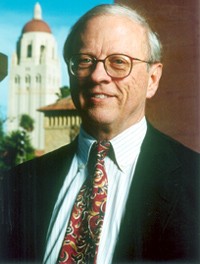
Jim Risser has distinguished himself as an investigative reporter, an environmental reporter and as a leader in efforts to improve the quality of modern journalism.
Risser was a reporter for the Des Moines Register for 20 years, and was its Washington bureau chief from 1976 to 1985. During that time he won numerous journalism honors, including two Pulitzer Prizes for National Reporting. His first Pulitzer, in 1976, was awarded for stories exposing corruption in the U.S. grain exporting industry, which led to criminal convictions and reform legislation. His second Pulitzer, in 1979, was awarded for a series of stories showing the destructive impact of modern American agriculture on the environment. His other honors include two Thomas L. Stokes Awards for environmental reporting, the Edward J. Meeman Award for conservation reporting, two Raymond Clapper Awards for Washington reporting, and the American Political Science Association Award for distinguished reporting of public affairs.
In 1985, Risser was named director of the John S. Knight Fellowships for Professional Journalists at Stanford University, a mid-career sabbatical program for outstanding print and broadcast journalists from the United States and abroad, a position he held until his retirement in 2000. He had been a Professional Journalism Fellow at Stanford in 1973-74. As a member of the Stanford faculty, Risser also taught in the Department of Communication's graduate journalism program.
Risser was a member of the Pulitzer Prize Board from 1990 to 1999. He currently serves on the Journalism Advisory Committee of the John S. and James L. Knight Foundation, on the Steering Committee of the Committee of Concerned Journalists, and is a member of the Gridiron Club of Washington, Investigative Reporters & Editors, and the Society of Environmental Journalists. From 2000-2003 he was a member of the Board of Governors of the Wallace Stegner Initiative, a project of the Institute for Journalism and Natural Resources, and he served as a judge for the Institute's report, "Matching the Scenery: Journalism's Duty to the American West." He is a member of the boards of directors of the Oregon Shakespeare Festival and of Jefferson Public Radio, in Ashland, Oregon, and he serves on the Southern Oregon University Advisory Board.
In addition to his stories for the Des Moines Register, he has written on environmental issues for several newspapers and magazines, and he continues to write on news media issues for journalism publications. In 2001, he co-authored a study for CNN analyzing television's failures in reporting the results of the 2000 presidential election.
Risser is a graduate of the University of Nebraska and the University of San Francisco Law School, and practiced law in his hometown of Lincoln, Nebraska before turning to journalism in 1964. He and his wife, Sandra Risser, live in Ashland, Oregon. They have two sons, David, of Salem, Oregon, and John, of Ashland.
- January 2005
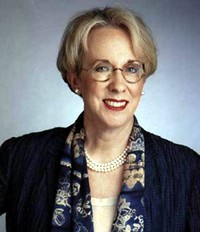
Sandra Mims Rowe is editor of The Oregonian, the largest daily newspaper in the Northwest.
Rowe has been editor of The Oregonian since 1993. She previously made her mark in journalism in Virginia where she spent 22 years at The Virginian-Pilot and The Ledger-Star. Rowe rose to executive editor and vice president at the combined papers in 1984, a post she held until 1993. On her watch, the papers won the Pulitzer Prize for general news reporting in 1985. For her work in Virginia, Rowe was inducted into the Virginia Journalism Hall of Fame in 2000.
Also, under her leadership, The Oregonian has won three Pulitzer Prizes and been a finalist four additional times. The Oregonian won the prize for explanatory reporting in 1999 and, in 2001, both the feature writing prize and the Gold Medal for Public Service.
Rowe has also served in a leadership role for many distinguished journalism organizations. She is a past president of the American Society of Newspaper Editors (ASNE). Currently she chairs the Knight Foundation Journalism Advisory Board, is a board member for the Medill School of Journalism's Board of Visitors at Northwestern University, and is chair of the Board of Visitors for the Knight Fellowships at Stanford University.
She is a 1970 graduate of East Carolina University and completed the Management Development Program in 1990 at Harvard's Graduate School of Business.
(Courtesy of Medill/Northwestern)
Walter F. Rugaber (BSJ60) was president and publisher of the Roanoke Times & World News, which is now called The Roanoke Times, and also serves as president of Landmark Publishing Group, headquartered in Norfolk, Va.
Before going to Roanoke, Rugaber was executive editor of the Greensboro Daily News & Record. He started his journalism career as a reporter for the Atlanta Journal and the Detroit Free Press before joining The New York Times in 1965. He returned to Atlanta as The New York Times southern correspondent in 1967, and in 1969 he moved to that newspaper's Washington bureau.
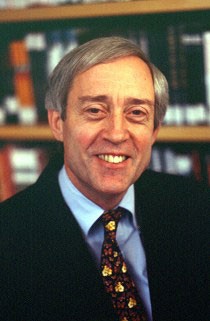
During his nine-year tenure as president of Columbia University, Dr. Rupp focused on enhancing undergraduate education, on strengthening the relationship of the campus to surrounding communities and New York City as a whole, and on increasing the university’s international orientation. At the same time, he completed both a financial restructuring of the university and a $2.84 billion fund-raising campaign that achieved eight successive records in dollars raised.
Prior to his time at Columbia, Dr. Rupp served as president of Rice University, where in the course of his eight years applications for admission almost tripled, federal research support more than doubled, and the value of the Rice endowment increased by more than $500 million to $1.25 billion.
Before going to Rice, Dr. Rupp was the John Lord O’Brian Professor of Divinity and dean of the Harvard Divinity School. Under his leadership, the curriculum of the school was revised to address more directly the pluralistic character of contemporary religious life. Further developments included new programs in women’s studies and religion, Jewish-Christian relations, and religion and medicine.
Born in New Jersey of immigrant parents, Dr. Rupp has studied and conducted research for extended periods in both Europe and Asia. He studied in Germany before he was awarded an A.B. from Princeton University in 1964, a B.D. from Yale Divinity School in 1967, and a Ph.D. from Harvard in 1972. He was Vice Chancellor of the University of Redlands in Redlands, California. Rupp left Redlands to become Dean of Academic Affairs at the University of Wisconsin–Green Bay in 1977, where he remained until 1979. He is an ordained Presbyterian minister.
He is the author of numerous articles and five books including:
Globalization Challenged: Commitment, Conflict, and Community; Christologies and Cultures: Toward a Typology of Worldviews; Beyond Existentialism and Zen: Religion in a Pluralistic World; and 'Culture Protestantism': German Liberal Theology at the Turn of the 20th Century.
George and his wife Nancy are the parents of two adult daughters who are teaching and writing, one with scholarly expertise in East Asia and the other a specialist in African studies, and the grandparents of two girls and three boys.
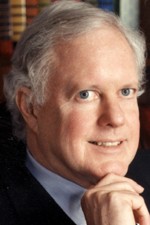
Edward Seaton began his career in journalism as a general assignment reporter and copy editor at The Courier-Journal in Louisville, Kentucky. An honors graduate of Harvard College, he studied on a Fulbright grant in Ecuador and did graduate work in journalism at the University of Missouri. He was made a Knight of the Order of Christopher Columbus by the Dominican Republic for his work for press freedom, and is a recipient of Columbia's Maria Moors Cabot Prize.
Past president of both the American Society of Newspaper Editors and the Inter American Press Association, Seaton is president of the ASNE Foundation and serves on IAPA's executive committee. He is a member of the board of the International Center for Journalists, the advisory committee of the Knight International Press Fellowship Program and Columbia's Cabot Awards Board.
Seaton was elected to the board in 1992.
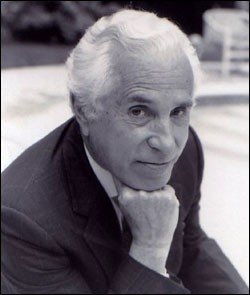
Seymour Topping has had a varied career as foreign correspondent, editor, university professor and author.
He retired in 2002 as Administrator of the Pulitzer after nine years of service and was appointed San Paolo Professor Emeritus of International Journalism at Columbia University.
Prior to Columbia, he was a member of the New York Times for thirty years as chief correspondent in Moscow and Southeast Asia, foreign editor, deputy managing editor and managing editor from 1986 to 1987.
After service as an infantry officer in the Pacific during World War II, he covered the Chinese Civil War for The Associated Press, the French Indochinese War, London and Berlin before joining the New York Times in 1959.
Born in New York in 1921, he is graduate of the School of Journalism at the University of Missouri.
He is the author of Journey Between Two Chinas, (Harper and Row), 1972; The Peking Letter: A Novel of the Chinese Civil War (Public Affairs 1999,) and just completed another historical novel, Fatal Crossing, A Novel of Vietnam 1945 (East Bridge 2004.) He co-authored Report from Red China (Quadrangle Books 1971.)
He is married to Audrey Ronning Topping, a photo journalist, whose father, Chester Ronning, served as Canadian ambassador to China, and grandparents were Lutheran missionaries in China.
Board member (Administrator) 1993-2001.
(Courtesy of the National Endowment for the Humanities)
“When you’re in a state of perplexity, sadness, gloom, elation, you look for a poem to match what you are feeling,” says Helen Vendler. She writes that “Poetry is analytic as well as expressive; it distinguishes, reconstructs, and redescribes what it discovers about the inner life. The poet accomplishes the analytic work of poetry chiefly by formal means.”
It is Vendler’s skills in unraveling the forms and explaining the heart of a poem that have made her one of the most influential voices in poetry criticism today. “She is like a receiving station picking up on each poem, unscrambling things out of word-waves, making sense of it and making sure of it. She can second-guess the sixth sense of the poem,” says poet Seamus Heaney.
Vendler’s influences include a Boston childhood immersed in poetry and hymns, an early interest in chemistry, and a wealth of wonderful teachers. Her own teaching career has spanned forty-four years and she is now the A. Kingsley Porter University Professor at Harvard University, where she received her Ph.D. in English and American literature in 1960. She previously taught at Cornell, Swarthmore, Haverford, Smith, and Boston University. She has held many fellowships, including three NEH fellowships and a Fulbright, and has frequently been a judge for the Pulitzer Prize in poetry. She holds twenty-three honorary degrees from universities and colleges in the United States and abroad.
Vendler’s views on contemporary poetry can be read regularly in the pages of The New Republic, The London Review of Books, The New Yorker, and other journals.
Her recent books include Coming of Age as a Poet: Milton, Keats, Eliot, Plath; Seamus Heaney; The Art of Shakespeare’s Sonnets; The Breaking of Style: Hopkins, Heaney, Graham; The Given and the Made: Lowell, Berryman, Dove, Graham, and Soul Says: On Recent Poetry. A forthcoming book, Poets Thinking: Pope, Whitman, Dickinson, Yeats, will be published later this year.
Vendler lives in Cambridge, Massachusetts, and has one son and two grandchildren.
No biography/photo currently available.