Pulitzer Prize Board 2018-2019

front row left to right: N. Carroll, J. Díaz, R. Blau, S. Hahn, D. Canedy, G. Collins, N. Barnes; back row left to right: J. Daniszewski, N. Brown, E. Alexander, K. Boo, E. Robinson, E. Ramshaw, A. Marqués, S. Engelberg, T. Shelby (absent: L. Bollinger, S. Coll) (Photo by Jose R. Lopez)

The Trustees of The Andrew W. Mellon Foundation have elected Elizabeth Alexander to be the Foundation’s next President, effective March 2018. Alexander will succeed Earl Lewis, who has served as President since 2013.
Alexander, a renowned writer, poet, and scholar, is recognized as one of the nation’s leading voices in modern literature and a bold visionary in the academy. Over the course of a distinguished academic and artistic career, she has developed a number of complex, multi-arts and multi-disciplinary teams, departments and partnerships, and dedicated herself consistently to creating, building and sustaining highly successful institutions – from the Poetry Center at Smith College, to a major rebuilding of the African American Studies department at Yale University, from the poetry non-profit Cave Canem, to the Ford Foundation’s programs in journalism, arts and culture.
“The Mellon Foundation is dedicated to the enrichment of the arts and humanities, both inside and outside of colleges and universities; these practice areas are fundamental to strengthening not only our learning institutions, but also the human spirit,” said Danielle Allen, Chair of the Mellon Foundation Board. “Through her work as a professor and mentor, Elizabeth knows the academic system well, and as an architect of interdisciplinary programs, she has deep experience in cultivating partnerships that extend and amplify creative vision. A poet who brings an artist’s forward-looking energy to institutional purpose, Elizabeth is the right person for our times as the Foundation seeks to widen the community of stakeholders committed to the arts and humanities and to increase the resources dedicated to this work.”
The Mellon Foundation, the nation’s most generous and active supporter of the humanities, is committed to five core program areas: higher education and scholarship in the humanities; arts and cultural heritage; diversity; scholarly communications; and international higher education and strategic projects. The Foundation believes that the health of arts and humanities is critical to the success of higher education, to the human spirit and societal well-being, and to civic preparation. The Foundation seeks to broaden the role the humanities play in education, innovation, and civic discourse, by providing grants and strategic guidance to support educational and cultural institutions, research, and public humanities engagements.
“I have lived my entire life with art, culture, and scholarship as companion, guide, and discipline,” said Alexander. “I am guided by the justice values of increasing access to the power of higher education to open and strengthen minds, encourage human exchange, and thus transform lives. I am deeply honored to have been selected to lead Mellon, an institution that has been devoted to these areas across its history, and to have been called to the crucial work of building community within and across discipline and institution. The humanities show us deeply who we are and what it means to move through life by the light of cultural vision. I am excited for the work ahead of elevating the truth, beauty and rigor of the arts and higher learning and making them more accessible to all.”
Most recently, Alexander served as the Wun Tsun Tam Mellon Professor in the Humanities in the Department of English and Comparative Literature at Columbia University. Prior to assuming her position, she served as the Director of Creativity and Free Expression at the Ford Foundation.
While at the Ford Foundation, Alexander co-designed the Art for Justice Fund, a $100 million fund seeded by philanthropist Agnes Gund to transform the criminal justice system and all of its inequities through art and advocacy.
“Elizabeth is one of the brightest lights in the academy and a remarkable artist. She made an invaluable contribution to the arts program at Ford and I’m confident that she will be a great leader of the Mellon Foundation,” said Darren Walker, President of the Ford Foundation.
Alexander spent 15 years on the faculty of Yale University, beginning in 2000. She was appointed the inaugural Frederick Iseman Professor of Poetry in 2015, and served as the Thomas E. Donnelly Professor of African American Studies and as the Chair of the African American Studies Department. Prior to those appointments, she was a professor in the departments of African American Studies, American Studies and English. She served as the inaugural Director of the Poetry Center at Smith College, and taught for seven years at the University of Chicago, where she won the Quantrell Award for Excellence in Undergraduate Teaching. She also taught at New York University’s Graduate Creative Writing Program.
“The unique qualities that make Elizabeth Alexander the creative and intellectual force we have been so proud to welcome to Columbia will undoubtedly serve her well in her new leadership role at the Mellon Foundation,” said Columbia President Lee C. Bollinger. “While our university community will miss the first-hand benefit of her relentless commitment to conveying and improving the human condition, we are delighted by her ascent in the philanthropic world and look forward to working with her in her new mission of scholarship and service.”
“She will be a passionate spokesperson for the ideas of Mellon and the humanities and the arts; this is what she does every day. She is visionary. She has the ability to embody and communicate the value of liberal education, the humanities and arts, access, diversity, and to do it with poetry,” said Peter Salovey, President of Yale University.
Said outgoing Mellon Foundation President Earl Lewis, who is returning to the academy, and launching a new initiative, The Center for Social Solutions, to focus efforts on three core areas of concern – race and diversity, water, and the future of work, “Elizabeth is a highly regarded academic thought leader and proven philanthropist; she is also someone I admire deeply. I wish her well as she assumes her new role as President of The Andrew W. Mellon Foundation. Her appointment comes at a time when the work of advancing the fundamentals of a prosperous democracy needs forward-looking leaders.”
Lewis delivered the Foundation’s first ever strategic plan and brought grant-making program areas into closer collaboration. Under his leadership, the Foundation brought new institutions into the fold and developed a broader network of partners across the many sectors of the higher education landscape. Lewis also launched significant Presidential initiatives including the Mellon Research Forum and the Our Compelling Interests book series focused on diversity and social connectedness.
In her new role, Alexander will lead the Mellon Foundation in drawing new partners in to support the arts and humanities and in refining the Foundation’s distinctive blend of a commitment to the arts and humanities for social purposes and for their own sake. She expects to build on the Foundation’s success to date in supporting diversification of educational, scholarly, and cultural organizations with an innovative focus on cultivating institutional capacity for inclusive leadership; and she seeks to widen and deepen the impact of the Foundation’s support for a vision of an inclusive America. Linking the Foundation’s international work to its core strategic priorities will also be an important objective.
Alexander is the author of the New York Times bestseller The Light of the World, a memoir on love and loss, which was a finalist in 2016 for both the Pulitzer Prize and the National Book Critics Circle Award. She is also the author of six books of poetry, including American Sublime, a finalist for the 2005 Pulitzer Prize, and two collections of essays – The Black Interior and Power and Possibility.
In 2009, Alexander wrote and recited an original poem, “Praise Song for the Day,” at the inauguration of President Barack Obama, becoming the fourth-ever poet to read at a presidential inauguration.
Additional works include: Praise Song for the Day; Crave Radiance: New and Selected Poems 1990-2010, winner of the Patterson Prize for Poetry and a nominee of the Hurston-Wright Foundation Award for Poetry; The Black Interior, a finalist for Best Non-Fiction, Hurston-Wright Foundation; and Body of Life. Her work has been translated into seven languages.
The recipient of numerous awards and fellowships, Alexander has been recognized with the Anisfield-Wolf Award for Lifetime Achievement in Poetry, the inaugural Jackson Prize for poetry, the John Simon Guggenheim Memorial Foundation Fellowship, a National Endowment for the Arts Fellowship, three Pushcart Prizes for Poetry, and the George Kent Award, presented by Gwendolyn Brooks.
Alexander is a Chancellor of the Academy of American Poets and serves on the Pulitzer Prize Board and on the Advisory Board of the African Poetry Book Foundation.
“Elizabeth Alexander is one of the most remarkable poets of her generation. Her extraordinary poems move across the registers from ode to elegy in contemplation of the many rich layers of African American history, and its many vital forms of community. Having been moved and consoled by her work as an artist, I am thrilled to see what her talents will bring about in her new role at the Mellon Foundation,” said Tracy K. Smith, U.S. Poet Laureate.
Alexander received her Ph.D. in English from the University of Pennsylvania. She earned her Master of Arts in English (Creative Writing) from Boston University, and a Bachelor of Arts in English from Yale University. She holds honorary doctorates from Haverford College, Simmons College, and the College of St. Benedict.
Alexander joined the Pulitzer Prize Board in 2016.

Nancy Barnes is senior vice president of news and editorial director at National Public Radio.
Barnes has spent nearly 30 years leading high-performing teams in delivering award-winning journalism to the public. Prior to joining NPR, she developed the Houston Chronicle into a metro paper known for national caliber journalism with deep local roots. Under her leadership, the Chronicle won the Pulitzer Prize for Commentary in 2015 for columns about problems in the legal and immigration systems. The Chronicle also won a Polk award, the Selden Ring Award for Investigations, and was a finalist for the Pulitzer Prize in Public Service for a series on how Texas state officials denied tens of thousands of students access to special education services. And in 2018, it was a Pulitzer finalist for its coverage of Hurricane Harvey.
Barnes got her start in journalism as a local general assignment reporter, then moved to the statehouse beat, and soon after to progressively more senior news management roles. During her tenure at the Chronicle, she has overseen all print and digital subscriber products and dozens of weekly newspapers, as well as the creation of new products to develop new audiences, including specialty publications, topical newsletters and podcasts. Previously, she served as executive editor at the Minneapolis Star Tribune Media Company, where she directed award-winning journalism that led to the Pulitzer Prize for local news in 2013, Gerald Loeb Awards for business reporting, Edward R. Murrow award for general excellence, Silver Gavel for newspapers, regional Emmys, and other recognitions.
Barnes has a master's degree in business administration from the Kenan-Flagler Business School, University of North Carolina and a bachelor's degree from the University of Virginia. She is the president of the American Society of News Editors and is a member of the Pulitzer Prize Board, Columbia University.
Barnes joined the Pulitzer Prize Board in 2017.
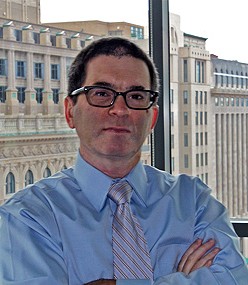
Robert Blau, a New York City native, has carved an eclectic path up the journalistic ranks. He wrote about music, reviewed movies and covered the police beat, before turning his attention to investigative reporting and editing. Following a Nieman Fellowship at Harvard University in 1997, he began overseeing all major enterprise at the Chicago Tribune, including its years-long probe of the failures of the criminal justice system in Illinois, which yielded numerous reforms and was emulated by news organizations across the country. In 2004, he was named managing editor of the Baltimore Sun, where he helped reengineer a web-first newsroom and led the paper's award-winning journalism. Blau joined Bloomberg News in 2008, where he directs a global team of investigative reporters and feature writers in collaboration with Businessweek magazine. Its projects have forced unprecedented transparency from the Fed, documented the human cost of the mining and cotton industries, and revealed how hedge funds recently exploited the Brexit vote. During his career, the stories Blau has shepherded have won numerous journalistic accolades, including the Polk, Loeb, Investigative Reporters and Editors, Goldsmith, Overseas Press Club and Pulitzer prizes. He is the author of "The Cop Shop," a memoir of covering crime in Chicago. He serves on the Nieman Foundation advisory board.
Blau joined the Pulitzer Prize Board in 2011.
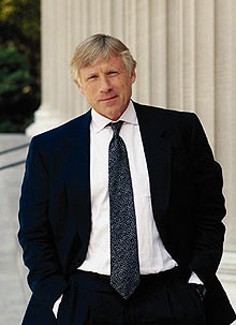
Lee C. Bollinger is a renowned legal scholar, with an expertise in free speech and the First Amendment. He is an alumnus of Columbia's Law School, where he is also a professor. He became president of Columbia University on June 1, 2002.
Born in Santa Rosa, California, Bollinger was raised there and in Baker City, Oregon. He went on to graduate from the University of Oregon in 1968 and received a J.D. from Columbia Law School. He served as a law clerk to Judge Wilfred Feinberg of the United States Court of Appeals for the Second Circuit and Chief Justice Warren Burger of the U.S. Supreme Court. Bollinger went on to join the faculty of the University of Michigan Law School in 1973, becoming dean of the school in 1987. He became provost of Dartmouth College in 1994 before returning to the University of Michigan in 1996 as president.
Bollinger has authored many articles and books on the subject of free speech such as "The Tolerant Society" (Oxford University Press, 1988) and "Images of a Free Press" (University of Chicago Press, 1991).
President Bollinger is married to artist Jean Magnano Bollinger. They have two children.

Katherine Boo, a former staff writer for The New Yorker magazine, was a reporter at The Washington Post when her series on mistreatment of mentally challenged people in Washington, DC, resulted in the 2000 Pulitzer Prize for Public Service for The Post. The Pulitzer citation praised her work for exposing "wretched neglect and abuse in the city’s group homes for the mentally retarded, which forced officials to acknowledge the conditions and begin reforms."
Boo is noted for her work focusing on poverty. In 2012, she won the National Book Award for Nonfiction for "Behind the Beautiful Forevers: Life, Death and Hope in a Mumbai Undercity," which examined life in the airport slums of Mumbai, India. The book, which was a finalist for a Pulitzer Prize in Nonfiction, also won nonfiction prizes from PEN, the Los Angeles Times Book Awards, the New York Public Library and the American Academy of Arts and Letters.
Reared in and around Washington, DC, Boo began her journalism career at the Washington City Paper and later worked at The Washington Monthly. She joined The Washington Post in 1993, serving first as an editor in the Outlook section, then as an investigative reporter. She left in 2001 to write for The New Yorker.
One of her New Yorker articles, "The Marriage Cure," examined efforts to teach poor people in an Oklahoma community about marriage in the hope that it would help them rise out of poverty. The piece won the National Magazine Award for Feature Writing in 2004. Another New Yorker article, "After Welfare," won the 2002 Sidney Hillman Award, honoring work that advances social justice.
Boo graduated summa cum laude from Barnard College and in 2002 received a MacArthur "genius" award. She is married to Sunil Khilnani, a writer and professor who directs the King’s India Institute at King’s College London.
Boo joined the Pulitzer Prize Board in 2013.
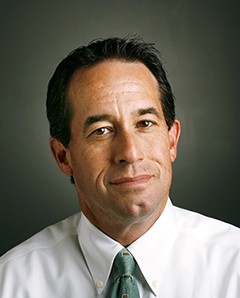
Neil Brown is the president of The Poynter Institute. He joined Poynter in September 2017, after serving as the editor and vice president of the Tampa Bay Times.
He was named editor of the Times (formerly the St. Petersburg Times) in May 2010, and in that capacity oversaw the journalism published in the Times, on its website tampabay.com, and in related products including a daily tabloid called tbt*.
During Brown's tenure leading the Times news staff, the paper won more national and state awards than at any time in its history, including six Pulitzer Prizes in the last eight years. He also launched PolitiFact.com, the fact-checking website that has been replicated nationally and inspired similar efforts worldwide.
Brown first joined Times Publishing in 1988, serving as managing editor in Washington, DC at Congressional Quarterly, a former Times affiliate company. He came to the Times in 1993 as world editor in charge of national and international news and then as managing editor and executive editor. He was named to the Times Publishing Company's board in 1997 as a director and was made a vice president in 2001.
A native of Chicago, Brown is a graduate of the University of Iowa, Phi Beta Kappa, with a bachelor's degree in political science and journalism. He began his newspaper career as a reporter and editor at The Miami Herald, covering government and politics in Miami and working in bureaus in Key West, Tallahassee and West Palm Beach.
In 2015, Brown was elected to the Pulitzer Prize Board. He previously served four years as a Pulitzer Prize nominating juror in journalism. He is past president of the Florida Society of News Editors and served six years on the Board of Directors of the American Society of News Editors. In 2010, he was inducted into the Hall of Fame at the University of Iowa School of Journalism.
Brown lives in St. Petersburg with his wife, journalist and author Gelareh Asayesh. They have two children.
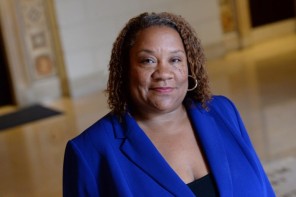
Dana Canedy is the administrator of the Pulitzer Prizes. Previously, she was senior editor at The New York Times, where she was a reporter and editor on the series "How Race Is Lived in America," the 2001 Pulitzer Prize winner in National Reporting.
During her 20-year career at The Times, she was a business and finance reporter, the Florida bureau chief and the assignment editor for national breaking news coverage. As a senior editor at The Times in recent years, Canedy led newsroom talent acquisition and management training, career development and diversity and inclusion initiatives. Before joining the Pulitzers, she served as a special adviser to the Times’s CEO and executive editor. Her media experience includes appearances on CNN, Fox News, MSNBC, NPR and The Oprah Winfrey Show.
She was a founding board member of the Digital Diversity Network, a nonprofit trade association designed to advance diversity and inclusion in the leadership and ownership of digital media. She is also a board member of Project Morry, a nonprofit that supports at-risk students from under served communities.

Nicole Carroll is Editor in Chief of USA TODAY. She was named to her current position in March 2018. Prior to that, she served as Vice President/News and Editor of The Arizona Republic and azcentral.com. During her time at the Republic, the Republic/azcentral.com was twice named a finalist for the Pulitzer Prize in Breaking News. In 2018, the Republic and the USA TODAY Network won the Pulitzer Prize in Explanatory Reporting.
Carroll graduated from the Arizona State University Walter Cronkite School of Journalism in 1991. She earned her master’s degree from Georgetown University in 1996. After graduation from ASU, she held reporting and editing jobs at the El Paso Times, USA TODAY and the East Valley (Mesa) Tribune.
Carroll joined The Arizona Republic in 1999, where she held positions ranging from city editor to planning editor to managing editor for features. She was named Executive Editor of the Republic and azcentral.com in 2008. That same year, Carroll was inducted into the Walter Cronkite School of Journalism and Mass Communication Alumni Hall of Fame. In 2015, she was named Vice President of News and Editor, and in 2016 she added regional responsibilities, serving as Southwest Regional Editor for the USA TODAY Network.
Carroll received The National Press Foundation’s prestigious 2017 Benjamin C. Bradlee “Editor of the Year” award. She has served as a juror for the Pulitzer Prizes three times (local news, breaking news and public service). She also has served as a judge for the national Hearst Journalism Awards, which honor the best in collegiate journalism. In 2018, she was elected to the board of the American Society of News Editors.
Carroll joined the Pulitzer Prize Board in 2018.
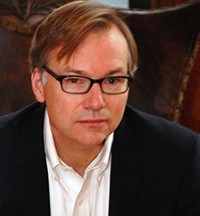
Columbia Journalism School Dean Steve Coll is a staff writer at The New Yorker, the author of eight books of nonfiction, and a two-time winner of the Pulitzer Prize. Between 1985 and 2005, he was a reporter, foreign correspondent and senior editor at The Washington Post. There he covered Wall Street, served as the paper’s South Asia correspondent in New Delhi, and was the Post’s first international investigative correspondent, based in London. He served as managing editor of the Post between 1998 and 2004. The following year, he joined The New Yorker, where he has written on international politics, American politics and national security, intelligence controversies and the media.
Coll is the author of "Ghost Wars: The Secret History of the CIA, Afghanistan, and Bin Laden, From the Soviet Invasion to September 10, 2001," published in 2004, for which he received an Overseas Press Club Award and a Pulitzer Prize. His 2008 book, "The Bin Ladens: An Arabian Family in the American Century," won the PEN/John Kenneth Galbraith Award for Nonfiction in 2009 and was a finalist for the Pulitzer Prize for Biography. His most recent books are "Private Empire: ExxonMobil and American Power" (2012), which won the Financial Times/Goldman Sachs Award as the best business book of 2012, and "Directorate S: The CIA and America's Secret Wars in Afghanistan and Pakistan, 2001–2016" (2018).
He has four children and is married to Eliza Griswold, the journalist and poet. He has a B.A. in English and history from Occidental College.
Coll was elected to the Pulitzer Prize Board in 2012 before becoming an ex officio member as dean in 2013.
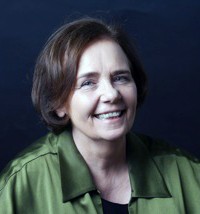
Gail Collins joined the editorial board of The New York Times in 1995 and six years later became the first woman editor of The Times’ editorial page. At the beginning of 2007, she stepped down and took a leave in order to finish a book, When Everything Changed: The Amazing Journey of American Women from 1960 to the Present. She returned to the paper as an Op-Ed columnist later in 2007.
Before joining The New York Times, Collins was a columnist at New York Newsday and the New York Daily News. She also was a financial reporter for United Press International.
Her first jobs in journalism were in Connecticut. She was a senior editor for Connecticut Magazine, a weekly columnist for the Connecticut Business Journal and the host of a public affairs program for Connecticut Public Television. She founded the Connecticut State News Bureau, which provided coverage of the state capitol and Connecticut politics. When she sold it in 1977, the CSNB was the largest news service of its kind in the country, with more than 30 weekly and daily newspapers.
Collins’ most recent book is As Texas Goes: How the Lone Star State Hijacked the American Agenda, published in 2012. She is also the author of America’s Women, Scorpion Tongues: Gossip, Celebrity and American Politics, a biography of William Henry Harrison and The Millennium Book, which she co-authored with her husband, Dan Collins, a writer and editor.
A native of Cincinnati, Collins is a graduate of Marquette University with a B.A. in journalism, and a graduate of the University of Massachusetts, Amherst, with an M.A. in government. She is a recipient of an Associated Press award for commentary, 1994; a Women in Communications Matrix Award, 1989; and a Meyer Berger Award, Columbia University, 1987. She was a Bagehot Fellow in Economic Journalism at Columbia in 1981-1982.
Collins joined the Pulitzer Prize Board in 2013.

John Daniszewski is the AP's vice president and editor at large for standards, working with journalists and editors around the world to ensure the highest levels of media ethics and fairness. From 2009 to 2016, he served as AP’s vice president for international news after three decades as a reporter, editor and correspondent assigned to more than 70 countries in Europe, Africa, the Middle East, Latin America and Asia. He was responsible for more than 500 editors and reporters in some 100 bureaus outside the United States producing coverage from some of the most complex and challenging news-gathering environments.
Daniszewski played a central role in AP’s opening of the first Western news and photo bureau in Pyongyang, North Korea, in 2012, and the Yangon, Myanmar, bureau earlier in 2013 -- the first return to that country by a Western news agency after decades of strict military rule. He worked for the Los Angeles Times from 1996-2006, serving as bureau chief in Cairo, Moscow, Baghdad and London. In 2001, he covered the aftermath of the 9/11 attacks in Pakistan and Afghanistan, and he stayed in Baghdad throughout the U.S. invasion and the toppling of Saddam Hussein's regime in 2003. He was part of a team that won an Overseas Press Club award in 2007 and that was a Pulitzer Prize finalist that year for coverage of Iraq’s descent into civil war.
Daniszewski began his journalism career as a stringer for the AP while an undergraduate at the University of Pennsylvania. He joined the AP staff in Philadelphia in 1979 and later worked in Harrisburg and on the national and international editing desks in New York. In 1987, he was assigned overseas to Warsaw, Poland. There he covered the revival of Solidarity and the end of Communist rule. In 1989, he was shot and wounded in Timisoara, Romania, during the uprising against Nicolae Ceausescu’s communist regime. He later covered wars across the former Yugoslavia, including the siege of Sarajevo. In 1993, he became AP’s bureau chief in Johannesburg, South Africa. He led the AP’s coverage of the election of President Nelson Mandela and the end of apartheid before leaving in 1996 to go to the Times. He returned to AP as international editor in 2006 and was named a managing editor the next year.
Daniszewski graduated from the University of Pennsylvania’s Wharton School and the Sulzberger Media Leadership Program at Columbia University. An Ohio native, he is married to Dru Menaker, senior media advisor for the international development organization IREX. They live in Nyack, NY, and have two children in college, Benjamin and Anna. He is a member of the North American Committee of the International Press Institute and the Board of Governors of the Overseas Press Club Foundation.
Daniszewski joined the Pulitzer Prize Board in 2013.
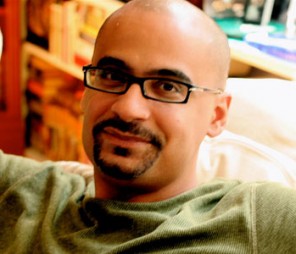
A creative writing professor at the Massachusetts Institute of Technology, Junot Díaz won the 2008 Pulitzer Prize for Fiction for his best-selling first novel, The Brief Wondrous Life of Oscar Wao.
The Pulitzer Board described the work as “a dazzling, richly layered novel about an overweight, nerdy Dominican-American teenager who comes of age in a multi-generational immigrant family, devouring comic books, spinning fantasies and searching for love.”
Widely acclaimed, the book also won the John Sargent Sr. First Novel Prize, the National Book Critics Circle Award, the Anisfield-Wolf Book Award and the Dayton Literary Peace Prize. “Funny, street-smart and keenly observed,” a New York Times review of the novel said. “An extraordinarily vibrant book that’s fueled by adrenaline-powered prose.”
Díaz was born in Santo Domingo, Dominican Republic, and emigrated to New Jersey as a child. Working his way through college, he graduated from Rutgers University with a degree in English.
Díaz preceded his Pulitzer-winning work with Drown, a debut collection of 10 short stories narrated by adolescent Dominican males living in hard-pressed communities in the Dominican Republic, New York and New Jersey. “These stories,” said Publisher’s Weekly, “chronicle their outwardly cool but inwardly anguished attempts to recreate themselves in the midst of eroding family structures and their own burgeoning sexuality.”
Díaz’s fiction has also appeared in The New Yorker, African Voices, Best American Short Stories (1996, 1997, 1999, 2000), in Pushcart Prize XXII and in The O'Henry Prize Stories 2009. He is the fiction editor at the Boston Review.
Much in demand as a speaker, Díaz has been honored frequently for his work. He has received a Eugene McDermott Award, a fellowship from the John Simon Guggenheim Memorial Foundation, a Lila Acheson Wallace Readers Digest Award, the 2002 Pen/Malamud Award, the 2003 US-Japan Creative Artist Fellowship from the National Endowment for the Arts, a fellowship at the Radcliffe Institute for Advanced Study at Harvard University and the Rome Prize from the American Academy of Arts and Letters.
Diaz joined the Pulitzer Prize Board in 2010.
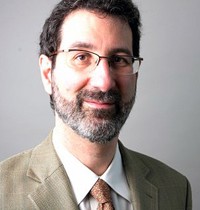
Stephen Engelberg became ProPublica's editor-in-chief on Jan. 1, 2013. He oversees its day-to-day editorial operations, long-term projects and Web strategy. During his time as managing editor, ProPublica became the first online news organization to win Pulitzer Prizes. In 2010, it won the Investigative Reporting prize for chronicling the life-and-death decisions by a hospital’s exhausted doctors when they were isolated by the floodwaters of Hurricane Katrina. A year later, it won the National Reporting prize for exposing Wall Street practices that contributed to the nation’s economic meltdown.
Before joining ProPublica, he worked for The Norfolk Virginian-Pilot, The Dallas Morning News, The New York Times and The Oregonian of Portland, Ore., where he was a managing editor. During his years at The Oregonian, the paper won the Pulitzer for Breaking News Reporting and was a finalist for its investigative work on methamphetamines and on charities intended to help the disabled.
Engelberg was with The Times for 18 years, including stints in Washington, DC, and Warsaw, Poland, as well as in New York. After serving as the bureau chief in Warsaw following the collapse of Communism, he resumed work as an investigative reporter. Engelberg shared in two George Polk Awards for reporting: the first, in 1989, for articles on nuclear proliferation; the second, in 1994, for articles on U.S. immigration. He was a finalist for the Pulitzer Prize as a reporter in 1998 for an investigation of the crash of a commuter airplane.
Since 1996, Engelberg has concentrated on editing investigative projects. Engelberg was the first editor of The Times’ investigative unit and directed teams of reporters who won Pulitzer Prizes for national, foreign and explanatory journalism. Among the winning projects were ones that examined Mexican corruption (published in 1997) and the rise of Al Qaeda (published beginning in January 2001).
Engelberg is the co-author of "Germs: Biological Weapons and America’s Secret War." He shared an Emmy in 2001 for work on a documentary on biological warfare by the PBS program Nova.
A native of Lexington, Mass., Engelberg graduated from Princeton University in 1979 with a degree in history. He lives in Montclair, N.J., with his wife, Gabrielle Glaser, and three daughters.
Engelberg joined the Pulitzer Prize Board in 2012.

Steven Hahn is a professor of history at New York University. He holds a B.A. from the University of Rochester, and an M.A. and Ph.D. from Yale University.
Hahn is a historian of the United States during the 19th century, of slavery and emancipation in the Atlantic world, of African American history, and the history of popular politics. His major publications include "A Nation Without Borders: The United States and Its World in an Age of Civil Wars, 1830-1910"; "The Political Worlds of Slavery and Freedom"; "Freedom: A Documentary History of Emancipation"; "Land and Labor in 1865"; "A Nation Under Our Feet: Black Political Struggles in the Rural South from Slavery to the Great Migration"; "The Countryside in the Age of Capitalist Transformation: Essays on the Social History of Rural America"; and "The Roots of Southern Populism: Yeoman Farmers and the Transformation of the Georgia Upcountry, 1850-1890." He serves as a member of the Pulitzer Prize Board, on several editorial boards, and as an occasional historical expert in cases related to racial discrimination.
In the past, Hahn has received the Pulitzer Prize in History (2004), the Bancroft Prize in American History (2004), the Merle Curti Prize in Social History (2004), the Frederick Jackson Turner Prize (1984), and the Allan Nevins Prize (1980). He has also received fellowships from the Guggenheim Foundation, the ACLS, the NEH, the Center for Advanced Study in the Behavioral Sciences at Stanford, and the Huntington Library. Before coming to NYU, he was on the faculty of the University of Delaware, the University of California, San Diego, Northwestern University, and the University of Pennsylvania.
Hahn joined the Pulitzer Prize Board in 2011.

As executive editor of The Miami Herald, Aminda Marqués Gonzalez has oversight and responsibility for the newspaper’s print and online news operation, which reaches 1.2 million readers a week.
A 1986 graduate of the University of Florida, she began her journalism career 25 years ago as a summer intern at the newspaper covering community news. During nearly a decade of local reporting, Marqués went on to cover Hialeah, the second largest city in the newspaper’s home county, and followed the landmark case involving the Santeria religion to the U.S. Supreme Court.
She moved to editing in 1994, where she directed government reporting, local politics and breaking news. Named deputy metro editor in 2000, she oversaw metro, state and community news operations. From 2002 to 2007, Marqués was Miami bureau chief for People magazine, overseeing coverage for the southeast U.S., the Caribbean and Latin America.
She returned to The Miami Herald in 2007 as a multimedia editor to help launch Miami.com, the newspaper’s entertainment website. As executive features/Sunday editor, she directed a redesign of the lifestyle sections from tabloid to broadsheet. She also was responsible for the newsroom’s enterprise stories and for oversight of the Sunday paper.
Named managing editor in 2010, Marqués led a wide-ranging newsroom reorganization building teams around content, design and the distribution of stories across platforms. During her tenure as managing editor, The Miami Herald was a 2011 Pulitzer Prize finalist for coverage of the earthquake in Haiti.
In November 2010, Marqués was named executive editor, the newspaper’s first Hispanic editor and only the second woman to hold the post. During her editorship, The Miami Herald was a 2012 finalist for the Pulitzer Prize in Public Service for a series detailing the state’s systemic failures in regulating assisted-living facilities.
She is a member of the National Advisory Board of the Poynter Institute, sits on the board of the Associated Press Media Editors and has served as a Pulitzer journalism juror. She was named one of the 2011-2012 Alumni of Distinction for the University of Florida College of Journalism and Communications. Marqués and her husband have two children.
Marqués joined the Pulitzer Prize Board in 2012.
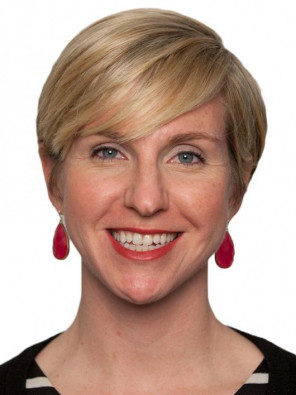
Emily Ramshaw is the editor-in-chief of The Texas Tribune, a digital news organization.
Under Ramshaw’s leadership, the Tribune produces politics and policy news, data and events statewide, and operates the largest statehouse reporting bureau in the nation. In addition to the Tribune’s original reporting and investigative projects, Ramshaw oversees audience and technology initiatives, premium newsletter products and TribTalk, a partner op-ed site.
Billed as “one of the nonprofit news sector’s runaway success stories,” the site has won nine national Edward R. Murrow Awards and nine honors from the Online News Association. It has also been recognized for innovation in investigative reporting.
By way of its free syndication model, the Tribune has filled the pages of Texas newspapers, broadcast on TV and radio airwaves statewide, and provided Texas-specific reporting for both The Washington Post and The New York Times.
Before joining the Tribune in 2010 as one of its founding reporters, Ramshaw, 35, spent six years at The Dallas Morning News, where she broke national stories about sexual abuse inside Texas’s youth lock-ups, reported from inside a West Texas polygamist compound, and uncovered “fight clubs” inside state institutions for people with disabilities. The Texas Associated Press Managing Editors named Ramshaw its 2009 star reporter of the year.
A native of Washington, D.C., and the daughter of two journalists, Ramshaw graduated from Northwestern University in 2003 with dual degrees in journalism and American history. She lives in Austin, Texas, with her husband David Hartstein, an Emmy Award-winning film producer, and a baby girl, Sophie.
Ramshaw joined the Pulitzer Prize Board in 2016.

Eugene Robinson is a columnist and associate editor of The Washington Post, where he has worked since 1980. His twice-weekly column on the paper’s op-ed page debuted in February 2005 and is now syndicated by the Washington Post Writers Group to 262 newspapers.
In 2009, Robinson won the Pulitzer Prize for Commentary for his columns about the 2008 presidential campaign and the election of President Barack Obama.
Before becoming a columnist, Robinson held a variety of jobs at at the Post, including city hall reporter, city editor, South America correspondent, London bureau chief, foreign editor and assistant managing editor. During the 1987-88 academic year, he was a Nieman Fellow at Harvard University.
A native of Orangeburg, S.C., Robinson graduated from Orangeburg High School, where he was one of a handful of black students on a previously all-white campus. At the University of Michigan, he was the first black co-editor-in-chief of the student newspaper, The Michigan Daily. He began his career at the San Francisco Chronicle, where he participated in coverage of the Patty Hearst kidnapping.
For nearly a decade, Robinson has appeared regularly as a political analyst and commentator on MSNBC. A member of the National Association of Black Journalists, he was elected to the organization’s hall of fame.
Robinson is the author of three books: Coal to Cream: A Black Man’s Journey Beyond Color to an Affirmation of Race; Last Dance in Havana; and Disintegration: The Splintering of Black America. He is married, has two sons and lives in Arlington, Va.
Robinson joined the Pulitzer Prize Board in 2010.
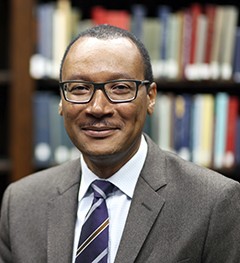
Tommie Shelby is an Africana studies scholar whose writings focus on racial and economic justice and on the history of black political thought. He is the Caldwell Titcomb Professor of African and African American Studies and of Philosophy at Harvard.
Shelby’s first book, "We Who Are Dark: The Philosophical Foundations of Black Solidarity" (2005), explores the relationship between race, identity, solidarity and justice through a philosophical reconsideration of leading African American thinkers from the era of slavery to the post-Jim Crow era. He coedited "Hip Hop and Philosophy: Rhyme 2 Reason" (2005), which brings the classic debates of Western philosophy to a general audience through the idiom of hip-hop culture, and "To Shape a New World: Essays on the Political Philosophy of Martin Luther King, Jr." (2018).
He is also the author of "Dark Ghettos: Injustice, Dissent, and Reform" (2016). Characterized by Columbia University philosopher Robert Gooding-Williams as "a major, groundbreaking contribution to both philosophical and public policy discourse about the ghetto poor," it received the 2016 Book Award from the North American Society for Social Philosophy.
Shelby’s numerous academic articles have appeared in journals such as Philosophy & Public Affairs, Ethics, Political Theory, Critical Inquiry, Du Bois Review and Daedalus. He has also written for The New York Times Book Review, Boston Review, The Root and The Chronicle of Higher Education. From 2006 to 2014, he was co-editor of Transition, a literary and cultural magazine with a focus on Africa and its Diaspora.
A native of Jacksonville, Fla., Shelby received his B.A. from Florida A&M University and Ph.D. from the University of Pittsburgh. He began his academic career as an assistant professor of philosophy at The Ohio State University. He has been on the faculty at Harvard since 2000.
Shelby is married to the writer and editor Jessie Scanlon. They live with their daughter and son in Cambridge, Mass.
Shelby joined the Pulitzer Prize Board in 2015.