Pulitzer Prize Board 1932-1933
(Courtesy of the Columbia University Libraries)
Carl William Ackerman (1890-1970), Columbia University B. Litt. 1913, was Dean of the Columbia University School of Journalism from 1931 to 1956. He spent from 1960 to 1962 researching and writing a biography (unpublished) of Hokan Bjornstrom Steffanson, 1883-1962, the Swedish-American industrialist and financier.
Ackerman was a champion of freedom of the press. His professional career was forged in both major World Wars. While working as a correspondent in World War I with the United Press, Ackerman came to attention when he published Germany, The Next Republic?, a book that discussed the possibility of a successful democracy in post-Kaiser Germany.
When the book was printed in 1917, at the height of World War I, this sentiment was considered quite radical. The London Times Literary Supplement commented: "For the serious student of affairs the importance of the book lies in the large mass of information which it contains as to the struggle which was going on all the time in Germany between the two great parties, the Pan-Germans and the party of comparative moderation which centered round the Foreign Office." Mexico's Dilemma was considered "topical," "limited in scope and subject," and of "little relevance." Trailing the Bolsheviki was similarly received. As a biography, Dawes, the Doer was panned as "poorly handled," whereas Biography of George Eastman was called by the New York Tribune "objective in the sense that it holds strictly to the drama of events in justification of its hero. This makes it eminently readable, even exciting at times, purely as an epic of success achieved, a sort of `Pilgrim's Progress' of business."
Mr. Ackerman was an outspoken advocate of a journalism foundation in the United States "dedicated to the study of the daily newspaper and government." He explained, "We need scientific studies of the press by the press, and for the press, which will contribute to the progress of journalism as the great educational foundations have advanced medicine."
Ackerman married Mabel VanderHoof in 1914, and was the father of Robert VanderHoof Ackerman. Writings by Ackerman: Germany, the Next Republic?, Hodder & Stoughton, 1917.; Mexico's Dilemma, Doran 1918, Gordon Press, 1976; Trailing the Bolsheviki, Scribner, 1919; Dawes, the Doer (biography), Houghton, 1930; Biography of George Eastman, Houghton, 1930. Ackerman authored numerous articles, pamphlets, and reports on journalism and related affairs.
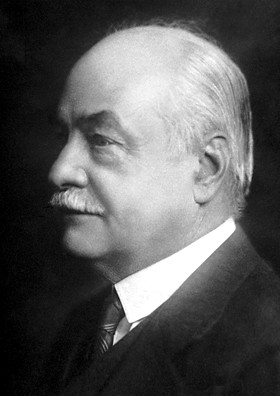
Nicholas Murray Butler (April 2, 1862-December 7, 1947) was an educator and university president; an adviser to seven presidents and friend of statesmen in foreign nations; recipient of decorations from fifteen foreign governments and of honorary degrees from thirty-seven colleges and universities; a member of more than fifty learned societies and twenty clubs; the author of a small library of books, pamphlets, reports, and speeches; an international traveler who crossed the Atlantic at least a hundred times; a national leader of the Republican Party; an advocate of peace and the embodiment of the «international mind» that he frequently spoke about. He was called Nicholas Miraculous Butler by his good friend Theodore Roosevelt; the epithet was so perfect that, once uttered, it could not be forgotten.
Born in Elizabeth, New Jersey, this son of Henry L. Butler, a manufacturer, and Mary Murray Butler, daughter of Nicholas Murray, a clergyman and author, began his career with a brilliant record as a student. In 1882, at the age of twenty, he received his bachelor's degree, in 1883, a master's degree, in 1884, a doctorate - all from Columbia College; in 1885 he studied in Paris and in Berlin where he began a lifelong friendship with Elihu Root, who was also destined to become a Nobel peace laureate. In the fall of 1885, he accepted an appointment on the staff of the Department of Philosophy at Columbia College, which in 1896 became Columbia University. And so began a professional association that was to last for sixty years.
From the first, Butler distinguished himself as an educational administrator. Within four years he gave administrative form to his philosophical theory of pedagogy by establishing an institute which, later affliated with Columbia, became known as Teachers College. He founded the Educational Review and edited it for thirty years, wrote reports on state and local educational systems, served as a member of the New Jersey Board of Education from 1887 to 1895, participated in the formation of the College Entrance Examination Board. He was named acting president of Columbia University in 1901 and president in 1902, retaining that position until retirement in October, 1945.
Under his presidency, Columbia University made phenomenal growth. It became a major university. All graduate studies were enormously expanded; the scope of professional training was enlarged to include new schools such as those of journalism and dentistry; the student body was increased from 4,000 to 34,000 and the faculty by a like ratio; the plant was enlarged by a construction program that averaged a new building each year, and the endowment kept pace; the professorial salaries were increased enough to attract many of the world's leading scholars to the teaching and research staff.
Butler moved in the realm of politics as easily as he did in that of education. He was a delegate to the Republican convention for the first time in 1888 and for the last in 1936. Butler, Root, William Howard Taft, and Theodore Roosevelt constituted a powerful political quartet in the early years of the century. Breaking with the others in 1912, Roosevelt ran for the presidency as the candidate of the Progressive Party, which drew most of its strength from Republicans, against the nominees of the constituted party: Taft for the presidency and Butler for the vice-presidency. By splitting the national vote, they permitted the Democrat, Woodrow Wilson, to win the election. In 1916 Butler failed in his attempt to secure the Republican presidential nomination for Root and in 1920 and 1928 failed to secure it for himself.
Meanwhile, Butler sought to unite the world of education and that of politics in a struggle to achieve world peace through international cooperation. He was chairman of the Lake Mohonk Conferences on International Arbitration, which met periodically from 1907 to 1912, and was appointed president of the American branch of International Conciliation, an organization founded by another Nobel peace laureate, d'Estournelles de Constant. His association with the Carnegie Endowment for International Peace was a fruitful one of thirty-five years. Influential in persuading Andrew Carnegie to establish the Endowment in 1910 with a gift of $ 10,000,000, he served as head of the Endowment's section on international education and communication, founded the European branch of the Endowment, with headquarters in Paris, and held the presidency of the parent Endowment from 1925 to 1945.
Butler married twice. His first wife, whom he married in 1887 and by whom he had one daughter, died in 1903; he remarried in 1907. When Butler became almost totally blind in 1945 at the age of eighty-three, he resigned the demanding posts he still held. He died two years later.
In 1940, Butler completed his autobiography with the publication of the second volume of Across the Busy Years. Both in size and in title it is peculiarly appropriate.
--From Nobel Lectures, Peace 1926-1950, Editor Frederick W. Haberman, Elsevier Publishing Company, Amsterdam, 1972
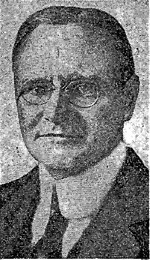
Stuart H. Perry (1874-1957) was a newspaper publisher and authority on meteorites. He made extensive collections of meteorites and donated many specimens to the United States National Museum (USNM). In 1940, Perry became an Honorary Associate in Mineralogy, USNM, a title he held until his death.
|