Pulitzer Prize Board 1999-2000
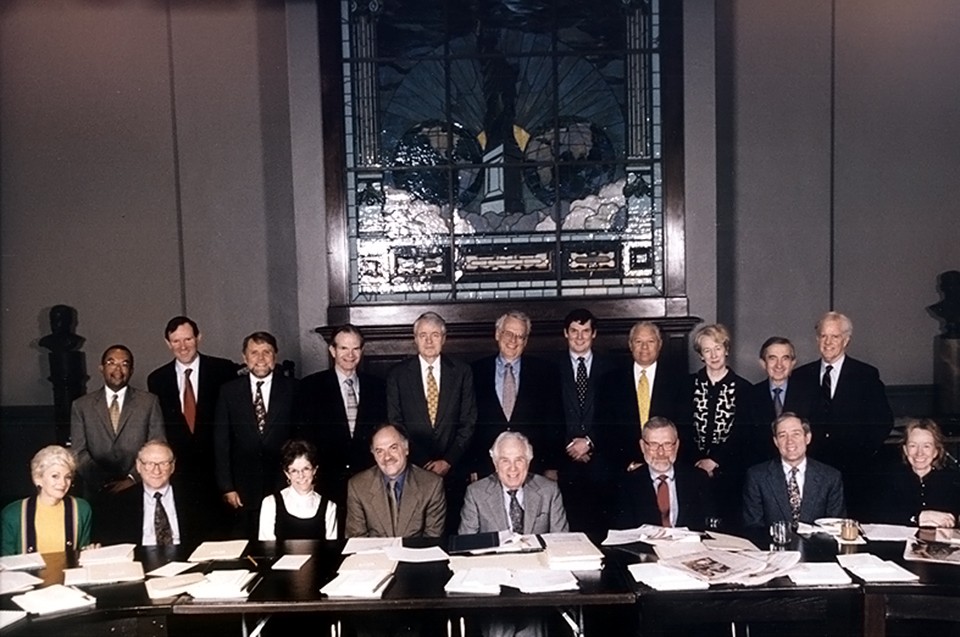
Front row: S. Pederson, W. Safire, J. Byrd, T. Goldstein, S. Topping, J. Fuller, G. Rupp, D. Goodwin; Back row: H. Gates, D. Graham, M. Pride, P. Steiger, J. Carroll, A. Barnes W. Ketter, J. Dotson, S. Rowe, L. Boccardi, E. Seaton --(photo credit: Joe Pineiro)
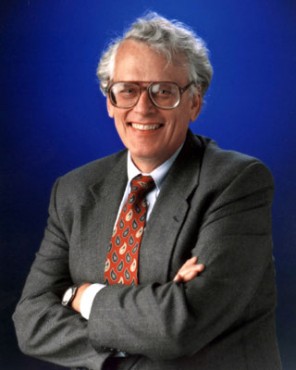
Andrew Barnes, chairman of the Poynter Institute for Media Studies, and former chairman and CEO of the St. Petersburg Times, is a native of New York City and a graduate of Harvard University where he took his degree in history.
He began his professional career on the Providence (R.I.) Journal. After two years in the Army, he joined the Washington Post in 1965. During his eight years at the Post, he rose from reporter to deputy metropolitan editor before taking charge of the Post's education bureau. During 1969-70, he traveled in Europe and Africa on an Alicia Patterson Fellowship studying urban change.
In 1973, Barnes joined the St. Petersburg Times as assistant managing editor and metropolitan editor; in February 1976, he was promoted to managing editor. He became editor and president in April, 1984. In 1988 he succeeded Gene Patterson as chief executive of the Times Publishing Company and chairman of The Poynter Institute for Media Studies. He relinquished the titles of Editor and President to Paul Tash in February 2000.
He is immediate past-Chairman of the Newspaper Association of America, and past chairman of the American Society of Newspaper Editors Ethics Committee. He was named to the Pulitzer Board in 1996.
Barnes is married to the former Molly Otis; they have two sons, a daughter, and three grandchildren.
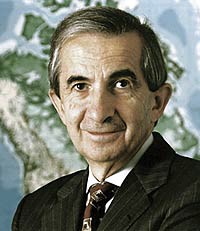
Louis D. Boccardi, president and chief executive officer of Associated Press, has been elected chair of the Pulitzer Prize Board. His selection was announced by President George Rupp. Columbia University awards the annual prizes on the board's recommendation.
Boccardi has been president and chief executive officer of Associated Press, the world's largest news organization, since 1985. Prior to assuming the presidency, he served one year as executive vice president and chief operating officer and 10 years as executive editor in charge of AP's news operations.
Born in New York City, Boccardi holds a B.A. degree from Fordham College and a master's degree in journalism from Columbia. He joined the AP as executive assistant to the general news editor in 1967 after eight years with New York newspapers, during which he rose to the position of assistant managing editor of the World-Telegram and Sun and its successor newspaper, The World Journal Tribune. He was appointed AP managing editor in 1969, executive editor in 1973 and vice president in 1975.
In 1990 Boccardi was elected a fellow of the Society of Professional Journalists, the highest honor SPJ awards journalists for public service. He has received the William Allen White Foundation Award for Journalistic Merit, the Overseas Press Club Lifetime Achievement Award, and the Columbia University Graduate School of Journalism Award and was elected a Distinguished Service Member of the American Society of Newspaper Editors. Boccardi and the AP were awarded the 2001 John Peter and Anna Catherine Zenger award for Freedom of the Press and the Public's Right to Know.
Boccardi is a member of the national advisory board of the Freedom Forum Center for Media Studies, the board of trustees of the Newseum, and the board of visitors of Columbia's Graduate School of Journalism, and is an honorary trustee of the William Allen White Foundation at the University of Kansas.
Elected to the Pulitzer Prize Board in 1994, Boccardi succeeds Edward Seaton, editor in chief of The Manhattan (Kan.) Mercury, who has retired from the board after having served as chair. Members of the board serve a maximum of nine years.
Columbia University press release published May 08, 2001
Joann Byrd retired June 2, 2003, after six years as the editorial page editor at the Seattle Post-Intelligencer.
From June 1992 to June 1995, she was ombudsman at The Washington Post, and had been executive editor of The Herald, Everett, WA, for 12 years.
After getting a master's in philosophy, Joann taught journalism ethics at the University of Washington and the Poynter Institute for Media Studies. She was chair of the American Society of Newspaper Editors Ethics and Values Committee, and is primary creator of The Ethics Tool, a decision-making procedure for journalists, posted on the Poynter website.
She is writing a book about the Heppner, Oregon, flood of 1903.
Joann Byrd joined the Pulitzer Board in 1999. She co-chaired the 2008 Pulitzer Prize Board.
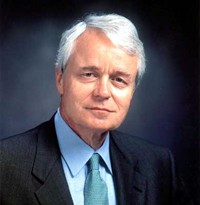
John S. Carroll, 60, has been editor and executive vice president of the Los Angeles Times since 2000 and vice president of Times Mirror since 1998.
Previously, he was editor of The Baltimore Sun and senior vice president of The Baltimore Sun Company for nine years. Prior to that he served as editor, vice president and executive vice president at the Lexington Herald-Leader.
The Rhode Island native spent two years in the military after earning a bachelor's degree in English literature from Haverford College. He later studied as a Nieman Fellow at Harvard University and as a Visiting Journalist Fellow at Oxford University, in the late 1980s.
His first reporting job was as staff reporter at the Providence Journal-Bulletin in 1963. He went on to become a reporter and later a foreign correspondent at The Baltimore Sun and worked as an editor at the Philadelphia Inquirer in the 1970s.
Named Editor of the Year by the National Press Foundation in 1998, Carroll also has a longtime affiliation with the American Society of Newspaper Editors, having served on the organization's board of directors and its Writing Awards Board.
Carroll was elected as a Pulitzer Prize Board member in 1994. Carroll has also served as a Pulitzer Prize juror.
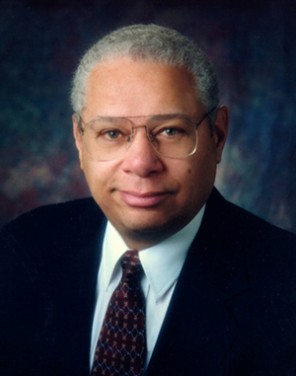
Prior to joinging the Akron Beacon Journal, John Dotson was publisher of the Daily Camera in Boulder, Colo.
In prior positions, he was director of night operations at the Philadelphia Inquirer, transportation and circulation administration manager of the Philadelphia Daily News, and executive assistant to Philadelphia Newspapers, Inc., President Sam Keel. He also worked in several editorial departments of the Inquirer.
John joined PNI in 1983 after 17 years at Newsweek, where he held posts as Los Angeles bureau chief and senior editor/news editor in New York. He also worked at the Newark Evening News and Detroit Free Press.
As news editor at Newsweek, John coordinated the magazine's worldwide network of correspondents for seven years. He also handled Newsweek's logistical arrangements for the Republican and Democratic national conventions in 1976 and 1980.
He is a member of the board of visitors of the John S. Knight Fellowship Program, which offers working journalists a year's study at Stanford University in California. He also is a director of the Institute for Journalism Education, which runs several training programs for minority journalists, and is a member of the ANPA Minority Opportunity Committee. John also serves on the advisory boards for the schools of journalism at University of Colorado, University of North Carolina and University of Southern California.
In Boulder, he is chairman of the Boulder Chamber of Commerce's Economic Futures Panel. He also is a member o the development committee of the San Juan Family Learning Center, and agency devoted to aiding disadvantaged families in Boulder.
John is a graduate of Temple University in Philadelphia. He received an honorary doctorate from Temple in 1981. He is married and is the father of five.
(June 10, 1991)
(Courtesy of the Newberry Library)
Jack William Fuller was born in Chicago, Illinois, on October 12, 1946. The son of Ernest Fuller, a financial reporter for the Chicago Tribune, and Dorothy Fuller, he followed his father into journalism, beginning as a copyboy at the Chicago Tribune at age 16. He received his BS degree in Journalism from Northwestern University in 1968, and also attended Yale Law School, receiving his JD degree in 1973.
Fuller's law studies were interrupted when he was drafted into the United States Army during the Vietnam War. From 1969-1970 he served as a Vietnam correspondent for Pacific Stars and Stripes. During the summer of 1972, Fuller wrote for the Washington Post.
From 1973-1975 he worked as a general assignment reporter for the Chicago Tribune, but left the paper to join the U.S. Department of Justice as special assistant to Attorney General Edward Levi. Fuller rejoined the Tribune as Washington correspondent in 1977, and in 1978 returned to Chicago as an editorial writer. He served as Editorial Page Editor from 1981-1987, was appointed Executive Editor in 1987, and Vice President and Editor in 1989. From the late 1980s to the early 1990s, he devoted the bulk of his writing to jazz criticism for the Tribune. Fuller was named Publisher of the newspaper in 1994, and President of the Tribune Publishing Company in 1997. He was named to the board of directors in 2001.
Fuller simultaneously pursued a writing career, and published six novels: Convergence, 1982; Fragments, 1984; Mass, 1985; Our Fathers' Shadows, 1987; Legend's End, 1990; and The Best of Jackson Payne, 2000. Fuller also authored the nonfiction News Values: Ideas for an Information Age, published in 1996.
Fuller was married to Alyce Tuttle from 1972-2002 and the couple had two children, Timothy and Katherine. Fuller married Debra Moskovits in 2004.
In 1986, Fuller won a Pulitzer Prize for his editorial writing on constitutional issues. Though he retired from the Tribune Company in 2004, he continues to write editorials for the paper as well as lecture on various journalistic issues. In 2005 Fuller was named to the Board of Directors of the John D. and Catherine T. MacArthur Foundation, a private, independent grantmaking institution based in Chicago. He also serves as a Trustee of the University of Chicago and the Field Museum.
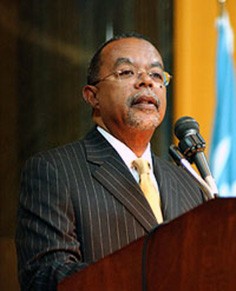
Henry Louis Gates Jr., is the W.E.B. Du Bois Professor of the Humanities, chair of the Afro-American Studies Department and director of the W.E.B. Du Bois Institute for Afro-American Research at Harvard University.
With 40 honorary degrees, Gates is a world-renowned scholar and teacher of African and African-American history and culture. He has authored seven books and written numerous essays and reviews on a broad range of African and African-American issues, including slavery, race, feminism, dialect and identity.
In 1989 he won the American Book Award for The Signifying Monkey: A Theory of Afro-American Literary Criticism. And he recently completed his second major documentary, America Beyond the Color Line. He also authored Colored People: A Memoir in 1994, tracing his childhood experiences in a small West Virginia town in the 1950s and 1960s; The Future of the Race (1996), co-authored with Cornel West; and Thirteen Ways of Looking at a Black Man (1997).
Gates has edited several anthologies, including The Norton Anthology of African American Literature (1996). He wrote a 1994 cover story for Time magazine on the new black Renaissance in art, and has written numerous articles for the New Yorker. In 2000, Gates authored, along with Cornel West, the widely acclaimed The African American Century: How Black Americans Have Shaped Our Century. That came on the heels of the authoritative and groundbreaking Africana: The Encyclopedia of the African and African American Experience, a collaboration with K. Anthony Appiah. It was also published on a CD-ROM as Encarta Africana by Microsoft. More recently, Gates authenticated the first novel by a female fugitive slave, The Bondwoman's Narrative.
Gates began his tenure at Harvard in 1991 after serving on the faculties at Duke, Cornell, and Yale. He is a 1973 summa cum laude, Phi Beta Kappa graduate of Yale, and earned his M.A. and Ph.D. (1979) from Clare College, The University of Cambridge.
Gates has received dozens of awards and honors, including the National Humanities Award presented by President Bill Clinton in 1998, the MacArthur Foundation "genius grant" (1981), and election to the American Academy of Arts and Letters (1999).
He has been named one of the "25 Most Influential Americans" by Time magazine in 1997, the year he joined the Pulitzer Board.
Tom Goldstein worked as a reporter at AP, Newsday, The Wall Street Journal and The New York Times. He was press secretary to New York City Mayor Edward Koch. Goldstein has written “The News at Any Cost,” “A Two-Faced Press” and co-authored “The Lawyers Guide to Writing Well.” He edited the “Killing the Messenger: 100 years of Press Criticism.” Goldstein is a graduate of Yale and Columbia’s law school and journalism school.
Tom Goldstein joined the Pulitzer Prize Board in 1998.
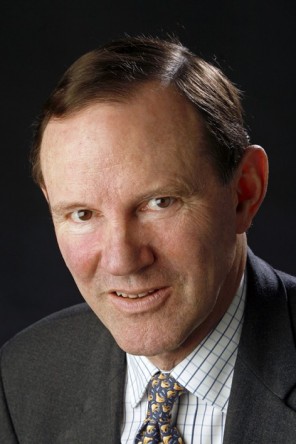
Donald E. Graham became chief executive officer of The Washington Post Company in 1991 and chairman of the board in 1993. Publisher of the The Washington Post newspaper since 1979, Graham is a trustee of the Federal City Council in Washington, D.C., chairman of the District of Columbia College Access Program, and a member of the board of directors of The Summit Fund of Washington.
A 1966 graduate of Harvard College, where he was president of the Harvard Crimson, Graham served as an information specialist with the 1st Cavalry Division in Vietnam from 1967 to 1968. Later, he became a patrolman with the Washington Metropolitan Police Department, a reporter at The Washington Post and held several news and business positions at Newsweek. Graham was elected a director of The Washington Post Company in 1974 and served as president from 1991-1993; he was named executive vice president and general manager of The Washington Post in 1976.
Graham served as a Pulitzer Prize board member from 1999-2008.
Vice President and Assistant to the Publisher, The Boston Globe. No photo currently available.
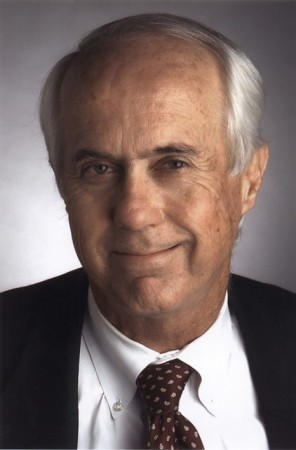
Richard Oppel has been editor of the Austin American-Statesman since 1995 and is responsible for news and editorial content.
After serving in the Marine Corps, he graduated from the University of South Florida and began his career with the Tampa Tribune. He worked for the Associated Press and the Detroit Free Press before becoming executive editor of the Tallahassee Democrat in 1977, and then editor of the Charlotte Observer in 1978.
During his 15 years in Charlotte, the Observer won two Pulitzers, both gold medals for meritorious public service, and shared a Pulitzer with the Atlanta Constitution for editorial cartoons. Oppel has been the National Press Foundation's Editor of the Year, president of the American Society of Newspaper Editors and president of the North Carolina Press Association.
He and his wife Carol have two children, Richard Jr., a New York Times reporter; and Shelby Oppel Wood, a Portland Oregonian reporter.
He became a Pulitzer Board member in 2000.
Named one of the most powerful women in Texas by Texas Monthly magazine, Rena Pederson has held senior posts at the Dallas Morning News since 1973. As editor at large since 2002, she writes a weekly column for the paper's Sunday Reader section as well as profiles and enterprise feature stories. She previously served as a vice president and editorial page editor, supervising the staff and content of the opinion pages for 16 years. Under her leadership, the editorial team was named a finalist for the 1993 Pulitzer Prize in editorial writing.
After completing a bachelor's degree in journalism with honors from the University of Texas at Austin, she went on to graduate from Columbia's Graduate School of Journalism in 1970.
Pederson's editorial writing has earned awards from United Press International and the Associated Press Managing Editors association. She has also written two books: What's Next? Women Redefining Their Dreams in the Prime of Life (2001) and most recently, What's Missing? The Faith Factor for Women (2003), which profiles well-known contemporary American women including Laura Bush, Diane Sawyer, Peggy Noonan and Judy Collins.
Currently, Pederson chairs the Dallas Committee on Foreign Relations and serves on the boards of the Dallas Historical Society and the Dallas Museum of Natural History, among others. A member of the American Society of Newspaper Editors, she is also a past president of the National Conference of Editorial Writers.
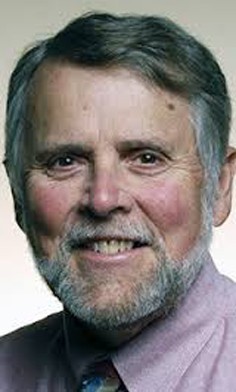
Mike Pride has been editor of the Concord Monitor since 1983. Prior to that, he served as its managing editor. Under his editorship the Monitor has won the New England Newspaper of the Year Award 19 times, as well as numerous national awards for excellence. The paper has been cited byTime magazine and the Columbia Journalism Review as one of the best papers in the country.
Before joining the Monitor, Pride was city editor of theClearwater Sun and the Tallahassee Democrat. A graduate of the University of South Florida, he served as a Russian linguist in the Army during the late 1960s and began his journalism career as a sports writer at the Tampa Tribune.
Pride was a Nieman Fellow at Harvard University in 1984-85. He won the National Press Foundation's editor of the year award in 1987 for directing theMonitor's coverage of the Challenger disaster and later the Yankee Quill Award for contributions to New England journalism.
In 2004, Pride was Weinstein scholar-in-residence at Gettysburg College, where he co-taught a course in presidential politics. He has also been a lecturer and tour guide at the Civil War Institute at the college. In 2005, he was a Hoover media fellow at Stanford University.
Pride is a former chairman of the Small Newspapers Committee of the American Society of Newspapers Editors and also served on the society's writing awards board. He is a member of the Elijah Parish Lovejoy Award committee at Colby College and the Sarah Josepha Hale Award committee in Newport, NH.
He is the co-author of My Brave Boys, a Civil War history, and Too Dead to Die,the memoir of a Bataan Death March survivor, and the co-editor of The New Hampshire Century.
Pride joined the Pulitzer Prize Board in 1999.
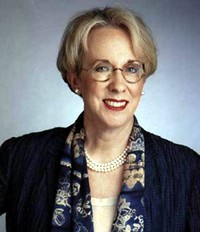
Sandra Mims Rowe is editor of The Oregonian, the largest daily newspaper in the Northwest.
Rowe has been editor of The Oregonian since 1993. She previously made her mark in journalism in Virginia where she spent 22 years at The Virginian-Pilot and The Ledger-Star. Rowe rose to executive editor and vice president at the combined papers in 1984, a post she held until 1993. On her watch, the papers won the Pulitzer Prize for general news reporting in 1985. For her work in Virginia, Rowe was inducted into the Virginia Journalism Hall of Fame in 2000.
Also, under her leadership, The Oregonian has won three Pulitzer Prizes and been a finalist four additional times. The Oregonian won the prize for explanatory reporting in 1999 and, in 2001, both the feature writing prize and the Gold Medal for Public Service.
Rowe has also served in a leadership role for many distinguished journalism organizations. She is a past president of the American Society of Newspaper Editors (ASNE). Currently she chairs the Knight Foundation Journalism Advisory Board, is a board member for the Medill School of Journalism's Board of Visitors at Northwestern University, and is chair of the Board of Visitors for the Knight Fellowships at Stanford University.
She is a 1970 graduate of East Carolina University and completed the Management Development Program in 1990 at Harvard's Graduate School of Business.
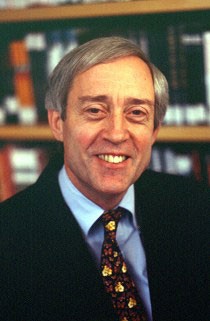
During his nine-year tenure as president of Columbia University, Dr. Rupp focused on enhancing undergraduate education, on strengthening the relationship of the campus to surrounding communities and New York City as a whole, and on increasing the university’s international orientation. At the same time, he completed both a financial restructuring of the university and a $2.84 billion fund-raising campaign that achieved eight successive records in dollars raised.
Prior to his time at Columbia, Dr. Rupp served as president of Rice University, where in the course of his eight years applications for admission almost tripled, federal research support more than doubled, and the value of the Rice endowment increased by more than $500 million to $1.25 billion.
Before going to Rice, Dr. Rupp was the John Lord O’Brian Professor of Divinity and dean of the Harvard Divinity School. Under his leadership, the curriculum of the school was revised to address more directly the pluralistic character of contemporary religious life. Further developments included new programs in women’s studies and religion, Jewish-Christian relations, and religion and medicine.
Born in New Jersey of immigrant parents, Dr. Rupp has studied and conducted research for extended periods in both Europe and Asia. He studied in Germany before he was awarded an A.B. from Princeton University in 1964, a B.D. from Yale Divinity School in 1967, and a Ph.D. from Harvard in 1972. He was Vice Chancellor of the University of Redlands in Redlands, California. Rupp left Redlands to become Dean of Academic Affairs at the University of Wisconsin–Green Bay in 1977, where he remained until 1979. He is an ordained Presbyterian minister.
He is the author of numerous articles and five books including:
Globalization Challenged: Commitment, Conflict, and Community; Christologies and Cultures: Toward a Typology of Worldviews; Beyond Existentialism and Zen: Religion in a Pluralistic World; and 'Culture Protestantism': German Liberal Theology at the Turn of the 20th Century.
George and his wife Nancy are the parents of two adult daughters who are teaching and writing, one with scholarly expertise in East Asia and the other a specialist in African studies, and the grandparents of two girls and three boys.
William Safire, who won the Pulitzer Prize for commentary in 1978, has been a political columnist for the New York Times since 1973. Readers also know him for his New York Times Magazine column "On Language" upon which he has based 13 books. Previously, Safire served as a senior White House speech-writer for President Nixon.
The New York City native began his journalism career as a reporter with the New York Herald Tribune, after attending Syracuse University for two years. Safire also spent time as a radio and TV producer as well as a U.S. Army correspondent. In the late 1950s, while serving as a vice president of a New York public relations firm, he was responsible for bringing together then-Vice President Nixon and Soviet Premier Nikita Khrushchev for their Cold-War era "kitchen debate" in Moscow.
Among Safire's numerous books are four novels: Freedom (1987) about Lincoln and the Civil War, Full Disclosure (1977), Sleeper Spy (1995), and Scandalmonger (2000) about press freedom and vituperation in the post-Revolutionary era. Other works include a political dictionary, a commentary on the Book of Job, and anthologies.
Safire also serves as chairman of the Dana Foundation, a philanthropic organization supporting arts education and neuroscience, and serves on the board of trustees of Syracuse University.
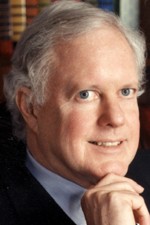
Edward Seaton began his career in journalism as a general assignment reporter and copy editor at The Courier-Journal in Louisville, Kentucky. An honors graduate of Harvard College, he studied on a Fulbright grant in Ecuador and did graduate work in journalism at the University of Missouri. He was made a Knight of the Order of Christopher Columbus by the Dominican Republic for his work for press freedom, and is a recipient of Columbia's Maria Moors Cabot Prize.
Past president of both the American Society of Newspaper Editors and the Inter American Press Association, Seaton is president of the ASNE Foundation and serves on IAPA's executive committee. He is a member of the board of the International Center for Journalists, the advisory committee of the Knight International Press Fellowship Program and Columbia's Cabot Awards Board.
Seaton was elected to the board in 1992.
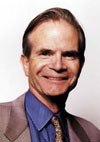
Paul Steiger is the managing editor of the Wall Street Journal and a vice president of Dow Jones & Company. The editors of the Wall Street Journal Online, the Wall Street Journal Europe and the Wall Street Journal Asia also report to him.
Mr. Steiger joined the Journal in 1966 as a reporter in the San Francisco bureau. In 1968, he moved to the Los Angeles Times as a staff writer and in 1971 transferred to that paper's Washington, DC, bureau as an economics correspondent. He returned to Los Angeles in 1978 to serve as the Times' business editor.
In 1983, Mr. Steiger rejoined the Journal as an assistant managing editor in New York and became a deputy managing editor in April 1985. He was appointed managing editor in June 1991 and became a vice president of the Journal in May 1992. Under his leadership, Wall Street Journal reporters and editors have won 14 Pulitzer Prizes in 14 years.
In 2002, Mr. Steiger was selected the first recipient of the American Society of Newspaper Editors' Leadership Award, honoring his more than a decade of leadership at the Wall Street Journal. The John E. Anderson Graduate School of Management at UCLA honored him with the 2002 Gerald Loeb Award for lifetime achievement. Also in 2002, he was awarded the Columbia Journalism Award, given to honor a "singular journalistic performance in the public interest," and the highest honor awarded by the Columbia University School of Journalism. He was named a 2001-2002 Poynter Fellow by Yale University. The National Press Foundation awarded him the 2001 George Beveridge Editor of the Year Award for qualities that produce excellence in media. In 2006, the National Academy of Television Arts & Sciences awarded him an Emmy for Lifetime Achievement in Business & Financial Reporting. Mr. Steiger personally won three Gerald Loeb Awards and two John Hancock awards for his economics and business coverage. He is co-author of the book, The '70s Crash and How to Survive It, published in 1970.
Born in New York City, Mr. Steiger graduated from Yale University with a bachelor's degree in economics. He joined the Pulitzer Prize Board in 1998.
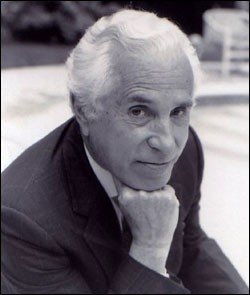
Seymour Topping has had a varied career as foreign correspondent, editor, university professor and author.
He retired in 2002 as Administrator of the Pulitzer after nine years of service and was appointed San Paolo Professor Emeritus of International Journalism at Columbia University.
Prior to Columbia, he was a member of the New York Times for thirty years as chief correspondent in Moscow and Southeast Asia, foreign editor, deputy managing editor and managing editor from 1986 to 1987.
After service as an infantry officer in the Pacific during World War II, he covered the Chinese Civil War for The Associated Press, the French Indochinese War, London and Berlin before joining the New York Times in 1959.
Born in New York in 1921, he is graduate of the School of Journalism at the University of Missouri.
He is the author of Journey Between Two Chinas, (Harper and Row), 1972; The Peking Letter: A Novel of the Chinese Civil War (Public Affairs 1999,) and just completed another historical novel, Fatal Crossing, A Novel of Vietnam 1945 (East Bridge 2004.) He co-authored Report from Red China (Quadrangle Books 1971.)
He is married to Audrey Ronning Topping, a photo journalist, whose father, Chester Ronning, served as Canadian ambassador to China, and grandparents were Lutheran missionaries in China.
Board member (Administrator) 1993-2001.