Pulitzer Prize Board 1922-1923
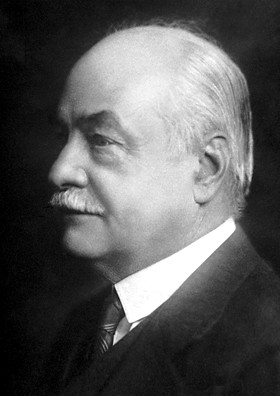
Nicholas Murray Butler (April 2, 1862-December 7, 1947) was an educator and university president; an adviser to seven presidents and friend of statesmen in foreign nations; recipient of decorations from fifteen foreign governments and of honorary degrees from thirty-seven colleges and universities; a member of more than fifty learned societies and twenty clubs; the author of a small library of books, pamphlets, reports, and speeches; an international traveler who crossed the Atlantic at least a hundred times; a national leader of the Republican Party; an advocate of peace and the embodiment of the «international mind» that he frequently spoke about. He was called Nicholas Miraculous Butler by his good friend Theodore Roosevelt; the epithet was so perfect that, once uttered, it could not be forgotten.
Born in Elizabeth, New Jersey, this son of Henry L. Butler, a manufacturer, and Mary Murray Butler, daughter of Nicholas Murray, a clergyman and author, began his career with a brilliant record as a student. In 1882, at the age of twenty, he received his bachelor's degree, in 1883, a master's degree, in 1884, a doctorate - all from Columbia College; in 1885 he studied in Paris and in Berlin where he began a lifelong friendship with Elihu Root, who was also destined to become a Nobel peace laureate. In the fall of 1885, he accepted an appointment on the staff of the Department of Philosophy at Columbia College, which in 1896 became Columbia University. And so began a professional association that was to last for sixty years.
From the first, Butler distinguished himself as an educational administrator. Within four years he gave administrative form to his philosophical theory of pedagogy by establishing an institute which, later affliated with Columbia, became known as Teachers College. He founded the Educational Review and edited it for thirty years, wrote reports on state and local educational systems, served as a member of the New Jersey Board of Education from 1887 to 1895, participated in the formation of the College Entrance Examination Board. He was named acting president of Columbia University in 1901 and president in 1902, retaining that position until retirement in October, 1945.
Under his presidency, Columbia University made phenomenal growth. It became a major university. All graduate studies were enormously expanded; the scope of professional training was enlarged to include new schools such as those of journalism and dentistry; the student body was increased from 4,000 to 34,000 and the faculty by a like ratio; the plant was enlarged by a construction program that averaged a new building each year, and the endowment kept pace; the professorial salaries were increased enough to attract many of the world's leading scholars to the teaching and research staff.
Butler moved in the realm of politics as easily as he did in that of education. He was a delegate to the Republican convention for the first time in 1888 and for the last in 1936. Butler, Root, William Howard Taft, and Theodore Roosevelt constituted a powerful political quartet in the early years of the century. Breaking with the others in 1912, Roosevelt ran for the presidency as the candidate of the Progressive Party, which drew most of its strength from Republicans, against the nominees of the constituted party: Taft for the presidency and Butler for the vice-presidency. By splitting the national vote, they permitted the Democrat, Woodrow Wilson, to win the election. In 1916 Butler failed in his attempt to secure the Republican presidential nomination for Root and in 1920 and 1928 failed to secure it for himself.
Meanwhile, Butler sought to unite the world of education and that of politics in a struggle to achieve world peace through international cooperation. He was chairman of the Lake Mohonk Conferences on International Arbitration, which met periodically from 1907 to 1912, and was appointed president of the American branch of International Conciliation, an organization founded by another Nobel peace laureate, d'Estournelles de Constant. His association with the Carnegie Endowment for International Peace was a fruitful one of thirty-five years. Influential in persuading Andrew Carnegie to establish the Endowment in 1910 with a gift of $ 10,000,000, he served as head of the Endowment's section on international education and communication, founded the European branch of the Endowment, with headquarters in Paris, and held the presidency of the parent Endowment from 1925 to 1945.
Butler married twice. His first wife, whom he married in 1887 and by whom he had one daughter, died in 1903; he remarried in 1907. When Butler became almost totally blind in 1945 at the age of eighty-three, he resigned the demanding posts he still held. He died two years later.
In 1940, Butler completed his autobiography with the publication of the second volume of Across the Busy Years. Both in size and in title it is peculiarly appropriate.
--From Nobel Lectures, Peace 1926-1950, Editor Frederick W. Haberman, Elsevier Publishing Company, Amsterdam, 1972
S.B. Griffin, Editor, Retires.
Published March 15, 1919 Springfield, Mass., March 14
Solomon Bulkley Griffin has resigned as managing editor of The Springfield Republican, a position he has filled for more than forty years, and will devote his time to his business interests and to private literary work.
Mr. Griffin came to The Republican from Williams College in July, 1872, forty-seven years ago this Summer, as a reporter, and received his first newspaper training under the elder Samuel Bowles. He was appointed managing editor after Mr. Bowles's death, in 1878.
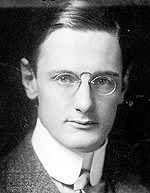
born September 9, 1850, Chicago, Illinois, U.S.
died August 19, 1925, Chicago
Victor Fremont Lawson, newspaper editor and publisher, one of the first in the United States to assign correspondents to live and gather news in major cities outside the country. Before this innovation (1898) American newspapers relied on dispatches from British or other foreign sources. He also led the successful effort of Western publishers to rescue the Associated Press (AP) from a combine that leaked its news to the rival United Press (UP).
Already the owner of a Norwegian-language paper in Chicago, Lawson in 1876 bought an interest in the Chicago Daily News, which had been founded in 1875 by Melville Elijah Stone (1848–1929) as the first one-cent newspaper in the Midwest. Under Lawson’s business management the circulation of the Daily News increased markedly within a year. In 1881 Lawson and Stone started a morning edition that later (1883) was called the Chicago Record. After numerous mergers and variations in name, it was known as the Record-Herald when Lawson sold his interest (1914) and as Chicago’s American when it ceased publication (1969). Lawson retained proprietorship of the Daily News until his death.
Lawson’s active interest in the AP began with concern over delayed and inconsistent New York financial reports reaching Chicago newspapers. Investigation led him to discover that the majority owners of the profit-making UP were in de facto control of AP, a nonprofit cooperative. He rallied Western newspapers against collusive Eastern publishers in a successful and sweeping reorganization of AP that began the agency’s climb to dominance. Lawson was a director of AP (1893–1925) and its president (1894–1900) while Stone was its manager. His advocacy of a U.S. postal savings bank caused him to be called the father of the law that established it (1910). Lawson was also a leading benefactor of the Congregational church and the Young Men’s Christian Association.
"Fremont Lawson." Encyclopædia Britannica. 2009. Encyclopædia Britannica Online. 09 Oct. 2009 http://www.britannica.com/EBchecked/topic/333051/Fremont-Lawson
photo courtesy of George Grantham Bain Collection/ Library of Congress, Washington, D.C. (digital no. 07316u)
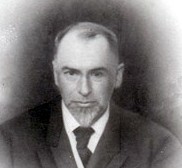
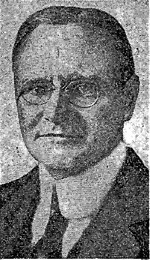
Died. Edward Page Mitchell, 74, at New London, Conn., of cerebral hemorrhage. He was for 50 years associated with the New York Sun, on which he won his place at the age of 23 by writing letters to Editor Charles A. Dana from his home, Bath, Me. Editor Dana invited him to work at the then fabulous salary of $50 per week. This rose to $20,000 a year during the many years that Mr. Mitchell penned the Sun's leading editorials, famed for their tart penetration. When the late Publisher Munsey purchased the Sun (1916) he retained Mr. Mitchell as editorial chief. Not until last year did Mr. Mitchell retire.
obituary from Time Magazine, January 31, 1927.
-- photo courtesy www.picturehistory.com
|
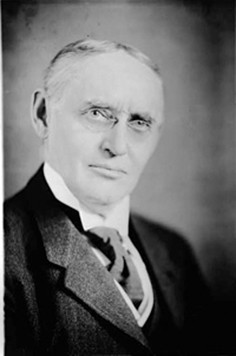
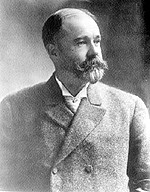
MELVILLE ELIJAH STONE (1848-1929)
Stone was born in Illinois and was a reporter when he founded the 1876 "penny paper," the Chicago Daily News. While serving as a Chicago bank president in 1893, Stone became general manager of the reorganized Associated Press, which under his direction became a prominent international news agency.
-- photo courtesy of Library of Congress, biography courtesy of Illinois State Archives