John Archibald of Alabama Media Group
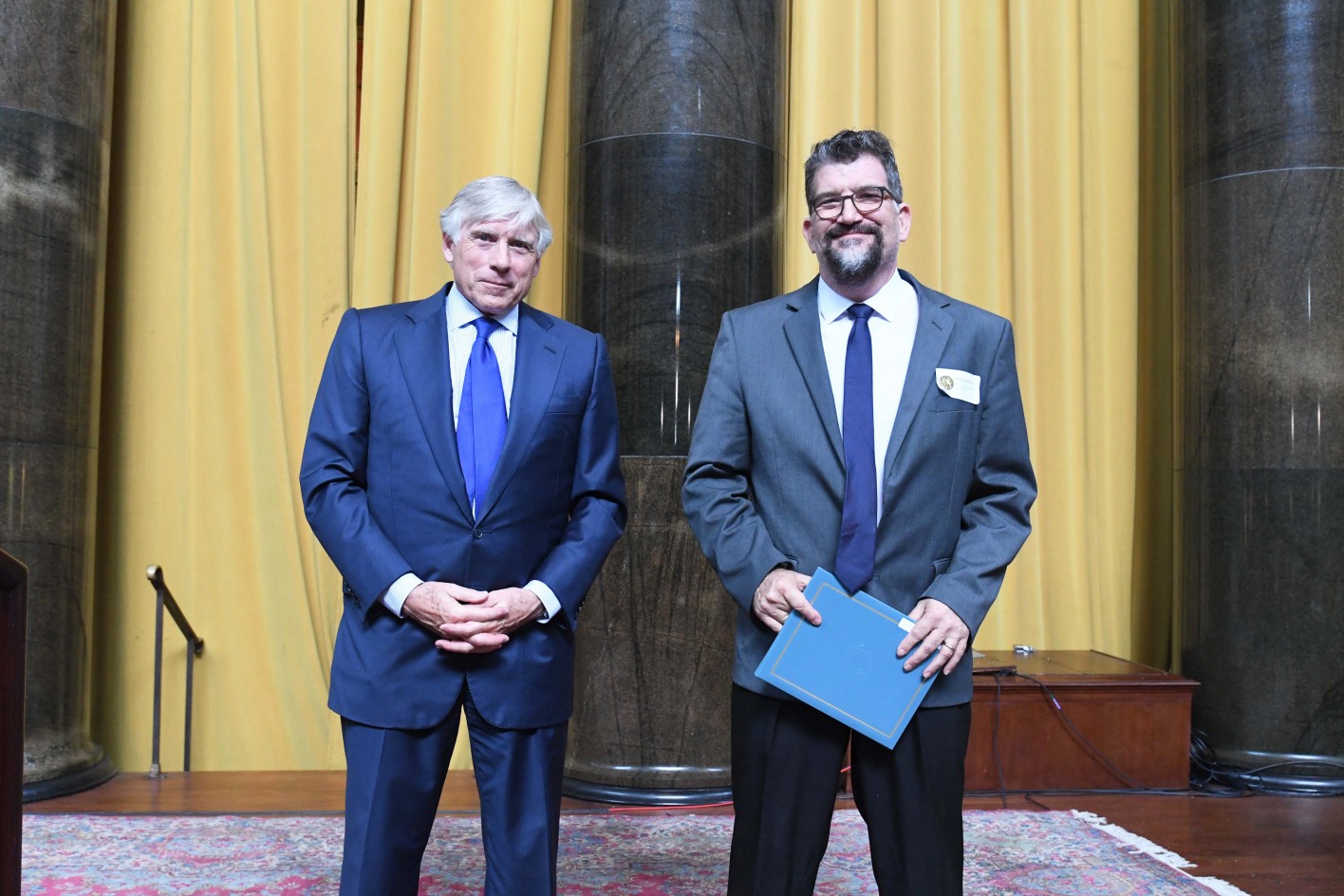
John Archibald accepts the 2018 Pulitzer Prize for Commentary from Columbia University President Lee Bollinger. (Photo: Eileen Barroso/Columbia University)
Winning Work
By John Archibald
Brandi Burgess wants you to know she loves her dad. And her dad loves her.
That's not at issue. That's not the issue.
Brandi's dad is Rick Burgess of Rick & Bubba, the conservative comic radio powerhouse heard on more than 50 stations from its base in Birmingham to Fairbanks, Alaska. It's a show with a massive voice, rooted in the humor of the erstwhile "sexiest fat men alive." It's also a show where Rick expresses a devout Christian faith and literal conservative theology.
Brandi, now 27, grew up with and sometimes on that show. From college she taught the cast of radio characters how to hold their mouths to talk less ... Southern. More recently she called in from Eastern Europe after teaching locals phrases like "Hey y'all" or "War Eagle."
But she felt, in her later appearances, anyway, that it was a lie. Because she was not who her dad wanted her to be. She was not what the audience thought her to be.
"I am a queer person living in Philadelphia," is how she put it to me in the form of introduction. "I am an actor, theater maker, and educator. I am an activist for gender equality, feminism, social justice, and a better tomorrow."
Brandi Burgess has a story. And she feels compelled to tell it.
It is not so much about Rick or her family or their admonitions for her to repent. She says over and over that her father has never done anything that wasn't - in his eyes - rooted in love and concern, both for her and for the God he believes in. He has merely lived his life as he has preached his beliefs on and off the show.
But that doesn't mean it hasn't been painful to hear that people like her are bound for hell, that she - as she has been told by her father - has been corrupted by the world and is living a lie.
Brandi's could be the story of thousands of LGBTQ men and women born to evangelical families. It's one of guilt and shame and a kind of eventual courage. The only difference is the platform of her father.
"I've been used as an example of sin and cast in the role of the modern day prodigal daughter," she said. "I have had evangelicals show up at my door unannounced, begging for me to repent. I have had strangers writing my names on stones in Jerusalem."
It's not that Rick condemns her on the show. He has spoken of her in generalities in Bible studies posted on the Rick & Bubba website, and is clear he loves his daughter, even if he disapproves of the life she leads.
Rick declined to comment on Brandi's decision to tell her own story, saying he would comment on his own show. "God has given me my own platform in which to clearly state my views on this issue that is impacting our society and the church," he said.
And that, frankly, is the reason Brandi feels compelled to speak.
The weight of her father's voice - taken as gospel by so many adoring fans -- has begun to drag on her own conscience.
She knows what it's like to hear words of condemnation - even when not aimed specifically at her. She knows what it's like to feel hurt and doubt and disapproval. She worries for kids in church who hear that message and think only that they are broken.
But she knows love and acceptance and faith build courage. She was raised in the church and holds to a profound belief in God. But her God is vast and complex and hard to limit.
So in the shadow of one of Alabama's largest voices, she has found her own. It is not meant to disparage her father. It is meant, she said, to provide another side.
"I have been silent," she said. "I have apologized. I have wept. I have gone to therapy. And now, I need to tell my story. I need to tell other queer people or feminists or activists that their voice matters, that they are not alone."
She speaks so others will not retreat inside of themselves and be untrue to themselves, or wallow in shame or guilt, or hurt themselves.
"I cannot hear another story of someone dying or getting beat up or killing themselves without sharing my voice," she said. "Without saying I did all I could to fight in the name of love."
So she's out now for all the world to see. Out of his shadow, and the expectation of fans, into the light of her life.
She knows there will be blowback, but she's OK with it.
Because she vows now that her goal for the future is to live braver. She wants to stop "hiding in the Northeast," to return South to watch her hometown grow. She wants to help others tell their stories.
"Mostly though, I am going to live my life," she said. "Fully. Without shame. I am going to become the person I have always wanted to be."
So she follows her principles. As her father follows his own.
By John Archibald
In New Orleans a white mayor takes down monuments to the "Cult of the Lost Cause."
Because he knows his city is a gumbo, and it takes all the flavors to make a special pot.
In Mississippi a white legislator says people removing Confederate monuments should be lynched.
Because ... Mississippi. And lynching.
And here in Alabama, in the Heart of Dixie on the rusty buckle of the Bible Belt, the Legislature has passed a bill making it illegal for local governments to remove or alter any monuments more than 40 years old.
Any of them.
It awaits the signature of Gov. Kay Ivey.
This bill, winning lawmakers argued, was passed in the sacred name of history. Which is ironic.
For it is more accurately passed for the glorification of a history that never was. The monuments themselves, as New Orleans Mayor Mitch Landrieu said in a speech explaining his decision, eulogize a history that was rewritten by losers to hide the truth, "which is that the Confederacy was on the wrong side of humanity."
And he is right.
Landrieu, of course, was speaking of New Orleans. But he posed a question in that speech that Ivey should ponder, that all Alabama and all the South might consider.
"We should stop for a moment and ask ourselves--at this point in our history--after Katrina, after Rita, after Ike, after Gustav, after the national recession, after the BP oil catastrophe and after the tornado: If presented with the opportunity to build monuments that told our story or to curate these particular spaces, would these monuments be what we want the world to see? Is this really our story?"
Is it, Alabama? Is it, Gov. Ivey?
At this point in our history - after natural and manmade disasters, after church bombings and scarlet letters on our chests that had nothing to do with football, after the Civil Rights Movement, after revolution and reconciliation, after hard-fought progress and a quest for better hearts, is this really our story?
A 150-year-old war in which our forefathers sought to leave America rather than allow freedom for all?
Is that who we are? Is this the Alabama we want the world to see, the monument we want to build?
I guess that's up to Ivey to decide.
But Alabama needs to choose as well.
Do we want to put the past on a pedestal at the expense of our future. Do we want to glorify a "Gone With the Wind" lie that prevented and prevents any real healing?
Do we want to move on, to get better and to be better? Or do we want to fight this war forever?
I've never been an advocate for the willy-nilly removal of historic monuments. They tell part of our story too, even if it is the poorly told tale of post-war racism, of the post-Reconstruction reconstruction of history itself.
But a state law ordering cities to preserve monuments their citizens find offensive is a state-sanctioned furtherance of the lie. And it keeps Alabamians fighting each other.
Look at New Orleans.
Then look at Mississippi. And Alabama.
I can't help but think of the 1960s, when Birmingham and Atlanta were similar in size and in nature.
Atlanta and its business leaders made a vocal decision that it would be "the city too busy to hate." Birmingham decided it wasn't that busy. And that became its story.
Alabama has to be busier than that. Or the story will never change.
By John Archibald
I might oughta put a warning on this one.
Strong language. Mature content. Not intended for audiences under ... 116.
But here's what happened.
A guy got up before the crowd of people he was chosen to lead. He began unwinding a tale - he called it a "well authenticated story" - about a black man from Alabama who had been a slave before the Civil War.
The man, after attaining freedom, journeyed north to seek his fortune. He couldn't do the work, because he lacked the capacity or the experience.
So the man came home, plodding on sore feet until he reached the plantation where he was once enslaved. Let's hear what happened next exactly as John B. Knox put it to his group.
"Finding the planter comfortably seated upon his veranda, the old darky approached, hat in hand, and asked for something to eat.
'Why, you damn black rascal, what are you stopping here for? Go into the kitchen and tell the cook to give you something to eat.'
'Before God, master,' the old darky said, grinning from ear to ear, 'them's the sweetest words I'se heard since I left old Dixie.'
The old man was home at last. He was among people who understood him, and whom he understood."
It's a story that would get a comic fired these days, that would have a politician pilloried - and rightly so. But it's not a story of today.
It's the story Knox told to begin his presidency of the Alabama Constitutional Convention of 1901, the first speech he gave after being elected, in which he went on to talk about the need to establish white dominance. Not by "force or fraud," but by law.
Knox did not beat around the bush. He framed the intent of the body that would draft the Alabama Constitution, the very foundation of Alabama law and life:
"And what is it that we do want to do?" Knox asked. "Why, it is, within the limits imposed by the Federal Constitution, to establish white supremacy in this State."
That was Alabama's goal.
The U.S. Constitution - whatever the reality of equality might have been in 1787 - was fashioned on the lofty notion that all are created equal.
The Alabama Constitution - ratified 104 years later - was conceived in bigotry and dedicated to the proposition that all people are inherently unequal.
Of course it all went south from there.
Alabama built its foundation on inequality, its legal house on the sand. So it spent the next 116 years hammering and caulking and duct-taping the damn thing to keep it from sliding into the sea.
The constitution is 287 sections long, with more than 800 amendments. It's 40 times longer than the U.S. Constitution, and if you sat down to read all 350,000 words - with a Southern accent as your internal monologue - it would take 28 brutal hours.
It is as long, as complex and troubled as Alabama's last century has been. It gives power to those who think they know best - who somehow wind up in Montgomery - and takes it from cities and counties. It justifies inequality with broad and sweeping claims.
"These provisions are justified in law and in morals, because it is said that the negro is not discriminated against on account of his race, but on account of his intellectual and moral condition."
That was Knox again, laying out the foundation for law in Alabama.
It is long past time to tear that thing down and build a new foundation.
I tried to warn you. I did.
By John Archibald
This is how it works.
Not how it's supposed to work. But how it works.
A tidbit in Thursday's bribery and conspiracy indictment of two Balch & Bingham lawyers and a Drummond Co. exec tells the story. It's tangential to the bribery of Oliver Robinson, overlooked by all but the most interested or attentive, but it puts it all out there.
Like the trash.
It describes the events of December 2014, when an exec at the Birmingham air quality group Gasp was to appear before the Alabama Environmental Management Commission - the body that oversees the regulatory Alabama Department of Environmental Management. She wanted to talk about the need to expand a north Birmingham Superfund site to clean up toxins in poor communities.
That exec, Stacie Propst, sent a Powerpoint presentation to AEMC in advance of the meeting. It was apparently leaked to Joel Gilbert, one of the Balch lawyers charged Thursday. Gilbert represented coal giant Drummond Co., which would have had to pay for cleanup if the Superfund expanded.
Here's what Thursday's indictment says:
"Gasp submitted a copy of its presentation to AEMC several days prior to the meeting. Defendant Joel Iverson Gilbert obtained a copy of Gasp's presentation prior to the AEMC meeting and caused talking points rebutting Gasp's presentation to be prepared and distributed to the AEMC Commissioners, intending that the Commissioners use the talking points during the meeting."
Let's just make sure we understand that completely.
A group worried about health consequences in a poor, polluted area made plans to speak to a state regulator that could help speed cleanup in the area, and the regulator leaked her argument straight to a lawyer who represented polluters in the area.
And he prepared them for battle.
So Propst walked headlong into a buzz saw. She was, according to videos and minutes of the meeting, greeted with tough questions about data, degrees of health danger and whether you'd have to have a condition that makes you eat dirt to be harmed in a place the feds say has elevated levels of arsenic, lead, and benzo(a)pyrene.
Commission Chairman Lanier Brown said he did not recall getting anything "directly from Joel," but said "When things reach a certain hot point we get emails from all directions."
He said he didn't know how Gilbert got the presentation, but said he didn't see anything wrong with it because the commission often seeks input from others.
"I don't think there is ever anything wrong with any commissioner receiving any information about an issue from anyone as they see fit," he said.
Instead of sincere questions from a board that's supposed to care about Alabama's health, Propst got cross-examination prepared by lawyers for the polluters. If the commission asked for and got that ammo from Gilbert, it shows what they cared about.
Drummond. Not Alabama residents.
This is your environmental regulatory agency.
Michael Hansen, the current executive director at Gasp, said his organization learned of the leak in the indictment Thursday.
"The idea that a regulatory agency would share information from an advocacy organization like Gasp to the industry they're charged with regulating is outrageous," Hansen said. "It seems someone at ADEM was trying to give them an unfair advantage. I worry that this is just the tip of the iceberg and that the cozy relationship between regulators and industry in Alabama is much, much deeper than this."
I worry too. Because this is how it works. Not just at AEMC and ADEM but in city councils and county commissions across this state. In the Legislature, the governor's office and in regulatory bodies that are supposed to be looking out for your interests.
This is not how it's supposed to work.
By John Archibald
Oh Roy Moore. He's such a caricature.
He always finds by a way to invoke his god. To make a buck.
Or to save a few.
Like back in 2015 when Moore, then Chief Justice of the Alabama Supreme Court, decided it was outrageous and unfair that property he owns in the Gallant community of Etowah county continued to increase in value.
Why, the property valuation used to set the taxes had risen 284 percent between 1995 and 2015. It had even risen since 2005, before the housing crash. So Moore -- like a lot of people who don't want to pay any more tax than they have to -- petitioned the county's board of equalization to reduce the valuation on the property.
And the board of equalization did it. It knocked off $41,200 from its valuation, agreeing that Moore's 4,300 square foot home on 16 acres with a seven-car garage was not, in fact, worth the $311,900 it had assessed.
It was worth only $270,700, the board agreed. That would put annual tax on the place at a little more than $1,000.
But that didn't end it.
Moore thought the reduction was not enough. So he hired a lawyer and sued the chairman of the board of equalization and the county's chief appraiser, arguing he should pay less.
Because ...
The Constitution.
And God.
Because let's face it, we are talking about Roy Moore here.
"The Plaintiff has been forced to suffer an unlawful seizure and/or ongoing obligation against his personal property," Moore's lawyer, Trenton Garmon wrote. "Said God-given right to private property ownership as acknowledged in the Declaration of Independence, the United States Constitution and the laws of the State of Alabama have been restricted and/or infringed upon."
I feel like I need to cough something up.
Moore was forced to suffer an unlawful seizure against his personal property. In a state - where he held the top post in the criminal justice system, if you'll recall - that'll take your money and stuff if you merely look like you might commit a crime. Whether you've been convicted or not.
Bold.
He was denied his god-given rights to save a few more dollars. Making clear that Roy's god bestowed more on him than on those saps who get caught up in the court system, who have been tossed in Alabama jails because they cannot pay fines in turnip-squeezing courts. Moore's own judicial system wrung the life, liberty and pursuit of happiness out of anybody who dared worship a god that wasn't just like his.
Oh Roy Moore. He's not just a caricature, but an opportunist who does God a lot more harm than good.
He's not God's prophet but he'll take god's profit.
He takes the lord's name in a vain attempt to save himself cash. The amount at issue in this silly little Etowah County case would have amounted to a couple hundred bucks a year.
When ol' Roy says it, "Jesus saves" has a whole new meaning. And every dollar counts.
Though it didn't really work so well for him this time.
Despite the fact that Moore was the sitting chief justice of the Alabama Supreme Court - this was before he was kicked off the bench for the second time for putting his own beliefs and interpretations before the law - Etowah County circuit judge David Kimberley threw the case out.
Seems like Moore got his god-given rights wrong. Again.
By John Archibald
The words of Beverly Young Nelson were devastating.
Not just to Senate candidate Roy Moore - and they were a body blow to him - but a blow to his state and his party and to all who cling to him because he loudly proclaims a Christianity they'd like to believe.
Because the words were, above all else, believable.
Compelling.
Uncomfortable.
The words of Beverly Young Nelson, streamed live across the world today, were brutal, and personal, and gripping in every detail, and they hit Moore right where he lives: In his righteous piety.
Her words went even beyond the stunning stories reported by the Washington Post last week that detailed four instances of Moore pursuing teenage girls, including a then-14-year-old who said Moore stripped to his underwear and tried to make her touch his parts.
Which would be lecherous and creepy and criminal. But this, this is beyond even that. What Nelson told through tears today was a story of a predator who laid in wait, who eyed her and desired her, who took advantage of her, physically hurt her as he tried to sodomize her. She told of a man who dumped her in the parking lot and peeled away.
But not before warning her that she was a child, who had just turned 16, and he was an Etowah County district attorney.
Devastating.
I'm struck by the details, the way Nelson, as a waitress at the Old Hickory House in Gadsden, about an hour north of Birmingham, told her story. How he sat in the same seat in the restaurant each day and stayed 'til closing. How he grabbed the tips of her long red hair and how he signed her yearbook. The way Moore, in his Hush Puppies, offered to drive her home, and how he instead pulled around to park in a dark spot between the dumpster and the restaurant.
"I was alarmed and I immediately asked him what he was doing," she said in a press conference with her lawyer, the famous Gloria Allred. "Instead of answering my question he reached up and began groping me and putting his hands on my breast. I tried to open my car door to leave but he reached over and locked it so I could not get out. I tried fighting him off. Instead of stopping he began squeezing my neck to force my head onto his crotch. I continued to struggle. I was determined to not allow him to have sex with me. I was terrified."
At some point, according to Nelson, Moore warned her to keep quiet and drove away.
"He finally allowed me to open the door and I either fell out or he pushed me out and I was on the ground," she said. "The passenger door was still open. He burned rubber pulling away, leaving me laying there on cold concrete in the dark."
What is at question here is no longer just the weird wonder of whether Moore, in his 30s, had a thing for teenaged girls. It's not a question of whether it is inappropriate for a 30-year-old prosecutor to hit on 16 and 17-year olds. It's not enough to quibble about age and intent and the nature of the Etowah County dating scene in the 1970s.
It's a question of right. And wrong. And decency.
This woman - who said she is willing to tell her story under oath - described a sex crime that bruised her and scarred her and frightened her into silence for decades.
Moore's campaign issued a pre-emptive strike calling the accusations a political witch hunt. And that will resonate with some.
But the evidence is growing that this is not simply about politics or timing. It's about abuse of power and sexual assault of a child.
So pick a side. And not just a party.
By John Archibald
Forget about Roy Moore for a moment. I won't talk about him here.
Pretend there's no election Dec. 12, no need to filter every word through the sieve of party, no need to defend every claim as if it were a conspiracy concocted by the other side.
Whatever side.
Because this is not political. It can't be. This is bigger than that. It is - pardon the heresy - more important than politics.
I've come to believe every woman I know - and more men than I imagined - have their own stories of abuse or harassment or something like it. They're not just memories, stored away in boxes like old photographs and Mayday ribbons. They're pain.
Infected. Embedded, like a bullet fragment that cannot be removed.
I've heard from so many in the last few weeks and months, since America - male, mainstream America -- woke as if from sleep to the realization that sexual abuse and assault and a thousand like offenses are not OK.
A 66-year-old woman said she was abused by another Alabama political figure when he was her teacher a half century ago. It began when he took her home from school and, while parked outside her house, began to masturbate.
Because that - we have now learned too well from Harvey Weinstein and Louis C.K. - is inexplicably a thing. And has been for decades.
A 53-year-old told me she was plied with alcohol as a teen while serving as a page in the Alabama Legislature, that she was pawed by politicians and paraded around like meat. She says she was later raped by another man, only to be "humiliated" when she found the strength to report it.
A 61-year-old woman can't even tell her family members of the abuse she suffered from the man she thought she loved. The shame - the embarrassment of her own bad judgment about the man - keeps her silent and suffering.
A formidable lawyer describes her own trauma, recalling that it was only other women who helped her escape her abuser. Not the male judges or lawyers or cops.
"Unless you've been a victim, you cannot truly understand," she said. "Altering adult mindsets is nigh impossible."
This pain is ubiquitous. Everywhere, and it pours out with a sadness that's hard to hear. A man told me he was abused by a school counselor and only recently broke through the shame. A Birmingham man - perennially homeless now - has told his story of abuse as a young man by officials in his church.
I can go on, and on. Friends acknowledge they were abused by family, or friends, or guys they met at a frat party. Some confide that they were raped. Three women have told me they were pushed out of a car - or allowed to roll into the street - because they wouldn't do the things that were demanded inside.
There's so much wrong, on such a broad scale, from the horrifying and blatantly illegal to the simply skeevy. There's rape and assault and a thousand gradations of gray, and we can mull them and parse them and - heaven help us - defend them all day long.
But if we do we perpetuate the pain. And the shame.
This is a moment, I keep believing. It's a cultural awakening and the start of a change. We fail when we say boys will be boys. We hurt when we question what a woman wore when she was assaulted. Those who blame the victims - who call them whores and tramps and sluts - are as guilty as those who commit the acts.
It's not just about the past. It's about the future.
So forget about politics, for now. This is bigger than that.
By John Archibald
Roy Moore apologists believe there's no choice.
Because of ... choice.
Because of politics, and abortion. Because in their mind Doug Jones is running around Alabama's back alleys with a coat hanger and a get outta pregnancy free card.
I get it. It makes for an easy rationalization. It's possible, as Alabama Gov. Kay Ivey did, to find Roy Moore's accusers credible and still find the audacity to support him only when you can point to some higher calling on the back end.
Like life.
Or politics.
But mostly life.
Because Alabama loves life. Alabamians will scream for life and fight for life and punch you in the face for the very point of it. I can respect that. No one, including Jones, is eager to go out and encourage abortions.
But if Alabama really loves life enough to disregard the word of nine women who say Roy Moore - as a full grown man - hit on them or worse as teenagers, Alabama needs to look at itself.
Ivey hangs with him even though she doesn't doubt the woman who said Moore stripped her darn near naked when she was 14 and laid her out on blankets in his living room like a picnic. She needs to look at herself.
It's time to put up or shut up.
Life, you say?
Alabama is 49th - that's next to last, for those keeping score - when it comes to infant mortality. Alabama babies die at a rate 50 percent higher than the nation as a whole. And the nation's infant mortality rate is a travesty.
Out of every 1,000 live births in Alabama last year, more than nine babies in Alabama died before reaching a year old, according to the Alabama Health Department. That's 537 babies in one year who did not live.
In a state that would not expand Medicaid. In a state where four of every 10 children are covered by Medicaid. In a state that is, when policy is at stake, far more interested in keeping taxes low for the elite and powerful than providing health care to the vulnerable.
Because of politics.
Alabama is 48th or 49th in pre-term birth, low birthweight babies and bad infant outcomes overall, according to United Health Foundation's state health rankings. And - I guess this is relevant here -- Alabama has a bottom five ranking in protective home environments for children ages 6-17.
Alabama cares about children in concept, but not reality.
Because of choices it makes every day.
Rural hospitals across Alabama are falling like dominoes, in part because of the state's refusal to expand Medicaid. The most recent closure was Lakewood Community Hospital in Haleyville, the only hospital in Winston County.
The hospital in Ivey's hometown of Camden in Wilcox County - one of the poorest counties in Alabama with an infant mortality rate far higher than the national average - closed in August.
Because of politics.
So I hear evangelical preachers say they'd vote for Roy Moore even if he did worse than all these women claim. I hear his apologists say what is at stake is more important than his creepiness with young women.
I hear them speak with passion about precious life, and the unborn, and beautiful blessing of children.
And I respect that, and appreciate that, and second it.
And I call B.S.
Because in the end Alabama is quick to talk a good game about God, and life, and the unborn.
But decisions are made because of politics and money and privilege. And not life.
Choose consistency, Alabama, and a little decency. Put up or shut up.
By John Archibald
There'll be endless talk of politics tomorrow. And the next day. And the next.
About winners and losers and how Doug Jones did it. Some will be obsessed with what he means for the Senate, and tax reform, and the Supreme Court, and abortion rights, and the state of politics in Alabama. And the state of Alabamians.
Important stuff, I know.
But that's not really what I care about today. It's not the message I hear today.
Because for the last four weeks I've talked to women who bared their souls to me, who see this #metoo moment in America as a catalyst for change, who seized this awakening to talk of things they've long held close.
Not the Roy Moore accusers. Not them. But women who say they were abused by fathers and brothers and wanted nothing more than for someone to know. Because opening up was like a relief valve that kept them from bursting.
Some talked of being wooed by men in authority when they were but girls, and how they came to regret relationships that shamed them and scarred them and affected how they would forever regard the opposite gender. Others spoke of pawing and groping and a few told of out-and-out rape.
Rape.
They looked on this moment in America and Alabama as a time when they could open themselves up, when they could muster strength to show their weakness. When they could finally be believed. Most, by the way, were not interested in naming names of those who did them wrong. They were not obsessed with vengeance or retribution or notoriety.
They just wanted to stop hurting.
They wanted to believe the world they live in had changed. They wanted to think that finally, we've come to a place in society where sexual abuse is condemned, where the line of harassment is drawn and the consequence is real, where there's power for the powerless, hope for those who dared have none, a genuine climate of safety.
That's what's important here. That's the message, more than divisions or disputes between Republicans and Democrats.
It was a powerful statement about the way Jones supporters worked, and a powerful statement about the trepidation Alabamians have about Moore. It was a David and Goliath shot, but even that is not the real message here.
On this day Alabama stood for victims. It stood for women. It stood for compassion.
Because the way Alabama treated the women who accused Roy Moore of improprieties could have been a message to all who have been abused, to all who someday will be.
Roy Moore and his supporters called them liars and whiners. And some Alabamians joined in the disdain, calling them sluts and worse, insisting that it was once the Alabama way to find mates too young to drive, and that once upon a time, groping was an acceptable act.
But Alabama, against the odds and conventional wisdom, stood and rejected that behavior.
It did not condone the silence. It did not excuse the sin.
It made a political decision that many found hard, a decision that put decency over party, character over tribe. It stood for its mothers and sisters and daughter and fellow human beings.
When nobody thought it would.
That's the message Alabama sent yesterday. Not just about politics, or fear, or loathing, or habit, or even Donald Trump.
It sent a message to women: This has not been a safe place. But it can be. It can.
This is a start.
Biography
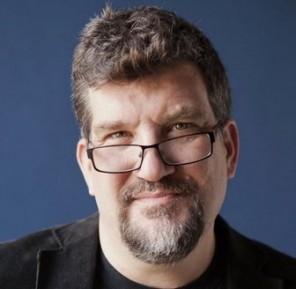
John Archibald is a columnist for the Alabama Media Group, with his work appearing in the Birmingham News, the Huntsville Times, Mobile's Press-Register, AL.com and its probing social brand, Reckon. Before he began his column in 2004, he worked on the News' investigative team and has covered everything from crime and punishment to Birmingham City Hall, which is not always the same thing. He grew up in North Alabama and graduated from the University of Alabama in 1986. He is married with three grown children.