The Dallas Morning News, by Tod Robberson, Colleen McCain Nelson and William McKenzie

Lee C. Bollinger, President of Columbia University (left), presents the 2010 Editorial Writing prize to (l-r) William McKenzie, Coleen McCain Nelson and Tod Robberson of The Dallas Morning News.
Winning Work
(All editorials attributed to the editorial board.)
A big challenge in some southern Dallas neighborhoods is getting property owners to fix up their homes and help spruce up their street. For many, the failure to do so is a matter of economics. If they barely can afford things such as food and health care, cosmetic home repairs drop way down the priority list.
Some homeowners, however, have no such worries. While their houses in southern Dallas sit empty and boarded up – vulnerable to invasion by homeless people and drug addicts – absentee owners enjoy vastly better accommodations far away. Try taking our virtual video tour of a few choice houses in South Dallas (gapblog.dallasnews.com) and their owners' accommodations. The difference is eye-popping.
The owner of a boarded-up duplex at 1715 Bannock, which has a code-violation warning sign in front, lives in a 4,200-square-foot, $487,000 house in Allen. Brett Szumera says high levels of vandalism and theft have made him regret buying the property. He stopped visiting it two years ago and now relies on the city to mow the lawn, despite the fees and fines he accrues.
A house at 5015 Colonial is so rickety it's barely able to stand on its own, in sharp contrast to where the owner lives, on Tracy Street in Duncanville. Sandra Everett, whose mother owns the Colonial Avenue house, says the family tried for years to maintain the property but gave up. Drug addicts and thieves have gutted the house of all plumbing and wiring.
"Today, you're scared to go down there to mow your own property," Everett said.
Then there are owners like Dennis Topletz and George Works. They own scores of houses all over southern Dallas, many in disrepair. Topletz says these houses are a last resort for many. "It they didn't rent from us, they would be on the streets," he says. He added that the houses are "probably not what you or I would want to live in, but they're affordable." Tax records list the Topletz house at 5020 Colonial as "unsound."
"It's always been a minefield down there," Works complains. A drug bust and fire caused him to board up one property at 1724 Marburg. "The cops don't help us."
Compare Colonial Avenue's moonscape to Topletz's own $3.3 million estate on Inwood or the $2.6 million house under the Works family name in Highland Park. See anything wrong with this picture?
No wonder resentments run high in southern Dallas when the rest of the city looks down on certain neighborhoods with disdain, wondering why residents don't fix things up. Certainly, city code enforcers and police must do their part to keep vagrants out and ensure that all properties are maintained at an acceptable standard.
But the north-south gap can only grow wider when absentee owners allow these eyesore properties to deteriorate while they enjoy the good life elsewhere. TAKE a virtual video tour of South Dallas homes in need of repair, and find a link to the Dallas Central Appraisal District database.
© 2009, The Dallas Morning News, Inc.
Regular readers of these pages know that among this newspaper's top priorities is creating jobs, attracting investment and improving the quality of life in southern Dallas. Overall, progress has been slow, but an enormous economic engine is revving up near the confluence of Interstates 20, 45 and 35 that could radically improve the area's growth potential.
If properly nurtured, the Dallas Logistics Hub, or Inland Port, promises to generate tens of thousands of jobs, attract billions of dollars in investment and create exactly the kind of opportunities that southern Dallas needs. Thus, it is critical that no unnecessary roadblocks stand in the way of this project, which will benefit not just the city and county, but all of North Texas.
The courts can decide whether anyone was defamed amid allegations that Inland Port developer Richard Allen was targeted for a "shakedown" by southern Dallas County businessmen and politicians as he launched his 6,000-acre cargo and warehousing hub. But a thick stack of documents we've reviewed offers stout evidence that state and local politicians have slowed the port's progress. That must stop, especially given that these obstacles seem to have little to do with helping southern Dallas residents.
Allen has successfully steered his company, The Allen Group, around all but one of these challenges. One remains: a proposed 230,000-acre master plan for the port and surrounding communities that could create new development rules, environmental stipulations and other regulations scaring away investors.
Vast swaths of unused and underused land, once the bane of southern Dallas, are becoming its biggest asset. Urban Land Institute analyst Mike Buchanan says the Inland Port has all the ingredients "to explode exponentially" in commerce. Combined with the D/FW Alliance logistics hub, Dallas is poised to become the nation's preeminent cargo transit and warehousing center.This newspaper has joined Mayor Tom Leppert, the Urban Land Institute and others in supporting that master plan because of this project's unusual size and scope. Never before has a port facility attracted two of the nation's biggest railroad companies – Union Pacific and Burlington Northern-Santa Fe – to a location where three interstate highways converge. Massive quantities of cargo will transit Dallas via the Port of Houston, Panama Canal, the West Coast and Mexico.
Planning is essential to address the strains that our highway system, water resources and air-quality levels will face. But the master plan risks becoming a tool for some interests to bury the Inland Port in bureaucracy and create uncertainty among The Allen Group's investors. So officials in Dallas and other cities have smartly shelved the master plan until tensions subside and a better planning process can be created.
The Allen Group is years ahead of local governments in planning, having spent $6 million on a detailed infrastructure map for the port. Officials of surrounding jurisdictions, including Dallas, were so impressed that they asked to incorporate this plan as a basis for the regional overview. They've given The Allen Group a green light to proceed.
Considering the enormous number of jobs and investments hanging in the balance, it makes sense that Dallas, Lancaster, Wilmer and Hutchins, along with Dallas County, are eager to cooperate with The Allen Group.
Last month, a parliamentary delegation traveled from Germany to tour the Inland Port site. A Mexican trade delegation is on its way. At least five Fortune 100 companies are in discussions to occupy up to 5 million square feet of building space at the port. Hotels, restaurants and shopping centers are springing up near the port. Bridges and roads are under construction, and highways are being modified for easier truck access. A sprawling new no-idle, eco-friendly truck stop has opened. Million-dollar homes are popping up nearby.
These are hardly the gloom-and-doom stories most North Texans would expect to hear south of the Trinity. What's clear is that a plan for success is unfolding, and it would be foolish to let politics block its progress.
Cities surrounding the Inland Port should not abandon their goal of a master plan, but they must not ask The Allen Group to slow down and wait for them. It's catch-up time, because this train (and truck) are leaving the station.
© 2009, The Dallas Morning News
Clamping down on crime-prone apartment complexes in Dallas has been a longtime source of City Council frustration. Many Texas cities have ventured down this path, only to encounter stiff resistance from apartment owners who fear they'll be turned into law enforcers over their tenants.
In some cases, we've concurred, such as when a recent crime-reduction law in Irving required apartment complexes to reject tenant applicants with certain criminal backgrounds. We also took exception to a Farmers Branch law, later overturned in court, that forced landlords to reject illegal immigrants as tenants.
But a Dallas City Council ordinance passed Jan. 14 hits closer to the bull's-eye. It forms the basis of a smarter approach to fighting crime and improving the quality of life in the city's biggest trouble spots, particularly in southern Dallas.
Built on a successful model
Both apartment-owners associations and police have praised the measure; a nearly identical ordinance boasts proven crime-reduction in Houston's vulnerable complexes.
Using official crime statistics from Dallas' 3,200 apartment complexes, police will isolate the ones with exceedingly high crime rates. Those owners will be notified of the steps they must take to abate crime, including conducting criminal background checks on tenant applicants, holding monthly crime-watch meetings, removing payphones, securing common areas and allowing police to enforce trespassing laws on the premises.
If crime persists despite these measures, the city can seek state intervention to close apartment complexes as persistent public nuisances.
Police Chief David Kunkle says landlords are not required to reject tenant applicants with criminal histories. But the background check helps them be more attentive to their tenant mix and question whether certain applicants belong in an already high-crime environment.
The City Council passed this law one week after the Jan. 7 shooting death of Senior Cpl. Norman Smith at the Oakwood Place apartments in southern Dallas, where crime rates are high.
Would the new ordinance have prevented Smith's death? Maybe not. But Oakwood's management should have been put on notice long ago that those apartments served as a hub of criminal activity.
Areas already vulnerable to crime
Using official data, the Inclusive Communities Project in Dallas has compiled a database of crimes on the grounds or within a quarter-mile radius of major apartment complexes. Sure enough, Oakwood is high on the list. Police made arrests at or around Oakwood at a rate of once every 15 hours in July 2006, the most recent month in which statistics were available.
The complex, then called Wadsworth, had a rate of 63.06 crimes per 1,000 population. The citywide rate was only 7.53. Oakwood's owner, Alex Stolarski, did only the minimum necessary to keep his apartments up to code yet escaped pressure to clean up his act.
The new ordinance will help fix that.
The next step is to take action against the criminal environment often found on the streets outside these high-crime complexes. Oakwood's neighborhood is just like other problem areas, particularly in southern Dallas, where crime, drug dealing and gang activity are high.
Just down the street is a self-serve car wash, where, curiously, few cars are being washed but plenty of men loiter about carrying anonymous-looking bags. Also nearby is a derelict strip shopping center, followed by a pawn shop and plenty of vacant storefronts and lots.
Police authority to arrest loiterers should not be limited to the grounds of apartment complexes. It should extend to where illicit drug deals typically take place: at the car washes and shoddy shopping centers.
Consider that a few blocks from Oakwood, the Rosemont of Oak Hollow apartments had an abysmal rate of 184.67 crimes per 1,000 population in July 2006; the nearby Oasis II apartments' rate was 181.18.
There's the same mix of low-quality businesses, suspect car washes and bag-carrying loiterers near the Southern Oaks apartments in Oak Cliff, which carried a 99.6 crime rate, or Eban Village apartments in South Dallas, at 85.94.
Landlords can't do it alone
Without the local business community's cooperation – including that of apartment owners like Alex Stolarski – these high-crime, slumlike conditions won't change anytime soon.
Apartment landlords can't do it alone. The owners of car washes, convenience stores and sagging shopping centers must understand that their investment climate diminishes, land values drop and profits decline when they let their property become a hangout for gang bangers and drug dealers. Law-abiding customers will go elsewhere.
The apartment ordinance won't provide the magic answer to the vast developmental gaps dividing northern and southern Dallas. But it's definitely an approach worth building upon.
© 2009, The Dallas Morning News, Inc.
For months, several of southern Dallas' ugliest eyesores have been winding their way through the legal processes that precede a demolition. Meanwhile, neighbors have waited and watched. Will today be the day that the bulldozers finally clear these blots on the landscape?
July brought good news for both residents and city officials, as two particularly problematic properties were reduced to rubble and then swept clean.
Each month, this newspaper spotlights opportunities for improvement in southern Dallas. Today, we offer updates for these 10 drops in the bucket:
Problem No. 1: ↑
An abandoned grocery store on South Polk Street has served primarily as a canvas for graffiti vandals during the last several months.
The update: Suddenly, the "For Sale" sign, which seemed to be a permanent fixture, disappeared. A church is poised to move into the long-suffering property.
The next step: The new owners are moving quickly, and renovations have commenced. Still, plenty of work remains.
Problem No. 2: ↑
The vacant, ramshackle house on Comal Street has been stripped to the studs and patched together with plywood. Code violations taped to the door are the only sign of life.
The update: At last, this sad structure has been targeted for demolition.
The next step: City officials will schedule the bulldozers' arrival. It won't take much to knock down this crumbling house.
Problem No. 3: √
Rats, drugs, crime and code violations were hallmarks of the decrepit Dallas Inn, which sat in the shadow of the city zoo.
The update: After months of anticipation, this no-tell motel came crashing down. Only a concrete slab remains.
The next step: The demise of the Dallas Inn improves the curb appeal of the zoo. No doubt city officials are thrilled to see this item checked off the list.
Problem No. 4: ↔
An empty church on Ewing Avenue has attracted trash and trouble, neighbors say.
The update: Weeds and broken windows are recurring issues, but the city is monitoring the boarded-up property.
The next step: Code officials will continue to work with the city attorney's office to determine whether litigation is an option for this church-turned-nuisance.
Problem No. 5: ↑
Every time the city fixes one problem near Alabama Avenue and McVey Street, another emerges. Drugs, trash and assorted code violations pose a steep challenge.
The update: Tires have been removed, citations have been issued, and a vacant property has been secured during the last few weeks.
The next step: Plenty of problems are still evident. Notably, a patch of dirt has been dug up and filled with assorted refuse.
Problem No. 6: √
A fire left the apartment complex on Navajo Drive uninhabitable. And the owners left this mess for someone else to clean up.
The update: Thanks to the efforts of several city officials, the bulldozers have come and gone, and the debris has been hauled away.
The next step: Only the "We pay all bills" sign remains, so this property is ready for a fresh start.
Problem No. 7: ↑
How to read the symbols
√= Work complete
↑= Progress
↔= Stalled out
↓= Worsening
X = Coming off the list
At the auto shop on East Red Bird Lane, the repair bays often sit empty while dozens of cars cram the lot and spill onto the street.
The update: Code officials report visible improvement. A new section of fence shields some of the vehicles from view.
The next step: The city will continue to monitor for evidence of illegal land use or other violations.
Problem No. 8: ↓
Blight butts up against the trendy Bishop Arts District. A nearby vacant lot is less than attractive scenery for patrons.
The update: Last month's clean-up is a distant memory. The weeds and the rubbish are back with a vengeance.
The next step: Eventually, the clean-up crew will return, but this property needs a permanent fix.
Problem No. 9: ↔
The fire-ravaged house on Navaro Street has a tree collapsing on the roof and pile of trash in the yard. The new neon orange "Detour" sign by the porch is a nice touch.
The update: City officials report that the property will be considered for demolition.
The next step: For the congregation moving into the church next door, the end can't come soon enough.
Problem No. 10: ↔
Loitering often seems to be the primary order of business at the car wash on Sunnyvale Street. Neighbors have complained about other unlawful activities.
The update: The August heat may have helped dissipate the crowd. No cars were getting clean, and only a few folks were hanging around on a recent afternoon.
The next step: The onus is on the owners to clear the property of all but the paying customers.
Two more to add to the list
With work on a couple of items complete, we add two more:
Problem No. 11: The gas station/food mart on Clark Road morphed into a weed jungle/rat haven after Chevron shut it down long ago.
Problem No. 12: The scorched structure on South Polk Street probably was a church in a former life. But now it's just an eyesore in violation of city codes.
© 2009, The Dallas Morning News, Inc.
Consider the lonely shopper at Southwest Center Mall in Oak Cliff.
As she wanders the disco-era shopping center, she sees more vacant storefronts than retailers. Most of her remaining options are a hodgepodge of off-brand stores.
Even finding this center is a challenge for the determined mall-goer, as access is severely limited from three directions, despite its location near the crossroads of Interstate 20 and U.S. Highway 67.
The city's to-do list
An Urban Land Institute panel laid out important steps to begin redeveloping Southwest Center Mall:
Immediately
•Mayor Tom Leppert should contact the mall's remaining anchor stores and offer assurances that the property will be upgraded.
Within one year
•The city should purchase two vacant anchor spots in the shopping center.
•The city should initiate a community planning process, seeking input from residents.
•The city should create a TIF that includes the mall and Dallas Executive Airport.
Longer-term
•A national search for a developer should be launched.
•A public-private partnership should be negotiated.
•Southwest Center Mall's name should be changed.
Not surprisingly, fewer and fewer of these lonely shoppers are wandering the outdated concourses of what was once southern Dallas' retail jewel.
For too long, public officials held onto hope that a benevolent developer would do the heavy lifting at this moribund mall. But Dallas City Council members recently acknowledged that crossing their fingers didn't qualify as a redevelopment plan. They wisely decided to hire the Urban Land Institute to recommend options for resuscitating the former Red Bird Mall.
An advisory panel from the institute recently presented a cogent analysis of what it deemed a "mostly dead mall," an "eyesore" and a "depressing place."
Experts laid out their assessment of whether this 34-year-old center could be spiffed up and continue to exist as a standard-issue, indoor shopping center. (Short answer: No.) So they offered both a blueprint for repurposing the property and assurances that Southwest Center Mall was not a lost cause.
Most important was the sense of urgency the Urban Land Institute panel conveyed. Development experts explained that other cities had seen success with similar revitalization efforts. But to prevent this mostly dead mall from expiring, Dallas leaders should abide by two directives from the panel:
•Redeveloping Southwest Center Mall must be accomplished by a public-private partnership.
•The city must act quickly, as death is imminent.
With that in mind, the panel gave Dallas a to-do list.
Panelists urged Mayor Tom Leppert to immediately contact the three remaining anchor tenants at the shopping center. As Southwest Center Mall continues to spiral downward, the largest stores – Macy's, Sears and Burlington Coat Factory – should be considered flight risks. But if the city could demonstrate its commitment to an extreme mall makeover, these anchors might be persuaded to hold on, at least in the short-term.
Leppert already has been working the phones, reaching out to these retailers. And Karl Zavitkovsky, the city's economic development director, says he'd like to sit down with the many owners of the mall and the surrounding pad sites as soon as possible.
What happens next is yet to be determined.
The panel recommended that the city purchase the two vacant anchor spots in the mall to consolidate ownership and give the city more control of property. With a massive deficit looming, finding even spare pocket change in the city budget is a daunting challenge. But this smart idea deserves serious discussion. For example, creative purchase agreements, such as promising the sellers future profits, could be the answer.
The Urban Land Institute panel envisions transforming this aging mall into a mixed-use village that would become "the heart and soul of Oak Cliff." This 21st-century approach to shopping, eating, working and living would include retail and dining. A theater or a grocery store could be added. Space could be used for offices, training centers or residential units. Some of the mall's enclosed spaces would be knocked down to create an open town square area and to develop streetscapes. A recreation component also could connect the area to nearby Boulder Park.
The experts offered an outline of what this past-its-prime property could become. But they wisely emphasized the need for community input, suggesting that the city quickly assemble a citizens' advisory group to provide guidance.
And the panel urged the city to create a tax-increment-financing district to help fund this effort. The TIF as proposed would include Southwest Center Mall, Dallas Executive Airport and surrounding neighborhoods. Creating such a district would allow the city to reinvest property tax revenues to bolster the area.
Despite the mall's current malaise, this remains a property with great potential. If public officials are willing to invest in reinventing the shopping center, it could become an economic boon for the entire city.
While Dallas leaders still are digesting the 99-page presentation offered by the Urban Land Institute, they can't afford to mull these suggestions for months. Money is tight, but planning is relatively cheap. Work should begin immediately on seeking community input and creating a Red Bird TIF that could funnel funds back into this neighborhood.
As the Urban Land Institute panel noted, the difference between a good idea and a good idea that works is "work."
The ULI provided City Hall with a road map for revitalizing this important center. Now, it's time to get to work.
© 2009, The Dallas Morning News, Inc.
In early January, we presented a legislative agenda for southern Dallas. While the state is not the primary culprit for the economic gap between the northern and southern halves of the city, state legislators certainly can help close that gap. In some cases, City Hall simply needs Austin to give it the power to do the right thing, thanks to the strange ways of our state constitution.
Two months into the four-month legislative session, here's how matters look for the southern half of the city – and what should happen next:
Financing construction of UNT-Dallas
Chances are looking good to get the $43.5 million for another building at the University of North Texas' Dallas campus near the intersection of Interstates 35 and 20. There's some thought that the federal stimulus money could help UNT, but things remain unclear. Whether it's through the normal appropriations process or the stimulus bill, UNT-Dallas seems on the way to getting that construction money. The school recently passed the 1,000 full-time student threshold the state considers necessary to prove the need for a university.
Recommendation: Rep. Jim Pitts, the Waxahachie Republican who heads the House Appropriations Committee, should shepherd this money through the appropriations bill or a stimulus bill. Dallas Democratic Sen. Royce West should play the same role in his chamber.
Tougher rules for bars
Tightening up the definition of exactly what constitutes a bar is more problematic. Not surprisingly, booze lobbyists are fighting back.
Today, any establishment that gets 75 percent of its gross receipts from liquor sales counts as a bar. The folks at City Hall rightly want that lowered to 50 percent. This would help control the proliferation of bars that impede development in the southern half of Dallas.
Recommendation: Rep. Yvonne Davis, a Dallas Democrat and the House Urban Affairs chair, should insert the city's proposal into a relevant bill as an amendment. The existing threshold allows too many bars to pop up south of the Trinity.
Refining the land bank law
Davis and Rep. Helen Giddings, D-Dallas, have each introduced bills to refine the law that governs the city's land bank, where it holds properties for development. The measures would help the city put together tax-delinquent properties and deliver them to developers. We welcome the bills, as they would help move more properties out of the land bank into development.
Recommendation: Davis' committee needs to hold hearings on both bills.
Deed transfers
West has introduced legislation to help Dallas and other cities develop more affordable housing. He proposes a $10 fee on deed transfers in Dallas as a way to expand the city's affordable housing program. This would help many residents in the city's southern half.
Recommendation: The Senate Intergovernmental Relations Committee, which West heads, should hear the bill.
Dangerous dogs
Stray dogs are a constant danger in southern Dallas. They particularly threaten children, the elderly and other animals. While we would like to see such tighter restrictions as shortening the process for officially designating a dangerous dog, the Legislature's waiting for an opinion from Attorney General Greg Abbott to see if lawmakers can ban a specific breed of dogs. Until then, the dangerous dog issue is on hold.
Recommendation: An attorney general's opinion is an attorney general's opinion, so there's nothing the Lege can do until Abbott speaks.
Group homes
As of yesterday, Davis and Rep. Carol Kent, D-Dallas, still were crafting legislation that would give local authorities more power to shut down – or improve – group homes that care for Texans with mental disabilities, drug dependencies and other challenges. This is good news because today's the last day to file bills in the House – and Texas law makes it hard for the city to keep such homes, which are found in abundance in places like Jefferson Boulevard in Oak Cliff, from becoming public health problems.
Recommendation: Either Davis' Urban Affairs Committee or the House's Human Services Committee should hear the bill.
The Legislature still has two months until adjournment, so there's time to achieve these goals. We will check back soon; these reforms could significantly help Dallas close the gaps between its two halves.
© 2009, The Dallas Morning News, Inc.
There's a reason southern Dallas has a reputation as a haven for gangs, drug dealers and thugs. Tuesday's shooting death of Dallas police Senior Cpl. Norman Smith only reinforces this bad image, deserved or not.
The reputation developed over decades of neglect, and many in our city – including its leadership – have maintained a comfortable tolerance level with the crime, degradation and enormous disparities that divide north and south.
Drug sweeps are fine, but if the area still faces a constant threat of criminal re-infiltration, it's time for a permanent security presence.
Southern Dallas is littered with scores of dilapidated, crime- and drug-infested apartment complexes such as the one where Tuesday's shooting occurred. Police officers know it. Top city officials know it. And yet the problem persists.
Nothing will change unless City Hall dedicates itself to a new mindset of zero tolerance for these properties where criminals have no qualms about brazenly setting up shop, terrorizing residents and shooting anyone who gets in their way.
This disgusting situation is reinforced by a political system that lends support to scofflaw apartment owners. Alex Stolarski, whose Oak Wood Place apartments were the scene of Tuesday's shootout, seemed to have no problem making $5,000 donations to the political campaign of Mayor Pro Tem Elba Garcia. But when it came to spending the money necessary to keep his property up to code, Stolarski has a history of coming up short.
And it is especially irksome that Garcia continues to defend Stolarski. Rather than hold him to a higher standard, Garcia appointed him to the city's Committee on Productivity and Innovation.
That goes to the root of the problem. We've heard Garcia and Deputy Mayor Pro Tem Dwaine Caraway complain vigorously about the need to clean up their southern Dallas districts. So some of their campaign contributions don't add up. (Caraway, for example, accepted $2,000 in contributions from a controversial video-porn dealer and his wife in 2007.)
There are other ingredients. Police cannot make headway simply by swooping in on drug dealers, making a few arrests, then pulling out. The concept of "clear, hold, build" shouldn't be limited to war zones such as Iraq. Drug sweeps are fine, but if the area still faces a constant threat of criminal re-infiltration, it's time for a permanent security presence.
Police and code enforcers also need a demonstration of political guts from the City Council. Better funding and support would help, but council members also must take an unequivocal stand against slum lords, porn dealers and anyone else who seems all too content with the despicable status quo.
© 2009 The Dallas Morning News, Inc.
Tensions are rising in South Dallas over plans to redesign the S.M. Wright Freeway, a sprawling concrete eyesore that has contributed mightily to the area's four-decade decline. Residents suspect the redesign will follow a historical pattern in which high-impact decisions are imposed on their community from outside – with no regard for their concerns.
Several loudly confronted Texas Department of Transportation officials at a public meeting Tuesday, demanding to know what else is planned for South Dallas. Nowhere amid the commotion did a community leader step forth to calmly mediate and reassure residents that they do, in fact, have a say.
Many in the audience seemed not to hear TxDOT officials when they insisted that multiple design options exist for S.M. Wright once the Trinity Corridor project gets under way. Officials repeatedly said they were soliciting residents' suggestions before any plan proceeds. Community consultations, including at least six public meetings, began more than a year ago. Tuesday's was just the latest; another is set for tomorrow.
TxDOT's presentation was impressive, and had tensions not been so high, many audience members might actually have liked it – in spite of the fact that any progress is tied to the fate of the overall Trinity project.
Residents justifiably want to head off the same kind of urban-planning disaster that accompanied S.M. Wright's construction in the 1960s. The highway sliced through the heart of South Dallas, plopping ramps and concrete pillars amid the stately homes on South Boulevard and Park Row and breaking apart cohesive neighborhoods.
All agree that the freeway should be replaced by a tree-lined, slow-moving boulevard with pedestrian-friendly crosswalks. And that's what TxDOT officials presented Tuesday: a freeway that now accommodates 100,000 vehicles a day will be reduced to a meandering street handling 40,000, with a 35 mph speed limit.
But residents are seeking broader redevelopment plans for surrounding neighborhoods. They don't just want a new road but better mixed-income housing, and they want heavy industries relocated, says the Rev. Gerald Britt of the
Those objectives, of course, go way beyond TxDOT's job. Finding city leadership lacking on this, Britt's group hired its own consultant to develop a comprehensive development plan. But he fears it won't go anywhere unless someone champions it at City Hall.
That should be Carolyn Davis, the District 7 council representative for South Dallas who is seeking re-election this Saturday. She showed up late for Tuesday's meeting and left before hearing audience members' concerns. She didn't return our calls seeking comment.
Davis should be stepping forward as a conciliator and facilitator. Her failure to lead on S.M. Wright and to be a strong voice for her community on the City Council reinforces this newspaper's belief that she does not deserve re-election. Among her six opponents, the Rev. Donald Parish's leadership credentials and track record show he'd be the champion South Dallas needs.
S.M. Wright is the most important redevelopment issue to face South Dallas in decades. If residents feel as if their voices aren't being heard, Saturday's election offers the best opportunity to install the new leadership they deserve.
© 2009, The Dallas Morning News Inc.
When it comes to choosing leaders for southern Dallas, Saturday's election results offer troubling insights into voters' vision of the future. The people haven't spoken; they yawned.
The half of Dallas they occupy suffers from decades of benign neglect and appallingly bad leadership. Yet given the chance to invoke change, most registered voters in southern Dallas opted for none of the above and stayed home.
And for the few who did bother, the ballot was full of uninspiring choices.
Of particular concern was District 7 anchored in historic South Dallas, where seven challengers ran to unseat incumbent City Council member Carolyn Davis. Still, only 3,939 voters showed up – barely 1 in 10 of those registered – and Davis got into a June 13 runoff against Dallas schools trustee Ron Price.
Davis, 47, knows her district suffers some of the city's highest poverty and unemployment rates. So where did she think taxpayer money would be best spent serving her constituents? Sunny Belize, apparently. Her participation in City Council meetings typically includes incoherent ramblings that leave colleagues befuddled. Her list of accomplishments almost fills the space of this sentence.
District 7 voters passed up the opportunity to elect the Rev. Donald Parish, whose record of leadership made him the best choice. This newspaper cannot, in good faith, recommend Davis or Price for a job neither deserves.Price, 42, is noteworthy for service in office – self service, that is. It includes his vote to unlawfully extend his own school board term. In a previous term, he billed taxpayers more than $31,000 for travel and almost $19,000 for cellphone service.
In District 1, only 2,724 voters answered democracy's call – also barely 10 percent. Here, Delia Jasso is the clear choice in her runoff against Justin Epker to succeed term-limited Elba Garcia.
Jasso, 54, owns a school that teaches English as a second language and is authoritative on issues concerning her Oak Cliff district and the rest of southern Dallas.
She has served on various city boards and is well acquainted with the minutiae of City Hall politics. We can't make the same claim for Epker, 36, a community development consultant.
When southern Dallas residents complain about lousy code enforcement, crumbling streets or lack of jobs, the first question they must ask themselves is what they have done to improve their own lives. The No. 1 action available is to study candidates' record and vote.
On Saturday, they lost because the overwhelming majority chose not to participate. It speaks to the scarcity of inspirational talent among the candidates, as well as the failure of these residents to demand better leadership.
This election offered an important opportunity to invoke change for the better. It was an opportunity squandered.
© 2009, The Dallas Morning News Inc.
When Paul Quinn College moved its campus to Dallas, major corporations showed their support by pouring money and executive manpower into the historically black institution.
But this show of civic goodwill was relatively short-lived. And for nearly two decades since, community negligence has contributed to the college's decline.
The cumulative effect of Dallas' indifference emerged last week with the announcement that Paul Quinn had lost its accreditation. Despite having an energetic and well-regarded leader in Michael Sorrell, the college has not been able to pull itself out of the ditch dug long before he arrived.
Sorrell notes that he has tried to overcome almost 20 years of inadequate funding during his two-year tenure. But the financial and academic problems cited by the Southern Association of Colleges and Schools, as well as the blight evident on Paul Quinn's crumbling campus, reveal that serious challenges remain.
Creating strong partnerships with other higher-education institutions will allow tiny Paul Quinn to offer its students a wider range of academic options.
Paul Quinn is appealing the accreditation ruling. But to succeed long-term, the school needs more than the college association's seal of approval. The school must have strong community backing. And, more than anything, Paul Quinn needs money.
When Sorrell took the helm, many declared him to be the college's best hope. Local leaders lauded his willingness to lead a school that seemed to be in a death spiral. But too few people offered more than moral support.
Bolstering Paul Quinn is not just a community service project. Ensuring that the college survives and eventually thrives is important, not just to students but also to nearby neighborhoods and even the entire city.
If Paul Quinn can upgrade its campus and expand its student body, that success should emanate outward, creating a market for improved housing and retail in the struggling areas that surround the campus near Interstate 45 and Interstate 20. Dallas also benefits from having strong colleges and universities, as they contribute to a city's vibrancy and provide an educated workforce.
But the devastating blow delivered by the accrediting agency has underscored the fact that incremental progress will not suffice. Big ideas – and big checks – are needed urgently.
Shoring up the school's finances and bringing campus buildings up to minimum standards will require significant investments and sustained support. Bold thinking is also needed to improve academic programs.
Paul Quinn is already pursuing partnership options with Southern Methodist University and the University of North Texas Health Science Center at Fort Worth. The University of North Texas' nearby Dallas campus also presents an opportunity for collaboration. Creating strong partnerships with other higher-education institutions will allow tiny Paul Quinn to offer its students a wider range of academic options.
With his school's future in grave danger, Sorrell faces the dual challenge of making the case for Paul Quinn to the accrediting agency and the public. He must build confidence in the administration's ability to shore up the college's foundation.
But if Paul Quinn is to survive, this can't be a one-man job.
© 2009, The Dallas Morning News Inc.
Biography
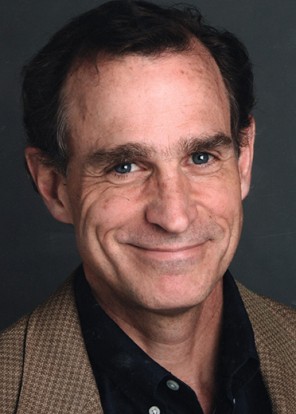
Tod Robberson, 53, joined the editorial staff ofThe Dallas Morning News in 2006 after working more than 25 years as a foreign correspondent and international-affairs editor for The News, The Washington Post and Reuters news agency. He has lived in Lebanon, Mexico, El Salvador, Panama, Colombia and United Kingdom, and covered at least eight major armed conflicts. Tod speaks Spanish and Arabic, holds a bachelor’s degree in communication/journalism from Texas Tech University and a master’s in Arab Studies from Georgetown University. He has won awards for investigative journalism and reporting on international human-smuggling rings. Tod draws upon his experience writing about the suffering behind wars, natural disasters and Third World poverty to help Dallas Morning News readers understand the human drama unfolding in our own neighborhoods.
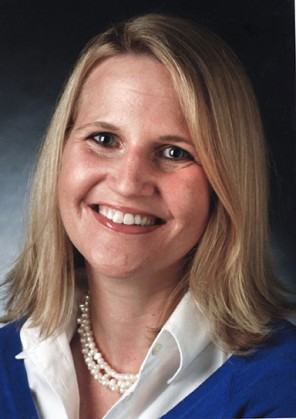
Colleen McCain Nelson is an editorial writer at The Dallas Morning News. Since joining the editorial board in May 2006, she has led the newspaper’s clean-air crusade, shining a spotlight on failings of the state’s environmental laws and raising questions about proposed power plants. She also has been the board’s eyes and ears at Dallas City Hall, offering regular commentary about city policies and politics. In addition to writing staff editorials, Nelson has contributed occasional columns and essays on topics ranging from the use and abuse of curse words to the agony and the ecstasy of running a marathon.
Before making the switch to the opinion pages, Nelson worked as a political reporter and spent several years on the campaign trail with local, state and national candidates. In 2004, she criss-crossed the country with John Kerry, camped out in Iowa with John Edwards and snagged a seat on Air Force One. In addition to recounting life on the road for the Morning News, Nelson provided insights about the presidential campaign on BBC America. She joined the Morning News in 2000 after writing about politics and government at the Fort Worth Star-Telegram and The Wichita Eagle. Nelson is a Phi Beta Kappa graduate of the University of Kansas.
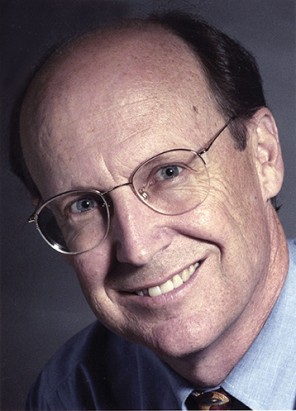
William McKenzie is an editorial columnist for The Dallas Morning News. He joined the Morning News editorial staff in July 1991 after spending 12 years in Washington, D.C.
The Fort Worth native writes editorials most often on Congress and the presidency, Texas government, religion and politics, water issues and education reform. The University of Texas graduate also writes a weekly political column that has appeared in dozens of newspapers nationwide.
From 1981 to 1991, he edited the Ripon Forum, a progressive Republican journal of opinion. In 1980, he served as deputy research director of John Anderson’s presidential campaign. And in 1988, he edited “A Newer World,” a collection of political essays.
Mr. McKenzie’s journalistic credits include winning multiple awards from the Texas Headliners Foundation, the Southern Newspaper Publishers Association and the Dallas Press Club. In 1999 and 2000, he served as a Pulitzer Prize juror. And he has appeared on NPR, MSNBC and various radio and television talk shows.
Mr. McKenzie’s civic responsibilities include serving as a Presbyterian elder. He also has been an active volunteer and board member for homeless groups in Dallas and Washington, D.C. He, his wife Jennifer Nagorka and their twin children reside in Dallas.