For a distinguished and appropriately documented book on the history of the United States, Ten thousand dollars ($10,000).

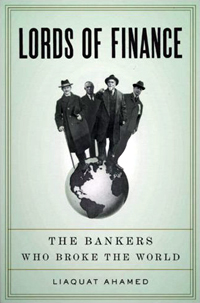
Lords of Finance: The Bankers Who Broke the World, by Liaquat Ahamed (The Penguin Press)

A compelling account of how four powerful bankers played crucial roles in triggering the Great Depression and ultimately transforming the United States into the world's financial leader.
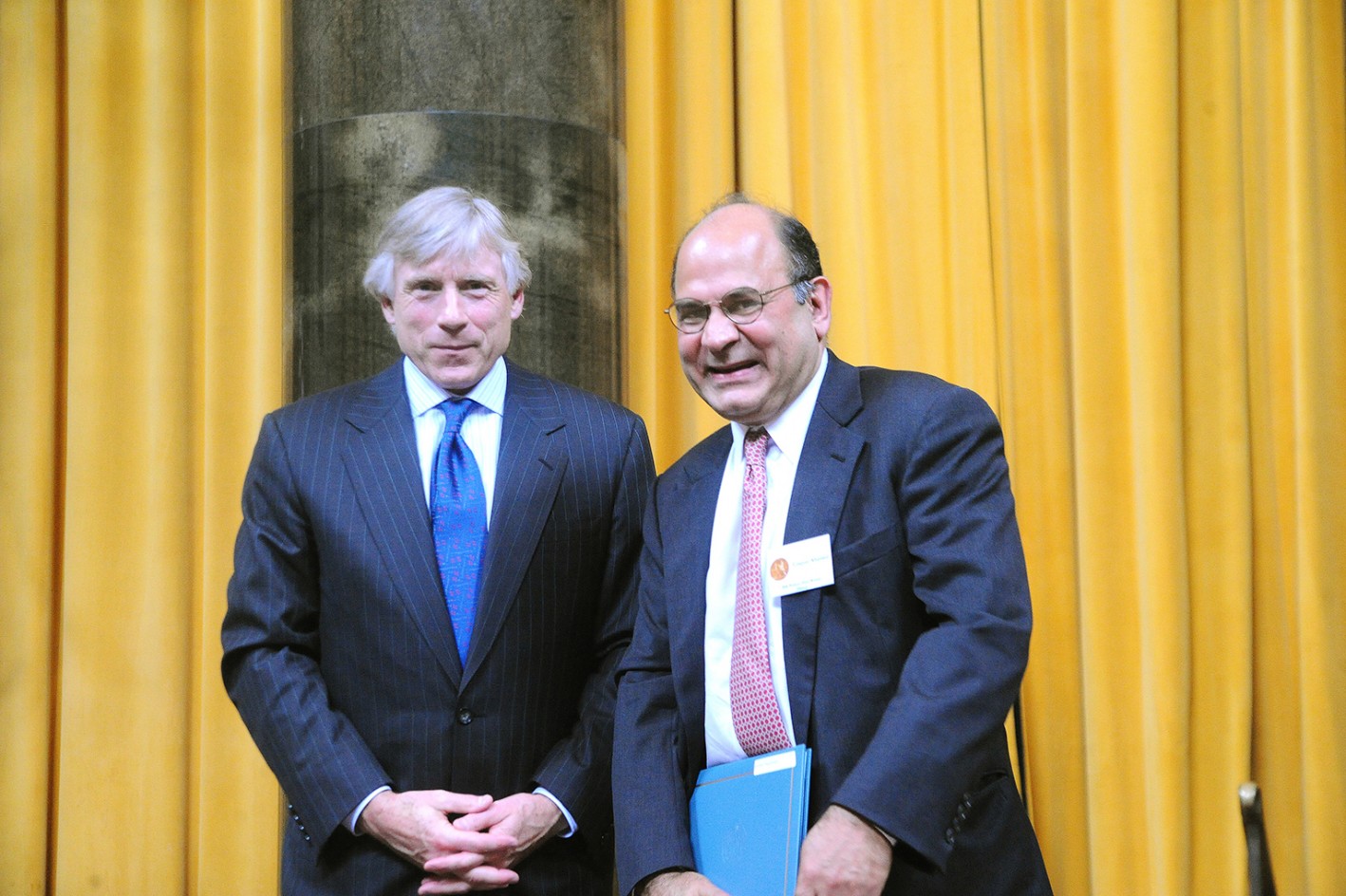
Lee Bollinger and Liqauat Ahamed

Lee C. Bollinger, President of Columbia University (left), presents the 2010 History prize to Liaquat Ahamed.

Winning Work

Lords of Finance: The Bankers Who Broke the World

With penetrating insights for today, this vital history of the world economic collapse of the late 1920s offers unforgettable portraits of the four men whose personal and professional actions as heads of their respective central banks changed the course of the twentieth century.

It is commonly believed that the Great Depression that began in 1929 resulted from a confluence of events beyond any one person’s or government’s control. In fact, as Liaquat Ahamed reveals, it was the decisions taken by a small number of central bankers that were the primary cause of the economic meltdown, the effects of which set the stage for World War II and reverberated for decades.

In Lords of Finance, we meet the neurotic and enigmatic Montagu Norman of the Bank of England, the xenophobic and suspicious Émile Moreau of the Banque de France, the arrogant yet brilliant Hjalmar Schacht of the Reichsbank, and Benjamin Strong of the Federal Reserve Bank of New York, whose façade of energy and drive masked a deeply wounded and overburdened man. After the First World War, these central bankers attempted to reconstruct the world of international finance. Despite their differences, they were united by a common fear—that the greatest threat to capitalism was inflation— and by a common vision that the solution was to turn back the clock and return the world to the gold standard.

For a brief period in the mid-1920s they appeared to have succeeded. The world’s currencies were stabilized and capital began flowing freely across the globe. But beneath the veneer of boom-town prosperity, cracks started to appear in the financial system. The gold standard that all had believed would provide an umbrella of stability proved to be a straitjacket, and the world economy began that terrible downward spiral known as the Great Depression.

As yet another period of economic turmoil makes headlines today, the Great Depression and the year 1929 remain the benchmark for true financial mayhem. Offering a new understanding of the global nature of financial crises, Lords of Finance is a potent reminder of the enormous impact that the decisions of central bankers can have, of their fallibility, and of the terrible human consequences that can result when they are wrong.

-- from the publisher

Biography

Liaquat Ahamed has been a professional investment manager for twenty-five years. He has worked at the World Bank in Washington, D.C., and the New York based partnership of Fischer Francis Trees and Watts, where he served as chief executive. He is currently an adviser to several hedge fund groups, including the Rock Creek Group and the Rohatyn Group; a director of Aspen Insurance Co.; and is on the board of trustees of the Brookings Institution. Ahamed has degrees in economics from Harvard and Cambridge universities.

Finalists

Nominated as finalists in History in 2010:

Gordon S. Wood

A lucid exploration of a turbulent era when a profoundly changing America, despite the sin of slavery, came to see itself as a beacon to the world, demonstrating human capacity for self-government.

Greg Grandin

An evocative, heavily researched examination of an industrial giant's grandiose scheme to create a model rubber plantation deep in the Amazon forest.

The Jury

Alan Brinkley(chair )

Allan Nevins Professor of History

Nancy MacLean

Peter B. Ritzma Professor of History and African American Studies

John T. McGreevy

L.A. O'Shaughnessy Dean of the College of Arts and Letters, and professor of history

Winners in History

Annette Gordon-Reed

A painstaking exploration of a sprawling multi-generation slave family that casts provocative new light on the relationship between Sally Hemings and her master, Thomas Jefferson.

2010 Prize Winners

Paul Harding

A powerful celebration of life in which a New England father and son, through suffering and joy, transcend their imprisoning lives and offer new ways of perceiving the world and mortality.

Hank Williams

For his craftsmanship as a songwriter who expressed universal feelings with poignant simplicity and played a pivotal role in transforming country music into a major musical and cultural force in American life.

Rae Armantrout

A book striking for its wit and linguistic inventiveness, offering poems that are often little thought-bombs detonating in the mind long after the first reading.

T.J. Stiles

A penetrating portrait of a complex, self-made titan who revolutionized transportation, amassed vast wealth and shaped the economic world in ways still felt today.