For a distinguished example of explanatory reporting that illuminates a significant and complex subject, demonstrating mastery of the subject, lucid writing and clear presentation, using any available journalistic tool, Fifteen thousand dollars ($15,000).

Staffs of The Arizona Republic and USA Today Network
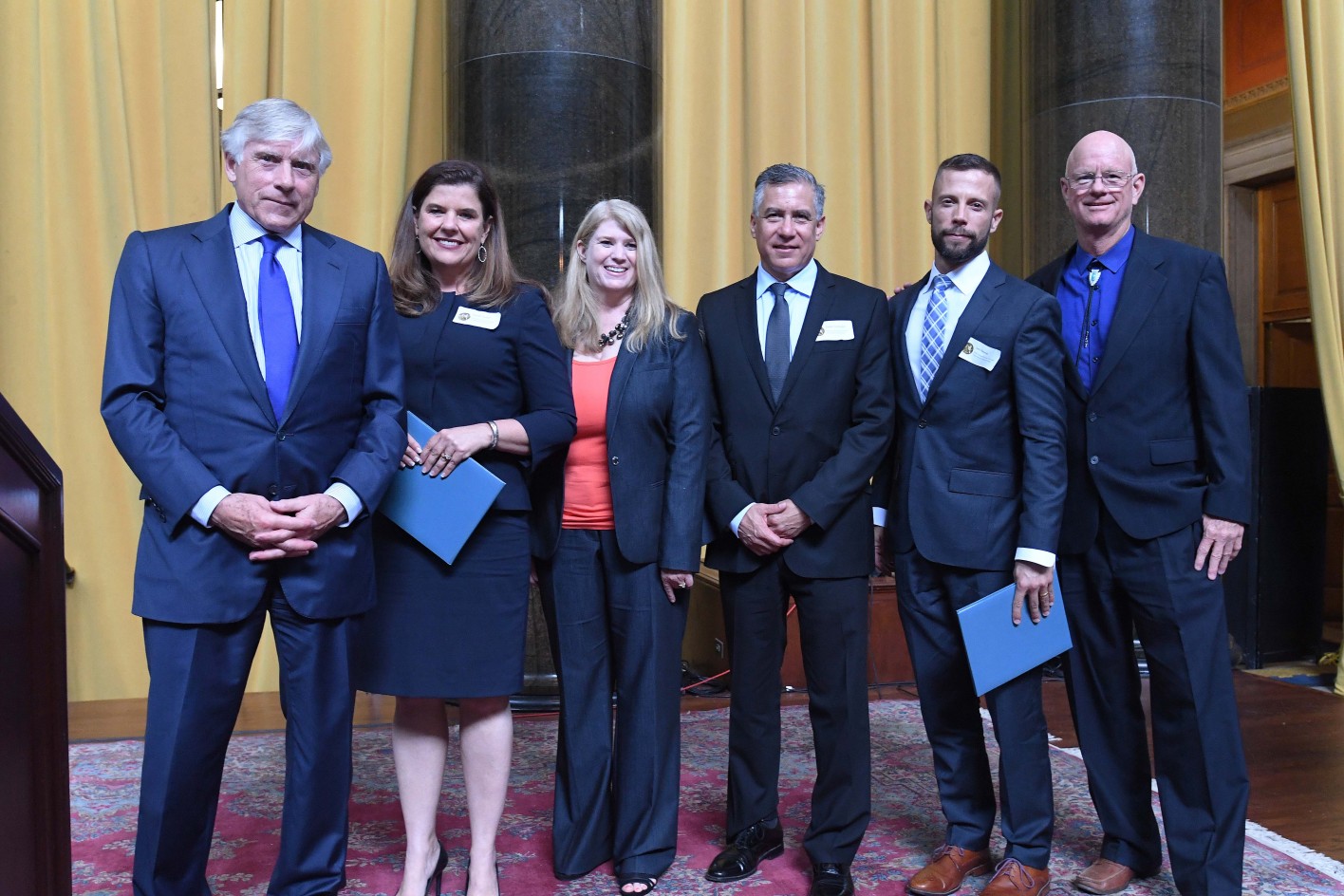
For vivid and timely reporting that masterfully combined text, video, podcasts and virtual reality to examine, from multiple perspectives, the difficulties and unintended consequences of fulfilling President Trump's pledge to construct a wall along the U.S. border with Mexico.

Staff members from The Arizona Republic (from left: Nicole Carroll, Cheryl Evans, Daniel Gonzalez, Josh Susong and Dennis Wagner) accept the 2018 Pulitzer Prize for Explanatory Reporting from Columbia University President Lee Bollinger. (Photo: Eileen Barroso/Columbia University)

Winning Work

September 20, 2017

Virtual reality allows you to stand inside a virtual space in real proportions, in this case looking at the terrain and vegetation of border regions, and even hearing original sound from the area. “The Wall” project used a helicopter equipped with video and LIDAR technology, essentially a laser that measures distances, to help re-create geographical features of the border for the VR experience.

The three on-the-ground experiences for “The Wall” allow you to immerse yourself into a virtual representation of three locations along the border:

Near Tecate, where a steel border fence marks the line through rocky hillsides between California and Mexico.

In the middle of a canyon in Big Bend National Park in southwest Texas, where thousand-foot cliffs soar higher than any border wall could be built.

At the foot of Mount Cristo Rey, home of a religious shrine near El Paso, which serves as a pilgrimage site for people in both the U.S. and Mexico.

In addition to the virtual reality, in this experience you can also immerse yourself in a dozen videos and accompanying slideshows that capture stories along the border.

To fully experience this groundbreaking virtual reality, you need a HTC Vive system. However, this video explains and highlights the experience. The multimedia innovations in “The Wall” were a key reason the project received a $28,000 grant in 2017 from Journalism 360, a news initiative by Google News Lab and the Knight Foundation.

Finalists

Nominated as finalists in Explanatory Reporting in 2018:

Michael Kimmelman of The New York Times

For an ambitious series that explained with verve, lyricism and exceptional clarity the complex impact of climate change on cities around the world.

Staff of ProPublica

For a sobering examination of why the United States has one of the highest rates of maternal deaths in the developed world, and why at least half are preventable.

The Jury

Deborah Henley(Chair)

Editor and Vice President

Gina Chua

Chief Operating Officer

Matt Doig

Investigations Editor

Michael Fannin

Editor and Vice President

Ezra Klein

Editor-at-Large

Cindy McCurry-Ross

Executive Editor

Ed Yong*

Staff Writer

Winners in Explanatory Reporting

Zachary R. Mider

For a painstaking, clear and entertaining explanation of how so many U.S. corporations dodge taxes and why lawmakers and regulators have a hard time stopping them.

Eli Saslow

For his unsettling and nuanced reporting on the prevalence of food stamps in post-recession America, forcing readers to grapple with issues of poverty and dependency.

2018 Prize Winners

Staff of The Washington Post

For purposeful and relentless reporting that changed the course of a Senate race in Alabama by revealing a candidate’s alleged past sexual harassment of teenage girls and subsequent efforts to undermine the journalism that exposed it.