Ed Yong of The Atlantic
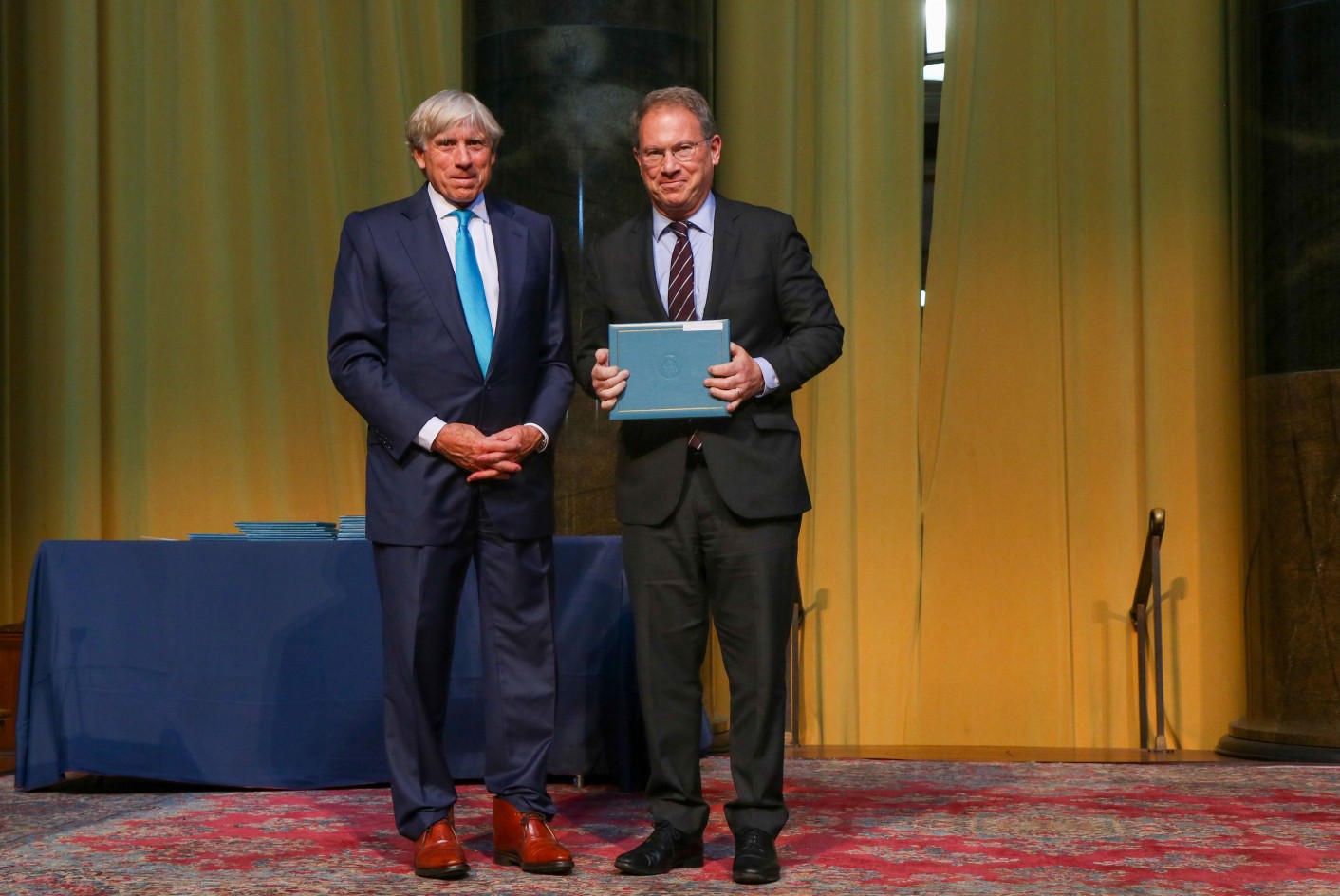
Atlantic Editor-in-Chief Jeffrey Goldberg accepts a 2021 Pulitzer Prize for Explanatory Reporting from Columbia University President Lee Bollinger on behalf of Ed Yong. (Jose Lopez/The Pulitzer Prizes)
Winning Work
The U.S. may end up with the worst COVID-19 outbreak in the industrialized world. This is how it’s going to play out.
Three months ago, no one knew that SARS-CoV-2 existed. Now the virus has spread to almost every country, infecting at least 446,000 people whom we know about, and many more whom we do not. It has crashed economies and broken health-care systems, filled hospitals and emptied public spaces. It has separated people from their workplaces and their friends. It has disrupted modern society on a scale that most living people have never witnessed. Soon, most everyone in the United States will know someone who has been infected. Like World War II or the 9/11 attacks, this pandemic has already imprinted itself upon the nation’s psyche.
A global pandemic of this scale was inevitable. In recent years, hundreds of health experts have written books, white papers, and op-eds warning of the possibility. Bill Gates has been telling anyone who would listen, including the 18 million viewers of his TED Talk. In 2018, I wrote a story for The Atlantic arguing that America was not ready for the pandemic that would eventually come. In October, the Johns Hopkins Center for Health Security war-gamed what might happen if a new coronavirus swept the globe. And then one did. Hypotheticals became reality. “What if?” became “Now what?”
So, now what? In the late hours of last Wednesday, which now feels like the distant past, I was talking about the pandemic with a pregnant friend who was days away from her due date. We realized that her child might be one of the first of a new cohort who are born into a society profoundly altered by COVID-19. We decided to call them Generation C.
As we’ll see, Gen C’s lives will be shaped by the choices made in the coming weeks, and by the losses we suffer as a result. But first, a brief reckoning. On the Global Health Security Index, a report card that grades every country on its pandemic preparedness, the United States has a score of 83.5—the world’s highest. Rich, strong, developed, America is supposed to be the readiest of nations. That illusion has been shattered. Despite months of advance warning as the virus spread in other countries, when America was finally tested by COVID-19, it failed.
“No matter what, a virus [like SARS-CoV-2] was going to test the resilience of even the most well-equipped health systems,” says Nahid Bhadelia, an infectious-diseases physician at the Boston University School of Medicine. More transmissible and fatal than seasonal influenza, the new coronavirus is also stealthier, spreading from one host to another for several days before triggering obvious symptoms. To contain such a pathogen, nations must develop a test and use it to identify infected people, isolate them, and trace those they’ve had contact with. That is what South Korea, Singapore, and Hong Kong did to tremendous effect. It is what the United States did not.
As my colleagues Alexis Madrigal and Robinson Meyer have reported, the Centers for Disease Control and Prevention developed and distributed a faulty test in February. Independent labs created alternatives, but were mired in bureaucracy from the FDA. In a crucial month when the American caseload shot into the tens of thousands, only hundreds of people were tested. That a biomedical powerhouse like the U.S. should so thoroughly fail to create a very simple diagnostic test was, quite literally, unimaginable. “I’m not aware of any simulations that I or others have run where we [considered] a failure of testing,” says Alexandra Phelan of Georgetown University, who works on legal and policy issues related to infectious diseases.
The testing fiasco was the original sin of America’s pandemic failure, the single flaw that undermined every other countermeasure. If the country could have accurately tracked the spread of the virus, hospitals could have executed their pandemic plans, girding themselves by allocating treatment rooms, ordering extra supplies, tagging in personnel, or assigning specific facilities to deal with COVID-19 cases. None of that happened. Instead, a health-care system that already runs close to full capacity, and that was already challenged by a severe flu season, was suddenly faced with a virus that had been left to spread, untracked, through communities around the country. Overstretched hospitals became overwhelmed. Basic protective equipment, such as masks, gowns, and gloves, began to run out. Beds will soon follow, as will the ventilators that provide oxygen to patients whose lungs are besieged by the virus.
With little room to surge during a crisis, America’s health-care system operates on the assumption that unaffected states can help beleaguered ones in an emergency. That ethic works for localized disasters such as hurricanes or wildfires, but not for a pandemic that is now in all 50 states. Cooperation has given way to competition; some worried hospitals have bought out large quantities of supplies, in the way that panicked consumers have bought out toilet paper.
Partly, that’s because the White House is a ghost town of scientific expertise. A pandemic-preparedness office that was part of the National Security Council was dissolved in 2018. On January 28, Luciana Borio, who was part of that team, urged the government to “act now to prevent an American epidemic,” and specifically to work with the private sector to develop fast, easy diagnostic tests. But with the office shuttered, those warnings were published in The Wall Street Journal, rather than spoken into the president’s ear. Instead of springing into action, America sat idle.
Rudderless, blindsided, lethargic, and uncoordinated, America has mishandled the COVID-19 crisis to a substantially worse degree than what every health expert I’ve spoken with had feared. “Much worse,” said Ron Klain, who coordinated the U.S. response to the West African Ebola outbreak in 2014. “Beyond any expectations we had,” said Lauren Sauer, who works on disaster preparedness at Johns Hopkins Medicine. “As an American, I’m horrified,” said Seth Berkley, who heads Gavi, the Vaccine Alliance. “The U.S. may end up with the worst outbreak in the industrialized world.”
I. The Next Months
Having fallen behind, it will be difficult—but not impossible—for the United States to catch up. To an extent, the near-term future is set because COVID-19 is a slow and long illness. People who were infected several days ago will only start showing symptoms now, even if they isolated themselves in the meantime. Some of those people will enter intensive-care units in early April. As of last weekend, the nation had 17,000 confirmed cases, but the actual number was probably somewhere between 60,000 and 245,000. Numbers are now starting to rise exponentially: As of Wednesday morning, the official case count was 54,000, and the actual case count is unknown. Health-care workers are already seeing worrying signs: dwindling equipment, growing numbers of patients, and doctors and nurses who are themselves becoming infected.
Italy and Spain offer grim warnings about the future. Hospitals are out of room, supplies, and staff. Unable to treat or save everyone, doctors have been forced into the unthinkable: rationing care to patients who are most likely to survive, while letting others die. The U.S. has fewer hospital beds per capita than Italy. A study released by a team at Imperial College London concluded that if the pandemic is left unchecked, those beds will all be full by late April. By the end of June, for every available critical-care bed, there will be roughly 15 COVID-19 patients in need of one. By the end of the summer, the pandemic will have directly killed 2.2 million Americans, notwithstanding those who will indirectly die as hospitals are unable to care for the usual slew of heart attacks, strokes, and car accidents. This is the worst-case scenario. To avert it, four things need to happen—and quickly.
The first and most important is to rapidly produce masks, gloves, and other personal protective equipment. If health-care workers can’t stay healthy, the rest of the response will collapse. In some places, stockpiles are already so low that doctors are reusing masks between patients, calling for donations from the public, or sewing their own homemade alternatives. These shortages are happening because medical supplies are made-to-order and depend on byzantine international supply chains that are currently straining and snapping. Hubei province in China, the epicenter of the pandemic, was also a manufacturing center of medical masks.
In the U.S., the Strategic National Stockpile—a national larder of medical equipment—is already being deployed, especially to the hardest-hit states. The stockpile is not inexhaustible, but it can buy some time. Donald Trump could use that time to invoke the Defense Production Act, launching a wartime effort in which American manufacturers switch to making medical equipment. But after invoking the act last Wednesday, Trump has failed to actually use it, reportedly due to lobbying from the U.S. Chamber of Commerce and heads of major corporations.
Some manufacturers are already rising to the challenge, but their efforts are piecemeal and unevenly distributed. “One day, we’ll wake up to a story of doctors in City X who are operating with bandanas, and a closet in City Y with masks piled into it,” says Ali Khan, the dean of public health at the University of Nebraska Medical Center. A “massive logistics and supply-chain operation [is] now needed across the country,” says Thomas Inglesby of Johns Hopkins Bloomberg School of Public Health. That can’t be managed by small and inexperienced teams scattered throughout the White House. The solution, he says, is to tag in the Defense Logistics Agency—a 26,000-person group that prepares the U.S. military for overseas operations and that has assisted in past public-health crises, including the 2014 Ebola outbreak.
This agency can also coordinate the second pressing need: a massive rollout of COVID-19 tests. Those tests have been slow to arrive because of five separate shortages: of masks to protect people administering the tests; of nasopharyngeal swabs for collecting viral samples; of extraction kits for pulling the virus’s genetic material out of the samples; of chemical reagents that are part of those kits; and of trained people who can give the tests. Many of these shortages are, again, due to strained supply chains. The U.S. relies on three manufacturers for extraction reagents, providing redundancy in case any of them fails—but all of them failed in the face of unprecedented global demand. Meanwhile, Lombardy, Italy, the hardest-hit place in Europe, houses one of the largest manufacturers of nasopharyngeal swabs.
Some shortages are being addressed. The FDA is now moving quickly to approve tests developed by private labs. At least one can deliver results in less than an hour, potentially allowing doctors to know if the patient in front of them has COVID-19. The country “is adding capacity on a daily basis,” says Kelly Wroblewski of the Association of Public Health Laboratories.
On March 6, Trump said that “anyone who wants a test can get a test.” That was (and still is) untrue, and his own officials were quick to correct him. Regardless, anxious people still flooded into hospitals, seeking tests that did not exist. “People wanted to be tested even if they weren’t symptomatic, or if they sat next to someone with a cough,” says Saskia Popescu of George Mason University, who works to prepare hospitals for pandemics. Others just had colds, but doctors still had to use masks to examine them, burning through their already dwindling supplies. “It really stressed the health-care system,” Popescu says. Even now, as capacity expands, tests must be used carefully. The first priority, says Marc Lipsitch of Harvard, is to test health-care workers and hospitalized patients, allowing hospitals to quell any ongoing fires. Only later, once the immediate crisis is slowing, should tests be deployed in a more widespread way. “This isn’t just going to be: Let’s get the tests out there!” Inglesby says.
These measures will take time, during which the pandemic will either accelerate beyond the capacity of the health system or slow to containable levels. Its course—and the nation’s fate—now depends on the third need, which is social distancing. Think of it this way: There are now only two groups of Americans. Group A includes everyone involved in the medical response, whether that’s treating patients, running tests, or manufacturing supplies. Group B includes everyone else, and their job is to buy Group A more time. Group B must now “flatten the curve” by physically isolating themselves from other people to cut off chains of transmission. Given the slow fuse of COVID-19, to forestall the future collapse of the health-care system, these seemingly drastic steps must be taken immediately, before they feel proportionate, and they must continue for several weeks.
Persuading a country to voluntarily stay at home is not easy, and without clear guidelines from the White House, mayors, governors, and business owners have been forced to take their own steps. Some states have banned large gatherings or closed schools and restaurants. At least 21 have now instituted some form of mandatory quarantine, compelling people to stay at home. And yet many citizens continue to crowd into public spaces.
In these moments, when the good of all hinges on the sacrifices of many, clear coordination matters—the fourth urgent need. The importance of social distancing must be impressed upon a public who must also be reassured and informed. Instead, Trump has repeatedly played down the problem, telling America that “we have it very well under control” when we do not, and that cases were “going to be down to close to zero” when they were rising. In some cases, as with his claims about ubiquitous testing, his misleading gaffes have deepened the crisis. He has even touted unproven medications.
Away from the White House press room, Trump has apparently been listening to Anthony Fauci, the director of the National Institute of Allergy and Infectious Diseases. Fauci has advised every president since Ronald Reagan on new epidemics, and now sits on the COVID-19 task force that meets with Trump roughly every other day. “He’s got his own style, let’s leave it at that,” Fauci told me, “but any kind of recommendation that I have made thus far, the substance of it, he has listened to everything.”
But Trump already seems to be wavering. In recent days, he has signaled that he is prepared to backtrack on social-distancing policies in a bid to protect the economy. Pundits and business leaders have used similar rhetoric, arguing that high-risk people, such as the elderly, could be protected while lower-risk people are allowed to go back to work. Such thinking is seductive, but flawed. It overestimates our ability to assess a person’s risk, and to somehow wall off the “high-risk” people from the rest of society. It underestimates how badly the virus can hit “low-risk” groups, and how thoroughly hospitals will be overwhelmed if even just younger demographics are falling sick.
A recent analysis from the University of Pennsylvania estimated that even if social-distancing measures can reduce infection rates by 95 percent, 960,000 Americans will still need intensive care. There are only about 180,000 ventilators in the U.S. and, more pertinently, only enough respiratory therapists and critical-care staff to safely look after 100,000 ventilated patients. Abandoning social distancing would be foolish. Abandoning it now, when tests and protective equipment are still scarce, would be catastrophic.
If Trump stays the course, if Americans adhere to social distancing, if testing can be rolled out, and if enough masks can be produced, there is a chance that the country can still avert the worst predictions about COVID-19, and at least temporarily bring the pandemic under control. No one knows how long that will take, but it won’t be quick. “It could be anywhere from four to six weeks to up to three months,” Fauci said, “but I don’t have great confidence in that range.”
II. The Endgame
Even a perfect response won’t end the pandemic. As long as the virus persists somewhere, there’s a chance that one infected traveler will reignite fresh sparks in countries that have already extinguished their fires. This is already happening in China, Singapore, and other Asian countries that briefly seemed to have the virus under control. Under these conditions, there are three possible endgames: one that’s very unlikely, one that’s very dangerous, and one that’s very long.
The first is that every nation manages to simultaneously bring the virus to heel, as with the original SARS in 2003. Given how widespread the coronavirus pandemic is, and how badly many countries are faring, the odds of worldwide synchronous control seem vanishingly small.
The second is that the virus does what past flu pandemics have done: It burns through the world and leaves behind enough immune survivors that it eventually struggles to find viable hosts. This “herd immunity” scenario would be quick, and thus tempting. But it would also come at a terrible cost: SARS-CoV-2 is more transmissible and fatal than the flu, and it would likely leave behind many millions of corpses and a trail of devastated health systems. The United Kingdom initially seemed to consider this herd-immunity strategy, before backtracking when models revealed the dire consequences. The U.S. now seems to be considering it too.
The third scenario is that the world plays a protracted game of whack-a-mole with the virus, stamping out outbreaks here and there until a vaccine can be produced. This is the best option, but also the longest and most complicated.
It depends, for a start, on making a vaccine. If this were a flu pandemic, that would be easier. The world is experienced at making flu vaccines and does so every year. But there are no existing vaccines for coronaviruses—until now, these viruses seemed to cause diseases that were mild or rare—so researchers must start from scratch. The first steps have been impressively quick. Last Monday, a possible vaccine created by Moderna and the National Institutes of Health went into early clinical testing. That marks a 63-day gap between scientists sequencing the virus’s genes for the first time and doctors injecting a vaccine candidate into a person’s arm. “It’s overwhelmingly the world record,” Fauci said.
But it’s also the fastest step among many subsequent slow ones. The initial trial will simply tell researchers if the vaccine seems safe, and if it can actually mobilize the immune system. Researchers will then need to check that it actually prevents infection from SARS-CoV-2. They’ll need to do animal tests and large-scale trials to ensure that the vaccine doesn’t cause severe side effects. They’ll need to work out what dose is required, how many shots people need, if the vaccine works in elderly people, and if it requires other chemicals to boost its effectiveness.
“Even if it works, they don’t have an easy way to manufacture it at a massive scale,” said Seth Berkley of Gavi. That’s because Moderna is using a new approach to vaccination. Existing vaccines work by providing the body with inactivated or fragmented viruses, allowing the immune system to prep its defenses ahead of time. By contrast, Moderna’s vaccine comprises a sliver of SARS-CoV-2’s genetic material—its RNA. The idea is that the body can use this sliver to build its own viral fragments, which would then form the basis of the immune system’s preparations. This approach works in animals, but is unproven in humans. By contrast, French scientists are trying to modify the existing measles vaccine using fragments of the new coronavirus. “The advantage of that is that if we needed hundreds of doses tomorrow, a lot of plants in the world know how to do it,” Berkley said. No matter which strategy is faster, Berkley and others estimate that it will take 12 to 18 months to develop a proven vaccine, and then longer still to make it, ship it, and inject it into people’s arms.
It’s likely, then, that the new coronavirus will be a lingering part of American life for at least a year, if not much longer. If the current round of social-distancing measures works, the pandemic may ebb enough for things to return to a semblance of normalcy. Offices could fill and bars could bustle. Schools could reopen and friends could reunite. But as the status quo returns, so too will the virus. This doesn’t mean that society must be on continuous lockdown until 2022. But “we need to be prepared to do multiple periods of social distancing,” says Stephen Kissler of Harvard.
Much about the coming years, including the frequency, duration, and timing of social upheavals, depends on two properties of the virus, both of which are currently unknown. First: seasonality. Coronaviruses tend to be winter infections that wane or disappear in the summer. That may also be true for SARS-CoV-2, but seasonal variations might not sufficiently slow the virus when it has so many immunologically naive hosts to infect. “Much of the world is waiting anxiously to see what—if anything—the summer does to transmission in the Northern Hemisphere,” says Maia Majumder of Harvard Medical School and Boston Children’s Hospital.
Second: duration of immunity. When people are infected by the milder human coronaviruses that cause cold-like symptoms, they remain immune for less than a year. By contrast, the few who were infected by the original SARS virus, which was far more severe, stayed immune for much longer. Assuming that SARS-CoV-2 lies somewhere in the middle, people who recover from their encounters might be protected for a couple of years. To confirm that, scientists will need to develop accurate serological tests, which look for the antibodies that confer immunity. They’ll also need to confirm that such antibodies actually stop people from catching or spreading the virus. If so, immune citizens can return to work, care for the vulnerable, and anchor the economy during bouts of social distancing.
Scientists can use the periods between those bouts to develop antiviral drugs—although such drugs are rarely panaceas, and come with possible side effects and the risk of resistance. Hospitals can stockpile the necessary supplies. Testing kits can be widely distributed to catch the virus’s return as quickly as possible. There’s no reason that the U.S. should let SARS-CoV-2 catch it unawares again, and thus no reason that social-distancing measures need to be deployed as broadly and heavy-handedly as they now must be. As Aaron E. Carroll and Ashish Jha recently wrote, “We can keep schools and businesses open as much as possible, closing them quickly when suppression fails, then opening them back up again once the infected are identified and isolated. Instead of playing defense, we could play more offense.”
Whether through accumulating herd immunity or the long-awaited arrival of a vaccine, the virus will find spreading explosively more and more difficult. It’s unlikely to disappear entirely. The vaccine may need to be updated as the virus changes, and people may need to get revaccinated on a regular basis, as they currently do for the flu. Models suggest that the virus might simmer around the world, triggering epidemics every few years or so. “But my hope and expectation is that the severity would decline, and there would be less societal upheaval,” Kissler says. In this future, COVID-19 may become like the flu is today—a recurring scourge of winter. Perhaps it will eventually become so mundane that even though a vaccine exists, large swaths of Gen C won’t bother getting it, forgetting how dramatically their world was molded by its absence.
III. The Aftermath
The cost of reaching that point, with as few deaths as possible, will be enormous. As my colleague Annie Lowrey wrote, the economy is experiencing a shock “more sudden and severe than anyone alive has ever experienced.” About one in five people in the United States have lost working hours or jobs. Hotels are empty. Airlines are grounding flights. Restaurants and other small businesses are closing. Inequalities will widen: People with low incomes will be hardest-hit by social-distancing measures, and most likely to have the chronic health conditions that increase their risk of severe infections. Diseases have destabilized cities and societies many times over, “but it hasn’t happened in this country in a very long time, or to quite the extent that we’re seeing now,” says Elena Conis, a historian of medicine at UC Berkeley. “We’re far more urban and metropolitan. We have more people traveling great distances and living far from family and work.”
After infections begin ebbing, a secondary pandemic of mental-health problems will follow. At a moment of profound dread and uncertainty, people are being cut off from soothing human contact. Hugs, handshakes, and other social rituals are now tinged with danger. People with anxiety or obsessive-compulsive disorder are struggling. Elderly people, who are already excluded from much of public life, are being asked to distance themselves even further, deepening their loneliness. Asian people are suffering racist insults, fueled by a president who insists on labeling the new coronavirus the “Chinese virus.” Incidents of domestic violence and child abuse are likely to spike as people are forced to stay in unsafe homes. Children, whose bodies are mostly spared by the virus, may endure mental trauma that stays with them into adulthood.
After the pandemic, people who recover from COVID-19 might be shunned and stigmatized, as were survivors of Ebola, SARS, and HIV. Health-care workers will take time to heal: One to two years after SARS hit Toronto, people who dealt with the outbreak were still less productive and more likely to be experiencing burnout and post-traumatic stress. People who went through long bouts of quarantine will carry the scars of their experience. “My colleagues in Wuhan note that some people there now refuse to leave their homes and have developed agoraphobia,” says Steven Taylor of the University of British Columbia, who wrote The Psychology of Pandemics.
But “there is also the potential for a much better world after we get through this trauma,” says Richard Danzig of the Center for a New American Security. Already, communities are finding new ways of coming together, even as they must stay apart. Attitudes to health may also change for the better. The rise of HIV and AIDS “completely changed sexual behavior among young people who were coming into sexual maturity at the height of the epidemic,” Conis says. “The use of condoms became normalized. Testing for STDs became mainstream.” Similarly, washing your hands for 20 seconds, a habit that has historically been hard to enshrine even in hospitals, “may be one of those behaviors that we become so accustomed to in the course of this outbreak that we don’t think about them,” Conis adds.
Pandemics can also catalyze social change. People, businesses, and institutions have been remarkably quick to adopt or call for practices that they might once have dragged their heels on, including working from home, conference-calling to accommodate people with disabilities, proper sick leave, and flexible child-care arrangements. “This is the first time in my lifetime that I’ve heard someone say, ‘Oh, if you’re sick, stay home,’” says Adia Benton, an anthropologist at Northwestern University. Perhaps the nation will learn that preparedness isn’t just about masks, vaccines, and tests, but also about fair labor policies and a stable and equal health-care system. Perhaps it will appreciate that health-care workers and public-health specialists compose America’s social immune system, and that this system has been suppressed.
Aspects of America’s identity may need rethinking after COVID-19. Many of the country’s values have seemed to work against it during the pandemic. Its individualism, exceptionalism, and tendency to equate doing whatever you want with an act of resistance meant that when it came time to save lives and stay indoors, some people flocked to bars and clubs. Having internalized years of anti-terrorism messaging following 9/11, Americans resolved to not live in fear. But SARS-CoV-2 has no interest in their terror, only their cells.
Years of isolationist rhetoric had consequences too. Citizens who saw China as a distant, different place, where bats are edible and authoritarianism is acceptable, failed to consider that they would be next or that they wouldn’t be ready. (China’s response to this crisis had its own problems, but that’s for another time.) “People believed the rhetoric that containment would work,” says Wendy Parmet, who studies law and public health at Northeastern University. “We keep them out, and we’ll be okay. When you have a body politic that buys into these ideas of isolationism and ethnonationalism, you’re especially vulnerable when a pandemic hits.”
Veterans of past epidemics have long warned that American society is trapped in a cycle of panic and neglect. After every crisis—anthrax, SARS, flu, Ebola—attention is paid and investments are made. But after short periods of peacetime, memories fade and budgets dwindle. This trend transcends red and blue administrations. When a new normal sets in, the abnormal once again becomes unimaginable. But there is reason to think that COVID-19 might be a disaster that leads to more radical and lasting change.
The other major epidemics of recent decades either barely affected the U.S. (SARS, MERS, Ebola), were milder than expected (H1N1 flu in 2009), or were mostly limited to specific groups of people (Zika, HIV). The COVID-19 pandemic, by contrast, is affecting everyone directly, changing the nature of their everyday life. That distinguishes it not only from other diseases, but also from the other systemic challenges of our time. When an administration prevaricates on climate change, the effects won’t be felt for years, and even then will be hard to parse. It’s different when a president says that everyone can get a test, and one day later, everyone cannot. Pandemics are democratizing experiences. People whose privilege and power would normally shield them from a crisis are facing quarantines, testing positive, and losing loved ones. Senators are falling sick. The consequences of defunding public-health agencies, losing expertise, and stretching hospitals are no longer manifesting as angry opinion pieces, but as faltering lungs.
After 9/11, the world focused on counterterrorism. After COVID-19, attention may shift to public health. Expect to see a spike in funding for virology and vaccinology, a surge in students applying to public-health programs, and more domestic production of medical supplies. Expect pandemics to top the agenda at the United Nations General Assembly. Anthony Fauci is now a household name. “Regular people who think easily about what a policewoman or firefighter does finally get what an epidemiologist does,” says Monica Schoch-Spana, a medical anthropologist at the Johns Hopkins Center for Health Security.
Such changes, in themselves, might protect the world from the next inevitable disease. “The countries that had lived through SARS had a public consciousness about this that allowed them to leap into action,” said Ron Klain, the former Ebola czar. “The most commonly uttered sentence in America at the moment is, ‘I’ve never seen something like this before.’ That wasn’t a sentence anyone in Hong Kong uttered.” For the U.S., and for the world, it’s abundantly, viscerally clear what a pandemic can do.
The lessons that America draws from this experience are hard to predict, especially at a time when online algorithms and partisan broadcasters only serve news that aligns with their audience’s preconceptions. Such dynamics will be pivotal in the coming months, says Ilan Goldenberg, a foreign-policy expert at the Center for a New American Security. “The transitions after World War II or 9/11 were not about a bunch of new ideas,” he says. “The ideas are out there, but the debates will be more acute over the next few months because of the fluidity of the moment and willingness of the American public to accept big, massive changes.”
One could easily conceive of a world in which most of the nation believes that America defeated COVID-19. Despite his many lapses, Trump’s approval rating has surged. Imagine that he succeeds in diverting blame for the crisis to China, casting it as the villain and America as the resilient hero. During the second term of his presidency, the U.S. turns further inward and pulls out of NATO and other international alliances, builds actual and figurative walls, and disinvests in other nations. As Gen C grows up, foreign plagues replace communists and terrorists as the new generational threat.
One could also envisage a future in which America learns a different lesson. A communal spirit, ironically born through social distancing, causes people to turn outward, to neighbors both foreign and domestic. The election of November 2020 becomes a repudiation of “America first” politics. The nation pivots, as it did after World War II, from isolationism to international cooperation. Buoyed by steady investments and an influx of the brightest minds, the health-care workforce surges. Gen C kids write school essays about growing up to be epidemiologists. Public health becomes the centerpiece of foreign policy. The U.S. leads a new global partnership focused on solving challenges like pandemics and climate change.
In 2030, SARS-CoV-3 emerges from nowhere, and is brought to heel within a month.
A virus has brought the world’s most powerful country to its knees.
How did it come to this? A virus a thousand times smaller than a dust mote has humbled and humiliated the planet’s most powerful nation. America has failed to protect its people, leaving them with illness and financial ruin. It has lost its status as a global leader. It has careened between inaction and ineptitude. The breadth and magnitude of its errors are difficult, in the moment, to truly fathom.
In the first half of 2020, SARS‑CoV‑2—the new coronavirus behind the disease COVID‑19—infected 10 million people around the world and killed about half a million. But few countries have been as severely hit as the United States, which has just 4 percent of the world’s population but a quarter of its confirmed COVID‑19 cases and deaths. These numbers are estimates. The actual toll, though undoubtedly higher, is unknown, because the richest country in the world still lacks sufficient testing to accurately count its sick citizens.
Despite ample warning, the U.S. squandered every possible opportunity to control the coronavirus. And despite its considerable advantages—immense resources, biomedical might, scientific expertise—it floundered. While countries as different as South Korea, Thailand, Iceland, Slovakia, and Australia acted decisively to bend the curve of infections downward, the U.S. achieved merely a plateau in the spring, which changed to an appalling upward slope in the summer. “The U.S. fundamentally failed in ways that were worse than I ever could have imagined,” Julia Marcus, an infectious-disease epidemiologist at Harvard Medical School, told me.
Since the pandemic began, I have spoken with more than 100 experts in a variety of fields. I’ve learned that almost everything that went wrong with America’s response to the pandemic was predictable and preventable. A sluggish response by a government denuded of expertise allowed the coronavirus to gain a foothold. Chronic underfunding of public health neutered the nation’s ability to prevent the pathogen’s spread. A bloated, inefficient health-care system left hospitals ill-prepared for the ensuing wave of sickness. Racist policies that have endured since the days of colonization and slavery left Indigenous and Black Americans especially vulnerable to COVID‑19. The decades-long process of shredding the nation’s social safety net forced millions of essential workers in low-paying jobs to risk their life for their livelihood. The same social-media platforms that sowed partisanship and misinformation during the 2014 Ebola outbreak in Africa and the 2016 U.S. election became vectors for conspiracy theories during the 2020 pandemic.
The U.S. has little excuse for its inattention. In recent decades, epidemics of SARS, MERS, Ebola, H1N1 flu, Zika, and monkeypox showed the havoc that new and reemergent pathogens could wreak. Health experts, business leaders, and even middle schoolers ran simulated exercises to game out the spread of new diseases. In 2018, I wrote an article for The Atlantic arguing that the U.S. was not ready for a pandemic, and sounded warnings about the fragility of the nation’s health-care system and the slow process of creating a vaccine. But the COVID‑19 debacle has also touched—and implicated—nearly every other facet of American society: its shortsighted leadership, its disregard for expertise, its racial inequities, its social-media culture, and its fealty to a dangerous strain of individualism.
SARS‑CoV‑2 is something of an anti-Goldilocks virus: just bad enough in every way. Its symptoms can be severe enough to kill millions but are often mild enough to allow infections to move undetected through a population. It spreads quickly enough to overload hospitals, but slowly enough that statistics don’t spike until too late. These traits made the virus harder to control, but they also softened the pandemic’s punch. SARS‑CoV‑2 is neither as lethal as some other coronaviruses, such as SARS and MERS, nor as contagious as measles. Deadlier pathogens almost certainly exist. Wild animals harbor an estimated 40,000 unknown viruses, a quarter of which could potentially jump into humans. How will the U.S. fare when “we can’t even deal with a starter pandemic?,” Zeynep Tufekci, a sociologist at the University of North Carolina and an Atlantic contributing writer, asked me.
Despite its epochal effects, COVID‑19 is merely a harbinger of worse plagues to come. The U.S. cannot prepare for these inevitable crises if it returns to normal, as many of its people ache to do. Normal led to this. Normal was a world ever more prone to a pandemic but ever less ready for one. To avert another catastrophe, the U.S. needs to grapple with all the ways normal failed us. It needs a full accounting of every recent misstep and foundational sin, every unattended weakness and unheeded warning, every festering wound and reopened scar.
A pandemic can be prevented in two ways: Stop an infection from ever arising, or stop an infection from becoming thousands more. The first way is likely impossible. There are simply too many viruses and too many animals that harbor them. Bats alone could host thousands of unknown coronaviruses; in some Chinese caves, one out of every 20 bats is infected. Many people live near these caves, shelter in them, or collect guano from them for fertilizer. Thousands of bats also fly over these people’s villages and roost in their homes, creating opportunities for the bats’ viral stowaways to spill over into human hosts. Based on antibody testing in rural parts of China, Peter Daszak of EcoHealth Alliance, a nonprofit that studies emerging diseases, estimates that such viruses infect a substantial number of people every year. “Most infected people don’t know about it, and most of the viruses aren’t transmissible,” Daszak says. But it takes just one transmissible virus to start a pandemic.
Sometime in late 2019, the wrong virus left a bat and ended up, perhaps via an intermediate host, in a human—and another, and another. Eventually it found its way to the Huanan seafood market, and jumped into dozens of new hosts in an explosive super-spreading event. The COVID‑19 pandemic had begun.
“There is no way to get spillover of everything to zero,” Colin Carlson, an ecologist at Georgetown University, told me. Many conservationists jump on epidemics as opportunities to ban the wildlife trade or the eating of “bush meat,” an exoticized term for “game,” but few diseases have emerged through either route. Carlson said the biggest factors behind spillovers are land-use change and climate change, both of which are hard to control. Our species has relentlessly expanded into previously wild spaces. Through intensive agriculture, habitat destruction, and rising temperatures, we have uprooted the planet’s animals, forcing them into new and narrower ranges that are on our own doorsteps. Humanity has squeezed the world’s wildlife in a crushing grip—and viruses have come bursting out.
Curtailing those viruses after they spill over is more feasible, but requires knowledge, transparency, and decisiveness that were lacking in 2020. Much about coronaviruses is still unknown. There are no surveillance networks for detecting them as there are for influenza. There are no approved treatments or vaccines. Coronaviruses were formerly a niche family, of mainly veterinary importance. Four decades ago, just 60 or so scientists attended the first international meeting on coronaviruses. Their ranks swelled after SARS swept the world in 2003, but quickly dwindled as a spike in funding vanished. The same thing happened after MERS emerged in 2012. This year, the world’s coronavirus experts—and there still aren’t many—had to postpone their triennial conference in the Netherlands because SARS‑CoV‑2 made flying too risky.
In the age of cheap air travel, an outbreak that begins on one continent can easily reach the others. SARS already demonstrated that in 2003, and more than twice as many people now travel by plane every year. To avert a pandemic, affected nations must alert their neighbors quickly. In 2003, China covered up the early spread of SARS, allowing the new disease to gain a foothold, and in 2020, history repeated itself. The Chinese government downplayed the possibility that SARS‑CoV‑2 was spreading among humans, and only confirmed as much on January 20, after millions had traveled around the country for the lunar new year. Doctors who tried to raise the alarm were censured and threatened. One, Li Wenliang, later died of COVID‑19. The World Health Organization initially parroted China’s line and did not declare a public-health emergency of international concern until January 30. By then, an estimated 10,000 people in 20 countries had been infected, and the virus was spreading fast.
The United States has correctly castigated China for its duplicity and the WHO for its laxity—but the U.S. has also failed the international community. Under President Donald Trump, the U.S. has withdrawn from several international partnerships and antagonized its allies. It has a seat on the WHO’s executive board, but left that position empty for more than two years, only filling it this May, when the pandemic was in full swing. Since 2017, Trump has pulled more than 30 staffers out of the Centers for Disease Control and Prevention’s office in China, who could have warned about the spreading coronavirus. Last July, he defunded an American epidemiologist embedded within China’s CDC. America First was America oblivious.
Even after warnings reached the U.S., they fell on the wrong ears. Since before his election, Trump has cavalierly dismissed expertise and evidence. He filled his administration with inexperienced newcomers, while depicting career civil servants as part of a “deep state.” In 2018, he dismantled an office that had been assembled specifically to prepare for nascent pandemics. American intelligence agencies warned about the coronavirus threat in January, but Trump habitually disregards intelligence briefings. The secretary of health and human services, Alex Azar, offered similar counsel, and was twice ignored.
Being prepared means being ready to spring into action, “so that when something like this happens, you’re moving quickly,” Ronald Klain, who coordinated the U.S. response to the West African Ebola outbreak in 2014, told me. “By early February, we should have triggered a series of actions, precisely zero of which were taken.” Trump could have spent those crucial early weeks mass-producing tests to detect the virus, asking companies to manufacture protective equipment and ventilators, and otherwise steeling the nation for the worst. Instead, he focused on the border. On January 31, Trump announced that the U.S. would bar entry to foreigners who had recently been in China, and urged Americans to avoid going there.
Travel bans make intuitive sense, because travel obviously enables the spread of a virus. But in practice, travel bans are woefully inefficient at restricting either travel or viruses. They prompt people to seek indirect routes via third-party countries, or to deliberately hide their symptoms. They are often porous: Trump’s included numerous exceptions, and allowed tens of thousands of people to enter from China. Ironically, they create travel: When Trump later announced a ban on flights from continental Europe, a surge of travelers packed America’s airports in a rush to beat the incoming restrictions. Travel bans may sometimes work for remote island nations, but in general they can only delay the spread of an epidemic—not stop it. And they can create a harmful false confidence, so countries “rely on bans to the exclusion of the things they actually need to do—testing, tracing, building up the health system,” says Thomas Bollyky, a global-health expert at the Council on Foreign Relations. “That sounds an awful lot like what happened in the U.S.”
This was predictable. A president who is fixated on an ineffectual border wall, and has portrayed asylum seekers as vectors of disease, was always going to reach for travel bans as a first resort. And Americans who bought into his rhetoric of xenophobia and isolationism were going to be especially susceptible to thinking that simple entry controls were a panacea.
And so the U.S. wasted its best chance of restraining COVID‑19. Although the disease first arrived in the U.S. in mid-January, genetic evidence shows that the specific viruses that triggered the first big outbreaks, in Washington State, didn’t land until mid-February. The country could have used that time to prepare. Instead, Trump, who had spent his entire presidency learning that he could say whatever he wanted without consequence, assured Americans that “the coronavirus is very much under control,” and “like a miracle, it will disappear.” With impunity, Trump lied. With impunity, the virus spread.
On February 26, Trump asserted that cases were “going to be down to close to zero.” Over the next two months, at least 1 million Americans were infected.
As the coronavirus established itself in the U.S., it found a nation through which it could spread easily, without being detected. For years, Pardis Sabeti, a virologist at the Broad Institute of Harvard and MIT, has been trying to create a surveillance network that would allow hospitals in every major U.S. city to quickly track new viruses through genetic sequencing. Had that network existed, once Chinese scientists published SARS‑CoV‑2’s genome on January 11, every American hospital would have been able to develop its own diagnostic test in preparation for the virus’s arrival. “I spent a lot of time trying to convince many funders to fund it,” Sabeti told me. “I never got anywhere.”
The CDC developed and distributed its own diagnostic tests in late January. These proved useless because of a faulty chemical component. Tests were in such short supply, and the criteria for getting them were so laughably stringent, that by the end of February, tens of thousands of Americans had likely been infected but only hundreds had been tested. The official data were so clearly wrong that The Atlantic developed its own volunteer-led initiative—the COVID Tracking Project—to count cases.
Diagnostic tests are easy to make, so the U.S. failing to create one seemed inconceivable. Worse, it had no Plan B. Private labs were strangled by FDA bureaucracy. Meanwhile, Sabeti’s lab developed a diagnostic test in mid-January and sent it to colleagues in Nigeria, Sierra Leone, and Senegal. “We had working diagnostics in those countries well before we did in any U.S. states,” she told me.
It’s hard to overstate how thoroughly the testing debacle incapacitated the U.S. People with debilitating symptoms couldn’t find out what was wrong with them. Health officials couldn’t cut off chains of transmission by identifying people who were sick and asking them to isolate themselves.
Water running along a pavement will readily seep into every crack; so, too, did the unchecked coronavirus seep into every fault line in the modern world. Consider our buildings. In response to the global energy crisis of the 1970s, architects made structures more energy-efficient by sealing them off from outdoor air, reducing ventilation rates. Pollutants and pathogens built up indoors, “ushering in the era of ‘sick buildings,’ ” says Joseph Allen, who studies environmental health at Harvard’s T. H. Chan School of Public Health. Energy efficiency is a pillar of modern climate policy, but there are ways to achieve it without sacrificing well-being. “We lost our way over the years and stopped designing buildings for people,” Allen says.
The indoor spaces in which Americans spend 87 percent of their time became staging grounds for super-spreading events. One study showed that the odds of catching the virus from an infected person are roughly 19 times higher indoors than in open air. Shielded from the elements and among crowds clustered in prolonged proximity, the coronavirus ran rampant in the conference rooms of a Boston hotel, the cabins of the Diamond Princess cruise ship, and a church hall in Washington State where a choir practiced for just a few hours.
The hardest-hit buildings were those that had been jammed with people for decades: prisons. Between harsher punishments doled out in the War on Drugs and a tough-on-crime mindset that prizes retribution over rehabilitation, America’s incarcerated population has swelled sevenfold since the 1970s, to about 2.3 million. The U.S. imprisons five to 18 times more people per capita than other Western democracies. Many American prisons are packed beyond capacity, making social distancing impossible. Soap is often scarce. Inevitably, the coronavirus ran amok. By June, two American prisons each accounted for more cases than all of New Zealand. One, Marion Correctional Institution, in Ohio, had more than 2,000 cases among inmates despite having a capacity of 1,500.
Other densely packed facilities were also besieged. America’s nursing homes and long-term-care facilities house less than 1 percent of its people, but as of mid-June, they accounted for 40 percent of its coronavirus deaths. More than 50,000 residents and staff have died. At least 250,000 more have been infected. These grim figures are a reflection not just of the greater harms that COVID‑19 inflicts upon elderly physiology, but also of the care the elderly receive. Before the pandemic, three in four nursing homes were understaffed, and four in five had recently been cited for failures in infection control. The Trump administration’s policies have exacerbated the problem by reducing the influx of immigrants, who make up a quarter of long-term caregivers.
Even though a Seattle nursing home was one of the first COVID‑19 hot spots in the U.S., similar facilities weren’t provided with tests and protective equipment. Rather than girding these facilities against the pandemic, the Department of Health and Human Services paused nursing-home inspections in March, passing the buck to the states. Some nursing homes avoided the virus because their owners immediately stopped visitations, or paid caregivers to live on-site. But in others, staff stopped working, scared about infecting their charges or becoming infected themselves. In some cases, residents had to be evacuated because no one showed up to care for them.
America’s neglect of nursing homes and prisons, its sick buildings, and its botched deployment of tests are all indicative of its problematic attitude toward health: “Get hospitals ready and wait for sick people to show,” as Sheila Davis, the CEO of the nonprofit Partners in Health, puts it. “Especially in the beginning, we catered our entire [COVID‑19] response to the 20 percent of people who required hospitalization, rather than preventing transmission in the community.” The latter is the job of the public-health system, which prevents sickness in populations instead of merely treating it in individuals. That system pairs uneasily with a national temperament that views health as a matter of personal responsibility rather than a collective good.
At the end of the 20th century, public-health improvements meant that Americans were living an average of 30 years longer than they were at the start of it. Maternal mortality had fallen by 99 percent; infant mortality by 90 percent. Fortified foods all but eliminated rickets and goiters. Vaccines eradicated smallpox and polio, and brought measles, diphtheria, and rubella to heel. These measures, coupled with antibiotics and better sanitation, curbed infectious diseases to such a degree that some scientists predicted they would soon pass into history. But instead, these achievements brought complacency. “As public health did its job, it became a target” of budget cuts, says Lori Freeman, the CEO of the National Association of County and City Health Officials.
Today, the U.S. spends just 2.5 percent of its gigantic health-care budget on public health. Underfunded health departments were already struggling to deal with opioid addiction, climbing obesity rates, contaminated water, and easily preventable diseases. Last year saw the most measles cases since 1992. In 2018, the U.S. had 115,000 cases of syphilis and 580,000 cases of gonorrhea—numbers not seen in almost three decades. It has 1.7 million cases of chlamydia, the highest number ever recorded.
Since the last recession, in 2009, chronically strapped local health departments have lost 55,000 jobs—a quarter of their workforce. When COVID‑19 arrived, the economic downturn forced overstretched departments to furlough more employees. When states needed battalions of public-health workers to find infected people and trace their contacts, they had to hire and train people from scratch. In May, Maryland Governor Larry Hogan asserted that his state would soon have enough people to trace 10,000 contacts every day. Last year, as Ebola tore through the Democratic Republic of Congo—a country with a quarter of Maryland’s wealth and an active war zone—local health workers and the WHO traced twice as many people.
Ripping unimpeded through American communities, the coronavirus created thousands of sickly hosts that it then rode into America’s hospitals. It should have found facilities armed with state-of-the-art medical technologies, detailed pandemic plans, and ample supplies of protective equipment and life-saving medicines. Instead, it found a brittle system in danger of collapse.
Compared with the average wealthy nation, America spends nearly twice as much of its national wealth on health care, about a quarter of which is wasted on inefficient care, unnecessary treatments, and administrative chicanery. The U.S. gets little bang for its exorbitant buck. It has the lowest life-expectancy rate of comparable countries, the highest rates of chronic disease, and the fewest doctors per person. This profit-driven system has scant incentive to invest in spare beds, stockpiled supplies, peacetime drills, and layered contingency plans—the essence of pandemic preparedness. America’s hospitals have been pruned and stretched by market forces to run close to full capacity, with little ability to adapt in a crisis.
When hospitals do create pandemic plans, they tend to fight the last war. After 2014, several centers created specialized treatment units designed for Ebola—a highly lethal but not very contagious disease. These units were all but useless against a highly transmissible airborne virus like SARS‑CoV‑2. Nor were hospitals ready for an outbreak to drag on for months. Emergency plans assumed that staff could endure a few days of exhausting conditions, that supplies would hold, and that hard-hit centers could be supported by unaffected neighbors. “We’re designed for discrete disasters” like mass shootings, traffic pileups, and hurricanes, says Esther Choo, an emergency physician at Oregon Health and Science University. The COVID‑19 pandemic is not a discrete disaster. It is a 50-state catastrophe that will likely continue at least until a vaccine is ready.
Wherever the coronavirus arrived, hospitals reeled. Several states asked medical students to graduate early, reenlisted retired doctors, and deployed dermatologists to emergency departments. Doctors and nurses endured grueling shifts, their faces chapped and bloody when they finally doffed their protective equipment. Soon, that equipment—masks, respirators, gowns, gloves—started running out.
American hospitals operate on a just-in-time economy. They acquire the goods they need in the moment through labyrinthine supply chains that wrap around the world in tangled lines, from countries with cheap labor to richer nations like the U.S. The lines are invisible until they snap. About half of the world’s face masks, for example, are made in China, some of them in Hubei province. When that region became the pandemic epicenter, the mask supply shriveled just as global demand spiked. The Trump administration turned to a larder of medical supplies called the Strategic National Stockpile, only to find that the 100 million respirators and masks that had been dispersed during the 2009 flu pandemic were never replaced. Just 13 million respirators were left.
In April, four in five frontline nurses said they didn’t have enough protective equipment. Some solicited donations from the public, or navigated a morass of back-alley deals and internet scams. Others fashioned their own surgical masks from bandannas and gowns from garbage bags. The supply of nasopharyngeal swabs that are used in every diagnostic test also ran low, because one of the largest manufacturers is based in Lombardy, Italy—initially the COVID‑19 capital of Europe. About 40 percent of critical-care drugs, including antibiotics and painkillers, became scarce because they depend on manufacturing lines that begin in China and India. Once a vaccine is ready, there might not be enough vials to put it in, because of the long-running global shortage of medical-grade glass—literally, a bottle-neck bottleneck.
The federal government could have mitigated those problems by buying supplies at economies of scale and distributing them according to need. Instead, in March, Trump told America’s governors to “try getting it yourselves.” As usual, health care was a matter of capitalism and connections. In New York, rich hospitals bought their way out of their protective-equipment shortfall, while neighbors in poorer, more diverse parts of the city rationed their supplies.
While the president prevaricated, Americans acted. Businesses sent their employees home. People practiced social distancing, even before Trump finally declared a national emergency on March 13, and before governors and mayors subsequently issued formal stay-at-home orders, or closed schools, shops, and restaurants. A study showed that the U.S. could have averted 36,000 COVID‑19 deaths if leaders had enacted social-distancing measures just a week earlier. But better late than never: By collectively reducing the spread of the virus, America flattened the curve. Ventilators didn’t run out, as they had in parts of Italy. Hospitals had time to add extra beds.
Social distancing worked. But the indiscriminate lockdown was necessary only because America’s leaders wasted months of prep time. Deploying this blunt policy instrument came at enormous cost. Unemployment rose to 14.7 percent, the highest level since record-keeping began, in 1948. More than 26 million people lost their jobs, a catastrophe in a country that—uniquely and absurdly—ties health care to employment. Some COVID‑19 survivors have been hit with seven-figure medical bills. In the middle of the greatest health and economic crises in generations, millions of Americans have found themselves disconnected from medical care and impoverished. They join the millions who have always lived that way.
The coronavirus found, exploited, and widened every inequity that the U.S. had to offer. Elderly people, already pushed to the fringes of society, were treated as acceptable losses. Women were more likely to lose jobs than men, and also shouldered extra burdens of child care and domestic work, while facing rising rates of domestic violence. In half of the states, people with dementia and intellectual disabilities faced policies that threatened to deny them access to lifesaving ventilators. Thousands of people endured months of COVID‑19 symptoms that resembled those of chronic postviral illnesses, only to be told that their devastating symptoms were in their head. Latinos were three times as likely to be infected as white people. Asian Americans faced racist abuse. Far from being a “great equalizer,” the pandemic fell unevenly upon the U.S., taking advantage of injustices that had been brewing throughout the nation’s history.
Of the 3.1 million Americans who still cannot afford health insurance in states where Medicaid has not been expanded, more than half are people of color, and 30 percent are Black.* This is no accident. In the decades after the Civil War, the white leaders of former slave states deliberately withheld health care from Black Americans, apportioning medicine more according to the logic of Jim Crow than Hippocrates. They built hospitals away from Black communities, segregated Black patients into separate wings, and blocked Black students from medical school. In the 20th century, they helped construct America’s system of private, employer-based insurance, which has kept many Black people from receiving adequate medical treatment. They fought every attempt to improve Black people’s access to health care, from the creation of Medicare and Medicaid in the ’60s to the passage of the Affordable Care Act in 2010.
A number of former slave states also have among the lowest investments in public health, the lowest quality of medical care, the highest proportions of Black citizens, and the greatest racial divides in health outcomes. As the COVID‑19 pandemic wore on, they were among the quickest to lift social-distancing restrictions and reexpose their citizens to the coronavirus. The harms of these moves were unduly foisted upon the poor and the Black.
As of early July, one in every 1,450 Black Americans had died from COVID‑19—a rate more than twice that of white Americans. That figure is both tragic and wholly expected given the mountain of medical disadvantages that Black people face. Compared with white people, they die three years younger. Three times as many Black mothers die during pregnancy. Black people have higher rates of chronic illnesses that predispose them to fatal cases of COVID‑19. When they go to hospitals, they’re less likely to be treated. The care they do receive tends to be poorer. Aware of these biases, Black people are hesitant to seek aid for COVID‑19 symptoms and then show up at hospitals in sicker states. “One of my patients said, ‘I don’t want to go to the hospital, because they’re not going to treat me well,’ ” says Uché Blackstock, an emergency physician and the founder of Advancing Health Equity, a nonprofit that fights bias and racism in health care. “Another whispered to me, ‘I’m so relieved you’re Black. I just want to make sure I’m listened to.’ ”
Black people were both more worried about the pandemic and more likely to be infected by it. The dismantling of America’s social safety net left Black people with less income and higher unemployment. They make up a disproportionate share of the low-paid “essential workers” who were expected to staff grocery stores and warehouses, clean buildings, and deliver mail while the pandemic raged around them. Earning hourly wages without paid sick leave, they couldn’t afford to miss shifts even when symptomatic. They faced risky commutes on crowded public transportation while more privileged people teleworked from the safety of isolation. “There’s nothing about Blackness that makes you more prone to COVID,” says Nicolette Louissaint, the executive director of Healthcare Ready, a nonprofit that works to strengthen medical supply chains. Instead, existing inequities stack the odds in favor of the virus.
Native Americans were similarly vulnerable. A third of the people in the Navajo Nation can’t easily wash their hands, because they’ve been embroiled in long-running negotiations over the rights to the water on their own lands. Those with water must contend with runoff from uranium mines. Most live in cramped multigenerational homes, far from the few hospitals that service a 17-million-acre reservation. As of mid-May, the Navajo Nation had higher rates of COVID‑19 infections than any U.S. state.
Americans often misperceive historical inequities as personal failures. Stephen Huffman, a Republican state senator and doctor in Ohio, suggested that Black Americans might be more prone to COVID‑19 because they don’t wash their hands enough, a remark for which he later apologized. Republican Senator Bill Cassidy of Louisiana, also a physician, noted that Black people have higher rates of chronic disease, as if this were an answer in itself, and not a pattern that demanded further explanation.
Clear distribution of accurate information is among the most important defenses against an epidemic’s spread. And yet the largely unregulated, social-media-based communications infrastructure of the 21st century almost ensures that misinformation will proliferate fast. “In every outbreak throughout the existence of social media, from Zika to Ebola, conspiratorial communities immediately spread their content about how it’s all caused by some government or pharmaceutical company or Bill Gates,” says Renée DiResta of the Stanford Internet Observatory, who studies the flow of online information. When COVID‑19 arrived, “there was no doubt in my mind that it was coming.”
Sure enough, existing conspiracy theories—George Soros! 5G! Bioweapons!—were repurposed for the pandemic. An infodemic of falsehoods spread alongside the actual virus. Rumors coursed through online platforms that are designed to keep users engaged, even if that means feeding them content that is polarizing or untrue. In a national crisis, when people need to act in concert, this is calamitous. “The social internet as a system is broken,” DiResta told me, and its faults are readily abused.
Beginning on April 16, DiResta’s team noticed growing online chatter about Judy Mikovits, a discredited researcher turned anti-vaccination champion. Posts and videos cast Mikovits as a whistleblower who claimed that the new coronavirus was made in a lab and described Anthony Fauci of the White House’s coronavirus task force as her nemesis. Ironically, this conspiracy theory was nested inside a larger conspiracy—part of an orchestrated PR campaign by an anti-vaxxer and QAnon fan with the explicit goal to “take down Anthony Fauci.” It culminated in a slickly produced video called Plandemic, which was released on May 4. More than 8 million people watched it in a week.
Doctors and journalists tried to debunk Plandemic’s many misleading claims, but these efforts spread less successfully than the video itself. Like pandemics, infodemics quickly become uncontrollable unless caught early. But while health organizations recognize the need to surveil for emerging diseases, they are woefully unprepared to do the same for emerging conspiracies. In 2016, when DiResta spoke with a CDC team about the threat of misinformation, “their response was: ‘ That’s interesting, but that’s just stuff that happens on the internet.’ ”
Rather than countering misinformation during the pandemic’s early stages, trusted sources often made things worse. Many health experts and government officials downplayed the threat of the virus in January and February, assuring the public that it posed a low risk to the U.S. and drawing comparisons to the ostensibly greater threat of the flu. The WHO, the CDC, and the U.S. surgeon general urged people not to wear masks, hoping to preserve the limited stocks for health-care workers. These messages were offered without nuance or acknowledgement of uncertainty, so when they were reversed—the virus is worse than the flu; wear masks—the changes seemed like befuddling flip-flops.
The media added to the confusion. Drawn to novelty, journalists gave oxygen to fringe anti-lockdown protests while most Americans quietly stayed home. They wrote up every incremental scientific claim, even those that hadn’t been verified or peer-reviewed.
There were many such claims to choose from. By tying career advancement to the publishing of papers, academia already creates incentives for scientists to do attention-grabbing but irreproducible work. The pandemic strengthened those incentives by prompting a rush of panicked research and promising ambitious scientists global attention.
In March, a small and severely flawed French study suggested that the antimalarial drug hydroxychloroquine could treat COVID‑19. Published in a minor journal, it likely would have been ignored a decade ago. But in 2020, it wended its way to Donald Trump via a chain of credulity that included Fox News, Elon Musk, and Dr. Oz. Trump spent months touting the drug as a miracle cure despite mounting evidence to the contrary, causing shortages for people who actually needed it to treat lupus and rheumatoid arthritis. The hydroxychloroquine story was muddied even further by a study published in a top medical journal, The Lancet, that claimed the drug was not effective and was potentially harmful. The paper relied on suspect data from a small analytics company called Surgisphere, and was retracted in June.**
Science famously self-corrects. But during the pandemic, the same urgent pace that has produced valuable knowledge at record speed has also sent sloppy claims around the world before anyone could even raise a skeptical eyebrow. The ensuing confusion, and the many genuine unknowns about the virus, has created a vortex of fear and uncertainty, which grifters have sought to exploit. Snake-oil merchants have peddled ineffectual silver bullets (including actual silver). Armchair experts with scant or absent qualifications have found regular slots on the nightly news. And at the center of that confusion is Donald Trump.
During a pandemic, leaders must rally the public, tell the truth, and speak clearly and consistently. Instead, Trump repeatedly contradicted public-health experts, his scientific advisers, and himself. He said that “nobody ever thought a thing like [the pandemic] could happen” and also that he “felt it was a pandemic long before it was called a pandemic.” Both statements cannot be true at the same time, and in fact neither is true.
A month before his inauguration, I wrote that “the question isn’t whether [Trump will] face a deadly outbreak during his presidency, but when.” Based on his actions as a media personality during the 2014 Ebola outbreak and as a candidate in the 2016 election, I suggested that he would fail at diplomacy, close borders, tweet rashly, spread conspiracy theories, ignore experts, and exhibit reckless self-confidence. And so he did.
No one should be shocked that a liar who has made almost 20,000 false or misleading claims during his presidency would lie about whether the U.S. had the pandemic under control; that a racist who gave birth to birtherism would do little to stop a virus that was disproportionately killing Black people; that a xenophobe who presided over the creation of new immigrant-detention centers would order meatpacking plants with a substantial immigrant workforce to remain open; that a cruel man devoid of empathy would fail to calm fearful citizens; that a narcissist who cannot stand to be upstaged would refuse to tap the deep well of experts at his disposal; that a scion of nepotism would hand control of a shadow coronavirus task force to his unqualified son-in-law; that an armchair polymath would claim to have a “natural ability” at medicine and display it by wondering out loud about the curative potential of injecting disinfectant; that an egotist incapable of admitting failure would try to distract from his greatest one by blaming China, defunding the WHO, and promoting miracle drugs; or that a president who has been shielded by his party from any shred of accountability would say, when asked about the lack of testing, “I don’t take any responsibility at all.”
Trump is a comorbidity of the COVID‑19 pandemic. He isn’t solely responsible for America’s fiasco, but he is central to it. A pandemic demands the coordinated efforts of dozens of agencies. “In the best circumstances, it’s hard to make the bureaucracy move quickly,” Ron Klain said. “It moves if the president stands on a table and says, ‘Move quickly.’ But it really doesn’t move if he’s sitting at his desk saying it’s not a big deal.”
In the early days of Trump’s presidency, many believed that America’s institutions would check his excesses. They have, in part, but Trump has also corrupted them. The CDC is but his latest victim. On February 25, the agency’s respiratory-disease chief, Nancy Messonnier, shocked people by raising the possibility of school closures and saying that “disruption to everyday life might be severe.” Trump was reportedly enraged. In response, he seems to have benched the entire agency. The CDC led the way in every recent domestic disease outbreak and has been the inspiration and template for public-health agencies around the world. But during the three months when some 2 million Americans contracted COVID‑19 and the death toll topped 100,000, the agency didn’t hold a single press conference. Its detailed guidelines on reopening the country were shelved for a month while the White House released its own uselessly vague plan.
Again, everyday Americans did more than the White House. By voluntarily agreeing to months of social distancing, they bought the country time, at substantial cost to their financial and mental well-being. Their sacrifice came with an implicit social contract—that the government would use the valuable time to mobilize an extraordinary, energetic effort to suppress the virus, as did the likes of Germany and Singapore. But the government did not, to the bafflement of health experts. “There are instances in history where humanity has really moved mountains to defeat infectious diseases,” says Caitlin Rivers, an epidemiologist at the Johns Hopkins Center for Health Security. “It’s appalling that we in the U.S. have not summoned that energy around COVID‑19.”
Instead, the U.S. sleepwalked into the worst possible scenario: People suffered all the debilitating effects of a lockdown with few of the benefits. Most states felt compelled to reopen without accruing enough tests or contact tracers. In April and May, the nation was stuck on a terrible plateau, averaging 20,000 to 30,000 new cases every day. In June, the plateau again became an upward slope, soaring to record-breaking heights.
Trump never rallied the country. Despite declaring himself a “wartime president,” he merely presided over a culture war, turning public health into yet another politicized cage match. Abetted by supporters in the conservative media, he framed measures that protect against the virus, from masks to social distancing, as liberal and anti-American. Armed anti-lockdown protesters demonstrated at government buildings while Trump egged them on, urging them to “LIBERATE” Minnesota, Michigan, and Virginia. Several public-health officials left their jobs over harassment and threats.
It is no coincidence that other powerful nations that elected populist leaders—Brazil, Russia, India, and the United Kingdom—also fumbled their response to COVID‑19. “When you have people elected based on undermining trust in the government, what happens when trust is what you need the most?” says Sarah Dalglish of the Johns Hopkins Bloomberg School of Public Health, who studies the political determinants of health.
“Trump is president,” she says. “How could it go well?”
The countries that fared better against COVID‑19 didn’t follow a universal playbook. Many used masks widely; New Zealand didn’t. Many tested extensively; Japan didn’t. Many had science-minded leaders who acted early; Hong Kong didn’t—instead, a grassroots movement compensated for a lax government. Many were small islands; not large and continental Germany. Each nation succeeded because it did enough things right.
Meanwhile, the United States underperformed across the board, and its errors compounded. The dearth of tests allowed unconfirmed cases to create still more cases, which flooded the hospitals, which ran out of masks, which are necessary to limit the virus’s spread. Twitter amplified Trump’s misleading messages, which raised fear and anxiety among people, which led them to spend more time scouring for information on Twitter. Even seasoned health experts underestimated these compounded risks. Yes, having Trump at the helm during a pandemic was worrying, but it was tempting to think that national wealth and technological superiority would save America. “We are a rich country, and we think we can stop any infectious disease because of that,” says Michael Osterholm, the director of the Center for Infectious Disease Research and Policy at the University of Minnesota. “But dollar bills alone are no match against a virus.”
Public-health experts talk wearily about the panic-neglect cycle, in which outbreaks trigger waves of attention and funding that quickly dissipate once the diseases recede. This time around, the U.S. is already flirting with neglect, before the panic phase is over. The virus was never beaten in the spring, but many people, including Trump, pretended that it was. Every state reopened to varying degrees, and many subsequently saw record numbers of cases. After Arizona’s cases started climbing sharply at the end of May, Cara Christ, the director of the state’s health-services department, said, “We are not going to be able to stop the spread. And so we can’t stop living as well.” The virus may beg to differ.
At times, Americans have seemed to collectively surrender to COVID‑19. The White House’s coronavirus task force wound down. Trump resumed holding rallies, and called for less testing, so that official numbers would be rosier. The country behaved like a horror-movie character who believes the danger is over, even though the monster is still at large. The long wait for a vaccine will likely culminate in a predictable way: Many Americans will refuse to get it, and among those who want it, the most vulnerable will be last in line.
Still, there is some reason for hope. Many of the people I interviewed tentatively suggested that the upheaval wrought by COVID‑19 might be so large as to permanently change the nation’s disposition. Experience, after all, sharpens the mind. East Asian states that had lived through the SARS and MERS epidemics reacted quickly when threatened by SARS‑CoV‑2, spurred by a cultural memory of what a fast-moving coronavirus can do. But the U.S. had barely been touched by the major epidemics of past decades (with the exception of the H1N1 flu). In 2019, more Americans were concerned about terrorists and cyberattacks than about outbreaks of exotic diseases. Perhaps they will emerge from this pandemic with immunity both cellular and cultural.
There are also a few signs that Americans are learning important lessons. A June survey showed that 60 to 75 percent of Americans were still practicing social distancing. A partisan gap exists, but it has narrowed. “In public-opinion polling in the U.S., high-60s agreement on anything is an amazing accomplishment,” says Beth Redbird, a sociologist at Northwestern University, who led the survey. Polls in May also showed that most Democrats and Republicans supported mask wearing, and felt it should be mandatory in at least some indoor spaces. It is almost unheard-of for a public-health measure to go from zero to majority acceptance in less than half a year. But pandemics are rare situations when “people are desperate for guidelines and rules,” says Zoë McLaren, a health-policy professor at the University of Maryland at Baltimore County. The closest analogy is pregnancy, she says, which is “a time when women’s lives are changing, and they can absorb a ton of information. A pandemic is similar: People are actually paying attention, and learning.”
Redbird’s survey suggests that Americans indeed sought out new sources of information—and that consumers of news from conservative outlets, in particular, expanded their media diet. People of all political bents became more dissatisfied with the Trump administration. As the economy nose-dived, the health-care system ailed, and the government fumbled, belief in American exceptionalism declined. “Times of big social disruption call into question things we thought were normal and standard,” Redbird told me. “If our institutions fail us here, in what ways are they failing elsewhere?” And whom are they failing the most?
Public-health experts talk wearily about the panic-neglect cycle, in which outbreaks trigger waves of attention and funding that quickly dissipate once the diseases recede. This time around, the U.S. is already flirting with neglect, before the panic phase is over. The virus was never beaten in the spring, but many people, including Trump, pretended that it was. Every state reopened to varying degrees, and many subsequently saw record numbers of cases. After Arizona’s cases started climbing sharply at the end of May, Cara Christ, the director of the state’s health-services department, said, “We are not going to be able to stop the spread. And so we can’t stop living as well.” The virus may beg to differ.
At times, Americans have seemed to collectively surrender to COVID‑19. The White House’s coronavirus task force wound down. Trump resumed holding rallies, and called for less testing, so that official numbers would be rosier. The country behaved like a horror-movie character who believes the danger is over, even though the monster is still at large. The long wait for a vaccine will likely culminate in a predictable way: Many Americans will refuse to get it, and among those who want it, the most vulnerable will be last in line.
Still, there is some reason for hope. Many of the people I interviewed tentatively suggested that the upheaval wrought by COVID‑19 might be so large as to permanently change the nation’s disposition. Experience, after all, sharpens the mind. East Asian states that had lived through the SARS and MERS epidemics reacted quickly when threatened by SARS‑CoV‑2, spurred by a cultural memory of what a fast-moving coronavirus can do. But the U.S. had barely been touched by the major epidemics of past decades (with the exception of the H1N1 flu). In 2019, more Americans were concerned about terrorists and cyberattacks than about outbreaks of exotic diseases. Perhaps they will emerge from this pandemic with immunity both cellular and cultural.
There are also a few signs that Americans are learning important lessons. A June survey showed that 60 to 75 percent of Americans were still practicing social distancing. A partisan gap exists, but it has narrowed. “In public-opinion polling in the U.S., high-60s agreement on anything is an amazing accomplishment,” says Beth Redbird, a sociologist at Northwestern University, who led the survey. Polls in May also showed that most Democrats and Republicans supported mask wearing, and felt it should be mandatory in at least some indoor spaces. It is almost unheard-of for a public-health measure to go from zero to majority acceptance in less than half a year. But pandemics are rare situations when “people are desperate for guidelines and rules,” says Zoë McLaren, a health-policy professor at the University of Maryland at Baltimore County. The closest analogy is pregnancy, she says, which is “a time when women’s lives are changing, and they can absorb a ton of information. A pandemic is similar: People are actually paying attention, and learning.”
Redbird’s survey suggests that Americans indeed sought out new sources of information—and that consumers of news from conservative outlets, in particular, expanded their media diet. People of all political bents became more dissatisfied with the Trump administration. As the economy nose-dived, the health-care system ailed, and the government fumbled, belief in American exceptionalism declined. “Times of big social disruption call into question things we thought were normal and standard,” Redbird told me. “If our institutions fail us here, in what ways are they failing elsewhere?” And whom are they failing the most?
* This article has been updated to clarify why 3.1 million Americans still cannot afford health insurance.
** This article originally mischaracterized similarities between two studies that were retracted in June, one in The Lancet and one in the New England Journal of Medicine. It has been updated to reflect that the latter study was not specifically about hydroxychloroquine.
This article appears in the September 2020 print edition with the headline “Anatomy of an American Failure.”
The coronavirus is coursing through different parts of the U.S. in different ways, making the crisis harder to predict, control, or understand.
There was supposed to be a peak. But the stark turning point, when the number of daily COVID-19 cases in the U.S. finally crested and began descending sharply, never happened. Instead, America spent much of April on a disquieting plateau, with every day bringing about 30,000 new cases and about 2,000 new deaths. The graphs were more mesa than Matterhorn—flat-topped, not sharp-peaked. Only this month has the slope started gently heading downward.
This pattern exists because different states have experienced the coronavirus pandemic in very different ways. In the most severely pummeled places, like New York and New Jersey, COVID-19 is waning. In Texas and North Carolina, it is still taking off. In Oregon and South Carolina, it is holding steady. These trends average into a national plateau, but each state’s pattern is distinct. Currently, Hawaii’s looks like a child’s drawing of a mountain. Minnesota’s looks like the tip of a hockey stick. Maine’s looks like a (two-humped) camel. The U.S. is dealing with a patchwork pandemic.
The patchwork is not static. Next month’s hot spots will not be the same as last month’s. The SARS-CoV-2 coronavirus is already moving from the big coastal cities where it first made its mark into rural heartland areas that had previously gone unscathed. People who only heard about the disease secondhand through the news will start hearing about it firsthand from their family. “Nothing makes me think the suburbs will be spared—it’ll just get there more slowly,” says Ashish Jha, a public-health expert at Harvard.
Meanwhile, most states have begun lifting the social-distancing restrictions that had temporarily slowed the pace of the pandemic, creating more opportunities for the virus to spread. Its potential hosts are still plentiful: Even in the biggest hot spots, most people were not infected and remain susceptible. Further outbreaks are likely, although they might not happen immediately. The virus isn’t lying in a bush, waiting to pounce on those who reemerge from their house. It is, instead, lying within people. Its ability to jump between hosts depends on proximity, density, and mobility, and on people once again meeting, gathering, and moving. And people are: In the first week of May, 25 million more Americans ventured out of their home on any given day than over the prior six weeks.
I spoke with two dozen experts who agreed that in the absence of a vaccine, the patchwork will continue. Cities that thought the worst had passed may be hit anew. States that had lucky escapes may find themselves less lucky. The future is uncertain, but Americans should expect neither a swift return to normalcy nor a unified national experience, with an initial spring wave, a summer lull, and a fall resurgence. “The talk of a second wave as if we’ve exited the first doesn’t capture what’s really happening,” says Caitlin Rivers, an epidemiologist at the Johns Hopkins Center for Health Security.
What’s happening is not one crisis, but many interconnected ones. As we shall see, it will be harder to come to terms with such a crisis. It will be harder to bring it to heel. And it will be harder to grapple with the historical legacies that have shaped today’s patchwork.
I. The Patchwork Experience
A patchwork pandemic is psychologically perilous. The measures that most successfully contain the virus—testing people, tracing any contacts they might have infected, isolating them from others—all depend on “how engaged and invested the population is,” says Justin Lessler, an epidemiologist at Johns Hopkins. “If you have all the resources in the world and an antagonistic relationship with the people, you’ll fail.” Testing matters only if people agree to get tested. Tracing succeeds only if people pick up the phone. And if those fail, the measure of last resort—social distancing—works only if people agree to sacrifice some personal freedom for the good of others. Such collective actions are aided by collective experiences. What happens when that experience unravels?
“We had a strong sense of shared purpose when everything first hit,” says Danielle Allen, a political scientist at Harvard. But that communal mindset may dissipate as the virus strikes one community and spares another, and as some people hit the beaches while others are stuck at home. Patchworks of risk and response “will make it really hard for the public to get a crisp understanding of what’s happening,” Rivers says.
In one future scenario, the nation splinters. When national news diverges from local reality, “suspicions about whether the epidemic was a hoax will find fertile ground in places with a more ambiguous experience of the disease,” says Martha Lincoln, a medical anthropologist at San Francisco State University. Confused people will retreat to the comfort of preexisting ideologies. The White House’s baseless attempts to claim victory will further divide the already fragmented states of America. “In the face of medical uncertainty, people make decisions by returning to their own groups, which are very polarized,” says Elaine Hernandez, a sociologist at Indiana University at Bloomington. “They’ll want to avoid being stigmatized, so they’ll follow what people in their networks are doing [even if] they don’t really want to go out.”
Prevention is physically rewarding in the long term, but not emotionally rewarding in the short term. People who stay home won’t feel a pleasant dopamine kick from their continued health. Those who flock together will feel hugs and sunshine. The former will be tempted to join the latter. The media could heighten that temptation by offering what Lincoln calls “disparity in spectacle.” Fringe exceptions like anti-lockdown protests and packed restaurants, she says, are more dramatic and telegenic than people responsibly staying at home, and so more likely to be covered. The risk is that rare acts of incaution will seem like normal behavior.
“There’s a natural saturation point for images of health systems in crisis,” Lincoln adds, and newly overwhelmed hospitals might be ignored in favor of fresher narratives. The local media are better positioned to pick up the nuances of a patchwork story, but of the counties that had reported cases of COVID-19 by early April, 37 percent had lost their local newspaper in the past 15 years. If the virus does indeed resurge and states need to shut down again, people may not comply, because they’ll be misinformed and distrustful.
A second future is also possible. “When this outbreak began in China, everyone said, Thank God it’s not here,” Jha says. “It moved to Western Europe and people said, They have government-run health care; that won’t happen here. Then it hit New York and Seattle, and people said, It’s the coasts. At every moment, it’s more tempting to define the other who is suffering, as opposed to seeing the commonalities we all share.” But as the virus spreads, Americans may run out of others to discriminate against. “Crises are political only until they are personal,” wrote the journalist Elaina Plott, in a piece about a Louisiana woman who convinced her conservative friends to take the coronavirus seriously after her own husband fell sick. Similarly, President Donald Trump’s claims that the virus will go away on its own will ring false to supporters who know someone fighting for breath.
There are signs that this is happening. While Trump’s popularity predictably surged during the crisis, his “rally around the flag” boost was a blip compared with the prolonged peaks of other leaders. Polls have also shown that pandemic partisanship is narrowing, with Democrats and Republicans more united in how seriously they view the threat. Beth Redbird, a sociologist at Northwestern University, has been surveying 200 people a day since mid-March, and “70 to 75 percent of people support most social-distancing measures,” she says. “Those are really large numbers in a society where 52 percent is often viewed as huge support. We rarely see that outside of authoritarian polling. Americans are by and large reading information in a very similar way.”
Economic indicators support this view. Even in conservative states, activity plummeted before leaders closed businesses, and hasn’t rebounded since restrictions were lifted. As such, Redbird doesn’t share the widely held fear that Americans have become inured to social distancing and will refuse to suffer through it again. The bigger risk, she says, is that demoralizing bouts of shutdowns and reopenings will nix any prospect of economic recovery. “You only get to say Go out, trust me once,” she says. “They won’t believe you the second time.”
Both possible futures are confounded by three aspects of COVID-19 that make the pandemic hard to grasp, and that are amplified by the patchwork effect. First, the disease progresses slowly. It seems to take an average of four or five days, and a maximum of 14, for an infected person to show symptoms. Those symptoms can take even longer to become severe enough for a hospital stay, and longer still to turn fatal. This means that new infections can take weeks to manifest in regional statistics. May’s declining cases are the result of April’s physical distancing, and the consequences of May’s reopenings won’t be felt until June at the earliest. This long gap between actions and their consequences makes it easy to learn the wrong lessons.
Second, the pandemic is shaped by many factors. Social distancing matters, but so do testing capacity, population density, age structure, wealth, societal collectivism, and luck. Many countries that successfully controlled the coronavirus used masks; New Zealand did not. Many had decisive leaders; Hong Kong did not. It is easy to look at a patchwork and create just-so stories about why one place succumbed while another triumphed. But no single factor can explain differences across nations or regions.
Third, the disease spreads unevenly. Some cases infect no one, and others infect many. In Washington State, a choir member infected 51 fellow singers during a few hours of rehearsal. In Ghana, a worker in a fish factory infected 533 colleagues. These “super-spreader events,” which are rare but pivotal, become especially important when cases dip. They mean that an untroubled region may continue that way for some time, but that once cases start growing, they can really grow.
If a state reopens and sees no immediate spike in cases, is that because it was justified, because insufficient time has passed, because other things went right, or because unlucky super-spreader events haven’t yet happened? In a patchwork, these questions will be asked millions of times over, and many answers will be wrong.
The COVID-19 pandemic is not a hurricane or some other disaster that will come and go, signaling an obvious moment when recovery can begin. It is not like the epidemics of fiction, which get worse until, after some medical breakthrough, they get better. It is messier, patchier, and thus harder to predict, control, or understand. “We’re in that zone that we don’t see movies made about,” says Lindsay Wiley, a professor of public-health law at American University.
II. The Patchwork Response
A patchwork was inevitable, especially when a pandemic unfolds over a nation as large as the U.S. But the White House has intensified it by devolving responsibility to the states. There is some sense to that. American public health works at a local level, delivered by more than 3,000 departments that serve specific cities, counties, tribes, and states. This decentralized system is a strength: An epidemiologist in rural Minnesota knows the needs and vulnerabilities of her community better than a federal official in Washington, D.C.
But in a pandemic, the actions of 50 uncoordinated states will be less than the sum of their parts. Only the federal government has pockets deep enough to fund the extraordinary public-health effort now needed. Only it can coordinate the production of medical supplies to avoid local supply-chain choke points, and then ensure that said supplies are distributed according to need, rather than influence. Instead, Trump has repeatedly told governors to procure their own tests and medical supplies.
Michael Kilkenny of the Cabell-Huntington Health Department, in West Virginia, says his state found itself short on swabs, disinfectant, and protective equipment; unable to compete in the global market; and abandoned by the White House. “It felt terrible,” he says. “We’ve been making homemade masks, or using bleach solutions. We had to fend for ourselves.” While reporting on pandemics in the Democratic Republic of Congo in 2018, I heard health-care workers repeatedly joke that the 15th article of the country’s constitution is “Débrouillez-vous”—French for “Figure it out yourself.” It’s a droll resignation that when resources are scarce, the government won’t fix your problems, and it’s on you to make do. The U.S., a country that’s more than 400 times wealthier, has seemingly adopted “Débrouillez-vous” as national policy.
Even health officials in well-off states aren’t comfortable with a situation in which preparedness has more to do with wealth and connections than need. “We have everything we need,” says Angela Dunn, the state epidemiologist for Utah, where Governor Gary Herbert moved quickly to buy and secure tests and supplies. “But we did it in a very capitalistic way, and that’s not the best way to deal with a pandemic.” States have tried to level the playing field on their own. Wyoming ended up with few cases but a glut of testing reagents, which it provided to Colorado and Utah when those states saw spikes, Dunn says. “There’s a small barter system, but it’s not sustainable and it doesn’t work at scale,” she says. “I don’t know if Colorado is lacking supplies. If they have a huge spike, that’ll impact Utah. It’s in our interests to make sure everyone’s protected, and without federal coordination, that’s hard to do.”
In some cases, the federal government has actively undermined the states. Charlie Baker, the Republican governor of Massachusetts, tried to buy protective equipment, but was thrice outbid by the federal government; he ended up using the New England Patriots’ jet to fly 1.2 million masks over from China, many of which turned out to be faulty. When Larry Hogan, Maryland’s Republican governor, procured 500,000 tests from South Korea, he kept them guarded in an undisclosed location so they wouldn’t be seized by the feds. This is not federalism working as intended, where different tiers of government work together. Instead of devolving control to the states, the Trump administration has ceded the U.S. to the virus.
The U.S. now heads into summer only slightly more prepared to handle the pandemic that cost it so dearly in the spring. According to the COVID Tracking Project at The Atlantic, the U.S. is now testing 366,000 people a day—a record high. But experts estimate that the country needs 500,000 to several million daily tests. Here, too, a patchwork is apparent. An analysis by NPR and Harvard’s Global Health Institute showed that in early May, only nine states were doing sufficient testing, and another 31 weren’t even halfway to their requisite threshold.
“I would have hoped for more, considering the cost of that time,” says Natalie Dean, a statistician at the University of Florida. Stay-at-home orders were necessary but ruinous, economically and emotionally. Their purpose was to buy time for the country to catch its breath, steel its hospitals, and roll out a public-health plan capable of quashing the virus. Many such plans exist. Umpteen think tanks and academics have produced their own road maps for dialing society back up. These vary in their details, but are united in at least having some. By contrast, the Trump administration’s guidelines for “opening up America again” are so bereft of operational specifics that they’re like a cake recipe that simply reads, “Make cake.”
The Centers for Disease Control and Prevention prepared a more detailed guide but was blocked from releasing it by the White House, according to an Associated Press report. The guidance it has released seems carefully worded to avoid the term guidelines, as if it’s “trying to fly under the radar,” Wiley says. “The abdication of federal responsibility has left states with little choice but to ease the most disruptive physical-distancing measures without the testing data that would make us more confident that cases won’t rapidly surge.” (The CDC finally and quietly released a slightly abridged version of its fuller report on Tuesday.)
The Trump administration “isn’t known for consistency of messaging, so we’ll never put our full faith in that,” says Kilkenny of West Virginia. “We pretty much ran our own state here.” At the time of this writing, only five states and the District of Columbia are still under some form of lockdown. A few, such as Alaska, Hawaii, and Montana, eased restrictions after their caseloads had fallen to low single digits. Idaho is reopening cautiously, despite being one of the less affected states.
Georgia went all in on April 24, reopening gyms, restaurants, theaters, salons, and bowling alleys at a point when it had five of the 10 counties with the highest COVID-19 death rates nationwide, and was testing just a fifth as many people as it needed to. By contrast, Utah revived businesses a week later, when it had more than enough tests for everyone with symptoms, all their contacts, high-risk groups, and even random slices of the populace. Still, Dunn, the state epidemiologist, is nervous. “If we could stick it out for even a couple more months of stricter social distancing, it would do us a world of benefit,” she says. “There are embers everywhere, and they could ignite any moment.” Some states never put their fires out at all: Texas, Alabama, Kansas, Arizona, Mississippi, North Carolina, Wisconsin, and others all reopened while cases were still rising.
“It’s inevitable that we’ll see stark increases in infections in the next weeks,” says Oscar Alleyne of the National Association of County and City Health Officials. The experiences of other countries support that view. Success stories like South Korea, China, Singapore, and Lebanon all had to renew or extend social-distancing measures to deal with new bursts of cases. And they had all restrained the virus to a much greater extent than the U.S., which, despite having just 4 percent of the world’s population, has 31 percent of its confirmed COVID-19 cases (1.5 million) and 28 percent of its confirmed deaths (92,000).
In a connected country, flare-ups that begin in reckless states can easily spread into more cautious ones. Cellphone data, for example, reveal that after Georgia businesses revved back into action, more than 60,000 extra visitors poured in from neighboring states every day. Genetic studies show the risks of such movements. By using patterns of mutations to reconstruct the pandemic’s path, researchers have shown that most of New York’s cases likely stemmed from one introduction from Europe in mid-February. Most of Louisiana’s cases arose from just a couple of introductions from within the U.S. Just a few travelers can spark substantial outbreaks in new places.
To mitigate such risks, about two dozen states have asked out-of-town arrivals to self-quarantine for 14 days. But tighter restrictions would be a logistical and legal nightmare. States can regulate what happens within their borders, but have limited powers to control travel across them. Congress could potentially do so, but it’s unclear if the courts would uphold any restrictions. The right to travel is supported by Supreme Court precedents, but in 1965, the Court ruled that said right “does not mean that areas ravaged by flood, fire or pestilence cannot be quarantined” if unlimited travel would jeopardize the safety of the nation.
Legality aside, domestic-travel bans are of limited use. Even China’s extraordinary quarantine of Wuhan merely delayed the virus from reaching other parts of the mainland by three to five days. Much like social distancing, such measures only buy time. The better strategy is not to try and prevent the virus from traveling, but to build a public-health system nimble enough to catch it when it arrives. Don’t build one big wall; instead, ready a thousand nets.
In this, the U.S. is also behind. Prevented health threats are less visible than present ones, which means that successful public-health departments tragically make the case for their own diminishment. Since 2008, underfunded local departments have lost more than 50,000 jobs. Even now, Cincinnati’s health department has furloughed 36 percent of its staff. “How can you have a system that’s meant to be at the front line of the defense while it’s losing the staff it needs?” Alleyne asks.
Some states are trying to make up for these losses by hiring battalions of contact tracers. These people will call every infected person, talk through their needs, ask for names of anyone they’ve had close or prolonged contact with in the past two days, and call those contacts, too. The process isn’t complicated, but it is laborious. Experts have estimated that the U.S. needs 100,000 to 300,000 contact tracers, and the nation has been slow to recruit them. Selena Simmons-Duffin of NPR reported that only North Dakota had recruited enough as of May 7, although six more states and the District of Columbia were set to.
Things are improving, though. When Danielle Allen of Harvard canvassed several mayors in mid-April, they weren’t taking contact tracing seriously. When she spoke with them again in May, “they were on top of it,” she says. “I was blown away by how much changed in three weeks.” New York State alone is planning to hire 6,000 to 17,000 contact tracers, while California is aiming for 20,000. “This really is the best tool we have to manage the pandemic until we have a safe and effective vaccine,” says Crystal Watson at the Johns Hopkins Center for Health Security.
Will this system, combined with mask wearing and hand-washing, be enough to contain a patchwork pandemic? Complicating matters, people with COVID-19 can spread the coronavirus before showing symptoms. And yet, that hasn’t fazed other countries. South Korea has been rightly praised for its success, and though one nightclub-goer recently sparked a surge of at least 168 cases, the country seems to have contained this new outbreak too. Basic public-health measures have similarly worked in countries as diverse as Iceland, Jordan, Singapore, Germany, and New Zealand. And they have suppressed epidemics of the past, from smallpox in the 19th century to Ebola in 2014. “Some silver bullet isn’t going to save us. We can save ourselves,” says Gregg Gonsalves, an epidemiologist at Yale. “We have very old-school tools that beat fucking smallpox.”
But those very old-school tools must also contend with old-school problems, which are difficult to recognize, let alone beat.
III. The Patchwork Legacy
The current patchwork is not random. Nor is it solely the consequence of America’s actions in 2020. It has emerged from a much older, deeper patchwork.
U.S. policies that evicted Native Americans from their own lands have long left indigenous peoples with insufficient shelter, water, and resources, making them vulnerable to infectious diseases like smallpox, cholera, malaria, dysentery, and now COVID-19. Up to 40 percent of the 170,000-person Navajo (Diné) Nation have no running water; they can’t effectively wash their hands. About 30 percent have no power; they burn coal or wood for heat, resulting in irritated lungs that are vulnerable to a respiratory pandemic—a problem exacerbated by uranium mining on their lands. Chronic underfunding has saddled them with crowded living conditions through which the virus easily spreads, dispersed health-care facilities that are low on beds and ventilators, and high rates of chronic conditions that increase the odds of dying from COVID-19. “The lack of basic services on the reservation isn’t due to our choosing to live this way,” wrote Wahleah Johns, a Diné woman, in The New York Times. “It’s because treaties and federal policies dictate how we live.”
Thanks to traumas that accrued over generations and stressors that accrue over individual lives, the Navajo Nation has more per capita cases of COVID-19 than any U.S. state and nine times as many per capita deaths as neighboring Arizona. While Arizona has loosened its distancing restrictions, the Navajo Nation has been forced to tighten its orders.
Black Americans have fared little better. After the Civil War, white leaders deliberately kept health care away from black communities. For decades, former slave states wielded political influence to exclude black workers from the social safety net, or to ensure that the new wave of southern hospitals would avoid black communities, reject black doctors, and segregate black patients. “Federal health-care policy was designed, both implicitly and explicitly, to exclude black Americans,” wrote the journalist Jeneen Interlandi for The New York Times’ 1619 Project.
This is one reason why the U.S. still relies on employer-based insurance, which black people have always struggled to access. Such a system “was the only fit for a modernizing society that could not abide black citizens sharing in societal benefits,” wrote my colleague Vann Newkirk II. Over the past century, every move toward universal health care, and thus toward narrower racial inequities, was fiercely opposed. The Affordable Care Act, which almost halved the proportion of uninsured black Americans below the age of 65, was most strongly fought by several states with large proportions of black citizens.
Last year, when the Global Health Security Index graded every country on its pandemic preparedness, the United States had the highest overall score, 83.5. But on access to health care specifically, it scored just 25.3. (Out of 195 countries, it tied with the Gambia for 175th place.) That is at least partly the consequence of letting segregationist tenets influence the allocation of health care. “The resulting arrangement all but guarantees an inadequate national response to a national crisis,” wrote Amy Kapczynski and Gregg Gonsalves of Yale.
In almost every state, COVID-19 disproportionately infects and kills people of color—a pattern that Ibram X. Kendi has called “a racial pandemic within the viral pandemic.” Pundits have been quick to blame poor health or unsafe choices, without considering the roots of either. Racism in policing means that many black people don’t feel safe wearing the masks that would protect their neighbors. Racism in medicine means that black patients receive poorer health-care than white ones. Racism in policy has left black neighborhoods with less healthy food and more pollution, and black bodies with higher rates of diabetes, heart disease, stress, and what the demographer Arline Geronimus calls “weathering”—poor health that results from a lifetime of discrimination and disadvantage. “When America catches a cold, black people get the flu,” says Rashawn Ray, a sociologist at the University of Maryland. “In 2020, when America catches COVID-19, black people die.”
These inequities will likely widen. Even before the pandemic, inequalities in poverty and access to health care “were concentrated in southern parts of the country, and in states that are politically red,” says Tiffany Joseph, a sociologist at Northeastern University. Not coincidentally, she says, those same states have tended to take social-distancing measures less seriously and reopen earlier. The price of those decisions will be disproportionately paid by black people.
Vulnerability to COVID-19 isn’t just about frequently discussed biological factors like being old; it’s also about infrequently discussed social ones. If people don’t have health insurance, or can afford to live only in areas with poorly funded hospitals, they cannot fight off the virus as those with more advantages can. If people work in poor-paying jobs that can’t be done remotely, have to commute by public transportation, or live in crowded homes, they cannot protect themselves from infection as those with more privilege can.
These social factors explain why the idea of “cocooning” vulnerable populations while the rest of society proceeds as normal is facile. That cocooning already exists, and it is a bug of the system, not a feature. Entire groups of people have been pushed to the fringes of society and jammed into potential hot zones. Of the 100 largest clusters of COVID-19 in the U.S., nearly all have occurred in prisons, meatpacking plants, nursing homes, and psychiatric or developmental-care facilities. (The only exceptions are a naval vessel and three power plants; the infamous Grand Princess cruise is only No. 148 on the list.)
These places, along with homeless shelters and immigrant detention centers, are hubs for outbreaks that can easily spread to the surrounding communities. Prisons and nursing homes have staff and visitors who live in nearby towns. Large prisons, in particular, are usually situated in rural areas with small community hospitals that can be easily overrun by an outbreak. And many employees in nursing homes and meatpacking plants are immigrants who care for the nation’s elderly and process its steaks while also being cut off from health care by the Trump administration’s policies. They are both more likely to get sick, and less likely to get better.
This point cannot be overstated: The pandemic patchwork exists because the U.S. is a patchwork to its core. New outbreaks will continue to flare and fester unless the country makes a serious effort to protect its most vulnerable citizens, recognizing that their risk is the result of societal failures, not personal ones. “People say you can’t fix the U.S. health system overnight, but if we’re not fixing these underlying problems, we won’t get out of this,” says Sheila Davis of Partners in Health. “We’ll just keep getting pop-ups.”
Leaders can specifically place testing sites in poor, black, and brown communities, rather than the rich, white areas where they tend to be concentrated. New York Governor Andrew Cuomo, for example, is turning 24 churches in low-income areas into testing centers, while Maryland Governor Larry Hogan placed a testing facility in the heart of the predominantly black Prince George’s County. Officials can remove people from risky environments: Leann Bertsch, who directs the North Dakota Department of Corrections, has argued that prisoners should be freed if they are over 50, have serious illnesses, or are within two years of parole or release. A bipartisan group of 14 senators has made a similar call for decarceration.
Policies can also support people in protecting themselves. Essential workers earn low hourly wages and cannot afford to miss a shift, even if they have symptoms. “The only way to prevent them from going to work is to give them paid sick leave,” Ray says. The same goes for a minimum living wage, hazard pay, universal health care, stipends for people who are self-isolating, debt moratoriums, rent freezes, food assistance, and services to connect people with existing support.
The pandemic discourse has been dominated by medical countermeasures like antibody tests (which are currently too unreliable), drugs (which are not cure-alls), and vaccines (which are almost certainly at least a year away). But social solutions like paid sick leave, which two in three low-wage workers do not have, can be implemented immediately. Imagine if the energy that went into debating the merits of hydroxychloroquine went into ensuring hazard pay, or if the president, instead of wondering out loud if disinfectant could be injected into the body, advocated for health care for all? “We have decades of social-science research that tells us these things work,” says Courtney Boen, a sociologist at the University of Pennsylvania. “It’s a question of political will, not scientific discovery.”
And while a vaccine will protect against only COVID-19 (if people agree to take it at all), social interventions will protect against the countless diseases that may emerge in the future, along with chronic illnesses, maternal mortality, and other causes of poor health. “This pandemic won’t be the last health crisis the U.S. faces,” Boen says. “If we want to be on better footing the next time, we want to reduce the things that put people at risk of being at risk.”
Of all the threats we know, the COVID-19 pandemic is most like a very rapid version of climate change—global in its scope, erratic in its unfolding, and unequal in its distribution. And like climate change, there is no easy fix. Our choices are to remake society or let it be remade, to smooth the patchworks old and new or let them fray even further.
Without understanding the lingering illness that some patients experience, we can’t understand the pandemic.
Lauren Nichols has been sick with COVID-19 since March 10, shortly before Tom Hanks announced his diagnosis and the NBA temporarily canceled its season. She has lived through one month of hand tremors, three of fever, and four of night sweats. When we spoke on day 150, she was on her fifth month of gastrointestinal problems and severe morning nausea. She still has extreme fatigue, bulging veins, excessive bruising, an erratic heartbeat, short-term memory loss, gynecological problems, sensitivity to light and sounds, and brain fog. Even writing an email can be hard, she told me, “because the words I think I’m writing are not the words coming out.” She wakes up gasping for air twice a month. It still hurts to inhale.
Tens of thousands of people, collectively known as “long-haulers,” have similar stories. I first wrote about them in early June. Since then, I’ve received hundreds of messages from people who have been suffering for months—alone, unheard, and pummeled by unrelenting and unpredictable symptoms. “It’s like every day, you reach your hand into a bucket of symptoms, throw some on the table, and say, ‘This is you for today,’” says David Putrino, a neuroscientist and a rehabilitation specialist at Mount Sinai Hospital who has cared for many long-haulers.
Of the long-haulers Putrino has surveyed, most are women. Their average age is 44. Most were formerly fit and healthy. They look very different from the typical portrait of a COVID-19 patient—an elderly person with preexisting health problems. “It’s scary because in the states that are surging, we have all these young people going out thinking they’re invincible, and this could easily knock them out for months,” Putrino told me. And for some, months of illness could turn into years of disability.
Our understanding of COVID-19 has accreted around the idea that it kills a few and is “mild” for the rest. That caricature was sketched before the new coronavirus even had a name; instead of shifting in the light of fresh data, it calcified. It affected the questions scientists sought to ask, the stories journalists sought to tell, and the patients doctors sought to treat. It excluded long-haulers from help and answers. Nichols’s initial symptoms were so unlike the official description of COVID-19 that her first doctor told her she had acid reflux and refused to get her tested. “Even if you did have COVID-19, you’re 32, you’re healthy, and you’re not going to die,” she remembers him saying. (She has since tested positive.)
Long-haulers had to set up their own support groups. They had to start running their own research projects. They formed alliances with people who have similar illnesses, such as dysautonomia and myalgic encephalomyelitis, also known as chronic fatigue syndrome. A British group—LongCovidSOS—launched a campaign to push the government for recognition, research, and support.
All of this effort started to have an effect. More journalists wrote stories about them. Some doctors began taking their illness seriously. Some researchers are developing treatment and rehabilitation programs. Representative Jamie Raskin of Maryland introduced a bill that would allow the National Institutes of Health to fund and coordinate more research into chronic illnesses that follow viral infections.
It’s not enough, argues Nisreen Alwan, a public-health professor at the University of Southampton who has had COVID-19 since March 20. She says that experts and officials should stop referring to all nonhospitalized cases as “mild.” They should agree on a definition of recovery that goes beyond being discharged from the hospital or testing negative for the virus, and accounts for a patient’s quality of life. “We cannot fight what we do not measure,” Alwan says. “Death is not the only thing that counts. We must also count lives changed.”
Only then will we truly know the full stakes of the pandemic. As many people still fantasize about returning to their previous lives, some are already staring at a future where that is no longer possible.
A few formal studies have hinted at the lingering damage that COVID-19 can inflict. In an Italian study, 87 percent of hospitalized patients still had symptoms after two months; a British study found similar trends. A German study that included many patients who recovered at home found that 78 percent had heart abnormalities after two or three months. A team from the Centers for Disease Control and Prevention found that a third of 270 nonhospitalized patients hadn’t returned to their usual state of health after two weeks. (For comparison, roughly 90 percent of people who get the flu recover within that time frame.)
These findings, though limited, are galling. They suggest that in the United States alone, which has more than 5 million confirmed COVID-19 cases, there are probably hundreds of thousands of long-haulers.
These people are still paying the price for early pandemic failures. Many long-haulers couldn’t get tested when they first fell sick, because such tests were scarce. Others were denied tests because their symptoms didn’t conform to a list we now know was incomplete. False negatives are more common as time wears on; when many long-haulers finally got tested weeks or months into their illness, the results were negative. On average, long-haulers who tested negative experienced the same set of symptoms as those who tested positive, which suggests that they truly do have COVID-19. But their negative result still hangs over them, shutting them out of research and treatments.
Several studies have found that most COVID-19 patients produce antibodies that recognize the new coronavirus, and that these molecules endure for months. Their presence should confirm whether a long-hauler was indeed infected. But there’s a catch: Most existing antibody studies focused on either hospitalized patients or those with mild symptoms and swift recoveries. By contrast, Putrino told me that in his survey of 1,400 long-haulers, two-thirds of those who have had antibody tests got negative results, even though their symptoms were consistent with COVID-19. Nichols, for example, tested negative for antibodies after twice testing positive for the coronavirus itself. “Just because you’re negative for antibodies doesn’t mean you didn’t have COVID-19,” Putrino said.
Organizations and governments have been slow to recognize what long-haulers call “long COVID.” In July, the U.K. allocated $11 million (£8.4 million) for research into the long-term consequences of COVID-19, but “to be eligible, you have to have been admitted into hospital,” says Trisha Greenhalgh, a primary-health-care professor at the University of Oxford. “That makes no sense.” Meanwhile, the CDC’s website still does not mention this phenomenon, and its list of symptoms barely reflects the full range of neurological problems. As late as June 25, the agency’s deputy director for infectious diseases said “we don’t yet know” whether COVID-19 “could persist for more than a few months.” By then, thousands of long-haulers already did know, and had been talking about it.
Without clear information from official sources, many long-haulers have found answers from one another. Support groups on Facebook have thousands of members. One Slack group, founded within a wellness organization called Body Politic, has almost doubled in size since June to more than 7,000 active participants from 25 countries. There are channels for discussing every organ system in the body. There are lists of sympathetic medical providers, and tips for convincing those who aren’t listening. Eerily, the group’s membership morphs as the pandemic spreads: “When Brazil had a huge spike, we had a massive influx of Brazilian patients,” said Nichols, who is an administrator.
The Body Politic group has its own team of researchers, whose survey of 640 long-haulers remains the most illuminating study of the long COVID experience. More than any formally published study, it cataloged the full range of symptoms, and explored problems with stigma and testing.
Many long-haulers start feeling better in their fourth or fifth month, but recovery is tentative, variable, and not guaranteed. Hannah Davis, an artist in New York City, still has fever, facial numbness, brain fog, and rapid heartbeats whenever she stands up, but she’s sleeping better, at least; at the end of July, she had her first relatively normal day since mid-March. Margot Gage, a social epidemiologist at Lamar University, has only now regained the ability to read without shooting pain, but still has debilitating headaches and fatigue. Hannah Wei, a product designer based in Ottawa who is a Body Politic researcher, has recovered from her neurological symptoms but not the scars the coronavirus left on her lungs. “Will I be living with this lasting damage, or will it eventually go away?” she says. “I don’t have the answers, and no one can tell me.”
The physical toll of long COVID almost always comes with an equally debilitating comorbidity of disbelief. Employers have told long-haulers that they couldn’t possibly be sick for that long. Friends and family members accused them of being lazy. Doctors refused to believe they had COVID-19. “Every specialist I saw—cardiologist, rheumatologist, dermatologist, neurologist—was wedded to this idea that ‘mild’ COVID-19 infections last two weeks,” says Angela Meriquez Vázquez, a children’s activist in Los Angeles. “In one of my first ER visits, I was referred for a psychiatric evaluation, even though my symptoms were of heart attack and stroke.”
This “medical gaslighting,” whereby physiological suffering is downplayed as a psychological problem such as stress or anxiety, is especially bad for women, and even worse for women of color. “Doctors not taking our conditions seriously is a common issue, and now we have COVID-19 on top of it,” says Gage, who is Black. When she sought medical help for her symptoms, doctors in two separate hospitals assumed she was having a drug overdose.
Such gaslighting still occurs, but has been reduced by the recent spate of media attention. Davis was stunned when she met with a cardiologist who used the term long-hauler without needing an explanation. Vázquez burst into tears after her new primary-care provider instantly believed her. “I went into that appointment armed with my notebook, ready to do battle,” she says. “Just having a doctor who believed that my symptoms were directly related to COVID-19 was transformative.”
Putrino, the Mount Sinai doctor, came to recognize long COVID on his own. Back in March, he realized that some patients who were referred to his hospital were in bad shape but weren’t sick enough to be admitted. His team created an app to keep track of these people remotely. By late May, they realized that “around 10 percent just weren’t getting better,” he told me. He has since started a program at Mount Sinai that’s dedicated to caring for long-haulers.
But such programs are still scarce, creating large geographical deserts where long-haulers cannot find help. Putrino cannot see patients who live outside New York State. Igor Koralnik, a neurologist at Northwestern Medicine who runs a similar operation, was booked solid through April 2021; he has since brought extra staff members so he could accept more patients. Canadian long-haulers “have just one clinic, in Toronto, and that’s it,” Wei says.
Putrino thinks that many long-haulers have symptoms that resemble dysautonomia. This is an umbrella term for disorders that disturb the autonomic nervous system, which controls bodily functions such as breathing, heart rate, blood pressure, and digestion. Damage to this system, whether inflicted by the virus itself or by an overly intense immune response, might explain why many long-haulers struggle for breath when their oxygen levels are normal, or have unsteady heartbeats when they aren’t feeling anxious. Things that were once automatic are now erratic.
More than 90 percent of long-haulers whom Putrino has worked with also have “post-exertional malaise,” in which even mild bouts of physical or mental exertion can trigger a severe physiological crash. “We’re talking about walking up a flight of stairs and being out of commission for two days,” Putrino said. This is the defining symptom of myalgic encephalomyelitis, or chronic fatigue syndrome. For decades, people with ME/CFS have endured the same gendered gaslighting that long-haulers are now experiencing. They’re painfully familiar with both medical neglect and a perplexing portfolio of symptoms.
These symptoms defeat intuitions that people have about work and rest, sickness and recovery. “You have to get away from this idea that you can do more each day, or that you can push through,” says Caroline Dalton of Sheffield Hallam University in England, who works for a COVID-19 rehabilitation program. Many long-haulers push themselves because they miss their lives, or need to return to work. But as her colleague Robert Copeland, a sport psychologist, explains, “managing your fatigue is now your full-time job.”
The trick, then, is to slowly recondition a patient’s nervous system through careful exercises, without triggering a debilitating crash. On Putrino’s team, a strength and conditioning coach devises workouts to slowly get patients accustomed to a higher heart rate. A nutritionist fashions personalized meal plans to compensate for any dietary deficiencies. A neuropsychologist—Gudrun Lange, who has long worked with ME/CFS patients and is helping the group pro bono—uses relaxation and somatic-awareness techniques to help long-haulers manage their feelings about their condition.
Putrino insists on seeing and caring for all the long-haulers that he can. His colleagues at Mount Sinai’s newly launched center for post-COVID-19 care have to follow guidelines that permit them to admit only patients with positive tests. Anyone the center can’t admit is referred to Putrino’s team, which also keeps in touch with the Body Politic group to track patients who fall through the cracks.
I asked him why he is so inclined to believe long-haulers when so many other medical professionals dismiss them. First, he said, “these people are telling us the same things over and over again.” But also, his wife has Ehlers-Danlos syndrome—a group of genetic disorders that affect the body’s connective tissues, and that commonly lead to dysautonomia. “I watched her go through the same thing: ‘You must have anxiety, or panic attacks, or every-excuse-under-the-sun,’” he told me. “Finally, after three years of searching, someone said, ‘Oh, you have dysautonomia and EDS.’ They put her on a treatment protocol, and she could live her life again.”
“If you listen to the population you’re trying to help, they’ll tell you what’s wrong,” he said.
Nichols is a few weeks away from meeting the CDC’s criteria for ME/CFS. She has post-exertional malaise. She has brain fog. On September 9, she’ll mark her sixth month of extreme fatigue. “Am I happy about it? No,” she said. “But I have to face reality. If this is what I have, this is what I have.” Lots of long-haulers are in the same boat. Many (but not all) cases of ME/CFS are triggered by viral infections, and new clusters have historically emerged after outbreaks. “When COVID-19 started to happen, I said to my husband, ‘Oh God, there’s going to be an avalanche of ME/CFS,’” Lange told me.
Some long-haulers are skeptical—and even angry—about the ME/CFS connection. They won’t countenance the prospect of being chronically disabled. They don’t want to be labeled with a condition that has long been trivialized. Nichols sympathizes; she used to trivialize it herself. “I falsely thought it was just people being too tired—and I feel terrible about that,” she said. Her plan is to use her imminent diagnosis as fuel for advocacy, “as a way of paying back the ME community for my disbelief.”
But COVID-19 is still a new disease, and ME/CFS is just one of several possible outcomes. Some long-haulers recover before the six-month threshold. Some don’t have post-exertional malaise. Some have lung damage and breathing problems that aren’t traditional ME/CFS symptoms. Some have symptoms that more closely fit with other chronic illnesses, including dysautonomia, fibromyalgia, or mast cell activation syndrome.
Putrino doesn’t want to assign any labels. “Let’s just start helping them,” he said, while simultaneously collecting data that will eventually show how much long COVID overlaps with other known syndromes. (Several other teams are conducting similar studies.) Even when symptoms such as fatigue are shared, their biological roots might differ—and those differences matter. Exercise might be devastating for someone with ME/CFS, but might benefit a patient with something else. Many long-haulers, meanwhile, are treating any diagnosis as more of an anchor than an answer: It’s a starting point for understanding what’s happening to them. Vázquez, for example, was diagnosed with MCAS, and although it’s not a perfect match for her symptoms, “it’s close enough,” she says.
No matter the exact diagnosis, the COVID-19 pandemic will almost certainly create a substantial wave of chronically disabled people. It might be hard to ignore this cohort because of the sheer number of them, the intense attention commanded by the pandemic, and the stories from celebrities such as the actor Alyssa Milano and the journalist Chris Cuomo. Then again, they might face the same neglect that people with ME/CFS have long endured. “We’ve been demanding for decades that people do something,” says Terri Wilder, who has ME/CFS and is an activist with #MEAction. “I’ve met with [NIH Director] Francis Collins. I’ve called Tony Fauci, and state senators. We still have no FDA-approved drugs, no systems of care. We only have 10 to 15 ME/CFS medical experts in the country. We all want our lives back, and we want this broken system fixed.”
The uncertainty that long-haulers are experiencing results from that long-standing neglect. But so does the help they’re getting from people with chronic illnesses, who have already walked the same path. When the pandemic began, “it was like watching the roller coaster go up the hill, and only people like us knew that the track was broken,” says Alison Sbrana, who has ME/CFS and dysautonomia. She now spends her few productive weekly hours moderating the Body Politic support group. She has invited ME/CFS and dysautonomia specialists to give seminars, and has directed people to credible resources on aspects of disabled life, including care and benefits.
That frontier, in which long-haulers attempt to access social support, “is about to be a shit show,” Sbrana says. Some want their employers to make accommodations, such as reduced hours or long-term sick leave, so they can keep working at a time when their medical bills are mounting. Others cannot work, but are pressured to do so by bosses who don’t understand what long COVID is. “We keep seeing that people who don’t have a positive test result struggle to get paid time off work,” says Fiona Lowenstein, who founded Body Politic. Yet others “don’t want people to see them as complainers, push themselves, and then get sicker,” says Barbara Comerford, a New Jersey–based attorney who specializes in disability law and has represented many people with ME/CFS.
If they lose their jobs, “they’re in really bad shape,” she adds. Other sources of disability benefits and care, including private insurance and Social Security, are notoriously hard to access. Long-haulers would need to provide a history of being unable to do substantial gainful employment, and ample medical documentation of their disability to prove that it’s expected to last at least a year. Many have neither.
Being a long-hauler in August is very different from being one in February. The first wave, who were infected early in the year, endured months of solitude and confusion. While the national narrative shifted from physical distancing to reopenings, their realities were pinned in place by fever or fatigue. Many had no idea that others were going through the same ordeal. They wondered why they were still sick, or how long they’d be sick for. “We didn’t know what tomorrow would bring,” Nichols said.
Long-hauler support groups act as windows in time. In the Body Politic community, “the earliest person we know got sick in January,” Davis says. “She posts from the future, two months ahead of everyone else.” Conversely, as veteran long-haulers watch new generations pass the same monthly milestones, some are struck by a strange sense of solidarity, validation, and jealousy. The newer long-haulers already know what to call themselves, have bustling communities to learn from, and have better access to tests and medical care. The older ones are battle-worn and weary. “There’s something about having got sick in March and April that’s a unique experience, almost like post-traumatic stress disorder,” Vázquez says.
Throughout the pandemic, systemic failures have been portrayed as personal ones. Many people ignored catastrophic governmental choices that allowed the coronavirus to spread unchecked, and instead castigated individuals for going to beaches or wearing masks incorrectly. So, too, with recovery. The act of getting better is frequently framed as a battle between person and pathogen, ignoring everything else that sways the outcome of that conflict—the disregard from doctors and the sympathy from strangers, the choices of policy makers and the narratives of journalists. Nothing about COVID-19 exists in a social vacuum. If people are to recover, “you have to create the conditions in which they can recover,” Copeland, the sport psychologist from Sheffield Hallam, says.
If those conditions don’t exist, they can be at least partly willed into existence. Here, too, the long-hauler story is a microcosm of the pandemic. In the U.S., citizens chose to physically distance themselves, take precautions, and wear masks long before leaders urged or ordered them to do so. Likewise, the long-haulers have taken matters into their own hands, pushing for respect, research, and support when none were offered.
But such effort comes at a cost. Long-haulers are precariously perched on a physiological precipice—a difficult position from which to fight for their future. “A lot of people who don’t have the energy to educate the world are educating the world,” Nichols said.
More people than ever are hospitalized with COVID-19. Health-care workers can’t go on like this.
On Saturday morning, Megan Ranney was about to put on her scrubs when she heard that Joe Biden had won the presidential election. That day, she treated people with COVID-19 while street parties erupted around the country. She was still in the ER in the late evening when Biden and Vice President–elect Kamala Harris made their victory speeches. These days, her shifts at Rhode Island Hospital are long, and they “are not going to change in the next 73 days,” before Biden becomes president, she told me on Monday. Every time Ranney returns to the hospital, there are more COVID-19 patients.
In the months since March, many Americans have habituated to the horrors of the pandemic. They process the election’s ramifications. They plan for the holidays. But health-care workers do not have the luxury of looking away: They’re facing a third pandemic surge that is bigger and broader than the previous two. In the U.S., states now report more people in the hospital with COVID-19 than at any other point this year—and 40 percent more than just two weeks ago.
Emergency rooms are starting to fill again with COVID-19 patients. Utah, where Nathan Hatton is a pulmonary specialist at the University of Utah Hospital, is currently reporting 2,500 confirmed cases a day, roughly four times its summer peak. Hatton says that his intensive-care unit is housing twice as many patients as it normally does. His shifts usually last 12 to 24 hours, but can stretch to 36. “There are times I’ll come in in the morning, see patients, work that night, work all the next day, and then go home,” he told me. I asked him how many such shifts he has had to do. “Too many,” he said.
Hospitals have put their pandemic plans into action, adding more beds and creating makeshift COVID-19 wards. But in the hardest-hit areas, there are simply not enough doctors, nurses, and other specialists to staff those beds. Some health-care workers told me that COVID-19 patients are the sickest people they’ve ever cared for: They require twice as much attention as a typical intensive-care-unit patient, for three times the normal length of stay. “It was doable over the summer, but now it’s just too much,” says Whitney Neville, a nurse based in Iowa. “Last Monday we had 25 patients waiting in the emergency department. They had been admitted but there was no one to take care of them.” I asked her how much slack the system has left. “There is none,” she said.
The entire state of Iowa is now out of staffed beds, Eli Perencevich, an infectious-disease doctor at the University of Iowa, told me. Worse is coming. Iowa is accumulating more than 3,600 confirmed cases every day; relative to its population, that’s more than twice the rate Arizona experienced during its summer peak, “when their system was near collapse,” Perencevich said. With only lax policies in place, those cases will continue to rise. Hospitalizations lag behind cases by about two weeks; by Thanksgiving, today’s soaring cases will be overwhelming hospitals that already cannot cope. “The wave hasn’t even crashed down on us yet,” Perencevich said. “It keeps rising and rising, and we’re all running on fear. The health-care system in Iowa is going to collapse, no question.”
In the imminent future, patients will start to die because there simply aren’t enough people to care for them. Doctors and nurses will burn out. The most precious resource the U.S. health-care system has in the struggle against COVID-19 isn’t some miracle drug. It’s the expertise of its health-care workers—and they are exhausted.
The struggles of the first two COVID-19 surges in the United States helped hospitals steel themselves for the third. Hardened by the crucible of March and April, New York City built up its ability to spot burgeoning hot spots, trace contacts, and offer places where infected people can isolate. “We’re seeing red flags but we’ve prepared ourselves,” says Syra Madad from NYC Health + Hospitals. Experienced health-care workers are less fearful than they were earlier this year. “We’ve been through this before and we know what we have to do,” says Uché Blackstock, an emergency physician who works in Brooklyn. And with the new generation of rapid tests, Blackstock says she can now tell patients if they have the coronavirus within minutes—a huge improvement over the spring, when tests were scarce and slow.
Smaller clinics, nursing homes, and long-term-care facilities are still struggling to provide personal protective equipment, including gloves and masks. “About a third are completely out of at least one type of PPE” despite having COVID-19 cases, says Esther Choo, a physician at Oregon Health and Science University and a founder of Get Us PPE. But larger hospitals are doing better, having built up stockpiles and backup plans in case supply chains become strained again. “The hospital is probably the safest place to work in Iowa, because we actually have PPE,” Perencevich said.
Most important, COVID-19 is no longer a total mystery. Health-care workers now have a clearer idea of what the SARS-CoV-2 coronavirus is capable of. Protocols that didn’t exist in the spring have become habit. “It used to be that to do a single thing, people would start email chains and you’d be 100 emails in before we knew the answer,” Choo says. “Now we’re moving faster. It feels a lot more confident.”
There are still no cures, and the best drug on offer—the steroid dexamethasone—reduces the odds of dying from COVID-19 by at most 12 percent. But doctors know how to triage patients, which tests to order, and which treatments to use. They know that ventilators can sometimes hurt patients, and that “proning”—flipping patients onto their stomach—can help. They know about the blood clots and kidney problems. They know that hydroxychloroquine doesn’t work. This cumulative knowledge means that death rates from COVID-19 are much lower now than they were in the spring. Flattening the curve worked as intended, giving health-care workers some breathing room to learn how to handle a disease that didn’t even exist this time last year.
But these hard-earned successes are brittle. If death rates have fallen thanks to increasing medical savvy, they might rise again as nurses and doctors burn out. “If we can get patients into staffed beds, I feel like they’re doing better,” Perencevich said. “But that requires a functional health-care system, and we’re at the point where we aren’t going to have that.”
Intensive-care units are called that for a reason. A typical patient with a severe case of COVID-19 will have a tube connecting their airways to a ventilator, which must be monitored by a respiratory therapist. If their kidneys shut down, they might be on 24-hour dialysis. Every day, they’ll need to be flipped onto their stomach, and then onto their back again—a process that requires six or seven people. They’ll have several tubes going into their heart and blood vessels, administering eight to 12 drugs—sedatives, pain medications, blood thinners, antibiotics, and more. All of these must be carefully adjusted, sometimes minute to minute, by an ICU nurse. None of these drugs is for treating COVID-19 itself. “That’s just to keep them alive,” Neville, the Iowa nurse, said. An ICU nurse can typically care for two people at a time, but a single COVID-19 patient can consume their full attention. Those patients remain in the ICU for three times the length of the usual stay.
Nurses and doctors are also falling sick themselves. “The winter is traditionally a very stressful time in health care, and everyone gets taken down at some point,” says Saskia Popescu, an infection preventionist at George Mason University, who is based in Arizona. The third COVID-19 surge has intensified this seasonal cycle, as health-care workers catch the virus, often from outside the hospital. “Our unplanned time off is double what it was last October,” says Allison Suttle of Sanford Health, a health system operating in South Dakota, North Dakota, and Minnesota. Many hospitals have staff on triple backup: While off their shifts, they should expect to get called in if a colleague and their first substitute and the substitute’s substitute are all sick. At least 1,375 U.S. health-care workers have died from COVID-19.
The first two surges were concentrated in specific parts of the country, so beleaguered hospitals could call for help from states that weren’t besieged. “People were coming to us in our hour of need,” says Madad, from NYC Health + Hospitals, “but now the entire nation is on fire.” No one has reinforcements to send. There are travel nurses who aren’t tied to specific health systems, but the hardest-hit rural hospitals are struggling to attract them away from wealthier, urban centers. “Everyone is tapping into the same pool, and people don’t want to work in Fargo, North Dakota, for the holidays,” Suttle says. North Dakota Governor Doug Burgum recently said that nurses who are positive for COVID-19 but symptom-free can return to work in COVID-19 units. “That’s just a big red flag of just how serious it is,” Suttle says. (The North Dakota Nurses Association has rejected the policy.)
Short-staffed hospitals could transfer their patients—but to where? “A lot of smaller hospitals don’t have ventilators or staff trained to take care of someone in critical condition,” says Renae Moch, the director of Bismarck-Burleigh Public Health, North Dakota. “They’re looking to larger hospitals,” but those are also full.
Making matters worse, patients with other medical problems are sicker than usual, several doctors told me. During the earlier surges, hospitals canceled elective surgeries and pulled in doctors from outpatient clinics. People with heart problems, cancers, strokes, and other diseases found it harder to get medical help, and some sat on their illness for fear of contracting COVID-19 at the hospital. Now health-care workers are facing an influx of unusually sick people at a time when COVID-19 has consumed their attention and their facilities. “We’re still catching up on all of that,” says Choo, the Oregon physician. “Even the simplest patients aren’t simple.”
For many health-care workers, the toll of the pandemic goes beyond physical exhaustion. COVID-19 has eaten away at the emotional core of their work. “To be a nurse, you really have to care about people,” Neville said. But when an ICU is packed with COVID-19 patients, most of whom are likely to die, “to protect yourself, you just shut down. You get to the point when you realize that you’ve become a machine. There’s only so many bags you can zip.”
As the pandemic moved out of big coastal cities and into rural communities, health-care workers were more likely to treat people they knew personally—relatives, hospital colleagues, the bus driver who drove their kids to school. And across the country, doctors and nurses have struggled with the same anxieties as everyone else—loneliness, extra child-care burdens, the stress of a tumultuous year, fear. “The lines between our personal lives and our careers have completely gone,” says Laolu Fayanju, senior medical director in Ohio of Oak Street Health, a national network of primary-care centers. “We’re often thinking about how we protect ourselves, our families, and our neighborhoods” from the pandemic.
After SARS hit Toronto in 2003, health-care workers at hospitals that treated SARS patients showed higher levels of burnout and posttraumatic stress up to two years later, compared with those at hospitals in nearby cities that didn’t see the disease. That outbreak lasted just four months. The COVID-19 pandemic is now in its tenth month. “I’ve had conversations with people who’ve been nurses for 25 years, and all of them say the same thing: ‘We’ve never worked in this environment before,’” says Jennifer Gil from Thomas Jefferson University Hospital in Philadelphia, who contracted COVID-19 herself in March. “How much can meditation or mental-health resources help when we’re doing this every day?”
Even after cases stop climbing, health-care workers will have to catch up on a new round of procedures that didn’t happen because of COVID-19—but without the adrenaline that a packed hospital brings. “Everyone talks about fatigue during the surge, but one of the hardest things is coming down from it,” Popescu says. “You’re exhausted but you still don’t get that mental break.”
As hard as the work fatigue is, the “societal fatigue” is harder, said Hatton, the Utah pulmonary specialist. He is tired of walking out of an ICU where COVID-19 has killed another patient, and walking into a grocery store where he hears people saying it doesn’t exist. Health-care workers and public-health officials have received threats and abusive messages accusing them of fearmongering. They’ve watched as friends have adopted Donald Trump’s lies about doctors juking the hospitalization numbers to get more money. They’ve pleaded with family members to wear masks and physically distance, lest they end up competing for ICU beds that no longer exist. “Nurses have been the most trusted profession for 18 years in a row, which is now bullshit because no one is listening to us,” Neville said.
Trump is still falsely claiming victory over the virus that ran amok because of his incompetence, and he is unlikely to do anything more to control it during the dusk of his presidency. Neither a vaccine nor a Biden administration will arrive quickly enough to turn the current surge around. The next months will be bleak. But Biden’s election “has given me a second wind,” Fayanju says.
Biden openly wears a mask, and has urged Americans to do the same. He has released a sound COVID-19 plan that, he said during his acceptance speech, is “built on a bedrock of science.” He has assembled a coronavirus task force composed of 13 people with medical expertise. He has committed to rejoining the World Health Organization. His presidency, many health-care workers hope, will mark a newfound commitment to stopping the pandemic, restoring the humbled Centers for Disease Control and Prevention, and ending a steady stream of gaslighting and misinformation from the federal government itself. “I slept this weekend like I haven’t slept since February—without the same demons,” Choo says. “I woke up doped up on sleep.”
Choo also studies the impacts of health-care policy, and has found that health-care systems sometimes react to imminent policies months before they are actually come into force. Could that happen with Biden’s pandemic plan? “It absolutely could, and there’s precedent for it,” she says. She expects that state leaders will start to coalesce around his plan and consult with his task force.
Still, “you can’t just fix a pandemic this far down the rabbit hole,” Popescu says. “I’m hopeful, but I don’t expect this to suddenly turn itself around overnight.” Biden will inherit a health-care system that is battered at best and broken at worst, a polarized electorate, and many local leaders who are doubling down on bad policies. Trump won Iowa by eight points, which Governor Kim Reynolds took as validation of the state’s COVID-19 response thus far. Bars, restaurants, and schools in Iowa are still fully open, and a recently announced mask mandate applies only for gatherings of 25 people or more. “That takes away my hope,” Perencevich said.
“We can’t just sit on our hands and wait for Jan. 20 to come,” said Megan Ranney, the Rhode Island physician. Several health-care workers I spoke with are trying to keep mild cases of COVID-19 from becoming severe enough to warrant an ICU bed. The Oak Street Health primary-care centers deliver fluids, pulse oximeters, and smart tablets to the homes of newly diagnosed COVID-19 patients, so doctors can check on their symptoms virtually. In North Dakota, South Dakota, and Minnesota, the Sanford Health network has set up outpatient “infusion centers” where elderly COVID-19 patients or those with chronic illnesses can get drugs that might slow the progression of their disease. These drugs will include the antibody therapy bamlanivimab, which received an emergency-use authorization from the FDA on Monday, Suttle told me.
But the best strategy remains the obvious one: Keep people from getting infected at all. Once again, the fate of the U.S. health-care system depends on the collective action of its citizens. Once again, the nation must flatten the curve. This need not involve a lockdown. We now know that the coronavirus mostly spreads through the air, and does so easily when people spend prolonged periods together in poorly ventilated areas. People can reduce their risk by wearing masks and avoiding indoor spaces such as restaurants, bars, and gyms, where the possibility of transmission is especially high (no matter how often these places clean their surfaces). Thanksgiving and Christmas gatherings, for which several generations will travel around the country for days of close indoor contact and constant conversation, will be risky too.
Preliminary results suggest that at least one effective vaccine is on the way. The choices made in the coming weeks will influence how many Americans die before they have a chance to receive it, and how many health-care workers are broken in the process.
As vaccines roll out, the U.S. will face a choice about what to learn and what to forget.
The influenza pandemic that began in 1918 killed as many as 100 million people over two years. It was one of the deadliest disasters in history, and the one all subsequent pandemics are now compared with.
At the time, The Atlantic did not cover it. In the immediate aftermath, “it really disappeared from the public consciousness,” says Scott Knowles, a disaster historian at Drexel University. “It was swamped by World War I and then the Great Depression. All of that got crushed into one era.” An immense crisis can be lost amid the rush of history, and Knowles wonders if the fracturing of democratic norms or the economic woes that COVID-19 set off might not subsume the current pandemic. “I think we’re in this liminal moment of collectively deciding what we’re going to remember and what we’re going to forget,” says Martha Lincoln, a medical anthropologist at San Francisco State University.
The coronavirus pandemic ignited at the end of 2019 and blazed across 2020. Many countries repeatedly contained it. The United States did not. At least 19 million Americans have been infected. At least 326,000 have died. The first two surges, in the spring and summer, plateaued but never significantly subsided. The third and worst is still ongoing. In December, an average of 2,379 Americans have died every day of COVID-19—comparable to the 2,403 who died in Pearl Harbor and the 2,977 who died in the 9/11 attacks. The virus now has so much momentum that more infection and death are inevitable as the second full year of the pandemic begins. “There will be a whole lot of pain in the first quarter” of 2021, Anthony Fauci, the director of the National Institute of Allergy and Infectious Diseases, told me.
But that pain could soon start to recede. Two vaccines have been developed and approved in less time than many experts predicted, and are more effective than they dared hope. Joe Biden, the incoming president, has promised to push for measures that health specialists have championed in vain for months. He has filled his administration and COVID-19 task force with seasoned scientists and medics. His chief of staff, Ron Klain, coordinated America’s response to the Ebola outbreak of 2014. His pick for CDC director, Rochelle Walensky, is a widely respected infectious-disease doctor and skilled communicator. The winter months will still be abyssally dark, but every day promises to bring a little more light.
On the Fourth of July, Ashish Jha wants to host a barbecue at his house in Newton, Massachusetts. By then, the state expects to have rolled out COVID-19 vaccines to anyone who wants one. The process will be bumpy, but Jha is hopeful. He thinks that the SARS-CoV-2 coronavirus will still be spreading within the U.S., but at a simmer rather than this winter’s calamitous boil. He expects to keep all his guests outside, where the risk of transmission is substantially lower. If it starts raining, they could come indoors after putting on masks. “It won’t be normal, but it won’t be like Fourth of July 2020,” says Jha, the dean of the Brown University School of Public Health. “I think that’s when it’ll start to feel like we’re no longer in a pandemic.”
Many of the 30 epidemiologists, physicians, immunologists, sociologists, and historians whom I interviewed for this piece are cautiously optimistic that the U.S. is headed for a better summer. But they emphasized that such a world, though plausible, is not inevitable. Its realization hinges on successfully executing the most complicated vaccination program in U.S. history, on persuading a frayed and fractured nation to continue using masks and avoiding indoor crowds, on countering the growing quagmire of misinformation, and on successfully monitoring and countering changes in the virus itself. “Think about next summer as a marker for when we might be able to breathe again,” said Loyce Pace, the executive director of a nonprofit called the Global Health Council and a member of Biden’s COVID-19 task force. “But there’s almost a year’s worth of work that needs to happen in those six months.”
The pandemic will end not with a declaration, but with a long, protracted exhalation. Even if everything goes according to plan, which is a significant if, the horrors of 2020 will leave lasting legacies. A pummeled health-care system will be reeling, short-staffed, and facing new surges of people with long-haul symptoms or mental-health problems. Social gaps that were widened will be further torn apart. Grief will turn into trauma. And a nation that has begun to return to normal will have to decide whether to remember that normal led to this. “We’re trying to get through this with a vaccine without truly exploring our soul,” said Mike Osterholm, an epidemiologist at the University of Minnesota.
I. The Vaccine Endgame
Having vaccines is not the same as achieving vaccinations. First, pharmaceutical companies need to make enough doses. Manufacturing the Pfizer-BioNTech and Moderna vaccines is a delicate process, involving fragile supply chains. Quality control must be uncompromising, and small glitches can cause steady production lines of vaccine to sputter. “Vaccines are fragile biologics; they’re not T-shirts,” said Kelly Moore of Vanderbilt University, who studies immunization policy. More approved vaccines, though, could mean a more resilient supply.
Vaccines must then be distributed and deployed. Moderna’s can be stored in normal freezers, but Pfizer’s requires ultracold storage such as dry ice. Both require two doses. Tracking these will be challenging for a country without comprehensive national or state vaccination records, and with a poor history of measuring vaccine uptake at the local level. Pfizer’s and Moderna’s vials contain five(-ish) and 10 doses, respectively; these must be used within hours of being opened, which poses logistical challenges for rural clinics that serve widely dispersed communities. And while many vaccines come in ready-to-go syringes, these were developed too quickly to add such conveniences; health-care workers must remember how to thaw and prepare each dose. (Think of the vaccines as cars whose airbags and engines were tested thoroughly, but whose dashboards need work.)
All of this must be done in the middle of a pandemic, in part by understaffed and overworked public-health departments. “We are trying to plan for the most complex vaccination program in human history after a year of complete exhaustion, with a chronically underfunded infrastructure and personnel who are still responsible for measles and sexually transmitted diseases and making sure your water is clean,” Moore said. Although Operation Warp Speed spent $18 billion on developing vaccines, the federal government initially offered states less than 2 percent of that—$340 million—to deploy them. The recently approved stimulus bill will add $8 billion for vaccine distribution, but, though welcome, those funds were needed months ago. And there is still no national vaccination strategy, said Saad Omer, a vaccinologist at Yale. The Trump administration has again left things up to the states, which have again concocted a hodgepodge of plans. “We shouldn’t be going into the biggest immunization effort this country has ever undertaken without a solid playbook and without enough resources to back the plays,” Omer said.
If vaccines are successfully distributed, Americans must agree to get them. As of earlier this month, 27 percent said they wouldn’t get a free COVID-19 vaccine, though that proportion had fallen since September. Many Americans are simply watching to see if the first vaccinations occur without issue. But here, the campaign might run into the same problem that vexes all prevention efforts: People don’t notice when they successfully avoid a disease, “but a negative reaction is memorable,” said Emily Brunson, an anthropologist at Texas State University. Because millions of people are getting vaccinated, many will coincidentally have heart attacks, strokes, or other problems soon after their shots. If viral social-media posts or half-baked news alerts link these health problems to the vaccines, while dwelling on every one of the expected side effects in real time, fear might unduly ground the campaign.
Already, conspiracy theorists, QAnon supporters, and far-right groups believe COVID-19 to be a hoax or a nonissue, and this network, alongside traditional anti-vaccine activists, will downplay or disparage the vaccines. Donald Trump flirted with anti-vaccine messages before his presidency, and may do so again “to echo back what his base wants to hear,” said Kate Starbird of the University of Washington, who studies the spread of disinformation during disasters. Conspiracy theories are hard to counter once they take off, but they are also predictable and can be “pre-bunked,” Starbird said. “The first time you hear a piece of misinformation, it forms a lasting memory, and a correction doesn’t always change it,” but a preemptive countermessage could set that first memory correctly.
Americans who worry that Operation Warp Speed cut corners may be reassured by endorsements from trusted figures such as Fauci. Meanwhile, some 42 percent of Republicans currently say they would refuse a vaccine; “if Trump was enthusiastic about the vaccination, he could play a remarkably constructive role” in swaying his supporters, said David Lazer, a political scientist at Northeastern University. (Mike Pence was vaccinated on December 18.)
Many Black Americans, too, are understandably suspicious of the vaccines and the broader medical establishment after regularly receiving discriminatory care, hearing about the Tuskegee syphilis experiment, and seeing family members die of COVID-19. “The health-care system has not proven itself trustworthy,” said Jasmine Marcelin, an infectious-disease specialist at the University of Nebraska Medical Center. Members of wary communities can help vouch for a vaccine: “As a nurse, I’ll be one of the first people in line,” said Monica McLemore, a nursing professor at UC San Francisco, who is Black. But truly engendering trust in historically wronged communities, McLemore said, would mean investing more fully in care, including free masks, testing, and consultations.
II. The New Patchwork
One certainty about the vaccines is that they will be deployed unevenly. Just as the virus created a patchwork of infection in 2020, the vaccines will create a patchwork of immunity in 2021. Globally, many poor countries will barely be able to start the vaccination process, because richer countries have hoarded doses. Even within the U.S., there will be difficult months when some states are vaccinating all their citizens while others are still working through prioritized groups, such as essential workers and the elderly. Urban areas could speed ahead of rural areas, where people live farther away from any health facility, including commercial pharmacies such as CVS; where clinics have fewer staff members and fewer ultracold freezers; and where local health departments are busy with pandemic responses. “Who’s going to get to those people?” asked Tara Smith, an epidemiologist at Kent State University.
Some scientists have estimated that 50 to 70 percent of the country will need to be vaccinated to achieve herd immunity, but the actual threshold is still unclear, and several researchers suspect it may be much higher. Whatever the actual number, it will also apply at smaller geographical scales. So what if infected people from regions that have not reached the threshold travel to neighboring areas that have? “The technical term is that it becomes a big mess,” said Sam Scarpino of Northeastern University, who studies infectious-disease dynamics.
Herd immunity is frequently misunderstood. It is not a force field. Outbreaks can still begin in communities with herd immunity if someone brings the virus in, but they will die out on their own because every unvaccinated person is surrounded by enough vaccinated people that the virus will struggle to reach new hosts. Or at least that’s how it works in theory. In practice, there are two complications. First, the theory assumes that the vaccines prevent infected people from passing on the virus—and it’s still unclear whether they do. If they don’t at all, the endgame becomes harder, because vaccinated people might unwittingly spread the virus. But this is more of a theoretical concern than a likely one: Vaccines that are 95 percent effective at preventing symptoms would be expected to “reduce the rate of transmission significantly,” said Akiko Iwasaki, an immunologist at Yale.
Second, unvaccinated people will not be randomly strewn around a community. Instead, they’ll form clusters, because vaccines are unevenly distributed, or because vaccine skepticism spreads among friends and families. These clusters will be like cracks in a wall, through which water can seep during a storm. “Those pockets of vulnerability will be the biggest problems,” said Shweta Bansal, a disease ecologist at Georgetown University. They will mean that even when some communities reach the 70 percent threshold, infections could still spread within them. People who waited because of distrust or hesitancy, and people who could not be vaccinated because of lack of access or preexisting medical conditions, will bear the brunt of these continuing outbreaks.
Such outbreaks will grow smaller and be more easily controlled as more people get vaccinated. As the year progresses, health-care workers might have to fight only localized COVID-19 fires instead of the overwhelming nationwide inferno that’s currently ablaze.
The U.S. still needs to calm that inferno, though. In a study that simulated the effects of vaccination, Rochelle Walensky, the future CDC director, and her colleagues concluded that the percentage of infections and deaths avoided through vaccination decreases “dramatically as the severity of the epidemic increases.” Other measures such as masks, better ventilation, rapid diagnostic tests, contact tracing, physical distancing, and restrictions on indoor gatherings will still be necessary during the long rollout, and will buffer that process against disruptions. “As a nation, we’ll recover faster if you give the vaccine less work to do when it’s ready,” Walensky said on Twitter.
Most Americans—across the political spectrum—support measures aimed at curbing COVID-19, including restricting restaurants to carryout, canceling major sporting and entertainment events, and asking people to stay at home and avoid gatherings, according to surveys done by Lazer, the Northeastern political scientist, and his colleagues. Some state leaders have thus far been unwilling to enact such measures, but their attitudes might shift when the Biden administration takes office. “I’ve talked to many governors who, regardless of geography or political party, want to know what they can do to limit the transmission of this virus,” said Osterholm, who is on Biden’s COVID-19 task force. Especially now, with many questions already swirling around the vaccines, clear, consistent, evidence-based advice from that task force could go a long way in countering the chaotic, conflicting counsel that Trump and his associates have offered.
So could more funding. States cannot legally run at a deficit, so some measures require the federal checkbook, including the mass manufacturing of personal protective equipment, the rollout of cheap and ubiquitous diagnostic tests, and aid for businesses and families financially harmed by social restrictions. “I’d love to see policy makers lay out the social contract on the table,” Scarpino said. “Something like: ‘Here’s the plan; we’re asking for a bit more sacrifice, we’re putting a little money in your pocket to make you comfortable, and we’re targeting a normal July Fourth.’ Until today, it’s been: ‘Do all this stuff with no support, and who the hell knows when it’ll be over?’”
Slowly, life will feel safer. Masks will still be common, and public spaces may be less populated. But many of the joys that 2020 stripped away could gradually (if patchily) return—the joys of indoor dining, the thrill of a crowd, the touch of a loved one. “Vaccines will help us to return to normalcy,” Omer said. “It’ll be a new normal, but a very human normal.”
III. The Virus's Next Move
Even as vaccinations wax and the virus wanes, SARS-CoV-2 will persevere. Drugs that block HIV infections have been around for years, but 1.7 million people still contract the virus every year. Polio vaccines were first created in the 1950s, but polio, though tantalizingly close to eradication, still exists. So do most other vaccine-preventable diseases, including measles, tuberculosis, and cervical cancer.
What happens next with SARS-CoV-2 depends on how our immune systems react to the vaccines, and whether the virus evolves in response. Both factors are notoriously hard to predict, because the immune system (as immunologists like to remind people) is very complicated, and evolution (as biologists often note) is cleverer than you.
Immunity lasts a lifetime for some viral diseases, such as chicken pox and measles, but wears off much earlier for others. There are four mild coronaviruses that cause common colds, and the immune system only remembers how to deal with them for less than a year. By contrast, immunity against the deadlier coronaviruses behind MERS and SARS lasts for several years.
SARS-CoV-2 likely falls somewhere in the middle. So far, most infections seem to trigger immune memory that persists for at least six months, although a small number of people have been reinfected. Iwasaki, the Yale immunologist, expects that COVID-19 vaccines will lead to longer and stronger immunity than natural infections, since vaccines lack the tricks that the virus itself uses to evade and delay the immune system. “The immunity may not last a lifetime, and I wouldn’t be surprised if we had to give a booster vaccine in a few years,” Iwasaki said. “But right now that’s not the major concern.”
A bigger worry, perhaps, is what the virus will do as more people get vaccinated. Viruses are always accumulating mutations—changes in their genes. For example, a lineage of SARS-CoV-2 called B.1.1.7 was recently identified in the United Kingdom and has mutations that seem to make it more transmissible. (These variant viruses are concerning but should still be containable if people wear masks, practice social distancing, and implement other measures that have worked thus far—another good reason to double down on those measures as the vaccines are deployed.) Other mutations might allow variants of SARS-CoV-2 to escape from current vaccines and infect people who were once immune. In that scenario, the virus would become like influenza—an ever-changing foe that forces humanity to regularly play catch-up. The pace at which this scenario might unfold depends on at least four factors.
First, there’s the virus’s evolutionary rate: It is commonly said that coronaviruses pick up mutations at a tenth the speed of influenza viruses, but the B.1.1.7 lineage seems to have rapidly acquired 17 mutations—a striking number. Second, there’s the pressure on the virus to evolve counteradaptations: That’s currently low, but will skyrocket as vaccinations increase. Third, there’s the scale of the pandemic: The more people who are infected with the coronavirus, the higher the odds that it will acquire vaccine-evading mutations. Finally, there’s the question about whether the virus can actually evolve around the vaccines. The measles vaccine was developed in the 1960s, and the measles virus, despite its high mutation rate, still hasn’t evolved to escape it. That’s because the same mutations that would let the virus do so also weaken it in important ways, like a burglar who can turn invisible but no longer move. “Not everything can happen through evolution,” said Jesse Bloom, an evolutionary biologist at the Fred Hutchinson Cancer Research Center.
Michael Mina, an epidemiologist and immunologist at Harvard, is worried, especially because many of the leading vaccines in development have the same target. They teach the immune system to recognize the coronavirus’s spike protein—the studs on its surface that it uses to dock on human cells. “We’ve never bottlenecked a virus like this,” he said. “We’ll start globally rolling out vaccines that are essentially identical, at an unprecedented scale and speed, at a time when the virus is very abundant.”
Studies of the milder human coronaviruses show that the spike protein can evolve to evade the immune system within a decade or two. But Bloom thinks that if SARS-CoV-2 manages this feat, it wouldn’t be disastrous. Vaccinated people should still have some residual immunity to the mutated virus. Several researchers are cataloging the kinds of mutations that might be problematic, so watching them emerge should be possible, when and if that happens. And vaccines that use a sliver of the coronavirus’s genetic material—its mRNA—as the Pfizer and Moderna ones do, were developed to be customizable; if the virus mutates, updating the vaccines without starting from scratch should be doable. “I don’t think everything we’ve done will suddenly become useless,” Bloom said. “We have the capability of staying ahead of the virus.”
Still, “we need to prepare for the eventuality of vaccine escape, and we need to do it now,” said Kristian Andersen, an infectious-disease researcher at Scripps Research. “We have no idea how fast it’ll happen, but we can be almost certain it will.”
IV. The Lasting Scars
No matter what SARS-CoV-2 does in the future, the fallout from America’s year-long failure to control it will continue. On the surface, the country will seem to heal. But even as schools begin to operate normally and social life resumes, scars newly reopened will widen, while wounds freshly formed will fester.
Health-care workers, to start with, “are beyond fatigued,” said Lauren Sauer of Johns Hopkins Medicine, who studies hospitals’ surge capacity. “People have been doing this for almost a year without backup.” Each COVID-19 peak has sapped more energy and morale, and afterward, fatigued health-care workers have had to deal with a backlog of postponed surgeries, as well as new patients who have been sitting on their medical problems and come in sicker than usual. In the current surge, as hospitals have bulged with up to 120,000 COVID-19 patients, nurses, doctors, and respiratory therapists have faced the most grueling conditions yet. They’ve spent hours in intensive-care units packed with some of the sickest patients they have ever cared for, many of whom die. They fear infecting themselves or their families. They suffer the moral injury of fighting the virus while others party, travel, and cry hoax.
Vaccines are, literally and figuratively, a shot in the arm. But despite their arrival, “there’s a tangible feeling of hopelessness”—and anger, said Jessi Gold, a psychiatrist at the Washington University in St. Louis School of Medicine. “It didn’t have to be this way.”
The health-care system was already weak before the pandemic. Recent projections suggest that the U.S. entered the year with a fifth of rural hospitals on the cusp of closing, and 154,000 fewer registered nurses than it needed. By mid-November, 22 percent of all hospitals were understaffed. More than 2,900 health-care workers have died of COVID-19 this year. Many of their surviving peers have had enough. Some have gone on strike over unsafe environments, unsustainable pressures to keep working, and insufficient testing or protective gear. Others have quit or retired early. Medical professionals tend to be stoic; “if some are saying ‘I quit’ on Twitter, there’s going to be a wave behind that,” said Vinny Arora, a hospitalist at the University of Chicago. Entire hospitals, especially those that served poor or uninsured communities, have already closed. The depleted workforce will be hard to replenish, because medical training is lengthy, higher education isn’t graduating new nurses fast enough, and physicians from other countries (who disproportionately provide rural health care) have been dissuaded from coming to the U.S. by years of anti-immigration policies. “We’re really in for a rough ride, in terms of being able to deliver high-quality care to much of the U.S.,” Arora said.
As the supply of health care dwindles, demand will soar. The U.S. population is still aging; chronic diseases are still becoming more common. A wave of mental-health disorders is on its way. Between the stresses of the year, the isolation of physical distancing, and the closure of social spaces, rates of depression, anxiety, substance abuse, and eating disorders have spiked. “I have a ton of patients who were stable for 30 years and all of a sudden are really struggling,” Gold said. Their ranks will swell, she predicts. “In a crisis, you can say, ‘It makes sense that I’m anxious, sad, and not sleeping.’ But there’ll be a surge of problems once people finally get a chance to breathe and realize what the toll has been.” And when that happens, many Americans will learn “quite how hard it is to get care,” Gold said. “The mental-health-care system is inherently broken. We simply have never had enough providers.”
The same goes for chronic illness. Well into the vaccination campaign, many of the 19 million Americans who have been infected with SARS-CoV-2 will still be struggling with “long COVID”—rolling waves of ongoing and debilitating symptoms, including extreme fatigue, cognitive problems, and crashes that follow even mild bursts of activity. Some studies have estimated that 24 to 53 percent of infected people have at least one symptom that lasts for at least a month, if not several. Many “long-haulers” will soon be marking the one-year anniversary of their illness. “It’s going to be really hard,” says Hannah Davis, an artist in New York City who has experienced brain fog, memory issues, pain, and problems with her autonomic nervous system since March 25.
Once neglected, long-haulers have forced the world to recognize their existence. In May, many scientists I spoke with had never heard of the phenomenon; this month, the National Institutes of Health held a two-day conference to discuss it. “I don’t think we can ever be forgotten,” Chimére Smith, a middle-school teacher in Baltimore, told me. “The health-care industry can never again say they don’t know what a long-hauler is.” But “nothing is happening fast enough to help the first wave of us,” Davis told me. Some long-haulers have been diagnosed with chronic illnesses such as myalgic encephalomyelitis and dysautonomia but few specialists study or understand these conditions. Those who do will soon be overwhelmed by a tsunami of new patients. “There’s already such a shortage of doctors who know about long-haulers and can do anything to treat them,” Davis said. “I can’t imagine what will happen with hundreds of thousands more people going down this route.”
Medical inattention is just one concern among many. Davis and four other patients turned researchers recently surveyed 3,800 long-haulers who first became sick in the months before June. Of them, 93 percent were still not recovered, and 72 percent were either not working or working reduced hours. Many people in this cohort couldn’t get access to tests or medical care; without documentation of their illness, they were also struggling to access disability benefits. “A lot of people are reaching the end of their financial and emotional limits,” Davis said.
V. The Widened Gaps
After World War II, women who entered the workforce in Western Europe mostly stayed there to help rebuild their battered nations. To support them, governments provided better child care, longer school hours, and extended maternity leaves. But the U.S., which was less severely affected, did the opposite, encouraging women to relinquish their wartime jobs to returning men and resume their supposed place at home. “That set the stage for the inequalities we have today,” said Jess Calarco, a sociologist at Indiana University, “where women disproportionately do the work a welfare state should be doing.”
When COVID-19 closed schools and child-care centers, American women shouldered the extra burdens of household work, parenting, and remote learning. Without governmental support for affordable child care, many of these burdens became untenable. “In interviews I’ve done, women felt like they were failing as mothers, workers, and teachers,” Calarco said. “Many had to choose between sending their kids to school and maybe getting them sick, or keeping them at home and dropping out of the workforce.” Many women in heterosexual couples picked the latter. In September alone, four times as many women left the workforce as men—865,000 in total. “That will have lifelong effects,” said Loyce Pace, of the Global Health Council. “You can barely have a baby in this country and have a job again, and that’s not even a two- or three-month leave.”
The closure of schools has widened inequalities among children too. “For a lot of people, school is a place where they get food and safety,” said Seema Mohapatra, who studies health equity at Indiana University. Many students with disabilities have struggled without individual attention from trained professionals. Children in 4.4 million households, especially in Black, Latino, and Indigenous communities, lack access to personal computers. Overseeing remote learning is hard enough for parents with flexible, well-paying jobs; those who work hourly, low-wage jobs have been put in an even harder position. These disparities will have generational consequences, because early inequalities can “set kids up for a lifetime of success or catching up,” Mohapatra said.
For some families, educational struggles are compounded by grief. Black, Latino, and Indigenous people are roughly three times more likely to be killed by COVID-19 than white people. People in these communities die not only at higher rates, but at younger ages: While just 10 percent of white Americans who have died of COVID-19 were younger than 65, 28 percent of Black Americans and 45 percent of Indigenous Americans were. The pandemic has wiped out the past 14 years of progress in narrowing the life-expectancy gap between Black and white people. That gap was 3.6 years; it is now more than five.
These inequities stem from centuries of racist policies that segregated people of color into neglected neighborhoods, deprived them of medical care, and concentrated them in low-paying jobs that have made social distancing impossible. And because Black, Latino, and Indigenous people have been more likely to lose their jobs, homes, and access to health care during the pandemic, they will be even more vulnerable to the inevitable epidemics of the future.
Biden has appointed Marcella Nunez-Smith of Yale to lead a federal task force focused on racial inequities during the pandemic. “There’s a strong commitment to equity, and there’s not a single conversation that doesn’t involve talking about how we reduce disparities,” Luciana Borio, who is part of that group and who was formerly on the National Security Council, told me. “That was never a consideration” for the outgoing administration. But Pace, who is Black, worries that the broader societal will to recognize and reduce health inequities will fade as the U.S. begins edging back toward normalcy. “People are accustomed to us dying,” she said. “It’s always been acceptable for us to not do well, to be locked up, to die. It’s a habit, and habits are hard to break.”
VI. The Lessons Learned
In the coming years, the full toll of the pandemic will become clearer, as researchers calculate more accurate estimates of how many lives were affected and lost. A blizzard of investigations by independent commissions will assess how governments and agencies fared against the virus. (Some have already begun.) Helpfully, the coronavirus pandemic has been documented extensively, providing an unparalleled trove of real-time accounts.
But many tragedies are still hidden. Some of the most overworked people, including health-care workers and caregivers, have had little time to record their experiences. Many long-haulers have suffered in silence, lacking the energy to share their stories. Many patients have died in hospital beds, alone. The need for medical privacy has meant that most people have never learned what the virus can truly do to a body. And from America’s gaping political fissure, warring versions of reality have emerged. With conspiracy theories now mainstream, “we can’t analyze disasters anymore without [asking if] we can even achieve a shared description of the events that are happening,” Knowles, the disaster historian, told me. How does a country learn from its mistakes if it cannot even agree on whether it made any?
COVID-19 will neither be the last pandemic nor the worst. Its lessons will dictate how well the U.S. prepares for the next one—and the country should start with its understanding of what preparedness actually means. In 2019, the Global Health Security Index used 85 indicators to assess how ready every country was for a pandemic. The U.S. had the highest score of all 195 nations, a verdict that seems laughable just one year later. Indeed, six months into this pandemic, the index’s scores had almost no correlation with countries’ actual death rates. If anything, it seems to have indexed hubris more than preparedness.
The idea that “America and the West are more advanced than Eastern and African countries is not true, but is seeded in the way global health operates,” said Abraar Karan of Brigham and Women’s Hospital and Harvard Medical School. “But when the tires hit the ground, the car didn’t start.” In retrospect, many Western health experts were too focused on capacities, such as equipment and resources, and not enough on capabilities, “which is how you apply those in times of crisis,” said Sylvie Briand of the World Health Organization. Many rich nations had little experience in deploying their enormous capacities, because “most of them never had outbreaks,” she added. By contrast, East Asian and sub-Saharan countries that regularly stare down epidemics had both an understanding that they weren’t untouchable and a cultural muscle memory of what to do.
Vietnam, the first country to contain SARS in 2003, “immediately understood that a few cases without an emergency-level response will be thousands of cases in a short period,” said Lincoln, the San Francisco State medical anthropologist, who has worked in Vietnam extensively. “Their public-health response was just impeccable and relentless, and the public supports health agencies.” At the time of my writing, Vietnam had recorded just 1,451 cases of COVID-19 all year, fewer than each of the 32 hardest-hit U.S. prisons.
Rwanda also took the pandemic seriously from the start. It instituted a strict lockdown after its first case, in March; mandated masks a month later; offered tests frequently and freely; and provided food and space to people who had to quarantine. Though ranked 117th in preparedness, and with only 1 percent of America’s per capita GDP, Rwanda has recorded just 8,021 cases of COVID-19 and 75 deaths in total. For comparison, the disease has killed more Americans, on average, every hour of December.
Crucially, while U.S. health care is skewed toward treating sick people in hospitals, Rwandan health care is skewed toward preventing sickness in communities. The U.S. devotes just 5 percent of its gargantuan health budget to primary care; Rwanda spends 38 percent. The U.S. was forced to hire and train thousands of contact tracers; Rwanda already had plenty of community health workers who knew their neighbors and had their trust. “Community health workers know where the most vulnerable people are and what they need,” said Sheila Davis, the chief executive of the nonprofit Partners in Health. A living safety net, these workers can intervene early if people need food, medications, or prenatal care. “We [in the U.S.] wait for someone to completely crash and burn before we provide those things,” Davis said. “We are too focused on high-tech and expensive health care. We’re set up to fail in a pandemic like this.”
After the post-9/11 anthrax attacks in 2001, fears of bioterrorism encroached on American attitudes toward naturally emerging diseases. Preparedness was framed with the rhetoric of national security. Health experts developed surveillance systems for disease, simulated epidemics in war games, and focused on fighting outbreaks in other countries. “This came at the expense of investment in public health, equity, and housing—boringly crucial sectors that actually support human wellness,” Lincoln said. “One cannot prevent a pandemic by preparing for a war, but that is exactly what the U.S. has been doing.”
To truly prepare itself against the next pandemic, the U.S. has to reimagine what preparedness looks like. Every epidemic is different, as new pathogens with unique characteristics emerge from different regions. But those pathogens eventually test the same health systems and expose the same historical inequities. Think of epidemics as a million rivers that must all flow through the same lake. The U.S. has been trying to dam the rivers. It has to focus on the lake.
It must reverse the decades-long underfunding of public health. It should invest in policies such as paid sick leave, affordable child care, and reparations that would narrow the old inequities that make some Americans more susceptible than others to new diseases. “Epidemics are always social phenomena with historical roots,” said Mary Bassett, who studies health equity at Harvard. “Viewing them purely as a matter of an individual confronting a virus leaves out all the things that affect that person’s vulnerability. I worry that as vaccines come online, that part of the equation will be forgotten.”
There is a likely future in which America’s immune system learns lessons from COVID-19 but its collective consciousness does not. Indeed, the U.S. has a long history of plastering over social problems with technological fixes. It and other wealthy countries have already monopolized global vaccine supplies, and, despite having the worst outbreaks, are likely to reach the pandemic’s endgame first. They might deduce that magic bullets won the day, forgetting the costs of idly waiting for those solutions and leaving vulnerable people to die.
In The Past Is a Foreign Country, the historian David Lowenthal wrote, “The art of forgetting is a high and delicate enterprise … It can be a process of social catharsis and healing or one that sanitises and eschews the past.” The choice between those options is now before us, as the coronavirus pandemic enters its second full year. As Americans get vaccinated, they must decide whether to remember the people who sacrificed to keep stores open and hospitals afloat, the president who lied to them throughout 2020 and consigned them to disaster, the families still grieving, the long-haulers still suffering, the weaknesses of the old normal, and the costs of reaching the new one. They must decide whether to resist the decay of memory and the elision of history—whether to forget, or to join the many who will never be able to.
And what it lost in the process
1.
In fall of 2019, exactly zero scientists were studying COVID‑19, because no one knew the disease existed. The coronavirus that causes it, SARS‑CoV‑2, had only recently jumped into humans and had been neither identified nor named. But by the end of March 2020, it had spread to more than 170 countries, sickened more than 750,000 people, and triggered the biggest pivot in the history of modern science. Thousands of researchers dropped whatever intellectual puzzles had previously consumed their curiosity and began working on the pandemic instead. In mere months, science became thoroughly COVID-ized.
As of this writing, the biomedical library PubMed lists more than 74,000 COVID-related scientific papers—more than twice as many as there are about polio, measles, cholera, dengue, or other diseases that have plagued humanity for centuries. Only 9,700 Ebola-related papers have been published since its discovery in 1976; last year, at least one journal received more COVID‑19 papers than that for consideration. By September, the prestigious New England Journal of Medicine had received 30,000 submissions—16,000 more than in all of 2019. “All that difference is COVID‑19,” Eric Rubin, NEJM’s editor in chief, says. Francis Collins, the director of the National Institutes of Health, told me, “The way this has resulted in a shift in scientific priorities has been unprecedented.”
Much like famous initiatives such as the Manhattan Project and the Apollo program, epidemics focus the energies of large groups of scientists. In the U.S., the influenza pandemic of 1918, the threat of malaria in the tropical battlegrounds of World War II, and the rise of polio in the postwar years all triggered large pivots. Recent epidemics of Ebola and Zika each prompted a temporary burst of funding and publications. But “nothing in history was even close to the level of pivoting that’s happening right now,” Madhukar Pai of McGill University told me.
That’s partly because there are just more scientists: From 1960 to 2010, the number of biological or medical researchers in the U.S. increased sevenfold, from just 30,000 to more than 220,000. But SARS-CoV-2 has also spread farther and faster than any new virus in a century. For Western scientists, it wasn’t a faraway threat like Ebola. It threatened to inflame their lungs. It shut down their labs. “It hit us at home,” Pai said.
In a survey of 2,500 researchers in the U.S., Canada, and Europe, Kyle Myers from Harvard and his team found that 32 percent had shifted their focus toward the pandemic. Neuroscientists who study the sense of smell started investigating why COVID‑19 patients tend to lose theirs. Physicists who had previously experienced infectious diseases only by contracting them found themselves creating models to inform policy makers. Michael D. L. Johnson at the University of Arizona normally studies copper’s toxic effects on bacteria. But when he learned that SARS‑CoV‑2 persists for less time on copper surfaces than on other materials, he partially pivoted to see how the virus might be vulnerable to the metal. No other disease has been scrutinized so intensely, by so much combined intellect, in so brief a time.
These efforts have already paid off. New diagnostic tests can detect the virus within minutes. Massive open data sets of viral genomes and COVID‑19 cases have produced the most detailed picture yet of a new disease’s evolution. Vaccines are being developed with record-breaking speed. SARS‑CoV‑2 will be one of the most thoroughly characterized of all pathogens, and the secrets it yields will deepen our understanding of other viruses, leaving the world better prepared to face the next pandemic.
But the COVID‑19 pivot has also revealed the all-too-human frailties of the scientific enterprise. Flawed research made the pandemic more confusing, influencing misguided policies. Clinicians wasted millions of dollars on trials that were so sloppy as to be pointless. Overconfident poseurs published misleading work on topics in which they had no expertise. Racial and gender inequalities in the scientific field widened.
Amid a long winter of sickness, it’s hard not to focus on the political failures that led us to a third surge. But when people look back on this period, decades from now, they will also tell stories, both good and bad, about this extraordinary moment for science. At its best, science is a self-correcting march toward greater knowledge for the betterment of humanity. At its worst, it is a self-interested pursuit of greater prestige at the cost of truth and rigor. The pandemic brought both aspects to the fore. Humanity will benefit from the products of the COVID‑19 pivot. Science itself will too, if it learns from the experience.
2.
In February, Jennifer Doudna, one of America’s most prominent scientists, was still focused on CRISPR—the gene-editing tool that she’d co-discovered and that won her a Nobel Prize in October. But when her son’s high school shut down and UC Berkeley, her university, closed its campus, the severity of the impending pandemic became clear. “In three weeks, I went from thinking we’re still okay to thinking that my whole life is going to change,” she told me. On March 13, she and dozens of colleagues at the Innovative Genomics Institute, which she leads, agreed to pause most of their ongoing projects and redirect their skills to addressing COVID‑19. They worked on CRISPR-based diagnostic tests. Because existing tests were in short supply, they converted lab space into a pop-up testing facility to serve the local community. “We need to make our expertise relevant to whatever is happening right now,” she said.
Scientists who’d already been studying other emerging diseases were even quicker off the mark. Lauren Gardner, an engineering professor at Johns Hopkins University who has studied dengue and Zika, knew that new epidemics are accompanied by a dearth of real-time data. So she and one of her students created an online global dashboard to map and tally all publicly reported COVID‑19 cases and deaths. After one night of work, they released it, on January 22. The dashboard has since been accessed daily by governments, public-health agencies, news organizations, and anxious citizens.
Studying deadly viruses is challenging at the best of times, and was especially so this past year. To handle SARS‑CoV‑2, scientists must work in “biosafety level 3” labs, fitted with special airflow systems and other extreme measures; although the actual number is not known, an estimated 200 such facilities exist in the U.S. Researchers often test new drugs and vaccines on monkeys before proceeding to human trials, but the U.S. is facing a monkey shortage after China stopped exporting the animals, possibly because it needed them for research. And other biomedical research is now more difficult because of physical-distancing requirements. “Usually we had people packed in, but with COVID, we do shift work,” Akiko Iwasaki, a Yale immunologist, told me. “People are coming in at ridiculous hours” to protect themselves from the very virus they are trying to study.
Experts on emerging diseases are scarce: These threats go neglected by the public in the lulls between epidemics. “Just a year ago I had to explain to people why I was studying coronaviruses,” says Lisa Gralinski of the University of North Carolina at Chapel Hill. “That’s never going to be a concern again.” Stressed and stretched, she and other emerging-disease researchers were also conscripted into unfamiliar roles. They’re acting as makeshift advisers to businesses, schools, and local governments. They’re barraged by interview requests from journalists. They’re explaining the nuances of the pandemic on Twitter, to huge new follower counts. “It’s often the same person who’s helping the Namibian government to manage malaria outbreaks and is now being pulled into helping Maryland manage COVID‑19,” Gardner told me.
But the newfound global interest in viruses also means “you have a lot more people you can talk through problems with,” Pardis Sabeti, a computational geneticist at the Broad Institute of MIT and Harvard, told me. Indeed, COVID‑19 papers are more likely than typical biomedical studies to have authors who had never published together before, according to a team led by Ying Ding, who works at the University of Texas at Austin.
Fast-forming alliances could work at breakneck speed because many researchers had spent the past few decades transforming science from a plodding, cloistered endeavor into something nimbler and more transparent. Traditionally, a scientist submits her paper to a journal, which sends it to a (surprisingly small) group of peers for (several rounds of usually anonymous) comments; if the paper passes this (typically months-long) peer-review gantlet, it is published (often behind an expensive paywall). Languid and opaque, this system is ill-suited to a fast-moving outbreak. But biomedical scientists can now upload preliminary versions of their papers, or “preprints,” to freely accessible websites, allowing others to immediately dissect and build upon their results. This practice had been slowly gaining popularity before 2020, but proved so vital for sharing information about COVID‑19 that it will likely become a mainstay of modern biomedical research. Preprints accelerate science, and the pandemic accelerated the use of preprints. At the start of the year, one repository, medRxiv (pronounced “med archive”), held about 1,000 preprints. By the end of October, it had more than 12,000.
Open data sets and sophisticated new tools to manipulate them have likewise made today’s researchers more flexible. SARS‑CoV‑2’s genome was decoded and shared by Chinese scientists just 10 days after the first cases were reported. By November, more than 197,000 SARS‑CoV‑2 genomes had been sequenced. About 90 years ago, no one had even seen an individual virus; today, scientists have reconstructed the shape of SARS‑CoV‑2 down to the position of individual atoms. Researchers have begun to uncover how SARS‑CoV‑2 compares with other coronaviruses in wild bats, the likely reservoir; how it infiltrates and co-opts our cells; how the immune system overreacts to it, creating the symptoms of COVID‑19. “We’re learning about this virus faster than we’ve ever learned about any virus in history,” Sabeti said.
3.
By March, the odds of quickly eradicating the new coronavirus looked slim. A vaccine became the likeliest endgame, and the race to create one was a resounding success. The process normally takes years, but as I write this, 54 different vaccines are being tested for safety and efficacy, and 12 have entered Phase 3 clinical trials—the final checkpoint. As of this writing, Pfizer/BioNTech and Moderna have announced that, based on preliminary results from these trials, their respective vaccines are roughly 95 percent effective at preventing COVID‑19.* “We went from a virus whose sequence was only known in January, and now in the fall, we’re finishing—finishing—a Phase 3 trial,” Anthony Fauci, the director of the National Institute of Allergy and Infectious Diseases and a member of the White House’s coronavirus task force, told me. “Holy mackerel.”
Most vaccines comprise dead, weakened, or fragmented pathogens, and must be made from scratch whenever a new threat emerges. But over the past decade, the U.S. and other countries have moved away from this slow “one bug, one drug” approach. Instead, they’ve invested in so-called platform technologies, in which a standard chassis can be easily customized with different payloads that target new viruses. For example, the Pfizer/BioNTech and Moderna vaccines both consist of nanoparticles that contain pieces of SARS‑CoV‑2’s genetic material—its mRNA. When volunteers are injected with these particles, their cells use the mRNA to reconstruct a noninfectious fragment of the virus, allowing their immune system to prepare antibodies that neutralize it. No company has ever brought an mRNA vaccine to market before, but because the basic platform had already been refined, researchers could quickly repurpose it with SARS‑CoV‑2’s mRNA. Moderna got its vaccine into Phase 1 clinical trials on March 16, just 66 days after the new virus’s genome was first uploaded—far faster than any pre-COVID vaccine.
Meanwhile, companies compressed the process of vaccine development by running what would normally be sequential steps in parallel, while still checking for safety and efficacy. The federal government’s Operation Warp Speed, an effort to accelerate vaccine distribution, funded several companies at once—an unusual move. It preordered doses and invested in manufacturing facilities before trials were complete, reducing the risk for pharmaceutical companies looking to participate. Ironically, federal ineptitude at containing SARS‑CoV‑2 helped too. In the U.S., “the fact that the virus is everywhere makes it easier to gauge the performance of a vaccine,” says Natalie Dean of the University of Florida, who studies vaccine trials. “You can’t do a [Phase 3] vaccine trial in South Korea,” because the outbreak there is under control.
Vaccines will not immediately end the pandemic. Millions of doses will have to be manufactured, allocated, and distributed; large numbers of Americans could refuse the vaccine; and how long vaccine-induced immunity will last is still unclear. In the rosiest scenario, the Pfizer/BioNTech and Moderna vaccines are approved and smoothly rolled out over the next 12 months. By the end of the year, the U.S. achieves herd immunity, after which the virus struggles to find susceptible hosts. It still circulates, but outbreaks are sporadic and short-lived. Schools and businesses reopen. Families hug tightly and celebrate joyously over Thanksgiving and Christmas.
And the next time a mystery pathogen emerges, scientists hope to quickly slot its genetic material into proven platforms, and move the resulting vaccines through the same speedy pipelines that were developed during this pandemic. “I don’t think the world of vaccine development will ever be the same again,” says Nicole Lurie of the Coalition for Epidemic Preparedness Innovations.
As fast as the vaccine-development process was, it could have been faster. Despite the stakes, some pharmaceutical companies with relevant expertise chose not to enter the race, perhaps dissuaded by intense competition. Instead, from February to May, the sector roughly tripled its efforts to develop drugs to treat COVID‑19, according to Kevin Bryan, an economist at the University of Toronto. The decades-old steroid dexamethasone turned out to reduce death rates among severely ill patients on ventilators by more than 12 percent. Early hints suggest that newer treatments such as the monoclonal-antibody therapy bamlanivimab, which was just approved for emergency use by the FDA, could help newly infected patients who have not yet been hospitalized. But although these wins are significant, they are scarce. Most drugs haven’t been effective. Health-care workers became better at saving hospitalized patients more through improvements in basic medical care than through pharmaceutical panaceas—a predictable outcome, because antiviral drugs tend to offer only modest benefits.
he quest for COVID‑19 treatments was slowed by a torrent of shoddy studies whose results were meaningless at best and misleading at worst. Many of the thousands of clinical trials that were launched were too small to produce statistically solid results. Some lacked a control group—a set of comparable patients who received a placebo, and who provided a baseline against which the effects of a drug could be judged. Other trials needlessly overlapped. At least 227 involved hydroxychloroquine—the antimalarial drug that Donald Trump hyped for months. A few large trials eventually confirmed that hydroxychloroquine does nothing for COVID‑19 patients, but not before hundreds of thousands of people were recruited into pointlessly small studies. More than 100,000 Americans have also received convalescent plasma—another treatment that Trump touted. But because most were not enrolled in rigorous trials, “we still don’t know if it works—and it likely doesn’t,” says Luciana Borio, the former director for medical and biodefense preparedness at the National Security Council. “What a waste of time and resources.”
In the heat of a disaster, when emergency rooms are filling and patients are dying, it is hard to set up one careful study, let alone coordinate several across a country. But coordination is not impossible. During World War II, federal agencies unified private companies, universities, the military, and other entities in a carefully orchestrated effort to speed pharmaceutical development from benchtop to battlefield. The results—revolutionary malaria treatments, new ways of mass-producing antibiotics, and at least 10 new or improved vaccines for influenza and other diseases—represented “not a triumph of scientific genius but rather of organizational purpose and efficiency,” Kendall Hoyt of Dartmouth College has written.
Similar triumphs occurred last year—in other countries. In March, taking advantage of the United Kingdom’s nationalized health system, British researchers launched a nationwide study called Recovery, which has since enrolled more than 17,600 COVID‑19 patients across 176 institutions. Recovery offered conclusive answers about dexamethasone and hydroxychloroquine and is set to weigh in on several other treatments. No other study has done more to shape the treatment of COVID‑19. The U.S. is now catching up. In April, the NIH launched a partnership called ACTIV, in which academic and industry scientists prioritized the most promising drugs and coordinated trial plans across the country. Since August, several such trials have started. This model was late, but is likely to outlast the pandemic itself, allowing future researchers to rapidly sort medical wheat from pharmaceutical chaff. “I can’t imagine we’ll go back to doing clinical research in the future the way we did in the past,” the NIH’s Francis Collins said.
4.
Even after the COVID‑19 pandemic, the fruits of the pivot will leave us better equipped for our long and intensifying war against harmful viruses. The last time a virus caused this much devastation—the flu pandemic of 1918—scientists were only just learning about viruses, and spent time looking for a bacterial culprit. This one is different. With so many scientists observing intently as a virus wreaks its horrible work upon millions of bodies, the world is learning lessons that could change the way we think about these pathogens forevermore.
Consider the long-term consequences of viral infections. Years after the original SARS virus hit Hong Kong in 2003, about a quarter of survivors still had myalgic encephalomyelitis—a chronic illness whose symptoms, such as extreme fatigue and brain fogs, can worsen dramatically after mild exertion. ME cases are thought to be linked to viral infections, and clusters sometimes follow big outbreaks. So when SARS‑CoV‑2 started spreading, people with ME were unsurprised to hear that tens of thousands of COVID‑19 “long-haulers” were experiencing incapacitating symptoms that rolled on for months. “Everyone in my community has been thinking about this since the start of the pandemic,” says Jennifer Brea, the executive director of the advocacy group #MEAction.
ME and sister illnesses such as dysautonomia, fibromyalgia, and mast cell activation syndrome have long been neglected, their symptoms dismissed as imaginary or psychiatric. Research is poorly funded, so few scientists study them. Little is known about how to prevent and treat them. This negligence has left COVID‑19 long-haulers with few answers or options, and they initially endured the same dismissal as the larger ME community. But their sheer numbers have forced a degree of recognition. They started researching, cataloging their own symptoms. They gained audiences with the NIH and the World Health Organization. Patients who are themselves experts in infectious disease or public health published their stories in top journals. “Long COVID” is being taken seriously, and Brea hopes it might drag all post-infection illnesses into the spotlight. ME never experienced a pivot. COVID‑19 might inadvertently create one.
Anthony Fauci hopes so. His career was defined by HIV, and in 2019 he said in a paper he co-wrote that “the collateral advantages of” studying HIV “have been profound.” Research into HIV/AIDS revolutionized our understanding of the immune system and how diseases subvert it. It produced techniques for developing antiviral drugs that led to treatments for hepatitis C. Inactivated versions of HIV have been used to treat cancers and genetic disorders. From one disease came a cascade of benefits. COVID‑19 will be no different. Fauci had personally seen cases of prolonged symptoms after other viral infections, but “I didn’t really have a good scientific handle on it,” he told me. Such cases are hard to study, because it’s usually impossible to identify the instigating pathogen. But COVID‑19 has created “the most unusual situation imaginable,” Fauci said—a massive cohort of people with long-haul symptoms that are almost certainly caused by one known virus. “It’s an opportunity we cannot lose,” he said.
COVID‑19 has developed a terrifying mystique because it seems to behave in unusual ways. It causes mild symptoms in some but critical illness in others. It is a respiratory virus and yet seems to attack the heart, brain, kidneys, and other organs. It has reinfected a small number of people who had recently recovered. But many other viruses share similar abilities; they just don’t infect millions of people in a matter of months or grab the attention of the entire scientific community. Thanks to COVID‑19, more researchers are looking for these rarer sides of viral infections, and spotting them.
At least 20 known viruses, including influenza and measles, can trigger myocarditis—inflammation of the heart. Some of these cases resolve on their own, but others cause persistent scarring, and still others rapidly progress into lethal problems. No one knows what proportion of people with viral myocarditis experience the most mild fate, because doctors typically notice only those who seek medical attention. But now researchers are also intently scrutinizing the hearts of people with mild or asymptomatic COVID‑19 infections, including college athletes, given concerns about sudden cardiac arrest during strenuous workouts. The lessons from these efforts could ultimately avert deaths from other infections.
Respiratory viruses, though extremely common, are often neglected. Respiratory syncytial virus, parainfluenza viruses, rhinoviruses, adenoviruses, bocaviruses, a quartet of other human coronaviruses—they mostly cause mild coldlike illnesses, but those can be severe. How often? Why? It’s hard to say, because, influenza aside, such viruses attract little funding or interest. “There’s a perception that they’re just colds and there’s nothing much to learn,” says Emily Martin of the University of Michigan, who has long struggled to get funding to study them. Such reasoning is shortsighted folly. Respiratory viruses are the pathogens most likely to cause pandemics, and those outbreaks could potentially be far worse than COVID‑19’s.
Their movements through the air have been poorly studied, too. “There’s this very entrenched idea,” says Linsey Marr at Virginia Tech, that viruses mostly spread through droplets (short-range globs of snot and spit) rather than aerosols (smaller, dustlike flecks that travel farther). That idea dates back to the 1930s, when scientists were upending outdated notions that disease was caused by “bad air,” or miasma. But the evidence that SARS‑CoV‑2 can spread through aerosols “is now overwhelming,” says Marr, one of the few scientists who, before the pandemic, studied how viruses spread through air. “I’ve seen more acceptance in the last six months than over the 12 years I’ve been working on this.”
Another pandemic is inevitable, but it will find a very different community of scientists than COVID‑19 did. They will immediately work to determine whether the pathogen—most likely another respiratory virus—moves through aerosols, and whether it spreads from infected people before causing symptoms. They might call for masks and better ventilation from the earliest moments, not after months of debate. They will anticipate the possibility of an imminent wave of long-haul symptoms, and hopefully discover ways of preventing them. They might set up research groups to prioritize the most promising drugs and coordinate large clinical trials. They might take vaccine platforms that worked best against COVID‑19, slot in the genetic material of the new pathogen, and have a vaccine ready within months.
5.
For all its benefits, the single-minded focus on COVID‑19 will also leave a slew of negative legacies. Science is mostly a zero-sum game, and when one topic monopolizes attention and money, others lose out. Last year, between physical-distancing restrictions, redirected funds, and distracted scientists, many lines of research slowed to a crawl. Long-term studies that monitored bird migrations or the changing climate will forever have holes in their data because field research had to be canceled. Conservationists who worked to protect monkeys and apes kept their distance for fear of passing COVID‑19 to already endangered species. Roughly 80 percent of non-COVID‑19 clinical trials in the U.S.—likely worth billions of dollars—were interrupted or stopped because hospitals were overwhelmed and volunteers were stuck at home. Even research on other infectious diseases was back-burnered. “All the non-COVID work that I was working on before the pandemic started is now piling up and gathering dust,” says Angela Rasmussen of Georgetown University, who normally studies Ebola and MERS. “Those are still problems.”
The COVID‑19 pandemic is a singular disaster, and it is reasonable for society—and scientists—to prioritize it. But the pivot was driven by opportunism as much as altruism. Governments, philanthropies, and universities channeled huge sums toward COVID‑19 research. The NIH alone received nearly $3.6 billion from Congress. The Bill & Melinda Gates Foundation apportioned $350 million for COVID‑19 work. “Whenever there’s a big pot of money, there’s a feeding frenzy,” Madhukar Pai told me. He works on tuberculosis, which causes 1.5 million deaths a year—comparable to COVID‑19’s toll in 2020. Yet tuberculosis research has been mostly paused. None of Pai’s colleagues pivoted when Ebola or Zika struck, but “half of us have now swung to working on COVID‑19,” he said. “It’s a black hole, sucking us all in.”
While the most qualified experts became quickly immersed in the pandemic response, others were stuck at home looking for ways to contribute. Using the same systems that made science faster, they could download data from free databases, run quick analyses with intuitive tools, publish their work on preprint servers, and publicize it on Twitter. Often, they made things worse by swerving out of their scholarly lanes and plowing into unfamiliar territory. Nathan Ballantyne, a philosopher at Fordham University, calls this “epistemic trespassing.” It can be a good thing: Continental drift was championed by Alfred Wegener, a meteorologist; microbes were first documented by Antonie van Leeuwenhoek, a draper. But more often than not, epistemic trespassing just creates a mess, especially when inexperience couples with overconfidence.
On March 28, a preprint noted that countries that universally use a tuberculosis vaccine called BCG had lower COVID‑19 mortality rates. But such cross-country comparisons are infamously treacherous. For example, countries with higher cigarette-usage rates have longer life expectancies, not because smoking prolongs life but because it is more popular in wealthier nations. This tendency to draw faulty conclusions about individual health using data about large geographical regions is called the ecological fallacy. Epidemiologists know to avoid it. The BCG-preprint authors, who were from an osteopathic college in New York, didn’t seem to. But their paper was covered by more than 70 news outlets, and dozens of inexperienced teams offered similarly specious analyses. “People who don’t know how to spell tuberculosis have told me they can solve the link between BCG and COVID‑19,” Pai said. “Someone told me they can do it in 48 hours with a hackathon.”
Other epistemic trespassers spent their time reinventing the wheel. One new study, published in NEJM, used lasers to show that when people speak, they release aerosols. But as the authors themselves note, the same result—sans lasers—was published in 1946, Marr says. I asked her whether any papers from the 2020 batch had taught her something new. After an uncomfortably long pause, she mentioned just one.
In some cases, bad papers helped shape the public narrative of the pandemic. On March 16, two biogeographers published a preprint arguing that COVID‑19 will “marginally affect the tropics” because it fares poorly in warm, humid conditions. Disease experts quickly noted that techniques like the ones the duo used are meant for modeling the geographic ranges of animal and plant species or vector-borne pathogens, and are ill-suited to simulating the spread of viruses like SARS-CoV-2. But their claim was picked up by more than 50 news outlets and echoed by the United Nations World Food Program. COVID‑19 has since run rampant in many tropical countries, including Brazil, Indonesia, and Colombia—and the preprint’s authors have qualified their conclusions in later versions of the paper. “It takes a certain type of person to think that weeks of reading papers gives them more perspective than someone with a Ph.D. on that subject, and that type of person has gotten a lot of airtime in this pandemic,” says Colin Carlson of Georgetown.
The incentives to trespass are substantial. Academia is a pyramid scheme: Each biomedical professor trains an average of six doctoral students across her career, but only 16 percent of the students get tenure-track positions. Competition is ferocious, and success hinges on getting published—a feat made easier by dramatic results. These factors pull researchers toward speed, short-termism, and hype at the expense of rigor—and the pandemic intensified that pull. With an anxious world crying out for information, any new paper could immediately draw international press coverage—and hundreds of citations.
The tsunami of rushed but dubious work made life harder for actual experts, who struggled to sift the signal from the noise. They also felt obliged to debunk spurious research in long Twitter threads and relentless media interviews—acts of public service that are rarely rewarded in academia. And they were overwhelmed by requests to peer-review new papers. Kristian Andersen, an infectious-disease researcher at Scripps Research, told me that journals used to send him two or three such requests a month. Now “I’m getting three or five a day,” he said in September.
The pandemic’s opportunities also fell inequitably upon the scientific community. In March, Congress awarded $75 million to the National Science Foundation to fast-track studies that could quickly contribute to the pandemic response. “That money just went,” says Cassidy Sugimoto of Indiana University, who was on rotation at the agency at the time. “It was a first-come, first-served environment. It advantaged people who were aware of the system and could act upon it quickly.” But not all scientists could pivot to COVID‑19, or pivot with equal speed.
Among scientists, as in other fields, women do more child care, domestic work, and teaching than men, and are more often asked for emotional support by their students. These burdens increased as the pandemic took hold, leaving women scientists “less able to commit their time to learning about a new area of study, and less able to start a whole new research project,” says Molly M. King, a sociologist at Santa Clara University. Women’s research hours fell by nine percentage points more than did men’s because of the pressures of COVID‑19. And when COVID‑19 created new opportunities, men grabbed them more quickly. In the spring, the proportion of papers with women as first authors fell almost 44 percent in the preprint repository medRxiv, relative to 2019. And published COVID‑19 papers had 19 percent fewer women as first authors compared with papers from the same journals in the previous year. Men led more than 80 percent of national COVID‑19 task forces in 87 countries. Male scientists were quoted four times as frequently as female scientists in American news stories about the pandemic.
American scientists of color also found it harder to pivot than their white peers, because of unique challenges that sapped their time and energy. Black, Latino, and Indigenous scientists were most likely to have lost loved ones, adding mourning to their list of duties. Many grieved, too, after the killings of Breonna Taylor, George Floyd, Ahmaud Arbery, and others. They often faced questions from relatives who were mistrustful of the medical system, or were experiencing discriminatory care. They were suddenly tasked with helping their predominantly white institutions fight racism. Neil Lewis Jr. at Cornell, who studies racial health disparities, told me that many psychologists had long deemed his work irrelevant. “All of a sudden my inbox is drowning,” he said, while some of his own relatives have become ill and one has died.
Science suffers from the so-called Matthew effect, whereby small successes snowball into ever greater advantages, irrespective of merit. Similarly, early hindrances linger. Young researchers who could not pivot because they were too busy caring or grieving for others might suffer lasting consequences from an unproductive year. COVID‑19 “has really put the clock back in terms of closing the gap for women and underrepresented minorities,” Yale’s Akiko Iwasaki says. “Once we’re over the pandemic, we’ll need to fix it all again.”
6.
COVID-19 has already changed science immensely, but if scientists are savvy, the most profound pivot is still to come—a grand reimagining of what medicine should be. In 1848, the Prussian government sent a young physician named Rudolf Virchow to investigate a typhus epidemic in Upper Silesia. Virchow didn’t know what caused the devastating disease, but he realized its spread was possible because of malnutrition, hazardous working conditions, crowded housing, poor sanitation, and the inattention of civil servants and aristocrats—problems that require social and political reforms. “Medicine is a social science,” Virchow said, “and politics is nothing but medicine in larger scale.”
This viewpoint fell by the wayside after germ theory became mainstream in the late 19th century. When scientists discovered the microbes responsible for tuberculosis, plague, cholera, dysentery, and syphilis, most fixated on these newly identified nemeses. Societal factors were seen as overly political distractions for researchers who sought to “be as ‘objective’ as possible,” says Elaine Hernandez, a medical sociologist at Indiana University. In the U.S., medicine fractured. New departments of sociology and cultural anthropology kept their eye on the societal side of health, while the nation’s first schools of public health focused instead on fights between germs and individuals. This rift widened as improvements in hygiene, living standards, nutrition, and sanitation lengthened life spans: The more social conditions improved, the more readily they could be ignored.
The ideological pivot away from social medicine began to reverse in the second half of the 20th century. The women’s-rights and civil-rights movements, the rise of environmentalism, and anti-war protests created a generation of scholars who questioned “the legitimacy, ideology, and practice of any science … that disregards social and economic inequality,” wrote Nancy Krieger of Harvard. Beginning in the 1980s, this new wave of social epidemiologists once again studied how poverty, privilege, and living conditions affect a person’s health—to a degree even Virchow hadn’t imagined. But as COVID‑19 has shown, the reintegration is not yet complete.
Politicians initially described COVID‑19 as a “great equalizer,” but when states began releasing demographic data, it was immediately clear that the disease was disproportionately infecting and killing people of color. These disparities aren’t biological. They stem from decades of discrimination and segregation that left minority communities in poorer neighborhoods with low-paying jobs, more health problems, and less access to health care—the same kind of problems that Virchow identified more than 170 years ago.
Simple acts like wearing a mask and staying at home, which rely on people tolerating discomfort for the collective good, became society’s main defenses against the virus in the many months without effective drugs or vaccines. These are known as nonpharmaceutical interventions—a name that betrays medicine’s biological bias. For most of 2020, these were the only interventions on offer, but they were nonetheless defined in opposition to the more highly prized drugs and vaccines.
In March, when the U.S. started shutting down, one of the biggest questions on the mind of Whitney Robinson of UNC at Chapel Hill was: Are our kids going to be out of school for two years? While biomedical scientists tend to focus on sickness and recovery, social epidemiologists like her “think about critical periods that can affect the trajectory of your life,” she told me. Disrupting a child’s schooling at the wrong time can affect their entire career, so scientists should have prioritized research to figure out whether and how schools could reopen safely. But most studies on the spread of COVID‑19 in schools were neither large in scope nor well-designed enough to be conclusive. No federal agency funded a large, nationwide study, even though the federal government had months to do so. The NIH received billions for COVID‑19 research, but the National Institute of Child Health and Human Development—one of its 27 constituent institutes and centers—got nothing.
The horrors that Rudolf Virchow saw in Upper Silesia radicalized him, pushing the future “father of modern pathology” to advocate for social reforms. The current pandemic has affected scientists in the same way. Calm researchers became incensed as potentially game-changing innovations like cheap diagnostic tests were squandered by a negligent administration and a muzzled Centers for Disease Control and Prevention. Austere publications like NEJM and Nature published explicitly political editorials castigating the Trump administration for its failures and encouraging voters to hold the president accountable. COVID‑19 could be the catalyst that fully reunifies the social and biological sides of medicine, bridging disciplines that have been separated for too long.
“To study COVID‑19 is not only to study the disease itself as a biological entity,” says Alondra Nelson, the president of the Social Science Research Council. “What looks like a single problem is actually all things, all at once. So what we’re actually studying is literally everything in society, at every scale, from supply chains to individual relationships.”
The scientific community spent the pre-pandemic years designing faster ways of doing experiments, sharing data, and developing vaccines, allowing it to mobilize quickly when COVID‑19 emerged. Its goal now should be to address its many lingering weaknesses. Warped incentives, wasteful practices, overconfidence, inequality, a biomedical bias—COVID‑19 has exposed them all. And in doing so, it offers the world of science a chance to practice one of its most important qualities: self-correction.
* The print version of this article stated that the Moderna and Pfizer/BioNTech vaccines were reported to be 95 percent effective at preventing COVID-19 infections. In fact, the vaccines prevent disease, not infection.
This article appears in the January/February 2021 print edition with the headline “The COVID-19 Manhattan Project.”
Biography
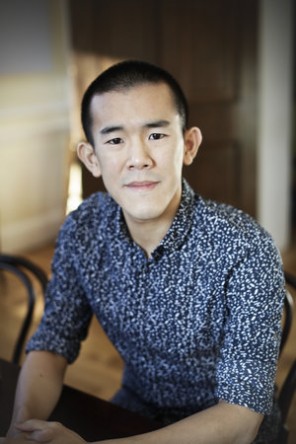
Ed Yong is a science journalist who reports for The Atlantic. He is based in Washington, DC.
For his coverage of the COVID-19 pandemic in 2020, he won the George Polk Award for science reporting; the Victor Cohn Prize for medical science reporting, the Neil and Susan Sheehan Award for investigative journalism; the John P. McGovern Award from the American Medical Writers’ Association; and the AAAS Kavli Science Journalism Award for in-depth reporting.
"I Contain Multitudes", his first book, looks at the amazing partnerships between animals and microbes. Published in 2016, it became a New York Times bestseller, and was listed in best-of-2016 lists by the NYT, NPR, the Economist, the Guardian, and several others. Bill Gates called it "science journalism at its finest", and Jeopardy! turned it into a clue. His second book, "An Immense World", will look at the extraordinary sensory worlds of other animals.
Prior to joining the Atlantic, Ed’s writing also featured in National Geographic, the New Yorker, Wired, the New York Times, Nature, New Scientist, Scientific American, and other publications. He regularly does talks and interviews, and his TED talk on mind-controlling parasites has been watched by over 1.5 million people.
Ed cares deeply about accurate and nuanced reporting, clear and vivid storytelling, and social equality. He writes about everything that is or was once alive, from the quirky world of animal behaviour to the equally quirky lives of scientists, from the microbes that secretly rule the world to the species that are blinking out of it, from the people who are working to make science more reliable to those who are using it to craft policies. His stories span 3.7 billion years, from the origin of life itself to this month's developments in Congress. He spent much of 2020 covering the COVID-19 pandemic, and is consequently very tired. He has a Chatham Island black robin named after him.