For a distinguished example of explanatory reporting that illuminates a significant and complex subject, demonstrating mastery of the subject, lucid writing and clear presentation, using any available journalistic tool, Fifteen thousand dollars ($15,000).
Staff of The Washington Post
For a groundbreaking series that showed with scientific clarity the dire effects of extreme temperatures on the planet.
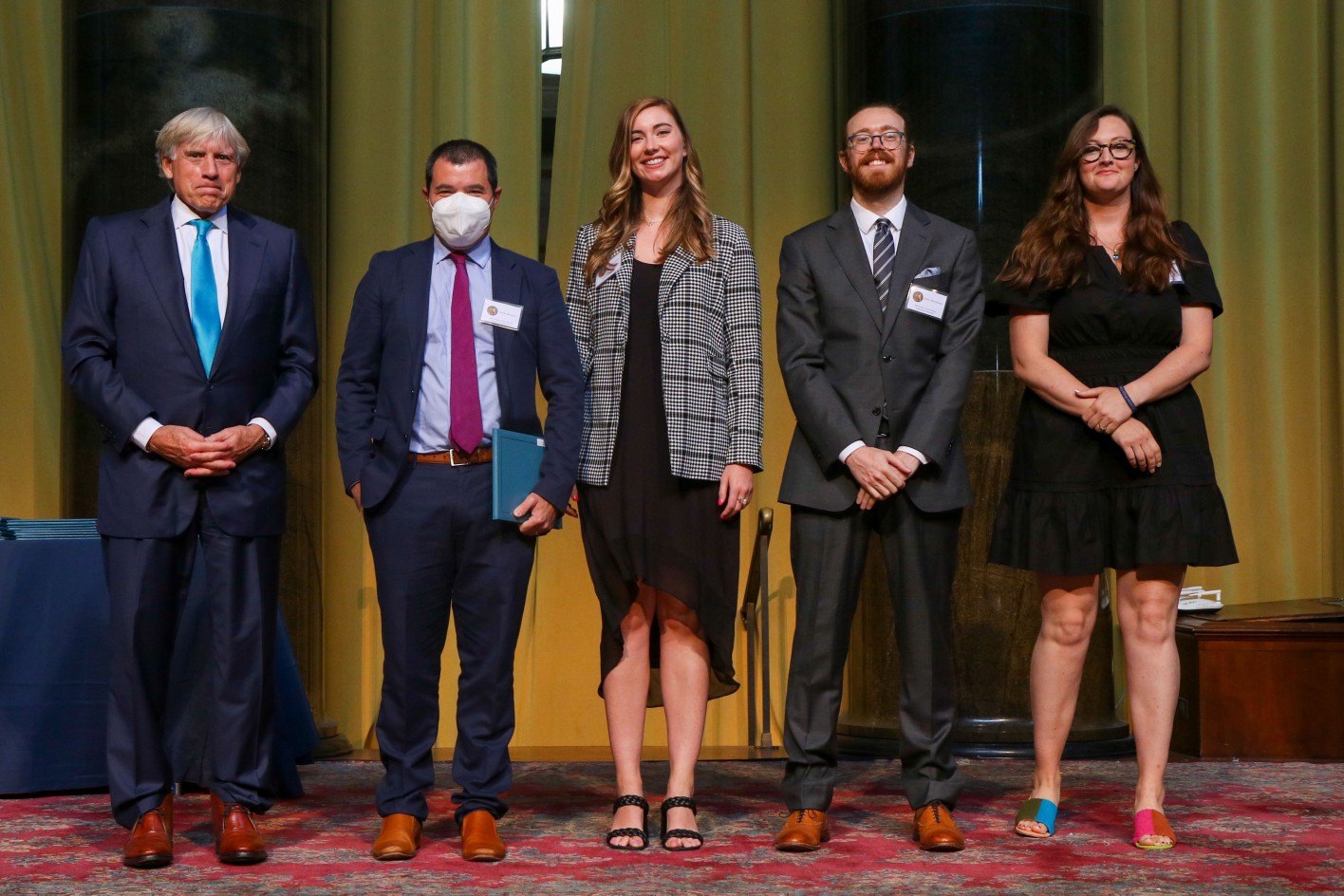
Staff members from The Washington Post (from left: Chris Mooney, Madison Walls, John Muyskens and Carolyn Van Houten) accept the 2020 Pulitzer Prize for Explanatory Reporting from Columbia University President Lee Bollinger. (Jose Lopez/The Pulitzer Prizes)
Winning Work
August 13, 2019
September 11, 2019
November 12, 2019
October 3, 2019
December 13, 2019
December 19, 2019
Finalists
Nominated as finalists in Explanatory Reporting in 2020:
Rosanna Xia, Swetha Kannan and Terry Castleman of the Los Angeles Times
For a deeply researched examination of the difficult choices Californians must make as climate change erodes precious coastline.
Staff of Reveal from The Center for Investigative Reporting
For its industrious reporting on worker injuries and the human toll of robotics technology at Amazon warehouses across the United States.
The Jury
The Jury
Sally S. Buzbee(Chair)
Executive Editor/Senior Vice President, Associated Press
Reto Gregori
Deputy Editor-in-Chief, Bloomberg News
Chris Hamby*
Investigative Reporter, The New York Times
Rod Hicks
Journalist on Call, Society of Professional Journalists
Angie Drobnic Holan
Editor, PolitiFact
Amanda Zamora
Chief Audience Officer, The Texas Tribune
Winners in Explanatory Reporting
David Barstow, Susanne Craig and Russ Buettner of The New York Times
For an exhaustive 18-month investigation of President Donald Trump’s finances that debunked his claims of self-made wealth and revealed a business empire riddled with tax dodges. (Moved by the Board from the Investigative Reporting category, where it was also entered.)
Staffs of The Arizona Republic and USA Today Network
For vivid and timely reporting that masterfully combined text, video, podcasts and virtual reality to examine, from multiple perspectives, the difficulties and unintended consequences of fulfilling President Trump's pledge to construct a wall along the U.S. border with Mexico.
International Consortium of Investigative Journalists, McClatchy and Miami Herald
For the Panama Papers, a series of stories using a collaboration of more than 300 reporters on six continents to expose the hidden infrastructure and global scale of offshore tax havens. (Moved by the Board from the International Reporting category, where it was entered.)
T. Christian Miller of ProPublica and Ken Armstrong of The Marshall Project
For a startling examination and exposé of law enforcement's enduring failures to investigate reports of rape properly and to comprehend the traumatic effects on its victims.
2020 Prize Winners
Nikole Hannah-Jones of The New York Times
For a sweeping, provocative and personal essay for the ground-breaking 1619 Project, which seeks to place the enslavement of Africans at the center of America’s story, prompting public conversation about the nation’s founding and evolution.
Christopher Knight of the Los Angeles Times
For work demonstrating extraordinary community service by a critic, applying his expertise and enterprise to critique a proposed overhaul of the L.A. County Museum of Art and its effect on the institution’s mission.
Jeffery Gerritt of the Palestine (Tx.) Herald-Press
For editorials that exposed how pre-trial inmates died horrific deaths in a small Texas county jail—reflecting a rising trend across the state—and courageously took on the local sheriff and judicial establishment, which tried to cover up these needless tragedies.
Brian M. Rosenthal of The New York Times
For an exposé of New York City’s taxi industry that showed how lenders profited from predatory loans that shattered the lives of vulnerable drivers, reporting that ultimately led to state and federal investigations and sweeping reforms.