T. Christian Miller of ProPublica and Ken Armstrong of The Marshall Project

Columbia University President Lee C. Bollinger (left) presents the 2016 Explanatory Reporting Prize to Ken Armstrong of The Marshall Project (center) and T. Christian Miller of ProPublica.
Winning Work
An 18-year-old said she was attacked at knifepoint. Then she said she made it up. That’s where our story begins.
By Ken Armstrong and T. Christian Miller

A Partnership Forms: When Det. Stacy Galbraith and Sgt. Edna Hendershot figured out that a serial rapist was at work, they joined with other Colorado detectives to hunt him down. “Two heads, three heads, four heads, sometimes are better than one, right?” Hendershot said.
MARCH 12, 2009
LYNNWOOD, WASHINGTON
No one came to court with her that day, except her public defender.
She was 18 years old, charged with a gross misdemeanor, punishable by up to a year in jail.
Rarely do misdemeanors draw notice. Her case was one of 4,859 filed in 2008 in Lynnwood Municipal Court, a place where the judge says the goal is “to correct behavior — to make Lynnwood a better, safer, healthier place to live, work, shop and visit.”
But her misdemeanor had made the news, and made her an object of curiosity or, worse, scorn. It had cost her the newfound independence she was savoring after a life in foster homes. It had cost her sense of worth. Each ring of the phone seemed to announce another friendship, lost. A friend from 10th grade called to ask: How could you lie about something like that? Marie — that’s her middle name, Marie — didn’t say anything. She just listened, then hung up. Even her foster parents now doubted her. She doubted herself, wondering if there was something in her that needed to be fixed.
She had reported being raped in her apartment by a man who had bound and gagged her. Then, confronted by police with inconsistencies in her story, she had conceded it might have been a dream. Then she admitted making the story up. One TV newscast announced, “A Western Washington woman has confessed that she cried wolf when it came to her rape she reported earlier this week.” She had been charged with filing a false report, which is why she was here today, to accept or turn down a plea deal.
Her lawyer was surprised she had been charged. Her story hadn’t hurt anyone — no suspects arrested, or even questioned. His guess was, the police felt used. They don’t appreciate having their time wasted.
The prosecution’s offer was this: If she met certain conditions for the next year, the charge would be dropped. She would need to get mental health counseling for her lying. She would need to go on supervised probation. She would need to keep straight, breaking no more laws. And she would have to pay $500 to cover the court’s costs.
Marie wanted this behind her.
She took the deal.
JANUARY 5, 2011
GOLDEN, COLORADO
A little after 1 p.m. on a wintry day in January 2011, Detective Stacy Galbraith approached a long, anonymous row of apartment buildings that spilled up a low hill in a Denver suburb. Snow covered the ground in patches. It was blustery, and biting cold. She was there to investigate a report of rape.
Galbraith spotted the victim standing in the thin sunlight outside her ground floor apartment. She was young, dressed in a brown, full-length coat. She clutched a bag of her belongings in one hand. She looked calm, unflustered. Galbraith introduced herself. Police technicians were swarming the apartment. Galbraith suggested that she and the victim escape the icy gusts in a nearby unmarked patrol car.
The woman told Galbraith she was 26 years old, an engineering student on winter break from a nearby college. She had been alone in her apartment the previous evening. After cooking green mung beans for dinner, she curled up in bed for a marathon of “Desperate Housewives” and “The Big Bang Theory” until drifting off. At around 8 a.m., she was jolted awake by a man who had jumped on her back, pinning her to the bed. He wore a black mask that seemed more like a scarf fastened tight around his face. He gripped a silver and black gun. “Don’t scream. Don’t call or I’ll shoot you,” he told her.
He moved deliberately. He tied her hands loosely behind her. From a large black bag, he took out thigh-high stockings, clear plastic high heels with pink ribbons, lubrication, a box of moist towelettes and bottled water. Over the next four hours, he raped her repeatedly. He documented the assault with a digital camera and threatened to post the pictures online if she contacted the police. Afterward, he ordered her to brush her teeth and wash herself in the shower. By the time she exited the bathroom, he had gone. He had taken her sheets and bedding. She clearly remembered one physical detail about him: a dark mark on his left calf the size of an egg.
Galbraith listened to the woman with a sense of alarm. The attack was so heinous; the attacker so practiced. There was no time to waste. Sitting close to her in the front seat of the car, Galbraith carefully brushed the woman’s face with long cotton swabs to collect any DNA traces that might remain. Then she drove her to St. Anthony North Hospital. The woman underwent a special forensic examination to collect more DNA evidence. Before she left with a nurse, the woman warned Galbraith, “I think he’s done this before.”
Galbraith returned to the crime scene. A half-dozen officers and technicians were now at work. They were knocking on neighbors’ doors, snapping photographs in the apartment, digging through garbage bins, swabbing the walls, the windows, everywhere for DNA. In the snow, they found a trail of footprints leading to and from the back of the apartment through an empty field. They spraypainted the prints fluorescent orange to make them stand out, then took pictures. It was not much. But something. One officer suggested a bathroom break. “Just keep working!” Galbraith insisted.
As she headed home that night, Galbraith’s mind raced. “Who is this guy?” she asked herself. “How am I going to find him?” Galbraith often volunteered to take rape cases. She was a wife, a mother. She was good at empathizing with the victims, who were overwhelmingly women. Most had been assaulted by a boyfriend, an old flame, or someone they had met at a club. Those investigations often boiled down to an issue of consent. Had the woman said “yes”? They were tough for cops and prosecutors. Juries were hesitant to throw someone in prison when it was one person’s word against another’s. Rapes by strangers were uncommon — about 13 percent of cases. But there was still the issue of the woman’s story. Was she telling the truth? Or fabricating a ruse to cover a sexual encounter gone wrong?
In that way, rape cases were unlike most other crimes. The credibility of the victim was often on trial as much as the guilt of the accused. And on the long, fraught trail between crime and conviction, the first triers of fact were the cops. An investigating officer had to figure out if the victim was telling the truth.
Galbraith had a simple rule: listen and verify. “A lot of times people say, ‘Believe your victim, believe your victim,’” Galbraith said. “But I don’t think that that’s the right standpoint. I think it’s listen to your victim. And then corroborate or refute based on how things go.”
At home, her husband David had done the dishes and put the kids to bed. They sank down on separate couches in their living room. Galbraith recounted the day’s events. The attacker had been cunning, attempting to erase any traces of DNA from the scene. Before he left, he showed the student how he broke in through a sliding glass door. He suggested she put a dowel into the bottom track to keep out future intruders. The victim had described him as a “gentleman,” Galbraith said. “He’s going to be hard to find,” she thought.
David Galbraith was used to such bleak stories. They were both cops, after all. He worked in Westminster, some 15 miles to the northeast. Golden and Westminster were middle class bedroom towns wedged between Denver’s downtown skyscrapers and the looming Rockies.
This time, though, there was something different. As David listened, he realized that the details of the case were unsettlingly familiar. He told his wife to call his department first thing in the morning.
“We have one just like that,” he said.
LYNNWOOD, WASHINGTON
She does not know if she attended kindergarten.
She remembers being hungry and eating dog food.
She reports entering foster care at age 6 or 7.
The report on Marie’s life — written by a mental health expert who interviewed her for five hours — is written with clinical detachment, describing her life before she entered foster care ...
She met her biological father only once.
She reports not knowing much about her biological mother, who she said would often leave her in the care of boyfriends.
She was sexually and physically abused.
… and after, with:
adult caregivers and professionals coming in and then out of her life, some distressing or abusive experiences, and a general lack of permanency.
“I moved a lot when I was younger,” Marie says in an interview. “I was in group homes, too. About two of those and probably 10 or 11 foster homes.”
“I was on like seven different drugs. And Zoloft is an adult drug — I was on that at 8.”
Marie has two brothers and a sister on her mother’s side. Sometimes she was placed in foster homes with her siblings. More often they were separated.
No one really explained why she was being moved, or what was going on. She was just moved.
After Marie became a teenager, her years of upheaval appeared at an end. Her foster family was going to adopt her. “I really loved the family and I made a lot of friends,” Marie says.
The first day of the first year of high school fills many students with anxiety. Marie couldn’t wait for it. She had gotten all the classes she wanted. She had a social circle. She felt like she belonged.
But on the first day, a support counselor came to the school and told Marie the family had lost its foster care license. She couldn’t live with them anymore. The counselor couldn’t offer any more details.
“I pretty much just cried,” Marie says. “I basically had 20 minutes to pack my stuff and go.”
Until something more permanent could be found, Marie moved in with Shannon McQuery and her husband in Bellevue, a booming, high-tech suburb east of Seattle. Shannon, a real estate agent and longtime foster mom, had met Marie through meetings for kids with troubled pasts and had sensed a kindred spirit.
Shannon and Marie were both “kind of goofy,” Shannon says. “We could laugh at each other and make fun. We were a lot alike.” Despite all Marie had been through, “she wasn’t bitter,” Shannon says. She kept in touch with previous foster families. She could carry on a conversation with adults. She didn’t have to be pushed out the door to school.
But no matter her affection for Marie, Shannon knew they couldn’t keep her, because the foster child already in their home required so much care. “We were really sad that we weren’t able to have her with us,” Shannon says.
Marie left Shannon’s home after a couple of weeks to move in with Peggy Cunningham, who worked as a children’s advocate at a homeless shelter and lived in Lynnwood, a smaller suburb about 15 miles north of Seattle. She was Peggy’s first foster child.
“I was preparing for a baby. I had a crib — and they gave me a 16-year-old,” Peggy says, with a laugh. “And it was fine. I have a background in mental health and I’ve been working with kids for a really long time. And I think the agency just thought, ‘She can handle it.’ So.”
At first, Marie didn’t want to live with Peggy. Marie was used to being around other kids. Peggy didn’t have any. Marie liked dogs. Peggy had two cats. “Our personalities didn’t match at first either,” Marie says. “It was hard to get along. For me it seems like people read me differently than I see myself.”
Peggy, who had received a file two to three inches thick documenting Marie’s history, was surprised at how well she was coping. Marie was into boys, drawing and music, be it rock, country, or Christian. “She was very bubbly and full of energy, but she also had her moments where she could be very intense,” Peggy says. Like kids most everywhere, Marie wanted to fit in. She picked out a feminine white coat with a fur collar because she thought that’s what girls were supposed to wear, but then kept the coat in the closet when she realized it wasn’t.
Recognizing that Marie’s high school wasn’t a great fit — “pretty cliquey,” Peggy says — Peggy found an alternative school that was. Marie settled in. She remained close with Shannon, who would joke that she and Peggy were raising Marie together — Shannon the fun one (let’s go boating), Peggy the disciplinarian (be home by …).
Through friends, Marie met Jordan Schweitzer, a high school student working at a McDonald’s. In time, they became boyfriend and girlfriend. “She was just a nice person to have around. She was always nice to talk to,” Jordan says.
Marie figures her happiest years were when she was 16 and 17, and the happiest day may have been one she spent with her best friend, another high school student who was teaching Marie the fine points of camerawork.
“I would spend hours at the beach watching the sunset go down and that was one of my favorite things. There was a particular photo that I really liked that she took. We went to the ocean, it was like 7 o’clock at night, I don’t know what we were thinking, I got in there and I jumped out and swung my hair back.”
Instead of finishing high school, Marie went for her GED. She was 17, starting to stay out late, worrying Peggy, creating tension between the two. In the spring of 2008, Marie turned 18. She could have stayed with Peggy, provided she abided by certain rules. But Marie wanted to set out on her own.
Peggy, searching online, discovered a pilot program called Project Ladder. Launched the year before, the program was designed to help young adults who had grown up in foster care transition to living on their own. Case managers would show participants the dos and don’ts of shopping for groceries, handling a credit card, buying insurance. “The rules about life,” Marie says. Best of all, Project Ladder provided subsidized housing, with each member getting a one-bedroom apartment.
“This was a godsend,” Peggy says.
There were few slots, but Marie secured one. She was a little scared, but any trepidation was tempered by a sense of pride. She moved into the Alderbrooke Apartments, a woodsy complex that advertises proximity to a mall and views of the Cascades. She also landed her first job, offering food samples to customers at Costco. Six hours on her feet didn’t bother her. She enjoyed chatting with people, free from pressure to sell.
So many kids, institutionalized, wound up on drugs or in jail. Marie had made it through.
“It was just nice to be on my own and not have all the rules that I had had being in foster care,” Marie says. “It was just like, freedom.
“It was awesome.”
JANUARY 6, 2011
GOLDEN, COLORADO
The morning after the rape in Golden, Galbraith hurried to work to follow up her husband’s lead. At 9:07 a.m. she sent an email to the Westminster Police Department. The subject line was pleading: “Sex Aslt Similars?”
Westminster Detective Edna Hendershot had settled into her morning with her Starbucks usual: a Venti, upside-down, skinny caramel macchiato. She read the email and her mind shot back five months, to a crisp Tuesday in August 2010. She had responded to a report of a rape at a blue-collar apartment complex in the northwest corner of her city. A 59-year-old woman told her that she had been asleep in her home when a man jumped on her back. He wore a black mask. He tied her hands. He stole her pink Sony Cyber-shot camera and used it to take pictures of her. Afterward, he made her take a shower. He picked up a kitchen timer and set it to let her know when she could get out. “I guess you won’t leave your windows open in the future,” the man told the woman, who had recently been widowed.
There was more. Hendershot remembered that while investigating her case, an officer had alerted her to an incident in October 2009 in Aurora, a suburb on the other side of Denver. There, a 65-year-old woman told police that she had been raped in her apartment by a man with a black scarf wrapped around his face. He tied her hands with a ribbon. He took pictures and threatened to post them on the Internet. During the attack, he knocked a yellow teddy bear off a desk in her bedroom. “You should get help,” the woman, a house mother at a local fraternity, told the man. “It’s too late for that,” he replied.
Cops can be protective about their cases, fearing that information could be leaked that would jeopardize their investigations. They often don’t know about, or fail to use, an FBI database created years ago to help catch repeat offenders. Between one-fourth to two-thirds of rapists are serial attackers, studies show.
But Hendershot right away recognized the potential in collaborating and in using every tool possible. “Two heads, three heads, four heads, sometimes are better than one, right?” she said. So did Galbraith. Her department was small — a little more than 40 officers serving a town of about 20,000. It only made sense to join forces. “I have no qualms with asking for help,” Galbraith said. “Let’s do what we can do to catch him.”
A week later, Galbraith, Hendershot and Aurora Detective Scott Burgess gathered around a conference table in the Westminster Police Department. They compared investigations. The descriptions of the attacker were similar. So, too, his methods. But there was a clincher: the woman in Galbraith’s case had remained as focused as possible during her ordeal, memorizing details. She recalled the camera that the attacker had used to take photos. It was a pink Sony digital camera — a description that fit the model stolen from the apartment of the Westminster victim.
Galbraith and Hendershot hadn’t known each other before the meeting. But the hunt for the rapist united them. As female cops, both women were members of a sorority within a fraternity. The average law enforcement agency in America is about 13 percent female. Police ranks remain overwhelmingly male, often hierarchical and militaristic. But both women had found a place for themselves. They had moved up in the ranks.
The two bonded naturally. Both were outgoing. They cracked fast jokes and smiled fast smiles. Galbraith was younger. She crackled energy. She would move “a hundred miles an hour in one direction,” a colleague said. Hendershot was more experienced. She’d worked more than 100 rape cases in her career. Careful, diligent, exacting — she complemented Galbraith. “Sometimes going a hundred miles an hour, you miss some breadcrumbs,” the same colleague noted.
Their initial attempts to identify the attacker faltered. Golden police obtained a surveillance tape showing the entrance to the apartment complex where Galbraith’s victim had been attacked. A fellow detective sat through more than 12 hours of blurry footage. He laboriously counted 261 vehicles and people coming and going on the night of the incident. There was one possible lead. In the predawn hours, a white Mazda pickup truck appeared 10 times. Maybe it was the attacker waiting for the woman to fall asleep? But efforts to identify the vehicle’s owner failed. The license plate was unreadable.
As the weeks passed, the dead ends continued. Hendershot turned to the database meant to capture serial rapists by linking cases in different jurisdictions. It turned up only bad leads. Frustration grew. “Someone else is going to get hurt,” Galbraith worried to herself.
By late January, the detectives decided they needed to broaden their scope. Hendershot asked one of her department’s crime analysts to scour nearby agencies for similar crimes. The analyst turned up an incident in Lakewood, another Denver suburb, that occurred about a month before the rape in Westminster. At the time, police had labeled the case a burglary. But in fresh light, it appeared very much like a failed rape attempt, committed by an attacker who closely resembled the description of the rapist. The analyst shot Hendershot a message, “You need to come to talk to me right now.”
The report detailed how a 46-year-old artist had been accosted in her home by a man with a knife. He wore a black mask. He tried to bind her wrists. But when the man looked away, the woman jumped out of her bedroom window. She broke three ribs and punctured a lung in the 7-foot fall to the ground, but managed to escape.
Investigators at the scene uncovered a few, tenuous pieces of evidence. Thundershowers had soaked the area before the attack. Police found shoe prints in the soft, damp soil outside the woman’s bedroom. On a window, they found honeycomb marks.
Honeycomb marks. Hendershot seized on them. Westminster crime scene investigators had discovered similar marks on the window of the victim’s apartment. Hendershot asked for a comparison. The marks at the two crime scenes were the same. They also appeared similar to prints from a pair of Under Armour gloves that a Lakewood investigator, on a hunch, had discovered at a Dick’s Sporting Goods.
Galbraith checked out the footprints left at the Lakewood scene. They matched the footprints in the snow outside her victim’s apartment in Golden. She sent images of the shoe prints to crimeshoe.com, a website that promised to move an investigation “from an unidentified scene-of-crime shoeprint to detailed footwear information in one simple step.” The site, now defunct, identified the prints as having been made by a pair of Adidas ZX 700 mesh shoes, available in stores after March 2005.
By the end of January 2011, the detectives had connected four rapes over a 15-month period across Denver’s suburbs. The trail started in Aurora, east of Denver, on Oct. 4, 2009, with the 65-year-old woman. It picked up nine months later and 22 miles to the west, when the rapist attacked the artist in Lakewood. A month after that the 59-year-old widow was raped in Westminster, some 10 miles to the north. And then, finally, in January 2011 came the attack on the 26-year-old in Golden, about 15 miles southwest of Westminster. If you drew a map, it was almost like the rapist was circling the compass points of Denver’s suburbs.
Galbraith and Hendershot turned to DNA to identify the serial rapist. The detectives had thoroughly examined their crime scenes. Technicians had swabbed window panes, doorknobs, even toilet handles — anything that the attacker might have touched. But the man was familiar with the ways of law enforcement, perhaps even a cop. He knew to avoid leaving his DNA at the scene. He used wet wipes to clean up his ejaculate. He ordered the women to shower. He took their clothing and bedding with him when he left.
He had been punctilious. But not perfect. The attacker had left behind the tiniest traces of himself. The technicians recovered three samples of so-called touch DNA, as few as seven or eight cells of skin that can be analyzed with modern laboratory techniques.
One sample was collected from the kitchen timer in Westminster. A second came from the victim in Golden. And one came from the teddy bear in Aurora.
AUGUST 11, 2008
LYNNWOOD, WASHINGTON
A little before 9 on a Monday morning, two Lynnwood police detectives responded to a report of rape at the Alderbrooke Apartments. A couple of other officers were already there, protecting the crime scene. A K-9 officer was outside, his dog trying to pick up a scent.
The detectives, Sgt. Jeffrey Mason and Jerry Rittgarn, found the victim, Marie, on a couch, in a blanket, crying off and on. She was accompanied by her foster mother, Peggy Cunningham, and by Wayne Nash, her case manager with Project Ladder.
Marie, who had turned 18 three months before, told police she had been talking on the phone much of the night with her friend Jordan. After finally falling asleep, she was awakened by a man with a knife — and then tied up, blindfolded, gagged and raped. The man wore a condom, she believed. As for what her attacker looked like, Marie could offer few details. White man, gray sweater. The attack seemed to last a long time, Marie told police, but she couldn’t say for sure. It was all a blur.
Marie said that after the rapist left she had managed, with her feet, to retrieve some scissors from a cabinet’s bottom drawer; she cut herself free, then tried calling Jordan. When Jordan didn’t answer, Marie called her foster mother, then her upstairs neighbor, who came down to Marie’s apartment and called 911.
Mason, then 39, had spent his years mostly in patrol and narcotics. His longest law-enforcement stint had been with a small police department in Oregon, where he served for almost nine years and received a medal of valor. He was hired by Lynnwood in 2003, and served on a narcotics task force. He was promoted to sergeant — and transferred to the Criminal Investigations Division — six weeks before the report of Marie's assault. He had previously worked only one or two rape cases. But this investigation was his to lead.
Rittgarn had been with the department for 11 years, the last four as a detective. He had previously worked as a technician in the aerospace industry. Before that, he had served in the Marine Corps, specializing in helicopter avionics.
The Lynnwood Police Department had 79 sworn officers, serving a city of about 34,000 people. In 2008, Marie’s case was one of 10 rape reports the department fielded; with so few, the Criminal Investigations Division didn’t have a separate sex crimes unit.
By the time Marie reported being assaulted, sex crime specialists had developed protocols that recognized the challenges and sensitivity of investigating rape cases. These guidelines, available to all police departments, detailed common missteps.
Investigators, one guide advised, should not assume that a true victim will be hysterical rather than calm; able to show clear signs of physical injury; and certain of every detail. Some victims confuse fine points or even recant. Nor should police get lost in stereotypes — believing, for example, that an adult victim will be more believable than an adolescent.
Police should not interrogate victims or threaten to use a polygraph device. Lie-detector tests are especially unreliable with people who have been traumatized, and can destroy the victim’s trust in law enforcement. Many states bar police from using them with rape victims.
Police, walking around Marie’s apartment, discovered that the rear sliding glass door was unlocked and slightly ajar. It led to a back porch, with a wooden railing that was covered with dirt — except one part, about three feet wide, where it looked like maybe someone had brushed the surface while climbing over. On the bed officers found a shoestring — used, apparently, to bind Marie. On top of a computer monitor they found a second shoestring, tied to a pair of underwear, the apparent blindfold or gag. Both laces had come from Marie’s black tennis shoes, in the living room. Next to the bed was a black-handled knife. Marie said the knife was hers — that it had come from the kitchen, and was what the rapist had used to threaten her. Police found Marie’s purse on the bedroom floor, her wallet on the bed and her learner’s permit, for some reason removed from her wallet, on a bedroom window sill.
Mason told Marie she needed to go to the hospital for a sexual assault examination. After Marie left, accompanied by her foster mom and case manager, the detectives helped process the scene. Looking for a condom or its wrapper, Rittgarn checked the bathroom, trash cans and a nearby hillside, but came up empty. The dog, outside, had tracked to the south, toward an office building, but was unable to lead officers to anything that might identify the rapist.
At the hospital, medical staff collected more than a dozen swabs from Marie. Labs were taken for hepatitis, chlamydia, HIV. Marie received Zithromax and Suprax for possible exposure to sexually transmitted diseases, and an emergency contraceptive pill.
The medical report noted abrasions to Marie’s wrists and to her vagina. The bruising on her right wrist measured 6.5 centimeters, or about 2.5 inches, the one on her left, 7 centimeters.
During the exam, the medical report said, Marie was “alert and oriented, and in no acute distress.”
On the day she reported being raped, Marie phoned Shannon, her former foster mom, after getting back from the hospital. “She called and said, ‘I’ve been raped,’” Shannon says. “There was just no emotion. It was like she was telling me that she’d made a sandwich.” That Marie wasn’t hysterical, or even upset, made Shannon wonder if Marie was telling the truth.
The next day, when Shannon saw Marie at her apartment, her doubts intensified. In the kitchen, when Shannon walked in, Marie didn’t meet her gaze. “That seemed very strange,” Shannon says. “We would always hug and she would look you right in the eye.” In the bedroom, Marie seemed casual, with nothing to suggest that something horrible had happened there. Outside, Marie “was on the grass, rolling around and giggling and laughing,” Shannon says. And when the two went to buy new bedding — Marie’s old bedding having been taken as evidence — Marie became furious when she couldn’t find the same set. “Why would you want to have the same sheets and bedspread to look at every day when you’d been raped on this bed set?” Shannon thought to herself.
Peggy, too, was mystified by Marie’s demeanor. When Marie called her on that first day, before the police arrived, “she was crying and I could barely hear her,” Peggy says. “Her voice was like this little tiny voice, and I couldn’t really tell. It didn’t sound real to me. … It sounded like a lot of drama, too, in some ways.” At the time, Peggy had new foster children — two sisters, both teenagers. Not long before, Marie had accompanied Peggy and the sisters and Peggy’s boyfriend on a picnic. To Peggy’s mind, Marie had spent the afternoon trying to get attention — so much so that Peggy now wondered if this was more of the same, only more desperate.
After rushing to the apartment that morning, Peggy found Marie on the floor, crying. “But it was so strange because I sat down next to her, and she was telling me what happened, and I got this — I’m a big Law & Order fan, and I just got this really weird feeling,” Peggy says. “It was like, I felt like she was telling me the script of a Law & Order story.” Part of it was what Marie was saying. Why would a rapist use shoelaces to tie her up? And part of it was how Marie was saying it: “She seemed so detached and removed emotionally.”
The two women who had helped raise Marie talked on the phone. Peggy told Shannon she had doubts. Shannon said she did, too. Neither had known Marie to be a liar — to exaggerate, sure, to want attention, sure — but now, both knew they weren’t alone in wondering if Marie had made this up.
On Aug. 12, the day after Marie reported being raped, Sgt. Mason’s telephone rang. The caller “related that [Marie] had a past history of trying to get attention and the person was questioning whether the ‘rape’ had occurred,” Mason later wrote.
Mason’s report didn’t identify the caller — but the caller was Peggy.
She called police to share her concerns. Mason then came to her home and interviewed her in person. When she told police of her skepticism, she asked to be treated anonymously. “I didn’t want it to get back to Marie,” Peggy says. “I was trying to be a good citizen, actually. You know? I didn’t want them to waste their resources on something that might be, you know, this personal drama going on.”
In addition, Mason had received a tip that Marie was unhappy with her apartment. Maybe she was making up the rape to get moved to a new one.
On Aug. 13, Marie met with Mason at the Lynnwood police station and turned in a written statement, describing what happened. The statement was only one page. But to Mason, there was one critical passage. Marie wrote that the attacker said she could untie herself once he was gone:
After he left I grabbed my phone (which was right next to my head) with my mouth and I tried to call Jordan back. He didn’t answer so I called my foster mom. … She came right away. I got off the phone with her and tried to untie myself.
This didn’t square with what Marie had previously told Mason. Before, she told the detective she had tried calling Jordan after cutting the laces. In this written statement, she described calling him while still tied up.
Later that day, Mason talked to Rittgarn, his fellow detective, and said that — based on Marie’s inconsistencies, and based on what he had learned from Peggy and Jordan — he now believed Marie had made up the story.
The fear of false rape accusations has a long history in the legal system. In the 1600s, England’s chief justice, Matthew Hale, warned that rape “is an accusation easily to be made and hard to be proved, and harder to be defended by the party accused.” Judges in the U.S. read the so-called Hale warning to juries until the 1980s. But most recent research suggests that false reporting is relatively rare. FBI figures show that police annually declare around 5 percent of rape cases unfounded, or baseless. Social scientists examining police records in detail and using methodologically rigorous standards cite similar, single-digit rates.
The next morning, Mason went to Jordan’s home to interview him. Jordan told the detective that he and Marie had stopped dating a couple months back but remained good friends. He said nothing about doubting Marie’s story, according to Mason’s written summary. But he did say Marie had told him: When she tried calling him that morning, she had used her toes, because she was tied up.
Later that day — Aug. 14, three days after Marie reported being raped — Mason called Marie, to ask if they could meet. He said he could come and pick her up, to take her to the police station.
“Am I in trouble?” Marie asked the detective.
FEBRUARY 9, 2011
WESTMINSTER, COLORADO
On Feb. 9, 2011, more than a dozen cops and agents from the FBI and the Colorado Bureau of Investigation gathered in a briefing room at the Westminster police station to discuss the state of the investigation.
The news was not great. After a five-week crush, there were few leads and no suspects. The analysis of the touch DNA produced mixed results. The samples narrowed the field of suspects to males belonging to the same paternal family line. But there was not enough genetic material to identify a single individual. Thus the results couldn’t be entered into the FBI’s nationwide DNA database to check for a match to a suspect.
Galbraith was hopeful. At least it was concrete now. The same person was at work. “It’s huge,” she said. “But not enough.”
As the meeting drew to a close, a young crime analyst from the Lakewood police department stood up. She had conducted a search for any reports of suspicious vehicles or prowlers within a quarter mile of the Lakewood victim’s home for the previous six months. She had turned up something. But she didn’t know if it was important.
Three weeks before the attempted rape in Lakewood, a woman had called police late in the evening to report a suspicious pickup truck parked on the street with a man inside. Police checked it out, but the man was gone. The officer filed a brief report on the vehicle. What had attracted the analyst’s attention was the location of the pickup. It was parked half a block from the Lakewood victim’s house, by an empty field adjacent to her backyard.
The pickup was a 1993 white Mazda.
It was registered to a Lakewood man named Marc Patrick O’Leary.
The investigation instantly turned urgent. Could the detectives connect O’Leary’s Mazda with the blurry image of the white Mazda in the surveillance footage from Golden? Aaron Hassell, the detective on the Lakewood case, raced back to his office. Lakewood patrol cars had cameras that automatically took pictures of every license plate they passed. The result was a searchable database of thousands of tag numbers indexed by time and location. Hassell typed in the license plate number from the Lakewood report: 935VHX. He got a hit. A Lakewood patrol car had snapped a picture of O’Leary standing by his white Mazda in the driveway of his house — only two hours after the August attack on the widow in Westminster.
Hassell transmitted the image to Galbraith. Carefully, she compared O’Leary’s white Mazda to the surveillance tape. One freeze frame showed that her white Mazda had a broken passenger side mirror. So, too, did O’Leary’s truck. Both vehicles had ball hitches on the back. Both had smudges on the back in the same place — perhaps a bumper sticker that had been torn off.
“That’s our guy,” Galbraith said.
Hendershot discovered the Lakewood patrol car had snapped its picture as O’Leary was headed to a nearby branch of the Colorado Department of Motor Vehicles. DMV records showed O’Leary sat for a driver’s license mugshot about four hours after the Westminster attack. The photo showed a 6-foot-1 man with hazel eyes. He was 32 years old and 220 pounds. He wore a white T-shirt. The physical description closely matched the descriptions provided by the victims. And the Westminster widow had told Hendershot that her attacker wore a white T-shirt during her assault.
Hendershot did not want to be too hasty. “I’m encouraged, I’m excited,” she said. But “I haven’t made my decision yet, that yay, we’ve got the guy.”
Over the next 24 hours, more than a dozen investigators threw their collective effort and experience into finding out everything possible about O’Leary. O’Leary had no criminal record. He was not a registered sex offender. He had served in the Army.
Galbraith and her husband David once again faced each other on the couches in their living room. They used laptops to search for any references to O’Leary, each using a different search engine. Before long, David stumbled onto something. O’Leary had purchased a pornography website in September 2008. They wondered whether it contained photos of his victims.
The investigators decided to try to get a sample of O’Leary’s DNA. Though the degraded DNA lifted from the crime scenes could not definitively match O’Leary’s DNA, it could show that a male from his family line had most likely committed the crime. If detectives could eliminate O’Leary’s male relatives, they could place O’Leary at the scene of the crimes with a high degree of certainty. “We still have to make that definitive identification,” Hendershot said.
On the morning of Friday, Feb. 11, FBI agents were surveilling O’Leary’s house. It was a small, single-story home with gray siding half a block from a gas station, an auto body shop and a carniceria in a beat-down neighborhood. A low chain-link fence surrounded it. Tall, winter-bare trees towered above the roof. Just after noon, the agents saw a woman and a man who looked like O’Leary leave. They tailed the pair to a nearby restaurant, and watched them eat. When they finished, the agents raced in. They grabbed the drinking cups from the table. The rims would have traces of his DNA.
While the agents were following the man believed to be Marc O’Leary, another FBI agent knocked on the door of the home. He planned to install a surveillance camera nearby and wanted to make sure that nobody was around. Unexpectedly, a man came to the door. He looked like Marc O’Leary. Confused, the agent fell back on a practiced ruse. He told the man he was canvassing the neighborhood to warn of a burglar in the area. The man introduced himself. He was Marc O’Leary. His brother, Michael O’Leary, had just left to get lunch with his girlfriend. O’Leary thanked the officer for the information and closed the door.
Michael’s appearance was confounding. The investigators hadn’t known that Michael lived with his brother. Or that he looked so similar. They decided to run Michael O’Leary’s DNA, collected from the restaurant glass, against the DNA found at the crime scenes. Analysts at the Colorado Bureau of Investigation got the samples. Usually, a DNA analysis took months. But in this case, they worked through the night. By 2 p.m. on Saturday, they had a result. The DNA from the cup matched the DNA collected from the victims. An O’Leary man was responsible. But which one?
Galbraith ruled out the brothers’ father — he was too old and lived in a different state. But investigators could not yet rule out Michael as a suspect. It was possible that Michael had committed the rapes. Or even that Michael and Marc had worked together. They needed more information.
Galbraith hastily typed up a search warrant to enter the brothers’ home. It was dark outside when she finished. She called the judge who was on duty for the weekend. He insisted on a fax. Galbraith rushed to a Safeway near her house to send the warrant. The judge signed it at 10 p.m. on Saturday.
She knew exactly what she was looking for. She trusted her victim’s memory. The dark mark on his leg.
She emailed a crime analyst at another police department, “I so want to see this guy’s leg! BAD.”
In Sgt. Mason’s experience, when someone asked if they were in trouble, almost always, they were.
When Mason, accompanied by Detective Rittgarn, went to pick up Marie at about 3:30 p.m., they found her outside her apartment, sitting on the grass. The three went to the Lynnwood police station, where the detectives escorted Marie to a conference room.
From what Mason wrote up later, he wasted little time confronting Marie, telling her there were inconsistencies between her statements and accounts from other witnesses. Marie said she didn’t know of any discrepancies. But she went through the story again — only this time, saying she believed the rape had happened instead of saying it for certain. Tearfully, she described her past — all the foster parents, being raped when she was 7, getting her own place and feeling alone. Rittgarn told Marie that her story and the evidence didn’t match. He said he believed she had made the story up — a spur-of-the-moment thing, not something planned out. He asked if there was really a rapist running around the neighborhood that the police should be looking for. “No,” Marie told him, her voice soft, her eyes down.
“Based on her answers and body language it was apparent that [Marie] was lying about the rape,” Rittgarn later wrote.
Without reading Marie her rights — you have the right to an attorney, you have the right to remain silent — the detectives asked Marie to write out the true story, admitting she had lied, admitting, in effect, that she had committed a crime. She agreed, so they left her alone for a few minutes. On the form she filled in her name, address and Social Security number, and then she wrote, in part:
I was talking to Jordan on the phone that night about his day and just about anything. After I got off the phone with him, I started thinking about all things I was stressed out and I also was scared living on my own. When I went to sleep I dreamed that someone broke in and raped me.
When the detectives returned, they saw that Marie’s new statement described the rape as a dream, not a lie.
Why didn’t you write that you made the story up? Rittgarn asked.
Marie, crying, said she believed the rape really happened. She pounded the table and said she was “pretty positive.”
Pretty positive or actually positive? Rittgarn asked.
Maybe the rape happened and I blacked it out, Marie said.
What do you think should happen to someone who would lie about something like this? Rittgarn asked Marie.
“I should get counseling,” Marie said.
Mason returned to the evidence. He told Marie that her description of calling Jordan was different from what Jordan had reported.
Marie, her face in her hands, looked down. Then “her eyes darted back and forth as if she was thinking of a response.”
The detectives doubled back to what she had said before — about being stressed, being lonely — and, eventually, Marie appeared to relax. She stopped crying. She even laughed a little. She apologized — and agreed to write another statement, leaving no doubt it was a lie.
I have had a lot of stressful things going on and I wanted to hang out with someone and no one was able to so I made up this story and didn’t expect it to go as far as it did. … I don’t know why I couldn’t have done something different. This was never meant to happen.
This statement appeared to satisfy the detectives. Rittgarn would later write, “Based on our interview with [Marie] and the inconsistencies found by Sgt. Mason in some of the statements we were confident that [Marie] was now telling us the truth that she had not been raped.”
To Marie, it seemed the questioning had lasted for hours. She did what she always did when under stress. She flipped the switch, as she called it, suppressing all the feelings she didn’t know what to do with. Before she confessed to making up the story, she couldn’t look the two detectives, the two men, in the eye. Afterward, she could. Afterward, she smiled. She went into the bathroom and cleaned up. Flipping the switch was a relief — and it would let her leave.
The next day, Marie told Wayne Nash, her case manager at Project Ladder, that the police didn’t believe her. Recognizing the jeopardy she was in, she said she wanted a lawyer.
The Project Ladder managers instead reached out to Sgt. Mason. He told them the evidence didn’t support Marie’s story, and that she had taken her story back.
But now, Marie wouldn’t give. On Aug. 18, one week after she reported being raped, she met with the two Project Ladder managers and insisted she had signed the recantation under duress. The three then went to the police station so Marie could recant her recantation — that is, tell detectives that she had been telling the truth the first time.
While the program managers waited outside, Marie met with Rittgarn and another officer.
Rittgarn asked Marie what was going on. Marie said she really had been raped — and began to cry, saying she was having visions of the man on top of her. She wanted to take a lie detector test. Rittgarn told Marie that if she took the test and failed, she would be booked into jail. What’s more, he would recommend that Project Ladder pull her housing assistance.
Marie backed down. The police officers walked her downstairs, where the Project Ladder representatives asked if she had been raped. Marie said no.
After leaving the police station, Marie learned that she still wasn’t through. There was something else she had to do. The Project Ladder managers told Marie that if she wanted to stay in the program — if she wanted to keep her subsidized apartment — she would have to confess to someone else.
Later that day a meeting was called at the housing complex, with all of Marie’s peers gathered in a circle. Marie, as directed, told her fellow participants in Project Ladder that she had lied about being raped. They didn’t need to worry, she told the group. There was no one out there who had hurt her and no one who might hurt them next.
If there was sympathy in the room, Marie sensed it from only one person, the young woman to her right. The rest was awkward, excruciating silence.
After the meeting, Marie started walking to a friend’s place. On her way, she crossed a bridge. She considered jumping. “Probably the only time I just wanted to die in my life,” she says. She called a friend and said, “Please come get me before I do something stupid.” Afterward, Marie hurled her phone over the side.
Later that month, there was a final surprise. Marie got a letter, notifying her that she was wanted in court. She had been charged with false reporting, punishable by up to a year in jail. The criminal citation was signed by Sgt. Mason. Afterward, the paperwork went to a small law firm that Lynnwood had hired to prosecute misdemeanors.
For Mason, his decision to file the citation required no complicated calculus. He was certain Marie had lied. The police had spent a lot of resources chasing that lie. The law said her lie was a crime. Really, it was as simple as that.
There are no firm statistics on how often police arrest women for making false rape reports, nor on how often prosecutors take such cases to court. Nobody collects such data. But leading law enforcement organizations urge caution in filing such charges. The International Association of Chiefs of Police and the FBI stress the need for a thorough investigation before discounting a report of rape. Cops must work as hard to prove a falsehood as they do to prove a truth.
In practice, many police departments will pursue charges against women only in extreme circumstances — say, in a highly public case where a suspect’s reputation has suffered, or where the police have expended considerable investigative resources. This reluctance stems from the belief that in rape cases, the biggest problem is not false reporting, but no reporting. Only about one-fifth to one-third of rapes get reported to police, national surveys show. One reason is that women fear police won’t believe them.
Within days of reporting being raped, Marie had quit her job at Costco, unable to stand there, looking at people, lost in her head. Now, her losses mounted.
Project Ladder gave her a 9 p.m. curfew and doubled the number of times she had to meet with staff.
The media wrote about Marie being charged, without identifying her. (The Seattle Post-Intelligencer headline read, “Police: Lynnwood rape report was a hoax.”) Marie’s best friend from high school — the one who had taught her photography and had taken that picture of her emerging from the surf — created a webpage that called Marie a liar, with a photo from Marie’s Myspace page, with police reports, with Marie’s full name. Alerted to the site, Marie went into a frenzy, trashing her apartment.
Marie stopped going to church. “I was mad at God,” she says. She lost interest in photography. She feared going outdoors. “One night I did try to walk to the store by myself and felt like I hallucinated someone following me,” she says. “It freaked me out. I didn't even get a half mile from my house. I ran home.” At home she avoided the bedroom, choosing to sleep on the couch with the lights on.
“I went into this dark hole,” she says.
Self-esteem gave way to self-loathing. She started smoking, drinking, gaining weight.
For Marie, this was a familiar drill, one she could trace to her years of being abused as a kid, and to her years in foster care, bouncing from home to home and school to school. Shut down. Hold it in. Act like nothing bad had happened, like nothing ever affected her. Because she craved normalcy, she would bury the hurt.
Neither Peggy nor Shannon abandoned her, but things weren’t the same. Marie knew that both had doubted her story, even before the police had.
For Marie, Shannon’s home had long provided an escape or respite. Marie and Shannon would walk in the woods, or take out the boat, then, at day’s end, crash in Shannon’s home. Now, fearful he could become the target of a wrongful accusation, Shannon’s husband decided it would be best if Marie no longer spent the night. “When you become a foster parent, you’re open to that,” Shannon says.
It fell to Shannon to break the news. Delivering it crushed her. Receiving it crushed Marie.
In early October, less than two months after Marie was charged with false reporting, a 63-year-old woman reported being raped inside her condominium in Kirkland, east of Seattle. The stranger wore gloves. He held a knife. He tied the woman up — with her own shoelaces. He took pictures and threatened to post them on the Internet. For the last two or three months, the woman told police, she felt as if someone had been following her.
Shannon saw an account of the attack on the television news and was taken aback. Her father had been the chief of police in Kent, south of Seattle. She grew up with police, trusted police, knew how the police worked. She went to her computer, looked up the number, and called — immediately — to alert police in Kirkland to Marie’s story, to advise them of all the parallels.
Shannon called Marie and suggested she also contact the Kirkland police. Marie never did.
“I was just too scared,” Marie says. She’d gone through so much already. She couldn’t bring herself to meet with the police again and say anything more. But she did go online and look up what happened to the woman in Kirkland. When she read the story, she cried.
A Kirkland detective eventually called Shannon back. Based on Shannon’s tip, Kirkland investigators had reached out to their Lynnwood counterparts and had been told the Lynnwood victim was no victim, the story had been made up.
One of the detectives working the Kirkland case was Audra Weber. She remembers calling the Lynnwood detectives twice and being told they didn’t believe Marie’s account. “I just kind of trusted their judgment, in terms of it’s their case, they know the details and I don’t,” Weber says. But she remembers being “kind of shocked” to learn that they had charged Marie. She let it go and hung up, thinking, “Okay, I hope that works out for you guys.”
FEBRUARY 13, 2011
LAKEWOOD, COLORADO
At 8:15 a.m., Galbraith knocked on O’Leary’s door.
“Police. Search warrant. Open the door,” she shouted repeatedly. Seven cops stood behind her, pressed against the house, their guns drawn.
After a pause, O’Leary opened the door. He looked confused and shocked as he stepped out into the bright winter sun. Two dogs, a small pit bull and a Shar-Pei, tumbled out ahead of him. He wore a gray hoodie, baggy gray sweatpants and gray slip-on houseshoes. He was alone.
Galbraith pulled him to the side and patted him down. When she got to his legs, she raised his pant leg to look.
There it was, on O’Leary’s left calf: a dark birthmark the size of a large chicken egg.
It was him. He was the rapist. Galbraith flashed a quick thumbs up.
As an FBI agent confronted him, O’Leary immediately invoked his right to an attorney. Galbraith had maneuvered herself to stand behind O’Leary. At 8:35 a.m., she handcuffed him. “You’re under arrest for burglary and sexual assault which occurred in the City of Golden on January 5, 2011,” she told him. O’Leary was put in a patrol car and transported to the Jefferson County Jail.
She was wearing new boots that day. Whenever she looked at them in the future, she would remember catching O’Leary. For Galbraith, it was important to be the one who made the arrest. “I wanted to see the look on his face, I guess,” she said. “And for him to know that we figured you out.”
The search of the home validated the detectives’ investigation. Investigators found a pair of Adidas ZX 700 shoes in O’Leary’s closet. The treads matched the footprints in the snow in Golden and outside the window in Lakewood. They discovered a pair of Under Armour gloves with a honeycomb pattern. In the bathroom was a black headwrap, tied to serve as a mask.
“He was military — so he was very organized,” Galbraith said. “This was the cleanest house I’ve ever searched. It was so organized, we were like, ‘Oh, thank God.’”
The victims’ accounts were also borne out. Most had described a white man with green or hazel eyes, about 6 feet tall, weighing about 200 pounds. They talked about being tied up. They mentioned that he had stolen their underwear. In O’Leary’s house, investigators turned up a black Ruger .380-caliber pistol, a pink Sony Cyber-shot camera and a large backpack, along with wet wipes and lubrication. Hidden inside a piece of stereo equipment in his closet, detectives found a collection of women’s underwear. Trophies.
That night, Hendershot drove to break the news to her victim, the 59-year-old widow in Westminster. The woman had lost her husband to cancer the previous year. She had no family nearby. She was still emerging from the mental and physical suffering she endured during the attack. Hendershot met her at a Denny’s restaurant. She found her in a back corner, eating dinner alone.
“I walked in, and she was super happy to see me, and I told her. I mean, I get shiver bumps thinking about it, just even now,” Hendershot said. “I told her, I said, ‘It’s over. It’s over. We have him.’”
By early March, a forensic computer specialist cracked into files that O’Leary had stored on his hard drive. He found a folder called “girls” — and pictures that O’Leary had taken of his victims in Golden and Westminster. Galbraith recognized them by sight.
But then Galbraith stumbled across an image of a woman she didn’t recognize. It was a young woman — far younger than the Colorado victims, perhaps a teenager. The pictures showed her looking terrified, bound and gagged on a bed. Galbraith felt sick. How would she identify her? How would she find justice for her?
After looking through the images, she found an answer. It was a picture of the woman’s learner’s permit, placed on her chest. It had her name. And it had her address.
Lynnwood, Washington.
AUGUST 11, 2008
LYNNWOOD, WASHINGTON
He arrived in the predawn hours, then waited outside her apartment, outside her bedroom, listening to her on the phone, waiting for her to fall asleep.
The night was dry, letting him settle in. The wall was thin, letting him hear her voice. A couple of times he left his position, for just a while, for fear of being spotted lingering.
He liked trees, for the cover they provided, and the Alderbrooke Apartments had plenty of them. Apartments didn’t offer the privacy of a house, but still, there were advantages. All those windows, for one thing. And all those sliding glass doors — ridiculously easy to pick, when they weren’t left unlocked, which so often they were.
She wasn’t his type, not really. He’d realized that before while peeping into her bedroom. But he spent so much time hunting (that’s what he called it, hunting), hundreds of hours, maybe even a thousand, that he conditioned himself to incorporate as many women as possible, young or old, into his fantasies.
That way his work wouldn’t be wasted.
He had prowled before and broken into women’s homes before, but following through was another matter. He had learned from past failures — one time, a guy walked in as he stood there, mask on, outside the bedroom door of the woman he planned to rape — so now, he did painstaking surveillance: peeking in windows, breaking in beforehand, gathering information. Years later, detectives would find notes on his cellphone from his surveillance of another target (his word) that detailed which room she was in and when, what lights were off or on, which windows and blinds were opened or closed, whether her boyfriend was there or gone. “BF in PJs, game over,” he wrote in one night’s entry.
He would rifle a target’s personal documents. He would learn her date of birth and license plate number. He would watch her watching TV. And at the hunt’s end, before he committed, he would take a final pass through the home, or what he called “precombat inspection,” to make sure there weren’t any weapons within the target’s reach.
At a little before sunrise, he heard the phone conversation end. He waited a little longer, letting the silence stretch out, then climbed over the railing and slipped through the unlocked sliding glass door. For the next half hour or so, while she slept, he got ready while talking himself into following through.
He had first spotted her a couple of weeks before, through a window, while lurking outside her apartment. He had since broken into her place twice, both times through that same glass door.
He had a term for what he was about to do: “rape theater.” Deviant fantasies had gripped him since he was a kid, way back to when he had seen Jabba the Hutt enslave and chain Princess Leia. Where do you go when you’re 5 and already thinking about handcuffs? he would ask himself. He was only 8 the first time he broke into a home. It was such a rush. He had broken into more than a dozen homes since.
Now he was 30, an Army veteran — infantry, two tours in South Korea — who had enlisted in the Reserves, only he hadn’t appeared for duty in months.
In the kitchen, he went to the knife block and removed a black-handled blade from the top row, far left.
In the living room, he removed the laces from her black tennis shoes and put the shoes back. One detective later wrote in a report, “The shoes were lying next to each other near the end of the couch and the bedroom door, on the soles as if placed there (not disturbed).”
He was just being neat and orderly, the way he was with everything.
He threaded one of the shoelaces through a pair of underwear.
Then he walked to the bedroom.
Around 7 a.m., he stood in her bedroom doorway, holding, at shoulder height, a knife in his left hand.
He watched as she awoke.
Turn away, he told Marie — and she did. Roll over onto your stomach, he told her. She did — and then he straddled her, putting the knife near her face.
Put your hands behind your back, he told her. She did. He bound her wrists and he covered her eyes. He stuffed cloth into her mouth to muffle any sound.
That was an interesting conversation you were having, he said, letting her know that he had been there, listening, waiting.
You should know better than to leave the door unlocked, he told her.
Roll back over, he told her — and she did, and then he raped her, and while he raped her he ran his gloved hands over her.
He put her learner’s permit on her chest and took pictures of her.
When he was finished, he said that if she told the police, he would post the photos online so that her kids, when she had kids, could see them.
He took out the gag and removed the blindfold, telling her to avert her eyes and to keep her head in the pillow.
One of the last things he said was that he was sorry. He said he felt stupid, that it had looked better in his head.
He left the room, and walked to the front door, and he was gone.
EPILOGUE
O’Leary pleaded guilty to 28 counts of rape and associated felonies in Colorado. On Dec. 9, 2011, almost a year after his arrest, O’Leary was sentenced to 327½ years in prison for the Colorado attacks — the maximum allowed by law. He is currently housed in the Sterling Correctional Facility in the barren, remote northeastern corner of Colorado. He will never be released.
In an interview with police after his conviction, O’Leary recounted his attacks in detail. He described the feeling after raping one elderly victim. “It was like I’d just eaten Thanksgiving dinner,” he said.
He let spill some lessons for law enforcement. He boasted of the countermeasures he’d taken to avoid getting caught. He knew that the Army had a sample of his DNA. So he took steps to avoid leaving any traces of genetic material. He also realized police departments often did not communicate. So he deliberately committed each rape in a different jurisdiction.
The five other attacks — one in Washington, four in Colorado — all came after the attack on Marie.
“If Washington had just paid attention a little bit more, I probably would have been a person of interest earlier on,” O’Leary said.
Working from Colorado, Galbraith not only linked O’Leary to the rape in Lynnwood, Washington, but to the rape in nearby Kirkland. She made the connection by working with a Washington state criminal analyst to search a database for unsolved cases similar to O’Leary’s crimes. She then found the Kirkland victim’s name on O’Leary’s computer, attached to an encrypted file.
O’Leary pleaded guilty in both of the Washington cases. In June 2012, he was sentenced to 40 years for the rape in Kirkland and to 28½ years for the rape of Marie in Lynnwood.
After O’Leary was linked to Marie’s rape, Lynnwood Police Chief Steven Jensen requested an outside review of how his department had handled the investigation. In a report not previously made public, Sgt. Gregg Rinta, a sex crimes supervisor with the Snohomish County Sheriff’s Office, wrote that what happened was “nothing short of the victim being coerced into admitting that she lied about the rape.”
That Marie recanted wasn’t surprising, Rinta wrote, given the “bullying” and “hounding” she was subjected to. The detectives elevated “minor inconsistencies” — common among victims — into discrepancies, while ignoring strong evidence the crime had occurred. As for threatening jail and a possible withdrawal of housing assistance if Marie failed a polygraph: “These statements are coercive, cruel, and unbelievably unprofessional,” Rinta wrote. “I can’t imagine ANY justification for making these statements.”
Jensen also ordered an internal review, which was similarly damning. Mason’s judgment was unduly swayed by Peggy’s phone call. The detectives’ second interview with Marie was “designed to elicit a confession of false reporting.” The false reporting charge arose from a “self-imposed rush.”
Despite the reviews’ tough language, no one in the Lynnwood Police Department was disciplined.
In a recent interview, Steve Rider, the current commander of Lynnwood’s Criminal Investigations Division, called Marie’s case a “major failing” that has left members of the department with a profound sense of regret: “Knowing that she went through that brutal attack — and then we told her she lied? That’s awful. We all got into this job to help people, not to hurt them.” Lynnwood Sgt. Rodney Cohnheim said of Marie, “She was victimized twice.”
Sgt. Mason is now back in narcotics, in charge of a task force. Interviewed in the same room where he had confronted Marie seven years before, he said: “It wasn’t her job to try to convince me. In hindsight, it was my job to get to the bottom of it — and I didn’t.”
Marie’s case led to changes in practices and culture, Rider said. Detectives receive additional training about rape victims. Rape victims get immediate assistance from advocates at a local healthcare center. Investigators must have “definitive proof” of lying before doubting a rape report, and a charge of false reporting must now be reviewed with higher-ups. “We learned a great deal from this. And we don’t want to see this happen to anybody ever again,” Rider said.
Rittgarn, who left the Lynnwood Police Department before O’Leary’s arrest, declined to be interviewed for this story. So did Zachor & Thomas, the law office that handled the prosecution of Marie on Lynnwood’s behalf.
In 2008, Marie’s case was one of four labeled unfounded by the Lynnwood police, according to statistics reported to the FBI. In the five years from 2008 to 2012, the department determined that 10 of 47 rapes reported to Lynnwood police were unfounded — 21.3 percent. That’s five times the national average of 4.3 percent for agencies covering similar-sized populations during that same period. Rider said his agency has become more cautious about labeling a case unfounded since Marie. “I would venture to say we investigate our cases a lot more vigorously than many departments do,” he said. “Now, we're extra careful that we get the right closure on it.”
Two and a half years after Marie was branded a liar, Lynnwood police found her, south of Seattle, and told her the news: Her rapist had been arrested in Colorado. They gave her an envelope with information on counseling for rape victims. They said her record would be expunged. And they handed her $500, a refund of her court costs. Marie broke down, experiencing, all at once, shock, relief and anger.
Afterward, Shannon took Marie for a walk in the woods, and told her, “I’m so sorry I doubted you.” Marie forgave, immediately. Peggy, too, apologized. She now wishes she had never shared her doubts with police. “Because I feel that if I would have shut my mouth, they would have done their job,” she says.
Marie sued the city and settled for $150,000. “A risk management decision was made,” a lawyer for Lynnwood told The Herald in Everett, Washington.
Marie left the state, got a commercial driver’s license and took a job as a long-haul trucker. She married, and in October she and her husband had their second child. She asked that her current location not be disclosed.
Before leaving Washington to restart her life, Marie made an appointment to visit the Lynnwood police station. She went to a conference room and waited. Rittgarn had already left the department, but Mason came in, looking “like a lost little puppy,” Marie says. “He was rubbing his head and literally looked like he was ashamed about what they had done.” He told Marie he was sorry — “deeply sorry,” Marie says. To Marie, he seemed sincere.
Recently, Marie was asked if she had considered not reporting the rape.
“No,” she said. She wanted to be honest. She wanted to remember everything she could. She wanted to help the police.
“So nobody else would get hurt,” she said. “They’d be out there searching for this person who had done this to me.”
For roughly 30 years the FBI has virtually ignored a system meant to help cops track the behavioral patterns of violent criminals.
By T. Christian Miller
This story was co-published with The Atlantic.
QUANTICO, Va. — More than 30 years ago, the Federal Bureau of Investigation launched a revolutionary computer system in a bomb shelter two floors beneath the cafeteria of its national academy. Dubbed the Violent Criminal Apprehension Program, or ViCAP, it was a database designed to help catch the nation’s most violent offenders by linking together unsolved crimes. A serial rapist wielding a favorite knife in one attack might be identified when he used the same knife elsewhere. The system was rooted in the belief that some criminals’ methods were unique enough to serve as a kind of behavioral DNA — allowing identification based on how a person acted, rather than their genetic make-up.
Equally as important was the idea that local law enforcement agencies needed a way to better communicate with each other. Savvy killers had attacked in different jurisdictions to exploit gaping holes in police cooperation. ViCAP’s “implementation could mean the prevention of countless murders and the prompt apprehension of violent criminals,” the late Sen. Arlen Specter wrote in a letter to the Justice Department endorsing the program’s creation.
In the years since ViCAP was first conceived, data-mining has grown vastly more sophisticated, and computing power has become cheaper and more readily available. Corporations can link the food you purchase, the clothes you buy, and the websites you browse. The FBI can parse your emails, cellphone records and airline itineraries. In a world where everything is measured, data is ubiquitous — from the number of pieces of candy that a Marine hands out on patrol in Kandahar, to your heart rate as you walk up the stairs at work.
That’s what’s striking about ViCAP today: the paucity of information it contains. Only about 1,400 police agencies in the U.S., out of roughly 18,000, participate in the system. The database receives reports from far less than 1 percent of the violent crimes committed annually. It’s not even clear how many crimes the database has helped solve. The FBI does not release any figures. A review in the 1990s found it had linked only 33 crimes in 12 years.
Canadian authorities built on the original ViCAP framework to develop a modern and sophisticated system capable of identifying patterns and linking crimes. It has proven particularly successful at analyzing sexual-assault cases. But three decades and an estimated $30 million later, the FBI’s system remains stuck in the past, the John Henry of data mining. ViCAP was supposed to revolutionize American law enforcement. That revolution never came.
Few law enforcement officials dispute the potential of a system like ViCAP to help solve crimes. But the FBI has never delivered on its promise. In an agency with an $8.2 billion yearly budget, ViCAP receives around $800,000 a year to keep the system going. The ViCAP program has a staff of 12. Travel and training have been cut back in recent years. Last year, the program provided analytical assistance to local cops just 220 times. As a result, the program has done little to close the gap that prompted Congress to create it. Police agencies still don’t talk to each other on many occasions. Killers and rapists continue to escape arrest by exploiting that weakness. “The need is vital,” said Ritchie Martinez, the former president of the International Association of Law Enforcement Intelligence Analysts. “But ViCAP is not filling it.”
Local cops say the system is confusing and cumbersome. Entering a single case into the database can take an hour and hits — where an unsolved crime is connected to a prior incident — are rare. False positives are common. Many also said the FBI does little to teach cops how to use the system. Training has dropped from a high of about 5,500 officers in 2012 to 1,200 last year.
“We don’t really use ViCAP,” said Jeff Jensen, a criminal analyst for the Phoenix Police Department with 15 years of experience. “It really is quite a chore.”
The FBI has contributed to the confusion by misrepresenting the system. On its website, the FBI says cases in its database are “continually compared” for matches as new cases are entered. But in an interview, program officials said that does not happen. “We have plans for that in the future,” said Nathan Graham, a crime analyst for the program. The agency said it would update the information on its website.
The agency’s indifference to the database is particularly noteworthy at a time when emerging research suggests that such a tool could be especially useful in rape investigations.
For years, politicians and women’s advocates have focused on testing the DNA evidence in rape kits, which are administered to sexual assault victims after an attack. Such evidence can be compared against a nationwide database of DNA samples to find possible suspects. Backlogs at police departments across the country have left tens of thousands of kits untested.
But DNA is collected in only about half of rape cases, according to recent studies. A nationwide clearinghouse of the unique behaviors, methods, or marks of rapists could help solve those cases lacking genetic evidence, criminal experts said. Other research has shown that rapists are far more likely than killers to be serial offenders. Different studies have found that between one-fourth to two-thirds of rapists have committed multiple sexual assaults. Only about 1 percent of murderers are considered serial killers.
Studies have questioned the assumptions behind behavioral analysis tools like ViCAP. Violent criminals don’t always commit attacks the same way and different analysts can have remarkably different interpretations on whether crimes are linked. And a system that looks for criminal suspects on the basis of how a person acts is bound to raise alarms about Orwellian overreach. But many cops say any help is welcome in the difficult task of solving crimes like rape. A recent investigation by ProPublica and The New Orleans Advocate found that police in four states repeatedly missed chances to arrest the former NFL football star and convicted serial rapist Darren Sharper after failing to contact each other. “We’re always looking for tools,” said Joanne Archambault, the director of End Violence Against Women International, one of the leading police training organizations for the investigation of sexual assaults. “I just don’t think ViCAP was ever promoted enough as being one of them.”
The U.S. need only look north for an example of how such a system can play an important role in solving crimes. Not long after ViCAP was developed in the United States, Canadian law enforcement officials used it as a model to build their own tool, known as the Violent Criminal Linkage Analysis System, or ViCLAS. Today, the Royal Canadian Mounted Police maintains a database containing more than 500,000 criminal case profiles. The agency credits it with linking together some 7,000 unsolved crimes since 1995 – though not all of those linkages resulted in an arrest. If the FBI collected information as consistently as the Mounties, its database would contain more than 4.4 million cases, based on the greater U.S. population.
Instead, the FBI has about 89,000 cases on file.
Over the years, Canada has poured funding and staff into its program, resulting in a powerful analytical tool, said Sgt. Tony Lawlor, a senior ViCLAS analyst. One critical difference: in the U.S., reporting to the system is largely voluntary. In Canada, legislators have made it mandatory. Cops on the street still grumble about the system, which resembles the American version in the time and effort to complete. But “it has information which assists police officers, which is catching bad guys,” Lawlor said. “When police realize there’s a value associated with it, they use it.”
The ViCAP program eventually emerged from the fallout shelter where it began. It set up shop in an unmarked two-story brick office building in a Virginia business park surrounded by a printer’s shop, a dental practice and a Baptist church.
In a lengthy interview there, program officials offered a PowerPoint presentation with case studies of three serial killers who were captured in the past eight years with the help of the ViCAP program. They called the system “successful.”
“We do as good a job as we possibly can given our resources and limitations,” said Timothy Burke, a white-haired, 29-year agency veteran who is the program manager for ViCAP. “As with anything, we could always do better.”
Pierce Brooks was the father of the system.
A legendary cop, he had a square jaw, high forehead and dead serious eyes. During 20 years with the Los Angeles Police Department, he helped send 10 men to death row. He inspired the fictional Sgt. Joe Friday character in Dragnet. And he became famous for tracking down a pair of cop killers, a hunt chronicled in Joseph Wambaugh’s 1973 non-fiction bestseller, “The Onion Field.” “Brooks’ imagination was admired, but his thoroughness was legend,” Wambaugh wrote.
In the late 1950s, Brooks was investigating two murder cases. In each, a female model had been raped, slain and then trussed in rope in a manner that suggested skill with binding. Brooks intuited that the killer might commit other murders. For the next year, he leafed through out-of-town newspapers at a local library. When he read a story about a man arrested while trying to use rope to kidnap a woman, Brooks put the cases together. The man, Harvey Glatman, was sentenced to death, and executed a year later.
The experience convinced Brooks that serial killers often had “signatures” — distinct ways of acting that could help identify them much like a fingerprint. An early adopter of data-driven policing, Brooks realized that a computer database could be populated with details of unsolved murder cases from across the country, then searched for behavioral matches.
After Brooks spent years lobbying for such a system, Congress took interest. In July 1983, Brooks told a rapt Senate Judiciary Committee audience about serial killer Ted Bundy, who confessed to killing 30 women in seven states. The ViCAP system could have prevented many of those deaths, he said. “ViCAP, when implemented, would preclude the age-old, but still continuing problem of critically important information being missed, overlooked, or delayed when several police agencies, hundreds or even thousands of miles apart, are involved,” Brooks said in a written statement.
By the end of the hearing, Brooks had a letter from the committee requesting $1 million for the program. Although the program was endorsed by then-FBI director William Webster, agency managers weren’t particularly thrilled with the new idea.
The FBI grafted ViCAP into a new operation — the Behavioral Analysis Unit. The profilers, as they were known, were later made famous by Thomas Harris’ “The Silence of the Lambs” as brainy crime fighters who combined street smarts and psychology to nab the worst criminals. But at the time, the unproven unit was seen as a kind of skunk works. The FBI housed it in the former fallout shelter — “ten times deeper than dead people” as one agent later recalled. It was a warren of rooms, dark and dank. Others referred to the oddball collection of psychologists, cops and administrators as “rejects of the FBI” or the “leper colony,” according to “Into the Minds of Madmen,” a nonfiction account of the unit. Still, the new program captured the imagination of some. Murder mystery author Michael Newton penned a series of novels which, while not quite bestsellers, featured the heroic exploits of two ViCAP agents “accustomed to the grisly face of death and grueling hours on a job that has no end.”
Brooks was the first manager for the ViCAP program. The agency purchased what was then the “Cadillac” of computers — a VAX 11/785 nicknamed the “Superstar.” It filled up much of the room in the basement headquarters and had 512KB of memory. (An average household computer today has about 4,000 times more memory.) Brooks was “ecstatic” when the system finally came online on May 29, 1985, according to the account. His enthusiasm was not to last.
To get information into the database, local cops and deputies had to fill out by hand a form with 189 questions. The booklet was then sent to Quantico, where analysts hand-coded the information into the computer. It was a laborious process that flummoxed even Brooks. He had a hard time filling out the booklet, according to one account — as did officers in the field. Only a few hundred cases a year were being entered.
Enter Patricia Cornwell, the bestselling crime author, famous for her novels featuring Dr. Kay Scarpetta, medical examiner. In the early 1990s, she visited the subterranean unit during a tour of the academy. She recalled being distinctly unimpressed. An analyst told her that ViCAP didn’t contain much information. The police weren’t sending in many cases.
“I remember walking into a room at the FBI and there was one PC on a desk,” said Cornwell, who had once worked as a computer analyst. “That was ViCAP.” A senior FBI official had told Cornwell that the academy, of which ViCAP was a small part, was in a financial crunch. She contacted Utah Sen. Orrin Hatch, a friend, and told him of the academy’s troubles. In 1993, Hatch shepherded a measure through Congress to put more money into the academy — and ViCAP.
As the money made its way to the bomb shelter, the FBI conducted a “business review.” It found that local cops were sending the agency only 3 to 7 percent of homicides nationwide. The miniscule staff — about 10 people — could not even handle that load, and was not entering the cases on a timely basis. Cops on the street saw the system as a “black hole,” according to “Cold Case Homicide,” a criminal investigation handbook.
The FBI decided to kill the program. They picked Art Meister to be the hit man.
Meister spent much of his career at the FBI busting organized crime, beginning at the New Jersey field office. He rose through the ranks to supervise a national squad of more than 30 agents, investigating mob activities at home and overseas. He had no real experience with behavioral analysis or databases. But he did have an analytical approach that his superiors admired. They gave him instructions: “If it doesn’t work, do away with it. Kill it,” recalled Meister, now a security consultant with the Halle Barry Group.
Meister heard plenty of complaints. At one conference of police officers from across the country, a cop pulled Meister aside to talk about the program. “I’ve used it and all it gives me is bullshit leads,” the officer told him. “The general perception was by and large that the program didn’t work,” Meister said.
But instead of killing ViCAP, Meister became the system’s unlikely champion. Even with its small staff, the program was connecting far-flung law-enforcement agencies. The 189 questions had been slimmed to 95 — making it easier to fill out the form. Meister used the new funding from Hatch’s bill to reach out to 10 large jurisdictions to persuade them to install terminals that could connect with the database. By 1997, the system was receiving 1,500 or so cases per year — a record, though still a fraction of the violent crimes committed.
Meister saw the potential for the database to help solve sexual-assault crimes. He pushed the development of new questions specifically for sexual-assault cases. They weren’t added to the system until after his departure in 2001. “I felt it would really pay off dividends,” Meister said. “There are a lot more serial rapists than serial killers.”
But he found it difficult to make headway. Top officials showed no real interest in the program. After all, it was designed to help local law enforcement, not the agency. Meister called ViCAP “the furthest planet from the sun” — the last in line to get funds from the FBI. His efforts to improve it “were met with skepticism and bureaucratic politics. That’s what drove me nuts,” he said.
By the time he left, the program was muddling along. “ViCAP never got the support that it needs and deserves.” Meister said. “It’s unfortunate.”
On July 13, 2007, at 4 in the morning, a 15-year-old girl was sleeping in her bedroom in Chelmsford, a former factory town in northeastern Massachusetts bisected by Interstate 495.
She was startled awake when a man dressed in black with a ninja mask pressed his hand against her face. He placed a knife to her throat and told her “If you make any noise, I’ll fucking kill you.”
The girl screamed, rousing her mother and father. The parents rushed in, fighting with the man until they subdued him. Adam Leroy Lane, a truck driver from North Carolina, was arrested. In his truck, Massachusetts police found knives, cord and a DVD of “Hunting Humans,” a 2002 horror film.
Analysts for ViCAP, which has a special initiative to track killings along the nation’s highways, determined that the Massachusetts attack was similar to an earlier murder that had been committed in New Jersey. Acting on the tip, New Jersey state police detectives interviewed Lane in his jail cell. Lane confessed to killing Monica Massaro, a 38-year-old woman, in her home in the town of Bloomsbury — just a few blocks off Interstate 78. Lane, dubbed the Highway Killer, was connected via DNA samples to a killing and a violent attack in Pennsylvania; both women lived near interstates. Lane is now serving a life sentence in Pennsylvania.
New Jersey State Police Detective Geoff Noble said his case had been stalled. But once ViCAP connected Noble to Massachusetts police officers, they provided him a receipt that placed Lane at the truck stop in the small town where Massaro was killed. And when Noble confronted Lane, the killer started talking. Under a state attorney general’s directive, all New Jersey law enforcement agencies are supposed to report serial crimes to ViCAP. “The information provided by ViCAP was absolutely critical,” Noble said. “Without ViCAP, that case may have not ever been solved.”
FBI officials said the case, one of three success stories provided to ProPublica, showed the critical role of the database. (The other two: The case of Israel Keyes, a murderer who committed suicide after his arrest in Alaska in 2012 and has been linked to 11 killings; and that of Bruce Mendenhall, a trucker now serving a life sentence in Tennessee who was linked to the murder of four women in 2007.) “Given what we have, it’s a very successful program,” Burke said.
But in a dozen interviews with current and former police investigators and analysts across the country, most said they had not heard of ViCAP, or had seen little benefit from using it. Among sex-crimes detectives, none reported having been rewarded with a result from the system. “I’m not sending stuff off to ViCAP because I don’t even know what that is,” said Sgt. Peter Mahuna of the Portland, Oregon, Police Department. “I have never used ViCAP,” said Sgt. Elizabeth Donegan of Austin, Texas. “We’re not trained on it. I don’t know what it entails or whether it would be useful for us.”
Even Joanne Archambault, the director of the police training organization who sees the potential of ViCAP, didn’t use it when she ran the sex-crimes unit at the San Diego Police Department: “In all the years I worked these crimes, we never submitted information to ViCAP,” she said. “As a sex-crime supervisor, we invested time in effort that had a payout.”
Local authorities’ skepticism is reflected in the FBI’s statistics. In 2013, police submitted 240 cases involving sexual assault to the system. The FBI recorded 79,770 forcible rapes that year. Local agencies entered information on 232 homicides. The FBI recorded 14,196 murders.
“It's disappointing and embarrassing,” said Greg Cooper, a retired FBI agent who directed the ViCAP unit before becoming the police chief in Provo, Utah. “The FBI has not adequately marketed the program and its services. And local law enforcement has not been committed to participating.”
Not all rapes or murders involved serial offenders, of course. But with ViCAP receiving information on only about 0.5 percent of such violent crimes, it struggles to identify those that do.
“Cops don’t want to do more paperwork,” said Jim Markey, a former Phoenix police detective and now a security consultant. “Anytime you ask for voluntary compliance, it won’t be a priority. It’s not going to happen.”
But at some agencies where ViCAP has been incorporated into policing, commanders have become staunch defenders of its utility. Major J.R. Burton, the commander of special investigations for the Hillsborough County Sheriff’s Office in Tampa, Florida, said detectives at his agency are mandated to enter information on violent crimes into the database. “I love ViCAP,” said Burton, who served on a board of local law enforcement officials that advises the FBI on the system. “There’s many cases where you don’t have DNA. How do you link them together?”
Burton said he understood the frustration that other police experience when they get no results back from the system. When pressed, Burton could not cite any investigations in his jurisdiction that had benefitted from the database. But he said the time and effort to use the system was worth it. “It allows you to communicate across the nation, whether serial homicide or serial rapist,” Burton said. “That’s awesome in my book.”
FBI officials said they had taken steps to address complaints. In July 2008, the program made the database accessible via the Web. Police can now enter their own searches, without having to rely on an FBI analyst, through any computer with an Internet connection. The program has also whittled down the number of questions. Graham says he tells police that it should take only about 30 minutes to enter the details of a case. “I tell them if they can fill out their taxes, they can fill out the ViCAP form,” Graham said.
In November 1980, children began vanishing across Canada.
Christine Weller, 12, was found dead by a river in British Columbia. A year later, Daryn Johnsrude, 16, was found bludgeoned to death. In July 1981, six children were killed in a month, ages six to 18. They were found strangled and beaten to death.
The killer: Clifford Olson, a career criminal, who eluded capture in part because the different jurisdictions where he committed his crimes had never communicated.
The murders prompted Canadian police officials to create a system to track and identify serial killers. After an initial effort failed, the Royal Canadian Mounted Police sent investigators to study the ViCAP program. They returned troubled by some aspects. The FBI system was not being used by many police agencies. Nor did it track sexual assaults. The Mounties decided to improve on the U.S. system by developing their own behavioral crime analysis tool — ViCLAS.
The ViCLAS system has three advantages over its American cousin: people, money and a legal mandate. More than a hundred officers and analysts work for the system, spread across the country. It’s funded at a reported cost of $14 million to $15 million per year. The most important development was that over the years, local legislative bodies passed laws making entry mandatory. All Canadian law enforcement agencies now file reports to the system.
The agency also greatly expanded the list of crimes that can be entered. Any crime that is “behaviorally rich” — usually an incident involving a criminal and a victim — can be entered into the database. It also created stringent quality control. A Canadian analyst who uncovers a link between crimes must submit the findings to a panel for review. Only then can the case be released to local agencies — reducing the chances for bad leads.
Today, Canada’s system has been repeatedly endorsed by senior police officials as an important tool in tracking down killers and rapists. The agency routinely publishes newsletters filled with stories about crimes that the system helped to solve. One study called ViCLAS the “gold standard” of such systems worldwide. The Mounties now license ViCLAS for an annual fee to police forces in Belgium, the Czech Republic, France, Germany, Ireland, the Netherlands, New Zealand, Switzerland and the United Kingdom.
The volume of information submitted has made the all the difference, Lawlor said. The system works when enough agencies enter cases to generate results. But agencies are reluctant to enter cases until they see results. “It’s a catch–22 situation,” Lawlor said. “If nothing goes in, then nothing can go out.”
When Burke, ViCAP’s program manager, speaks at national law enforcement conferences, he asks how many people in the audience have heard of his program. Typically only about one-half to two-thirds of the hands go up. A smaller percentage say they actually use it.
“We don’t have a club to force them to sign up with us,” Burke said.
The program’s main goal now is to ensure that the 100 largest police agencies in the country are enrolled. About 80 are. The agency continues to slowly develop its software. Training occurs monthly to encourage more participation.
The FBI doesn’t see the need for major changes to ViCAP, Burke explained. “It’s still supportive,” Burke said. “It’s still viable.”
Ryan Gabrielson contributed to this report.
It depends on who is counting, and what they count.
By T. Christian Miller and Tom Meagher
This story was co-published with The Marshall Project.
It has been no easy thing to establish the prevalence of rape and sexual assault in America.
Victims often choose not to report the crimes. Police in more than one major city have been exposed for misclassifying or burying reports of rape and other sexual assaults. Local police departments routinely fail to cooperate with the FBI’s efforts to compile annual crime statistics.
For decades, the problems included something as basic as defining what constituted rape. Operating under a definition of rape adopted in 1929, the FBI for close to a century didn’t count male victims. Or women who were too frightened to resist their attackers.
Terry Fromson, managing attorney for the Women’s Law Project, summed up the significance of the suspect statistics:
“The data fell short of giving an accurate picture of sex crime in our society,” Fromson said.
Fromson helped launch an effort to improve the accuracy of the statistics and, with that, the performance of law enforcement in understanding and fighting rape. The work of Fromson and others ultimately persuaded the FBI in 2011 to formally redefine the crime of rape. Today, the FBI’s Uniform Crime Reporting program — the most widely cited source for national crime statistics — includes male victims, as well as female victims who did not actively try to fend off their attackers.
The FBI now defines rape as “penetration, no matter how slight, of the vagina or anus with any body part or object, or oral penetration by a sex organ of another person, without the consent of the victim.”
The change has had a profound effect, showing that rape in America is a far more wide-ranging problem than the agency previously reported. In 2012, the last year before the new definition went into effect, the FBI estimated that 85,141 rapes occurred in the U.S. In 2014, the most recent year available, the number jumped to 116,645 rapes — a 37 percent difference.
The new figures don’t mean that legions of rapists have suddenly run amok. In fact, using the old definition, rapes have decreased slightly. Nor do the new numbers capture all rapes — surveys show only about one in three sexual assaults is reported to police. Instead, the numbers show that the FBI has recognized a new class of victims — people whose sexual assaults were previously unreported, or were hidden in other offense categories.
Fromson said the change amounts to significant progress in the push to properly record the incidence of rape and hold law enforcement accountable for prosecuting offenders.
“There’s obviously still work to be done,” she said, “but everyone is moving in the right direction.”
Fromson was working for the Philadelphia-based nonprofit Women’s Law Project in 1998 when a doctorate student at The Wharton School of the University of Pennsylvania named Shannon Schieber, 23, was raped and killed in her small studio apartment in that city’s downtown. Her murder set off a frantic search for the attacker. By the time Troy Graves was captured four years later, he had been linked to nearly a dozen other attacks on women. He was dubbed the Center City rapist.
During the investigation, it emerged that Graves had raped several women before killing Schieber. But Philadelphia police officers had decided two of the women’s claims were not worth investigating. They tossed the cases aside — and with them, a chance of stopping Graves.
Such missteps and their costs were repeated by police in Lynnwood, Washington, in 2008. As shown in a recent investigation by ProPublica and The Marshall Project, police not only dismissed a young woman’s report of rape, they filed a criminal citation against her for filing a false report. The authorities only realized their mistake after the rapist victimized additional women in Washington and Colorado.
Schieber’s rape and murder came at the same time as an investigation by The Philadelphia Inquirer, which found that the sex crimes unit of the Philadelphia police department had buried thousands of sexual assault cases over the decades — dismissing women’s complaints as groundless with little or no investigation.
The Women’s Law Project demanded a better police force, one that took sexual assault seriously.
“As we talked with the police department, we realized that our understanding of rape and their understanding of rape were not really the same,” Fromson said. “We realized that this was part of what needed to be reformed.”
Working with the Philadelphia police commissioner, Fromson helped to create a citizen’s review board, believed to be the only one of its kind in the country. Since 2000, board members, Fromson and colleagues from three other local women’s advocacy groups gather annually in a conference room at the police department’s sex crimes unit.
There, police bring in hundreds of paper files containing all the rapes dismissed as baseless in the previous year. The reviewers spend three or four days reading over the cases, flagging questions with sticky notes. At the end, the reviewers discuss the cases with the senior commander for the unit.
The entire process is carried out under a strict confidentiality agreement, so neither side can release any details. But the Philadelphia police say they have re-opened many cases after the review. And Fromson says that she has seen improvements in how police handle rape cases.
Ultimately, the police determined that more than 1,800 crimes had been incorrectly dismissed, including 681 rapes. Thirty-three men connected to the re-opened cases were convicted, the Inquirer reported.
As part of the review process, Fromson and others at the Women’s Law Project learned that the FBI’s then-prevailing definition of rape had influenced Philadelphia police to dismiss some rapes as “unfounded” — the FBI term for a rape that did not occur, or that does not rise to the level of a crime.
She sent a letter signed by more than 80 advocacy groups to the FBI urging a change to the definition. The letter was sent in September 2001.
The FBI resisted making the change, though other federal agencies had adopted a more comprehensive definition. So, too, had major police agencies, including the Chicago police department. The FBI refused to even include rape statistics from that city, the nation’s second largest police department. (The 2012 FBI report showed Chicago with nearly 140,000 crimes and 0 rapes.)
In December 2011, more than 10 years after the women’s organizations sent their letter asking the agency to change the definition of rape, former FBI Director Robert Mueller made it official.
“This new, more inclusive definition will provide us with a more accurate understanding of the scope and volume of these crimes,” former Attorney General Eric Holder said in 2011.
Rape had a new meaning.
For more, read "An Unbelievable Story of Rape" and how we reported it.
If you have experience with or information about issues related to this story, email [email protected].
ProPublica and The Marshall Project’s “An Unbelievable Story of Rape” underscored the need for improving rape investigations. Here’s how.
By T. Christian Miller and Ken Armstrong
News organizations have long chronicled problems with investigating reports of rape. Backlogs in rape kits. Cynical efforts to bury rape cases to make a police department’s crime fighting statistics look better. Failures to fully exploit the powerful investigative tool of DNA.
“An Unbelievable Story of Rape,” a joint reporting effort by The Marshall Project and ProPublica, reinforced some of the most basic ways police could improve their handling of rape cases. These steps offer the promise of both catching the guilty and protecting the victimized.
1. Check with police agencies where the suspect previously lived or traveled.
Our reporting showed the value of this simple step. Police investigating a series of rape allegations against former NFL star Darren Sharper never contacted the authorities where he had previously lived. They were all working in isolation — allowing Sharper to rape or attack nine women in multiple states over three years. In “An Unbelievable Story of Rape,” the police in Colorado reached out immediately to their fellow agencies. And within six weeks, they had nabbed Marc O’Leary, a serial rapist now serving 327½ years in prison.
2. Use the FBI’s Violent Criminal Apprehension Program (ViCAP.)
ViCAP is an FBI database designed to catch serial killers and rapists based on the similarity of their behavior. Using data provided by local law enforcement agencies, ViCAP searches through unsolved crimes to seek out similar patterns -- say a certain knife that was used in several attacks. Then it suggests a possible match. ViCAP may be especially useful in rape cases. First, a large number of rapists are serial offenders. One-third to two-thirds of rapists commit multiple crimes, according to studies. In contrast, only about one percent of murderers are serial killers. Also, only about half of all rape cases involve DNA. ViCAP is built to catch serial rapists who don’t leave DNA. In Canada, a similar system is credited with linking together 7,000 crimes since 1995.But in the U.S., local police don’t feed much information into ViCAP. And with a paucity of information, the system rarely turns up good matches.
3. Be aware of myths regarding rape.
Criminal experts talk about a hypothetical person called the “righteous victim” who was attacked during a “real rape.” That’s a woman with no blemishes in her past who is raped by a stranger, tries to fight him off and then promptly reports the crime to police. That victim and that crime exist. But they are not common.The truth is, rape is a crime with all kinds of victims who respond in all kinds of ways. Women often don’t go to the police right away. And they can be pastors or prostitutes. The vast majority know their attacker. Only 13 percent of rapes are committed by strangers. Any police officer who may be involved in a rape investigation would do well to read the evidence-based findings -- many of them surprising -- about what rape looks like. Useful resources include the International Association of Chiefs of Police and End Violence Against Women International, a non-profit organization that trains police officers in how to conduct rape investigations. On Tuesday, the Department of Justice released its own guidelines.
4. Listen.
This is the most obvious, perhaps. Cops, like journalists and prosecutors, can have an innate skepticism about the people they encounter in their line of work. That makes some sense, for there are no shortages of liars and criminals. But it’s important to simply listen to a victim’s story, and then to check it out. It takes courage for a woman or a man to come forward and tell the police they were raped. Cops can respect that bravery by not allowing the small minority of people who are fabulists to poison their objectivity or diligence.
5. Before charging someone with a false claim of rape, be very sure that you have the evidence to make a case.
There is a good reason for contemplating the prosecution of people who falsely report rape. Innocent people can be harmed. Reputations can be ruined. Precious police resources can be wasted. But police experts say the cost of routinely filing such charges can also be high. Women who fear they might be prosecuted if their reports of rape are not deemed believable may be scared off from reporting at all. Only about one-third of rapes are even reported to police — due in part to the long judicial history of dismissing women’s accusations. The bottom line in dealing with suspicions of false reporting is to take the charge like any other. You have to prove that the person invented the story beyond probable cause. That means collecting evidence, witness statements and all the rest before filing such a charge.
By Amanda Zamora
Detectives investigating a Lynnwood, Washington, teenager’s rape in our latest investigation, An Unbelievable Story of Rape, concluded she hadn’t been assaulted based in part on “her answers and body language” during an interview with police. But as our investigation with The Marshall Project revealed, the police who confronted Marie made a number of mistakes in her case that would have grave consequences — for the 18-year-old in Washington and for several other women who lived hundreds of miles away.
On Thursday, December 17, at 12:30 pm ET, ProPublica and The Marshall Project hosted a Digg Dialog with retired San Diego Police Sgt. Joanne Archambault, who leads the nonprofit End Violence Against Women International, to discuss best practices for law enforcement investigating sex crimes.
Reporters T. Christian Miller (@txtianmiller) and Ken Armstrong (@bykenarmstrong) joined Archambault to discuss their story on Marie’s “unbelievable” rape, and the search for a serial rapist that spanned the Denver metro area three years later. Read the highlights below, or view a full transcript of the discussion on Digg.
I would be interested in knowing what made you get into this investigative piece and how you came to know about it. — Powp via Digg
Hi Valerie: I live in Seattle, so I was aware of the story, at least in its general outlines. I knew that a woman had reported being raped, had been charged with false reporting, and then had been vindicated when the rapist was caught. But that's about all I knew. I really wanted to hear her story, her voice, and to be able to reconstruct how the doubts in her case had set in and spread. So I reached out to her attorney to see if Marie might be willing to talk about this, as painful as it unquestionably had to be. From there it took dozens of calls with the attorney, spread over months (along with emails forwarded to Marie), before we arranged an interview. — Ken Armstrong, The Marshall Project
And I had been working on another story about Darren Sharper, where police had missed some opportunities. A source told me that I should look at the amazing police work done on Marie's case. So I started with the police work done in Colorado. Ken and I basically met in the middle while reporting. — T. Christian Miller, ProPublica
Anyone else think this story underlines a need for more women in law enforcement? Not to paint the situation as so black and white, but the story does show that the two cops that dismissed Marie's rape claim were men, to whom rape is presumably a foreign risk ... And the two cops that led a team to track down the serial rapist were women, who've likely dealt with at least the fear of rape in their own lives. — Ryan Summerlin via Digg
Unfortunately, female officers are often as tough, if not tougher on victims. There are a lot of reasons for it but in my experience, having supervised both male and female investigators, gender has nothing to do with ability. My best investigators were good listeners and they had the ability to empathize with victims. Women are often more judgmental, distancing themselves from victims by telling themselves they wouldn't do whatever it was that the victim did to create the situation. We also find this with our juries. — Joanne Archambault, EVAWI
I also want to note that two other police departments in Colorado — Aurora and Lakewood — were involved in the capture of O'Leary. Those investigative effort were helmed by male officers, and they played a vital role in the effort. — T. Christian Miller, ProPublica
One of the biggest ironies is that Officer Mason et al received very little punishment for what in effect was egregious and enduring harm to Marie. Yet these same actors galvanized to punish her for false reporting, a victimless crime. This dynamic plays out in other parts of our justice system and is the most disturbing part of this story to me. What do the reporters think about this aspect? And is it a coincidence that Marie was so vulnerable to this kind of injustice due to past trauma or her social class? — Powp via Digg
I would be most disturbed if I had the impression that the Lynnwood PD and Sgt. Mason had adopted a bunker mentality in response to this case and to our reporting on it. But the department ordered two reviews of the case - one internal, one external - and accepted the very tough language that came back in those reviews. Then the department incorporated reforms. Plus, Sgt. Mason and others in the police department talked to us about where they went wrong in this case - accepting blame and expressing not only deep remorse, but a real desire to make sure this never happens again. — Ken Armstrong, The Marshall Project
I want to also say that I have worked with many stories and agencies who made tragic mistakes and NEVER accepted any responsibility. I was pleased that the Lynwood Chief requested and investigation and that Sgt. Mason personally met with the victim and apologized. Although what happened was tragic, most Departments have failed to accept responsibility, implement reforms or apologize in any way. — T. Christian Miller, ProPublica
This was fantastic work all around. I want to give special recognition to the analysts in this story, who are mentioned but not named. Please know that crime analysts behind the scenes are often passionately invested in these types of cases, and they can make crucial connections that might otherwise go overlooked. This series is a great example of that. — SGwinn via Digg
You are completely right. Some of the biggest breaks in this case were by analysts and criminologists (who, fwiw, were also mostly women). — T. Christian Miller, ProPublica
I agree. This story clearly demonstrates that regardless of what for example people believe will be accomplished by testing all kits for DNA, the only way an investigation is going to be resolved successfully is through good old fashioned police work. Reviewing hours of surveillance videos, communicating with other law enforcement agencies and utilizing the professionals who work in Crime Analysis are just a few of the efforts the many law enforcement professionals involved in this case engaged in.— Joanne Archambault, EVAWI
Have the reporters or detectives involved asked for cooperation military investigators about possible (perhaps even probable) assaults while the perpetrator was a) in the military, and b) deployed? — Marie Tessier via Digg
The Golden police did attempt to look into O'Leary's background in the military. They turned up an account of a woman who had defended herself outside a base in South Korea from an attemtped attack by O'Leary, but nothing came of it. — T. Christian Miller, ProPublica
A very powerful piece of writing, difficult to read but worth it. My question: how do you approach interviewing someone like O'Leary? What is it like emotionally? What kind of preparation do you do? — Janet Lafler
Yes, he was sorry for what he had done. He was, in fact, very open about the attacks. He denied raping any other women than the six victims in his trial. But he did mention that there had been previous attempts. He did not want to talk about them. ... And to answer the question on the interview. We talked with him at the Sterling Correctional Facility in Colorado. We had read statements that he gave to the police, and made in court. And then we had read through a lot of his ramblings in his notebooks that were part of the public record. — T. Christian Miller, ProPublica
By T. Christian Miller and Ken Armstrong
The reporting by ProPublica and The Marshall Project spanned several months and involved numerous interviews, a review of previously undisclosed law enforcement records and exchanges with experts on investigating rape.
The people interviewed for this story include Marie (in our story, we agreed to use only her middle name); Marie’s foster mothers Peggy Cunningham and Shannon McQuery; Marie’s friend Jordan Schweitzer; James Feldman, Marie’s public defender when she was charged with filing a false police report; H. Richmond Fisher, Marie’s attorney in her civil suit against Lynnwood, Washington; Golden, Colorado, police Det. Stacy Galbraith; Westminster, Colorado, Sgt. Edna Hendershot and Sgt. Trevor Materasso; Lakewood, Colorado, police detective Aaron Hassell; Kirkland, Washington, police officer Audra Weber; Lynnwood police Sgt. Jeffrey Mason, Sgt. Rodney Cohnheim and Commander Steve Rider; and Marc O’Leary, who was interviewed at the Sterling Correctional Facility in Colorado. Former Lynnwood police Det. Jerry Rittgarn declined to be interviewed. The description of his background comes from his LinkedIn profile.
We received thousands of pages of documents through public-records requests filed with the following agencies: the police departments in Lynnwood and Kirkland, Washington; the police departments in Golden, Westminster, Aurora and Lakewood, Colorado; and the prosecuting attorney’s offices in Snohomish County, Washington, King County, Washington, and Jefferson County, Colorado.
The records obtained through these requests included investigative reports filed by detectives in Lynnwood and elsewhere; crime-scene photos and surveillance footage collected by the various law-enforcement agencies; the two case reviews of how the Lynnwood police handled the investigation of Marie’s rape report; and video of Marc O’Leary being interviewed by police after his arrest in Colorado.
Words or thoughts attributed to anyone in this story are drawn from these interviews or documents.
We reviewed Marie’s civil suit against Lynnwood, which included such legal exhibits as the medical report from the day she reported being raped and case notes from Project Ladder, the transitional housing program to which she belonged.
Other reporting included pulling transcripts of television news coverage from when Marie was raped and later charged; having court transcripts prepared from when O’Leary was sentenced in Colorado; reviewing grant documents for Project Ladder; and mining the criminal-justice literature for expert views on how rape investigations should be conducted.
We consulted police training guidelines by various organizations, including the International Association of Chiefs of Police and End Violence Against Women International.
Specific statistics:
“Rapes by strangers were uncommon — maybe about 13 percent of cases.” From the National Intimate Partner and Sexual Violence Survey, 2011
“Only about one-fifth to one-third of rapes get reported to police, national surveys show.” From National Crime and Victimization Survey, 2014 and National Violence Against Women Survey, 2006
“Between one-fourth to two-thirds of rapists are serial attackers, studies show.” From JAMA Pediatrics, December 2015 and Violence and Victims, Vol 17, 2002 by David Lisak and Paul M. Miller.
“But most recent research suggests that false reporting is relatively rare. FBI figures show that police annually declare around 5 percent of rape cases unfounded, or baseless. Social scientists examining police records in detail and using methodologically rigorous standards cite similar, single-digit rates.” From research and studies summarized in a Department of Justice-funded study, Policing and Prosecuting Sexual Assault in Los Angeles City and County, 2012 by Cassia Spohn and Katharine Tellis and from an analysis by ProPublica and The Marshall Project of FBI Uniform Crime Reporting program data, 2008–2012.
To determine the rate of rape crimes declared unfounded, or groundless, by law enforcement agencies, we analyzed Uniform Crime Reporting data collected by the Federal Bureau of Investigation. We examined five years of the “Offenses Known and Cleared by Arrest” data to smooth yearly fluctuations common in crime reporting. We excluded agencies that did not report crime statistics in any given month, as well as those that reported no crimes of any kind in a year. We also restricted our examination to only those agencies that reported at least one rape over this timespan.
To calculate the rate, we summed the number of unfounded rapes and divided it by the number of reported rapes. We ran this calculation for all departments that met our criteria on a national level. We also ran the same calculation for Washington state law enforcement agencies that cover cities of the same size as Lynnwood to account for possible variations due to the size of a jurisdiction or local laws.
ProPublica and The Marshall Project in 2015 produced some of the most important reporting on rape in America in recent memory. Devastating. Nuanced. Illuminating. Unforgettable.
Most fundamentally, the joint work exposed the great, enduring threats to keeping women safe from sexual assault: just how disastrously rape investigations can go wrong when law enforcement fails to take victims seriously, and the refusal of police departments across the country to work together to stop serial rapists. But the reporting, scrupulously done and lucidly rendered, also demonstrated precisely how such sensitive investigations can be done with respect and results.
The organizations over 12 months generated a mix of powerful narrative, startling expose and astute analysis.
“An Unbelievable Story of Rape,” by Ken Armstrong and T. Christian Miller, is both a remarkable read and a harrowing explication of why women have been so unwilling to come forward after they have been raped. An 18- year-old woman outside Seattle reported being raped at knifepoint. The police didn’t believe her. Worse, they coerced her into saying she had invented the story, leading her to plead guilty to filing a false report. The young woman’s life was upended. The rapist remained free to victimize other women. At last, two female detectives in Colorado identified and caught the rapist, and the young woman in Washington State was vindicated.
Armstrong and Miller built their story on previously unreleased police records and first-ever interviews with the woman in Washington, known as Marie, the lead detective in Lynnwood, Washington, the serial rapist, and others. Mistake by outrageous mistake, they took readers inside the botched police investigation in Lynnwood, Wa. Breakthrough by startling breakthrough, they brought to life the committed investigation outside of Denver. They produced a story of suspense and heartbreak, incompetence and betrayal, courage and forgiveness.
“Impeccably reported and written, and completely devastating,” said Fast Company. “Awestruck,” declared The New Republic’s Jamil Smith.
“Made me cry in public,” said the novelist Laura Lippman.
“An Unbelievable Story of Rape,” was told as a braided narrative of two police procedurals – one investigation in Washington so badly mishandled that it amounted to a second violation of the victim, and one in Colorado that showed detective work at its best. Armstrong took the lead on the Washington chapters, Miller the Colorado ones. The Washington chapters became a study in doubt, how it sets in and spreads. The Colorado thread became a tense, sprawling chase for a serial rapist.
“My God, this story,” said Texas Monthly’s Pamela Colloff.
But “An Unbelievable Story of Rape” was more than just an awful tale memorably told. Its value was appreciated by far more than fans of unforgettable journalism. Major women’s organizations encouraged their memberships to read it. More than one law enforcement agency asked to use the story as part of their training programs.
“You and your colleagues have turned a profoundly tragic and grossly incompetent response to a rape report into an extraordinary learning opportunity for both criminal justice professionals and ordinary citizens alike,” Jennifer Gentile Long, chief executive officer of AEquitas: The Prosecutors' Resource on Violence Against Women, wrote in a note to the reporters.
In “An Unbelievable Story of Rape,” the Colorado detectives worked together across departments, but not all investigators do. Because of the failure of a once-promising FBI program, not all can.
“The FBI Built a Database That Can Catch Rapists – Almost Nobody Uses It” is a withering account of the agency’s flawed efforts to apprehend repeat sexual offenders, of whom there are a formidable number. The database, meant to create an investigative tool in the absence of DNA evidence, has been virtually ignored. Of 79,770 rapes reported to police in 2013, only 240 cases were entered into the database – 0.3 percent.
“It's disappointing and embarrassing,” said Greg Cooper, a retired FBI agent who once directed the program.
Again, the work was not content to meticulously detail an epic failure. It also showed, clearly and convincingly, a striking success. Canada, it turns out, had created its own version of the FBI’s bastard-child database. Police were required to use it, and, not shockingly, cases were solved and rapists taken off the street.
How and why The Marshall Project and ProPublica came to join forces in reporting on rape in America is something of a model for 21st Century journalism.
Armstrong and Miller had each reported aspects of “An Unbelievable Story of Rape” when they realized the presence of the other. Both were veterans of legacy news organizations. But now, in their new incarnations, both were empowered to make up their own rules. Partnership, then, trumped rivalry. Giving the public the most authoritative, most useful reporting seemed more vital than publishing first.
That partnership – and the work of resonance and rarity that resulted – came to include a series of pieces that ran after the publication of “An Unbelievable Story of Rape.” There was a smart and startling look at the troubled state of rape statistics. There was a thoughtful, succinct listing of best practices for those charged with investigating rape. And there was an online Q and A for readers with one of the country’s foremost rape experts.
The combined work constitutes the very best in explanatory journalism: a controversial topic tackled with courage and clarity, and with the express purpose of promoting a better public understanding of both the problems and opportunities for those eager to end the plague of sexual violence.
We are proud to nominate the work of Miller and Armstrong for the Pulitzer Prize in Explanatory Reporting.
Best,
Stephen Engelberg
Editor-in-Chief
ProPublica
Biography
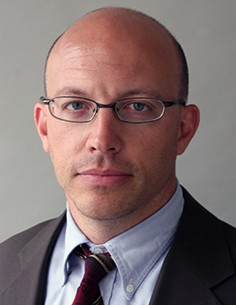
T. Christian Miller joined ProPublica in 2008 as a senior reporter. He spent the previous 11 years reporting for the Los Angeles Times. His work included coverage of the 2000 presidential campaign and three years as a bureau chief for the Times, responsible for 10 countries in South and Central America. Earlier in his career he worked for the San Francisco Chronicle and the St. Petersburg Times.
He has received the George Polk Award for Radio Reporting, the Dart Award for Coverage of Trauma, the Selden Ring Award for Investigative Reporting, the Investigative Reporters and Editors award for online reporting, two Overseas Press Club awards, a Livingston Award for Young Journalists, the John B. Oakes Award for Distinguished Environmental Reporting and a certificate of recognition from the Daniel Pearl awards for outstanding international investigative reporting. In addition, Miller was given a yearlong Knight Fellowship in 2011 to study at Stanford University. Miller is the author of Blood Money: Wasted Billions, Lost Lives, and Corporate Greed in Iraq. He is currently based in Berkeley, CA.

Ken Armstrong is a journalist who specializes in investigative reporting and narrative writing.
At the Seattle Times he won the Pulitzer Prize for investigative reporting and shared in two Pulitzers for breaking news, awarded to the staff for coverage of the shooting deaths of four police officers and a landslide that killed 43 people. Before that he was a Pulitzer finalist four times, for public service, investigative reporting, explanatory journalism, and national reporting.
At the Chicago Tribune he co-wrote a five-part series on the death penalty that helped prompt the Illinois governor to declare a moratorium on executions and later to empty Death Row.
Armstrong has been the McGraw Professor of Writing at Princeton and a Nieman Fellow at Harvard. In 2009 he received the John Chancellor Award from Columbia University for lifetime achievement. He is co-author of the book “Scoreboard, Baby,” winner of the Edgar Award for non-fiction.
A graduate of Purdue, Armstrong lives in Seattle with his wife, Ramona Hattendorf, and their two children, Emmett and Meghan.