Brian M. Rosenthal of The New York Times

Brian M. Rosenthal accepts the 2020 Pulitzer Prize for Investigative Reporting from Columbia University President Lee Bollinger. (Jose Lopez/The Pulitzer Prizes)
Winning Work
By Brian M. Rosenthal
Photographs and Video by Kholood Eid
The phone call that ruined Mohammed Hoque’s life came in April 2014 as he began another long day driving a New York City taxi, a job he had held since emigrating from Bangladesh nine years earlier.
The call came from a prominent businessman who was selling a medallion, the coveted city permit that allows a driver to own a yellow cab instead of working for someone else. If Mr. Hoque gave him $50,000 that day, he promised to arrange a loan for the purchase.
After years chafing under bosses he hated, Mr. Hoque thought his dreams of wealth and independence were coming true. He emptied his bank account, borrowed from friends and hurried to the man’s office in Astoria, Queens. Mr. Hoque handed over a check and received a stack of papers. He signed his name and left, eager to tell his wife.
Mr. Hoque made about $30,000 that year. He had no idea, he said later, that he had just signed a contract that required him to pay $1.7 million.
Over the past year, a spate of suicides by taxi drivers in New York City has highlighted in brutal terms the overwhelming debt and financial plight of medallion owners. All along, officials have blamed the crisis on competition from ride-hailing companies such as Uber and Lyft.
But a New York Times investigation found much of the devastation can be traced to a handful of powerful industry leaders who steadily and artificially drove up the price of taxi medallions, creating a bubble that eventually burst. Over more than a decade, they channeled thousands of drivers into reckless loans and extracted hundreds of millions of dollars before the market collapsed.
These business practices generated huge profits for bankers, brokers, lawyers, investors, fleet owners and debt collectors. The leaders of nonprofit credit unions became multimillionaires. Medallion brokers grew rich enough to buy yachts and waterfront properties. One of the most successful bankers hired the rap star Nicki Minaj to perform at a family party.
But the methods stripped immigrant families of their life savings, crushed drivers under debt they could not repay and engulfed an industry that has long defined New York. More than 950 medallion owners have filed for bankruptcy, according to a Times analysis of court records. Thousands more are barely hanging on.
The practices were strikingly similar to those behind the housing market crash that led to the 2008 global economic meltdown: Banks and loosely regulated private lenders wrote risky loans and encouraged frequent refinancing; drivers took on debt they could not afford, under terms they often did not understand.
Some big banks even entered the taxi industry in the aftermath of the housing crash, seeking a new market, with new borrowers.
The combination of easy money, eager borrowers and the lure of a rare asset helped prices soar far above what medallions were really worth. Some industry leaders fed the frenzy by purposefully overpaying for medallions in order to inflate prices, The Times found.
Between 2002 and 2014, the price of a medallion rose to more than $1 million from $200,000, even though city records showed that driver incomes barely changed.
About 4,000 drivers bought medallions in that period, records show. They were excited to buy, but they were enticed by a dubious premise.
“The whole thing was like a Ponzi scheme because it totally depended on the value going up,” said Haywood Miller, a debt specialist who has consulted for both borrowers and lenders. “The part that wasn’t fair was the guy who’s buying is an immigrant, maybe someone who couldn’t speak English. They were conned.”
After the medallion market collapsed, Mayor Bill de Blasio opted not to fund a bailout, and earlier this year, the City Council speaker, Corey Johnson, shut down the committee overseeing the taxi industry, saying it had completed most of its work.
Over 10 months, The Times interviewed 450 people, built a database of every medallion sale since 1995 and reviewed thousands of individual loans and other documents, including internal bank records and confidential profit-sharing agreements.
The investigation found example after example of drivers trapped in exploitative loans, including hundreds who signed interest-only loans that required them to pay exorbitant fees, forfeit their legal rights and give up almost all their monthly income, indefinitely.
A Pakistani immigrant who thought he was just buying a car ended up with a $780,000 medallion loan that left him unable to pay rent. A Bangladeshi immigrant said he was told to lie about his income on his loan application; he eventually lost his medallion. A Haitian immigrant who worked to exhaustion to make his monthly payments discovered he had been paying only interest and went bankrupt.
It is unclear if the practices violated any laws. But after reviewing The Times’s findings, experts said the methods were among the worst that have been used since the housing crash.
“I don’t think I could concoct a more predatory scheme if I tried,” said Roger Bertling, the senior instructor at Harvard Law School’s clinic on predatory lending and consumer protection. “This was modern-day indentured servitude.”
Lenders developed their techniques in New York but spread them to Chicago, Boston, San Francisco and elsewhere, transforming taxi industries across the United States.
In interviews, lenders denied wrongdoing. They noted that regulators approved their practices, and said some borrowers made poor decisions and assumed too much debt. They said some drivers were happy to use climbing medallion values as collateral to take out cash, and that those who sold their medallions at the height of the market made money.
The lenders said they believed medallion values would keep increasing, as they almost always had. No one, they said, could have predicted Uber and Lyft would emerge to undercut the business.
“People love to blame banks for things that happen because they’re big bad banks,” said Robert Familant, the former head of Progressive Credit Union, a small nonprofit that specialized in medallion loans. “We didn’t do anything, in my opinion, other than try to help small businesspeople become successful.”
Mr. Familant made about $30 million in salary and deferred payouts during the bubble, including $4.8 million in bonuses and incentives in 2014, the year it burst, according to disclosure forms.
Meera Joshi, who joined the Taxi and Limousine Commission in 2011 and became chairwoman in 2014, said it was not the city’s job to regulate lending. But she acknowledged that officials saw red flags and could have done something.
“There were lots of players, and lots of people just watched it happen. So the T.L.C. watched it happen. The lenders watched it happen. The borrowers watched it happen as their investment went up, and it wasn’t until it started falling apart that people started taking action and pointing fingers,” said Ms. Joshi, who left the commission in March. “It was a party. Why stop it?”
A valuable piece of tin
Every day, about 250,000 people hail a New York City yellow taxi. Most probably do not know they are participating in an unconventional economic system about as old as the Empire State Building.
The city created taxi medallions in 1937. Unlicensed cabs crowded city streets, so officials designed about 12,000 specialized tin plates and made it illegal to operate a taxi without one bolted to the hood of the car. The city sold each medallion for $10.
People who bought medallions could sell them, just like any other asset. The only restriction: Officials designated roughly half as “independent medallions” and eventually required that those always be owned by whoever was driving that cab.
Over time, as yellow taxis became symbols of New York, a cutthroat industry grew around them. A few entrepreneurs obtained most of the nonindependent medallions and built fleets that controlled the market. They were family operations largely based in the industrial neighborhoods of Hell’s Kitchen in Manhattan and Long Island City in Queens.
Allegations of corruption, racism and exploitation dogged the industry. Some fleet bosses were accused of cheating drivers. Some drivers refused to go outside Manhattan or pick up black and Latino passengers. Fleet drivers typically worked 60 hours a week, made less than minimum wage and received no benefits, according to city studies.
Still, driving could serve as a path to the middle class. Drivers could save to buy an independent medallion, which would increase their earnings and give them an asset they could someday sell for a retirement nest egg.
Those who borrowed money to buy a medallion typically had to submit a large down payment and repay within five to 10 years.
The conservative lending strategy produced modest returns. The city did not release new medallions for almost 60 years, and values slowly climbed, hitting $100,000 in 1985 and $200,000 in 1997.
“It was a safe and stable asset, and it provided a good life for those of us who were lucky enough to buy them,” said Guy Roberts, who began driving in 1979 and eventually bought medallions and formed a fleet. “Not an easy life, but a good life.”
“And then,” he said, “everything changed.”
5 a.m. to 5 p.m., six days a week
Before coming to America, Mohammed Hoque lived comfortably in Chittagong, a city on Bangladesh’s southern coast. He was a serious student and a gifted runner, despite a small and stocky frame. His father and grandfather were teachers; he said he surpassed them, becoming an education official with a master’s degree in management. He supervised dozens of schools and traveled on a government-issued motorcycle. In 2004, when he was 33, he married Fouzia Mahabub.
That same year, several of his friends signed up for the green card lottery, and their thirst for opportunity was contagious. He applied, and won.
His wife had an uncle in Jamaica, Queens, so they went there. They found a studio apartment. Mr. Hoque wanted to work in education, but he did not speak enough English. A friend recommended the taxi industry.
It was an increasingly common move for South Asian immigrants. In 2005, about 40 percent of New York cabbies were born in Bangladesh, India or Pakistan, according to the United States Census Bureau. Over all, just 9 percent were born in the United States.
Mr. Hoque joined Taxifleet Management, a large fleet run by the Weingartens, a Russian immigrant family whose patriarchs called themselves the “Three Wise Men.”
He worked 5 a.m. to 5 p.m., six days a week. On a good day, he said, he brought home $100. He often felt lonely on the road, and he developed back pain from sitting all day and diabetes, medical records show.
He could have worked fewer shifts. He also could have moved out of the studio. But he drove as much as feasible and spent as little as possible. He had heard the city would soon be auctioning off new medallions. He was saving to buy one.
‘They used it as an A.T.M.’
In the early 2000s, a new generation took power in New York’s cab industry. They were the sons of longtime industry leaders, and they had new ideas for making money.
Few people represented the shift better than Andrew Murstein.
Mr. Murstein was the grandson of a Polish immigrant who bought one of the first medallions, built one of the city’s biggest fleets and began informally lending to other buyers in the 1970s. Mr. Murstein attended business school and started his career at Bear Stearns and Salomon Brothers, the investment banks.
When he joined the taxi business, he has said, he pushed his family to sell off many medallions and to establish a bank to focus on lending. Medallion Financial went public in 1996. Its motto was, “In niches, there are riches.”
Dozens of industry veterans said Mr. Murstein and his father, Alvin, were among those who helped to move the industry to less conservative lending practices. The industry veterans said the Mursteins, as well as others, started saying medallion values would always rise and used that idea to focus on lending to lower-income drivers, which was riskier but more profitable.
The strategy began to be used by the industry’s other major lenders — Progressive Credit Union, Melrose Credit Union and Lomto Credit Union, all family-run nonprofits that made essentially all their money from medallion loans, according to financial disclosures.
“We didn’t want to be the one left behind,” said Monte Silberger, Lomto’s controller and then chief financial officer from 1999 to 2017.
The lenders began accepting smaller down payments. By 2013, many medallion buyers were not handing over any down payment at all, according to an analysis of buyer applications submitted to the city.
“It got to a point where we didn’t even check their income or credit score,” Mr. Silberger said. “It didn’t matter.”
Lenders also encouraged existing borrowers to refinance and take out more money when medallion prices rose, according to interviews with dozens of borrowers and loan officers. There is no comprehensive data, but bank disclosures suggest that thousands of owners refinanced.
Industry veterans said it became common for owners to refinance to buy a house or to put children through college. “You’d walk into the bank and walk out 30 minutes later with an extra $200,000,” said Lou Bakalar, a broker who arranged loans.
Some pointed to the refinancing to argue that irresponsible borrowers fueled the crisis. “Medallion owners were misusing it,” said Aleksey Medvedovskiy, a fleet owner who also worked as a broker. “They used it as an A.T.M.”
As lenders loosened standards, they increased returns. Rather than raising interest rates, they made borrowers pay a mix of costs — origination fees, legal fees, financing fees, refinancing fees, filing fees, fees for paying too late and fees for paying too early, according to a Times review of more than 500 loans included in legal cases. Many lenders also made borrowers split their loan and pay a much higher rate on the second loan, documents show.
Lenders also extended loan lengths. Instead of requiring repayment in five or 10 years, they developed deals that lasted as long as 50 years, locking in decades of interest payments. And some wrote interest-only loans that could continue forever.
“We couldn’t figure out why the company was doing so many interest-only loans,” said Michelle Pirritano, a Medallion Financial loan analyst from 2007 to 2011. “It was a good revenue stream, but it didn’t really make sense as a loan. I mean, it wasn’t really a loan, because it wasn’t being repaid.”
Almost every loan reviewed by The Times included a clause that spiked the interest rate to as high as 24 percent if it was not repaid in three years. Lenders included the clause — called a “balloon” — so that borrowers almost always had to extend the loan, possibly at a higher rate than in the original terms, and with additional fees.
Yvon Augustin was caught in one of those loans. He bought a medallion in 2006, a decade after emigrating from Haiti. He said he paid $2,275 every month — more than half his income, he said — and thought he was paying off the loan. But last year, his bank used the balloon to demand that he repay everything. That is when he learned he had been paying only the interest, he said.
Mr. Augustin, 69, declared bankruptcy and lost his medallion. He lives off assistance from his children.
Big banks arrive
During the global financial crisis, Eugene Haber, a lawyer for the taxi industry, started getting calls from bankers he had never met.
Mr. Haber had written a template for medallion loans in the 1970s. By 2008, his thick mustache had turned white, and he thought he knew everybody in the industry. Suddenly, new bankers began calling his suite in a Long Island office park. Capital One, Signature Bank, New York Commercial Bank and others wanted to issue medallion loans, he said.
Some of the banks were looking for new borrowers after the housing market collapsed, Mr. Haber said. “They needed somewhere else to invest,” he said. He said he represented some banks at loan signings but eventually became embittered because he believed banks were knowingly lending to people who could not repay.
Instead of lending directly, the big banks worked through powerful industry players. They enlisted large fleet owners and brokers — especially Neil Greenbaum, Richard Chipman, Savas Konstantinides, Roman Sapino and Basil Messados — to use the banks’ money to lend to medallion buyers. In return, the owners and brokers received a cut of the monthly payments and sometimes an additional fee.
The fleet owners and brokers, who technically issued the loans, did not face the same scrutiny as banks.
“They did loans that were frankly insane,” said Larry Fisher, who from 2003 to 2016 oversaw medallion lending at Melrose Credit Union, one of the biggest lenders originally in the industry. “It contributed to the price increases and put a lot of pressure on the rest of us to keep up.”
Still, Mr. Fisher said, Melrose followed lending rules. “A lot of people tend to blame others for their own misfortune,” he said. “If they want to blame the lender for the medallion going down the tubes the way it has, I think they’re misplaced.”
Mr. Konstantinides, a fleet owner and the broker and lender who arranged Mr. Hoque’s loans, said every loan issued by his company abided by federal and state banking guidelines. “I am very sympathetic to the plight of immigrant families who are seeking a better life in this country and in this city,” said Mr. Konstantinides, who added that he was also an immigrant.
Walter Rabin, who led Capital One’s medallion lending division between 2007 and 2012 and has led Signature Bank’s medallion lending division since, said he was one of the industry’s most conservative lenders. He said he could not speak for the brokers and fleet owners with whom he worked.
Mr. Rabin and other Signature executives denied fault for the market collapse and blamed the city for allowing ride-hail companies to enter with little regulation. “It’s the City of New York that took the biggest advantage of the drivers,” said Joseph J. DePaolo, the president and chief executive of Signature. “It’s not the banks.”
New York Commercial Bank said in a statement that it began issuing medallion loans before the housing crisis and that they were a very small part of its business. The bank did not engage in risky lending practices, a spokesman said.
Mr. Messados said in an interview that he disagreed with interest-only loans and other one-sided terms. But he said he was caught between banks developing the loans and drivers clamoring for them. “They were insisting on this,” he said. “What are you supposed to do? Say, ‘I’m not doing the sale?’”
Several lenders challenged the idea that borrowers were unsophisticated. They said that some got better deals by negotiating with multiple lenders at once.
Mr. Greenbaum, Mr. Chipman and Mr. Sapino declined to comment, as did Capital One.
Some fleet owners worked to manipulate prices. In the most prominent example, Evgeny Freidman, a brash Russian immigrant who owned so many medallions that some called him “The Taxi King,” said he purposefully overpaid for medallions sold at city auctions. He reasoned that the higher prices would become the industry standard, making the medallions he already owned worth more. Mr. Freidman, who was partners with Michael Cohen, President Trump’s former lawyer, disclosed the plan in a 2012 speech at Yeshiva University. He recently pleaded guilty to felony tax fraud. He declined to comment.
As medallion prices kept increasing, the industry became strained. Drivers had to work longer hours to make monthly payments. Eventually, loan records show, many drivers had to use almost all their income on payments.
“The prices got to be ridiculous,” said Vincent Sapone, the retired manager of the League of Mutual Taxi Owners, an owner association. “When it got close to $1 million, nobody was going to pay that amount of money, unless they came from another country. Nobody from Brooklyn was going to pay that.”
Some drivers have alleged in court that lenders tricked them into signing loans.
Muhammad Ashraf, a Pakistani immigrant, alleged that a broker, Heath Candero, duped him into a $780,000 interest-only loan. He said in an interview in Urdu that he could not speak English fluently and thought he was just signing a loan to buy a car. He said he found out about the loan when his bank sued him for not fully repaying. The bank eventually decided not to pursue a case against Mr. Ashraf. He also filed a lawsuit against Mr. Candero. That case was dismissed. A lawyer for Mr. Candero declined to comment.
Abdur Rahim, a Bangladeshi immigrant, alleged that his lender, Bay Ridge Credit Union, inserted hidden fees. In an interview, he added he was told to lie on his loan application. The application, reviewed by The Times, said he made $128,389, but he said his tax return showed he made about $25,000. In court, Bay Ridge has denied there were hidden fees and said Mr. Rahim was “confusing the predatory-lending statute with a mere bad investment.” The credit union declined to comment.
Several employees of lenders said they were pushed to write loans, encouraged by bonuses and perks such as tickets to sporting events and free trips to the Bahamas.
They also said drivers almost never had lawyers at loan closings. Borrowers instead trusted their broker to represent them, even though, unbeknown to them, the broker was often getting paid by the bank.
Stan Zurbin, who between 2009 and 2012 did consulting work for a lender that issued medallion loans, said that as prices rose, lenders in the industry increasingly lent to immigrants.
“They didn’t have 750 credit scores, let’s just say,” he said. “A lot of them had just come into the country. A lot of them just had no idea what they were signing.”
The $1 million medallion
Mrs. Hoque did not want her husband to buy a medallion. She wanted to use their savings to buy a house. They had their first child in 2008, and they planned to have more. They needed to leave the studio apartment, and she thought a home would be a safer investment.
But Mr. Hoque could not shake the idea, especially after several friends bought medallions at the city’s February 2014 auction.
One friend introduced him to a man called “Big Savas.” It was Mr. Konstantinides, a fleet owner who also had a brokerage and a lending company, Mega Funding.
The call came a few weeks later. A medallion owner had died, and the family was selling for $1 million.
Mr. Hoque said he later learned the $50,000 he paid up front was just for taxes. Mega eventually requested twice that amount for fees and a down payment, records show. Mr. Hoque said he maxed out credit cards and borrowed from a dozen friends and relatives.
Fees and interest would bring the total repayment to more than $1.7 million, documents show. It was split into two loans, both issued by Mega with New York Commercial Bank. The loans made him pay $5,000 a month — most of the $6,400 he could earn as a medallion owner.
Mr. Konstantinides said in his statement that lenders disclosed all the fees to Mr. Hoque and encouraged him to consult with a lawyer and accountant. “Mr. Hoque had extensive experience and knowledge of the taxi industry,” he said.
By the time the deal closed in July 2014, Mr. Hoque had heard of a new company called Uber. He wondered if it would hurt the business, but nobody seemed to be worried.
As Mr. Hoque drove to the Taxi and Limousine Commission’s downtown office for final approval of the purchase, he fantasized about becoming rich, buying a big house and bringing his siblings to America. After a commission official reviewed his application and loan records, he said he was ushered into the elegant “Taxi of Tomorrow” room. An official pointed a camera. Mr. Hoque smiled.
Nicki Minaj and yachts
In late 2012, Andrew Murstein appeared on the Fox Business Network to talk about medallions.
“These are little cash cows running around the city spitting out money,” Mr. Murstein said, beaming in a navy suit and pink tie.
He did not mention he was quietly leaving the business, a move that would benefit him when the market collapsed.
By the time of the appearance, Medallion Financial had been cutting the number of medallion loans on its books for years, according to disclosures it filed with the Securities and Exchange Commission. Mr. Murstein later said the company started exiting the business and focusing on other ventures before 2010.
Mr. Murstein declined numerous interview requests. He also declined to answer some written questions, including why he promoted medallions while exiting the business. In emails and through a spokesman, he acknowledged that Medallion Financial reduced down payments but said it rarely issued interest-only loans or charged borrowers for repaying loans too early.
“Many times, we did not match what our competitors were willing to do and in retrospect, thankfully, we lost the business,” he wrote to The Times.
Interviews with three former staffers, and a Times review of loan documents that were filed as part of lawsuits brought by Medallion Financial against borrowers, indicate the company issued many interest-only loans and routinely included a provision allowing it to charge borrowers for repaying loans too early.
Other lenders also left the taxi industry or took precautions long before the market collapsed.
The credit unions specializing in the industry kept making new loans. But between 2010 and 2014, they sold the loans to other financial institutions more often than in the previous five years, disclosure forms show. Progressive Credit Union, run by Mr. Familant, sold loans off almost twice as often, the forms show. By 2012, that credit union was selling the majority of the loans it issued.
In a statement, Mr. Familant said the selling of loans was a standard banking practice that did not indicate a lack of confidence in the market.
Several banks used something called a confession of judgment. It was an obscure document in which the borrower admitted defaulting on the loan — even before taking out any money at all — and authorized the bank to do whatever it wanted to collect.
Congress has banned that practice in consumer loans, but not in business loans, which is how lenders classified medallion deals. Many states have barred it in business loans, too, but New York is not among them.
Even as some lenders quietly braced for the market to fall, prices kept rising, and profits kept growing.
By 2014, many of the people who helped create the bubble had made millions of dollars and invested it elsewhere.
Medallion Financial started focusing on lending to R.V. buyers and bought a professional lacrosse team and a Nascar team, painting the car to look like a taxi. Mr. Murstein and his father made more than $42 million between 2002 and 2014, disclosures show. In 2015, Ms. Minaj, the rap star, performed at his son’s bar mitzvah.
The Melrose C.E.O., Alan Kaufman, had the highest base salary of any large state-chartered credit union leader in America in 2013 and 2015, records show. His medallion lending supervisor, Mr. Fisher, also made millions.
It is harder to tell how much fleet owners and brokers made, but in recent years news articles have featured some of them with new boats and houses.
Mr. Messados’s bank records, filed in a legal case, show that by 2013, he had more than $50 million in non-taxi assets, including three homes and a yacht.
The bubble bursts
The medallion bubble burst in late 2014. Uber and Lyft may have hastened the crisis, but virtually all of the hundreds of industry veterans interviewed for this article, including many lenders, said inflated prices and risky lending practices would have caused a collapse even if ride-hailing had never been invented.
At the market’s height, medallion buyers were typically earning about $5,000 a month and paying about $4,500 to their loans, according to an analysis by The Times of city data and loan documents. Many owners could make their payments only by refinancing when medallion values increased, which was unsustainable, some loan officers said.
City data shows that since Uber entered New York in 2011, yellow cab revenue has decreased by about 10 percent per cab, a significant bite for low-earning drivers but a small drop compared with medallion values, which initially rose and then fell by 90 percent.
As values fell, borrowers asked for breaks. But many lenders went the opposite direction. They decided to leave the business and called in their loans.
They used the confessions to get hundreds of judgments that would allow them to take money from bank accounts, court records show. Some tried to get borrowers to give up homes or a relative’s assets. Others seized medallions and quickly resold them for profit, while still charging the original borrowers fees and extra interest. Several drivers have alleged in court that their lenders ordered them to buy life insurance.
Many lenders hired a debt collector, Anthony Medina, to seize medallions from borrowers who missed payments.
Mr. Medina left notes telling borrowers they had to give the lender “relief” to get their medallions back. The notes, which were reviewed by The Times, said the seizure was “authorized by vehicle apprehension unit.” Some drivers said Mr. Medina suggested he was a police officer and made them meet him at a park at night and pay $550 extra in cash.
One man, Jean Demosthenes, a 64-year-old Haitian immigrant who could not speak English, said in an interview in Haitian Creole that Mr. Medina cornered him in Midtown, displayed a gun and took his car.
In an interview, Mr. Medina denied threatening anyone with a gun. He said he requested cash because drivers who had defaulted could not be trusted to write good checks. He said he met drivers at parks and referred to himself as the vehicle apprehension unit because he wanted to hide his identity out of fear he could be targeted by borrowers.
“You’re taking words from people that are deadbeats and delinquent people. Of course, they don’t want to see me,” he said. “I’m not the bad guy. I’m just the messenger from the bank.”
Some lenders, especially Signature Bank, have let borrowers out of their loans for one-time payments of about $250,000. But to get that money, drivers have had to find new loans. Mr. Greenbaum, a fleet owner, has provided many of those loans, sometimes at interest rates of up to 15 percent, loan documents and interviews showed.
New York Commercial Bank said in its statement it also had modified some loans.
Other drivers lost everything. Most of the more than 950 owners who declared bankruptcy had to forfeit their medallions. Records indicate many were bought by hedge funds hoping for prices to rise. For now, cabs sit unused.
Bhairavi Desai, founder of the Taxi Workers Alliance, which represents drivers and independent owners, has asked the city to bail out owners or refund auction purchasers. Others have urged the city to pressure banks to forgive loans or soften terms.
After reviewing The Times’s findings, Deepak Gupta, a former top official at the United States Consumer Financial Protection Bureau, said the New York Attorney General’s Office should investigate lenders.
Mr. Gupta also said the state should close the loophole that let lenders classify medallion deals as business loans, even though borrowers had to guarantee them with everything they owned. Consumer loans have far more disclosure rules and protections.
“These practices were indisputably predatory and would be illegal if they were considered consumer loans, rather than business loans,” he said.
Last year, amid eight known suicides of drivers, including three medallion owners with overwhelming loans, the city passed a temporary cap on ride-hailing cars, created a task force to study the industry and directed the city taxi commission to do its own analysis of the debt crisis.
Earlier this year, the Council eliminated the committee overseeing the industry after its chairman, Councilman Rubén Díaz Sr. of the Bronx, said the Council was “controlled by the homosexual community.” The speaker, Mr. Johnson, said, “The vast majority of the legislative work that we have been looking at has already been completed.”
In a statement, a council spokesman said the committee’s duties had been transferred to the Committee on Transportation. “The Council is working to do as much as it can legislatively to help all drivers,” the spokesman said.
As of last week, no one had been appointed to the task force.
‘An unhuman life’
On the last day of 2018, Mr. and Mrs. Hoque brought their third child home from the hospital.
Mr. Hoque cleared space for the boy’s crib, pushing aside his plastic bags of T-shirts and the fan that cooled the studio. He looked around. He could not believe he was still living in the same room.
His loan had quickly faltered. He could not make the payments and afford rent, and his medallion was seized. Records show he paid more than $12,000 to Mega, and he said he paid another $550 to Mr. Medina to get it back. He borrowed from friends, promising it would not happen again. Then it happened four more times, he said.
Mr. Konstantinides, the broker, said in his statement that he met with Mr. Hoque many times and twice modified one of his loans in order to lower his monthly payments. He also said he gave Mr. Hoque extra time to make some payments.
In all, between the initial fees, monthly payments and penalties after the seizures, Mr. Hoque had paid about $400,000 into the medallion by the beginning of this year.
But he still owed $915,000 more, plus interest, and he did not know what to do. Bankruptcy would cost money, ruin his credit and remove his only income source. And it would mean a shameful end to years of hard work. He believed his only choice was to keep working and to keep paying.
His cab was supposed to be his ticket to money and freedom, but instead it seemed like a prison cell. Every day, he got in before the sun rose and stayed until the sky began to darken. Mr. Hoque, now 48, tried not to think about home, about what he had given up and what he had dreamed about.
“It’s an unhuman life,” he said. “I drive and drive and drive. But I don’t know what my destination is.”
Reporting was contributed by Emma G. Fitzsimmons, Suzanne Hillinger, Derek M. Norman, Elisha Brown, Lindsey Rogers Cook, Pierre-Antoine Louis and Sameen Amin. Doris Burke and Susan Beachy contributed research. Produced by Jeffrey Furticella and Meghan Louttit.
By Brian M. Rosenthal
At a cramped desk on the 22nd floor of a downtown Manhattan office building, Gary Roth spotted a looming disaster.
An urban planner with two master’s degrees, Mr. Roth had a new job in 2010 analyzing taxi policy for the New York City government. But almost immediately, he noticed something disturbing: The price of a taxi medallion — the permit that lets a driver own a cab — had soared to nearly $700,000 from $200,000. In order to buy medallions, drivers were taking out loans they could not afford.
Mr. Roth compiled his concerns in a report, and he and several colleagues warned that if the city did not take action, the loans would become unsustainable and the market could collapse.
They were not the only ones worried about taxi medallions. In Albany, state inspectors gave a presentation to top officials showing that medallion owners were not making enough money to support their loans. And in Washington, D.C., federal examiners repeatedly noted that banks were increasing profits by steering cabbies into risky loans.
They were all ignored.
Medallion prices rose above $1 million before crashing in late 2014, wiping out the futures of thousands of immigrant drivers and creating a crisis that has continued to ravage the industry today. Despite years of warning signs, at least seven government agencies did little to stop the collapse, The New York Times found.
Instead, eager to profit off medallions or blinded by the taxi industry’s political connections, the agencies that were supposed to police the industry helped a small group of bankers and brokers to reshape it into their own moneymaking machine, according to internal records and interviews with more than 50 former government employees.
For more than a decade, the agencies reduced oversight of the taxi trade, exempted it from regulations, subsidized its operations and promoted its practices, records and interviews showed.
Their actions turned one of the best-known symbols of New York — its signature yellow cabs — into a financial trap for thousands of immigrant drivers. More than 950 have filed for bankruptcy, according to a Times analysis of court records, and many more struggle to stay afloat.
“Nobody wanted to upset the industry,” said David Klahr, who from 2007 to 2016 held several management posts at the Taxi and Limousine Commission, the city agency that oversees cabs. “Nobody wanted to kill the golden goose.”
New York City in particular failed the taxi industry, The Times found. Two former mayors, Rudolph W. Giuliani and Michael R. Bloomberg, placed political allies inside the Taxi and Limousine Commission and directed it to sell medallions to help them balance budgets and fund priorities. Mayor Bill de Blasio continued the policies.
Under Mr. Bloomberg and Mr. de Blasio, the city made more than $855 million by selling taxi medallions and collecting taxes on private sales, according to the city.
But during that period, much like in the mortgage lending crisis, a group of industry leaders enriched themselves by artificially inflating medallion prices. They encouraged medallion buyers to borrow as much as possible and ensnared them in interest-only loans and other one-sided deals that often required them to pay hefty fees, forfeit their legal rights and give up most of their monthly incomes.
When the medallion market collapsed, the government largely abandoned the drivers who bore the brunt of the crisis. Officials did not bail out borrowers or persuade banks to soften loan terms.
“They sell us medallions, and they knew it wasn’t worth price. They knew,” said Wael Ghobrayal, 42, an Egyptian immigrant who bought a medallion at a city auction for $890,000 and now cannot make his loan payments and support his three children.
“They lost nothing. I lost everything,” he said.
The Times conducted hundreds of interviews, reviewed thousands of records and built several databases to unravel the story of the downfall of the taxi industry in New York and across the United States. The investigation unearthed a collapse that was years in the making, aided almost as much by regulators as by taxi tycoons.
Publicly, government officials have blamed the crisis on competition from ride-hailing firms such as Uber and Lyft.
In interviews with The Times, they blamed each other.
The officials who ran the city Taxi and Limousine Commission in the run-up to the crash said it was the job of bank examiners, not the commission, to control lending practices.
The New York Department of Financial Services said that while it supervised some of the banks involved in the taxi industry, it deferred to federal inspectors in many cases.
The federal agency that oversaw many of the largest lenders in the industry, the National Credit Union Administration, said those lenders were meeting the needs of borrowers.
The N.C.U.A. released a March 2019 internal audit that scolded its regulators for not aggressively enforcing rules in medallion lending. But even that audit partially absolved the government. The lenders, it said, all had boards of directors that were supposed to prevent reckless practices.
And several officials criticized Congress, which two decades ago excepted credit unions in the taxi industry from some rules that applied to other credit unions. After that, the officials said, government agencies had to treat those lenders differently.
Ultimately, former employees said, the regulatory system was set up to ensure that lenders were financially stable, and medallions were sold. But almost nothing protected the drivers.
A ‘once-in-a-lifetime opportunity’
Matthew W. Daus was an unconventional choice to regulate New York’s taxi industry. He was a lawyer from Brooklyn and a leader of a political club that backed Mr. Giuliani for mayor.
The Giuliani administration hired him as a lawyer for the Taxi and Limousine Commission before appointing him chairman in 2001, a leadership post he kept after Mr. Bloomberg became mayor in 2002.
The commission oversaw the drivers and fleets that owned the medallions for the city’s 12,000 cabs. It licensed all participants and decided what cabs could charge, where they could go and which type of vehicle they could use.
And under Mr. Bloomberg, it also began selling 1,000 new medallions.
At the time, the mayor said the growing city needed more yellow cabs. But he also was eager for revenue. He had a $3.8 billion hole in his budget.
The sales put the taxi commission in an unusual position.
It had a long history of being entangled with the industry. Its first chairman, appointed in 1971, was convicted of a bribery scheme involving an industry lobbyist. Four other leaders since then had worked in the business.
It often sent staffers to conferences where companies involved in the taxi business paid for liquor, meals and tickets to shows, and at least one past member of its board had run for office in a campaign financed by the industry.
Still, the agency had never been asked to generate so much money from the business it was supposed to be regulating.
Former staffers said officials chose to sell medallions with the method they thought would bring in the most revenue: a series of limited auctions that required participants to submit sealed bids above ever-increasing minimums.
Ahead of the sales, the city placed ads on television and radio, and in newspapers and newsletters, and held seminars promoting the “once-in-a-lifetime opportunity.”
“Medallions have a long history as a solid investment with steady growth,” Mr. Daus wrote in one newsletter. In addition to guaranteed employment, he wrote, “a medallion is collateral that can assist in home financing, college tuition or even ‘worry-free’ retirement.”
At the first auctions under Mr. Bloomberg in 2004, bids topped $300,000, surprising experts.
Some former staffers said in interviews they believed the ad campaign inappropriately inflated prices by implying medallions would make buyers rich, no matter the cost. Seven said they complained.
The city eventually added a disclaimer to ads, saying past performance did not guarantee future results. But it kept advertising.
During the same period, the city also posted information on its website that said that medallion prices were, on average, 13 percent higher than they really were, according to a Times data analysis.
In several interviews, Mr. Daus defended the ad campaigns, saying they reached people who had been unable to break into the tight market. The ads were true at the time, he said. He added he had never heard internal complaints about the ads.
In all, the city held 16 auctions between 2004 and 2014.
“People don’t realize how organized it is,” Andrew Murstein, president of Medallion Financial, a lender to medallion buyers, said in a 2011 interview with Tearsheet Podcast. “The City of New York, more or less, is our partner because they want to see prices go as high as possible.”
Help from a federal agency
For decades, a niche banking system had grown up around the taxi industry, and at its center were about half a dozen nonprofit credit unions that specialized in medallion loans. But as the auctions continued, the families that ran the credit unions began to grow frustrated.
Around them, they saw other lenders making money by issuing loans that they could not because of the rules governing credit unions. They recognized a business opportunity, and they wanted in.
They found a receptive audience at the National Credit Union Administration.
The N.C.U.A. was the small federal agency that regulated the nation’s credit unions. It set the rules, examined their books and insured their accounts.
Like the city taxi commission, the N.C.U.A. had long had ties to the industry that it regulated. One judge had called it a “rogue federal agency” focused on promoting the industry.
In 2004, its chairman was Dennis Dollar, a former Mississippi state representative who had previously worked as the chief executive of a credit union. He had just been inducted into the Mississippi Credit Union Hall of Fame, and he had said one of his top priorities was streamlining regulation.
Under Mr. Dollar and others, the N.C.U.A. issued waivers that exempted medallion loans from longstanding rules, including a regulation requiring each loan to have a down payment of at least 20 percent. The waivers allowed the lenders to keep up with competitors and to write more profitable loans.
Mr. Dollar, who left government to become a consultant for credit unions, said the agency was following the lead of Congress, which passed a law in 1998 exempting credit unions specializing in medallion loans from some regulations. The law signaled that those lenders needed leeway, such as the waivers, he said.
“If we did not do so, the average cabdriver couldn’t get a medallion loan,” Mr. Dollar said.
The federal law and the N.C.U.A. waivers were not the only benefits the industry received. The federal government also provided many medallion lenders with financial assistance and guaranteed a portion of their taxi loans, assuring that if those loans failed, they would still be partially paid, according to records and interviews.
As lenders wrote increasingly risky loans, medallion prices neared $500,000 in 2006.
‘Snoozing and napping’
Another agency was also supposed to be keeping an eye on lending practices. New York State banking regulators are required to inspect all financial institutions chartered in the state. But after 2008, they were forced to focus their attention on the banks most affected by the global economic meltdown, according to former employees.
As a result, some industry veterans said, the state stopped examining medallion loans closely.
“The state banking department would come in, and they’d be doing the exam in one room, and the N.C.U.A. would be in another room,” said Larry Fisher, who was then the medallion lending supervisor at Melrose Credit Union, one of the biggest lenders. “And you could catch the state banking department snoozing and napping and going on the internet and not doing much at all.”
The state banking department, which is now called the New York Department of Financial Services, disputed that characterization and said it had acted consistently and appropriately.
Former federal regulators described a similar trend at their agencies after the recession.
Some former employees of the N.C.U.A., the Federal Deposit Insurance Corporation and the Office of the Comptroller of the Currency said that as medallion prices climbed, they tried to raise issues with loans and were told not to worry. The Securities and Exchange Commission and the Federal Reserve Board also oversaw some lenders and did not intervene.
A spokesman for the Federal Reserve said the agency was not a primary regulator of the taxi lending industry. The rest of the agencies declined to comment.
“It was obvious that the loans were unusual and risky,” said Patrick Collins, a former N.C.U.A. examiner. But, he said, there was a belief inside his agency that the loans would be fine because the industry had been stable for decades.
Meanwhile, in New York City, the taxi commission reduced oversight.
For years, it had made medallion purchasers file forms describing how they came up with the money, including details on all loans. It also had required industry participants to submit annual disclosures on their finances, loans and conflicts of interest.
But officials never analyzed the forms filed by buyers, and in the 2000s, they stopped requiring the annual disclosures altogether.
“Reviewing these disclosures was an onerous lift for us,” the commission’s communications office said in a recent email.
By 2008, the price of a medallion rose to $600,000.
At around the same time, the commission began focusing on new priorities. It started developing the “Taxi of Tomorrow,” a model for future cabs.
The agency’s main enforcement activities targeted drivers who cheated passengers or discriminated against people of color. “Nobody really scrutinized medallion transfers,” said Charles Tortorici, a former commission lawyer.
A spokesman for Mr. Bloomberg said in a statement that during the mayor’s tenure, the city improved the industry by installing credit card machines and GPS devices, making fleets more environmentally efficient and creating green taxis for boroughs outside Manhattan.
“The industry was always its own worst enemy, fighting every reform tooth and nail,” said the spokesman, Marc La Vorgna. “We put our energy and political capital into the reforms that most directly and immediately impacted the riding public.”
Records show that since 2008, the taxi commission has not taken a single enforcement action against brokers, the powerful players who arrange medallion sales and loans.
Alex Korenkov, a broker, suggested in an interview that he and other brokers took notice of the city’s hands-off approach.
“Let’s put it this way,” he said. “If governing body does not care, then free-for-all.”
Ignored warnings
By the time that Mr. Roth wrote his report at the Taxi and Limousine Commission in 2010, it was clear that something strange was happening in the medallion market.
Mr. Daus gave a speech that year that mentioned the unusual lending practices. During the speech, he said banks were letting medallion buyers obtain loans without any down payment. Experts have since said that should have raised red flags. But at the time, Mr. Daus seemed pleased.
“Some of these folks were offering zero percent down,” he said. “You tell me what bank walks around asking for zero percent down on a loan? It’s just really amazing.”
In interviews, Mr. Daus acknowledged that the practice was unusual but said the taxi commission had no authority over lending.
Inside the commission, at least four employees raised concerns about the medallion prices and lending practices, according to the employees, who described their own unease as well as Mr. Roth’s report.
David S. Yassky, a former city councilman who succeeded Mr. Daus as commission chairman in 2010, said in an interview that he never saw Mr. Roth’s report.
Mr. Yassky said the medallion prices puzzled him, but he could not determine if they were inflated, in part because people were still eager to buy. Medallions may have been undervalued for decades, and the price spike could have been the market recognizing the true value, he suggested.
Meera Joshi, who became chairwoman in 2014, said in an interview that she was worried about medallion costs and lending practices but was pushed to prioritize other responsibilities. Dominic Williams, Mr. de Blasio’s chief policy adviser, said the city focused on initiatives such as improving accessibility because no one was complaining about loans.
Worries about the taxi industry also emerged at the National Credit Union Administration. In late 2011, as the price of some medallions reached $800,000, a group of agency examiners wrote a paper on the risks in the industry, according to a recent report by the agency’s inspector general.
In 2012, 2013 and 2014, inspectors routinely documented instances of credit unions violating lending rules, the inspector general’s report said.
The N.C.U.A. chose not to penalize medallion lenders or impose extra oversight. It did not take any wide industry action until April 2014, when it sent a letter reminding the credit unions in the taxi market to act responsibly.
Former staffers said the agency was still focused on the fallout from the recession.
A spokesman for the N.C.U.A. disputed that characterization and said the agency conducted appropriate enforcement.
He added the agency took actions to ensure the credit unions remained solvent, which was its mission. He said Congress allowed the lenders to concentrate heavily on medallion loans, which left them vulnerable when Uber and Lyft arrived.
At the New York Department of Financial Services, bank examiners noticed risky practices and interest-only loans and repeatedly wrote warnings starting in 2010, according to the state. At least one report expressed concern of a potential market bubble, the state said.
Eventually, examiners became so concerned that they made a PowerPoint presentation and called a meeting in 2014 to show it to a dozen top officials.
“Since 2001, individual medallion has risen 455%,” the presentation warned, according to a copy obtained by The Times. The presentation suggested state action, such as sending a letter to the industry or revoking charters from some lenders.
The state did neither. The department had recently merged with the insurance department, and former employees said it was finding its footing.
The department superintendent at the time, Benjamin M. Lawsky, a former aide to Gov. Andrew M. Cuomo, said he did not, as a rule, discuss his tenure at the department.
In an emailed statement, the department denied it struggled after the merger and said it took action to stop the collapse of the medallion market. A department spokesman provided a long list of warnings, suggestions and guidelines that it said examiners had issued to lenders. He said that starting in 2012, the department downgraded some of its own internal ratings of the lenders.
The list did not include any instances of the department formally penalizing a medallion lender, or making any public statement about the industry before it collapsed.
Between 2010 and 2014, as officials at every level of government failed to rein in the risky lending practices, records show that roughly 1,500 people bought taxi medallions. Over all, including refinancings of old loans and extensions required by banks, medallion owners signed at least 10,000 loans in that time.
Several regulators who tried to raise alarms said they believed the government stood aside because of the industry’s connections.
Many pointed to one company — Medallion Financial, run by the Murstein family. Former Gov. Mario M. Cuomo, the current governor’s father, was a paid member of its board from 1996 until he died in 2015.
Others noted that Mr. de Blasio has long been close to the industry. When he ran for mayor in 2013, an industry lobbyist, Michael Woloz, was a top fund-raiser, records show. And Evgeny Freidman, a major fleet owner who has admitted to artificially inflating medallion prices, has said he is close to the mayor.
Some people, including Mr. Dollar, the former N.C.U.A. chairman, said Congress excepted the taxi trade from rules because the industry was supported by former United States Senator Alfonse D’Amato of New York, who was then the chairman of the Senate Banking Committee.
“The taxi industry is one of the most politically connected industries in the city,” said Fidel Del Valle, who was the chairman of the taxi commission from 1991 to 1994. He later worked as a lawyer for drivers and a consultant to an owner association run by Mr. Freidman. “It’s been that way for decades, and they've used that influence to push back on regulation, with a lot of success.”
A spokesman for Mr. Cuomo said Medallion Financial was not regulated by the state, so the elder Mr. Cuomo’s position on the board was irrelevant. A spokeswoman for Mr. de Blasio said the industry’s connections did not influence the city.
Mr. Murstein, Mr. Woloz, Mr. Freidman and Mr. D’Amato all declined to comment.
The aftermath
New York held its final independent medallion auction in February 2014. By then, concerns about medallion prices were common in the news media and government offices, and Uber had established itself. Still, the city sold medallions to more than 150 bidders. (“It’s better than the stock market,” one ad said.)
Forty percent of the people who bought medallions at that auction have filed for bankruptcy, according to a Times analysis of court records.
Mohammad Hossain, 47, from Bangladesh, who purchased a medallion for $853,000 at the auction, said he could barely make his monthly payments and was getting squeezed by his lender. “I bought medallion from the city,” he said through tears. “I think city will help me, you know. I assume that.”
The de Blasio administration’s only major response to the crisis has been to push for a cap on ride-hail cars. The City Council at first rejected a cap in 2015 before approving it last year.
Taxi industry veterans said the cap did not address the cause of the crisis: the lending practices.
Richard Weinberg, a taxi commission hearing officer from 1988 to 2002 and a lawyer for drivers since then, said that when the medallion bubble began to burst, the city should have frozen prices, adjusted fares and fees and convinced banks to be flexible with drivers. That could have allowed prices to fall slowly. “That could’ve saved a lot of people,” he said.
In an interview, Dean Fuleihan, the first deputy mayor, said the city did help taxi owners, including by reducing some fees, taxes and inspection mandates, and by talking to banks about loans. He said that if the City Council had passed the cap in 2015, it would have helped.
“We do care about those drivers, we care about those families. We attempted throughout this period to take actions,” he said.
Federal regulators also have not significantly helped medallion owners.
In 2017 and 2018, the N.C.U.A. closed or merged several credit unions for “unsafe business practices” in medallion lending. It took over many of the loans, but did not soften terms, according to borrowers. Instead, it tried to get money out as quickly as possible.
The failure of the credit unions has cost the national credit union insurance fund more than $750 million, which will hurt all credit union members.
In August 2018, the N.C.U.A. closed Melrose in what it said was the biggest credit union liquidation in United States history. The agency barred Melrose’s general counsel from working for credit unions and brought civil charges against its former C.E.O., Alan Kaufman, saying he used company funds to help industry partners in exchange for gifts.
The general counsel, Mitchell Reiver, declined to answer questions but said he did nothing wrong. Mr. Kaufman said in an interview that the N.C.U.A. made up the charges to distract from its role in the crisis.
“I’m definitely a scapegoat,” Mr. Kaufman said. “There’s no doubt about it.”
Glamour, then poverty
During the medallion bubble, the city produced a television commercial to promote the permits. In the ad, which aired in 2004, four cabbies stood around a taxi discussing the perks of the job. One said buying a medallion was the best decision he had ever made. They all smiled. Then Mr. Daus appeared on screen to announce an auction.
Fifteen years later, the cabbies remember the ad with scorn. Three of the four were eventually enticed to refinance their original loans under far riskier terms that left them in heavy debt.
One of the cabbies, Abel Vela, had to leave his wife and children and return to his home country, Peru, because living costs were lower there. He is now 74 and still working to survive.
The only woman in the ad, Marie Applyrs, a Haitian immigrant, fell behind on her loan payments and filed for bankruptcy in November 2017. She lost her cab, and her home. She now lives with her children, switching from home to home every few months.
“When the ad happened, the taxi was in vogue. I think I still have the tape somewhere. It was glamorous,” she said. “Now, I’m in the poorhouse.”
Today, the only person from the television commercial still active in the industry is Mr. Daus. He works as a lawyer for lenders.
Madeline Rosenberg contributed reporting. Doris Burke contributed research. Produced by Jeffrey Furticella and Meghan Louttit.
By Brian M. Rosenthal
Photographs by Alyssa Schukar
In the fall of 2006, Chicago held an auction to sell taxi medallions, the permits that let people own and operate cabs. Hundreds of bids poured in, including some offering to pay much more than expected. The city raised millions of dollars. Officials declared the sale a success.
But there was something strange about the auction: None of the winning bidders lived in Chicago.
Almost all of them lived hundreds of miles away, in New York.
Over the next decade, New York taxi industry leaders — fleet owners, brokers and financiers — steadily seized control of Chicago’s medallion market and squeezed it for huge profits. Using tactics honed in New York, they made millions of dollars, but they ultimately helped to leave the industry in tatters and the lives of immigrant drivers on the edge of ruin.
New Yorkers used a similar playbook in several cities across the United States: They inflated medallion prices, provided high-risk loans to buyers and collected interest and fees before the bubbles burst and the markets collapsed. Medallion prices rose sevenfold in some places, soaring to $700,000 in Boston, $550,000 in Philadelphia, $400,000 in Miami and $250,000 in San Francisco.
But the most ambitious expansion targeted Chicago, home of the nation’s second-largest cab industry, a New York Times investigation found. New Yorkers eventually bought almost half the city’s medallions, records show.
Some adopted an especially aggressive approach, according to documents and interviews. First, they purchased medallions at bargain rates and established big fleets of cabs. Then, they pumped up medallion prices. Finally, they sold their medallions to their drivers and to rival fleet operators just before the collapse.
The incursion created extraordinary wealth for a small number of New Yorkers. One New Yorker’s network of companies bought $30 million worth of Chicago medallions and later sold them for $185 million. He purchased eight homes, including a house in one of the most elite neighborhoods in the Hamptons, records show. Another who made millions in both cities opened a polo club near his 10-acre estate in New Jersey.
“They used us to get rich,” said Demetrios Manolitsis, 52, a Chicago cabdriver from Greece.
Mr. Manolitsis, who started driving in 1992 and owned an extra medallion as an investment, said New Yorkers in Chicago convinced him to borrow money to buy 15 more medallions at the height of the bubble, when prices were skyrocketing and the asset seemed invincible. He is now buried in debt and on the brink of losing everything.
“They came in, they juiced up the medallion, a superficial value. We took out their loans, and we were wiped out,” Mr. Manolitsis said.
The average price of a Chicago medallion rose to nearly $400,000 before prices began plummeting in 2013. They had been selling for less than $50,000 in 2006, records show.
As New Yorkers transformed the medallion market, and prices increased, hundreds of locals joined the rush. More than 770 Illinois residents bought at least one medallion in that time period, according to an analysis of city records by The Times. Many were immigrant cabdrivers who could not speak English fluently and signed loans they could not afford, lured by the promise of easy wealth and a secure future.
Since the bubble burst, more than 200 of them have filed for bankruptcy, as have many others who bought medallions earlier and refinanced their original loans while prices were inflated, The Times found.
Today, a Chicago taxi medallion is worth $30,000, or less, and many owners have given up. Forty percent of the city’s cabs are currently not in operation.
Unlike in New York, where regulations and the density of the city core have partially shielded yellow cabs from the effects of competition from ride-hailing companies, the taxi industries in Chicago and other cities have been devastated by Uber and Lyft. But industry veterans said the reckless practices would have led to a crisis regardless.
“In retrospect, it should’ve set off alarm bells,” Michael Negron, who was a policy adviser to former Mayor Rahm Emanuel, said of the New Yorkers entering Chicago. “Outside investors were coming in to upend the industry, and everybody kind of missed it.”
The Times reported earlier this year that some New York taxi industry leaders used similar methods over more than a decade to make massive profits in that city. Government officials worsened the problems by exempting lenders from regulations and running advertisements promoting medallions as “better than the stock market.”
New York medallion prices climbed above $1 million before the bubble burst in late 2014, setting off an industrywide crisis.
In response to The Times’s previous reporting on New York, federal prosecutors in Manhattan and the state attorney general’s office have launched investigations. The city has arrested a notorious debt collector, waived $10 million in fees owed by medallion owners and strengthened regulations. A task force is now discussing additional remedies.
To untangle the Chicago story, The Times interviewed more than 150 taxi industry veterans; examined thousands of corporate filings to identify the buyer in every medallion sale since 2001; created a database of more than 100 medallion loans; and hired a technology company to analyze court records to determine who has filed for bankruptcy.
The New Yorkers who went to Chicago, and elsewhere, said in interviews that they followed every city’s rules and were never accused of breaking any laws. They said that as New York medallion prices rose, it made sense to pursue new opportunities.
“It is customary for people involved in a successful business to look for logical places to grow the business,” said Bernard Block, a Chicago lawyer who helped New York taxi leaders come to his city. “This was really a very logical and normal progression.”
Some of the industry leaders defended their practices everywhere, including in New York. They said no one inflated medallion prices or issued risky loans. They said medallion buyers understood what they were doing and benefited from rising prices for years. They argued the taxi industry crashed only because of ride-hailing.
Others said they expanded outside New York to escape reckless practices there. Several noted Chicago medallion prices never came close to New York prices, which they said proved there was no wrongdoing in Chicago.
Michael Levine, the New Yorker whose companies made at least $155 million from medallion sales in Chicago, said he bought medallions there because New York prices became grossly inflated. He said he profited because he made the smart decision to buy low and sell high.
“It was a good business opportunity,” he said. “That’s all.”
A chance meeting in Moscow
The migration to Chicago began, in part, with a chance meeting in Russia.
In August 2001, Symon Garber, a New York fleet owner originally from Ukraine, was on vacation in Moscow when a friend introduced him to Patrick Daley, the son of then-Chicago Mayor Richard M. Daley.
The men talked about rugby, family and, according to the younger Mr. Daley, the taxi trade. The former mayor’s son said in an interview with The Times that he told Mr. Garber the little he knew of the Chicago market. Mr. Garber seemed intrigued, he added.
Mr. Garber, who declined to talk to The Times, has acknowledged befriending Mr. Daley. “Patrick is an excellent guy. Great drinker, knows how to hold his liquor,” he once told the Chicago Sun-Times.
At the time, the Chicago industry was dominated by a few operators who made money through fares, not financial maneuvers. Two fleets — run by members of the same family — controlled most of the medallions, and the permits were worth so little that the city periodically gave them away to drivers. There was a private market for those who could not wait for a city giveaway, but it was sleepy.
Still, within months of meeting Mr. Daley, records show Mr. Garber opened an office on the South Side of Chicago and started a fleet, Chicago Carriage Cab. He and a group of partners, mostly from New York, began buying medallions in private sales and lending to other buyers. They eventually bought about 800 of the city’s 7,000 taxi medallions.
Mr. Garber drew attention by publicly vowing to improve the experience of riding in a taxi and also by hiring powerful allies, including Gery Chico, the onetime chief of staff to Mr. Daley, the former mayor. The Sun-Times declared Mr. Garber “Chicago’s cab king.”
More quietly, Mr. Garber and his partners also began driving up medallion prices, according to five people who worked with Chicago Carriage Cab and an analysis of transaction records by The Times.
After buying hundreds of medallions from 2002 to 2005, the partners began the price inflation at the fall 2006 auction, The Times found. Mr. Garber and his partners won 20 of the 50 medallions at the auction because they offered to pay about $80,000 per permit, even though the median price on the private market that month was $51,000, records show.
By paying higher prices for a few medallions, they effectively raised the value of the many medallions they had already bought. Then, according to the former employees, they used the increased valuations to convince banks to lend them money.
After the auction, Mr. Garber and his partners expanded the strategy, records show.
In one instance, Mary Frances Wilkens, who was married to a lawyer whose firm represented Mr. Garber’s company, bought a medallion at the 2006 auction and sold it a few years later to a friend of Mr. Garber for $375,000, even though the median price that month was $300,000, records show.
In another case, a company whose registered agent was Alexander Igolnikov, a Chicago Carriage co-owner, sold multiple medallions to a business partner for $150,000 each, even though the median price that month was $129,000.
In all, individuals associated with Chicago Carriage and Mr. Garber sold more than 100 medallions to other individuals associated with the company and him between 2006 and 2013, records show. The majority of sales were between one co-owner of the company and another; some sales were among members of Mr. Garber’s family.
There are legitimate reasons for friends and co-workers to sell assets to each other, especially if prices are rising and some want to cash out. But the transactions usually increased medallion values, even though the cabs hardly ever moved from their spots in the fleet.
“They knew there was no more money coming out of it. They just wanted the price to go up,” said Khaled Mahmoud, who managed medallions for several New Yorkers and worked with Chicago Carriage. “They knew exactly what they were doing.”
Six financial experts said in interviews the sales suggested an attempt to manipulate the medallion market. They said in a small market, a few transactions can have a big impact.
“It’s definitely suspicious,” said John M. Griffin, a finance professor at the University of Texas at Austin. “It’s indicative of manipulative wash-trading to artificially inflate prices.”
Ms. Wilkens, who also worked as a manager at the American Library Association and was convicted in 2013 of embezzling money from that group, did not respond to requests for comment. Mr. Igolnikov, who was convicted in 2015 in a scheme to use wrecked vehicles as cabs, declined to comment.
The rise in medallion values made millions for Mr. Garber and his partners, records show.
In 2009, Mr. Garber formed the International Polo Club of Colts Neck near his 10-acre estate in New Jersey. The next year, he purchased a condominium in a lavish building on Warren Street in TriBeCa for $8 million.
Mr. Garber did not respond to repeated requests for comment, including a detailed letter outlining this article’s findings.
As prices kept rising, other New Yorkers clamored to buy, pushing prices even higher.
Evgeny Freidman, a large New York fleet owner who has admitted to overpaying for medallions in New York to inflate their value, and Medallion Financial, a Manhattan company that lent to medallion buyers, each purchased more than 150 Chicago permits with partners, according to transaction records and financial disclosures.
At least 40 other New Yorkers bought Chicago taxi medallions, including Michael Cohen, President Trump's former lawyer, records show.
“Medallions were gobbled up in almost a feeding frenzy,” said Roger Bottalla, who, along with his family, led a longstanding Chicago fleet that sold medallions to New Yorkers. “It became a house of cards. In my opinion, the whole industry became a speculative bubble.”
‘You feel like a failure’
Many of the New Yorkers who changed the Chicago taxi industry were not medallion buyers. They were the lenders who provided the money.
Before 2005, lending for taxi medallions in Chicago was not a big business. The cabdrivers and fleet operators who bought medallions outside of city giveaways often paid in cash, according to interviews and a review of buyer disclosures filed with the city in 2003 and 2004.
As prices rose, lenders flocked to Chicago. Three credit unions that had long provided loans to most New York medallion buyers all came, along with new players in the industry, including Actors Federal Credit Union from New York. So did bigger institutions such as Capital One. Medallion Financial, the Manhattan company, expanded its presence in Chicago.
By 2010, virtually every Chicago taxi medallion purchase was financed by a New York lender, according to the buyer disclosures.
Some of the credit unions and banks executed the same strategy they used to boost profits in New York, according to former staffers and a review of more than 100 Chicago medallion loans: They started lending more money to low-income cabdrivers, who were less likely to be able to repay the loan but more likely to pay high fees and interest rates, sometimes indefinitely.
“It was all about lending out as much money as possible, to increase the loan portfolios and bring in as much interest and fees as possible,” said Furqan Mohammed, a Chicago lawyer who has worked for both lenders and borrowers. “I think some of them didn’t really care whether the loan was repaid, frankly.”
Many cabdrivers were eager to borrow because they said they had been treated poorly by fleet bosses and that buying a medallion would give them control over their hours and an asset they could sell for a retirement nest egg.
Bague Atade Nanguit, 55, who immigrated to Chicago from Togo in the early 2000s, said he was making about $20,000 a year as a cabdriver when he bought a medallion in 2013. He said a broker convinced him to make the purchase by showing him data on medallion values in New York — which then exceeded $1 million — and suggesting Chicago would follow suit. Once values rose, the broker said, making loan payments would be easy.
Signature Bank and the broker lent Mr. Nanguit almost $400,000 without requiring a significant down payment, records show. But he said he had to pay thousands in fees and accept an 8 percent interest rate on one of his loans, which was above the typical bank loan rate, about 5 percent. He said he fell behind on his payments and gave up his medallion in the hope of escaping his loans. He now drives for Uber.
In an interview, Eric Howell, executive vice president of corporate and business development at Signature Bank, pointed to documents showing the bank lent Mr. Nanguit only $265,000 at a 5.5 percent interest rate. His other loan was handled by the broker without the bank’s knowledge, he said.
Mr. Howell said Signature Bank modified Mr. Nanguit’s loan after the bubble burst to reduce his payments, as it has for many medallion owners. He added the bank lent mostly to big fleet owners in Chicago, and he disputed the notion that the taxi industry crisis was caused by lending practices.
“It is well documented that the unregulated entry of Uber in Chicago, supported by Mayor Emanuel, was the principal cause of the medallion crisis in that city,” he said.
The broker worked for Mr. Levine, who declined to comment on this loan.
Every Chicago medallion loan reviewed by The Times had a balloon clause that required borrowers to repay everything in a few years, or face interest rates as high as 24 percent. That mandate almost always forced borrowers to extend the deals over and over, often at rates higher than the original terms, and with additional fees.
As in New York, many loans included other unusual provisions, such as penalties for repaying too early and so-called confessions of judgment, documents in which borrowers admitted to defaulting — even before taking out any money at all — and authorized the bank to do whatever it wanted to collect.
Veterans of the Chicago taxi industry said some New York lenders also aggressively encouraged medallion owners to refinance loans. Whenever values rose, some of the lenders called and urged borrowers to take out more money to buy a house or to put children through college, the industry veterans said.
John Henry Assabill, a 67-year-old immigrant from Ghana, said he won a free medallion for being one of Chicago’s best cabdrivers in 2004. After, he said, he got calls pushing him to use it as collateral to borrow money. Eventually, records show, he borrowed from Progressive Credit Union and Signature Bank to buy more medallions and more equipment.
He said he was ultimately talked into borrowing $675,000 and could not make the payments. In 2017, he went bankrupt.
Signature said it never encouraged any borrowers to refinance loans. Progressive has since been closed by the government; its longtime chief executive did not respond to requests for comment.
Chicago requires medallion buyers to have a lawyer. But city officials acknowledge that the lawyer often also represents the seller, lender or broker, and regulators do not have the ability to ensure that buyers’ interests are protected.
In a striking resemblance to the housing market bubble, the loose lending practices in the Chicago taxi industry helped cause medallion prices to rise rapidly.
Increasingly, drivers who bought medallions spent much of their income on loan payments. A 2009 University of Illinois study found that after paying expenses like gas and car insurance, Chicago medallion owner-drivers typically made about $2,200 in monthly revenue and spent about $1,500 of it on loan payments.
About 90 percent of Chicago’s owner-drivers were first-generation immigrants, and many did not speak English at home, according to surveys conducted by the city.
Among those trapped was Manuel Rosales.
Mr. Rosales came to Chicago from Guatemala in 1992, started driving a cab several years later and chose to buy a medallion for $305,000 in 2014. He said he sold his family’s home and emptied his savings for down payments on loans, mostly from Montauk Credit Union in New York.
He said he drove up to 14 hours every day and cut expenses but still struggled to make his $1,700 monthly payments. It got even harder after Uber arrived. Eventually, he filed for bankruptcy in an attempt to renegotiate his debt.
Montauk Credit Union has since been closed by the government. The loan is held by another credit union, which declined to comment.
“You feel like a failure,” Mr. Rosales, 45, said in an interview. “Like you’ve lost everything and you have nothing.”
Buyer beware
The drastic increase in taxi medallion prices did not escape public notice in Chicago.
George Lutfallah, publisher of the Chicago Dispatcher, a trade publication, repeatedly criticized inflated prices, including in articles in 2006, 2010 and 2012.
“Before you jump on the speculative bandwagon that has medallion prices going through the roof in the near future, take a step back and ask yourself what the price of a medallion should be,” Mr. Lutfallah wrote in his 2006 piece. “Why are prices going up?”
City officials also noticed the rising prices. But they did not criticize them. They celebrated.
Under Mr. Daley, the former mayor, the officials who regulated the Chicago taxi industry were focused on raising revenue through medallion sales, according to four former city employees. Officials sent memos praising the price increases, some of those employees said.
Since 2000, records show, the city has made more than $70 million by auctioning medallions and collecting taxes on private sales.
The city made medallion buyers disclose detailed information on their loans. If regulators had reviewed the data, they would have seen the rising interest rates and shrinking down payments and could have written new rules. But officials acknowledged to The Times that they never looked at the disclosures.
The Department of Business Affairs and Consumer Protection, the city agency that oversees the industry, said it could not find any record of the city taking disciplinary action against a medallion lender or broker related to medallion transactions.
“This is an industry where everything is regulated down to the smallest little thing on the car,” said Meg Lewis, of Afscme Council 31, a union that began representing Chicago cabdrivers after the bubble burst. “Yet the city allowed medallion prices to become artificially inflated and turned a real blind eye to what the implications were for small medallion owners.”
The current commissioner of the Department of Business Affairs and Consumer Protection, Rosa Escareno, who has been there since 2017, said in an interview it was the job of federal banking regulators, not the city, to police lending. A spokesman added later that the city never received any complaints about medallion lenders or brokers.
After being informed of The Times’s findings, the city released an additional statement: “While this activity seems concerning, the City of Chicago does not regulate lending practices in the private marketplace, set medallion transfer prices or restrict medallion sales based on the location of the purchaser,” the statement said. “Thousands of medallions changed hands during the years in question, and outside investors were not unusual or illegal.”
Mr. Daley, the mayor during most of the bubble, did not respond to requests for comment. Norma Reyes, the city’s top taxi industry regulator from 2003 to 2011, died several years ago.
Her successor, Rosemary Krimbel, acknowledged she was pressured by City Hall to focus on making money off medallions. But she also said she believed that city regulators and medallion lenders had acted appropriately.
“The borrowers signed the loans,” she said. “It’s kind of ‘buyer beware.’”
Loans for the ‘walking dead’
In the gritty New York cab industry, Michael Levine was one of the most respected players. His grandfather began one of the city’s first fleets, and industry lore held that his father consulted for “Taxi,” the sitcom made popular in the late 1970s. Mr. Levine inherited the family business in the 1990s, and he quickly became president of a fleet association and a frequently quoted spokesman for the industry.
“He was as interesting and legitimate of a person as you could get,” said Andrew Salkin, a former deputy commissioner of the New York City agency that regulates the taxicab industry. “I always thought he was above the riffraff.”
During the first four decades of his life, Mr. Levine has said, he visited Chicago only once.
But in 2005, after hearing about an opportunity from a friend, he made a play that changed the Chicago taxi industry.
Mr. Levine bought a controlling stake in Yellow Cab Chicago, the bigger of the two fleets that had historically dominated the market, and then expanded it. In all, he purchased more than 500 medallions, a fleet that operated hundreds of cabs for other owners and a company that provided loans to medallion owners.
To help run the empire, he eventually hired Ms. Reyes, Chicago’s former top taxi regulator.
The move set up two New Yorkers — Mr. Levine and Mr. Garber — as the biggest leaders in the Chicago taxi industry. But with the Yellow Cab brand, Mr. Levine was the most prominent.
“He bought half the industry and made one giant conglomerate,” said Michael Magallanez, who ran one of Mr. Levine’s garages from 2011 to 2013. “He was the most powerful person in the business.”
Behind the scenes, Mr. Levine and his business partner, Patton Corrigan, a Florida investor, helped push the Chicago taxi industry toward practices that increased medallion values, according to a review of loans from their lending company and interviews with dozens of industry veterans.
The company, Transit Funding Associates, issued at least 750 loans to medallion owners, according to a filing in a legal case. It had agreements that allowed it to use funding from Capital One and Signature Bank for the loans.
Transit Funding was widely seen as one of the most aggressive lenders in the city, according to the industry veterans. It rarely required borrowers to post large down payments, always used balloon clauses and often structured loans so that most of the monthly payments paid by its borrowers would go just toward interest, The Times’s review of loans found.
Two people who worked at Transit Funding during the bubble said they could not recall any loan applicant being denied. They added the company had extremely loose lending standards and charged interest rates they described as exorbitant.
Mr. Levine bought a controlling stake in Yellow Cab Chicago, the bigger of the two fleets that had historically dominated the market, and then expanded it. In all, he purchased more than 500 medallions, a fleet that operated hundreds of cabs for other owners and a company that provided loans to medallion owners.
To help run the empire, he eventually hired Ms. Reyes, Chicago’s former top taxi regulator.
The move set up two New Yorkers — Mr. Levine and Mr. Garber — as the biggest leaders in the Chicago taxi industry. But with the Yellow Cab brand, Mr. Levine was the most prominent.
“He bought half the industry and made one giant conglomerate,” said Michael Magallanez, who ran one of Mr. Levine’s garages from 2011 to 2013. “He was the most powerful person in the business.”
Behind the scenes, Mr. Levine and his business partner, Patton Corrigan, a Florida investor, helped push the Chicago taxi industry toward practices that increased medallion values, according to a review of loans from their lending company and interviews with dozens of industry veterans.
The company, Transit Funding Associates, issued at least 750 loans to medallion owners, according to a filing in a legal case. It had agreements that allowed it to use funding from Capital One and Signature Bank for the loans.
Transit Funding was widely seen as one of the most aggressive lenders in the city, according to the industry veterans. It rarely required borrowers to post large down payments, always used balloon clauses and often structured loans so that most of the monthly payments paid by its borrowers would go just toward interest, The Times’s review of loans found.
Two people who worked at Transit Funding during the bubble said they could not recall any loan applicant being denied. They added the company had extremely loose lending standards and charged interest rates they described as exorbitant.
Mr. Levine and Mr. Corrigan owned dozens of interrelated businesses. From one entity alone, they each made about $100,000 a month in “management fees,” according to legal filings. But the increase in medallion values offered much greater profits.
As prices rose, Mr. Levine consistently promoted medallions publicly, even after ride-hailing entered Chicago in 2012. In one interview with the Chicago Dispatcher, in 2013, he predicted Uber would not affect medallion values at all.
But even as Mr. Levine was promoting medallions, he was cashing out.
Records show that before the market collapsed in late 2013 and 2014, Mr. Levine’s companies sold most of the Chicago medallions they had bought a few years earlier. The companies paid $30 million to buy 543 medallions between 2006 and 2008. They sold 529 medallions between 2012 and 2014, for a total of $185 million.
Mr. Levine said in interviews that he did not have any inside information indicating the market was about to crash before he sold medallions. One of his former top employees in Chicago, John Moberg, said he had advised Mr. Levine to sell after meeting Ms. Krimbel, then a new city commissioner, and determining she would not be an ally of the industry.
Mr. Levine was not the only major Chicago medallion owner to sell at elevated prices. Medallion Financial also sold some permits it owned in 2008 and 2009, reaping big profits, although it has held onto most of its medallions, according to city transaction records.
Transit Funding issued loans to many of the buyers of Mr. Levine’s medallions. In many cases, it did not require any down payment, records show. It also sold some loans to Capital One and Signature, leaving the banks partially on the hook for the losses that followed.
In 2015, Capital One sued Mr. Levine and Mr. Corrigan, claiming they owed the bank millions that they had borrowed in order to provide loans to medallion buyers. The bank said the men had tried to dodge creditors by transferring assets to family members. The parties reached a private settlement last summer.
Between 2009 and 2013, records show, Mr. Levine and his wife, Marjorie, bought at least eight different homes, including a $5.3 million house on Lily Pond Lane in East Hampton, N.Y., and a $7.2 million co-op on Central Park South previously owned by the family of the founder of DC Comics.
Mr. Levine said he did not see a conflict in his lending company providing loans to drivers, which in turn helped him sell off medallions.
When asked if he would respond to criticisms from his borrowers, he ended the conversation.
“I don’t really respond to things,” Mr. Levine said. “I tell the truth.”
‘Trying to hold on’
The Chicago taxi industry is now in the biggest financial crisis in its history.
Only about 4,300 of the city’s 7,000 cabs are currently in operation, according to the city, and the ones on the road are generating at least 20 percent less than before there was ride-hailing, according to an analysis of city data by The Times.
Mr. Lutfallah is closing the Chicago Dispatcher and looking for a new job. Many fleets are drowning in medallion debt. One association of owner-drivers recently laid off nearly half its staff.
“We’re just trying to hold on,” said the association’s owner, Shoib Hasan, an immigrant from Pakistan who has been in the business for 40 years.
Even some New York bankers and investors who bought Chicago taxi medallions have suffered large losses.
Many drivers who bought medallions have had them seized by their banks after falling behind on loan payments. Some now drive for Uber or Lyft.
Collins Badu, 35, an immigrant from Ghana, said he had been driving for Yellow Cab’s fleet for four years when his manager approached and asked if he wanted to become his own boss. He ultimately bought one of Mr. Levine’s medallions in August 2012, using his life savings and borrowing from family for fees and taxes on $330,000 in loans, in part from Transit Funding.
Mr. Badu, who lives in a small apartment in Rogers Park, said he drove his taxi 12 hours a day but still could never earn enough for his payments. Last year, he surrendered his medallion, hoping to escape, and he became a fleet driver again.
But he still owes his medallion lenders about $300,000. He is terrified he will get a notice saying they are suing him, and he will end up on the street.
Every day, he nervously checks his mailbox, hoping not to see any letters from New York.
Agustin Armendariz, Ellen Almer Durston and Derek M. Norman contributed reporting. Susan Beachy contributed research.
By Brian M. Rosenthal
The man known as the Taxi King arrived at his 2014 holiday party in a $384,000 Ferrari, wearing a custom Italian suit. He told the guests whom he had invited to an upscale Manhattan club — including executives, politicians and celebrities — that he had flown in from Saint-Jean-Cap-Ferrat, a town in the French Riviera where he owned two villas.
Five years later, that man, Evgeny A. Freidman, stood in a mostly empty courtroom in Albany, N.Y., as a judge sentenced him to probation for tax fraud. In a hushed voice, he said he had lost everything.
“I’m trying to be remorseful and understanding for anybody I might have harmed,” he told the judge at the hearing in October. “I’m very humbled by what has happened.”
For more than a decade, New York taxi industry leaders got rich by creating a bubble in the market for the city permits, known as medallions, that allow people to own and operate cabs.
In several articles this year, an investigation by The New York Times found that government officials stood by as industry leaders artificially inflated medallion prices and channeled immigrant drivers into loans they could not afford to purchase the permits. The leaders reaped hundreds of millions of dollars before the bubble burst, wiping out thousands of buyers who are still mired in debt today.
And no one embodies the glittery rise, unfettered recklessness and spectacular collapse of the industry more than Mr. Freidman.
A Russian immigrant and a cabdriver’s son who got his nickname by building the city’s biggest fleet, Mr. Freidman was a primary architect of some of the tactics used to build the bubble, according to records and interviews. At the height of the market, he had accumulated $525 million in assets. He befriended the filmmaker Spike Lee, the baseball star Mo Vaughn and Mayor Bill de Blasio. His outsize antics and lavish spending often landed him on Page Six, the New York Post’s gossip column.
As a generation of cabdrivers became trapped in overwhelming debt, Mr. Freidman created offshore trusts that protected some of his money when the bubble burst, records show. While his business partners lost millions because of his tax fraud, Mr. Freidman avoided prison by cooperating with a federal investigation into one of his partners, Michael D. Cohen, President Trump’s former lawyer.
“He hurt so many people in so many different ways,” said David Pollack, the former head of the Committee for Taxi Safety, an association of fleet owners that once included Mr. Freidman. “Your headline could be: ‘The man who brought down the taxi industry.’”
Mr. Freidman did not respond to repeated requests for comment. Government officials declined to answers questions on why they did not intervene sooner.
This account is based on interviews with more than 20 of Mr. Freidman’s former associates and a review of thousands of pages of court records and other documents.
Mr. Freidman is now cooperating with prosecutors who started investigating the taxi industry after The Times published its series this year on the exploitative tactics that drove medallion prices to soar past $1 million by 2014 from $200,000 in 2002. He has met with them three times so far.
‘I’m in, you’re out’
Mr. Freidman, 49, who is known as Gene, likes to portray himself as a scrappy fighter who rose from first-generation immigrant to multimillionaire solely through his wits and fists.
But like everything involving Mr. Freidman, the reality is more complicated.
He was born in St. Petersburg, Russia, in 1970, an only child. Six years later, his family emigrated to New York, he has said in interviews. His father, who Mr. Freidman said had been a thermonuclear engineer, got a job as a cabdriver but soon began buying medallions and building a fleet, records show.
Mr. Freidman attended the Bronx High School of Science, Skidmore College and Cardozo Law School. Afterward, he has said, he moved to Russia to work in private investing.
Mr. Freidman has said in speeches that he returned to the United States in 1996 at the request of his father, who had become a successful and respected fleet owner. During the flight home, he crafted a plan to use what he learned in Russia to revolutionize the taxi industry.
His idea was straightforward: He wanted the industry to take more risks to increase profits.
Specifically, Mr. Freidman has said he wanted lenders to allow medallion purchasers to borrow more money, with smaller down payments and longer repayment periods. Former associates said he believed this strategy would allow him and others to buy more medallions, enable lenders to increase profits and, mostly, drive up medallion values. He believed that would spur more purchases, more loans, more profits and even higher medallion values.
“I walked in and took over,” he later recalled. “I told my dad, ‘I’m in, you’re out.’”
Prominent — and polarizing
Mr. Freidman was 26. He was cocky, but he needed help. He turned to the small nonprofit that had lent to his father, Progressive Credit Union, and its chief executive, who had become a family friend, Robert Familant.
Between 1997 and 2004, Progressive’s loans enabled Mr. Freidman to buy about 100 medallions to expand his fleet, according to city records and former associates.
At the same time, Mr. Freidman became a licensed broker and helped some drivers purchase medallions, mostly using loans from Progressive, the former associates said.
Other industry leaders used similar tactics. But few were as aggressive as Mr. Freidman.
More than a dozen industry veterans said Mr. Freidman’s success emboldened others, and helped encourage lenders to push low-income drivers to take on massive loans to buy medallions.
“He changed the market,” said Ira Goldstein, a former chief of staff at the city commission that oversees the industry. “People copied him, and it affected everybody, including the driver-owners.”
Mr. Familant did not respond to requests for comment.
As Mr. Freidman expanded his fleet, he became increasingly prominent — and polarizing.
To his allies, Mr. Freidman was charming and passionate, with a perspective that improved a long-stagnant industry. He put his fleet in several neighborhoods, making it more accessible for his drivers. He worked long hours. He embraced energy efficiency, becoming the first to use hybrid cabs.
Others saw him as vindictive and vulgar. Lawsuits have accused him of cheating his drivers, clients and partners. Last year, he was ordered to pay $1.3 million to an assistant who sued him for sexual harassment. On his desk, he kept a snow globe sprouting a middle finger.
The highest bidder
Mr. Freidman unleashed his most radical idea on June 16, 2006, at an auction where the city sold new medallions.
At the time, a medallion cost $350,000 on the private market, according to a Times analysis. But at the auction, Mr. Freidman and his associates bid $477,666.50 apiece.
They won all 54 medallions sold.
The results reshaped the small medallion market. In effect, Mr. Freidman single-handedly had increased the value of all medallions, including ones he had owned for years — and also increased prices for everyone, making it harder for drivers to buy without enormous loans.
Years later, Mr. Freidman admitted he had intentionally overpaid to inflate the values of medallions he owned. He said in a 2012 speech that he used the values to persuade lenders to loan him more money.
“I would bid crazy prices. People would look at me like I’m crazy, and I wouldn’t care,” he said, “because I would look at the prices and say, ‘This is market value.’”
Mr. Freidman repeated the strategy at three other auctions, records show. In all, he bought more medallions at auctions than anyone else in city history.
Riches and power
The medallion bubble turned Mr. Freidman into a remarkably rich man.
His fleet had about 900 of the city’s 13,587 medallions. Most were owned by others who charged him a fee for the right to operate their cabs and keep the profits. He personally owned about 250 permits, and at the height of the market, each was worth $1.3 million, although they were mortgaged, records show.
Mr. Freidman knew the prices would not last, according to five former associates. So he used the medallions as collateral to borrow money that he invested elsewhere.
He bought 20 commercial properties, records show. He opened locations of a French whimsical pajama store in New York, Arizona, California, Georgia and Washington state. He acquired medallions in Chicago and Philadelphia, helping to spike prices in those cities.
He bought a 4,000-square-foot townhouse on Manhattan’s Upper East Side, an estate in the Hamptons and a condo in Chicago, in addition to the French villas.
He also invested in politics. He donated to former Representative Anthony Weiner’s 2013 mayoral campaign and to Mr. de Blasio. Later, he bragged to associates that Mr. de Blasio placed one of his friends at the taxi commission.
Mayoral spokeswoman Freddi Goldstein rejected that notion. “Any suggestion that we hired anyone at his request is a blatant lie,” she said, adding that, “The mayor ceased contact with Gene Freidman as soon as he realized he was a bad guy.”
Mr. Freidman also began managing Mr. Cohen’s medallions. They became friends; during Mr. Freidman’s divorce, Mr. Cohen found him an apartment in Trump Tower.
Several of Mr. Freidman’s former associates said as he became wealthier, he stopped paying his debts.
During the bubble, when Mr. Freidman was worth millions, he was sued or otherwise accused of failing to fully pay his drivers, employees, clients, partners, lawyers, contractors, landlords, lenders, an accountant and a car dealer as well as child support payments, association dues, insurance premiums and taxes.
Between 2013 and 2016, the state ordered him to pay nearly $1.5 million for cheating drivers. But he has failed to fulfill that order, too, records show.
The aftermath
Now that the bubble has burst, Mr. Freidman is awash in lawsuits and eviction notices.
A judge ruled in 2016 that he transferred more than $60 million into trusts in Belize, Nevis and the Cook Islands in order to avoid paying creditors. Mr. Freidman had defended the transfers as part of estate planning. “It is impossible to conclude that the timing of the transfers is merely coincidence,” the judge wrote in ordering the trusts to pay the creditors.
The tax fraud case, filed in 2017, involved two surcharges collected by cabs that Mr. Freidman owned and ones he managed for others: a 50-cent fee for regional transit improvements, and a 30-cent fee for more wheelchair-accessible taxis.
Officials initially accused Mr. Freidman of pocketing more than $30 million.
But after agreeing to cooperate against Mr. Cohen, he ultimately repaid $1 million to the state and $826,000 to the city. In addition to five years of probation, he had to exit the industry and authorize officials to seek $4 million more in the future. (Mr. Cohen is now serving a three-year sentence for campaign finance violations and other crimes.)
“He no longer has any involvement whatsoever in taxi operations in New York City. He’s done,” said Allan J. Fromberg, a spokesman for the city Taxi and Limousine Commission.
The city and the state have also demanded millions from the owners who entrusted medallions to Mr. Freidman’s fleet, even though they did not know about the scheme or benefit from it. The taxi commission did not respond to questions about the collections. The state attorney general’s office, which prosecuted the tax fraud case, declined to comment, citing its ongoing investigation into the industry.
“It’s unbelievable,” said one owner, Robert Rosen, 72.
Mr. Rosen, who said he committed his medallion to Mr. Freidman because he knew his father, lost $30,000. “The things the government has let this crook get away with. It’s shocking.”
Susan Beachy contributed research.
By Brian M. Rosenthal
Richard Chow discovered his younger brother’s taxi abandoned outside Carl Schurz Park, a 15-acre Manhattan oasis overlooking the East River. He began to panic.
For months, he had watched his brother and fellow cabdriver, Kenny, struggle under enormous debt. Kenny had grown distant and despondent. Now he had disappeared.
Richard searched the taxi and then the park, scouring around the gardens, the playgrounds and a bronze statue of Peter Pan. Finally, he called the police.
An economic crisis has swept over New York City’s taxi industry, spreading financial ruin and personal despair, especially for owners of medallions, the permits that let people operate cabs. More than 4,000 drivers used their life savings to buy medallions. Richard and Kenny were among them.
For more than a decade, as The New York Times has reported this year, taxi industry leaders artificially inflated medallion prices and channeled purchasers into exploitative loans that they could not afford. The medallion bubble began to collapse in late 2014. Prices plummeted. But the drivers remained stuck with massive loans.
Thousands of owners, almost all born outside the United States, have lost all of their savings. More than 950 have filed for bankruptcy. And several have died by suicide.
Richard, then 59, and Kenny, 56, immigrants from Myanmar, had survived difficult times in three countries, always living in the same city and working in the same business. In New York, Richard had gotten Kenny into the taxi industry and persuaded him to buy a medallion, a move they believed would secure their futures.
Richard had looked after Kenny their entire lives. His first memory was of a soccer game when his brother got into an argument and he intervened to protect him from getting beaten up.
Myanmar was then called Burma, and its capital, where they grew up, was called Rangoon. Richard was Yu Koon Chow; Kenny was Yu Mein Chow. Their family was from China.
The family — Richard, Kenny, their parents, their grandparents and their eight other siblings — lived in one ground-floor room with no running water. They slept on plywood on the floor. Sometimes they did not eat for days.
The family moved to Taiwan in 1980. The brothers got jobs at the same factory, dyeing wool for sweaters. They saved most of their earnings, but occasionally they splurged on a trip to the movies to see the latest American action film.
Eventually, they pursued their own American adventure. After an older sister married a Taiwanese American, they got green cards.
“We wanted to go to United States because we heard it was the best place,” another brother, Jojo, said in an interview. “We heard about it in movies, in books. We dreamed of going there.”
One night in late September 1987, several of the siblings boarded the last flight of the day from Taipei to New York. Richard and Kenny sat next to each other.
‘I’m the older brother.’
When the Chows landed at Kennedy Airport, they did not speak any English.
At first, the siblings lived with their mother in a two-bedroom apartment in Chinatown. Soon, they forged their own paths. Jojo moved to California. A sister moved to Philadelphia.
But for years, Kenny followed Richard.
They began as restaurant deliverymen, fighting the rain and snow to deliver Chinese food. Then they joined the jewelry business, as diamond setters.
In 1996, Richard and his new wife, whom he had met in Taiwan, had their first child, a girl. Three months later, Kenny and his new wife, whom he had met at his jewelry job, had their first child, also a girl.
In 2000, Richard bought a small house in Staten Island. Five months later, Kenny bought a small house in Fresh Meadows, Queens.
“I’m the older brother,” Richard said in an interview. “He looking at me. It’s Chinese tradition. The older brother takes care of young brother.”
The older brother entered the taxi industry first, too. He started driving for a fleet in 2005, after a friend suggested it. He liked the job, but he hated waking before sunrise for his shift. So the next year, when the city sold medallions at auctions, he bid.
Richard said he planned to bid about $360,000 until he met with Pearland Brokerage, run by Neil Greenbaum, an influential industry leader. He said a medallion broker with Pearland said the fleet owner Gene Freidman recently had paid $477,000. Richard bid $410,000. He won.
To pay, Richard agreed to a common financing plan. He borrowed $75,000 from family for fees and a down payment, and he signed a $358,200 loan from Pearland. The deal required him to repay within four years. He did not have a lawyer, records show.
Mr. Greenbaum and Pearland did not respond to requests for comment.
A few years later, when Kenny’s company moved overseas and laid him off, Richard recommended the cab business. Kenny became a driver and, in a few months, started asking about buying a medallion.
“I took him to Pearland,” Richard said.
By then, medallion prices were skyrocketing. Large fleet owners like Mr. Freidman were intentionally overpaying for medallions to increase the value of their portfolios. Lenders were issuing reckless loans, and as in the housing bubble, the easy money inflated prices more.
The younger brother could not secure a conventional loan. But he later told friends that a broker helped him to leverage the equity in his house for a down payment to make it work.
Kenny bought his medallion at a private sale on Aug. 5, 2011. It was only a few years after his brother’s purchase. But including the taxes and fees, it cost more than $750,000.
‘He taught me everything.’
In the beginning, the Chow brothers loved being medallion owners. They set their own hours, and they made a stable salary for the first time in their lives.
Richard bonded with other owner-drivers over breaks in Chinatown, where drivers parked and ate dinner together. He took on a paternal role, mentoring drivers from China and its neighboring countries.
Kenny did not socialize as much, but he earned respect. He made the driver Safety Honor Roll three years in a row. In 2015, when Augustine Tang, then a physical therapist aide, unexpectedly inherited a medallion, Kenny helped him. “He taught me everything,” Mr. Tang said in an interview.
As medallion prices soared, Richard did as many others did — he used the value to refinance and take out more money.
After his loan hit the four-year mark, when he was supposed to repay everything, the nonprofit Melrose Credit Union called and offered to extend his loan and lend him an additional $150,000. He agreed. He said he used the money to repay the family who had covered his down payment. Melrose issued the check in less than an hour, he added.
When medallion prices passed $1 million, the wives implored the brothers to sell.
“I’m not scared,” Kenny said, his brother recalled. “Are you scared?”
“No,” Richard said. “I trust the city.”
Soon after, the medallion bubble burst.
‘He couldn’t sleep. He couldn’t work.’
The brothers worked seven days a week, and they made only a little more than they needed for their monthly loan payments. Richard’s was $3,500; Kenny’s was more than $4,000.
The math got tougher as ride-hailing services such as Uber and Lyft grew in popularity, reducing their riders and revenues.
Richard said he and Kenny asked for leniency on their loan payments and were rebuffed. Instead, records show, Melrose moved to tighten its grip on the Chows.
Kenny’s original loans listed him as the sole borrower, and his medallion as the only collateral. But in 2016, Melrose added Kenny’s wife as a co-debtor and expanded the collateral to include everything they owned or would ever own. Kenny signed, although it is unclear if he understood the change. He did not have a lawyer.
Melrose, under pressure from its regulator, the National Credit Union Administration, also threatened to sue many medallion owners in 2017.
A review by the city in response to The Times’s series found that Melrose was one of the industry’s least forgiving lenders. The National Credit Union Administration eventually closed it, citing unsafe and unsound practices.
A spokesman for the credit union agency said he could not comment on the Chows.
In the fall of 2017, the family received another blow. Doctors diagnosed Kenny’s wife with Stage 4 colon cancer.
Kenny continued driving and paying off his medallion loans, which still totaled $600,000. But he fell far behind on his mortgage and other expenses. He also could no longer help pay his daughter’s college tuition, and she decided to drop out to help the family, a decision that deepened Kenny’s agony.
“He got depressed,” said Wain Chin, an owner-driver and family friend. “He couldn’t sleep. He couldn’t work. He had to go to the hospital all the time. He had always been quiet, but he got even quieter.”
Privately, Richard hatched a plan to save his brother. He had heard that Melrose was willing to forgive loans if borrowers forfeited their medallions and paid about $100,000. So he contacted his siblings and persuaded them to scrape together the money. Then, during Chinese New Year, in February 2018, he invited Kenny to his house.
With the help of Jojo, who was visiting from California for the holiday, Richard urged Kenny to take the money. But he refused. He did not want to burden his family.
Instead, records show, Kenny refinanced his loan again, taking out more money and using it to make his monthly payments. It was a desperate move that buried him further in debt.
Kenny also called two bankruptcy lawyers. They offered to help, but both warned he would lose his home if he filed for bankruptcy.
In early May 2018, Kenny tried to use his credit card to pay a $550 annual medallion city fee. The online system rejected the payment, Richard said, because the card was maxed out. (Kenny managed to make the payment on May 8; a spokesman for the city said it had no record of the failed attempt.)
The last time Richard saw his brother was at a Kennedy Airport lot where cabdrivers line up for lucrative fares. It was the same place they had landed three decades earlier. Kenny looked exhausted and skinny. Richard gave him a set of Buddhist meditation beads to calm his mind.
‘I’m very scared.’
On the night that Kenny disappeared, May 11, 2018, Richard clung to hope. He knew driving could be exhausting, so he thought his brother had lain down and fallen into a deep slumber. Or maybe he went on a meditation retreat, or on a hunt for extra money.
After a week, Richard led a news conference to publicize the case. He distributed posters: “MISSING: 5 feet 6 inches tall. Weight about 140 lbs. Last seen wearing white T-shirt and khaki pants.”
The next day, a television reporter knocked on Kenny’s door and asked his wife if she thought he was alive. “I have no idea,” she said through tears. “I’m very scared.”
On May 23, someone spotted a body in the East River near the Brooklyn Bridge, six miles south of the park where Kenny’s cab had been abandoned. It took the authorities three days to confirm the body was Kenny’s, using dental records.
At a vigil, Richard could barely speak. “I loved my brother,” he said as he wept. “He was very hard-working. He loved his family. That’s all I want to say.”
Because of the change listing Kenny’s wife as a co-debtor, she inherited his loan when he died. But it did not torment her for long. She died a few months after her husband. Their daughter, who did not get entrapped in the loan, has returned to college. She is now 23.
‘He has turned his grief into armor.’
It is impossible to know why anyone takes his or her own life. But friends believe Kenny was overwhelmed by his loans and by competition from ride-hailing. They do not think it was a coincidence that he left his cab two blocks from Gracie Mansion, the traditional home of the mayor, in a city that had ignored bad lending practices and allowed Uber and Lyft to encroach.
A spokeswoman for Mayor Bill de Blasio noted he did not take office until 2014. “One of our first actions was halting medallion sales, and we were one of the first and most ardent voices for curbing the rapid growth of corporations like Uber,” she said.
Bill Heinzen, who has been the acting head of the city’s Taxi and Limousine Commission since March, released a statement that mentioned that his own brother had died by suicide. “The death of Kenny Chow and other drivers deeply affected us,” Mr. Heinzen said.
In the days after Kenny’s death, taxi industry leaders seized on the brothers’ story. One group tapped Richard to headline an event for reporters called “How Many More Have to Die?” Another made him the voice of a television ad that asked the New York City Council to cap Uber and Lyft. (The council approved the cap in August 2018.) Even after other drivers died, the Chows continued to serve as the symbol of the devastation.
Richard has attended hearings on the crisis in Manhattan, Albany, N.Y., and Washington, each one a painful reminder. He usually sits in the front row. He often cries.
“He is a tireless warrior for our movement,” said Bhairavi Desai of the New York Taxi Workers Alliance, which represents cabdrivers. “He has turned his grief into armor to protect fellow drivers.”
In a series of interviews this year, Richard said he believed that he owed it to Kenny to share their story to try to prevent more suicides.
But he also said he had begun feeling the weight of carrying the industry’s collective sorrow. He said he had decided to stop answering calls from reporters. He added that his publicity had created tension with friends and angered some of his siblings.
During one conversation, at a taxi stand in Chinatown, Richard said he sometimes wondered whether the death was his fault. He had encouraged his brother to join the taxi industry, to buy a medallion, to sign the loans.
He also wondered if he could have done more when Kenny started becoming sad. Should he have lent him money? Or forced him to go to therapy? Or reported him to the city?
“I didn’t have any experience with the depression,” he said. “I didn’t know what to do.”
Today, Richard is still struggling to pay his own loan. He owes $402,000, and he said it is hard to make the $2,766 monthly payments. He cannot support his daughter and his son, 19, who are both in school.
If officials do not bail out medallion owners, as they are considering, he plans to declare bankruptcy.
For now, Richard works seven days a week, typically from 10 a.m. until midnight.
Every day, to get to work, he takes the Brooklyn Bridge, driving over the river where his younger brother took his last breath.
If you are having thoughts of suicide, call the National Suicide Prevention Lifeline at 1-800-273-8255 (TALK).
Susan C. Beachy contributed research.
Biography
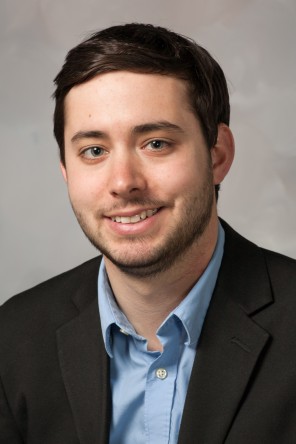
Brian M. Rosenthal has been an investigative reporter on the Metro desk of The New York Times since May 2017.
He covered state government for The Houston Chronicle between 2014 and 2016 and for The Seattle Times between 2011 and 2013.
While in Houston, he was on the team that was a finalist for the Pulitzer Prize in Public Service for a series that exposed that Texas was systematically denying special education services to tens of thousands of children with disabilities. While in Seattle, he was part of a reporting team that won the Pulitzer Prize in Breaking News for coverage of a mudslide that killed 43 people. He also has won a George A. Polk Award and the Selden Ring Award for Investigative Reporting.
He has served since 2019 as an elected member of the board of Investigative Reporters and Editors, the largest network of investigative journalists in the world.
Mr. Rosenthal grew up in Indiana and graduated from Northwestern University.