The Wall Street Journal, by Peggy Noonan
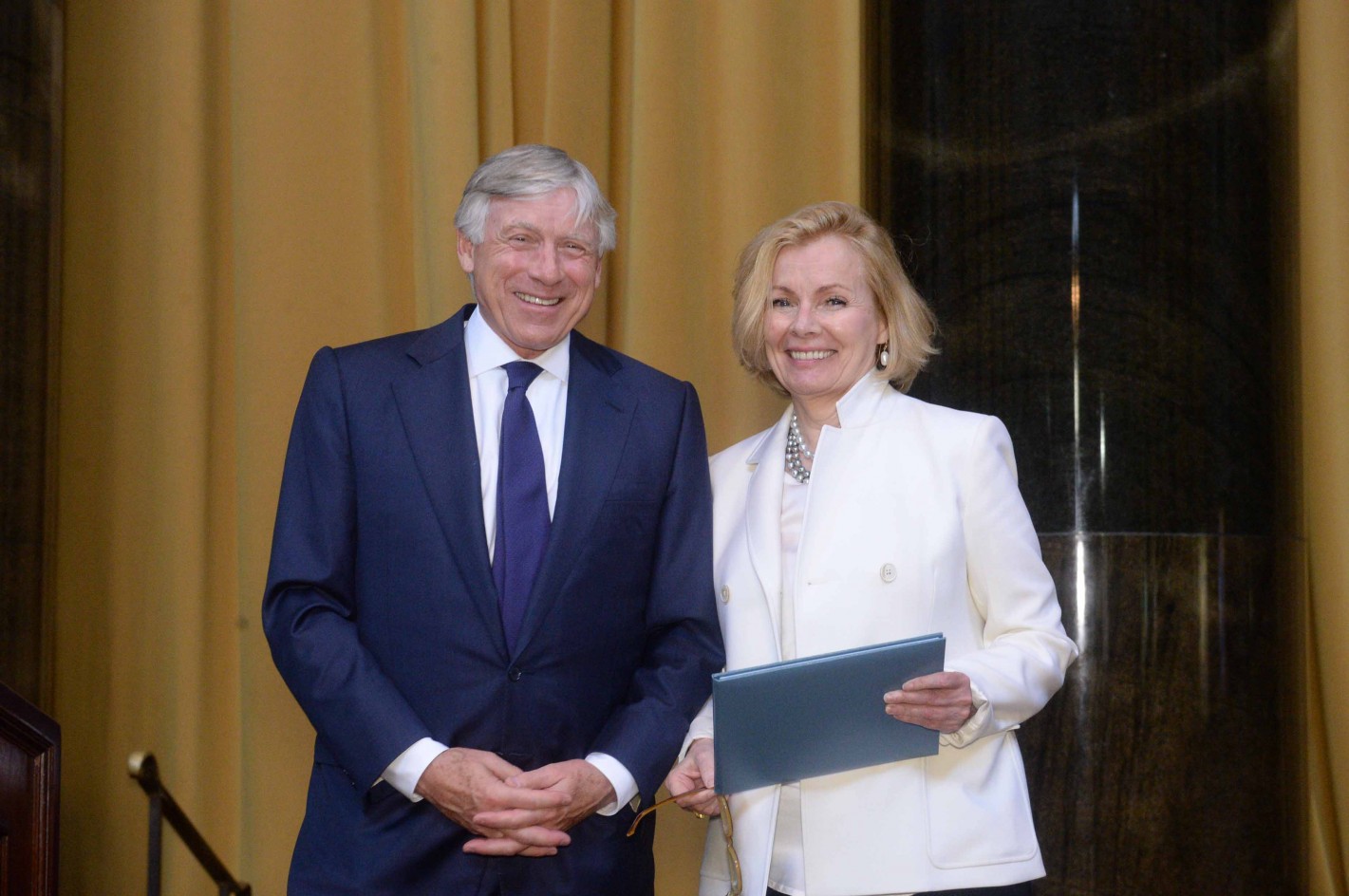
Peggy Noonan of The Wall Street Journal accepts the 2017 Pulitzer Prize for Commentary from Columbia University President Lee C. Bollinger.
Winning Work
By Peggy Noonan
We’re in a funny moment. Those who do politics for a living, some of them quite brilliant, are struggling to comprehend the central fact of the Republican primary race, while regular people have already absorbed what has happened and is happening. Journalists and politicos have been sharing schemes for how Marco parlays a victory out of winning nowhere, or Ted roars back, or Kasich has to finish second in Ohio. But in my experienceany nonpolitical person on the street, when asked who will win, not only knows but gets a look as if you’re teasing him. Trump, they say.
I had such a conversation again Tuesday with a friend who repairs shoes in a shop on Lexington Avenue. Jimmy asked me, conversationally, what was going to happen. I deflected and asked who he thinks is going to win. “Troomp!” He’s a very nice man, an elderly, old-school Italian-American, but I saw impatience flick across his face: Aren’t you supposed to know these things?
In America now only normal people are capable of seeing the obvious.
But actually that’s been true for a while, and is how we got in the position we’re in.
Last October I wrote of the five stages of Trump, based on the Kubler-Ross stages of grief: denial, anger, bargaining, depression and acceptance. Most of the professionals I know are stuck somewhere between four and five.
But I keep thinking of how Donald Trump got to be the very likely Republican nominee. There are many answers and reasons, but my thoughts keep revolving around the idea of protection. It is a theme that has been something of a preoccupation in this space over the years, but I think I am seeing it now grow into an overall political dynamic throughout the West.
There are the protected and the unprotected. The protected make public policy. The unprotected live in it. The unprotected are starting to push back, powerfully.
The protected are the accomplished, the secure, the successful—those who have power or access to it. They are protected from much of the roughness of the world. More to the point, they are protected from the world they have created. Again, they make public policy and have for some time.
I want to call them the elite to load the rhetorical dice, but let’s stick with the protected.
They are figures in government, politics and media. They live in nice neighborhoods, safe ones. Their families function, their kids go to good schools, they’ve got some money. All of these things tend to isolate them, or provide buffers. Some of them—in Washington it is important officials in the executive branch or on the Hill; in Brussels, significant figures in the European Union—literally have their own security details.
Because they are protected they feel they can do pretty much anything, impose any reality. They’re insulated from many of the effects of their own decisions.
One issue obviously roiling the U.S. and Western Europe is immigration. It is the issue of the moment, a real and concrete one but also a symbolic one: It stands for all the distance between governments and their citizens.
It is of course the issue that made Donald Trump.
Britain will probably leave the European Union over it. In truth immigration is one front in that battle, but it is the most salient because of the European refugee crisis and the failure of the protected class to address it realistically and in a way that offers safety to the unprotected.
If you are an unprotected American—one with limited resources and negligible access to power—you have absorbed some lessons from the past 20 years’ experience of illegal immigration. You know the Democrats won’t protect you and the Republicans won’t help you. Both parties refused to control the border. The Republicans were afraid of being called illiberal, racist, of losing a demographic for a generation. The Democrats wanted to keep the issue alive to use it as a wedge against the Republicans and to establish themselves as owners of the Hispanic vote.
Many Americans suffered from illegal immigration—its impact on labor markets, financial costs, crime, the sense that the rule of law was collapsing. But the protected did fine—more workers at lower wages. No effect of illegal immigration was likely to hurt them personally.
It was good for the protected. But the unprotected watched and saw. They realized the protected were not looking out for them, and they inferred that they were not looking out for the country, either.
The unprotected came to think they owed the establishment— another word for the protected—nothing, no particular loyalty, no old allegiance.
Mr. Trump came from that.
Similarly in Europe, citizens on the ground in member nations came to see the EU apparatus as a racket—an elite that operated in splendid isolation, looking after its own while looking down on the people.
In Germany the incident that tipped public opinion against Chancellor Angela Merkel’s liberal refugee policy happened on New Year’s Eve in the public square of Cologne. Packs of men said to be recent migrants groped and molested groups of young women. It was called a clash of cultures, and it was that, but it was also wholly predictable if any policy maker had cared to think about it. And it was not the protected who were the victims—not a daughter of EU officials or members of the Bundestag. It was middle- and working-class girls—the unprotected, who didn’t even immediately protest what had happened to them. They must have understood that in the general scheme of things they’re nobodies.
What marks this political moment, in Europe and the U.S., is the rise of the unprotected. It is the rise of people who don’t have all that much against those who’ve been given many blessings and seem to believe they have them not because they’re fortunate but because they’re better.
You see the dynamic in many spheres. In Hollywood, as we still call it, where they make our rough culture, they are careful to protect their own children from its ill effects. In places with failing schools, they choose not to help them through the school liberation movement—charter schools, choice, etc.—because they fear to go up against the most reactionary professional group in America, the teachers unions. They let the public schools flounder. But their children go to the best private schools.
This is a terrible feature of our age—that we are governed by protected people who don’t seem to care that much about their unprotected fellow citizens.
And a country really can’t continue this way.
In wise governments the top is attentive to the realities of the lives of normal people, and careful about their anxieties. That’s more or less how America used to be. There didn’t seem to be so much distance between the top and the bottom.
Now it seems the attitude of the top half is: You’re on your own. Get with the program, little racist.
Social philosophers are always saying the underclass must re-moralize. Maybe it is the overclass that must re-moralize.
I don’t know if the protected see how serious this moment is, or their role in it.
By Peggy Noonan
I’m interested in where we are. I think we are seeing a great political party shatter before our eyes. I’m not sure I see a way around or through. I said so on TV the other night and got a lot of responses on social media. They said: Good. They said, “They are corrupt,” and “I am through.” Good riddance to bad rubbish. Next.
I am not experiencing it that way. For me the Republican Party was always the vehicle of a philosophy, conservative political thought—no more, no less. I have the past 10 years been its critic on wars and immigration, on the establishment’s self-seeking and failures of imagination. And yet at the prospect of the party’s shattering I feel somewhat shattered too. So many lives, so much effort went into its making. “I am more faithful than I intended to be.”
I knew Tuesday night I was witnessing something grave, something bigger than 1976, that traumatic year when a Republican insurgent almost toppled the incumbent Republican president. Bigger too than 1964, when Goldwater conservatism swept the primaries and convention and lost the country. What is happening now is bigger and less remediable in part because the battles in the past were over conservatism, an actual political philosophy
And I find myself receiving with some anger, even though I understand, those—especially on the top of the party—who are so blithely declaring the end of things. Do they understand what they’re ending? Did they ever? It started in 1860. Its first great figure was a man called Lincoln. We’ll start a new party and call it Fred, they tweet. We’ll be the party in exile. Implicitly: And I and my friends will run it. Like little boys knocking over building blocks. And they say Donald Trump is careless.
But we are witnessing history. Something important is ending. It is hard to believe what replaces it will be better.
No one knows where this goes. The top of the party and the bottom have split. They disagree on the essentials.
Donald Trump won big Tuesday night, carrying seven states. As others have noted, if it were someone else he’d be called unassailable, the victor—“time to get in line.”
If trends continue—and political trends tend to—Mr. Trump will win or come very close to winning by the convention in July. If party forces succeed in finagling him out of the nomination his supporters will bolt, which will break the party. And it’s hard to see what kind of special sauce, what enduring loyalty would make them come back in the future.
If, on the other hand, Mr. Trump is given the crown in Cleveland, party political figures, operatives, loyalists, journalists and intellectuals, not to mention sophisticated suburbanites and, God knows, donors will themselves bolt. That is a smaller but not insignificant group. And again it’s hard to imagine the special sauce—the shared interests, the basic worldview—that would allow them to reconcile with Trump supporters down the road.
It’s no longer clear what shared principles endure. Everything got stretched to the breaking point the past 15 years.
Party leaders and thinkers should take note: It’s easier for a base to hire or develop a flashy new establishment than it is for an establishment to find itself a new base.
Even if the party stays together with a Trump win, what will it be? It will have been reconstituted. Yes, it will be a formal and proactive foe of illegal immigration, and it will rethink its approach to entitlements, but it will also be other things. What? We are in uncharted territory. But the point is fissures and tensions simmering and growing for 15 years burst through, erupted.
The establishment was slow to see what was happening, slow to see Mr. Trump coming, in full denial as he continued to win. Their denial is self-indicting. They couldn’t see his appeal because they had no idea how their own people were experiencing America. I have been thinking a lot about establishments and elites. A central purpose of both, a prime responsibility, is to understand those who are not establishment and elite and look out for them, take care of them. Not in a government-from-onhigh way, not with an air of noblesse oblige, but in a way that is respectfully attentive to the facts of their lives. You have a responsibility when you lead not to offend needlessly, not to impose realities you yourself can buy your way out of. You don’t privately make fun of people as knuckle-draggers, victims of teachers-union educations, low-information voters.
We had a low-information elite.
This column has been pretty devoted the past nine months to everything that gave rise to this moment, to Mr. Trump. His supporters disrespect the system—fair enough, it’s earned disrespect. They see Washington dysfunction and want to break through it—fair enough. In a world of thugs, they say, he will be our thug. Politics is a freak show? He’s our freak. They know they’re lowering standards by giving the top political job in America to a man who never held office. But they feel Washington lowered all standards first. They hate political correctness— there is no one in the country the past quarter-century who has not been embarrassed or humiliated for using the wrong word or concept or having the wrong thought—and see his rudeness as proof he hates PC too.
“He can think outside the box.” Can he ever.
He is a one-man wrecking crew of all political comportment, and a carrier of that virus. Yet his appeal is not only his outrageousness.
He is a divider of the Republican Party and yet an enlarger of the tent. His candidacy is contributing to record turnouts in primary after primary, and surely bringing in Democrats and independents. But it should concern his supporters that his brain appears to be a grab bag of impulses, and although he has many views and opinions he doesn’t seem to know anything about public policy or the way the White House or the government actually works.
He is unpredictable, which his supporters see as an advantage. But in a harrowing, hair-trigger world it matters that the leaders of other nations be able to calculate with some reasonable certainty what another leader would do under a given set of circumstances.
“He goes with his gut.” Yes. But George W. Bush was a gut player too, and it wasn’t pretty when his gut began to fail.
The GOP elite is about to spend a lot of money and hire a lot of talent, quickly, to try to kill Trump off the next two weeks. There will be speeches, ads—an onslaught. It will no doubt do Mr. Trump some damage, but not much.
It will prove to Trump supporters that what they think is true—their guy is the only one who will stand up to the establishment, so naturally the establishment is trying to kill him.
And Trump supporters don’t seem to have that many illusions about various aspects of his essential character. One of them told me he’s “a junkyard dog.”
They think his character is equal to the moment.
By Peggy Noonan
Have you had your 2016 Moment? I think you probably have, or will.
The Moment is that sliver of time in which you fully realize something epochal is happening in politics, that there has never been a presidential year like 2016, and suddenly you are aware of it in a new, true and personal way. It tends to involve a poignant sense of dislocation, a knowledge that our politics have changed and won’t be going back.
We’ve had a lot to absorb—the breaking of a party, the rise of an outlandish outsider; a lurch to the left in the other party, the popular rise of a socialist. Alongside that, the enduring power of a candidate even her most ardent supporters accept as corrupt. Add the lowering of standards, the feeling of no options, the coarsening, and all the new estrangements.
The Moment is when it got to you, or when it fully came through.
My friend Lloyd, a Manhattan lawyer and GOP campaign veteran, had two Moments. The first came when he took his 12-year-old on a father-son trip to New Hampshire to see the primary. They saw Ted Cruz speak at a restaurant, and Bernie Sanders in a boisterous rally. “It was great and wonderful,” Lloyd said.
Then it happened. “The Monday night before the voting we were at a Donald Trump rally. A woman in the audience screamed out the P-word to refer to a rival candidate. Trump repeated it from the podium, and my kid heard it and looked at me.” Lloyd was mortified. Welcome to the splendor of democracy, son. “I thought, ‘So we have come to this.’”
It didn’t end there. Lloyd’s second Moment came a month later, the morning after the raucous GOP debate that featured references to hand size. Lloyd was in the car with his son, listening to the original Broadway cast recording of “Hamilton.” “I blurted out, ‘How exactly has America managed to travel from that to this?’” American history is fiercely imperfect and made by humans. “Yet in the rearview mirror it appears ennobling and grand. And now it feels jagged, and the fabric is worn.”
A friend I’ll call Bill, a political veteran from the 1980s and ‘90s, also had his Moment with his child, a 14-year-old daughter who is a budding history buff. He had never taken her to the Reagan Library, so last month they went. As she stood watching a video of Reagan speaking, he thought of Reagan and FDR, of JFK and Martin Luther King. His daughter, he realized, would probably never see political leaders of such stature and grace, though she deserved to. Her first, indelible political memories were of lower, grubbier folk. “Leaders with Reaganesque potential no longer go into politics—and why would they, with all the posturing and plasticity that it requires?”
He added: “I felt a wave of sadness.”
Another political veteran, my friend John, also had his Moment during the New Hampshire primary. Out door-knocking for Jeb Bush, “I was struck as I walked along a neighborhood using the app that described the voters in each house. So many multigenerational families of odd collections of ages in houses with missing roof shingles or shutters askew or paint peeling. Cars needing repair.”
What was the story inside those houses? Unemployment, he thought, elder care, divorce, custody battles. “It was easy to see a collective loss of hope in a once-thriving town.” He sensed “years of neglect and sadness. Something is brewing.”
My Moment came a month ago. I’d recently told a friend my emotions felt too close to the surface—for months history had been going through me and I felt like a vibrating fork. I had not been laughing at the splintering of a great political party but mourning it. Something of me had gone into it. Party elites seemed to have no idea why it was shattering, which meant they wouldn’t be able to repair it, whatever happens with Mr. Trump.
I was offended that those curiously quick to write essays about who broke the party were usually those who’d backed the policies that broke it. Lately conservative thinkers and journalists had taken to making clear their disdain for the white working class. I had actually not known they looked down on them. I deeply resented it and it pained me. If you’re a writer lucky enough to have thoughts and be paid to express them and there are Americans on the ground struggling, suffering—some of them making mistakes, some unlucky—you don’t owe them your airy, well-put contempt, you owe them your loyalty. They too have given a portion of their love to this great project, and they are in trouble.
A few nights earlier, I’d moderated a panel in New York, on, yes, the ironic soundtrack of election year 2016, “Hamilton.” At one point I quoted a line. It is when Eliza sings, just as war has come and things are bleak: “How lucky we are to be alive right now.” As I quoted it my voice caught. I asked a friend later if he’d noticed. Yes, he said, quizzically, comfortingly, we did.
The following day I spoke at a school in Florida, awoke the next morning spent, got coffee, fired up the iPad, put on cable news. I read an email thread from a group of conservative women—very bright, all ages, all decorous and dignified. But tempers were high, and they were courteously tearing each other apart over Mr. Trump and the GOP.
Then to my own email, full of notes from people pro- and anti-Trump, but all seemed marked by some kind of grieving. I looked up and saw Hillary Clinton yelling on TV and switched channels. Breaking news, said the crawl. A caravan of Trump supporters driving to an outdoor rally in Fountain Hills, Ariz., had been blocked by demonstrators. The helicopter shot showed a highway backed up for miles. No one seemed to be in charge, as is often the case in America. It was like an unmovable force against an unmovable object.
I watched dumbly, tiredly. Then for no reason—this is true, it just doesn’t sound it—I thought of an old Paul Simon song that had been crossing my mind, “The Boy in the Bubble.” I muted the TV, found the song on YouTube, and listened as I stared at the soundless mile of cars and the soundless demonstrators. As the lyrics came—“The way we look to a distant constellation/ That’s dying in a corner of the sky/ ... Don’t cry baby / Don’t cry”—my eyes filled with tears. And a sob welled up and I literally put my hands to my face and sobbed, silently, for I suppose a minute.
Because my country is in trouble.
Because I felt anguish at all the estrangements.
Because some things that shouldn’t have changed have changed.
Because too much is being lost. Because the great choice in a nation of 320 million may come down to Crazy Man versus Criminal.
And yes, I know this is all personal, and not column-ish.
But that was my Moment.
You’ll feel better the next day, I promise, but you won’t be able to tell yourself that this is history as usual anymore. This is big, what we’re living through.
By Peggy Noonan
God bless our beloved country as it again undergoes one of its quiet upheavals.
Donald Trump will receive the Republican nomination for the presidency and nothing will be the same. How we do politics in America is changed and will not be going back. The usual standards and expectations have been turned on their head, and more than one establishment has been routed.
A decent interval should be set aside for sheer astonishment.
We face six months of what will be a historically hellacious campaign. Yes, we picked the wrong time to stop taking opioids.
Before I go to larger issues I mention how everyone, especially the media, is blaming the media for Donald Trump’s rise. I hate to get in the way of their self-flagellation but that’s not how I see it. From the time he announced, they gave Mr. Trump unprecedented free media in long, live interviews, many by phone, some possibly from his bathtub. We’ll never know. It was a great boon to him and amounted, by one estimate, to nearly $2 billion worth of airtime.
But the media did not make Donald Trump’s allure, his allure made for big ratings. Mr. Trump was a draw from the beginning. If anyone had wanted to listen to Jeb Bush, cable networks would have been happy to show his rallies, too.
When Mr. Trump was on, ratings jumped, but it wasn’t only ratings, it was something else. It was the freak show at its zenith, it was great TV -- you didn’t know what he was going to say next! He didn’t know! It was better than everyone else’s boring, prefabricated, airless, weightless, relentless word-saying -- better than Ted Cruz, who seemed like someone who practiced sincere hand gestures in the mirror at night, better than Marco the moist robot, better than Hillary’s grim and horrifying attempts to chuckle like a person who chuckles.
And it was something else. TV producers were all sure he’d die on their show. They weren’t for Mr. Trump. By showing him they were revealing him: Look at this fatuous dope, see through him! They knew he’d quickly enough say something unforgivable, and if he said it on their air he died on their show! They took him down with the question! It was only after a solid six months of his not dying that they came to have qualms. They now understood they were helping him. Nothing he says is unforgivable to his supporters! Or, another way to put it, his fans would forgive anything so long as he promised to be what they want him to be, a human bomb that will explode by timer under a bench in Lafayette Park and take out all the people but leave the monuments standing.
In this regard today’s television producers remind me of the producers of 1969 who heard one day that Spiro Agnew, the idiotic new Republican vice president, was going to make a big speech lambasting the media for its liberal bias. They knew Agnew was about to make a fool of himself. Who would believe him? So they covered that speech all over the place, hyped it like you wouldn’t believe -- no one in America didn’t hear about it. It made Agnew a sensation. The American people -- “the silent majority” -- saw it as Agnew did. “Nattering nabobs of negativism,” from the witty, alliterative pen of William Safire, entered the language.
The producers had projected their own loathing. They found out they and America loathed different things.
That’s a little like what happened this year with TV and Mr. Trump.
My, that wasn’t much of a defense, was it?
The Trump phenomenon itself would normally be big enough for any political cycle, but another story of equal size isn’t being sufficiently noticed and deserves mention. The Democratic base has become more liberal -- we all know this part -- but in a way the Republican base has, too. Or rather it is certainly busy updating what conservative means. The past few months, in state after state, one thing kept jumping out at me in primary exit polls. Democrats consistently characterize themselves as more liberal than in 2008, a big liberal year. This week in Indiana, 68% of Democratic voters called themselves liberal or very liberal. In 2008 that number was 39%. That’s a huge increase.
In South Carolina this year, 53% of Democrats called themselves very or somewhat liberal. Eight years ago that number was 44% -- again, a significant jump. In Pennsylvania, 66% of respondents called themselves very or somewhat liberal. That number eight years ago was 50%.
The dynamic is repeated in other states. The Democratic Party is going left.
But look at the Republican side. However they characterize themselves, a majority of GOP voters now are supporting the candidate who has been to the left of the party’s established thinking on a host of issues -- entitlement spending, trade, foreign policy. Mr. Trump’s colorfully emphatic stands on immigration have been portrayed as so wackily rightist that the nonrightist nature of his other, equally consequential positions has been obscured.
In my observation it is a mistake to think Mr. Trump’s supporters are so thick they don’t know his stands. They do.
It does not show an understanding of the moment to say Donald Trump by himself has changed the Republican Party. It is closer to the mark to say the base of the party is changing and Mr. Trump’s electric arrival on the scene made obvious what was already happening.
For this reason among others, I do not understand the impulse of the NeverTrump people to anathematize and shun those Republicans who will not vow to oppose Mr. Trump and commit to defeating him. They have been warned that if they don’t do these things they will not be allowed to help rebuild the party after Mr. Trump destroys it. Conservatives love to throw conservatives out of conservatism; it’s like an ancestral tic. But great political movements should not be run like private clubs. And have the anathematizers noticed they aren’t in charge anymore? That in the great antiestablishment disruption of 2016 they have been upended, too?
We don’t know what’s coming in 2016, or what happens to the GOP if Mr. Trump wins or loses. If there is a rebuilding of the party, as opposed to an ongoing reinvention, we don’t know when that will commence. If it is a rebuilding, on what grounds do the NeverTrump forces think it will be rebuilt? As a neoconservative, functionally open-borders, slash-the-entitlements party?
I am not sure, whatever happens in 2016, that there will ever again be a market for that product. All this cycle I’ve been thinking of what Lee Atwater said when he wanted to communicate to a politician that a policy was not popular: “The dawgs don’t like the dawg food.”
Centers of gravity are shifting. The new Republican Party will not be rebuilt and re-formed in McLean, it will be rebuilt or re-formed in Massapequa.
Finally, can Mr. Trump win? Of course. Uphill but possible. If this year has taught us anything it is what Harrison Salisbury said he’d learned from a lifetime in journalism: “Expect the unexpected.”
By Peggy Noonan
With the campaign proper about to begin, on Labor Day, a last August thought, a very simple one: War is terrible. It is my impression our candidates for president don’t really know this. They never say it, not in formal speeches or in thinking aloud, in reveries in friendly interviews. I would say of most of America’s political class that they have their heads all screwed up about war, that they approach the subject coolly, as a political and geopolitical matter, and that they see it through prisms of personal political need and ideological gain. They are missing the central fact of it—that it is terrible. Before the election is over it would be good if someone said it.
The thought arises most recently from the harrowing photo and videotape of the 5-year-old boy in Aleppo, Syria. You have seen one or both. His name is Omran Daqneesh and he lived with his parents and three siblings in the rebel-held Qaterji neighborhood, which late Wednesday night last week either Russian or Syrian forces targeted in a brutal airstrike. Omran was pulled from the rubble. He was placed on a seat in the back of an ambulance.
The left side of his head was covered in blood. His thick dark hair was stiff from smoke and dust. His legs were marked by soot and what looked like bruises. One report said he’d been in the rubble an hour before they dug him out.
They wouldn’t let the ambulance go until it was full. There was room for more children, and they came. But Omran is the one you can’t stop watching. He stares mutely, like a shocked old man. Photojournalists make flashes of light as they take his picture. No one has—or takes—a moment to call any comfort to him, to the 5-year-old boy as he stares ahead.
He can’t fully see out of his left eye, which seems damaged. Tentatively, calling no attention to himself, he brings his left hand up to his head and touches around for the wound. He seems to find it, then puts his hand down on his legs, as if not to call attention to his wounds.
Watching the videotape, posted on YouTube by an anti-Assad group, you see what is most harrowing. It isn’t only his youth, his aloneness, the blood—it’s that he isn’t crying.
Children, by nature and instinct, cry when they are infants. But as they grow older, 3 and 4 and 5, crying is sometimes more of a decision. Children who know they’re cared for cry in the expectation that someone will comfort them. If by 3 or 4 you haven’t had that, or haven’t had that enough—if circumstances were harsh enough that you couldn’t rely on help or comfort—then you might not cry. Because it won’t bring the help you need, or may in fact bring negative responses.
For all 5 years of his life, Omran Daqneesh lived in a country wracked by civil war, surrounded by the tension, fear and hardship war brings.
Anyway, he didn’t cry. He was taken to a local underground hospital called M10, treated for head wounds and released. There are reports his older brother has since died.
War is terrible. It abuses the innocent and takes their lives, it wastes all kinds of treasure, it kills generations and whole cultures. It strikes me as rather mad that our candidates for commander in chief of the most powerful armed forces in the world don’t ever simply think aloud about this.
About 18 months ago I asked a potential Republican presidential candidate, in conversation, if he hated war. He got the darteyed look politicians get when they sense a trick question. This startled me. How do you not know the answer? After a few seconds I said, “This is not a trick question.” I explained I was thinking of Franklin D. Roosevelt, who said, “I hate war,” roughly five years before prosecuting one with unambivalent vigor.
The potential candidate then stuttered that of course he doesn’t like war, but sometimes it’s necessary. Well, yes, sometimes it is. But why would you fear stating that war is hell, and hell ain’t where we want to be?
Afterward, and again this week, I went back to FDR’s famous speech, delivered at Chautauqua, N.Y., Aug. 14, 1936—80 years ago this month. He was “less cheerful,” he admitted, about world events than domestic ones—this at the depth of the depression. What happens in the world may have an impact on the United States, but we can serve the cause of peace by “setting an example” and following the policy of the good neighbor—“the neighbor who resolutely respects himself and, because he does so, respects the rights of others.” Because of this practice “the whole world now knows that the United States cherishes no predatory ambitions. We are strong; but less powerful nations know that they need not fear our strength.”
He observed that “the noblest monument to peace ... in all the world is not a monument ... but the boundary which unites the United States and Canada—3,000 miles of friendship.” Still, so long as war exists there is danger of being “drawn into” one. That grieves him, he said, because “I have seen war. I have seen war on land and sea. ... I have seen cities destroyed. ... I hate war.”
It’s quite a speech, a deep and persuasive exposing of thoughts on the most essential of human and governmental subjects. But what really surprised me on rereading it was that I don’t think a Republican or Democratic candidate would feel free to speak like that anymore. They’d fear being called soft. That isn’t good, or even practical. FDR after all was pretty good at waging war. It only made him more powerful, made his decisions more convincing, that he’d laid down the predicate that he’d never wanted it and in fact hated it.
Unless I’m missing something neither candidate for president appears to have an informed or deeply felt sense of the tragedy of war. Hillary Clinton was subjected, in the primaries, to sharp criticism from the left that she was too bellicose, was wrong to go all in on Iraq, wrong to support regime change in Libya, wrong to be so temperamentally activist in this area. When Moammar Gadhafi was killed in the field after the fall of his government she laughed with a reporter: “We came, we saw, he died.”
As for Donald Trump, he is usually equally aggressive in speaking of potential U.S. military actions, though it’s clear he hates war at least for himself. He did not serve and famously told Howard Stern that dodging incoming STDs was his personal Vietnam. Our leaders are shallow on the subject of war. No, worse than shallow—they’re silent. Which is one reason they will likely not be fully trusted should they make rough decisions down the road on Syria, or Iran, or elsewhere.
War is terrible. That should be said over and over, not because it’s a box you ought to check on the way to the presidency but because you’re human and have a brain.
You should hate war. A 5-year-old knows that.
By Peggy Noonan
What do I think about when I think about that day? The firemen who climbed “the stairway to Heaven” with 50, 60 pounds of gear. The people who called from Windows on the World and said: “I just want you to know I love you.” The men on the plane who tried to take the cockpit of Flight 93 before it went down in a Pennsylvania field: “Let’s roll.”
And I think about Welles Crowther, the man in the red bandanna.
He was 24, from Nyack, N.Y. He played lacrosse at Boston College, graduated and got an internship at Sandler O’Neill, the investment bank. In two years he was a junior associate on the trading desk. He worked in the south tower of the World Trade Center, on the 104th floor.
When United Flight 175 hit that tower at 9:03 a.m., it came in at a tilt, ripping through floors 78 through 84. Many of those who never got out were on those floors, or the ones above. Welles Crowther had already called his mother, Alison, and left a voicemail: “I want you to know that I’m OK.” Only one stairwell was clear. He found it. Most people would have run for their lives, but he started running for everyone else’s.
Welles was beloved -- bright, joyous, grounded. Family was everything to him. He idolized his father, Jefferson, a banker and volunteer fireman. They went to the firehouse together when Welles was a child. Welles would clean the trucks, getting in close where no one else could fit. One Sunday when Welles was 7 or 8 his mother dressed him for church in his first suit. His father had a white handkerchief in his breast pocket. Could he have one? Jefferson put one in Welles’s front pocket and then took a colored one and put it in Welles’s back pocket. One’s for show, he said, the other’s for blow.
“Welles kept it with him, a connection to his father,” said Alison Crowther this week by phone. “He carried a red bandanna all his life.” It was a talisman but practical, too. It could clean up a mess. When he’d take it from his pocket at Sandler O’Neill they’d tease him. What are you, a farmer? That is from Tom Rinaldi’s lovely book “The Red Bandanna,” which came out this week. He’d tease back: “With this bandanna I’m gonna change the world.”
As Welles went down the stairwell he saw what happened on the 78th floor sky lobby. People trying to escape had been waiting for elevators when the plane hit. It was carnage -- fire, smoke, bodies everywhere. A woman named Ling Young, a worker for the state tax department, sat on the floor, badly burned and in shock. From out of the murk she heard a man’s voice: “I found the stairs. Follow me.”
“There was something she heard in the voice, an authority, compelling her to follow,” Mr. Rinaldi writes. Ms. Young stood, and followed. She saw that the man was carrying a woman. Eighteen floors down the air began to clear. He gently placed the woman down and told them both to continue walking down. Then he turned and went back upstairs to help others.
Judy Wein of Aon Corporation had also been in the 78th floor. She too was badly injured and she too heard the voice: “Everyone who can stand now, stand now. If you can help others, do so.” He guided her and others to the stairwell.
Apparently Welles kept leading people down from the top floors to the lower ones, where they could make their way out. Then he’d go up to find more. No one knows how many. The fire department credits him with five saved lives.
He never made it home. His family hoped, grieved, filled out forms. On the Friday after 9/11 Alison stood up from her desk and suddenly she knew Welles was there, right behind her. She could feel his energy, his force; it was him. She didn’t turn. She just said: Thank you. She knew he was saying he was OK. After that she didn’t dare hope he’d be found alive because she knew he wouldn’t.
They found him six months later, in the lobby of the south tower. He’d made it all the way down. He was found in an area with many firefighters’ remains. It had been the FDNY command post. It was where assistant fire chief Donald Burns was found. He and his men had probably helped evacuate thousands. Welles could have left and saved his own life -- they all could have. But they’d all stayed. “He was helping,” said Alison.
The Crowthers never knew what he’d done until Memorial Day weekend 2002. The New York Times carried a minute-by-minute report of what happened in the towers after the planes hit. Near the end it said: “A mysterious man appeared at one point, his mouth and nose covered with a red handkerchief.” It mentioned Ms. Young and Ms. Wein. The Crowthers sent them pictures of Welles.
That was him, they said. Ms. Wein had seen his face when he took the bandanna from his face as the air cleared on the lower floors. Ms. Young said: “He saved my life.” As a child, Welles Crowther had wanted to be a fireman. Few knew he’d decided to apply for the FDNY while he was still at Sandler. After his father found his application the department did something it had done only once in the 141 years since its founding. It made Welles an honorary member.
His father sometimes felt guilt -- maybe taking him to the fire department so much when he was a kid was why Welles died. Alison said no: “That gave him the tools to be the fullest person he was that day.”
She thinks now of something else. The family spent the Labor Day before 9/11 together, at the house in Nyack. All weekend, said Alison, Welles was subdued -- “quiet, introspective.” Normally he’d be charging around, playing basketball. At one point he sat with his mother in the living room. “He said, ‘You know, Mom, I don’t know what it is but I know I’m meant to be part of something really big.’ I didn’t get it. Who would get it? But he definitely sensed something was coming.”
I asked Alison Crowther a hard question, embarrassing for a parent to answer: How do you make a hero? She paused. “We tried to instill honesty,” she said. “The fearlessness he came with -- my husband said he came with that hardware installed. He was this good-hearted little guy, very protective from an early age. Honesty was a big thing with us, and taking responsibility.”
It wasn’t us, she was saying, it was him. It was Welles.
The way I see it, courage comes from love. There’s a big unseen current of love that hums through the world, and some plug into it more than others, more deeply and surely, and they get more power from it. And it fills them with courage. It makes everything possible.
People see the fallen, beat-up world around them and ask: What can I do? Maybe: Be like Welles Crowther. Take your bandanna, change the world.
By Peggy Noonan
The signature sentence of this election begins with the words “In a country of 320 million...” I hear it everywhere. It ends with “how’d it come down to these two?” or “why’d we get them?”
Another sentence is a now a common greeting among Republicans who haven’t seen each other in a while: “What are we gonna do?”
The most arresting sentence of the week came from a sophisticated Manhattan man friendly with all sides. I asked if he knows what he’ll do in November. “I know exactly,” he said with some spirit. “I will be one of the 40 million who will deny, the day after the election, that they voted for him. But I will.”
A high elected official, a Republican, got a faraway look when I asked what he thought was going to happen. “This is the unpollable election,” he said. People don’t want to tell you who they’re for. A lot aren’t sure. A lot don’t want to be pressed.
That’s exactly what I’ve seen the past few weeks in North Carolina, New Jersey, Tennessee and Minnesota. Every four years I ask people if they’ll vote, and if they have a sense of how.
Every four years they tell me—assertively or shyly, confidently or tentatively. This year is different. I’ve never seen people so nervous to answer. It’s so unlike America, this reticence, even defensiveness. It’s as if there’s a feeling that to declare who you’re for is to invite others to inspect your soul.
“I feel like this is the most controversial election ever,” said a food-court worker at La Guardia Airport. She works a full shift, 4 a.m. to noon, five days a week, then goes full-time to a nearby college. We’d been chatting a while, and when I asked the question she told me, carefully, that she hasn’t decided how she’ll vote, and neither have her family members. I said a lot of people seem nervous to say. She said: “Especially Trump people. They’re afraid you’ll think they’re stupid.”
Which is how I knew she was going to vote for Donald Trump.
It’s true: Trump voters especially don’t want to be categorized, judged, thought stupid—racist, sexist, Islamophobic, you name it. When most of them know, actually, that they’re not.
Voters who talk about 2016 are very careful to damn both sides, air their disappointment, note that they’ve been following the election closely. They know each candidate’s history.
In Tennessee I asked a smart businessman who he’s for. He carefully and at length outlined his criticisms and concerns regarding both candidates. Then, as I started to leave, he threw in, from nowhere: “So I think Trump.”
When I talk to strangers—which I do a lot, and like it—I sometimes say dour, mordant things, to get them going by establishing that anything can be said. I say if Hillary Clinton is elected there will be at least one special prosecutor, maybe two, within 18 months, because her character will not be reborn on crossing the threshold of the White House; the well-worn grooves of her essential nature will kick in. If Mr. Trump is elected there will be a constitutional crisis within 18 months because he doesn’t really know what a president does, doesn’t respect traditional boundaries, doesn’t reflect on implications and effects. I always expect pushback. I am not getting it! I get nods, laughs and, in two recent cases, admissions that whoever wins they’d been wondering how soon impeachment proceedings would begin.
Oh, my pained and crazy country.
A final observation, underlying all. Under the smiles and beyond the reticence it is clear how seriously Americans are taking their decision, how gravely. As if it’s not Tweedledum and Tweedledee but an actual choice between two vastly different dramas, two different worlds of outcome and meaning. The cynic or the screwball? Shall we go to the bad place or the crazy place?
I returned knowing I was wrong about something. I thought everyone has been watching the election more than a year, everyone knows their opinion of Mrs. Clinton and Mr. Trump, this thing is pretty much settled. No, it’s fluid. This cake is not baked.
I talked to Peter D. Hart, the veteran Democratic pollster. Are things as much in play as I think? Yes and no, he said. People do have a firm opinion of the two candidates, the cliches are set: “Hillary competent and cold, Trump an incompetent loose cannon.” But “the part that is evolving is a sense of what we need to do and where we need to go.” Everyone wants change, but people are deciding, “constructive change or radical change?”
Pollster Glen Bolger of Public Opinion Strategies says nothing is settled. “Voters are angry at Clinton because she can’t tell the truth and they’re scared of Trump because they’re afraid he’s gonna start a war. There are times her un-truthiness outweighs their concern about him overreacting and starting a war. It goes back and forth.”
He disagrees with the “unpollable” premise: “It’s pollable. But if anyone says their results are cast in concrete, that’s a mistake. There’s a lot of fluidity.”
The veteran pollster Kellyanne Conway, now Trump campaign manager, says: “This thing is fluid in a way we don’t understand.” She is a close student of Barack Obama’s 2008 campaign in all its aspects. Like Mr. Obama, she says, Mr. Trump is “a candidate built for the 21st century. ... The most fundamental truth of politics is there’s no substitute for a great, magnetic, compelling candidate.”
She speaks of “undercover” Trump voters. “To call them hidden is a mistake. They’re undercover because they’ve gotten to the point they’re tired of arguing. ... Some have been voting Democratic all their life, they voted for Obama, they’re tired of defending and explaining themselves” to family and co-workers. “They don’t want to proselytize.”
Mr. Hart said the debates are unusually important this year. “Trump is the central character—it’s his last opportunity to get a fresh look from voters. A debate is an open window. Voters suspend opinions and look afresh. Attitudes toward Trump have not changed—temperament questions, can he do the job?” This is a chance for him to “establish credibility at this stage of the game.” By contrast, “Hillary’s problems are not professional but personal—can I like her, does she understand me. ... It’s an opportunity for her to get voters saying, ‘You know something, she’s not a bad egg.’”
Ms. Conway too says the debates are key. “People like a clash of the titans. They like a contest. These debates are the ultimate reality show—the stakes have never been higher.” After the Democratic convention the Clinton campaign, in a major miscalculation, “lowered the bar” for Trump, “calling him unfit, unpresidential.” That turned him into the underdog. “Americans love an underdog.”
Ms. Conway remembered what happened in 2008 when John McCain referred to his long experience. “Obama said if experience means you got us into this mess overseas and tanked the economy, maybe experience is overrated. We are turning this around on Clinton now.”
Mr. Trump’s advantage? “Americans love to say they think outside the box. Trump lives outside the box. Hillary is the box.”
By Peggy Noonan
Look, he’s a nut and you know he’s a nut. I go to battleground states and talk to anyone, everyone. They all know Donald Trump’s a nut. Some will vote for him anyway. Many are in madman-versus-criminal mode, living with (or making) their final decision. They got the blues. Everyone does. They’re worried about the whole edifice: If this is where we are, where are we going?
I get the Reagan fantasy—big guy with a nonstandard resume comes in from the outside, cleans out the stables, saves the day.
But it’s a fantasy and does not apply to this moment. I get the Jacksonian fantasy—crude, rude populist comes in from the hinterlands and upends a decadent establishment to the huzzahs of normal people with mud on their boots. But it’s a fantasy, and doesn’t apply.
Because he’s not a grizzled general who bears on his face the scars of a British sword, and not a shining citizen-patriot. He’s a screwball. Do you need examples? You do not, because you’re already thinking of them. For a year you’ve been observing the TV funhouse that is his brain. I offer an observation from Newt Gingrich, Trump friend and supporter, on David Drucker’s Washington Examiner podcast. Mr. Gingrich lauded Mr. Trump because he “thinks big” and is a transformational character. But he spoke too of Trump’s essential nature. The GOP nominee “reacts very intensely, almost uncontrollably” to “anything which attacks his own sense of integrity or his own sense of respectability.” “There’s ... a part of his personality that sometimes gets involved in petty things that make no sense.” He found it “frankly pathetic” that Mr. Trump got mad because Paul Ryan didn’t call to congratulate him after the second debate.
Mr. Gingrich said he hopes this will change. But people don’t change the fundamentals of their nature at age 70.
Mr. Trump’s great historical role was to reveal to the Republican Party what half of its own base really thinks about the big issues. The party’s leaders didn’t know! They were shocked, so much that they indulged in sheer denial and made believe it wasn’t happening.
The party’s leaders accept more or less open borders and like big trade deals. Half the base does not! It is longtime GOP doctrine to cut entitlement spending. Half the base doesn’t want to, not right now! Republican leaders have what might be called assertive foreign-policy impulses. When Mr. Trump insulted George W. Bush and nation-building and said he’d opposed the Iraq invasion, the crowds, taking him at his word, cheered. He was, as they say, declaring that he didn’t want to invade the world and invite the world. Not only did half the base cheer him, at least half the remaining half joined in when the primaries ended.
The Republican Party will now begin the long process of redefining itself or continue its long national collapse. This is an epochal event. It happened because Donald Trump intuited where things were and are going.
Since I am more in accord with Mr. Trump’s stands than not, I am particularly sorry that as an individual human being he’s a nut.
Which gives rise to a question, for me a poignant one.
What if there had been a Sane Donald Trump?
Oh my God, Sane Trump would have won in a landslide. Sane Donald Trump, just to start, would look normal and happy, not grim and glowering. He would be able to hear and act on good advice. He would explain his positions with clarity and depth, not with the impatient half-grasping of a notion that marks real Donald Trump’s public persona.
Sane Donald Trump would have looked at a dubious, anxious and therefore standoffish Republican establishment and not insulted them, diminished them, done tweetstorms against them. Instead he would have said, “Come into my tent. It’s a new one, I admit, but it’s yuge and has gold faucets and there’s a place just for you. What do you need? That I be less excitable and dramatic? Done. That I not act, toward women, like a pig? Done, and I accept your critique. That I explain the moral and practical underpinnings of my stand on refugees from terror nations? I’d be happy to. My well-hidden secret is that I love everyone and hear the common rhythm of their beating hearts.”
Sane Donald Trump would have given an anxious country more ease, not more anxiety. He would have demonstrated that he can govern himself. He would have suggested through his actions, while still being entertaining, funny and outsize, that yes, he understands the stakes and yes, since America is always claiming to be the leader of the world—We are No.1!—a certain attendant gravity is required of one who’d be its leader.
Sane Donald Trump would have explained his immigration proposals with a kind of loving logic—we must secure our borders for a host of serious reasons, and here they are. But we are grateful for our legal immigrants, and by the way, if you want to hear real love for America then go talk to them, for they experience more freshly than we what a wonderful place this is. In time, after we’ve fully secured our borders and the air of emergency is gone, we will turn to regularizing the situation of everyone here, because Americans are not only kindly, they’re practical, and want everyone paying taxes.
Sane Donald Trump would have spoken at great and compelling length of how the huge, complicated trade agreements created the past quarter-century can be improved upon with an eye to helping the American worker. Ideology, he might say, is the pleasant diversion of the unworried, but a nation that no longer knows how to make steel cannot be a great nation. And we are a great nation.
Sane Donald Trump would have argued that controlling entitlement spending is a necessary thing but not, in fact, this moment’s priority. People have been battered since the crash, in many ways, and nothing feels stable now. Beyond that no one right now trusts Washington to be fair and wise in these matters. Confidence-building measures are necessary. Let’s take on the smaller task of turning around Veterans Affairs and see if we can’t make that work.
Sane Donald Trump would have known of America’s hidden fractures, and would have insisted that a healthy moderate-populist movement cannot begin as or devolve into a nationalist, identity-politics movement. Those who look down on other groups, races or religions can start their own party. He, the famous brander, would even offer them a name: the Idiot Party.
Sane Donald Trump would not treat the political process of the world’s greatest democracy as if it were, as somebody said, the next-to-last episode of a reality-TV series. That’s the episode that leaves you wondering how the season will end—who will scream, who will leave the drunken party in a huff, who will accuse whom of being a whore. I guess that’s what “I’ll keep you in suspense” as to whether he’ll accept the election result was about. We’re being teed up. The explosive season finale is Nov.8. Maybe he’ll leave in a huff. Maybe he’ll call everyone whores.
Does he know he’s playing with fire? No. Because he’s a nut.
Sane Donald Trump for president. Too bad he doesn’t exist.
By Peggy Noonan
The other day I experienced a flash of alarm. There was a claim from an Argentine journalist that when the president of Argentina, Mauricio Macri, phoned Donald Trump to congratulate him on his election victory, the talk turned to permits for the building of a Trump skyscraper in Buenos Aires. Mr. Macri’s press officer quickly and sharply denied the report: “They didn’t talk about the tower at all. It’s absolutely untrue.” So did the Trump transition office. The journalist apparently offered no proof. The story more or less ended there.
But what alarmed me was this question: Does Donald Trump know he can’t ever have a conversation like this? Does he fully understand that a president can never use the office, its power and influence, for his own financial enrichment? That he can’t, however offhandedly, both do business and be president? That future and credible reports that he had engaged in such a conflict of interest would doom his presidency? And that solving the question of his businesses and their relation to his presidency is urgent?
This week, in an interview with the New York Times, Mr. Trump was not reassuring. When pressed on how, exactly, he means to distance himself from his business interests, he couldn’t stop himself from promoting a few of them: “We just opened a beautiful hotel on Pennsylvania Avenue,” he said. “The brand is certainly a hotter brand.”
“In theory, I can be president of the United States and run my business 100%,” he said, adding that he is “phasing that out now.” “In theory I don’t have to do anything. But I would like to do something. I would like to try and formalize something, because I don’t care about my business.”
He said, “I’ve greatly reduced meetings with contractors, meetings with different people.” Thank goodness for that. He’s the president-elect.
He noted that presidents are exempt from conflict-of-interest laws, but “I understand why the president can’t have a conflict of interest now because everything a president does in some ways is like a conflict of interest, but I have—I’ve built a very great company and it’s a big company and it’s all over the world. People are starting to see, when they look at all these different jobs, like in India and other things, No.1, a job like that builds great relationships with the people of India, so it’s all good.” Business partners come in, they want a picture, “I think it’s wonderful to take a picture.”
Might he sell his businesses? “That’s a very hard thing to do, you know what, because I have real estate.” Selling real estate isn’t like selling a stock. “I don’t care about my company. I mean, if a partner comes in from India or if a partner comes in from Canada, where we did a beautiful big building that just opened, and they want to take a picture and come into my office, and my kids come in and I originally made the deal with these people, I mean what am I going to say? ‘I’m not going to talk to you,’ ‘I’m not going to take pictures’?”
Yes, that’s exactly what you say! I’m not going to pose with you because I will soon be president of the United States and the prestige of that office precludes taking the picture you’ll soon use in your brochure.
In the interview Mr. Trump was not defensive—he was garrulous, forthcoming as to his thought processes, and yet he seemed curiously unaware as to the urgency of the subject.
If he is not aware it is crucial, the reason may come down to five words: the habits of a lifetime.
For half a century Donald Trump has devoted all his professional energies to money, profit, the deal. That is how he thinks: It’s his deepest neural pathway. He’s a free-market capitalist who started with a lot and turned it into more. He created jobs, employs many. Good! But that’s his mind: money, profit, the deal. He has brought up his children to enter his business. Whatever else they do, they have surely absorbed the family ethos.
And now, for the first time in his life, money, profit, the deal is not his job.
He will be president of the United States. He can’t help the family business as president. He can’t help his children make a living as president.
He has to be losing money as president and putting personal profit motives behind him. Which means putting the ways and habits of a lifetime behind him.
Because he’s entered something much bigger: the presidency. History. The welfare of the republic. That’s his job now, and it requires sacrifice.
I don’t know if there’s anyone around him who can convince him that the attitude with which he’s operated for 50 years must end, and something wholly new and different begin.
But whoever does must be aware of this:
The press, which wants to kill him, is going to zero in on his biggest weak spot: money, profit, the deal. Democrats too will watch like hawks. And this is understandable! Presidents shouldn’t ever give the impression things aren’t on the up and up. And Mr. Trump campaigned saying he’d dismantle the rigged system, drain the swamp, fight the racket.
The press does not believe, not for a second, and Democrats do not believe, not for a second, that Mr. Trump will be able to change the habits of a lifetime. They are relying on it.
Mr. Trump shocked them by winning. He should shock them now with rectitude.
Financial sophisticates know and explain how complicated all this is. Mr. Trump can’t establish a blind trust because blind trusts normally consist of stocks, bonds—liquid assets. Mr. Trump’s wealth is in famous entities, in his brand. He knows where his buildings are, his past and current deals are.
He said when campaigning that if elected he’d turn the business over to his children. But that would require never talking to them about matters touching on the central family ethos: money, profit, the deal.
The editorial page of this newspaper offered a sound though difficult route: Mr. Trump should liquidate his stake in his company and put the proceeds in a true blind trust, in which the Trump children keep the assets in their name. He can “transfer more to them as long as he pays a hefty gift tax.” A fire sale on real estate would no doubt be seized upon by buyers like Donald Trump—people looking for the greatest asset at the lowest price. But it’s hard to see how any other plan would help Mr. Trump avoid endless accusations that he is enriching himself as president, that he is, in fact, a dopey kleptocrat who can’t help doing what he does.
It would be a painful act, selling the business he loves and around which he has ordered his life. But there would be comfort in this: In doing the right thing, in denying his opponents a sword, in enhancing his stature and demonstrating that yes, he will sacrifice for his country.
That’s pretty great comfort.
You’ve made your money. Now go be a patriot.
By Peggy Noonan
I want to end this dramatic year writing of a man whose great and constructive work I discovered in 2016. He is the photojournalist Chris Arnade. I follow him on Twitter, where he issues great tweet-storms containing pictures and commentary about America. (His work has also appeared in the Guardian and the Atlantic.) He has spent the past year traveling through much of the country taking pictures of regular people in challenging circumstances and writing of their lives. He is politically progressive and a week before the election angered his side, and some media folk, by foretelling the victory of Donald Trump. The people he met were voting for him. Many saw the America they’d grown up in slipping away. They wanted a country that was great again. They experienced elite disdain for Trump as evidence he might be the one to turn it around.
Mr. Arnade received a Ph.D. in physics from Johns Hopkins in 1993 and worked 20 years as a bond trader at Salomon Brothers, through its end as Citigroup. He left Wall Street in 2012 and started taking long treks through New York City, 10 miles and 20. “I was a numbers guy,” he said, a professional who lived on data. Now he wanted to see things. “Eventually I started taking pictures and talking to people about their lives,” he said by phone from his home in upstate New York, where he lives now with his family. “Looking back, for me it was an evolution of trying to . . . stop being that arrogant Ph.D. kid who knew it all.” What he saw was “injustice.” He wanted to see “if what I found in the Bronx was true in other parts of the U.S.”
And so his 2016 trek. By this weekend he will have traveled 58,000 miles throughout America in his 2006 Honda Odyssey. He went to small towns and cities through the northeast and down South, through the Midwest and the Rust Belt, through forgotten places with boarded up town centers. He met retired welders and drug addicts and valorous families getting by with nothing. He saw modest and embittered people who’d seen the places they grew up in disappear. He met Minnie McDonald and her granddaughter, Madison Walton, visiting the graves of Minnie’s daughters in Montezuma, Ga. He met five little kids in Selma, Ala. “Do you like Selma?” he asked. All were quiet. The littlest said, “Noooo.” Why? “Too many shootings, too many deaths,” said another. Penny Springfield, a middle-aged white woman, met Mr. Arnade in the empty church where she’d buried her son Johny, who died from an overdose.
Outside an apartment door in Bristol, Tenn., Mr. Arnade spies “the great Triumvirate,” a pair of brown work boots and, neatly tucked inside, a Bud Light and Marlboro Reds. David Sanders studies the Bible every day in the McDonald’s in Johnson City, Tenn., underlining and annotating. Priscilla in El Paso, Texas, walks twice a week over the bridge from Juarez to clean houses. “It is good work—any work is good work.” He met a black couple with a van full of relatives and friends in Saluda, S.C., who were grabbing a bite at McDonald’s between services on Sunday morning. “I asked, ‘Between services?’ “ They said, “Yes, we attend 3 churches on Sundays. We do all we can for the Lord.”
Sometimes Mr. Arnade would sleep in his car. Sometimes he’d stay “at hotels that either charge by the hour or the month.” He’d arrive in a place and ask “What’s the place you shouldn’t go, and that’s where I’d go.”
In his work you see an America that is battered but standing, a society that is atomized—there are lonely people in his pictures—but holding on. Two great and underappreciated institutions play a deep role in holding it together.
The first is small churches, often Pentecostal and Evangelical. They’re in a dead strip mall or on a spur off a highway and they give everyone an embrace. “Any church that has a sign that says We Welcome Everybody, that’s where I go.” He looks for the ones “that are often literally on the edge of town.” One in Alabama was a former Kentucky Fried Chicken. “It’s clear they don’t have a lot of money. They tend to be more welcoming because they’re used to people walking in off the street.” Though a stranger he is often hugged. He has been invited to speak from the pulpit. “I am a bit of an outcast being a progressive who finds a lot of value in faith beyond just my faith, but faith in others. We progressives, we only seem to celebrate faith among poor blacks, not poor whites.”
The other institution that helps hold people together is McDonald’s. Mr. Arnade didn’t intend to discover virtue in a mighty corporation, but McDonald’s “has great value to community.” He sees an ethos of patience and respect. “McDonald’s is nonjudgmental.” If you have nowhere to go all day they’ll let you stay, nurse your coffee, read your paper. “The bulk of the franchises leave people alone. There’s a friendship that develops between the people who work there and the people who go.” “In Natchitoches, La., there’s a twice-weekly Bible study group,” that meets at McDonald’s. “They also have bingo games.” There’s the Old Man table, or the Romeo Club, for Retired Old Men Eating Out.
I’ve written of the great divide in America as between the protected and the unprotected—those who more or less govern versus the governed, the facts of whose lives the protected are almost wholly unaware. Mr. Arnade sees the divide as between the front-row kids at school waving their hands to be called on, and the back-row kids, quiet and less advantaged. The front row, he says, needs to learn two things. “One is how much the rest of the country is hurting. It’s not just economic pain, it’s a deep feeling of meaninglessness, of humiliation, of not being wanted.” Their fears and anxieties are justified. “They have been excluded from participating in the great wealth of this country economically, socially and culturally.” Second, “The front-row kids need humility. They need to look in the mirror, ‘We messed this up, we’ve been in charge 30 years and haven’t delivered much.’ “ “They need to take stock of what has happened.”
Of those falling behind: “They’re not lazy and weak, they’re dealing with bad stuff. Both conservative and progressive intellectuals say Trump voters are racist, dumb. When a conservative looks at a minority community and says, ‘They’re lazy,’ the left answers, ‘Wait a minute, let’s look at the larger context, the availability of jobs, structural injustice.’ But the left looks at white working-class poverty and feels free to judge and dismiss.”
I asked Mr. Arnade if he’d been influenced by Walker Evans, the photographer of the Great Depression. No, he said. “I try to take conventional pictures of unconventional people. I try not to get too artsy because it’s unfair to people.”
I asked how he describes his work. I see it as an effort to help America better understand itself. He said he was trying to show that “Everybody is kind of working in the same direction, trying to get by, get a life that provides them with dignity.” In this, he suggests, we are more united than we know.
Happy New Year, everyone. May we do work worthy of the moment.
Biography
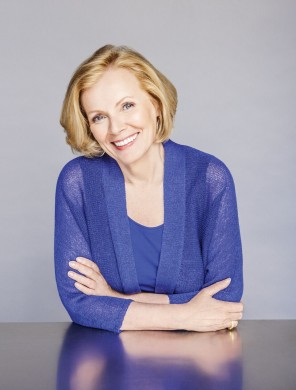
Peggy Noonan is an opinion columnist at The Wall Street Journal where her column, Declarations, has run each week since 2000.
She is the author of nine books on American politics, history and culture, from her most recent, the collection “The Time of Our Lives,” to her first, “What I Saw at the Revolution.” She is one of ten historians and writers who contributed essays on the American presidency for the book, “Character Above All.”
In 2010 she was given the Award for Media Excellence by the living recipients of the Congressional Medal of Honor; the following year she was chosen as Columnist of the Year by The Week Magazine.
She has been a fellow at Harvard University’s Institute of Politics, and has been an instructor in the history department at Yale University. Noonan was a special assistant and speechwriter to President Ronald Reagan. Before entering the Reagan White House, she was a producer and writer at CBS News in New York, and an adjunct professor of journalism at New York University.
She was born in Brooklyn, N.Y., and grew up there, in Massapequa Park, Long Island, and in Rutherford, N.J. She is a graduate of Fairleigh Dickinson University in Rutherford. She lives in New York City.