Finalist: Steve Lopez of Los Angeles Times
Nominated Work
By Steve Lopez
She doesn't need an alarm clock, Carolyn Cherry says. Her brain is programmed, by years of routine, to sound an internal alarm just before 3 a.m.
One hour after rising, she leaves her house in Hemet and drives in darkness to the South Perris Metrolink station, the first leg of her daily journey to work. The drive takes 22 or 23 minutes, a bit longer if she picks up a friend or stops to get a cup of tea for the long train ride ahead. The parking lot is all hers when Cherry arrives, and she pulls into the same spot every time.
The train leaves at 4:43 a.m. and Cherry, 60 years old and a couple of years away from retirement, rides it all the way to the final stop, more than two hours away. That's Union Station in downtown Los Angeles. Scheduled arrival time: 7:05.
Cherry then hustles to the Red Line, pops out of the ground at the Civic Center station, crosses Hill Street and reports for duty as a clerical worker at the L.A. County auditor controller's office by 7:30.
9 hours of work, 6 hours of commuting a day
"It's usually 8:15 or 8:20 when I get home at night," says Cherry, who has been doing this merciless long-distance commute for 16 years, getting by on just 4½ hours of sleep each night. "Nine hours of work and six hours of commuting. That's my story."
In a region of hellish commutes, it's one of the craziest I've heard of. But in Southern California, where being close to work is a luxury many in the middle and working class can no longer afford, readers keep telling me to quit pushing affordable housing measures and let the market determine who lives where.
If you can't afford the Westside, they say, go east.
So I went all the way to the end of the line to have a look. And sure, 90 miles or so from downtown L.A., you can get far more stucco for your money. But it comes at a real price.
Ungodly commutes, as we know, are not new to Southern California, which practically invented sprawl. People have long moved out of the city by choice, but with housing costs at historic highs, some now move by necessity.
According to Metrolink, the 400-plus-mile commuter railroad has the longest average one-way trip — 36 miles — in the country. Almost two-thirds of Metrolink commuters work in a different county than the one they live in, and riders took roughly 600,000 one-way trips of 60 miles or more last year. That sounds grueling, but on a train, at least, you can make good use of your time and experience the evil pleasure of glancing out the window at all the poor souls stuck in traffic.
When Cherry and I board in South Perris, about a dozen other yawners climb aboard, two hours shy of sunrise.
Morning commute begins in the darkness
"This is where I sit," Cherry says as she slides into a four-seat compartment with a table, where she sets her tea.
The Metrolink extension to Perris didn't begin service until the summer of 2016, so before then, Cherry drove to Riverside and took the train the rest of the way. That still added up to three hours each way, and Cherry says she prefers a longer train ride to driving in heavy traffic and contributing to air pollution.
But why Hemet?
Cherry's story unfolds as the train chugs along, with stops in Moreno Valley, Riverside, Corona and Fullerton, the sky outside still dark as empty seats begin to fill.
Terence Dyck says he's in his first week of commuting to a new job in Los Angeles from Nuevo, where he lives in a motor home. It's a long haul, he says, but if the job works out, he'll keep up the commute for a year or so and save money to live closer to work in the future. If he can afford to.
Michael Perkins, a microbiologist heading to the Norwalk station, says he and his wife bought a 3,000-square-foot house in Riverside 10 years ago, with good schools for their three kids. It cost just $280,000. "There's no way I could afford a house like that in L.A.," he says, so for him, an 80-minute door-to-door commute is worth the trouble.
Cherry, a divorced mother of two, lived at the Compton home of her parents in the 1990s and had a neat arrangement with her identical twin sister, Marilyn, who lived in Lynwood. Together, they cared for their aging parents, now deceased, and Marilyn watched Cherry's kids while Cherry was at work.
Lower housing costs, but at a price
Marilyn and her husband, a truck driver, moved to Hemet in 2001 to take advantage of lower housing costs. At the time, Cherry was worried about crime and the quality of schools in Compton, so she decided to head east, too. She rented space in her sister's home in Hemet, kept the child-care arrangement intact, and took on the monster commute to work. In 2009, she and her kids moved into their own home in Hemet.
"It's two bedrooms, two bathrooms, a backyard and amenities I wouldn't be able to afford in Los Angeles on my salary," says Cherry, who makes less than $50,000 a year as a tax services specialist after 25 years on the job.
Her rent is just $800 a month. In L.A., a home like hers would be twice, three times or four times as much. And while Cherry says she has no regrets about her move to Hemet, she does bear some pain. She missed a lot of time with her kids and was not there for some of their social and school activities.
"I was heartbroken a lot of times, and on weekends I made sure I was at their activities," she says. "I felt guilty. A lot of guilt. But I was adamant about my kids having a better life than me."
Her daughter, now 28, graduated from UC San Diego and is a property appraiser for Riverside County. Her son, 23, also went to college and works at Amazon in Riverside.
Cherry looked into making a switch to Riverside or San Bernardino counties, but says the pay was significantly lower, even taking her $400 monthly commuting costs into account. So she decided to hold on to her seniority and retirement benefits, tough out the commute, and retire at 62. Because she works nine-hour days, from 7:30 to 5, she gets every other Monday off, which helps.
No financial stress, but commuter stress...
"I have no financial stress, whereas if I was in L.A. I'd live paycheck to paycheck. I didn't want to live like that and I didn't want my kids to see us living like that," Cherry says.
"I'm pretty much OK with everything," she continues as her eyes fill and she dabs a tear. "Everything was about sacrifice, and at times I beat myself down because I wasn't educated and didn't have higher pay. But you know what? I did OK, and I helped put my kids through college."
The light is coming up now, and in the distance, L.A. skyscrapers reflect the golden dawn. It's not so bad, says Cherry, once you program yourself to the routine and look forward to seeing the members of your commuting family, including a best friend from junior high who usually boards in Riverside.
"I chat, I sleep, I listen to music, my mind wanders, I think about the past and the future," Cherry says as the train from the land of affordable living arrives on time, halfway through another day of compromise.
By Steve Lopez
She's a Los Angeles native, the daughter of Japanese immigrants, and at one time she was the definition of middle class.
College education. Good job. Nice apartment in the Cheviot Hills area.
Losing those things did not happen overnight. There's a story here, an unraveling, a long process of decline. Often, for the tens of thousands of people who live on the margins in one of the most expensive regions of the world, a bad break is the beginning of a steep drop.
Meg Shimatsu, 54, was diagnosed with diabetes almost 20 years ago, but the bigger blow came nearly a decade ago. That's when doctors told her that her kidneys were giving out.
Her disease advanced in the wake of the economic recession, and work as a legal secretary was harder to come by. In 2012, Shimatsu began dialysis treatment that often left her fatigued. On her medical disability income, she could no longer afford her apartment, so she moved in with a sick, elderly friend in Eagle Rock, and helped keep his house in order.
That was a good deal until December, when the friend died and the landlord raised the rent.
Shimatsu got financial help from a brother living overseas and a niece in Colorado. In January, she checked into a low-rent motel on an interim basis, but couldn't find an affordable apartment. Between her car insurance, gas, food costs, phone service and mounting credit card bills, she was soon practically broke. She moved in with a boyfriend in Carson briefly, but that didn't work out.
By spring, she was living in her car, a 1990 Corolla with 275,000 miles on it.
We met for the first time on June 8, after several email exchanges, at a coffee shop in Eagle Rock. Shimatsu is thin and dark haired, her skin pale. She crossed her arms against the air-conditioned chill, a white bandage over the spot where needles pierce her skin during dialysis treatment. She said she's on a waiting list to get into a women's shelter, but was told that could take forever.
"I have good days and bad days," she said. "Some days I'm totally exhausted."
Shimatsu is on a waiting list for a kidney transplant, but knows the process often takes many years. Luckily, Medicare and Medi-Cal pay the vast majority of her medical bills, but she worries about a possible Medi-Cal cut given the national healthcare reform conversation.
At first, she seemed reluctant to discuss her situation in detail. She measured my questions, met them with pauses, then offered clipped replies.
"I've always been a self-sufficient person, and this is kind of a shock to me," she said.
It's easy to play the game of maybes.
Maybe she should have planned years ago for something going wrong, but she was never really flush.
Maybe she should have spent donations from family members more strategically, "But I sort of panicked," said Shimatsu, who hadn't planned to be in a motel very long.
Maybe she should abandon Los Angeles for a place with cheaper housing, as her brother has encouraged her to do. But the thought of moving to an unfamiliar place in or out of California, and living in further isolation while chronically ill, is scary. And it still wouldn't be cheap.
In Los Angeles County, the average monthly rental of $2,300 is about $1,000 more than Shimatsu's disability check. The average rental in the Inland Empire would take her entire check. In California's Central Valley, which has some of the lowest rents in the state, the average rental of just under $1,000 would swallow roughly 80% of Shimatsu's income.
"To be honest with you, I have not always made the best decisions financially," she said. "But that's in the past now."
So what's her plan?
In the best-case scenario, she'll get a transplant, regain her health, go back to work and try to climb back into the middle class. While waiting for that to happen, maybe she can get part-time work and find a small place, or divide the cost of a bigger unit with roommates.
Until then she's got the 27-year-old Toyota.
There's something seriously out of whack, I told her, when someone as sick as she is has to live in a car. Shimatsu mentioned a recent column of mine about a homeless woman who was reunited with her family, through the work of Pacific Palisades residents, and returned home to Scandinavia.
"They've got a better safety net there," said Shimatsu.
But despite her predicament, she said the situation could be much worse.
"In the beginning I had a really tough time falling asleep in the car, but I eventually got used to it and now I can sleep for eight hours," Shimatsu said.
She got a gym membership so she has a place to shower and kill a few hours indoors, and in her travels, she sees the roving armies of street dwellers.
"I consider myself luckier than most homeless people," said Shimatsu.
Shimatsu often visits the Women's Room in Pasadena, a daytime refuge where she and other homeless women — some of whom suffer with mental illness or have been victims of domestic abuse — can relax, nap, get something to eat, and feel just a little bit less alone. In the midst of so many tragic tales, the miracle of the Women's Room is the sense of community and hope it provides, with a dedicated staff that includes lots of volunteers, including students.
On a visit with Shimatsu on Thursday, I met Brenda, who said she just got a room after years of living primarily on Gold Line trains, and Ruby, whose apartment building remodel forced her out of a $750 monthly unit. "I can't find anything at that price," said Ruby. "Nothing, nothing, nothing."
The nonprofit's director, Rabbi Joshua Levine Grater, talked about the daily parade of those who, in a state that stands as a world economic powerhouse, are suffering through a worsening shortage of affordable housing.
"It's not right," said the rabbi, who runs a rental assistance program to prevent more homelessness, along with a food pantry with equal numbers of Latino, African American, Asian and Caucasian clients. "It's not right."
And yet the resilience of the clients — their very will to survive — is an inspiration to the rabbi and his staff.
When she heads back to the hospital, Shimatsu parks near the elevator for the night, so she can pop inside to use the restroom or hang out in the lobby. When her day is done, she folds herself into the back seat of the car and pulls up a blanket. She sets her alarm for 4 a.m. and is only steps from her morning dialysis treatment.
Shimatsu, an English major at Cal State Northridge, watches a bit of TV and does a lot of reading before retiring. She reads the newspaper and likes books that can help her focus and keep a positive outlook.
"If you're not in a great situation," she said, "you want to believe there's light at the end of the tunnel."
By Steve Lopez
If you were to stand near the corner of 57th Street and South Vermont Avenue, you might not see many great selling points.
But if you were to stand there with Julio Ruiz, you'd get a different take.
He'd point out the nearby transit options, which could get you to USC, downtown, and all the way to the beach.
He'd tell you about all the people moving into the area and all the investors who want a piece of the action.
And he'd tell you this:
"There is cheap housing in L.A. … The American dream is still affordable in Watts, Compton and all the forgotten ghettos."
Ruiz saw my column last week about frustrated Californians leaving the high-rent districts of coastal Los Angeles for cheaper housing in Las Vegas.
No need to go east, he said, when there's so much right here. And to prove he's more than just a pitch man, he offered a few details about himself:
"I have a wife and three kids. We own a home. We moved to Compton from the Valley. I didn't have to go out of state."
Ruiz, I discovered, is always on the run and often on the phone. With lenders. With City Hall. With buyers and sellers. He sniffs out investment opportunities and cobbles together deals as he travels by Jeep through neighborhoods where others might fear the crime and gang activity long associated with the South Side, but Ruiz sees nothing but opportunity.
"There's a buzz all over here," he said. Houses are getting multiple offers, sometimes all cash, and some are selling above asking prices.
Ralph McLaughlin, chief economist at the online real estate site Trulia, took a quick look at the numbers and said home values in Watts and Compton are at post-recession highs, indicating "increased demand to live or invest" in these areas.
Ruiz said one of his clients is an Asian professor at UC Irvine who bought a three-unit property near USC with plans to live in one unit and rent out the other two. Ruiz also represents a Koreatown couple interested in a $500,000 home in South L.A. because the price would be double that amount where they now live. And he handled one sale in which a white gay couple bought a rehabbed Craftsman near Slauson and Western avenues for just under $500,000.
"One of our neighbors … said she was so happy the gays were moving in because property values would be going up," said Steven (last name withheld by request), who lives in the house with his partner.
Steven said he's lived in areas with majority-minority populations before, and that wasn't a consideration. When he and his partner bought the home, one worked in Hollywood and the other in El Segundo, and they both had relatively easy commutes by bike and transit.
"We have a bunch of friends in Echo Park and Silver Lake, where our money would have gotten us one or two bedrooms. But in our place, we have four bedrooms and three bathrooms," Steven said.
They don't have the same social, dining and shopping options, however. And then there's the nearby prostitution problem. Still, it works for them, if not for everyone.
A housing affordability crisis can change minds, though, and reverse trends. Ruiz said his strategy is to stay "one step ahead of gentrification." The Olympics are returning in 2028, and the city will want to keep the area around USC cleaned up while knocking down crime, he said. So that's a solid investment area. So is anything near transit, existing or proposed. The new soccer facility near USC will bring up values. The Rams will lift Inglewood.
"I don't look at today's market," said Ruiz. "I look five years out."
What about those pushed out?
As much as I admired Ruiz's hustle and pluck, I had to point out that he's riding a wave that will lift some people and drown others, particularly low-income minorities.
He argued that he used to work for banks and had to clear squatters, gangs and drug dealers out of houses all over the South Side. Neighbors appreciated the improvements, he said.
"There was an opportunity for people to fix up these houses and for first-time buyers to get in through FHA, VA or different types of loans. As these houses started getting rehabbed, I felt like South L.A. was getting cleaned up," Ruiz said.
Lots of longtime owners, black and brown, took nice chunks of equity out of those homes and retired somewhere else, he said, adding that he's putting neighborhood craftsmen to work flipping the houses.
But look at Boyle Heights, I told him. Latinos are being forced out by rising rents.
Boyle Heights vs. Brooklyn Heights
"Boyle Heights used to be Brooklyn Heights," Ruiz said. "It was Jewish. Neighborhoods are always changing."
And there will be more "browntrification," he said. That's his term for Latinos moving to places like the area around the Jordan Downs housing projects.
"There's a $5-billion mixed-use development coming in there," said Ruiz. He showed me a fixer-upper one of his investors bought less than half a block from the projects, anticipating neighborhood improvements and rising property values.
I met up with Ruiz one morning at a duplex on 57th Street, near Vermont, listed at $449,000. He said he and his business partner, Armin Soliemini, had made a cash offer on the house on behalf of some investors, but on the way to check out the property, he got a call tipping him off to another house on the block that was coming up for sale at $310,000.
Just after we arrived on the block, a truck pulled up, hauling a trailer filled with power-washing equipment. I assumed the driver, Rigoberto Galvan, was there to do some maintenance.
I was wrong.
Galvan, who takes the profits from his cleaning and maintenance business and dumps them into real estate, stopped by during his work hours to see if he might want to buy something on 57th Street.
He liked the $310,000 house, which Ruiz saw as a can't-miss investment. For about $100,000 to $120,000, Ruiz said, the house could be rehabbed, with a granny unit added. And based on comparables in the neighborhood, it would sell for close to $600,000.
But it's still South L.A., I said. Crime is real, schools are a problem.
It's risky, no?
"No risk-it, no biscuit," said Ruiz.
Galvan told me he had been investing in car washes, but the profit margins were marginal.
"Then I met Julio, and he started telling me about different properties," said Galvan.
Galvan, 38, said he dropped out of school after the ninth grade to work full-time. He said he has bought and sold five properties in South Los Angeles this year alone. His goal is to retire at age 50.
When Galvan left 57th Street, another investor showed up. It was George Janian, the guy who bought, rehabbed and sold the Craftsman to the gay couple. He inspected the duplex inside and out, and talked to the renter, who pays $1,300 a month for one of the duplex's two units. If he buys the duplex, Janian said, he might sit on it for a while, collecting rent, and maybe sell later.
Ruiz, meanwhile, had already redesigned the vacant unit in his head.
"People want more bedrooms," he said, and Los Angeles needs more density to address the housing shortage. So he would eliminate the dining room, bump the kitchen into that space, and turn a 2-and-1 into a 3-and-2, possibly with a rear granny unit for added income.
Ruiz showed me two more South Central rehab projects, one owned by Galvan, the other by Ruiz and an Orange County beauty salon operator who has become one of his investors. He noted there were no bars on the windows. These are homes, not prisons.
On the floor of the larger unit in the duplex was a suitcase, a cart and piles of clothing. Ruiz said on a rainy day, he came upon a homeless woman nearby and offered to keep her things dry until she wants them back.
He was briefly on the street himself, he said, back in San Fernando. His father lost his job at a kitchen fixture plant, his parents split, and Ruiz ended up in a one-bedroom apartment with his mother and two siblings. Maybe the reason he's such a hustler now, he said, is to avoid a replay for his three kids.
The good life in Compton
His house in Compton is on a quiet, tree-lined street, and there's a big Santa display in the frontyard.
"I wanted each kid to have his own bedroom," he said as we toured the four-bedroom house he bought two years ago with his speech therapist wife. He figures the house is already into six-figure equity.
"I could've moved anywhere," he said. But for his money, he wouldn't have gotten a roomy house with a tiny mortgage, proximity to work and shopping, and a few bucks in his pocket.
"I've got my oldest kid in private school," he said, "and we've got year-round passes to Disneyland."
He's living his dream — and he earned it.
But private schools and Disneyland passes are out of reach for many. And what do we do when even Compton becomes unaffordable?
By Steve Lopez
Steve Hideg moves through his small East Hollywood apartment with tiny shuffle steps, as if to avoid a fall. His slacks are creased, his shirt pressed. It doesn’t cost money, he says, to hold your head high.
Hideg, almost 86, is blind in one eye and deaf in one ear. He’s carried that burden since a childhood injury, when he and his family took cover in the cellar of their home as bombs thundered down on Budapest. Lately the good eye isn’t so good, so he keeps a big magnifying glass handy, but Hideg has bigger challenges than that.
His rent is roughly $1,000 a month, and his Social Security income is about $900 a month.
“It’s a total miracle how he exists,” says one friend.
The secret is disciplined austerity, occasional help from buddies, and a once-weekly job as a jazz drummer — a job that feeds Hideg’s soul. When the DWP shut off his power briefly, Hideg borrowed a camping light from a friend. A $300 gas bill gathered dust until a buddy covered it.
“Hello, my angel,” Hideg called out one day to a woman who knocked at his door and delivered a tray of food from St. Vincent Meals on Wheels.
Sometimes, that’s his only food in a day.
California is robust in countless ways, its economy ranked among those of the richest nations in the world, and yet millions struggle to survive the double blow of flat wages and high housing costs. It’s the great Golden State paradox, an escalating calamity and public policy failure with no fixes on the near horizon as the retiree population explodes.
And yet Hideg, unbowed, has risen above it all by remaining faithful to a dream and honoring a different measure of prosperity. As one friend of his put it, in his mind, he’s a rich man.
Istvan “Steve” Hideg was hungry, shoeless, scared, brave, a child of war. He was just a boy in 1943, when his father was killed on military duty. Hideg and his mother, brother and sister struggled through bleak, lean years of economic and political upheaval, and a meal often was nothing more than a smear of lard on a scrap of bread.
“We put a little salt and paprika on it,” Hideg says. “I kind of learned how to survive.”
It’s a skill, or maybe a frame of mind, that has endured.
“Even when I have only one meal in a day,” Hideg says, “I’m never hungry.”
As a teen, Hideg worked at the concession stand of a Budapest movie theater and ducked in, at every opportunity, to catch a glimpse of the films. There, in black and white, was a world he’d never imagined.
“I saw Louie Armstrong!” Hideg says of the jazz giant. “He sang ‘Jeepers Creepers’ to a horse!”
That was in the 1938 movie “Going Places.” Another American classic, the 1941 hit “Sun Valley Serenade,” made Hideg ache with desire to become a musician and to escape iron-fisted postwar Hungary. In “Serenade,” the Glenn Miller Orchestra played “Chattanooga Choo-Choo” and the swinging “In the Mood.”
“Whewwwww, that did it for me,” Hideg says, still jazzed 70 years later. “I fell in love with this whole country and its music. To me, it was the sound of freedom.”
His brother bought him a snare drum like the one Hideg had seen in the village his parents grew up in. There, with no newspapers and scant communication with the outside world, the drum was a siren call to villagers who gathered to hear the messenger deliver the news of the day.
Hideg studied the moves of drummers Buddy Rich and Gene Krupa, got a job in an electronics factory and joined all three of the company bands. He later became a full-time musician and worked with a circus band for a while, but the songbook wasn’t to his liking and the government deemed Western music the enemy of the people.
In 1956, blood spilled as Hungarians revolted against Soviet control. Hideg and his wife, a pianist, risked execution as they fled Budapest under cover of darkness. They sneaked past Russian infantry and escaped first to Austria and then New York City in early 1957. Hideg got a job as a janitor, and after work he’d race to Birdland and other Manhattan jazz clubs to see his heroes.
In 1961, he and his wife loaded up their old DeSoto and headed west, flat broke, stopping at bars along the way to play for food and gas money, Hollywood or bust.
***
He hustled, schmoozed, hung out at the musicians’ union, started at the bottom.
And he made it.
A young man who had grown up with so many restrictions was playing a kind of music with no rules.
In the good years, there was the Steve Hideg big band and Steve Hideg and The Continentals. When TV game shows had live music, Hideg played in the “Truth or Consequences” band. He toured for several years with Pat Collins, a hypnotist with a popular show. He played in Florida and put in several years in Vegas.
He never made great money or played with big stars. But to his own astonishment, Hideg was living out his fantasy in the city that had manufactured the dream. He developed a talent as a contractor, stringing together bands for all occasions. In his scrapbook is a copy of a check he got after playing a birthday party for Dustin Hoffman.
There were struggles along the way — no musician gets through the grinder unscathed. When Hideg’s wife became ill and they couldn’t afford to pay for her care, she went back to Europe to live with family in Austria, where she died young. Hideg himself fought through cancer and now battles macular degeneration.
He never married again, which made it easier to grab road jobs when they came up and he was young enough to handle the toll. He has lived in the same apartment now for 25 years, a time in which the market for live music — especially big band and straight-ahead jazz — has withered. Hideg was getting by just fine when he served as live-in manager at his apartment building, but he got too old for the job a few years back, and the bills keep coming.
But his pride is undiminished.
“I did not come to this country to be a burden on the state,” says Hideg, who has resisted signing up for many entitlements available to seniors.
He chose the musician’s life, he says, and has no regrets. If he has a message for others, Hideg tells me, it’s that doing something you love will serve you well. And another thing: Don’t hesitate to ask friends for help if you need it.
“He’s not a shy guy, but it’s not easy for him” to accept money, says Hideg’s longtime buddy Laszlo Cser, a retired musician and L.A. City College professor. “Lately he’s more willing to go along.”
Louis Kabok, a local bass player who knew Hideg in Hungary, fled at about the same time. He says his friend’s high spirits in the face of hardship and advancing age don’t appear to be an act.
“To tell you the truth, I never met another person in my life who has his kind of attitude,” says Kabok. “He just has an idea of the way he wants to live his life, and he’s doing it.”
Indeed, for all his troubles, Hideg glows. His silver hair is as thick as his Hungarian accent. His grin is young, timeless and broad, the grin of a man who’s in on a secret.
Whatever day it is, the weekend is coming soon, and Hideg lives for Friday and Saturday.
He can’t bang the skins in the quiet environs of his apartment building, so every Saturday, he stays drummer fit with a two-hour workout at Stein on Vine in Hollywood, the legendary music shop where he jams with gray-bearded buddies and it’s the 1950s all over again.
Better yet, Hideg’s Friday night gig is coming up, and he knows, without doubt, that the music he loves will live forever.
***
Phillip Williams, a pianist and singer, met Hideg at a party eight years ago and asked if he wanted to sit in with his band on Friday nights at Callender’s Grill. That’s a high-end, mid-city Marie Callender’s with live jazz several nights a week.
Hideg has been with Williams ever since.
The Hungarian octogenarian they call “Cool Cat” is old school in his respect for the art and the audience. Before his gig, Hideg showers and shaves, puts on a suit, cinches the tie and arranges the pocket square hanky just right, like one of the pros in the big bands he once saw in the movies.
“I love getting ready, I love carrying the drums, I love setting them up, I love everything about it,” Hideg tells me.
He drives to work in a 1992 Mazda van that Williams gave him when his old Aerostar conked out, and he is smiling when he walks into the restaurant and begins setting up.
Typically, several terrific local musicians drop by and sit in with the band. Williams knows the lyrics and music to hundreds of songs and plays what strikes him, from pop to serious jazz, and he generously features each of his sidemen. He likes calling “Satin Doll” because there’s a short solo in it for Hideg, who is twice the age of the others in the band and always seems to be having twice the fun.
On an up-tempo number, Williams motions for me to circle behind the piano so he can whisper me something.
“Look at this guy go,” Williams says as Hideg taps out an elegant patter, never loud, never showy, riding the groove just right and always in the service of bandmates and the music.
“This is adding minutes to his life,” says Williams. “I feel like I’m his doctor.”
In the quiet of his apartment, I had asked Hideg if he worries about anything. What if the rent goes up? What if his good eye can’t be saved? What if he can’t drive much longer?
“I live my life by three principles I learned as a Boy Scout. Faith, hope and love,” he said before reminding me he has everything he ever wanted.
“And I can’t believe I’m still doing what I love.”
His struggle is real, said Hideg.
“But it’s a beautiful struggle.”
By Steve Lopez
Odd though it may seem, Los Angeles is too lucky for its own good.
Sure, the city has its share of problems, as does any metropolis. But it remains a destination for people from around the world, many of them young, skilled and creative. They move here for culture, commerce, climate — or all three.
That's a situation many cities can only envy, but success comes at a cost. In the case of Los Angeles, our attractiveness has created a housing affordability crisis with no end in sight, transforming the city in ways big and small.
On the main shopping strip in Highland Park, where many signs are still in Spanish, a former dress shop became a groovy coffee shop two years ago — with avocado toast on the menu, of course. The customers, mostly young and white, are as self-consciously hip as the ones I used to see in Silver Lake 15 years ago.
In Boyle Heights, longtime residents have raged against the rise of art galleries, arguing that locals are being forced out, threatening the identity of the working-class Latino neighborhood.
The dark side of L.A.’s popularity
Gentrification is neither all good nor all bad, but more people in Los Angeles are falling behind rather than getting ahead, with wages flat or in decline as rents go crazy.
A book by Richard Florida, "The New Urban Crisis," prominently features Los Angeles as a prime example of the dark side of success — severe housing shortages, deepening segregation, inequality and the decline of the middle class. In the book, the Los Angeles-Long Beach-Santa Ana metro area leads all other major hubs, including New York City, on what he calls the "urban crisis index."
More than 400,000 households in the city of Los Angeles, and a total of 900,000 in L.A. County, have what the census bureau calls precarious housing situations. That means the dwelling is substandard, or that families are doubled up, or that they spend more than half their income on housing.
Then, of course, we've got 58,000 homeless people.
When I wrote about the intersection of high rent and homelessness two weeks ago, I referred to a mother and son living in their car. I then heard from a woman who said she could identify. She lives in her car and parks it at a hospital, where she gets dialysis treatments three times a week.
She was middle class. Now she's on the street
"I was middle class up until very recently," said the woman, in her 50s, whose name I'm withholding because she doesn't want the hospital to know she lives in the parking lot.
I paid her a visit. She said her work as a legal secretary dried up after she got sick, so she moved in with a friend who later died. The landlord raised the rent, and she moved into her car, with no family to call on and a disability check as her only income. She's on a waiting list for a kidney transplant, and her hope is that she'll one day get a new kidney, go back to work, and be able to afford an apartment again. As it is, the median price for a one-bedroom apartment is $1,995, and she can't come close to that.
When I last wrote on this topic, I heard from people who claimed they had all the answers. But for every proposed solution, there's a counter-argument and a reality too complicated for easy fixes.
Los Angeles alone can't solve a regional or national housing crisis, said professor Jerry Nickelsburg of the UCLA Anderson Forecast, nor can it stem the tide of people who want to live here.
"People moving into California are better-educated and have higher incomes than those who are moving out," he said, and that's having a direct effect on rising rents.
Calls for rent control are met with cries that such controls are unfair to landlords and drive up costs for other renters.
Why we can’t keep up with housing demands
Developers argue that eliminating red tape and simplifying environmental requirements would speed construction, and prices would drop as supply increases. Critics counter that new luxury units will far outnumber less-expensive apartments.
Los Angeles Mayor Eric Garcetti is pushing a plan for a linkage fee on new construction, requiring developers to kick into a fund for affordable housing. He claims that the idea — in use now in San Diego, San Francisco and Oakland — would raise $100 million a year and be leveraged to create $400 million in housing annually. But the development community is apoplectic, saying the proposal would slow construction and lead to higher prices.
A committee of the City Council — a body that’s beholden, some argue, to the money and clout of the real estate industry — has delayed action.
Garcetti told me he's confident the measure will pass.
"The devil is going to be in the details," he said.
Garcetti has a lot on the line, because the fee is a central piece of his plan to address the housing crisis. Another key is completion of a general plan that would allow greater housing density in areas where it makes sense, such as near transit corridors.
Peter Dreier, a professor at Occidental College, helped design a linkage fee for the city of Boston, when he worked there many years ago. "Everyone in Boston said it would kill the golden goose of prosperity, but we ignored them," said Dreier, and Boston continued to prosper.
Dreier said Los Angeles needs to build more affordable housing, but also has to preserve what's left of a dwindling number of affordable homes. They're being lost partly because when tenants move out of units built prior to 1978, the landlord can raise rents to any level. A bill that would give cities more power to cap rent increases has Garcetti's support, but it's been stalled in Sacramento under heavy pressure from landlords.
In some cases, landlords have a legitimate beef. I visited Loretta and Henry Selinger, who own seven midsize apartment buildings in the Mar Vista area, with a total of 97 units. Some of their longtime tenants are paying as little as $900 a month, despite healthy incomes, for units that could rent for twice that much. The Selingers can't raise the rent more than 3% to 5% a year, even when they invest thousands for building improvements and seismic safety upgrades.
"We're not crying poverty," said Loretta, but the Selingers think it's unfair to require them to charge far less than they could get in a free market.
An agenda for fixing L.A.
So what to do?
In Florida's book, which Garcetti recommended to me, the fixes include some of what Los Angeles has done or is doing. Build more transit, which creates more jobs and connects more people to paychecks and housing. Build denser housing near transportation hubs. Build more affordable rental housing, as the linkage fee would make possible. And address the other end of the challenge — flat or declining wages in the service industry — by increasing the minimum wage for people whose work supports the robust economy that draws so many people to L.A.
Florida also calls for eliminating restrictive zoning and building codes to make way for higher-density projects. He recommends taking billions in federal subsidies for mortgage deductions that go to some of the wealthiest people in the country, and kicking it into housing or housing assistance. Why not tax property on its usefulness, argues Florida, with lower taxes on property that serves a great public need such as affordable housing? And why aren't tech giants, at the center of the new economy of winners and losers, doing more to support their own service employees or joining the search for broader fixes?
Donald Trump said he was going to rebuild cities, but his budget proposals seem to have a different objective in mind, and would cost cities millions in housing funds. All the more reason for cities to figure out what they can do on their own, or in conjunction with officials from other cities and the state.
If the L.A. City Council doesn't want to support a linkage fee, fine. But in that case, it damn well better come up with something else.
By Steve Lopez
As I write about the housing market in California, where high prices are forcing people into their cars, onto streets and farther from where they work, one thing is clear:
I'm not making any friends among landlords.
They sniff at the suggestion that some of their ilk are greedy, and they especially do not like hearing the two most dreaded words in their industry:
Rent control.
Two of them volunteered to straighten out my thinking, so I took them up on the offer.
I chatted by phone with Michael Millman, and I paid a visit to Gerald Marcil, both of whom offered me crash courses on the basics of supply and demand.
Both were irritated by my recent column in which I said the repeal of a state law restricting rent control would be one way to prevent huge rent increases that are crippling renters and driving them out of neighborhoods they've lived in for years.
Millman, a lawyer, is the smaller operator of the two. He owns and manages 68 units in 10 buildings on the Westside. He had two primary points: First, that "I have no interest in focusing on escalating costs" faced by apartments.
I plead not guilty, your honor.
In June, I toured some Westside apartment buildings with owners Henry and Loretta Selinger. They argued that it's unfair for them to be required to charge less than they can get in the free market, even though they have to keep putting out more money for building maintenance and required seismic safety upgrades.
Millman added the following to the list of escalating costs for landlords: "Trash retrieval, water, sewage, property taxes, parcel taxes, bonds, insurance, municipal fees," etc., etc. And he said there are tenants currently living in rent-controlled units who are "probably making $300,000 or more."
The Selingers — and Marcil — made the same argument about rent control. It's applied across the board, they said, whether tenants are wealthy or nearly broke.
Fair point.
But when landlords rail against rent control, they're talking about annual limits of 3-5%.
But most renters do not live in rent-controlled units, and they're getting hit with increases as high as 30-40%. If 3-5% doesn't cover the increased cost of doing business for landlords, what about something a little higher, like 5-7%, so landlords get a return on their investment but renters don't have to start selling their plasma?
Millman didn't dismiss the idea, but he said he's not gouging anybody as it is. And his fix for those who can't keep up with the rent is what he calls a rental emergency voucher. If you prove you've hit hard times, you apply for help, and it gets you through another month.
When I visited Marcil at his ocean-view Malaga Cove office in Palos Verdes Estates, he suggested a variation of Millman’s idea. If 80% of renters are doing just fine, he said, and 20% are struggling, why not provide more federal Section 8 funding to the 20% instead of requiring landlords to give the same break to all renters?
Good argument there. But when I wrote about a Highland Park couple — he's an 85-year-old musician and she's a 76-year-old actress — who are being priced out of their rented home, renters were not sympathetic when I said they had managed to qualify for Section 8 housing somewhere else.
Why should they have to subsidize housing, readers griped, for people who made their career choices and didn't plan well enough for retirement?
OK, if we're talking about handouts, how about this:
If you've owned a house in California for a while and have a mortgage, why should anyone have to subsidize your mortgage deduction and your Prop. 13 property tax break, which is made possible by higher taxes for neighbors who moved in after you did?
But let's get back to Millman and Marcil, both of whom — despite their criticism of my column on good times for owners of rental properties — are cashing in nicely at the moment.
"I would say I'm doing well, but I worked hard to get here," said Millman.
Marcil, whose renters are paying between $1,400 and about $2,800, depending on apartment size and location, said he's doing almost as well now as he was doing before the housing crash. That's not because of greed, he argued, but because of hard work and market forces.
There isn't enough new construction to keep prices down, said Marcil, hammering a point I've made before. He said lots of communities oppose new construction anywhere near their neighborhoods. That, along with rising construction costs, has pumped up rents, especially in job centers where there are more people making good money.
Marcil said he thinks the state's large population of immigrants in the country illegally is a factor, too. He said they're good for his business because they increase the housing demand, but that drives rents higher for everyone.
He used to be a developer and said the housing market has been both cruel and generous to him over the years. He said he's been broke twice and that investors "took a beating" between 2007 and 2012 because rents were flat.
But Marcil's company is doing so well now, he flew his apartment managers, spouses and other employees — more than 80 people altogether — to Maui last month and put them up for a week at a beachfront hotel in Kaanapali.
"It was very nice," said an appreciative Torrance apartment manager and longtime Marcil employee.
Marcil said he's making about $5.5 million a year running his company and goes diving on Santa Monica Bay off of his 68-foot Sunseeker. He lives in an ocean-front home he bought many years ago — a home now estimated to be worth more than $6 million.
Not bad, right?
But Marcil's generosity extends beyond flying his employees to Maui. The former high school wrestler is a moderate Republican and chairman of the fiscally conservative New Majority of Los Angeles, and he donated $127,150 to conservative candidates and causes between 2015 and 2017.
He told me he donates more than $1 million a year to local charities because he thinks they do a better job providing services than the government does. A 2014 annual report lists Marcil and his wife among the top donors to the YMCA of Metropolitan Los Angeles, with more than $1 million in donations. He said he intends to leave 20% of his wealth to his family and 80% to his favorite charities.
Yes, business is very good these days for some California landlords. But I've become convinced they're not the biggest winners in this crazy market.
Any idea who's making even more of a killing?
Stay tuned.
By Steve Lopez
The rent steals so much of your paycheck, you might have to move back in with your parents, and half your life is spent staring at the rear end of the car in front of you.
You'd like to think it will get better, but when? All around you, young and old alike are saying goodbye to California.
"Best thing I could have done," said retiree Michael J. Van Essen, who was paying $1,160 for a one-bedroom apartment in Silver Lake until a year and a half ago. Then he bought a house with a creek behind it for $165,000 in Mason City, Iowa, and now pays $500 a month less on his mortgage than he did on his rent in Los Angeles.
Van Essen was one of the many readers who responded in October when I reached out to people who got sick and tired of the high cost of living in California. I heard from someone in Idaho and others who moved to Arizona and Nevada.
Solid recent data is hard to come by, but 2016 census figures showed an uptick in the number of people who fled Los Angeles and Orange counties for less expensive California locales, or they left the state altogether.
"If housing costs continue to rise, we should expect to see more people leaving high-cost areas," said Jed Kolko, an economist with UC Berkeley's Terner Center for Housing Innovation.
Las Vegas is one of the most popular destinations for those who leave California. It's close, it's a job center, and the cost of living is much cheaper, with plenty of brand-new houses going for between $200,000 and $300,000.
So I went to Sin City to see whether, when you add up all the pluses and minuses, there is life after California.
Cyndy Hernandez, a 30-year-old USC grad who grew up in Fontana, says the answer is yes, absolutely.
"It's easier to live here and have a comfortable lifestyle," said Hernandez, a community organizer with NARAL Pro-Choice Nevada.
I visited Hernandez in the two-bedroom, mountain-view "apartment-home" she shares with a roommate. Each pays $650 a month in a gated development with free Wi-Fi, a swimming pool and cabana-shaded deck, fitness center, media room and complimentary beverages. It's like living at a resort.
Like other transplants I spoke to in Nevada, Herndandez didn't want to leave California. It's home. It's where she went to school and where her parents still live in the house she grew up in. But unless you choose a career that will pay you a small fortune to manage costs driven higher by a stubborn shortage of new housing, California is not a dream, it's a mirage.
Moving to get a better job or move up the workplace chain is nothing new. But what's going on here seems different — people leaving not for better jobs or pay, but because housing elsewhere is so much cheaper they can live the middle-class life that eludes them in California.
After college, Hernandez worked as a congressional staffer in Washington, D.C., and then went to Chicago for a few years. But the West drew her back. Not California, but Nevada, where she worked on Hillary Clinton's presidential campaign in Las Vegas and then joined the staff of a state legislator in the state capital.
"I started looking at the bigger picture in Carson City, where I was able to pay the rent, have a car and a comfortable life and put some money into a 401(k)," Hernandez said. "Would I be able to do that in California? Probably not."
She moved to Las Vegas in June, enjoyed exploring the city beyond the Strip and made new friends, and her financial stress melted away in the desert sun. Now she's saving up for a house, which she doesn't think she would ever have been able to do in California.
Hernandez connected me with Arlene Angulo, 23, who grew up in Riverside, worked as a cast member at Disneyland, loved the L.A. culture and got her teaching credential at UC Riverside. She had her pick of two teaching jobs — one in the Los Angeles area and one in Las Vegas.
"L.A. would have been my first choice, and I didn't want to have to leave California," said Angulo, an English teacher who understands basic math. She knew that on a starting teacher's salary, "I couldn't afford to stay there."
In Summerlin, a Las Vegas suburb, Angulo and a roommate each pays $600 for a big three-bedroom apartment. Angulo is in graduate school at the University of Nevada Las Vegas while teaching by day, and said she's going to start saving up to buy a house in the area.
Jonas Peterson enjoyed the California lifestyle and trips to the beach while living in Valencia with his wife, a nurse, and their two young kids. But in 2013, he answered a call to head the Las Vegas Global Economic Alliance, and the family moved to Henderson, Nev.
"We doubled the size of our house and lowered our mortgage payment," said Peterson, whose wife is focusing on the kids now instead of her career.
Part of Peterson's job is to lure companies to Nevada, a state that runs on gaming money rather than tax dollars.
"There's no corporate income tax, no personal income tax...and the regulatory environment is much easier to work with," said Peterson.
Some companies have made the move from California, and others have set up satellites in Nevada. California, a world economic power, will survive the raids, and it will continue to draw people from other states and around the world. Its assets include cutting-edge tech and entertainment industries, major ports, great weather and dozens of first-rate universities.
But the Golden State is tarnished and ever-more divided by a crisis with no end in sight, and this year's legislative efforts to spawn more housing for working people lacked urgency and scale. Slowly, steadily, and somewhat indifferently, we are burdening, breaking and even exporting our middle class.
Breanna Rawding, 26, felt the squeeze. She grew up in Simi Valley and until recently worked in Anaheim as a marketing coordinator, but lived in Burbank because family friends let her stay in a tiny backyard cottage for just $400 a month.
Her commute, by car and train, took between 90 minutes and two hours each way. She wanted to move to the Platinum Triangle area, near her job, but scratched the idea when she saw that studio apartments were going for as much as $1,700.
Rawding endured the commute, as well as a long-distance relationship with a boyfriend who was raised in Torrance and went to UCLA, but lived in Las Vegas. There, he could afford a nice apartment on his teacher's salary, and he recently signed papers to buy a house in a new development.
"I didn't want to leave California. I love the weather, I love the outdoors, I love my family and friends," said Rawding, a Chapman University grad.
But in California she saw a future in which she'd be trapped, indefinitely, by high rents, ridiculous commutes, or some combination of the two.
"I saw articles about millennials leaving California because they were never going to be able to have houses they could afford," she said.
In June, everything changed for Rawding.
She got a marketing communications job with the Global Economic Alliance in Vegas and rented a lovely $900-a-month apartment that's so close to work, she goes home at lunch to let her dog Bodie out. And it's near her boyfriend's place.
Nevada's gain, our loss.
California, the place where anything was possible, has become the place where nothing is affordable.
California homeowners are seeing another gold rush. What do they owe to neighboring renters who are struggling to catch up?
By Steve Lopez
I lived in an apartment until I was 8, when my parents scraped together a down payment and bought a modest little house on a cul-de-sac, taking hold of a deed that was our ticket to the kingdom of suburban California royalty.
Housing developments grew out of the dust all around us in eastern Contra Costa County, as working folks took out mortgages on their own sense of pride and belonging.
People extolled the benefits of owning, rather than giving money to the landlord. But in that time, you bought for the sake of inserting yourself into a dream decorated with shaded patios and manicured lawns, and not so much as an investment.
Today, home ownership in California is the best investment any of us will ever make, thanks, in large part, to a scarcity of housing. The pace of construction has not kept up with population grown and demand, so those of us with houses own a staggering amount of equity wealth that grows even as those without homes pay a higher price for survival.
For homeowners, a new California gold rush
California was always a model of stark contrasts in the realm of haves and have-nots. But as rents rise and wages stagnate, a majority of L.A.-area renters are paying more than one-third of their income on rent while thousands are paying 50% or more, with no end to these trends in sight.
Meanwhile, tens of thousands of homeowners in Los Angeles and Orange counties have enjoyed super-low interest rates and seen their equity rise to all-time highs. Roughly one decade after thousands of people lost their homes in the housing crash, 96.4% of Californians with mortgages owe less than their homes are worth.
In Los Angeles and Orange counties, 533,000 homes are owned free and clear, and the value of them is $402 billion. That works out to about $700,000 in equity for each owner.
Those who hold current mortgages in the two counties have $842 billion in equity wealth, lifting the two-county equity total to $1.2 trillion.
"A lot of moola," said Frank Nothaft, who compiled the numbers and is chief economist at CoreLogic, which does global real estate market research. Californians with active mortgages, Nothaft said, have more than one-quarter of the nation's $8.2 trillion in equity.
Well, good for us, right? By clever planning or dumb luck — and it's mostly the latter in my case — we are modern-day prospectors in another great California gold rush.
The gains are rightfully owned, and people who have worked and paid their bills and built up a nice cushion for their retirement have no reason to apologize.
Owning a house is a big class divider
But the state with the fifth-largest economy in the world has the highest poverty rate — about 20% — when housing prices are factored into the cost of living.
So here's a question:
Unless we're living in a real estate bubble that's about to burst, which is certainly possible, do those who have prospered owe anything to those who have fallen further behind, including teachers, nurses, laborers and others essential to both our economy and our best definition of community?
It's easy to say no.
People make their own choices, right? And when homeowners pay property taxes, they're contributing to the greater good.
But that's a convenient deception.
Federal and local laws have been rigged for decades to promote home ownership and benefit homeowners, arguably at the expense of everyone else. A prime example is the mortgage interest tax deduction that many in Washington and the real estate industry are fighting to keep.
The system helps those with property, hurts those without
Another is California's Proposition 13, which gave a much-needed break to homeowners when property values were spiking too quickly, but over-did the benefit, drained communities of vital funding and created a system in which homeowners pay vastly different taxes on homes of the same value.
And then there are all the restrictive zoning policies and homeowner opposition to new construction.
"When we collectively decide not to build housing even as our economy grows, we deliver a windfall to people lucky enough to own homes and a punishment to those who rent," said Michael Manville, a professor of urban planning at UCLA.
Manville argues that calls for rent control and fees on developers, for the sake of subsidizing a small amount of affordable housing, can have the opposite of the intended goal of more housing and lower prices. (I agree in theory, but would argue there has to be some way to protect people getting whacked by rent hikes of 20% and more).
"If you own a home," said Manville, "and its value is skyrocketing through nothing you have done, you are in fact a part of the problem, and it is not up to someone else to solve it. You, too, are your neighbor's keeper."
A fair way to look after your neighbor, he argues, is by paying a parcel tax that would finance more affordable housing. But that's a political long shot, partly because homeowners' equity is on paper and not in their pockets. So Manville suggests a modest tax on the equity at the time of sale and using it to make a significant dent in the statewide housing crisis.
The Legislature passed a much less ambitious version of that idea this year. But a tax of $75 to $225 for refinancing and other kinds of residential and commercial real estate transactions — along with several other modest housing production bills — will add an estimated 14,000 housing units a year to a state than needs 185,000 annually.
So thanks, Sacramento, but when will you really get to work?
There is no one remedy for the housing shortage and rising costs, said Carol Galante of U.C. Berkeley's Terner Center for Innovative Housing, and I agree. She suggests a tax break for landlords who rent to low-income people, lower construction costs for developers through infrastructure investment and other means, low-cost modular apartment construction and the incubation of more political courage.
"It's not going to get any better unless we touch some political third rails," Galante said. She mentioned tackling Proposition 13's inequities and promoting a tiered transfer tax on equity that exists because of housing scarcity.
Our kids will pay the price
One way to sell the latter idea politically might be to link equity taxes to so-called workforce housing. In a just society, shouldn't your kids' teacher be able to afford a decent apartment or home that's less than an hour from school?
Los Angeles resident Bobby Turner, of Turner Impact Capital, acquires and manages workforce housing in several other states, offering rent breaks to teachers, nurses, cops, healthcare workers and others who provide an after-hours service in their specialty at the apartment complex.
But he doesn't do such projects in California, he said, because land is too expensive and it can take years and hundreds of thousands of dollars to go through the Byzantine review and permit process.
Local officials need to clear the way, and state officials need to muster the courage to treat the housing crisis like the calamity it is. Too many working people are playing Sophie's choice with food and rent bills, neighborhoods are becoming more segregated and working folks are wasting precious hours on long commutes.
My readers often argue that people and companies who can't afford to live and do business in expensive coastal areas should move east or out of state, and that's good advice in some cases.
But booming coastal economies could not function without plumbers, janitors, police officers, landscapers, nannies, supermarket clerks, lifeguards, waiters and medical assistants.
California doesn't have to be a place in which they hustle and sweat but never catch up, as those of us with mortgages earn money while we sleep.
L.A.’s rising homelessness is intertwined with the burden of its spiraling rents
By Steve Lopez
Sofiya Turin, a teacher, lives in a bucolic part of the Hollywood flatlands, where nice apartments and small houses grace tree-shaded streets near a city park.
But something is wrong with the picture.
Poinsettia Park has ball fields and tennis courts, children's play equipment and a gymnasium.
And scores of homeless people. They live in tents, sleep on bleachers and grass, and mill about by day.
"My daughter plays tennis, but there was cussing and fighting on the courts, and my son did not want to set foot in this park," Turin told me one day. "There was prostitution in the bathroom and all kinds of shady stuff going on."
Turin is not one to make harsh judgments. She sympathizes with those struggling through a housing shortage that has driven up costs, and she has befriended three homeless people. But she didn't want to feel like a stranger in her own park, so she made lots of phone calls. She called the police and L.A. Mayor Eric Garcetti's office, and the park's homeless population has declined.
But not because the campers found places to live. They most likely went to another neighborhood, and then on to yet another.
It used to be that skid row and a few other places were the go-to destinations for nearly all homeless people in the region. But the county's homeless population boomed by 23% early in 2017 — to nearly 60,000 — and homeless encampments continued to spring up in regular neighborhoods.
It seems as if we've got as many homeless developments as housing developments.
If you took all of the residents of Malibu, Beverly Hills, La Habra Heights and Westlake Village — each and every one of them — you would have a number equal to the number of homeless people in L.A. County.
In 2016, almost 30% of Californians paid more than half their income on housing, and in many regions, rents climbed even more in 2017, to historic highs.
In my travels, I often come upon people who hung on as long as they could, then lost their homes.
There was Edye, who lost her home and ended up living in her car in the parking lot of the senior center in Carlsbad. There was Meg, who lost her home and ended up living in her car in the parking lot of a Glendale hospital where she gets dialysis treatment.
Santa Barbara has a program in which people living in their cars can park overnight in safe and protected parking lots. When I asked a program director what trends she was seeing, she told me the clients are getting older, and more of them are working poor.
Dickens would have plenty of material in modern-day California, where even those still holding onto an apartment or house say they feel like they're one illness or one paycheck from disaster.
When Sofiya Turin first contacted me, I didn't immediately respond, if only because a tale of two people living in a park struck me as all too common. But Turin persisted. This was a mother and son, she said. The son, 35, had been in a terrible car accident several years ago and suffered lasting damage from a brain injury. If you ask him questions about his life, he's forgotten the details, so he asks his mother in Romanian, then translates back to English.
I visited Ioan Ionita and his 63-year-old mother, Floarea Salagian, in the park one day. They were sleeping on the grass when I arrived, then Ionita opened one eye and saw me. I spoke to him and his mother for an hour, with the son answering my questions — how old was he, where was his accident, where was he from — by asking his mother the same questions in Romanian, then translating for me.
He came to California in his 20s, worked as a busboy and a driver and wanted to be an actor. He did some commercials, but then got into the car accident that ruined his life.
Ionita showed me his medical records from Cedars-Sinai and other hospitals, along with letters from doctors citing his near-death accident and traumatic brain injury. "He has suffered significant memory loss, depression and seizures," said one doctor this year, noting that Ionita is on anti-seizure medication.
Salagian said she was arrested at a store for stealing food. She insisted she was shopping, not shoplifting. She said her son was a U.S. citizen and she was on a visa, but the documents she produced were inconclusive.
When I went back to the park the next day, Ionita didn't remember me, so his mother explained who I was. They told me Ionita gets a monthly Social Security disability check for $900, which wasn't enough to hold onto their apartment when the rent increased, so they took to the street in the summer of 2016.
At the beginning of each month, when the check comes, she said they stay in a cheap motel for one week, then move back outside for three more weeks.
"It's dangerous," said Salagian, who wept and told me they rode buses through the night for a while, thinking that would be safer.
Turin said that when she learned of their story, she could not walk past a mother sleeping in the park with a brain-damaged son and not try to help. She watched them lay out a mat in the morning and have their breakfast.
"They made it like an apartment," she said, and they always cleaned up their mess and then cleaned the park, collecting recyclables for spending money. "I try not to judge. You look at people living like this and see that they're dirty, and it's easy to reduce them to something less than human."
Ionita said through his mother that they have thought about going back home or moving to a cheaper area in the U.S. For now, they're paralyzed by their predicament, and reluctant to interrupt his access to medical care. It seemed unsafe for them to be homeless, given Ionita's condition, so I contacted PATH, or People Assisting the Homeless, a social service agency that does great work in that area. PATH sent an outreach team to evaluate Ionita and his mother, and that same day, they were taken to a nearby motel and offered groceries.
"Thank you, thank you!" the mother cried as they checked into the motel.
Jesus Torres, the leader of the team, said he would evaluate their situation and see if he can get them into long-term housing.
When I asked if there had been any trends this year among people living on the streets, he said yes. He's been seeing more older people who got priced out of their homes and had nowhere to go.
The growing homeless population and the burden of rising rents are among the biggest stories of 2017 in California.
We know the supply-and-demand causes, we know the effects of a mental health system that does not reach everyone in need of help, and we even know some of the fixes.
And that, too, was a big California story in 2017.
Legislative fixes have been slow to come, and what we lack, more than anything, is a sense of urgency.
Biography
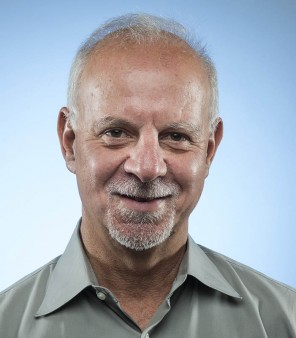
Steve Lopez is a California native who has been an L.A. Times columnist since 2001. He has won more than a dozen national journalism awards for his reporting and column writing at seven newspapers and four news magazines, and is a two-time Pulitzer finalist for commentary: in 2012, for his columns on elder care, and in 2016, for his columns on income inequality in California. He is the author of three novels, two collections of columns and a non-fiction work called “The Soloist,” which was a Los Angeles Times and New York Times best-seller, winner of the PEN USA Literary Award for Non-Fiction, and the subject of a DreamWorks movie by the same name. Lopez’s television reporting for public station KCET has won three local news Emmys, three Golden Mike awards and a share of the Columbia University DuPont Award.