Finalist: Jelani Cobb of The New Yorker
Nominated Work
By Jelani Cobb
On April 8, 1968, Representative John Conyers, from Detroit, marched through downtown Memphis with Coretta Scott King, Ralph Abernathy, Harry Belafonte, and thousands of people who had come to that city from across the country. Four days earlier, Martin Luther King, Jr., had been shot and killed there, on the balcony of the Lorraine Motel, and a fugue of disbelief and despair hovered over the crowd as it continued down the road that King had travelled. The march served as a momentary validation of King’s work, but Conyers hoped to craft a more enduring one. That week, he introduced legislation in the House of Representatives that would make King’s birthday, January 15th, a national holiday. It languished in committee.
Two months after the assassination, Coretta Scott King founded the Martin Luther King Center for Nonviolent Social Change, in Atlanta. It was intended to serve as a wellspring for works of the type to which her husband had dedicated his life, but it was quickly deployed in a secondary mission: to lobby for the holiday, which she later described as “a day of interracial and intercultural coöperation and sharing.” In 1971, the Southern Christian Leadership Conference, which King had led, delivered to Congress a petition bearing three million signatures in support of the effort. In 1973, Harold Washington, an Illinois state representative who was later elected the first black mayor of Chicago, sponsored a bill that made his state the first to recognize the holiday. A handful of other states followed, but there was little federal momentum. Coretta Scott King kept up pressure on elected officials, writing, speaking, and testifying twice before congressional committees.
In 1979, a House bill failed by five votes, even though President Jimmy Carter had endorsed it. King then enlisted the aid of Stevie Wonder, who composed “Happy Birthday,” a jaunty bit of agit-pop that included the lines “I never understood / how a man who died for good / could not have a day that would / be set aside for his recognition.” Finally, in 1983, a bill written by Representatives Jack Kemp, a Republican, and Katie Hall, a Democrat, passed in the House. In the Senate, Jesse Helms, who had denounced the 1964 Civil Rights Act as “the single most dangerous piece of legislation ever introduced in the Congress,” tried, unsuccessfully, to have the bill, which was sponsored by Edward Kennedy, sent back to committee. Undaunted, Helms moved to have King’s F.B.I. files declassified, so that the Senate might explore the specious claim that he was a Communist stooge. In a fit of anger, Daniel Patrick Moynihan threw a copy of Helms’s documents to the floor of the Senate, denouncing them as “filth.” The bill passed by a vote of seventy-eight to twenty-two, and President Ronald Reagan, despite initial reluctance, signed it into law, in November of 1983, declaring that Martin Luther King, Jr., Day would be celebrated every year on the third Monday of January.
It had taken fifteen years for Conyers’s original gesture to become a legislative reality, a journey that reflected a growing national acceptance of King’s ideals of pacifism and racial and economic equality, and a posthumous validation of his approach to social change. Nevertheless, King Day has occupied an awkward niche in the progression of American commemorations. It was not fully recognized in all the states until 1999—New Hampshire was the last. Currently, Alabama, Arkansas, and Mississippi also celebrate the birth of Robert E. Lee on the day set aside for King.
The awkwardness persists on other levels. For an activist to be honored by a government, even one hoping to recognize that activist’s principles, is an inherently contradictory event. On King’s seventy-fifth birthday, in 2004, President George W. Bush, mired in a disastrous war in Iraq, took the time to lay a wreath at King’s tomb, in Atlanta. A police barricade surrounded the President, yielding a tableau of antiwar demonstrators being kept away from the tomb of a pacifist, in deference to a man overseeing a war. In 2009, the holiday fell on January 19th, a day before the Inauguration of Barack Obama, the first African-American President. The proximity of those events suggested a kind of moral momentum, a verification that the will toward democracy wins out in the long run.
Next year, Donald Trump will preside over a holiday dedicated to a man whose principles he scarcely seems to comprehend. In a speech that King delivered in 1967, in Atlanta, he condemned the Vietnam War and warned against what he called “the triple evils of racism, economic exploitation, and militarism.” All three figured prominently in Trump’s Presidential campaign. Moreover, in 1973 the Department of Justice sued Trump Management, of which Trump was the president, for refusing to rent apartments to African-Americans. Specifically, the government charged that the company had violated the Fair Housing Act—a landmark piece of legislation passed in 1968, partly in tribute to King’s desegregation work. Now Trump, instead of calming the racial fires that he stoked during the campaign, has opted for private meetings with B-listers of black life: Don King, Ray Lewis, Jim Brown—a coalition of the compromised.
King’s insights into our society have never been more critical. In 1961, he declined an invitation from President John F. Kennedy to attend his Inauguration, but two weeks later he gave a speech outlining the ways in which Kennedy might use legislation, executive orders, and the moral authority of the Presidency to diminish racial discrimination. He closed by quoting a line from a 1947 report issued by the President’s Committee on Civil Rights, established by Harry Truman: “The United States is not so strong, the final triumph of the democratic ideal not so inevitable that we can ignore what the world thinks of us or our record.”
The divided bounty of America is such that it is a place where King was both hailed and spat upon; where he wielded influence over a President and was hounded by federal investigators; where he was afforded official accolades and was murdered on the balcony of a nondescript motel. Now, at the outset of this Presidency, King’s words to Kennedy warrant repeating. His ideals have survived him, but they have inherited the same unreconciled, and maybe irreconcilable, status. In 2009, the King holiday pointed to how far we had come. This year, it highlights the fact that we’ve arrived at a place where the familiar landmarks are missing. The Memphis marchers in 1968 held one advantage: they knew the road they were going down.
By Jelani Cobb
The dismay that the neophytes in the Trump Administration elicit tends to follow three stages: alarm at what they say, shock at what they do, and outrage at what they propose to do next. Attorney General Jeff Sessions is no political neophyte—he represented Alabama in the Senate for twenty years—but the pattern still applies. His confirmation hearing included a reminder of an indulgent jest he once made about the Ku Klux Klan. On the Senate floor, Elizabeth Warren was silenced when she tried to read from a letter in which Coretta Scott King stated her concerns about his character. And anger has met his defense of President Trump’s travel bans and immigration crackdowns, and, more recently, his attempts to undermine criminal-justice reform.
As much as anyone in the Trump Administration, Sessions seems eager to eradicate any trace of Barack Obama’s tenure. Last week, he took aim at two Obama Administration initiatives on law enforcement. One established an independent scientific commission to look into faulty forensic practices that can produce unreliable evidence in criminal trials. Sessions said that an internal committee would now handle such matters. The other sought to reduce prison sentences for nonviolent drug offenses. Instead, according to the Washington Post, Sessions will work on new policies with a veteran federal prosecutor named Steven H. Cook, who is a longtime enthusiast of the kind of severe drug-war penalties that provoked the mass-incarceration crisis in the first place.
Both measures appear to be part of a larger project: to encourage the harshest approaches to law enforcement. On April 3rd, Sessions instructed the Justice Department to review consent decrees in more than a dozen cities, including Ferguson, Newark, and New Orleans. The department also filed a motion for a ninety-day postponement of a decree worked out with the city of Baltimore after Freddie Gray died in police custody there. That filing came just four days before a scheduled public hearing on the implementation of the decree, and a Maryland federal court denied the motion, stating that to postpone the hearing “would be to unduly burden and inconvenience the Court, the other parties, and, most importantly, the public.” On April 6th, at Baltimore’s U.S. district courthouse, nearly fifty speakers urged Judge James K. Bredar to approve the decree. The next day, he did so.
A consent decree allows the Justice Department to step in when one of the nation’s eighteen thousand law-enforcement departments goes seriously awry. The decrees were created as part of the 1994 crime bill to address situations in which a “pattern or practice” of the police violated citizens’ rights. The authors had in mind the notorious, caught-on-video beating of Rodney King by four members of the Los Angeles Police Department. A report found that repeated failures by the city to address police misconduct, including brutality and racial profiling, had contributed to a climate in which, twenty-five years ago this month, the acquittal of the four officers sparked five days of rioting that left more than fifty people dead.
When a law-enforcement crisis arises, the Justice Department may choose to initiate an investigation—in Baltimore, the police commissioner himself requested one. If the department finds evidence of systematic abuse, it will negotiate an agreement with representatives of the city leadership, the affected communities, and the police. The agreement is submitted to a federal judge for approval, as happened in Baltimore, and a federal monitor is usually appointed to oversee the reforms. Since 1994, seventy police and sheriff’s departments have come under investigation; forty-one entered into reform agreements, including consent decrees. Currently, departments in fifteen cities are under federal oversight. A few weeks ago, in a meeting with civil-rights advocates, Sessions complained that oversight penalized entire departments for the actions of a few officers, but that is not the case: the Justice Department found no systematic abuse in twenty-four of its investigations, and declined to pursue oversight.
The decrees have met with some success: Los Angeles, for example, enacted reforms, including diversification, which substantially changed the way that law enforcement operates in that city, and public approval of the police has risen accordingly. Nevertheless, Sessions has expressed disdain not only for the program but for the very idea that police departments can be systemically flawed. In February, in his first speech as Attorney General, he said that the government needed “to help police departments get better, not diminish their effectiveness.” Elsewhere, however, he admitted that he had not read recent reports on Ferguson or on Chicago.
In the case of the Chicago Police Department, an investigation found that a virtual academy of worst practices led to the circumstances surrounding the death, in 2014, of seventeen-year-old Laquan McDonald—who was shot sixteen times by an officer—and a subsequent coverup of the incident. From 2012 through 2015, the C.P.D. paid out two hundred and ten million dollars to settle more than six hundred lawsuits, many of them alleging misconduct. In January, the Justice Department found that officers employed practices that “unnecessarily endanger themselves and others and result in avoidable shootings and other uses of force,” but, despite widespread local support for a consent decree, there is now little likelihood that the government will enforce one.
Sessions’s position is even more tenuous with regard to Baltimore. Last month, Rod Rosenstein, the U.S. Attorney for Maryland, announced the indictment of seven officers on racketeering charges for, among other offenses, what he referred to as “robberies by people wearing police uniforms”—seizing money from citizens who had not committed any crime. All this allegedly occurred while the department was under investigation for Freddie Gray’s death. Rosenstein is hardly an anti-police crusader; he is currently awaiting confirmation to be Sessions’s Deputy Attorney General.
Baltimore’s police commissioner, Kevin Davis, said that he was “disappointed” by Sessions’s action, adding that the city would benefit from a federal monitor who held its “feet to the fire” on reform. Chicago’s mayor, Rahm Emanuel, said, “We’re on the road to reform. We’re not getting off.” Just a few months ago, Donald Trump threatened to “send in the Feds” to fix Chicago’s crime problem. To the hypocrisies of his Presidency we may now add this one: the dangers in Chicago are compounded by his Attorney General’s refusal to do just that. If Obama’s criminal-justice reforms do not survive the Trump era, the problems they sought to address certainly will.
By Jelani Cobb
It’s often said of the Trump era that the Republic has drifted into uncharted waters, but the more damning estimation is that we are mindlessly revisiting some of the darker regions of our historical map. A century ago, President Woodrow Wilson committed American forces to what was then known as the Great War. The monstrous scale of the battle, coinciding with a rise in the number of immigrants; the mass migration of African-Americans from the South to the North, in pursuit of employment; and the shock of the October Revolution, in Russia, all served to create an atmosphere of tension and suspicion in the United States. The government responded with a crackdown on what it loosely termed “sedition.”
The newly formed Federal Bureau of Investigation obsessed over all manner of “radicals,” but particularly those African-Americans whose meekest protests of racism were regarded as subversion. African-American newspapers that reported on lynchings were deemed destructive to wartime morale, and the Post Office threatened seizure of subscription copies. This narrowing of free expression had wide-ranging implications, especially for civil-rights organizations and activists.
A 1919 document titled “Final Report on Negro Subversion,” which came to the desk of a twenty-four-year-old Justice Department staffer named J. Edgar Hoover, portrayed the civil-rights movement as potentially Bolshevik-inspired, and suggested that black discontent might easily turn into support for Communism. At the same time, the Ku Klux Klan, which had been all but crushed by a series of anti-terrorism laws passed during Reconstruction, surged back to life after the release, in 1915, of the film “Birth of a Nation.” Yet its transformation from a Southern phenomenon into a national one elicited little concern from law-enforcement officials, some of whom were members.
The nativist inclinations of the Trump Administration recall fraught moments of this past. So perhaps it is no surprise that the Hoover-era view of African-American radicalism resurfaced a week ago, when Attorney General Jeff Sessions appeared before the House Judiciary Committee. Sessions was on Capitol Hill to answer questions about his knowledge of any contacts the Trump campaign may have had with representatives of the Russian government, but he was also asked about an F.B.I. report titled “Black Identity Extremists Likely Motivated to Target Law Enforcement Officers.”
The report, which was issued in August and leaked to ForeignPolicy.com last month, argues that the increased scrutiny of police shootings of African-Americans in recent years may result in acts of violence directed at law enforcement. It cites a 2014 incident, in which a man attacked four N.Y.P.D. officers with a hatchet, and a 2016 attack on police in Baton Rouge that left three officers dead. But the primary example is the shooting during an anti-police-brutality rally in Dallas last year, when Micah Xavier Johnson, a twenty-five-year-old Army veteran who harbored resentment toward whites, in general, and toward white law-enforcement officials, in particular, killed five policemen and wounded seven more, before he himself was killed.
In discussing such incidents, the report coins the category “black-identity extremist,” which is poorly defined but features the three-word rhythm of other usefully ambiguous terms, such as “radical Islamic terrorist.” The authors argue that people sympathetic to the Sovereign Citizens movement and to the Moorish Science Temple of America, both of which reject the authority of the federal government, warrant vigilance, even though violence conducted by any such sympathizers “has been rare over the past twenty years.” In an effort to ground their conclusions in history, the authors point to radical organizations of the nineteen-seventies, such as the Black Liberation Army, which has been defunct for longer than Johnson had been alive, and for which they offer scant connection to the B.I.E. cause.
When Representative Karen Bass, of California, asked Sessions about the report, he said that he had not yet read it but he nonetheless stood by its findings. When she pressed him to cite an organization committed to the kind of violence the report warns of, he said, “There are groups that do have an extraordinary commitment to their racial identity and some have transformed themselves even into violent activists,” but declined to name any. The black-identity extremist appears to be something of a bureaucratic phantom, yet that kind can be the most difficult to exorcise. The “Final Report on Negro Subversion” prefaced a long engagement between the F.B.I. and organizations seeking to realize black rights, which included the surveillance of Martin Luther King, Jr., as well as the Bureau’s cointelpro efforts to destroy the Black Panther Party. When James Comey was the Bureau’s director, he kept on his desk a copy of the approval of Hoover’s request to wiretap King, as a reminder of the perils of organizational excess.
The killing of the five Dallas police officers—Lorne Ahrens, Michael Smith, Michael Krol, Patrick Zamarripa, and Brent Thompson—was a tragedy. But Johnson was a troubled, isolated individual with no known allegiance to any terrorist organization. Since 9/11, far-right extremists have been responsible for more attacks in the United States than terrorists acting in the name of any other cause. Yet, when Representative Bass asked Sessions if the Bureau had issued any similar report about white-identity extremists, he replied, “I’m not aware of that.”
In next month’s U.S. Senate election in Alabama, voters will choose between Doug Jones, who, as a U.S. Attorney, prosecuted two Klan members for their involvement in the 1963 bombing of the Sixteenth Street Baptist Church, in Birmingham, which killed four African-American girls, and Roy Moore, who, after being removed from the State Supreme Court, fought against the removal of provisions for racially segregated education in the state constitution. Nothing dead is buried, and what we thought was dead lives on. If the redundancy of this history offers any lesson, it’s how easy it is for concern about a vaguely defined enemy to translate into the suppression of rights—and that the targeting of marginalized groups is often the first indication that such a process is under way.
Biography
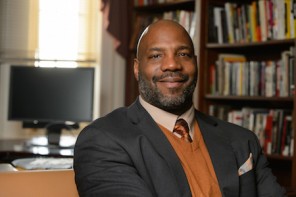
Jelani Cobb has been contributing to The New Yorker since 2012, and became a staff writer in 2015. He writes frequently about race, politics, history, and culture. His most recent book is “The Substance of Hope: Barack Obama and the Paradox of Progress.” He is a professor of journalism at Columbia University. He won the 2015 Sidney Hillman Prize for Opinion and Analysis Journalism, for his columns on race, the police, and injustice.