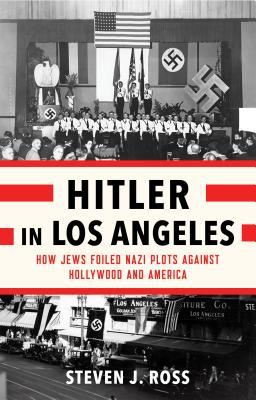
Finalist: Hitler in Los Angeles: How Jews Foiled Nazi Plots Against Hollywood and America, by Steven J. Ross (Bloomsbury)

For a terrifying, revelatory and inspiring masterpiece that probes the flourishing fascism of 1930s America, and the power of popular resistance to combat an alliance of Nazism, the Ku Klux Klan and other homegrown paramilitary groups.

Nominated Work

Hitler in Los Angeles: How Jews Foiled Nazi Plots Against Hollywood and America

The chilling, little-known story of the rise of Nazism in Los Angeles, and the Jewish leaders and spies they recruited who stopped it.

No American city was more important to the Nazis than Los Angeles, home to Hollywood, the greatest propaganda machine in the world. The Nazis plotted to kill the city's Jews and to sabotage the nation's military installations: plans existed for hanging twenty prominent Hollywood figures such as Al Jolson, Charlie Chaplin, and Samuel Goldwyn; for driving through Boyle Heights and machine-gunning as many Jews as possible; and for blowing up defense installations and seizing munitions from National Guard armories along the Pacific Coast.

U.S. law enforcement agencies were not paying close attention--preferring to monitor Reds rather than Nazis--and only Leon Lewis and his daring ring of spies stood in the way. From 1933 until the end of World War II, attorney Leon Lewis, the man Nazis would come to call "the most dangerous Jew in Los Angeles," ran a spy operation comprised of military veterans and their wives who infiltrated every Nazi and fascist group in Los Angeles. Often rising to leadership positions, this daring ring of spies uncovered and foiled the Nazi's disturbing plans for death and destruction.

Featuring a large cast of Nazis, undercover agents, and colorful supporting players, "Hitler in Los Angeles," by acclaimed historian Steven J. Ross, tells the story of Lewis's daring spy network in a time when hate groups had moved from the margins to the mainstream.

-- from the publisher
Biography

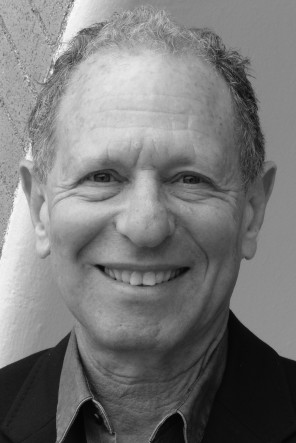
Steven J. Ross is professor of history at the University of Southern California and director of the Casden Institute for the Study of the Jewish Role in American Life. He is the author of Hollywood Left and Right, recipient of the Academy of Motion Picture Arts and Sciences’ Film Scholars Award and nominated for a Pulitzer; Working-Class Hollywood, nominated for a Pulitzer and the National Book Award; Movies and American Society; and Workers on the Edge. He lives in Southern California.

Winners

Prize Winner in History in 2018:

Jack E. Davis

An important environmental history of the Gulf of Mexico that brings crucial attention to Earth’s 10th-largest body of water, one of the planet’s most diverse and productive marine ecosystems. History

Finalists

Nominated as finalists in History in 2018:

Kim Phillips-Fein

A fine work of historical craftsmanship that revises conventional wisdom about New York’s 1975 fiscal crisis and its aftermath with sensitivity, empathy and clarity.

The Jury

Amy Dru Stanley(Chair)

Associate Professor of History

Allyson Hobbs

Associate Professor of History and Director of African & African American Studies

Fredrik Logevall*

Laurence D. Belfer Professor of International Affairs and History

Winners in History

Heather Ann Thompson

For a narrative history that sets high standards for scholarly judgment and tenacity of inquiry in seeking the truth about the 1971 Attica prison riots.

T.J. Stiles

A rich and surprising new telling of the journey of the iconic American soldier whose death turns out not to have been the main point of his life. (Moved by the Board from the Biography category.)

Elizabeth A. Fenn

An engrossing, original narrative showing the Mandans, a Native American tribe in the Dakotas, as a people with a history.

Alan Taylor

A meticulous and insightful account of why runaway slaves in the colonial era were drawn to the British side as potential liberators.

2018 Prize Winners

Staff of The Washington Post

For purposeful and relentless reporting that changed the course of a Senate race in Alabama by revealing a candidate’s alleged past sexual harassment of teenage girls and subsequent efforts to undermine the journalism that exposed it.