For a distinguished and appropriately documented book on the history of the United States, Ten thousand dollars ($10,000).

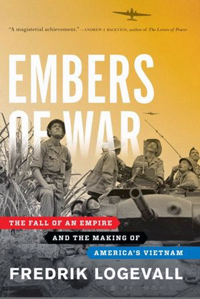
Embers of War: The Fall of an Empire and the Making of America's Vietnam, by Fredrik Logevall (Random House)

A balanced, deeply researched history of how, as French colonial rule faltered, a succession of American leaders moved step by step down a road toward full-blown war.
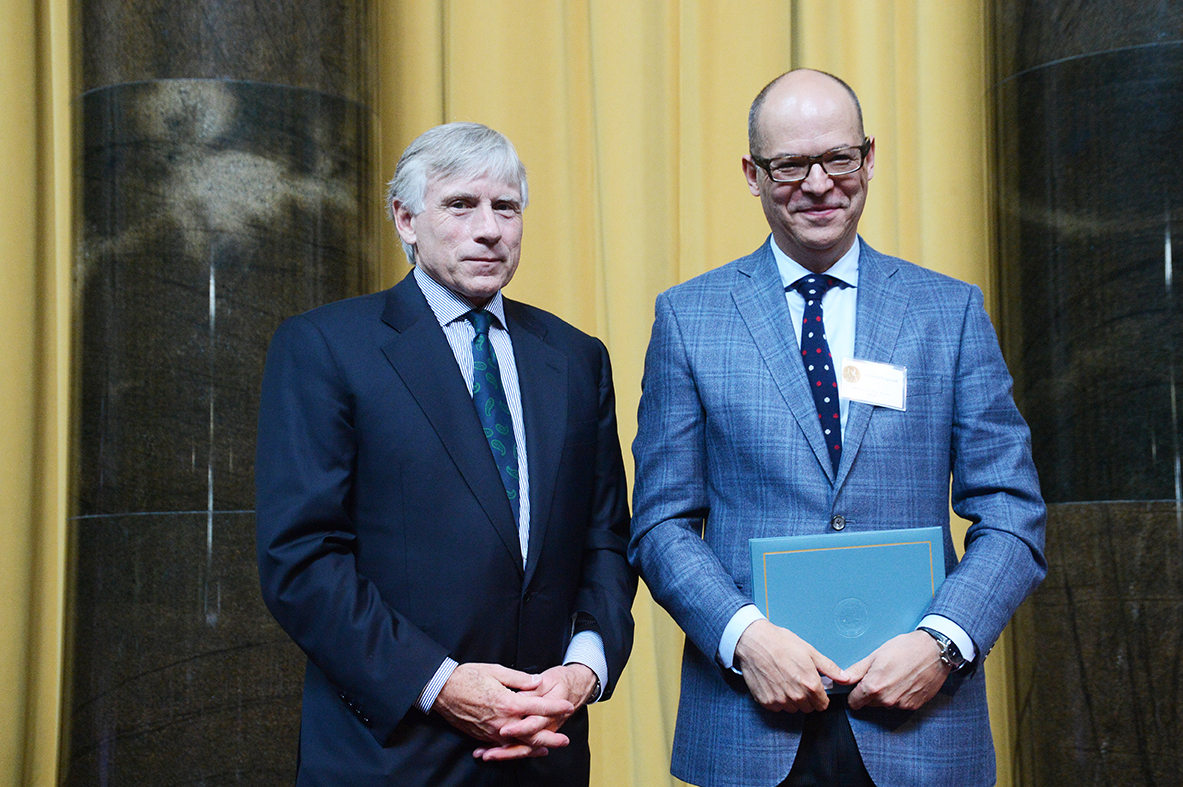
Lee Bollinger and Fredrik Logevall

Lee C. Bollinger, President of Columbia University (left), presents the 2013 History prize to Fredrik Logevall.

Winning Work

Embers of War: The Fall of an Empire and the Making of America's Vietnam

The struggle for Vietnam occupies a central place in the history of the twentieth century. Fought over a period of three decades, the conflict drew in all the world’s powers and saw two of them—first France, then the United States—attempt to subdue the revolutionary Vietnamese forces. For France, the defeat marked the effective end of her colonial empire, while for America the war left a gaping wound in the body politic that remains open to this day.

How did it happen? Tapping into newly accessible diplomatic archives in several nations and making full use of the published literature, distinguished scholar Fredrik Logevall traces the path that led two Western nations to lose their way in Vietnam. Embers of War opens in 1919 at the Versailles Peace Conference, where a young Ho Chi Minh tries to deliver a petition for Vietnamese independence to President Woodrow Wilson. It concludes in 1959, with a Viet Cong ambush on an outpost outside Saigon and the deaths of two American officers whose names would be the first to be carved into the black granite of the Vietnam Veterans Memorial. In between come years of political, military, and diplomatic maneuvering and miscalculation, as leaders on all sides embark on a series of stumbles that makes an eminently avoidable struggle a bloody and interminable reality.

Logevall takes us inside the councils of war—and gives us a seat at the conference tables where peace talks founder. He brings to life the bloodiest battles of France’s final years in Indochina—and shows how from an early point, a succession of American leaders made disastrous policy choices that put America on its own collision course with history: Harry Truman’s fateful decision to reverse Franklin Delano Roosevelt’s policy and acknowledge France’s right to return to Indochina after World War II; Dwight Eisenhower’s strenuous efforts to keep Paris in the fight and his escalation of U.S. involvement in the aftermath of the humiliating French defeat at Dien Bien Phu; and the curious turnaround in Senator John F. Kennedy’s thinking that would lead him as president to expand that commitment, despite his publicly stated misgivings about Western intervention in Southeast Asia.

An epic story of wasted opportunities and tragic miscalculations, featuring an extraordinary cast of larger-than-life characters, Embers of War delves deep into the historical record to provide hard answers to the unanswered questions surrounding the demise of one Western power in Vietnam and the arrival of another. This book will become the definitive chronicle of the struggle’s origins for years to come.

-- from the publisher
Biography

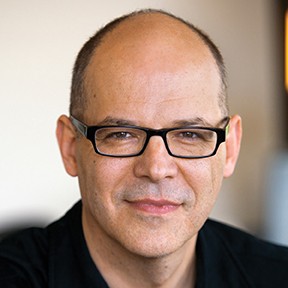
Fredrik Logevall is John S. Knight Professor of International Studies and Professor of History at Cornell University, where he serves as director of the Mario Einaudi Center for International Studies.

Finalists

Nominated as finalists in History in 2013:

Bernard Bailyn

A luminous account of how the British colonies took root amid raw brutality, often with terrible consequences for the settlers as well as the native population.

John Fabian Witt

A striking work examining how orders issued by President Lincoln to govern conduct on battlefields and in prisons during the Civil War have shaped modern laws of armed conflict.

The Jury

David M. Kennedy(Chair )*

Donald J. McLachlan Professor of History Emeritus, and director, The Bill Lane Center for the American West

Raymond O. Arsenault

John Hope Franklin Professor of Southern History

Jonathan Prude

Associate Professor of History

Winners in History

Manning Marable

An exploration of the legendary life and provocative views of one of the most significant African-Americans in U.S. history, a work that separates fact from fiction and blends the heroic and tragic.

Eric Foner

A well orchestrated examination of Lincoln's changing views of slavery, bringing unforeseeable twists and a fresh sense of improbability to a familiar story.

Liaquat Ahamed

A compelling account of how four powerful bankers played crucial roles in triggering the Great Depression and ultimately transforming the United States into the world's financial leader.

Annette Gordon-Reed

A painstaking exploration of a sprawling multi-generation slave family that casts provocative new light on the relationship between Sally Hemings and her master, Thomas Jefferson.

2013 Prize Winners

Adam Johnson

An exquisitely crafted novel that carries the reader on an adventuresome journey into the depths of totalitarian North Korea and into the most intimate spaces of the human heart.

Ayad Akhtar

A moving play that depicts a successful corporate lawyer painfully forced to consider why he has for so long camouflaged his Pakistani Muslim heritage.

Sharon Olds

A book of unflinching poems on the author's divorce that examine love, sorrow and the limits of self-knowledge.

Caroline Shaw

A highly polished and inventive a cappella work uniquely embracing speech, whispers, sighs, murmurs, wordless melodies and novel vocal effects (New Amsterdam Records).