For a distinguished and appropriately documented book on the history of the United States, Fifteen thousand dollars ($15,000).

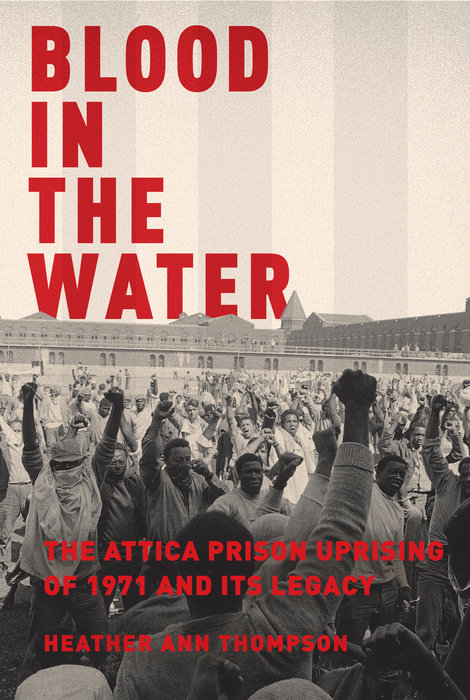
Blood in the Water: The Attica Prison Uprising of 1971 and Its Legacy, by Heather Ann Thompson (Pantheon)

For a narrative history that sets high standards for scholarly judgment and tenacity of inquiry in seeking the truth about the 1971 Attica prison riots.

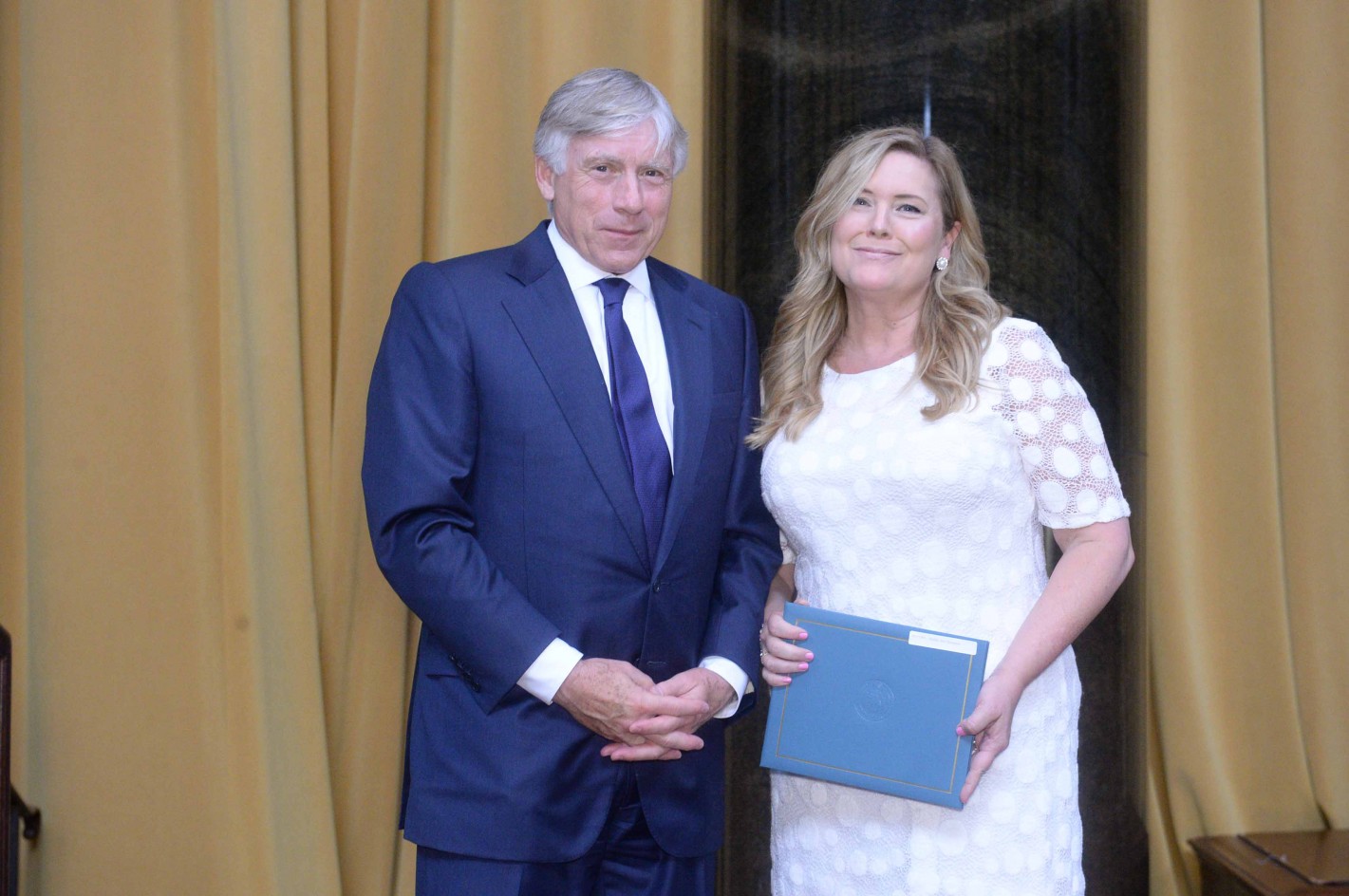
Heather Ann Thompson accepts the 2017 Pulitzer Prize in History for Blood in the Water: The Attica Prison Uprising of 1971 and Its Legacy from Columbia University President Lee C. Bollinger.

Winning Work

Blood in the Water: The Attica Prison Uprising of 1971 and Its Legacy

On September 9, 1971, nearly 1,300 prisoners took over the Attica Correctional Facility in upstate New York to protest years of mistreatment. Holding guards and civilian employees hostage, the prisoners negotiated with officials for improved conditions during the four long days and nights that followed. 

On September 13, the state abruptly sent hundreds of heavily armed troopers and correction officers to retake the prison by force. Their gunfire killed thirty-nine men—hostages as well as prisoners—and severely wounded more than one hundred others. In the ensuing hours, weeks, and months, troopers and officers brutally retaliated against the prisoners. And, ultimately, New York State authorities prosecuted only the prisoners, never once bringing charges against the officials involved in the retaking and its aftermath and neglecting to provide support to the survivors and the families of the men who had been killed.

Drawing from more than a decade of extensive research, historian Heather Ann Thompson sheds new light on every aspect of the uprising and its legacy, giving voice to all those who took part in this forty-five-year fight for justice: prisoners, former hostages, families of the victims, lawyers and judges, and state officials and members of law enforcement. Blood in the Water is the searing and indelible account of one of the most important civil rights stories of the last century.

-- from the publisher

Biography

Heather Ann Thompson is an award-winning historian at the University of Michigan. She has written on the history of mass incarceration, as well as its current impact, for The New York Times, Time, The Atlantic, Salon, Dissent, New Labor Forum, and The Huffington Post. She served on a National Academy of Sciences blue-ribbon panel that studied the causes and consequences of mass incarcerations in the United States and has given Congressional briefings on this subject. Thompson is also the author of Whose Detroit?: Politics, Labor, and Race in a Modern American City and editor of Speaking Out: Activism and Protest in the 1960s and 1970s.

Finalists

Nominated as finalists in History in 2017:

Larrie D. Ferreiro

For a book that, with flair and insight, casts the American Revolution in the fresh light of its proper context in international history.

Wendy Warren

For a groundbreaking study that alters our view of history by showing how deeply embedded slavery became in 17th-century northern colonies.

The Jury

David M. Kennedy(Chair)*

Donald J. McLachlan Professor of History, Emeritus

Jacqueline Jones*

Chair of the History Dept. and Walter Prescott Webb Chair in History and Ideas/Mastin Gentry White Professor of Southern History

Daryl Michael Scott

Chair and Professor of History

Winners in History

T.J. Stiles

A rich and surprising new telling of the journey of the iconic American soldier whose death turns out not to have been the main point of his life. (Moved by the Board from the Biography category.)

Elizabeth A. Fenn

An engrossing, original narrative showing the Mandans, a Native American tribe in the Dakotas, as a people with a history.

Alan Taylor

A meticulous and insightful account of why runaway slaves in the colonial era were drawn to the British side as potential liberators.

Fredrik Logevall

A balanced, deeply researched history of how, as French colonial rule faltered, a succession of American leaders moved step by step down a road toward full-blown war.

2017 Prize Winners

C. J. Chivers

For showing, through an artful accumulation of fact and detail, that a Marine’s postwar descent into violence reflected neither the actions of a simple criminal nor a stereotypical case of PTSD.

Peggy Noonan

For rising to the moment with beautifully rendered columns that connected readers to the shared virtues of Americans during one of the nation’s most divisive political campaigns.

Hilton Als

For bold and original reviews that strove to put stage dramas within a real-world cultural context, particularly the shifting landscape of gender, sexuality and race.

Art Cullen

For editorials fueled by tenacious reporting, impressive expertise and engaging writing that successfully challenged powerful corporate agricultural interests in Iowa.