For a distinguished and appropriately documented book on the history of the United States, Ten thousand dollars ($10,000).

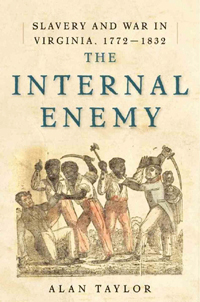
The Internal Enemy: Slavery and War in Virginia, 1772-1832, by Alan Taylor (W.W. Norton)

A meticulous and insightful account of why runaway slaves in the colonial era were drawn to the British side as potential liberators.
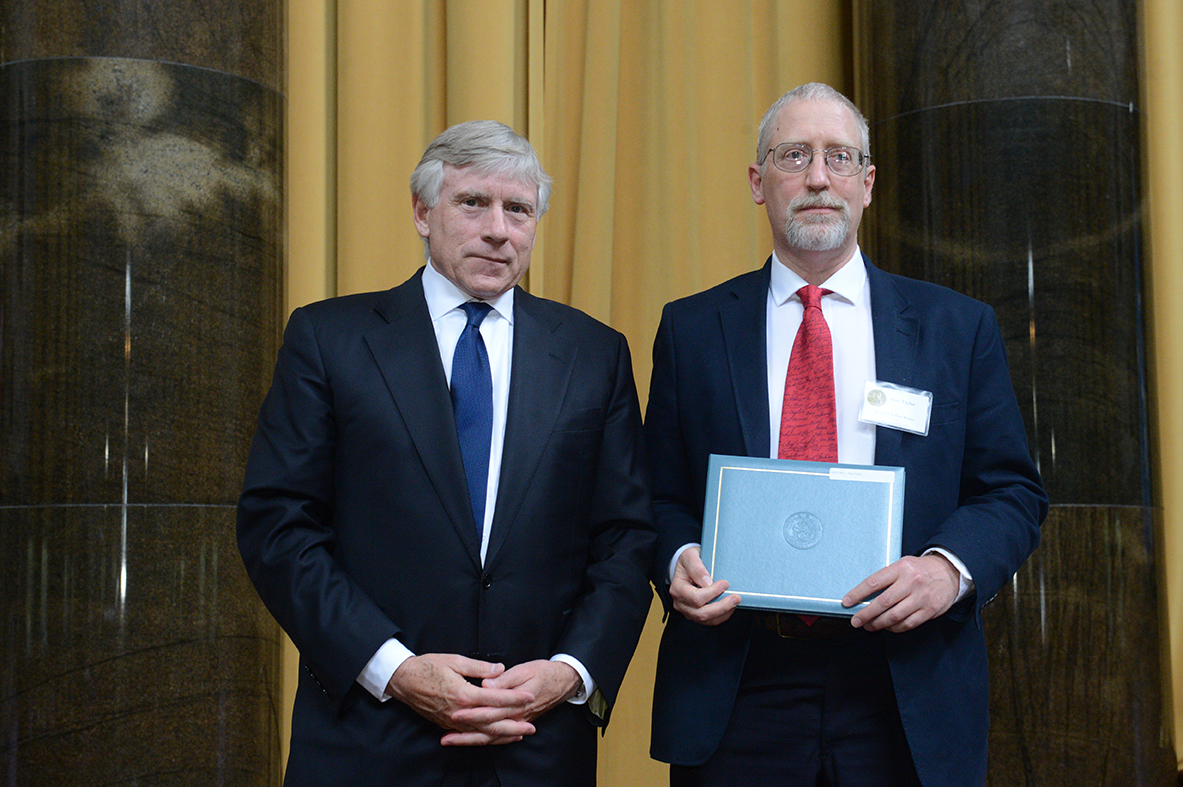
Lee Bollinger and Alan Taylor

Lee C. Bollinger, President of Columbia University (left), presents the 2014 History Prize to Alan Taylor.

Winning Work

The Internal Enemy: Slavery and War in Virginia, 1772-1832

This searing story of slavery and freedom in the Chesapeake by a Pulitzer Prize–winning historian reveals the pivot in the nation’s path between the founding and civil war.

Frederick Douglass recalled that slaves living along Chesapeake Bay longingly viewed sailing ships as "freedom’s swift-winged angels." In 1813 those angels appeared in the bay as British warships coming to punish the Americans for declaring war on the empire. Over many nights, hundreds of slaves paddled out to the warships seeking protection for their families from the ravages of slavery. The runaways pressured the British admirals into becoming liberators. As guides, pilots, sailors, and marines, the former slaves used their intimate knowledge of the countryside to transform the war. They enabled the British to escalate their onshore attacks and to capture and burn Washington, D.C. Tidewater masters had long dreaded their slaves as "an internal enemy." By mobilizing that enemy, the war ignited the deepest fears of Chesapeake slaveholders. It also alienated Virginians from a national government that had neglected their defense. Instead they turned south, their interests aligning more and more with their section. In 1820 Thomas Jefferson observed of sectionalism: "Like a firebell in the night [it] awakened and filled me with terror. I considered it at once the knell of the union." The notes of alarm in Jefferson's comment speak of the fear aroused by the recent crisis over slavery in his home state. His vision of a cataclysm to come proved prescient. Jefferson's startling observation registered a turn in the nation’s course, a pivot from the national purpose of the founding toward the threat of disunion. Drawn from new sources, Alan Taylor's riveting narrative re-creates the events that inspired black Virginians, haunted slaveholders, and set the nation on a new and dangerous course.

-- from the publisher

Biography

Alan Taylor has won the Pulitzer and Bancroft prizes for his histories of early America. He is the Thomas Jefferson Professor of History at the University of Virginia.

Finalists

Nominated as finalists in History in 2014:

Eric Schlosser

A chilling history of the management of America's nuclear arsenal, exploring the fateful challenges and chronicling the "near misses" that could have triggered a cataclysm.

Jacqueline Jones

A deeply researched examination of how race as a social invention has retained its power to organize, mark and harm the lives of Americans.

The Jury

Ann Fabian(Chair )

distinguished professor of history

Tomiko Brown-Nagin

Daniel Paul Professor of Constitutional Law and professor of history

Greg Grandin

professor of history

Winners in History

Fredrik Logevall

A balanced, deeply researched history of how, as French colonial rule faltered, a succession of American leaders moved step by step down a road toward full-blown war.

Manning Marable

An exploration of the legendary life and provocative views of one of the most significant African-Americans in U.S. history, a work that separates fact from fiction and blends the heroic and tragic.

Eric Foner

A well orchestrated examination of Lincoln's changing views of slavery, bringing unforeseeable twists and a fresh sense of improbability to a familiar story.

Liaquat Ahamed

A compelling account of how four powerful bankers played crucial roles in triggering the Great Depression and ultimately transforming the United States into the world's financial leader.

2014 Prize Winners

Donna Tartt

A beautifully written coming-of-age novel with exquisitely drawn characters that follows a grieving boy's entanglement with a small famous painting that has eluded destruction, a book that stimulates the mind and touches the heart.

Annie Baker

A thoughtful drama with well-crafted characters that focuses on three employees of a Massachusetts art-house movie theater, rendering lives rarely seen on the stage.

Megan Marshall

A richly researched book that tells the remarkable story of a 19th century author, journalist, critic and pioneering advocate of women's rights who died in a shipwreck.

Vijay Seshadri

A compelling collection of poems that examine human consciousness, from birth to dementia, in a voice that is by turns witty and grave, compassionate and remorseless.