For a distinguished and appropriately documented book on the history of the United States, Fifteen thousand dollars ($15,000).

Covered with Night, by Nicole Eustace (Liveright/Norton)

A gripping account of Indigenous justice in early America, and how the aftermath of a settler’s murder of a Native American man led to the oldest continuously recognized treaty in the United States.

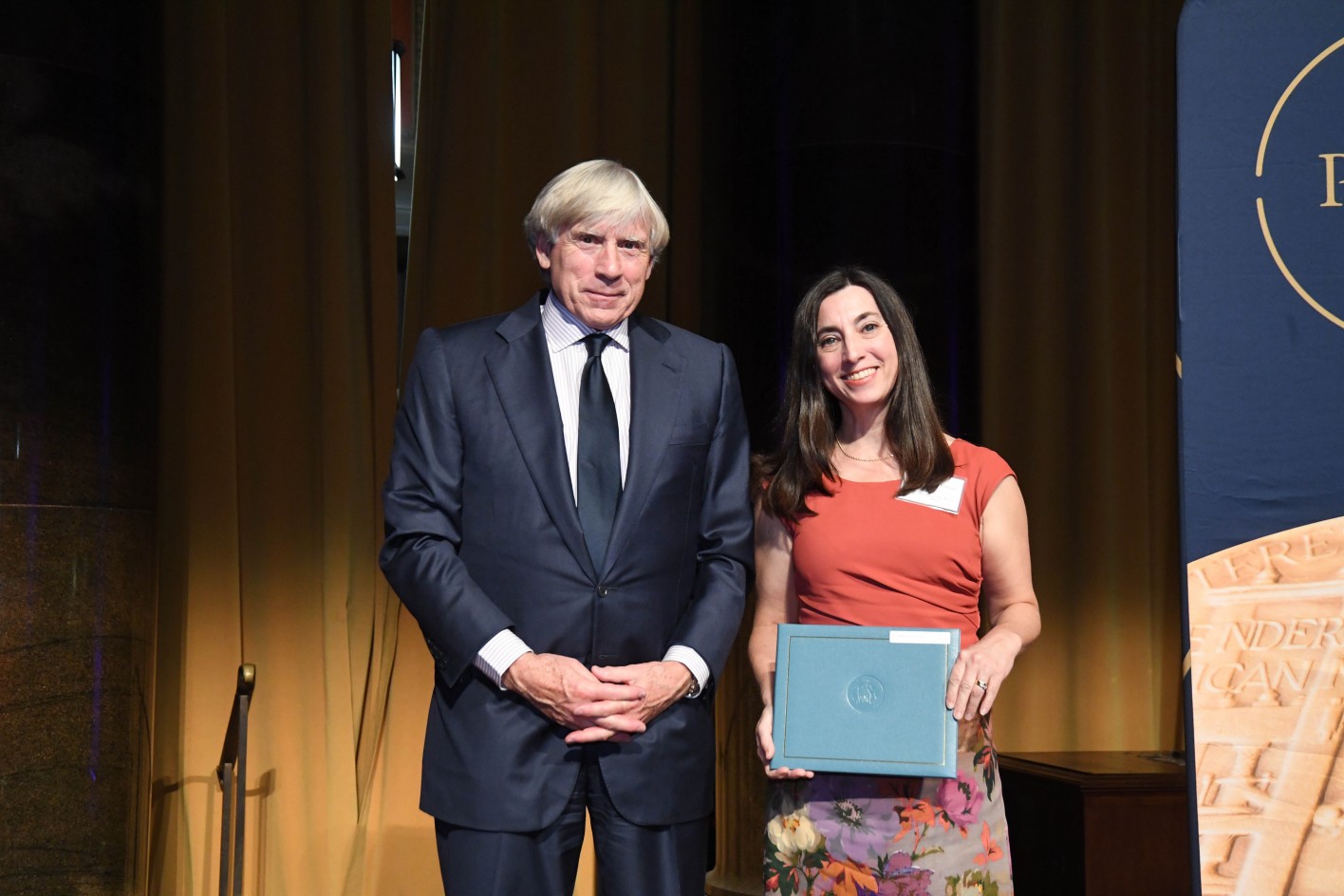
Nicole Eustace accepts a 2022 Pulitzer Prize for History from Columbia University President Lee Bollinger. (Eileen Barroso/Columbia University)

Winning Work

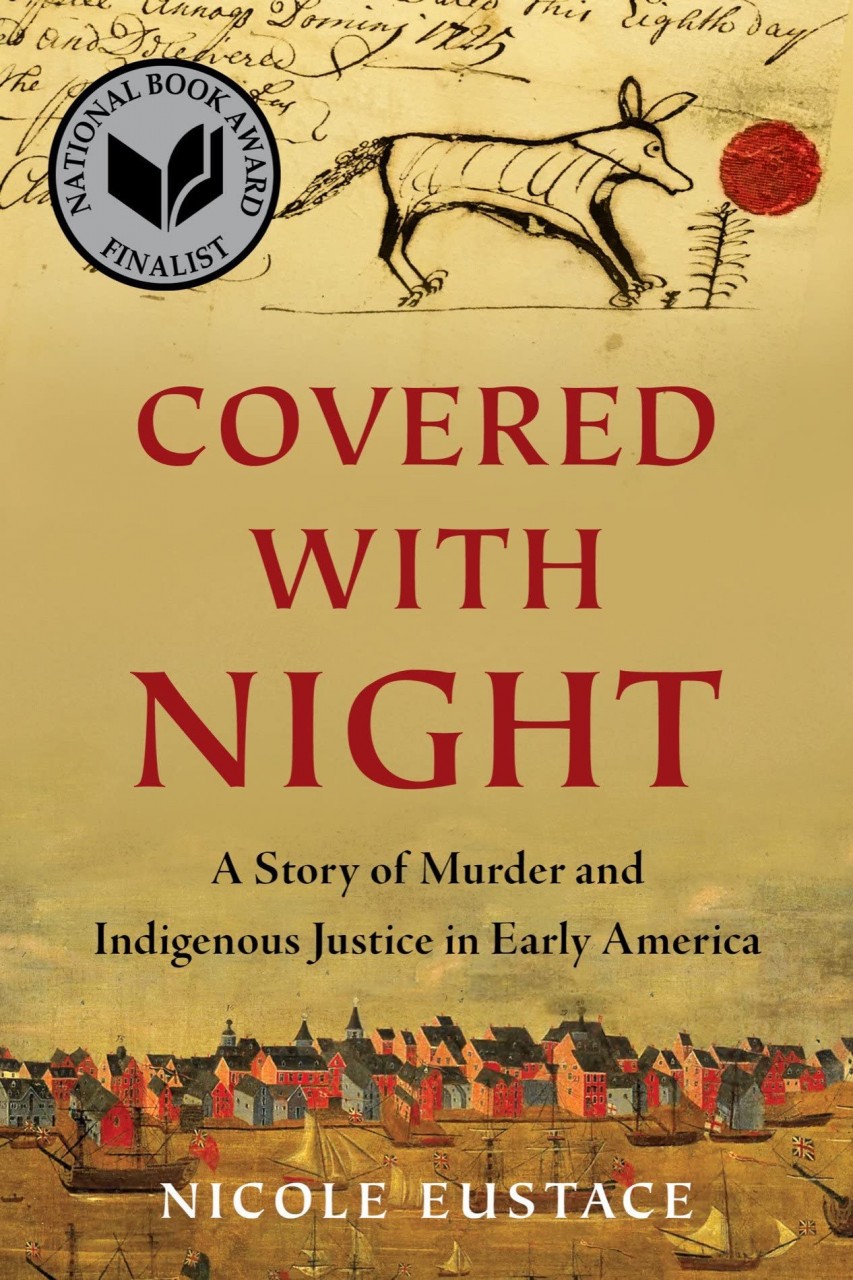
Covered with Night: A Story of Murder and Indigenous Justice in Early America


Finalist • National Book Award for Nonfiction
Best Books of the Year • TIMESmithsonian, Kirkus Reviews

An immersive tale of the killing of a Native American man and its far-reaching implications for the definition of justice from early America to today.

On the eve of a major treaty conference between Iroquois leaders and European colonists in the distant summer of 1722, two white fur traders attacked an Indigenous hunter and left him for dead near Conestoga, Pennsylvania. Though virtually forgotten today, this act of brutality set into motion a remarkable series of criminal investigations and cross-cultural negotiations that challenged the definition of justice in early America.

In Covered with Night, leading historian Nicole Eustace reconstructs the crime and its aftermath, bringing us into the overlapping worlds of white colonists and Indigenous peoples in this formative period. As she shows, the murder of the Indigenous man set the entire mid-Atlantic on edge, with many believing war was imminent. Isolated killings often flared into colonial wars in North America, and colonists now anticipated a vengeful Indigenous uprising. Frantic efforts to resolve the case ignited a dramatic, far-reaching debate between Native American forms of justice—centered on community, forgiveness, and reparations—and an ideology of harsh reprisal, unique to the colonies and based on British law, which called for the killers’ swift execution.

In charting the far-reaching ramifications of the murder, Covered with Night—a phrase from Iroquois mourning practices—overturns persistent assumptions about “civilized” Europeans and “savage” Native Americans. As Eustace powerfully contends, the colonial obsession with “civility” belied the reality that the Iroquois, far from being the barbarians of the white imagination, acted under a mantle of sophistication and humanity as they tried to make the land- and power-hungry colonials understand their ways. In truth, Eustace reveals, the Iroquois—the Six Nations of the Haudenosaunee, as they are known today—saw the killing as an opportunity to forge stronger bonds with the colonists. They argued for restorative justice and for reconciliation between the two sides, even as they mourned the deceased.

An absorbing chronicle built around an extraordinary group of characters—from the slain man’s resilient widow to the Indigenous diplomat known as “Captain Civility” to the scheming governor of Pennsylvania—Covered with Night transforms a single event into an unforgettable portrait of early America. A necessary work of historical reclamation, it ultimately revives a lost vision of crime and punishment that reverberates down into our own time.
Biography

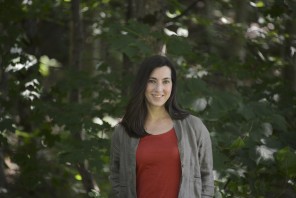
Nicole Eustace is professor of history at New York University. She is the author of 1812: War and the Passions of Patriotism and Passion Is the Gale: Emotion, Power, and the Coming of the American Revolution. She lives in Mamaroneck, New York.

Finalists

Nominated as finalists in History in 2022:

Kate Masur

A sweeping and resonant consideration of abolitionist work, begun decades before the Civil War, that eventually became America’s first civil rights movement–an account that is also a deep study of federalism in jurisprudence, politics and history.

The Jury

Tera Hunter(Chair)

Edwards Professor of American History and African American Studies, Princeton University

David W. Blight*

Sterling Professor of History, African American Studies and American Studies, Yale University

Matthew J. Garcia

Ralph and Richard Lazarus Professor of History, Latin American, Latino, and Caribbean Studies, and Human Relations, Dartmouth College

Margaret D. Jacobs

Charles Mach Professor of History, University of Nebraska – Lincoln

Christopher Tomlins

Elizabeth Josselyn Boalt Professor of Law, University of California, Berkeley

Winners in History

Marcia Chatelain

A nuanced account of the complicated role the fast-food industry plays in African-American communities, a portrait of race and capitalism that masterfully illustrates how the fight for civil rights has been intertwined with the fate of Black businesses.

W. Caleb McDaniel

A masterfully researched meditation on reparations based on the remarkable story of a 19th century woman who survived kidnapping and re-enslavement to sue her captor.

David W. Blight

A breathtaking history that demonstrates the scope of Frederick Douglass’ influence through deep research on his writings, his intellectual evolution and his relationships.

Jack E. Davis

An important environmental history of the Gulf of Mexico that brings crucial attention to Earth’s 10th-largest body of water, one of the planet’s most diverse and productive marine ecosystems.

2022 Prize Winners

Jennifer Senior of The Atlantic

For an unflinching portrait of a family’s reckoning with loss in the 20 years since 9/11, masterfully braiding the author's personal connection to the story with sensitive reporting that reveals the long reach of grief.