Lisa Falkenberg, Michael Lindenberger, Joe Holley and Luis Carrasco of the Houston Chronicle
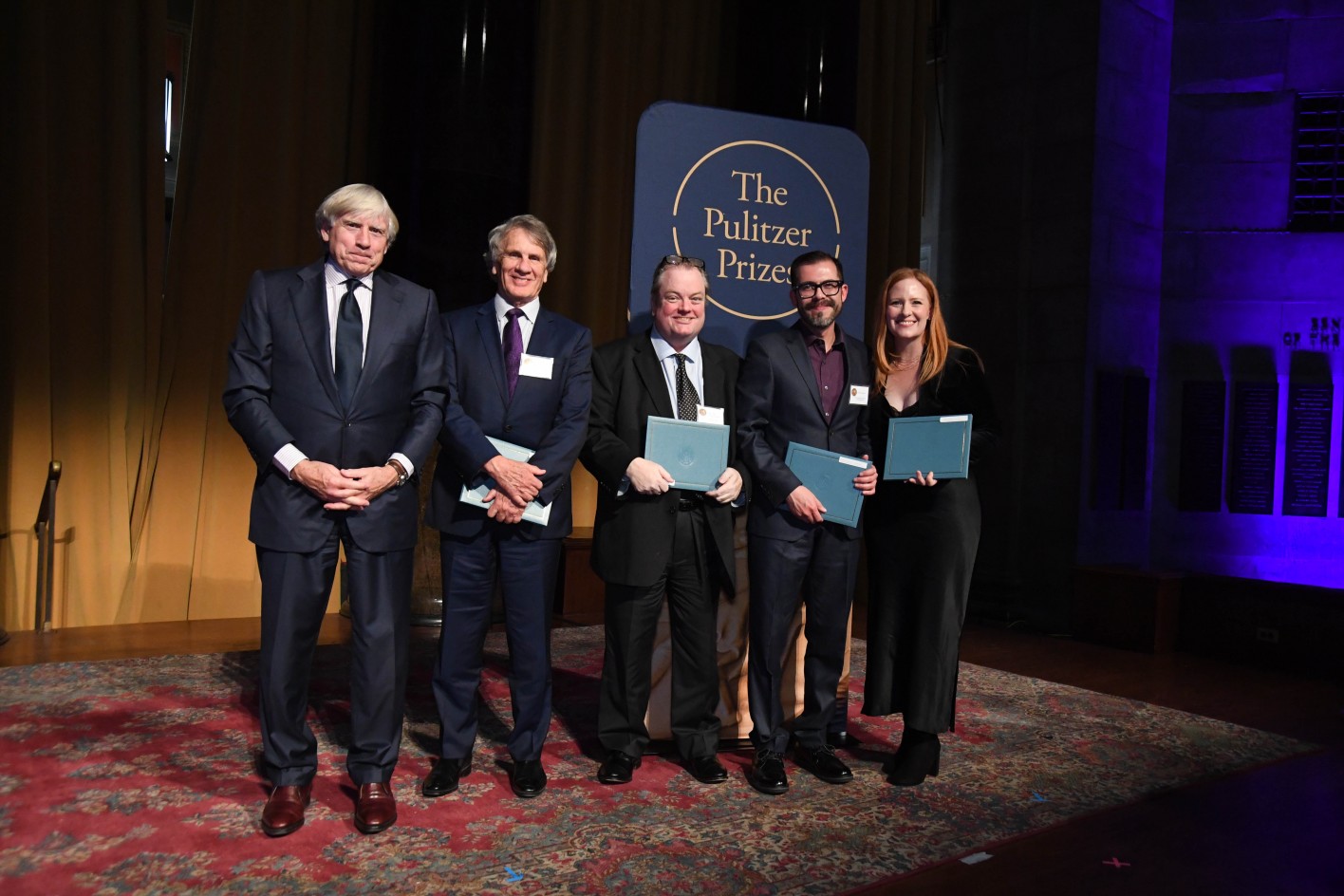
Joe Holley, Michael Lindenberger, Luis Carrasco and Lisa Falkenberg accept the 2022 Pulitzer Prize for Editorial Writing from Columbia University President Lee Bollinger. (Eileen Barroso/Columbia University)
Winning Work
In Texas, we have our share of politicians who peddle wild conspiracy theories and reckless rhetoric aiming to inflame.
Think U.S. Rep. Louie Gohmert’s “terror baby” diatribes or his nonsensical vow not to wear a face mask until after he got COVID, which he promptly did.
This editorial board tries to hold such shameful specimens to account.
But we reserve special condemnation for the perpetrators among them who are of sound mind and considerable intellect — those who should damn well know better.
None more than U.S. Sen. Ted Cruz.
A brilliant and frequent advocate before the U.S. Supreme Court and a former Texas solicitor general, Cruz knew exactly what he was doing, what he was risking and who he was inciting as he stood on the Senate floor Wednesday and passionately fed the farce of election fraud even as a seething crowd of believers was being whipped up by President Donald Trump a short distance away.
Cruz, it should also be noted, knew exactly whose presidency he was defending. That of a man he called in 2016 a “narcissist,” a “pathological liar” and “utterly amoral.”
Cruz told senators that since nearly 40 percent of Americans believed the November election “was rigged” that the only remedy was to form an emergency task force to review the results — and if warranted, allow states to overturn Joe Biden’s victory and put their electoral votes in Trump’s column.
Cruz deemed people’s distrust in the election “a profound threat to the country and to the legitimacy of any administrations that will come in the future.”
What he didn’t acknowledge was how that distrust, which he overstated anyway, was fueled by Trump’s torrent of fantastical claims of voter fraud that were shown again and again not to exist.
Cruz had helped spin that web of deception and now he was feigning concern that millions of Americans had gotten caught up in it.
Even as he peddled his phony concern for the integrity of our elections, he argued that senators who voted to certify Biden’s victory would be telling tens of millions of Americans to “jump in a lake” and that their concerns don’t matter.
Actually, senators who voted to certify the facts delivered the truth — something Americans haven’t been getting from a political climber whose own insatiable hunger for power led him to ride Trump’s bus to Crazy Town through 59 losing court challenges, past state counts and recounts and audits, and finally taking the wheel to drive it to the point of no return: trying to bully the U.S. Congress into rejecting tens of millions of lawfully cast votes in an election that even Trump’s Department of Homeland Security called the most secure in American history.
The consequences of Cruz’s cynical gamble soon became clear and so did his true motivations. In the moments when enraged hordes of Trump supporters began storming the Capitol to stop a steal that never happened, desecrating the building, causing the evacuation of Congress and injuring dozens of police officers, including one who died, a fundraising message went out to Cruz supporters:
“Ted Cruz here,” it read. “I’m leading the fight to reject electors from key states unless there is an emergency audit of the election results. Will you stand with me?”
Cruz claims the message was automated. Even if that’s true, it’s revolting.
This is a man who lied, unflinchingly, on national television, claiming on Hannity’s show days after the election that Philadelphia votes were being counted under a “shroud of darkness” in an attempted Democratic coup. As he spoke, the process was being livestreamed on YouTube.
For two months, Cruz joined Trump in beating the drum of election fraud until Trump loyalists were deaf to anyone — Republican, Democrat or nonpartisan journalists, not to mention state and federal courts — telling them otherwise.
And yet, Cruz insists he bears no responsibility for the deadly terror attack.
“Not remotely,” he told KHOU Thursday. “What I was doing and what the other members were doing is what we were elected to do, which is debating matters of great import in the chamber of the United States Senate.”
Since the Capitol siege, Cruz has condemned the violence, tweeting after the death of Capitol Police officer Brian Sicknick that “Heidi and I are lifting up in prayer” the officer’s family and demanding the terrorists be prosecuted.
Well, senator, those terrorists wouldn’t have been at the Capitol if you hadn’t staged this absurd challenge to the 2020 results in the first place. You are unlikely to be prosecuted for inciting the riots, as Trump may yet be, and there is no election to hold you accountable until 2024. So, we call for another consequence, one with growing support across Texas: Resign.
This editorial board did not endorse you in 2018. There’s no love lost — and not much lost for Texans needing a voice in Washington, either.
Public office isn’t a college debate performance. It requires representing the interests of Texans. In your first term, you once told reporters that you weren’t concerned about delivering legislation for your constituents. The more you throw gears in the workings of Washington, you said, the more people back home love you. Tell that to the constituents who complain that your office rarely even picks up the phone.
Serving as a U.S. senator requires working constructively with colleagues to get things done. Not angering them by voting against Hurricane Sandy relief, which jeopardized congressional support for Texas’ relief after Harvey. Not staging a costly government shutdown to repeal the Affordable Care Act in 2013 that cost the economy billions. Not collecting more enemies than friends in your own party, including the affable former House Speaker John Boehner who famously remarked: “I get along with almost everyone, but I have never worked with a more miserable son of a bitch in my life.”
We’re done with the drama. Done with the opportunism. Done with the cynical scheming that has now cost American lives.
Resign, Mr. Cruz, and deliver Texas from the shame of calling you our senator.
Now and then through the years we Texans have sent our share of buffoons, grifters, lightweights, crooks, ignoramuses and ego-obsessed asses to Washington as representatives of the people. W. Lee “Pass the Biscuits, Pappy” O’Daniel comes to mind. So does Martin Dies, Jr., chairman of the witch-hunting House Un-American Activities Committee. So does Louie Gohmert.
In the wake of last week’s Capitol insurrection, add to this ignominious list the state’s junior senator, Ted Cruz and the 16 Republican House members who voted in favor of discredited objections to certifying the presidential election results in one or more swing states. The Seditious Sixteen voted to short-circuit democracy even after a Trump mob rampaged through the Capitol, even after blood was shed in the halls of that august building.
Also add to this list Ken Paxton. Like a tongue-flapping pup hopping into the bed of his master’s pickup on a jaunt to town, our indictment-burdened, ethics-allergic attorney general headed to Washington last week for no reason other than to stand adoringly alongside President Donald Trump and echo his unhinged calls for insurrection. We called for Paxton to resign months agobecause of his own legal problems, including a bloodless insurrection of sorts in Paxton’s own office, staged by whistleblowers in his senior staff alleging corruption. That’s not to mention the outlandish lawsuit he filed in the U.S. Supreme Court seeking to overturn the will of millions of American voters. After his servile pilgrimage to Washington, there’s no question regarding what he ought to do now.
A rampaging mob ransacked the Capitol, our citadel of democracy. Five people, including a Capitol police officer, are dead. Trump and his MAGA maniacs have made a mockery of our democratic institutions, as both Democrats and Republicans (including Cabinet members past and present and White House staff) have acknowledged.
We must hold our elected officials accountable for their role in this outrage. Congress members such as Randy Weber, Brian Babin and even Troy Nehls, the former Fort Bend County sheriff who has been praised for protecting colleagues during the siege, ended the day where they began: in craven thrall to Trump and his true-believers. They must be censured, at the very least.
Cruz, whose resignation we called for Friday, was leader of this fanatic voyage. Since he first announced his candidacy for the U.S. Senate back in 2012, Texans have known that he is a talented constitutional lawyer, that he’s smart (if not wise) and that he’s a facile speaker (given to grandiloquence). He has known all along that President Trump’s bellowing accusations about election fraud were bogus. He knew they were about as likely as candidate Trump’s claim back in 2016 that Cruz’s father was in on the JFK assassination.
He knew, and yet Cruz — like his Missouri counterpart, Josh Hawley — is nothing if not calculating. And nakedly ambitious. With presidential ambitions paramount, Cruz calculated that he could ride a Trumpian wave into the White House, perhaps in 2024, by embracing the current president’s absurdist fantasies. Cynicism thy name is Cruz. And Hawley.
The assault that desecrated democracy just a few hours earlier prompted Georgia Sen. Kelly Loeffler and several of her GOP colleagues to reconsider their votes, acknowledging the harm of substantiating a myth of a stolen election that had already driven people to violence.
Not Cruz. With characteristic grating unctuousness, he continued to call for an “emergency audit” of the election results. By a vote of 93 to 6, his fellow senators shut him down.
Not every Texas Republican signed on. Cruz’s senior colleague, U.S. Sen. John Cornyn, warned that challenging the election results would do “irreparable harm to our great democracy.”
U.S. Rep. Michael McCaul, whose district stretches from Austin to Houston, told the Chronicle that he voted to certify the election results because “if Congress chooses to ignore or second-guess the electoral votes cast by the states, it will set a dangerous precedent that could call into question the very institution of our democracy.”
Newly re-elected Congressman Chip Roy, whose district runs from Austin into the Hill Country, told his colleagues late Wednesday night that voting to confirm the presidential election results could sign be synonymous with signing his political death warrant.
“But so be it,” he said. “I swore an oath to uphold the Constitution of the United States, and I will not bend its words into contortions for political expediency.”
Well done, sir.
U.S. Rep. Kevin Brady of The Woodlands, unable to vote because he tested positive for COVID-19, said he also would have voted to certify: “I would remain true to the conservative constitutional principles that guide me, and vote to accept the Electoral College votes as legally certified by each state.”
Here are the 16 Texans in the House who voted to flout democracy: Jodey Arrington of Lubbock; Brian Babin of Woodville; Michael Burgess of Pilot Point; John Carter of Round Rock; Michael Cloud of Victoria; Pat Fallon of Sherman; Louie Gohmert of Tyler; Lance Gooden of Terrell; Ronny Jackson of Amarillo; Troy Nehls of Richmond; August Pfluger of San Angelo; Pete Sessions of Waco; Beth Van Duyne of Irving; Randy Weber of Friendswood; Roger Williams of Austin; and Ron Wright of Arlington.
Notice that U.S. Rep. Dan Crenshaw, the flamboyant former Navy Seal who represents a Houston-area district, is not on the insurrectionist list.
“These people have been lied to en masse by the millions,” he said Thursday. “In the sense that they were led to believe Jan. 6 was anything but a political performance for a few opportunistic politicians to give a five-minute speech. That is all that it ever was. People were lied to.”
We couldn’t have said it better ourselves, and yet Crenshaw is being disingenuous if he doesn’t acknowledge his role in perpetuating those lies. He was among the 126 House members who supported Paxton’s unsuccessful attempt to challenge the election results in four states. He could have been as open and honest with his constituents then as he was after the riot, and yet Crenshaw, who of all people knows that bravery comes with a cost, was unable for weeks to show that political courage.
In a Dec. 14 interview with this editorial board, Crenshaw tried to downplay the harm of joining Trump’s legal charade, arguing that it would be far more dangerous if people believed the legal process hadn’t been taken “as far as you can possibly take it.”
“You think it’s more damaging to let even the notion of a Trump win carry on,” he told the board. “… I don’t agree that that’s very damaging. I think a lot of people are upset. But they’re not going to do anything that’s harmful.”
How wrong he was. And he should acknowledge it.
We Texans need to remind ourselves that through the years we also have sent principled public servants to Congress, both Republicans and Democrats. Sam Rayburn comes to mind. So does Kay Bailey Hutchison. So does Barbara Jordan. In this hour of crisis, Cruz and his craven colleagues need to step aside. Bigger, braver, more principled Texans must step up. Texas needs them. So does the nation.
We dare you. Name a state official anywhere in this nation who yearns to snuff out voter fraud more than the steadfast soldiers of election security here in Texas.
Gov. Greg Abbott, in his feverish clairvoyance, declared voter fraud an “epidemic” way back in 2005, when he was still attorney general, and launched a unit to root it out. His successor, Ken Paxton, beefed up his election integrity unit last year, with prosecutors toiling more than 22,000 hours on the taxpayers’ dime hunting for polling improprieties. In November, Lt. Gov. Dan Patrick topped them all by dangling a $1 million bounty, payable from his own campaign account, to anyone who came forward with information leading to a voter fraud conviction.
So, if voter fraud is the scourge of our democracy, if it’s capable of stealing a presidential election, as some claim, if it’s widespread enough to qualify for “emergency” status in the state Legislature to ratchet up voting restrictions, then surely, the proof of its magnitude lies in Texas.
Indeed it does. After 15 years of looking for election fraud among the 94 million votes cast in Texas elections since 2005, the Texas Attorney General’s office has dutifully prosecuted all of 155 people. Add to that 19 cases cataloged by the conservative Heritage Foundation, which include federal and county prosecutions, and you get a grand total of 174.
That’s not a typo. It’s not 174,000 or 17,400 or even 1,740.
Together, they represent .000185 percent of the total votes cast — or 1 in 540,000 voters. Statistically, voters are more likely to get struck by lightning than to be prosecuted for voter fraud.
And yet, 174 isn’t nothing. If even one of these individuals perpetrated wide-scale fraud that robbed other Texans of their electoral voice or stole a major election or even resulted in a hefty prison sentence, that might provide a whiff of excuse for the zealous pursuit of fraudulent voters.
Alas, most crimes were so minor that only 33 of the 174 perpetrators went to jail, most for less than a year. An analysis of media accounts and the attorney general’s prosecution records obtained by this editorial board through the Texas Public Information Act shows that most cases ended with plea agreements — pre-trial diversion deals or probation. Of the 33 people who were sentenced to any jail time, none were the criminal masterminds conjured up to instill fear in the hearts of freedom-loving Americans.
Some are felons who were not yet eligible to vote again, a few were small-town politicians falsely registering voters, others filled out another person’s absentee ballot. Only five cases — yes, five out of 94 million — involved voter impersonation at the polls, that near-mythic species of voter fraud that launched Texas’ epic battle for a voter ID law.
The harshest sentence, eight years, was handed down in 2017 to Rosa Maria Ortega, a legal resident from Mexico who said she did not know she was ineligible to vote. She did so twice, both times for Republicans.
So, what of the “epidemic” Abbott declared in 2005? A year later, he had rooted out about a dozen people, mostly Black and Latino seniors, accused of assisting others in casting their absentee ballots — a practice that had been largely allowed until 2004.
And what of Paxton’s beefy voter fraud unit and its 22,000 hours, nearly double the time logged on such cases two years earlier? It resolved only 18 minor cases in 2020, all of them Harris County residents who gave false addresses on their voter registration forms.
And what of Patrick’s $1 million bounty? In a bit of interstate theatrics, Pennsylvania Lt. Gov. John Fetterman has called dibs on the money for his state, since he reported several Trump supporters in Pennsylvania who have been charged in voter fraud schemes. Patrick hasn’t been amused, telling reporters who inquired about the situation recently “don’t ask me stupid questions.”
Stupid questions really aren’t the problem, though. It’s the stupid answers that are so vexing — none more than the shady sums supplied in the topsy-turvy world of voter fraud mathematics.
Take 531. That’s the number Paxton’s office shamelessly touted up until two weeks ago on its website as the tally of “successfully prosecuted election fraud offenses” since 2004, conveniently leaving out the fact that in truth only 155 people had been charged, often with a stack of offenses stemming from a single incident.
Officials also had to correct the number of pending cases they reported to lawmakers after initially claiming there were more than 500 — most of them filed within the past year. After documents obtained by the ACLU of Texas showed a discrepancy, the AG’s office had to reflect reality and clarified there were 43 pending cases involving 510 charges.
We can understand why Texas’ top Republicans want to hide that reality, and the true picture of voter fraud in Texas. It isn’t alarming. It isn’t scary. It doesn’t foment the kind of fear and mistrust in the electoral system that Republicans need to push through onerous voting requirements that disproportionately target minorities, who tend to vote Democratic.
Some more reality: The prosecution of voter fraud was a top priority for the George W. Bush presidential administration, which tasked the U.S. Department of Justice with investigating and pursuing any allegations. As reported by the New York Times in 2007, after a concerted five-year effort, only 120 people had been charged, resulting in 86 convictions.
Former President Donald Trump, who fancifully alleged he would have won the popular vote in 2016 if millions of undocumented immigrants hadn’t voted, launched a voter fraud commission in 2017 to investigate but the group disbanded in less than a year, finding no evidence of widespread fraud.
The Heritage Foundation database of voter fraud cases nationwide includes 801 criminal convictions since 2000 with 80 defendants going through a diversion program. That’s 881 cases out of more than 392 million votes cast in that same period in presidential elections alone.
Of course, the Heritage database does include four Texas cases in the past 20 years where elections were actually overturned, a reminder that valid prosecutions of real voter fraud are important. In a 2014 case, three people went to prison after voting in a referendum in the Woodlands Road Utility District when they didn’t live there. In three other cases, all in 2018, a City of Mission mayoral runoff was voided after the challenger was found to have bribed voters and tampered with ballots, a Kleberg County justice of the peace election was overturned after seven relatives of the longtime office holder who didn’t live in the precinct voted and a Kaufman County Court GOP primary was invalidated after a “vote harvester” was found to have submitted illegal mail-in ballots.
No one disputes that election security is critical. Fraud at the ballot box is a crime. But an honest, clear-eyed look at the numbers in Texas shows what study after study has found: voter fraud is exceedingly rare.
Even the conservative Fifth Circuit Court of Appeals deemed voter fraud an “almost nonexistent problem,” pondering aloud in a 2016 opinion on Texas’ voter ID bill why busy lawmakers in such a vast state would devote so much time to an issue of microscopic magnitude.
The reason is clear: politics. The GOP has pursued an agenda of voter suppression using the threat of fraud as cover, even as real attempts to swing our elections — through disinformation by Russia, for example — are discounted as political attacks.
Even if you believe that a single instance of voter fraud is one too many, that 174 cases in 15 years is all the evidence you need to back more voting restrictions in Texas, it’s a false choice that Republicans are selling. Making it harder each legislative session to vote actually undercuts election security, sowing distrust in our system and in each other.
Republicans won’t give up this fight — they can’t. It’s the only means of survival for a party that has refused to open its doors to new voters and so has resolved to lock them out instead.
That’s why it’s on us, every Texan who knows the truth, to shout it, share it, to stamp out Republicans’ big lie of voter fraud. Every time you hear our leaders declare it an “epidemic” or a legislative “emergency” or a “steal” that must be stopped, ask them: Where are the numbers?
They know very well. It isn’t Texas voters trying to pull off massive fraud. It’s our leaders.
Gaze through the glass and observe: that terrifying menace to democracy, that elusive predator of the polling place, that enemy of integrity whose insatiable appetite for electoral participation you have been taught to fear and loathe.
Behold! The Fraudulent Voter.
Emblazoned with the scarlet letter “F,” we present Crystal Mason — 46, mother of three, grandmother of three, and ostensibly, voter fraud mastermind who served 11 months in prison after voting illegally in Tarrant County in 2016.
How did she pull off this most shameful of dastardly deeds? Did she conspire? Accept a bribe? Tamper with some elderly nursing home resident’s mail-in ballot?
No. She drove through the rain to vote at Baptist Tabernacle Church in Rendon, near Fort Worth. Her name wasn’t on the list. She says a poll worker suggested she cast something called a provisional ballot, which would count only if she was deemed eligible to vote. She carefully scrawled out all the required information from her ID card. She left and didn’t give it a second thought.
Until months later. With Donald Trump in the White House making claims that widespread voter fraud had cost him the popular vote, Mason found herself arrested and charged with voting illegally.
In the end, her vote didn’t help Tarrant County go blue. In fact, her vote didn’t count at all. Mason was deemed ineligible because she was still on supervised release tied to a 2011 federal tax conviction. Mason and her then-husband had inflated tax refunds filed on behalf of clients. It was a terrible mistake, she says, and she paid the consequences: five years in prison.
“That was the hardest thing ever in my life, to be taken away from my kids,” Mason said in an interview. “So, I had a goal. I had a plan. I came out, I came out running. Show my kids that even though you hit a bump in the road, you can still get back on track.”
At the time of the 2016 election, she had completed her time in prison but had two more years left on federal supervised release. She maintains she didn’t know that she had to wait until that period was over before she could register to vote again in Texas.
The law didn’t care. She was convicted in a one-day bench trial of a second-degree felony. She was torn from her children and the life she was trying to rebuild.
She went from a confused voter to a useful prop in a carnival magic act, one in which the Texas GOP thrills its trembling audience by making the phantom of voter fraud appear out of thin air.
Except, Mason isn’t a side show act. She’s a person. With a family. With flaws, yes. But also with the right to make an honest mistake if that’s all it was. She’s currently on bond awaiting an appeal of her voter fraud conviction and lives in fear of going back to prison.
“Think about waking up every day with your freedom on the line,” she said. “Imagine my mental state knowing it’s a possibility that I might leave my kids.”
The grand illusion of voter fraud may be entertaining at times, easy fodder for late-night comics and captivating to true-believing GOP voters, but it isn’t a victimless act. Although people are rarely prosecuted because voter fraud is nearly non-existent in this country, the Republican pursuit of it ensnares ordinary people, largely minorities, whose lives are interrupted if not upended, whose freedom may be deprived with a jail sentence, whose minor errors are depicted as subversive threats.
All this is happening for one reason: to justify harsh election restrictions targeting minority voters who tend to vote Democratic. Indeed, the American Civil Liberties Union estimates that Black and Latino voters, most of them women, have made up 72 percent of Attorney General Ken Paxton’s voter fraud prosecutions since 2015.
It’s part of a century-long scheme to preserve white conservative hegemony in state politics.
But do step right up, folks, and observe — not the reigning villain of Republican imaginations, but the victim of a cruel reality.
When Mason voted in 2016, she was recently out of prison, enrolled in beauty school and ready to take up her civic responsibility, which her mother had always taught her included voting.
“My mama, soon as the kids turn 18, she got the voter registration cards, she’s taking you to get your IDs and stuff,” Mason said. “She holds those cards like they’re gold.”
What Mason didn’t know and what no one told her, a probation official confirmed at trial, is that because she hadn’t finished supervised release, she wasn’t allowed to vote.
She was so sure that the judge would agree it was all just a big misunderstanding that she took her attorney’s advice and opted for a bench trial — with no jury, just a judge deciding her fate.
Turns out, though, Texas law doesn’t care whether a voter intended to deceive anyone. All prosecutors had to prove is that Mason knew two things simultaneously: that she was still under federal supervision and that she was casting a vote. Case closed.
On appeal, she argued that not only was she unaware of the rules but that the provisional ballot should have protected her from prosecution because it worked just as intended: allowing officials to check her vote and to toss it out when they deemed her ineligible. The courts disagreed, saying provisional ballots are only meant for eligible voters, to verify such things as whether the ballot was cast at the right place.
In upholding Mason’s conviction, the Fort Worth Court of Appeals acknowledged that “the evidence does not show that she voted for any fraudulent purpose,” but that her motive didn’t matter. “Not knowing the law is no excuse.”
While that may be the letter of the law, we can’t imagine it’s the spirit of the Texas election code, touted repeatedly by lawmakers as a weapon to root out actual fraud. Although far too often these efforts are aimed at individual voters rather than politicos who stand to gain the most from stealing an election.
In a cruel twist, Mason’s illegal voting conviction violated the terms of her federal supervised release and landed her back in jail for 10 more months even though she would have otherwise remained free during her state appeal.
“It’s this very kind of circular punishment, where she’s getting jail time on both sides,” says Thomas Buser-Clancy, a Texas attorney for the ACLU involved in the case. “She never should have been prosecuted.”
Mason’s provisional ballot was one of more than 67,000 cast in the 2016 Texas election, according to federal data. More than 50,000 of them were rejected, but Mason was the only one prosecuted.
In a hopeful development, the Texas Court of Criminal Appeals recently agreed to review Mason’s case and will decide if she remains free or if she goes back to prison for five years.
It should be an easy decision.
Mason doesn’t belong back in prison any more than she belongs in a political sideshow. She should have checked her eligibility before she voted, but the system caught the mistake and protected the integrity of the election. By continuing to punish her so harshly, the state shines a light on its real motives: intimidating voters.
Fortunately, it didn’t work on Mason or her family. Her kids not only got fired up — they got involved, eventually as volunteers for Beto O’Rourke’s 2018 close-but-no-cigar U.S. Senate campaign.
“They were walking up and down the street, encouraging people to vote, telling people my story,” she says, noting that she’s been telling everyone that voting is the best way to thwart the election fraud trap.
“I’m walking on faith, and I’m trusting God,” she says. “I know that the right thing is going to be the outcome.”
That’s never a foregone conclusion in Texas. But if the good Lord and the folks on the Criminal Court of Appeals want to give justice a hand, we urge them to step right up.
Oh, if only the White Man’s Primary Association of Dimmit County could see us now.
They and all the pioneers of similar all-white political organizations that sprang up in counties across Texas after Reconstruction would see their legacy well-preserved, their cunning strategies of restricting Black and Latino voting access well-heeded.
While they’d probably be flattered to see their protégés still relying on the same pretext they used to suppress minority voting — ‘voter fraud’ — they might wonder why, 100 years later, Texas lawmakers haven’t gotten some new material. And why, after courts have repeatedly debunked the notion of widespread voter fraud, Texans are still falling for it.
But here we are in 2021, with the Texas Senate having just passed SB 7, another attack on ballot access under the guise of “election integrity.” It would ban such threatening practices as voting after 9 p.m., drive-thru voting, and dropping off an absentee ballot in a secure drop box.
For anybody under the impression that President Trump invented the boogeyman of widespread voter fraud, or that maybe Republican strategist Karl Rove dreamed it up after that troubling close call in 2000 between George W. Bush and Al Gore, we’ve got some news for you, and some history.
Texas politicians have been crying voter fraud since at least 1902, when they used it to justify a poll tax. Supporters claimed that charging Black and Mexican-American laborers nearly a whole day’s pay to cast a ballot would make their votes too expensive for their political bosses to buy.
The true intent for the poll tax, according its architect A. W. Terrell, was to “protect the citizen” against “corrupt methods at the polls” and to eliminate “irresponsible voters,” or so he claimed in a 1906 piece published in the Dallas Morning News, headlined “Purity of Ballot.”
For ruling conservatives in this state — first white Democrats, now white Republicans — “voter fraud” is the trusty password that unlocks an arsenal of underhanded, often unconstitutional, tricks to retain political power and keep it out of the hands of those deemed undeserving of a voice and unqualified for a role in governing. Namely, Black and brown folks.
In a chilling exchange cited in the Fifth Circuit’s 2016 opinion on the Texas voter ID law, the court quotes the testimony of Vernon Burton, an historian of the South and race relations, who was asked about Texas’ “stated rationale” for each of its attempts to disenfranchise minority voters.
“What, in your opinion, was the stated rationale for the enactment of all-White primaries in Texas?” an attorney asked.
“The stated rationale was voter fraud,” Burton replied.
And “for the use of secret ballot provisions in Texas?”
“The stated rationale was to prevent voter fraud,” Burton replied.
And “for the use of the poll tax in Texas?”
“The stated rationale by the State was to prevent voter fraud,” Burton replied.
And “for re-registration requirements and voter purges?”
“The stated rationale was voter fraud,” Burton replied.
“Dr. Burton,” the attorney asked, “in your expert opinion, did these devices actually respond to sincere concerns or incidents - incidences of voter fraud?”
“No,” Burton replied.
It’s not that voter fraud didn’t exist in Texas history — it did; see Lyndon Johnson’s 1948 Senate election. But voter fraud in this century is extremely rare: only 174 people have been prosecuted out of 94 million votes since 2005.
And it’s not as if legislative heists of voter rights aren’t happening elsewhere — they are; see Georgia. But lawmakers in Texas, which has the most restrictive election laws in the country and a perpetually rock-bottom voter turnout rate, appear to have been the most successful in their thievery.
Texans who want it to stop must understand how it came to be.
For more than a century, Texas lawmakers have played whack-a-mole with the voting access of minorities, whom political leaders naturally viewed as threatening to the status quo of systemic racism and white hegemony.
As post-Civil War Reconstruction ended, Texas was among the Southern states that robbed freed Blacks of their newfound voting power through several schemes that were crafted to appear race-neutral but targeted the poor and less-educated, knowing they were disproportionately Black and brown. The laws included barring assistance for illiterate voters and those who needed interpreters, and more overt measures such as white-only primaries that specifically barred Black voters, and in some areas, Mexican-Americans, from choosing candidates in the only elections that mattered in a one-party state.
In his book, historian David Montejano describes Dimmit County’s white primary, quoting from a 1914 issue of the Carrizo Springs Javelin, which frequently editorialized for the system: it “absolutely eliminates the Mexican vote as a factor in nominating county candidates, though we graciously grant the Mexican the privilege of voting for them afterward.”
Another racist law in 1922 outright banned Black voters from Texas primaries. When the Supreme Court declared it unconstitutional in 1927, lawmakers allowed political parties to decide who could participate in primaries, which Democrats promptly did — once again excluding all non-white voters under a law that wasn’t overturned until 1944.
After the 24th Amendment banned the poll tax in 1964, Texas lawmakers wasted no time replacing it with a restrictive annual re-registration policy. After that was ruled unconstitutional in 1971, Texas hustled to enact a voter purge law that required the entire electorate to re-register. The Justice Department stopped it from being implemented.
That was only possible because, in 1975, Texas’ sordid history of voter suppression earned it a spot on the list of jurisdictions singled out in Section 5 of the Voting Rights Act that required them to prove to the Justice Department or a federal judge that voting changes didn’t discriminate.
But in 2011, Texas lawmakers broke norms, suspended rules and sidelined other priorities amid an urgent $27 billion budget shortfall to pass what Gov. Rick Perry deemed emergency legislation: requiring a picture ID to vote.
Even though Republicans claimed to have patterned SB 14 after a similar law in Indiana, Texas’ version was intentionally callous, providing no work-around for indigent voters, as Indiana and even Georgia had, and tailoring its list of acceptable IDs to the desired electorate: a concealed handgun license was acceptable identification; a student ID was not.
The law was blocked for years in the courts, including almost immediately after a federal judge in Washington D.C. ruled that it didn’t pass federal preclearance requirements. But just two years later, Texas’ dreams were answered by a landmark Supreme Court ruling striking down those requirements.
The justices reasoned that Texas and other states on the list, most in the South, had mended their racist ways enough to skip having to clear voting law changes.
“Our country has changed,” Chief Justice John Roberts wrote, giving way to tragic optimism. “While any racial discrimination in voting is too much, Congress must ensure that the legislation it passes to remedy that problem speaks to current conditions.”
Texas promptly demonstrated its own current conditions.
“Within mere hours of the court’s decision, the Texas governor and attorney general both announced that the state would enforce SB 14 immediately,” Burton, the historian, wrote in a Louisiana Law Review article. “As a result, Texas was able to allow SB 14 to act as a modern-day version of the poll tax, restrictive voter registration laws, and similar devices Texas utilized throughout its history to suppress minority voting rights.”
Court challenges continued for several years, during which time a federal judge in Corpus Christi found in 2014 and again in 2017 that lawmakers intentionally discriminated against minority voters. The law should have died when the Supreme Court refused to hear Texas’ appeal but instead, lawmakers tweaked it just enough for the Fifth Circuit in 2018 to allow it to stand.
The victory, if partial, only encouraged more voting restrictions, out-sized punishments and intimidation tactics to curb minority voting.
In the current session, Texas lawmakers, having ransacked nearly every inch of ballot access that the courts would thus far allow, have run so short on voter suppression ideas that they are getting desperately creative: allowing partisan poll observers to hound voters with cell phone cameras and threatening county clerks with a state jail felony if they attempt to mass-mail ballot applications.
Republican leaders pushing the restrictions accuse critics of “race-baiting” and insist their efforts are about securing elections. Sure they are: securing elections for themselves.
Integrity is no more the goal for them than it was for the white primary associations of the 1900’s. Only today’s voter fraud warriors have laser pointers.
In a video presentation leaked earlier this month, a GOP precinct chair calls on thousands of white Republicans in “safe” Houston suburban precincts to form an election integrity “brigade” and have the “courage” to volunteer at polling places where he says “problems are occurring.”
If they don’t, he says, “this fraud down here is really going to continue.” He doesn’t define “this fraud” or say where “down here” is. He doesn’t have to.
He simply moves his laser pointer along a map, tracing the circumference of greater Houston, the most ethnically and racially diverse city in the nation.
Ask yourself: If Texas voters are truly clamoring loud and clear, in broad daylight, for the voting restrictions that GOP leaders tell them will protect election security, why do lawmakers insist on passing the legislation in the dead of night?
There’s a certain irony, and brazen hypocrisy, in the fact that Republican senators were perfectly comfortable voting past midnight last month on a bill that would ensure Texas voters cannot do the same at the late-night polling places Republicans are trying to ban.
Of course, resorting to desperate and unusual methods to pass controversial pet legislation is not novel in Texas. Back in 2016, the conservative 5th Circuit Court of Appeals remarked with obvious skepticism at the “virtually unprecedented” treatment officials gave Texas’ harsh voter ID legislation in 2011 — such as bestowing it with emergency designation, suspending rules to expedite, bypassing regular committee processes in both chambers. The court said the “radical procedural departures” lent credence to accusations of “discriminatory intent.”
You don’t say.
A voting bill that truly protects people’s rights instead of raiding them doesn’t need a shroud of darkness or legislative chicanery to prevail. It doesn’t run from the sun or shrivel under scrutiny. Only lies do.
The biggest problem Republican lawmakers have in pushing restrictive voting legislation in the name of integrity is that they themselves have none.
The latest example came Thursday, as the House Elections Committee abruptly took up Senate Bill 7, the upper chamber’s main voter-suppression legislation, without any warning and leaving no room for public comment. The bill aids voter intimidation by letting partisans film voters they find suspicious and takes aim at voting innovations that helped increase turnout in blue Harris County, including drive-thru voting.
Chairing the Elections Committee is none other than state Rep. Briscoe Cain, R-Deer Park, a young lawyer who earned his stripes in Texas-style voter integrity politics by proudly tweeting a photo of himself in November, in aviator glasses and a cowboy hat pulled low, announcing that he was headed to Pennsylvania to join Donald Trump’s quest to overthrow the presidential election through baseless allegations of voter fraud.
It surprised many when incoming House Speaker Dade Phelan entrusted Cain with his first chairmanship. It has been less surprising that Cain’s excellent adventure in committee leadership has, well, flunked most heinously. Last week, Cain blindsided fellow lawmakers by introducing a motion to substitute SB 7 with the language of his own bill, HB 6. His move, to hear him reason it, required no public discussion, since the committee had already discussed and approved the House bill.
Cain played it coy as Democrats sought clarification and questioned whether this would gut SB 7 and replace it wholesale with the language in HB 6. “I wouldn’t say that,” he responded.
Cain, speaking over lawmakers’ objections that they didn’t have time to consider the substituted language, likely would have bullied through if not for his fellow Republican, state Rep. Travis Clardy, of Nacogdoches, refusing to cast a vote.
After the committee reconvened later that day, Clardy supported the measure and the revised SB 7 — to mirror HB 6 — passed on a party-line vote. Still, it was nice that however briefly, at least one Republican on the committee believed that if you claim election bills are about honest elections, you should show a little honesty in discussing them.
In March, Chairman Cain — yet, again — broke with legislative rules in a decidedly less successful scheme. He left about 200 people who traveled to the Capitol to testify on HB 6 twiddling their thumbs after he strayed from procedure in a hasty attempt to block testimony from Rep. Nicole Collier, D-Fort Worth, chair of the Texas Legislative Black Caucus.
In April, the Senate approved SB 7 in the middle of the night — after a slew of amendments that few had a chance to read in full — with few people watching. As reported by the Chronicle, lawmakers adjourned at 1:39 a.m. April 1, then cleverly reconvened one minute later at 1:40 a.m. to declare a new legislative day, complete with a new roll call and a fresh prayer — thus complying with public notice rules without slowing down the bill’s passage.
“If you really think you’re securing the election, do it in the light of day,” says Emily Eby, an attorney with the Texas Civil Rights Project. “If you really think you’re preserving the integrity of the ballot box, do it in front of Texans.”
Of course, Republican lawmakers don’t think anything of the sort. Not if they understand basic math, anyway. An analysis of voter fraud cases by this editorial board found that over the past 15 years and more than 94 million votes cast in Texas elections, the Texas Attorney General’s Office has prosecuted only 155 people, with few of them facing charges serious enough to warrant jail time.
The GOP’s true motivation is not preventing fraud in voting, but preventing broader voting across demographic lines from an electorate that’s growing younger and more diverse. The only threat at the polls is the GOP’s attempt to bar the door.
In a letter to U.S. Attorney General Merrick Garland sent Thursday, Democrats on the elections committee expressed their dismay at Cain’s actions, and the GOP’s disregard for dissent.
“The viewpoints of minorities are an unimportant nuisance that is an obstacle to their continued control of Texas,” the legislators wrote.
The double meaning there is painfully clear, as minority voters — who tend to cast their ballots for Democrats — are the expressed target of voting restrictions.
Some might suggest that we take comfort in the fact that HB 6 doesn’t curb voter rights quite as much as SB 7. But that’s like choosing whether to take an ice pick or a chainsaw to democracy.
Texans should not be forced to suffer either when there is absolutely no cause — at least, no cause other than the partisan one that Republicans dutifully serve at Texans’ expense, in the wee hours, when they think you are sleeping.
Kentucky was nobody’s model of voter access when Republican Michael Adams was elected secretary of state in 2019. As in Texas, the GOP’s calls for “election integrity” had become a battle cry, and the myths of widespread voter fraud grew as thick as the bluegrass all over the state’s famed horse country, despite nary a blade of evidence.
The fears stoked for years by President Trump and his party only intensified after a historic surge in turnout among urban voters toppled Republican Gov. Matt Bevin, a brash businessman turned populist politician whose twitter tirades, contempt for the political establishment and personal wealth had drawn endless comparisons to Trump. It wasn’t just that he lost by a mere 5,136 votes but that he lost to a nemesis of sorts: the attorney general with whom he had so frequently clashed as governor who just happened to be the son of Bevin’s predecessor, the Obama-supporting Gov. Steve Beshear.
Many Republicans were convinced of shenanigans.
Adams knew better — “We had a clean, fair election. Andy Beshear won, but half of the state felt otherwise,” he says. Still, he hadn’t hesitated to campaign that year on the fertile issue of “ballot security,” making promises for reforms that would ward against voter fraud, and won handily, becoming only the third Republican secretary of state since 1973.
“In a way, it doesn’t matter if it’s real,” he said of widespread voter fraud, “about half our voters believe it. So my job was to try to restore that confidence.”
What he did next separates him from Republican leaders in Texas, who ought to heed his example. As the state’s top election official, he could have sowed doubts about Beshear’s win. Instead, he vouched for its legitimacy and pushed an agenda in the state legislature aimed at making it both harder to cheat and easier to vote.
“Instead of going around and attacking Democrats, I developed legislation that could win support from Democrats and Republicans,” Adams told the editorial board last week.
Adams knew he had to deliver on his promises to beef up security, starting with the state’s first voter ID law, which Democrats had been blocking for years: “Doing so would also give me street cred with the Republican base and lawmakers — and I could use that to then go and get additional voting access.”
But he chose to invite in critics of the proposed voter ID bill to “kick the tires” and make it “a humane law” that did not disenfranchise voters. One of those critics? The American Civil Liberties Union, which we’d venture a guess is not on Gov. Greg Abbott’s list of advisers.
At first, it was tough sledding in the General Assembly. Republican lawmakers in the early 2020 session tolerated the compromise voter ID bill but they would not pass the other voting reforms Adams had hoped would boost Democrats’ trust in the system. His proposals would have added early voting, made requesting absentee ballots easier, and other measures aimed at bringing what he conceded was Kentucky’s restrictive, antiquated voting system into the modern era.
As the pandemic began spreading last spring, things began to change. Lawmakers left town early, and suddenly the governor had new emergency powers to make temporary changes in voting for the 2020 primaries and general election. Beshear soon decided to work with Adams and develop a bipartisan framework for those changes.
Such compromise is nearly unheard of in Texas, where Republicans have dominated state government for decades and see no reason to consult with the minority party representing nearly half the state, including every big city. But just imagine how such collaboration would work here, how much fairer and effective policies could be if the governor would just show Mayor Sylvester Turner or Harris County Judge Lina Hidalgo the courtesy every once in a while to ask for their opinions.
Beshear explained in a recent interview with the editorial board how it worked in Kentucky: “When the pandemic hit, I was able to have a face-to-face sit-down with our secretary of state, a Republican. It was a meaningful conversation that didn’t have anything to do with party.”
Beshear said they agreed on two priorities: To have a safe election that didn’t put voters or poll workers at risk of getting COVID, even if that meant delaying the hotly contested 2020 primary, and to boost turnout despite the obstacles raised by the virus.
The changes worked well.
“Our two elections had more options for Kentuckians to vote than ever in our history,” the governor said.
Like Texas, Kentucky embraced early voting. Unlike Texas, Kentucky officials added the no-excuse absentee ballot. They also created a portal where voters could submit and track their absentee ballots, and set up regional voting centers where voters could have more space to cast their ballots in person. And while Texas’ governor limited even the largest counties to just one drop box for absentee ballots, Kentucky established drop boxes wherever they were needed, including 20 locations in Louisville alone.
“The response was incredible,” Beshear said.
Given the partisan fever of the 2020 elections, which included then-Senate Majority Leader Mitch McConnell’s re-election, many in the GOP bashed Adams for working so closely with the governor. They preferred the approach of Kentucky’s new Republican attorney general, who had taken to suing the governor whenever he could. Party leaders began referring to the secretary of state as “Benedict Adams.”
“They thought I had betrayed them in the midst of a heated election season,” Adams recalled.
In promoting genuine election integrity, he had taken a risk that could have easily backfired for his party and his own political future.
But when the 2020 votes were counted, a funny thing had happened. Voting had surged, but the results had solidified the GOP’s hold on the state, not weakened it. Trump and McConnell had both won by a landslide, and the GOP picked up seats in both the House and the Senate.
By the time lawmakers had returned for the 2021 session, that reality had begun to tamp down anger over Adams’ working with Beshear on voting issues. “They were able to see, when you make voting easy, it doesn’t change who wins or loses. It just makes it so more people participate,” Adams said.
This session, Adams was the leading force behind new efforts to expand the franchise permanently. Some things, he said, had no chance and he didn’t try. Keeping no-excuse absentee voting was out. But other efforts became law as Kentucky adopted early voting. Lawmakers also created new voting centers that would allow for increased options for in-person voting, and made permanent the online portals introduced during the pandemic to register and request ballots. The new law also allows absentee voters to correct or “cure” ballots when they discover a mistake.
Adams and Beshear both call that progress, and Adams notes GOP lawmakers might still have quashed the efforts if U.S. Sen. Rand Paul, who’ll be on the ballot next year, hadn’t signaled his support. Beshear is especially proud of work restoring voting rights to those who have completed felony sentences. Beshear still argues voter ID was unnecessary. “Wide-spread fraud doesn’t exist. And these new statutes and limitations are not only not necessary, they do run the risk of disenfranchising people. We have to resist that.”
Adams says he knows perfectly well fraud in Kentucky is rare — but he also says it’s foolish for Democrats to insist it never happens. It does, sometimes. “But when it does happen, it’s almost always in rural areas, in small elections and usually in primaries. So it’s Republicans stealing from Republicans or Democrats stealing from Democrats.”
It should be prosecuted when discovered, he said, but it’s almost never aimed at elections that go beyond local concerns about jobs and patronage.
Kentucky, despite the modest changes, is still hardly a model for voter access. But by working with Kentucky’s Democratic governor, Adams was able to make progress, and head off the worst instincts of hyper-partisans in his own party to restrict access further.
He did it by compromise, and by prioritizing a forgotten virtue of election integrity: that all eligible voters should find it easy and worthwhile to participate.
That ensures elections are truly a reflection of the entire electorate, and not a curated assemblage one party self-selects to preserve power.
Across America, some states are following Texas’ path and making it harder to vote. In other places, including in New Jersey and Virginia and in the U.S. Congress, robust voter expansion efforts are underway.
Kentucky offers a middle path, one that should be more acceptable in deep red Texas. But then, that would require Texas leaders to get in the ring and fight fairly for voters’ support. That would mean breaking the voter suppression habit — easier said than done for a party that has developed a dependency on it, compensating for an insecurity so profound Republicans feel threatened by something as benign as late-night voting, among the practices they’re trying to ban this session.
If Kentucky shows us anything it’s that a party needn’t cheat to win. They just need a vision that appeals to a broad coalition of voters. And in Texas, there’s the rub.
Biography
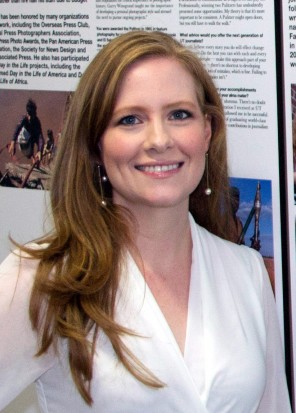
Lisa Falkenberg is the Chronicle’s vice president/editor of opinion. A Pulitzer Prize-winning journalist with more than 20 years’ experience, Falkenberg leads the editorial board and the paper’s opinion and outlook sections, including letters, op-eds and Gray Matters.
Falkenberg wrote a metro column at the Chronicle for more than a decade that explored a range of topics, including education, criminal justice and state, local and national politics. In 2015, Falkenberg was awarded the Pulitzer for commentary, as well as the American Society of News Editors’ Mike Royko Award for Commentary/Column Writing for a series that exposed a wrongful conviction in a death case and led Texas lawmakers to reform the grand jury system. She was a Pulitzer finalist in 2014.
Raised in Seguin, Texas, Falkenberg is the daughter of a truck driver and a homemaker, and the first in her family to go to college. She earned a journalism degree from the University of Texas at Austin in 2000. She started her career at The Associated Press, working in the Austin and Dallas bureaus. In 2004, Falkenberg was named Texas AP Writer of the Year.
She joined the Chronicle in 2007 as a roving state correspondent based in Austin.
Falkenberg is the mother of two daughters, ages 12 and 9.
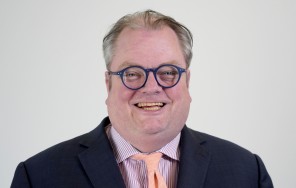
Michael A. Lindenberger is deputy opinion editor. He joined the Chronicle in 2018 after 14 years at The Dallas Morning News, where he was a city hall reporter, transportation writer, and Washington correspondent for business before joining the Editorial Board as a columnist and editorial writer in 2016. He’s been a state correspondent and bureau chief for The Courier-Journal in Kentucky and for many years was a contributing national legal affairs correspondent for Time and Time.com.
He leads the day-to-day operations of the Chronicle’s editorial board and writes a regular column.
A Kentucky native, Lindenberger is a cocktail aficionado and founded BourbonStory.com, a blog about the worldwide bourbon boom. He’s also a teacher, public speaker and graduate of the Louis D. Brandeis School of Law at the University of Louisville and a 2012-13 John S. Knight Journalism Fellow at Stanford University.
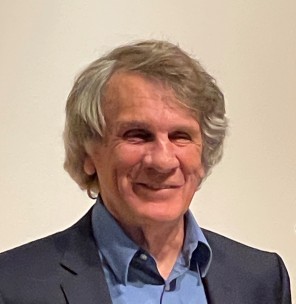
Joe Holley is a former editorial page editor and columnist for newspapers in San Antonio and San Diego and a staff writer for The Washington Post. He was a Pulitzer finalist in editorial writing in 2017. He has been a regular contributor to Texas Monthly and Columbia Journalism Review and is the author of two books, including a biography of football hero, Slingin' Sammy Baugh. He joined the Houston Chronicle in 2009 and after his retirement, continues to contribute occasional editorials as an auxiliary member of the editorial board.
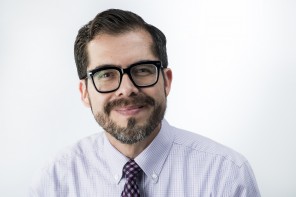
Luis Carrasco is a former editorial writer and member of Houston Chronicle's editorial board. Before joining the Chronicle in 2019, he was part of the editorial board at the Arizona Daily Star in Tucson, where he received several statewide awards for editorial and column writing. In his almost 20 years in journalism, he has been a reporter and editor for English and Spanish-language publications in Texas, Arizona and Tennessee. Luis was born in El Paso but grew up across the border in Ciudad Juárez.