Marcus Yam of the Los Angeles Times
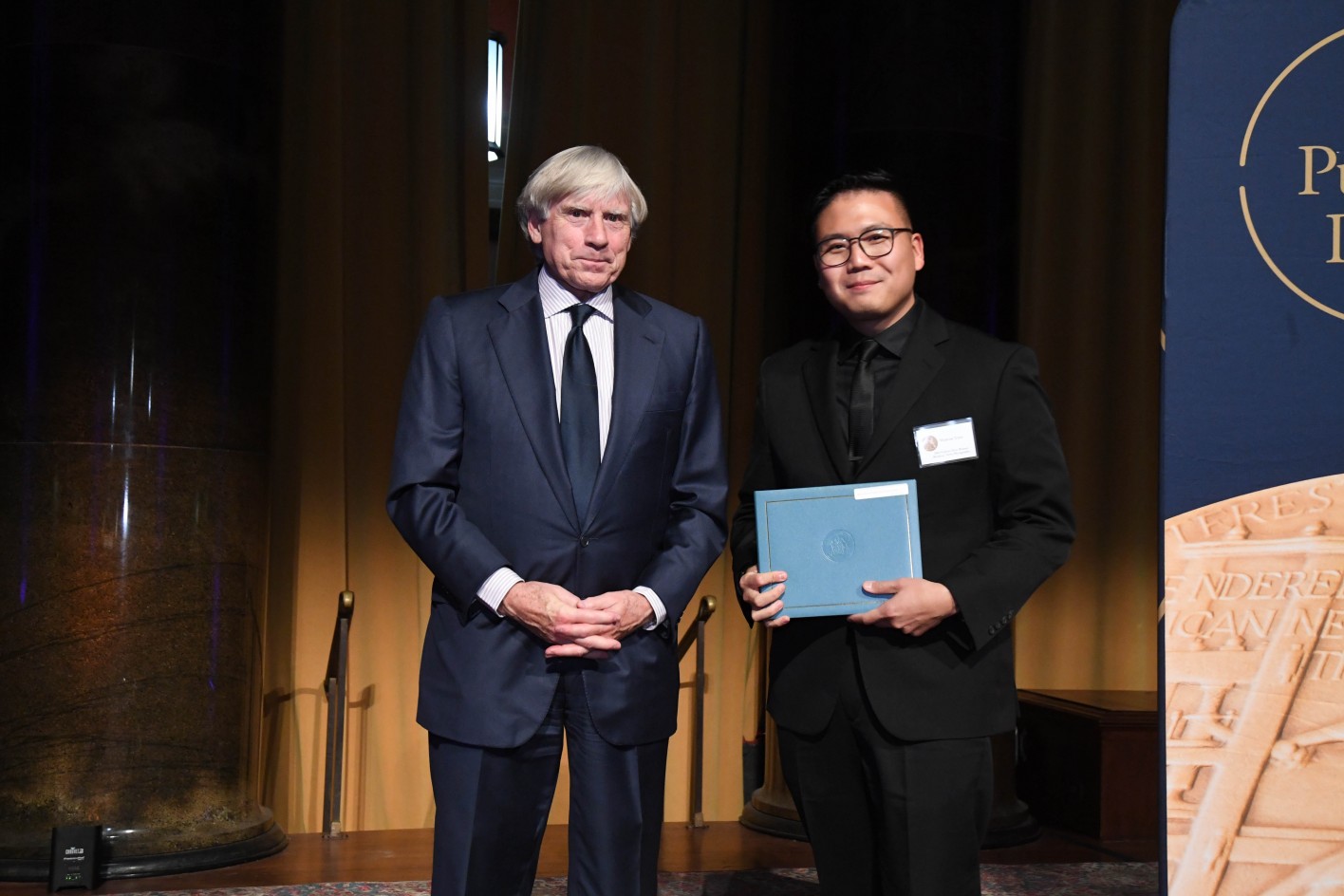
Marcus Yam accepts a 2022 Pulitzer Prize for Breaking News Photography from Columbia University President Lee Bollinger. (Eileen Barroso/Columbia University)
Winning Work
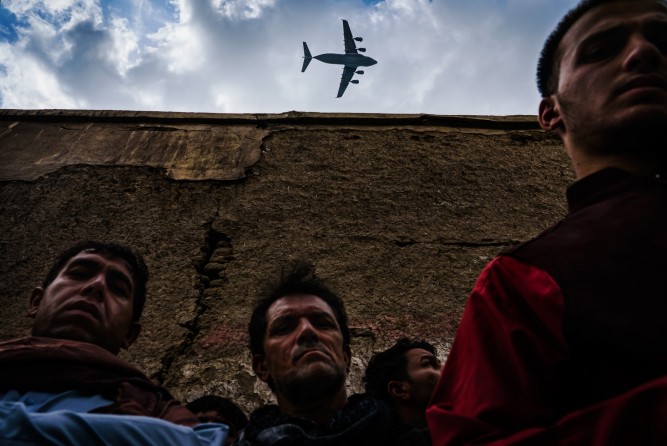
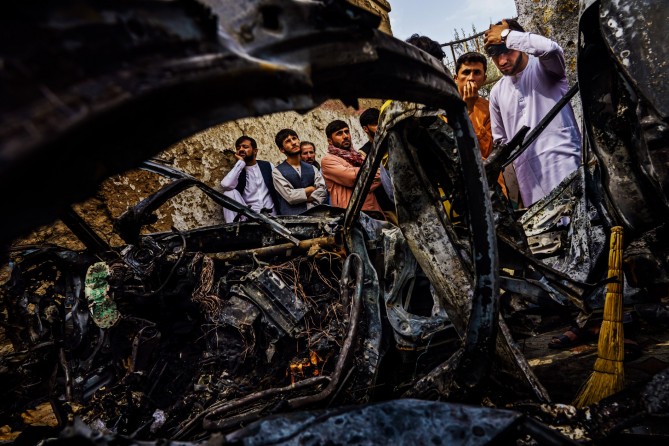
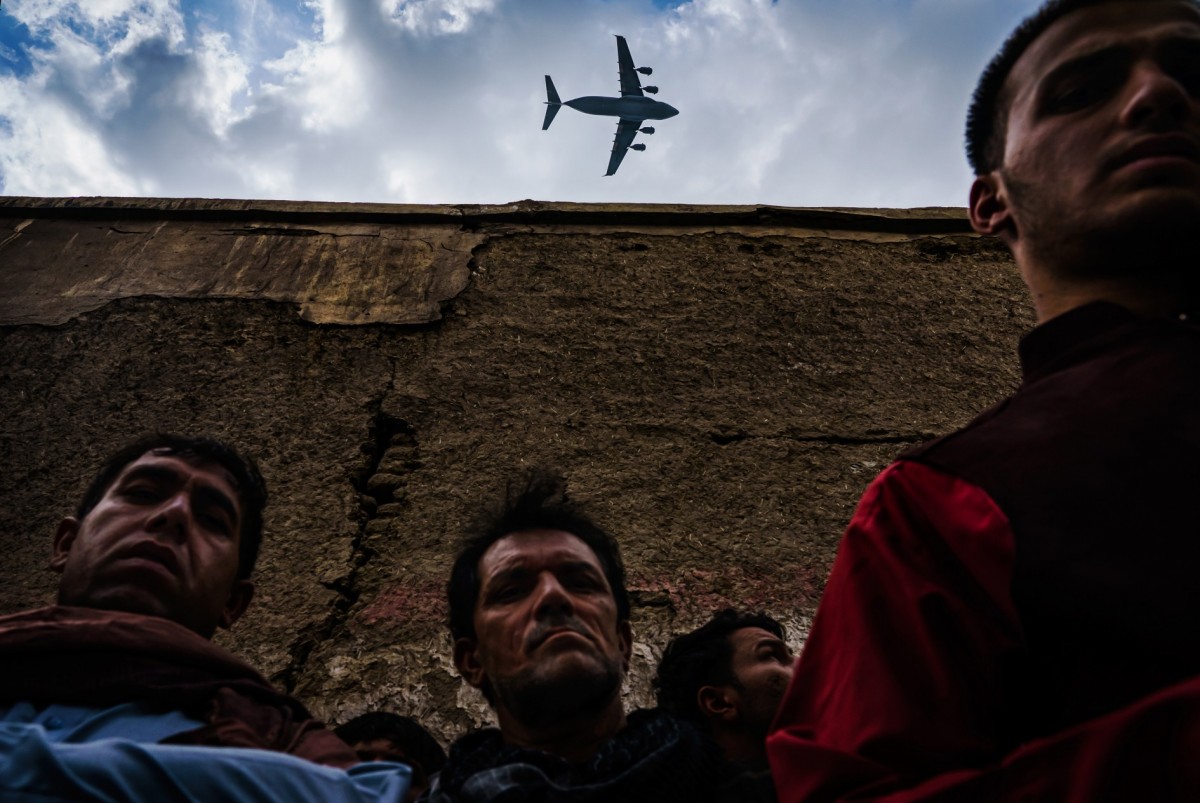
A military transport plane flies over relatives and neighbors of the Ahmadi family as they gather around an incinerated husk of a vehicle destroyed by a U.S. drone strike in Kabul, Afghanistan. In August, life came to a standstill as the Taliban offensive reached the gates of the Afghan capital, sending it into a panic. President Ashraf Ghani escaped; American-backed Afghan forces pulled back. The Taliban swiftly took over a nation that had changed much since it first ruled two decades ago. Jarring, violent scenes followed, marking a tragic coda to a messy and controversial 20-year occupation. The U.S. was ending its longest war.
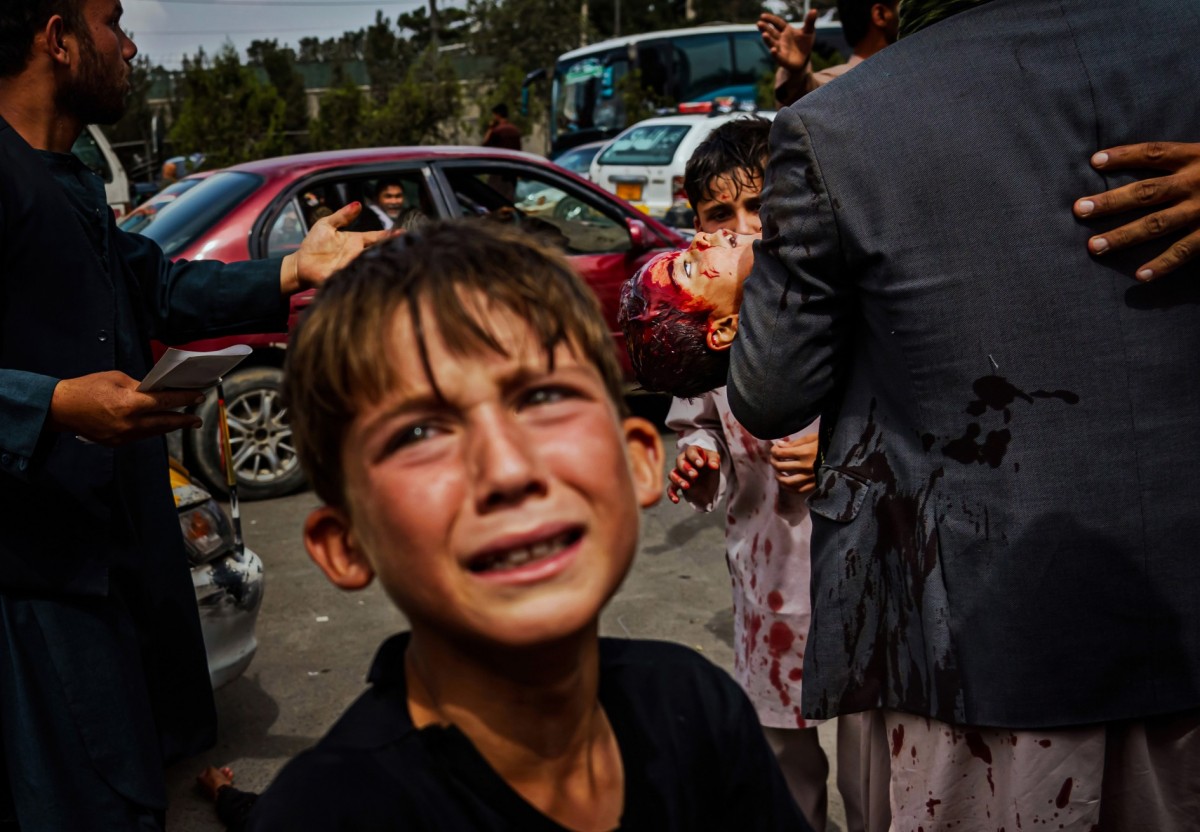
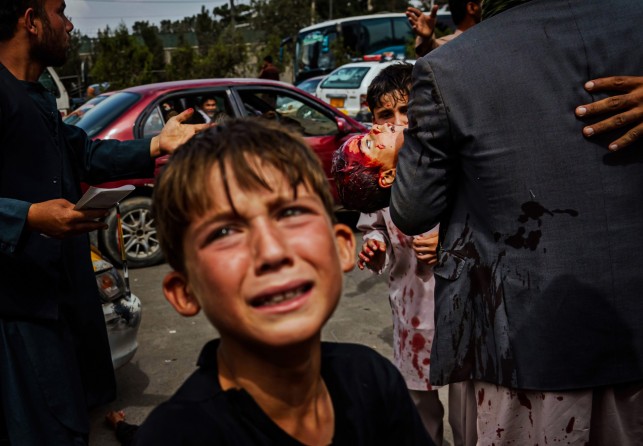
A child cries as a man carries a bloodied child on a road leading to Kabul's airport. Others help a wounded woman on the ground in a scene of chaos as the Taliban secured its grip on the capital while tens of thousands of Afghans raced to the airport, hoping to be evacuated on U.S. military transport planes. Taliban fighters used gunfire, whips, sticks and sharp objects to violently rebuff thousands of Afghans on Aug. 17, 2021. At least a half dozen were wounded, including the woman and child.
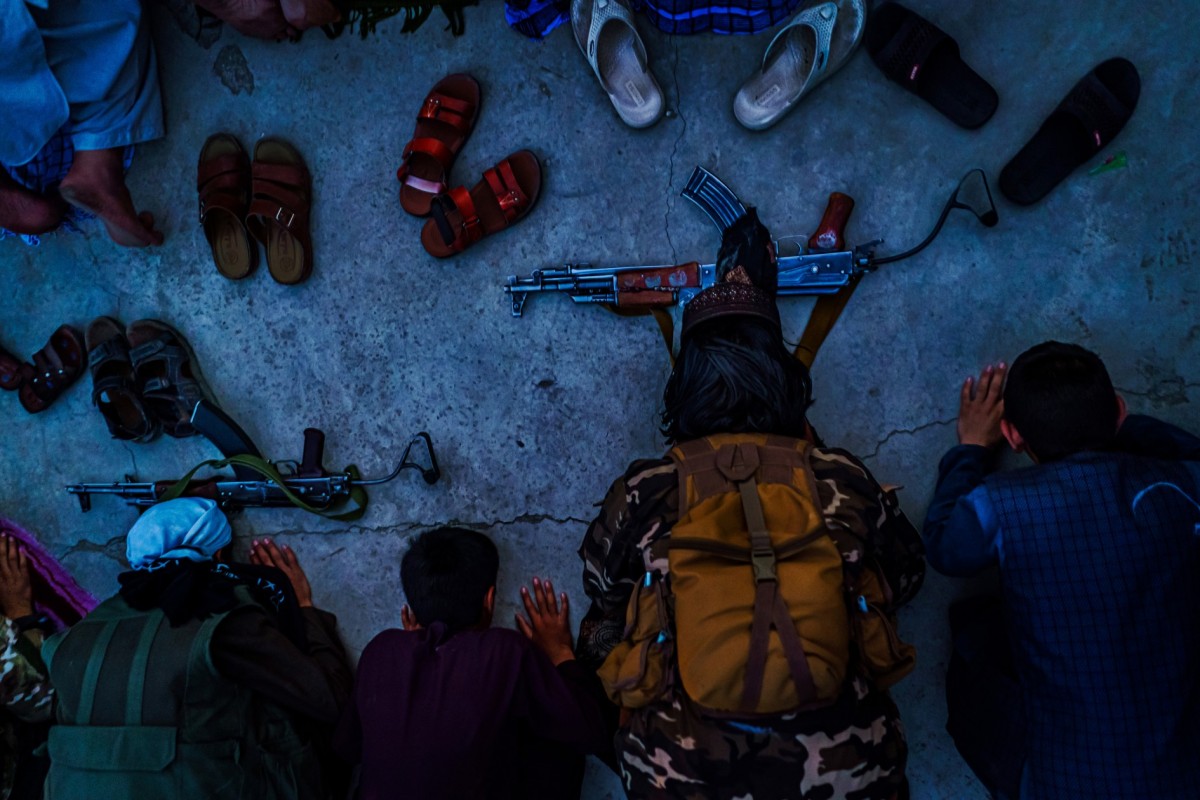
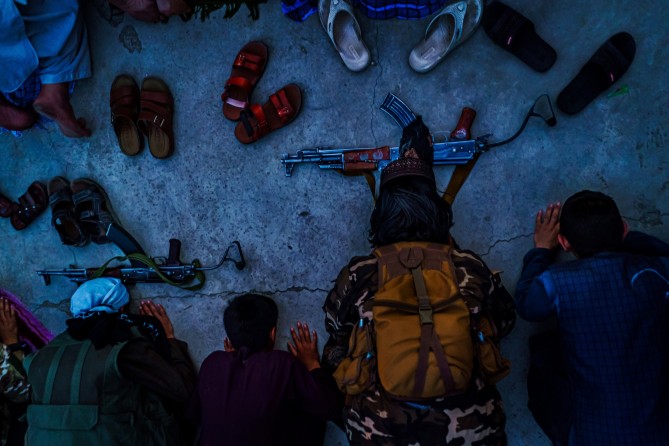
Taliban fighters pray next to young Afghans outside a local mosque for evening prayers in Kabul, Afghanistan, on Aug. 26, 2021. In its nearly two-decade fight with the U.S., the Taliban worked at every turn to undermine the Afghan government, deriding its leaders as corrupt stooges whose forces could never protect citizens from the group's ferocious attacks. But the Taliban is now in charge, and with power comes a daunting challenge: convincing Afghans, many of them with bitter memories of the last time the fundamentalist group ran the country, that it can govern and police as well as it can fight.
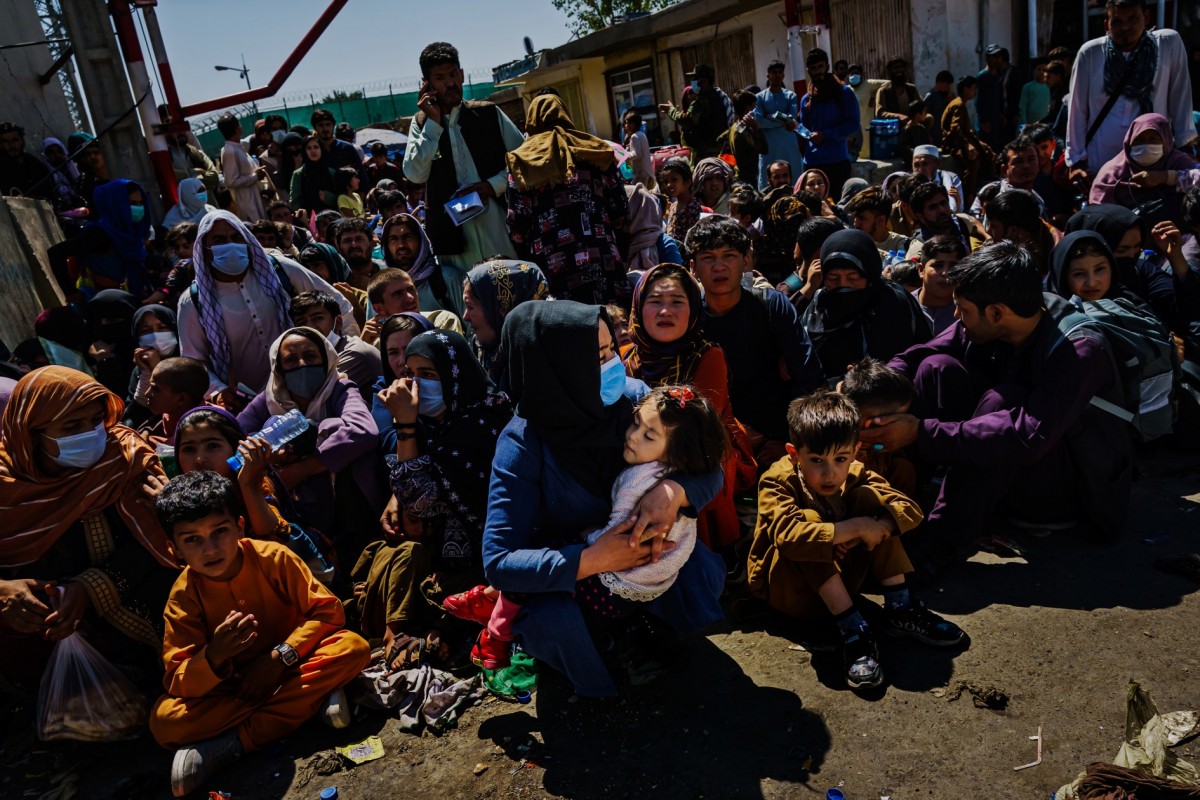
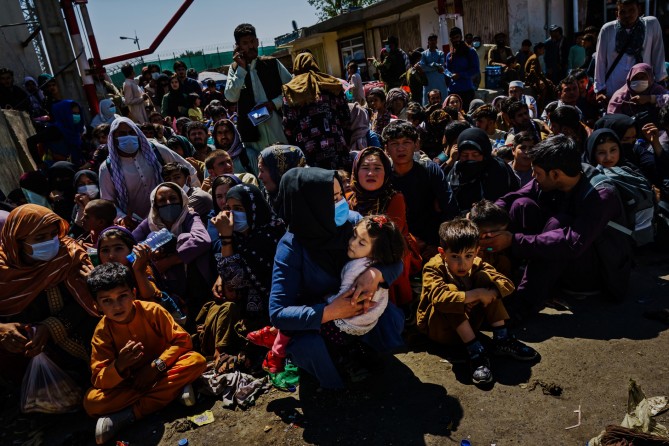
Women and children crouch in the sweltering heat at a Taliban-controlled checkpoint near Abbey Gate, an entrance to the Kabul airport on Aug. 25, 2021. They wait to make their way towards the British military-controlled entrance of the airport. Outside the gates, the bit of U.S.-held territory remaining in the country, bedlam became a daily event. Even those with permission to leave faced crushing crowds and uneasy Taliban fighters using truncheons, sticks, whips, rifle butts and bullets to disperse people around the airport's environs.
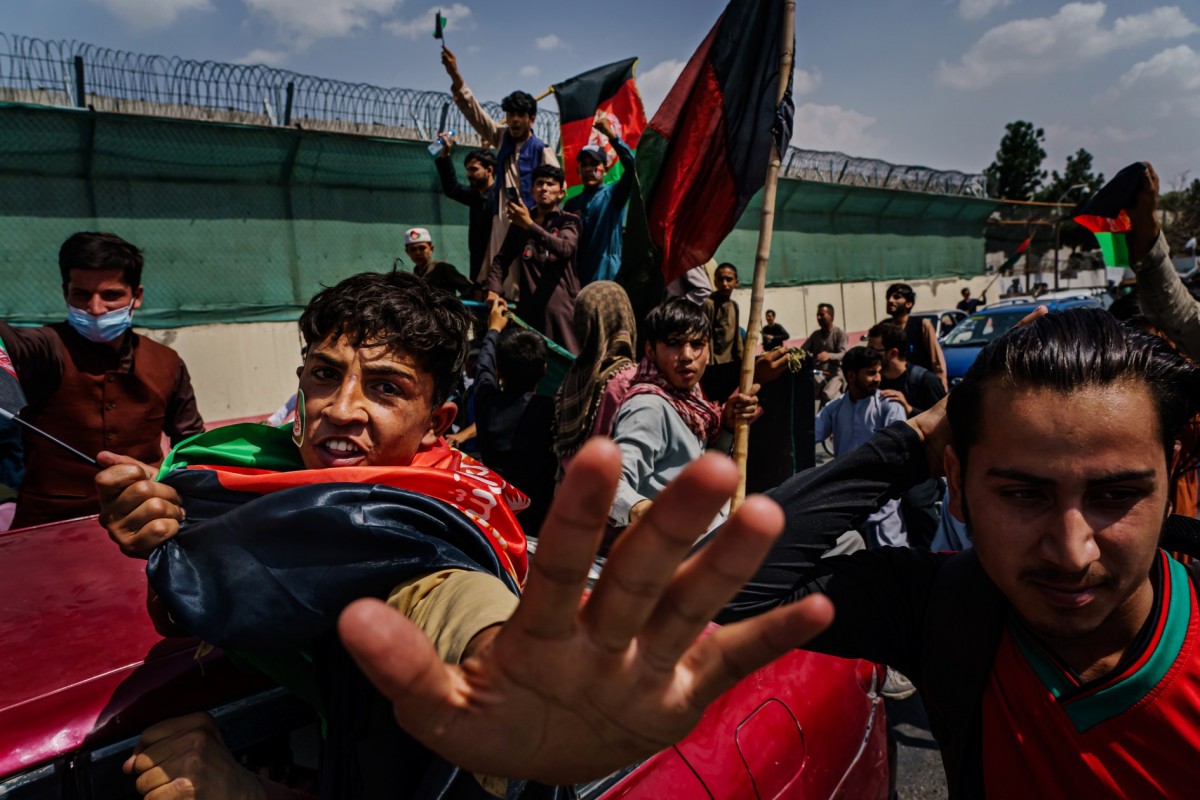
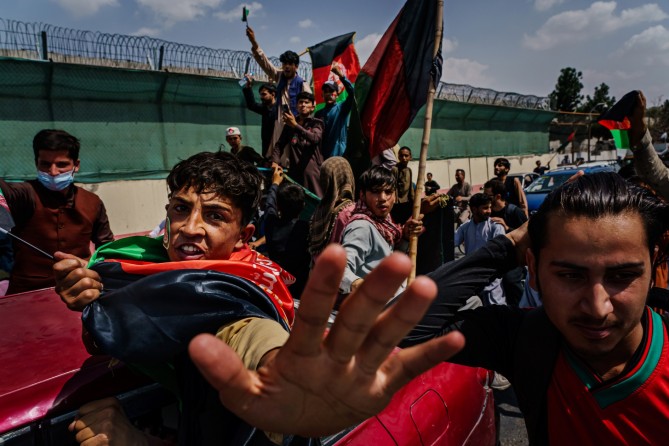
Anti-Taliban protesters mark Afghanistan's independence day by attempting to hoist the red, green and black national banner. They were often beaten by militant fighters, who newly controlled the streets of Kabul. About 200 people rallied towards the city center on Aug. 19, 2021, chanting "Death to Pakistan, God Bless Afghanistan, Long Live the National Flag of Afghanistan."
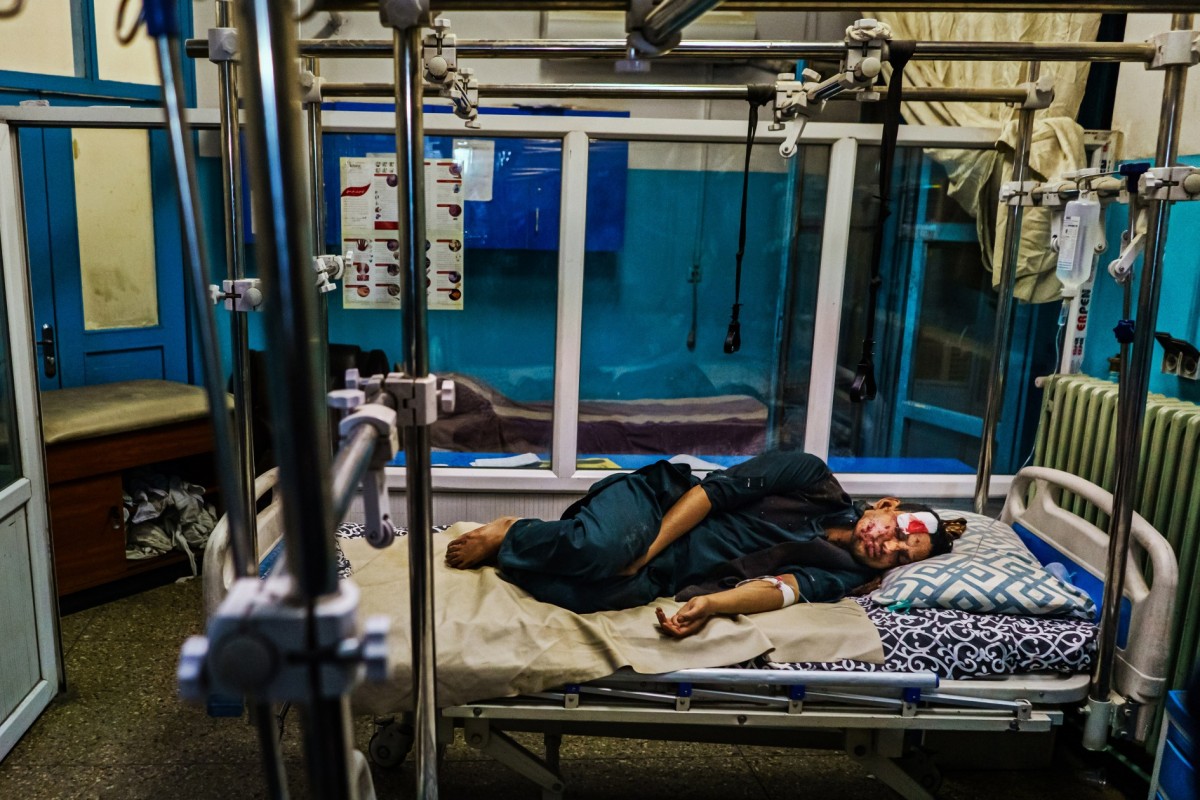
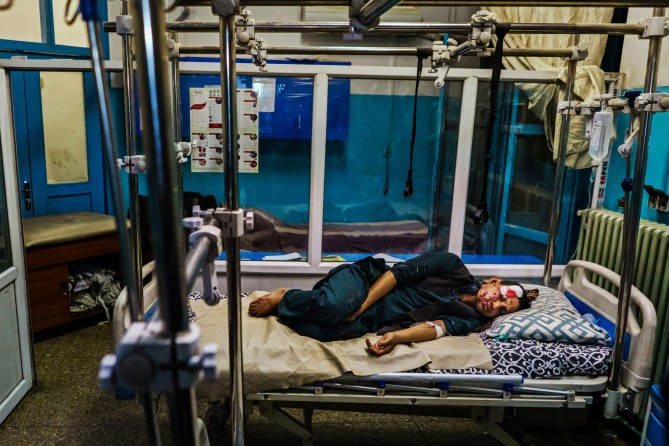
A wounded patient lies in the recovery unit at Wazir Akbar Khan Hospital in Kabul, Afghanistan, on Aug. 26, 2021. A suicide bomber from the terrorist group ISIS-K struck Kabul airport's Abbey Gate entrance. The blast ripped through crowds of Afghans and foreign nationals. At least 170 civilians were killed in addition to 13 U.S. service personnel, and at least 200 people were wounded. The explosions complicated an already nightmarish airlift just before the U.S. deadline to remove its troops from the country.
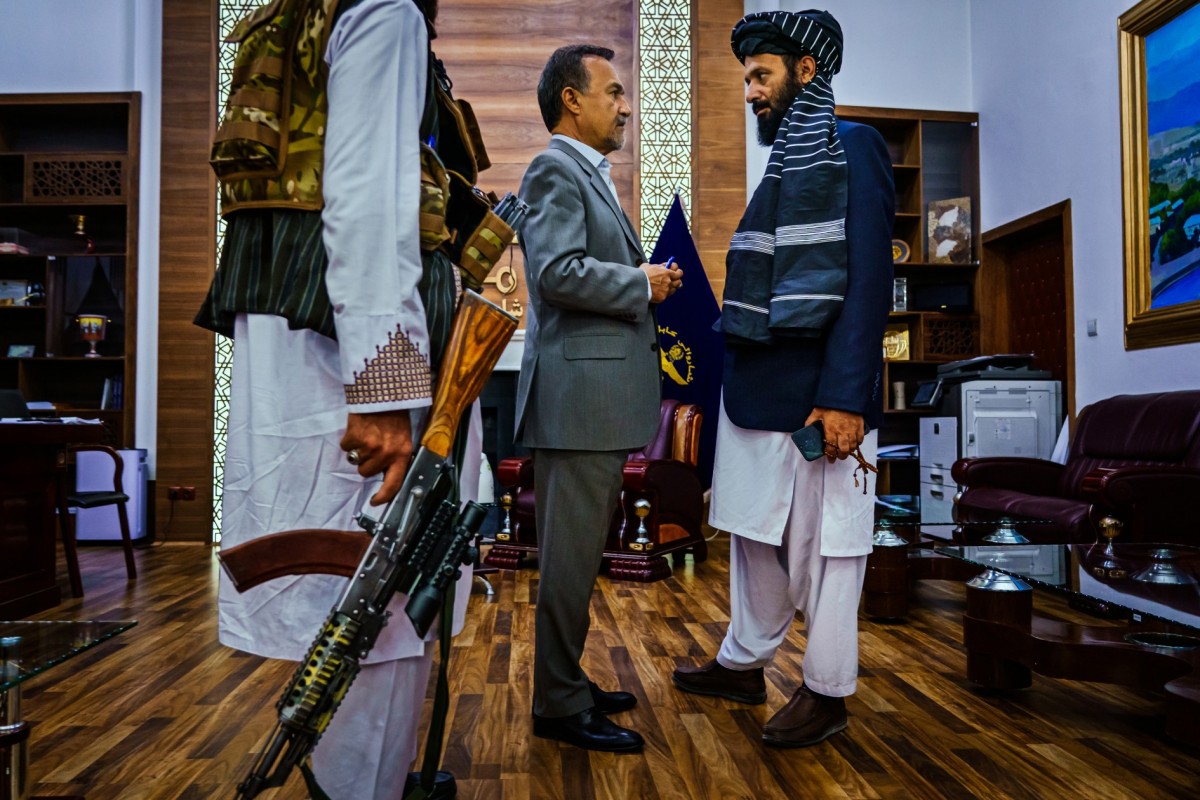
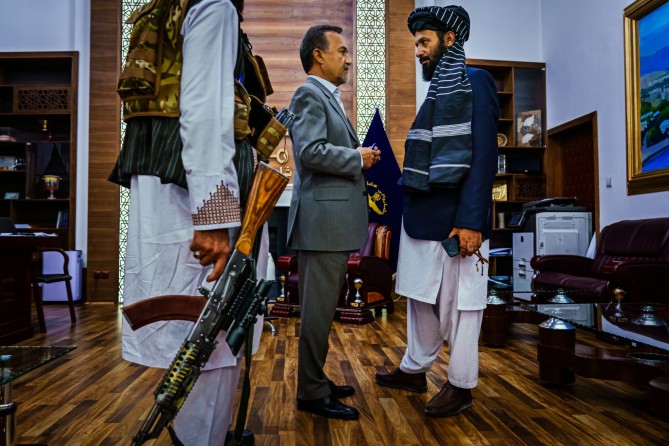
Former Kabul Mayor Mohammad Daoud Sultanzoy, left, meets with new interim Mayor Hamdullah Namony at the Kabul Municipality office in Afghanistan on Aug. 28, 2021. "The leadership of the Taliban, most are of the age that -- without mentioning to them -- they feel the change in Kabul every day, because they were here when it was inhabited by less than 500,000 people," said Daoud Sultanzoy, Kabul's 66-year-old mayor and one of the few top officials from the bygone state to remain in his post to ease the transition to interim Mayor Namony. He referred to the Taliban's first foray as rulers in 1996, when they entered a capital so destroyed by civil war that "dogs eating corpses were roaming the streets. Now they came to a Kabul that was intact. With all of its flaws, it was a city that had life, that was functioning, it had services, markets, an economy so they inherited a better Kabul than they had 25 years ago."
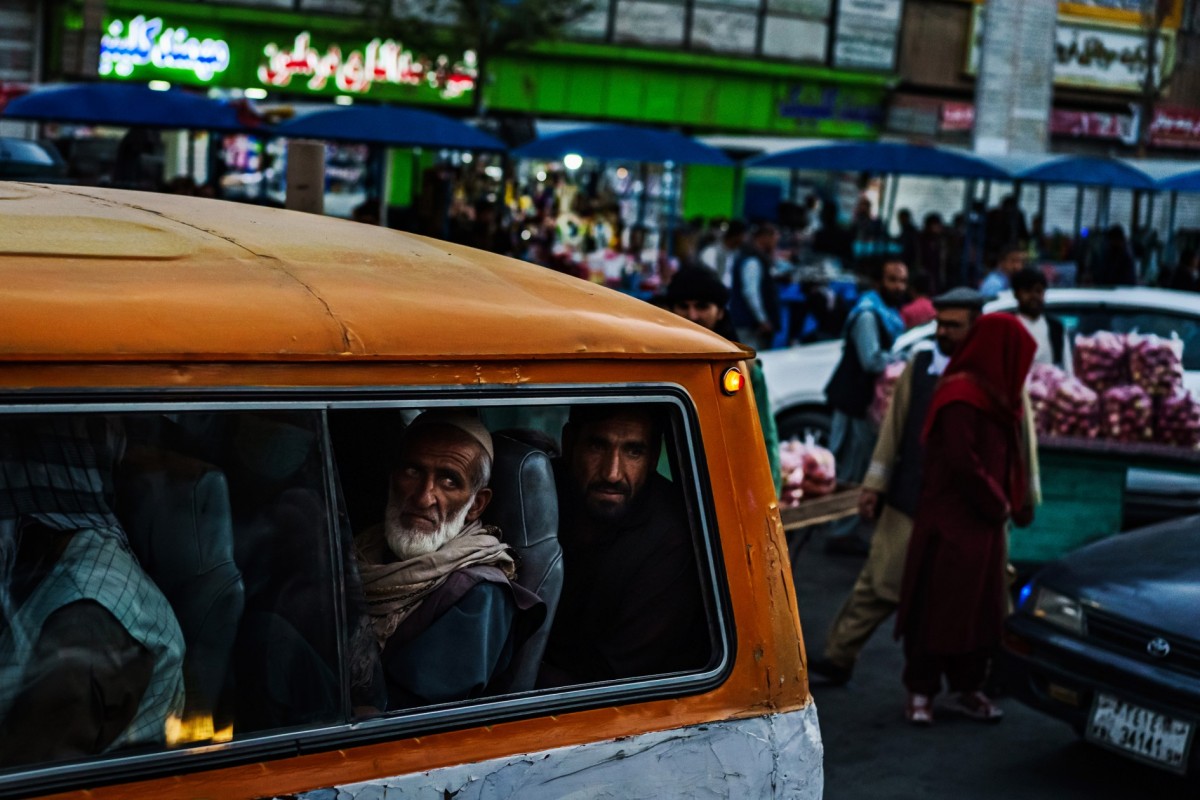
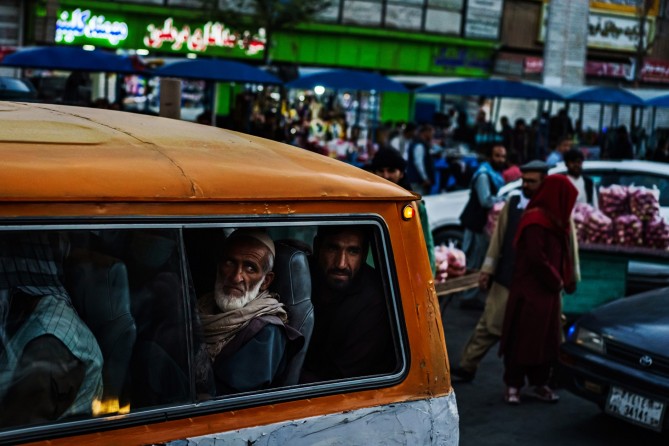
Minibus passengers look on as Taliban soldiers patrol a busy street in downtown Kabul on Aug. 26, 2021. Taliban fighters are the enforcers of Afghanistan's new law and order -- young men eager to escape the mundane business of governing and policing, who are used to the intensity of battle but also the simplicity of life in the rural provinces.
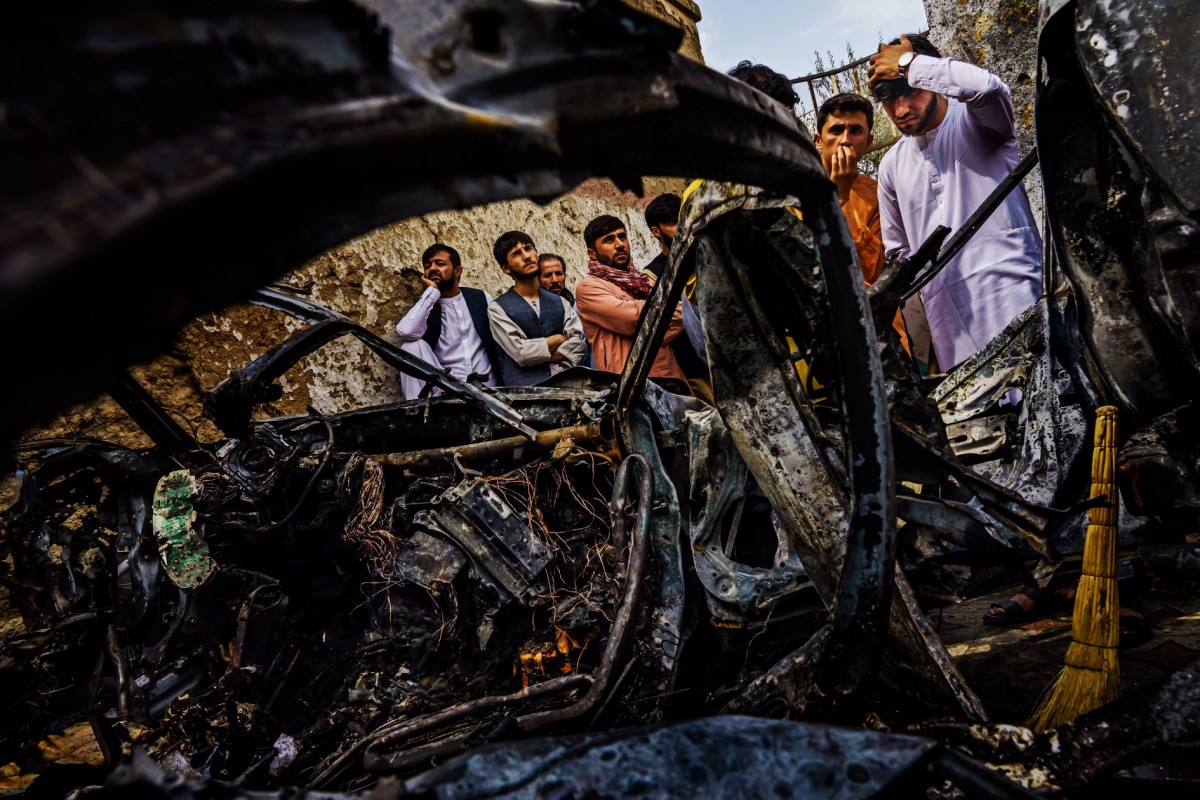
Family members and neighbors of the Ahmadi family gather to examine the wreckage caused by a hellfire missile launched from a U.S. drone that targeted a vehicle parked inside a residential compound in the Khwaja Burgha neighborhood in Kabul, Afghanistan, on Aug. 30, 2021. The U.S. military says that the air strike was meant to target ISIS-K militants and retaliate for an airport bombing carried out by the terror group. Instead, it took the lives of 10 civilians – members of Emal Ahmadi’s family, including seven children. The U.S. would eventually call the strike a “tragic mistake.”
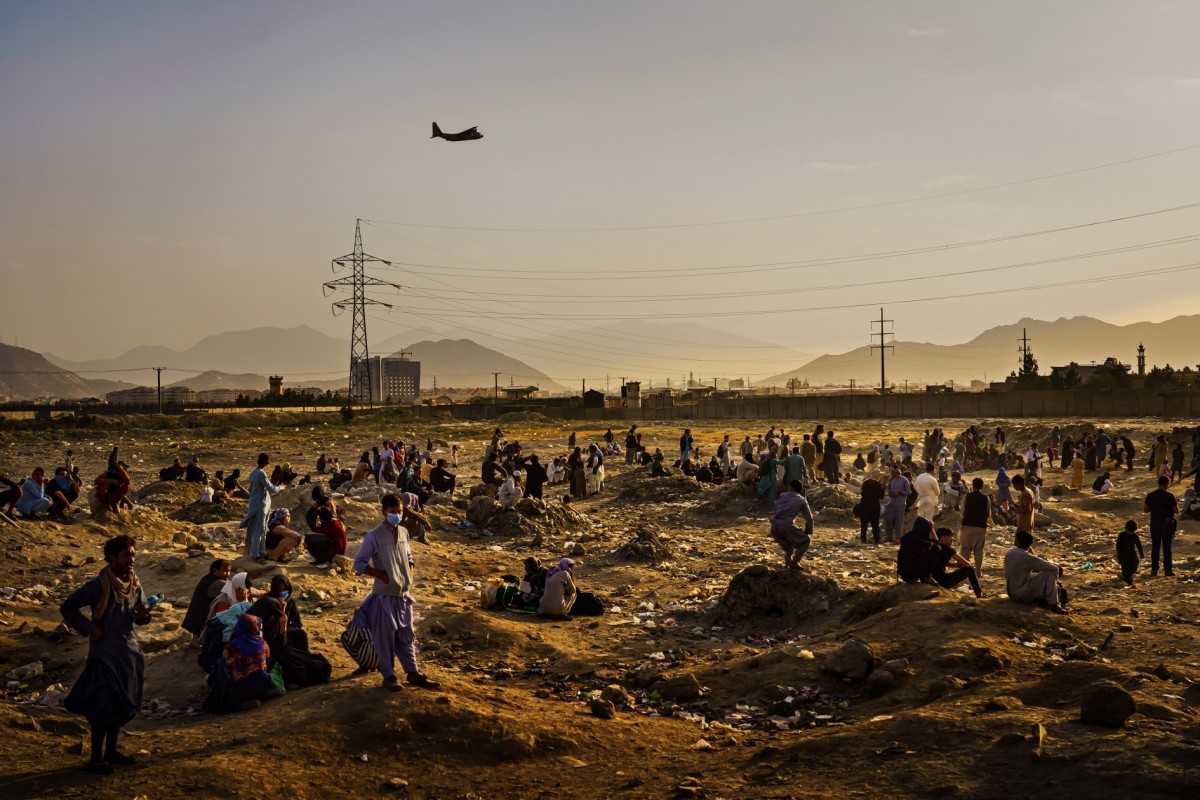
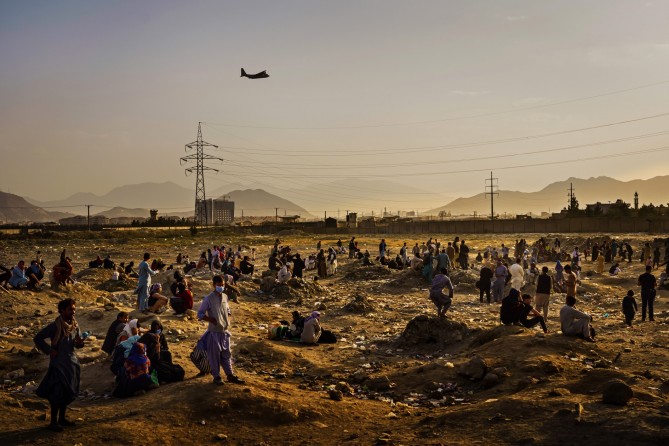
A military transport plane departs overhead as Afghans hoping to leave the country wait outside the Kabul airport on Aug. 23, 2021. Since the Taliban takeover of Afghanistan earlier in August, more than 120,000 people were airlifted out of Afghanistan in one of the largest mass evacuations in U.S. history.
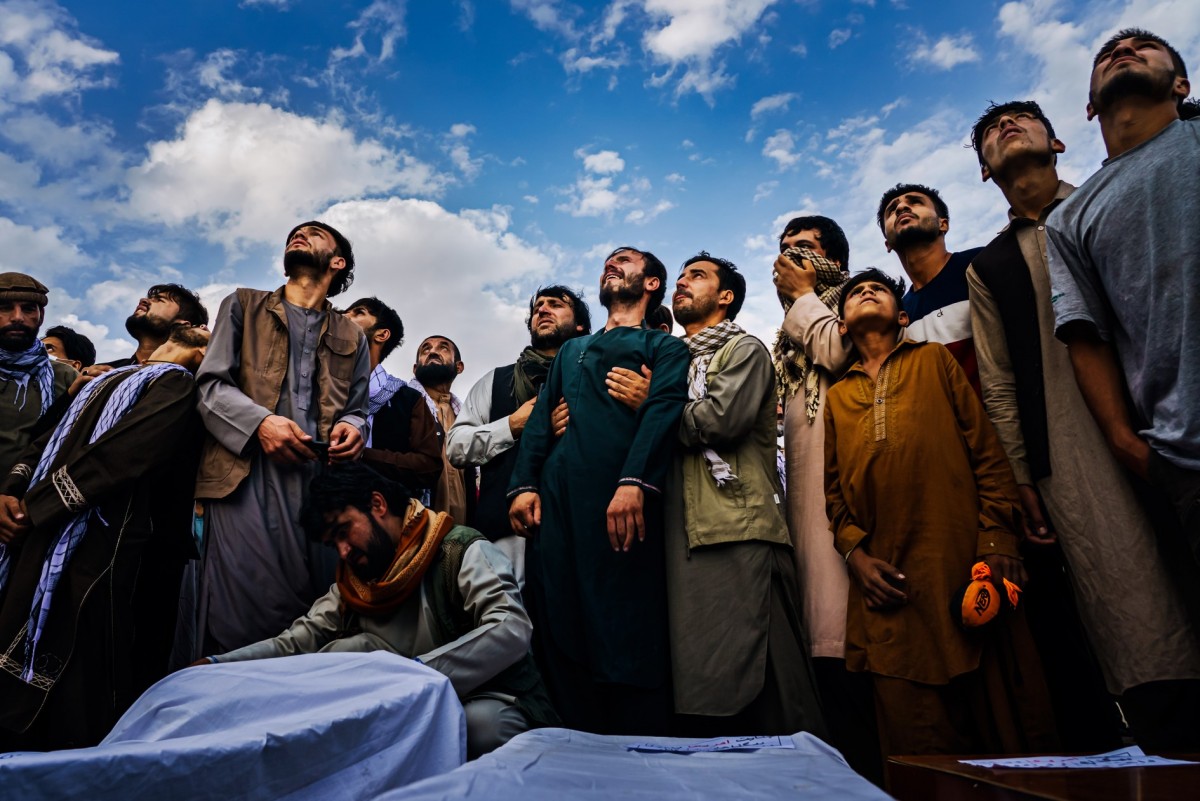
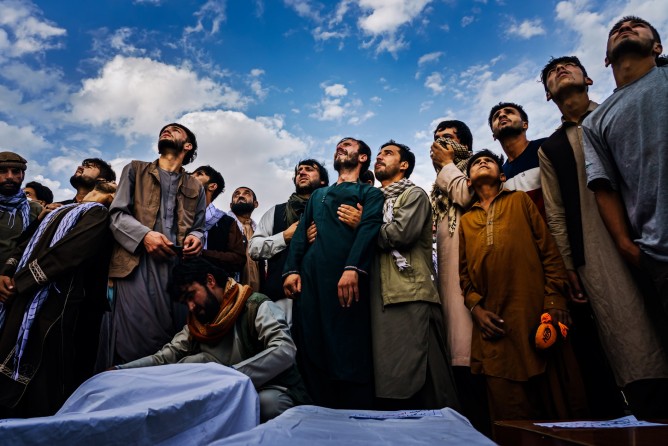
Mourners at a mass funeral look up and weep as the roar of jet engines drown out their wails in Kabul, Afghanistan, on Aug. 30, 2021. Fighter jets circled the hilltop cemetery where members of the Ahmadi family were burying 10 of their own -- seven of them children -- all victims of a U.S. drone strike. A full day before the U.S. military withdrawal approached its conclusion, death continued to haunt the war-torn country. The airstrike came in the wake of an airport bombing on Aug. 26 carried out by ISIS-K militants. The United States military claimed initially that it was targeting an alleged Islamic extremist who posed the threat of carrying out a similar attack. A month later, it reversed its position, but the Pentagon decided no American troops would be punished. Left to grieve and wonder, Emal Ahmadi could not understand how it could be that a family could die and no one be held accountable.
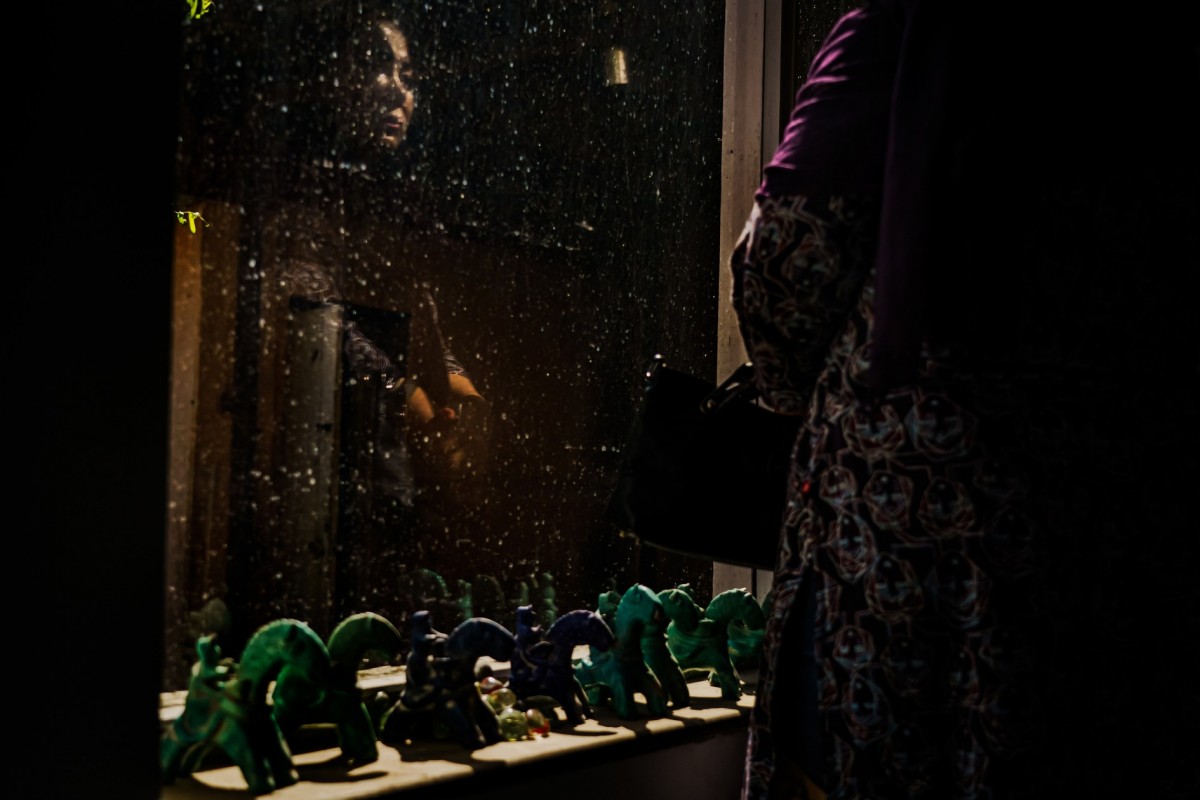
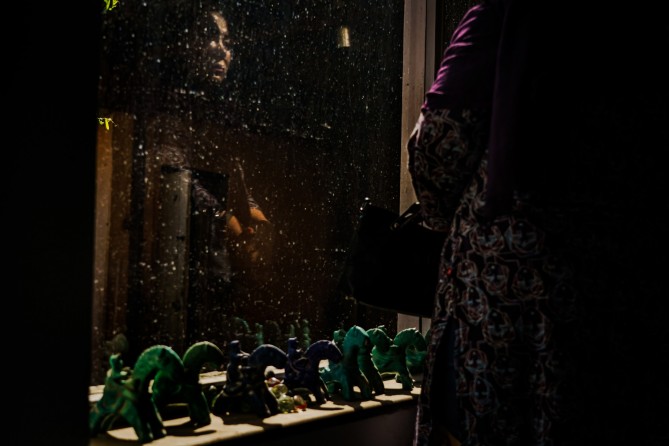
Visiting for the first time since the Taliban took over the country, Laila Haidari weeps as she surveys the dismantling of what had been a “sacred place” for her – Taj Begum, a shabby-chic Puli Surkh neighborhood in Kabul, Afghanistan, on Sept. 20, 2021. But fearing the Taliban’s wrath, Haidari shut down her cafe in August. The cafe, a fulcrum of Kabul’s cultural life, is a casualty of the new order ushered in by the Taliban. “It was where women, with all their wounds, could come and speak with us, and speak with each other. It gave people their lives back; it touched so many people,” said Haidari, her voice holding back sobs. “Taj Begum wasn’t just a restaurant or a business to me. It was like a cinema, a theater, a place where men and women could sing together.”
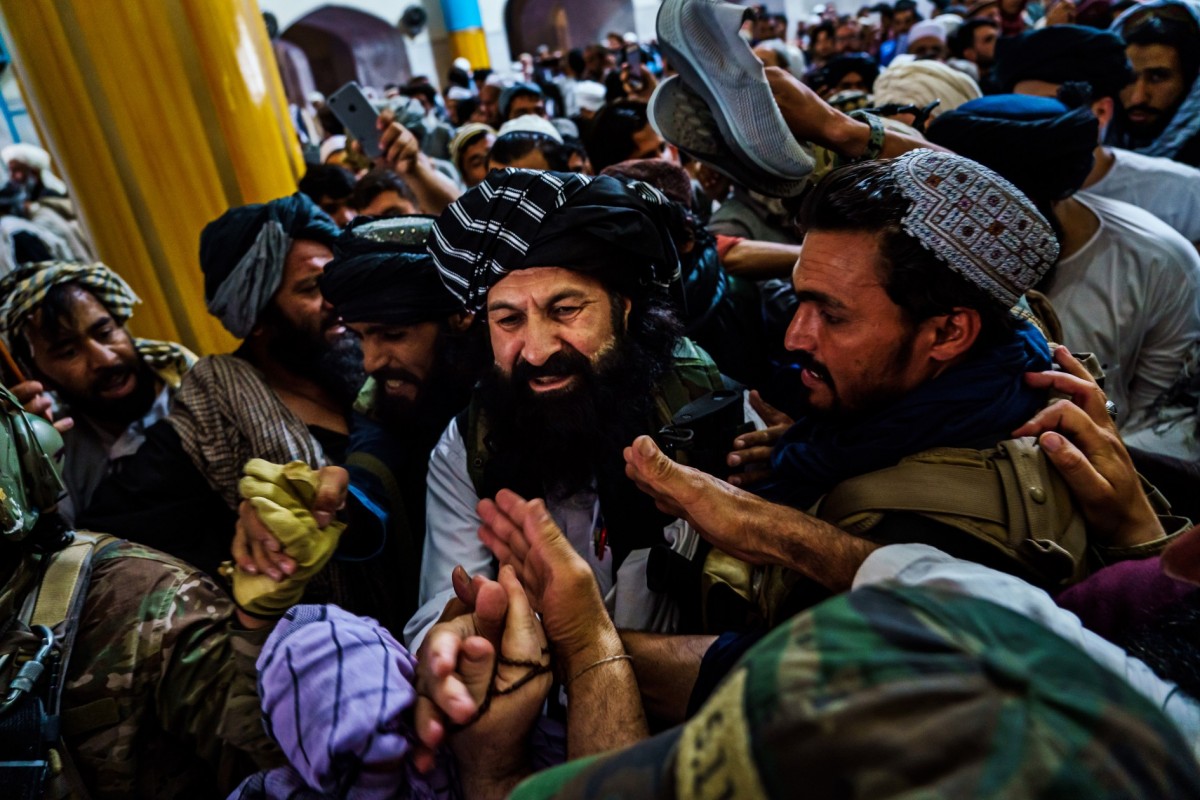
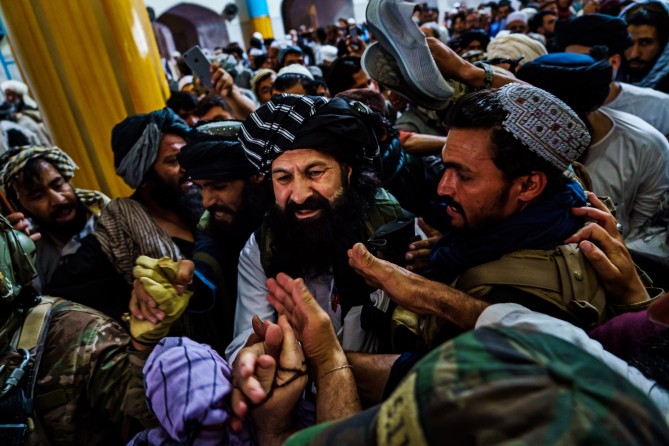
Afghans clamor to greet Khalil Rahman Haqqani, a senior member of the Haqqani network after he delivered a sermon for the first Friday prayers under Taliban rule at the Pul-i-Khishti Mosque in Kabul, Afghanistan, on Aug. 20, 2021. The Haqqani network is a Taliban splinter group considered a terrorist organization by the United States and is one of the fiercest foes American forces spent two decades trying to vanquish in Afghanistan. Flanked by armed guards, Haqqani cradled a rifle: an American-made M-4 carbine. From the pulpit, he delivered a message that was by turns reassuring and menacing: Life under the Taliban would be different than under the deposed national rulers he derided as weak and corrupt. “We have freed Afghanistan from Western imperialism and the infidels. Afghanistan will now be a peaceful and prosperous country, where there will be security, no corruption, and no theft,” he said. All of the country’s various ethnicities and factions, he added, were “brothers.”
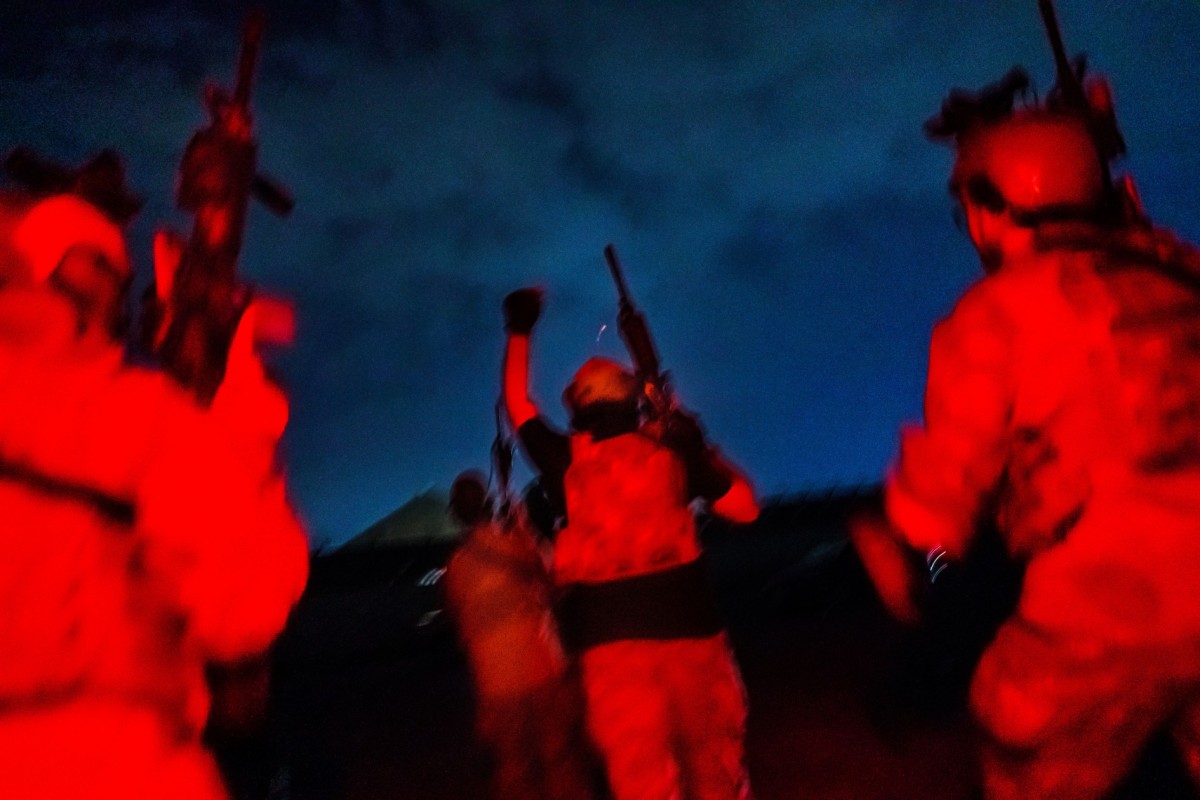
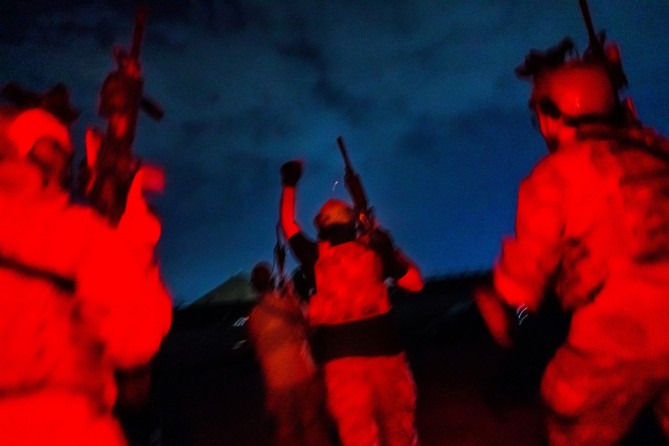
After the stroke of midnight, Taliban fighters from the Fateh Zwak unit storm into Hamid Karzai International Airport, while wearing American-made uniforms and brandishing American M4 and M16 rifles and riding U.S. pickup trucks on Aug. 31, 2021. For two weeks, Kabul’s airport was the last tether to America’s control in Afghanistan, its runways the site of a frantic airlift that spirited more than 120,000 people out of the country. But there was no more of that frenzied activity on the deadline of the U.S. withdrawal, hours after the last U.S. military transport plane rumbled into the night sky, closing the chapter on a 20-year U.S. intervention that ended the way it began: with the Taliban in control of Afghanistan.
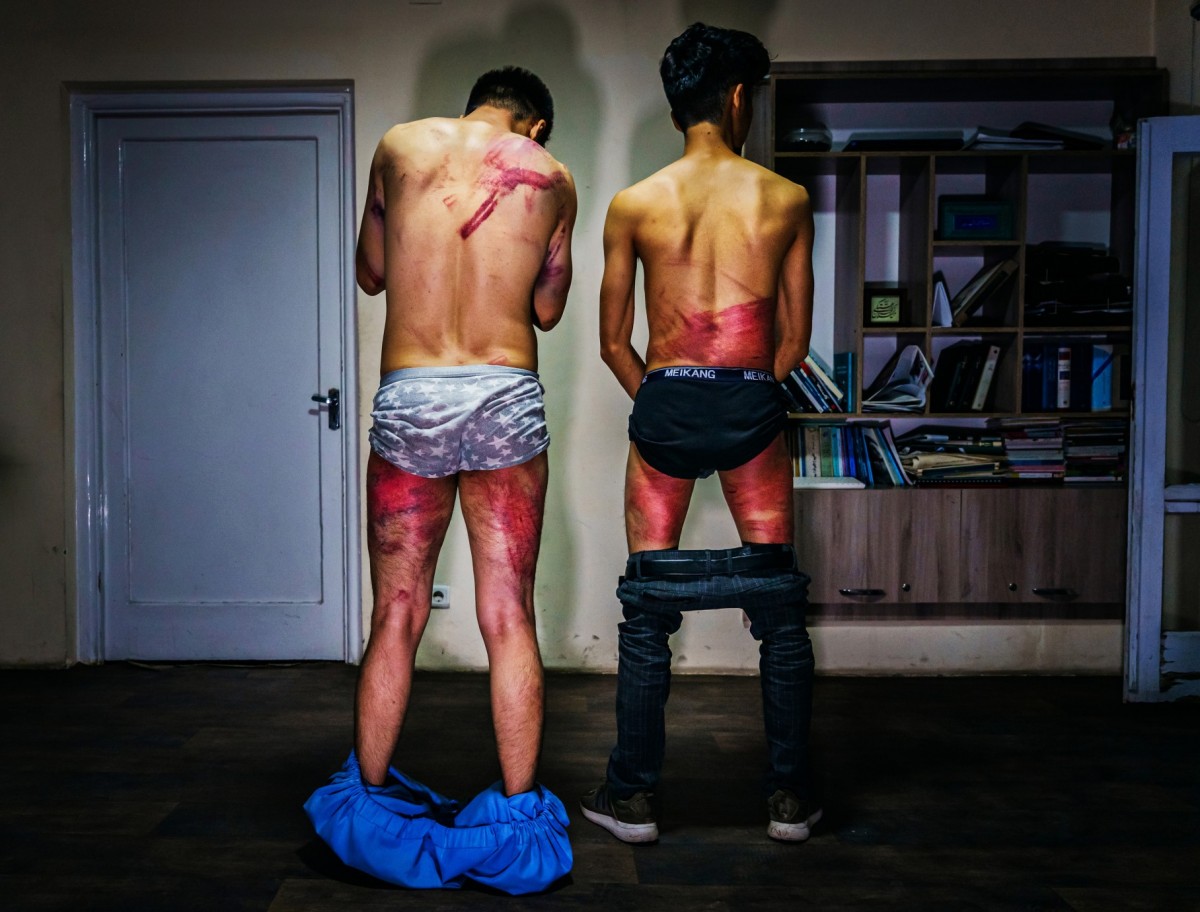
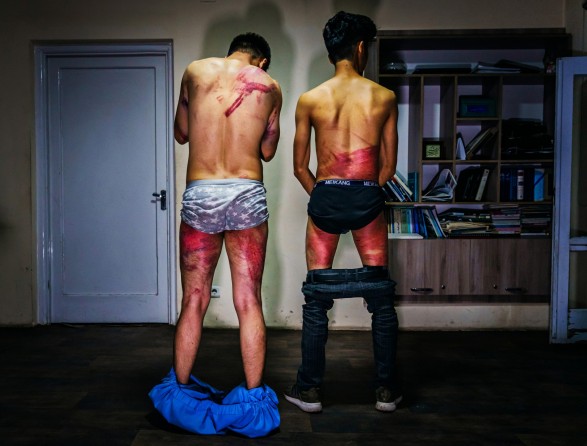
Journalists from the Etilaat Roz newspaper, Nemat Naqdi, 28, left and Taqi Daryabi, 22, undress to show their wounds caused by beatings from Taliban fighters in Kabul, Afghanistan, on Sept. 8, 2021. The two were tortured while in custody after being arrested for filming a rally for women’s rights. The demonstrations came just one day after the Taliban revealed an all-male interim government made up of stalwarts with zero representation for women or ethnic minority groups – their promise of a more tolerant rule clearly broken. “They didn’t let me resist,” Daryabi said of the brutality he and his colleague suffered. He said he was shoved to the ground, tortured and beaten unconscious. He was taken to a yard and water was poured on him. He was still there when they brought Naqdi. “We were shouting that we are journalists. But they didn’t care,” Naqdi said. “I thought they were going to kill me…They kept on ridiculing us, asking if we were filming them.”
Biography

Marcus Yam is a roving Los Angeles Times foreign correspondent and staff photographer. Born and raised in Kuala Lumpur, Malaysia, he left a career in aerospace engineering to become a photographer. His goal: to take viewers to the frontlines of conflict, struggle and intimacy. His approach is deeply rooted in curiosity and persistence. In 2019, Yam was awarded the Robert F. Kennedy Human Rights Journalism Award for his unflinching body of work documenting the everyday plight of Gazans during deadly clashes in the Gaza Strip. He was also part of two Pulitzer Prize-winning breaking news teams that covered the San Bernardino, Calif., terrorist attacks in 2015 for the Los Angeles Times and the deadly landslide in Oso, Wash. in 2014, for the Seattle Times. His previous work has also earned an Emmy Award for News and Documentary, World Press Photo Award, Dart Award for Trauma Coverage, Scripps Howard Visual Journalism Award, Picture of the Year International’s Newspaper Photographer of the Year Award, Society of Professional Journalists’ Sigma Delta Chi Award, National Headliner Award and an Alfred I. duPont-Columbia University Award.