The Washington Post, by Carol Guzy, Nikki Kahn and Ricky Carioti
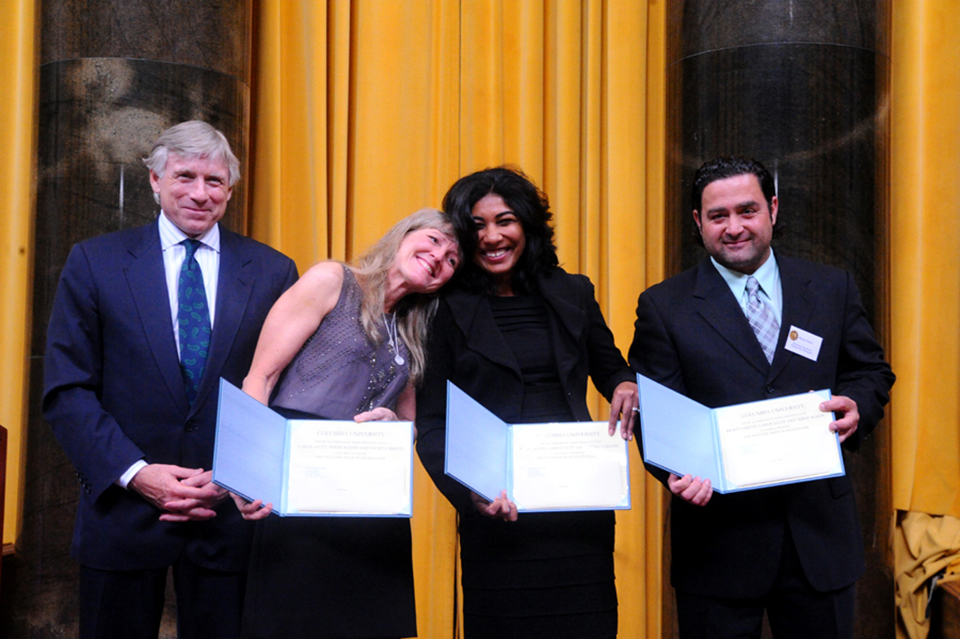
Lee C. Bollinger, President of Columbia University (left), presents the 2011 Breaking News Photography prize to (l-r) Carol Guzy, Nikki Kahn and Ricky Carioti of The Washington Post.
Winning Work
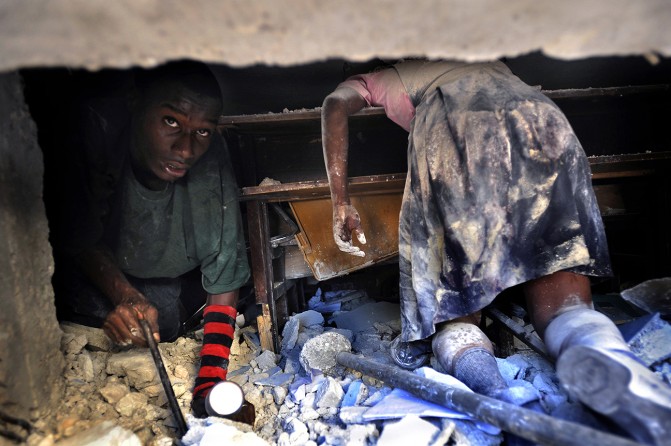
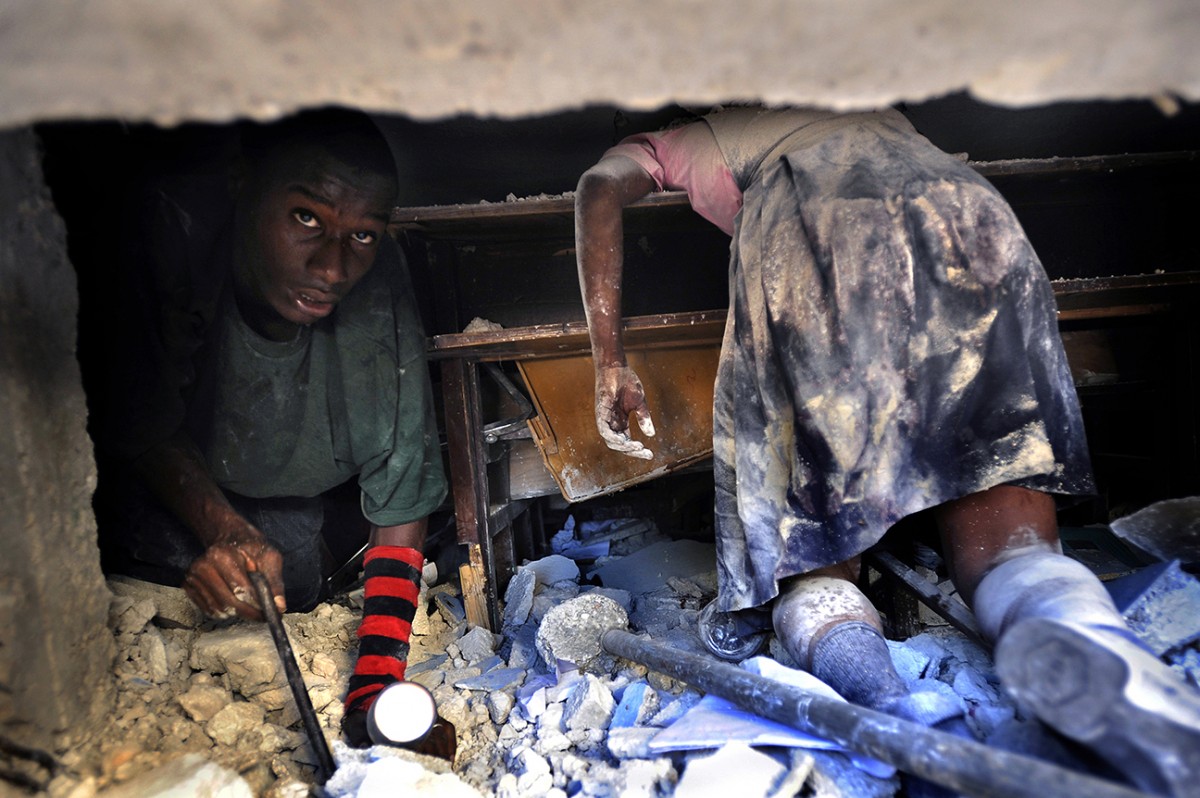
'Death of Innocence' A Haitian man tries to rescue a live teacher trapped amid the rubble of the devastating earthquake in Port-au-Prince as he crawls past a schoolgirl that perished at her desk when Ecole St. Gerard collapsed. (Carol Guzy, The Washington Post - January 15, 2010 )
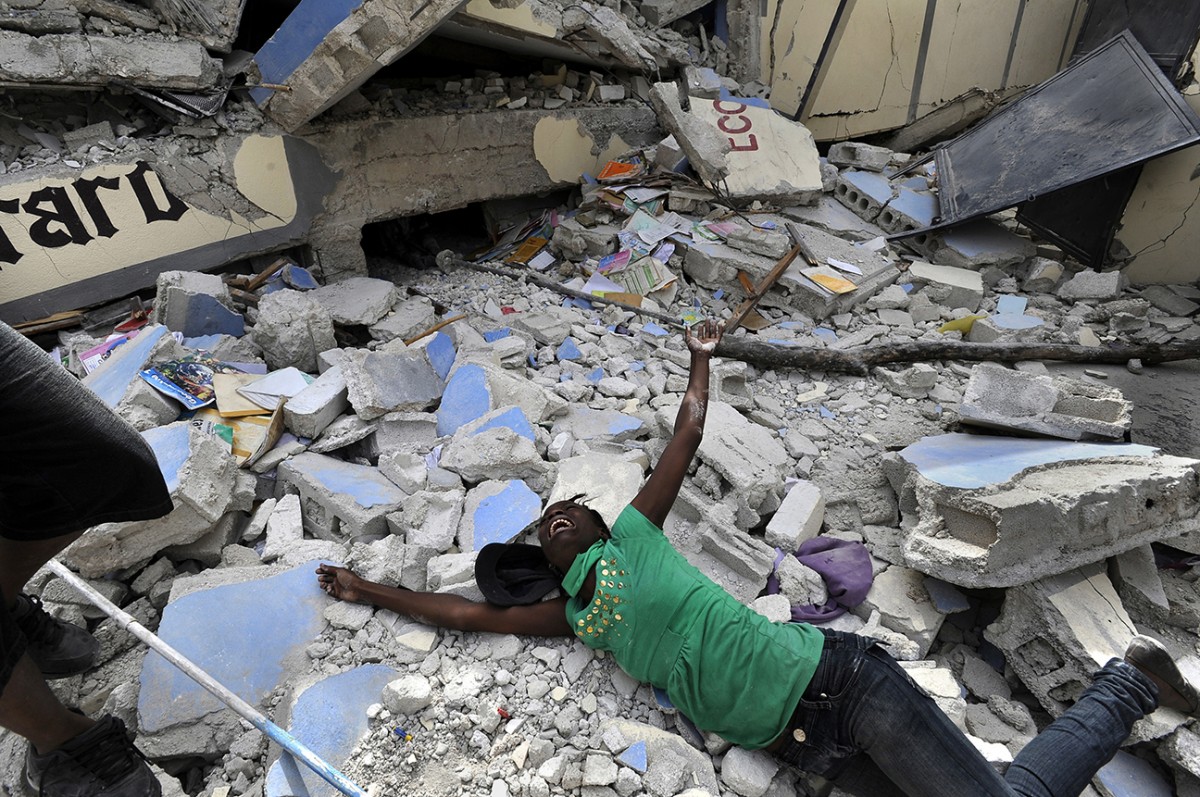
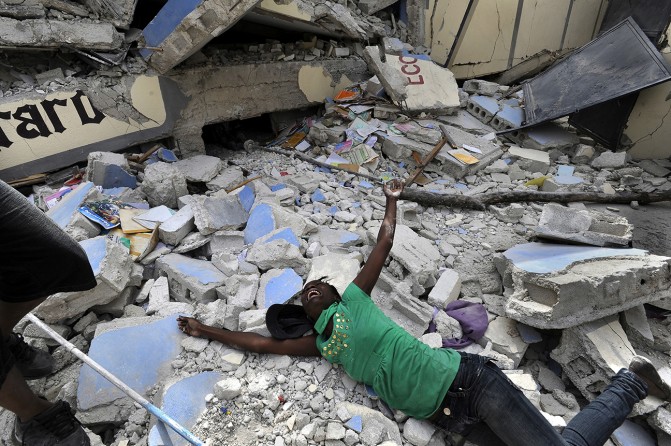
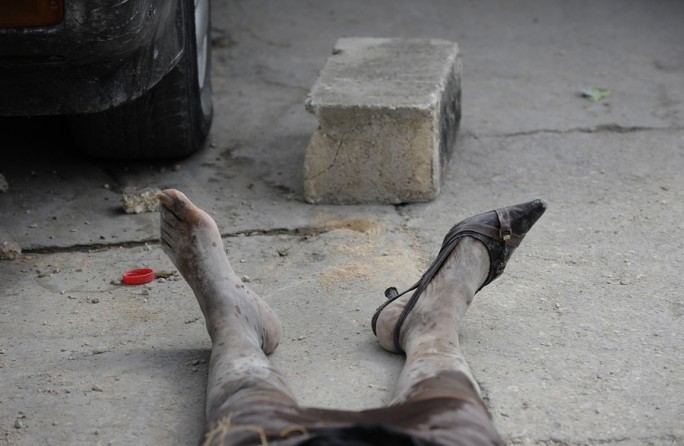
'Shattered Lives' Caked in the dust of crushed plaster and cement, Haitians dug out family members by hand and piled bodies on street corners as clusters of bloodied and dazed survivors pleaded for help. Cindy Tersme throws herself amid the rubble of Ecole St. Gerard, screaming in anguish as she searches for her brother Jean Gaelle Dersmorne, 14. 'I can see my brother’s feet but can't pull him out,' she said, weeping. (Carol Guzy, The Washington Post - January 15, 2010)
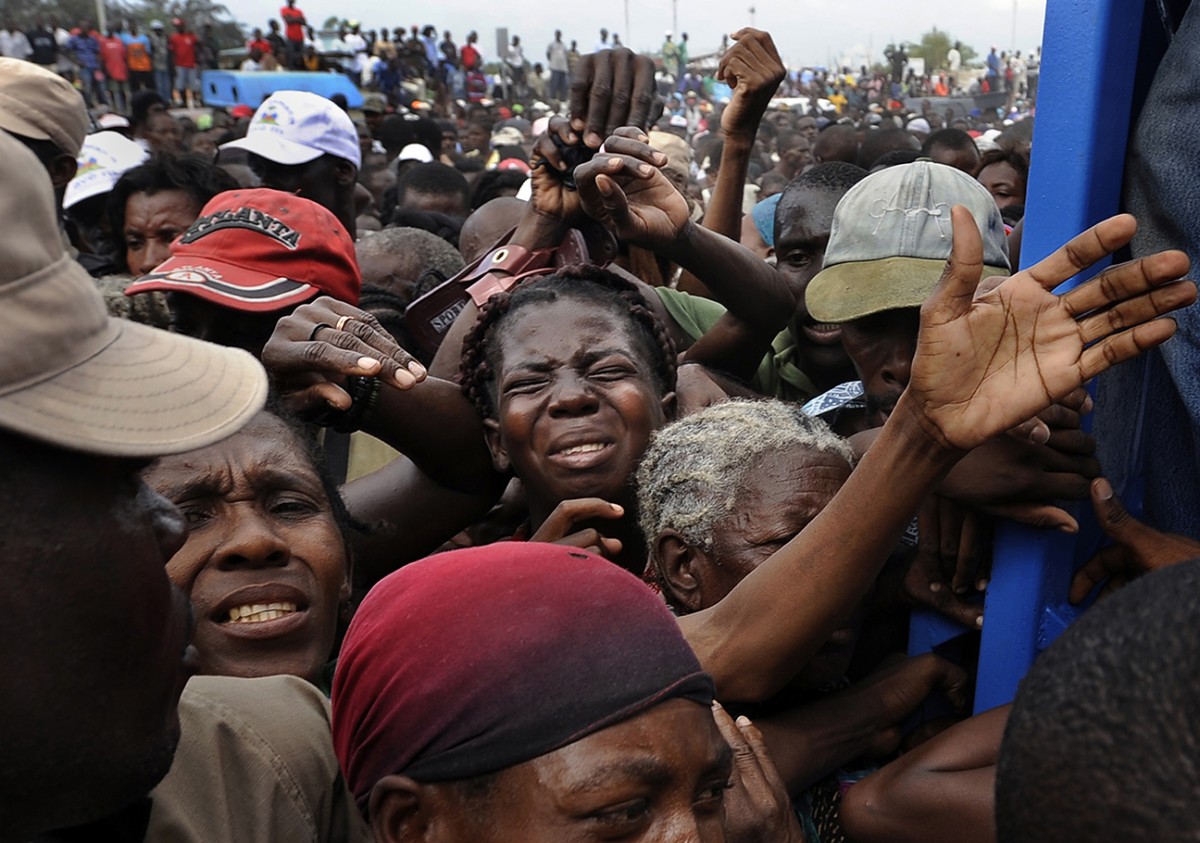
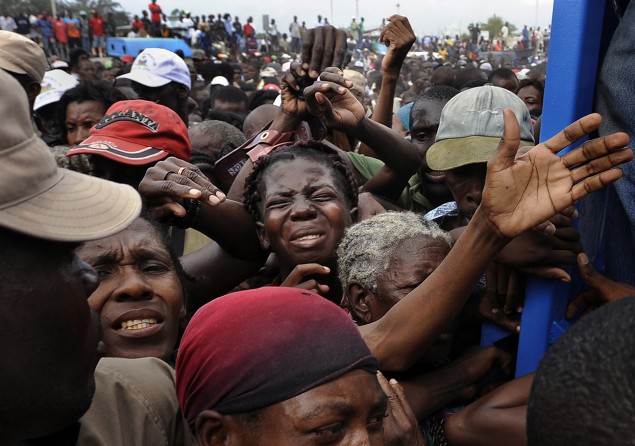
'Desperation' Frantic survivors fight to get in the gate at a food distribution center in Cite Soleil, a slum plagued by poverty even before the earthquake destroyed the area’s fragile infrastructure. The United States and other countries rushed emergency stocks of aid and supplies to Haiti. Like doctors working on a dying patient, foreign governments labored to establish a kind of life-support system that would bring Haiti back. (Carol Guzy, The Washington Post - January 26, 2010)
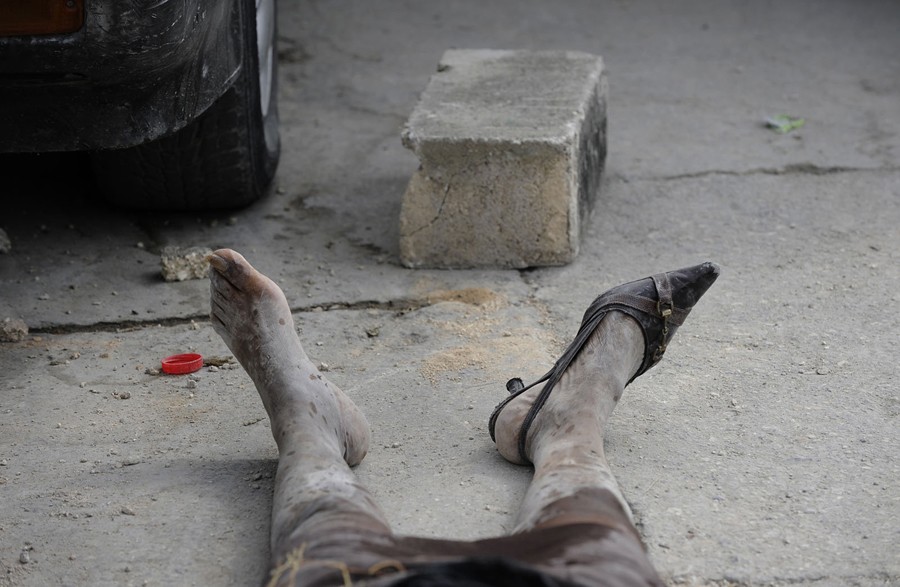
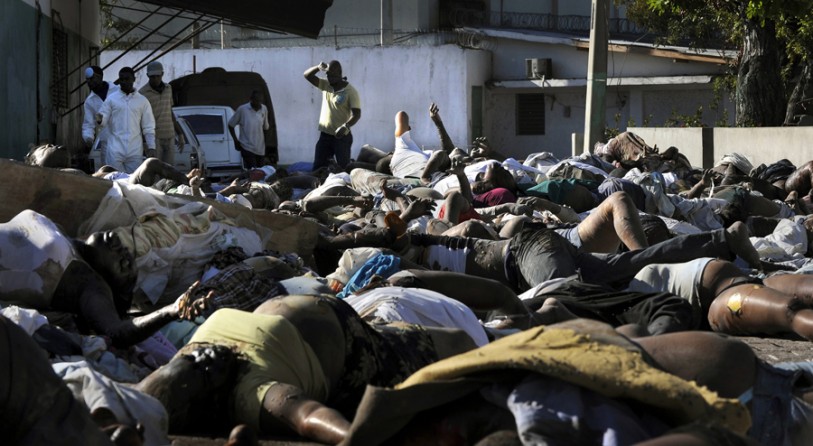
'The Moment Time Stopped' The quake's epicenter was about 10 miles west of Port-au-Prince, home to as much as a third of the country's population. Survivors piled bodies of the dead outside for weeks after the earth’s spasm. Haiti has a troubled history, plagued by poverty and political turmoil. The devastation wrought by nature was yet another profound sorrow for the Haitian heart to endure(Carol Guzy, The Washington Post - January 14, 2010)
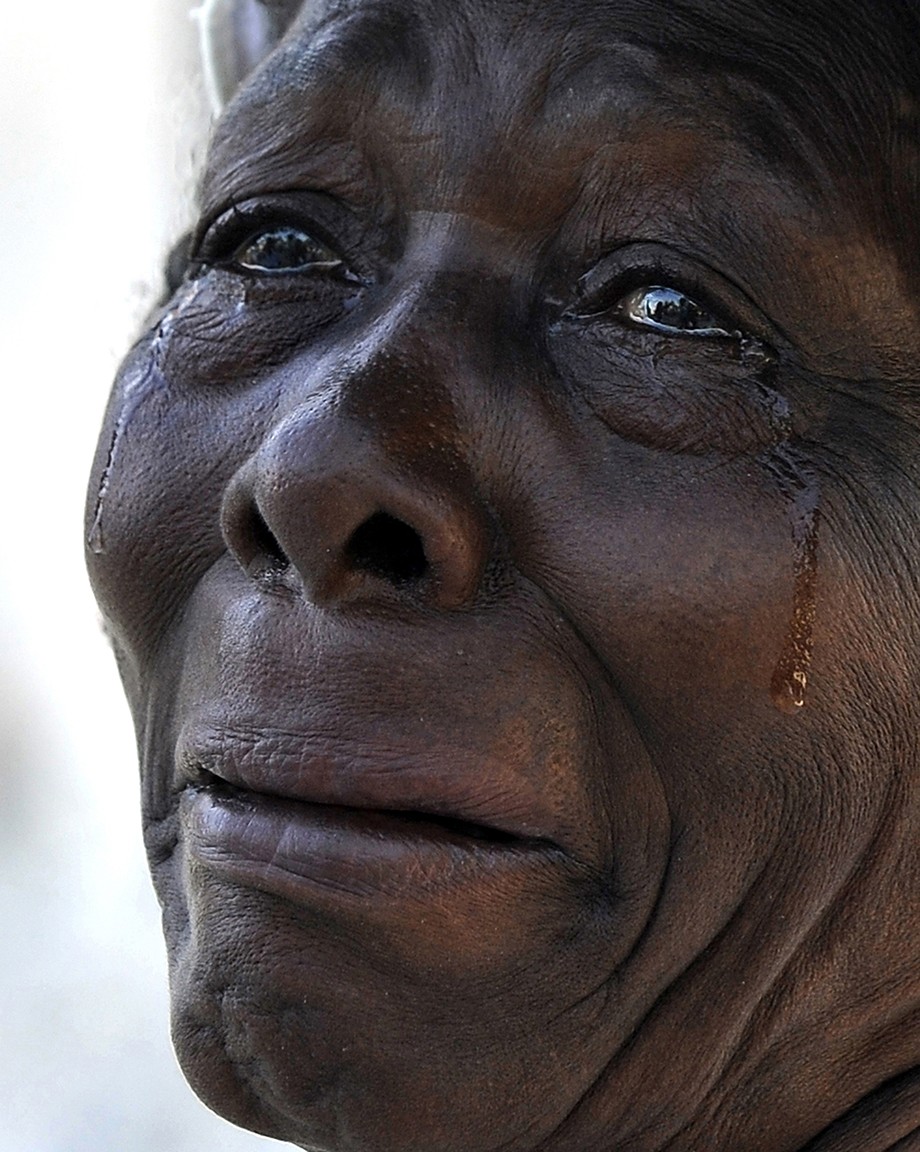
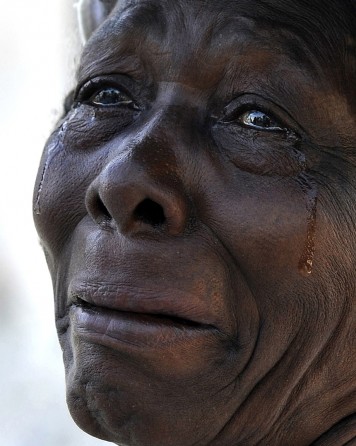
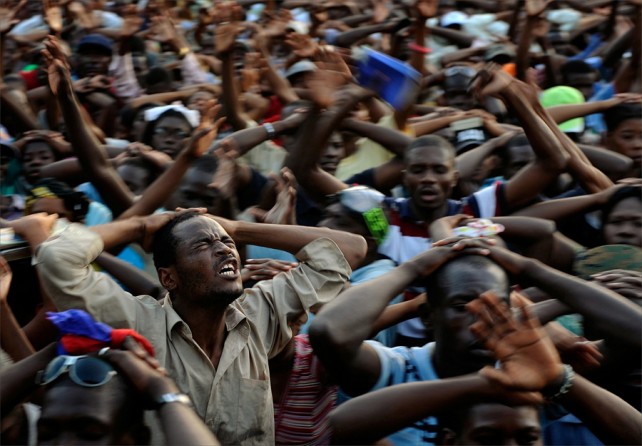
'Haiti Weeps' The earthquake’s emotional toll is etched on the faces of Haitians attending a worship service at Cathedral Notre Dame, which was destroyed in the quake. The streets were filled with beleaguered residents milling about, left with no jobs, no instructions on what to do, and no place to buy food or to take the injured. Many said they felt totally alone and saw no evidence that relief was on the way, and their mournful pleas began to give way to anger. (Carol Guzy, The Washington Post - January 24, 2010)
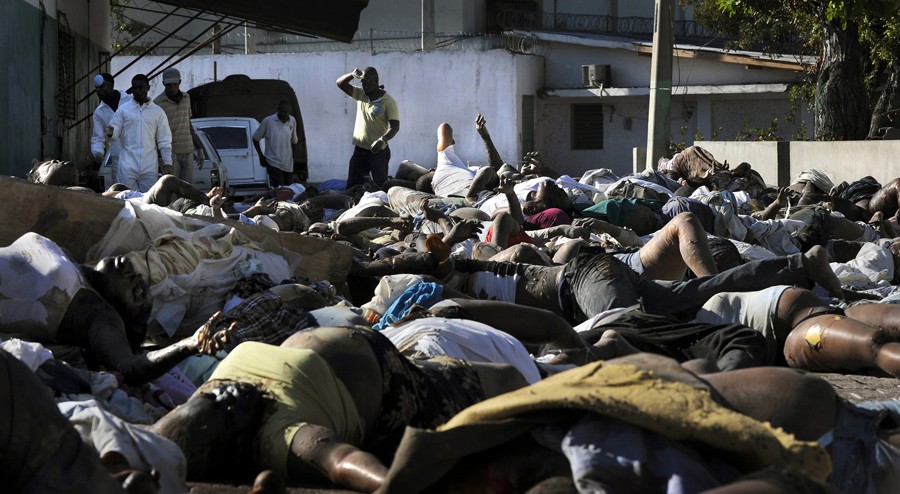
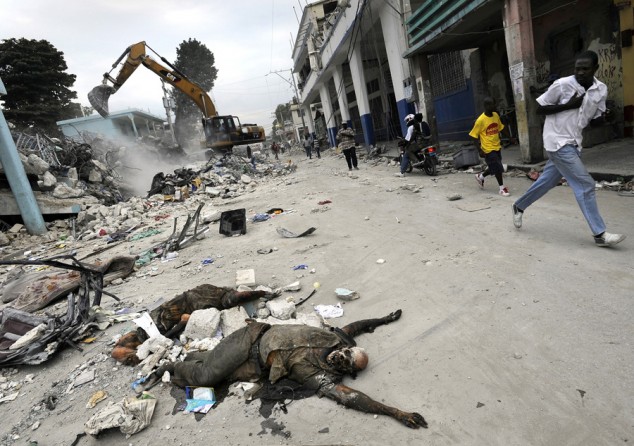
'Sea of Sadness' Bodies were piled on street corners and at the city morgue, and residents stepped past quickly, holding limes to their noses to block the stench. Family members were moving their dead across the city in coffins borne on shoulders. One man ferried a body down a street in a wheelbarrow. A crew of men with shirts wrapped around their faces lurched down the block in a converted school bus stacked with corpses. (Carol Guzy, The Washington Post - January 15, 2010)
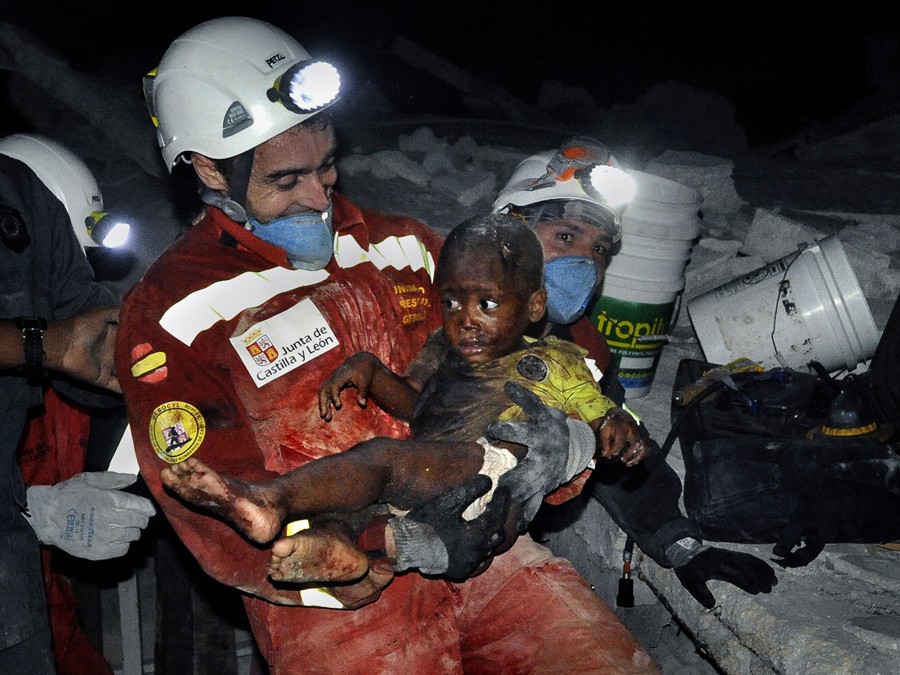
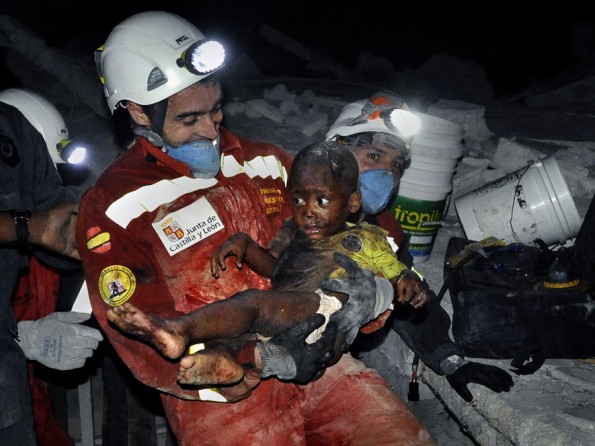
'Rescue' Relief efforts were severely hampered by the fact that government agencies and international organizations charged with helping coordinate assistance operations had themselves been shattered by the quake. But there were moments of hope amid the despair: A tiny baby named Reggie Claude is rescued from the rubble of his home. Disaster relief workers and family members rejoiced as Oscar Vega carried the child through the streets. (Carol Guzy, The Washington Post - January 14, 2010)
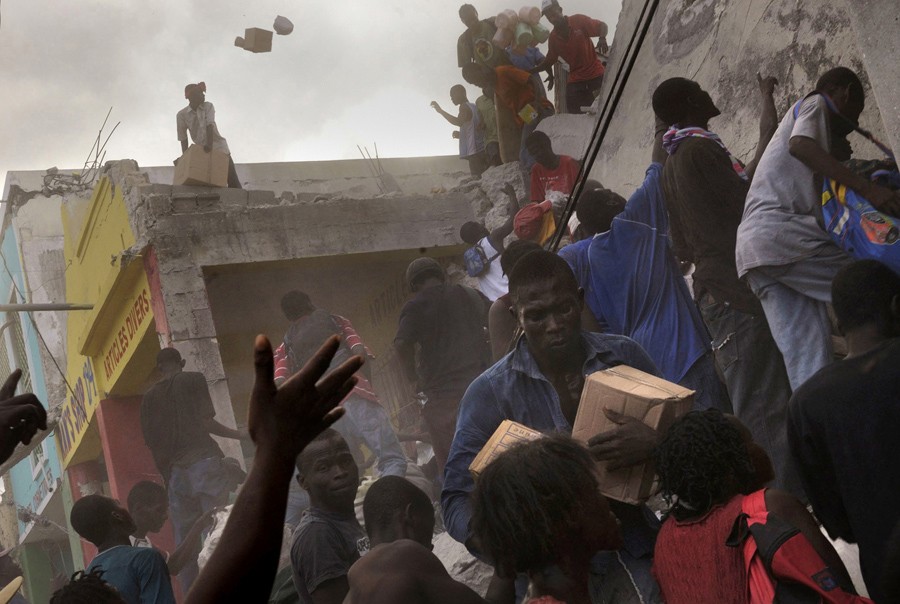
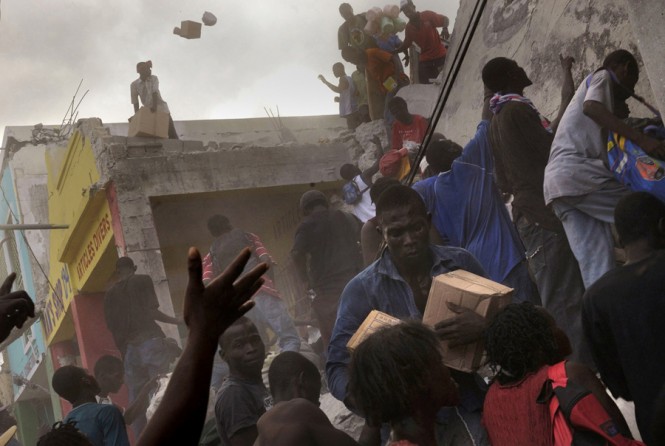
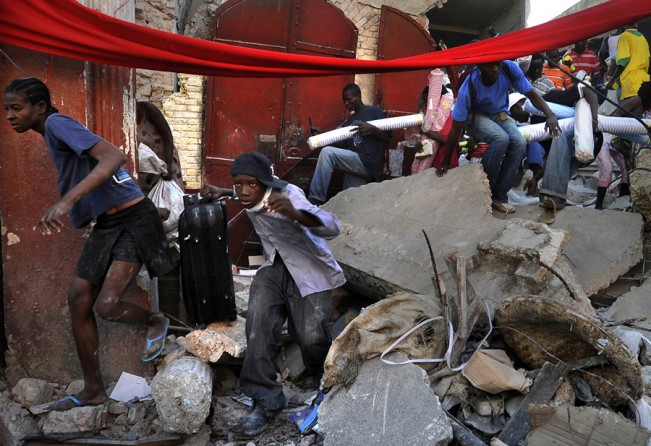
'Need' After going days without food or water, survivors take goods from a store on the main commerce street in Port-au-Prince as dust fills the air. Police assigned to control the crowd would return to scavenge for the same goods. Although a few trucks could be spotted in the capital delivering water, residents said they were becoming increasingly hungry. Many of those in need of food and medicine were children. (Nikki Kahn, The Washington Post - January 17, 2010)
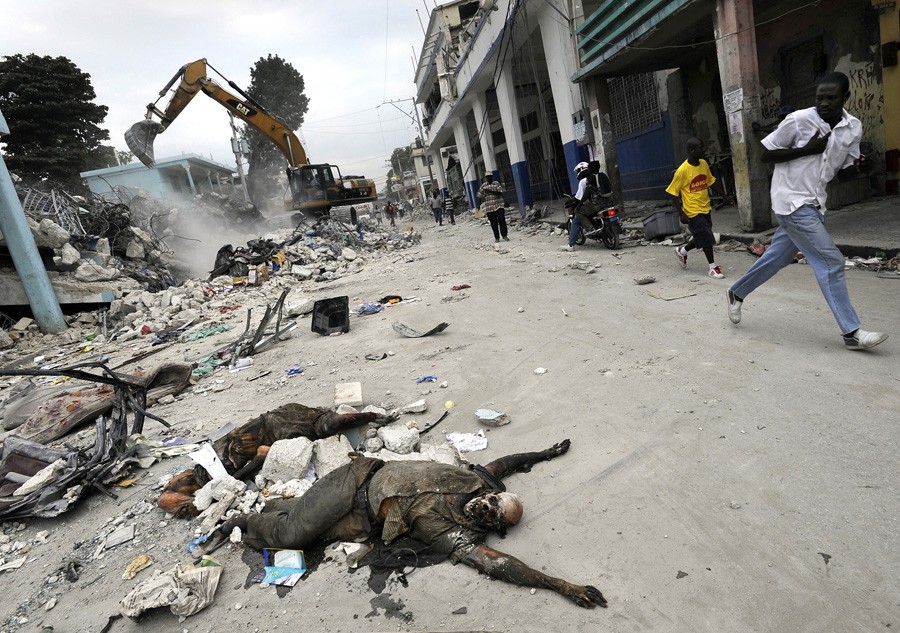
'Death' The smell of death and ash permeates the air as decomposing bodies are pulled from the rubble. For days after the quake, it was mainly the people of Port-au-Prince, working with bare hands and simple tools, who pulled at slabs of concrete and blocks of debris to get at those still trapped. Some were eventually able to get heavy machinery to tear down destroyed buildings, finding many victims who had been trapped when concrete floors collapsed. (Carol Guzy, The Washington Post - January 26, 2010)
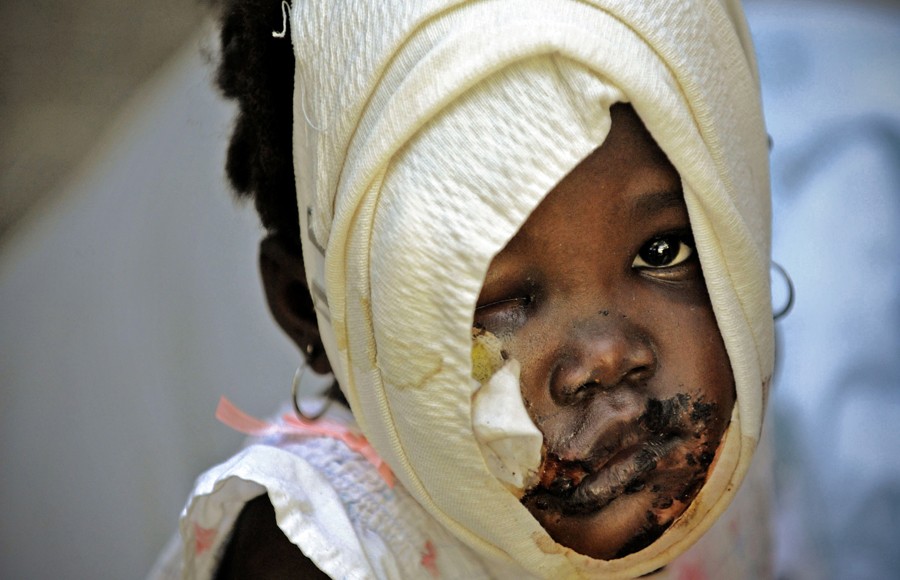
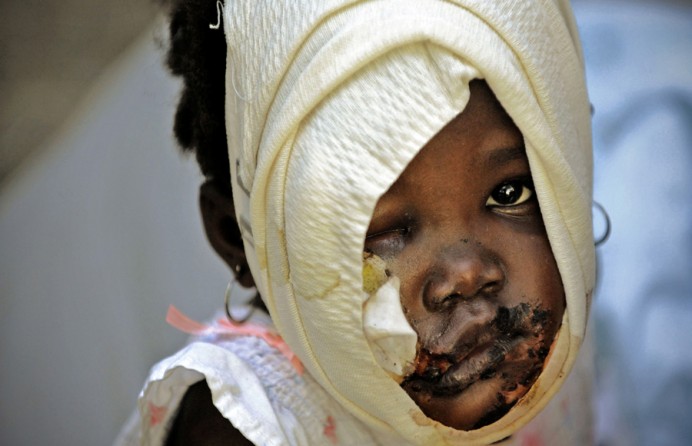
'Tiny victim' The battered and bandaged face of a child bears witness to the severity of the wounds seen at General Hospital in Port-au-Prince. The overwhelmed facility was deluged with patients seeking care. 'It's worse than I thought it would be,' one relief worker said. 'Most countries have some capacity to deal with emergencies; this one has no capacity to deal with emergencies.' (Nikki Kahn, The Washington Post - January 15, 2010)
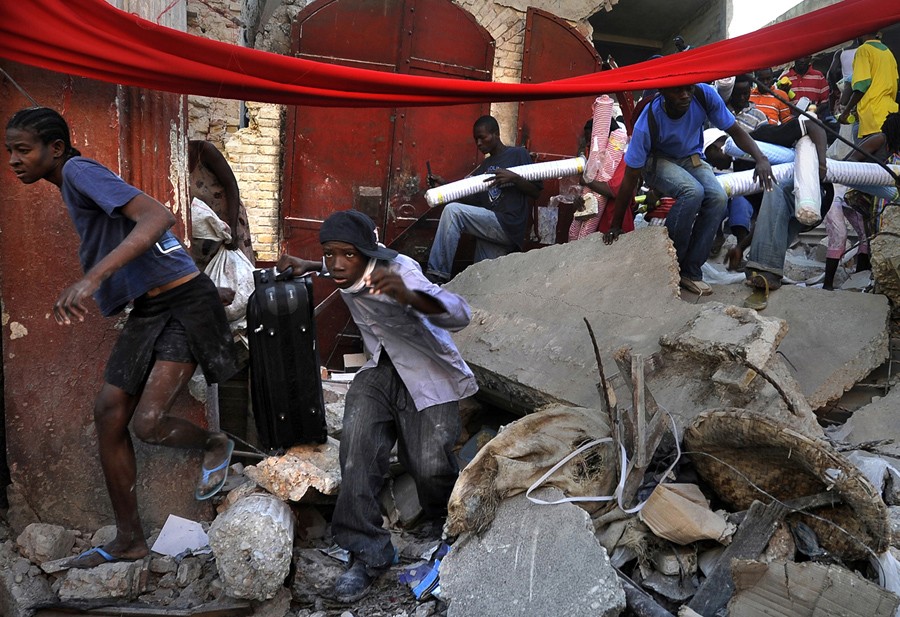
'Chaos' Desperate Haitian survivors take goods from stores in the market area of Port-au-Prince as chaos erupts in the streets. The price of what few staples remain in the city had soared, fuel supplies had dwindled, and thousands of Haitians had abandoned listing homes for squalid tent cities springing up in even the smallest public spaces. Public parks and tennis courts filled with families carrying what possessions they had left. (Carol Guzy, The Washington Post - January 16, 2010)
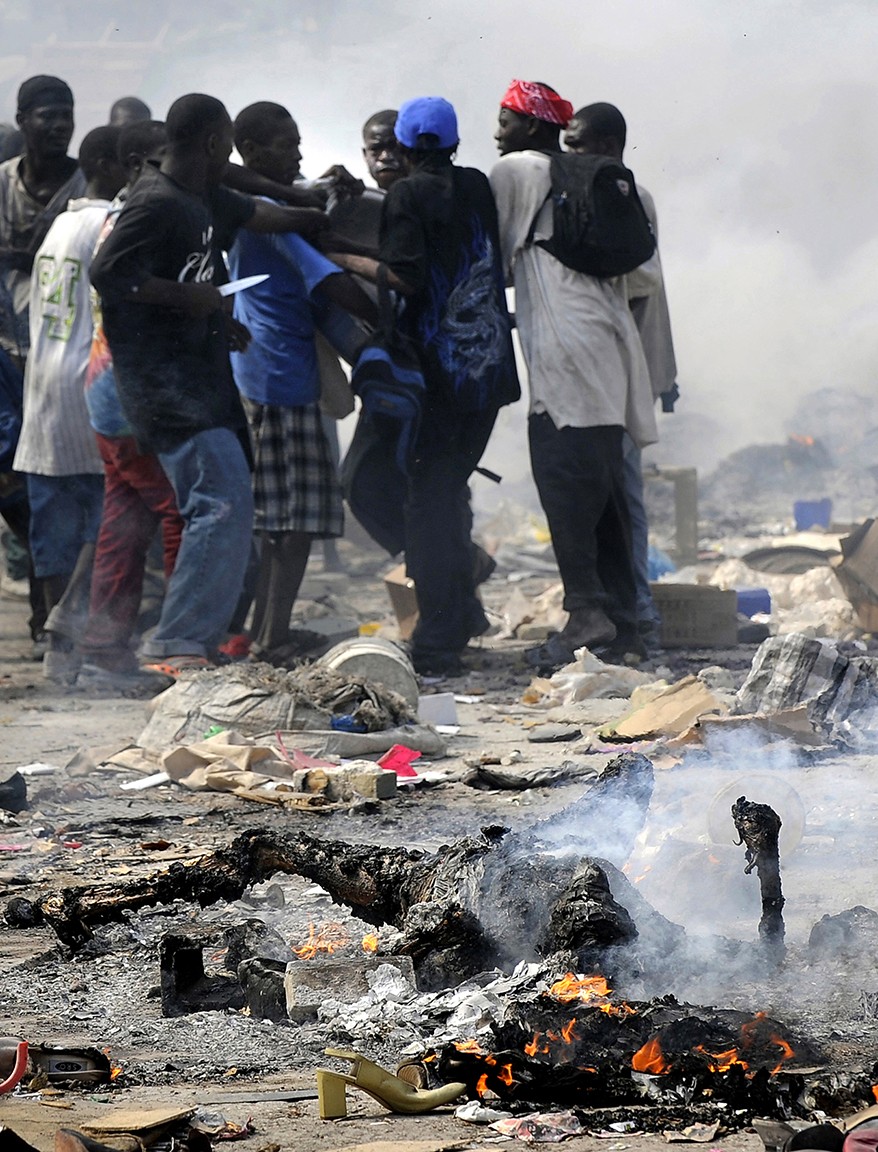
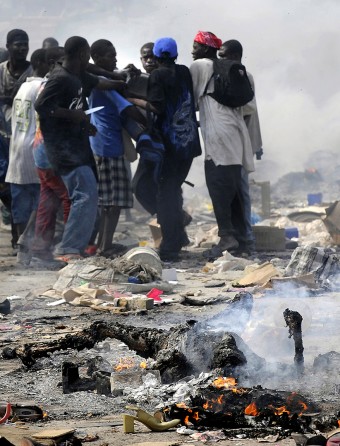
'Burn' The smell of charred flesh lingers as Haitian survivors burn bodies and brandish knives while taking goods from stores in the market. Disorder erupted after the earthquake left Port-au-Prince in ruins. Security emerged as one of the most formidable challenges in the earthquake-shattered capital, limiting the ability of the United Nations and relief officials from elsewhere to distribute food and medicine. (Carol Guzy, The Washington Post - January 18, 2010)
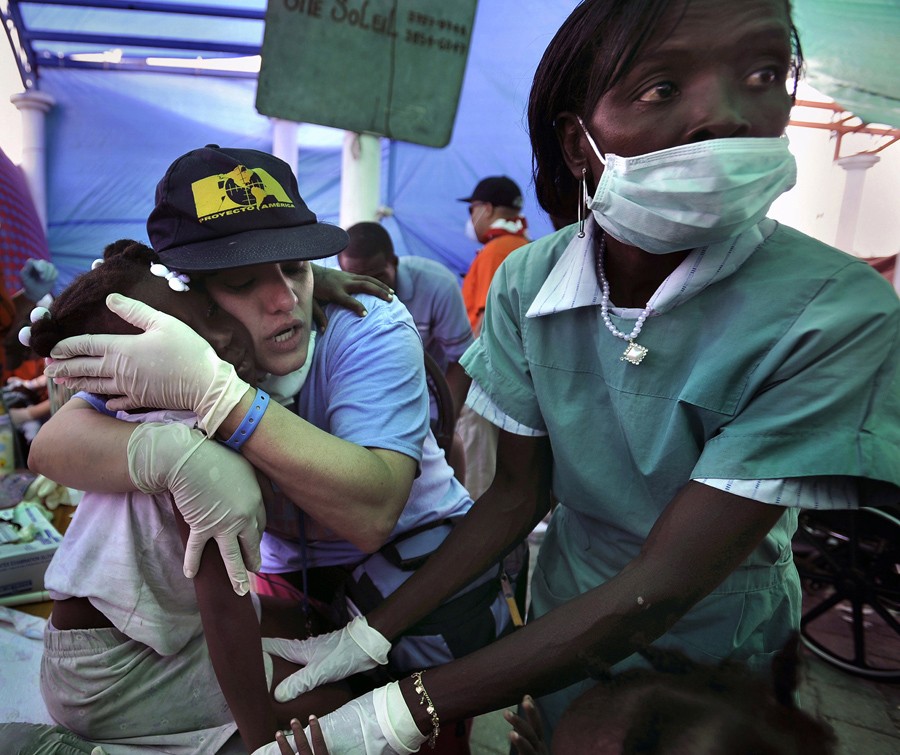
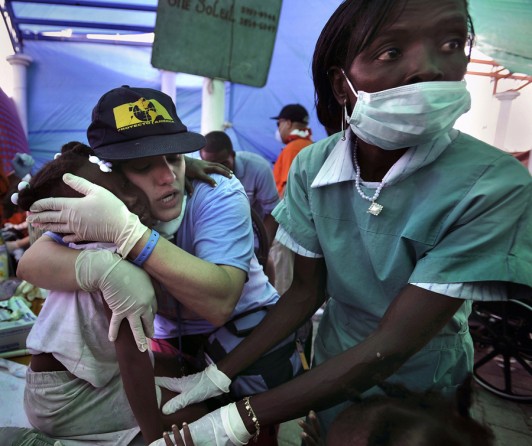
'Comfort' The medical relief teams racing to help victims of the earthquake in Haiti were up against a grim biological fact: People trapped and injured are most likely to survive if rescued within 48 hours, and very few people are found alive more than six days after a disaster. Proyecto America, a Christian disaster relief team with international volunteers, provides food and medical assistance at a camp in Cite Soleil. Nurse Marilibia Concepcion consoles Setline Premero, 8. (Carol Guzy, The Washington Post- February 1, 2010)
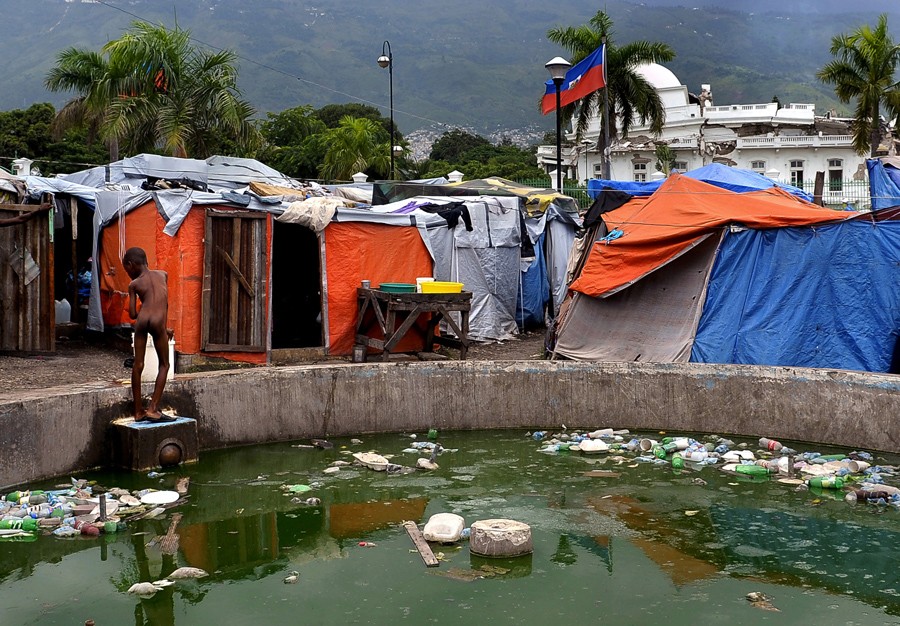
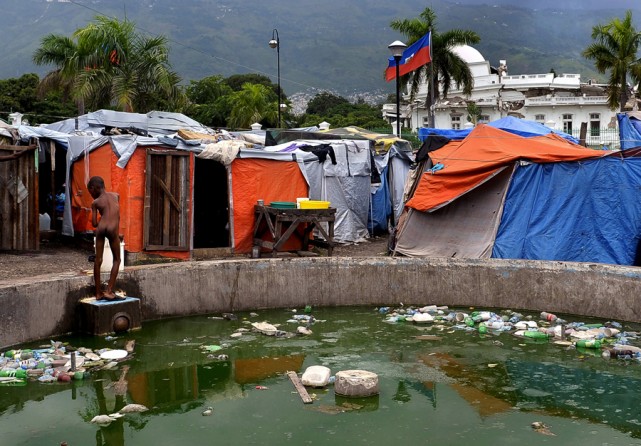
'Squalid Conditions' Months after the earthquake, a young boy washes in contaminated water at a tent camp near the severely damaged presidential palace looms in the background. The delays in reconstruction reflect bureaucratic red tape in donor nations and the complexity of rebuilding the Western Hemisphere's poorest country, which had little infrastructure, a snarled land-title system and a barely functioning government before the disaster. (Ricky Carioti, The Washington Post - August 22, 2010)
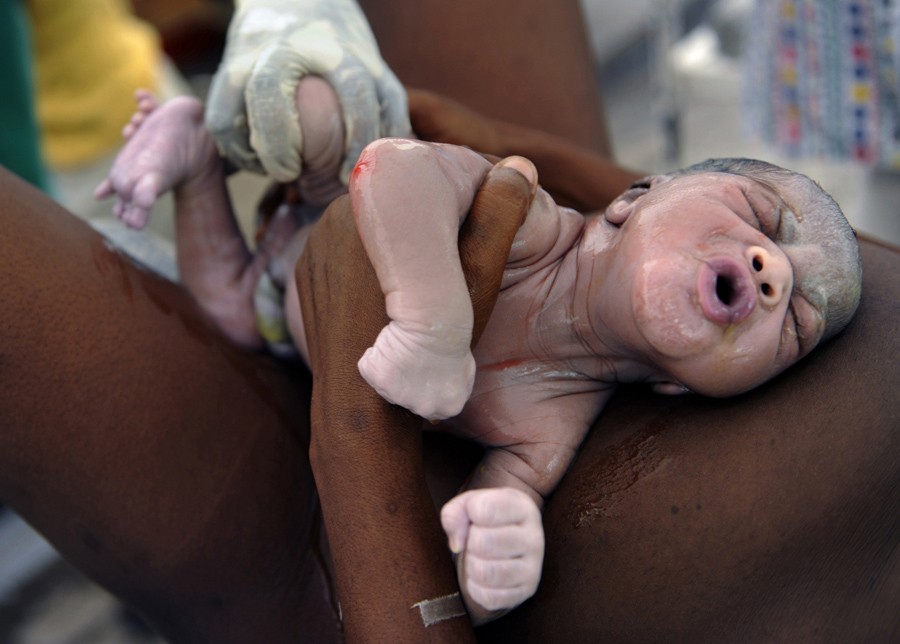
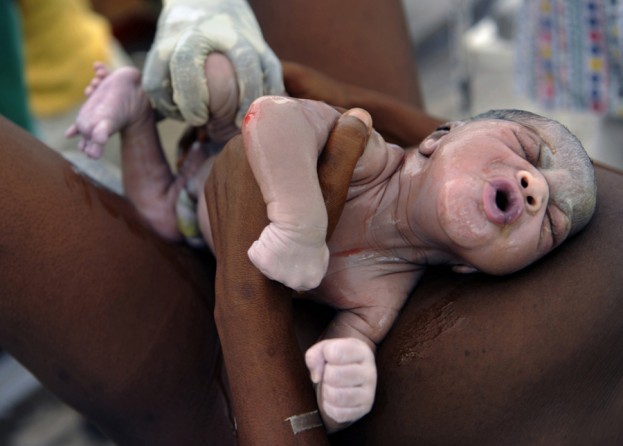
'Life Goes On' A tiny new life emerges as Destiny Ariel Dorival grimaces at her mother, Nehemie Hilaire, 39, minutes after being born in a makeshift tent serving as a maternity unit at the General Hospital in Port-au-Prince. Nearly half of Haiti's population is younger than 18 years old. Even in better times, many of this country's youth were in desperate need of aid (Nikki Kahn, The Washington Post - March 16, 2010)
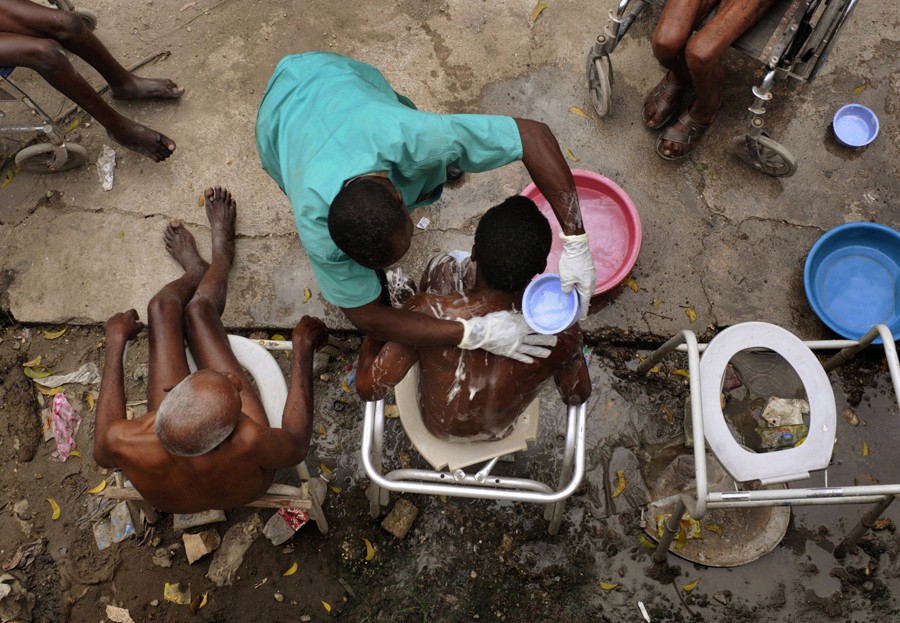
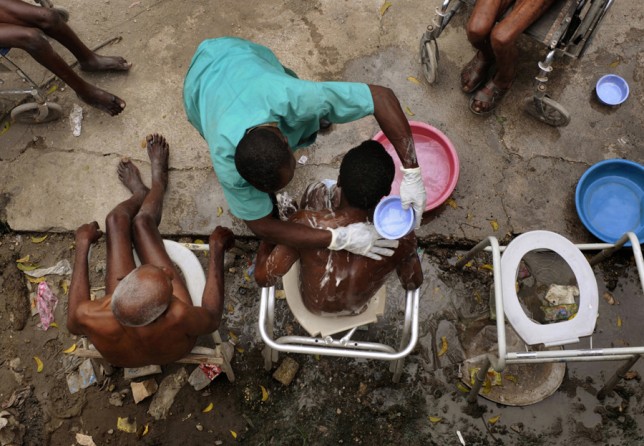
'Daily Duties' Phoncly Raphael bathes a group of men at the Azil Communal Home. Sanitation at the home remains a problem for residents living in the community. In Haitian Creole, the old are called 'gran moun,' and they are relatively few. Those 65 and older make up just 3.4 percent of Haiti's population, compared with 13 percent in a developed country such as the United States, because to attain such seniority in a nation beset by high infant mortality, poverty and disease is an accomplishment. (Nikki Kahn, The Washington Post - March 12, 2010)
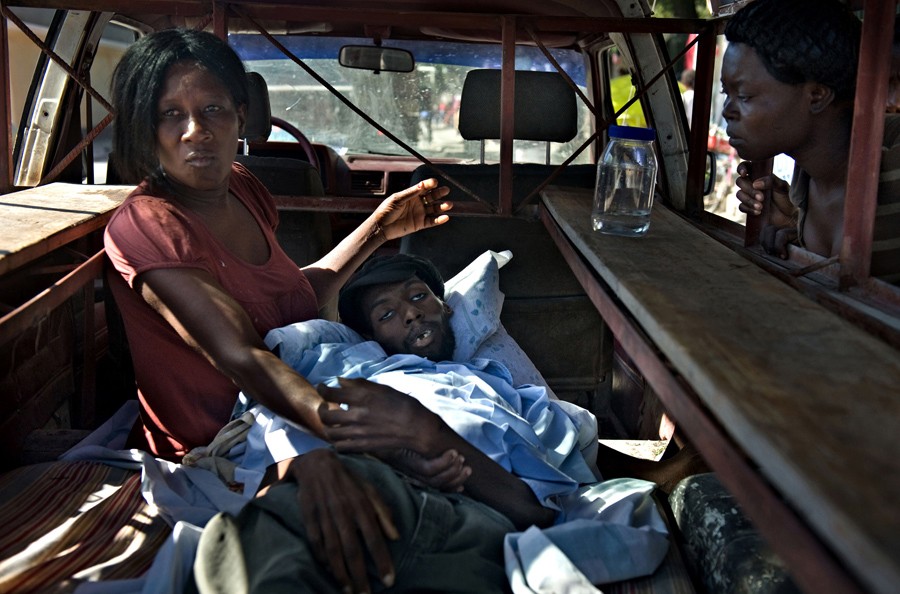
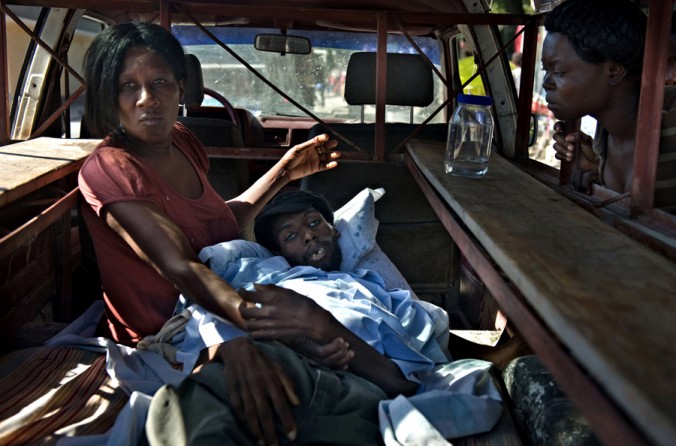
'Cholera' Sylvia Frederic tries in vain to rush her son Johnny Frederic, 26, to the hospital before he dies in her arms. Still reeling from the earthquake, Haiti's misery was deepened by a cholera epidemic that claimed many lives. Cholera can cause vomiting and diarrhea so severe that it can kill from dehydration in hours. The disease had not been seen in Haiti for decades, and many people didn't know about it. (Nikki Kahn, The Washington Post - November 25, 2010)
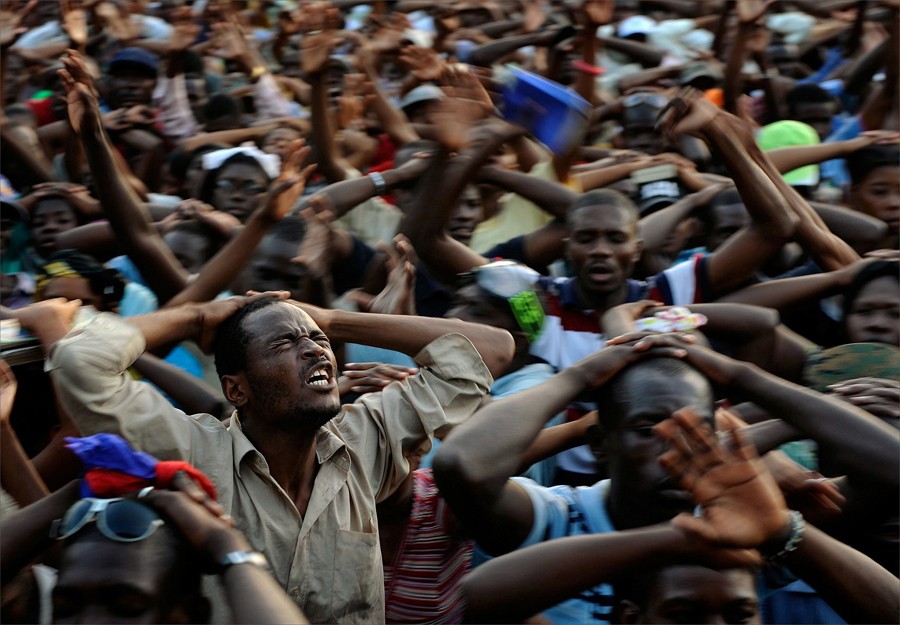
'Prayer' Survivors participate in a day of prayer at Champs du Mars in Port-au-Prince. Almost no one, it seemed, was spared tragedy. In a country whose government has all but collapsed, whose feeble economy has been crushed and whose people have been left destitute, the challenges were daunting. (Nikki Kahn, The Washington Post- January 23, 2010)
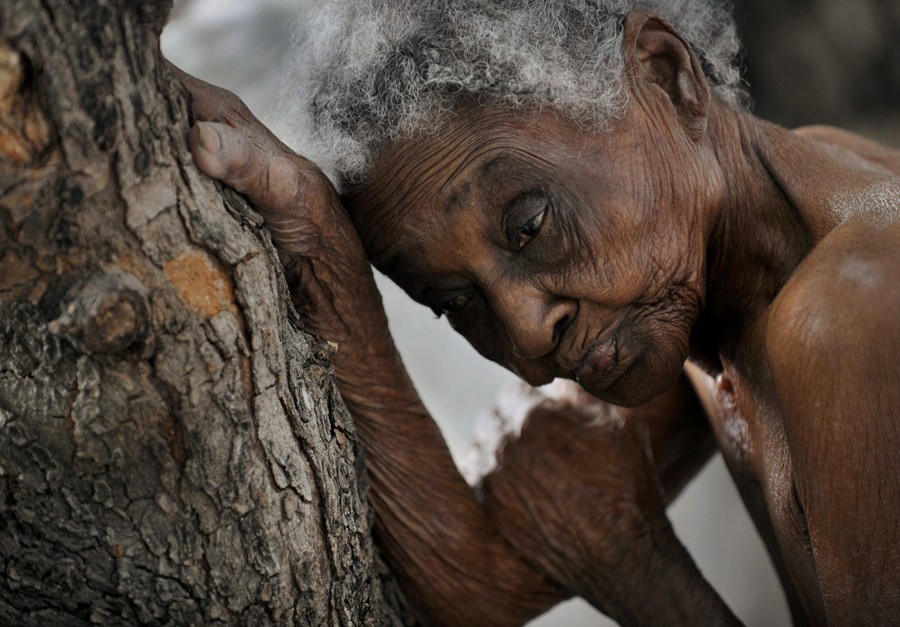
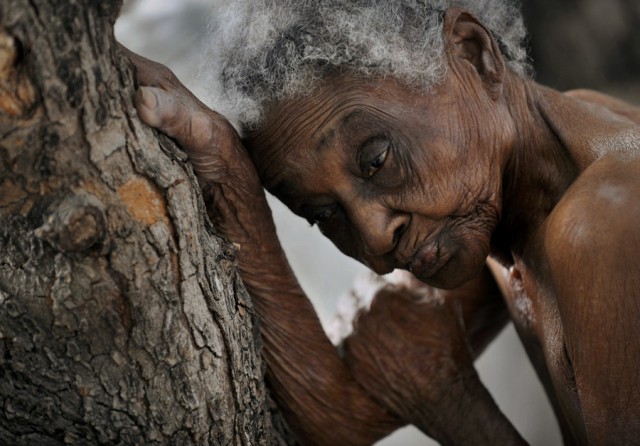
'The Elderly' Idamise Pierre leans against a tree, her withered skin resembling its bark, as she waits to bathe at the Azil Communal Home for the Aging. With weary resignation, the elderly have endured decades of Haiti's poverty and political turmoil and in their twilight years are now left with heavy hearts by the earthquake that eternally altered their lives. (Nikki Kahn, The Washington Post - March 13, 2010)
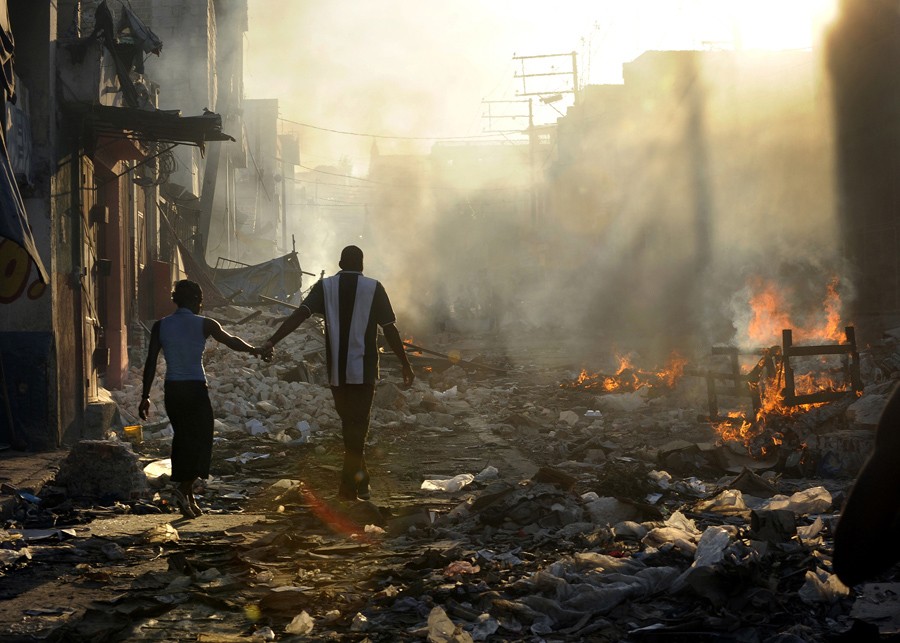
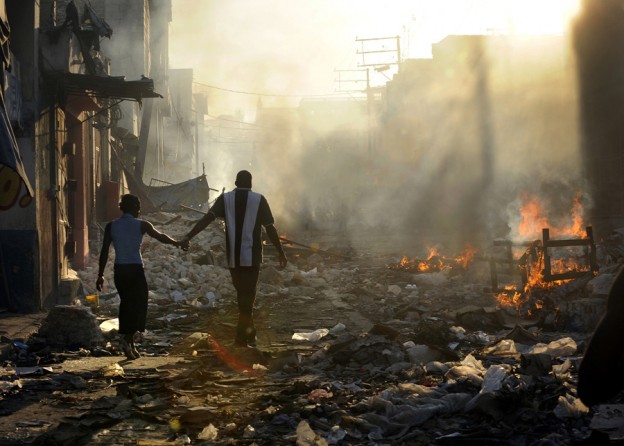
'Life Amid the Ruins' A couple holds hands and walks amid the wreckage of their country's wounded landscape. Experts familiar with the rebuilding efforts in Haiti say relief work is finally speeding up under the guidance of the Interim Haiti Recovery Commission. The group has set a goal of removing 40 percent of the earthquake rubble by October and has approved projects such as highways, apartment buildings and 250 temporary schools for children. But even with these projects underway, rebuilding Haiti will take many years. (Carol Guzy, The Washington Post - January 19, 2010)
Biography
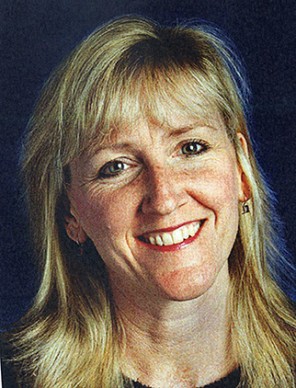
CAROL GUZY was born and raised in Bethlehem, Pa, She completed her studies at Northampton County Area Community College, graduating with an associate's degree in registered nursing. She graduated in 1980 from the Art Institute of Fort Lauderdale in Florida with an associate in applied science degree in photography.
Guzy interned at the Miami Herald and upon graduation was hired as a staff photographer. She spent eight years at the newspaper before moving in 1988 to Washington, where she is currently a staff photographer at The Washington Post.
Guzy's assignments have included domestic and international stories and documentary reportage. She has been honored twice with the Pulitzer Prize for Spot News Photography for her coverage of the military intervention in Haiti and a devastating mudslide in Armero, Colombia. She also received a Pulitzer Prize for Feature Photography for her work in Kosovo. Guzy has been named Photographer of the Year by the National Press Photographers Association three times and eight times by the White House News Photographers Association, among other awards.
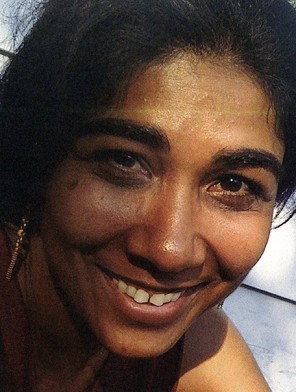
NIKKI KAHN joined the staff at The Washington Post in January 2005 after her previous job as a photographer and editor at Knight-Ridder Tribune Photo Service in Washington, D.C. She has also worked as a staff photographer at the Indianapolis Star and as an intern at the Washington Times, the News Journal in Wilmington, Del., and the Anchorage Daily News in Alaska.
Born in Georgetown, Guyana. Kahn moved to Washington, D.C. and studied at American University where she completed her Bachelor of Arts degree with a double major in visual media and art history in May 1996. She later attended Syracuse University and completed a masters of science degree in photography in May 2004, with a project on AIDS in Guyana. She lives in Washington, D.C., with her husband Michel duCille.
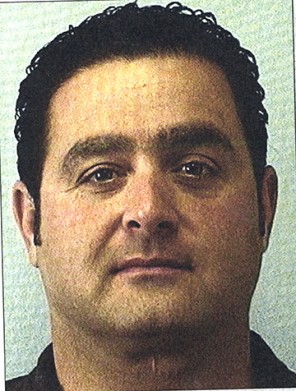
RICKY CARIOTI joined The Washington Post as a full-time photographer in 2005 after having been a freelancer and part-time staff photographer for The Post since 1998. Before that, he did freelance photography for the Associated Press in Baltimore. He has won awards from the White House News Photographers Association.
Carioti was born on Dec. 31, 1968, in Washington, D.C., to parents who immigrated from Italy in 1964. He grew up in the Maryland suburb of Hyattsville and graduated from Northwestern High School there in 1986. Carioti is fluent in Italian. After stints at Prince George's Community College and the University College at the University of Maryland, he began working as a carpenter's apprentice, pizza delivery man and automotive parts rebuilder, and at several bars.
He started in photography in his basement, where his father, for whom photography was a hobby, had a full darkroom and other camera equipment. That led to a job shooting school yearbook photos for a company in Baltimore before beginning freelance work for the Associated Press in 1995.
Carioti lives in Maryland's Frederick County with his wife and three children.