Andie Dominick of The Des Moines Register
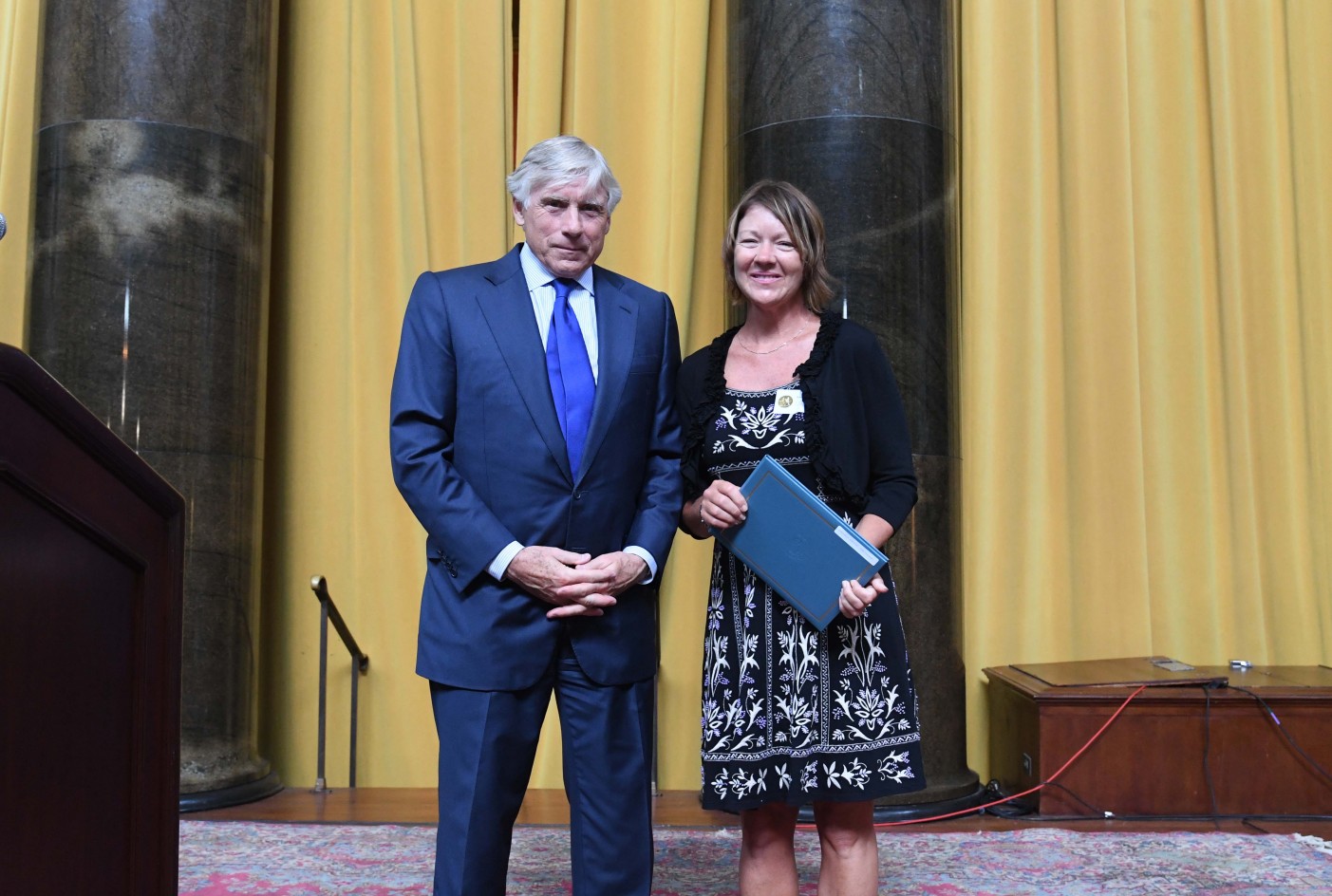
Andie Dominick accepts the 2018 Pulitzer Prize for Editorial Writing from Columbia University President Lee Bollinger. (Photo: Eileen Barroso/Columbia University)
Winning Work
Among the threats to scientific advances are politicians who do not understand science. Unfortunately, too many of these politicians land jobs in the Iowa Legislature. They send a message this state is the last place a medical researcher should locate.
In 2002, lawmakers with an unfounded fear of scientists “cloning babies” passed a bill banning the creation of stem cells through a process called somatic cell nuclear transfer. Researchers use embryos, left over from in vitro fertilization, that would otherwise be discarded. After the vote banning the process, lawmakers were crying, hugging and carrying on about how life begins at conception.
Their emotion was pathetically misguided, as there was nothing “pro-life” about the measure. In fact, the law jeopardized life-saving research. It also prompted a cell biologist at the University of Iowa to pack up, move to Illinois and take her team and millions of federal dollars for cancer research with her.
Now here we go again. Lawmakers who apparently lack an understanding of laboratory research and the history of medical advancements are pushing Senate File 52 in yet another effort to meddle in the work of real scientists. The bill, recently approved by a GOP-led Senate subcommittee, would ban “acquiring, providing, receiving, otherwise transferring or using” fetal tissue in this state. Fetal tissue, extracted during legal, voluntary abortions, can be discarded or used in medical research.
Lawmakers apparently would rather it be discarded. Committee chair Sen. Jake Chapman, R-Adel, said he didn't want to hinder research, but “we also need to understand there is a moral responsibility, as well, to ensure that baby body parts aren’t being sold.”
The same way no one was cloning babies in Iowa more than a decade ago, no one is selling "baby parts" today.
But inflammatory rhetoric is what people resort to when they don't want to acknowledge facts. Federal law already prohibits profiting from selling fetal tissue. Planned Parenthood of the Heartland says its Iowa affiliate does not even donate it. If the bill becomes law, anyone using fetal tissue — namely researchers — could land in the slammer for up to 10 years.
The Iowa Board of Regents registered opposition to the legislation, along with lobbyists representing the medical industry, churches and others. The board, which oversees state universities, requested an exemption that would allow research on certain fetal cells and proposed language to enable medical donations and permit the diagnosis of diseases.
Lawmakers did not immediately amend the bill, even though UI has been one of dozens of institutions across the country that has used fetal tissue in medical research. In recent years, the National Eye Institute provided the school more than $1 million for glaucoma research that used the tissue, according to data compiled by the Associated Press in 2015.
Fetal tissue has been successfully used for decades in medical research. It was critical in creating a vaccine for polio, a disease that crippled, paralyzed and sometimes killed its victims. Scientists infected fetal kidney cells to produce mass quantities of the virus that were collected, purified and used for inoculations. They won a Nobel Prize for Medicine in 1954.
Research using human fetal cells shows promise in treatments for spinal cord injuries, eye disease, strokes and Parkinson's disease. But some Iowa lawmakers appear uninterested in saving and improving lives. They are, however, interested in catering to the anti-abortion crowd with a bill that would not prevent a single abortion.
Iowa senator’s comments on diabetes miss the mark
A Des Moines Register editorial last week reported on two Washington lawmakers, a Democrat and a Republican, who each have children with Type 1 diabetes. They are calling on the health industry to explain why insulin is so expensive.
The price of insulin has tripled in recent years, even for older forms of the drug. One costing $21 a vial two decades ago has increased to $255. The retail price for many is frequently about $300 per vial, and diabetics commonly use two to six vials per month.
Iowa Sen. Thomas Greene, R-Burlington, used the Register's Facebook page to comment on the editorial. He wrote that most people can control the onset of diabetes “with proper diet, exercise and weight control. If that fails, then generic medications are next. Personal responsibility is the 1st step.”
It is true that some people can make lifestyle changes to prevent the onset of Type 2 diabetes. But sometimes they still need insulin. (Generic forms are not available). And the editorial focused on Type 1 diabetes, which is an autoimmune disease. Many Type 1 diabetics are diagnosed as children. Their own immune systems mistakenly destroy cells that produce insulin, a hormone needed to convert food to energy.
There is no way to prevent the disease. There is no way to cure it. Injecting insulin, frequently several times a day, is the only way to stay alive. The 20,000 young Americans diagnosed with it each year know this.
So did fellow readers who responded to Greene’s online comment. They included one mother who was curious to know whether her 3-year-old could have shown more “personal responsibility” to avoid the disease.
Greene’s subsequent Facebook comment: “I’m a Pharmacist. I know the facts. I practice in retail pharmacy. I see the patients every day.”
An editorial writer called Greene to see if he did, in fact, know the facts. He acknowledged a Type 1 diabetic had “no control” over onset of the disease. But he was more interested in talking about “individual responsibility” in preventing and managing chronic illnesses.
“I get kids who are 10 years old who are diagnosed with Type 2 diabetes. Get these kids out and play baseball,” he said.
What does that have to do with the high price of insulin?
So we asked Greene, who is a licensed pharmacist, about his experience with patients being able to afford it. He said most of them had health insurance and their co-pays were only $10 to $20.
Actually if Greene had Type 1 diabetes, he would know that is typically not the case.
When he was elected to the Iowa Senate last year, he retired from his job as a pharmacist in West Burlington. As a lawmaker, he enrolled in Blue Access health insurance, which costs taxpayers about $1,600 per month. With that plan, the co-pay for one form of insulin is not $10 or $20. It is $60 per vial.
And lawmakers’ health insurance has very generous benefits compared with other Iowans with employer-based coverage. People with high-deductible health plans or no insurance may pay full price for drugs. When seniors on Medicare reach the “donut hole” in prescription coverage, they pay a larger percentage of the cost.
Greene’s comments are most troubling because they reflect an unhelpful philosophy about health care that is commonly expressed: People just need to take better care of themselves.
While that may help stave off disease, genetics and age have a way of catching up with everyone. Gov. Terry Branstad had just finished exercising at the YMCA in 2000 when chest pains took him to the hospital for an angioplasty to open an artery. He was fortunate to have good health insurance.
People who do everything right are still diagnosed with cancer. And epilepsy. And heart disease. And diabetes. The medications they need to stay alive should be affordable. That was the point of the original editorial. That should be the issue elected officials focus on addressing.
Not blaming sick people for being sick.
Gov. Terry Branstad said in 2012 he would begin voluntarily paying 20 percent of his state-funded health insurance premiums. He encouraged other state workers, including lawmakers, to follow suit. The next year, the governor said some legislators, who had previously enjoyed premium-free health insurance, had started contributing 20 percent.
But not a single lawmaker is paying that share, according to December 2016 data obtained by The Des Moines Register. And it appears they are violating state law.
Iowa Code Section 2.40 extends health insurance to legislators, which is a generous benefit compared with what some other states offer members of a part-time Legislature. The law also specifies the plans offered should be the same as those available to state employees “excluded from collective bargaining.”
Iowa lawmakers, however, have enrolled in plans with significantly lower premiums negotiated by unions on behalf of union-covered state workers. Ninety-two legislators pay as little as $20 per month, a Register investigation found. They should be paying $142 to $334 per month. An additional 39 lawmakers pay up to $344 monthly instead of the $446 called for by their plan.
It's not clear why this is happening, but the day after this newspaper reported the information, Senate Majority Leader Bill Dix, a Republican from Shell Rock, predicted the underpayments would end during this legislative session. (On Wednesday a subcommittee passed a bill requiring all legislative branch employees to enroll in non-union health plans.) Dix should certainly be able to ensure that happens, and the public should be able to confirm it does.
Dix is, after all, the chairman of the Legislative Council, which establishes policies for lawmakers and reviews the employee handbook and what insurance plans are offered.
“Senate Republicans have long felt that we should be paying a larger share of our health insurance,” he said.
Except they didn’t.
Dix and House Democratic Minority Leader Mark Smith of Marshalltown, also a member of the council, said they were unaware of the law regarding their own health insurance.
That’s right. The people who make the laws in this state are unaware of what those laws require.
Then there’s the hypocrisy. Republican lawmakers are seeking to make changes to Iowa’s collective bargaining law. They target unions and complain about the cost of public workers while they sponge off union-negotiated health, dental, life and long-term disability insurance plans.
In fact, the public paid $23,150 last year for all the fringe benefits Dix enrolled in, more than any other lawmaker. He also collected $37,500 in salary and $23,409 for travel and other reimbursements in fiscal year 2016. This one member of Iowa’s citizen Legislature costs taxpayers more than $84,000 annually.
It’s not a bad part-time job if you can get it.
And claiming to be unaware of the law does not absolve lawmakers of responsibility when they break it. If that were the case, child molesters and drug dealers would show up in court, claim they didn’t know their actions were illegal and avoid punishment. The government will not allow people to avoid paying taxes owed because they say they didn’t know about them.
Every single Iowa lawmaker should repay the state for the share of their health coverage they failed to pay. They could write checks, set up payment plans or arrange payroll deductions.
That is what honest stewards of public dollars who are genuinely concerned about government spending would do.
AmeriHealth exit is yet another reminder of the widespread disruption caused by privatizing Medicaid
Goodbye, AmeriHealth Caritas.
Don’t let Iowa’s door hit you on the backside after abruptly abandoning your contract with the state to manage the health care of more than 200,000 Medicaid beneficiaries.
AmeriHealth is one of three for-profit insurers selected to carry out Gov. Terry Branstad’s disastrous privatization of Iowa’s $4 billion Medicaid program launched in 2016. In late October, the state announced the insurer's departure. No one will be hosting its going-away party.
During the company’s fewer than two years here, it pocketed millions of public dollars for “administration,” incessantly complained about losing money, begged for more taxpayer dollars, refused to be publicly accountable and denied care to Iowans.
These Iowans include Neal Siegel, a former financial consultant who suffered a devastating brain injury in a bicycle accident. Confined to a wheelchair and needing help with nearly every basic life activity, AmeriHealth cut reimbursements for his in-home care from more than $7,000 to about $3,000. Now he is among Medicaid beneficiaries suing the state of Iowa.
So adios to this insurer. The only thing better than its departure would be the departure of the remaining two for-profit insurers contracted for the state’s privatization experiment.
Getting rid of them may require getting a new governor.
Gov. Kim Reynolds remains dedicated to privatization. Even as health providers stiffed by insurers were forced to close. Even as low-income children have lost care. Even as a disabled man no longer able to receive in-home services was forced into an out-of-state institution where he quickly died.
Reynolds' appointee, Iowa Department of Human Services director Jerry Foxhoven, had a front-row seat during months-long secret negotiations with the private insurers attempting to hold the state hostage for more public dollars. AmeriHealth wanted an additional $150 million from taxpayers.
Does he think insurers won't do the same thing next year? Foxhoven could send all three companies packing and return Medicaid to the familiar, reliable state-run program with low administrative costs that worked well for decades.
Instead, he awarded the remaining two Medicaid insurers — Amerigroup Iowa and UnitedHealthcare of the River Valley — new contracts and a 3.3 percent raise. He said the money can come from the current budget of an agency that has no extra money and has lost hundreds of workers.
Meanwhile, more than 600,000 Iowans are victims of the bureaucratic privatization scheme.
AmeriHealth enrollees will be assigned another insurer within a few weeks. Children, severely disabled people and nursing home residents are among those faced with doing what they never had to do under state-managed Medicaid: Trying to figure out if a private company will cover needed care, medications and providers.
Then perhaps that insurer will jump ship if the state doesn't meet its demands.
Health providers are also in a lurch. Some only negotiated contracts for services with AmeriHealth. At Hills and Dales, a Dubuque-based intermediate care facility for people with disabilities, almost every client is insured by the exiting company. What are they going to do? What is the facility going to do?
Branstad's unnecessary Medicaid privatization has created disruption after disruption for thousands of Iowans and health providers. Every one of them should vote in the next election. New leadership may be the only way to restore fiscal and ethical sanity to the state’s health insurance program.
Gov. Terry Branstad doesn’t have much to say about problems caused by his privatization of Medicaid. Low-income Iowans report losing health services. Providers are not being paid by managed care companies. The origins of the governor’s “savings” estimates remain a mystery. Taxpayers don’t understand why they’re bailing out for-profit insurers contracted with the state.
Yet these are not topics the governor wants to tackle. Of course, when a politician has no good answers about a mess he created, it is certainly an option to plead the Fifth.
What should not be an option: Sending out a press release containing wildly inaccurate information to boost a claim of “success” and not explaining the discrepancy when you’re busted.
The latest press release from the governor’s office attempting to put lipstick on the privatization pig is entitled “Medicaid Modernization Delivering Better Outcomes After One Year.” It states there has been a 54 percent reduction in hospital admissions.
Wow. The number of Iowa Medicaid members being admitted to hospitals dropped by half after managed care companies took over?
Not according to the Iowa Hospital Association. And who would know better than hospitals whether there had been such a dramatic decrease in entries to their facilities?
“These sort of numbers don’t make any sense,” said spokesman Scott McIntyre, and they are not consistent with information gathered by IHA. Its data show the number of Medicaid patients discharged from Iowa hospitals declined about 4 percent the past year. Though the two data sets are not exactly the same, they should not be off by 50 percentage points, he said.
Managed care companies originally reported admissions data to the Iowa Department of Human Services. The agency shared it with the governor’s office, which included it in a gushing press release about the great benefits of privatization.
Especially amazing is that no one along the way questioned the anomaly of a nearly 400 percent spike in hospital admissions followed by a 300 percent drop over a period of a few months last year. And we’re not talking about a couple dozen incidents, but a difference of about 15,000 admissions.
In fact, if true, such a glaring abnormality should have raised concerns about whether Iowans were getting the care they need. One might wonder, for example, how exactly private insurers could cut hospital admissions in half within.a few months of taking over a $4 billion program.
But such a steep spike in numbers for the first quarter of Medicaid reporting conveniently paved the way to later trumpet a steep decline. That leaves one wondering whether the inaccuracy was intentional and premeditated.
It also calls into question the accuracy of all the information being gathered by private insurers, reported to the state and fed to the public. Perhaps the private companies have not conducted more than 230,000 health assessments of Iowans. Maybe patients have not really used nearly 68,000 “value-added” services. And how can such claims be substantiated when the original data is held by tight-lipped private insurers and not the state?
The governor and managed care companies are desperate for good news about privatization. With that in short supply, perhaps they’ve taken to making it up, including it in press releases and hoping the media simply repeat it.
Saturday was the first anniversary of Gov. Terry Branstad’s Medicaid privatization experiment. On April 1, 2016, Iowa abandoned state management of the $4 billion health insurance program for more than 500,000 poor Iowans and hired three for-profit insurers to take over.
One year later, the entire ordeal is like an April Fool’s joke with no end.
The joke is on low-income Iowans who have lost access to health services. These include home-bound, disabled people who rely on daily visits from caregivers.
The joke is on numerous health care providers underpaid or not paid by the managed care companies. These include an Iowa nursing home forced to borrow $150,000 while waiting for reimbursements, a mental health facility owed $300,000, and a family planning clinic that finally had no choice but to close its doors. One insurer recently notified patients it may stop covering services at Mercy Health Network, which has more than 200 hospitals and clinics across the state.
The joke is on taxpayers now funding insurers’ administrative costs to the tune of hundreds of millions of dollars annually. Taxpayers will also bankroll the additional $130 million Iowa agreed to pay MCOs in October after they complained about losing money.
And Iowans get a good ribbing every time Branstad says his privatized Medicaid is accompanied by “unprecedented transparency.” There is nothing transparent about any of this. Just the opposite.
Insurers refuse to explain why claims are denied and providers are not paid. They will not talk about the specifics of financial reports with the media, and by extension the public. When an Iowa lawmaker recently asked companies if they planned to seek more money this year, their responses included: “We really just don’t discuss these things in public settings” and “We do not play it out in a public arena.”
Translation: We will gladly accept billions in public dollars but we will take a pass on being accountable to the public.
The only meaningful transparency over the past year resulted from news media using Iowa's Open Records law to obtain internal documents from the Iowa Department of Human Services, which contracts with the private insurers.
The most recent batch of such records reveal the kind of Medicaid antics going on behind closed doors. In February, state leaders signed contract amendments with insurers establishing “risk corridors." These are intended to financially protect insurers by paying the difference if they spend more for medical care than they collect in revenue. In other words, the government shoulders the losses beyond a certain point.
Take a moment to let that soak in.
Privatizing administration of Medicaid was supposed to provide state budget predictability in Medicaid spending. Iowa pays an agreed-upon amount of money per beneficiary to insurers, which pay for care and assume risk. In less than a year, the state has bailed out insurers and is now positioned to shoulder more financial risk. This defies the very premise of managed care.
Meanwhile, Iowa lawmakers, who appropriate state dollars for Medicaid, didn’t know about this amendment until after it was signed. One didn’t learn of it until a reporter told her. The cost of this one contract change is an estimated $235 million in state and federal money.
What is the governor doing through all this? Packing for a new job with the Trump administration in China and continuing to insist the state will magically save hundreds of millions of dollars from privatization. The savings have never been adequately substantiated and look less and less likely. In fact, one is starting to wonder how much more this mess will cost taxpayers.
Iowa is being taken for a ride by experienced, for-profit insurers that will continue to try to milk every penny they can from government the way they have done in other states. The Branstad administration can refuse to cave to their demands and send them packing.
Connecticut fired its private Medicaid insurers a few years ago after companies refused to share information with the state and an audit found they were being overpaid by nearly $50 million annually. The state transitioned back to the traditional model in which the state pays for health services instead of paying managed care companies. What happened? The cost of care per patient dropped. Administrative expenses dropped. Then number of doctors accepting Medicaid patients increased.
Iowa can return to state-managed Medicaid that worked well for decades. It had lower per-person spending than many other states. It provided reliable reimbursements to providers and consistency in coverage for vulnerable Iowans.
Because privatized Medicaid may be the worst April Fools' joke in history.
Dan and Julie Olinger of Des Moines have spent the past decade piecing together help for their mentally ill son. Now that the teen is getting inpatient care at one of Iowa’s few psychiatric facilities for children, his private Medicaid insurer plans to stop paying for it.
The 14-year-old has been living at Orchard Place since April. According to his father, the teen’s therapist and psychiatrist say he should remain until October. But Amerigroup, one of the private managed care companies contracted by the Branstad administration to administer Medicaid, decided the teen should be discharged after 90 days. The therapist persuaded the insurer to cover an additional month, and Amerigroup recently informed the family it will pay only through Aug. 5.
Apparently the for-profit company thinks it knows better than health professionals what is best for the teen.
“That is four months of treatment even though his doctor and his therapist want more time,” Dan Olinger said. “According to many professionals I have talked to in this field, going against health professionals’ recommendations would rarely happen prior to privatized Medicaid.”
Bruce Buchanan, president of Compass Clinical Associates in Urbandale, told a Register editorial writer last week that he is hearing everybody is being pushed to decrease lengths of stays at mental health facilities for children, which are almost exclusively paid by Medicaid.
Orchard Place provides a therapeutic environment, counseling and schooling for children living on campus. It is frequently the last resort for those who have spent years in outpatient therapy and trying different medications.
The Olingers first sought professional help when their son was hallucinating at age 4, insisting he saw people who were not there. He was later diagnosed with conditions including Asperger’s, attention deficit hyperactivity disorder and oppositional defiant disorder. Over the years he was given a variety of medications, which sometimes helped for short periods of time. Then came the extreme paranoia and anxiety.
The boy believed people were watching the family’s home and planning to kidnap him. While his family slept at night, he paced around the house with a knife, checking and re-checking locks on doors and windows. He tried to commit suicide by hanging himself from duct work in the basement.
“I've also become an expert at fixing drywall with all of the holes he would punch in the walls,” said his dad.
The Iowa teen and his mental health professionals know he needs a longer inpatient stay in a facility where he can receive intensive therapy and get medications regulated. The insurer’s refusal to pay “is going to be a huge setback,” Dan said. “Discharging him prior to finishing his treatment is a serious lapse in judgment. While I understand Amerigroup has lost money since taking over Medicaid in Iowa, cutting services to make up that gap only hurts our most vulnerable.”
Hurting the most vulnerable Iowans is a recurring theme under privatized Medicaid. It is difficult to believe the insurers are truly losing money, considering so many Iowans report health service denials, so many providers report not being paid, and the companies continue to demand and receive additional taxpayer dollars.
What are the for-profit insurers doing with the billions of public dollars they are collecting?
Not providing the recommended treatment for the Olingers' son.
A president can ensure Obamacare does not work for people
When it comes to the fate of the Affordable Care Act, Iowans have been watching Congress. They should also be watching the Trump administration.
Unlike President Barack Obama, who wanted the law to succeed, the current president said he would “let Obamacare fail.” He and Health and Human Services Secretary Tom Price can do much to ensure it does. And Iowans are positioned to feel disproportionate pain.
Several states simply expanded Medicaid under the law’s more generous eligibility guidelines to provide health insurance to more residents. Iowa is one of seven that instead sought a federal waiver for a modified expansion.
The waivers provided political cover to Republican governors, including Terry Branstad, who badmouthed the law. It allowed him to craft his “own” plan so Iowa could still collect millions of additional federal matching dollars to insure more low-income people.
The Obama administration, which wanted Americans to be covered, went along.
Now the future of Iowa’s waiver (and the 150,000 people covered because of it) is in the hands of Price, who opposes Obamacare and has taken issue with its Medicaid expansion.
What about the private insurance plans offered through exchanges created by Obamacare? Republicans love private plans, and more than 70,000 Iowans buy coverage on their own, most with help from federal subsidies. Yet two major insurers announced their plans to leave this market in 2018. The single remaining one, Medica, says it will remain, but it seeks a 57 percent increase in premiums because of uncertainties in federal health care subsidies.
The Trump administration should be doing everything to encourage private insurers to continue selling policies. Instead, the president has repeatedly threatened to stop providing them so-called cost-sharing subsidies.
These subsidies lower out-of-pocket costs for low-income people, making coverage more affordable. On Tuesday, the Congressional Budget Office estimated ending the assistance would increase premiums for the most popular health plans by 20 percent and increase the federal budget deficit by $194 million in the coming decade. It would also discourage people from buying policies.
So in an act of desperation, the Iowa Insurance Commissioner has offered an idea to try to help residents maintain private coverage. Doug Ommen’s “stopgap” plan would redirect some federal dollars to help cover the cost of the sickest Iowans, who cost the most to insure.
But the plan needs approval from the Centers for Medicare and Medicaid Services, which is ultimately overseen by none other than Tom Price.
Also, this summer the Trump administration announced it was ending contracts for navigators in 18 cities. The navigators offered assistance in libraries, businesses and urban neighborhoods to try to reach the uninsured and help them sign up for coverage in exchanges. Well, not anymore.
Obamacare may have dodged a congressional bullet. Unfortunately, it's becoming clear the Trump administration places little priority on ensuring Americans have health insurance, whether offered by the government or private companies. That is going to be a problem for Iowans.
State officials in Washington last week announced there were 278 confirmed and probable cases of mumps across five counties in recent months. The contagious disease can cause deafness and inflammation of the brain. The best prevention is the MMR vaccine, which protects against measles, mumps and rubella, said Dave Johnson, a spokesman for the state’s health department.
Meanwhile, back in Iowa, a few of our public officials had vaccines on their minds, too. But they were busy trying to ensure fewer children here are protected against communicable diseases, including mumps. The House Human Resources subcommittee passed a bill that would allow parents to cite a “personal conviction” as a reason to exempt their children from state-required immunizations to attend school.
Talk about irresponsible legislation.
Iowa law already wrongly allows exemptions for children whose parents attest to having a non-specific “sincere religious belief.” These parents are not required to identify their religion, let alone explain how immunizations conflict with it. And parents use this option for personal or philosophical objections, which was never the intention of lawmakers.
In fact, when the religious exemption was created in 1977, legislators specifically rejected an amendment for a “conscience clause” that would have allowed parents to opt children out for moral or ethical reasons. An article that year in The Des Moines Register reported that parents must cite a religion that is recognized by the Internal Revenue Service. A state public health official at the time anticipated that essentially no one would be eligible for the exemption. Everyone understood vaccines save lives and prevent disease outbreaks, and that the law requiring them for schoolchildren should not be easily disregarded.
But administrative rules do not reflect that sentiment. They make it too easy for parents to check a box on a state form and receive permission to ignore the law. Add to that a relatively new anti-vaccine movement that ignores all credible scientific and medical evidence about the safety and effectiveness of vaccines. Too many parents buy into the nonsense and refuse immunizations for their kids.
The result: During the 2015-16 school year, nearly 7,000 children attending school in this state were not vaccinated due to a religious exemption, an increase of 13 percent from the previous year. So it was hardly a surprise when a medical officer from the Centers for Disease Control and Prevention recently mentioned Iowa as one of the states where outbreaks helped drive up the national count of mumps cases to an estimated 5,311 for 2016.
Lawmakers in other states have pushed to repeal religious and personal exemptions or make it more difficult for parents to use them. In Iowa, lawmakers manage to get a bill that expands exemptions passed through a subcommittee. Our fearless leaders go out of their way to put children and public health at unnecessary risk. They are an embarrassment to this state.
Widespread opposition to bill
House File 7, passed by the House Human Resources subcommittee, would allow parents to cite a “personal conviction” to exempt their children from state-required vaccinations to attend school. Not a single lobbyist had declared for support for the bill. Lobbyists representing about two dozen organizations declared opposition to it.
Among those opposed to the bill: Independent Pharmacy Cooperative; Iowa Osteopathic Medical Association; Iowa Public Health Association; Urban Education Network of Iowa; Child and Family Policy Center; School Administrators of Iowa, Iowa Independent Physician Group, The Iowa Clinic, P.C.; Iowa Nurses Association; Iowa School Nurses Association; Sanofi US/MultiState; Iowa Academy of Family Physicians; Iowa Medical Society, Iowa Annual Conference of United Methodist Church; Iowa Pharmacy Association; Iowa Association of Nurse Practitioners; Iowa Nurse Practitioners Society; Iowa Chapter of the American Academy of Pediatrics; Polk County Medical Society; Iowa State Education Association; Iowa Primary Care Association; Polk County Board of Supervisors.
Biography
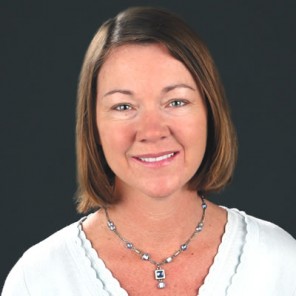
Andie Dominick has been an editorial writer at The Des Moines Register since 2001. She was a Pulitzer finalist in 2014. She holds bachelor's and master's degrees in English from Iowa State University. She is the author of "Needles: A Memoir of Growing Up with Diabetes," published by Simon and Schuster in the U.S. and translated into several languages. She has three grown children and lives in Des Moines with her husband and three dogs.