Finalist: Sharon Grigsby of The Dallas Morning News
Nominated Work
Regents try to run out the clock, but it won’t work
Baylor's board of regents is more determined than ever to run out the clock on calls for a full accounting of the university's sexual assault investigation.
Neither pressure from deep-pocket donors and alumni nor questions from parents and current students have moved the regents. Nor have months of blistering news coverage about the school's handling of sexual violence complaints.
Baylor's board foolishly maintains a "no comment" posture -- except to release a detail here or there, without documentation, that digs a deeper hole for the regents' two villains, former football coach Art Briles and president Ken Starr.
Otherwise, the board is focused on that final whistle.
Here's the problem with the regents' strategy: There is no final whistle. Not with at least a half-dozen lawsuits in the hopper.
Given the trustees' lack of interest in following the wishes of their own Baylor Nation and releasing a written report that proves the appropriate people were removed and no bad actors remain employed, the courthouse is the best remaining hope.
Our repeated request for details that back up the Pepper Hamilton law firm's summary and analysis is not some game of chicken with the regents. It's an attempt -- on behalf of women at Baylor and campuses nationwide -- to assure that others aren't at risk.
The investigation found "fundamental failure" in Baylor's Title IX implementation and a football program operating above the rules, with coaches and staff failing to stop or deter sexual assaults.
So who were those coaches and staffers?
Briles' son and offensive coordinator, Kendal, has just landed the same job at Florida Atlantic; bosses there say everyone they talked to at Baylor assured them that the younger Briles had done nothing wrong. That's similar to what Liberty University said after recently hiring former Baylor athletic director Ian McCaw.
But what of those staff members whose departures weren't noticed because they were low on the org chart? They may well be employed in similar jobs at other schools, circumventing ugly problems for their new employers.
Ditto for individuals outside Baylor athletics who are culpable in the systemic Title IX failures - ranging from bungled investigations of sexual assault cases to woefully inadequate reporting and tracking protocols.
Briles and Starr didn't singlehandedly do everything alleged by Pepper Hamilton. What are the trustees covering up? Whom are they trying to protect?
At least 13 survivors of sexual or physical assault have sued Baylor, and we are watching those pending lawsuits carefully.
Briles' recent decision to sue three regents and Chief Operating Officer Reagan Ramsower may also shake loose details. If his lawsuit, alleging libel, slander and conspiracy, gets as far as depositions, more is sure to be revealed.
Uncomfortable facts also may emerge in the lawsuit filed by former Baylor athletics staffer Tom Hill against Pepper Hamilton, alleging defamation and negligence.
Whatever the board of regents is hiding now will only hurt Baylor down the road, whether in pretrial discovery or in future college tragedies. We are rooting for the truth to emerge before the game ends.
Waiting for answers
Baylor board of regents chair Ron Murff and colleagues James Gray, David Harper and Dennis Wiles met with us Nov. 3 and vowed to continue answering our questions. We have not yet received a response to these Nov. 10 queries:
1. Baylor released a detailed timeline regarding one football-related gang rape report. Please provide details of the other incidents referenced by regents, which they said involved 17 women and 19 football players, including four gang rapes.
2. What is the status of our Nov. 3 request to you for the release of all communication between senior vice president and chief operating officer Reagan Ramsower and former Title IX coordinator Patty Crawford?
How do others on Baylor staff escape blame?
A new court filing provides the strongest evidence yet that former Baylor coach Art Briles has been lying all along about the ugly truths involving his players.
"The football program was a black hole into which reports of misconduct such as drug use, physical assault, domestic violence, brandishing of guns, indecent exposure and academic fraud disappeared," according to a detailed narrative filed last Thursday on behalf of school officials.
Quoting from what it said were texts between Briles and other athletic officials, the filing offers numerous nauseating examples of coaches doing the wrong thing to protect their winning program. The only comfort one can take after reading the filing is that Briles likely has used his good-ol'-boy "I knew nothing" shtick for the last time.
Here's one exchange:
In reference to a player who was arrested for assault and threatening to kill a non-athlete, a football operations staff member "tried to talk the victim out of pressing criminal charges," the document states.
The correspondence, from Sept. 20, 2013, quotes Briles in a text to then-athletics director Ian McCaw: "Just talked to [the player] — he said Waco PD was there — said they were going to keep it quiet — Wasn't a set up deal ... I'll get shill [assistant athletic director Colin Shillinglaw] to ck on Sibley." (Sibley was in reference to Waco attorney Jonathan Sibley.)
It states that McCaw responded, "That would be great if they kept it quiet."
Finally, almost nine months after Pepper Hamilton's investigation of how Baylor responded to sexual assault allegations, the public is getting some specific answers. That's a good thing — despite the obfuscation that got us here.
It's Shillinglaw's libel suit against Baylor leaders that prompted the release of information that regents long claimed must remain secret out of privacy concerns for sexual assault survivors. That sentiment seemingly mattered less once the regents found themselves in legal hot water.
If Baylor had been forthcoming from the start, Briles' supporters would never have been able to circulate "an inaccurate and self-serving picture of what occurred," which, as the response to the Shillinglaw lawsuit notes, is exactly what the football-crazed faction did.
In fact, Briles got exactly what he deserved; his excuse that he didn't know about players violating criminal laws and Baylor's own policies was absurd. Why else did he drop his own libel suit the day before the filings in the Shillinglaw case and offer not a word of denial about those text messages?
It's hard to imagine Briles ever coaching again. But what of others from Baylor's disgraced football program who have won positions elsewhere?
The details released last week don't just implicate the head coach, but raise questions about McCaw and assistant coaches who oversaw a team whose players were shielded despite accusations of gang rape, domestic violence, physical assault and indecent exposure.
Liberty University, where McCaw landed, along with Florida Atlantic, Arizona State and the University of Texas — all of which have signed up key former Baylor football staffers — should rethink those decisions. Otherwise, they are just another "win at all costs" chapter in this tragedy.
Briles and his assistants were always eager to remind us of his signature phrase: "truth don't lie."
But Briles and members of his staff did.
What you can do
It's been 257 days since The Dallas Morning News began asking for Baylor University to release a written, detailed report of the school's sexual assault investigation. Please contact the Office of the President at Baylor at 254-710-3555 and ask that the board of regents secure a written report from Pepper Hamilton.
Ban using sex as a college sports recruiting tool
With each emerging ugly detail of the Baylor sexual assault tragedy, the more intense the pressure grows on the NCAA to punish the school in some meaningful way.
The oversight group may not have jurisdiction in criminal activities -- as it learned during its failed effort to penalize Penn State in the child sexual abuse scandal involving Jerry Sandusky. But here's one rule the NCAA could easily adopt that would improve the athletics culture nationwide:
Specifically prohibit schools from using access to women or sex to help lure recruits and make clear that programs will be in big trouble if they disregard this ban.
The NCAA keeps mouthing the words that it wants to eradicate ways in which college athletics programs put women in harm's way, particularly in regard to schools' continued "hostess programs." So just do it.
As Jessica Luther, author of Unsportsmanlike Conduct: College Football and the Politics of Rape, puts it, "So little has changed despite all the debate. An explicit ban would make it clear that it is committed to helping end practices that put women in particularly vulnerable positions."
Historically, hostess clubs worked like this: Universities signed up female students whose official role in athletics recruiting involved acting as tour guides or hosting dinners. Victims' advocate groups say even that arrangement sends dangerous messages to recruits about their status on campus and could result in pressure for sexual encounters.
The NCAA had no choice but to address hostess clubs in 2004 after a number of documented recruiting scandals: A former University of Colorado student sued, saying she had been raped by a football recruit, and hostesses at Arizona State and Oregon brought to light stories of fellow hostesses having sex with recruits.
The NCAA's tepid response was to say that host programs for recruits must be consistent with each school's policies for all tours and visits.
College leaders have long maintained that fraternizing between hostesses and athletes is strictly prohibited. Many women who have participated in the clubs adamantly defend them, saying the programs and their members have been unfairly cast in a negative light.
Most recently, the now-defunct hostess club known as the Baylor Bruins was referenced in a Jane Doe lawsuit filed Jan. 27on behalf of a woman who joined the organization in 2012. Although her alleged 2013 attack by two football players occurred off campus, Doe says a fellow Bruin arrived on the scene and tried to persuade her to change her story to police to protect the athletes.
We met Monday with four women who served as Bruins. Each stressed the strictness of rules governing the hostesses and said they never felt victimized in any way.
Baylor dissolved the Bruins in spring 2016, shortly before announcing results of the Pepper Hamilton investigation into sexual assault reports involving football players. University spokesperson Tonya Lewis said the Bruins duties are now handled by the same students who lead tours for all prospective attendees, athletes and non-athletes alike. Lewis did not respond to our question about what prompted the Bruins to be dissolved.
Other schools have ended their hostess clubs as well; for instance, the University of Tennessee and Auburn, for instance, did so after the NCAA alleged they weren't following the updated 2004 guidelines.
Recruiting is the lifeblood of successful sports programs, so it's no surprise that athletics departments keep finding loopholes in the rules to exploit women. That's all the more reason for the NCAA to explicitly ban these practices.
No straight answers
We contacted the NCAA through its online media inquiry form -- its preferred method of communication -- and asked for the rule that governs hostess programs and recruiting.
NCAA spokesperson Emily James responded: "A student host used during an unofficial visit must either be a current student-athlete or a student who is designated in a matter consistent with the institution's policies for providing campus visitors or tours to prospective students in general."
We followed up: "Given the instances of sexual assault since 2004 involving women and football players, why has the NCAA not explicitly stated that using access to women and sex as part of recruiting is prohibited?"
James responded: "Our rules don't allow for the use of student hosts in any way that is inconsistent with a school's policies on providing campus tours for visits for all prospective students."
We followed up: "With all respect, that answer doesn't address the question we asked about an explicit ban."
We received no further response.
How you can help
Please contact the NCAA and ask that it explicitly ban access to women and sex as part of recruiting. Call the organization at 877-262-1492 and press 0 or email at [email protected].
Now it’s Texas senators being kept in dark
We wanted to move quickly.
That's Baylor University's feeble excuse for not requesting a written report into the campus' sexual assault scandal.
The school contends that Pepper Hamilton lawyers needed six more months to craft such a document. So instead, the Board of Regents released only the law firm's recommendations and a Baylor-produced document of generalized conclusions.
Almost a year later, questions only boil, most recently during a hearing before the state Senate's Higher Education Committee.
And just think, in the time since regents heard the findings, Pepper Hamilton could have completed that written report of fact-based evidence almost twice over.
We understand the frustration of Austin lawmakers who were thwarted in getting many questions answered last week by Baylor's interim president. But remember that David Garland didn't even hear the Pepper Hamilton presentation, so his litany of "I don't know" and "I wasn't there" was unsurprising.
Baylor leaders seem oblivious to the fact that credibility isn't built on repeated use of the word "transparency" but rather on answers that demonstrate that value in action.
At one point, as Garland argued that Baylor was not trying to "cover up what happened," Sen. Kel Seliger, R-Amarillo, responded: "I don't buy that for a minute. I think that is exactly what was going on."
State lawmakers are troubled by the same nagging questions raised by victims-rights advocates, Baylor alumni and this newspaper: Why no written report? Why have several key administration officials managed to keep their jobs? Why do the regents seem less than forthcoming?
The Senate committee's grilling of Garland came during his testimony against a bill that would require any school receiving more than $5 million in Tuition Equalization Grants from Texas to comply with state open records and open meetings laws.
The Texas Tribune reported that only two schools in the state meet that threshold — Baylor and the University of Incarnate Word in San Antonio.
We support the Legislature's attempts to force accountability. But using TEG funds as a cudgel seems misguided, given the harm it could do to financially strapped students.
It's school leaders who should bear the burden for their failure to properly respond to numerous sexual assault reports involving football players and other students.
While Baylor has vowed to make things right, Wednesday's hearing provided far too many reminders of everything that's been wrong.
For instance, state Sen. Royce West, D-Dallas, tried repeatedly to get an explanation from Garland about why Baylor's "findings of fact" didn't name any school official.
From the often-faltering Garland: "My guess would be that they were trying to keep this confidential for the persons involved."
To which several lawmakers guffawed along the lines of "that's exactly the point of all this."
Indeed, it is. Even unprecedented campus improvements can't stand in for the truth.
Many can’t wait for new president to arrive
The first of June can't get here fast enough for those of us eager for bold leadership at Baylor University to fully address its sexual assault tragedies.
That's the start date for incoming president Linda Livingstone, most recently dean of the George Washington University School of Business and a former Baylor faculty member.
The stakes for Livingstone's second stint at the school couldn't be higher as Baylor attempts to remake policies and culture. This is a school facing six Title IX lawsuits, a federal Title IX investigation, an NCAA investigation, an accreditation agency warning, unfriendly-to-Baylor bills in Austin and an upcoming Big 12 Conference review.
Not to mention the heated trouble within the Baylor family itself.
Outraged both by the school's handling of sexual assault reports and the lack of transparency around the investigative Pepper Hamilton report, influential donors and the school's alumni foundation continue to growl at the Board of Regents.
Naming a woman to head the university for the first time in its 172-year history is no instant fix. But if Livingstone is as strong a leader as advertised, her tenure can begin a much-needed shift at a school that poorly served victims of sexual assault.
Livingstone returns to a campus that has too seldom honored the leadership roles of women. While Elizabeth Davis served from 2010 to 2015 as the school's top academic administrator, many of the university's colleges — for instance Arts and Sciences — have been led exclusively by men.
The new president will face enormous pressure to prove that Baylor has corrected the many shortcomings that led to the sexual assault scandal. Assuring that the right safeguards are genuinely in place and that no bad actors remain in positions of power must be priority one.
Additionally, Livingstone must foster conversations about how a Christian school, with its no-alcohol, no-sex policies, navigates the reality of young people, many of them inexperienced drinkers, exploring their sexuality as they live away from home for the first time.
Before the sexual assault scandal, the football team's success — and its fancy new stadium — sucked up most Baylor-related headlines, masking the fact that the school was torn in many directions under former President Ken Starr.
While Livingstone will become only its 15th president, Baylor actually hasn't enjoyed consistent leadership since Robert Sloan's resignation in 2005.
Sloan spent much of his time picking fights far and wide, particularly with the school's independent alumni organization. Those wounds only festered after his departure and remain unhealed more than a decade later.
Also of concern is whether the school is matching its rapid rate of growth in recent years with quality resources.
Livingstone must articulate a clear vision forward and win buy-in — and trust — from all quarters.
Most of all, she needs to show that Baylor is a university that trains young people to ask important questions and expect honest answers — in their classroom and of their school leaders.
Who is Linda Livingstone?
"I go into this with eyes wide-open about some of those continuing challenges [related to sexual assault scandal] that we have to work through. I asked some questions about the commitments of the regents of continuing to work through these issues and ensure we get to the right place as a university." — Linda Livingstone, Baylor's new president
She was one of two finalists identified by a search committee in Baylor's 2005 presidential search to replace Robert B. Sloan Jr.
She worked at Baylor from 1991 to 2002 as a management professor and associate dean of graduate programs in the business school.
She served as dean of the business school at Pepperdine University for 12 years.
She's held the dean's job at George Washington University School of Business since 2014.
A native of Perkins, Okla., she graduated from Oklahoma State University, with undergraduate, master's and doctoral degrees in business and management.
She played on the women's basketball team at OSU from 1978 to 1982, giving her a window into NCAA Division I sports.
New gang-rape accusation demands action
In sickening detail, Baylor University's former Title IX coordinator explained to us late last year the extent of the school's sexual assault tragedy.
While Patty Crawford noted that violence against women occurred campus-wide — not just among athletes — she said that survivors' stories regarding football players were the most horrific. Among them were accounts of a team hazing ritual that involved gang rapes.
Now a new lawsuit, filed Tuesday night on behalf of a former Baylor volleyball player, will allow those allegations their day in court.
This case, the seventh Title IX lawsuit against Baylor — bringing the total number of women involved to 15 — alleges that as many as eight football players drugged the student-athlete and took turns raping her in 2012. The filing echoes what Crawford said previously in an interview: Members of the team required new players to bring freshman women to parties to be drugged and gang-raped.
It's difficult to single out a most-chilling detail from these allegations, all of which defy sufficiently heinous adjectives.
Among the plaintiff's account is hearing the players yell: "Grab her phone. Delete my numbers and texts" after the rape in an off-campus apartment. The suit also alleges that the assaults were photographed and videotaped, with at least one 21-second videotape circulating of football players gang-raping two students.
Baylor University's Board of Regents had no response to Crawford's interview with us last November, but ignoring legal filings will not be an option.
With each Title IX lawsuit, the odds improve that the regents will finally be forced to provide a full accounting of the university's held-secret sexual assault investigation by the Pepper Hamilton law firm.
Remember that while the Tuesday lawsuit describes only one student's experiences, Crawford told us she had heard the gang rape/hazing narrative from multiple women.
She described it as younger players delivering the women to their older teammates for "the most disgusting, sickening, violent" assaults. One of the women who told Crawford that video was taken of the rapes said she realized what had happened to her only when a football player showed her the recording.
In response to the latest lawsuit, Baylor noted that it "has been in conversations with the victim's legal counsel for many months in an attempt to reach an amicable resolution."
It's also worth noting that the account of this gang rape is the one regents previously alleged former head football coach Art Briles and athletics director Ian McCaw knew about but did not report to judicial affairs.
While Briles has remained unemployed since he was fired last May, McCaw has a new job in football: Liberty University hired him after he resigned from Baylor. Additionally, Florida Atlantic, Arizona State and the University of Texas have signed up key former Baylor football staffers.
As these new, horrific details emerge in legal proceedings, you have to wonder how any of these employers could feel confident in those hires.
Only when all the facts are known will there be any certainty that all culpable individuals, both in Baylor athletics and administration, have been held accountable. That must include the regents releasing a full written report of the Pepper Hamilton investigation.
A year after sex assault report, strategy is ‘duck and cover’
On this first anniversary of Baylor kinda-sorta confessing to its fundamental failure to protect young women from sexual violence, please pause and think of those who have paid the highest price: the still-unknown number of assault survivors.
Listen to the words of one of those Jane Does, whom we spoke to just this week: "Everyone at Baylor wants to move on. They expect it to get better, but for the survivors, it doesn't get better. Baylor thinks we will forget, but we won't. We can't."
It's on behalf of this survivor and all the others like her that this newspaper has consistently called for Baylor to provide written details of the investigation into its handling of sexual assault reports.
A year ago today, the school's board of regents released a 13-page Baylor-produced document of conclusions and 10 pages of suggested improvements from the Pepper Hamilton law firm.
In addition to the university's failure to implement Title IX protections for women, the investigation found that student-conduct processes were "wholly inadequate"; complainants were "directly discouraged" from reporting incidents; and university administrators "contributed to or accommodated a hostile environment."
An increasingly insular football program and athletic department failed to identify or respond to patterns of sexual violence by athletes.
These conclusions were damning, which is why it's all the more outrageous that the school has refused to make public its fact-based evidence.
The regents were right to fire top leaders in administration and athletics, putting new bosses in charge and ensuring that the school implemented Pepper Hamilton's 105 recommendations.
But while other schools similarly investigated — Occidental College in Los Angeles and the University of Colorado at Boulder — released their reports, the full story at Baylor has been available only to a select few. So how can anyone trust that all is well on the Waco campus?
For the survivors, both those who have filed lawsuits and those who haven't, releasing a complete report is the only way to know for sure that all culpable individuals have been held accountable. Only then can true healing begin.
Survivors point out, for example, that the regents want the public to take on faith that none of the administrators now leading anti-violence initiatives were among those who behaved callously toward survivors in the past.
Baylor remains unmoved by these pleas. But the sands are running out on its "duck and cover" strategy as courtrooms reveal what regents won't.
Hideous details have emerged in just the first legal filings. It's likely to get even worse as more women come forward with more stories and more lawsuits.
If only Baylor University had listened with full compassion to each woman's story. If only it had lived up to its laudable moral and ethical standards. If only it had chosen the path of unassailable transparency.
Instead, for the survivors, it's "been a bad day" for a few years now. And that won't change until the full truth of Baylor's indifference is exposed.
Jones’ words show pattern of bias against Baylor women
Email correspondence from then-regent Neal "Buddy" Jones leaves no doubt about his attitude toward Baylor women who dared to take a drink in 2009:
"Perverted little tarts." "The vilest and most despicable girls." "A group of very bad apples." "Insidious and inbred."
That's the assessment of Jones, the prominent Austin lobbyist who served on the Baylor Board of Regents from 2003 to 2013, including heading the group from 2011 to 2012.
His emails from eight years ago, aimed at a group of women he alleged were illegally drinking alcohol at a sorority event, are a shocking example of unprofessional overreaction and micromanagement.
Considered alongside what the Baylor sexual assault tragedy has revealed about attitudes and actions toward women at the school, Jones' heavy-handed remarks are downright chilling.
The emails were filed Friday by the lawyer for 10 women suing Baylor for failing to comply with Title IX, the federal law that bans campus discrimination. The lawsuit is just one of many continuing investigations and legal proceedings against the school.
While no straight line has been drawn between the women referenced in the Jones correspondence and current plaintiffs, their lawyer contends this is an example of Baylor's tendency to use its strict code of conduct "as a tool to discriminate against female students, not just those involving sexual assault victims."
Remember that among the ugly truths revealed in the investigation into Baylor's handling of sexual assault reports was that some of the victims were blamed and shamed when they came forward with their stories.
Jones' comments certainly won't help win any PR battle at a school swamped in scandal for almost two years.
The regent sent his scathing emails, first reported by the Waco Tribune-Herald's Phillip Ericksen, to Tommye Lou Davis, who at the time was associate dean of the classics department and honors college as well as faculty adviser to the sorority Jones seemed obsessed with setting straight.
Jones attached photos to his email, not included in the legal filing, and singled out one woman whom he suggested be expelled.
Davis responded that the photos were actually from a private engagement party that did not include minors.
Jones now says he regrets the emails, noting he is "the father of four girls." We are more than weary of this overused excuse; as if having daughters inoculates you from being held accountable.
In a statement to the Texas Tribune, Jones said, "My comments, made almost a decade ago, were hyperbolic and too harsh. They reflected an emotional, angry moment long ago."
Whatever led to this vilifying of young women, his comments reflect the very attitude that Baylor's new president, Linda Livingstone, must expel from the school's DNA.
A particularly difficult assignment if any of Livingstone's current regent bosses are part of the problem.
Troubling accusations
Then-regent Neal "Buddy" Jones' correspondence with Baylor administrator Tommye Lou Davis occurred as the two also were exchanging emails critical of the Baylor Alumni Association, which was in a legal battle with the school. Among Jones' emails to Davis:
"I can't believe that [referring to Davis) my main ally, my main conspirator, my main compadre, my main cohort, my partner in all our efforts has become such an apologist for the vilest and most despicable of girls."
"I am just sick. Those perverted little tarts had better be thanking their lucky stars that my guns are all aimed at a worse group of insidious scoundrels [the alumni group] than themselves for the time being."
"It is not you I am disgusted with. It is the system. And (if I have any energy left in me after this BAA issue is settled) we will change it, too."
Key vice president reassigned in welcome shake-up
A welcome shakeup at the top of Baylor University continued Wednesday with the announcement that Reagan Ramsower, senior vice president and chief operating officer, will leave his job next May.
While both Ramsower and new Baylor President Linda Livingstone carefully painted his return to teaching as an opportunity for new leadership, anyone who has followed the sexual assault scandal knows that's just part of the story.
Ramsower, one of the most controversial figures still remaining in a powerful spot at Baylor, oversaw many aspects of the school during a period in which questions have been raised about its handling of sexual assault reports.
For example, Ramsower's portfolio includes campus safety. Yet while the Baylor Police Department has been harshly criticized as details of the sexual assault tragedy emerged, Ramsower has steadfastly claimed complete ignorance of questionable decision-making by officers.
Baylor also confirmed Wednesday that vice president Brian Nicholson, who reports up to Ramsower in the public-safety chain of command, is leaving his post at year's end.
Beyond the campus police controversy, Patty Crawford, the school's Title IX coordinator who resigned last year, accused Ramsower of denying her the resources and independence to do her job correctly.
Crawford's contention that the university set her office up to fail "from the beginning" prompted the U.S. Education Department's Office of Civil Rights to open an investigation into whether Baylor violated Title IX regulations.
Ramsower has categorically denied the allegations made by Crawford, as well as similar ones by Gabrielle Lyons, another former member of the school's Title IX office.
When we first talked to Crawford last year, she presented a compelling argument. Days later, during an editorial board meeting with a handful of Baylor regents, then-chair Ron Murff, James Gray, David Harper and Dennis Wiles adamantly sided with Ramsower.
In response, we asked for the release of all communication between Ramsower and Crawford in order to compare that material to the scores of documents that the former Title IX coordinator provided. We noted that only by having the full set could we objectively weigh the claims of both sides.
Although the regents vowed to continue to answer our questions — and in fact provided damning information related to one alleged gang rape involving football players — they never provided the Ramsower material.
Among her many accusations against Ramsower, Crawford says he responded to her report of multiple sexual assaults with "Those women had mental illness. We have to stick with the facts and there are none." Ramsower vigorously denied that statement.
Wednesday's Ramsower announcement comes less than a week after Livingstone told staff that longtime Baylor administrator Tommye Lou Davis would leave the executive council and return to the classroom.
Davis made headlines this summer when emails became public between her and then-regent Neal "Buddy" Jones in which he called Baylor students he suspected of drinking "perverted little tarts," "very bad apples," "insidious and inbred," and "the vilest and most despicable of girls."
Also last week, just as classes began for the new school year, Baylor was popped with another Title IX lawsuit, this one by "Jane Doe 11" who alleges she was assaulted by a fellow student in April and then faced questions from school officials that tilted blame away from her perpetrator.
Livingstone no doubt has much work to do. Ramsower's new assignment is a solid step in the right direction.
Patty Crawford statement in response to Ramsower announcement
The announcement of Reagan Ramsower "stepping down" from his position to go back to being a professor is yet another public relations maneuver by Baylor to try to save face and attempt to show progress without having to actually state the truth behind this decision.
Ramsower still remains employed and honored by Baylor leadership which continues to show their inability to be transparent. Many others, myself included, who have attempted to help make positive change and protect the community from discrimination, especially sexual assault, had to make the ethical choice to leave Baylor with their integrity intact. We left in the most honest way we knew how without the privilege of keeping our career or our professional reputation in tact.
It is easy for those of us that know the facts to see that this would not be happening if there wasn't strong evidence that Ramsower was fully aware of the violent culture as a leader at the University for many years. He not only chose to look the other way, but worked very hard to make sure things were quietly mitigated with pay-outs and settlements when it came to issues of violence on campus and in the community.
Their courage portended #MeToo movement
Men long entrenched in power are now ensnared in an astonishing moment of U.S. history that is calling out perpetrators of sexual assault and harassment.
As the #MeToo movement forces establishments everywhere to look hard at themselves and rigorously clean house, it's worth remembering that one Texas institution, Baylor University, got a humiliating head start on grappling with the reality of sexual violence and its cover-up.
Baylor's reckoning came about only because many courageous women united to demand accountability as they revealed their stories of sexual assault on the campus of the world's biggest Baptist university.
These Baylor survivors weren't featured in Time magazine's "Silence Breakers," its just-released 2017 Person of the Year issue that recognized those who helped force consequences with their accounts of sexual harassment and assault.
Yet the women from Waco, honored by this newspaper last year as one of our Texan of the Year finalists, were a compelling harbinger of Time's 2017 designation. In our opinion, the Baylor survivors rank high among, in the magazine's words, "the voices that launched a movement."
This year's Person of the Year cover included well-known faces such as Ashley Judd and Taylor Swift, but look carefully at the lower right-hand portion of the photo to see the most significant honoree.
The carefully cropped image is of a hospital worker from Texas who told her story to Time on the condition that she remains anonymous.
Like so many of the Baylor women whose cases are pending at the courthouse, this young woman represents those who can't publicly identify themselves because they fear the problems it might cause for them personally and their families.
These Jane Does are proof that it doesn't require a high-profile name to be a powerful catalyst for change.
In response to the survivors' solidarity and perseverance, Baylor has done a lot of things right over the past 18 months, starting with firing its president and football coach.
While the tragedy was hardly confined to the school's then-mighty football program, Baylor took a stand too many schools stumble over: College sports are not as important as student safety and school integrity.
Under new President Linda Livingstone, the school removed additional administration figures whose behavior was sketchy at best. The school's accrediting agency just lifted sanctions after verifying more than 100 improvements Baylor made to its institutional response to sexual assault.
But questions — and lawsuits — linger.
Baylor's board of regents never agreed to release a written version of the Pepper Hamilton law firm's investigative report. Just Thursday, the school's latest Title IX coordinator, who has been on the job a little more than a year, resigned. Baylor so far has offered no details, citing the situation as a personnel matter.
Despite Baylor's promises that the days of deception are over, the school is hardly in the clear. The improvements that have occurred should be credited to Baylor's brave survivors, who refused to remain shamed.
Long before this year's recognition of "The Silence Breakers," the Baylor women challenged their school to make things right and have persevered beyond the trauma to try to protect their peers.
Editor's note: This editorial was updated 12/12 to correct the spelling of Baylor President Linda Livingstone's last name.
Biography
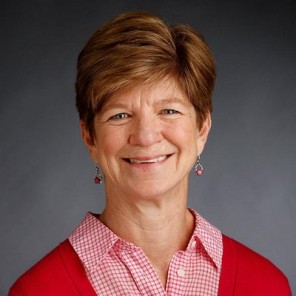
In 2017, Dallas Morning News editorial writer Sharon Grigsby won the Southern Newspaper Publishers Association’s Carmage Walls Commentary Prize and was part of a three-person team that won first place for editorial writing in both the National Headliners Awards and the Sigma Delta Chi Awards. Among several additional awards in 2017, she also was among three national finalists for ASNE’s 2017 editorial-writing honor.
Sharon divides her time between writing editorials and directing the department’s “Bridging Dallas’ North-South Gap” project, which won the 2010 Pulitzer Prize for Editorial Writing.
A member of the editorial board since 2004, she previously worked in most every nook and cranny of the DMN, including national news, politics, features, religion and local news – culminating in running the Metro operation. She previously worked for newspapers in Detroit and suburban New York.
She grew up in Central Texas and graduated Phi Beta Kappa from Baylor University in 1978 with a bachelor’s degree in government and journalism.
Sharon relishes the symmetry of a career that was launched out of student newspaper commentary that riled the administration and that now is finding its best days as a 24-7 digital and print opinion writer just up the road from her hometown.