For a distinguished and appropriately documented book on the history of the United States, Fifteen thousand dollars ($15,000).

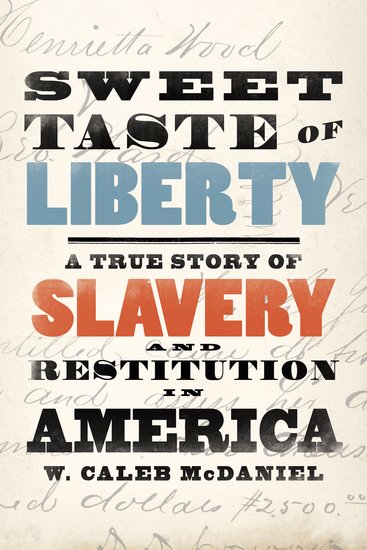
Sweet Taste of Liberty: A True Story of Slavery and Restitution in America, by W. Caleb McDaniel (Oxford University Press)

A masterfully researched meditation on reparations based on the remarkable story of a 19th century woman who survived kidnapping and re-enslavement to sue her captor.

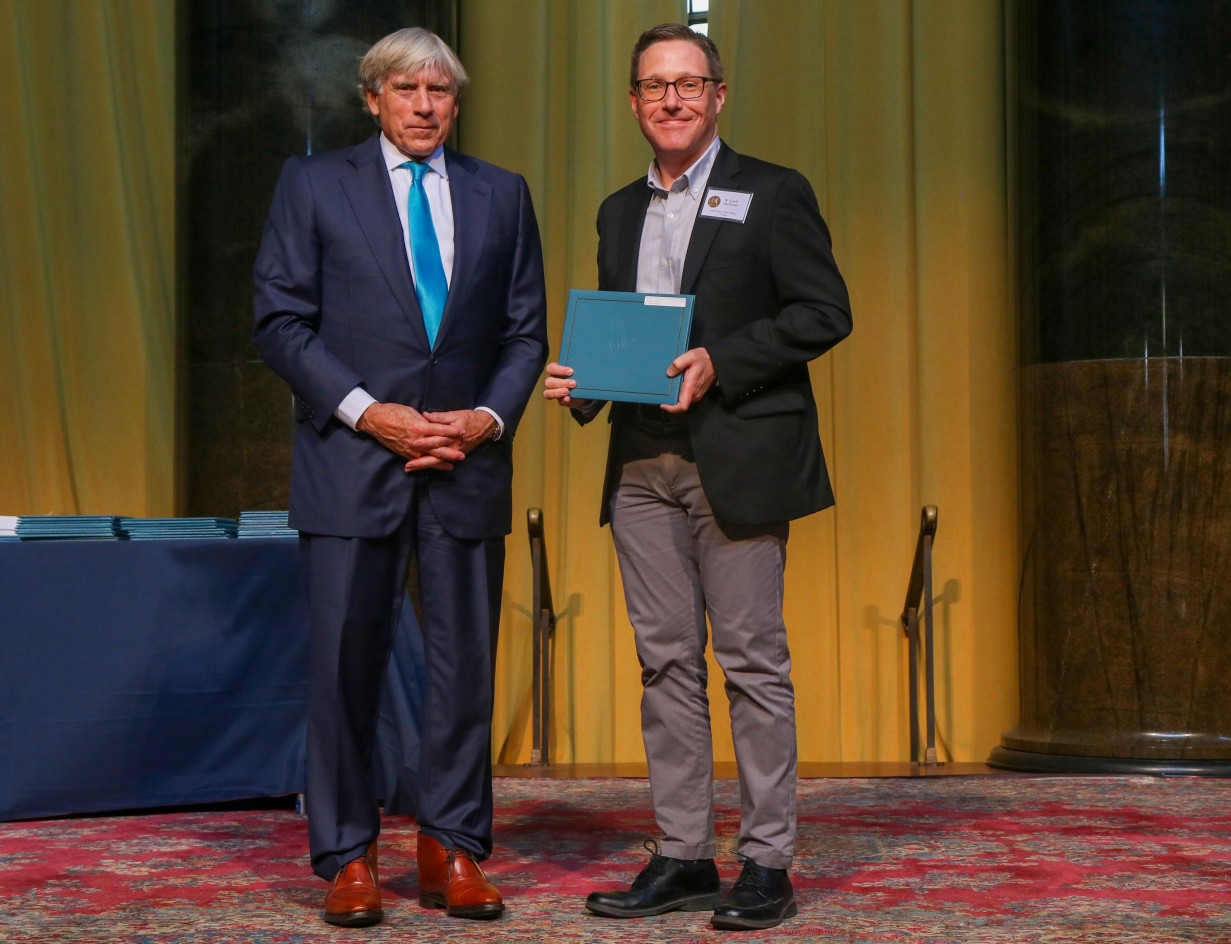
W. Caleb McDaniel accepts the 2020 Pulitzer Prize for History from Columbia University President Lee Bollinger. (Jose Lopez/The Pulitzer Prizes)

Winning Work

Sweet Taste of Liberty


The unforgettable saga of one enslaved woman's fight for justice--and reparations

Born into slavery, Henrietta Wood was taken to Cincinnati and legally freed in 1848. In 1853, a Kentucky deputy sheriff named Zebulon Ward colluded with Wood's employer, abducted her, and sold her back into bondage. She remained enslaved throughout the Civil War, giving birth to a son in Mississippi and never forgetting who had put her in this position.

By 1869, Wood had obtained her freedom for a second time and returned to Cincinnati, where she sued Ward for damages in 1870. Astonishingly, after eight years of litigation, Wood won her case: in 1878, a Federal jury awarded her $2,500. The decision stuck on appeal. More important than the amount, though the largest ever awarded by an American court in restitution for slavery, was the fact that any money was awarded at all. By the time the case was decided, Ward had become a wealthy businessman and a pioneer of convict leasing in the South. Wood's son later became a prominent Chicago lawyer, and she went on to live until 1912.

McDaniel's book is an epic tale of a black woman who survived slavery twice and who achieved more than merely a moral victory over one of her oppressors. Above all, Sweet Taste of Liberty is a portrait of an extraordinary individual as well as a searing reminder of the lessons of her story, which establish beyond question the connections between slavery and the prison system that rose in its place.

-- from the publisher

Biography

W. Caleb McDaniel is associate professor of history at Rice University.

Finalists

Nominated as finalists in History in 2020:

Greg Grandin

A sweeping and beautifully written book that probes the American myth of boundless expansion and provides a compelling context for thinking about the current political moment (Moved by the Board to the General Nonfiction category, where it was also entered.)

Keeanga-Yamahtta Taylor

A deeply researched and rigorously argued account of the public-private partnership that replaced redlining with even more predatory and destructive practices.

The Jury

Rachel Klein(Chair)

Professor of History and Academic Senate Distinguished Teacher, University of California, San Diego

Natalie J. Ring

Associate Professor of History, University of Texas at Dallas

Stephanie Smallwood

Associate Professor of History and Comparative History of Ideas, University of Washington

Winners in History

David W. Blight

A breathtaking history that demonstrates the scope of Frederick Douglass’ influence through deep research on his writings, his intellectual evolution and his relationships.

Jack E. Davis

An important environmental history of the Gulf of Mexico that brings crucial attention to Earth’s 10th-largest body of water, one of the planet’s most diverse and productive marine ecosystems.

Heather Ann Thompson

For a narrative history that sets high standards for scholarly judgment and tenacity of inquiry in seeking the truth about the 1971 Attica prison riots.

T.J. Stiles

A rich and surprising new telling of the journey of the iconic American soldier whose death turns out not to have been the main point of his life. (Moved by the Board from the Biography category.)

2020 Prize Winners

Nikole Hannah-Jones of The New York Times

For a sweeping, provocative and personal essay for the ground-breaking 1619 Project, which seeks to place the enslavement of Africans at the center of America’s story, prompting public conversation about the nation’s founding and evolution.

Christopher Knight of the Los Angeles Times

For work demonstrating extraordinary community service by a critic, applying his expertise and enterprise to critique a proposed overhaul of the L.A. County Museum of Art and its effect on the institution’s mission.