New York Times, "Times Critics Top Books of 2020": "Smart and capacious history.... A cautionary tale about relying on the private sector to provide what the public needs." – Jennifer Szalai, New York Times
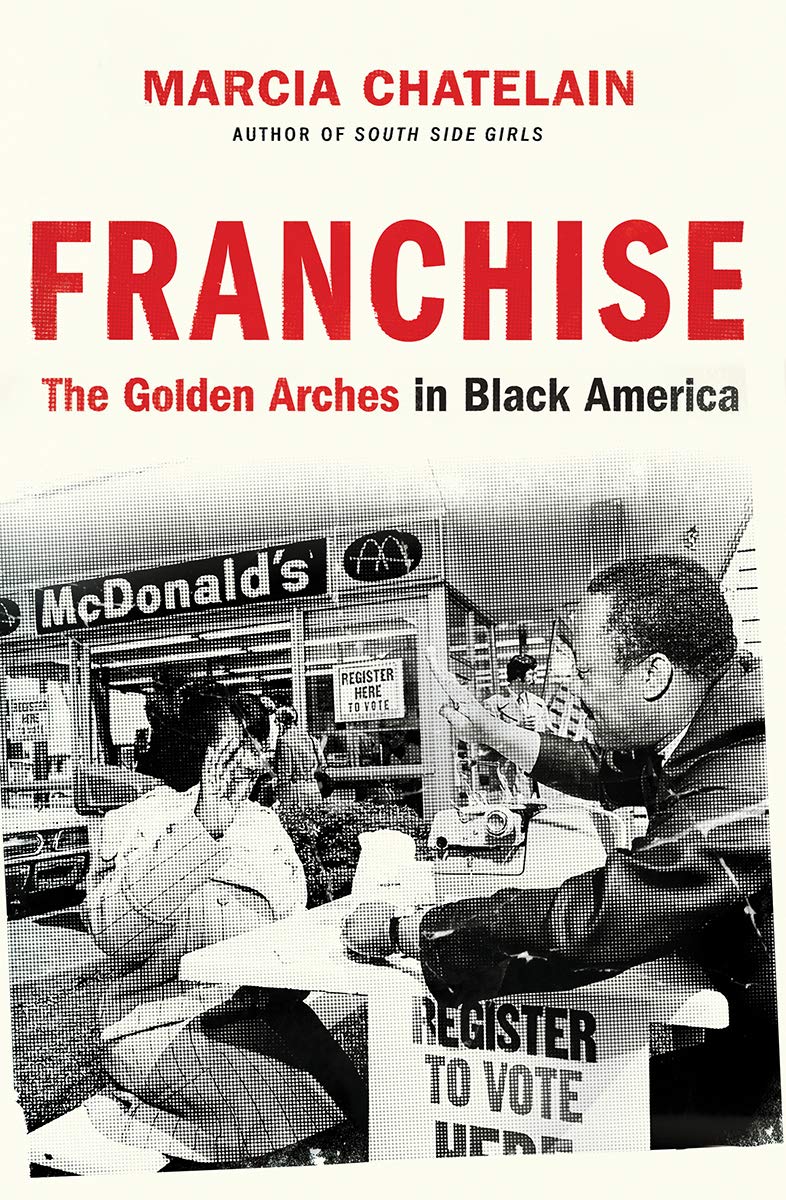
From civil rights to Ferguson, Franchise reveals the untold history of how fast food became one of the greatest generators of black wealth in America.
An estimated one-third of all American adults eats something from at a fast-food restaurant every day. Millions start their mornings with paper-wrapped English muffin breakfast sandwiches, order burritos hastily secured in foil for lunch, and end their evenings with extravalue dinners consumed in cars. But while people of all ages and backgrounds enjoy and depend on fast food, it does not mean the same thing to each of us. For African Americans, as acclaimed historian Marcia Chatelain reveals in Franchise, fast food is a source of both despair and power—and a battlefield on which the fight for racial justice has been waged since the 1960s.
On the one hand, we rightly blame fast food for the rising rates of obesity and diabetes among black Americans, and fast food restaurants are viewed as symbols of capitalism’s disastrous effects on our nation’s most vulnerable citizens. Yet at the same time, Chatelain shows, fast food companies, and McDonald’s in particular, have represented a source of economic opportunity and political power. After Martin Luther King, Jr.’s assassination in 1968, many activists turned to entrepreneurship as the means to achieving equality. Civil rights leaders, fast food companies, black capitalists, celebrities, and federal bureaucrats began an unlikely collaboration, in the belief that the franchising of fast food restaurants, by black citizens in their own neighborhoods, could improve the quality of black life.
Equipped with federal loans and utterly committed to the urban centers in which they would open their little sites of hope, black franchise pioneers achieved remarkable success, and by the late 2000s, black-franchised McDonald’s restaurants reported total sales exceeding $2 billion. Fast food represented an opportunity for strivers who had been shut out of many industries, denied promotions in those that would tolerate them, and discouraged, in numerous ways, from starting their own businesses, all because of the color of their skin. But a parallel story emerged, too—of wealth being extracted from black communities, of the ravages of fast food diets, of minumum wage jobs with little prospect for advancement.
Taking us from the first McDonald’s drive-in in San Bernardino in the 1940s to civil rights protests at franchises in the American South in the 1960s and the McDonald’s on Florissant Avenue in Ferguson in the summer 2014, Chatelain charts how the fight for racial justice is intertwined with the fate of black businesses. Deeply researched and brilliantly told, Franchise is an essential story of race and capitalism in America.
-- from the publisher