Finalist: Houston Chronicle, by Joe Holley and Evan Mintz
Nominated Work
Open carry on campuses gives officials a difficult decision.
Greg Fenves, president of the University of Texas at Austin, arrived at something of a Solomonic decision last week when he decreed that concealed handguns would be permitted in classrooms but banned from on-campus residence halls. As with the ancient king of Israel, Fenves’ decision pleased no one, although he really had no choice.
The gunsters in the Legislature who had forced this decision on the state’s public colleges and universities insisted on guns anywhere and everywhere, while faculty, staff, most students, campus law-enforcement and parents of students wanted them nowhere. Fenced in by common sense on the one hand and gun zealots on the other and relying on recommendations from an advisory panel he appointed, Fenves sought to carve out a middle way.
“I do not believe handguns belong on a university campus, so this decision has been the greatest challenge of my presidency to date,” said Fenves, who became president last June. He added that he has an obligation to uphold the law.
Fenves’ counterpart at Texas A&M University, Michael Young, told the Chronicle editorial board recently that he faced a similar dilemma some years ago as president of the University of Utah. After heated debate, campus carry went into effect, but during his seven-year tenure, he said, the university was spared any serious gun-related incident. The heated issue became pretty much a non-issue.
We can hope for the same outcome at UT-Austin and every other college and university forced by gun-obsessed lawmakers to grapple with guns on campus. We can hope that a disgruntled student doesn’t wave a pistol under the nose of a professor who gave him a failing grade, that no inebriated student decides that firing a weapon on campus is a good way to blow off steam after a Longhorn gridiron victory or that a would-be good Samaritan doesn’t pull a gun in an effort to help law-enforcement do its job during a tense situation.
Meanwhile, we offer a modest proposal to fill those campus spaces vacated by the removal of Confederate statues. Why not commission a statue for those ardent lawmakers more obsessed with allowing tools of death on campus rather than grappling with the challenge of making higher education more affordable for their fellow Texans, more accessible for the coming wave of minority young people, better equipped to do cutting-edge research?
We envision state Sen. Brian Birdwell, state Rep. Jonathan Stickland, state Sen. Donna Campbell and their GOP cohorts portrayed in cast-iron as kindly lawgivers; hands outstretched, they proffer to young Texans, not a diploma but a gun. That will be their legislative legacy
Times are changing, and the nation is starting to support sensible gun measures.
President Obama’s modest and sensible proposals to keep guns out of the wrong hands brought to mind previous presidential statements on the need to take action to reduce gun deaths in this country. One in particular stands out. It was a plea for legislation that would establish “a national seven-day waiting period before a handgun purchaser could take delivery.” As the president pointed out, “it would allow local law enforcement officials to do background checks for criminal records or known histories of mental disturbances. . . .”
In a New York Times opinion piece, the president noted that “since many handguns are acquired in the heat of passion (to settle a quarrel, for example) or at times of depression brought on by potential suicide,” the proposed legislation “would provide a cooling-off period that would certainly have the effect of reducing the number of handgun deaths.”
So wrote President Ronald Reagan, expressing his support for the so-called Brady bill on March 29, 1991, the 10th anniversary of the attempted assassination that came terribly close to taking his life. The legislation Reagan endorsed was named in honor of Jim Brady, his former press secretary, who was shot in the head as he stood next to the president. Brady was left partially paralyzed and in constant pain until his death in 2014.
Reagan noted “an average of 9,200 Americans are murdered by handguns, according to Department of Justice statistics.” “This level of violence must be stopped. . . . If the passage of the Brady bill were to result in a reduction of only 10 or 15 percent of those numbers (and it could be a good deal greater), it would be well worth making it the law of the land,” the president wrote.
Another president voiced similar sentiments a few days ago: “We know we can’t stop every act of violence, every act of evil in the world. But maybe we could try to stop one act of evil, one act of violence,” President Obama said.
For his efforts, Obama has been labeled a tyrant, a mortal enemy of the Second Amendment who’s coming to take away the people’s guns. Texas Sen. Ted Cruz’s campaign website featured Obama dressed in military-style garb next to the headline, “Obama wants your guns.” Florida Sen. Marco Rubio told Fox News that Obama’s proposals were “just one more way to make it harder for law-abiding people to buy weapons or to be able to protect their families.” And, of course, Donald Trump weighed in: “They’re not going to take your guns away, folks. They’re trying.”
We don’t recall Reagan having to defend his Second Amendment bona fides, although the National Rifle Association vociferously opposed the Brady bill and worked to weaken it after its passage in 1993. Since then, the NRA and its handmaidens in Congress have grown so extreme that even the GOP icon himself might come in for a bit of bashing were he around today.
CNN’s Thursday night town hall meeting with Obama showed what the gun debate could look like when people of good will who don’t necessarily agree with one another get together and talk. For example, Taya Kyle, the widow of “American Sniper” Chris Kyle, asked a question - thoughtfully and respectfully - that articulated the objections that gunrights advocates have to the president’s efforts.
“We’re at an all-time low for murder rate, but I think most of us in this country feel like it could happen at any moment,” she told the president. “It’s not necessarily that I think someone’s going to come take my gun from me, but I want the hope, the hope that I have the right to protect myself.”
Obama also heard from Kimberly Corban, who was raped during her sophomore year at the University of Northern Colorado in 2006. She’s now the mother of two small children and struggles with depression and stress-related seizures.
“I have been unspeakably victimized once already, and I refuse to let that happen again to myself or my kids,” Corban told the president. “So why can’t your administration see that these restrictions that you’re putting to make it harder for me to own a gun, or harder for me to take that where I need to be is actually just making my kids and I less safe?”
Although the president answered both women in depth, it’s unlikely that he changed minds - and that’s OK. It’s the conversation that was important, a conversation that modeled what the nation as a whole ought to be having. That’s not possible as long as the NRA drowns out everyone else.
The gun group and its lapdog lawmakers may not realize it yet, but they’re living on borrowed time. With polls showing broad support, even among gun owners, for sensible gun measures, with state and local officials at last standing up to the bullies - although not in Texas, of course - and with grass-roots groups organizing around the country, the nation is beginning to realize that the Second Amendment absolutists are not all-powerful. It won’t be tomorrow, it won’t be before Obama leaves office - as the president himself acknowledged Thursday night - but the times, they are, indeed, changing.
War’s aftermath and access to weapons are more troubling than we’ve cared to admit.
The death of an Army veteran on Memorial Day weekend, a veteran shot and killed by a SWAT officer as he was randomly targeting his fellow Americans in a quiet west Houston neighborhood, is not only a bitter irony. It’s a reminder, as if we needed yet another, that our willful misreading of the Second Amendment and our tolerance for guns in the wrong hands will continue to exert collateral damage on a scale unacceptable to every other advanced nation in the world. The wrong hands on Sunday included a private citizen who, no doubt acting with the best of intentions, almost got himself killed while making the dangerous work of law enforcement even more dangerous when he tried to stop the shooter with his own weapon. Police initially thought he was one of a pair of shooters.
The suspect in the shooting, Dionisio Garza III, was a 25-year-old veteran from San Bernardino County, Calif., who served two tours in Afghanistan. He received an honorable discharge from active duty in 2014 and apparently had no criminal history. Railing against homosexuals, Jews and Wal-Mart and shouting that the world was coming to an end, Garza killed one man with a point-blank shot to the head and wounded three bystanders and two Harris County Precinct 5 constable’s deputies. The armed civilian trying to bring down the shooter also got hit.
“That wasn’t my son,” Garza’s father told Houston TV station KPRC, alluding to Garza’s strange behavior in recent months. The father said he believed his son suffered from post-traumatic stress disorder. “Of course, you look back now and there were signs. There were signs,” the father told the TV station.
There are signs for all of us - signs, for example, that none of us, bedeviled by PTSD or not, needs to be in possession of an AR-15 style military rifle, a weapon expertly designed solely for the killing and maiming of human beings. Apparently Garza was licensed to own the weapon, but as his behavior grew increasingly bizarre in recent weeks, friends and family members should have insisted not only that he get help but also that he not have access to weapons. (Hindsight, of course, is always an easier call.)
“PTSD is rarely associated with homicidal violence,” Michael Welner, a forensic psychiatrist who has worked with Iraq and Afghanistan veterans charged with violent crimes, has said. Welner, interviewed by CNN in the aftermath of a mass shooting a few years ago, also noted that the condition is commonly associated with behavioral problems that don’t necessarily lead to violence, including alcoholism, personality disorder and depression. Violence-prone or not, a person experiencing such difficulties isn’t exactly a prime candidate for AR-15 ownership. No one is, actually.
Military-style assault weapons such as the one Garza used Sunday would be banned from sale or transfer under legislation introduced by more than a hundred Democratic House members late last year. Their bill is similar to legislation sponsored by U.S. Sen. Dianne Feinstein, D-Calif., in 2013. Her bill went nowhere; the new House version won’t either.
There are signs, including those directing our attention to PTSD. Garza’s stepmother, Cathy Garza, told ABC News: “I think he was haunted by everything that he saw there and he experienced (in Afghanistan). I think it changes you. I don’t know how you can go through what he went through and see what he saw and not have it change you or have it affect you.”
Her observation should serve as a sober reminder that PTSD, like brain damage among football players, afflicts more veterans than we know. Congress complains mightily about the VA’s shortcomings but has not equipped it with the resources necessary to address the problem, a problem we’ll have with us for years to come.
War’s aftermath is longer and more troubling than we’ve cared to admit, as our neighbors near 13210 Memorial Drive can now attest. Sadly, Garza’s deadly rampage is unlikely to be the last.
Mayors and others need to band together to pursue legislation in urban areas.
Ten days after a demented gunman slaughtered five Dallas police officers, Americans are purchasing guns in record numbers. The Chronicle reported Friday that the FBI is processing nearly 14 million requests for background checks to purchase a gun during the first half of this year —a25 percent increase compared with the same time period last year.
Texas, of course, is among the leaders. More than 800,000 would-be gun owners have requested background checks so far this year. As the Chronicle noted, nearly 11,000 federally licensed firearms dealers operate in Texas, far more than any other state. Many are concentrated in the Houston area. With due respect to responsible gun owners and would-be owners, rattled no doubt by Dallas and Orlando and Charleston and San Bernardino (the list could go on), this nation needs fewer guns, not more.Awidely armed citizenry means more danger, not less, to owners and their families, more danger to society at large.
What we need more of, particularly in gun-crazy Texas, are responsible public officials with the courage to confront the gun lobby and the wisdom to craft legislation designed to curb the spread of machines whose purpose is to kill quickly and efficiently, whether the target is a home intruder — orapolice officer, a Charleston churchgoer or a small child in a Connecticut classroom.
In Texas, guns sold by licensed dealers require a background check the FBI conducts electronically. Guns sold by private individuals—including private sales at gun shows — do not require background checks.
That absurd loophole allowed a 26-year-old ex-Army reservist named Micah Xavier Johnson, as reported by the New York Daily News, to arrange the purchase of an AK-47 assault rifle via Facebook in 2014.Johnson met the seller in the parking lot of a Target store in the DFW suburb of Carrollton and paid $600 for the weapon. He may or may not have used that weapon in his killing spree, although he had an impressive arsenal from which to choose. Police searching his Mesquite home reportedly found rifles, ammunition, bomb-making materials and bulletproof vests. Johnson had a license for his weapons.
Johnson may or may not have passed a background check two years ago, but it’s hard to see why he or anyone else outside law enforcement or the military needed an AK-47 in his home. “Our guns have out-raced our restrictions, but not our imaginations …” New Yorker writer Adam Gopnik suggested recently. “Guns allow the fringe to occupy the center.”
Our fellow Americans in the fairly distant past recognized that danger. As UCLA law professor Adam Winkler has pointed out, that’s why the city fathers of Dodge City, Tombstone, Deadwood and most other frontier communities required visitors to leave their guns at the stables on the edge of town or drop them off with the sheriff, who would hand over a token in exchange. People were allowed to have guns at home for self-protection, but frontier towns usually barred anyone but Wyatt Earp and his law-enforcement cohorts from carrying guns in public.
Dallas’ modern-day Wyatt Earp, Police Chief David O. Brown, has suggested that lax control over guns makes his job more difficult, and dangerous. While refusing to be drawn into the gun-control debate, the widely admired chief called on lawmakers to do their jobs.
We expect nothing from Gov. Greg Abbott, Lt. Gov. Dan Patrick and the Republican majorities in the Texas House and Senate. What we would hope to see is an unofficial urban caucus in this rapidly urbanizing state to begin pressuring the 2nd Amendment absolutists among them in whatever way they can. Big-city mayors, county commissioners and elected state officials from Dallas, Houston, Austin, El Paso and elsewhere need to band together in pursuit of gun laws that reflect urban reality.Avenerable conservative mantra, local control, should be the caucus’s governing principle.
Rep. Eric Johnson, D-Dallas, is moving in that direction. He told the Dallas Morning News last week that lawmakers should introduce an exception to the open carry law enacted in 2015. Cities of a certain size should be able to pass ordinances that ban open carry, he said.
In addition to Johnson’s suggestion, a Texas urban caucus could push for more research on the effects of gun violence, in light of the restrictions a craven Congress has placed on such research. The caucus could push for a law to ban high-capacity magazines, perhaps a law to require background checks to buy ammunition, as California has done. In memory of five brave officers in Dallas, they can at least keep the debate going.
Friends and family have a responsibility to firearm safety that government can’t fulfill.
The only thing that can stop a bad guy with a gun is a good guy with a gun, or so the saying goes. But what happens when that bad guy with a gun is your mother? Or wife? Or your friend or neighbor?
This isn’t some hypothetical. It is a sad recounting of the travesty that struck Katy on June 24 when Christy Sheats, 42, shot dead her two daughters.
Sheats was a proud believer in the right to bear arms - a fact that she routinely touted over social media. She also had a history of mental health problems and had been hospitalized three times after suicide attempts. She suffered from depression, was on medication and was seeing a therapist. Over the past four years, the Sheats family home made more than a dozen calls to 911, including calls after self-harm and verbal altercations.
Sheats had become a threat to herself and, as we learned all too late, a threat to those around her. After years of a national conversation about guns and mental illness, this was clearly a situation where someone should not have had access to firearms. And yet there they were.
It wasn’t just the five-shot, .38-caliber handgun she used on that horrific day - an inheritance from the grandfather she idolized. Fort Bend County Sheriff Troy Nehls said there were multiple handguns in the Sheats home.
Congress will continue to debate gun safety regulations, and this editorial board will keep advocating for their passage. But the long arm of the law cannot and should not reach into the privacy of our homes and personal lives. Society can’t rely on government to enforce common sense.
Family, friends and neighbors are the real enforcers of the day-to-day societal codes that keep us all on the right path. This is particularly true with firearms. One of the strongest predictors of gun ownership is whether people live in a pro-gun culture, according to a 2014 study in the journal “Injury Prevention.” Have family and a social life that involve guns? Well, you probably own one. Travel in a circle that’s firearm-free? Then you’re probably not packing heat.
The United States has more civilian firearms per capita than any other nation - Serbia is in second place - and these close knit, gun-friendly social groups have a duty to ensure that powerful and dangerous weapons are treated with all necessary caution.
Unfortunately, this message isn’t coming from the people who should be delivering it: the National Rifle Association. The NRA has spent millions promoting a paranoid vision of a nation on the precipice of chaos, and, their message goes, the only way to stay safe is with a gun. It is brazen fear-mongering from an organization dedicated not to hunting, sport shooting, civil liberties or personal safety. The NRA exists to sell more guns. It is an industry organization and its reality lies more in corporate profits than the proper mores of gun ownership.
So if the gun laws aren’t likely to change, then the focus has to shift to gun culture. That means recognizing the real risks of owning a firearm. It means taking responsibility not just for yourself, but for your friends and family. Christy Sheats was not in a good place, and like taking car keys away from an impaired driver, someone should have known to take away her guns until she was healthy again. After all, the only thing that can stop a bad gun culture is good gun culture.
Cowardice, not the Second Amendment, prevents Congress from acting on gun safety.
Come and take it.
Texas Gov. Greg Abbott tweeted that earlier this month after the 9th U.S. Circuit Court of Appeals found no constitutional right to concealed carry in public.
The court wasn’t taking a brave stance in response to the seemingly endless string of mass shootings. It was merely fulfilling its duty of interpreting the Constitution in the case Peruta v. San Diego.
But as the nation continues to mourn the 49 people gunned down at the LGBT club, Pulse, in Orlando, Fla., this routine decision is probably the most we can hope for while elected officials hide behind their own interpretation of the Second Amendment - one that conveniently ignores the phrase, “well-regulated.”
The 9th Circuit has a reputation for liberal decisions, but even the late Justice Antonin Scalia held in the famous 2008 case, D.C. v. Heller, that the Second Amendment leaves room for all sorts of time, place and manner restrictions on gun ownership.
But don’t expect to see serious politicians work within those constitutional bounds to make our nation a safer place. You’re more likely to see them act like Abbott. Gun crimes consume our nation and our governor tweets out jokes.
No matter what Abbott thinks, law enforcement eventually will come and take it. They took the .223 caliber AR type rifle in the Orlando attack. They took the AR-15 that was used to kill 12 and wound 70 in an Aurora, Colo., movie theater and the AR-15 that butchered 20 schoolchildren and six adults in Newtown, Conn., in 2012.
These sorts of weapons were designed for the military, and until 12 years ago they were subject to a federal prohibition on their manufacture for civilian use. That law was originally passed with bipartisan support, but today the seemingly routine use of these so-called assault weapons in mass slaughters of innocent civilians cannot persuade Congress even to discuss the policy that it had once supported.
Each passing tragedy is a mournful opportunity to consider reasonable gun safety regulations that burden law-abiding Americans the least and target potential dangers the most, such as universal background checks, banning sales to people on terrorist watch lists or gun buyback programs that help keep weapons out of the hands of criminals. Our nation used to have healthy debates on these topics. Today the slightest suggestion of new safety measures inherently runs up against a cacophonous wall of self-proclaimed gun rights defenders. It is as if the ACLU rose up to defend the First Amendment every time the FBI busted someone for child pornography.
Congress seems content to end its duties at a moment of silence, and our elected officials nearly failed at that. The House of Representatives erupted into chaos after a solemn moment Tuesday when Speaker Paul Ryan shut down an attempt by Democrats to ask when gun legislation would be considered.
Congress didn’t act after schoolchildren were slaughtered in Newtown. It didn’t act after one of their own, Gabby Giffords, was shot in the head in 2011. And our elected officials don’t seem likely to do anything different after the LGBT community was made a target of murderous hate in the deadliest mass shooting in modern U.S. history.
This isn’t the fault of the Second Amendment. This is the fault of those in public office who worry more about bowing before the NRA than lowering their heads in mourning. Things won’t change until someone else comes and takes their seats.
Modest gun-safety proposals offer hope that lawmakers are hearing the calls for change.
A week after the worst mass shooting in American history, a glint of common sense is shining through the tawdry propaganda blanket the National Rifle Association and its slavish congressional devotees long ago tossed over honest public discussion about gun-safety measures in a nation awash in weapons of death. The most obvious sign of light, albeit still rather dim, was a 15-hour filibuster waged last week by U.S. Sen. Chris Murphy, D-Conn., in an effort to force a vote on modest gun-control legislation.
Murphy, one of two senators who lives every day with the unbearable memory of Newtown, got what he wanted when Senate Majority Leader Mitch McConnell, R-Ky, agreed to hold votes on gun proposals as amendments to an appropriations bill funding the Commerce and Justice departments. That vote may come as early as tomorrow on two measures that should pass easily - easily, that is, if most Republicans and a few Democrats in Congress had not sold their soul to the gun lobby long ago and apparently cannot imagine ever buying it back.
Under consideration is a bill sponsored by U.S. Sen. Diane Feinstein, D-Calif., that would block individuals on the terrorist watch list from buying guns and another bill by Murphy, Feinstein and U.S. Sen. Cory Booker of New Jersey that would enact universal background checks. The purpose would be to intercept individuals who are legally barred from gun ownership, including those convicted of domestic abuse and those with mental illnesses. A large majority of Americans support both measures.
Republicans are likely to offer an alternative from U.S. Sen. John Cornyn of Texas that would not automatically stop gun purchases from people on the watch list but would give the Justice Department 72 hours to seek a court order to block the sale if a judge finds probable cause that the person “has committed or will commit an act of terrorism.” Most Democrats opposed the Cornyn measure when it came up in December on grounds that the unrealistically high burden of proof makes it essentially useless. U.S. Sen. Susan Collins, R-Me., may offer compromise legislation.
Although we cynically expect any sensible effort to be stymied by the gun lobby and its compliant representatives in Congress, we have to say - and will continue saying - that the measures under consideration are the very least that a rational government ought to be enacting. It is possible to end gun sales to suspected terrorists, even as we include due process for those under suspicion. Perhaps such a restriction would not have prevented Orlando, but it would make it harder for the next homegrown terrorist to acquire a lethal weapon whose only practical purpose is to kill many people quickly.
These modest measures are all we can hope for - for now - although they’re certainly not all we need. A sensible Congress would approve measures that would keep a weapon designed only for mass battlefield killings out of the hands of those who have no legitimate need to use them; there’s a reason the military itself keeps such weapons under lock and key when they’re not being used in training or in battle. Lawmakers should reinstate the ban on assault-style weapons, allowed to lapse in 2004, as well as the ban on high-capacity ammunition magazines that keep shooters spraying death as quickly and efficiently as possible.
Lawmakers should keep in mind two quotes as they prepare to cast a vote this week. One is from a Justice Department spokesman signaling support for Feinstein’s effort to close the so-called “terror loophole”: “The amendment gives the Justice Department an important additional tool to prevent the sale of guns to suspected terrorists by licensed firearms. ... We also continue to support universal background checks as a necessary tool to prevent suspected terrorists from lawfully obtaining firearms.”
Here’s the other quote: “America is absolutely awash with easily obtainable firearms. So what are you waiting for?”
That exhortation is from a 2011 recruiting video, a recruiting video for al-Qaida.
Lawmakers don’t seem to care that public’s support for stricter gun policy is gaining.
In 1893, the future great American novelist Theodore Dreiser wrote a drama review for the St. Louis Globe-Democrat that hastened his transition to fiction. The review was fine - except for the fact that the curtains never went up on the play Dreiser presumably reviewed.
Journalism ethics aside, American editorial writers could have pulled a Dreiser last weekend in the run-up to the U.S. Senate’s rejection of a series of gun proposals on Monday afternoon. Yet again, Senate Republicans (and three Democrats) rejected measures that would have expanded background checks and barred those suspected of terrorist activities from buying guns. The vote came, of course, a few days after the attack on an Orlando nightclub that left 49 people dead.
It’s tempting to rail about craven lawmakers in thrall to the National Rifle Association, as did U.S. Sen. Chris Murphy, the Connecticut Democrat who led a 15-hour filibuster on the Senate floor last week. Murphy, as reported in Atlantic magazine, charged his Republican colleagues with aiding and abetting terrorists.
“We’ve got to make this clear, constant case that Republicans have decided to sell weapons to ISIS,” the senator said after Monday’s vote. “ISIS has decided that the assault weapon is the new airplane, and Republicans, in refusing to close the terror gap, refusing to pass bans on assault weapons, are allowing these weapons to get into the hands of potential lone-wolf attackers.”
Murphy’s frustration is easy to understand. He’s one of two senators who has to look into the anguished faces of Newtown, Conn., parents and tell them, yet again, that the slaughter of their Sandy Hook Elementary School children four years ago and all the deaths that have followed still haven’t moved lawmakers to take action that might prevent a future Newtown, Aurora, San Bernardino or Orlando. (An abridged list, of course.)
It matters not at all, it seems, that the measures defeated on Monday have broad public support among all parties and regions. The most recent CNN poll showed 55 percent of Americans favored a stricter gun policy, while 42 percent opposed it. Asked about specific measures, 92 percent supported background checks on anyone purchasing a gun; 85 percent supported banning anyone on the terrorist watch list or no-fly list from owning firearms. What matters is where the National Rifle Association stands.
Our own Sen. John Cornyn, who sponsored an alternative “no fly, no buy” proposal that Democrats deemed unworkable, saw his measure fail, as well, even though he got the vote of his junior colleague, Ted Cruz. The Texans were “no” votes on the other bills.
“It doesn’t have to be this way,” U.S. Sen. Patrick Toomey, R-Pa., told the New York Times after Monday’s vote. “That is what is so maddening about this.”
Toomey is one of a handful of Republican senators - who happen to be facing tough reelection contests in swing states - who are backing compromise measures, but most likely we can do another Dreiser on them. U.S. Sen. Susan Collins of Maine, calls her bill a “goodfaith, workable solution” to the terrorist watch-list issue. It might be, but Congress is unlikely to do much of anything before the November election, which is reason enough to write Washington off.
Until the dynamic on Capitol Hill changes - perhaps in November but not likely - we should take former Gov. Rick Perry’s advice (on other issues) and look to the states and local jurisdictions. Since 2012, six states have tightened background checks on their own. Seven states also have banned the sale of military-style assault weapons similar to the gun used in Orlando. Texas isn’t among them, of course, and won’t be anytime in the foreseeable future, but these other “laboratories of democracy” at least can show the way for an intractable Washington.
It’s inevitable an armed ‘good Samaritan’ will get himself killed during a gun outrage.
One day last week the prime minister of New Zealand, John Key, came by for a visit with the Chronicle editorial board. A member of New Zealand’s center-right National Party, he’s been prime minister since 2008 and dropped by to discuss trade, tourism and the new Houston-to-Aukland nonstop flight that has contributed to a 20 percent increase in tourism from the United States.
The personable prime minister comes to mind this week - the prime minister and a proverbial frog, that is - as we try to make sense of the senseless: A 46-yearold Houston lawyer steps out of his condo early on a Monday morning and starts shooting at drivers in his quiet West University neighborhood. He wounds nine people, one critically, before he is shot and killed by police at the scene.
The shooter, Nathan DeSai, was carrying a .45-caliber handgun and wearing, police said, “military-style apparel” during the shooting, with vintage Nazi emblems on his clothes and personal effects. In his black Porsche convertible, he had a Thompson submachine gun and nearly 2,600 rounds of live ammunition. DeSai’s father suggested that setbacks at his son’s law firm were weighing heavily on him.
So, a guy starts shooting up his neighborhood early in the morning, police come out and kill him, and, except for those shot, life is pretty much back to normal by noon. Like the live frog plopped into a pot of water slowly coming to a boil, this city, this nation, grows accustomed to the abnormal. Like the hapless frog, we settle in - until it’s too late to escape our deadly predicament.
New Zealand’s prime minister represents a small nation with a high rate of gun ownership, particularly among farmers and sportsmen. Gun homicides in his country are exceedingly rare, 1.5 deaths per million people. The U.S. rate from gun homicides is about 31 deaths per million people. As the New York Times noted recently, that’s the equivalent of 27 people whose lives are ended by gunfire every day of the year. Anywhere near such a rate in New Zealand would shock and bewilder Prime Minister Key and his fellow Kiwis. It would shock and bewilder citizens of most developed nations around the world.
Not us. Like the amphibian slowly warming, we’re growing accustomed to the insanity, particularly in Texas, where a cohort of zealots has latched onto gun rights as a cause that’s religious in its intensity. Never mind the cost; gun rights are paramount. Death by firearm in a culture where guns proliferate is collateral damage in a gun-worshipping culture.
So where were the vigilantes, guns at the ready as they drove to work along Bissonnet early Monday morning? Fortunately for Houston, Bellaire and West University police, they didn’t show up, but with guns in the workplace, guns in schools and colleges, guns in places of worship and guns in bars, it’s inevitable that some gun-toting “good Samaritan” will get himself and probably others killed during a gun outrage. Never mind the chaos confronting law-enforcement first-responders or the deadly crossfire. To Lt. Gov. Dan Patrick, Attorney Gen. Ken Paxton, state Sen. Brian Birdwell, R-Granbury, and other Second Amendment absolutists, the cost is simply collateral damage.
In the wake of the latest gun rampage - which local law enforcement handled admirably - we can see with after-thefact clarity what should have happened: A troubled man whom neighbors avoided because he made them uneasy should never have had access to a gun; family members should have noticed the warning signs and insisted that he get help. As far as we know, he acquired his guns legally, including his Tommy gun. (Doesn’t everybody need a Tommy gun?)
We can talk about sensible gun ownership and sensible gun laws, as Hillary Clinton did Monday night during the presidential debate. There’s much to talk about. No other developed country allows individuals the ease of access to guns. No other developed nation allows civilians to possess guns expressly manufactured to kill as many people as possible, as quickly as possible. It’s a myth perpetuated by the gun zealots that the Second Amendment prohibits enacting legislation to keep guns out of the wrong hands.
We definitely need to talk, and yet our gun problem goes deeper than gunlaw reform. In a culture where guns are becoming pervasive, we have a mental-health issue - a psychological problem, if you will - that must be addressed. The guns are out, and the water’s getting hotter.
Gun violations deserve public scorn and law enforcement’s biggest hammer.
After a spate of violent deaths, terrorism and a rising homicide rate, Texas Republicans, conservative to the core, banned citizens from carrying handguns in cities in the Lone Star State.
The law they adopted in 1871 remained in force for over a century. Fast forward 145 years: Almost 3,000 gun-related deaths occur in Texas each year and in 2014, approximately 750 Texans were killed using firearms, according to the nonprofit Texas Gun Sense.
Yet today our state not only permits licensed open carry, it also has some of the laxest gun laws in a nation with some of the laxest gun laws in the world.
Law enforcement at the federal and state level is hamstrung by inadequate resources, vague laws that are hard to enforce such as the licensing requirement for gun dealers, and no comprehensive FBI database of gun owners. In addition, there need to be laws with teeth at the federal level to keep guns out of the hands of persons with dangerous mental illness and terrorists, and to keep off the market assault weapons that are designed for military use.
On the state level, Texas does not limit the number of firearms that can be purchased at one time, or regulate the transfer or possession of assault weapons or large-capacity ammunition magazines, according to the Law Center to Prevent Gun Violence. It should. Texas also should require the reporting of lost or stolen firearms, and currently does not, according to Andrea Brauer, executive director of Texas Gun Sense. And “gun sense” is exactly what this snapshot of lax gun laws does not add up to.
With such a weak national and state regulatory environment, we turn to local law enforcement to be our standardbearer. Granted, local law enforcement operates within the broader context of state and national policy and shares its constraints, but Harris County District Attorney Devon Anderson and the Houston Police Department have the advantage of knowing the community that they seek to protect. They see the pain in the tear-stained faces of the parents of children whose lives are taken by guns in the hands of irresponsible or criminal operators. They hear the cries at funerals of those who are killed with illegal weapons.
As state leaders don’t appear serious about protecting us from gun violence, local law enforcement should make sure it is using every tool in its tool kit to combat gun violence. The Houston Police Department, our front line in the war against gun violence, already works closely with the Bureau of Alcohol, Tobacco, Firearms and Explosives to keep illegal guns off the streets and out of the hands of criminals. Every effort should be made to tighten this collaboration.
Anderson should continue to diligently prosecute charges that are in her purview: theft of a firearm, felon in possession of firearms and illegal carry of a handgun without a license. Our federal and state judges should refuse to accept plea deals and use sentencing force when necessary.
Some opponents of stronger enforcement of gun laws make an unorthodox argument when they point out that there are too many minority men behind bars and, arguably, a more aggressive stance by law enforcement could aggravate this problem. But we need to drawaline in the sand. While low-level drug offenses should be decriminalized, gun violations deserve cultural scorn and law enforcement’s biggest hammer. We must convey in the strongest terms possible our community’s growing unease with gun violence.
Over the years, we have developed a heightened intolerance for drunk driving, and the new attitudes provide cultural guideposts for law enforcement. For instance, three-time drunk driving offenders are no longer as common as they once were. Similarly,acultural shift would help law enforcement crack down on illegal guns.
When we as a society accept on a deep level the need for reasonable regulation of guns, only then can our state reclaim the progress made over a century ago and reject the assumption that an abundance of guns will keep our citizenry safe. By relentlessly hammering on crimes within its limited jurisdiction involving the use of weapons, local law enforcement can lead the way.
Biography
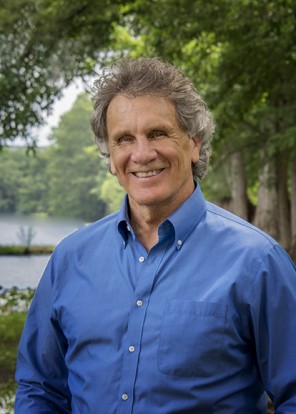
Joe Holley is an editorial writer and “Native Texan” columnist for the Houston Chronicle. A native Texan himself, he received degrees from Abilene Christian University, the University of Texas at Austin and Columbia University and is a former editor of the Texas Observer and a regular contributor to Texas Monthly.
He’s been an editorial writer and columnist for newspapers in Washington, D.C., San Antonio and Houston, as well as San Diego, Calif., and worked as Texas Gov. Ann Richards’ speechwriter until she lost her bid for re-election in 1994 to George W. Bush.
He’s also the co-author of My Mother’s Keeper: A Daughter’s Journey Through the Shadow of Schizophrenia (William Morrow & Co., 1997) and the author of Slingin’ Sam: The Life and Times of the Greatest Quarterback Ever to Play the Game (University of Texas Press, 2012) and The Purse-Bearer: A Novel of Love, Lust and Texas Politics (Wings Press, 2014). A selection of his “Native Texan” columns is scheduled for publication later this year.
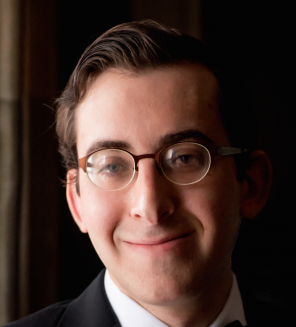
Evan Mintz is a member of the Houston Chronicle editorial board. He began as a freelance writer after leaving the Harris County District Attorney’s Office in Winter 2011 and joined full-time in Autumn 2012. A licensed attorney in the state of Texas, Mintz attended the Benjamin N. Cardozo School of Law in New York City where he served as editorial board editor of the Cardozo Jurist. He also worked as executive editor at the Rice Thresher, the student newspaper at Rice University where he received a bachelor degree in history and the Bobb Award for writing and journalism.