Finalist: The Washington Post, by Fred Hiatt
Nominated Work
By Editorial Board
DO YOU remember when Donald Trump crudely mocked the disability of a New York Times reporter, and then lied about having done so?
No? That’s just as the Republican candidate might hope. Now that he is nearing the Republican nomination, he says he will become more “presidential.” After winning the New York primary, he referred to “Senator Cruz” instead of “Lyin’ Ted.” You can expect multitudes of office-seekers and sycophants to follow Chris Christie’s craven path to believing, or pretending to believe, in a presidential Trump.
So it is important to remember.
Remember that Mr. Trump said that Mexicans crossing the border are rapists, though “some, I assume, are good people.”
Remember that Mr. Trump falsely claimed that thousands of American Muslims had celebrated the destruction of the World Trade Center on 9/11.
Remember that Mr. Trump insulted Carly Fiorina for her appearance: “Look at that face! Would anyone vote for that?”
Remember that he called her a bimbo, sick, overrated and crazy.
Remember that Mr. Trump lashed out at Ms. Kelly in the first place because she had recited some of the other names he has used for women he disliked: “ ‘fat pigs,’ ‘dogs,’ ‘slobs’ and ‘disgusting animals.’ . . . You once told a contestant on ‘Celebrity Apprentice’ it would be a pretty picture to see her on her knees.”
Remember that Mr. Trump, who never served in the armed forces, saidthat Sen. John McCain (R-Ariz.) was “not a war hero.” Mr. McCain, after being shot down over North Vietnam, endured 5½ years of torture and solitary confinement as he repeatedly refused offers of liberation unless all of his fellow prisoners would also be freed. “I like people who weren’t captured,” Mr. Trump said.
Remember how Mr. Trump threatened a Chicago family who donated to a PAC opposing his candidacy: “They better be careful, they have a lot to hide!”
Remember that Mr. Trump threatened and disparaged not just reporters who angered him but freedom of the press overall with a vow to “open up” the libel laws.
Remember that Mr. Trump vowed to ban Muslims from entering the country, though he never explained how he would enforce this edict.
Remember that Mr. Trump promised to round up 11 million undocumented immigrants and deport them, in what would be the largest forced population movement since Pol Pot’s genocide of the Cambodian people, though he never explained how he would go about doing so.
Remember that he cited “Operation Wetback” as a humane model for such a roundup.
Remember that Mr. Trump promised to order American soldiers and intelligence officers to torture their prisoners.
Remember that Mr. Trump, unlike virtually every scientist in the world, is“not a great believer in man-made climate change.”
Remember Mr. Trump’s answer when asked whether there are racial disparities in law enforcement: “I’ve read where there are and I’ve read where there aren’t. I mean, I’ve read both. And, you know, I have no opinion on that.”
Remember that Mr. Trump said he would like to punch a protester in the face.
Remember that Mr. Trump waxed nostalgic for “the old days,” when protesters would be “carried out on stretchers.”
Remember that Mr. Trump said he would consider paying the legal fees for supporters who attacked protesters at his rally.
Remember that Mr. Trump defended his campaign manager after the campaign manager roughly grabbed a reporter and then denied having touched her and called her “delusional” when she complained.
Remember that Mr. Trump threatened to “spill the beans” on Mr. Cruz’s wife to retaliate for an independent PAC ad that angered him.
Remember that Mr. Trump lied about President Obama’s birth certificate. Remember that he lied about Mr. Obama planning to admit 200,000 Syrian refugees. Remember that he lied about President George W. Bush trying to silence him because he supposedly opposed the Iraq War. Remember that he lied about the unemployment rate, the cost of building a border wall, the amount he could save by changing Medicare’s drug plan and many other things.
Remember that Mr. Trump vowed to kill the innocent children of suspected terrorists.
“Winning is the antidote to a lot of things,” Republican National Committee Chairman Reince Priebus said earlier this year. As Mr. Trump marches toward 1,237 delegates, others will emulate that amoral embrace.
So remember. Winning is not an antidote to bigotry, violence, ignorance, insults and lies.
By Editorial Board
DONALD J. TRUMP, until now a Republican problem, this week became a challenge the nation must confront and overcome. The real estate tycoon is uniquely unqualified to serve as president, in experience and temperament. He is mounting a campaign of snarl and sneer, not substance. To the extent he has views, they are wrong in their diagnosis of America’s problems and dangerous in their proposed solutions. Mr. Trump’s politics of denigration and division could strain the bonds that have held a diverse nation together. His contempt for constitutional norms might reveal the nation’s two-century-old experiment in checks and balances to be more fragile than we knew.
Any one of these characteristics would be disqualifying; together, they make Mr. Trump a peril. We recognize that this is not the usual moment to make such a statement. In an ordinary election year, we would acknowledge the Republican nominee, move on to the Democratic convention and spend the following months, like other voters, evaluating the candidates’ performance in debates, on the stump and in position papers. This year we will follow the campaign as always, offering honest views on all the candidates. But we cannot salute the Republican nominee or pretend that we might endorse him this fall. A Trump presidency would be dangerous for the nation and the world.
Why are we so sure? Start with experience. It has been 64 years since a major party nominated anyone for president who did not have electoral experience. That experiment turned out pretty well — but Mr. Trump, to put it mildly, is no Dwight David Eisenhower. Leading the Allied campaign to liberate Europe from the Nazis required strategic and political skills of the first order, and Eisenhower — though he liked to emphasize his common touch as he faced the intellectual Democrat Adlai Stevenson — was shrewd, diligent, humble and thoughtful.
In contrast, there is nothing on Mr. Trump’s résumé to suggest he could function successfully in Washington. He was staked in the family business by a well-to-do father and has pursued a career marked by some real estate successes, some failures and repeated episodes of saving his own hide while harming people who trusted him. Given his continuing refusal to release his tax returns, breaking with a long bipartisan tradition, it is only reasonable to assume there are aspects of his record even more discreditable than what we know.
The lack of experience might be overcome if Mr. Trump saw it as a handicap worth overcoming. But he displays no curiosity, reads no books and appears to believe he needs no advice. In fact, what makes Mr. Trump so unusual is his combination of extreme neediness and unbridled arrogance. He is desperate for affirmation but contemptuous of other views. He also is contemptuous of fact. Throughout the campaign, he has unspooled one lie after another — that Muslims in New Jersey celebrated after 9/11, that his tax-cut plan would not worsen the deficit, that he opposed the Iraq War before it started — and when confronted with contrary evidence, he simply repeats the lie. It is impossible to know whether he convinces himself of his own untruths or knows that he is wrong and does not care. It is also difficult to know which trait would be more frightening in a commander in chief.
Given his ignorance, it is perhaps not surprising that Mr. Trump offers no coherence when it comes to policy. In years past, he supported immigration reform, gun control and legal abortion; as candidate, he became a hard-line opponent of all three. Even in the course of the campaign, he has flip-flopped on issues such as whether Muslims should be banned from entering the United States and whether women who have abortions should be punished . Worse than the flip-flops is the absence of any substance in his agenda. Existing trade deals are “stupid,” but Mr. Trump does not say how they could be improved. The Islamic State must be destroyed, but the candidate offers no strategy for doing so. Eleven million undocumented immigrants must be deported, but Mr. Trump does not tell us how he would accomplish this legally or practically.
What the candidate does offer is a series of prejudices and gut feelings, most of them erroneous. Allies are taking advantage of the United States. Immigrants are committing crimes and stealing jobs. Muslims hate America. In fact, Japan and South Korea are major contributors to an alliance that has preserved a peace of enormous benefit to Americans. Immigrants commit fewer crimes than native-born Americans and take jobs that no one else will. Muslims are the primary victims of Islamist terrorism, and Muslim Americans, including thousands who have served in the military, are as patriotic as anyone else.
The Trump litany of victimization has resonated with many Americans whose economic prospects have stagnated. They deserve a serious champion, and the challenges of inequality and slow wage growth deserve a serious response. But Mr. Trump has nothing positive to offer, only scapegoats and dark conspiracy theories. He launched his campaign by accusing Mexico of sending rapists across the border, and similar hatefulness has surfaced numerous times in the year since.
In a dangerous world, Mr. Trump speaks blithely of abandoning NATO, encouraging more nations to obtain nuclear weapons and cozying up to dictators who in fact wish the United States nothing but harm. For eight years, Republicans have criticized President Obama for “apologizing” for America and for weakening alliances. Now they put forward a candidate who mimics the vilest propaganda of authoritarian adversaries about how terrible the United States is and how unfit it is to lecture others. He has made clear that he would drop allies without a second thought. The consequences to global security could be disastrous.
Most alarming is Mr. Trump’s contempt for the Constitution and the unwritten democratic norms upon which our system depends. He doesn’t know what is in the nation’s founding document. When asked by a member of Congress about Article I, which enumerates congressional powers, the candidate responded, “I am going to abide by the Constitution whether it’s number 1, number 2, number 12, number 9.” The charter has seven articles.
Worse, he doesn’t seem to care about its limitations on executive power. He has threatened that those who criticize him will suffer when he is president. He has vowed to torture suspected terrorists and bomb their innocent relatives, no matter the illegality of either act. He has vowed to constrict the independent press. He went after a judge whose rulings angered him, exacerbating his contempt for the independence of the judiciary by insisting that the judge should be disqualified because of his Mexican heritage. Mr. Trump has encouraged and celebrated violence at his rallies. The U.S. democratic system is strong and has proved resilient when it has been tested before. We have faith in it. But to elect Mr. Trump would be to knowingly subject it to threat.
Mr. Trump campaigns by insult and denigration, insinuation and wild accusation: Ted Cruz’s father was involved in the assassination of President John F. Kennedy; Hillary Clinton may be guilty of murder; Mr. Obama is a traitor who wants Muslims to attack. The Republican Party has moved the lunatic fringe onto center stage, with discourse that renders impossible the kind of substantive debate upon which any civil democracy depends.
Most responsible Republican leaders know all this to be true; that is why Mr. Trump had to rely so heavily on testimonials by relatives and employees during this week’s Republican convention. With one exception (Bob Dole), the living Republican presidents and presidential nominees of the past three decades all stayed away. But most current officeholders, even those who declared Mr. Trump to be an unthinkable choice only months ago, have lost the courage to speak out.
The party’s failure of judgment leaves the nation’s future where it belongs, in the hands of voters. Many Americans do not like either candidate this year . We have criticized the presumptive Democratic nominee, Hillary Clinton, in the past and will do so again when warranted. But we do not believe that she (or the Libertarian and Green party candidates, for that matter) represents a threat to the Constitution. Mr. Trump is a unique and present danger.
By Editorial Board
WE COULD write that both presidential candidates talked about race last Thursday, and we wouldn’t be wrong — but it wouldn’t really be an accurate portrayal, either. Democratic nominee Hillary Clinton delivered a thoughtful and well-documented indictment of her opponent’s embrace of racist themes and his legitimization of previously fringe racist groups. Republican nominee Donald Trump, like a middle-schooler crying “I know what you are, but what am I,” retorted, without evidence or argumentation, that Ms. Clinton is a “bigot.”
The contrast points to a wider challenge of this presidential campaign, for journalists and voters alike. It’s important to hold both candidates to high standards, and in a number of areas we believe Ms. Clinton is falling short. Yet in most of those areas Mr. Trump is so far from even minimal compliance with the expectations people have set for political leaders over the years that it is hard to put them in the same conversation.
Take the potential for conflicts of interest, for example. It is maddening that Chelsea Clinton continues to insist that she would serve on the board of the family foundation even if her mother is elected. Given the potential for conflicts, and the emerging evidence that as secretary of state Hillary Clinton did not fulfill her pledge to avoid even the appearance of conflicts, it should not be seen as that much of a sacrifice simply to sever ties for four years.
But the potential conflicts with a non-profit foundation pale next to the challenge Mr. Trump would face in walling off his business interests from the national interest. The conventional solution — putting assets in a blind trust — would be laughable in his case. Putting his adult children in charge is no firewall. And given his total refusal to release relevant information about his personal or business taxes, how would Americans know when a decision was taken to benefit them, and when to benefit a Trump hotel in Baku or Moscow?
That speaks to a second asymmetry. We think Ms. Clinton should make herself more available to questioning, in news conferences especially. But Mr. Trump’s contempt for transparency is on an entirely different level. Tax returns are the gold standard, because a candidate has had to swear to their accuracy when submitting them. Ms. Clinton has released decades’ worth; Mr. Trump, alone among modern presidential candidates, refuses.
In candor, in consistency, in releasing policy proposals, the picture is similar. Ms. Clinton has, over the years, spoken untruths — about coming under fire at an airport in Bosnia, for example. Mr. Trump regularly liesand, when confronted with contrary evidence, just lies louder. Ms. Clinton has not had enough to say, in our view, about issues such as how she would manage the growing federal debt, but she has published a raft of specific plans. Mr. Trump’s proposals are so outlandish, so half-baked and so changeable — mass deportation, no mass deportation; higher taxes for the rich, lower taxes for the rich — that they are impossible to evaluate.
We think it is important not to grade Ms. Clinton on a Mr. Trump curve; to do so would, ironically, give him one more victory in the debasing of our political culture. But it’s also important not to fall for false equivalencies. As we’ve mentioned before, he represents a danger unlike anything the republic has faced in recent times.
By Editorial Board
IF YOU know that Donald Trump is ignorant, unprepared and bigoted, but are thinking of voting for him anyway because you doubt he could do much harm — this editorial is for you.
Your support of the Republican presidential nominee may be motivated by dislike of the Democratic alternative, disgust with the Washington establishment or a desire to send a message in favor of change. You may not approve of everything Mr. Trump has had to say about nuclear weapons, torture or mass deportations, but you doubt he could implement anything too radical. Congress, the courts, the Constitution — these would keep Mr. Trump in check, you think.
Well, think again. A President Trump could, unilaterally, change this country to its core. By remaking U.S. relations with other nations, he could fundamentally reshape the world, too.
Of course, in many areas Mr. Trump would not have to act unilaterally. If he won, chances are Republicans would maintain control of Congress. GOP majorities there would be enthusiastic participants in much of what Mr. Trump would like to do: gutting environmental and workplace regulations, slashing taxes so that the debt skyrockets, appointing Supreme Court justices who oppose a woman’s right to have an abortion. In areas where Republican officeholders such as House Speaker Paul D. Ryan (Wis.) and Senate Majority Leader Mitch McConnell (Ky.) imagine themselves acting as a brake on Mr. Trump’s worst instincts, skepticism is in order. If these supposed leaders are too craven to oppose Mr. Trump as a candidate, knowing the danger he presents, why should we expect them to stand up to the bully once he was fully empowered?
But say they did — or imagine, also improbably, that Mr. Trump faced a Democratic Congress. The president would appoint officers — a budget director, an attorney general, a CIA chief — who were disposed to let him have his way. And in the U.S. system, the scope for executive action is, as we will lay out in a series of editorials next week, astonishingly broad. At times we have questioned President Obama’s sweeping use of those powers even when we agreed with his goals, such as his broad grant of amnesty to millions of undocumented immigrants. Mr. Trump could push it much further.
Could he tear up long-standing international agreements? Round up and expel millions of longtime U.S. residents? Impose giant tariffs? Waterboard terrorist suspects? Yes, yes, yes and yes — all without so much as an if-you-please to Congress. Could he bar the media from covering him? To a large extent, yes. Could he use the government to help his businesses and, as he has threatened, injure those he perceives as enemies? Yes, he could.
Given Mr. Trump’s ever-evolving positions, and the apparent absence of fundamental beliefs other than in his own brilliance, it would be foolish to make flat predictions of how he would behave. Nor do we underestimate the resilience of the U.S. system or the devotion that U.S. government workers bring to the rule of law.
But it would be reckless not to consider the damage Mr. Trump might wreak. Some of that damage would ensue more from who he is than what he does. His racism and disparagement of women could empower extremists who are now on the margins of American politics, while his lies and conspiracy theories could legitimize discourse that until now has been relegated to the fringe. But his scope for action should not be underestimated, either. In our upcoming editorials, we will examine some arenas where Mr. Trump has been relatively clear about his intentions — and where presidential powers are mighty. We hope you will read them before you vote.
By Editorial Board
IN THE gloom and ugliness of this political season, one encouraging truth is often overlooked: There is a well-qualified, well-prepared candidate on the ballot. Hillary Clinton has the potential to be an excellent president of the United States, and we endorse her without hesitation.
In a moment, we will explain our confidence. But first, allow us to anticipate a likely question: No, we are not making this endorsement simply because Ms. Clinton’s chief opponent is dreadful.
Republican presidential nominee Donald Trump is dreadful, that is true — uniquely unqualified as a presidential candidate. If we believed that Ms. Clinton were the lesser of two evils, we might well urge you to vote for her anyway — that is how strongly we feel about Mr. Trump. But we would also tell you that was our judgment.
Fortunately, it is not.
We recognize that many Americans distrust and dislike Ms. Clinton. The negative feelings reflect in part the bitter partisanship of the nation’s politics today; in part the dishonest attacks she has been subjected to for decades; and in part her genuine flaws, missteps and weaknesses.
We are not blind to those. Ms. Clinton is inclined to circle the wagons and withhold information, from the closed meetings of her health-care panel in 1993 to the Whitewater affair, from the ostensibly personal emails she destroyed on her own say-so after leaving the State Department to her reluctance to disclose her pneumonia last month. Further, she and her husband, former president Bill Clinton, are not the first to cash in on the speech circuit, but they have done so on an unprecedented and unseemly scale. And no one will accuse Ms. Clinton of an excess of charisma: She has neither the eloquence of President Obama nor the folksy charm of former president George W. Bush or, for that matter, her husband.
But maybe, at this moment in history, that last weakness is also a strength. If Ms. Clinton is elected, she will attempt to govern an angrily divided nation, working with legislators who in many cases are determined to thwart her, while her defeated opponent quite possibly will pretend her victory is fraudulent.
What hope is there for progress in such an environment — for a way out of the gridlock that frustrates so many Americans? The temptation is to summon a “revolution,” as her chief primary opponent imagined, or promise to blow up the system, as Mr. Trump posits. Both temptations are dead ends, as Ms. Clinton understands. If progress is possible, it will be incremental and achieved with input from members of both parties. Eloquence and charm may matter less than policy chops and persistence.
It is fair to read Ms. Clinton’s career as a series of learning experiences that have prepared her well for such an environment. As first lady, she failed when she tried to radically remake the American health-care system. Instead of retreating, she reentered the fray to help enact a more modest but important reform expanding health-care access to poor children.
Her infamous “reset” with Russia offers a similar arc. We have not hesitated to criticize the Obama administration’s foreign policy, including its lukewarm support for Ukraine in the face of a Russian invasion, but criticism of the “reset” is off-base. When Ms. Clinton launched the policy, Dmitry Medvedev, not Vladimir Putin, was president of Russia, and nobody — maybe not even Mr. Putin — knew how things would play out. It was smart to test Mr. Medvedev’s willingness to cooperate, and in fact the United States and Russia made progress under Ms. Clinton’s leadership, including in nuclear-arms control and in facilitating resupply of U.S. troops in Afghanistan across Russian territory. As Mr. Putin reasserted himself and Russia became more hostile, Ms. Clinton was clear-eyed about the need to adjust U.S. policy.
She was similarly clear-eyed after winning election to the Senate in 2000. You might have expected her to hold some grudges, especially toward Republican legislators who had lambasted her husband in the most personal terms during his then-recent impeachment and Senate trial. But colleagues in both parties found her to be businesslike, knowledgeable, intent on accomplishment, willing to work across the aisle and less focused than most on getting credit.
Professionals in the State Department offer similar testimonials about her tenure as secretary during Mr. Obama’s first term: She reached out, listened to diverse points of view and, more than many politicians who come to that job with their own small teams, was open to intelligent advice. She was respected by employees and by counterparts overseas. She set priorities, including ensuring that “women’s rights are human rights” would rise from slogan to policy.
Her 2016 presidential campaign offers one more case study of lessons learned — a model of efficiency and of large egos subordinated to a larger cause — after her far less disciplined 2008 effort.
Ms. Clinton, in other words, is dogged, resilient, purposeful and smart. Unlike Mr. Clinton or Mr. Bush when they ascended, she knows Washington; unlike Mr. Obama when he ascended, she has executive experience. She does not let her feelings get in the way of the job at hand. She is well positioned to get something done.
So what would she do? Her ambitions are less lofty than we would like when it comes, for example, to reforming unsustainable entitlement programs, and than many in her party would like, in their demand, for example, for free college tuition. But most of her agenda is commendable, and parts may actually be achievable: immigration reform; increased investment in infrastructure, research and education, paid for by higher taxes on the wealthy; sounder family-leave policies; criminal-justice reform. In an era of slowing growth and growing income inequality, these all make sense, as do her support for curbing climate change and for regulating gun ownership.
Ms. Clinton also understands the importance of U.S. leadership in the world, her campaign-year anti-trade epiphany notwithstanding. Inside the Obama administration, Ms. Clinton was a voice for engagement on behalf of democracy, human rights and stability. At times (the surge in Afghanistan), Mr. Obama listened. At times (Syrian intervention), he did not — and the world is far more dangerous because of that. Ms. Clinton can be faulted, perhaps, for excessive loyalty; though the hyper-investigated Benghazi affair proved to be no scandal at all, Ms. Clinton should have argued more persistently to help stabilize Libya after its dictator fell.
But her foreign-policy inclinations were sounder than her president’s. It is telling that, even as she tacked left to survive the primaries, she did not give ground to Sen. Bernie Sanders (I-Vt.) on the core value of American engagement in the world. Allies would find her more reliable than the incumbent and far more dependable than her opponent. The world would be more secure as a result.
No election is without risk. The biggest worry about a Clinton presidency, in our view, is in the sphere where she does not seem to have learned the right lessons, namely openness and accountability. Her use of a private email server as secretary was a mistake, not a high crime; but her slow, grudging explanations of it worsened the damage and insulted the voters. Her long periods of self-insulation from press questioning during the campaign do not bode well.
The Clinton Foundation has done a lot of good in the world, but Ms. Clinton was disturbingly cavalier in allowing a close aide to go on its payroll while still at State, and in failing to erect the promised impenetrable wall between the foundation and the government. She would have to do better in the White House.
Even here, however, Mr. Trump makes her look good. She has released years of tax returns. She has voluntarily identified her campaign bundlers. The Clinton Foundation actually is a charitable foundation, not a vehicle for purchasing portraits of herself. She is a paragon of transparency relative to her opponent.
Mr. Trump, by contrast, has shown himself to be bigoted, ignorant, deceitful, narcissistic, vengeful, petty, misogynistic, fiscally reckless, intellectually lazy, contemptuous of democracy and enamored of America’s enemies. As president, he would pose a grave danger to the nation and the world.
Rather than dwell on that danger here, we invite you to visit wapo.st/thecaseagainsttrump. There we have assembled a timeline of Mr. Trump’s most alarming statements, accompanied by video and linked to some of the most trenchant commentary from our columnists, guest contributors, editorial writers and cartoonists over the past 16 months. This closing argument is far from exhaustive, but it is horrifying enough. If you have any doubts about Mr. Trump’s unfitness, please take a look.
Meanwhile, Ms. Clinton underlined her fitness for office in what was essentially the first major decision of her potential presidency: her choice of Sen. Tim Kaine (D-Va.) as running mate. Rather than calculate how best to assuage or excite this or that part of her base, Ms. Clinton selected a person of sound judgment, with executive and legislative experience and unquestionable capacity to serve as president if necessary.
That presages what Americans might reasonably expect of a Clinton presidency: seriousness of purpose and relentless commitment, even in the face of great obstacles, to achievements in the public interest. We believe that Ms. Clinton will prove a worthy example to girls who celebrate the election of America’s first female president. We believe, too, that anyone who votes for her will be able to look back, four years from now, with pride in that decision.
By Editorial Board
WHAT HAS allowed the United States to last for so long as a democracy, when so many other countries have failed? There are many factors, but none is more fundamental than this: When we hold elections, the losing party acknowledges the legitimacy of the winner, and the winner allows the loser to survive to fight another day.
Now, for the first time in modern history, a major-party candidate rejects both sides of that equation. If he loses, Donald Trump says, it will be due to cheating that makes the result illegitimate. If he wins, he will imprison his defeated opponent.
Many Americans may not have given much thought to what a breathtaking departure this represents, because until now we have had the luxury of never having to think about such things. We have been able to take for granted the quadrennial peaceful transition of power. We watch from a distance when political parties in one foreign country or another take up arms after losing an election. We look, as at something that could never happen here, when a foreign leader sends an opponent to jail or into exile. This can happen in Zimbabwe, we think, or Russia, or Cambodia, but not here. Not in the United States.
The Republican nominee is saying that he will make it happen here. He tells Hillary Clinton, the Democratic nominee, that if he were president, “you’d be in jail.” He nods approvingly and chimes in when his crowds chant, “Lock her up.” He warns that a vast if fuzzily defined conspiracy of global bankers, media companies and election officials is gearing up to steal the election. “The election is rigged,” he says. “It’s rigged like you have never seen before. They’re rigging the system.”
We have endorsed Ms. Clinton for president, contending that she is well qualified, well prepared and likely to do a good job. But to voters who disagree — who have never voted for a Democrat, say, or who question our assessment of her qualifications — we would argue that Mr. Trump’s challenge to the very core of our democracy nonetheless provides strong reason to vote for her.
You may disagree with Ms. Clinton about Obamacare, Russia policy or Planned Parenthood. She may, as president, take actions that deeply upset you. But you can be certain that if Republicans take issue with her, she will not order them jailed.
With Mr. Trump, if the candidate himself is to be believed, there is no such certainty. A voter’s first obligation should be to preserve the republic which has been, for so long, the envy of the world.
Correction: An earlier version of this editorial incorrectly reported Harry Reid’s (D-Nev.) leadership position in the Senate. He is the minority leader. This version has been corrected.
By Editorial Board
NO ONE SHOULD be happy that the outcome of a U.S. presidential election could be affected, if not determined, by a cryptic letter from the FBI director released 11 days before the vote. But that is our unfortunate situation. So what do we do now?
For starters: Take a deep breath. Remember what is important and what is not. And, modifying the Hippocratic oath: Do no further harm.
What would that mean? For Republican nominee Donald Trump, it would mean not lying about what has happened. The email affair is not “bigger than Watergate.” The Democratic nominee for president, Hillary Clinton, does not belong in prison. But preposterous hyperbole and lying are Mr. Trump’s bread and butter. A candidate who whines about “rigged” polls when they show him losing; who carelessly spreads conspiracy theories about shadowy global bankers plotting to seize U.S. sovereignty; who debases the process by labeling his opponent “crooked” — such a man will exploit a situation like this irrespective of any harm he might cause to American democracy. That is par for his course.
For Ms. Clinton and the Democrats, doing no harm would mean not imputing base motives to FBI Director James B. Comey or absurdly alleging, as did Senate Minority Leader Harry Reid (D-Nev.), that Mr. Comey may have violated the Hatch Act by intentionally seeking to get Mr. Trump elected. For one thing, such allegations sound silly coming from people who practically canonized Mr. Comey a few months ago when he announced that there were no grounds to prosecute Ms. Clinton. For another, whatever the wisdom of Mr. Comey’s actions, there is no basis for such allegations, as President Obama’s spokesman said Monday.
What about Mr. Comey himself? Is there anything he can do to mitigate the harm that has been caused? In July, he cited transparency as a goal, yet in this go-round he has offered voters little guidance. Much of what we know about the state of play comes from unnamed sources, some of them presumably speaking from inside the FBI with Mr. Comey’s approval. It would certainly be more useful to have such information on the record, from Mr. Comey, and with as much detail as possible. Can he offer clarification without further tipping the scales? There’s no way for us to know; all an outsider can say is: If he can, he should.
Whether he does or not, the way to cause no further harm is clear for the rest of us. It consists in large part of recalling what we already know: that Ms. Clinton, foolishly and arrogantly, ignored State Department guidelines and used a personal email server while working as secretary of state. That a thorough FBI investigation found no harm to national security in the practice, virtually no mishandling of classified information and no grounds for prosecution. That another device has come to the FBI’s attention that may or may not contain emails that may or may not have been sent by Ms. Clinton and may or may not be duplicates of emails the FBI already has examined. At this point, there is no reason to believe that new emails, if any, would be inconsistent with the story that has emerged. Nothing Mr. Comey said Friday changes that.
Meanwhile, here’s something else we know: Mr. Trump is the least qualified and most dangerous major-party nominee for president in our lifetimes. He is frighteningly cavalier about the use and spread of nuclear weapons; contemptuous of democratic norms and ignorant of the Constitution; totally unmoored from the truth in his public statements; unwilling to disclose the most basic information about his career and finances; disrespectful of women; and happy to base his campaign on division, racial hatred and religious prejudice.
Nothing Mr. Comey said Friday changes that, either.
By Editorial Board
AS THE 2016 presidential campaign draws to a close, Donald Trump is airing commercials that present him as a change agent who will shake up Washington. Not a mainstream politician, exactly, but nothing to be afraid of, either. This appeal seems to be having some success, as Mr. Trump pulls even with his Democratic opponent, Hillary Clinton, in some national polls and surpasses her in likely voters’ judgment on who is more trustworthy.
Ultimately, though, this appeal can succeed only if voters succumb to last-minute distractions and ignore or forget Mr. Trump’s record. Allow us to offer a few reminders.
“If I decide to run for office, I’ll produce my tax returns, absolutely.”
This lie is emblematic, for two reasons. First, Mr. Trump’s refusal to release his returns is an unprecedented sign of contempt for voters; every major-party nominee of the modern era has respected this basic norm of transparency.
Second, this early lie presaged a campaign built on lies. Mr. Trump went on to deceive about almost everything else: whether American Muslims celebrated the destruction of the World Trade Center in 2001, whether he opposed the invasion of Iraq, whether he mocked a disabled reporter, whether his tax plan would benefit him, whether accusations from women he groped have been debunked, and so on and on and endlessly on.
Most politicians are caught in falsehoods from time to time. Mr. Trump revels in them, and when caught simply repeats the lie, more loudly. Similarly, he trades in conspiracy theories that he must know to be false, the more lurid the better: that President Obama was born in Kenya, that Vincent Foster and Antonin Scalia were murdered, that Ted Cruz’s father was involved in the assassination of President Kennedy.
The campaign even lies about his initial lie, denying that Mr. Trump ever promised to release his returns.
“When Mexico sends its people, they’re not sending their best. . . . They’re sending people who have lots of problems. . . . They’re bringing drugs. They’re bringing crime. They’re rapists. And some, I assume, are good people.”
These were Mr. Trump’s words when he declared his candidacy in June 2015, and divisiveness remains the foundation of his appeal. In the United States of America most of us aspire to live in, we are each judged as individuals. Mr. Trump judges by group: Muslims are untrustworthy, women are weak or treacherous, the disabled are to be mocked, Jews are tough negotiators, African Americans are living lives of desperation, Mexicans are rapists — and their American offspring are unfit to serve as federal judges.
“You’d be in jail.”
American democracy survives the passions and animus stirred up every four years because its leaders always have accepted this rule: The loser acknowledges the winner, and the winner leaves the loser in peace. Mr. Trump disavows both sides of that time-tested formula.
Perhaps it is not surprising that Mr. Trump would be so cavalier about a Constitution that he apparently has never read. In fact, he has no understanding of the difference between an elected president of a republic and a dictator. “I alone can fix it,” he proclaimed at the Republican National Convention.
He vowed to “open up” the libel laws so that as president he could sue publications that criticized him, though press freedom is protected by the First Amendment and subsequent Supreme Court rulings. When he heard that a wealthy Chicago family was donating to a primary opponent, Mr. Trump tweeted, “They better be careful, they have a lot to hide!”
With the powers of the IRS and the National Security Agency, what might such a man do?
“I would bring back a hell of a lot worse than waterboarding.”
Mr. Trump’s celebration of torture provides one answer to that question. His vow to kill the innocent relatives of suspected terrorists offers another. A commander in chief in the U.S. system has vast powers, often beyond the reach of Congress or the courts to check. Mr. Trump could in fact order the CIA to resume waterboarding suspects — and worse — to the immense discredit of the country.
“I’ve always felt fine about Putin. I think he’s a strong leader, he’s a powerful leader.”
In keeping with his disrespect for democracy at home, Mr. Trump consistently expresses admiration for the vilest dictators abroad. The fact that Russian President Vladimir Putin has invaded neighboring countries and dismantled democratic institutions inside Russia does not trouble Mr. Trump. He can be counted on to end the American tradition of supporting liberty and human rights where they are under assault. When MSNBC’s Joe Scarborough pointed out that Mr. Putin kills journalists who try to report on the Russian regime, Mr. Trump responded, “Well, I think our country does plenty of killing also.”
“I’d like to punch him in the face, I tell ya.”
Throughout history, a characteristic of strongmen who subvert democracy has been a romance with violence. As his campaign gathered strength early this year, Mr. Trump waxed nostalgic for “the old days” when a protester would have been “carried out on a stretcher.” And he did not limit his dark musings to protesters; speaking of Ms. Clinton, he appeared to invite assassination attempts. “If she gets to pick her judges, nothing you can do, folks,” Mr. Trump said in August. “Although the Second Amendment people — maybe there is, I don’t know.”
“When you’re a star, they let you do it.”
After The Post published a videotape of Mr. Trump bragging that he forces himself on women, including by grabbing their genitals, the candidate denied actually engaging in such behavior. The boast was disgusting enough, but many women soon came forward to testify that he is indeed a sexual predator. He responded by mocking the women for being unattractive.
“Make America great again.”
It is mystifying that so many Republicans, after criticizing Mr. Obama for eight years for showing insufficient pride in the United States, would attach themselves to someone who has such contempt for the country, its institutions and its values. U.S. generals have been “reduced to rubble,” the U.S. Army cannot fight, U.S. cities are “hell,” U.S. wealth has been “stripped” away by global interests, the electoral system is “one big, ugly lie.” To each of these disasters, Mr. Trump offers phony solutions (Mexico will pay to build a wall) or none at all. He has neither the interest nor the capacity to suggest actual policies.
We believe, as we have said, that Ms. Clinton is well-prepared to serve as president. But even voters who disagree — who believe that Ms. Clinton is unqualified or ethically distasteful — cannot realistically argue that she represents a danger to the republic.
Mr. Trump is such a danger. Only by forgetting or ignoring what he has told us could Americans decide otherwise.
By Editorial Board
MANY AMERICANS awoke Wednesday morning to wonder if they were welcome in their own land.
This feeling of alienation was different from the normal jolt we get when our party or candidate loses an election. That moment of disappointment, though also painful, is one of the costs we bear for living in a democracy — and caring passionately about how it is run.
Donald Trump’s victory brought a more visceral pain to many because it was not just a matter of R’s and D’s. Mr. Trump won overwhelmingly with white support in a country that is no longer overwhelmingly white. His language during the campaign — “the Hispanics,” “my African American” — was frequently dehumanizing, and the substance of his policies was more so: proposing to exclude Muslims from the country, for example, or to round up and deport millions of Hispanics. He enjoyed disproportionate support from men and is set to become America’s 45th male president. Of course, he received the votes of many women, people of color, people with disabilities — the case should not be overstated. But it is just as true that many women, Muslims, immigrants and others historically excluded from power wondered what Mr. Trump’s election would mean for them.
Hillary Clinton, in her gracious concession speech Wednesday, spoke of “building an America that’s hopeful, inclusive and big-hearted.” Her campaign, she said, had been about an “American Dream . . . big enough for everyone — for people of all races and religions, for men and women, for immigrants, for LGBT people, and people with disabilities. For everyone.”
In his also gracious victory speech earlier Wednesday, Mr. Trump had promised to “bind the wounds of division.” “I pledge to every citizen of our land that I will be president for all Americans,” Mr. Trump said. We hope he means it; it is not only right for the country but in his political interest, too, given America’s changing demography, which Mr. Trump may be able to slow but cannot reverse. His sincerity will be measured by the diversity of his appointments and even more by his words and policies. Can he stop casting aspersions, for example, on an entire religion (“All I can say is there’s something going on”) and judge everyone, including Muslims, as individuals? Will he act on his pledge to welcome large numbers of legal immigrants?
We can hope, as we say, but we also must not wait to find out if such hopes will be realized. That Mr. Trump did not win a majority of Americans’ votes does not make his election any less legitimate — we all accept the Constitution we have — but it is not irrelevant, either, as we think about what kind of country we live in. And the fact is that each of us can work toward making our country more “inclusive and big-hearted.” Each of us can reach out to a neighbor who looks different, or talks differently, or gets around differently, and say, yes, this land is our land. Those are the kinds of bonds that can help a democracy survive from the bottom up in times of stress. Maybe Mr. Trump’s election can be the spur some of us need to help strengthen those bonds.
By Editorial Board
FROM 2:50 a.m. Wednesday until 9:19 p.m. Thursday, Donald Trump was responsible, reassuring — downright presidential. With a single tweet, he then rekindled every legitimate fear of the damage he might do from the White House. And nine hours after that, the president-elect reversed course again — with a contradictory, and statesmanlike, message on Twitter. Whether the opposing messages revealed conflicts within Mr. Trump’s team or within his soul is beyond our ability to judge. But which tendency wins out is a critical question for the country.
The presidential Mr. Trump emerged onstage early Wednesday morning when he promised, in declaring victory, to be a “president for all Americans.” “I say it is time for us to come together as one united people,” he said. After a few hours rest, the Republican victor was on the phone, reassuring key allies. “We will be steadfast and strong with respect to working with you to protect against the instability in North Korea,” he told South Korean President Park Geun-hye, according to her office. On Thursday, Mr. Trump was describing the “great honor” of meeting for 90 minutes with President Obama, calling the president “a very good man” and saying he looked forward to receiving more advice from him.
All of this matters because transitions from one party to the other always are unsettling for the nation and for a world that depends on U.S. leadership — and, given Mr. Trump’s unorthodox and often ugly route to the White House, particularly so in this case. To say that he needs to offer reassurance is not to suggest that Mr. Trump must abandon policies he campaigned on, though we opposed and will continue to oppose most of those. It does mean that he must recognize that half the electorate voted against him and that many of those voters fear there is no place in Mr. Trump’s vision of America for them or their opposing views.
It was precisely such fears he stoked with his Thursday night tweet responding to protests taking place in numerous cities against his election. “Just had a very open and successful presidential election,” Mr. Trump posted on Twitter. “Now professional protesters, incited by the media, are protesting. Very unfair!” With its unfounded conspiratorial tone, its scapegoating and its sense of grievance, it raised the specter of a divisive, us-vs.-them presidency.
What should the president-elect have said? Precisely what he did say in a tweet at 6:14 a.m. Friday: “Love the fact that the small groups of protesters last night have passion for our great country. We will all come together and be proud!” Mr. Trump is entitled to condemn protesters who turn violent, as a minority of demonstrators did in Portland, Ore. But he should welcome the diversity of views. More than that, he should condemn the ugly episodes of intolerance that have been reported around the country since his election, often carried out in his name.
Some will dismiss Mr. Trump’s second tweet as a transparent effort to mask his true character, only too evident in his first reaction. Others will see the shift over nine hours as an encouraging sign of a man on a learning curve. It lies within Mr. Trump’s power to vindicate the second view.
Biography
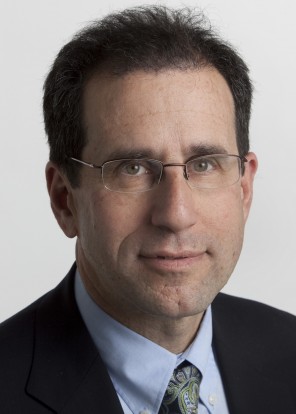
Fred Hiatt has been the editorial page editor and a columnist for The Washington Post since 2000.
Hiatt began working for The Post as a reporter in 1981. From 1991 to 1995, he and his wife served as correspondents and co-bureau chiefs in Moscow, covering Russia and the former Soviet Union. From 1987 to 1990, the pair were co-bureau chiefs of The Post's northeast Asia bureau, based in Tokyo, and reported on Korea and Japan.
Before joining The Post’s foreign staff, Hiatt covered military and national security affairs for three years as a member of the newspaper's national staff. Prior to that assignment, he covered government, politics, development and other issues in Virginia and Fairfax County.
Prior to joining The Post, Hiatt worked as a reporter for the Atlanta Journal and the Washington Star in Washington, D.C.
He is the author of The Secret Sun: A Novel of Japan, published in 1992, as well as two books for children, If I Were Queen of the World (1997) and Baby Talk (1999). His novel for young adults, Nine Days, was published in April 2013.
Hiatt was born in Washington, D.C., and graduated from Harvard University in 1977. He and his wife, Margaret Shapiro, have three children.