Finalist: Brandon McGinley and Rebecca Spiess of the Pittsburgh Post-Gazette
Nominated Work
The City of Pittsburgh has never signed a nearly $10 million contract, authorized by City Council in December 2022, with Allegheny Health Network to expand the Reaching Out On The Streets (ROOTS) public health care and law enforcement co-response program.
However, the city’s American Rescue Plan Act (ARPA) reports indicate that the $10 million budgeted for the program in federal funds has been expended. That money was placed in the city’s general fund, but the PostGazette Editorial Board can confirm that it has not been spent on the line items approved by City Council and reported to the public and the federal government.
This means that $10 million set aside for confronting the city’s homelessness crisis has not been used to help the homeless. Further, there is no public-facing way to account for how the city has handled not only that $10 million allocation, but nearly $50 million per year in ARPA funds appropriated for the city’s operating budget.
The ROOTS of the problem
Former Mayor Bill Peduto created the Office of Community Health and Safety (OCHS) in June 2020. The office was intended to spearhead the deployment of public health and social work professionals alongside first responders to help residents who would benefit from non-law-enforcement interventions. In March of this year, echoing criticism by City Controller Michael Lamb, the Post-Gazette Editorial Board argued that OCHS’s results were disappointing, especially given its apparent $5 million annual budget.
We can now say that criticism was misplaced.
First, while OCHS’s goal to deploy city-employed social workers alongside Pittsburgh Police officers remains nascent, the office has successfully deployed social workers with other city public safety units: EMS and fire. Second, OCHS’s flagship program did not involve city-employed social workers, but the ROOTS collaboration with AHN.
The ROOTS pilot program involved three Community Outreach Hubs within AHN’s Center for Inclusion Health, located in Downtown, the North Side and East Liberty. Besides serving walk-ins, health and social work professionals at the hubs proactively visit with struggling residents and are available to be called in by first responders when a situation requires their specialized assistance.
The annual $5 million we, and Mr. Lamb, identified as OCHS’s “budget” was actually a planned two-year appropriation (for a total of $10 million) from federal ARPA funds meant to expand this program around the city. But that money cannot be spent without a signed contract with AHN, which Mayor Ed Gainey’s administration has never executed — and never explained why.
Starving a successful program
In trying to track city spending, appearances can deceive. The money looked like it had been spent on the ROOTS project because the city’s ARPA reports listed it as expended. Disclosures for the first quarter of 2022 and 2023 indicate $5 million spent each year on the line item “OCHSAHN project.”
That line item, for 2022 and 2023 funding to expand ROOTS, was originally approved by City Council in 2021, as part of Mr. Peduto’s initial plan for the city’s ARPA funds. But by the end of 2022 — despite the city’s report that $5 million had been spent on the project in February — no contract had been signed.
Finally, on December 28, council authorized a contract that would pay AHN $4.96 million from the 2022 allocation, and the full $5 million for 2023. Media around the city reported that Pittsburgh was about to expand the ROOTS program.
It never happened. Nearly eight months later, there is still no contract with AHN. There are still only three Community Outreach Hubs. And after the departure earlier this year of the AHN program’s director, amid the uncertainty of city support, it is unclear how active they are.
A program tailor-made to address the city’s addiction, mental-health and homelessness crises has been allowed to wither. And there’s no way to know where the money for it went.
An ARPA black hole
The city reports the $10 million for ROOTS as “expended” because the money was moved from the ARPA trust fund — where the federal money is stored until it is spent — to the city’s general fund. This occurred as part of transfers of nearly $50 million each of the last two Februarys, representing ARPA funds for the city’s annual operating budget as planned originally by Mr. Peduto’s administration.
This process is like a river emptying into a great lake, which in turn drains into several new streams: Once the ARPA money is in the general fund, it’s impossible to track where it goes. What we can do is look for paperwork — contracts and invoices — and results. We can’t know what, if anything, the money was spent for, but we can know that it wasn’t spent on the programs it was promised for.
For ROOTS, there is no paperwork and no results. In fact, the only evidence any of the ARPA funds for the operating budget have been used for their legislated purposes is the city’s word. The fate of ROOTS shows that is not very useful.
At a time when creative and well-funded responses to a growing social crisis are needed, the City of Pittsburgh under Mayor Ed Gainey’s leadership is playing a shell game with money set aside for precisely that purpose. The administration needs to sign the contract with AHN to expand ROOTS, or explain why it hasn’t and petition City Council to reallocate the funds to another effective social services project. Because what’s going on now is morally, if not legally, a fraud perpetrated on the people of Pittsburgh.
On Wednesday, a county executive held a press conference alongside several regional service providers announcing the expansion of a county program to ensure all unhoused people have shelter during the coldest days and nights of winter.
That was Adam Bello, county executive of Monroe County, N.Y., home of the city of Rochester. The announcement throws into sharp relief the failures of Allegheny County to prepare for a predictably difficult winter for homeless services. New information shows that during the pre-Thanksgiving chill and post-Thanksgiving cold snap, nearly every shelter bed in the county — including the overflow beds promised by county officials — has been full, and outreach workers have been reduced to distributing “survival supplies” to help people on the streets live through the night.
The crisis comes, unfortunately, during a leadership transition from County Executive Rich Fitzgerald to County Executive-elect Sara Innamorato, which means the focus of county officials is on ensuring the orderly handover of authority. But this, too, was predictable, and yet the county’s Department of Human Services (DHS) has been caught flat-footed.
As Ms. Innamorato considers which of her predecessor’s appointees she should retain, she should begin with a serious look at the leadership at DHS, looking most closely at how badly they prepared to serve the homeless this winter.
An unprecedented rebuke
While Rochester officials were announcing the expansion of their Code Blue cold safety initiative, the Allegheny County Homeless Advisory Board was delivering an unprecedented rebuke to city and county human services officials. At its regular monthly meeting on Tuesday, the typically quiet and ineffectual panel voted to send a letter demanding that Pittsburgh and Allegheny County fulfill their joint pledge to make emergency shelter space available for the coming cold snap.
But nothing happened.
The plea may not have had legal force, but it had moral force. Due to the permanent closure of the shelter at the Smithfield United Church of Christ in Downtown, and despite opening overflow space at Second Avenue Commons, the county has a deficit of well over 100 overnight shelter beds. Meanwhile, entering November, the county reported the second-highest number of people experiencing unsheltered homelessness — that is, living and sleeping completely outdoors — since the online dashboard began in late 2021.
As a result, multiple service providers confirmed to the Post-Gazette Editorial Board that they had to turn people away, including on Tuesday night, when the low was 18 degrees and the wind chill dropped to single digits. The providers distributed items such as socks, jackets and tents — as well as hopes and prayers that the recipients would live to see the sunrise.
In these conditions, the human body begins to change. Blood becomes thicker, and people become more prone to heart attacks and strokes. The body becomes worse at fighting infection. For weeks after exposure to extreme cold, people are more vulnerable to illness, turning coughs and flu into killers like pneumonia.
Code Blue
That’s why cities and counties across the U.S. have created so-called “Code Blue” programs, where services are ramped up when temperatures drop below a certain threshold. In past winters, Allegheny County has opened emergency shelters when nights go below 25 degrees, but those shelters are either permanently closed (Smithfield) or already open (Second Avenue overflow) without any vacancies.
Despite a city-county promise that “an emergency facility will be activated” when temperatures plunge and overflows fill up, Tuesday night’s frigid temperatures triggered no new contingencies.
In Rochester, Monroe County announced a modest expansion of its Code Blue system, with 41 overflow shelter beds and the distribution of cards that map bus routes to warming centers and entitle the carriers to free trips. Philadelphia has a Code Blue hotline that bystanders can call to summon outreach workers to an unsheltered person on cold days and nights. Other cities park running buses near encampments so people have a place to temporarily warm up.
What unites Code Blue programs is a commitment to ensure it is at least possible for every homeless person to have a warm place to be. Right now, Allegheny County is not meeting this baseline of humaneness.
This winter, and next
It is too late for the county to build out the cold weather capacity it needs for this winter: Even the simple Code Blue operation in Monroe County, N.Y., took several months of planning and coordination to come together. But it is not too late to generate emergency plans to keep people alive this winter — and to begin to plan for next.
In the past, public and private outreach workers have turned daytime spaces, such as the Reaching Out On The Streets (ROOTS) health care sites, into ad hoc overnight warming centers. This is far from ideal, but it keeps people warm, and alive. Even if more permanent solutions can’t be brought on line this season, the county has the resources — a $40 million homeless services budget within a $1 billion DHS budget — for creative stop-gaps, such as modest 24/7 warming centers and Pittsburgh Regional Transit buses.
But this is also the time to begin to build a sustainable, long-term plan for wintertime homelessness — Allegheny County’s own Code Blue. But without a serious change in approach and priorities, DHS’s current leadership appears unable to see this through with the necessary care, creativity and foresight.
As Sara Innamorato prepares to take the reins in January, she should scrutinize DHS closely, and insist that leaders — including director Erin Dalton and deputy director for community services Abigail Horn — either demonstrate their willingness to think bigger, or step aside.
Getting Allegheny County’s unsheltered people through the winter alive will be the new executive’s first test of leadership.
Pittsburgh City Council, in an effort to address a mounting homelessness problem, recently introduced a bill to permit city-sanctioned tent encampments. The measure would create special zoning for encampments managed by the city, a legal space for the unhoused to set up their tents complete with shelter, heat and other necessities.
It’s a humane move that could help the unsheltered homeless someday, but it’s not a permanent answer for those who need shelter now.
High stakes, few solutions
The stakes are high. Limited shelter space coupled with the winter’s wet and cold conditions mean that many unhoused people will be forced to stay outdoors in hostile conditions. Since the closing of Smithfield Street Shelter in June, about 80 people have disappeared from the shelter tracking system, according to the county’s dashboard. They are likely out on the street.
The causes of homelessness spiking for the last half decade are myriad. They include the fallout of a global pandemic, the opioid crisis, a mental health system that simply can’t meet demand and a shortage of affordable housing — including the temporary housing shelters provide. These complex problems have led to encampments springing up around Downtown, the North Shore and the South Side, building a highly-visible public policy failure.
Friction is inevitable when a large group of people are forced to use public space as their living space. While the community discussion about homelessness in Pittsburgh and Allegheny County has been robust, real solutions remain elusive.
The county has offered no clear leadership on this issue, while the city’s plans have been piecemeal and sometimes contradictory. A new policy to remove encampments that pose a risk to the public has gone largely unenforced because there is nowhere to house the people who would be removed. The city’s other proactive support program, dubbed Reaching Out On The Streets, or ROOTS, previously mishandled its $10-million budget allocation and won’t hire more employees until this January.
A tempting fix
City-supported tent sites are a tempting low-cost fix, especially when compared with solutions dependent on long-term infrastructure improvements, like flipping office space or building more affordable housing.
Most unsheltered homeless people find it easy to transition into this type of encampment, because, much like the “low-barrier” Second Avenue Commons, these outdoor sites allow people to stay with their partners, pets and most belongings — the three things usually deterring unhoused people from staying at traditional shelters.
Being homeless is also stressful, uncertain, and dangerous. Having a stable legal shelter, no matter what kind, can be a crucial first step to more permanent housing.
However, a properly-sanctioned encampment — one that isn’t simply a fenced gathering place for poor people — requires a solid investment from the city. To be fully humane, each encampment will require accessible toilets and showers, 24/7 security personnel, electricity for heating and a proper trash disposal system. Pittsburgh’s current budget and outreach staff can’t handle another intensive program like this without months of planning.
Then there’s the sticky moral aspect. Unfortunately, the mere presence of a legal encampment signals a city endorsement of open-air tent camps for poor residents. That’s a tough stance to defend, especially if there aren’t aggressive and proactive plans in place to find alternatives for people living in them.
It leads to another dicey question: Will these encampments lead to credible offers of housing for the people they serve, or is the city just aiming to move homeless encampments elsewhere to fix the dismal optics? The proposed zoning requirements put forth by city council point to good intentions, but this also adds complexity and a longer implementation process.
New policies
It’s also pertinent to acknowledge how much, and how quickly, policies regarding homelessness have changed. Previous programs and their failings have contributed to a segment of homeless individuals who have, fairly or unfairly, decided that complying with free programs is no longer worth it. Housing in any form comes with stipulations and a level of stability some people just can’t muster. In these cases, tents might be the best the city can do.
There is still some reason to trust the city with a program like this, despite the recent controversies. The shortfalls in its current programs generally come from lack of scale and budget, rather than indifference. Second Avenue Commons, for example, has been at capacity since opening, but nevertheless brought 59 people into permanent housing and helped 69 people find employment over the last year.
The city’s encampment sweep policy has so far resulted in one cleanup, which was, as observed by a member of the Editorial Board, completed in two days and as compassionately and carefully as possible. Good things are happening, but budgeting hangups and staffing limitations have undercut true progress.
The takeaway
The takeaway regarding managed tent cities is optimistic but pragmatic: Their efficacy at making encampments safer and cleaner is credible, but the necessary infrastructure to ensure success will not be ready for this winter. Funding presents another problem, considering that the city has failed to allocate a bulk of its federal pandemic money (or misplaced it completely, like it did with the ROOTS program). All this is not to mention the lean budget years expected as these federal funds run out.
A safe, humane and compassionate solution for our unhoused neighbors will necessarily be multifaceted and complex. It will take time. Unfortunately, those currently living on the streets don’t have that.
Sanctioned encampments are not a final or complete answer to the problem, but the city is right to add this zoning method to the its repertoire of programming. It’s the best that can be done right now.
Mitigating homelessness in Pittsburgh will require a coordinated effort between the city and Allegheny County, both of which must also guide private social service organizations to work under them as partners, not competitors. That’s the lesson from cities that have aggressively, and successfully, addressed homelessness — but it hasn’t yet been learned in Western Pennsylvania.
Going into winter, the City of Pittsburgh is sending mixed messages about its policies while the county, which has primary responsibility for social services, says it will announce cold weather plans only in the next couple weeks. Disjointed efforts — including bureaucratic buck-passing and turf-protecting — will never result in a satisfactory response to a growing crisis.
Credible offer
This reality was highlighted last week in remarks by Mayor Ed Gainey’s communications director, Maria Montaño, regarding the city’s policy for removing homeless encampments that impinge on public rights of way. Ms. Montaño indicated that, despite codifying a detailed tent clearance policy last month, the city had no intention to enforce it unless unhoused people have a “credible offer of housing.”
The principle here is sound: that removing people with no other place to go only shuffles the problem around without solving anything. But if the city intended to make its policy contingent on a third-party “credible offer,” it should have included that in the policy. Instead, the city wrote a rule in order to appease stakeholders concerned about settlements overtaking public spaces — apparently with no intent to actually enforce it.
In this context, “credible offer of housing” is a cop out. In social services, “credible offer” is a term of art that refers to several months of guaranteed affordable shelter with all “necessary support” to access and thrive in that accommodation, according to a model policy from the City of London, U.K.
But the entity responsible for arranging such an offer, Allegheny County, is not in a position to do so, and the city knows it. Further, the city has never communicated its newfound “credible offer” policy to the county. City officials seem to think they can have it both ways: appeasing concerned citizens by releasing a tent clearance policy, then blaming others for not enforcing it.
If Pittsburgh ever wants to have a consistent “credible offer of housing” for the region’s unhoused, it will only come through intense city-county collaboration, not grandstanding.
A national problem
Pittsburgh is not the only city struggling to care for its unhoused neighbors. Nationwide unsheltered homelessness increased sharply during the COVID pandemic, followed by the end of programs to support struggling renters. Further, the ongoing opioid crisis and increasing deaths of despair mean that those who have fallen through the social support system are often treading water with temporary solutions.
In Denver, one of the hardest-hit cities in terms of unsheltered homelessness, tent encampments are being addressed aggressively by Mayor Michael Johnston, who took office in 2023 touting his ambitious House1000 Program. The campaign aims to move entire encampments of people into decommissioned hotels, tiny home villages or existing rental units — all with a full suite of social services.
This approach accords with the findings of a 2018 Department of Housing and Urban Development study, which found three primary reasons people stay in encampments: shortcomings in the shelter system, a sense of safety and community and a desire for autonomy and privacy. Allowing people who were living near each other to remain neighbors may be a key to getting them into longer-term housing.
However, unlike federal HUD standards, under Mr. Johnston’s plan, two weeks’ worth of shelter is enough to label someone as “housed.” Plus, some experts wonder whether offering the most intense services to those living in encampments shortchanges people, including vulnerable children and families, already staying in shelters. Despite these drawbacks, the plan should be observed closely by Pittsburgh officials.
Housing first
Meanwhile Houston, a crusader for the Housing First model, has driven down its homeless population by 64% over the last 12 years.
There, success has come through a collaborative effort among the city, county and a consortium of over 100 nonprofits. Under Houston’s current system, nonprofits work as partners, not competitors, and service providers cannot turn down a person deemed to be suitable for their program by the city or county. This required tremendous trust and cooperation.
The main goal of these programs is to offer no-strings-attached permanent housing. Governments have found that taking on this cost is actually much cheaper than the jail-shelter-emergency room orbit many homeless people find themselves in — not to mention much more humane.
Houston has advantages Pittsburgh does not, including famously flexible zoning and newer, denser housing stock. Pittsburgh technically has enough available housing, but much of it is unlivable. This is a challenge, but also an opportunity to create a trailblazing program to mitigate homelessness and blight all at once — something that would only be possible with close city-county collaboration.
Working together
Rather than relying on the way things have always been done here, city and county officials — together — should be studying the successes (and the struggles) of other urban areas working to address homelessness. At the same time, these officials should be discussing ways Pittsburgh can become a model for other similarly situated cities.
There are creative, if imperfect, solutions available: leasing hotels and motels; declaring an emergency in order to streamline processes; creating a nonprofit consortium (which means working with large organizations currently out of favor in City Hall); fixing up blighted properties for unhoused people; and building on, while learning from, local successes such as Second Avenue Commons.
But this will only work with an all-hands-on-deck attitude, not every-man-for-himself posturing.
A series of decisions by public officials led to the two blocks of Smithfield Street between Oliver Avenue and Seventh Avenue becoming the epicenter of homelessness and substance abuse Downtown. It will take a coordinated effort between the public and private sectors to restore this corridor to vibrancy.
Smithfield declined in large part because county officials, who are tasked with providing social services, didn’t realize how acute the homelessness crisis had become, and specifically how entrenched it had become in this part of Downtown. Thus, the low-barrier shelter at the Smithfield United Church of Christ was allowed to become the main hub for the entire region’s unhoused.
The sheer number of people it attracted became untenable — even after Second Avenue Commons, another low-barrier facility, opened last November. This inundation, not the low-barrier model, is what caused so many problems, from drug-dealing to public defecation. Officials expected Second Avenue Commons to relieve Smithfield, but it filled more quickly than expected, and many people who felt at home at Smithfield didn’t want to leave.
This section of Smithfield is a key hub of business, transit and public services, and is the linchpin to restoring quality of life for everyone Downtown. And that’s important for everyone, including unhoused people themselves. When Downtown suffers, the consequences aren’t just felt on corporate ledgers, but in job growth and tax income. A county with fewer jobs and resources can afford fewer social services.
The only long-term solution is a coordinated effort to offer a full spectrum of social and medical services, beginning with more neighborhood-based housing, for those who currently pass their days on or around Smithfield Street.
The hub of homelessness
When it became clear this spring that Second Avenue Commons had not, and could not, replace the Smithfield shelter, Allegheny County promised to keep Smithfield open even after warmer weather arrived.
But low-barrier shelters, which don’t require sobriety and do allow pets and partners, are necessarily messy operations. Smithfield became a magnet for people who couldn’t stay at other shelters, and hospitals from outlying counties sent people who could only stay in a low-barrier shelter to Smithfield, the only one in the region. Unsafe and unhealthy activity increasingly spilled into the streets.
In May, as the situation deteriorated and businesses began leaving, the county reversed course and closed Smithfield — possibly permanently. This may have been necessary, but there was no workable plan for the roughly 125 people who depended on it for nightly shelter. Many who were swept into other hastily organized facilities returned Downtown for their daily routines, because Downtown was where they felt comfortable. It was home.
That’s why closing the Smithfield shelter did not transform the area, as a visit this week demonstrated.
A point in time
A Post-Gazette editor’s walk along Smithfield between Oliver and Seventh, on a sweltering weekday afternoon, revealed some improvements and lingering problems.
Several apparently unhoused people loitered in Mellon Square and on Strawberry Way, but there was little evidence of the drug use and other unsafe, unhealthy and illegal activities that have plagued the corridor. This was where they were comfortable, and only personalized outreach will help them find a better place to live and to pass the time.
Two Pittsburgh Downtown Partnership “Clean Teams” swept up trash and gave the area the feeling it was being cared for. Ubiquitous “No Loitering” signs, including at the Carnegie Library Downtown branch and Smithfield UCC, were mostly being respected. By all accounts, Pittsburgh police have been firm but respectful in enforcing the legitimate rights of property owners.
Meanwhile, the Allegheny Health Network Community Outreach Hub beneath Mellon Square was busy serving unhoused people. Unfortunately, the facility — part of the Reaching Out On The Streets (ROOTS) collaboration with the city’s Office of Community Health and Safety — is only open for three hours per day on weekdays, and two hours on Saturdays.
As the Editorial Board has reported, the city allocated $10 million in federal COVID relief funds to expand this program, and has reported the funds as spent. But not a dime has actually gone to ROOTS, leaving the Smithfield facility understaffed — and $10 million missing.
A return pass after the AHN hub had closed revealed the human cost of sidelining this project: Several unhoused people sat or stood, in a kind of vigil, outside the doors.
A spread solution
Ultimately, a variety of shelter facilities spread around the county will be necessary to end Smithfield’s status as a homeless hub. Some must be low-barrier, others “single-room occupancy” or “transitional,” for residents closer to independence. Allegheny County has taken a very small step in the right direction by planning to open a small low-barrier shelter on Brownsville Road in Carrick — though insufficient communication has left neighbors on edge.
Just as Second Avenue Commons required a combination of public and private investment, so will any realistic solution to homelessness. Allegheny County will have to take the lead by bringing municipal governments, healthcare providers and corporate and foundation partners to the table. Further, county officials — specifically whoever replaces county executive Rich Fitzgerald — will have to accept the political cost of placing unpopular facilities in outlying neighborhoods.
There is no simple or costless solution. Spreading shelters and services out — including expanding ROOTS — will relieve the burden that is being disproportionately shouldered by Downtown, and Smithfield Street in particular. And, if handled professionally and compassionately, it will benefit unhoused people by giving them more living options in neighborhood settings, where transitioning to independence is more realistic.
There will be resistance. But the alternative is the status quo, which isn’t working for unhoused people — and represents a dagger pointed at the heart of the region’s economic vibrancy.
There are no plans to reopen the shelter at Smithfield United Church of Christ this winter, according to sources with knowledge of shelter operations. The news comes just weeks before Nov. 15, the usual opening date for winter shelters in Pittsburgh, and marks the biggest loss of shelter bed space in years.
Allegheny County officials need to work quickly to find alternative shelter options to avoid the looming winter disaster. If they don’t, their inaction could cost lives.
The county’s efforts to address homelessness have fallen short for years. Second Avenue Commons, the low-barrier shelter near the Allegheny County Jail, was originally meant to replace Smithfield upon its opening in 2022. Instead, both facilities remained at or over capacity — Smithfield until its June closure and Second Avenue to this day — without any relief for either.
Smithfield’s 145 shelter beds now appear to be permanently gone. Another 40 beds were eliminated in mid-September when Second Avenue Commons’ temporary overflow shelter closed. This winter season, Pittsburgh will have nearly 190 fewer shelter beds.
The closure also ends Smithfield’s Severe Weather Emergency Shelter, a program that allowed the facility to offer 24/7 services during weather emergencies. Last Christmas, the shelter offered continuous services during brutally cold conditions, an option that will be gone this winter.
While the county can’t be faulted for underestimating the emergence of and fallout from a pandemic, alternative plans are moving too slowly for people in need of housing services now. The county’s only public actions regarding shelter capacity are a housing support program slated for spring 2024 and a request for proposals to run a small low-barrier shelter in Carrick. Otherwise, officials haven’t offered a coherent plan for addressing the crisis coming this winter.
The web of services offered for unhoused people is becoming more piecemeal, a marked departure from the dream that Second Avenue Commons would become the low-barrier one-stop-shop for helping people experiencing homelessness.
Small nonprofits and religious organizations are once again the main recourse. Some of these shelters are single-sex and don’t allow pets or belongings. People will be forced to make inhumane choices: Going through withdrawals or sleeping outdoors; leaving pets behind or having a meal; staying with their partner or accessing a shower.
Contributing factors to homelessness are also shifting, making long-term planning a scattershot and difficult process. The end of pandemic-era federal aid programs is skewing the demographics of unhoused individuals, with families with children outnumbering single adults in emergency shelter for the first time since Allegheny County began keeping public statistics. Children under 18 now represent nearly 60% of the population in emergency shelter programs.
The lack of a public statement regarding winter shelter plans has left advocates, aid workers and unhoused people themselves confused and concerned. County officials need to make clear what plans, if any, are in place for the coming cold months. And county executive candidates Sara Innamorato and Joe Rockey need to present plans that will avoid this panic in future years.
Because right now the county is headed for disaster, and the most vulnerable will suffer the most.
The death of an unhoused woman in Pittsburgh less than 500 feet from a fully occupied shelter, confirmed by the Post-Gazette Editorial Board, is the predictable result of Allegheny County’s delayed and insufficient plan for homeless services during the winter months.
In late December, over a month into frigid weather and during the darkest days of the year, the county is somehow still ramping up its services, adding 32 new beds last week while launching Code Blue daytime warming centers. This is welcome news, but far too late. Human services officials knew this winter was going to be hazardous for the unhoused as far back as June, when the Smithfield shelter and its over 100 beds closed — with no plans to replace it.
Still, the county had time to make preparations for the cold weather, still five months away. But the Department of Human Services released no requests for proposals for winter shelters; made public an inadequate winter plan several weeks behind schedule; and only finalized a rudimentary Code Blue action plan after the Homeless Advisory Board and a Post-Gazette editorial raised the alarm after Thanksgiving.
As winter inevitably approached, the county knew it had far too few beds for everyone who needed shelter. And when winter came, the system was still not ready. Service providers, community leaders and advocates spoke with one accord: People will die.
They were right.
Death
Kebrina Mardis, 30, died in her tent near River Avenue on the North Side sometime between Wednesday, Dec. 13, when she was last seen, and Sunday, Dec. 17, when her body was discovered in her tent. Two weeks earlier, she had said on Facebook that she was expecting a baby.
A member of the Post-Gazette Editorial Board visited the scene on Tuesday. It had been left exactly as it was when police removed the body, in a group of three tents just off the Three Rivers Heritage Trail. For days, dozens of joggers, bikers and commuters unknowingly passed Ms. Mardis’s remains.
Snow had blown in through an open flap, across a sleeping bag and blankets. The pillow and its mattress were discolored with frozen blood. Residents of nearby tents said they could hear rats, which are numerous along the North Shore encampments, coming and going at night. They didn’t know the rodents had chewed through the tent and were feeding on her decomposing body.
A blue, translucent cross hung above the mattress bearing the words, “Discover the treasure of God’s love.”
Ms. Mardis was a petite white woman, but when her remains were discovered, they were first identified as those of a Black man. The conditions had accelerated her decay.
It will likely be weeks before her cause of death can be determined by the medical examiner. Whether it is drugs or violence or exposure, her gruesome fate — including, in a particular way, the fate of her remains — indicts our society. In any civilization worthy of the name, people do not get eaten by rodents.
Alone
Ms. Mardis died almost in sight of the Light of Life Rescue Mission, whose women’s shelter is regularly full, according to vacancy updates sent to service providers. These updates show that most overflow and emergency shelters reach capacity every day, showcasing an overburdened system. The additional beds announced this week will help, but they will not be enough, and they were too late for Ms. Mardis.
While she is known to have used shelters — she logged dozens of nights at Smithfield last year — at this point it’s impossible to know whether Ms. Mardis would have taken shelter last week, or what kind would have been helpful to her. While Light of Life provides proactive outreach to the nearby encampments, it is clear that more county resources are needed to monitor the sheer number of unhoused people who remain outdoors.
Late last week, nighttime temperatures frequently dropped below freezing, but never to the 26-degree threshold for additional Code Blue resources.
Ms. Mardis was known to workers at Light of Life and Smithfield. She also had experience with the corrections system, and suffered from addiction. She had a partner who had just been arrested and incarcerated at the Allegheny County Jail for the very first time. In winter, and with drugs, it is always more dangerous to be alone.
Trauma
Those who camp along River Avenue learned through word of mouth that they slept next to Ms. Mardis’s body. In lives punctuated by horror, this is a unique encounter with the macabre.
While the concept of “trauma” is constantly thrown around when discussing homelessness, this is a stark demonstration of what it looks like: A 30-year-old woman — a neighbor — torn apart by rodents, 500 feet from an institution built to save people like her. And everyone must, somehow, keep going.
Is this what our addicted, our mentally ill and our incarcerated people deserve? To die, alone? Anyone who provides services to the homeless understands how complicated every individual situation is. Some people, like Ms. Mardis, who providers indicate had been on the streets for seven years, are very hard cases. Some people will remain beyond the reach of governments and charities. Some people will not let themselves be helped.
But that does not void their humanity, and their dignity. That does not excuse us from giving every person every chance — at least to survive one more cold night. That does not mean they are to be handed over to the animals.
Even now, the collapsed tent sits on the banks of the Allegheny River with no one to collect it. Someone has draped a tarp to restore some privacy, and dignity, to the place Kebrina Mardis called home. The place where she died.
Biography
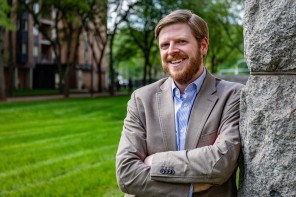
Brandon McGinley is the editorial page editor for the Pittsburgh Post-Gazette, where he leads the editorial board, daily opinion pages and Sunday Insight section. A Pittsburgh native and 2010 graduate of Princeton University, he worked as an editor and freelance writer before joining the Post-Gazette in 2021. In his first three months at the newspaper, he won the Keystone Media Award for editorial writing. He lives in the Pittsburgh neighborhood of Brookline with his wife and six children.

Rebecca Spiess, originally from Switzerland, is a reporter whose work has focused on homelessness, community development and extremism. Before moving to Pennsylvania, she was a radio reporter for Colorado's NPR affiliate in Denver, a Fulbright recipient reporting on far-right ideologies in Berlin and a border reporter for Arizona PBS. She speaks German and recently completed a Law and Justice Journalism Fellowship.