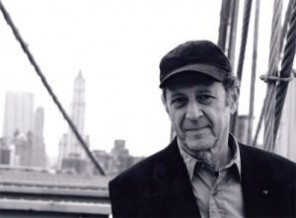
Steve Reich has been called "...America's greatest living composer." (The Village VOICE), "...the most original musical thinker of our time" (The New Yorker) and "...among the great composers of the century" (The New York Times). From his early taped speech pieces It's Gonna Rain (1965) and Come Out (1966) to his and video artist Beryl Korot's digital video opera Three Tales (2002), Mr. Reich's path has embraced not only aspects of Western Classical music, but the structures, harmonies, and rhythms of non-Western and American vernacular music, particularly jazz. "There's just a handful of living composers who can legitimately claim to have altered the direction of musical history and Steve Reich is one of them," states The Guardian (London).
Born in New York and raised there and in California, Mr. Reich graduated with honors in philosophy from Cornell University in 1957. For the next two years, he studied composition with Hall Overton, and from 1958 to 1961 he studied at the Juilliard School of Music with William Bergsma and Vincent Persichetti. Mr. Reich received his M.A. in Music from Mills College in 1963, where he worked with Luciano Berio and Darius Milhaud.
During the summer of 1970, with the help of a grant from the Institute for International Education, Mr. Reich studied drumming at the Institute for African Studies at the University of Ghana in Accra. In 1973 and 1974 he studied Balinese Gamelan Semar Pegulingan and Gamelan Gambang at the American Society for Eastern Arts in Seattle and Berkeley, California. From 1976 to 1977 he studied the traditional forms of cantillation (chanting) of the Hebrew scriptures in New York and Jerusalem.
In 1966 Steve Reich founded his own ensemble of three musicians, which rapidly grew to 18 members or more. Since 1971, Steve Reich and Musicians have frequently toured the world, and have the distinction of performing to sold-out houses at venues as diverse as Carnegie Hall and the Bottom Line Cabaret.
Mr. Reich's 1988 piece, Different Trains, marked a new compositional method, rooted in It's Gonna Rain and Come Out, in which speech recordings generate the musical material for musical instruments. The New York Times hailed Different Trains as "a work of such astonishing originality that breakthrough seems the only possible description....possesses an absolutely harrowing emotional impact." In 1990, Mr. Reich received a Grammy Award for Best Contemporary Composition for Different Trains as recorded by the Kronos Quartet on the Nonesuch label. He won a second Grammy award in 1999 for his piece Music for 18 Musicians, also on Nonesuch. In 1997, the label released a 10-CD retrospective box set of Mr. Reich's compositions, featuring several newly-recorded and re-mastered works.
In July 1999 a major retrospective of Mr. Reich's work was presented by the Lincoln Center Festival. Earlier, in 1988, the South Bank Centre in London, mounted a similar series of retrospective concerts. Plans are already underway for an international celebration of the composer's 70th birthday in 2006.
The Cave, Steve Reich and Beryl Korot's music theater video piece exploring the Biblical story of Abraham, Sarah, Hagar, Ishmael and Isaac, was hailed by Time Magazine as "a fascinating glimpse of what opera might be like in the 21st century." Of the Chicago premiere, John von Rhein of the Chicago Tribune wrote, "The techniques embraced by this work have the potential to enrich opera as living art a thousandfold....The Cave impresses, ultimately, as a powerful and imaginative work of high-tech music theater that brings the troubled present into resonant dialogue with the ancient past, and invites all of us to consider anew our shared cultural heritage."
Three Tales, a three-part digital documentary video opera, is a second collaborative work by Steve Reich and Beryl Korot about three well known events from the twentieth century, reflecting on the growth and implications of technology in the 20th century: Hindenburg, on the crash of the German zeppelin in New Jersey in 1937; Bikini, on the Atom bomb tests at Bikini atoll in 1946-1954; and Dolly, the sheep cloned in 1997, on the issues of genetic engineering and robotics. Three Tales is a three act music theater work in which historical film and video footage, video taped interviews, photographs, text, and specially constructed stills are recreated on computer, transferred to video tape and projected on one large screen. Musicians and singers take their places on stage along with the screen, presenting the debate about the physical, ethical and religious nature of technological development. Three Tales was premiered at the Vienna Festival in 2002 and subsequently toured all over Europe, America, Australia and Hong Kong. Nonesuch's DVD/CD of the piece, released in fall 2003, appeared on many critics' 'Best of the Year' lists.
Over the years, Steve Reich has received commissions from the Barbican Centre London, the Holland Festival; San Francisco Symphony; the Rothko Chapel; Vienna Festival, Hebbel Theater, Berlin, the Brooklyn Academy of Music for guitarist Pat Metheny; Spoleto Festival USA, West German Radio, Cologne; Settembre Musica, Torino, the Fromm Music Foundation for clarinetist Richard Stoltzman; the Saint Louis Symphony Orchestra; Betty Freeman for the Kronos Quartet; and the Festival d'Automne, Paris, for the 200th anniversary of the French Revolution.
Steve Reich's music has been performed by major orchestras and ensembles around the world, including the London Symphony Orchestra conducted by Michael Tilson Thomas, New York Philharmonic conducted by Zubin Mehta; the San Francisco Symphony conducted by Michael Tilson Thomas; The Ensemble Modern conducted by Bradley Lubman, The Ensemble Intercontemporain conducted by David Robertson, the London Sinfonietta conducted by Markus Stenz and Martyn Brabbins, the Theater of Voices conducted by Paul Hillier, the Schoenberg Ensemble conducted by Reinbert de Leeuw, the Brooklyn Philharmonic Orchestra conducted by Robert Spano; the Saint Louis Symphony conducted by Leonard Slatkin; the Los Angeles Philharmonic conducted by Neal Stulberg; the BBC Symphony conducted by Peter Eötvös; and the Boston Symphony Orchestra conducted by Michael Tilson Thomas.
Several noted choreographers have created dances to Steve Reich's music, including Anne Teresa de Keersmaeker ("Fase," 1983, set to four early works as well as "Drumming," 1998 and "Rain" set to "Music for 18 Musicians"), Jirí Kylían ("Falling Angels," set to "Drumming Part I"), Jerome Robbins for the New York City Ballet ("Eight Lines") and Laura Dean, who commissioned "Sextet". That ballet, entitled "Impact," was premiered at the Brooklyn Academy of Music's Next Wave Festival, and earned Steve Reich and Laura Dean a Bessie Award in 1986. Other major choreographers using Mr. Reich's music include Eliot Feld, Alvin Ailey, Lar Lubovitch, Maurice Bejart, Lucinda Childs, Siobhan Davies and Richard Alston.
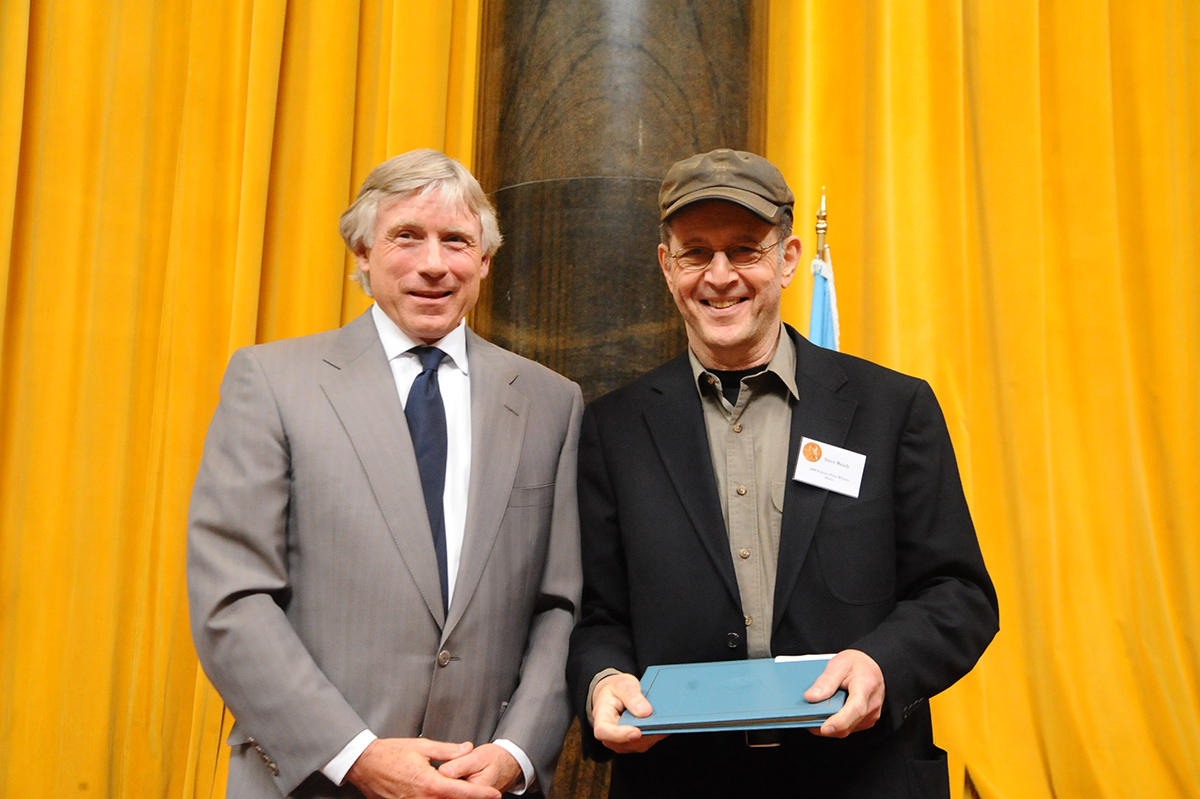
In 1994 Steve Reich was elected to the American Academy of Arts and Letters, to the Bavarian Academy of Fine Arts in 1995, and, in 1999, awarded Commandeur de l'ordre des Arts et Lettres. The year 2000 brought five additional honors: the Schuman Prize from Columbia University, the Montgomery Fellowship from Dartmouth College, the Regent's Lectureship at the University of California at Berkeley, an honorary doctorate from the California Institute of the Arts. In 2007, Mr. Reich was awarded the Polar Music Prize by the Swedish Academy of Music.
Steve Reich's 70th-birthday year (2006) was marked with festivals and special concerts organized by companies around the world. In the composer's hometown of New York, the Brooklyn Academy of Music (BAM), Carnegie Hall, and Lincoln Center joined forces to present complementary programs of his music, and in London, the Barbican mounted a major retrospective. Concerts were also presented in Amsterdam, Athens, Brussels, Baden-Baden, Barcelona, Birmingham, Budapest, Chicago, Cologne, Copenhagen, Denver, Dublin, Freiburg, Graz, Helsinki, Los Angeles, Paris, Porto, Vancouver, Vienna and Vilnius, among others. In addition, Nonesuch Records released its second box set of Steve Reich’s works, Phases: A Nonesuch Retrospective, in September 2006. The five-CD collection comprises fourteen of the composer’s best-known pieces, spanning the 20 years of his time on the label. In 2005 Nonesuch released the premiere recordings of You Are Variations and Cello Counterpoint, featuring the LA Master Chorale conducted by Grant Gershon and cellist Maya Beiser.
Reich’s recent works continue to demonstrate warm late period in his compositional style. Daniel Variations (2006) was co-commissioned by the Barbican Centre, Carnegie Hall, Daniel Pearl Foundation, Cite de la Musique, and Casa da Musica, and was based on the writings of disappeared journalist Daniel Pearl. The work was premiered to great critical acclaim at the Barbican in London and has subsequently been performed in New York, Paris, Munich, Porto, Los Angeles, Toronto, Boston, Miami, and Tokyo, with a praised recording available on Nonesuch. His Double Sextet (2007) features six musicians playing against a recording of themselves and was written for the ensemble eighth blackbird for a premiere in March 2008.
Steve Reich is published by Boosey & Hawkes.
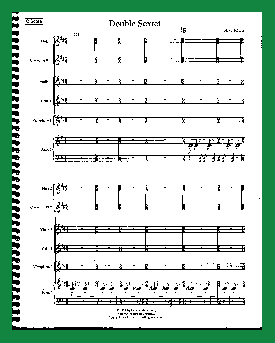 Double Sextet (2007) 22'