For distinguished musical composition by an American that has had its first performance or recording in the United States during the year, Ten thousand dollars ($10,000).

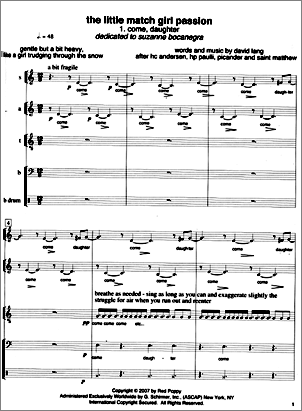
The Little Match Girl Passion, by David Lang

Co-commissioned by the Carnegie Hall Corporation and The Perth Theater and Concert Hall, and premiered October 25, 2007 in Zankel Hall at Carnegie Hall, New York City (G. Schirmer, Inc.).
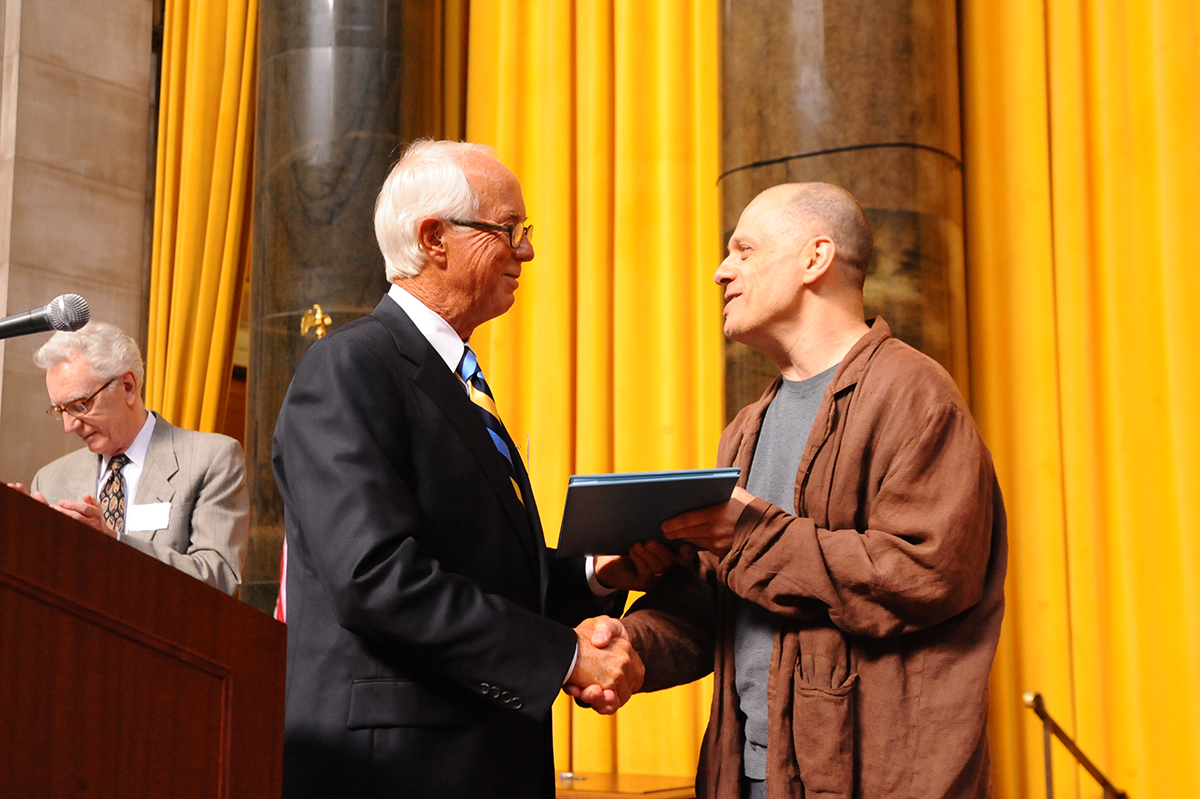
Richard Oppel and David Lang

Richard Oppel, Pulitzer Board co-chair (left), presents the 2008 Pulitzer Prize in Music to David Lang.

Winning Work

The Little Match Girl Passion

Notes on the Work by composer David Lang

I wanted to tell a story. A particular story—in fact, the story of The Little Match Girl, by the Danish author Hans Christian Andersen. The original is ostensibly for children, and it has that shocking combination of danger and morality that many famous children’s stories do. A poor young girl, whose father beats her, tries unsuccessfully to sell matches on the street, is ignored, and freezes to death. Through it all she somehow retains her Christian purity of spirit, but it is not a pretty story.

What drew me to The Little Match Girl is that the strength of the story lies not in its plot but in the fact that all its parts—the horror and the beauty—are constantly suffused with their opposites. The girl’s bitter present is locked together with the sweetness of her past memories; her poverty is always suffused with her hopefulness. There is a kind of naive equilibrium between suffering and hope.

There are many ways to tell this story. One could convincingly tell it as a story about faith or as an allegory about poverty. What has always interested me, however, is that Andersen tells this story as a kind of parable, drawing a religious and moral equivalency between the suffering of the poor girl and the suffering of Jesus. The girl suffers, is scorned by the crowd, dies, and is transfigured. I started wondering what secrets could be unlocked from this story if one took its Christian nature to its conclusion and unfolded it, as Christian composers have traditionally done in musical settings of the Passion of Jesus.

The most interesting thing about how the Passion story is told is that it can include texts other than the story itself. These texts are the reactions of the crowd, penitential thoughts, statements of general sorrow, shock, or remorse. These are devotional guideposts, the markers for our own responses to the story, and they have the effect of making the audience more than spectators to the sorrowful events onstage. These responses can have a huge range—in Bach’s Saint Matthew Passion, these extra texts range from famous chorales that his congregation was expected to sing along with to completely invented characters, such as the “Daughter of Zion” and the “Chorus of Believers.” The Passion format—the telling of a story while simultaneously commenting upon it—has the effect of placing us in the middle of the action, and it gives the narrative a powerful inevitability.

My piece is called The Little Match Girl Passion and it sets Hans Christian Andersen’s story The Little Match Girl in the format of Bach’s Saint Matthew Passion, interspersing Andersen’s narrative with my versions of the crowd and character responses from Bach’s Passion. The text is by me, after texts by Han Christian Andersen, H. P. Paulli (the first translator of the story into English, in 1872), Picander (the nom de plume of Christian Friedrich Henrici, the librettist of Bach’s Saint Matthew Passion), and the Gospel according to Saint Matthew. The word “passion” comes from the Latin word for suffering. There is no Bach in my piece and there is no Jesus—rather the suffering of the Little Match Girl has been substituted for Jesus’s, elevating (I hope) her sorrow to a higher plane.

From www.carnegiehall.org
 

Biography

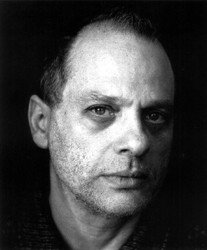
There is no name yet for this kind of music," writes Los Angeles Times music critic Mark Swed about the American composer David Lang, but audiences around the globe are hearing more and more of his work: in performances by such organizations as the Santa Fe Opera, the New York Philharmonic, the San Francisco Symphony, The Cleveland Orchestra, and the Kronos Quartet; at Tanglewood, the BBC Proms, The Munich Biennale, the Settembre Musica Festival, the Sydney 2000 Olympic Arts Festival and the Almeida, Holland, Berlin, Strasbourg and Huddersfield Festivals; in theater productions in New York, San Francisco and London; in the choreography of Twyla Tharp, La La La Human Steps, The Nederlands Dans Theater and the Royal Ballet; and at Lincoln Center, the South Bank Centre, Carnegie Hall, the Kennedy Center, the Barbican Centre, and the Brooklyn Academy of Music.

Recent projects include The Little Match Girl Passion, commissioned by Carnegie Hall for Paul Hillier's vocal ensemble Theater of Voices; Writing On Water for the London Sinfonietta, with visuals by English filmmaker Peter Greenaway; The Difficulty of Crossing a Field - a fully staged opera for the Kronos Quartet; Loud Love Songs, a concerto for the percussionist Evelyn Glennie, and the oratorio Shelter, with co-composers Michael Gordon and Julia Wolfe, at the Next Wave Festival of the Brooklyn Academy of Music, staged by Ridge Theater and featuring the Norwegian vocal ensemble Trio Mediaeval.

Lang is the recipient of numerous honors and awards, including the Rome Prize, the BMW Music-Theater Prize (Munich), and grants from the Guggenheim Foundation, the Foundation for Contemporary Performance Arts, the National Endowment for the Arts, the New York Foundation for the Arts, and the American Academy of Arts and Letters. In 1999 he received a Bessie Award for his music for choreographer Susan Marshall's The Most Dangerous Room in the House, performed live by the Bang on a Can All-Stars at the Next Wave Festival of the Brooklyn Academy of Music. The Carbon Copy Buildingwon the 2000 Village Voice OBIE Award for Best New American Work. The CD recording of The Passing Measures was named one of the best CD's of 2001 by The New Yorker magazine. His most recent CD is ELEVATED (on Cantaloupe), three atmospheric and meditative pieces plus a DVD of the same three pieces interpreted by noted visual artists William Wegman, Bill Morrison and Matt Mullican.

Lang is co-founder and co-artistic director of New York's legendary music festival, Bang on a Can. His work is recorded on the Sony Classical, Teldec, BMG, Point, Chandos, Argo/Decca, Caprice, CRI and Cantaloupe labels. His music is published by Red Poppy (ASCAP) and is distributed worldwide by G. Schirmer, Inc..

Finalists

Nominated as finalists in Music in 2008:

The Jury

Ingrid Monson(Chair )

Quincy Jones professor of African-American Music and department chair, music department

Dwight Andrews

composer and associate professor, music theory and jazz studies

Steven Blier

faculty member, Juilliard; and artistic director and co-founder

Tim Page*

music critic

Steven Stucky*

composer and Given Foundation Professor of Composition

Winners in Music

Yehudi Wyner

Premiered February 17, 2005 by the Boston Symphony Orchestra. (Associated Music Publishers, Inc.)

Steven Stucky

Premiered March 12, 2004 by the Los Angeles Philharmonic at the Walt Disney Concert Hall in Los Angeles, California. (Theodore Presser Company)

Paul Moravec

Premiered by the Trio Solisti and clarinet soloist David Krakauer on May 2, 2003 at the Morgan Library, New York City.

2008 Prize Winners

The Washington Post

in exposing mistreatment of wounded veterans at Walter Reed Hospital, evoking a national outcry and producing reforms by federal officials.

David Umhoefer

For his stories on the skirting of tax laws to pad pensions of county employees, prompting change and possible prosecution of key figures.

Staff

For its exceptional, multi-faceted coverage of the deadly shooting rampage at Virginia Tech, telling the developing story in print and online.