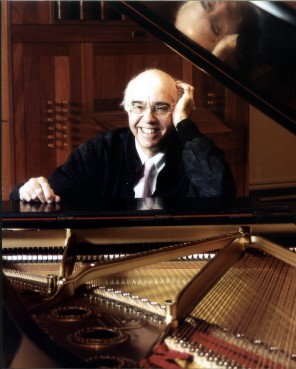
Yehudi Wyner, has created a diverse body of over 60 works include compositions for orchestra, chamber ensembles, solo voice and solo instruments, and music for the theater, as well as liturgical services for worship. Many compositions were created for his wife, Susan Davenny Wyner: Among them are Intermedio (1976), a lyric ballet for soprano and string orchestra; Fragments from Antiquity (1978-81) for soprano and orchestra; and On This Most Voluptuous Night (1982), for soprano and chamber ensemble.
Some recent orchestral works include: Prologue and Narrative for Cello and Orchestra (1994), commissioned by the BBC Philharmonic for the Manchester International Cello Festival; Lyric Harmony for orchestra (1995), commissioned by Carnegie Hall for the American Composers Orchestra; and Epilogue for orchestra (1996), commissioned by the Yale School of Music. Recent works for other forces include: String Quartet (1985); Toward the Center for piano (1988); Sweet Consort for flute and piano (1988); 0 To Be a Dragon choruses for women's voices (1989) Trapunto Junction for 3 brass and percussion (1991), commissioned by the Boston Symphony Chamber Players; Praise Ye the Lord, Psalm for soprano and ensemble (1996), commissioned by Dawn Upshaw and the 92nd Street Y; Horntrio (1997) commissioned by Worldwide Concurrent Premieres Inc. for 40 ensembles worldwide; Madrigal for String Quartet (1999), commissioned by the Lydian String Quartet at Brandeis; The Second Madrigal: Voices of Women (1999), commissioned by the Koussevitzky Foundation at the Library of Congress; Tuscan Triptych: Echoes of Hannibal for string orchestra (2002); Commedia for clarinet and piano (2002), commissioned by Emanuel Ax and Richard Stoltzman.
His piano concerto, Chiavi in mano, commissioned by the Boston Symphony Orchestra, was performed by soloist Robert Levin and the BSO in February 2005. Currently he is completing a violin concerto for Daniel Stepner.
Yehudi Wyner, composer, pianist, conductor, and educator, was born in 1929 in Western Canada, but grew up in New York City. He came into a musical family. His father, Lazar Weiner, was the preeminent composer of Yiddish Art Song as well as a notable creator of liturgical music for the modern synagogue. He received his early training as pianist and composer and after graduating from the Juilliard School with a Diploma in piano he went on to study at Yale and Harvard Universities with composers Richard Donovan, Walter Piston, and Paul Hindemith. A Handel course at Harvard brought Wyner to the attention of Randall Thompson, who became a staunch supporter and friend. In 1953, Mr. Wyner won the Rome Prize in Composition enabling him to live for the next three years at the American Academy in Rome, composing, playing, and traveling. Upon his return to America he began an active career as a musician. In the course of this work he has been a solo pianist, chamber musician, collaborator with notable singers and instrumentalists, director of two opera companies, conductor of numerous chamber and vocal ensembles in a wide range of repertory, and of course, composer and teacher.
Among Wyner's most important works is the liturgical piece Friday Evening Service (for cantor and chorus). It was in fact his Friday Evening Service that began his original association with Associated Music Publishers. He elaborates, "The circumstances of my initial contact with Schirmer/AMP [came about] in the spring of 1963, [when] the premiere of my new Friday Evening Service took place at the Park Avenue Synagogue in New York. The next day, I received a call from a person, then unknown to me, named Hans Heinsheimer [former G. Schirmer Director of Publications]. After identifying himself, he said that Samuel Barber had attended the premiere and urged Heinsheimer to be in touch with me to discuss a possible publishing relationship. Of course I was astonished!"
Honors received in recognition and support of his work have included two Guggenheim Fellowships, a grant from the American Institute of Arts and Letters, the Brandeis Creative Arts Award, commissions from the Ford Foundation, The Koussevitzky Foundation at the Library of Congress, the National Endowment for the Arts, the Santa Fe Chamber Music Festival, Bravo! Colorado Music Festival, Michigan and Yale Universities and many chamber music ensembles including Aeolian, DaCapo, Parnassus, Collage, No Dogs Allowed, the Boston Symphony Chamber Players, and 20th Century Unlimited. Recordings of his music can be found on New World Records, Naxos, Bridge, Albany Records, Pro Arte, CRI, 4Tay Records, and Columbia Records.
Since 1968 Mr. Wyner has been keyboard artist for the Bach Aria Group. In this capacity he has played and conducted a substantial number of the Bach cantatas, concertos and motets. He has been composer-in-residence at the Sante Fe Chamber Music Festival (1982), at the American Academy in Rome (1991), and at the Rockefeller Center at Bellagio, Italy (1998).
Mr. Wyner's teaching has taken him to several universities. At Yale, where he taught for fourteen years, he was head of the Composition faculty. At SUNY Purchase he was also Dean of the Music Division for several years. In 1986 he was a visiting professor at Cornell. Currently he is Walter W. Naumburg Professor of Composition at Brandeis University and since 1991, he has been a frequent visiting professor at Harvard University. In addition was on the chamber music faculty at the Tanglewood Music Center from 1975 to 1997.
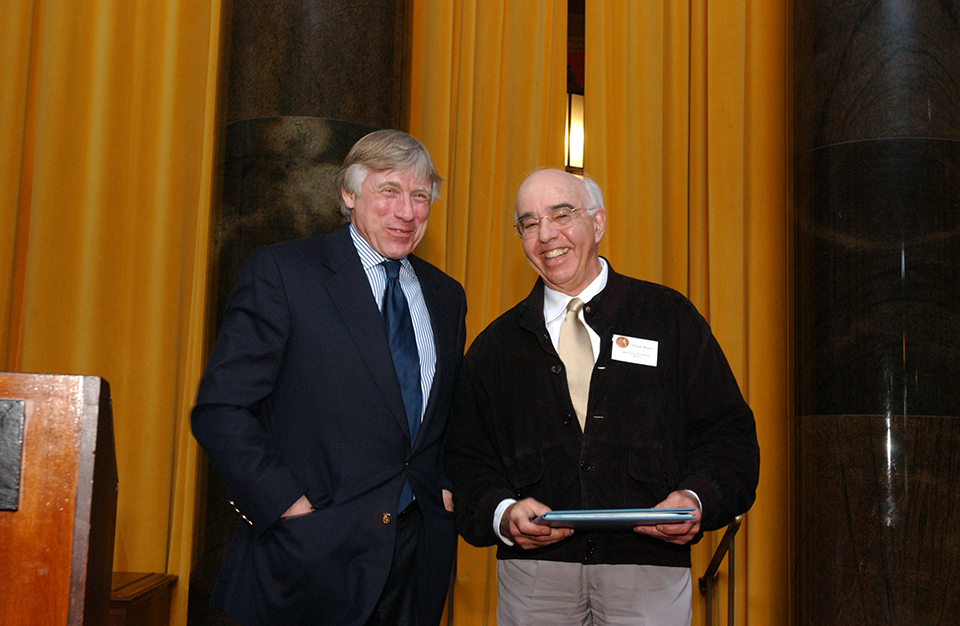
In 1998 Mr. Wyner received the Elise Stoeger Award from Lincoln Center Chamber Music Society for his lifetime contribution to chamber music. His Horntrio was a finalist for the Pulitzer Prize (1998). In 1999 Mr. Wyner was elected to the American Academy of Arts and Letters. His music is published by Associated Music Publishers, Inc.
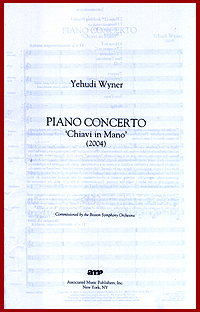 The idea for a piano concerto for the Boston Symphony was instigated by Robert Levin, the great Mozart scholar and pianist. The idea was evidently embraced by BSO Artistic Administrator Tony Fogg and supported by Music Director James Levine.