Finalist: Jerry Brewer of The Washington Post
Nominated Work
Our games have changed from a unifying bond to a platform for division. Is there any going back?
HUNTSVILLE, Ala. -- At this sports crime scene, a great myth suffered a random death. The games we love lost their unifying superpower here. It ruptured in a sound bite.
Some consider Donald Trump the culprit, but he was just the closer. Tension was already there, prime for manipulation. Seven years ago, during a political rally at the Von Braun Center, Trump used his presidential privilege to finish the job. With one vulgar and meandering diatribe against protesting NFL players, he made American sports civility collapse. It seems no one cares to rebuild it.
The president shouted: “Wouldn’t you love to see one of these NFL owners, when somebody disrespects our flag, to say: ‘Get that son of a bitch off the field right now. Out! He’s fired. He’s fired!’ ”
His taunt became the soundtrack for sports discord.
It spawned a countermovement that politicizes the arena in ways more blatant than athletes railing against inhumanity. On Sept. 22, 2017, a Friday night, Trump invited right-wing grievance to the fight, an intractable adversary that continues to haunt the environment long after his presidency.
When we gather for sports now, some Americans root against the United States in international competition for reasons ranging from too much bravado to too many vocal equality seekers. In 2018, people started burning their Nike attire after the company released a promotion featuring former quarterback Colin Kaepernick, whose kneeling protest shook the nation and cost him his career.
Legendary quarterback Aaron Rodgers persists, reputation be damned, with misinformation campaigns. The slogan “Save women’s sports” invigorates an aggressive, nationwide political effort to restrict transgender participation in sports. These grievances are everywhere, spreading insidiously, challenging our core beliefs about social interaction and fair play.
I used to have no doubt about the unifying superpower of sports — how they turn strangers into teammates and teammates into family, how they make community out of motley spectators, how they raise the curtains for societal progress. I used to believe it was an imperishable kind of magic. I don’t anymore. Or rather, I can’t. Division has seized too much control.
It is the embrace of these divides rather than the newness of them that spoils our ability to unite around anything, even the fun stuff. There is almost nothing fresh about the issues barricading us except for the commitment to be angry and inhuman, vindictive and regressive, insincere and obtuse. To feel threatened and become a threat in response.
The sports world did not create these attitudes. Neither did Trump, for that matter. Yet for as much as we celebrate the positive, transcendent impact of these games, we either chose or allowed the landscape to be flooded with insecurity, resentment and petty behavior. Some relish the grievance. Others chase it for clout. The worst find perverse joy within the conflict.
Before Super Bowl LVIII, the romance between music icon Taylor Swift and Kansas City Chiefs tight end Travis Kelce fueled a wild conspiracy theory: Swift, the Chiefs and the NFL were in cahoots to rig the title game and help President Biden win reelection. The belief was strong enough that NFL Commissioner Roger Goodell addressed media questions before the game.
“I’m not that good a scripter,” he joked.
When humor did not suffice, he scoffed, “Just nonsense.”
This is what our sports world has become, so full of lunacy and suspicion, so devoid of galvanizing spirit.
***
I came to Huntsville to chase a ghost, returning to the site of the explosion and conjuring those raw feelings once more. It was late February, just after Presidents’ Day, and the Rocket City could not decide whether it wanted to drizzle, gust wind or defer to sunshine. The multiple personalities of an expiring Alabama winter seemed appropriate for the dissonant new sports era.
Samantha Nielsen, the Von Braun Center marketing and public relations director, guided a tour of the city’s downtown centerpiece. With a soft Alabama drawl, she stitched a blissful image of all the fame and fellowship the complex has experienced, all the culture and enrichment it has provided for her hometown.
“This is a melting pot,” Nielsen insisted. “Different people, different cultures, different backgrounds — they come here, they fall in love with it. Because it’s a melting pot.”
That description, melting pot, is a mossy old American concept now. But the innocence in her voice made it sound aspirational again.
Framed photos on the walls memorialize signature events as well as music legends who brought thousands together: Johnny Cash, Elvis Presley, Dolly Parton, Lionel Richie, Reba McEntire, Prince, Elton John. There is no recognition of Trump, the iconoclast who made a thunderous noise seven years ago.
Nielsen walked me through the back entrance that Trump took, the lounge where he waited, the hallway that he strode through to take the stage. It opened an eerie emotional portal to the past.
The roar of the crowd that night prefaced the madness. Trump shook his head and lifted his hands. Chants of “USA! USA! USA!” filled the arena. In blood-red Alabama, the audience received his words like poetry. Trump came to Huntsville to support Sen. Luther Strange, who was trying to fend off Roy Moore in a GOP runoff. Despite the endorsement, Strange would lose a few days later. Still, Trump accomplished something greater — or worse. He recalibrated the power of sports for his own agenda.
He tapped into the central racial grievance that keeps athletics ensnared in American polarization: The resentment that the largest fan faction, most of them White and many of them conservative, holds toward Black athletes who have the nerve to complain about injustice despite all their fame and fortune. Those fans see the athletes as ungrateful, disrespectful, race-baiting contrarians whose mothers must not have raised them right.
When the athletes, many of whom rose from poverty, articulate a heart-wrenching desire to represent marginalized people who look like them and have no voice, those fans scoff at their cries to be seen as full humans, to be accepted as worthy of respect when they’re not entertaining.
Fire them. They make too much damn money anyway.
To understand that attitude is to understand how one off-script snippet of a speech can carry such significance. It was the opening through which all kinds of regressive conduct entered what many of us thought was a safe space to model the nation’s potential.
The tension has always been there, but the history of American athlete protest is filled with solitary acts, isolating the recoil. However, we have been on this path since 2012, when Trayvon Martin’s death sparked a movement that stirred Black athletes and led to an era of widespread protest. The controversy peaked when Kaepernick protested the entire 2016 season. The activism persevered even after he was forced off the stage.
For all the public discomfort, there had been no true organized backlash, only scattered displeasure. Then Trump unleashed extreme patriotism on the activists’ cause. It was no longer a fight to make people understand the deadly consequences of racial injustice. It turned into an unambiguous, not to mention misleading, choice: Are you American or un-American?
The man representing the nation’s highest office had declared a sports culture war.
“Sports are a sacred object to many people,” said Barbara A. Perry, the Gerald L. Baliles professor and presidential studies director at the University of Virginia’s Miller Center. “Patriotism is sacred to others. Putting them both in conflict helped to perpetuate the constant stream of Donald Trump.”
Trump didn’t need to be all that convincing. This fire had been burning. He just added gasoline.
***
David Wells, the outspoken and beer-chugging former pitcher, visited Yankee Stadium in September for Old-Timers’ Day. He is 61 now, his head bald, his goatee various shades of gray.
In 1998, after he threw a perfect game, Wells laughed at himself and declared he made history as the only pitcher to do it “half-drunk, with bloodshot eyes, monster breath and a raging, skull-rattling hangover.” He was the colorful everyman who walked the line of appropriate behavior. He usually landed on the endearing side. On this day, he was antagonistic. Before he took the field, he placed tape over the Nike swoosh on his pinstriped jersey.
“I hate Nike,” he announced to reporters. “They’re woke.”
Three factions dominate the current sports landscape: the apolitical, the aggrieved and the activists. The aggrieved try to convince the apolitical that they’re on the same team, that blame for the politicization of sports should be placed entirely on people who care too much about societal change to keep entertainment and escapism as the priorities.
Grievance stands as a dreadful foil for activism. Activism often uses civil disobedience as a plea for equality. Grievance stokes fear and anger to protect inequality. Activism constantly challenges convention. Grievance leans into tradition, weaponizing the way things used to be.
But grievance is not merely protecting normalcy. It aims to reinforce the athletic power structure. It wants to use sports for more inherently political reasons than do the stars who strive to platform human decency. It is now the dominant strain of political sports conversation.
The shift occurred without much acknowledgment. Since the end of 2020, the protests have quieted in sports. We are nearly a half-decade into the backlash era.
“I think 2020 was both the high point and the beginning of the end of the liberal, left-leaning phase,” said Douglas Hartmann, a University of Minnesota professor who researches sports and social movements. “It has given way to a backlash phase, one not only against Black athletes and protest but a fairly aggressive, radical and reactionary right-wing effort to use sport to further their agenda.
“It’s a movement masquerading as an earnest attempt to reclaim sport. I don’t think people see how dominant it is. They still think the sports and politics conversation is all about left-leaning protest. I haven’t seen much of that lately. But the countermovement is far more developed than a lot of folks think, and the great contradiction is that it’s implicitly more political than anything we saw in the 2010s.”
On the Sunday after Trump provoked the NFL in 2017, every team made a statement in some way. The demonstrations were supposed to be a show of strength, but over time, it became clear the league’s owners participated because they were interested in temporary pacification. For the remainder of the 2017 season, the NFL warred with itself and defended its public image against a propagandized foe. Soon the conflict would spread to other sports.
“That’s where you really started to see that fracture,” said former NFL safety Malcolm Jenkins, who helped form the nonprofit Players Coalition to support social change. “I’ve always tried to stay focused on the main thing, and the main thing is the people.”
Instead, it became an ideological wrestling match about athlete empowerment, a war of celebrity words, often delivered through social media: Trump and his high-profile allies vs. LeBron James, vs. Gregg Popovich, vs. Stephen Curry, vs. Megan Rapinoe, vs. Roger Goodell, vs. Bubba Wallace. You needed a Q rating to fight. The fame brought attention and passion, but there was no penetrating discourse. It was a reality-show scuffle. No one could win, except for rubbernecking gossip fiends. No societal progress could be made, either. Perhaps the stalemate was the point.
“All of these arguments are just distractions,” Jenkins said. “People aren’t listening.”
On the first Sunday of the Trump aftermath, cornerback Josh Norman felt the awkward vibe in the stadium. Cheers were indistinguishable from boos, and the color of the fans’ clothing did not tell the full story of their loyalty. Allegiances had become entangled, discourse drowned out by noise.
“It was,” Norman said, “like something out of a horror film.”
***
Grievance helped Sen. Tommy Tuberville (R-Ala.), a former college football coach who led Auburn to a 13-0 season, get into office. In the ad that defined his 2019 campaign, he exhumed dusty criticism of Kaepernick.
“The way I was raised, before a football game, you stood to honor America,” he said. “And after the game, you knelt to honor God. But today, those values are under attack. Socialism. Abortion on demand. Open borders. It’s got to end. So I’m getting off the sidelines and into the fight.”
He trolled his way into power, and five years later he tries to troll his way through serving Alabama. When he feels the need, he will use his experiences coaching predominantly Black players against the Black community, resorting to the worst stereotypes and validating them because he used to coach ’em up.
Many have wondered: How could he? Doesn’t it violate some kind of code? Shouldn’t he hold his former players in the highest regard? The naiveté ignores a most American reality about race: Throughout the nation’s history, White men have profited off Black labor without conscience. All that work and sweat has never guaranteed increased compassion. It is possible to vilify and benefit at once.
Tuberville is doing what he has always done. Many older football coaches have been drawn to Trumpism because of the perception of masculinity and a desperate need to remain in control. The 87-year-old Lou Holtz, who received the Presidential Medal of Freedom from Trump in 2020, took to social media this year to declare, “We need to coach America back to greatness!”
The desire to corral the progressive forces of America, to restore some order, is a significant motivation of grievance. Athletes, particularly minorities and women, are often the target.
No one is safe. For the nearly 10 months Brittney Griner spent as a political prisoner in Russia, the effort to free her was a polarizing topic back home. It was as predictable as it was sad. It did not matter that the State Department considered Griner “wrongfully detained.” This was an opportunity to put a prominent athlete in her place, even if it meant siding with Russia.
The right-wing media labeled her an America hater because she once protested and a drug addict because she received a preposterous nine-year sentence for getting caught with small amounts of cannabis oil in vape cartridges. It was somehow her fault for going to Russia to earn more money than she can make in the United States.
The agony over another of our own being in a foreign jail competed with the troubling disdain for a gay Black woman who stands 6-foot-9. It seemed Vladimir Putin knew America better than it knew itself. When a prisoner swap brought Griner home in December 2022, hostility lingered amid the joy and relief.
“The conversation around her is very reflective of what a lot of Black women experience in the world and especially in our country,” said WNBA all-star Nneka Ogwumike, the president of the league’s players association. “So that was something that we live with every day, not just because of BG but because a lot of us live with those realities every day. I really hope that conversation doesn’t die because she’s come back.”
***
The way Victoria Jackson sees it, sports cannot be separated from politics because of how the games are structured. “Modern sport is a political project,” said Jackson, a former NCAA champion distance runner who is now an Arizona State sports historian and clinical assistant professor. “It is a project, a global project, of exclusion.”
Protest and backlash, it turns out, are much older rivals than we realize.
“The first part of the project centered on exclusivity: who gets to play and who gets to lead,” Jackson said. “In America, so many of the origins go back to White males controlling the access. The second part, and it’s still going, is inclusivity — people of color and women gaining access on the field and behind the scenes.
“That’s how sport reflects society, and the way it handles its own issues of exclusion and inclusion has a great influence.”
The conversation with Jackson persuaded me to think deeper and abandon my ahistorical perspective. For more than a century, American sports have manipulated politics for their benefit.
The most prominent leagues didn’t become lucrative entertainment giants because they kept the nation’s problems and politics from eating away at them. They succeeded precisely because they swallowed politics whole, turning the public craving for diversion into negotiating tactics to receive government subsidies and influence lawmakers to champion their most ambitious profit-boosting ideas, all under the guise of bringing people together.
When pressured to change, the gatekeepers return to where they have always gone in times of need, expecting the politicians and traditionalists to help them maintain their systems — while claiming to be apolitical. One group gets mocked and ordered to stick to sports. The other attempts, without apology, to stick it to sports.
“We don’t see the politics of the privileged,” Jackson said. “We only see the politics of those challenging privileged authority.”
***
At Bob Jones High in Madison, Ala., a few minutes from Huntsville, Coach Kelvis White walks through the weight room and heads toward the football field. The final bell rang about an hour earlier, and a diverse population of students spilled into the parking lot, looking for their cars and school buses, retreating to their extracurricular activities, laughing and dancing and teasing. Their spirit is why White loves his job.
Coaching is the family business. His father, Louis, made the state Hall of Fame after leading Courtland High to four state football titles and five track crowns. His older brother, Laron, recently retired after winning two state football championships in a 20-year career. The brothers played for their dad and earned college scholarships at Alabama. “I was carrying coolers and painting fields since I was young,” White said.
He is not lost in time, however. His father had a stern coaching style, but he was also a father figure in the community. Kelvis has taskmaster traits, but he does not try to copy his dad. Coaches must connect differently with this generation. Some coaches ignore this call. White would rather meet the moment.
“I’m not a know-it-all coach,” he said. “You’ve got to give them a voice, listen to their thoughts and how they feel about things.”
He left Mae Jemison High and took the job at Bob Jones in February 2020, just before the pandemic forced the world into isolation. He began building his new program during a dire time. After George Floyd’s murder that May, White had to guide his players through a national tragedy that reshaped sentiments about athletes protesting lethal police force.
Patriotism could not obstruct the cause anymore. This was no time to antagonize. Trump’s voice on the issue weakened. Later, he lost the 2020 election — with athletes using their influence to convince people to vote.
But America didn’t vote out grievance. The bitterness has lingered, tempering the progressive spirit of a sports world built around striving to improve. It’s one more place to confront divisiveness.
“We’re in a moment where education has been politicized, where we’re not all receiving the same sort of news, where movies and theme parks aren’t happy, simple entertainment,” said Jackson, the Arizona State professor. “Sport becomes a potent, dangerous place for these battles to play. Sport makes them explicit. You can’t turn a blind eye in sporting spaces. The ideas held through society always play out most explicitly through the bodies of athletes.”
White has tried to build the most responsible space for his team. Without him imposing his political beliefs on the students, they have bonded while talking about life’s challenges. His message always comes back to a theme: Stay together. When the players discussed whether to protest, he demanded only that they make a group decision and stick with it. They decided against a pregame demonstration.
Their nickname is the Patriots, and they lived up to it — not because they obeyed anyone’s rules of behavior but because they supported each other.
“It’s a lot of good in this world — and a lot of evil, too, you know?” White said. “But we’ve just got to love each other, man. Sometimes we’re out here in 90-degree heat, drenched with sweat, just being brothers. No matter what you see on television, don’t judge a person. Let nothing get in the way of our unity.”
In a suburb of Huntsville, 11 miles from where the unity fractured, a coach holds on to a relic of a decayed dream. He would be wise to stash it somewhere safe.
About this series
Columns by Jerry Brewer.
Photography by Jahi Chikwendiu. Photo editing and research by Toni L. Sandys. Video editing by Joshua Carroll. Video graphics by Sarah Hashemi. Illustrations by Victoria Cassinova. Design and development by Brianna Schroer. Audio production by Bishop Sand.
Editing by Dan Steinberg and Akilah Johnson. Copy editing by Brad Windsor. Additional editing by Rushard Anderson, Brandon Carter, Matt Clough, Nicki DeMarco, Courtney Kan, Jason Murray, Matthew Rennie, Kyley Schultz and Virginia Singarayar. Additional illustration reference images by Charlie Neibergall, Ringo H.W. Chiu and Ross D. Franklin/Associated Press.
The trailblazer’s story symbolizes the pain and resilience of America. Can the reality outlast the myth?
WICHITA -- Rachel Robinson couldn’t give her blessing at first. She told the sculptor: “I’m sorry. I’m not seeing him.” At that point, it had been nearly 50 years since her husband, Jackie Robinson, died and more than 70 since he broke baseball’s color barrier. But an eternal love can see through time. The statue wasn’t right.
Rachel relayed an idea through her daughter, Sharon.
“I’d like to see more of a smile,” she requested.
In the sculptor’s revised work, Jackie flashed a warm smile. He looked relaxed. Posing with a bat over his right shoulder and his left hand on his hip, he looked stately but accessible. Robinson, a seminal figure whose grace and tenacity expedited the racial integration of a shambling nation, stood with purpose.
“That’s my Jack,” his widow said.
In 2021, the statue was unveiled in Wichita, in front of the home complex of local youth baseball association League 42. In no time, it became a local treasure.
Three years later, on a wet and gray January day, the city awoke to a disturbing sight. The statue had vanished overnight, severed at the ankles, leaving only two bronze cleats atop home plate.
***
Jack Roosevelt Robinson didn’t believe in his own myth. Too many sports legends are perfectly crafted to make athletics seem like utopia. They’re not, but the caretaking of this fantasy enables a kind of indifference that poisons the pursuit of greater progress. Nostalgia further complicates matters, leading some to trust that the bad stuff was handled long ago and any current problems are exaggerated because society has advanced. But better can be better.
Somehow, that notion is divisive now. A zero-sum mentality creates controversy out of inclusion, corrupting the memory of Robinson and every other sporting pioneer who changed the world.
The progress we’ve made is neither adequate nor permanent. Robinson had an acute understanding of the struggle. He was the son of sharecroppers, born on the James Madison Sasser plantation near Cairo, Ga. His grandparents were enslaved. Yet 28 years into his life, he ended six decades of racial segregation in baseball on April 15, 1947.
Today, we sanitize the moment and reference it mostly as compelling evidence of diminishing racism. It is seen as a conclusion. To Robinson, it was merely one inning in the longest game ever.
“Baseball wasn’t the end goal of Jackie Robinson’s work,” said David Robinson, the youngest of his three children. “It wasn’t what he was trying to achieve. That’s a misunderstanding, and sometimes that’s projected too much. Baseball was part of his struggle to create opportunity for America.
“When he got his opportunity, there was no complacency. He showed what we could do, showed America what it could be. He did not want success to blind us because he knew that, literally, our survival is not guaranteed.”
How we remember Robinson says much about how we view America. It symbolizes our cruelty and our glory, our pain and our resilience. It’s the most important tale in our sports history, a breakthrough of incalculable moral, cultural and financial proportions.
Over the years, we have taken good care of the Robinson dream and ignored much of the reality. With his transformative vision, Brooklyn Dodgers General Manager Branch Rickey chose Robinson as a “noble experiment” to integrate baseball because he recognized his combination of talent and temperament. Robinson could overcome the racist taunts and vicious acts. He had learned to suppress his emotions.
But he was not some docile Black athlete grateful just to be tolerated. He was strong. On the field, he kept his cool. Off the field, he became a face and a voice of radical change. The Rev. Martin Luther King Jr. captured Robinson well, praising him as a “pilgrim” for the civil rights movement and saying of his lonely, courageous, dignified journey: “He was a sit-inner before the sit-ins, a freedom rider before the freedom rides.”
Every April, Jackie Robinson Day is celebrated throughout baseball, the signature event of the first month of a new season. MLB retired his number in 1997, and on his special day, every major leaguer wears No. 42. But Robinson wouldn’t care to be another symbol of the embellished good of sport. He was a determined humanitarian, and much of the equality he fought for has yet to be realized.
We make him into our injustice elixir. One annual dose, and everything becomes fair and righteous. It is akin to politicians who trot out King’s tamest quotes on MLK Day, taking a short break from furtively disenfranchising voters. They use the concepts of equality and unity as a generic salve rather than a mission to break systemic patterns that fortify marginalization.
Robinson spent the final act of his life rejecting such deception. Before he died at 53 after a heart attack, he wrote his 1972 autobiography, “I Never Had It Made.” It’s more about his fight for justice than baseball. In it, he went back a quarter-century and, with fresh eyes, retold the story of playing in his first World Series. His words are unsparingly painful and prescient for the modern protesting athlete.
He wrote: “There I was the black grandson of a slave, the son of a black sharecropper, part of a historic occasion, a symbolic hero to my people. The air was sparkling. The sunlight was warm. The band struck up the national anthem. The flag billowed in the wind. It should have been a glorious moment for me as the stirring words of the national anthem poured from the stands. Perhaps it was, but then again perhaps the anthem could be called the theme song for a drama called The Noble Experiment. Today as I look back on that opening game of my first world series, I must tell you that it was Mr. Rickey’s drama and that I was only a principal actor. As I write this twenty years later, I cannot stand and sing the anthem. I cannot salute the flag; I know that I am a black man in a white world. In 1972, in 1947, at my birth in 1919, I know that I never had it made.”
David was just 4 years old when his father retired from baseball. He has learned plenty about his career, as well as his four-sport college exploits at UCLA. But he remembers the activist, the man who never declared victory after integrating baseball. He remembers family dinners with prominent Black leaders and heartbreaking conversations after incidents of racial violence. He remembers domestic marches and international travel. Jackie and Rachel Robinson gave their children a global view, and all those experiences intersected at one theme: participation. Don’t disengage and watch from the bleachers. Live to serve.
“Involvement was mandatory,” David said during a recent phone call from his home in Tanzania. “It has been a wonderful lifetime of commitment.”
In East Africa, David and his family are coffee farmers. He chose the profession as part of an effort to help integrate African resources into the American and global economy. In 1989, he started clearing a forest area in the Southern Highlands of Tanzania to establish a base and join a cooperative of third-generation Tanzanian coffee farmers.
Once the path was clear, the farm needed a name. They decided to call it Sweet Unity.
***
John Parsons, the artist behind Wichita’s Robinson statue, shared a lifelong friendship with League 42 founder Bob Lutz. “I can’t mention all the things we did together,” Lutz said, laughing. “But we did a lot.”
Lutz saw his buddy’s artistic talent at a young age. But Parsons became a firefighter. He thought it was his calling. Then in 1979, he was forced to pivot after falling from a tree and breaking his back. Parsons found success in taxidermy, and he also opened a meat-processing plant.
Still, he was an artist at heart. He closed the taxidermy business in 2012 to pursue bronze sculpting.
“I can’t even relate to the talent it took to do that,” said Lutz, a longtime journalist and radio show host. “It’s almost like you couldn’t deter John, no matter what you threw at him.”
Parsons died two years ago. When the statue was stolen, Lutz felt several layers of pain.
He hatched the idea to start a baseball league for inner-city and minority youths in Wichita soon after Parsons turned his full attention to art. During an organizing meeting, someone suggested League 42 as the name. Suddenly, the project was real and full of purpose. If they were going to invoke the number of Robinson, Lutz figured, they had a responsibility to adopt his values, educate the young players about him and show class in everything under the League 42 banner.
“I’m an old man, and this is what I’ve settled on,” said Lutz, 69. “It’s a difficult world. It’s a difficult country. I don’t know where we’re headed. What we’re modeling makes it easy for kids to think things are stacked against them if you don’t have people to say, ‘It’s okay to have dreams.’ I want to be part of helping kids feel they have a fighter’s chance. There has to be a guardian angel in Jackie’s name.”
In 2014, the league debuted with 200 players across 16 teams. Over a decade, the number has tripled to more than 600 kids and 46 teams. It has an after-school enrichment program called Bright Lights, a Passion Project speaker series in which guests discuss what drives them, a Bats and Badges initiative to develop relationships with law enforcement and a Full Count financial literacy curriculum.
But the statue was the symbol that captured all those ambitions in a single glance. Lutz convinced a skeptical board to spend $41,500 on its creation. He trusted his old friend to build it right. For all his skill, Parsons had never done a likeness of anyone, let alone one of the most recognizable athletes in history. But he was determined.
“Here’s the thing about John: He loved challenges,” Lutz said. “He kept moving forward.”
As he gazed upon the vacant space at McAdams Park on Jan. 25, Lutz thought his eyes were fooling him. Jaclyn Evans, an administrative assistant, left their office and crossed busy Ohio Avenue for a closer look. She tried to be optimistic. Maybe a car accidentally hit it. Maybe they just couldn’t see that Jackie had fallen over. But then she arrived at the damaged display.
“It was just pure disgust,” Evans said. “I kind of stood there in complete silence for a while.”
John’s statue was gone. Rachel’s Jack was gone.
After taking some cellphone pictures, Evans walked back across the busy street to give Lutz the official news.
“It felt like it took forever to get there,” she said. “But I’m sure I was speed-walking.”
For the next five days, the city waited nervously for Wichita police to figure out what happened. The nation sat vigil, too. Was it a hate crime? Why wasn’t a statue meant to inspire Little Leaguers sacred?
The police found the statue Jan. 30, seven miles from its League 42 home, broken into pieces and burning in a trash can at Garvey Park. It took another two weeks before police arrested a 45-year-old man, Ricky Alderete, for his role in the theft. On May 9, he pleaded guilty to multiple charges. He will be sentenced in July. Authorities deemed it wasn’t a hate crime because Alderete claimed the goal was to sell it as scrap metal.
His explanation did little to soothe concerns of more sinister motives. Lutz calls it a “racial” incident. It’s impossible to avoid remembering a blatant act of violence that occurred three years ago in Cairo, Robinson’s birthplace. The town was devastated to learn that a historical marker recognizing Robinson had been destroyed by shotgun fire. The words “baseball’s color barrier” and “Negro American” were prominent targets.
Generosity tried to combat the evil. Major League Baseball gave $40,000 to the Georgia Historical Society to help fund a new marker in Cairo. The sport answered the call again for League 42, with all 30 teams combining to pledge $100,000 to erect a new statue. In addition, a GoFundMe campaign raised nearly $195,000 to help League 42.
Before the public response gave him hope, Lutz wanted to quit.
“I couldn’t do this anymore,” he said. “It was gutting. This was the worst thing I can imagine. I was just like, ‘I want out.’ ”
Then a thought entered his mind that struck him with the same jolt as when he heard the name League 42. He asked himself, “What would Jackie Robinson do?”
He knew he couldn’t quit.
***
Barbara Cohen, a high school English teacher, wrote the first draft of her second book during spring break in 1973. Six months earlier, after Robinson died, she sent a letter to her brother, Louis Kauder, offering her condolences. She remembered how much he loved Robinson and the Brooklyn Dodgers and how that attachment allowed him to escape his childhood loneliness.
Kauder, a Washington lawyer, wrote back quickly, and the siblings corresponded several more times, sparking memories and emotions that the sister had to explore. She decided to write her first novel, borrowing from their adolescence to honor her brother, baseball, the need for human connection and, of course, Robinson.
She gave it a simple title of gratitude: “Thank You, Jackie Robinson.”
The 1974 novel is a touching 128-page piece of children’s literature, illustrated by Richard Cuffari, that focuses on the relationship between a fatherless White boy and a Black cook working at the family’s hotel. The book is set in the 1950s, and the boy and the man bond over following Robinson’s exploits. Cohen based it on the friendship she and her brother shared with a man named Wesley Hoagland, who was the chef at the Somerville Inn in New Jersey.
Their mother ran the inn, and they lived there, growing up on a busy highway that made it difficult for other kids to visit. It was often a childhood of isolation — physically because of the highway and socially because of antisemitism — but they had Wesley. And Louis had the Dodgers.
“The book really just poured out of her,” said Sara Cohen, one of her three daughters.
“She loved this book. It was her favorite,” said Becky Cohen, another daughter.
“In writing it, my mother realized she was working through the death of her father,” said Leah Cohen Chatinover, the oldest daughter.
It’s not a heavy book, but it is a deep one that makes you ponder isolation, discrimination, family, friendship and death. Written from the boy’s point of view, it ponders life through the clear and untainted eyes of a child.
The story meant so much to Barbara Cohen that she made her girls vow to read the last four pages at her funeral. After she succumbed to cancer in 1992, the daughters enlisted the help of a family friend, Abe Bunis, who had a big, theatrical voice. Once, when their parents threw a 400th birthday party for William Shakespeare, Bunis recited Hamlet’s soliloquy in Yiddish.
When he shared Cohen’s words, which capture death and the meaning of life so well, it moved everyone who attended the funeral. They still feel the impact of that moment today.
In 1978, it was a story deemed worthy of a televised after-school special.
In 2023, it showed up on a list of books that Duval County in Florida chose not to have shelved in the school district. The legacy of Robinson was under attack, again. This was no burned statue, no marker sprayed with shot. This was not even an official book ban. But right-wing grievance politics have banished stories to shield children from difficult ideas, promoting the false belief that certain truths and diverse perspectives will cause young people to hate the country. The most important story in American sports history somehow isn’t whitewashed enough for some. If Robinson-inspired art merits scrutiny, is there no end to this fear and fragility?
The daughters recalled how much Cohen despised censorship. The manipulation of this precious story — hers and Jackie’s — would have enraged their mother.
“What comes to mind is how completely accepted it was in 1974 and banned in 2023,” Becky said. “That makes me really sad. I wish I could say there was a different kind of divisiveness in the 1970s, or in the 1950s when this book is based, but it just feels bizarre. It made us all feel something has gone terribly backwards.”
***
Rachel Robinson is 101 years old. She has lived most of her life as the widow of an icon, protecting his legend and inspiring family and friends to impact others in their own way.
“She never talked to you like you were a child,” said Sonya Pankey, the oldest Robinson grandchild. “My grandmother talked about five-year plans when I was 10.”
Rachel established the Jackie Robinson Foundation in 1973 and served as its first chair before handing the job over to former National League president Len Coleman, who grew up idolizing her husband. Coleman served in that role for 18 years, forging a strong relationship with Rachel. With her warmth and conviction, she has been one of the greatest influences on Coleman’s life. He has watched her stay true to Jackie and to herself, using humor often to lighten the mood after passionate discussions.
“If she gets mad at you, she doesn’t stay mad very long,” said Coleman, 75, who came up with the idea to retire No. 42 from the sport. “It’s not easy being the chairman of her foundation. Her vision is so clear. But after going a few rounds, she’d end the disagreement with a sarcastic, ‘Well, you’re the chairman.’ ”
Rachel meant it, too. She isn’t overbearing, just intentional. She trusts others to find their way. She has endured many hardships, including losing Jackie and their first child, Jackie Jr., at young ages. But she lives neither a bitter life nor a guarded one.
When she was 17, Pankey took a summer-long vacation with her grandmother. They traveled to Italy, England and Africa. It remains a cherished memory, right down to Rachel setting the expectations for the trip. There was one cardinal rule: “We’re going to laugh when something goes wrong.”
When the coronavirus vaccine first became available, Coleman went with Rachel to get their first shots in South Florida. Afterward, they stopped for an oceanside lunch.
“Bring me a chardonnay,” Rachel said to the waiter.
“Wait, we don’t know how bad the side effects are going to be,” Coleman told her. “Maybe we better wait until tomorrow.”
The next morning, she called and greeted him with some friendly sarcasm.
“Mr. Coleman, Rachel Robinson here,” she said. “I’m just calling to make sure you’re all right.”
That attitude connects the indefatigable Robinson family to two resourceful White men from Kansas, to a life-affirming Jewish author from New Jersey, to a generous friend who lives a dream helping preserve his idol’s legacy.
Statues can be defiled. Books can be removed. But the Robinson spirit endures.
The struggle is Jackie’s story. We are challenged to understand it, not erase it.
About this series
Columns by Jerry Brewer.
Photography by Jahi Chikwendiu. Photo editing and research by Toni L. Sandys. Video editing by Joshua Carroll. Video graphics by Sarah Hashemi. Illustrations by Victoria Cassinova. Design and development by Brianna Schroer. Audio production by Bishop Sand.
Editing by Dan Steinberg and Akilah Johnson. Copy editing by Brad Windsor. Additional editing by Rushard Anderson, Brandon Carter, Matt Clough, Nicki DeMarco, Courtney Kan, Jason Murray, Matthew Rennie, Kyley Schultz and Virginia Singarayar. Additional illustration reference images by Bettmann Archive and Associated Press.
In the fight over transgender participation in U.S. sports, the right to play is simply an opening act.
Before the hate, she changed in peace, transforming out of her body and into herself. She started to look the way she felt. She saw it in her breasts, hair, skin, muscles, fat, bones. She knew the person in the mirror.
Then she would go to the track — her refuge — and experience a different reality. As she ran, her legs would not fire the way they once did. She could not shift gears. She did a standard 150-meter acceleration drill, progressing from jog to stride to sprint every 50 meters. Her calf muscles begged her to stop. After the workout, she struggled to walk. She did not know this person.
“I could feel how abysmally slow I was,” she said. “It started to take a mental toll.”
So she did what athletes do. She spent more than a year adjusting to the effects of the gender-affirming hormone therapy. She relearned her body — every movement, every twitch — amending a lifetime of instincts. She dared to compete again. In December, at a college invitational, she had the nerve to win again.
Immediately, the success thrust her into the fiercest political battle in American sports. Sadie Schreiner became the latest exception made to seem like a widespread threat: a transgender women’s sports standout.
Over the past few years, there has been no better way to fuel division in sports than to target the few Sadies and characterize them as nefarious gender interlopers. Schreiner prepared for it as best she could. For months, she had feared two outcomes. She would either run slow, which she could not bear, or she would become the unbearably fast impostor. She knew she was about to live a dilemma, no middle ground. She became herself, and at the same time, she rediscovered herself. Now Schreiner, a sophomore at Rochester Institute of Technology in Upstate New York, is forced to defend herself.
The social media outrage arrived on cue: Biological male. Pathetic. Disgusting. Revolting. Fraud. Cheater. Coward. Bully.
And then came a more venomous and telling sentiment.
Sadie does not deserve respect.
Such extreme reactions represent more than overflowing passion. The topic of transgender sports inclusion is not isolated to fair play. Conservative politicians have used it as an emotional thruway to a sweeping anti-trans movement that seeks to erode fundamental human decency. The right to play is simply an opening act. The right to exist is the discriminating headliner.
***
It is a vexing problem that cannot be solved in a single essay. Actually, the words solve and problem are the real issue. This shouldn’t be about fixing something as much as it should be about understanding, but angst, fear and resentment impede that search. Transgender sports participation has emerged as a flash point mostly for the sake of being a flash point. We are not a tomorrow away from some kind of trans takeover. But rather than delving into the complexity and wrestling with how to create fair competition as gender norms shift, we are succumbing to a panic that forces us to choose between the extremes of firm exclusion and full inclusion.
The level of indignation is disproportionate to the minuscule number of known trans athletes at all levels of sport. Yet a preemptive war rages, threatening to complicate the lives of even nonelite athletes, who simply seek access to the social, emotional and health benefits of organized activities.
In 2020, Idaho became the first state to restrict transgender sports participation, and in the past several years, half the country has passed similar laws. Many of them are blanket bans that fail to accommodate any nuance. The success of those measures has created momentum for states to pass legislation limiting gender-affirming health care.
Science remains inconclusive about the extent to which transgender women have physiological advantages over cisgender women. Some studies support the assumption of an inherent edge. Other research shows areas in which transgender women are at a competitive disadvantage. But to many, further study sounds like punishment.
The most aggressive people own the messaging, and culture-war politicians have leeched onto the tension. It might be the most effective wedge issue in their arsenal.
For as much as she dislikes the tactic, Jules Gill-Peterson cannot think of a more brilliant political strategy. Gill-Peterson, a Johns Hopkins professor and author who specializes in transgender history, sees how the message is framed with succinct urgency: Save women’s sports. It does not present the rare dominant trans athlete as a complicated anomaly that warrants deep thought but rather as an existential threat that must be eliminated to protect the sanctity of our sex-segregated sports structure.
“If I were creating an issue in a laboratory, I couldn’t come up with something better than trans people in sports,” Gill-Peterson said. “It’s the deployment of a grievance made in the name of supposedly defending women and girls who are under attack.”
The strategy makes an oversimplified nod to science, but it’s an approach that appeals to common sense: She was born a male, period. It also repurposes old anti-gay rhetoric to stir the least tolerant people by emphasizing the most extreme cases.
“If you disagree, you have a woke view of science and reality,” Gill-Peterson said. “How do you respond to that? By offering some incredibly dry, complicated academic science? Sports and the depiction of girls as vulnerable creates powerful emotional politics. The approach dares you to come up with something better that’s logical and easy to translate. It’s been a large failure that the progressive side can’t articulate anything pro-trans.”
***
When Schreiner broke her Division III school’s 300-meter record during an indoor race in December, the social media account Libs of TikTok posted a graphic of her triumph on top of some old high school results.
“Before he pretended to be a woman, he competed on the men’s team in high school where he was ranked in 19th place,” the post read in part.
But it was a misrepresentation of the graphic. Schreiner had run the 19th-fastest 100 meters in the history of Hillsborough High in New Jersey. Schreiner is a long sprinter who focuses on 400 meters, so she competes in the 100 on occasion for speed training. Do a simple search of Hillsborough’s track records, and you find that Schreiner is No. 2 in school history in the boys’ 400.
But those annoying details don’t lead to headlines such as the one Breitbart used in aggregating the news: “Mediocre Male Athlete Switches to Women’s Team, Breaks College Track Records.”
The Daily Mail, a British tabloid, sank deeper into inaccuracy when it wrote: “Schreiner reportedly competed at the same meet a year ago in the men’s category of the 100m, where she came home in 19th place.”
But the facts can’t bend the narrative. Schreiner is always the shameful, enhanced swindler doing things she couldn’t as a man. Every victory earns her a fresh put-down. In early May, she won at 200 and 400 meters during the Liberty League championship meet. A story on the Fox News website discredited the results, pointing out correctly that she ran times that “would’ve been in last place among men.”
“I always knew news could be warped,” Schreiner said, “but I didn’t realize how it works until now.”
The media characterizations bother Schreiner. She takes six pills a day, suppressing her testosterone levels. She spends a few hundred dollars per lab visit for testing and submits the results to the NCAA at least twice per indoor and outdoor track season to stay eligible. In addition, she gets tested as much as she can afford to be certain she remains in the permitted range of estrogen and testosterone.
Schreiner transitioned during her final month of high school, and to comply with NCAA guidelines, she didn’t compete during the first year of her gender-affirming hormone therapy.
In middle school, she ran the 400 meters in 55 seconds. In high school, she set a personal-best time of 50.49. In college, she’s back at 55. The medication has made a clear impact. Before transitioning, Schreiner was a good boys’ high school runner. Division III schools do not offer scholarships, but Schreiner committed to RIT as one of the best male track athletes in the incoming freshman class. After hormone therapy, she’s slower — and in the women’s category, she is fulfilling the expectations she already had.
“I’m not a good athlete because I’m trans,” Schreiner said. “It’s because running has been my entire life.”
Sometimes she wonders how her life would be if she hadn’t transitioned. She entertains a few what-ifs and then decides the hypothetical isn’t worth her time.
“Who knows where I would be if I never let myself be myself,” Schreiner said. “Transitioning has had such an immensely positive impact on my life. My only wish is that I could’ve done it sooner.”
***
Megan Rapinoe grew tired of people speaking for her. She did not appreciate the notion that women’s sports needed protection, especially if politicians and others who hadn’t shown interest in them before were suddenly the protectors. In the transgender discussion, she sensed female athletes were being used — by the same people who so often had been contemptuous about women’s sports.
Rapinoe, a soccer legend, decided to lend her voice to another fight for inclusion.
“We as a country are trying to legislate away people’s full humanity,” she told Time magazine before she retired last year.
She and fiancée Sue Bird are among many prominent sports figures who have become allies for transgender athletes. It has led to some intense disagreement in the women’s sports community. Martina Navratilova, the tennis luminary who does not support transgender women competing as females, once responded to Rapinoe’s views with a simple, dismissive word: “Yikes.”
Riley Gaines, a former all-American college swimmer and a vocal proponent of excluding trans athletes from women’s sports, often rails against Rapinoe and other advocates. She considers their stance virtue signaling. But Rapinoe doesn’t care about the criticism.
She and Jessica Clarendon, the chief operating officer of Rapinoe Ventures, have spoken often about the effort to exclude transgender women. They share a similar view. They have worked to refine how Rapinoe and those representing her brand talk about the issue.
“It’s such a farce,” said Clarendon, who is married to Layshia Clarendon, the first openly nonbinary WNBA player.
Later, she elaborated: “We are telling you that we are not under attack from trans women. If you want to know the things we are protecting ourselves from, there is a really long list, and trans women are not on it.”
Clarendon worries that some people are acting in bad faith to manufacture a disturbance in a women’s sports enterprise that is thriving, breaking free of misogyny, making strides in long-sought equality and showing a full range of inclusion along the way. Athletes from the past and present often celebrate a spectrum of femininity. They don’t always agree, but their alignment has been powerful. To some, it makes them a threat.
“I think it’s by design, creating a wedge issue to disrupt a really unified group of people,” Clarendon said of conservatives campaigning against trans participation in sports. “They were losing the narrative on gay people and gay marriage, and the backlash has found a new target. It’s absolutely designed to divide people like Megan and Martina on ideological lines.”
***
Sports seem really simple at the participatory level. Whether it’s youth sports or adult recreation, the spirit is to include. “I don’t think our right to participate is a debate,” Brittney Miller said.
In Seattle, Miller leads the Puget Sound Pronouns. It is an LGBTQ+ advocacy organization that emphasizes sports participation. The Pronouns have an adult softball team that plays in the Emerald City Softball Association. It’s a team where you can belong, where the four transgender players on the current roster are just players.
“We’re every stripe of the rainbow, essentially,” Miller said.
The transgender conversation changes shape at every level. Before puberty, it’s barely worth considering. Then the stakes start to rise, and physiological differences become a consideration. Once college scholarships, Olympic medals and professional careers become factors, it gets complicated. But at the elite levels, there are also governing bodies deciding and constantly reevaluating what’s fair.
The decision to segregate sexes in sports was made long before significant contemplation of gender fluidity. It remains the most logical way to create meaningful competitions and acknowledge the inherent biological advantage that men possess. But the binary system is starting to fray as society changes. While transgender participation is still too small to create another sports category, the hysteria has elevated the importance of more creative and inclusive counter-policies. If we believe sport has a greater purpose, then we tarnish its value if we cannot find a better solution than to banish those we don’t quite understand.
In 1887, French Prime Minister Jules Simon said during a speech: “The right which I demand for our children is the right to play.” It planted a seed that, over 137 years, has grown into an essential premise of the Olympic charter.
It is spelled out clearly in a section labeled the Principles of Olympism: “The practice of sport is a human right.”
In human rights, the default is inclusion. The burden of proof is on exclusion, and it is an extreme standard. Banning away fears and prejudices does not meet that standard.
***
For a photography class assignment, Schreiner took a self-portrait and overlaid some of the nastiest social media comments about her. In the image, she aches in black and white, head lowered, comforting herself. The taunts crawl over her face, neck, arms, hands and torso. One word stretches across the top: CHEAT.
“I wanted to represent how internally painful it can be to have so much hatred thrown at you,” Schreiner said. “Cheat is the most common word used. I can’t count how many times I’ve been called that today alone. It’s an incredible slap in the face to me. With everything that’s happened, I often feel like I’ve completely lost a voice as people more famous and powerful than me speak for and about me.”
She ran every race this season wondering whether it would be her last. The NCAA is under pressure to ban transgender athletes from women’s sports, a policy the National Association of Intercollegiate Athletics, a smaller federation, adopted in April. Schreiner concluded a successful spring season by earning all-American honors after finishing third in the 200 meters during the Division III outdoor track and field national championships. She advanced to the final in the 400 but came in last. She and her coach now dream of a national title. But the more she wins, the more ridicule she will endure.
“Racing is stressful enough as is. It only doubles when every race you’re worried could be your last,” Schreiner said. “At every meet I go to, in the crowd, there’s always at least someone taunting. It’s impossible to escape something so personal and persistent like that. At nationals, I was in such a constant state of fight or flight that, by the time I finally got home, I just collapsed.”
In the top right corner of her self-portrait, there’s a silhouette of an “omnipotent watcher that I can’t control.” It is Schreiner’s signature. She uses it when making illustrations about her transition.
Someone is looking down at her. It is not the same as being seen.
About this series
Columns by Jerry Brewer.
Photography by Jahi Chikwendiu. Photo editing and research by Toni L. Sandys. Video editing by Joshua Carroll. Video graphics by Sarah Hashemi. Illustrations by Victoria Cassinova. Design and development by Brianna Schroer. Audio production by Bishop Sand.
Editing by Dan Steinberg and Akilah Johnson. Copy editing by Brad Windsor. Additional editing by Rushard Anderson, Brandon Carter, Matt Clough, Nicki DeMarco, Courtney Kan, Jason Murray, Matthew Rennie, Kyley Schultz and Virginia Singarayar. Additional illustration reference images by iStock and Pexels.
As societal grievance divides sports fans, will media members meet this moment or get trampled by it?
The night before Muhammad Ali’s funeral, a handful of sportswriters gathered at a bar in downtown Louisville. We drank bourbon cocktails and contemplated our enormous assignment the next day. As we talked, the room filled with celebrities, boxing legends and civil rights leaders.
“No pressure, y’all,” I said to our group. “Just don’t screw up Ali’s story.”
We laughed and tried to transport ourselves back to the press hat and typewriter days of the 1960s, when Ali began challenging the nation and influencing our profession. In trying to tell his Homeric story, in grappling with consequential issues such as war, religion and civil rights, sports reporters made a full transition from covering games to practicing journalism. They couldn’t screw up Ali’s story, either. Even when it seemed they did, Ali kept coming back, providing opportunities for revision. He kept reclaiming the heavyweight title, kept verbally sparring with media members and kept revealing his humanitarian soul until they understood him. It resulted in a trove of great stories about “The Greatest” and about the American society he was helping to reshape, some of the best sports journalism ever produced.
I often think about that June night in 2016. It felt like we had a responsibility to honor our craft with one final Ali account. Eight years later, I wonder how many in the sports media still feel that broader sense of duty. At a time when societal grievance and division spill into the ring, I wonder whether we will adjust to meet this moment or continue to get trampled by it.
In exploring the friction that plagues sports, it would be dishonest to omit media complicity. Some of my people — the ink-stained, mic’d-up, silver-tongued, hot-take-spewing, bad-faith-acting, mayhem-kindling supposed truth seekers — have propagated the nasty discourse. Long before every bouncing ball became politicized, a rage culture had developed within sports, spurred by social media, debate-show television and the financial collapse of the mainstream media. It led to an obsession with engagement, a decrease in curiosity and an abundance of empty communication delivered in the noisiest manner possible.
Acting on the impulse to be louder, some messengers hankered to build their personal brands. It made them less interested in accuracy, logic and fair-mindedness than in being noticed. Sometimes it required them to become merchants of dissension because it’s more beneficial to rile the crowd.
The cacophony attracts political manipulation. Is there a better place to sow division? In a media habitat that elevates cheap debate and stymies contextualization, the ground becomes lush for culture wars to invade, spreading petty but harmful disagreement and mirroring a country that screams better than it listens.
It makes me long for a better — or at least more responsible — time.
“But back then, we were searching for something similar,” said Robert Lipsyte, an award-winning journalist and author.
In 1964, Lipsyte was 26 years old when the New York Times assigned him to cover the Sonny Liston-Cassius Clay heavyweight title bout. Sixty years have not diminished Lipsyte’s memory of the baby-faced, 22-year-old Clay, who would soon change his name to Muhammad Ali, shouting to reporters, “Eat your words!”
Forty-three of 46 sportswriters had predicted Liston would win. That was the first time they were wrong about Ali.
“The most prominent sportswriters of the 1960s — the likes of Jimmy Cannon, Red Smith and Jim Murray — those guys were flagrantly anti-Ali,” Lipsyte said in a phone interview. “Their language was bitter. They didn’t like what he represented at first. They just wanted to cover sports their way, and a lot of them were highly conservative. Then there were younger sportswriters who were more affected by the turbulence of those times and had some sense of themselves as journalists. There was a real dichotomy of sports journalism. It’s amazing to go back and think about how much changed — and all of it for the better, if you ask me.”
We are desperate to evolve again, this time away from debate and toward understanding. If we can’t, the consequences seem dire.
***
In 2003, I was a rookie columnist who needed direction. An editor told me to write an opening paragraph with more edge. “If I were you, I’d start with, ‘Just shut up and play,’ ” he said.
“If you were me, you’d know better,” I replied.
I didn’t know much about writing opinions then; I was three years out of college. But I knew I didn’t want to be angry and incurious. I didn’t want to scream. In sports, it doesn’t take much to provoke strong emotions. But there is no integrity in doing so simply for attention.
The pursuit of truth now competes with the desire for attention. It’s no contest, sadly. Instead of reporting, instead of wondering and scrutinizing, instead of building trust and gaining insight and providing context, we exhaust too many diminishing resources to facilitate screaming. There is seldom enough fresh information to react to, so we regurgitate arguments, only louder, all in the name of provocation.
It’s annoying when someone goes low to split hairs about the greatness of LeBron James or Patrick Mahomes. It’s destructive when the same cavalier approach collides with weighty topics.
At worst, it creates “a grievance industry for fans who love sports but hate the people who play them.” That’s the perspective of Dave Zirin, a journalist and author who lives at the intersection of sports and politics.
With the traditional journalism business model reduced to shards, echo chambers have blossomed in sports, reflecting the rest of the media landscape. The mainstream, or what’s left of it, has been cast as too liberal, out of touch with the predominantly White male sports fan base. An expansive and sometimes noxious right-wing sports media has filled much of the vacuum. Tired of jockeying for position, women are creating their own media companies. Fed up with being marginalized, the LGBTQ+ community has created its own news platforms. Determined to strengthen their brands, leagues, teams and even individual superstars have turned their house organs into complete orchestras.
We’re more intentional than ever about sitting in different sections of the stadium, viewing the action from vastly different angles and pressuring rabid followers to experience sports our way. Superimpose the issues causing national fissures, and conversations already hemorrhaging nuance turn hostile.
“Yesterday’s venom is today’s champagne,” said Zirin, the sports editor of liberal magazine the Nation who also anchors a weekly “Edge of Sports” column. “The fight has become hegemonic. It has become ideological. It’s a fight for who’s going to control how sports are consumed.”
***
The resurrection needed only a 20-second video from press row. Out of nowhere, minutes before another banner NCAA women’s basketball tournament game in April, the dead issue rose. It was a recording of the Iowa team standing and holding hands during the national anthem. In his social media post, the reporter noted the Hawkeyes’ opponent, LSU, was in the locker room.
Nine million views later, it was 2017 again.
Louisiana Gov. Jeff Landry (R) decided to Trumpify the attention, threatening to compel the Board of Regents to make scholarships dependent on athletes being present for “The Star-Spangled Banner.” His social media post received 2.5 million views and 2,000 polarizing replies. Later, Landry brought his performance to Fox News.
Exploitation has its perks.
Landry took advantage of a common, benign part of LSU’s routine. Unlike pro leagues, the NCAA doesn’t have a policy requiring teams to be present during the anthem. The Tigers always leave for their locker room at the 12-minute mark. There was no defiance in their actions, only habit. The reporter who posted the video, Dan Zaksheske of conservative website Outkick, asked about LSU’s absence after the Elite Eight game. Coach Kim Mulkey gave the explanation and said in conclusion, “I’m sorry, listen, that’s nothing intentionally done.”
The story should’ve ended there, but the selective outrage was too intense. On a night when women’s college basketball shattered another viewership record, it made for a convenient wedge issue. There was no need for context and no room for grace, only maddening nonsense intended to elicit more nonsense.
As an industry, we’re stuck in this mud, wrestling for relevance. We manipulate — and get manipulated. The mainstream jobs shrink, but the appetite for content increases. The struggle for financial viability tempts us to either mollify the masses or foment controversy: about protest, about race, about gender. Too often, the full story is no match for an incomplete irritant.
The misleading LSU anthem saga proved to be a gross form of dehumanization. A team of mostly Black women was made to seem mutinous while a mostly White team was presented as a paragon of patriotism. From press row to the governor’s mansion, the moment called for a conscientious approach. But once again, the trope of the ungrateful, unpatriotic Black dissident athlete was too pugnacious to resist.
***
Lipsyte served as the ESPN ombudsman when defensive end Michael Sam became the first openly gay NFL draft pick in 2014. Before the historic selection, Lipsyte was receiving messages about the liberal bias of sports coverage. After the draft broadcast, he was flooded with reactions to ESPN airing a kiss between Sam and his partner.
“There was a tremendous amount of email from people who really felt sports was their last sanctuary,” Lipsyte said. “The way they wrote, it gave me the feeling that men were leading their wives and children to a giant rec room, and all of them were confronted with Michael Sam giving his partner the longest kiss since ‘The Princess Bride,’ and they were incredibly offended. And I wasn’t sure they were wrong to feel that way. They had been sold a bill of goods by ESPN that this wasn’t a place they would have to be afraid of real life interfering with their entertainment.”
In his ESPN.com critique, Lipsyte gave the company mostly positive reviews. But the email interactions crystallized something he had assumed for a long time.
“The average sports fan is, at best, at the center politically. If not, they’re certainly to the right of the average sports journalist,” Lipsyte said. “They still believe in the old, traditional values of sports that, when you investigate them, never really existed.”
It’s the steadfast belief in a comfortable, apolitical environment that actually fuels the grievance politics in sports. As resentment builds over the inability to escape, the liberal agenda is cast as a threat to enjoyment and a new, engagement-heavy area of coverage bubbles to the surface.
It is good business, but are we all acting in good faith?
Journalism is not some kind of grift. Yet there are plenty who profit in bad faith, making money, acquiring fame or basking in intentional infamy. They inspire copycats who sink even lower to get noticed.
This urge to pander to a particular audience transcends political affiliation. Liberal-leaning media members bark to their bases, too. Four years ago, Orlando Magic forward Jonathan Isaac cited his Christian faith when discussing his decisions to stand during the national anthem and not wear the Black Lives Matter T-shirt that the rest of the NBA donned during warmups. The criticism of some reporters veered toward ridicule. The eagerness to vilify “the other side” — usually on social media — complicates the less reactionary work that defines our mission.
In general, media democratization — made easier because of technology — has been beneficial. But it also spreads radical, fringe ideas that once died quickly because no infrastructure existed to distribute them with ease. Now, trouble can arrive with the push of a button.
***
Sport is a language to me. It is an essential form of communication, the one thing that could penetrate my childhood shyness and allow me to forge a genuine father-son relationship with my stepfather.
We bonded first over baseball. He tolerated my Chicago Cubs fandom. He introduced me to college basketball and the Louisville Cardinals. We developed trust over countless hours talking sports as the games on television drifted into background noise.
When I came home from school Nov. 7, 1991, my dad called me into my parents’ bedroom. I was 13. We watched Magic Johnson, my favorite athlete, announce his retirement from basketball because of “the HIV virus that I have attained.” Afterward, Pops stammered through a talk about sex for the first time.
Three years later, I fell in love with journalism, the perfect outlet for a high school sophomore who leaned on curiosity to socialize. I knew my purpose before I had a driver’s license.
***
The dream hasn’t always been sweet. Business keeps forcing change. I ponder our survival almost as much as our mission. The New York Times shuttered its sports department last year, relying instead on the Athletic. Sports Illustrated crawls toward its demise. In 1986, the Sporting News celebrated its 100th anniversary during a luncheon with President Ronald Reagan; in 2012, its final issue went to print. On the radio, most of sports talk is formulaic and lacks variety. On television, major networks such as ESPN may soon lose their independence as they pursue co-ownership with the leagues whose games they broadcast.
Journalism is not a synonym for media. It is a separate category, and most of us consider it our sacred responsibility to collect, distill and distribute information and commentary to the broadest audience. So all of these struggles feel personal.
“In some ways, I think the evil empire has kind of won,” Lipsyte said. “I think sportswriting has gotten a lot better, but I think there’s no real call for it anymore. Fans don’t really want real journalism. They don’t want to read the truth about their entertainers. They really don’t want to read the truth about how predatory everything around sports can be. They used to have to listen, but there are institutions happy to give them exactly what they want.”
***
Afriend wondered recently why I still do this job. He accused sports and sports media of being “a cesspool of ignorance.” He wanted to know what it’s like for me to be lumped in with colleagues who operate in a manner antithetical to my purpose.
I’ve wrestled with that question every day for several weeks. The search for an answer has left me ashamed, frustrated and confused. It has made me angry. At the moment, I am wistful.
Through reporting, I found empathy. If I showed sincere interest and asked the right questions, I could establish a powerful connection, often built on mutual vulnerability. Then my job was to do what I enjoyed most: retreat to solitude and write, making sense of the world one delicate, personal story at a time. When I realized sportswriting was an actual career, it felt like I would be getting paid to eat cake.
At 16, I could aspire to live a fantasy. But growing up means coming down. Perhaps I am 30 years wiser now. For certain, I am 30 years more troubled.
This is the only job I have ever had, and for a long time, it didn’t seem like work. It does now. But struggle verifies purpose.
There’s still little that moves me more than documenting the triumphs and failures of the sports world, on and off the field. The hook isn’t merely the constant stream of results. It is the striving. It is the hope that better is possible.
Through all the resentment, conflict and change, the games still compel us to tell stories about this hope. At times, we ignore it or mock it or misrepresent it. But before cynicism can get comfortable, something unimaginable inevitably happens, recycling the hope.
Then we do as Ali demanded. We eat our words.
I trust we can still be humbled.
About this series
Columns by Jerry Brewer.
Photography by Jahi Chikwendiu. Photo editing and research by Toni L. Sandys. Video editing by Joshua Carroll. Video graphics by Sarah Hashemi. Illustrations by Victoria Cassinova. Design and development by Brianna Schroer. Audio production by Bishop Sand.
Editing by Dan Steinberg and Akilah Johnson. Copy editing by Brad Windsor. Additional editing by Rushard Anderson, Brandon Carter, Matt Clough, Nicki DeMarco, Courtney Kan, Jason Murray, Matthew Rennie, Kyley Schultz and Virginia Singarayar.
Biography
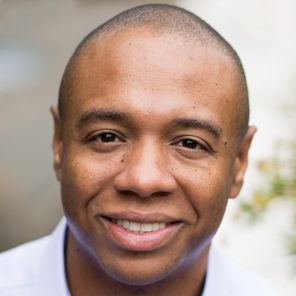
Jerry Brewer is a sports columnist at The Washington Post. He joined The Post in 2015 after more than eight years as a columnist with the Seattle Times. During his career, he also has worked at The Courier-Journal in Louisville, Ky., The Orlando Sentinel and The Philadelphia Inquirer. He approaches sports journalism with a mantra: ""The game is not the story. The game is a platform to tell a story."" Through sports, Brewer chronicles the ups and downs, virtues and flaws, of humans whose lives play out before thousands of fans. He sees sports as riveting to the imagination and enlivened by the zany and unpredictable behavior of regular people who stumble into iconic status. But he cares mostly about affecting a community through his work, through powerful storytelling or poignant, frank opinions