Finalist: Gustavo Arellano of the Los Angeles Times
Nominated Work
ON THE U.S.-MEXICO BORDER, San Diego — I’ve done the drive from Orange County to the United States-Mexico border so many times that it’s as easy to describe as my backyard.
Start in Anaheim if I’m taking my dad, Santa Ana if it’s my wife. Slow down at the Border Patrol station in San Clemente, even though all the agents are on the northbound side and I’m an American citizen — because you just never know.
Try to sneak a peek at Camp Pendleton’s natural beauty and military installations. Take the 805 South to avoid downtown San Diego. Zip through suburbs, working-class communities, rolling hills and all sorts of Spanish-named streets until reuniting with the 5 in San Ysidro.
Cross into Tijuana. Fin.
It’s such a familiar journey that I rarely think of it as what it is — a trip to another country. It doesn’t take more than two hours, but it might as well be an eternity.
The border was drawn 175 years ago by a joint U.S.-Mexico commission after the U.S. won the war between the two countries and conquered what is now the American Southwest. Both sides of la frontera have been picking at this open sore ever since.
Voters will go to the polls in less than three weeks, ears ringing with rhetoric from Democrats and Republicans alike about this border and what the migrants who cross it represent for the future of this country.
Meanwhile, political pundits and journalists are fretting over another question: What will Latinos do?
As the child of Mexican immigrants — my mom arrived legally, my dad came in the trunk of a Chevy — I have dealt with American suspicion about Latinos and especially Mexicans, personally and professionally, for most of my life. The ignorance — yes, we assimilate, and no, we’re not sleeper agents hell-bent on retaking the American Southwest through demographics and enchiladas — mostly amuses me when it doesn’t offend.
That’s why I initially rolled my eyes when my editors suggested a road trip to ask Latinos whom they plan to pick for president, when “our” votes can make or break a candidate as never before.
The “Latino vote” is a tired trope, I argued. It’s an insulting one too. To say there even is such a thing reduces a wildly diverse group into a trite narrative that I’ve spent my career trying to debunk, when not ridiculing it altogether.
Latino disenchantment with the Democratic Party, the growing numbers of us who support Donald Trump, our emerging power in swing states — I’ve covered all of this ad nauseam over the last eight years. I was in no mood to go down those same trails along with the rest of the national media.
But the more I thought about it, the more a road trip intrigued me. What better way to show what I’ve known forever but that many Americans refuse to even consider — that Latinos are as American as anyone else, if not more so? That although we pay attention to politics, we care more about local issues than the electoral horse race?
That’s why I found myself on a Wednesday morning, a week before the Democratic National Convention, headed down to the border.
Over seven days and nearly 3,000 miles in a small but sturdy Nissan Versa rental, I visited Mexican American communities across the Southwest, the region the U.S. took from Mexico by conquest. Here is where American fears about Latinos first hardened — and here is where we made a life for ourselves, haters be damned.
I went to copper country in Arizona, where my family’s American tale began, and El Paso, long a migrant hub but nowadays depicted by right-wingers as a place of invasion, chosen by a gunman who wanted to “remove the threat of the Hispanic voting bloc” as the place to massacre 23 people.
I drove through New Mexico, where Latinos have farmed since before the Pilgrims landed on Plymouth Rock, and spent time in tiny Antonito, Colo., home to the oldest Latino civil rights group in the country.
In Colorado Springs, I dropped in on a Mexican American couple famous for their beer and now called heroes for their role in ending the 2022 Club Q massacre.
Sunflowers in Utah. Do-gooder college kids turned elected officials in Las Vegas. Cousins making historically significant tacos while fending off internet trolls in San Bernardino.
I found humor, I found grit. I found hope. I found a people thriving — and mostly ambivalent about this country’s partisan divide.
Who’s the next person in the White House matters — but not as much as what’s in front of them.
***
The border wall begins at the Pacific Ocean, bisecting the half-acre Friendship Park. First Lady Pat Nixon presided over the park’s dedication in 1971, crossing a barbed wire fence that separated the two countries to greet cheering Mexicans on the other side.
“I hope there won’t be a fence here very long,” she told the press.
Instead, California and other states passed anti-immigrant laws, as migration from Mexico increased and Central Americans also began to cross over. The U.S. built a succession of border walls, each higher and sturdier than the last. The feds added a second, interior barrier in 2011, yet Friendship Park remained a space of unity.
Murals adorned the wall on the Mexican side. On the American side, activists set up a garden with native plants. People could talk to one another through the wall and even touch through the mesh fence American authorities eventually set up. Once a year, la migra opened a gate so separated families could embrace in a designated space for about half an hour.
At the end of 2019, the Border Patrol shuttered the American side of Friendship Park for what it said was a construction project. Last year, the Biden administration replaced the 18-foot-tall secondary fence with a 30-foot-tall one. The park has never reopened.
My drive down the 5 Freeway had been uneventful save for an exit I had never noticed before: Tocayo Avenue.
In Mexican Spanish, the word signifies “namesake” and is exclaimed with pride — ¡Tocayo! — when two people with the same name meet. It’s a way to proclaim that even though you’re strangers, you share something that binds you forever.
The United States and Mexico are tocayos, I thought, even if they’ll never admit it.
From the Tocayo Avenue exit, I passed through large ranches and gorgeous stretches of estuary. It was a beautiful drive, until I saw signs hanging from fences and telephone poles that proclaimed: “Keep the sewage in Mexico. Stop the stink!”
The reference was ostensibly to the polluted Tijuana River — but I couldn’t help thinking that Trump and his followers would approve.
That morning, the closest vantage point for the border wall was closed because of the river pollution.
Instead, I hiked up a gravel road with Adriana Jasso and her friend Nanzi Muro. I wore slacks and sneakers, because I’m no hiker. Jasso offered me water, sunblock, a hat and an orange, but I declined.
Fifty years ago, my dad ran through these hills, back when they were far less patrolled. In a decade of crossing and re-crossing, Papi treated the border and the fences that demarcated it like an exercise in prepositions: He went around it, through it, above it, below it, past it. So did his siblings, my grandparents, cousins, friends and hundreds of people I’ve known, all to make a better life in the United States.
That’s why I can never hate anyone who does the same thing, for the same reason. The least I could do was tough out a hike for an hour.
We walked underneath big trees and through coastal scrub, past a roadside memorial for a migrant and a Border Patrol truck with no one in it. A military helicopter circled above.
Jasso, a member of Friends of Friendship Park, which takes care of the park’s American side, went over its history as the sun baked us.
“Christmas parties, yoga classes, English and Spanish classes,” recalled Jasso, who was born in the Mexican state of Guanajuato. “Food for everyone on either side. The fence was just something that was there.”
Activists had to ask for permission from the Border Patrol to hold events, but Jasso said they almost never had a problem until Trump. In September 2018, then-U.S. Atty. Gen. Jeff Sessions appeared at Friendship Park to announce a zero-tolerance policy that included separating migrant children from their parents.
After about half an hour, we reached our destination: a hilltop marker declaring we were about to enter federal land monitored by the Border Patrol.
Down below, excavators, cranes and graders were building a bluff where a new border wall will join an existing 30-foot wall the Trump administration spent billions of dollars to erect. Behind the construction site was Tijuana; in front of it was an interior wall that will also be replaced. The scene looked like “Minecraft” come to life, with human misery the prize.
This year, Jasso attended a meeting at the White House where she and other activists pleaded with Biden administration officials to reopen Friendship Park.
“I think the reason why they keep it closed is there is something to be said about a space that brings together families,” Jasso said as we hiked back to our cars, bitterness in her voice. “And now that the border is front and center in this election, you just can’t have that.”
Jasso, who helps run the American Friends Service Committee’s border program, suggested we head over to the group’s field camp. It’s set up against the interior wall that runs parallel to the actual border wall. A massive gate in that interior wall looks like something out of a medieval castle — all that’s missing is a moat and guards.
Tents held bins packed with food, clothes and medical supplies. But I couldn’t stop staring at the wall. I had never seen it up so close. It was … ugly.
Rusted brown metal. Tall but not insurmountable. Cheap. A joke.
This country has so many problems, so much division — and a big, ugly wall is supposed to solve something? Shame on Trump. Shame on Joe Biden. Shame on Kamala Harris, who in late September near the border in Arizona bragged about how she’ll be better on “border security” than Trump ever was.
Jasso said that every morning, Border Patrol agents tell migrants who have scaled the first border wall but were caught before crossing the second to head to the Friends camp. Through the slatted wall, volunteers provide them with clothes, medical supplies and snacks — even free WiFi and an electrical strip to charge their phones. The agents eventually open the gate and take the migrants away for processing.
The Friends had assisted 15 people earlier that morning. But no one arrived while I was there. Biden’s executive order in July that severely limited asylum claims has caused the number of migrants to drop dramatically, Jasso said.
She showed me a daily log of the people who have passed through, including their arrival times and countries of origin. Colombia, Jordan, Dominican Republic, Ukraine. Mexico, of course.
“If Americans saw what we saw, they would feel different about this so-called crisis,” Jasso said in Spanish. “There’s a saying in Mexico: The heart cannot feel what the eyes cannot see.”
I left somewhat disappointed. For decades, I’ve heard that the border is little better than a sieve through which millions of migrants easily pass. I hadn’t seen one.
There was one more immigration hot spot I wanted to check out: Jacumba Hot Springs, an hour and a half away in eastern San Diego County.
Last fall, hundreds of migrants had arrived there with little more than the clothes on their backs. Activists provided them with food and makeshift shelter as some waited for days for Border Patrol agents to take them away. Conservative media and politicians depicted it as a full-scale invasion.
The border wall stretched all the way to the rocky horizon, with only a portable toilet disrupting the view. I saw no migrants here either. Or anyone, really: The temperature hovered at 105 degrees. The entire town seemed to be taking a siesta.
No one would trek through inhospitable terrain, far away from home, just to be a burden on a new land. My dad didn’t. His brothers and sisters didn’t. The new migrants don’t.
Sadly, more and more Latinos don’t feel this way. They want the new migrants out of here.
I merged onto Interstate 8 and sped off to Arizona. The wall lunged farther and farther south until it disappeared. Every 60 miles or so, I saw a Border Patrol vehicle stationed underneath a freeway overpass. Waiting.
ALONG INTERSTATE 25, N.M. — In New Mexico, nothing is a straight line. Roads curve when they’re not undulating. Agricultural communities pop up like emeralds in a landscape of brown. Brilliant blue skies worthy of an Instagram filter open up in seconds, unleashing torrential rains.
“Latino” in New Mexico is daily life, not a concept. It’s the state with the highest percentage of Latinos — nearly 49% — many with roots here going back centuries.
The L.A. antiquarian Charles Fletcher Lummis called it the Land of Poco Tiempo in his 1893 book of the same name, depicting it as a real-life territory of lotus eaters, of indolent pleasure. It’s a stereotype long thrown at Latinos and especially laughable when applied to rural New Mexico.
Here, those who work the land are those who survive.
That’s why I wanted to check in with growers along Interstate 25 — America’s unofficial Chile Highway. Agriculture is an underrated barometer of where a region and its people are heading, since it intersects with so many essential issues: the economy, climate change, immigration.
Hard times have long afflicted the Land of Enchantment. It’s been a testing ground for the Manhattan Project and a crossroads for drug trafficking networks, as dramatized in the television series “Breaking Bad.” It has the fourth-highest poverty rate, the seventh-highest drug overdose death rate and the highest alcohol-related death rate, according to federal figures.
Still, New Mexico’s farmers manage to will bounty out of a seemingly inhospitable land. Farmers know that you have to work with what’s in front of you. And you have to fight like hell for it.
***
On my way to Hatch, I tuned in to local radio stations to blast New Mexico music. The genre sounds like a sweaty 1970s bar — polka beats with horns instead of accordions, songs that veer from oldies-but-goodies to rancheras, with springy bass lines, whirling keyboards and jangly guitars making it impossible to sit still.
It’s popular only in its namesake state and southern Colorado, the homeland of the so-called Hispanos, who trace their heritage to settlers who came from Mexico in the 16th and 17th centuries. I chose the music as a reminder of the proud people I know in the region — and how their small-town roots color their political outlook. Although long a blue state, New Mexico elected Republican Susana Martinez, the country’s first Latina governor, to two terms beginning in 2011.
Hatch is known for its big, meaty green pepper, which has increased in popularity worldwide over the last 20 years. My wife and I have bought them for 15 years — for personal use and for her market in Santa Ana — from Hatch Chile Sales, owned by the Atencio family.
There, I found Michele Atencio sitting at a table, surrounded by all manner of chiles: Habaneros. Chipotles. Hatch, of course. Fresh. Dried. Powdered. Jellies. Strung into ristras — bouquets used as adornments across the Southwest.
The chile season, which lasts from late summer through the fall and envelops New Mexico in a haze of fragrant smoke from all the roasting, had begun a few weeks earlier.
Atencio, 42, who runs the shop while her husband runs the family farm, asked what brought me back after so long — I hadn’t visited in years. I mentioned my Southwest road trip to profile Latino life in the region. Did she have any thoughts about the presidential election?
Usually warm and chatty, Atencio, who was raised in the Mexican state of Zacatecas, got uncharacteristically quiet.
“I don’t want to be mean, but we need immigration control,” she said in Spanish. “There are a lot of Venezuelans coming in. They come and they get housing and they get food stamps. And you, who have worked here all your life? You don’t get that. We pay taxes and they get all the benefits.”
She sounded like some of my cousins.
Local farmers have offered jobs to the new migrants, Atencio said, “but they don’t like that work. I don’t get it. They need help. But there’s frustration growing here.”
She rang up my bill. Mamba, a senior pug, wandered around before lying down next to her feet.
“I’m not against them. I get why they come here. But my dad and your dad, they crossed the river. They took years to better themselves,” she said.
I asked whom she was voting for, but she shook off the question.
“Whoever’s next, they need to put better border control,” she said. “I’m not the only one who thinks that.”
I next visited Rosales Produce in Escondida, two hours north.
Linda Rosales, 68, took me in her dirt-caked Silverado through the back roads that connected the fields. Her father-in-law started off as a farmworker before buying his first plot of land in 1969. Today, the family works 500 acres, 60 of them devoted to chiles.
We passed over acequias — a system of communal irrigation ditches originating with the Moors that New Mexico’s farmers have used for centuries.
Water is the eternal conundrum in this state, especially as climate change has diminished the summer monsoons and the Rio Grande and its tributaries slowly dry up.
I asked how the chile harvest was going. In 1990, New Mexico farmers harvested nearly 29,000 acres of chiles, according to the New Mexico Chile Assn. In 2023, the yield had dwindled to 8,500 acres.
“The monsoons have been great so far, so the harvest is really good,” she said. “But it’s coming too early.”
Rosales parked the Silverado at the edge of a field. “See the red ones? That means they’re ripe. They shouldn’t be ripe right now. It’s been too hot. We can only pick until 1 [in the afternoon], because the heat will kill you.”
It wasn’t even 10 in the morning, but I didn’t see many workers.
“There’s no one here to work for us. Nobody has done nothing,” to make it easier to legally hire workers, Rosales said, speaking about both the Trump and Biden administrations. “Trump finished the border wall or whatever. Biden did, too. And you get to see who picks. No one.”
We headed back to the Rosales Produce stand. I asked which presidential candidate she favors.
“Whoever it is, the No. 1 issue for them should be workers,” she said.
The spare beauty of southern New Mexico soon turned into the suburban sprawl of Albuquerque. A digital billboard urged residents to turn off their sprinklers when it rains.
My next stop was Southwest Heritage Mills, which specializes in New Mexican products such as chile powder, dried posole and spice mixes. My wife and I have known owner Felix Torres for nearly a decade. I still remember when his business was a small warehouse space, a tiny upstairs office and a single mill to process blue corn into cornmeal.
Today, the Air Force veteran has two huge warehouses with an array of equipment: a roaster, a cooking tank, a large mill. He has thought about relocating to a bigger facility near the airport, because business is better than ever. But…
“There’s no incentive to work right now. Even the immigrants don’t want to work,” he said. “They come in. The government takes care of them. It’s a very entitled mentality.
“The immigrants are acting like the Americans,” he continued with an exasperated laugh. We snacked on bizcochitos, an anise-flavored New Mexican shortbread cookie, in his spacious office. “And the Americans are worse!”
Torres is large, soft-spoken and even-keeled. This was the most upset I had ever heard him. The lifelong Democrat left the party this year, tired of what he called its “woke agenda,” but is turned off by Trump’s bluster. He’ll vote for a third-party candidate, if he votes at all.
The 61-year-old, who traces his family in New Mexico back to the 1600s, started his business to honor his home state’s food ways as well as to connect Hispanos and Native Americans with their roots and better deal with modernity. Torres used to have eight employees. Now, he is down to two, and he has to close Fridays to catch up on paperwork.
The federal and state government, he said, needs to “stop giving [people] incentives to not work. Some people will say, ‘That’s pretty callous,’ but that’s how it is.”
After chatting with Torres, I got back on Interstate 25, then headed northwest on U.S. Route 285. Clouds covered Santa Cruz Farm in Española, an hour and a half north of Albuquerque, as I rolled in late in the afternoon.
The 4½-acre parcel has been in Don Bustos’ family for more than 400 years. With a shock of long white hair and a long beard, the 67-year-old looks like an Old Testament prophet. He’s a board member of the New Mexico Acequia Assn. and has taught young New Mexicans how to farm for decades.
Santa Cruz Farm grows 72 crops throughout the year and uses solar energy to power greenhouses and even water pumps. We passed by apple, nectarine and pear trees, then blackberry brambles as large as a football field. A Great Pyrenees, who had just gotten skunked but nevertheless maintained a grin, protected a flock of turkeys.
Bustos stuffed me with fresh fruit until I was a walking jar of jelly.
“As my dad said, ‘As long as you can feed yourself, the whole world can go to pot, mijo, and you’ll be OK,’” he cracked.
His politics are more liberal than those of the other New Mexican farmers I talked to. He likes Kamala Harris’ plan to combat grocery price-gouging and called Sen. Ben Ray Luján (D-N.M.) a “champion” for the state’s small farmers who fights to get more federal resources for them.
But Bustos, like the others, was skeptical of faraway bureaucrats. Since the U.S. took over New Mexico, Hispanos have fought to keep land grants awarded to them under Spanish and Mexican rule — mostly through the courts but sometimes with violence.
Bustos credits his ancestors for standing up for their rights and organizing other Hispanos against threats to their way of life. But the fight continues: The looming issue for him is water, in a state that continues to grow, especially around Albuquerque, which he calls “the Beast.”
“When the state engineer says water is needed for tech, we need to rise up and say, ‘Basta, it’s for food.’ We’re in the battle of our lives,” he said.
We drove to a nearby house where Bustos was growing chiles for a friend. He turned a wheel that opened an acequia and flooded the field with clear, cold water. It was bucolic, inspiring — but how long could this last?
Federal and state water engineers often come and ask how Bustos knows his methods are efficient.
His answer is simple: “It’s been working for 400 years. Leave us alone.”
I left Las Vegas for home on a Tuesday morning, tired and optimistic after nearly a week on the road. I took so many notes talking to Latinos about their hopes and fears in this election year that I filled up my legal pad. So many quotes, so many anecdotes — and there was one more, delicious stop left.
For 87 years, Mitla Cafe in San Bernardino has served Cal-Mex classics such as chile colorado and huevos rancheros. It is best known for its hard-shell tacos: ground beef mixed with mashed potatoes, topped with a blizzard of orange cheese, green lettuce and red tomatoes, held together by a freshly fried shell that shines like an ingot.
The restaurant is on the old Route 66, and travelers regularly stopped by to eat and rest in the comfy booths before the final stretch to Los Angeles.
Glen Bell, a World War II veteran who opened a hamburger stand across the street in the early 1950s, would eat at Mitla in the evenings, then go back to his own spot and try to reverse engineer those delicious tacos.
Mitla’s owners eventually wised up and invited him to learn how to properly prepare them.
Bell eventually lost his hamburger stand in a divorce — but not his dream to become a millionaire off Mexican food. He opened a string of taco chains before landing on the one that made him rich: Taco Bell.
Mitla Cafe, meanwhile, became an Inland Empire institution, hosting the likes of Cesar Chavez and other Mexican American leaders. Generations of families lined up every weekend; employees stayed on for decades. The restaurant sponsored Little League teams and hosted community groups almost weekly.
They stayed in the West Side barrio even as the city weathered an economic downturn. The opening of what’s now Interstate 215 in the 1960s siphoned away Route 66 traffic. Small businesses and major employers closed; longtime residents moved away. San Bernardino leaders focused their redevelopment efforts on downtown.
Irene Montaño, a daughter-in-law of the founders, was thinking of selling or closing when I told the Mitla story in my 2012 book, “Taco USA: How Mexican Food Conquered America.”
That same year, Montaño’s son Michael and his cousin Steven Oquendo took over the family business. It has undergone a renaissance ever since.
The two refurbished a banquet hall next door that’s now booked most of the year. They introduced new specials and tweaked recipes. Instead of canned tomatoes for salsas, for instance, they’re roasting them like in the old days.
Mitla won over a new generation of fans after being featured on the likes of Netflix, the New York Times and “CBS Sunday Morning,” often with me offering praise. I was glad to do it, not just because the food is amazing but also because they’re emblematic of how we Latinos really don’t know much about ourselves.
Unless you were from the Inland Empire, you probably had never heard of Mitla Cafe — and shame on you and me for not knowing. If you don’t know your own past, I tell students in my classes, how are you supposed to confront the present and future?
Visions of combo platters and those glorious tacos filled my mind as I barreled down the 15. The trip was uneventful save for a small red sign on a wire fence outside Victorville that proclaimed “Viva Trump.”
Oh, yeah, I thought. The presidential election.
The last few years have been tough for Mitla, and not just because of COVID-19. A bridge construction project cut off traffic from the 215. After that finished in 2019, more bridge construction on Mount Vernon Avenue — the old Route 66 — blocked off vehicles from the south.
To save money, Montaño and Oquendo now close Mitla on Mondays and Tuesdays. There would be no historic tacos for me on the last day of my Southwest road trip.
Instead, the cousins suggested we meet at Chubzies Burgers, owned by a former street vendor who recently opened the brick-and-mortar.
“You want symmetry?” said the deep-voiced Montaño, 48. He pointed to a row of chairs near the cash register as we began to chow down. “They bought those from an old Taco Bell.”
A line formed out the door, even as the shopping plaza around the small restaurant was desolate. A security guard made the rounds outside.
I asked how San Bernardino was doing.
“It’s a mess, man. It’s a mess here,” said the burly Oquendo, 51.
For decades, San Bernardino has stood as a metaphor for the decline of the California dream. A Times series nine years ago labeled it a “Broken City,” drawing heated pushback from residents — but also shrugs of acknowledgment. It exited bankruptcy two years ago, and two City Council members have been censured by their colleagues in the last four years.
More than anything, Montaño and Oquendo fault city officials for a lack of vision. San Bernardino isn’t the only city in the Inland Empire that has suffered economic disinvestment over the last 30 years — but Montaño pointed out that many of them did something about it.
“There was a big downturn in Redlands,” he said while munching on tater tots. “Their mall was emptied out. Their downtown was pretty sparse. And if you go there now, it’s bars, restaurants, mom-and-pop shops.”
Montaño contrasted that with San Bernardino, where some council members have bragged about bringing in chain restaurants near the Cal State campus.
“‘It’s going to be packed,’ they say — ‘It’s going to be lines of people trying to get in it,’” he said. “I don’t want that.”
He pointed at the tater tots and our smashburgers, then around Chubzies. “I want this.”
The cousins feel that favoring national brands over local business is emblematic of today’s partisan politics and its disregard for what really matters — something they experienced after Gov. Gavin Newsom stopped by Mitla Cafe in 2022.
Over chips, salsa and guacamole, the cousins grilled Newsom about the Mount Vernon bridge project. The governor immediately told a staffer to look into why a large mound of dirt that was polluting the neighborhood was still there, according to Montaño.
A day later, the mound was gone.
“Newsom sat down and asked real questions and just was great,” Montaño said. “No media, no press.”
Then, the cousins posted photos of Newsom’s visit on Instagram.
Soon, longtime customers accused them of being Newsom stooges, even though neither Montaño nor Oquendo is a Democrat. Many vowed to never return. Other politicians have visited Mitla since, but the cousins have learned their lesson.
“That’s why I’m afraid to talk politics” publicly, Oquendo confessed. “Because it’s so divisive now that it’s unbelievable.”
“Everything’s a national issue now,” Montaño replied. “Some of the things that people talk about nationally are the first topics out of people’s mouths, not like, ‘Oh, did you see what’s going on in the 5th Ward of San Bernardino? Do you see what’s going on in the 3rd Ward?’”
“And when it affects people locally, they blame the national side,” Oquendo added. “I never knew if the mayor was Republican or not, or the City Council. Now, they put that at forefront, because they need to be identified with that to get that audience.”
“I want people to hear the local voice and apply that to the local condition,” Montaño said, “versus applying everything to the national narrative.”
The easiest way for me to shut someone up about the presidential race is by asking them to name all their City Council members. Few can. I then challenge them to care about local politics, which I tell them affects their day-to-day lives far more than Beltway bull.
Great tacos weren’t the only reason I wanted to visit Mitla. Oquendo is a Republican who has never voted for Trump; Montaño is an independent who leans liberal. Neither would disclose the presidential candidate he’s supporting, lest Mitla suffer another customer backlash. I asked instead how they manage to set aside their political differences.
“I’m way more opinionated than him,” admitted Oquendo, who differs with his cousin mostly on how to reform local government. “But I’ll rant and yell and tell him s— , and then he’ll go, ‘OK, now listen. This, this, this, this and this.’ And then it makes sense.”
Montaño laughed. Oquendo continued. “And that’s what today’s people are lacking. They can’t sit there, listen to the other side and go, ‘OK, you know what? That makes sense. Let’s put two together and find an answer.’”
“If we’re small-business owners, we have to be flexible and nimble,” Montaño added.
“I have certain political beliefs,” Oquendo said. “But you want everybody to be welcome.”
I ended by asking whether they’re hopeful for the future.
“Always got to be,” Oquendo said.
“There’s been times in the last 12 years where we’ve had more confidence than cash,” Montaño responded. “But we’ve always remained committed to always stay true to what we’ve always been doing, and that things are going to take care of itself.”
I drove down the 215, which turned into the 91, which turned into the 55, which led back home. Nearly 3,000 miles through seven states in seven days — from the border to the desert, valleys to mountains, casinos to small restaurants — to solve the riddle of the Latino vote in this election year.
I didn’t find the answer. Anyone who says they have it is a liar. But I can tell you this: My faith in this country and its future is stronger than ever because of the Latinos I met.
Montaño and Oquendo, Clifton town Councilmember Janeene Carrillo and Española farmer Don Bustos, La Mutua in Colorado, the Latino Youth Leadership Conference and all the other folks I talked to — they make this country better.
They are the Americans the Harris and Trump campaigns need to win over, the Americans this country needs to stay great as Latinos become a bigger and bigger share of the population.
And they’re ready to decide this election. Is this country ready for them?
Second in a four-part series on how Latino political power has changed Los Angeles
PART II: THE SAN FERNANDO VALLEY MACHINE SPEAKS
Alex Padilla was a 22-year-old managing his first election campaign when advisors issued a challenge: Make sure the kickoff party for your guy has at least 100 guests.
The candidate in the 1995 assembly race: Tony Cárdenas, who had never run for office before. They seemed like a political odd couple. Cárdenas, 10 years Padilla’s senior, was a strapping real estate agent. The tall, deep-voiced Padilla wrote satellite software for Hughes Aircraft.
The two had known each other less than a year but hit it off immediately. They were the sons of Mexican immigrants who settled in Pacoima and attended Mary Immaculate Catholic Church.
Elementary school? Telfair. High school? San Fernando High, where white teachers and counselors told them they would never amount to anything.
Both left the northeast San Fernando Valley for college — Cárdenas graduated from UC Santa Barbara and Padilla from MIT. Each realized the only way to make things better for the Valley’s growing Latino community, in an era of anti-immigrant sentiment across California, was to elect politicians who looked like them.
Cárdenas would be their test run.
“And so I had the sense to start with making three phone calls,” Padilla told me over Zoom. “I called one of Tony’s brothers, because Tony is the youngest of 11. So I figured between the siblings, their spouses and their kids, we’re going to get a good chunk.”
He called another friend who came from a family of 11. And then another big family.
“When the political advisors came in,” Padilla continued, “they were like, ‘Man, how’d you pack the room on short notice?’”
He let a beat pass, then grinned.
“That’s how we roll.”
Cárdenas easily won, becoming the first Latino state legislator from the San Fernando Valley. Today, he’s a congressman and Padilla is California’s first Latino U.S. senator. The duo, who room together in D.C., frequently cite that initial campaign as the template they used to construct an L.A. political dynasty worthy of the British royals.
Two years after Cárdenas’ win, Padilla successfully managed the state Senate campaign of Richard Alarcon, who became the Valley’s first Latino council member until Padilla replaced him in 1999. As Cárdenas and Padilla spent the next decade hopping between Sacramento and City Hall, their campaign volunteers — almost all fellow San Fernando Tigers — became their staffers, then elected officials who followed the playbook of their bosses.
“When you leave Pacoima, nine times out of 10, you don’t come back,” Cárdenas told me last fall at Myke’s Cafe, a Pacoima pool hall turned hip Mexican American diner that features photos of him and Padilla near the entrance. “You’re like, ‘I’m out. I’m in Santa Clarita. I’m like “The Jeffersons,” you know? I’m moving on up and moving on out.’ ”
He stopped to dilute his horchata with water.
“But I came back. Alex came back. A handful of us came back.”
The Cárdenas-Padilla dynasty has so dominated Valley life that Councilmember Imelda Padilla (no relation to Alex) didn’t realize the region “had something special going on” until she left for UC Berkeley in the late aughts and heard her Chicano Studies classmates talk about running for office in their hometowns.
“Their communities never had had representation,” she said. “And to be very honest, I just kind of had an assumption that every community was like mine.”
In Southern California political circles, the Valley Latino network is spoken of in jealous tones. It’s frequently contrasted with the Eastside, which has produced L.A.’s only Latino mayor in modern times, two state Assembly speakers and a state Senate leader in an overwhelmingly Latino region — but only after decades, and in spite of endless squabbles. Cárdenas and Padilla, by contrast, created their empire in a less-Latino area within a generation, making sure to clip any potential internecine drama — or push out those who got in the way.
Cárdenas didn’t flinch when I asked if he was offended at the word “machine.”
“Please think of us like people used to view the Berman-Waxman machine,” he responded.
He was referring to former U.S. Reps. Henry Waxman and Howard Berman, political kingmakers whose chosen candidates ruled the Valley while Cárdenas was growing up.
“Look at those guys,” he continued. “They’re really going out there helping people get elected, participating in democracy at the highest levels. They meant [machine] in a positive way. ... I don’t want people to make it seem like it’s a negative.”
But recently, the Cárdenas-Padilla political clan has wobbled like never before.
The trouble started last fall after the leak of a secretly recorded conversation that captured then-council president Nury Martinez, then-Councilmember Gil Cedillo, Councilmember Kevin de León and then-Los Angeles County Labor Federation president Ron Herrera talking about how to grow Latino political power at the expense of Black power.
The most racist remarks were uttered by Martinez, who served for years under Cárdenas and Padilla as a get-out-the-vote wizard before running for office herself.
Throughout the secretly recorded conversation, Martinez complained that outside forces were stopping Latinos from gaining a third council seat in the Valley.
“Don’t mess up the Valley,” Martinez said at one point, “‘cause we’re cool in the Valley.” She resigned within days of the tape’s release.
A few weeks after my conversation with Cárdenas, he announced that this term would be his last. He has endorsed San Fernando Valley Assemblymember Luz Rivas to replace him in Congress. The news stunned the Valley’s political watchers, who are wondering why the 60-year-old Cárdenas wants to step away from something he and Padilla so carefully built.
For decades, Latinos in the San Fernando Valley were a community twice ignored.
Pushed by redlining and segregation into the industrialized northeast communities of Pacoima, Sun Valley and the city of San Fernando, they barely registered a blip in popular depictions of the region as America’s suburb. They were ignored by local politicians and, cut off from the Eastside, barely figured in discussions about Latinos in Los Angeles.
When James Acevedo moved to the Valley in the 1980s to work as a deputy for Assemblymember Richard Katz, he found an “insulated community much more in touch with their Mexican roots” than his native East L.A.
“They needed political power,” said Acevedo, who interned for political giant Gloria Molina. “They needed influence. They needed someone to listen to them.”
That someone was Richard Alarcon, a former high school teacher who by the time he ran for City Council in 1993 was a deputy to Mayor Tom Bradley. Acevedo registered thousands of new Latino voters, while Alarcon sold himself to white residents as a Valley native first and a Latino incidentally, winning by fewer than 300 votes.
Alarcon and Acevedo then got behind Cárdenas’ first Assembly campaign — the one Padilla was managing. Once in Sacramento, Cárdenas roomed with Assemblymembers Cruz Bustamante and Richard Polanco, the Eastside politico who was then chair of the Latino Legislative Caucus.
“They were my teachers,” Cárdenas said. “They taught me you can’t sit there and have a beer and talk about how we’re going to change the world. You got to put your heart and soul into it.”
Cárdenas hired Padilla as his district director while giving him time off to help on campaigns across California. Sleeping on floors in offices, the wunderkind gained the experience he needed to manage Alarcon’s uphill 1998 state Senate race. Helped by a last-minute $181,500 Polanco donation, Alarcon beat Katz — Acevedo’s old boss — by 31 votes in the Democratic primary, then easily won the general election.
“As time went on,” Padilla said, “we were intentional about the type of people we were trying to work with.” That meant enlisting friends and staffers with their same pedigree and ideals to run.
But when Padilla decided to run for Alarcon’s open City Council seat, Alarcon balked — Padilla was too young and inexperienced, he argued.
“Richard’s a good guy,” Cárdenas said. “Richard has done wonderful things as an elected official. But from my vantage point, he very quickly lost the vision about” what they were supposed to do.
Padilla easily beat Alarcon’s chosen candidate and became L.A.’s youngest council president two years later at 28. He used his newfound power to help James Hahn beat Antonio Villaraigosa in the 2001 mayoral race. The following year, Padilla called on Villaraigosa and other Eastside leaders to fight off Valley secession.
At a news conference in Mission Hills a month before the secession vote, Padilla spoke as L.A.’s Latino leaders looked on. On his left were Eastside royalty — Molina, Villaraigosa, then-Assemblymember Cedillo — and newcomers, including City Atty. Rocky Delgadillo and LAUSD board member Jose Huizar. To the right were the Valley upstarts: Cárdenas, San Fernando Mayor Cindy Montañez and Alarcon.
“Sometimes, some of us don’t walk in lockstep,” Molina told reporters. “But on this issue, we are united, we are strong, and we are going to work hard to defeat the secession drive.”
Alarcon served in Sacramento and City Hall for 11 more years until his career ended after jurors found him and his then-wife guilty of voter fraud. The convictions were later overturned, but his banishment from the movement he helped to foster was permanent.
In a back booth at James Restaurant in San Fernando, Alarcon was philosophical about his exile.
“Tony voted for all my stuff, and so [the split] didn’t stop the work,” he said. “I didn’t want to name the next elected officials. I just wanted to create the path.”
By the mid-aughts, Cárdenas and Padilla were planning for the second generation of Valley Latino candidates. They gathered weekly with other players to talk shop, bouncing around what Padilla joked was the Valley’s “diner circuit” until the meetings moved to their homes because “we couldn’t go places without constantly being interrupted.”
Acevedo, rich from his day job as a developer, retreated from the spotlight once critics began to accuse him of being a puppet master.
“The only thing we wanted to do was become part of the political establishment,” he said. “There was nothing nefarious about it.”
Eastside politicians began to approach Padilla for favors instead of the other way around once he became California’s first Latino secretary of state in 2013, the same year Cárdenas joined Congress. In Padilla’s telling, they admitted their envy at what the duo had created.
“[They said], ‘Yeah, we had a good thing going on the Eastside, but we couldn’t pull it together. We ended up with a lot of infighting. You guys don’t repeat that, all right?’ ”
Cárdenas credits “tremendous discipline” and “not losing sight of ‘it’s not about me’, it’s we” for their crew’s success.
But their pupils tested that resolve.
Felipe Fuentes, whose family was at Cárdenas’ first campaign kickoff and who went on to serve as a deputy mayor, Padilla’s chief of staff and an assemblymember, surprised his mentors by stepping down from his council seat in 2016 to work as a lobbyist. Fuentes’ former chief of staff, Raul Bocanegra, resigned from the Assembly in 2017 after a Times investigation found a trail of sexual harassment allegations against him.
Then there was Martinez, as brilliant and hard-nosed a political mind as Padilla and married to Gerry Guzman, a former district director for Fuentes and Bocanegra. She joined the L.A. Unified school board in 2009, then beat Montañez — ostracized by the machine after losing to Padilla in a state Senate primary — in 2013 to succeed Cárdenas on the City Council.
Martinez became council president in 2020, the second Latino to do so after Padilla. Voluble and not afraid to wield her newfound power, she was the stylistic opposite of her mentors — but she followed their Valley game plan. She became the public face of the Valley machine and appeared with Cárdenas, Padilla and Rivas at a news conference in 2022 to endorse Karen Bass for mayor. The location? Their alma mater, San Fernando High.
Two months later, The Times broke the story about the secretly recorded tapes.
That same day, Padilla called Martinez and asked her to resign. “It’s best you hear it from me before you hear it through the press,” he said he told her.
The U.S. senator called her again the following day with the same appeal. When she wouldn’t budge, he went public with his request. She lasted two more days.
The two were close enough that they vacationed together with their spouses. Cárdenas and Padilla had tolerated Martinez’s brusqueness because she was one of them, even as underlings warned that she would eventually embarrass the group. When it finally happened, Padilla had no regrets about asking for her resignation.
“We know why we’re doing this and why we’re building this,” Padilla said of the scandals that have hit his squad, “and when there’s someone who falls short of that through conduct, it’s heartbreaking. It takes away from the agenda or the progress.”
The third generation of Valley Latino political power was crowned last year, when Imelda Padilla won the special election to replace her former boss, Martinez. She handily beat Marisa Alcaraz, another Valley native who once worked for Alarcon and was endorsed by Montañez, the former assemblymember who was back on the San Fernando City Council until her death last year at age 49. Imelda’s chief of staff is Ackley Padilla, Alex’s brother, who held the same position under Martinez.
Cárdenas offered congratulatory words, as did Valley congressmember Brad Sherman and L.A. County Supervisor Lindsay Horvath. Councilmembers John Lee and Marqueese Harris-Dawson were in attendance, as was Acevedo, clad in a white guayabera.
One of Imelda’s supporters was state Sen. Caroline Menjivar, a former Marine who won her seat in 2022. The only elected Valley Latino officials who endorsed Menjivar were Councilmember Monica Rodriguez, a former Alarcon aide, and L.A. Unified school board member Kelly Gonez, who defeated Imelda for the seat in 2017.
Menjivar is the daughter of Salvadoran immigrants who grew up in Reseda. Although she had once worked as a staffer for Martinez, those bona fides weren’t enough for Cárdenas. He backed her opponent, Daniel Hertzberg, who was running to replace his father, Bob Hertzberg.
“I didn’t go to San Fernando High, but I’m worthy of my own experiences,” Menjivar wryly said. She’s the first person of Central American descent and the first LGBTQ+ Latina to represent the Valley in Sacramento. “It was hard to get here because I was the outsider. Some of them [the Valley’s elected Latino officials] didn’t even take my calls, and it broke my heart.”
She has moved past that slight and hopes that Cárdenas, Alex Padilla and their protégés will accept more outsiders like her.
“If me, Tony, Monica, Kelly and Imelda get together, we’re going to get everyone involved,” Menjivar said. “But we have to really, really work together. And you can do that without bringing anyone else down.”
In our conversation at Myke’s Cafe, Cárdenas looked back and also toward the future. In his decade on Capitol Hill, he secured tens of millions of dollars in federal funds for Valley nonprofits and led the main fundraising arm for the Congressional Hispanic Caucus’ political action committee.
His announcement that he was backing Rivas to replace him revealed the short bullpen that he and Padilla have. The two, along with Rivas, are supporting an outsider, San Fernando Mayor Celeste Rodriguez, for Rivas’ old Assembly seat. They picked her over one of their own: Walter Garcia, a San Fernando High graduate and former communications director for Councilmember Monica Rodriguez.
The day we talked, Cárdenas said nothing about his decision to leave elected office.
But I knew something was going on with him. He spoke with such forceful candor about his legacy over our hour-long conversation that we never even ordered lunch.
“It gives me goose bumps to know that the vision that we had back then” paid off, Cárdenas said.
When I asked if he wanted to replicate the Valley way across the United States, Cárdenas responded with one word:
“Absolutely.”
In a North Hollywood podcast studio last week, Gill Tejada and his co-host, Boo Boo, trashed liberal shibboleths, like any good Trumpers.
Puberty blockers for teens. Los Angeles County Dist. Atty. George Gascón. Gavin Newsom. Homelessness. High taxes. Unchecked migration.
The topics weren’t surprising. The setting and language … were.
“My president got a felony, homeboy!” Tejada exclaimed at one point to hundreds of live viewers on YouTube and Instagram.
“He’s the big homie on the block, bro,” replied Boo Boo, who proudly deemed Trump a “junkyard dog” ready to fight for the United States. “He’s like, ‘I’ll smoke you.’”
Welcome to “American Cholo,” a podcast Tejada has hosted since 2018 that initially focused on stories about gang life and Chicano culture but has now turned full Trump bro.
With his San Fernando Valley Chicano accent, close-cropped hair and frequent use of words like “carnal,” “playboy” and “fool,” Tejada can come off to a first-time listener as a Pendleton-wearing buffoon in a Culture Clash skit.
But dismissing him so easily is a mistake he fully expects liberals to make, to their own detriment. Tejada, 49, embodies a trend that has thrilled Republicans and alarmed Democrats as election day comes closer: the drift of Latino men toward Trump.
Surveys throughout the summer consistently found a double-digit divide between Latina and Latino support for Kamala Harris. The gender gap exists across racial and ethnic groups to some degree, but media outlets have seized on Latino men with disbelief, largely predicated on this question:
How could they cheer on Trump, who has referred to Mexico as a place that sends “rapists and drug dealers” to the U.S.; deemed El Salvador a “shithole” country and Puerto Rico “dirty”; has repeatedly described Venezuelan migrants as criminals; and keeps promising to unleash the “largest deportation” ever if he’s elected?
Northwestern University history professor Geraldo Cadava, who has written extensively about Republican Latinos, says he’s “wary of explanations” about Latino male support for Trump “that are about machismo, misogyny and patriarchy — it might be in there, sure. But I’d also want the people making arguments about that to at least consider these more material matters, like the industries where Latino men are overrepresented, like construction and law enforcement. Their leaders are all in on Trump.”
The threat is real enough that the Harris campaign this month announced an Hombres con Harris (Men with Harris) initiative that quickly drew ridicule from both progressive and conservative commentators for being too much, too little and too late to convince guys like Tejada.
“Many Latinos are going to Trompito Land, fool,” he told a caller during the podcast taping I attended, using a diminutive — Little Trump — uttered by the former president’s Latino haters that Tejada has reappropriated as a loving moniker. His patter — fast, outraged, informed and tinged with well-timed jokes — was a master class in old-school talk radio.
He went through the California propositions on this year’s ballot, focusing for a while on Proposition 6, which would ban forced labor in state prisons.
“Inflation’s gotten so bad that the jail guys want more money,” Tejada said, as Boo Boo laughed. “Is that what it’s come to, America?”
The two, once active in rival North Hollywood gangs, sat at a elegant desk built by Tejada’s brothers-in-law. Five cameras set up by Boo Boo captured their every reaction. Behind them was a screen with the “American Cholo” logo of a microphone backed by an American flag. Above the sound board was a framed canvas with the airbrushed names of dead members of Tejada’s former gang, North Hollywood Boyz. Before him was a plaque that read “Everyday I’m Hustlin’.”
“I don’t really like that fool Trump, but I’m going to vote for him,” Tejada eventually proclaimed. He stopped, looked directly at a camera and grinned. “That should be his campaign slogan.”
The “American Cholo” studio is five blocks away from where Tejada grew up. Among the mementos on the walls: the top of the pool table where he first recorded the podcast, a copy of the Constitution, a rusted sign that once hung on the fence of the long-closed Heman G. Stark Youth Correctional Facility in Chino, where he did a stint.
Images of American flags lined the hallway. “We have them everywhere, because I’m grateful to this country,” he said. “I’ve lived in a Third World country. A lot of liberals haven’t.”
Tejada came to the U.S. from Honduras legally at age 6 to live with his mother, who was undocumented at the time. He dropped out of high school as a freshman and cycled in and out of juvenile halls.
“So the final time, I see an older guy sitting in his cell, and a light bulb went in my head,” Tejada said. He’s stocky, with light brown eyes and tattoos of his late brother and a 170 Freeway sign on his upper chest. “I’m looking around and asking myself, ‘Is that what I want to be?’ I was 24 years old. I was going to be on parole with no job. My daughter’s mom was going to prison. So I picked my family — best choice I ever made.”
Tejada learned how to lay cement — he’s now a foreman for a concrete company — and tried to get young people from his neighborhood into the trade.
He paid attention to politics but didn’t get involved, because he thought this country was mostly on the right track under Democratic leaders: “Bill Clinton was a good president. [George W.] Bush Junior was a complete moron. Obama did a good job.”
He voted for Hillary Clinton in 2016 because he found Trump offensive: “I thought she would do a great job. She’s cutthroat.”
Then came the summer of 2020. Tejada was working on a project near the Third Street Promenade in Santa Monica when a rally against the murder of George Floyd devolved into a ransacking of small businesses.
“Law enforcement had a chance to stop them,” he said. “Instead, they stood down.”
The following day, he saw the damage up close. “And I thought to myself, ‘You can’t go to church and pray to your God, but you can have 10,000 people march and destroy s—? Are you kidding me?’”
He still wasn’t sold on Trump but couldn’t support Joe Biden — “The Democrats made a left turn, then a U-turn to super woke.” So he wrote in “American Cholo” as his choice for president.
The last four years have soured Tejada — who has never registered with a political party — on Democratic rule for good. He had thought Boo Boo was “crazy” for supporting Trump in 2016 — but now they are kindred spirits.
“If California was a prison yard, it’s run by the Democrats — and look at what’s going on,” said Boo Boo, who declined to reveal his real name, saying, “I’m good.”
“My mom can’t take the Metro,” Tejada replied. “My friend’s neighbor got robbed. [The L.A. City Council] is building more transitional housing in North Hollywood. Why aren’t they being built in Brentwood or Hancock Park?”
“My stocks under Trump, they shot up. Now, they’re in the dumps,” Boo Boo added.
“Latino men see the carne asada is $12 instead of $7.99,” Tejada said. “Democrats are having a problem selling that. But y’all are running the show right now, bro. They think we [Latinos] are too dumb to say anything. And if we say something, they say we’re too insensitive.”
I asked the homies if Trump’s rising rhetoric against Latinos bothered them.
“It’s like having a nagging wife,” Boo Boo cracked. “In one ear and out the other. I hate to say this, but these [world leaders] will say, “We want a man to deal with.’ Under Biden, they haven’t been listening. They won’t with Kamala. Trump was that gangster on the block that ran the show.”
“He’s a douche!” Tejada exclaimed, like it was the most obvious thing in the world. “If I could interview him, I’d ask for an apology. But I’m not voting for him to be my compadre, or to marry into the family. I’m voting for him to run this country like a business and get us back into shape.”
Cal State Fullerton Chicano Studies professor Alexandro Jose Gradilla has listened to “American Cholo” and understands where Tejada and Boo Boo are coming from, even if he doesn’t agree with their politics.
He’s seen some of his former male students warm up to Trump. One, who works for a trucking company, said “their taxes were lower under Trump, and [it’s] hurting them to hire people.”
Gradilla said these men are “not monsters” but are symptomatic of how “every cultural and ethnic group is struggling with, how do we incorporate men into civic engagement?”
Too many Latino males, the professor said, are “embracing a hyper-individualized sense” of machismo.
“Someone has hit Control-Alt-Delete on memory, and people say, ‘Sure, grandma was undocumented, but we’re now good people,’” he said. “‘These immigrants are different, they should be deported.’ They’re making a strange invisible inoculation for themselves of, ‘It’s not going to be me who suffers. It’s going to be someone else who deserves it.’”
Tejada scoffs at the suggestion that he considers himself above other Latinos. He has organized backpack giveaways and coached Little League. “American Cholo” continues to feature Chicano musicians and artists, even as Tejada has interviewed local political candidates such as Nathan Hochman, who is running for L.A. County district attorney on a law-and-order platform.
Earlier this year, Tejada even served on the North Hollywood Northeast Neighborhood Council — “until I figured out they would sit there and discuss purchasing a microwave for an hour instead of dealing with real city issues.” He resigned after six weeks.
“People tell me that I forgot where I came from because of my conservative thoughts,” he said, beaming. “But I never left.”
Six years ago in this newspaper, I coined the term “rancho libertarian” to describe a political ideology I was observing in many of the Latino men I knew.
Proud of their family’s rural immigrant roots but fully of this country. Working class at heart, middle class in income. Skeptical of big government and woke politics yet committed to bettering their communities. Believers in the American Dream they had seen their parents achieve — and afraid it was slipping away.
The rancho libertarians I knew were mostly Mexican Americans, but not exclusively — there were Salvadorans, Guatemalans, Peruvians, Colombians. They weren’t Donald Trump fans — he only won 28% of the Latino vote in 2016 against Hillary Clinton, according to the Pew Research Center — but I saw how Latino men could easily cozy up to him. An orange-tinted despot seemed relatively harmless compared to the ones in their ancestral lands, so they didn’t view Trump as much of a threat.
These guys were used to blabbermouths as bosses. They respected people who said what they wanted and didn’t care about consequences. Besides, rancho libertarians never liked to raise a fuss, so they went on with their lives while dismissing the loud opposition to Trump by activists on the streets and Democrats in Capitol Hill as little better than leftist hysteria.
After Joe Biden won in 2020 with less Latino support than Clinton, I warned liberals that the Democratic Party was losing blue-collar Latino men. Few listened to my concerns. Rancho libertarians were seen as antiquated vendidos — sellouts — who would drown in the progressive blue wave that had covered California due to GOP xenophobia and that was now spreading across the country.
Well, who’s treading water now?
Democrats are — to mix political clichés — soul-searching in the political wilderness yet again after Trump’s dominant win over Kamala Harris. Pundits are carving up poll data like a Thanksgiving ham — and the cut that’s proving the hardest for Democrats to swallow is Latino men.
An NBC News exit poll of voters in 10 states — including Arizona, Florida and Texas, which have huge number of Latinos — showed Trump capturing 55% of the Latino male vote. It’s the first time the demographic has sided with a Republican in a presidential election.
In an exit poll by Edison Research, Latino male support for Trump skyrocketed from 36% in 2020 to 54% this year. Meanwhile, CNN tracked a 42% swing toward the Republican candidate from 2016 to 2024 — by far the most dramatic change of any group.
More analysis will appear in the coming weeks and months, but the idea that Trump won by bringing Latino men into his coalition of the cruel is already a talking point for the chattering class. This happened despite Trump surrogates uttering anti-Latino jokes at rallies and despite Trump’s promises to not only deport undocumented immigrants but also to revoke birthright citizenship — a privilege more than a few rancho libertarians were blessed with.
CNN anchor Erin Burnett on Wednesday night described all this as “an unprecedented shift in American politics.” Senator Chris Coons of Delaware told the New York Times about the Harris defeat: “There’s a couple of groups in the United States, young men and Latino voters, that just did not respond in a positive way to our candidate and our message and our record.”
Screengrabs of the polls I mentioned are filling my social media feeds, along with an angry message: Trump won, and it’s the fault of Latino men.
The explanations for this new rightward lean are coming in as fast and hot as the Santa Ana winds: Machismo. Misogyny. Anti-blackness. Self-hatred. Straight-up stupidity. Aspirational whiteness.
We should criticize Trump-loving Latino men for their choice. But to pin the return of Trump so heavily on them excuses other guilty actors.
Much is being made of the gender gap this year between Latina women — 60% supported Harris, according to the CNN exit poll — and Latino men, only 38% of whom backed the Democratic nominee. The implication is that the women fought the good fight to save democracy, while the pendejo men essentially guaranteed its demise.
But that ignores an overall shift in Latino support for Trump. The Edison exit poll showed that 46% of Latinos supported Trump, the highest number ever tracked for a Republican presidential candidate. Support for the Democratic candidate among Latinas went from a 44-point advantage for Clinton in 2016 to a 22-point advantage for Harris in CNN’s exit poll— still sizable but a significant drop.
So it’s not just hubristic hombres who fell under the Trump spell of a better economy and an end to wokeness — it’s solipsistic señoritas as well.
The other big reason why Latino men went for Trump is the Democratic Party, which took them for granted for decades and has alienated them repeatedly during the Trump era.
Democrats pushed immigration reform and ethnic solidarity as key planks in their Latino platform, even though surveys have shown that Latinos care more about economic issues and have become increasingly hawkish on the border now that their familes have established themselves in this country. The Democratic neglect of its traditional working-class base in favor of college-educated and white collar workers hasn’t helped, either.
Then there was “Latinx,” an ungendered term pushed by progressives and used in the past by Harris and Biden. I have no issue with it, but nearly every non-progressive straight Latino male I know despises “Latinx.”
The term is such electoral kryptonite that a recently released study by researchers at Harvard and Georgetown found that politicians who use “Latinx” turn off Latino voters instead of attracting them. And it’s not just eggheads saying that. Three years ago, Democratic Rep. Ruben Gallego of Arizona banned “Latinx” from his official communications. He argued in a social media post that Latino politicians were using the term “to appease white rich progressives who think that is the term we use. It is a vicious circle of confirmation bias.”
Progressives blasted Gallego as insensitive. He’s now in the lead to become the Copper State’s next U.S. senator, even as Trump is ahead of Harris in a state Joe Biden won in 2020.
I’m not defending Latino male Trump supporters. I think they’re putting too much faith in someone who’s ultimately only about himself. But they are our elders, our relatives, our friends. They voted the way they did because they felt abandoned by Democrats, and the Trump campaign made a hard, successful push for them. These rancho libertarians did what liberals said Latinos would do and conservatives long insisted was impossible: They assimilated.
Demonizing them will only harden their views. Besides, where’s the disdain among Harris supporters for white women, who have sided with Trump in every election along with white men? Or for Arab Americans who shunned Harris because of the Biden administration’s stance on Israel and Gaza? Or first-time voters, moderates and all the other groups who were supposed to go with Harris but didn’t?
Nah, hating on Latino men is easier. It’s been a favorite sport of Americans for centuries. We’ve been buffoons to them, criminals, rapists — and now, traitors.
That last insult used to come from white supremacists. Now, liberals are throwing it around. That’s progress, right?
Forty years ago in November, Cesar Chavez gave a speech at San Francisco’s Commonwealth Club that was as much of a promise as a warning.
The main topic of the 25-minute talk was the lessons he learned from a career organizing campesinos in California and beyond, in the face of fierce opposition.
“All my life, I have been driven by one dream, one goal, one vision,” Chavez told the hoity-toity crowd. “To overthrow a farm labor system in this nation which treats farmworkers as if they were not important human beings.”
The United Farm Workers leader praised the gains his union was able to achieve. But he felt the big payoff was still ahead for Latinos. They were growing in economic, political and demographic influence — and Chavez felt that memories of past injustices would inform how they wielded power, once they attained it.
“The day will come when the politicians do the right thing by our people out of political necessity and not out of charity or idealism,” Chavez said, sounding matter-of-fact in a recording of the speech. “That day may not come this year. That day may not come during this decade. But it will come, someday.”
Chavez’s Commonwealth Club address is little known outside academic and activist circles, but I’ve long considered it a masterpiece of prophecy. He mostly called it right: Latinos now make up a plurality of residents in California and are the largest minority group in the country. Researchers at Cal Lutheran and UCLA found earlier this year that if Latinos in the U.S. were their own nation, their $3.7-trillion gross domestic product would rank fifth in the world, behind Germany and ahead of India.
Meanwhile, the number of Latinos in elected office grows every year, from school boards to state legislatures to both chambers of Congress. The political rise was long fueled by a liberal formula pioneered by Chavez’s movimiento: run as a Democrat, align yourself with unions and social justice groups and use the plight of the least among Latinos — farmworkers during Chavez’s era, undocumented immigrants for the past generation — as a moral issue to push Latinos to the ballot box and reject Republican everything.
This winning template spawned fears among conservatives that Latinos — especially Mexican Americans — were engaging in a conspiracy to relegate white people to second-class status, and hopes among Democrats for a permanent majority. It seemed to follow Chavez’s boast that Latinos would create a new, more-just way for this country, one that would manifest Jesus’ teaching that the last would be first and the first would be last.
“And on that day, our nation shall fulfill its creed — and that fulfillment shall enrich us all,” Chavez said in the speech.
But as 2024 concludes, Chavez’s dream of Latino power isn’t playing out the way he forecast.
Donald Trump, who has lambasted Latinos all the way from his 2015 speech announcing his first presidential run to a recent social media post insinuating he would take back the Panama Canal, improved his performance with Latino voters in each of his campaigns.
In Los Angeles County, a Times map of the November election results showed that the biggest drift toward Trump didn’t happen in Republican strongholds but in purple, middle-class Latino cities like Downey and Whittier and blue-collar, Democratic-run, overwhelmingly immigrant communities like Bell Gardens and Maywood.
Surveys showed that Latino voters this year didn’t care about anything other than themselves. Issues like the economy and housing were their top concerns, while securing the border was more important than trying to secure amnesty for people without papers. Indeed, the proportion of Latinos who think illegal immigration is a problem is nearly the same as it was among whites 30 years ago, when California voters overwhelmingly passed the anti-immigrant Proposition 187 while hundreds of thousands of Latinos marched against it.
Kamala Harris still won the Latino vote nationwide, but the Latino-Trump cumbia has drawn headlines, and not just because he outperformed any previous Republican presidential nominee among Latinos. The disbelief and soul-searching among Latino activists and finger-pointing by Democrats will continue throughout 2025, predicated on the idea that Latinos who went with Trump voted against their self-interest. In other words, Latinos didn’t act like Latinos are supposed to, whatever the hell that means.
That’s why I say that 2024 is the year that Latinos finally became Americans.
As patronizing and silly as it sounds, there is no precedent for this moment. Even though Spanish was spoken in what’s now the U.S. decades before Jamestown, Americans have long thought of Latinos as a people apart who would poison the proverbial melting pot the more their spice dominated the stew. For more than a century, Latino activists have pursued equal rights with this in mind, casting the people they fought for as a helpless, forever-victimized group that could best find strength through ethnic solidarity.
Instead, Latinos forsook movement politics in this election and seem poised to do the same in the future. We’re now in a political Bizarro World where the GOP thinks Latinos are a winnable group while Dems no longer see us as automatic salvation. Both parties will fight for our votes by de-emphasizing appeals to ethnicity and instead focusing on meat-and-potatoes issues — you know, the way they usually do with “regular” voters.
Latinos are no longer the sleeping giant of American politics. We are the giant. Where we decide to go is where the country will go. We’ve joined the metaphorical firsts — and like previous groups, we’re now spitting on the lasts and want nothing to do with them.
This mainstreaming is something I’ve been calling out throughout the 25 years I’ve covered Latino politics. This year, I saw it play out it in real time.
In the spring, I wrote a four-part series about the history of Latino politics in Los Angeles. In August, I took a seven-day road trip across the American Southwest to gauge the political temperature of Latinos before the Democratic National Convention. I talked to Latino Trump supporters throughout the fall, including many who admitted they once leaned liberal but felt abandoned by Democrats, prompting them to ride shotgun on the Trump Train.
The thread that connected my stories was that change was inevitable, and banking on Latinos to stay in Democratic amber was electoral suicide.
Wokosos and conservatives alike capitalized on dozing Dems who are finally awake to the desmadre before them. On L.A.’s Eastside, the cradle of Latino politics, Democratic Socialist City Council candidates swept away the political machines that dominated elections for decades. On the other end of the political spectrum, Latino Republican legislators now populate Sacramento in such numbers that the California Latino Legislative Caucus is having conversations about dropping its long-standing ban on GOP members.
Latinos are still nowhere near where we need to be in American life to brag about power commensurate with our numbers. There are still too many issues we need to work on, from educational attainment to the cost of living to health and housing disparities.
But the 2024 election showed that many Latinos are open to dropping the left-leaning politics of the past. The party that capitalizes on this opening is the party that can win.
This makes me think again about Chavez’s Commonwealth Club speech. What animated him most was the idea of a California “dominated” by the descendants of farmworkers, who would change things for the better and never forget where they came from, even generations later.
“Once social change begins, it cannot be reversed,” he said. “You cannot uneducate the person who has learned to read. You cannot humiliate the person who feels pride. You cannot oppress the people who are not afraid anymore.”
In 2024, Latinos showed that we are not afraid to think of a post-Latino future, at least at the ballot box. We’re now ready for politicians to treat us as Americans, for better or worse. And wasn’t that the goal all along?
Biography
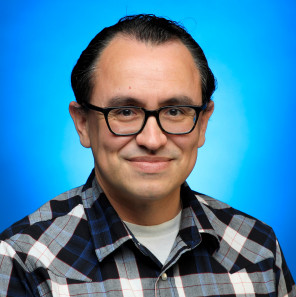
Gustavo Arellano is a columnist for the Los Angeles Times, covering Southern California everything and a bunch of the West and beyond. He previously worked at OC Weekly, where he was an investigative reporter for 15 years and editor for six, wrote a column called ¡Ask a Mexican! and is the author of “Taco USA: How Mexican Food Conquered America.” He’s the child of two Mexican immigrants, one of whom came to this country in the trunk of a Chevy.