Finalist: The Flint Journal, by Jake May

For striking, wonderfully conceived photographs from Flint’s contaminated-water crisis that told a challenging story in human terms.

Nominated Work

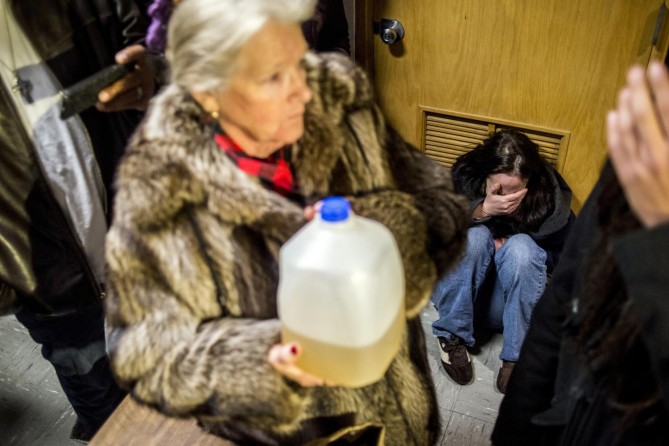
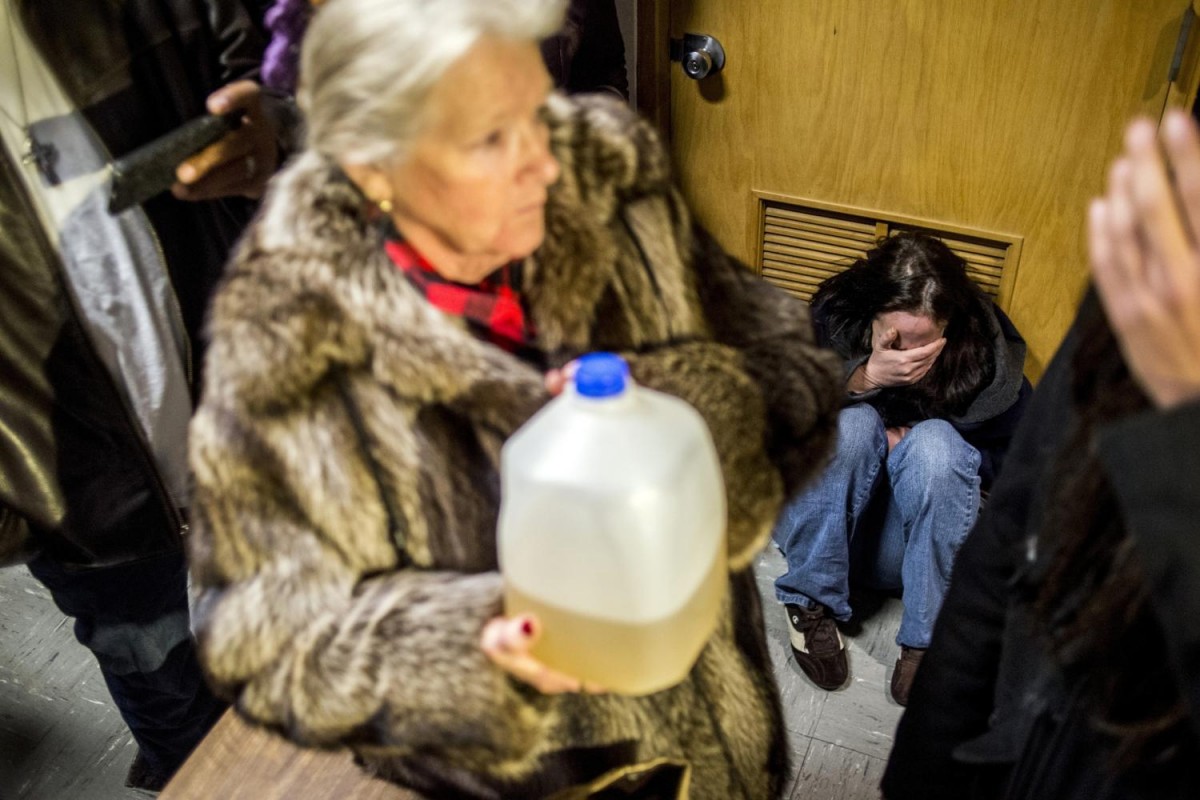
Flint resident Andrea Watson, back right, drops to the floor in tears as Flint Police stand guard at the city council chamber doors, not allowing city residents to listen to Gov. Rick Snyder speak publicly for the first time in Flint, six days after he declared a state of emergency in the city because of health and safety issues caused by lead in the city's drinking water during a press conference on Monday, Jan. 11, 2016 at City Hall in downtown Flint. (01/11/2016)
 
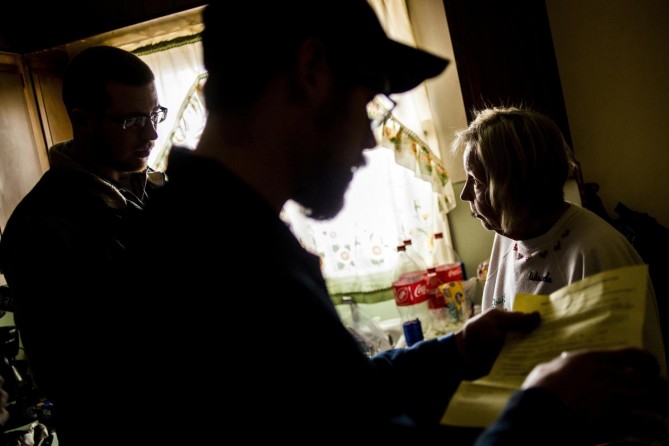
Flint residents Tammy Loren and her husband Ken McCloud inspect abrasions that appeared on the arms, neck and back of their son Jeremiah Loren, 12, on Jan. 28, 2016 at their home on Flint's west side, after bathing in unfiltered Flint water in their bathtub months prior before an announcement that the corrosive Flint River water caused lead from aging pipes to leach into the water supply, causing extremely elevated levels of lead. (01/28/2016)
 
Flint resident Tim Monahan refuses a piggyback ride from his niece Chadie Adler, 9, before she goes to bed as he wouldn't be strong enough to lift her on Wednesday, Jan. 20, 2016 in Flint. Chadie has lived with her uncles Tim and Bill Griffin, his partner, for five years since her mother died after more than one year battling Ewing's Sarcoma, a form of cancer. Tim Monahan was diagnosed with Legionella pneumonia in July 2014, one of 45 cases reported in Genesee County during a 10-month period from June 2014 to March 2015 -- including 27 cases in Flint -- that included seven deaths, according to a report from the state. Three other deaths from the disease, as part of 42 additional cases in Genesee County, took place between May 2015 to November 2015. "I'm not alone in this. There's a whole bunch of us that are like could we go somewhere if we could, would we do something different? I don't know. I like the city of Flint and I love the people that live here," he said. "There are so many great people that are standing up and working on making this a better city, there really are. We're excited in that, but at the same time, you can't drink the water." (01/20/2016)
 
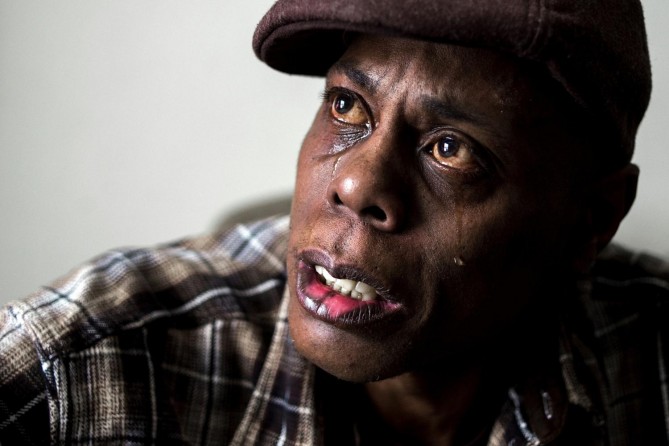
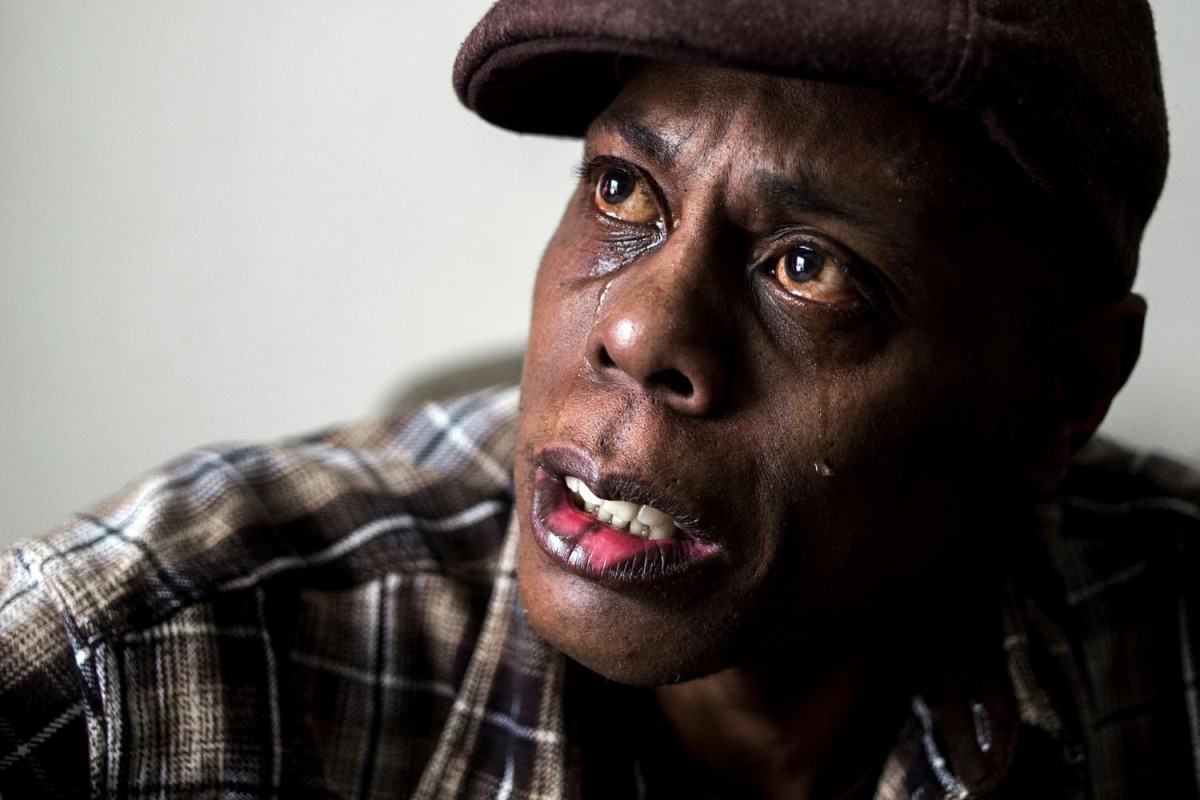
"I can'€™t trust them because to me they knew what was going on," said Gerry Woodberry, 50, of losing his trust in government after the Flint water crisis. "A little shortcut to save them money, while you're destroying people'€™s lives. I can't regain my trust. I really can't. I feel like this situation with me trying to get help, they don'€™t really care, they just don’t care. It's not them that's affected, so why should they care. That'€™s how I feel." Woodberry, who deals with the effects of lichen planus, a disease that causes the body to mistakenly attack its own skin cells, said his condition has been made worse by the water situation to the point where his skin aches at times. (02/16/2016)
 
"Before this water changed, when I would take my showers, it would soothe my skin," said Flint resident Gerry Woodberry, whose skin condition lichen planus worsened because of the water crisis. "When I get out now, it's the total opposite. It's like I'm very irritated, like I'm very dry. It's constantly hurting. Some days I can'€™t even put my socks on or my shoes." (02/16/2016)
 
After pouring two pots of boiling water mixed with five bottles of water, Flint resident Na'Keyja Cade, 24, uses a hand cloth to bath her 5-year-old daughter Zayionna Callon-Cade as she stands in ankle high water in the bathtub on Thursday, Feb. 1, 2016 at their home in Flint. (02/01/2016)
 
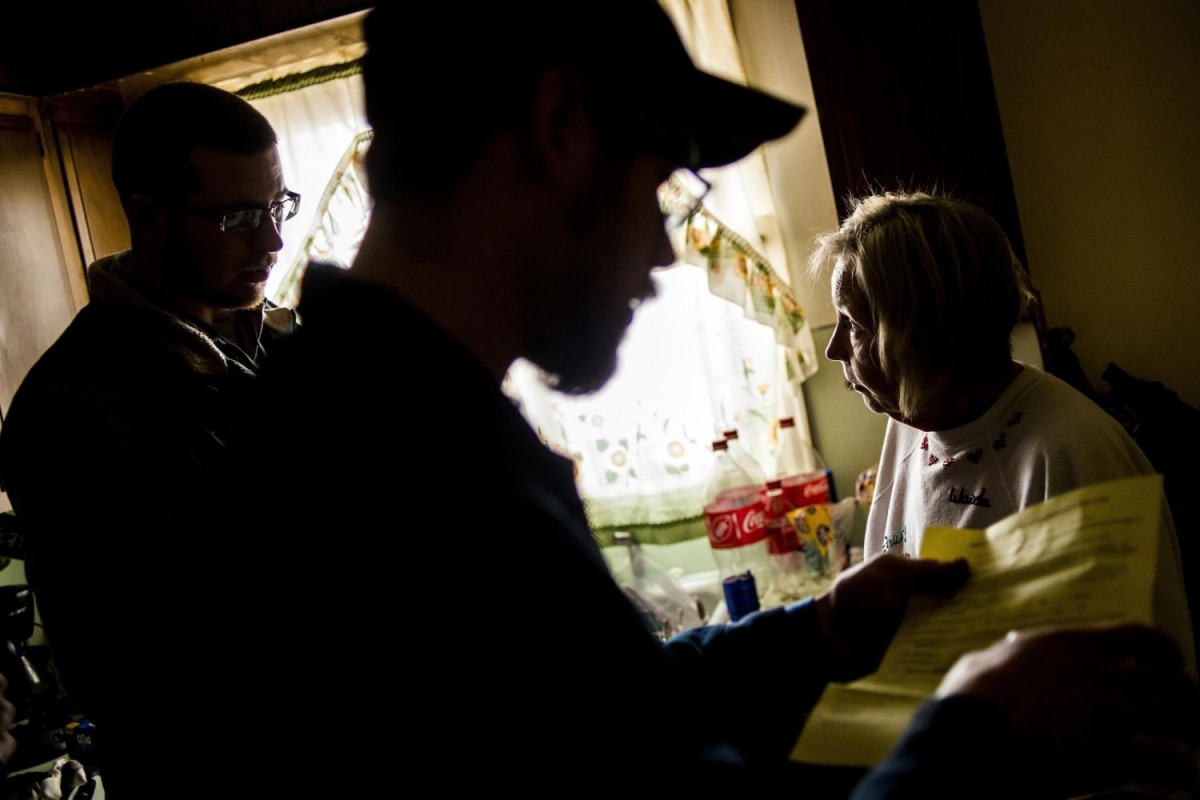
Plumbers Rob Johnson, left, and Kevin Kinasz assist Flint resident Lawanda Asa, 70, at right, with donated faucet installation on Saturday, Jan. 30, 2016 at her home in Flint. About 300 members of Plumbing Manufacturers International took the donated faucets and supplies, as well as Brita water filters provided by the state before beginning work in houses and apartment buildings throughout Flint. "People from all over the country, Canada, Cher, tons of organizations are sending trucks loads of waters and filters to us. I've even lost count on how many people are sending us water," she said. "It just goes to show how giving American people are. People that don't even know us, have never heard of Flint before are at our side. We're so very blessed that the American people have such big hearts." (01/30/2016)
 
Flint resident LaFonzo Williams, 19, prays amidst more than 150 Flint and Detroit resident before heading into the Capitol to protest against Gov. Rick Snyder, asking for his resignation and arrest in relation to Flint's water crisis on Thursday, Jan. 14, 2016 in Lansing. (01/14/2016)
 

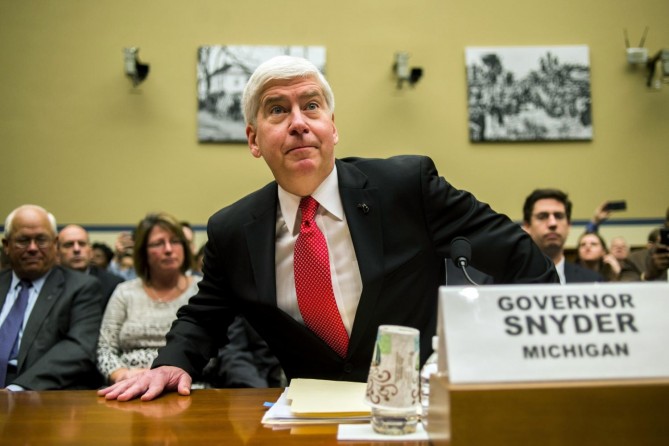
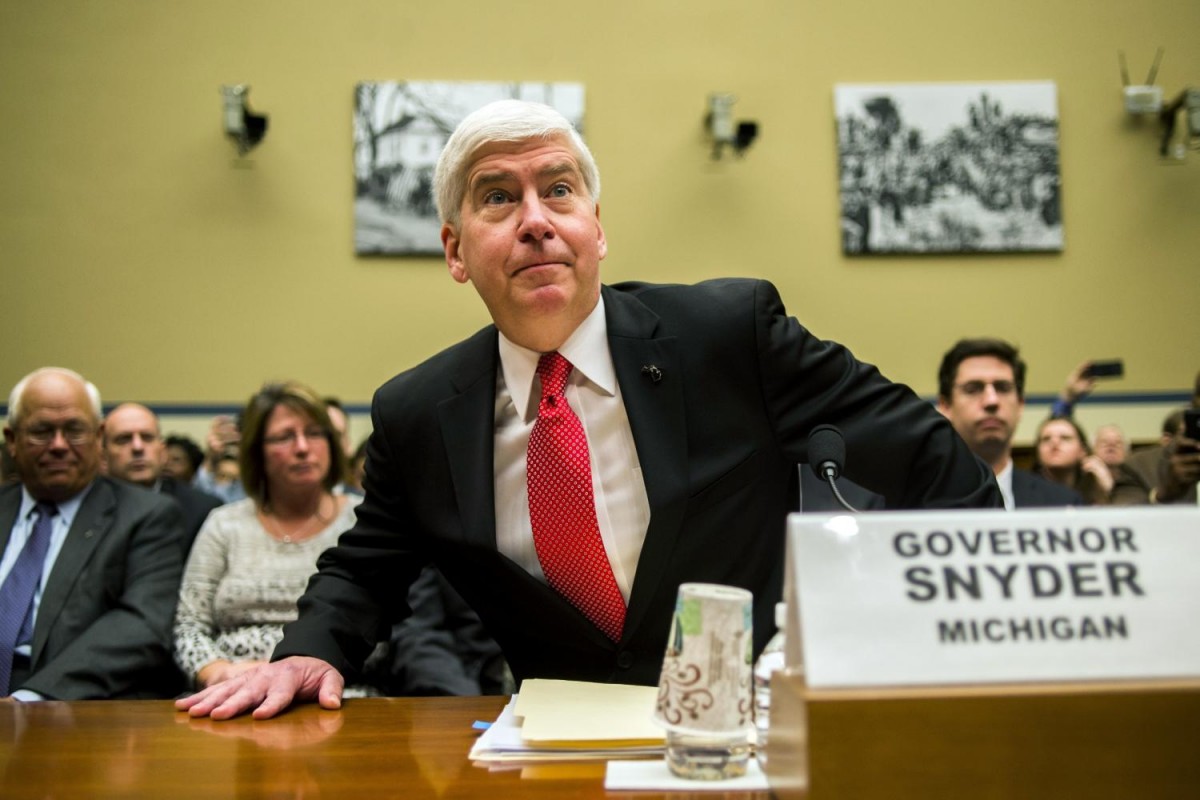
Gov. Rick Snyder takes his seat before a hearing about the Flint water crisis in front of the U.S. House Committee on Government Oversight and Reform at the Rayburn House Office Building on Thursday, March 17, 2016 in Washington D.C. (03/17/2016)

About 500 people pack an elementary school gymnasium for a town hall meeting by MSNBC's Rachel Maddow for the Flint water crisis on Wednesday, Jan. 27, 2016 at Holmes STEM Academy on Flint's north side. (01/27/2016)
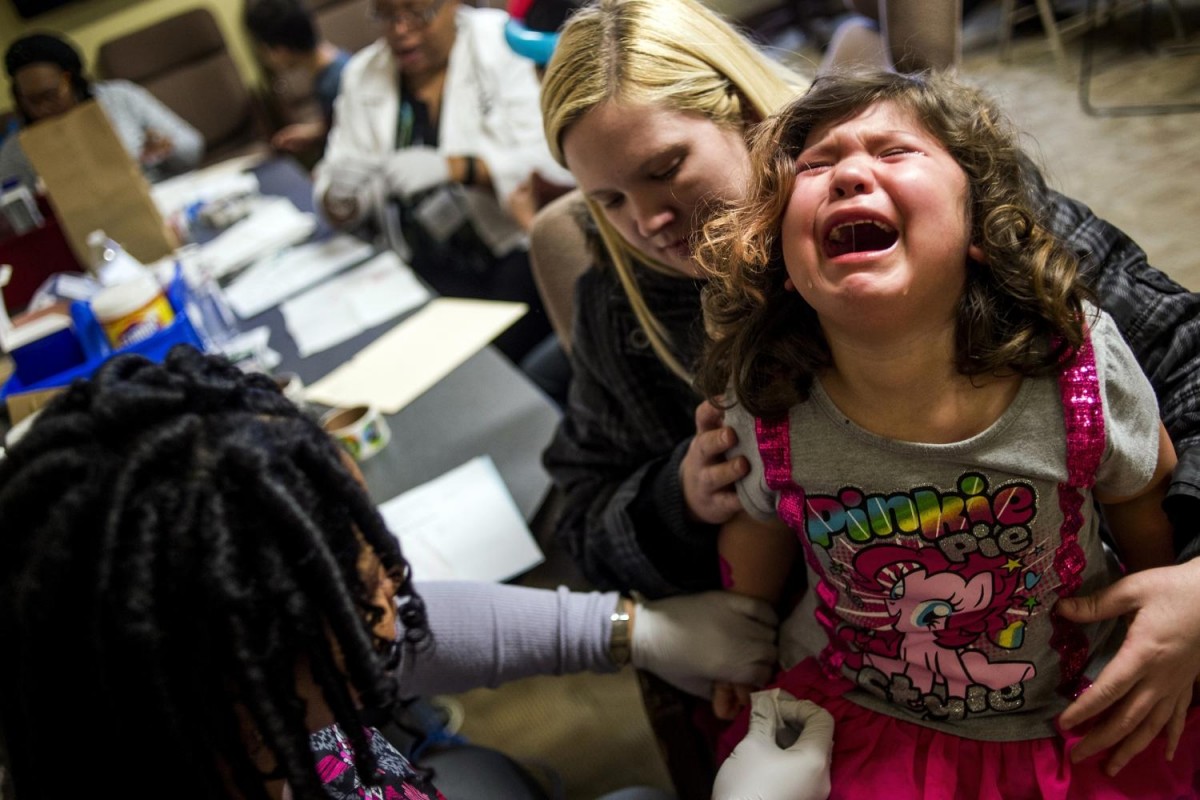

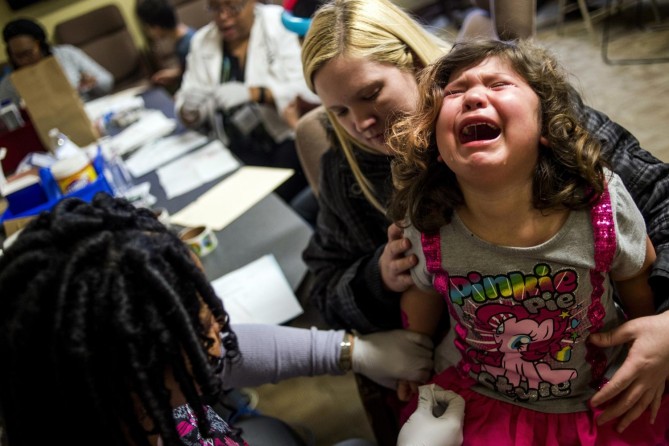
Flint resident Sarah Truesdail holds her daughter Gabriella Venegas, 5, as she screams out with tears rolling down her face while a health official pricks her finger with a needle for a free lead test on Monday, Feb. 8, 2016 at Carriage Town Ministries in Flint. Molina Healthcare provided children up to six years of age with free lead testing, as well as water filters for families to take home and install. "She take baths in the water, and my daughter takes a lot of baths. Just recently she's been having stomachaches. I took her to the emergency room but they said she was OK. She missed school today. There's something wrong with her," Truesdail said. "We don't drink it. Bathing in it is supposed to be safe. But if it's safe, why do you have to limit the time? And you're breathing the steam when it's hot and the vapors enter your body through the air? We just don't know how it's affecting us. I'm a little worried for the lead test. I'm thinking she doesn't have lead poisoning, but it's just worrying me. Parents need to get their kids lead tested — better safe than sorry." (02/08/2016)
 
Rhonda Chatman, who lives on Ridgeway Avenue on Flint's north side, holds closely her grandchildren Nevia Beverly, 4, left, and Naseir Evans, 7, after city officials' decision to cease trash collection on Monday, Aug. 1, 2016. Officials reached a temporary agreement to have trash collected through Aug. 12, starting Tuesday, Aug 2. No trash was picked up on Monday. While many in the city point blame to Flint Mayor Karen Weaver for the trash collection delay, Chatman stands by her. "First we had to deal with the water crisis. Now, we have to deal with the trash," Rhonda Chatman said. "The north side is already overran by rodents. I can't do rodents too. I'm not going to let my trash pile up in my house or in my garage. It can just stay on my curb." (08/01/2016)
 
Three students stand silhouetted as they sing the "Twelve Days of Christmas" in front of two water fountains with notices that read "Do Not Drink Until Further Notice," which were placed there 11 months prior as hundreds of students sing Christmas favorites on Tuesday, Dec. 20 at Doyle-Ryder Elementary School in Flint. (12/21/2016)
 

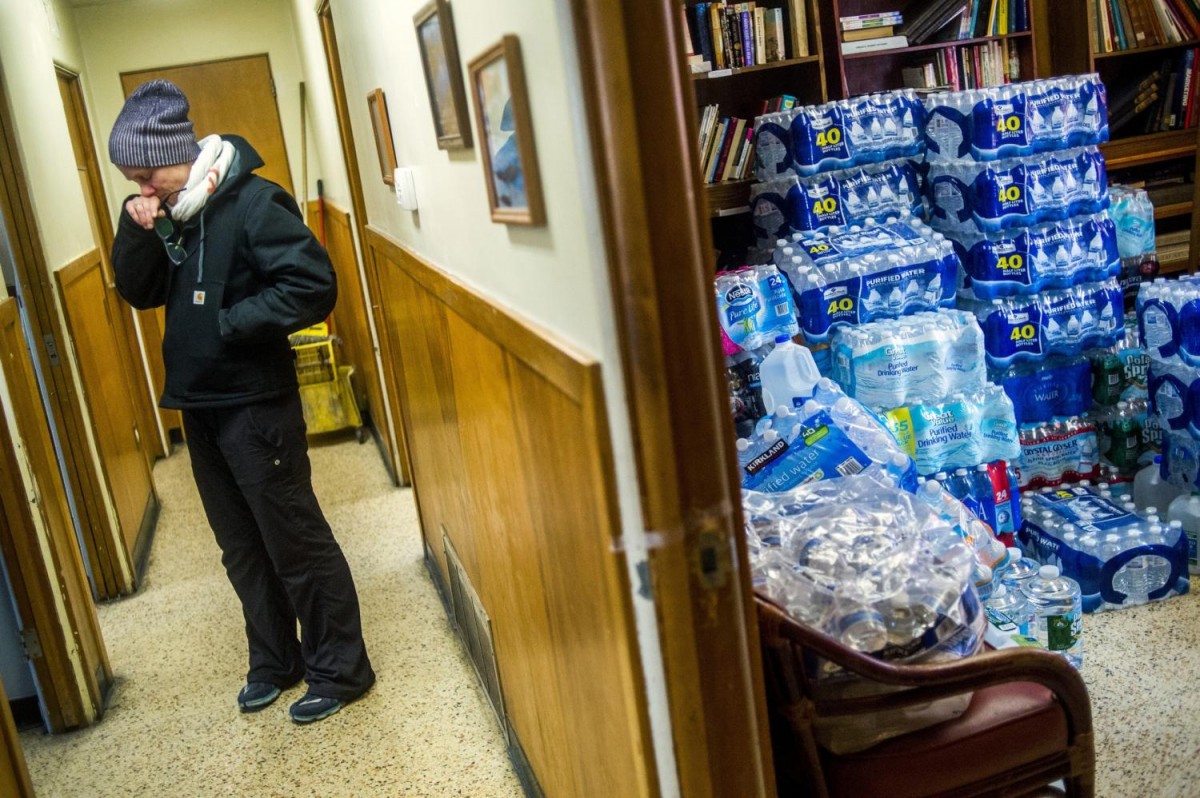
St. Clair Shores resident Terra Castro removes her glasses as she wipes away tears as she takes a moment to reflect on the state of emergency in Flint while dropping off more than 500 cases of bottled water with about 20 Detroit-based volunteers on Saturday, Jan. 16, 2016 at Mission of Hope on Flint's north side. "It's overwhelming. The magnitude of the issue and the magnitude of love and compassion people hold for others is so apparent here. Our cities (Flint and Detroit) are very bold, helpful and caring. People who cannot afford to give water are doing it, even though they have issues of their own unresolved," Castro said. "We're a pretty rad state. It's truly unfortunate that we're surrounded by water with the Great Lakes and we have to worry about water in Flint." (01/16/2016)
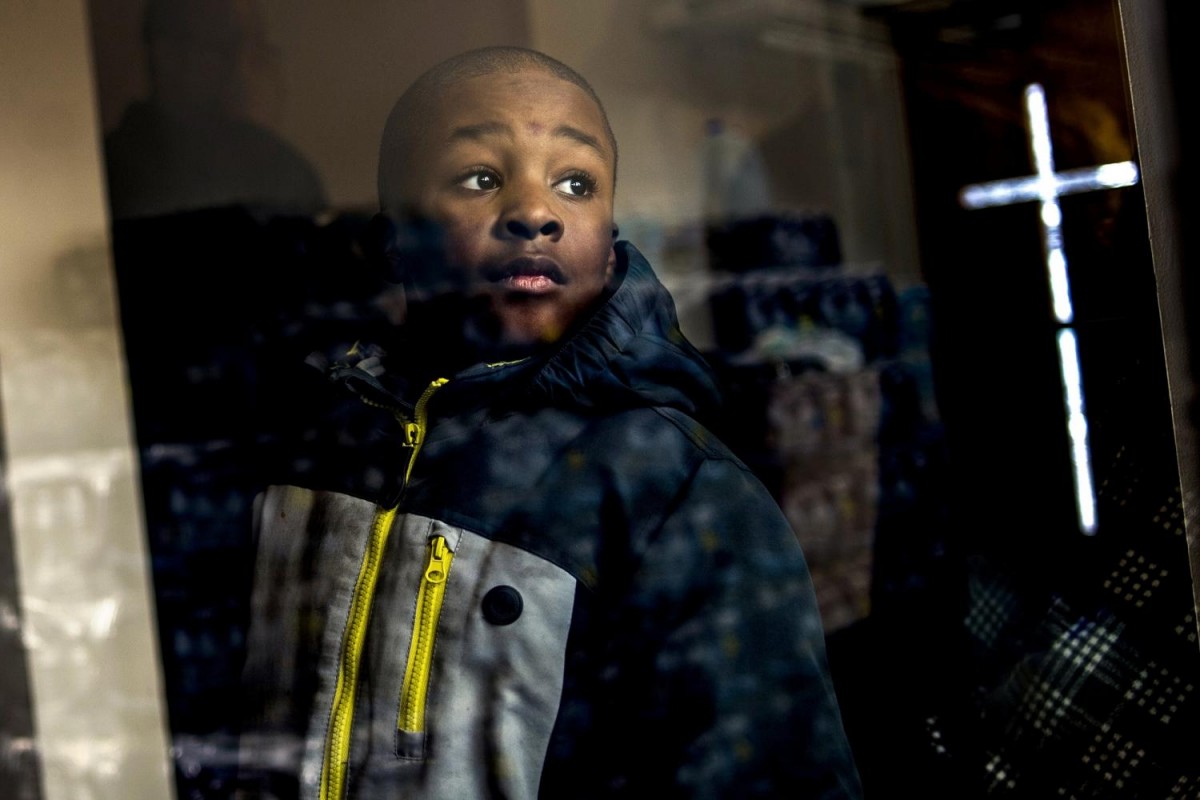
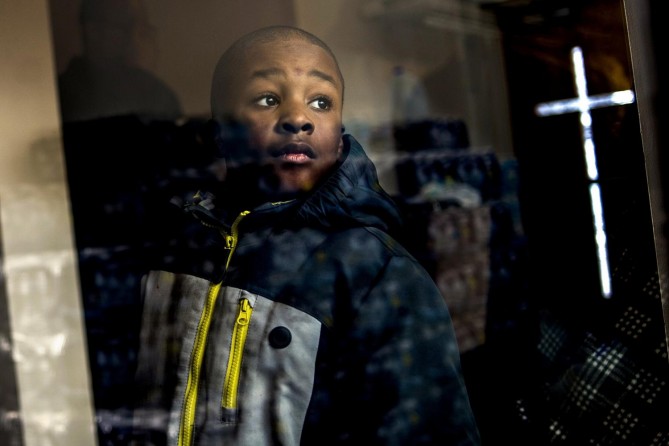
Detroit resident Jaiden Ellis, 8, looks at stacks of free bottled water to be given to the congregation while Rev. Jesse Jackson, a known civil rights leader, discusses the ongoing Flint water crisis on Sunday, Jan. 17, 2016 at Heavenly Host Full Gospel Baptist Church on Flint's north side. (01/17/2016)
 

Biography

Jake May is the chief photojournalist for The Flint Journal, an MLive Media Group publication. He grew up in Grand Haven, Mich., and Jensen Beach, Fla., respectively. May attended Central Michigan University, followed by his first job at The Register-Mail in Galesburg, Ill., for eight months before taking on his role in Flint, Mich. He was recently awarded a Special Citation from the National Press Photographers Association for his work on the Flint water crisis, as well as the recipient of the Barry Edmonds Michigan Understanding Award for his ongoing work showing the duality of life in Flint between violent crime and purpose of a tenacious community.

Winners

Prize Winner in Feature Photography in 2017:

E. Jason Wambsgans

For a superb portrayal of a 10-year-old boy and his mother striving to put the boy’s life back together after he survived a shooting in Chicago. Feature Photography

Finalists

Nominated as finalists in Feature Photography in 2017:

Katie Falkenberg

For a photo essay from the front lines of Brazil’s war on Zika that showed the vulnerability, fear and love of mothers coping with the crisis.

The Jury

Sherman Williams(Chair)

Assistant Managing Editor/Visual Journalism

Andrea Bruce

Photographer

David Hume Kennerly*

Photographer

Michele McDonald

Photo Editor

Deb Pastner

Director of Photography/Multimedia

Winners in Feature Photography

Jessica Rinaldi

For the raw and revealing photographic story of a boy who strives to find his footing after abuse by those he trusted.

Josh Haner

For his moving essay on a Boston Marathon bomb blast victim who lost most of both legs and now is painfully rebuilding his life.

Javier Manzano

For his extraordinary picture, distributed by Agence France-Presse, of two Syrian rebel soldiers tensely guarding their position as beams of light stream through bullet holes in a nearby metal wall.

2017 Prize Winners

C. J. Chivers

For showing, through an artful accumulation of fact and detail, that a Marine’s postwar descent into violence reflected neither the actions of a simple criminal nor a stereotypical case of PTSD.

Peggy Noonan

For rising to the moment with beautifully rendered columns that connected readers to the shared virtues of Americans during one of the nation’s most divisive political campaigns.

Hilton Als

For bold and original reviews that strove to put stage dramas within a real-world cultural context, particularly the shifting landscape of gender, sexuality and race.

Art Cullen

For editorials fueled by tenacious reporting, impressive expertise and engaging writing that successfully challenged powerful corporate agricultural interests in Iowa.