The Boston Globe, by Jessica Rinaldi

Columbia University President Lee C. Bollinger presents the 2016 Feature Photography Prize to Jessica Rinaldi of The Boston Globe.
Winning Work
To the judges of the Pulitzer Prize:
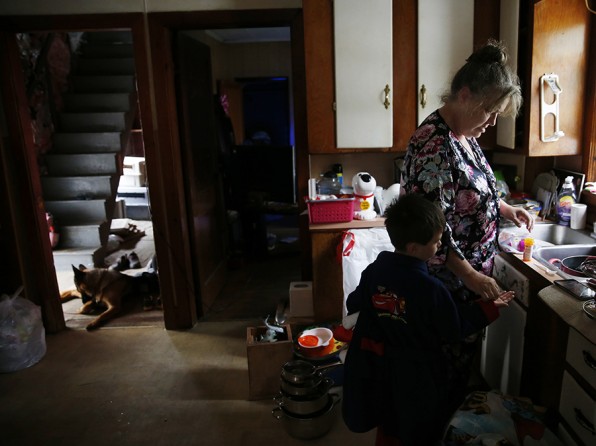
Strider Wolf was born poor in a poor part of rural Maine. When he was two, his mother’s raging boyfriend beat him nearly to death. At three, the state placed him and his younger brother in the custody of their grandparents, Larry and Lanette, who were already tired and barely piecing together an existence with odd jobs and whatever money they could make selling junk. In the spring of 2015, when Strider was five, Larry and Lanette were evicted from the cluttered mobile home where they lived. They set out with the boys, adrift in an old camper with no means or ability to find a new place to live. In the chaos and deprivation, Strider had a simple and abiding wish: to be loved.
It was his preoccupation and his deepest need. Through Jessica Rinaldi’s photography in “The life and times of Strider Wolf,” we watch him try to win it from Larry and Lanette as they lead the family on an odyssey with no clear end, talking their way into campgrounds and parking lots, trying to survive, and hoping for a place to call home.
Through Rinaldi’s patient and compassionate photography, we are brought to witness the ugliness and complexity of their world and see it as a trap woven by generations. Strider’s quest is our hope – for him and for his grandparents. We root for the humanity we see in his eyes and sideways grin, and hope that he might be the one, at last, who has the stuff to break free.
The finely observed detail that informs this story, its sense of place, and character were hard won. Rinaldi and writer Sarah Schweitzer worked hand in hand for more than five months, much of it spent winning and maintaining the trust of people not inclined to give it. They traveled over and again to Oxford, Maine, staying nights in town, joining the family shortly after dawn when they woke and staying most days until they went to bed. They worked their way close, respectfully, to see Strider’s world clearly and plainly.
Immediately after the story ran came an outpouring of money and gifts and well-wishes for Strider and his grandparents. The story circulated widely, picked for best-of lists across the internet and sparking numerous charity efforts. A GoFundMe campaign raised nearly $20,000. A trust set up for the family raised tens of thousands more. Local bloggers took up the family’s cause. Larry and Lanette, thankful as they were for the generosity, told Rinaldi and Schweitzer that they were blessed also that someone had simply taken the time to notice them.
Of course, in its broadest meaning, this story is about more than one family. It is a devastating and uniquely revealing portrait of poverty and the power of trauma to transcend generations. It is also, ultimately, a beautiful, complex and painful story about the yearnings of the human spirit. We are pleased to submit “The life and times of Strider Wolf” for consideration for the Pulitzer Prize for Feature Photography.
Sincerely,
Brian McGrory
Editor, The Boston Globe
Winning Work
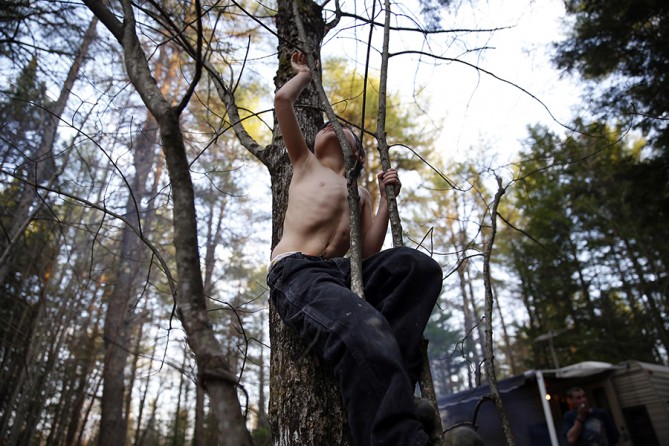


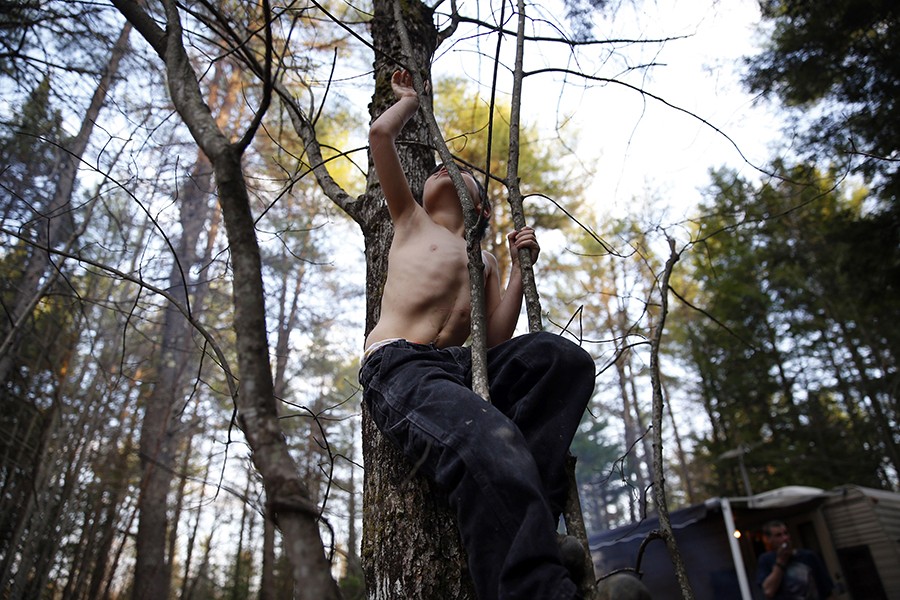
Strider Wolf was born poor in rural Maine. When he was two, his mother's raging boyfriend beat him nearly to death. He managed to pull through, ending up in the care of his grandparents who became homeless trying to provide for Strider and his younger brother, Gallagher. In the chaos and deprivation, Strider had a simple and abiding wish: to be loved. Strider Wolf reaches up to grab high on a sapling revealing a scar on his stomach from a feeding tube as a result from his childhood abuse. During the course of an eviction last summer, the family bounced from campground to campground, trying to find a permanent home (Jessica Rinaldi, The Boston Globe - November 8, 2015).
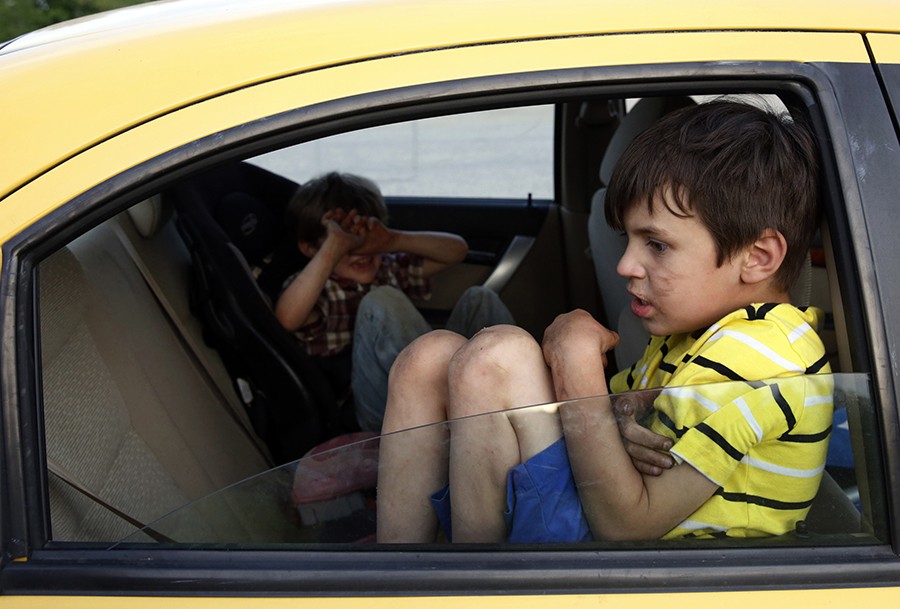
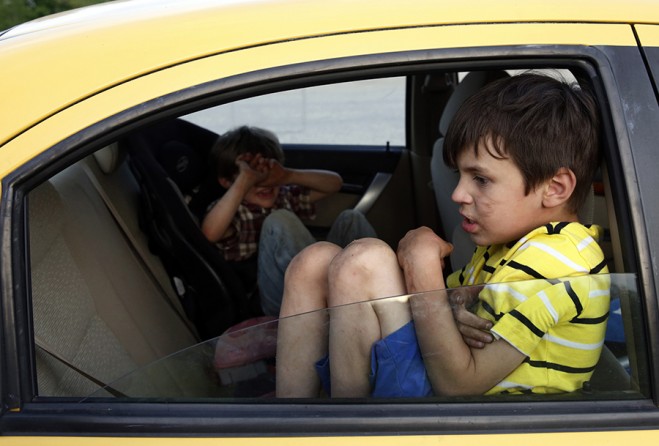
After two years of not paying the rent the Grant's landlord gave them 30 days to pack their things and leave. On the night of the eviction Strider's grandparents, Lanette and Larry, move their possessions into a storage space leaving Strider and Gallagher unattended in the back of the car. Tired and acting out, Gallagher bites Strider who recoils, pressing his body against the car window (Jessica Rinaldi, The Boston Globe - November 8, 2015).
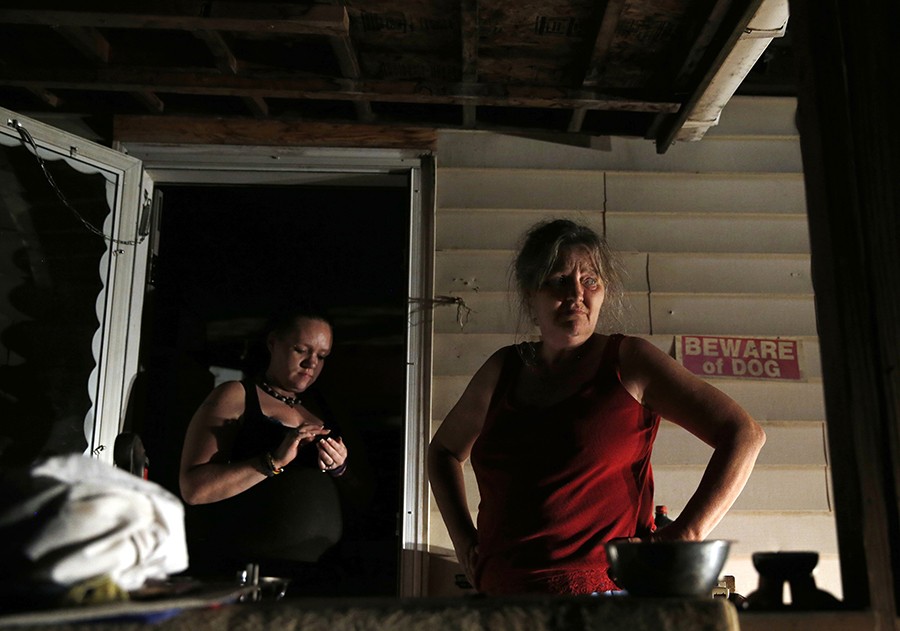
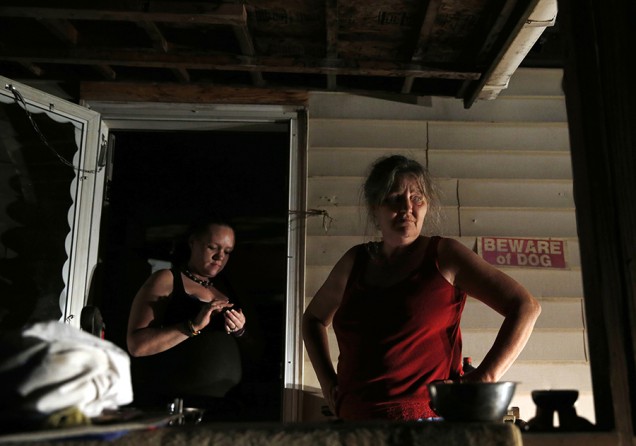
On the night of the eviction, Lanette and her son's fiancée Ashly take a break from packing up the family's belongings. As the night goes on it becomes clear that they are not going to be able to take all of their possessions with them (Jessica Rinaldi, The Boston Globe- November 8, 2015).
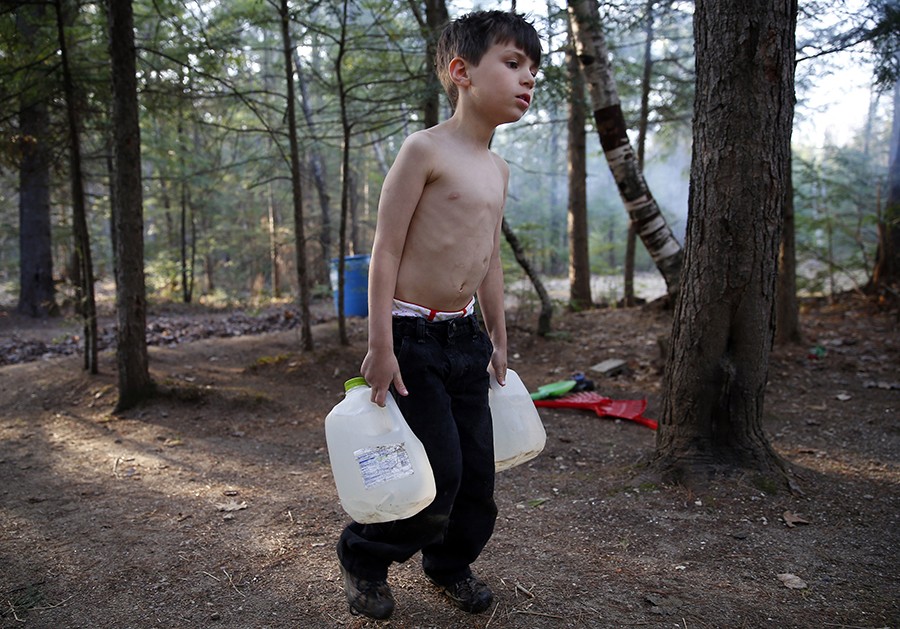
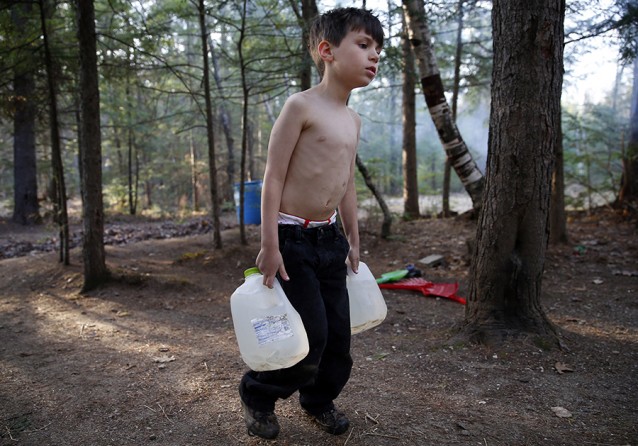
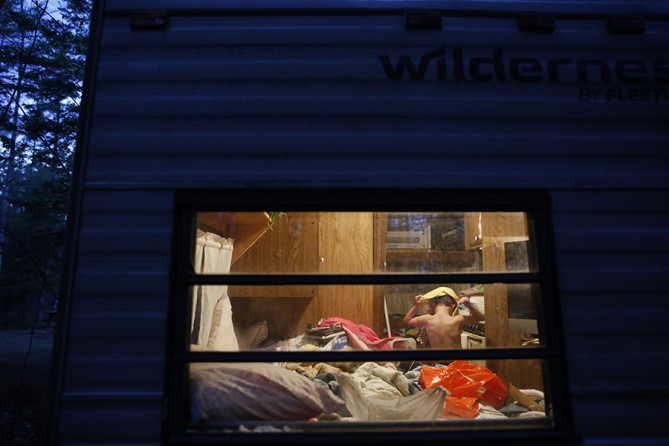
After moving into a campground, Strider struggles as he carries gallons of water filled from a spigot to the camper. Lanette will heat the water on a small stove to do the dishes and bathe the boys with a washcloth (Jessica Rinaldi, The Boston Globe).Strider pulls his pajamas over his head as he changes in his grandparents' bedroom inside the cramped camper. With nowhere else to go, the Grants told the boys they were going camping and the family of four squeezed into the 24-foot camper with their cat and two dogs (Jessica Rinaldi, The Boston Globe - November 8, 2015).
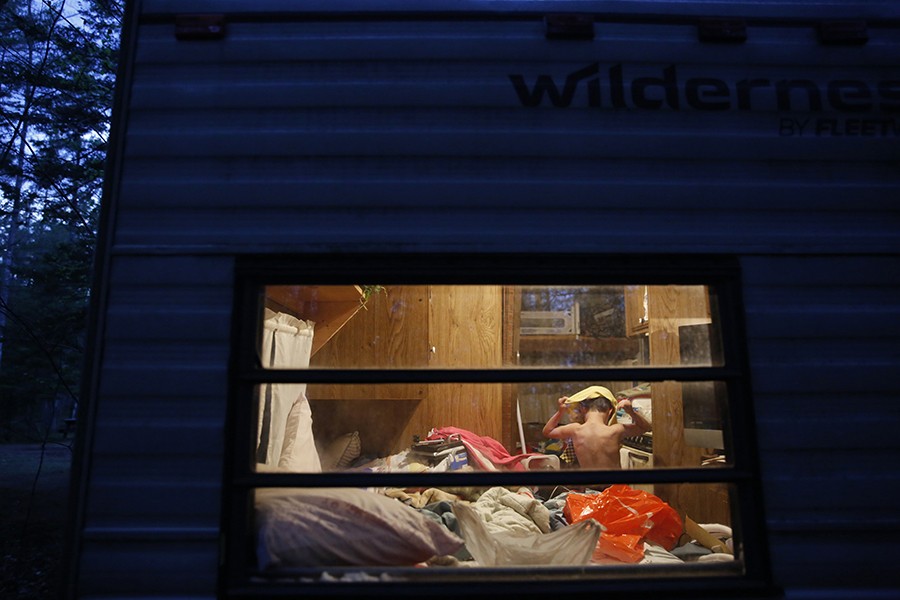
Strider pulls his pajamas over his head as he changes in his grandparents' bedroom inside the cramped camper. With nowhere else to go, the Grants told the boys they were going camping and the family of four squeezed into the 24-foot camper with their cat and two dogs (Jessica Rinaldi, The Boston Globe- November 9, 2015).
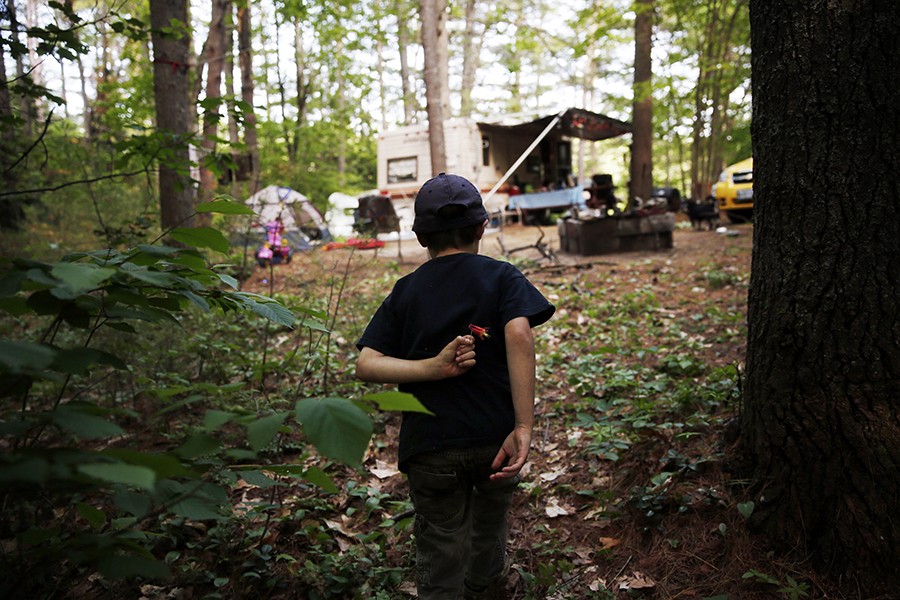
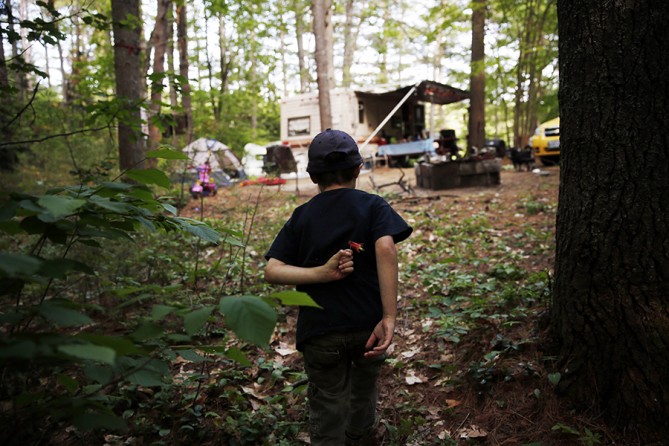
Strider looks for Lanette with a flower behind his back to apologize after she yelled at him for wetting the bed. His therapist has explained that his bed-wetting is a response to trauma, either the unfolding upset in their lives, or some resurrecting memory. Lanette knows this, but their living situation is starting to take a toll on her patience (Jessica Rinaldi, The Boston Globe- November 8, 2015).
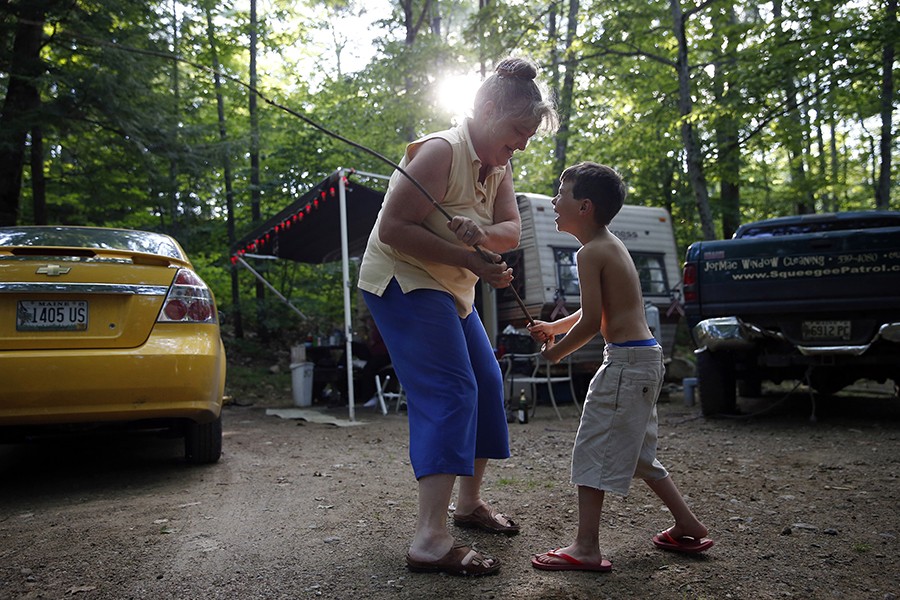
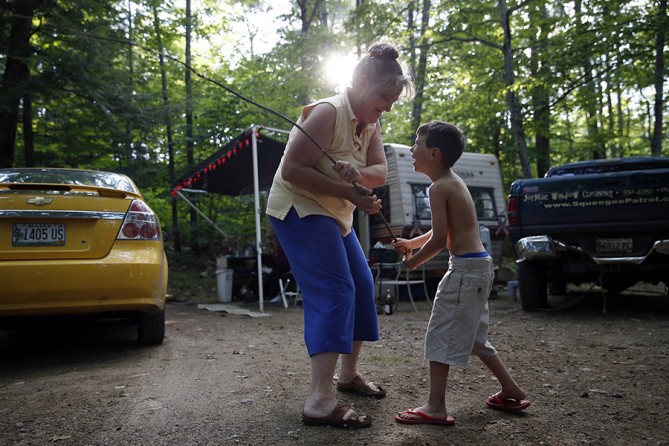
Lanette and Strider share a carefree moment as the afternoon sun breaks through the trees. Lanette often laments that she and Larry aren't able to be grandparents to Strider and Gallagher because they have to play the role of Mom and Dad, enforcing rules and making sure they are provided for (Jessica Rinaldi, The Boston Globe- November 8, 2015).
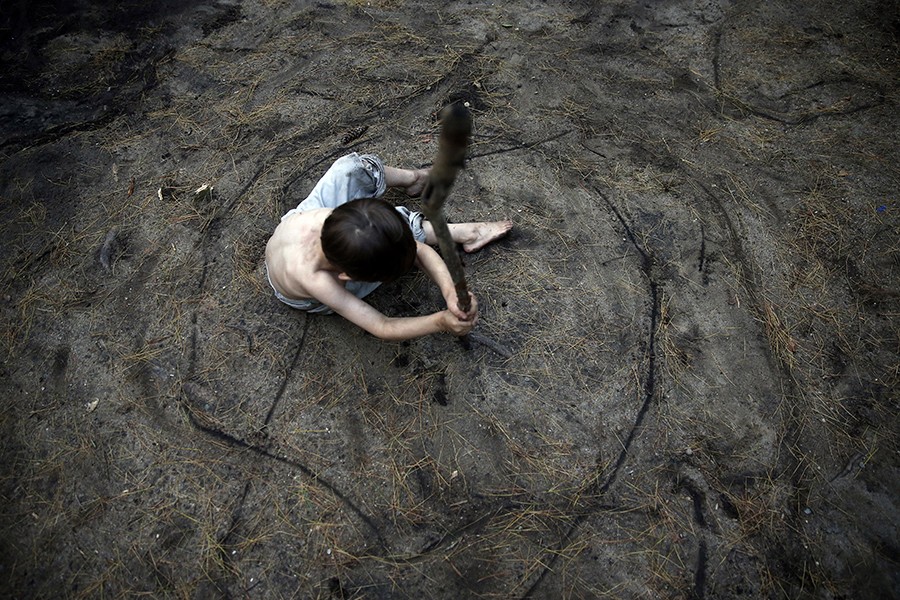
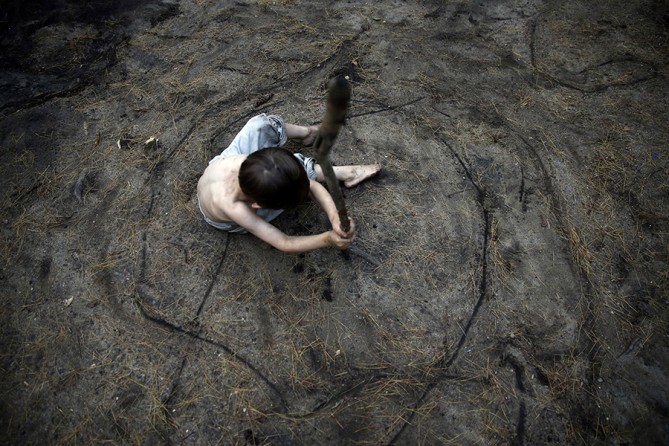
Having moved into their fourth campground of the summer, Gallagher sits in the center of a circle that his brother, Strider, has etched around him in the dirt. According to the state, living in a campground means they no longer have a house payment, because of this, their food stamps have been cut by a hundred dollars (Jessica Rinaldi, The Boston Globe- November 9, 2015).
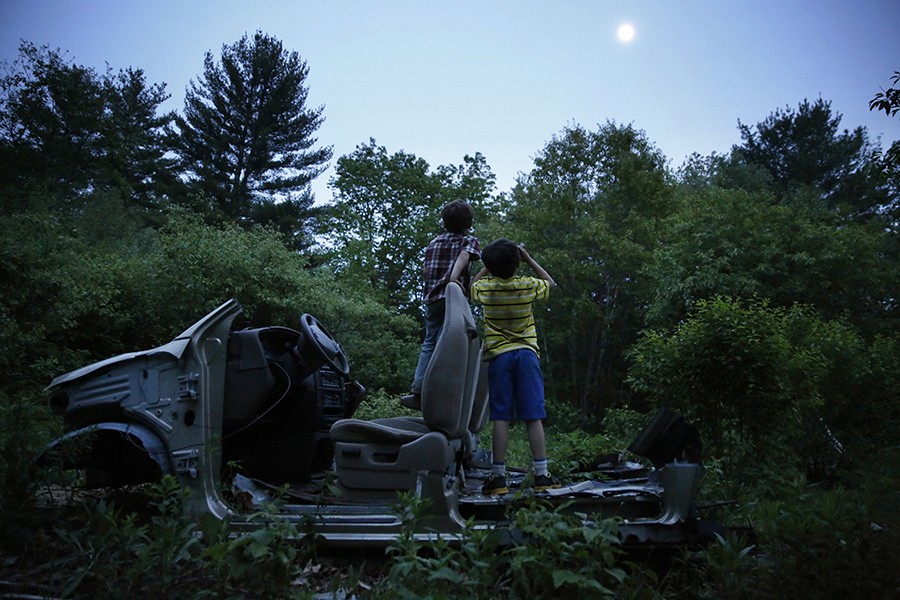
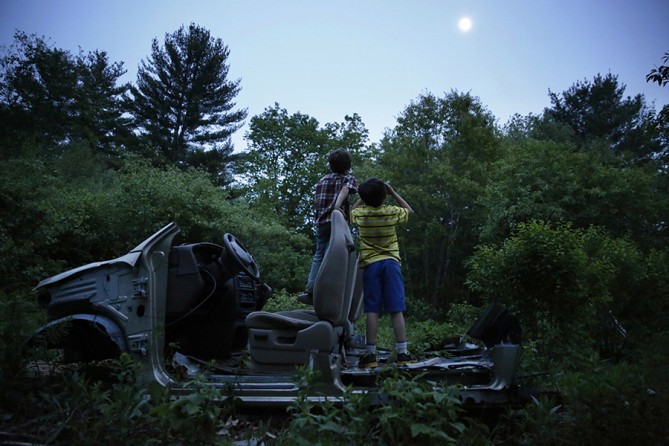
Often left to their own devices, Strider and Gallagher played on an abandoned Ford at twilight. Strider holds a broken automotive hose to his eyes like a pair of binoculars and asks, "What's on the moon?" (Jessica Rinaldi, The Boston Globe- November 8, 2015).
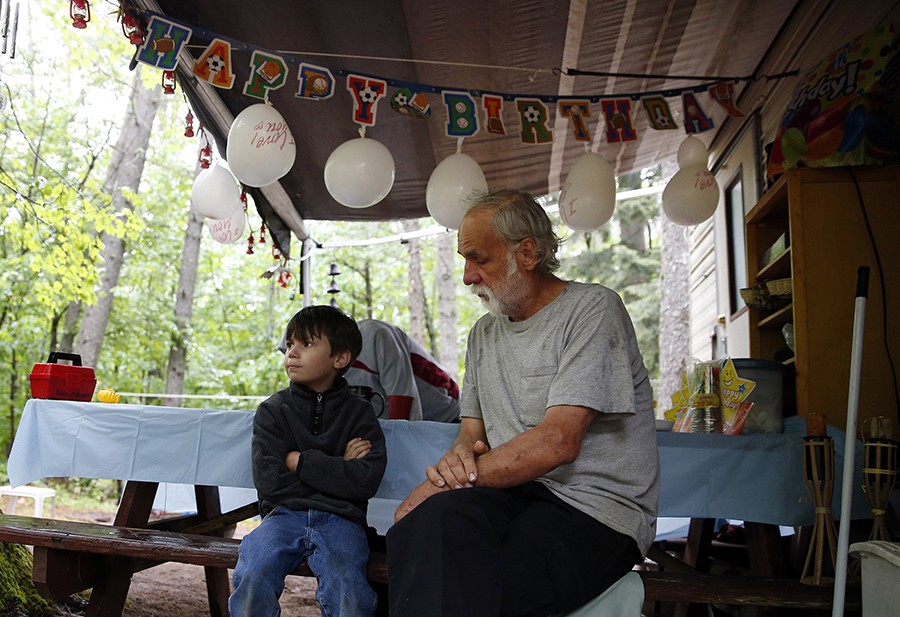
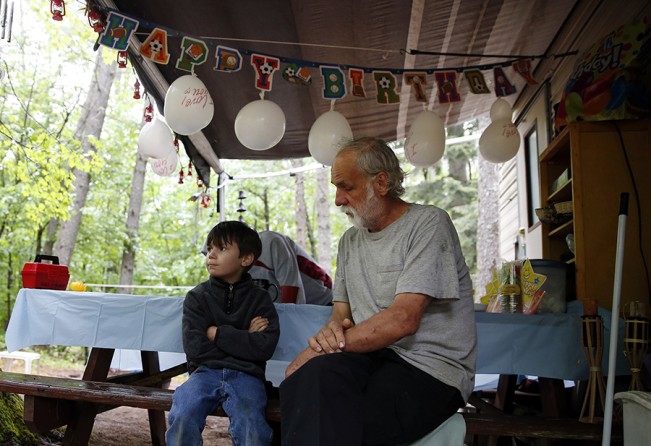
During Strider's sixth birthday party, Lanette and her mother make the 15 minute drive to Walmart to pick up his cake. Having been gone over two hours, a disappointed Strider sits beside Larry and waits for them to return to begin his party (Jessica Rinaldi, The Boston Globe- November 8, 2015).
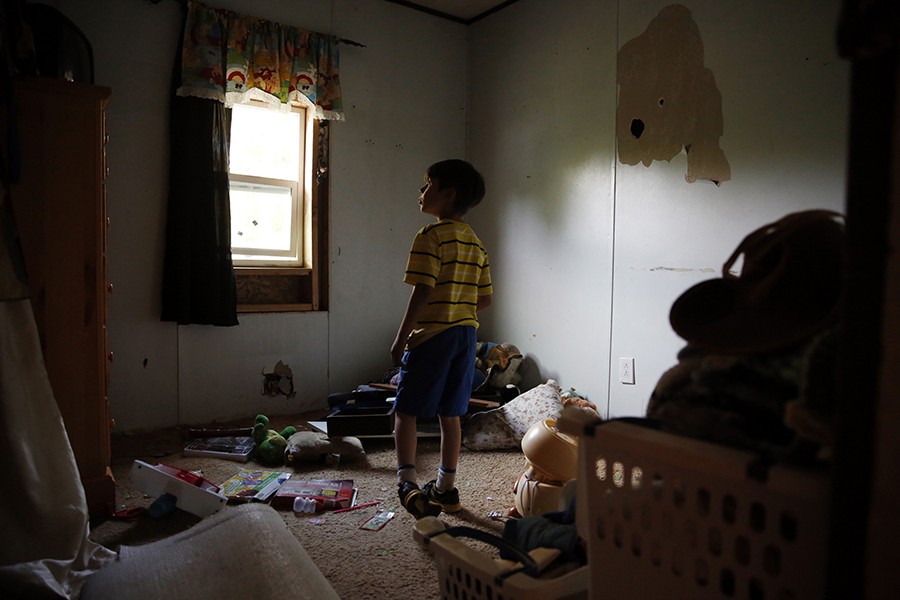
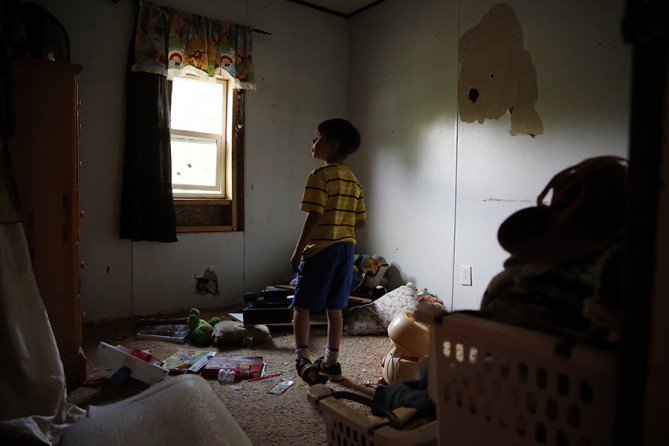
During this unsettling time for the family, Strider wanders into his old bedroom and looks around at many of his belongings that will not make the next move and will be left behind (Jessica Rinaldi, The Boston Globe- November 8, 2015).

After living in several campgrounds over the summer, the Grants appear in Maine District Court to try to retrieve their belongings from the mobile home. Without a lawyer, the Grants have few options for recourse against their former landlord. The Grants were only allowed to reclaim a few personal possessions (Jessica Rinaldi, The Boston Globe- November 2015).
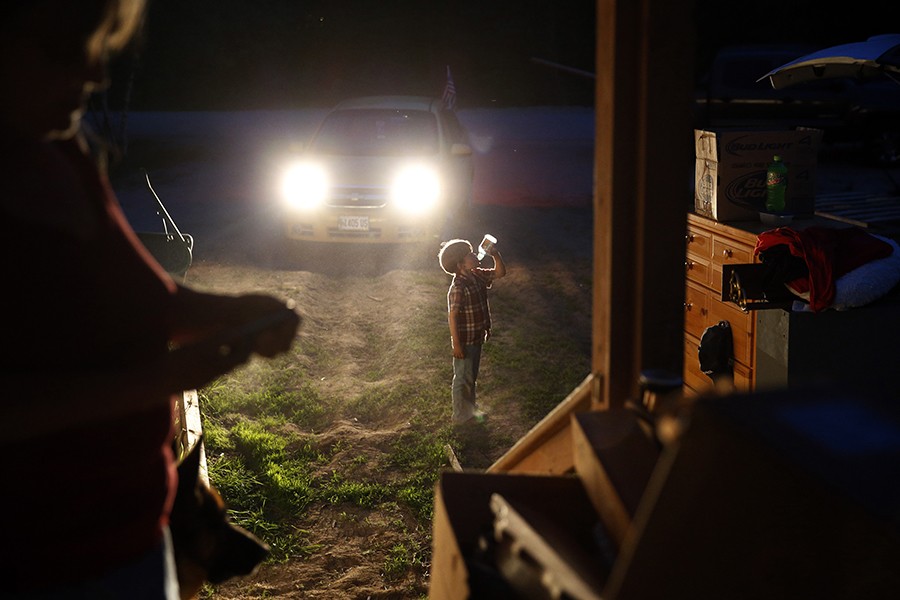
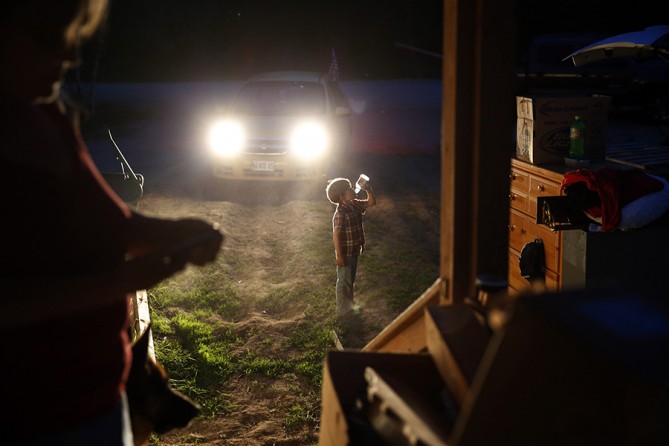
Gallagher cools off with a drink as Larry and Lanette scramble to pack by the light of their car headlights as the midnight eviction deadline inches closer. The landlord has cut the power and put locks on the electrical boxes in an attempt to force them off the property (Jessica Rinaldi, The Boston Globe- November 2015).

After months of searching for a new place to live, the Grants finally find a home they can afford on Craigslist in Lisbon, Maine. Anna Cunningham arrives to the family's new home with a donation of beds for the boys. Lanette grabs her and pulls her in for a grateful hug (Jessica Rinaldi, The Boston Globe- November 9, 2015).
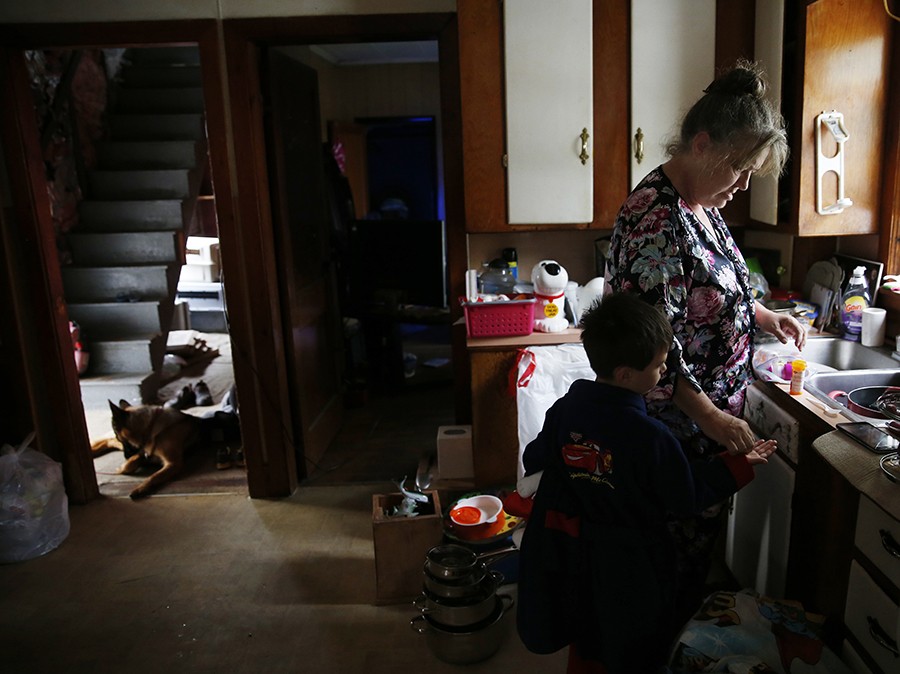
Strider, who takes multiple medications resulting from his early childhood abuse, gets his morning meds from Lannette in their new home. "We haven't been here 24 hours, and I'm tired already," Lanette said (Jessica Rinaldi, The Boston Globe- November 9, 2015).
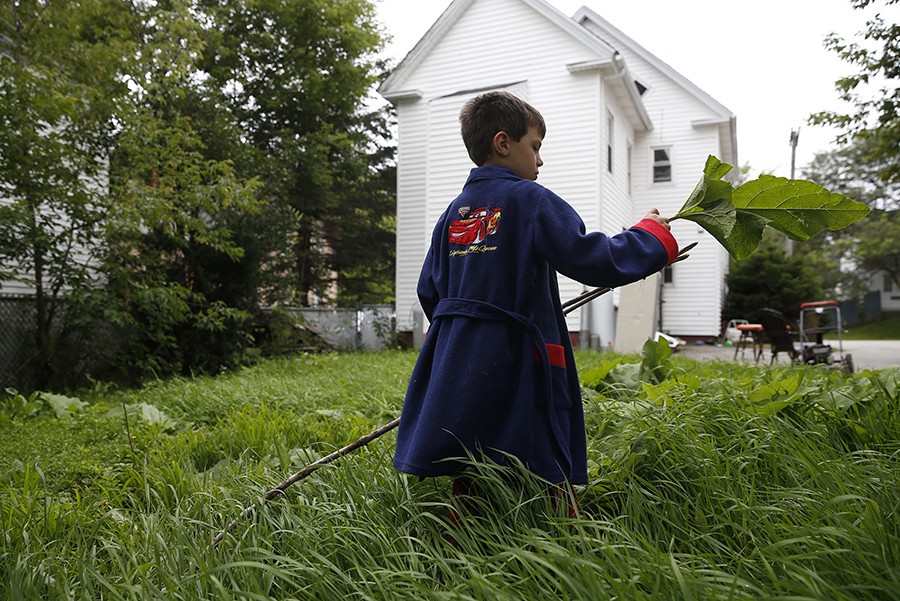
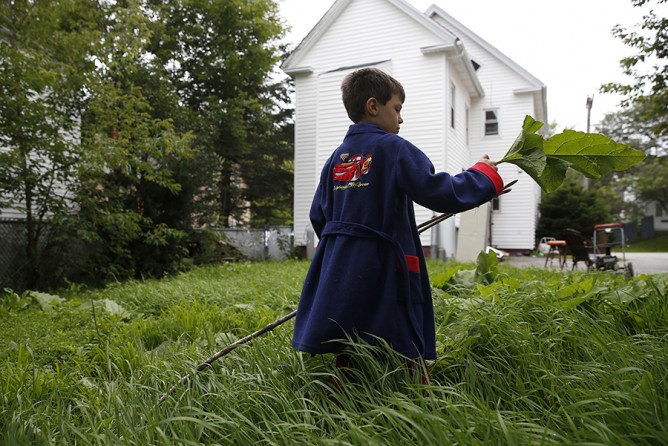
On the first morning, Strider plays in the backyard of his new home, an old rectory in Lisbon, Maine. The yard was fenced and tucked into a neighborhood, so different from the woods he called home (Jessica Rinaldi, The Boston Globe- November 8, 2015).
Biography

Jessica Rinaldi is a staff photographer for The Boston Globe. She graduated from Boston University in 2001 with a B.S. in Journalism. Prior to joining the Boston Globe she spent ten years as a contract photographer for Reuters based in Boston, Dallas and New York City. Her work has been recognized locally and nationally. She was named 2014 Boston Press Photographer of the Year and in 2013 won a first place in the Pictures of the Year International competition.