The New York Times, by Josh Haner

Lee C. Bollinger, President of Columbia University (left), presents the 2014 Feature Photography Prize to Josh Haner of The New York Times.
Winning Work
To the Judges:
Josh Haner's assignment was straightforward: spend several weeks or months with one of the victims of the Boston Marathon bombings, and make our readers feel like they are there with him during the recovery.
By the end of Day 1, the assignment was doomed. The mother of Jeff Bauman, a spectator who had become a symbol of the marathon carnage, kicked Bauer out of her son's hospital room and explained that he was not welcome there.
Yet three months later, having earned the trust of the entire Bauman family and overcome countless other hurdles, Haner delivered a portfolio to match the enormity of the story. His photographs were arresting and haunting, intimate and soulful, honest and absolutely unforgettable. They far exceeded the original mission, coming as close as photographically possible to putting the reader through rehabilitation with the subject.
Great photographers have an eye. Better photographers have an eye and a willingness to report deeply. This is what elevated Haner's work in "Beyond the Finish Line": the hours spent interviewing Jeff Bauman, his girlfriend, medical officials, the rehabilitation staff, Bauman's friends and everyone else who could provide insight into what Bauman was experiencing.
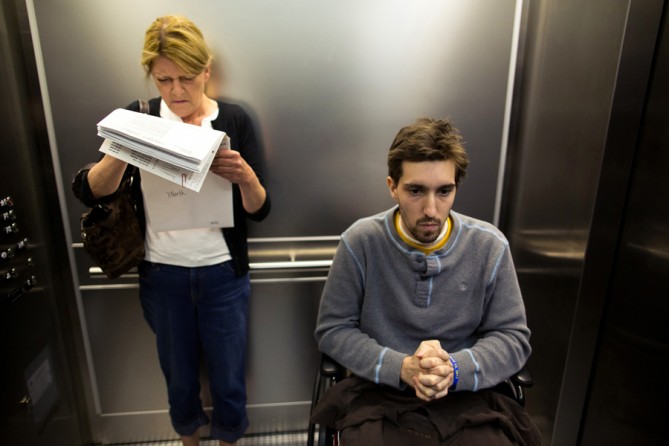
The photographs are infused with such reporting - Bauman's daunted, wide eyes as he sizes up a stairway; his hand gently holding what remains of his right leg; his mother poring over yet another stack of insurance documents as they ride the elevator to yet another medical appointment
These are hard-won images. The family, at first, and then hospital officials were leery of granting access to a patient with massive physical and psychological trauma. The nature of the Boston attacks made the issue even more fraught. Our readers would not know this. They see only a collection of visceral photography that might well stand as the lasting emblem of the impact of the bombings.
For his photographs and supplementary video that transported readers from a familiar news event to the wrenching and mundane life it created for one suffering man, I am proud to support the nomination of Josh Bauer for the Pulitzer Prize for Feature Photography.
Tim Rohan
Reporter, The New York Times
Author of "Beyond the Finish Line"
Winning Work
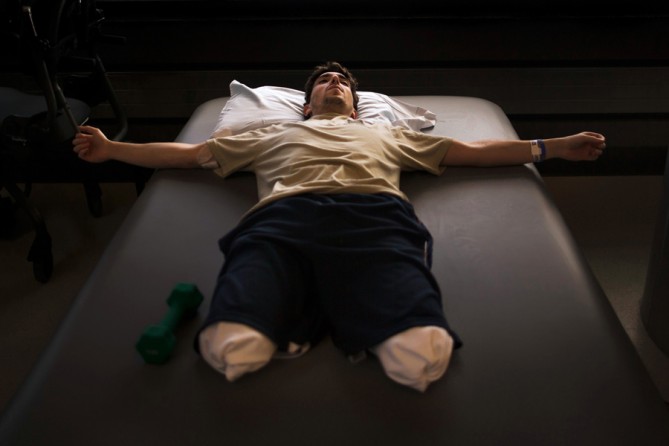
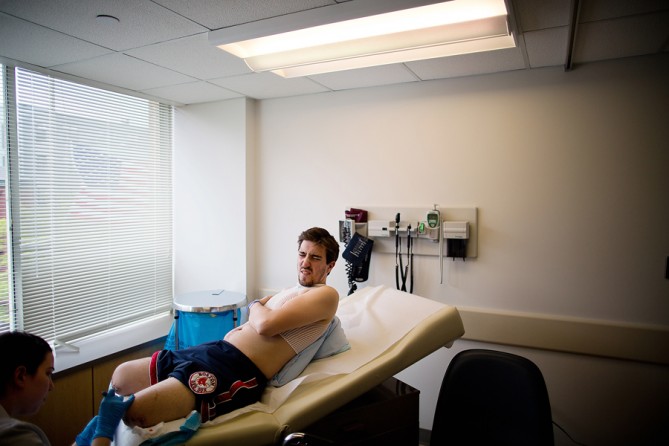
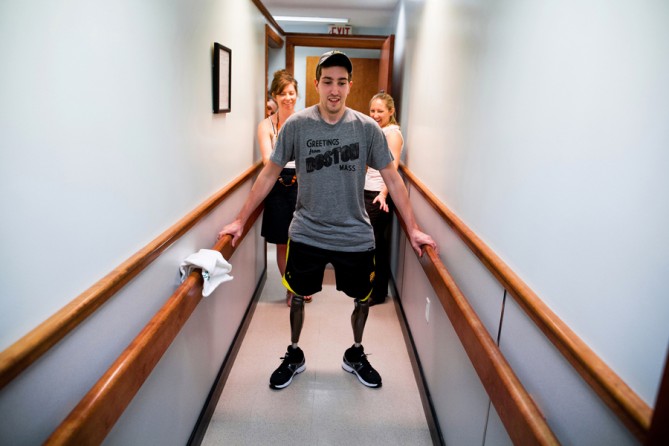
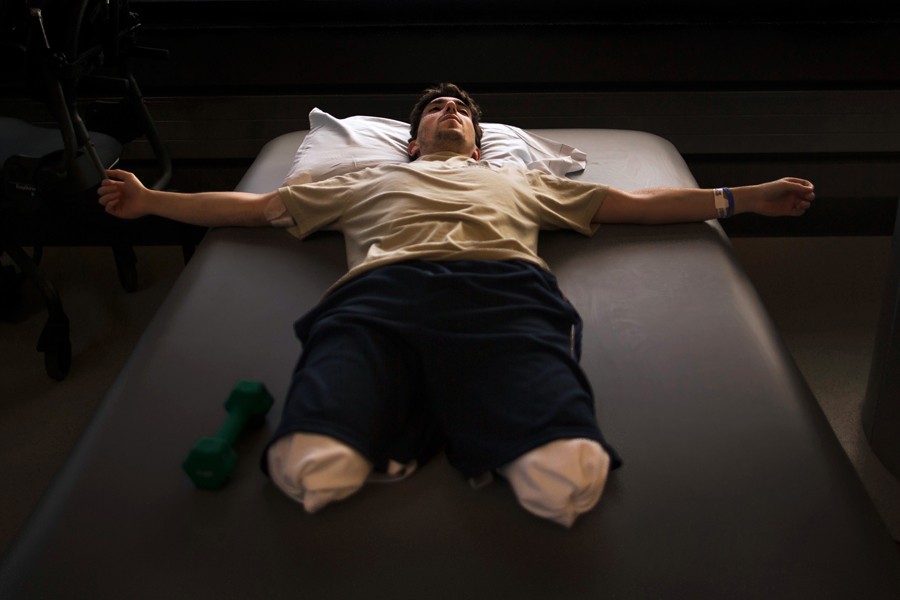
Jeff Bauman rests during occupational therapy at Spaulding Rehabilitation Hospital less than a month after having his lower legs blown off in the first of two pressure cooker bombs that exploded at the Boston Marathon. (Josh Haner, The New York Times - May 8, 2013)
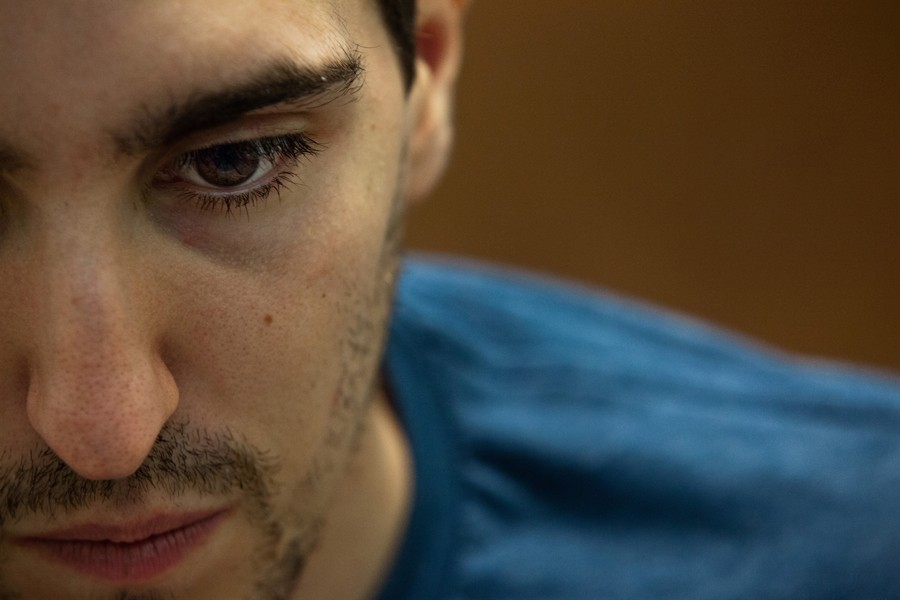
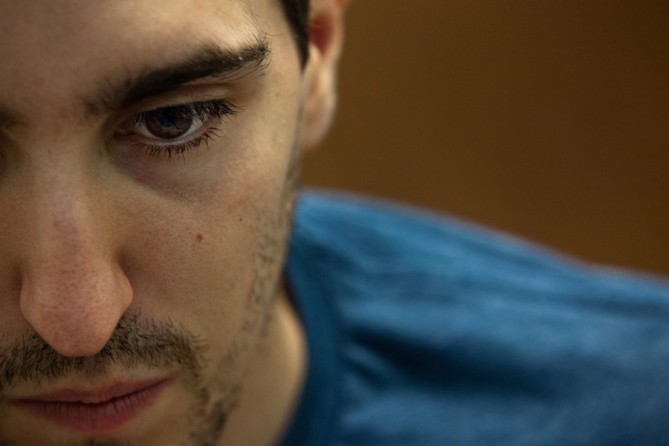
Bauman's eyelashes were scorched in the blast. They had been long and bristly. Now, they were growing back, only slower than he'd liked. (Josh Haner, The New York Times - June 5, 2013)
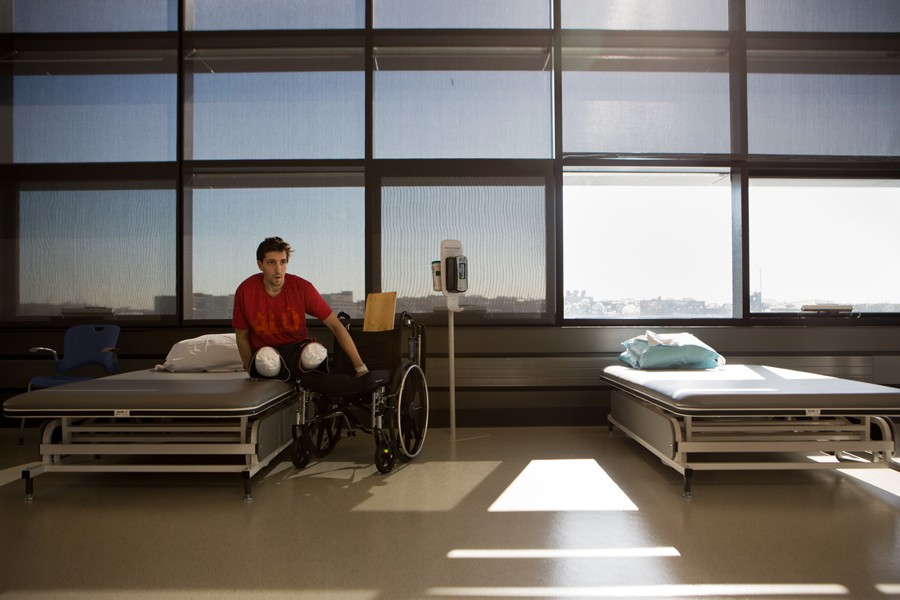
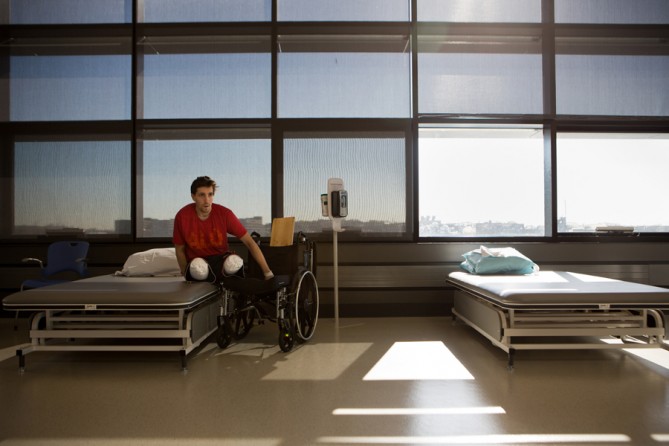
With his strength and balance improving, Bauman no longer needed a slide board (in back of his wheelchair) to move from the chair to his therapy mat at Spaulding Rehabilitation Hospital in Boston. (Josh Haner, The New York Times - May 7, 2013)
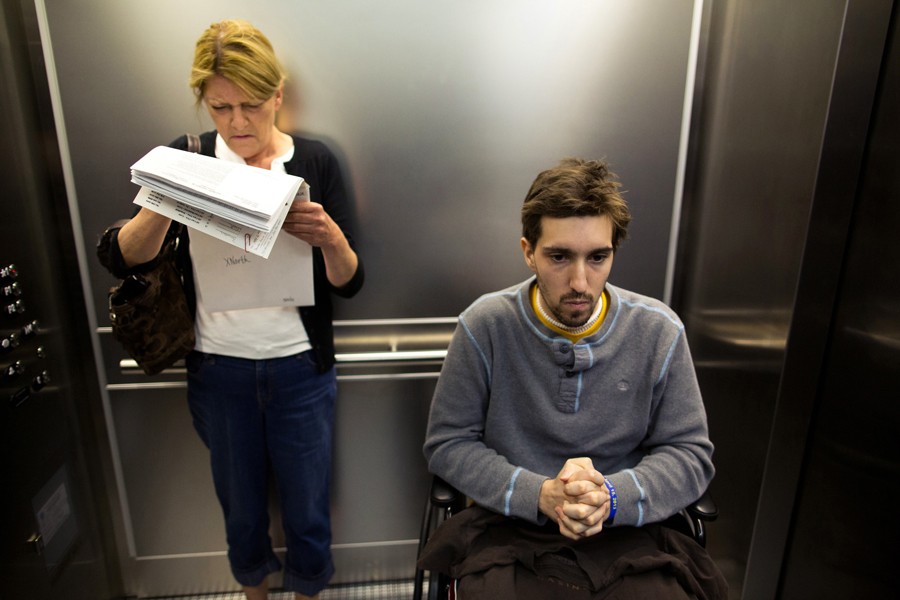
His mother, Patty, took time off work as a waitress to attend to him and navigate the paperwork associated with his treatment. She was responsible for getting him to appointments which were scattered across Boston. Here, he is late for an appointment to discuss different prosthetic leg options. (Josh Haner, The New York Times - May 15,2013)
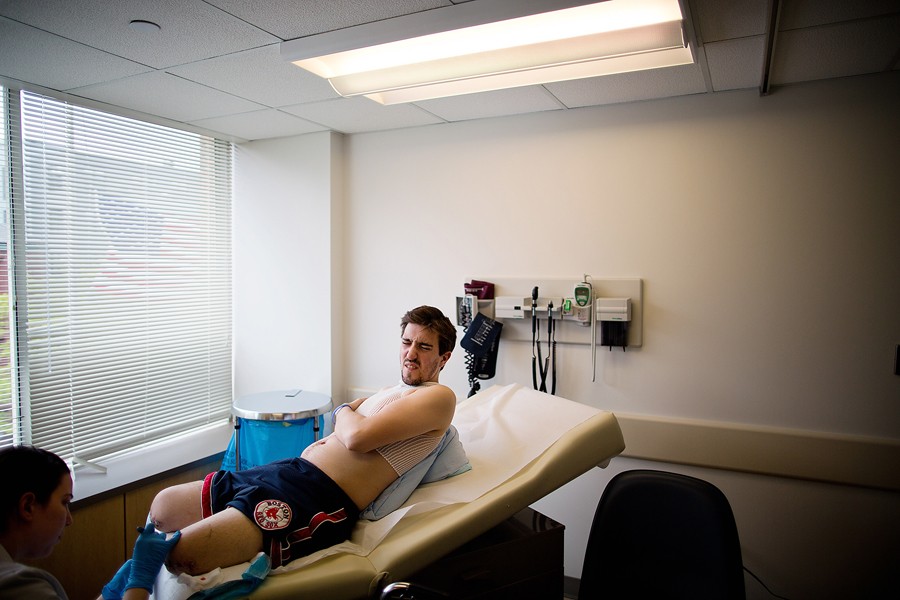
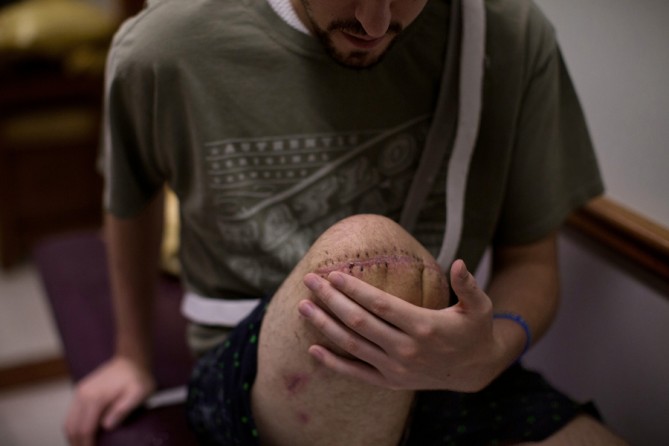
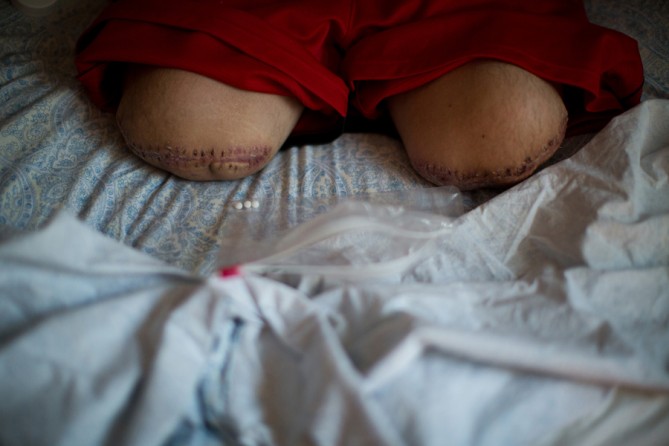
A month after the bombings, Bauman had the sutures removed from what was left of his legs at Boston Medical. Outside, a flag flew at half-staff in honor of the victims. (Josh Haner, The New York Times - May 15, 2013)
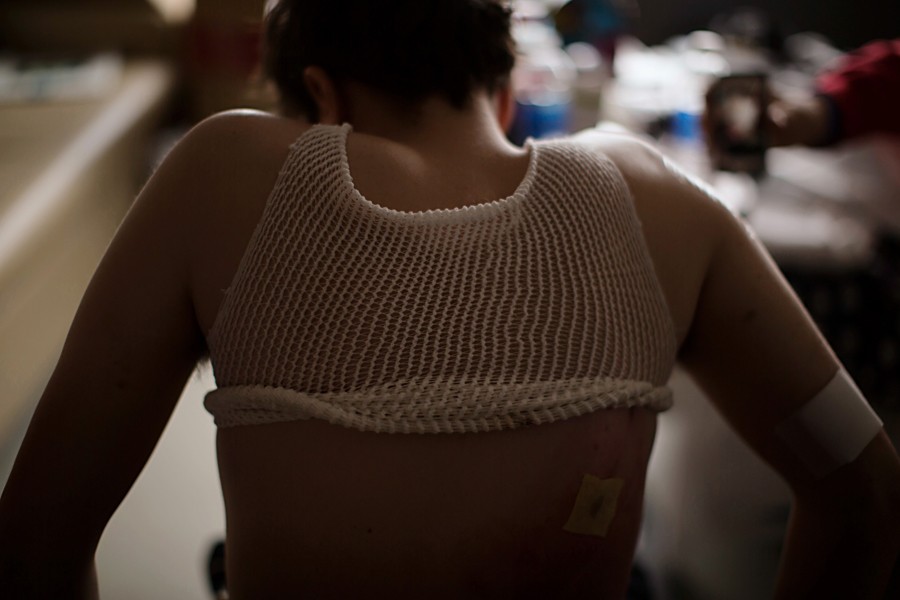
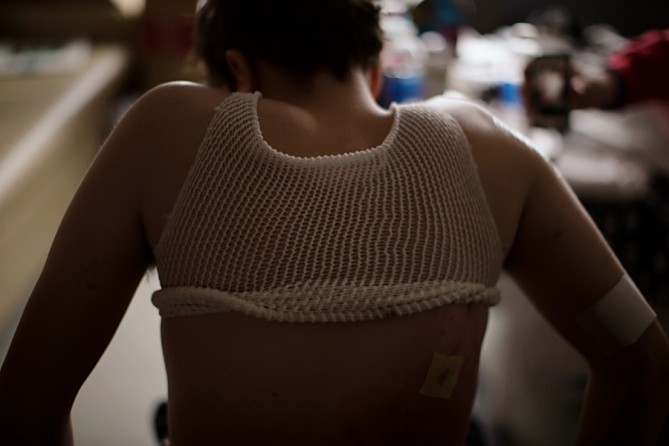
Bauman wore netting to keep his bandages in place. In addition to losing much of his legs, he sustained burns on his back and a deep puncture wound in his upper right arm. (Josh Haner, The New York Times - May 8, 2013)
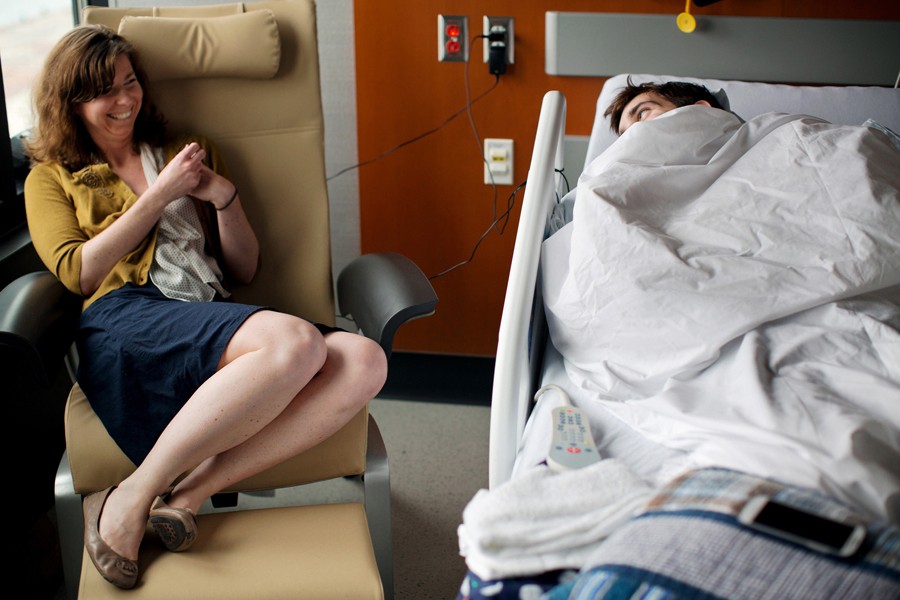
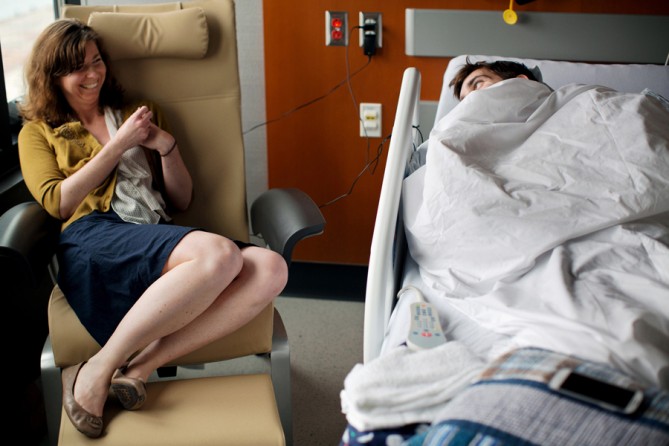
Bauman shares a joke with his girlfriend Erin Hurley at Spaulding Rehabilitation Hospital. He had been at the marathon finish line waiting for her to complete the race when the bombs went off. (Josh Haner, The New York Times - May 8, 2013)
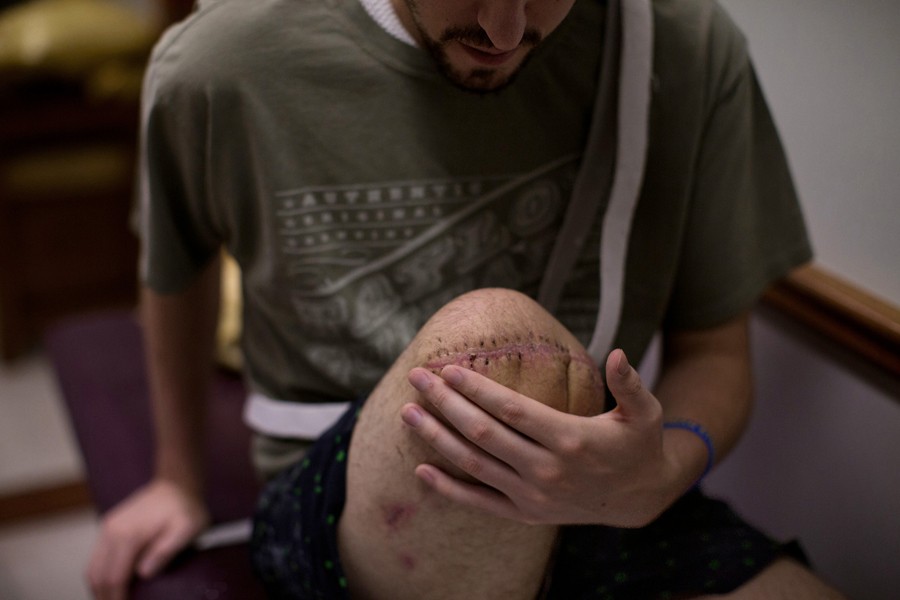
Initially, he could not stand to see his amputated legs, but he gradually grew more comfortable with them. Several days after the sutures came out, he had his first appointment with a prosthetist. (Josh Haner, The New York Times - May 21, 2013)
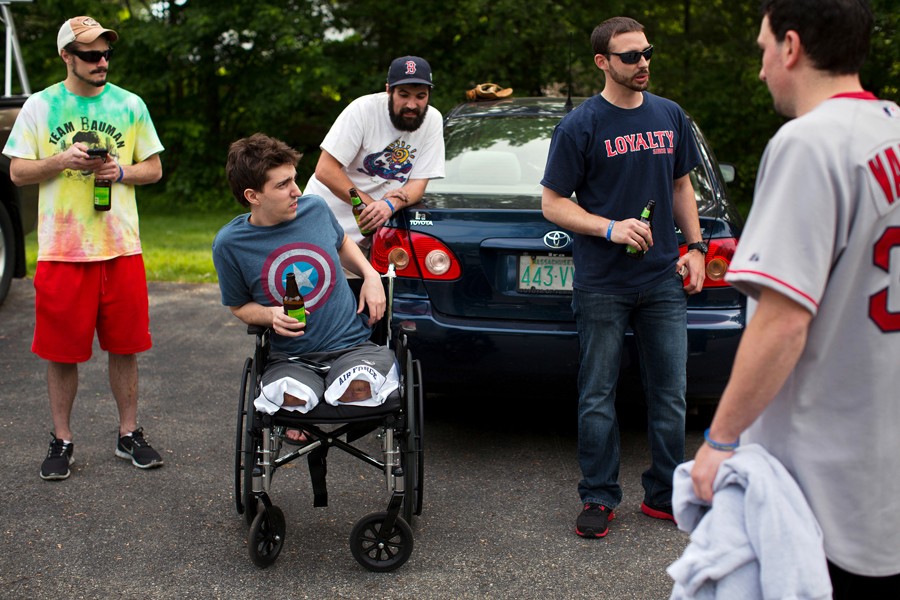
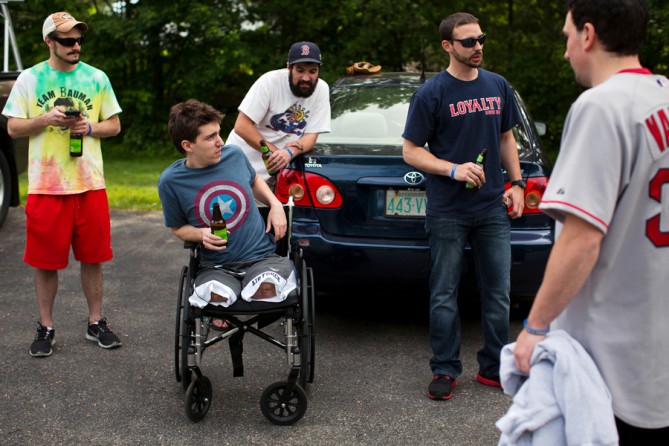
Hanging out with friends, who were wearing bracelets with the words 'Bauman Strong' on one side and 'April 15, 2013' on the other. (Josh Haner, The New York Times - May 28, 2013)
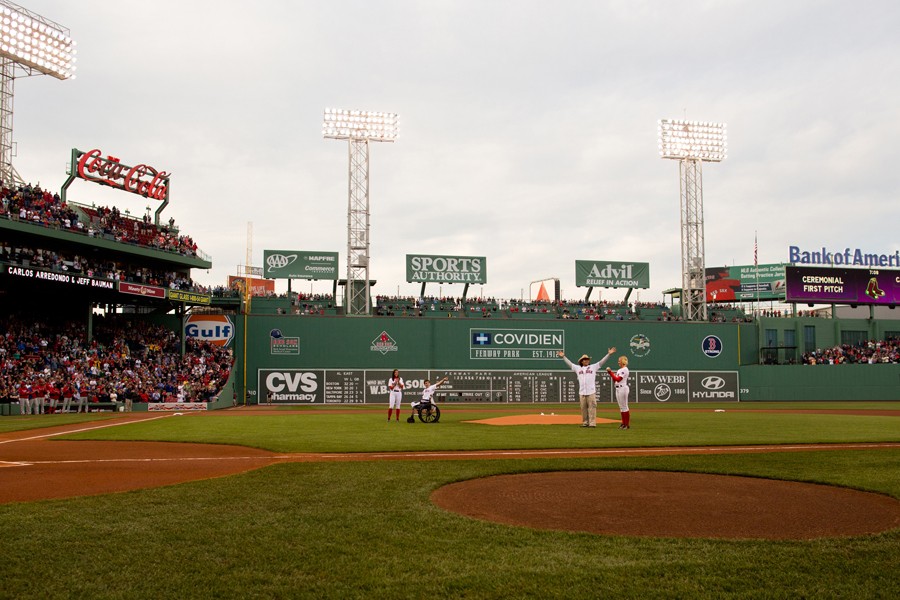
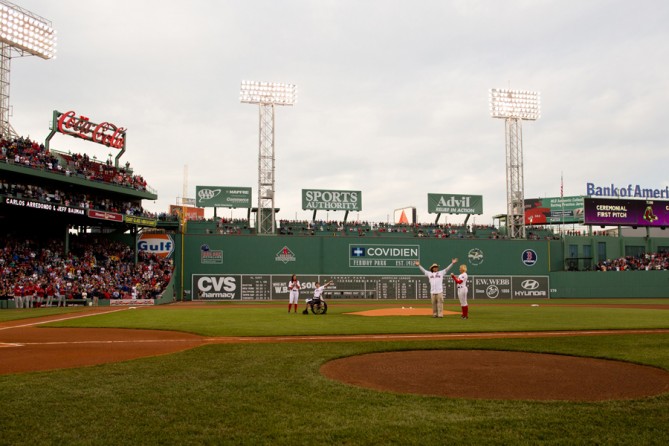
Bauman and Carlos Arredondo, the bystander who had helped him, were introduced at Fenway Park on May 28 before throwing the ceremonial first pitch for a Boston Red Sox game. (Josh Haner, The New York Times - May 28, 2013)
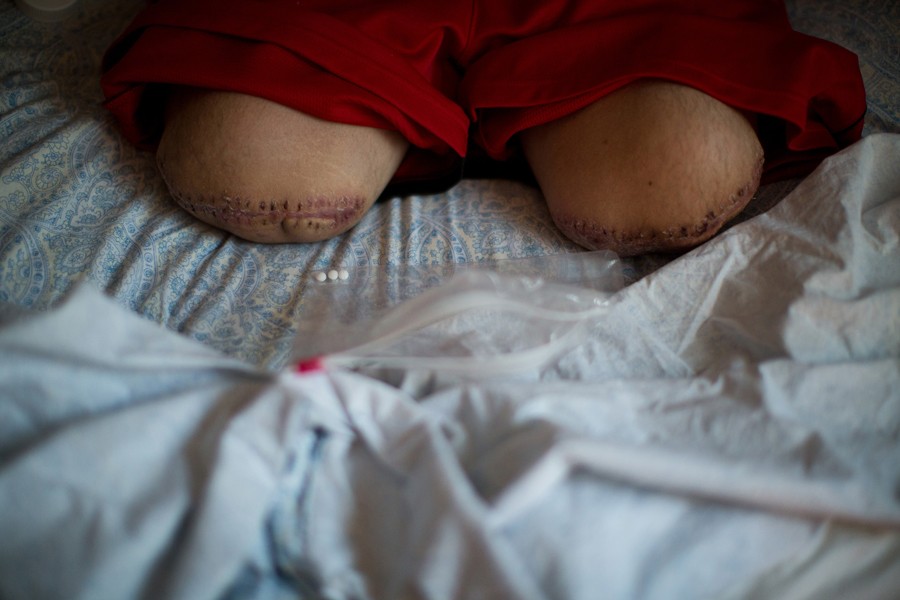
At home, he packed three tablets of the painkiller oxycodone in a baggie before going to a restaurant for his father's 53rd birthday. (Josh Haner, The New York Times - May 16, 2013)
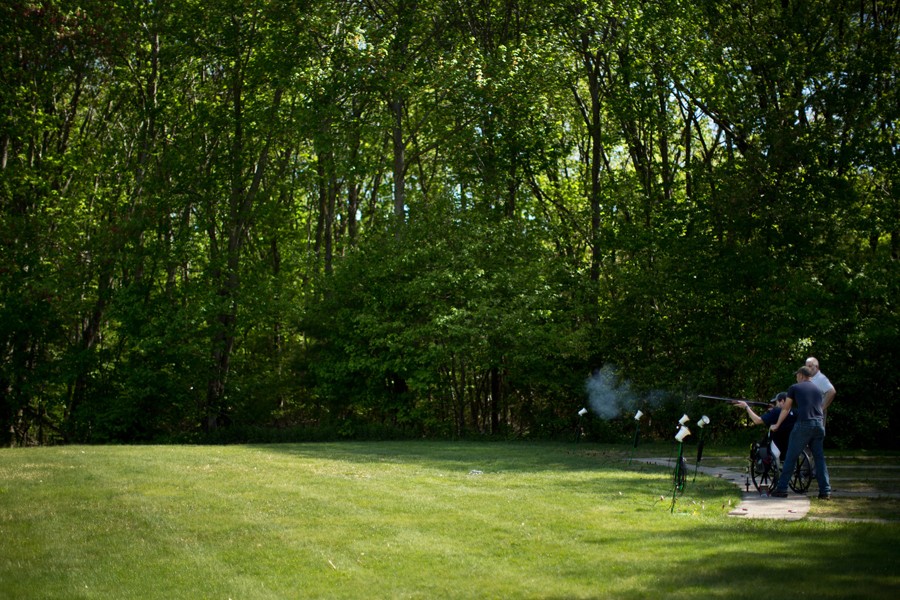
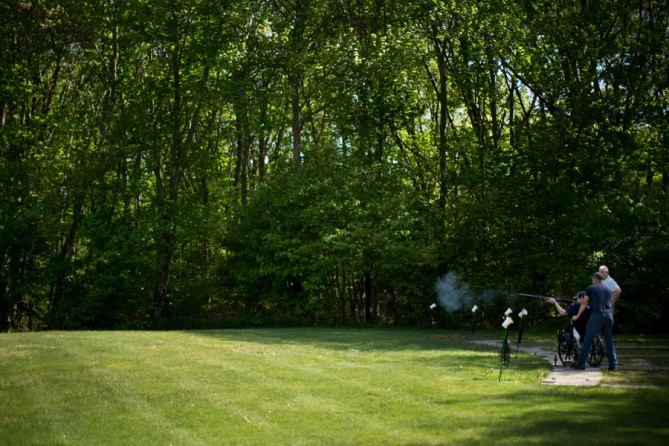
Shooting at a clay pigeon at a friend's bachelor party. "I don't know how I'm going to do with loud noises," he said beforehand. In the bomb blast, his right eardrum was blown out and his left one had a sizable hole. (Josh Haner, The New York Times - May 18, 2013)
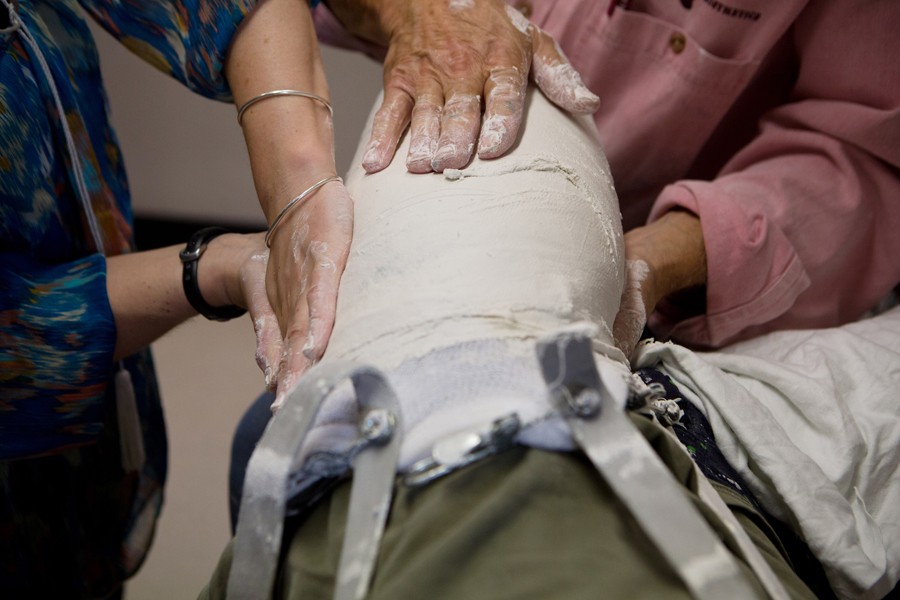
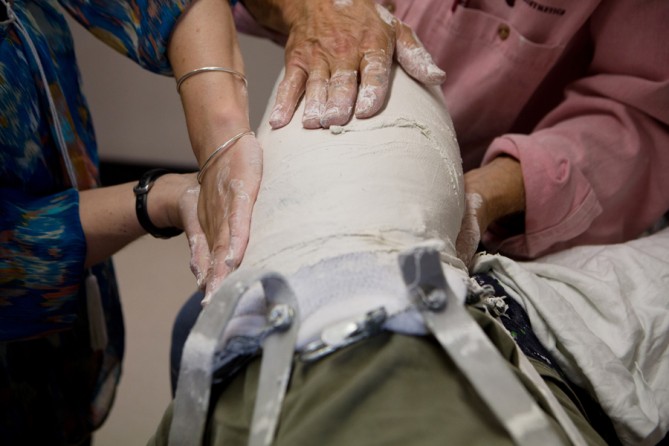
Casts of his thighs were made to build the sockets for his prosthetic legs. (Josh Haner, The New York Times - May 21, 2013)
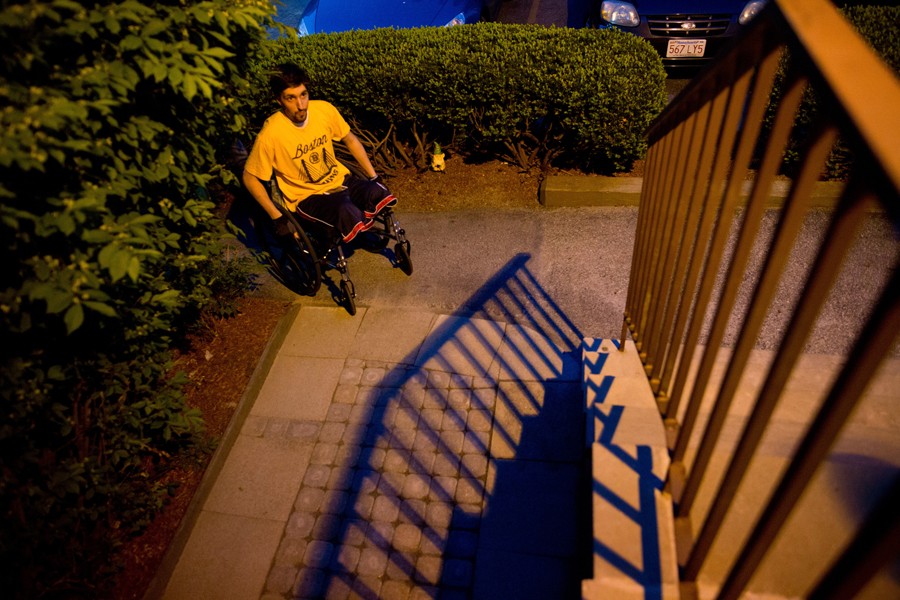
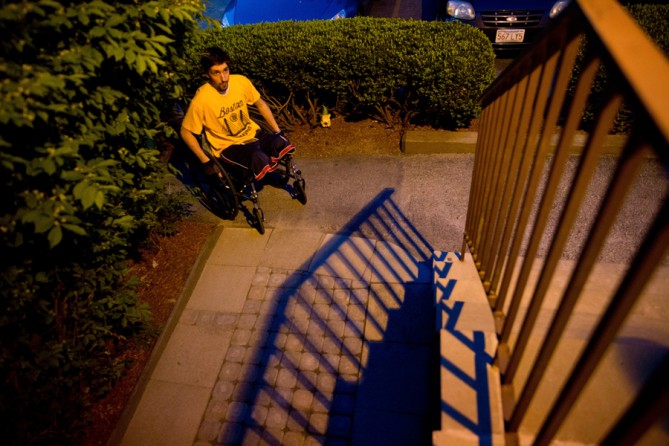
With his energy returning, Bauman was able to get out of the house more. Long stretches in his wheelchair make him sore, and he cannot go up stairs yet. (Josh Haner, The New York Times - May 20, 2013)
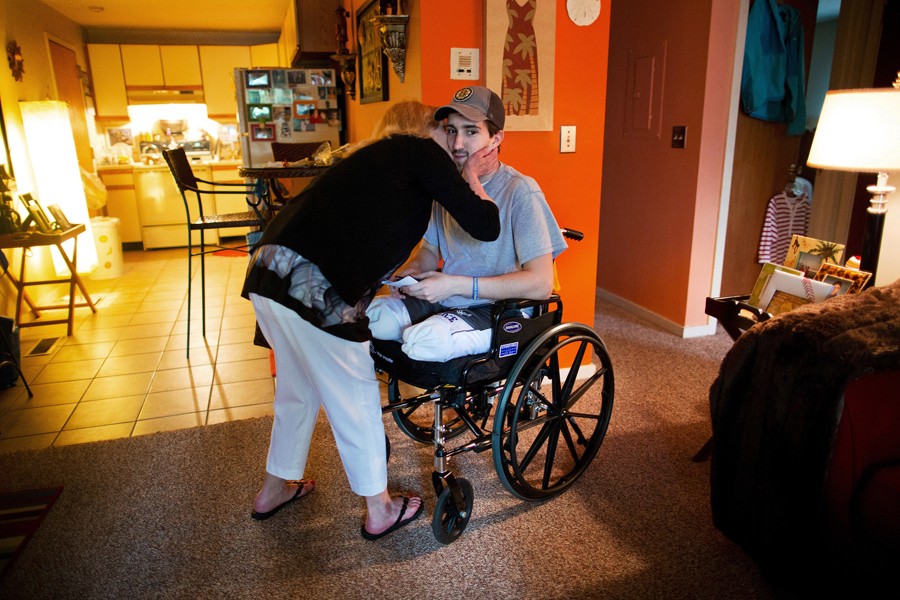
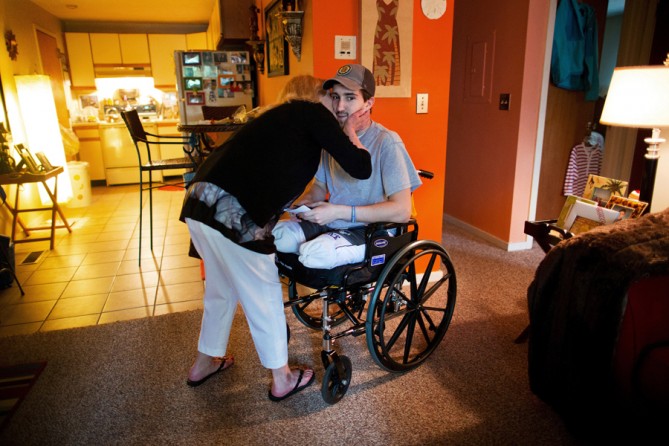
At home in the apartment he shares with his mother in Chelmsford, Mass., Bauman was agitated that she could not find one of his prescriptions. (Josh Haner, The New York Times - May 10, 2013)
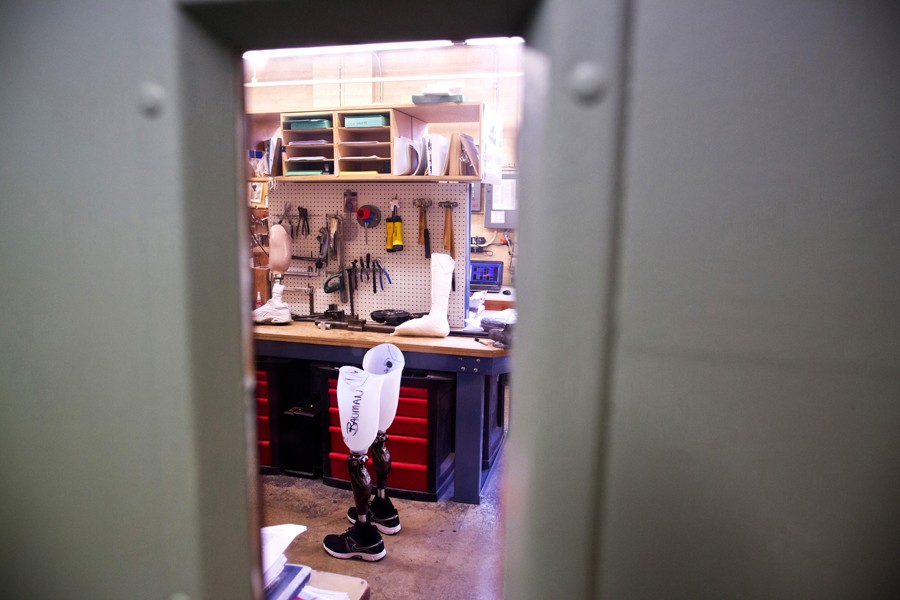
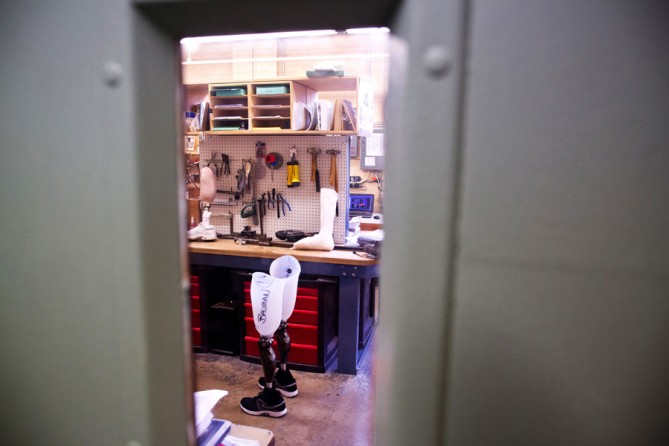
Bauman's not-quite-finished prosthetic legs with their size-10.5 sneakers. (Josh Haner, The New York Times - May 31, 2013)
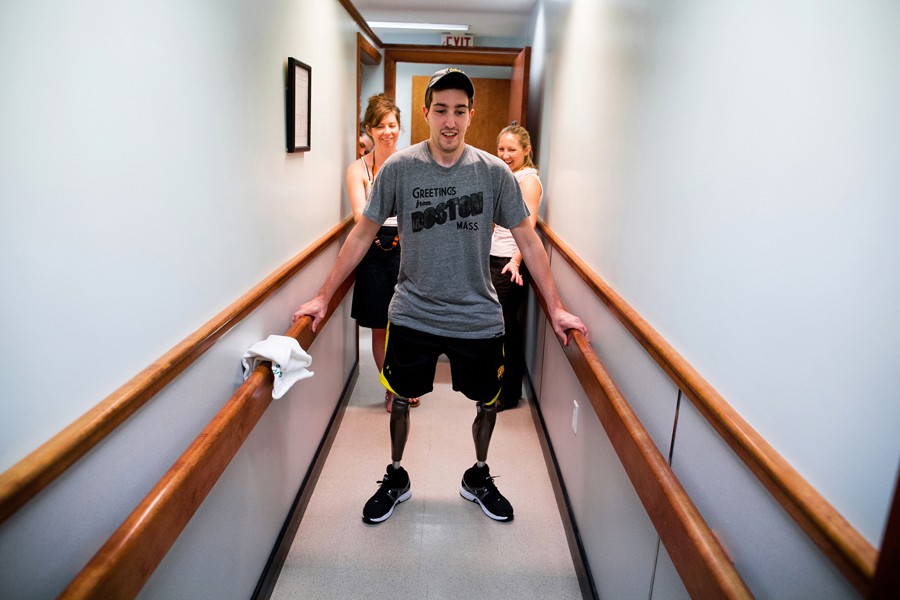
At a final fitting for his prosthetic legs, Bauman walked on his own for the first time since the day of the marathon. His girlfriend Erin, looked at him and said, 'I love that you're standing right now,' before coming around to steady him and kiss him. (Josh Haner, The New York Times - May 31, 2013)
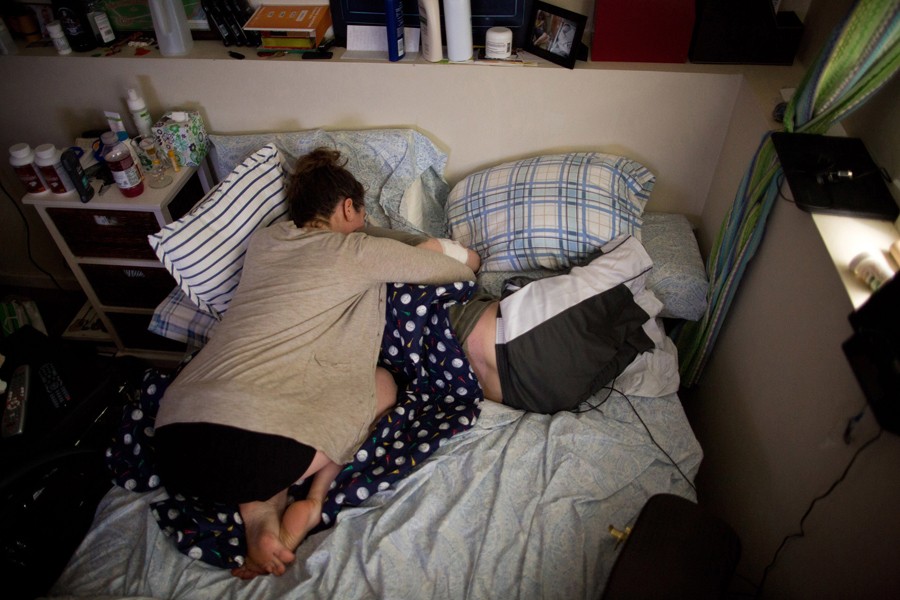
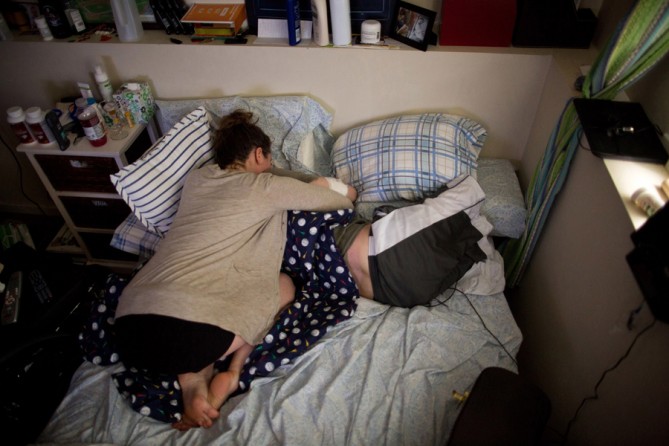
After a long day, Bauman's legs were sore when his girlfriend Erin, arrived. She had recently started doing yoga near his house and was spending most nights sharing his bed at his mother's apartment, living out of her car. (Josh Haner, The New York Times - May 21, 2013)
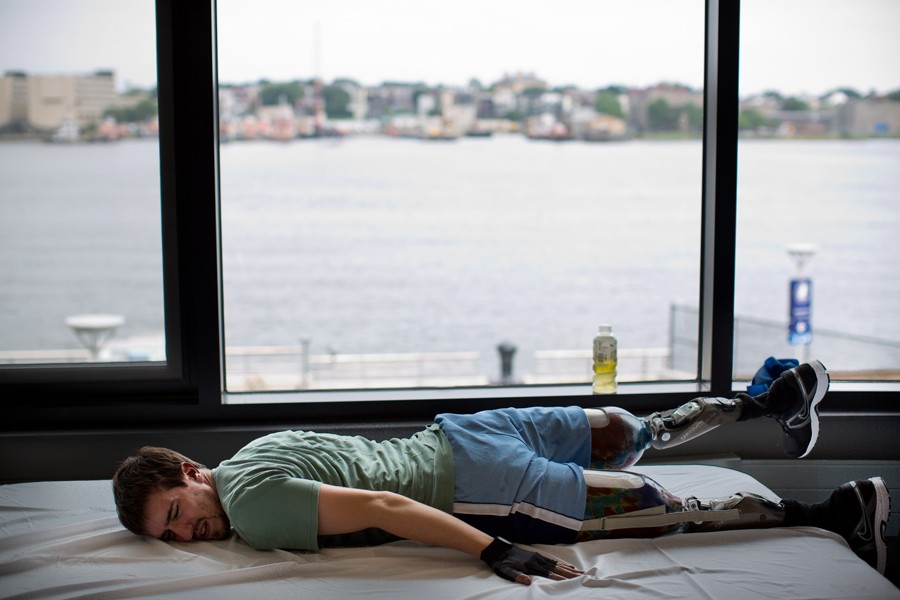
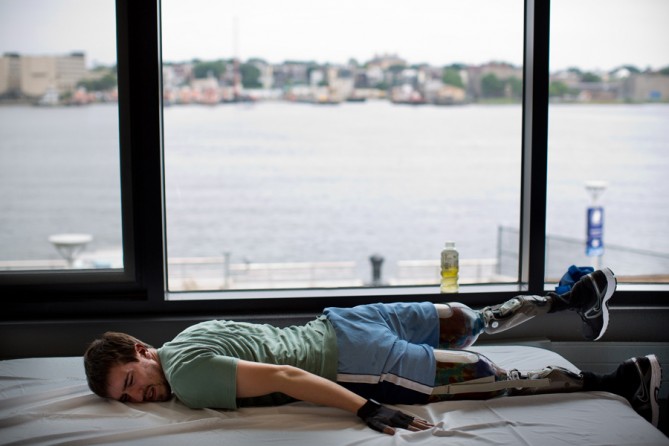
Bauman underwent physical therapy. His left leg was much weaker than his right, which made it more challenging. (Josh Haner, The New York Times - June 26, 2013)
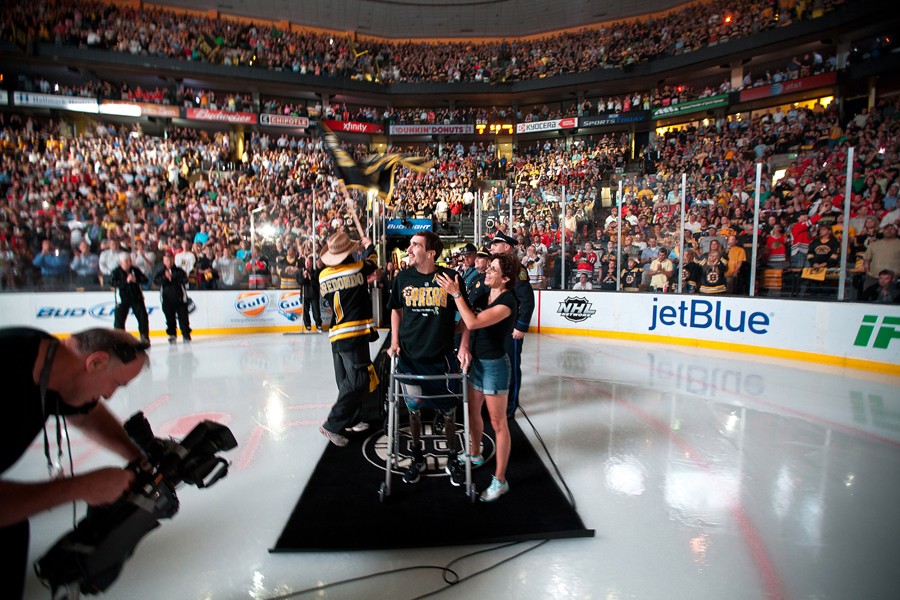
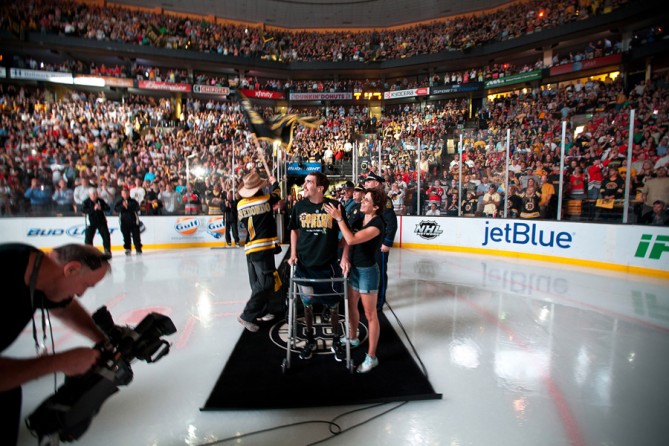
Invited by the Boston Bruins to appear before Game 6 of the Stanley Cup finals, Bauman stood and took a few steps, accompanied by his outpatient physical therapist, Michelle Kerr. At left, in the cowboy hat, is Carlos Arredondo, a bystander who helped Bauman shortly after the bombs detonated. Jeff did not want to appear, but his mother encouraged him and eventually convinced him, saying, 'this country needs some hope right now.' (Josh Haner, The New York Times - June 24, 2013)
Biography

Josh Haner is Staff Photographer for The New York Times. He grew up in San Francisco, and graduated from Stanford University with a B.A. in Studio Art (Photography) and a B.S. in Symbolic Systems. After graduating he moved to New York to take a job as an Assistant Photo Editor at Fortune Magazine and after 2 years moved to the New York Times to photograph, edit, and produce multimedia projects. He was recently selected as "One to Watch" by American Photo and previously, he was named one of Photo District News's Industry Players. He lives in Brooklyn, New York.