Finalist: The Washington Post, by Michael Williamson
Nominated Work















Greeneville, Tenn.: Austin Davis, age 1, munches on a slice of wheat bread (he was too young for a full sandwich) on the Lunch Express bus. The bus is how the Agriculture Department's food-stamp program reaches the kids who rely on free school meals when they are on summer vacation. It visits trailer parks, housing developments and rural homes in the hollows. (July 7, 2013)

Greenville, Tenn.: Children make their way off the Lunch Express bus after getting a meal. Scores of poor children are served lunch each weekday in the areas around Greeneville. Because so many poor families to not have access to transportation, the bus comes to them. They must eat on the bus, and finish within 15 minutes, because the bus must make many stops over a wide area every day. (July 7, 2013)

Greenville, Tenn.: Six-year-old Hannah Knight, left, and Kaylee Arwood, 4, eat Lunchables as part of their meal. Apple slices, fruit cups and low-fat chocolate milk also were offered. Scores of poor children are served lunch each weekday during the summer as the Lunch Express bus visits trailer parks and housing projects. (July 7, 2013)

Greenville, Tenn.: While Jennifer Laughren is at work, children burn off energy in her trailer after eating lunch on the Lunch Express bus. Although the USDA program tries to offer a balanced meal, sometimes the high-sugar items offered, such as apple juice and cookies, put the children on a 'sugar high.' At center, Cameron Cutshaw, 5, holding a toy gun, chases his sister Dezaray White, 6, left. They are trailed by Gabriel Jones, 5, Jennifer Laughren's niece. Partly visible at right, Eric Jackson tries to calm them down. In the foreground is Laughren's youngest child, 9-month-old Sarah Jackson. (July 7, 2013)

Greenville, Tenn.: Jennifer Laughren holds 9-month-old Sarah after coming home from her second 14-hour shift at a minimum-wage job in two days. She leaves at 4:30 a.m. and gets home at 8:30 p.m. "I'm so tired that I can't even sleep," she says. Because Laughren makes so little money, she needs the meals provided by the lunch bus and her food stamps to be able to pay rent. Laughren has five children, and the bus saves her having to pay for 25 meals a week. (July 7, 2013)

Alamo, Tex.: Jeremy Castro, 4, in his Batman costume, peers through a fence at his home. At far left is his brother Pablo, 6; at center is his sister, Emily, 13, holding brother Jaime, 2. They live in Hidalgo County, Tex., one the poorest and fastest-growing counties in the United States, and one where obesity is a growing problem. The USDA's response is an education program that teaches families on food stamps how to stretch their benefits and choose more healthful foods. Emily says she participated in the nutrition education seminar at her school. A study revealed that as a result of obesity-related problems among Hidalgo County's youth, children there are projected to have a lower life expectancy then their parents have. (November 10, 2013)

La Joya, Tex.: Maria Olivera sleeps with her 1-year-old son Matthew and daughter Sarai, 2, in a trailer without glass in the windows and with electricity coming from a neighbor via an extension cord. Luisa Colin, director of the Extended Food and Nutrition Program in Hidalgo County, later asked her if she had attended any of the nutrition classes offered by the county, and Olivera said yes. In the isolated area where Olivera lives, the stores tend to carry cheap, filling foods that are also high in sugar and fat. A study forecasts that Hidalgo County youth will have a lower life expectancy than their parents. (November 10, 2013)

McAllen, Tex.: Christopher Vasquez, 5, hoists his 1-year-old brother Joel from a bucket where he was being given a bath. Brother Julio, 2, at left, seems less anxious. Nutrition educators asked their mother, Francesca Vasquez, to participate in a nutrition education program designed to combat growing obesity in Hidalgo residents. She agreed to meet with educators at her home. (November 10, 2013)
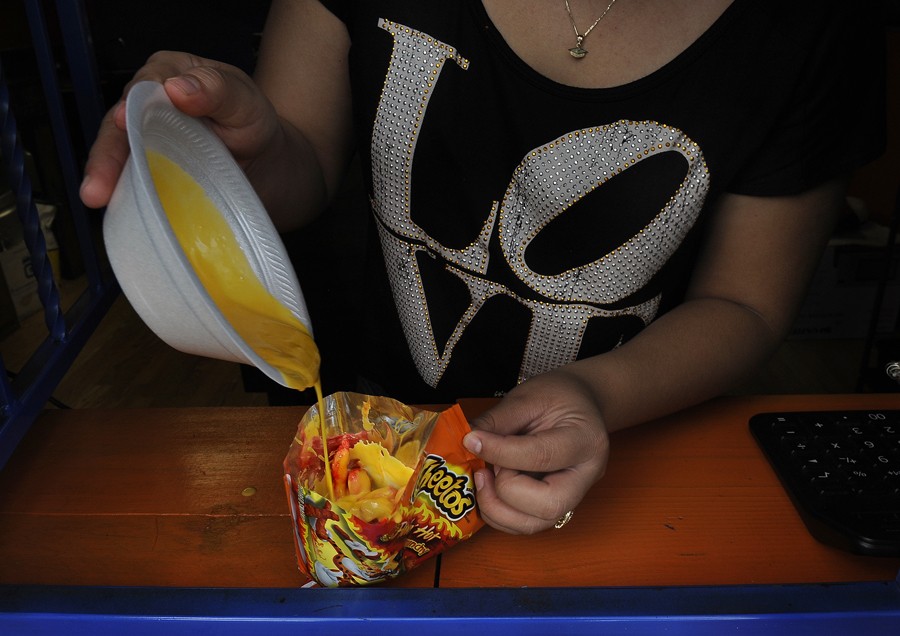
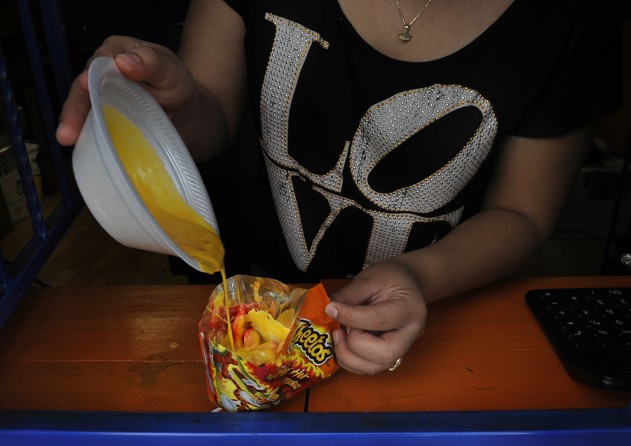
McAllen, Tex.: Adriana Gonzalez prepares one of the quick and cheap (and usually unhealthful) snacks that are pervasive in this part of Texas: melted cheese sauce poured over Cheetos. Hot Cheetos cost a dollar, and scores of drive-through convenience stores that accept food stamps offer it. In Hidalgo County, healthy food is more expensive, and many people can't get to the stores that sell it because they don't have cars. Meanwhile, the obesity rate nears 40 percent. (November 10, 2013)

McAllen, Tex.: Residents pass an old-fashioned sideshow at the Alamo Flea Market. The obesity rate around Hidalgo County, one of the poorest and fastest-growing U.S. counties, is 38.5 percent. Children now living in this county are not expected to live as long as their parents. (November 8, 2013)

McAllen, Tex.: At the parking lot carnival in McAllen, one can buy high-sugar lemonade to wash down the nachos and cheese. High-calorie fast food is so much a part of the landscape of Hidalgo County that most young people are not aware of the health problems it can cause, and the USDA, through its food stamp program, is trying to teach residents to make more healthful choices. (November 8, 2013)

Washington, D.C.: Raphael Richmond pauses at her front door, making a mental list of things she needed to look for, before heading to the Bread for the City charity to get clothes and food. Richmond, who has a disability, is a fourth-generation food stamps recipient. She has six children and has to resort to charity toward the end of the month after her food stamps are gone. In November, Congress passed legislation that cut benefits, and now she is more in need of help. Although she didn't want to do it, she convinced her older daughter, who was eligible, to sign up for food stamps, helping offset the benefit cuts. (December 16, 2013)

Washington, D.C.: Dasha, 14, left, cleans while her sister Dashanna, 12, entertains 2-year-old twins Jada and Jaden with a rattle. The twins, the children of Raphael Richmond's sister, often stay at the house when their mother is at work, further straining the food supply. The family goes to food banks and other charities more often as food runs out earlier in the month. (December 16, 2013)
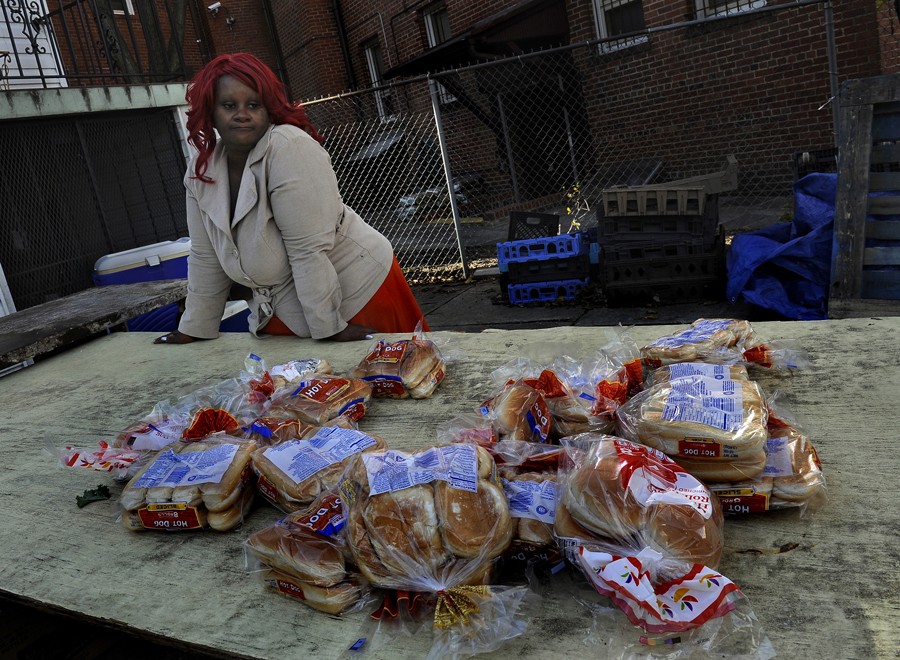
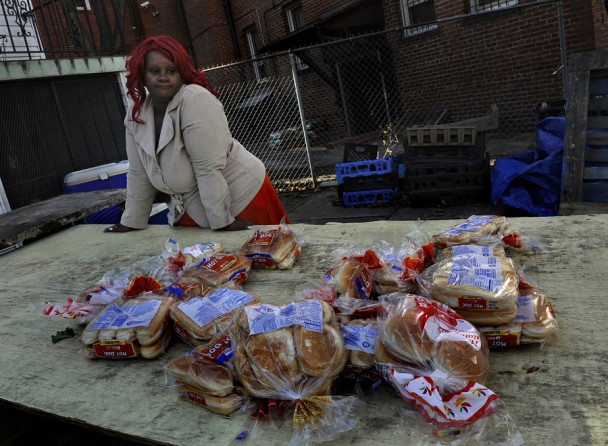
Washington, D.C.: Raphael Richmond is a bit disappointed that there was not more food available at a church food bank giveaway, but still thankful. By the time her three-hour wait in line ended, the canned goods, dairy products, fruits and vegetables were gone. She was able to get some yams, cabbage and bread. Raphael Richmond and her six children are adjusting to Congress's cuts in food stamp benefits.(December 16, 2013)

Woonsocket, R.I.: William Bobola, 75, is among scores of Woonsocket residents who have waited in line to get a bag of food at Bryan's Food Pantry in the basement of St. Charles Church. He lives on a fixed income and receives food stamps, but it was the last day of the month and he, like many others), had run out of many food items. He gets food (mostly tuna, peanut butter and pasta) for himself and his 36- year-old daughter, who has a disability and lives with him. Many people in Woonsocket receive food stamps. The city suffered massive job losses over the years as textile mills closed, and food-stamp money is a major part of the economy. (March 17, 2013)

Woonsocket, R.I.: Jourie Ortiz gets some attention from his wife, Rebecka. He was woozy and hardly able to stand after going 48 hours on only about five hours of sleep. He works an overnight shift as a stockboy but then comes home to his family. Years of job losses in Woonsocket, stemming from textile mill closings, have resulted in many people relying on food stamps. (March 16, 2013)
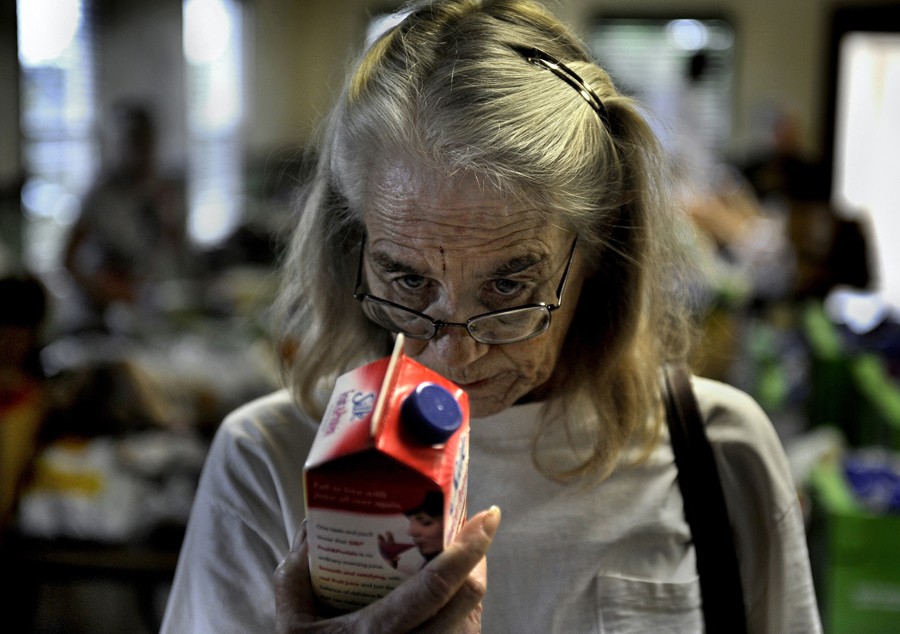
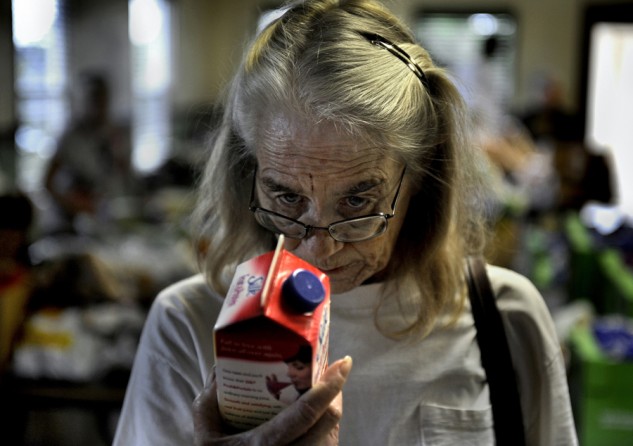
Hobe Sound, Fla.: Marion Mattrazzo checks the expiration date on soy milk at a food pantry. Scores of residents waited to get a box of food, but senior citizens with a number go first. Mattrazzo, 54, suffers from cirrhosis of the liver and lives on about $7,000 per year. She signed up for food stamps because so much of her income goes to health care, and she is not old enough to enroll in Medicare. She had a vibrant construction company before Florida's housing collapse, and her husband died two years ago. She now rents, for $200 a month), a 100-square-foot shack that was tacked on to a garage. The SNAP program is a huge help to her, but because she has no stove, she has to buy microwaveable foods. She's been feeling depressed about her circumstances, she said. "I'm just existing at this point." Many low-income seniors are eligible for food stamps but don't participate in the program, either out of pride or because they aren't aware of it. (April 23, 2013)
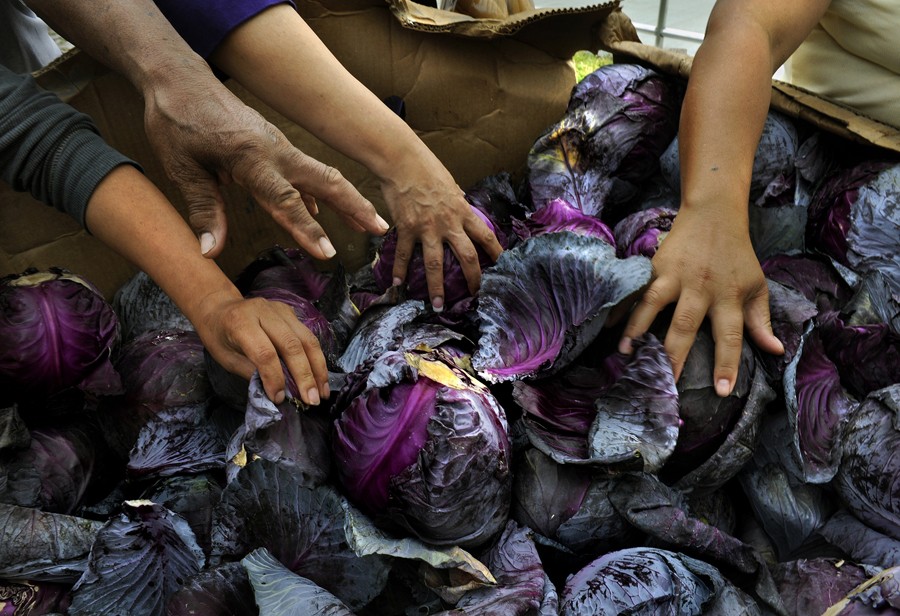
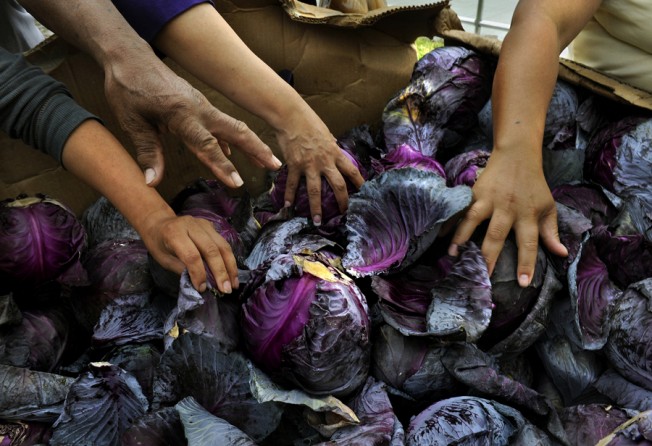
Hobe Sound, Fla.: People in the Dunbar neighborhood of Hobe Sound reach for free cabbage at a food pantry in Hobe Sound. Many low-income seniors do not participate in the food stamps program, known as SNAP, even though they qualify, because they are either too proud or unaware of the program. So recruiters in St. Lucie County work to persuade reluctant seniors to take the SNAP funds for which they are eligible. (April 23, 2013)
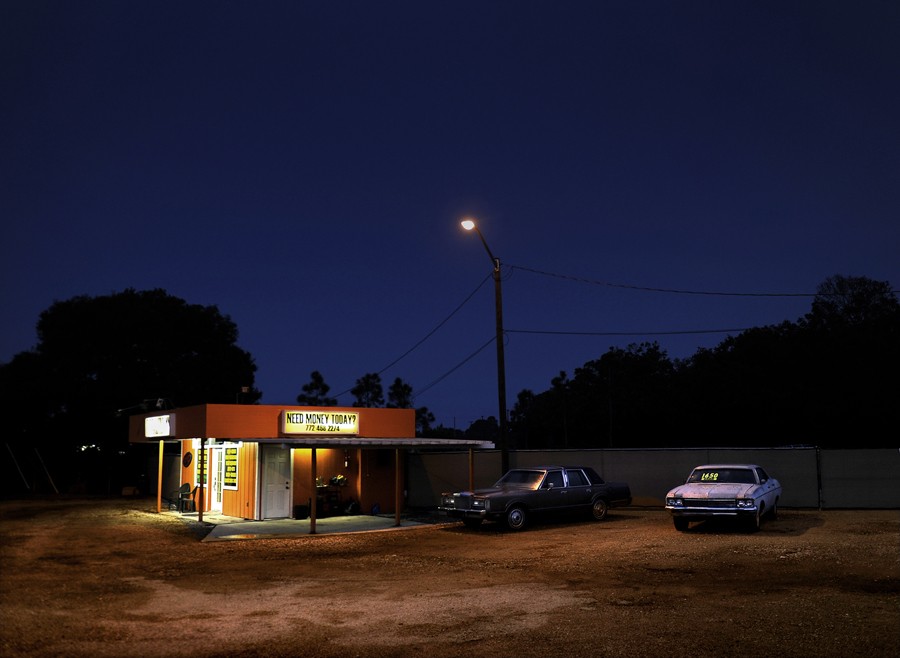
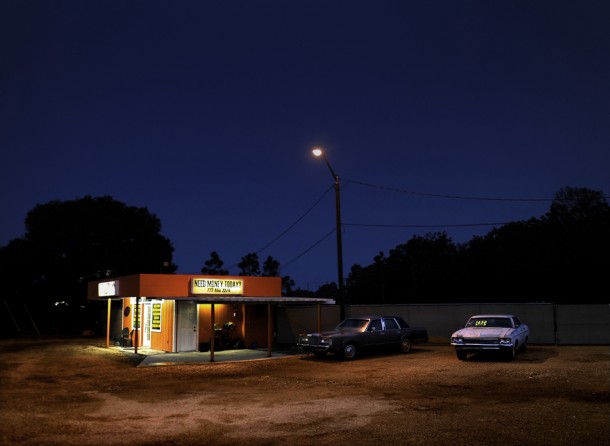
Fort Pierce, Fla.: Around the area's mobile-home parks for lower-income seniors, it's easy to see that many people don't have cars. There are plenty of places such as this lot, called Florida Auto Pawn, that loan cash for cars from people in need. Some never come back for the car. Many low-income seniors qualify to participate in the food-stamps program but do not receive the benefit, often because they are too proud or unaware of it. (April 24, 2013)
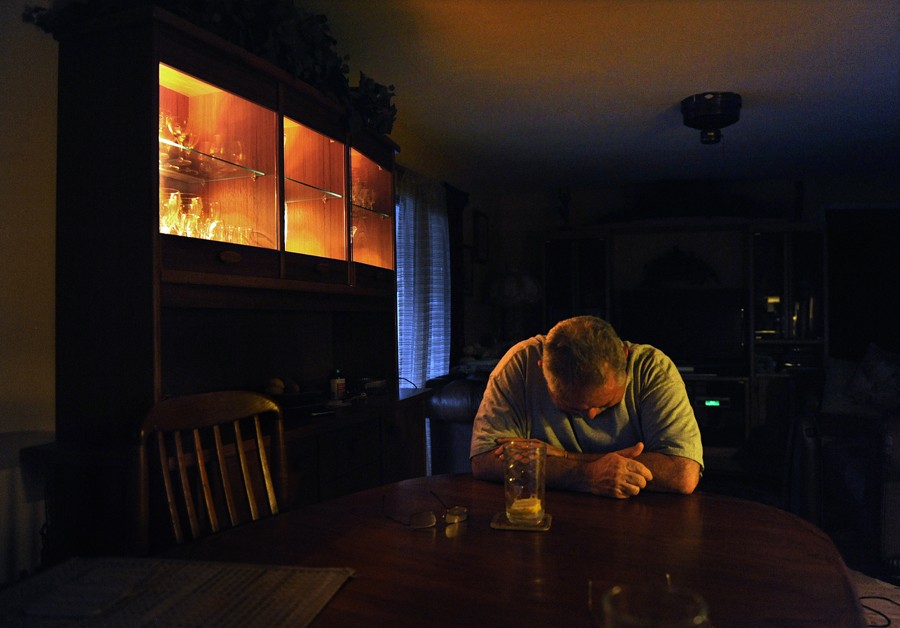
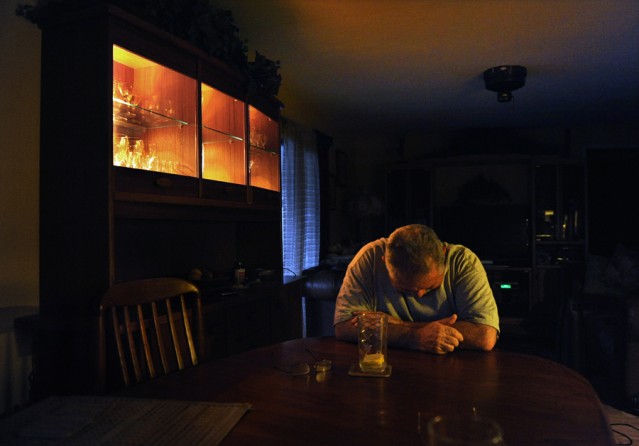
Fort Pierce, Fla.: Lonnie Briglia, 60, paused to compose himself as he told of the losing battle with the bank to save the family home. 'It's like life is a big donut and I fell through the hole,' he said. He's inside the small trailer he bought with his wife for $750 after losing the family home to foreclosure. He's been on the fence about whether to take part in the SNAP program but said he might do so if he felt desperate enough. Many eligible seniors pass up food-stamp benefits, either out of pride or because they're unaware of the program. (April 24, 2013)
Biography

Michael S. Williamson joined The Washington Post in 1993.