Finalist: The Post and Courier, by Photography Staff
Nominated Work
To the Pulitzer Prize Judges for Feature Photography:
On the night of June 17, 2015, reports of a mass shooting at Emanuel AME Church pierced the newsroom. Still recovering from exhaustive coverage of the killing of Walter Scott, a black man shot four times in the back by a white police officer, members of our visuals staff rushed to respond.
From that night at the scene and throughout, our visuals team captured images of a community, first stunned by violence, then overcome with sadness and then determined to unite and heal. That was a difficult, demanding task, but the photographs in this entry illustrate our staff’s vision and ability to be there and be ready. Depicting ongoing violence is certainly powerful. But capturing tension, deep emotion and healing is an even more refined skill.
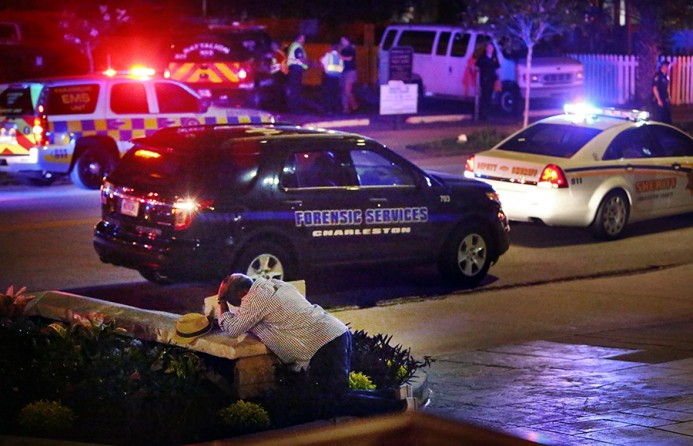
Within minutes of arriving that night our photographers produced poignant images that captured the entire story. Multiple law enforcement agencies swarmed the area surrounding the church as Rev. Anthony Thompson, ran through initial police lines trying to get to his wife inside. When finally stopped, he collapsed overcome with emotion. His wife was among the nine people killed inside the church. On the same block police officers searched with guns drawn for the shooting suspect on the grounds of a nearby downtown church.
As details emerged about the crime and the gunman, a white man who opened fire during a prayer meeting in the historic black church, our photographers realized they faced a deeper responsibility: the need to connect the crime and aftermath with the city’s continuing struggle to come to grips with its complicated racial history.
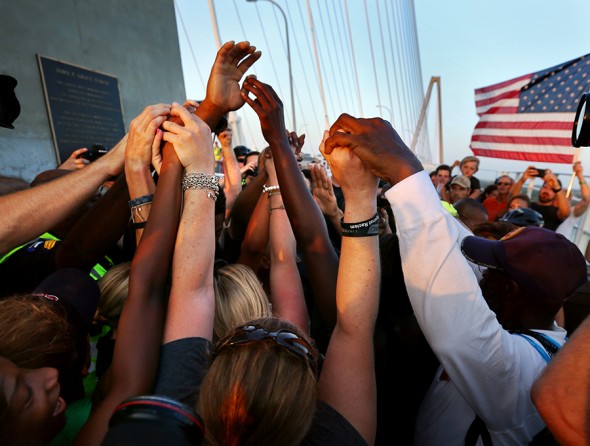
“Charleston strong” wasn’t just a phrase: The nation saw the community praying and mourning in solidarity on the streets and in crowded churches. Our staff was there to capture the unbroken spirit of Charleston, and we were there as thousands joined hands in a Bridge to Peace forming a human unity chain across the Charleston harbor bridge to honor the Emanuel Nine.
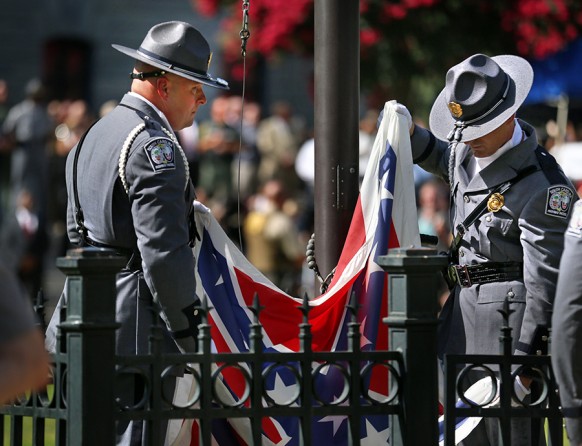
As all of that occurred, the massacre prompted renewed calls for removal of the Confederate flag from the South Carolina Statehouse grounds. Out staff of six visual journalists captured that, too. The contentious debate, heated protests from opposing sides and the ceremonial removal of the flag made for compelling pictures.
Our photographers wrestled with their own grief as they endured long days with searing summer heat indexes in the triple digits. Covering the ninth funeral was as emotional as the first, but our staff was there for the entire story, not coming and going like the hordes of media organizations that descended on our city. Using basic wireless technology and old school community journalism, our staff provided the most complete photo account of the Emanuel massacre in print, online and over social media.
For these reasons we nominate them for the Pulitzer Prize for Feature Photography.
Sincerely,
Mitch Pugh, Executive Editor
Nominated Work
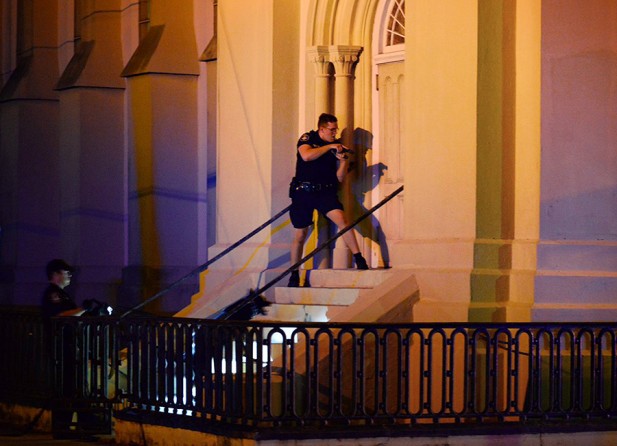
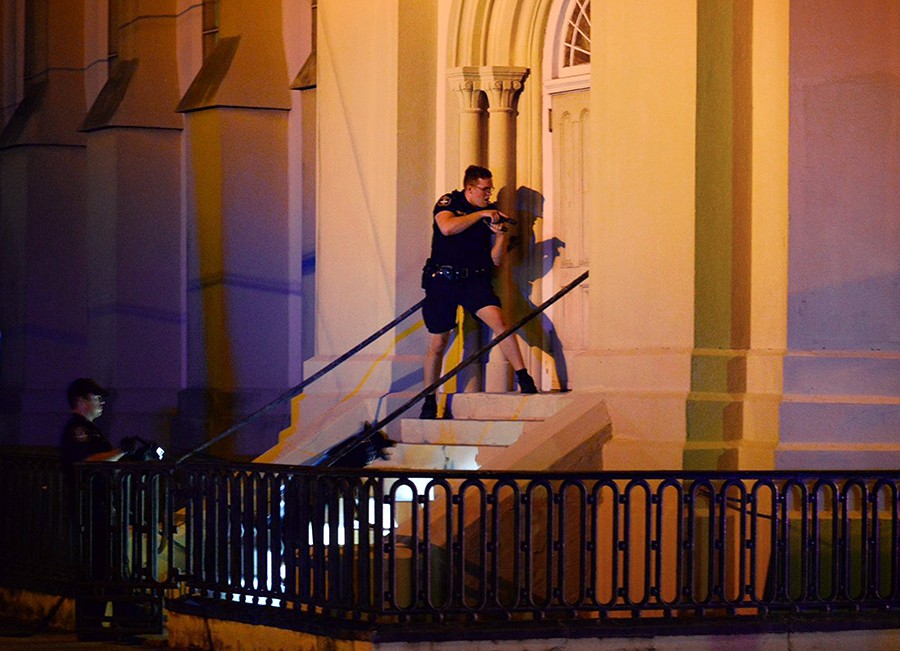
Charleston police officers search for a shooting suspect on the grounds of a church in downtown Charleston, S.C. A white man had opened fire during a prayer meeting inside nearby Emanuel AME Church killing nine people attending a Bible study. The shooting left behind devastated families and a shocked community. The shooter remained at large Thursday morning (Matthew Fortner, The Post and Courier - June 17, 2015).
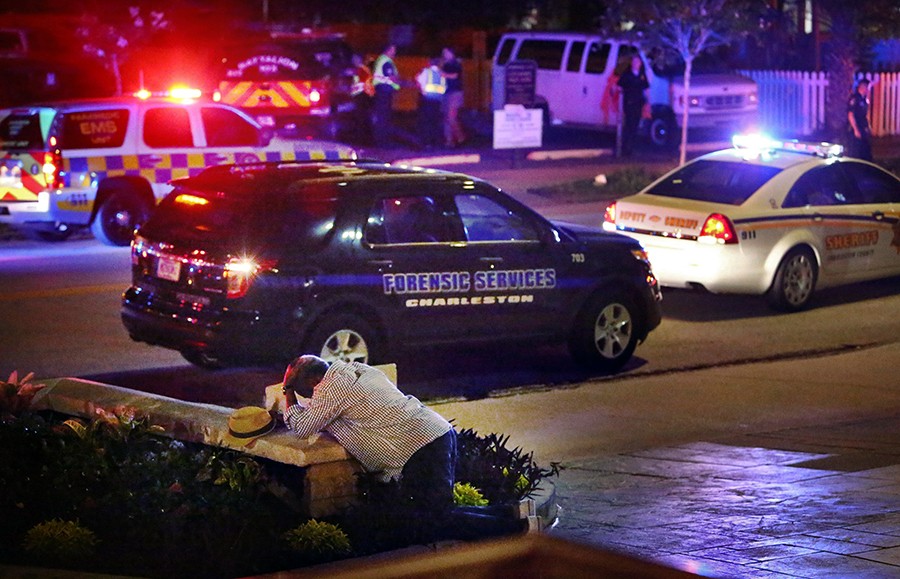
Multiple law enforcement agencies canvas the grounds of Emanuel AME Church in Charleston as the Rev. Anthony Thompson collapses in grief along Calhoun Street while waiting for news about his wife, Myra Thompson, after a mass shooting during a Bible study. Thompson's wife was among nine people killed in the shooting (Wade Spees, The Post and Courier - July 17, 2015).
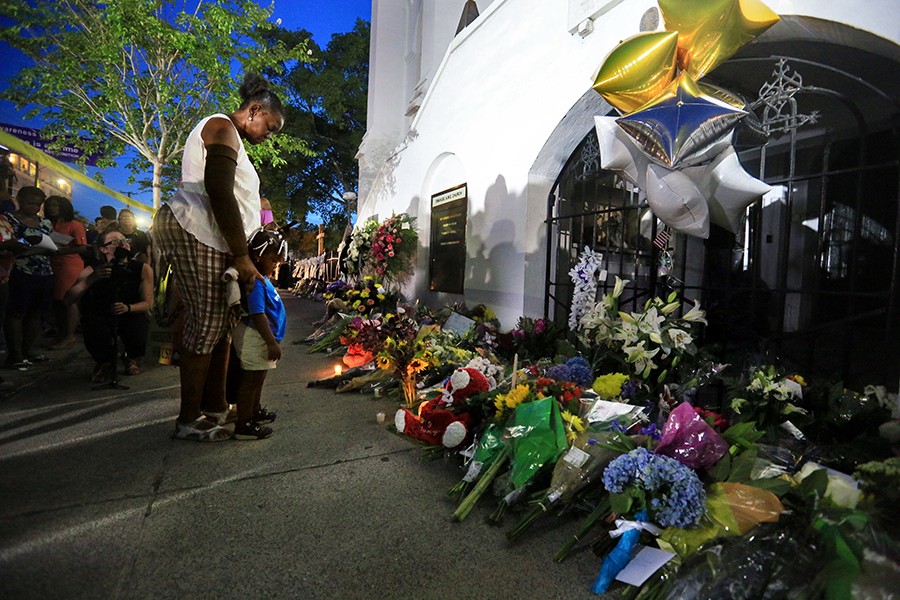
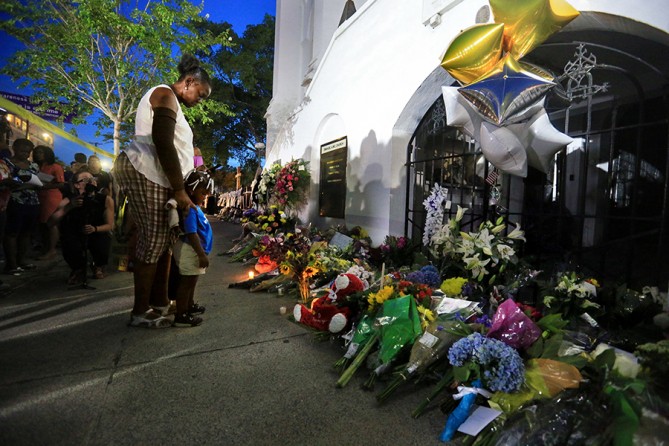
Phyllis Holmes of Charleston takes a moment to pray with her 3-year-old granddaughter after placing a candle at a memorial on the sidewalk in front of Emanuel AME Church in Charleston. The stunned city tried to come to grips with tragedy a day after a mass shooting at the church left nine people dead (Paul Zoeller, The Post and Courier - July 18, 2015).
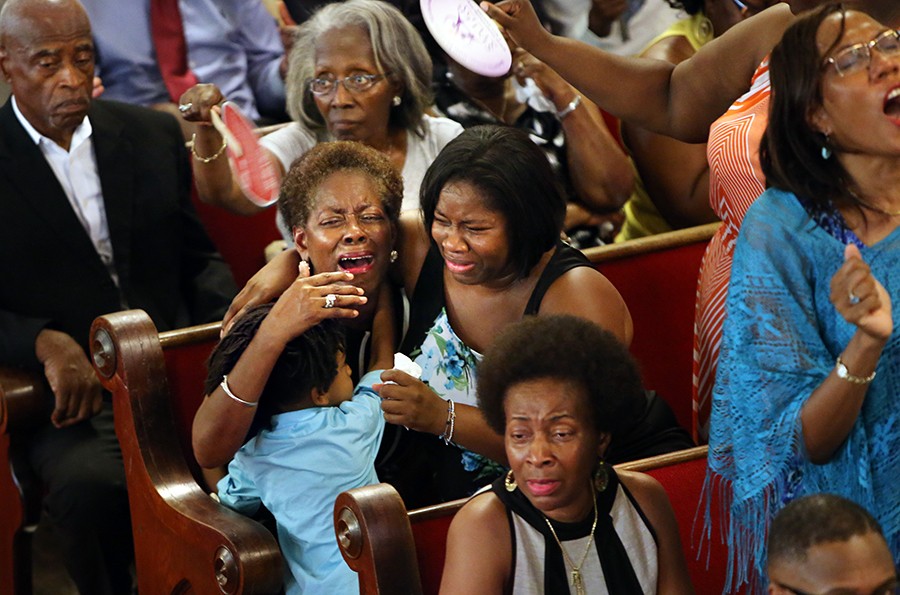
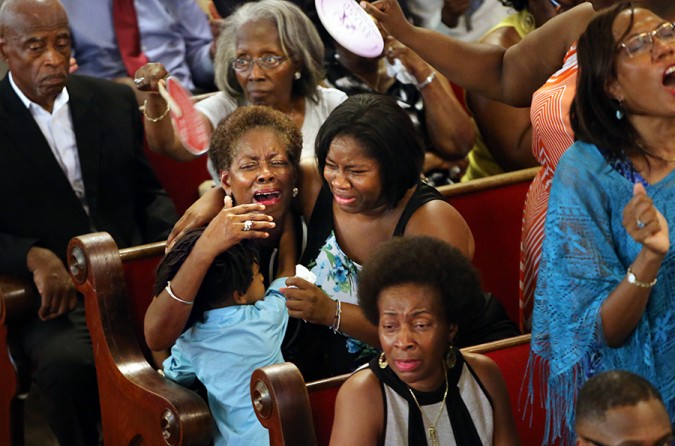
Grieving mourners fill the pews as Emanuel AME Church re-opens its doors for Sunday services four days after nine parishioners were slain by a white supremacist during a Bible study. The shooting occurred in the basement of the church, directly below the sanctuary where mourners are gathered for the Sunday service. (Paul Zoeller, The Post and Courier - July 21, 2015).
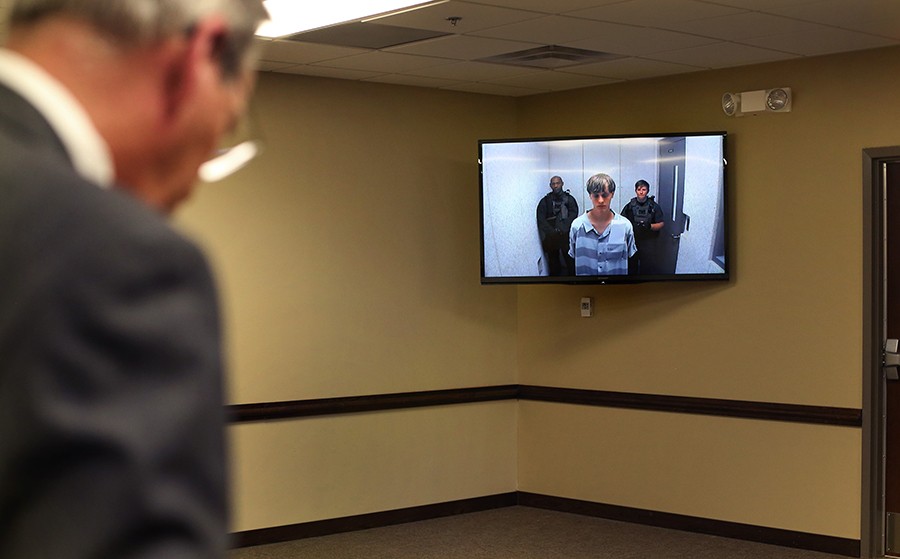
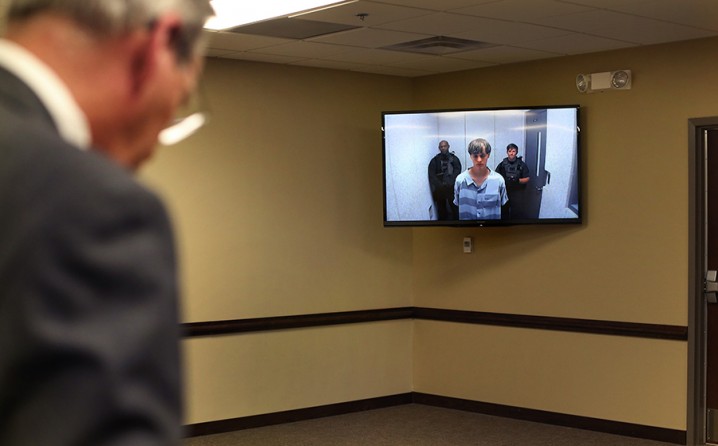
Ninth Circuit Public Defender Ashley Pennington addresses his client, Dylann Storm Roof, appearing via video from the county jail, during a bond hearing in North Charleston. Families of the nine people slain by Roof, 21, got their first look at the killer during the hearing. They surprised the world by offering him prayers and forgiveness. (Grace Beahm, The Post and Courier - June 19, 2015).
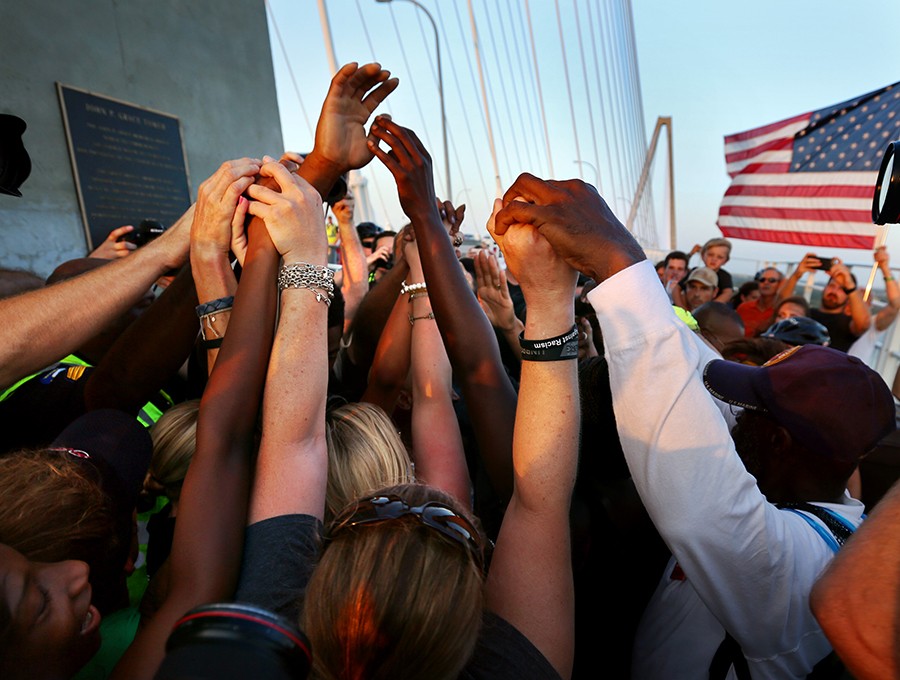
“Charleston strong” wasn’t just a phrase as nearly 15,000 people link hands for the Bridge to Peace Unity Chain on the Arthur Ravenel Jr. Bridge over the city's harbor. The event aimed to show the community's solidarity and unity four days after a white gunman killed nine black worshippers at Emanuel AME Church, a tragedy that threatened to divide the city along racial lines (Grace Beahm, The Post and Courier - June 21, 2015).
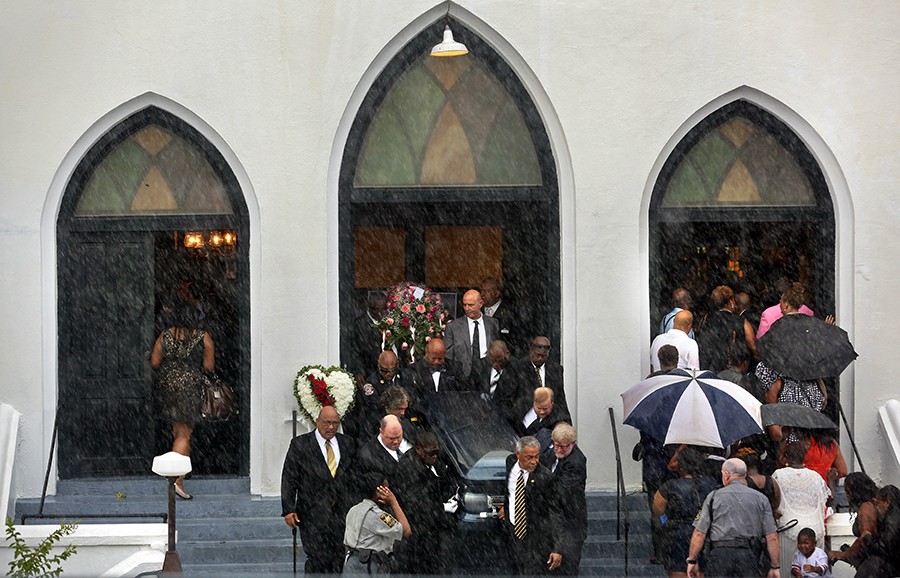
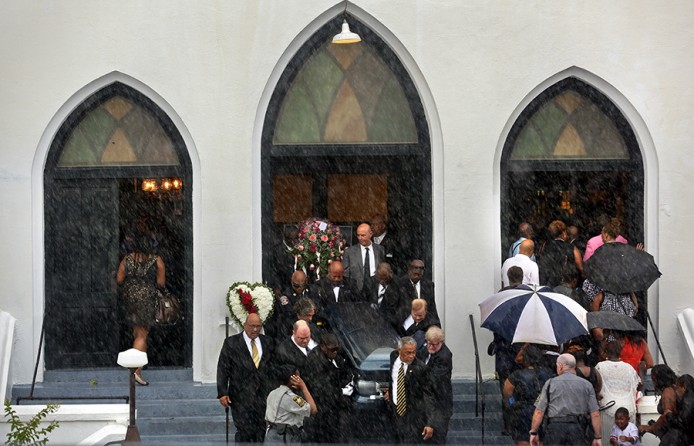
Pallbearers exit Emanuel AME Church carrying the casket of Cynthia Hurd while mourners for Susie Jackson and her nephew Tywanza Sanders file inside the church for their funerals in the lightning and heavy rain. The three were among nine worshippers to die in a mass shooting at the church on June 17. A procession of caskets and funerals filled the church for days (Grace Beahm, The Post and Courier - June 27, 2015).
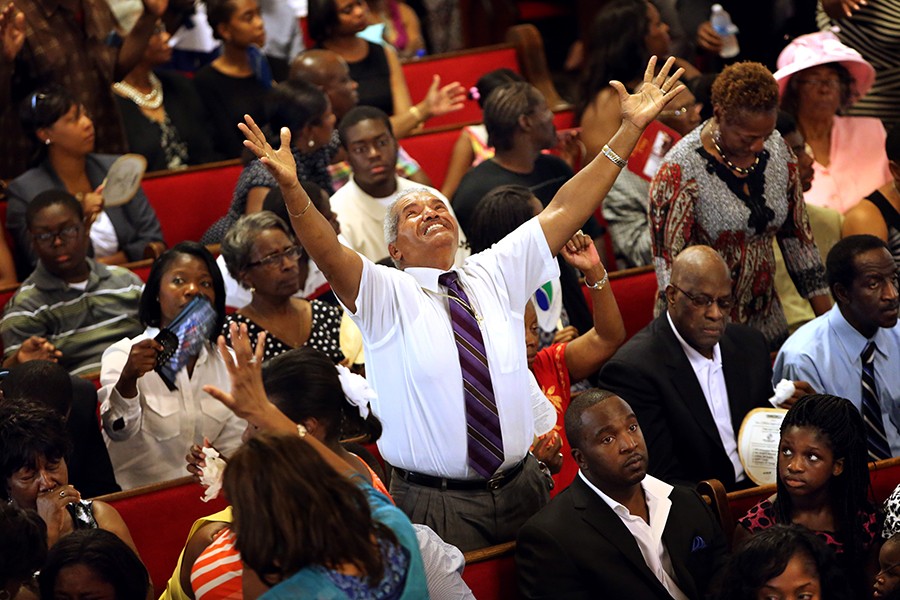
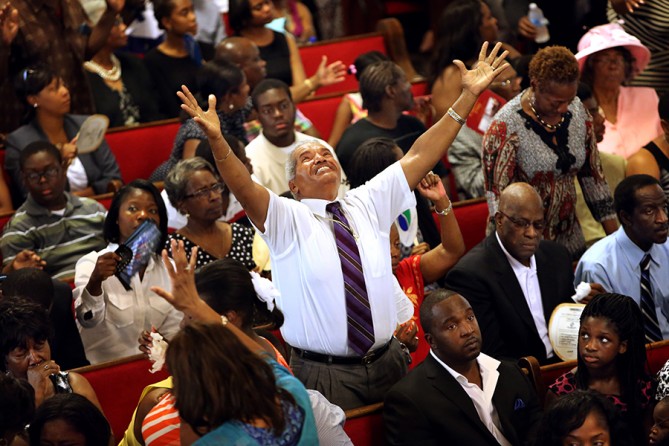
Jimmy Guyton stands in praise to sing at Emanuel AME Church on after the church reopened for the first service since its pastor, state Sen. Clementa Pinckney, and eight others were slain four days earlier during a Bible study. Guyton drove three hours from Greenville, S.C., to attend the service and honor Myra Thompson, who was among those killed (Paul Zoeller, The Post and Courier - June 21, 2015).
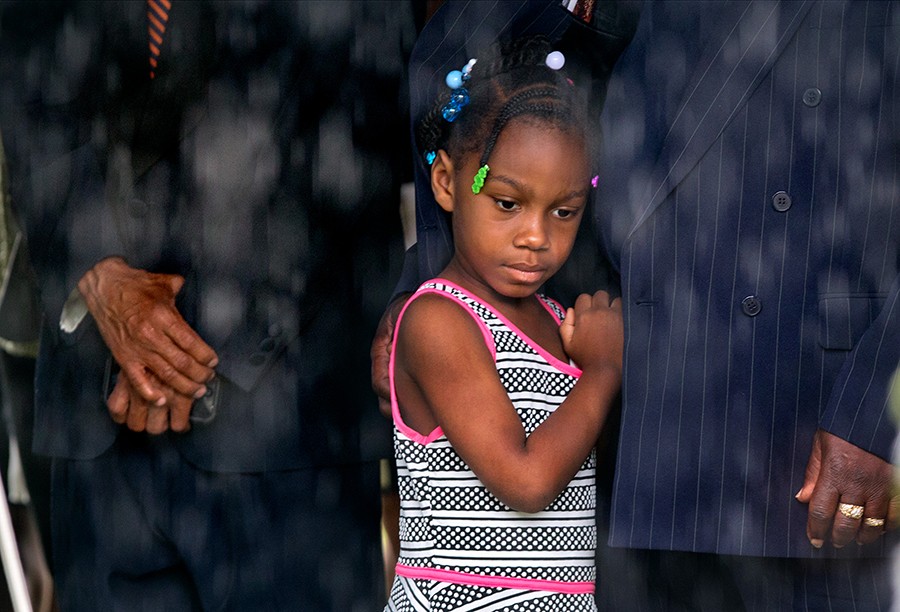
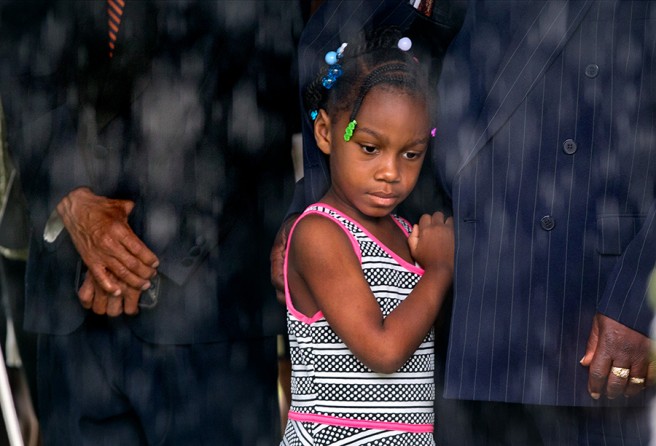
Samariah Johnson, 6, watches from under a tent as rain falls during funeral services for Cynthia Hurd, librarian and community leader at the Emanuel AME Church graveyard. Hurd was among nine killed in a mass shooting at the church. (Paul Zoeller, The Post and Courier - June 27, 2015)
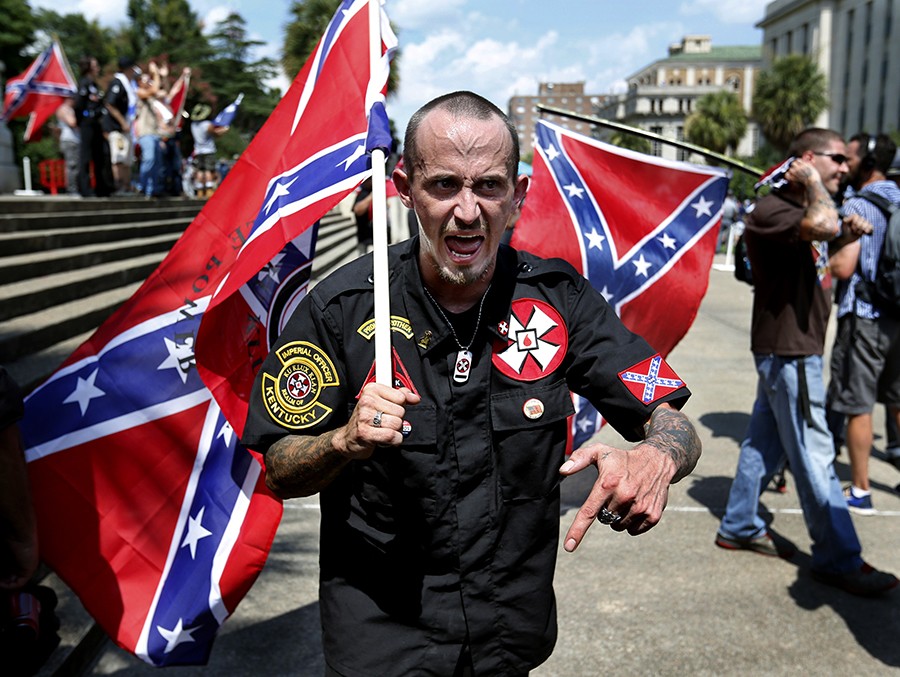
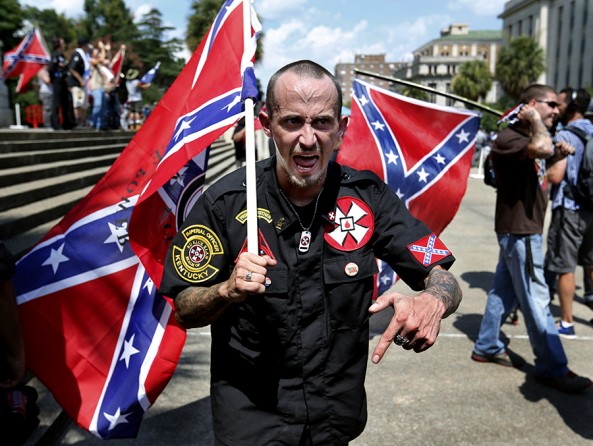
Screaming “white power” while waving Confederate battle flags, members of the Loyal White Knights of the Ku Klux Klan from Pelham, N.C., argue with counter-protesters outside barricades at the South Carolina Statehouse in Columbia. The rally was held to protest a decision by South Carolina lawmakers to remove the Confederate flag from the Statehouse grounds after the mass shooting in Charleston. Images of the Confederate flag figured prominently in an online manifesto of hate posted by the gunman before he went on his killing spree (Paul Zoeller, The Post and Courier - July 18, 2015).
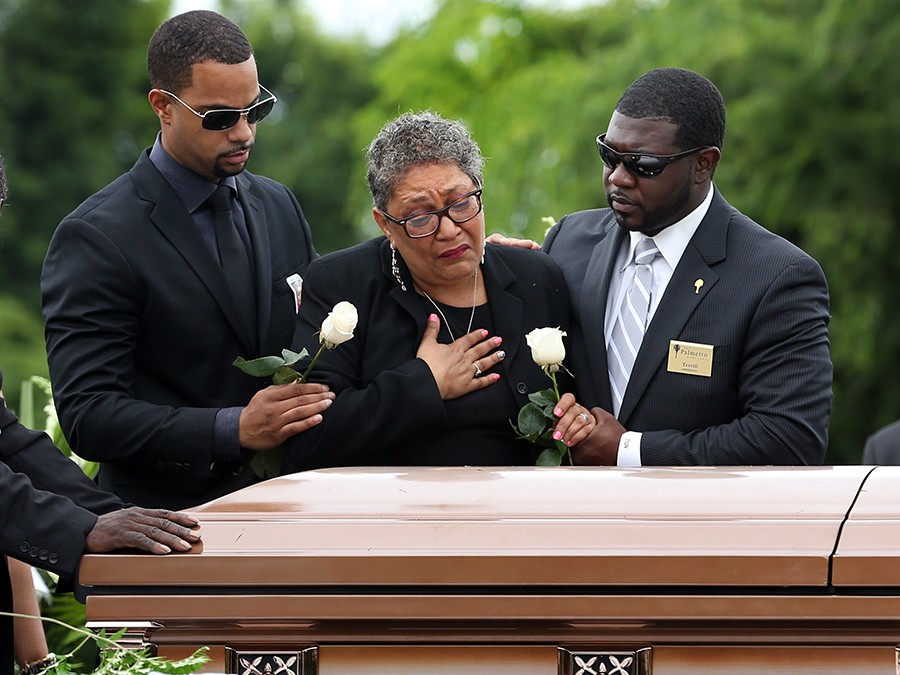
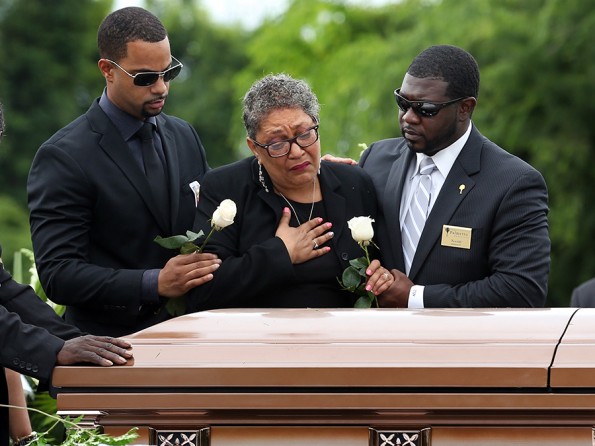
The family of Ethel Lance, one of the nine victims killed at Emanuel AME Church, surround her casket to say their final goodbye. Her grandson, Howard Risher, left and her daughter, the Rev. Sharon Risher, place roses on the casket before it is lowered into the ground (Grace Beahm, The Post and Courier - on Thursday, June 25, 2015).
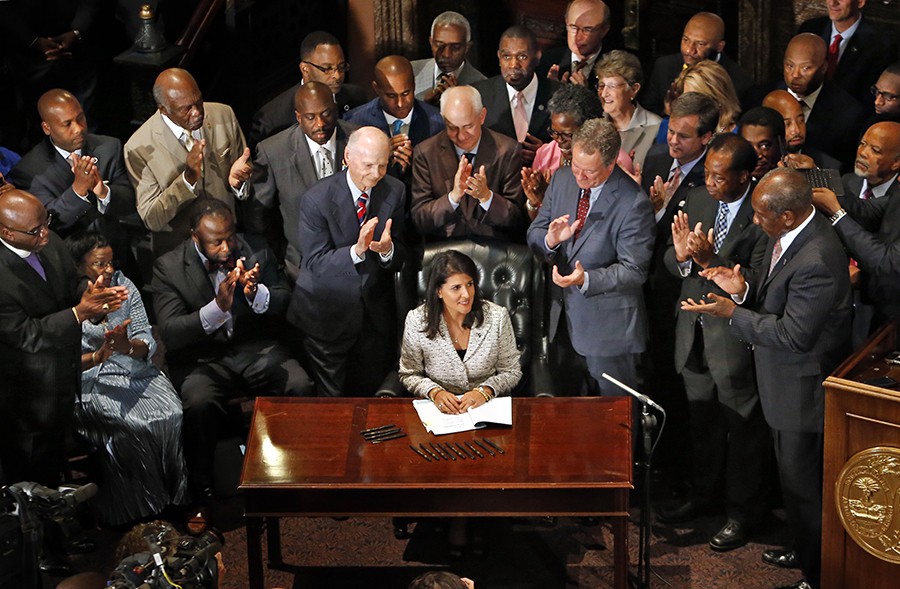
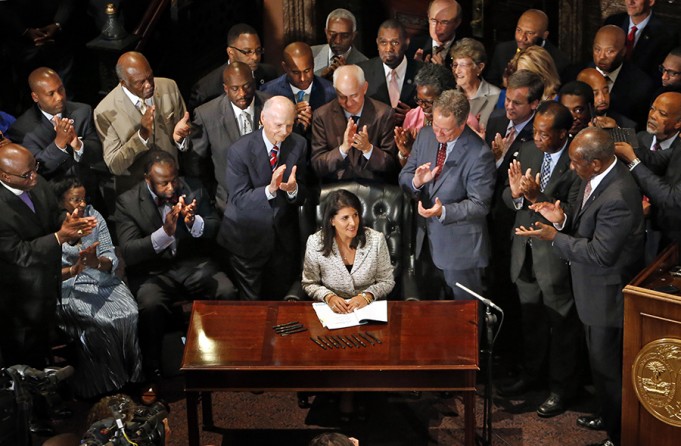
Cheering and applause fill the rotunda as South Carolina Gov. Nikki Haley, surrounded by former South Carolina governors and state lawmakers, signs a bill into law removing the Confederate battle flag at the Statehouse in Columbia. (Paul Zoeller, The Post and Courier - Thursday, July 9, 2015).
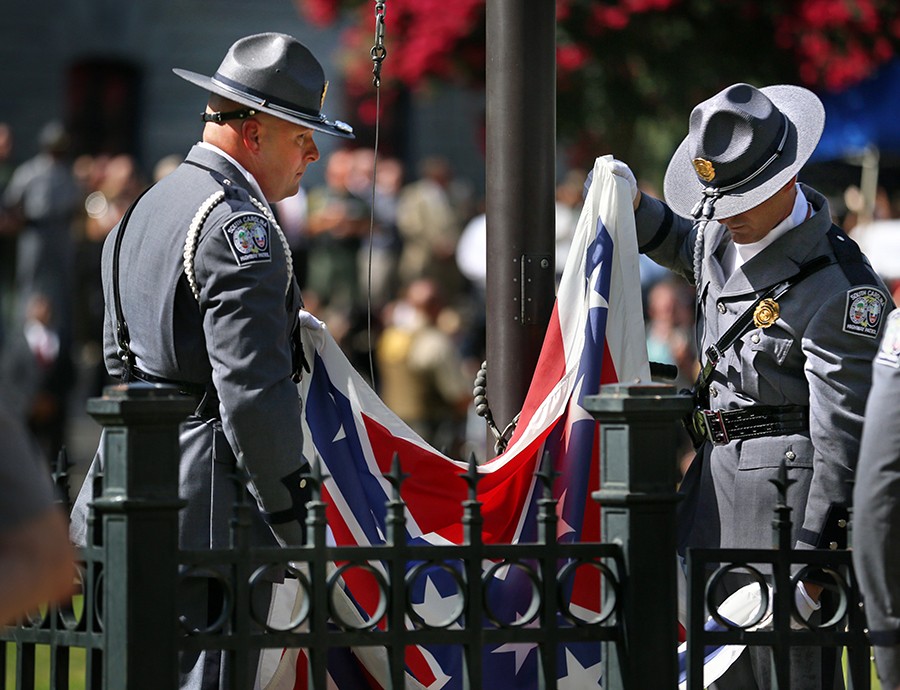
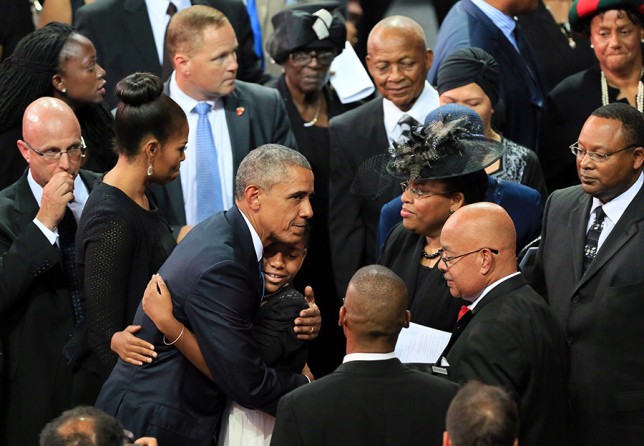
An honor guard from the South Carolina Highway Patrol removes the Confederate battle flag from the Statehouse grounds in Columbia, S.C. (Grace Beahm, The Post and Courier - July 10, 2015).President Barack Obama shares a hug with Eliana Pinckney, daughter of Rev. Clementa Pinckney, at the funeral for the slain pastor of Emanuel AME Church at TD Arena in Charleston. The president eulogized Pinckney, who also was a state senator, in a stirring 38-minute tribute that concluded with Obama singing “Amazing Grace.” (Paul Zoeller, The Post and Courier - June 26, 2015).
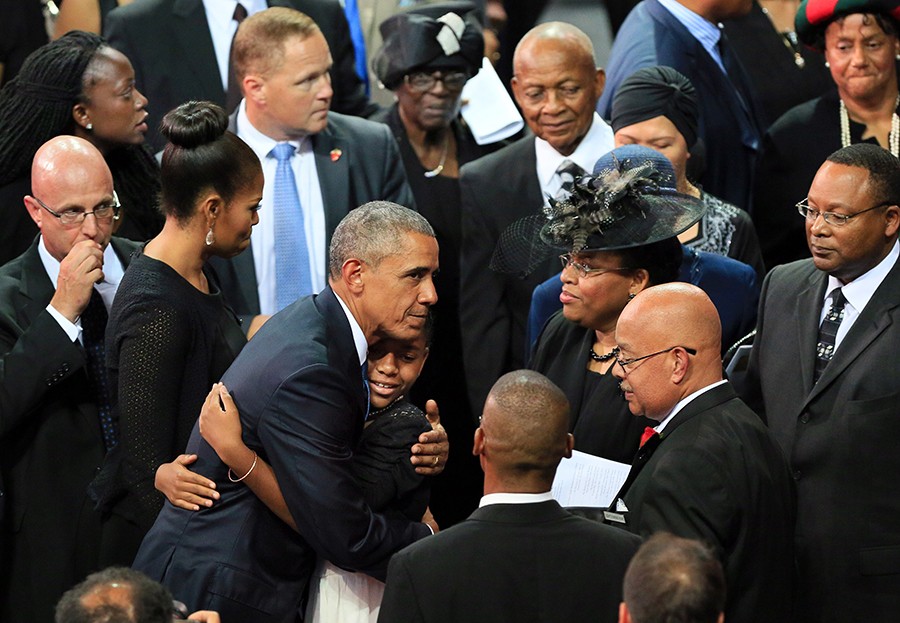
President Barack Obama shares a hug with Eliana Pinckney, daughter of Rev. Clementa Pinckney, at the funeral for the slain pastor of Emanuel AME Church at TD Arena in Charleston. The president eulogized Pinckney, who also was a state senator, in a stirring 38-minute tribute that concluded with Obama singing “Amazing Grace.” (Paul Zoeller, The Post and Courier - June 26, 2015).
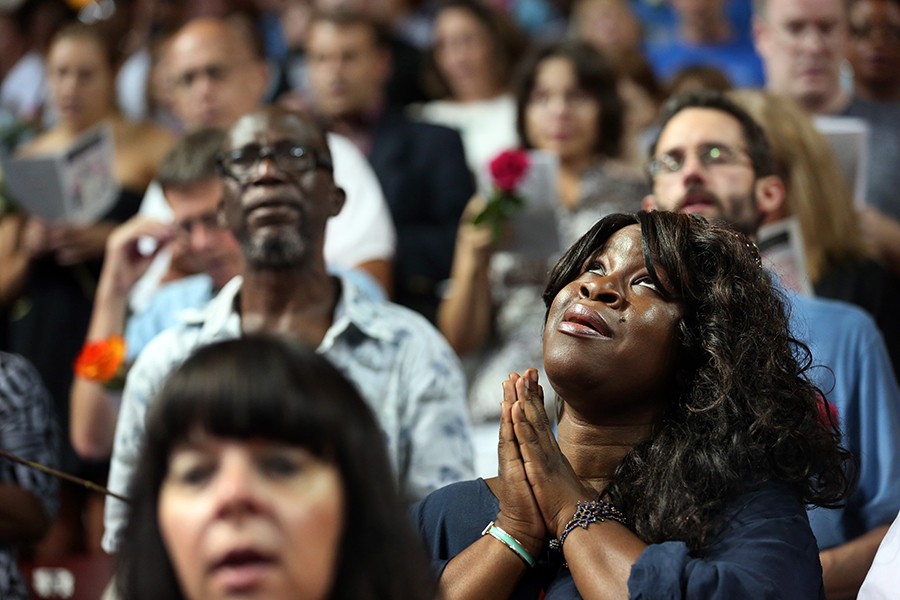
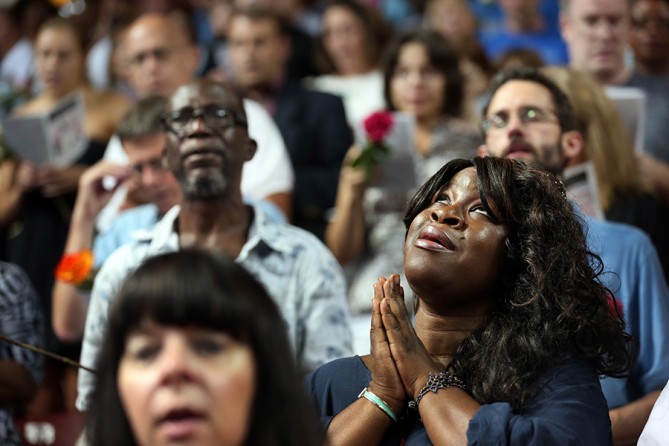
The hymn "What a friend in Jesus" rings out at College of Charleston's TD arena as thousands of residents, including Ra'Dana Dalton, gather one block from the Emanuel AME church for a community memorial service. The City of Charleston held the service so people could honor and remember the nine people shot to death at the church two days before (Grace Beahm, The Post and Courier - June 19, 2015).
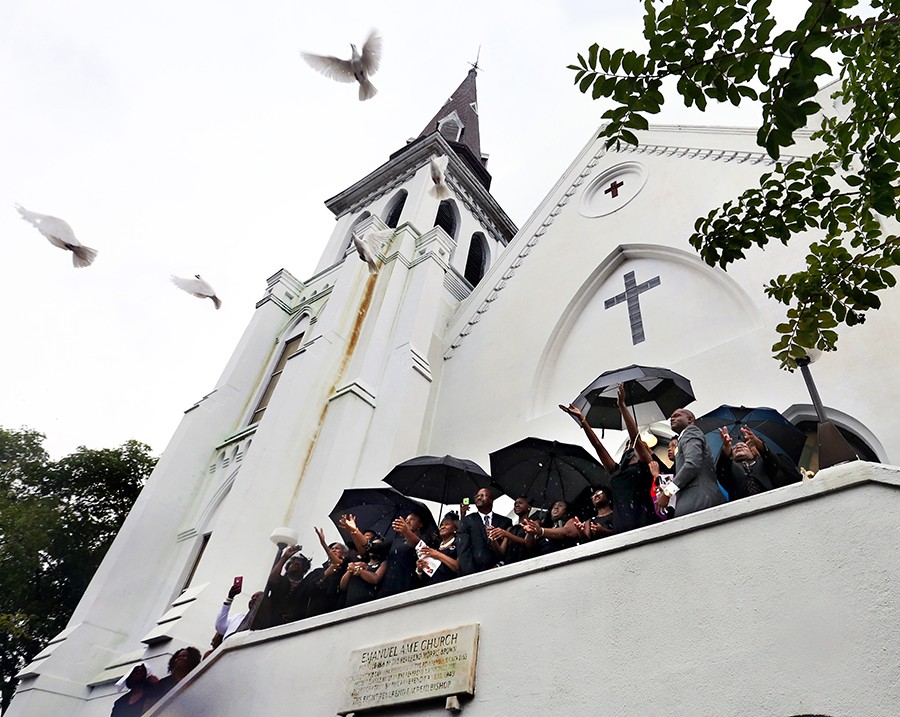
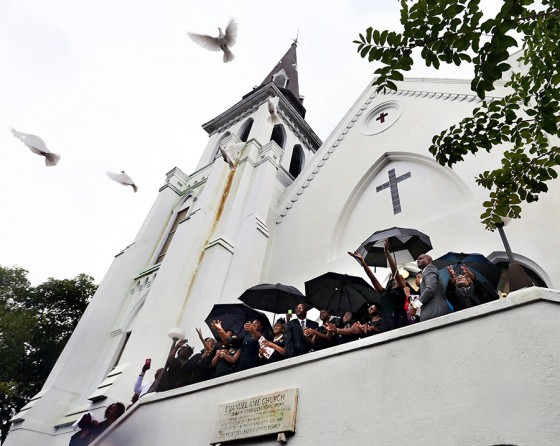
At the close of her funeral, the Rev. DePayne Middleton Doctor’s four daughters and other family members release nine doves from Emanuel AME Church. Doctor was among nine people fatally shot during a Bible study at the church on June 17 (Wade Spees, The Post and Courier - June 28, 2015).