The New York Times, by Daniel Berehulak, freelance photographer
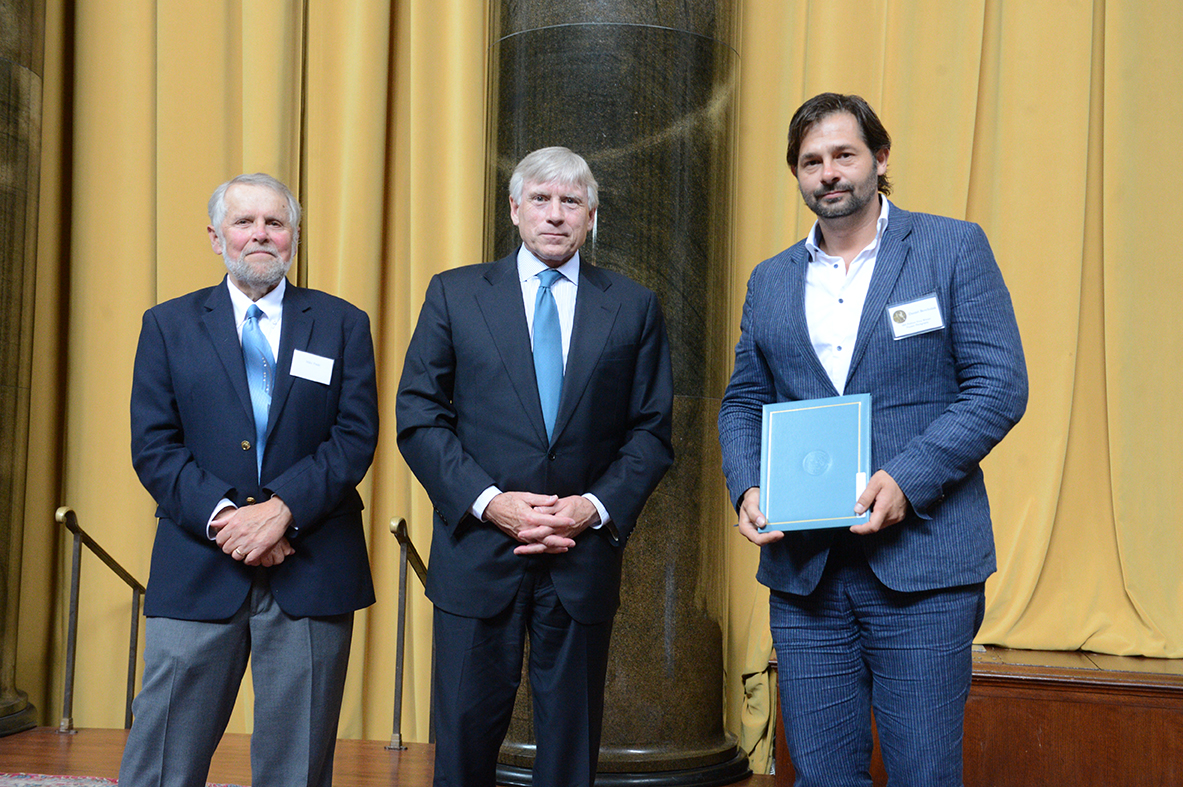
Mike Pride, Pulitzer Prize Administrator (left) and Lee C. Bollinger, President of Columbia University (center), present the 2015 Feature Photography Prize to Daniel Berehulak.
Winning Work
For four long months, Daniel Berehulak performed the same exacting ritual, cloaking himself from head to toe in a protective suit, face mask, three pairs of gloves — and chronicling the full, excruciating arc of Ebola as it tore across West Africa.
His masterly work for The New York Times, by far the most comprehensive set of images of the epidemic, drew global attention to a story that no news organization has covered as extensively. Living inside the Ebola zone, Berehulak captured many major developments, finding the family of patient zero in Guinea, documenting the chaotic spread of the disease before the world took notice, and bearing witness to the consequences as it swept through cities, ripping apart families.
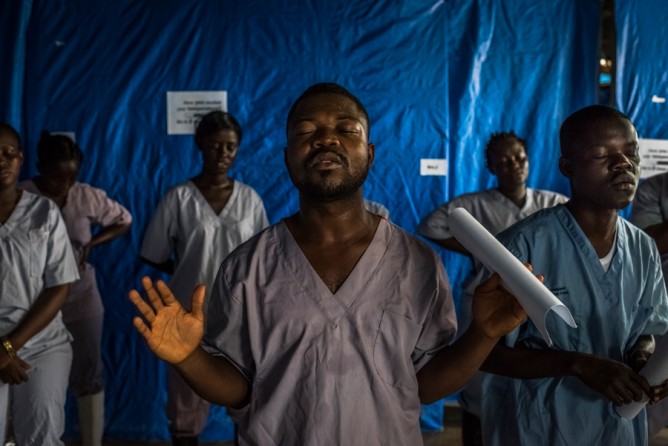
His stark and irrepressible images, at once brutal and compassionate, helped force the world to care about a region where suffering is expected, even tolerated. The anguish contorting a son’s face as he loses his father, the pitched anger of a community under quarantine, the unbroken faith of health workers at prayer, the shocking sight of stiff, dying children carted off by faceless men in moon suits — Berehulak’s unforgettable pictures conveyed both the urgency of the epidemic and the humanity of its victims.
The risks were terrifying. Berehulak remembers the panic he felt after a spray of fluids, flicked from a water bag carried by a health worker who had just been disinfected outside an Ebola ward, suddenly landed in his mouth and eye. Was it bleach? Water? Something much worse?
Five days later, his body temperature rising, “alarm bells started ringing,” he recalled. “I started thinking back on everything I had done. I had been in a room with a woman who died only three hours later. These are all the things that go through your mind.”
Thankfully, he was all right, and soon jumped right back into his work, continuing the longest deployment of any photographer in the Ebola zone.
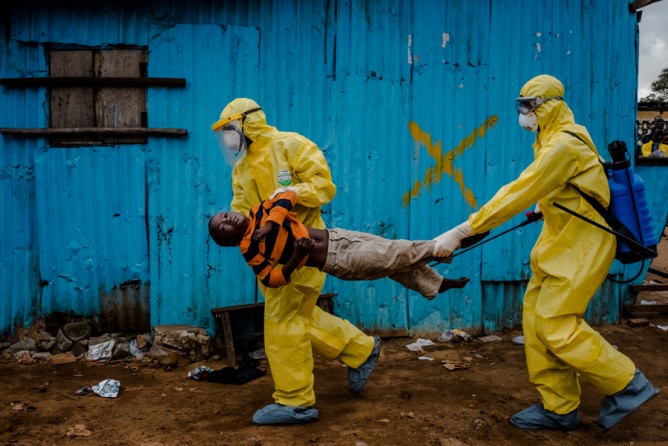
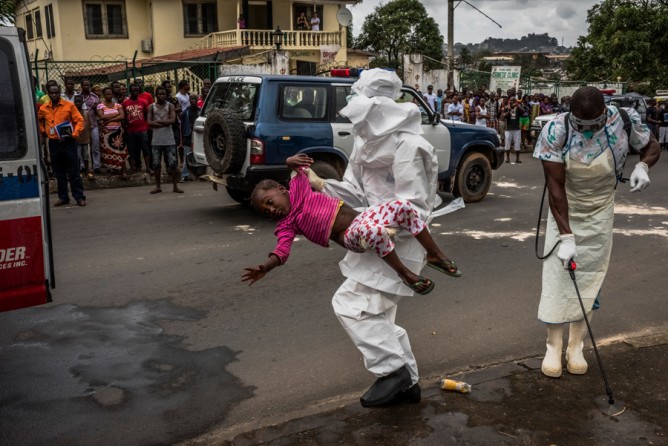
Indeed, Berehulak’s power starts with his patience. In the early days of the epidemic, as hospitals began to fill, he sat with Ebola patients for hours as they lay in the dirt, writhing in pain, waiting for medical attention. There he met James, the helpless little boy being hauled off by moon men. James’s father propped up the boy, urging him to drink, but James kept fading, started convulsing and finally went limp. The crowd gasped and James’s father started bawling, walking away in agony. But Berehulak stayed with the boy, eventually noticing along with others that he was still breathing, faintly. Finally, workers donned their suits and came from the Ebola treatment center to bring him for treatment. Berehulak’s haunting picture of the boy being taken away, an icon of the epidemic’s wrath, was the product of six hours at James’s side. (According to health officials, James died shortly after being admitted.)
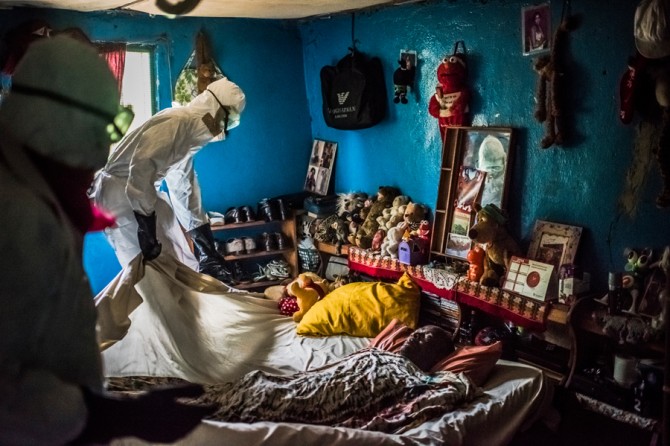
Imagine the ceaseless rigor this kind of photography requires, day after day — often shooting while sheathed in full protective gear in the stifling West African heat, sprayed with chlorine from head to toe after each session, or, for reasons of respect and access, working without protective gear at all. Imagine trying to make pictures in a frenzied, surging crowd — without standing too close to anyone else. Imagine portraying the intimate details of life and loss inside countless, crowded shanties, like the body of a lifeless man surrounded by his collection of stuffed animals and shoes, without ever touching or bumping into anything around you.
“I focus on the tiniest details,” Berehulak recalled. “My elbows are tucked underneath me as I’m walking in these tiny, cramped rooms, making sure I didn’t touch any of the door jambs.”
Imagine spending three continuous weeks inside an Ebola treatment unit, as Berehulak did, constantly awash in patients and highly infectious bodily fluids, capturing memorable acts of bravery and tragedy while trying to keep infection at bay.
There was also overt hostility to contend with, like the time Berehulak went with body collectors down a steep cliff to a riverside compound in Liberia. The dead man’s relatives greeted the outsiders with fury, knowing they would not get the body back for a respectful burial. A half-hour standoff ensued, a chorus of weeping, shouting and pacing inside the blood-soaked room where the man had died, fluids spewing from his mouth.
Berehulak captured the swell of emotions: the family’s profound grief at losing their patriarch; their anger at the government for doing little beyond retrieving corpses; the despair of relatives who wanted to keep the patriarch’s body for a proper funeral; the fear that doing so would spread contagion.
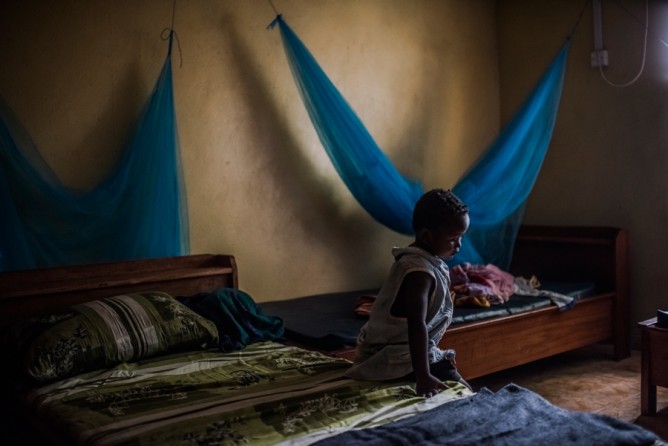
With his months of experience in Ebola-afflicted areas, Berehulak gave hard-earned safety advice to other photographers who dared to venture into the hot zone. He also focused on Ebola’s lasting effects on society, including the many orphans left behind. In Sierra Leone, shooting at an Ebola care center that had become a de facto orphanage, he came across Sweetie Sweetie, a girl thought to be 4 years old who had lost both parents to Ebola. She was the youngest of the children there, and Berehulak spent hours with her, documenting an eerie maturity that may have come from caring for her dying parents. Sweetie Sweetie quietly folded all her clothes, even her pillowcases, without anyone asking her to. His photo of her says it all: She sits silently on the edge of a neatly made bed, alone.
These photos of Ebola and its impact are not easily forgotten. We very proudly nominate Daniel Berehulak for the Pulitzer Prize for Feature Photography.
Winning Work
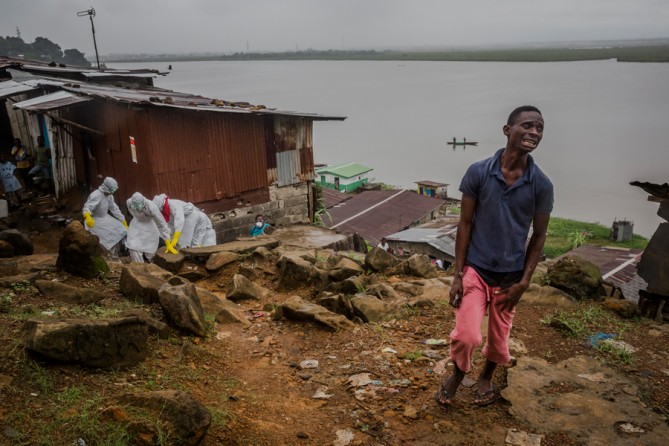
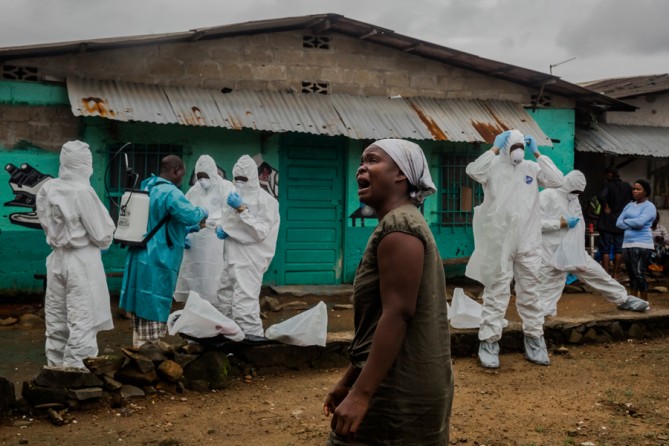
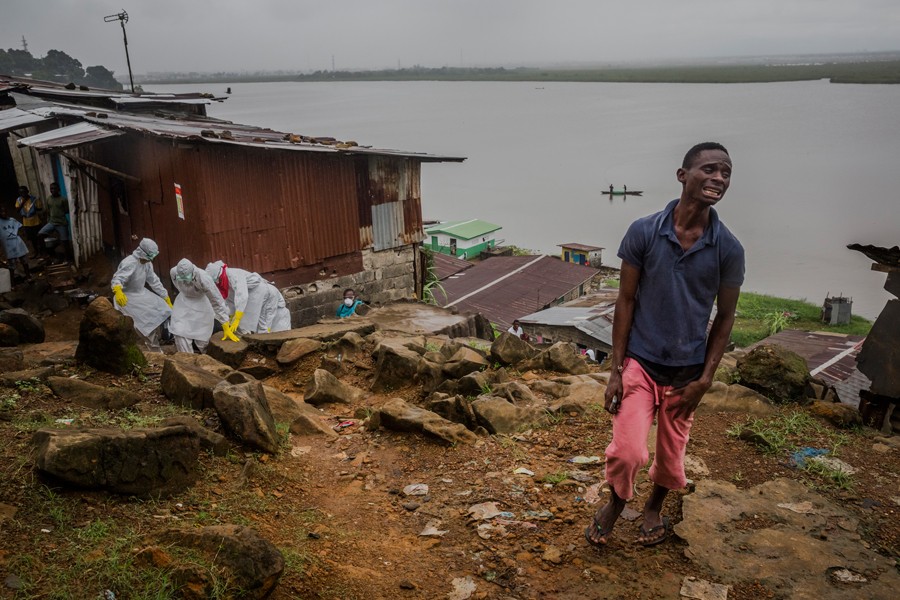
Eric Gweah, 25, weeps as a burial team removes the body of his 62-year-old father, who died at home, arms thrashing and blood spewing from his mouth, in front of his sons after being turned away at the treatment centers in Monrovia, Liberia. 'The only thing the government can do is come for bodies -- they are killing us,' Gweah said. (Daniel Berehulak, The New York Times - Sept. 18, 2014)
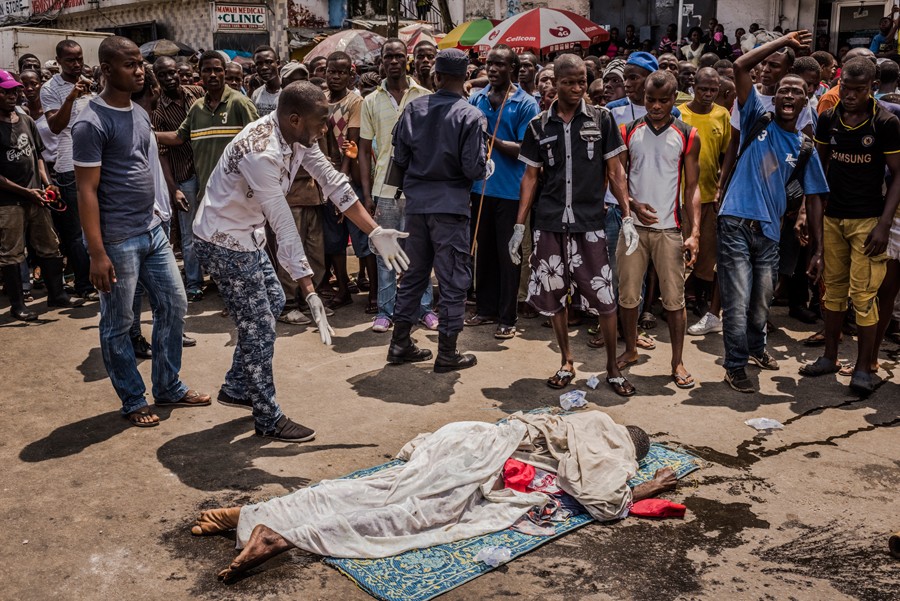
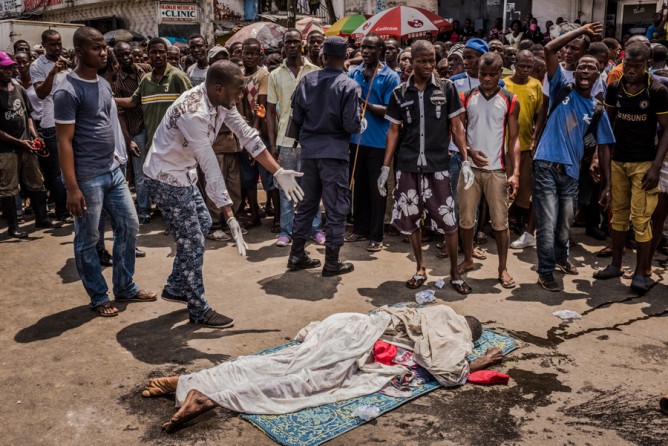
Residents call attention to a man lying dead on a busy street in Monrovia, Liberia. They said the man had died three days earlier. The family had been calling to have the body removed from home, but when no burial team came, people wearing rubber gloves dragged it into the street, stopping traffic and demanding that it be taken away. (Daniel Berehulak, The New York Times - Sept. 15, 2014)
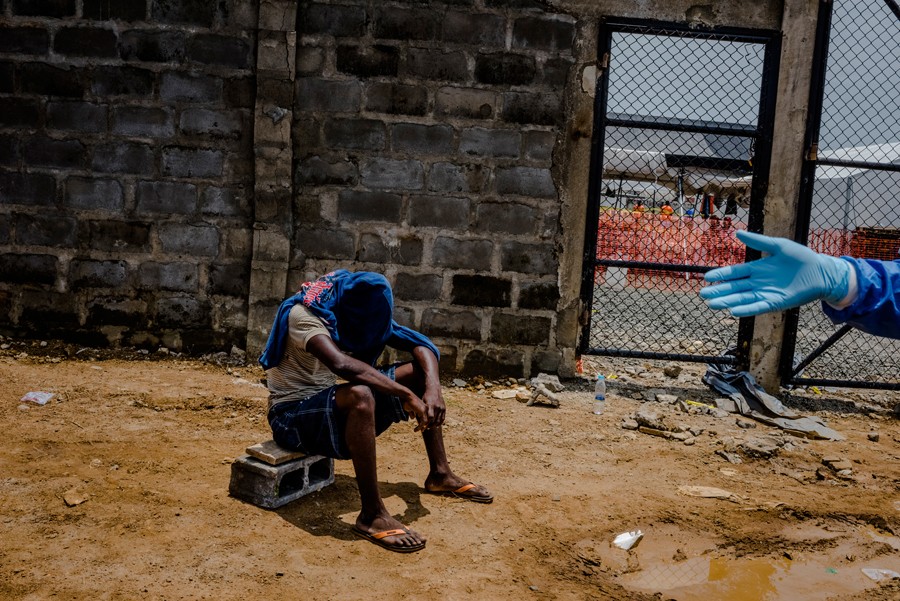
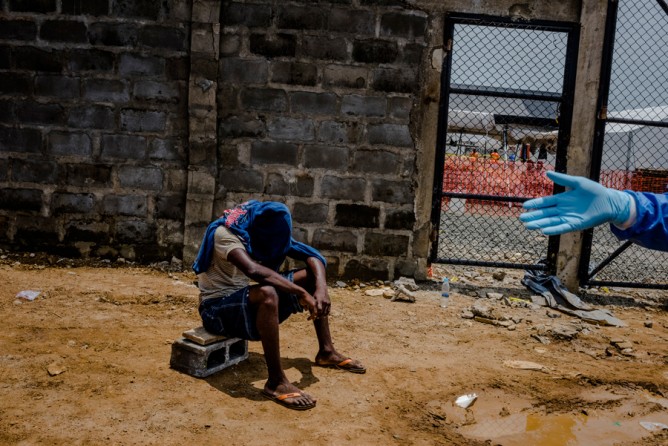
A man with Ebola symptoms waits to be admitted outside the Doctors Without Borders treatment center in Monrovia. At the height of the epidemic, many people could not gain admission to such centers and died at home -- or in front of the treatment centers. (Daniel Berehulak, The New York Times - Sept. 4, 2014)
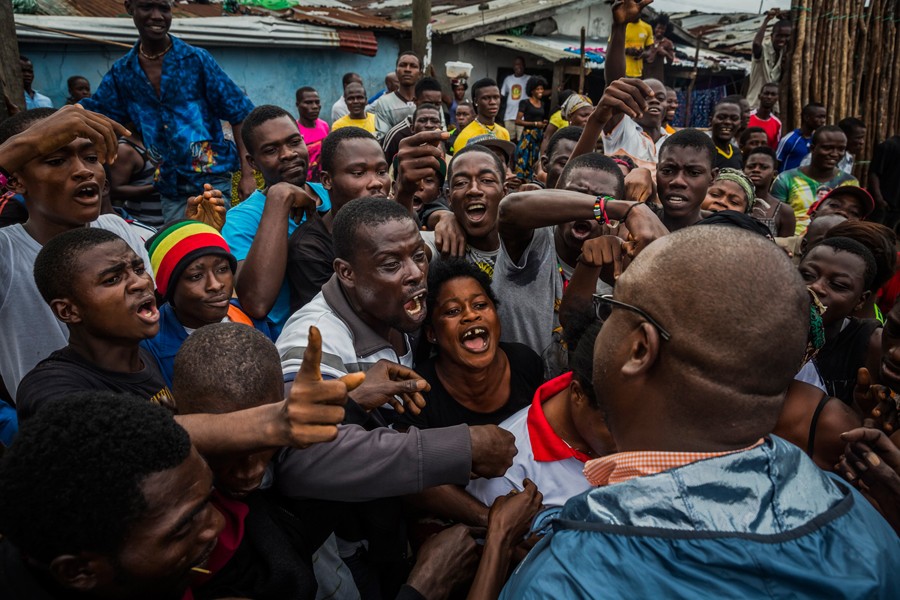
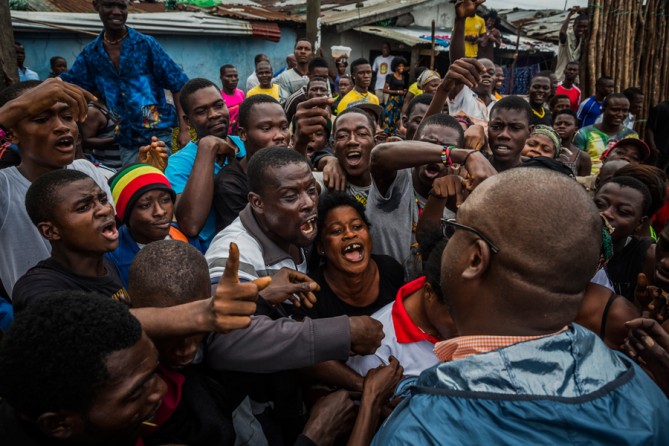
Residents of the West Point slum in Monrovia complain about the lack of necessities to a government official after the neighborhood was quarantined, a closure that set off deadly riots. Daniel Berehulak documented the chaotic period before the epidemic drew the world's attention. (Daniel Berehulak, The New York Times - Aug. 25, 2014)
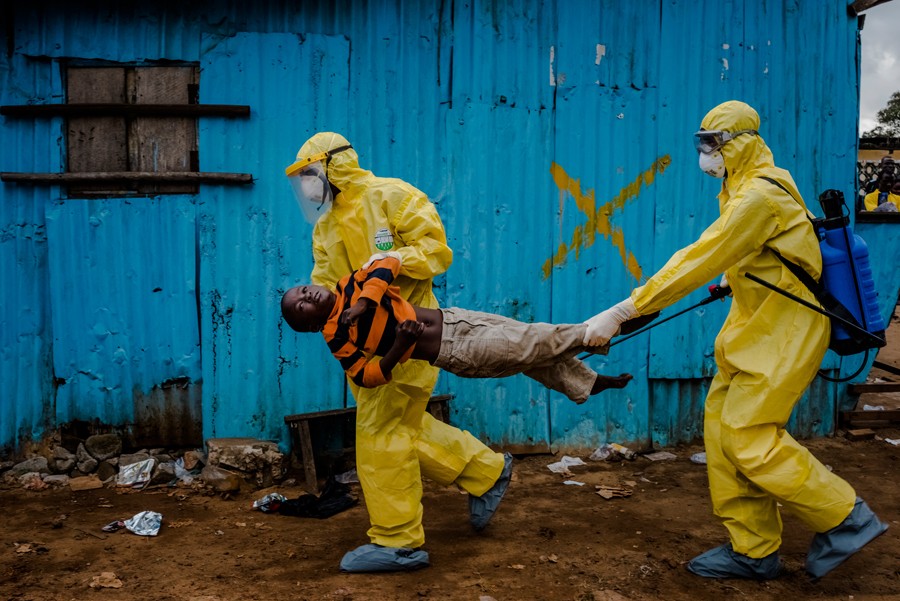
James Dorbor, 8, suspected of being infected with Ebola, is carried by medical staff to an Ebola treatment center in Monrovia. The boy, who was brought in by his father, lay outside the center for at least six hours before being seen. (Daniel Berehulak, The New York Times - Sept. 5, 2014)
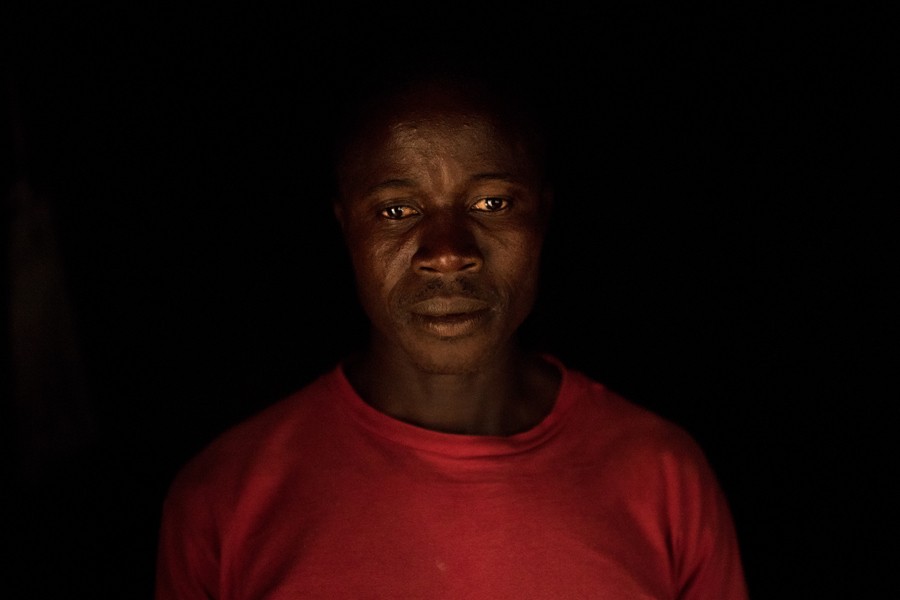
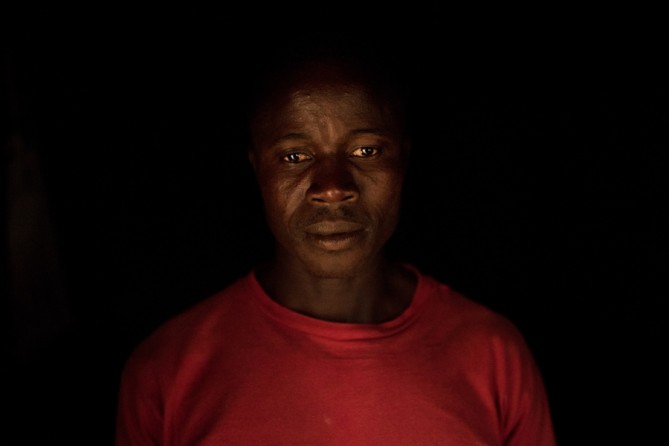
Etienne Ouamouno, father of the baby thought to be Patient Zero in this Ebola epidemic, in the village of Meliandou, Guinea. (Daniel Berehulak, The New York Times - Dec. 14, 2014)
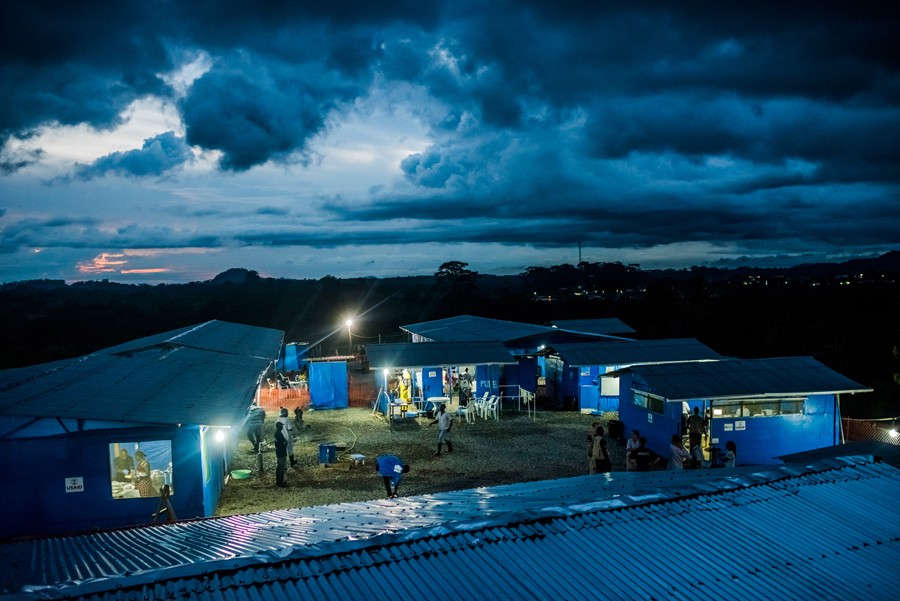
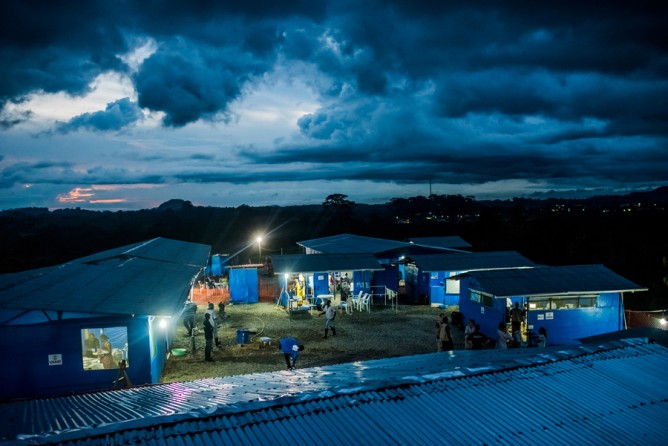
Health workers putting in long hours, at sunset, in the high-risk wards at the Bong County Ebola Treatment Unit in Suakoko, Liberia. (Daniel Berehulak, The New York Times - Oct. 6, 2014)
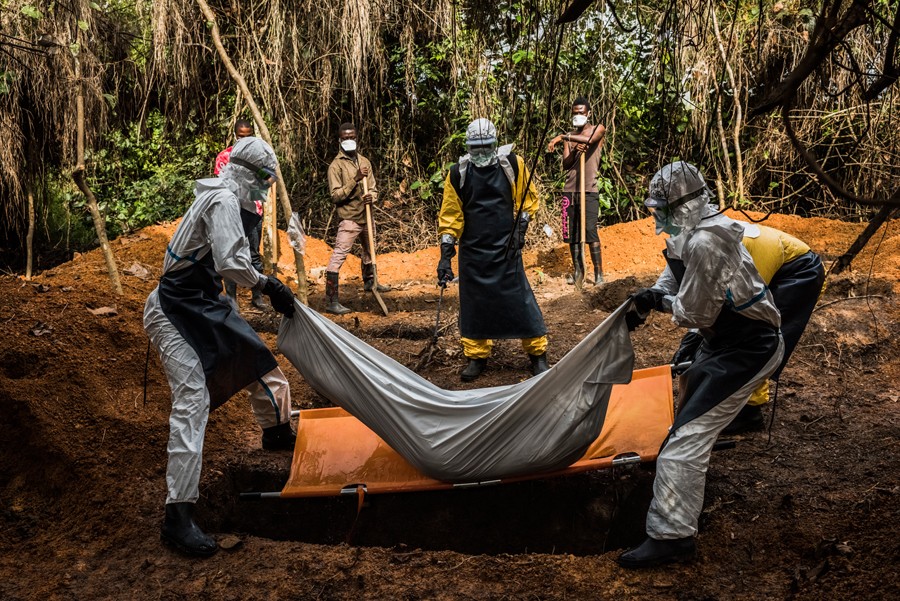
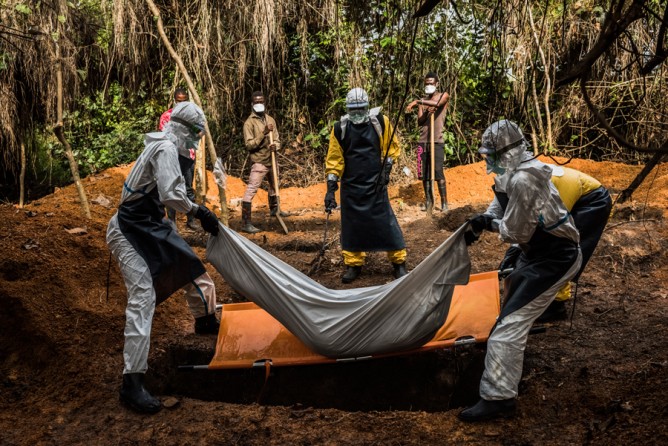
A burial team transfers Mama Flomo, a 37-year-old mother of three who died before she reached a center that would treat her, to her grave adjacent to the Bong County unit. She died while giving birth prematurely. (Daniel Berehulak, The New York Times - Oct. 5, 2014)
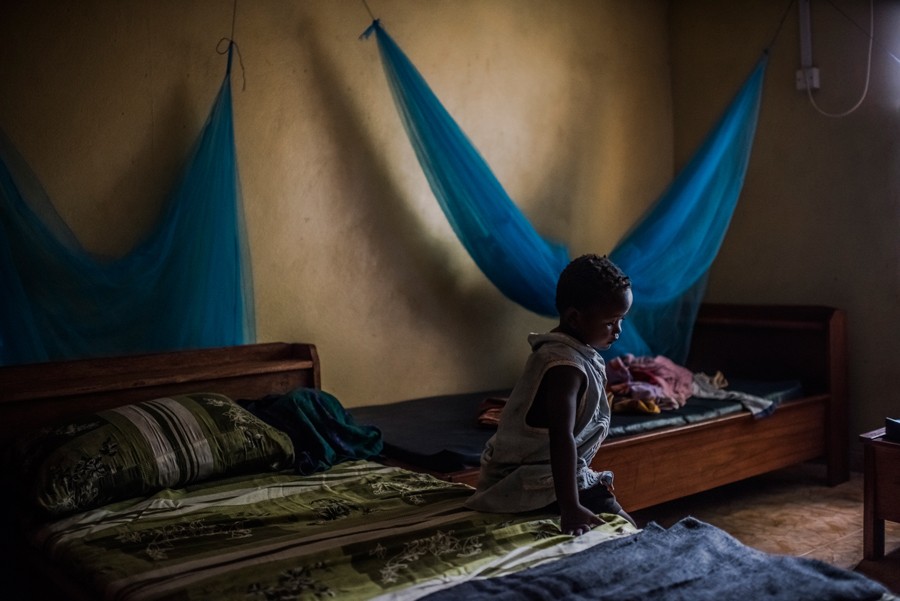
A girl nicknamed Sweetie Sweetie, who lost both parents to Ebola and is thought to be 4 years old, at a care center in Port Loco, Sierra Leone. (Daniel Berehulak, The New York Times - Dec. 6, 2014)
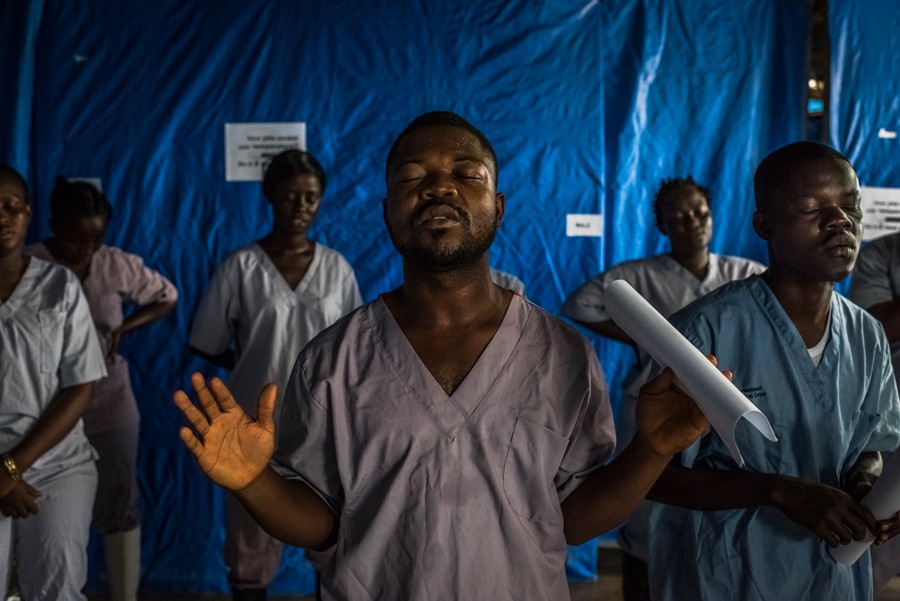
Health workers pray before the start of their shift at the Bong County treatment center. (Daniel Berehulak, The New York Times - Oct. 6, 2014)
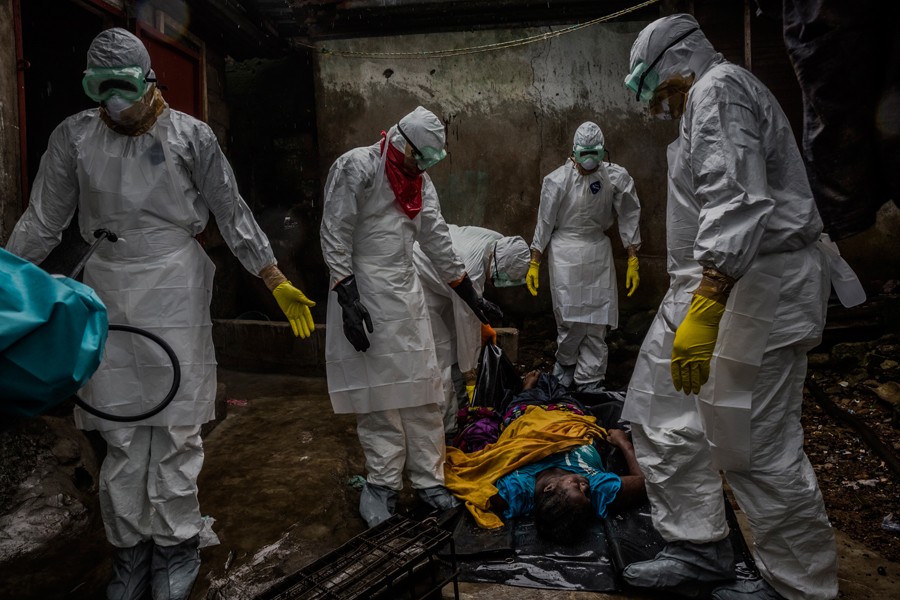
A Liberian Red Cross team removes the body of a 30-year-old woman thought to have died of Ebola in Monrovia. 'We came here for the husband last week, we're back today for the wife, and maybe next week we'll be back for the children,' a team member said. (Daniel Berehulak, The New York Times - Sept. 18, 2014)
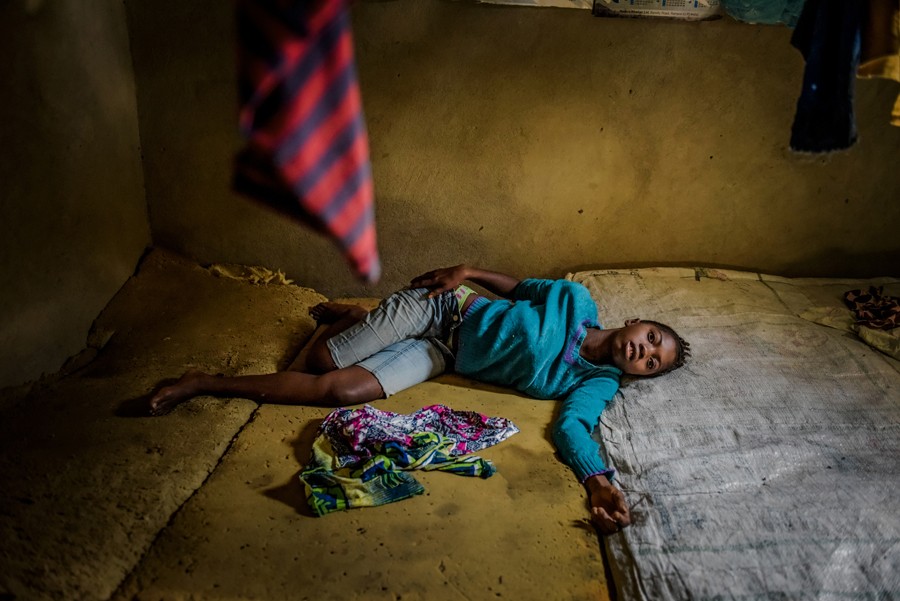
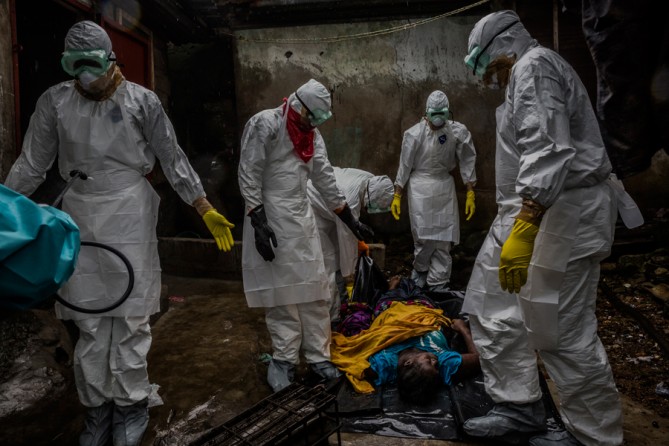
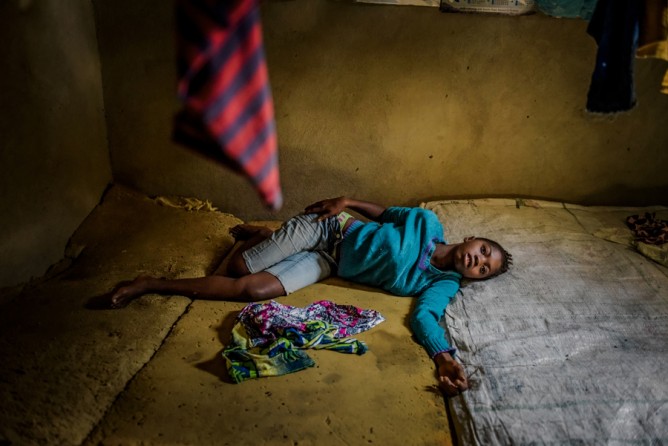
Isatu Sesay, 16 years old, delirious and in pain, three hours before her death in Freetown, Sierra Leone. Dozens of calls for an ambulance over three days had failed. (Daniel Berehulak, The New York Times - Nov. 21, 2014)
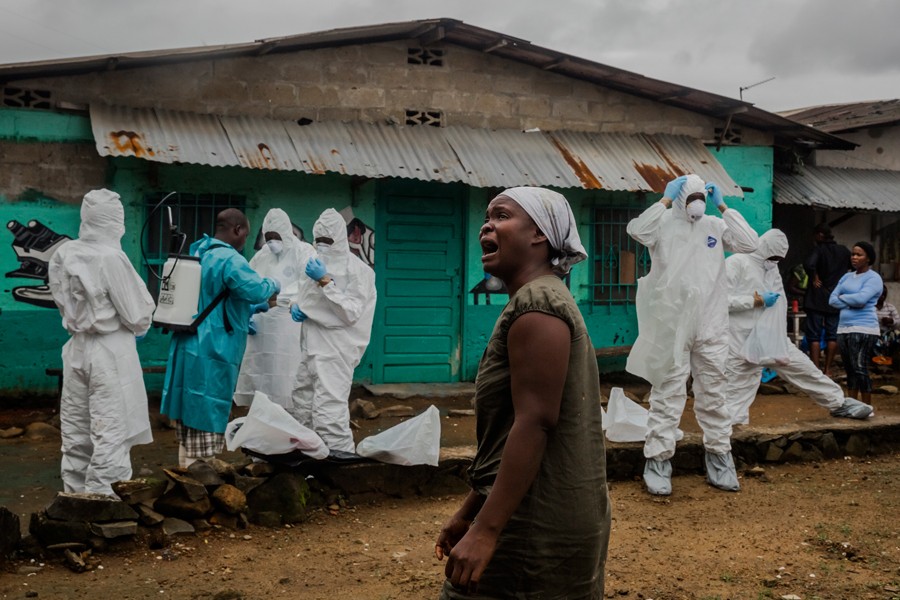
A relative grieves as a Liberian Red Cross burial team dresses in protective clothing before removing the body of a suspected Ebola victim in central Monrovia. The team had gone to the compound four times in the past four weeks. The family of the dead man, sick for six days with the hemorrhagic fever's telltale symptoms, had taken him twice by taxi to treatment centers, only to be turned back for lack of beds. (Daniel Berehulak, The New York Times - Sept. 18, 2014)
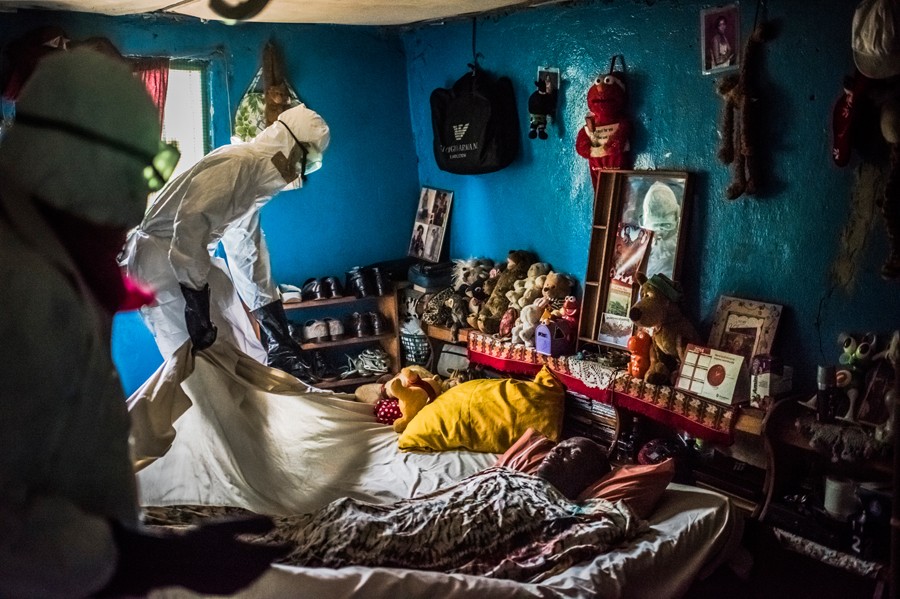
Body collectors from the Liberian Red Cross remove a suspected Ebola victim from a home in Monrovia. (Daniel Berehulak, The New York Times - Sept. 17, 2014)
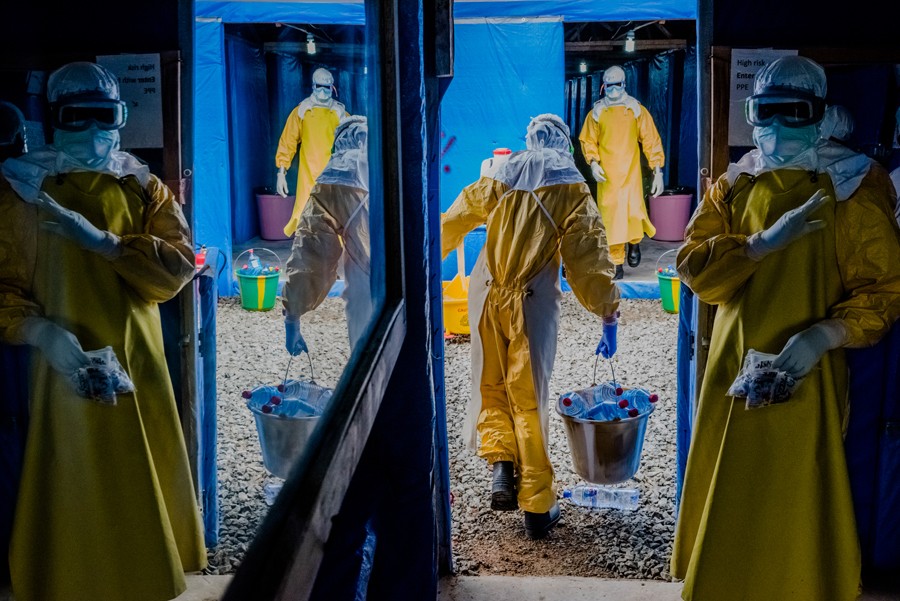
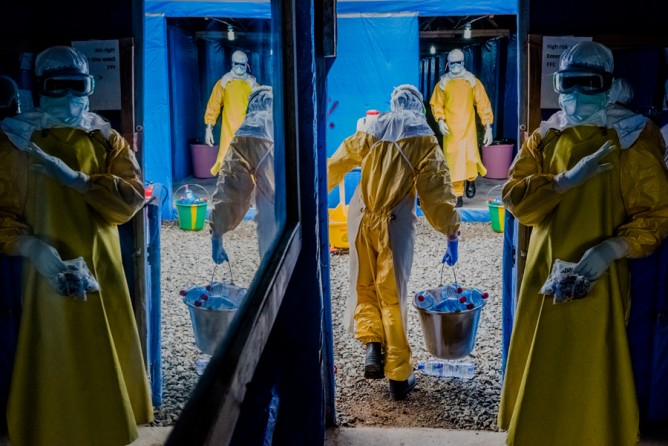
Workers entering the high-risk zone of the Bong County treatment center in Liberia. (Daniel Berehulak, The New York Times - Oct. 6, 2014)"
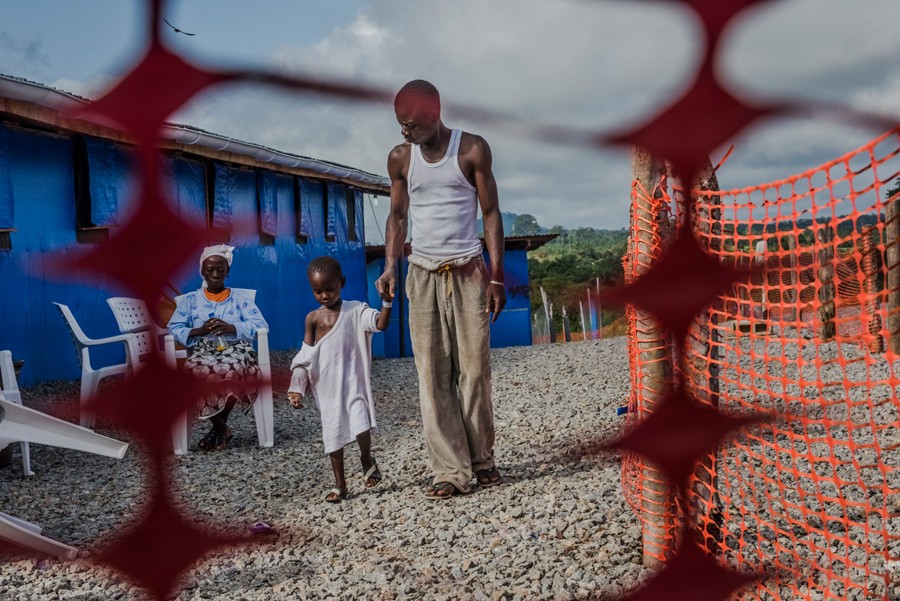
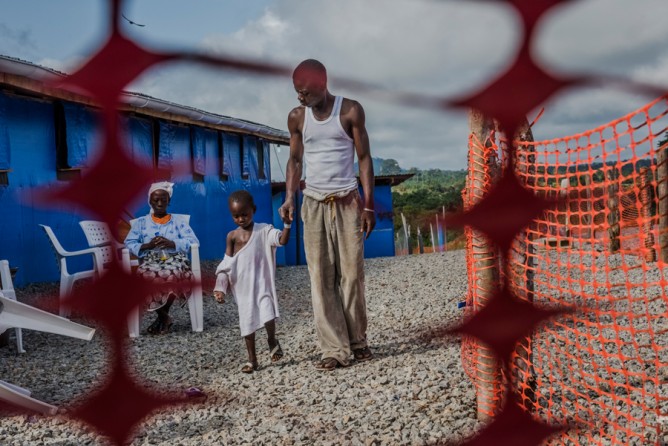
An Ebola survivor, George Beyan, walks his 5-year-old son, William, who tested positive for Ebola, at the Bong County treatment center. Cured, George was free to go home. But the staff told him that, now immune, he would be the best person to look after his son. William died a few days later. (Daniel Berehulak, The New York Times - Oct. 19, 2014)
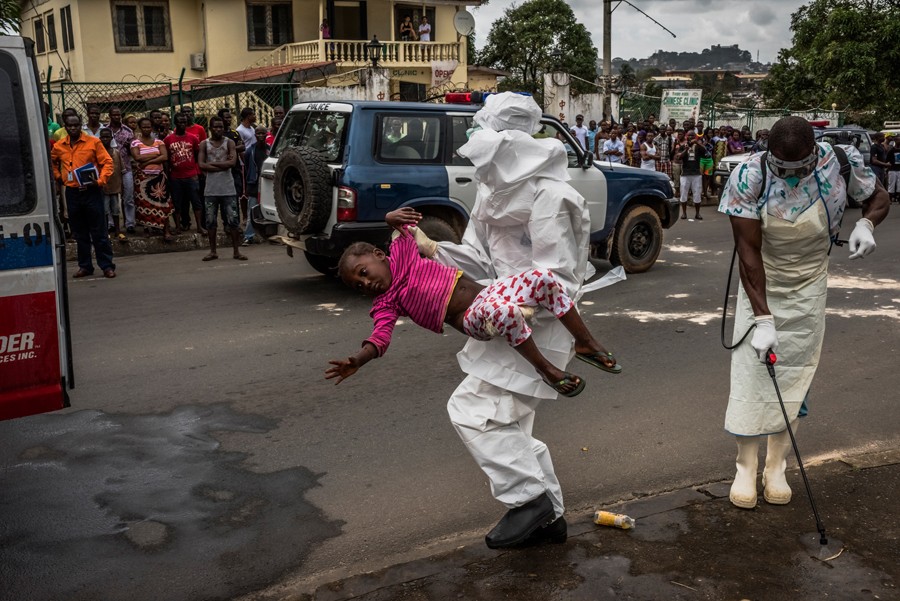
Esther Doryen, 5 years old, is carried to an ambulance in Monrovia. She died a week later. (Daniel Berehulak, The New York Times - Aug. 31, 2014)
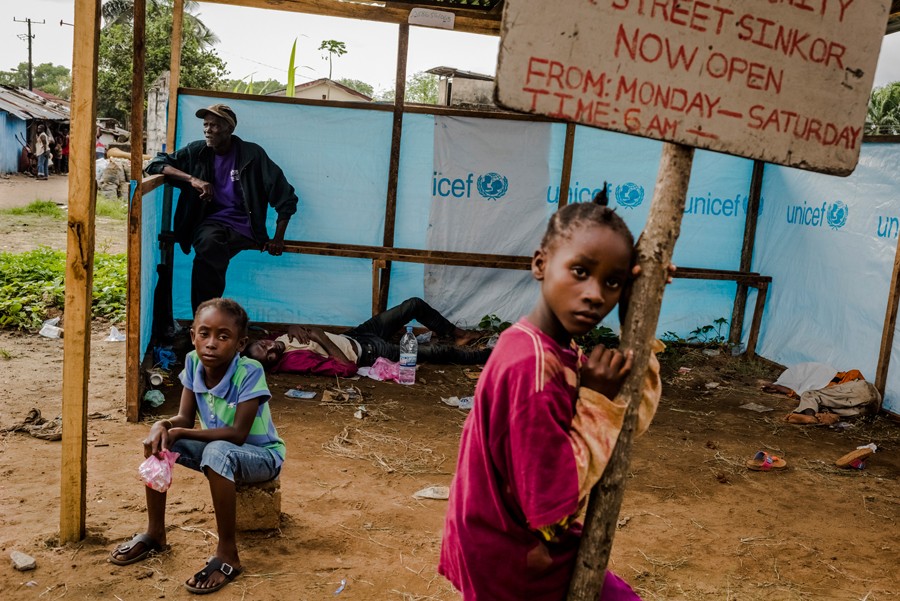
People with Ebola symptoms, or who have family members showing such symptoms, wait to be admitted at the JFK Ebola treatment center in Monrovia. For the victim at far right, it was too late. (Daniel Berehulak, The New York Times - Sept. 5, 2014)
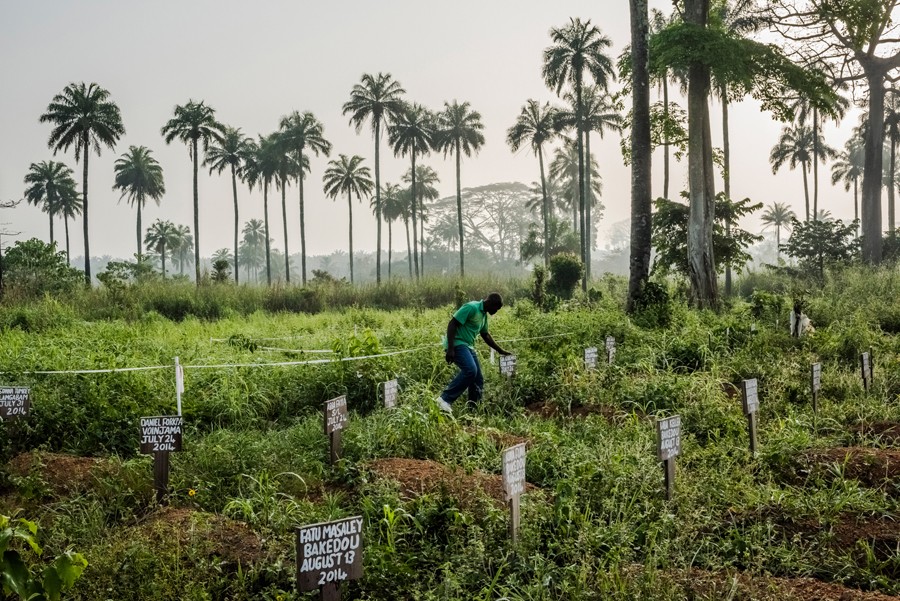
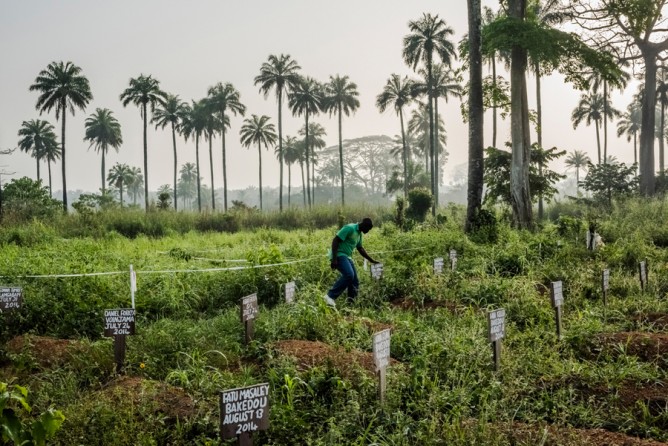
Joseph Gbembo leans over the grave of his mother, Sia, at the cemetery in Foya, Liberia, where four members of the family who died in the epidemic now lie. (Daniel Berehulak, The New York Times - Dec. 16, 2014)
Biography
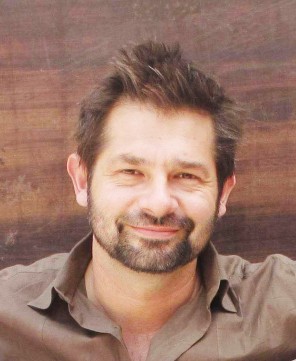
Daniel Berehulak, 39, is an award-winning photojournalist based between Barcelona and New Delhi.
A native of Sydney, Australia, Berehulak has visited more than 60 countries covering history-shaping events including the Iraq war, the trial of Saddam Hussein, child labor in India, Afghanistan elections and the return of Benazir Bhutto to Pakistan. He has also documented people coping with the aftermath of the Japan tsunami and the Chernobyl disaster.
He was a 2011 Pulitzer Prize finalist for his coverage of the 2010 Pakistan floods. His photography has also earned three World Press Photo awards and the John Faber award from the Overseas Press Club. In 2014 he was awarded the Freelance/Agency Photographer of the Year by Pictures of the Year International.
Born to immigrant parents, Berehulak grew up on a farm outside of Sydney. Their Ukrainian practicality did not consider photography to be a viable trade to pursue, so at an early age he worked on the farm and at his father's refrigeration company. After graduating from college, he started his career as a photographer humbly: shooting sports matches for a man who ran his business from his garage.
In 2002, he started freelancing with Getty Images in Sydney, shooting mainly sports. From 2005 to 2009, he was based in London as a staff news photographer with Getty. He moved to New Delhi to advance Getty’s coverage of the Indian subcontinent with a focus on the social and political instability of Pakistan and its neighbours.
In July 2013, Berehulak joined Reportage by Getty Images. He is a regular contributor to The New York Times, Time Magazine and Der Spiegel, and his work appears in newspapers and magazines worldwide.