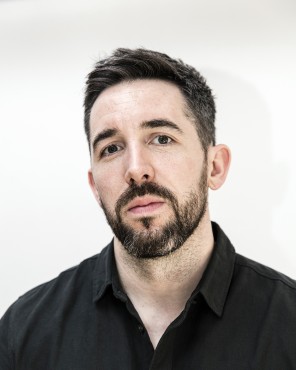
Finalist: Ivor Prickett, freelance photographer, The New York Times

For heartbreaking and frightening images that brought a fresh approach to classic war photography and gave an intimate view of the impact on shell-shocked survivors of what ISIS left behind in Mosul and Raqqa.

Nominated Work

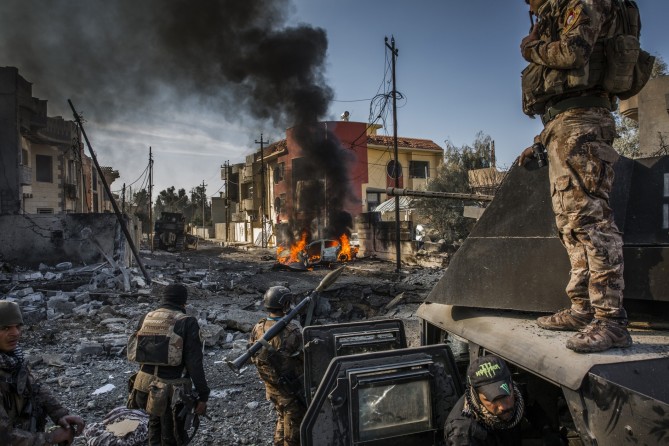
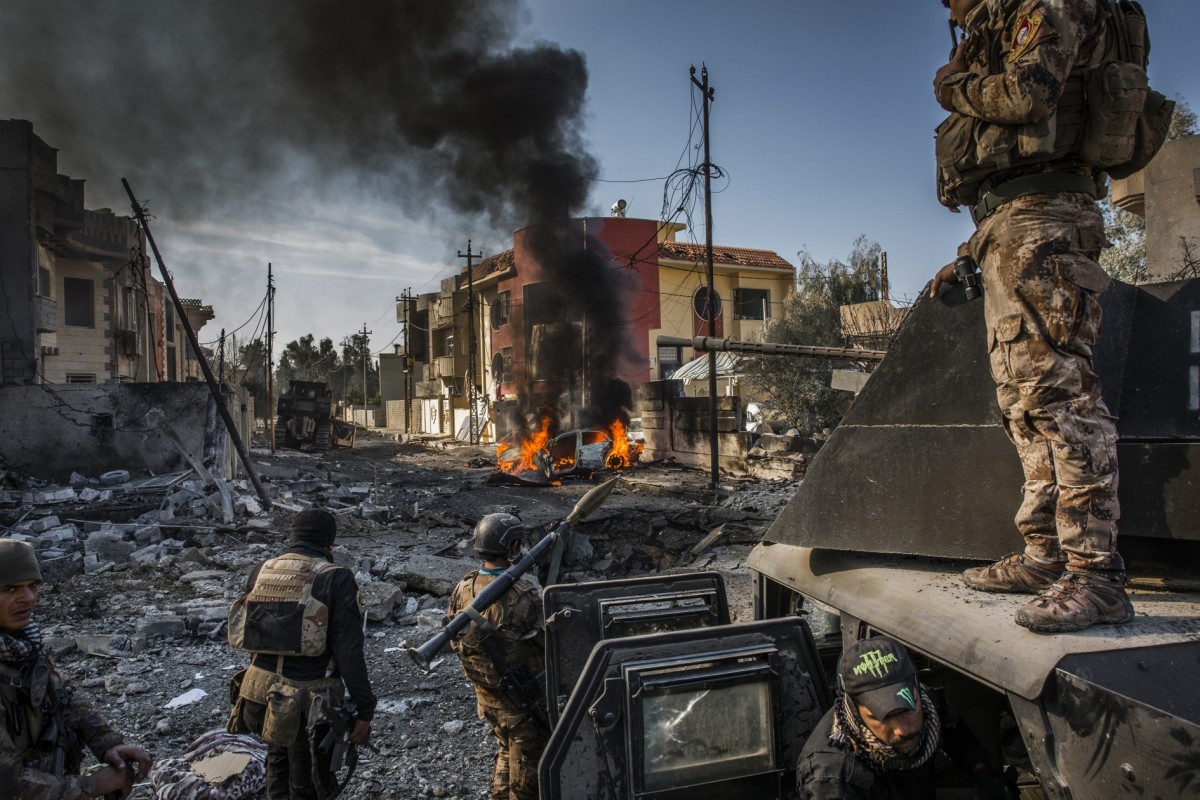
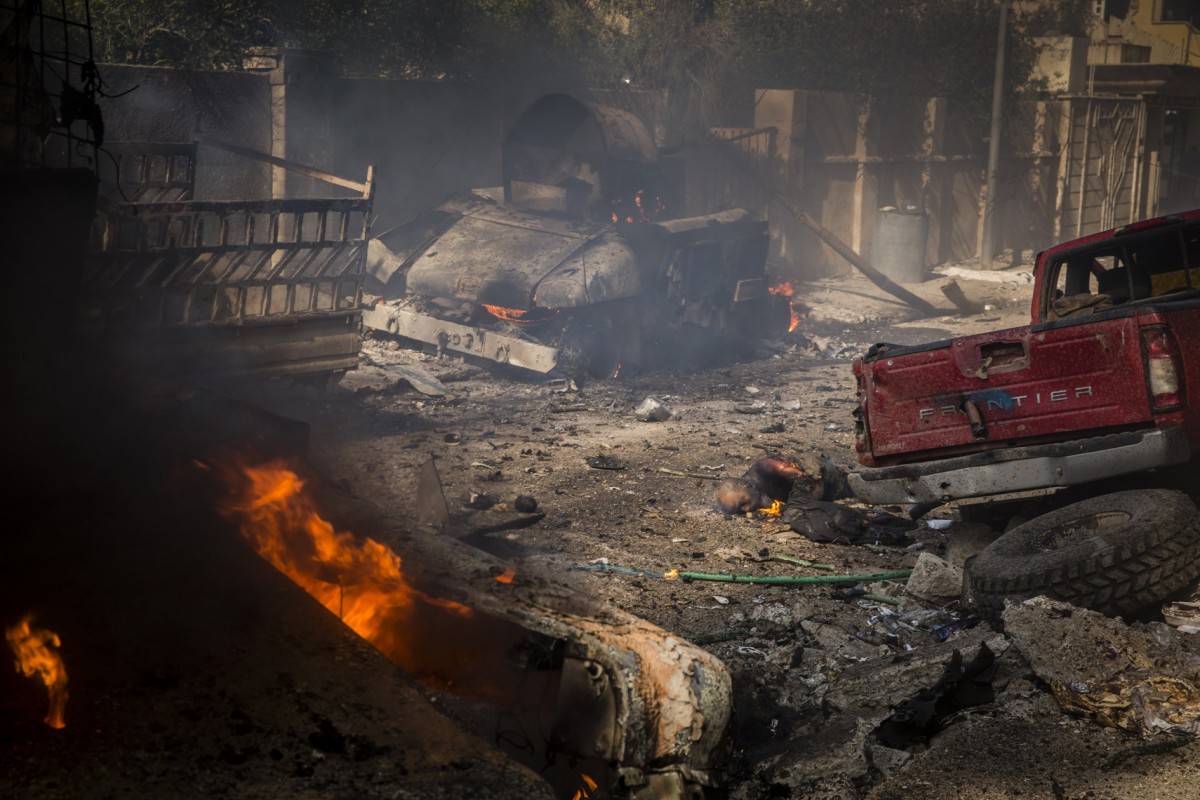
Iraqi soldiers gather in the aftermath of a suicide car bombing during their campaign to reclaim Mosul from the Islamic State on Jan. 16, 2017. Just minutes before, the photographer Ivor Prickett was at this intersection, before being hurried into a nearby courtyard. From January through August, Prickett, on assignment for The New York Times, made four prolonged trips to the front lines of Mosul, where the battle that lasted nearly nine months killed thousands of civilians, sent many thousands more fleeing their homes and reduced Iraq's second-largest city to rubble. When the fighting stopped, Prickett went back again, in October, as Iraqi forces searched for the dead. (January 26, 2017)
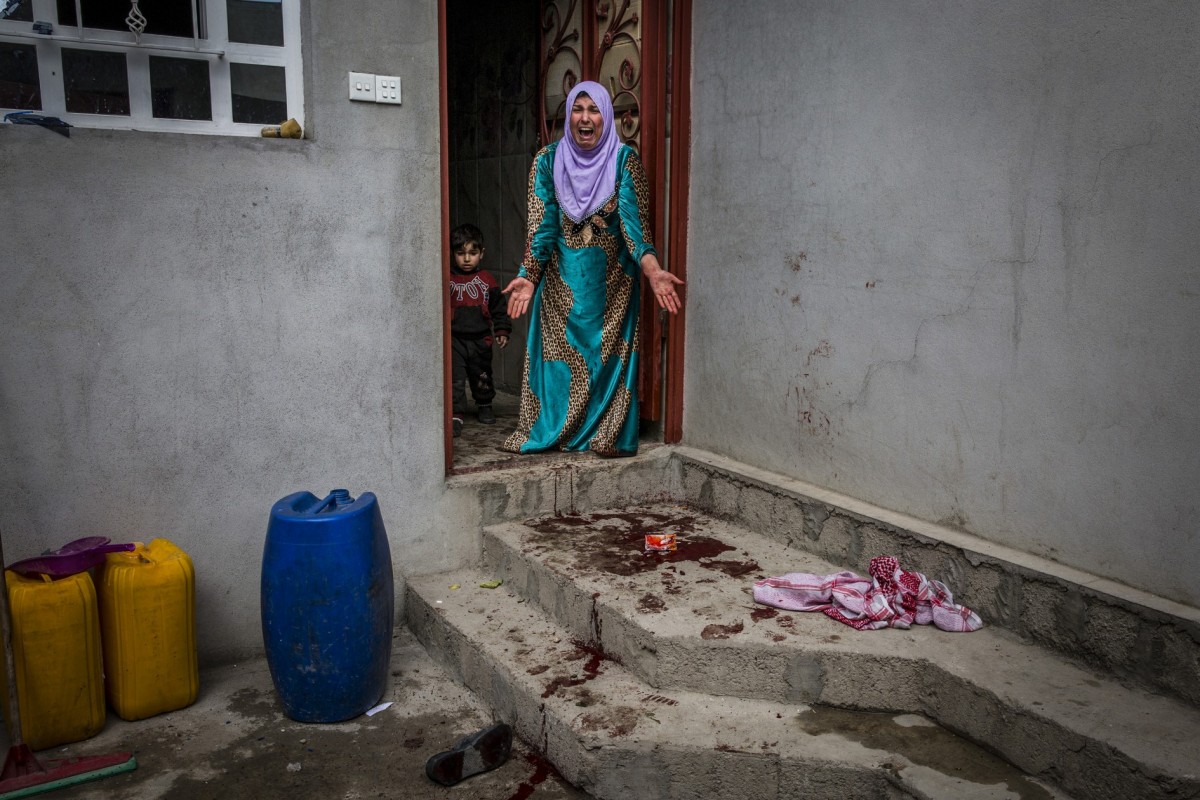
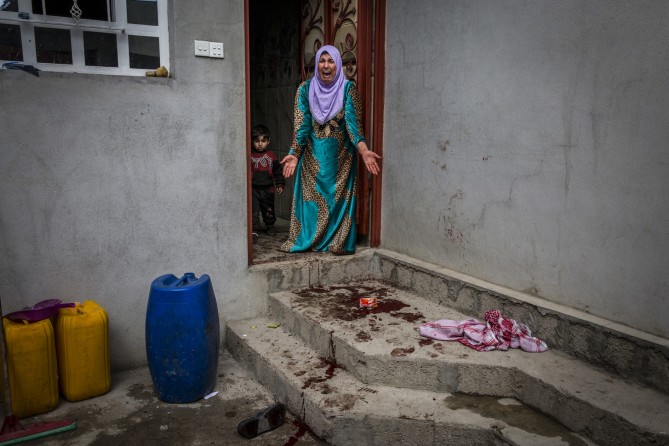
A mother screams for her dead son -- his blood streaked across the stairs, his tattered scarf left behind -- after an Islamic State mortar attack, in western Mosul on March 22, 2017. (March 28, 2017)
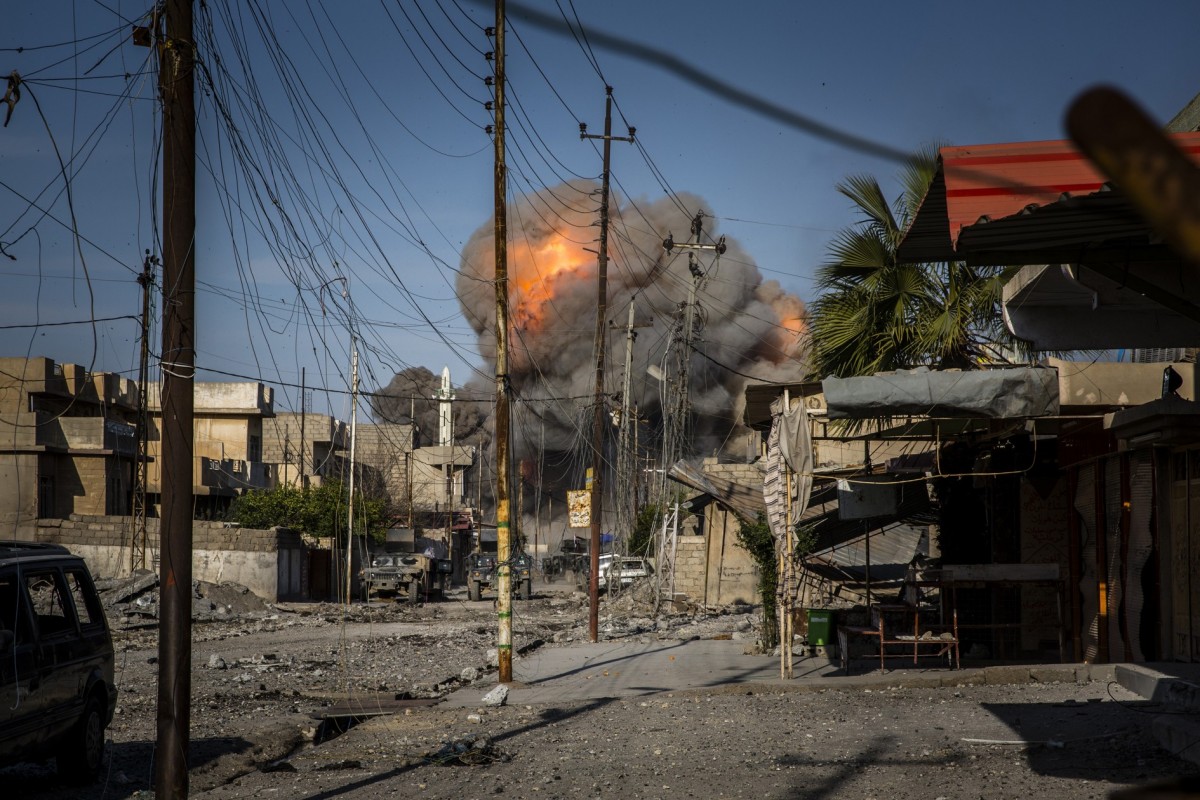
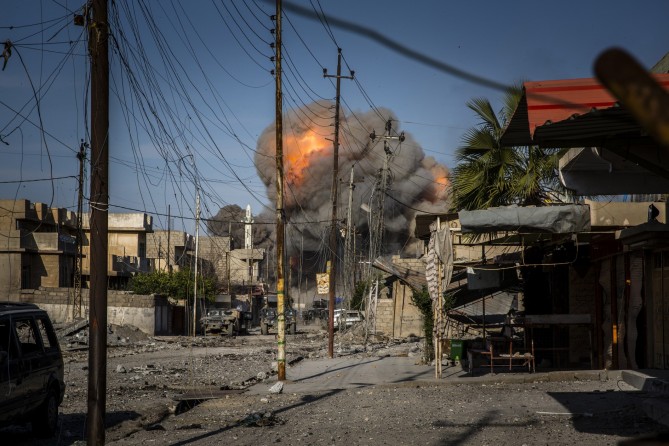
A strike from a coalition warplane explodes an Islamic State car bomb, sending up a ball of orange flame and smoke in Mosul, on March 9, 2017. (March 29, 2017)
 
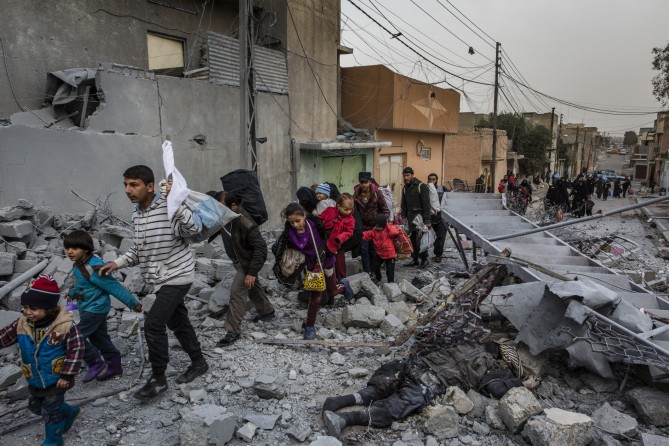
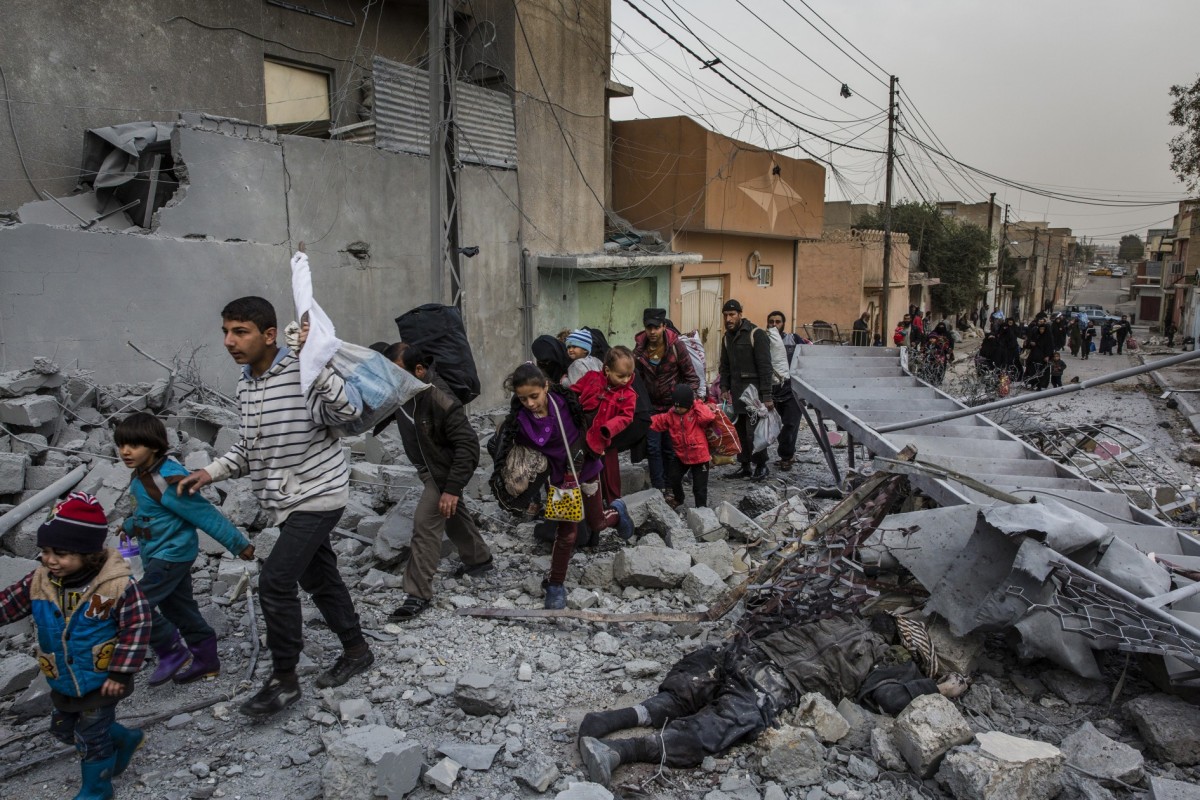
Terrified civilians flee West Mosul, mostly oblivious to the body of an Islamic State fighter, on March 13, 2017. (March 28, 2017)
 

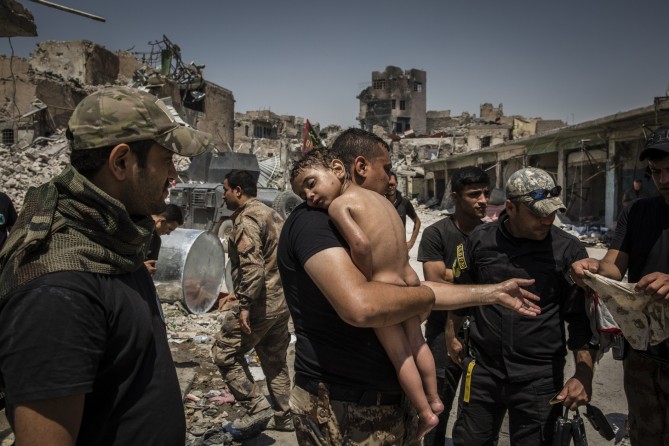
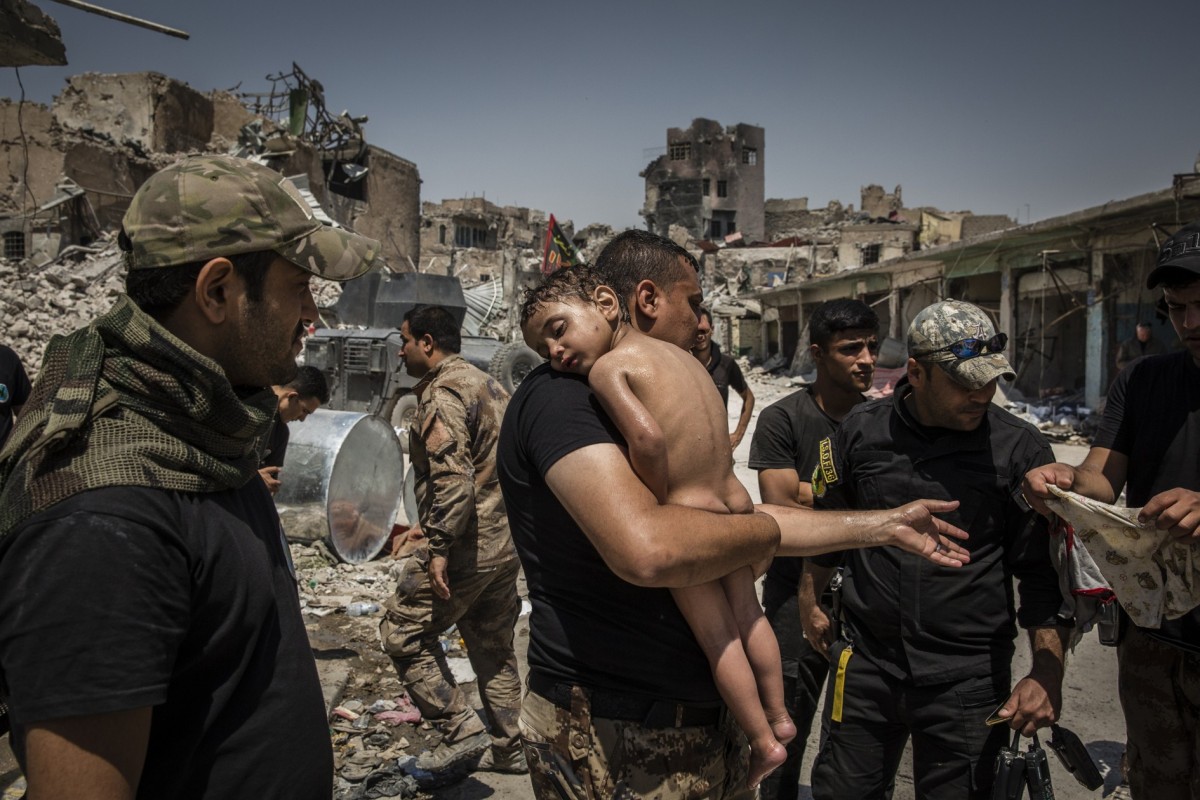
Iraqi soldiers rescue a young boy from the killing zone of Mosul's Old City, on July 12, 2017. The boy had been used as a human shield by a suspected Islamic State fighter, soldiers said. (August 1, 2017)
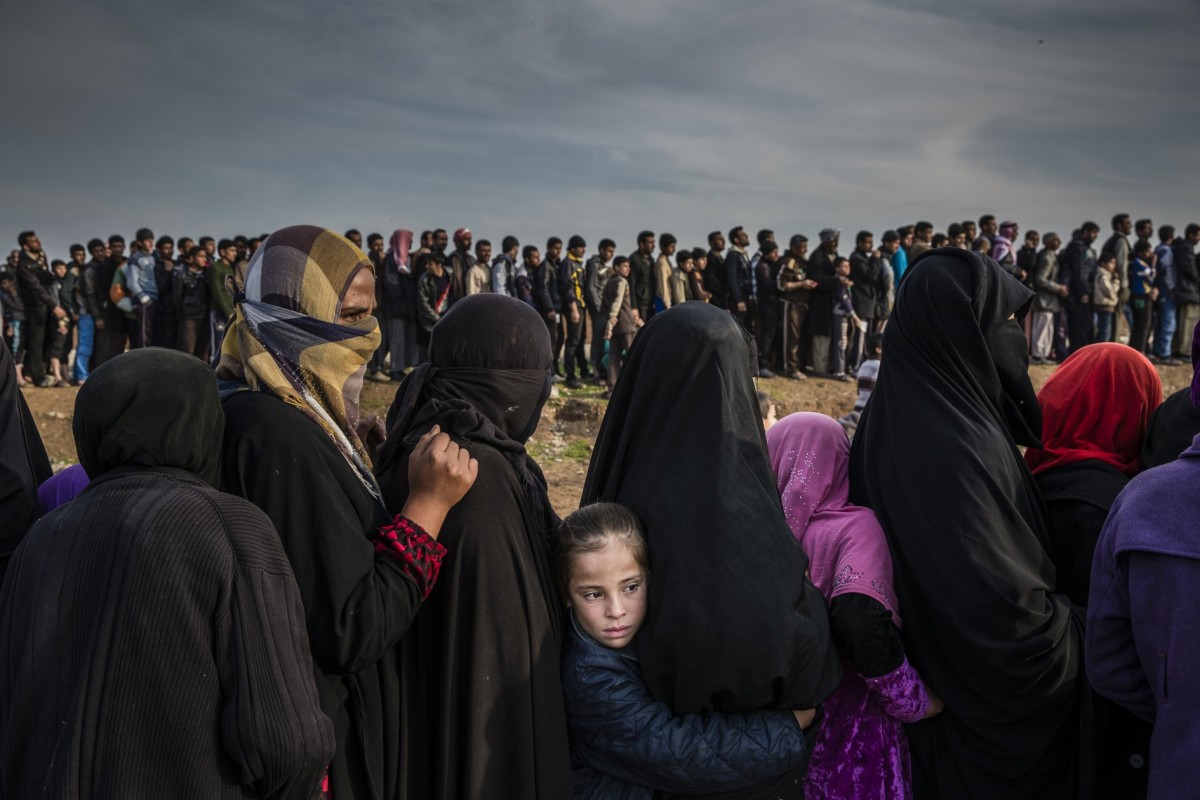
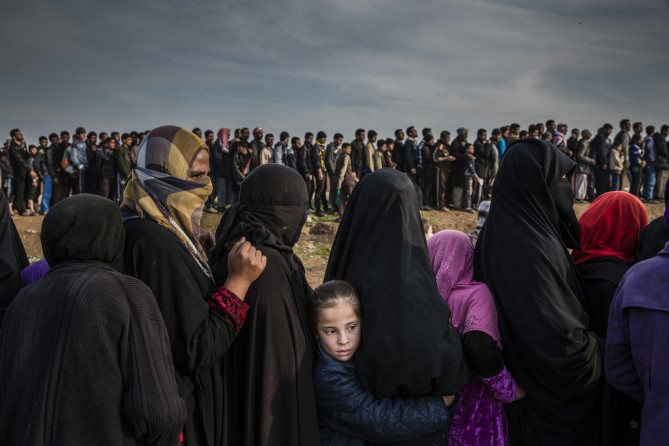
Civilians, exhausted, hungry and thirsty, line up for food and water in the Mamun neighborhood of Mosul, on March 15, 2017. (March 29, 2017)
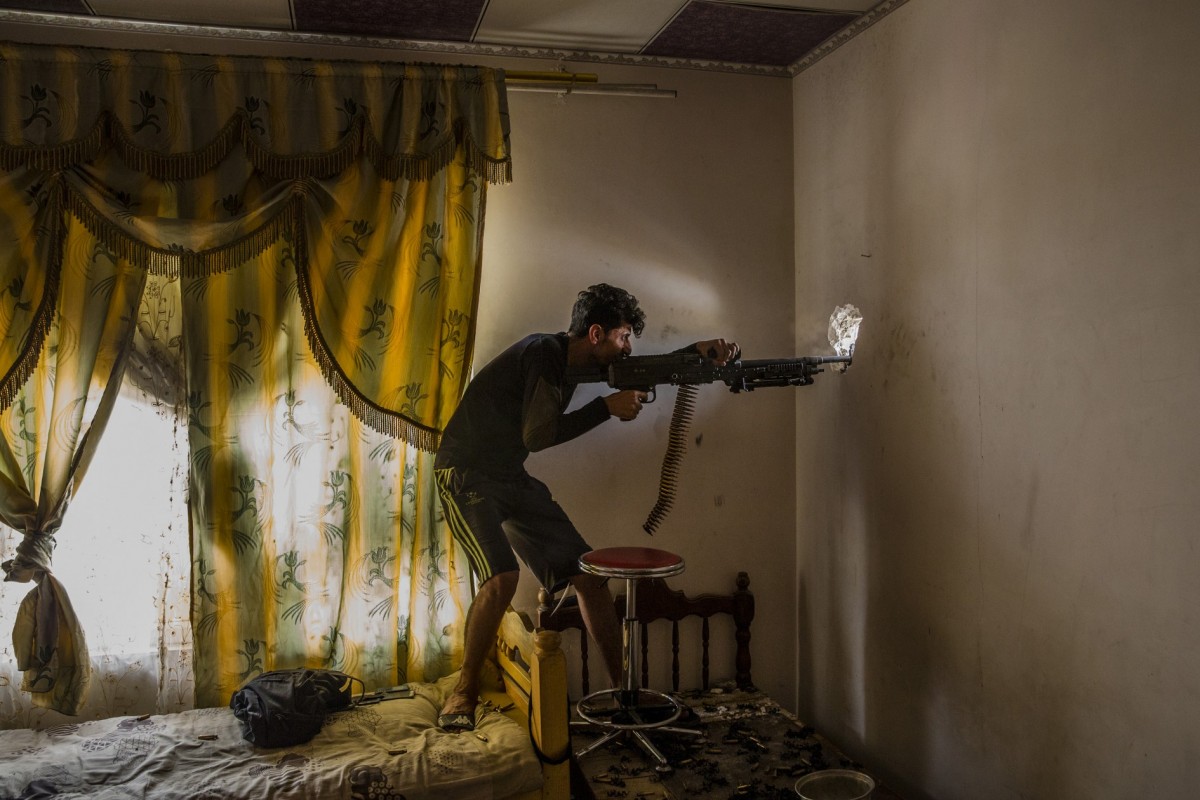
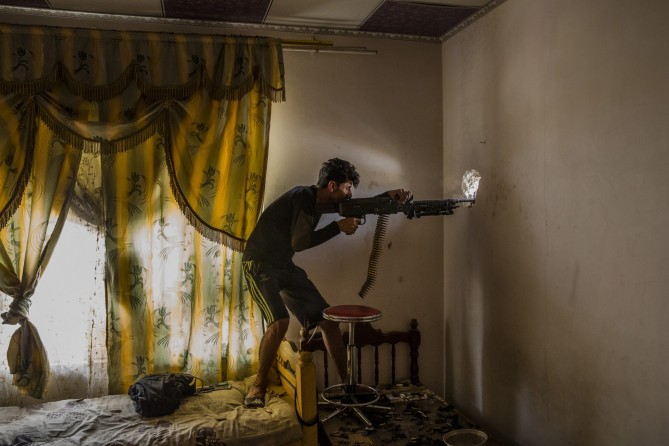
An Iraqi special forces soldier fires on Islamic State fighters from an abandoned house in western Mosul on May 19, 2017. Evidence of a brutal street fight was everywhere in the Rifai neighborhood. The destruction was immense, and it seemed not a single house was free of bullet holes. (June 5, 2017)
 
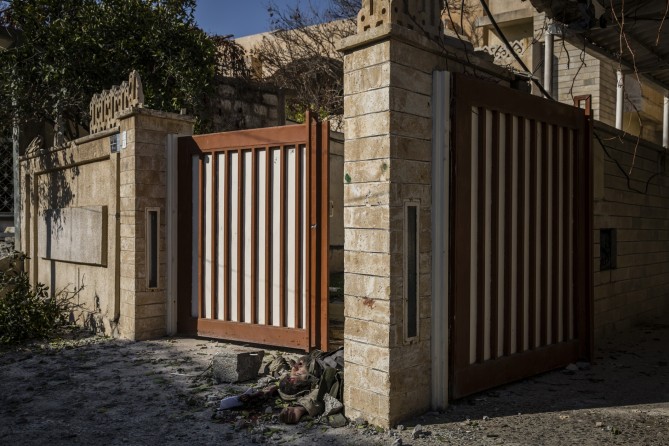
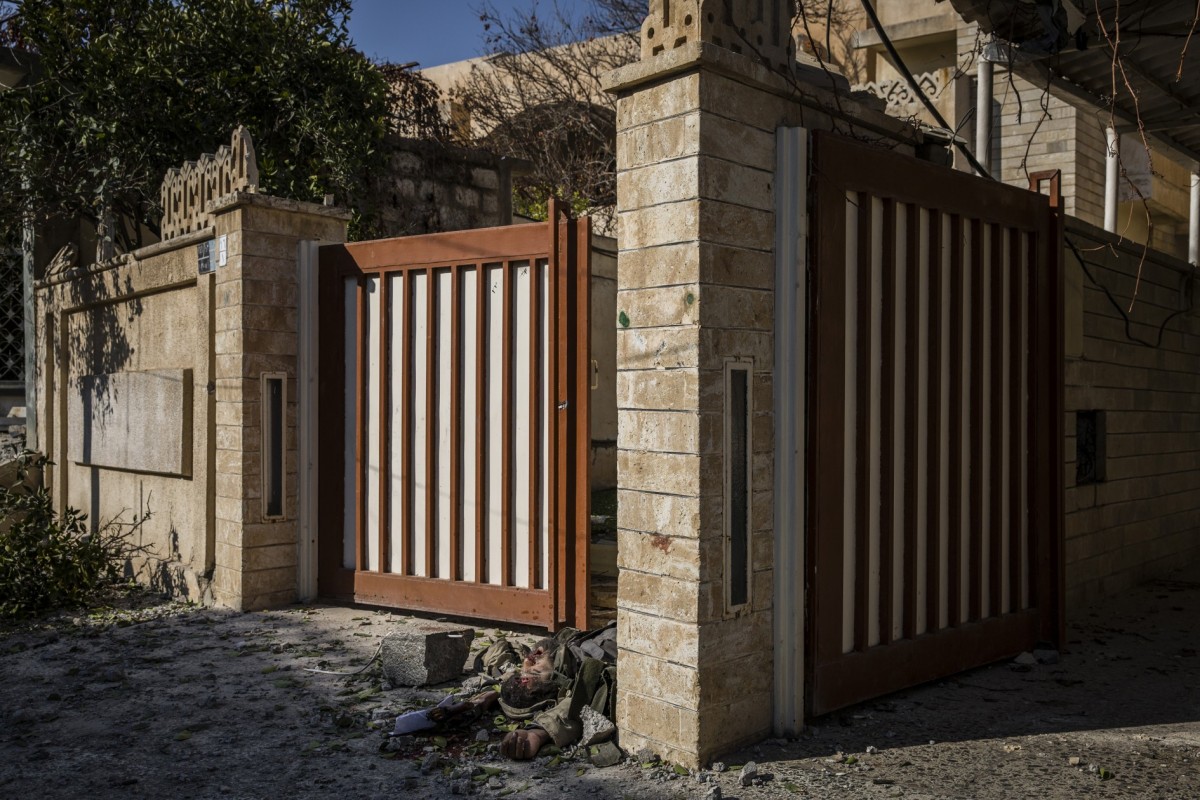
The body of an Islamic State fighter lies in the driveway of a home on a leafy street in the upscale Andalus neighborhood of Mosul on Jan. 16, 2017. (January 24, 2017)
 
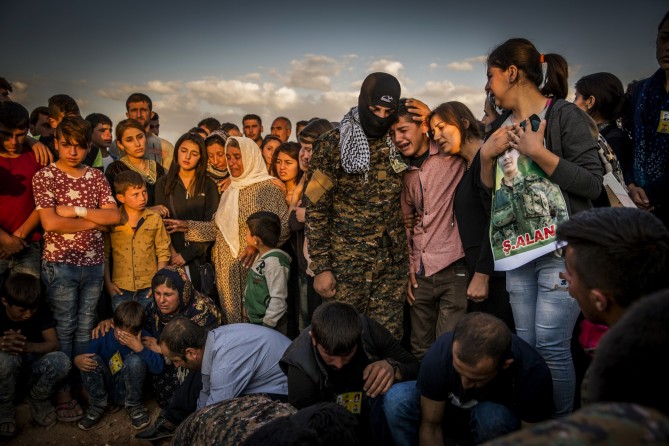
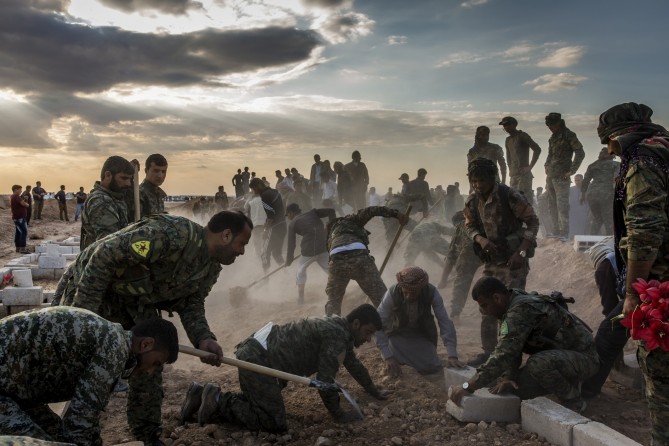
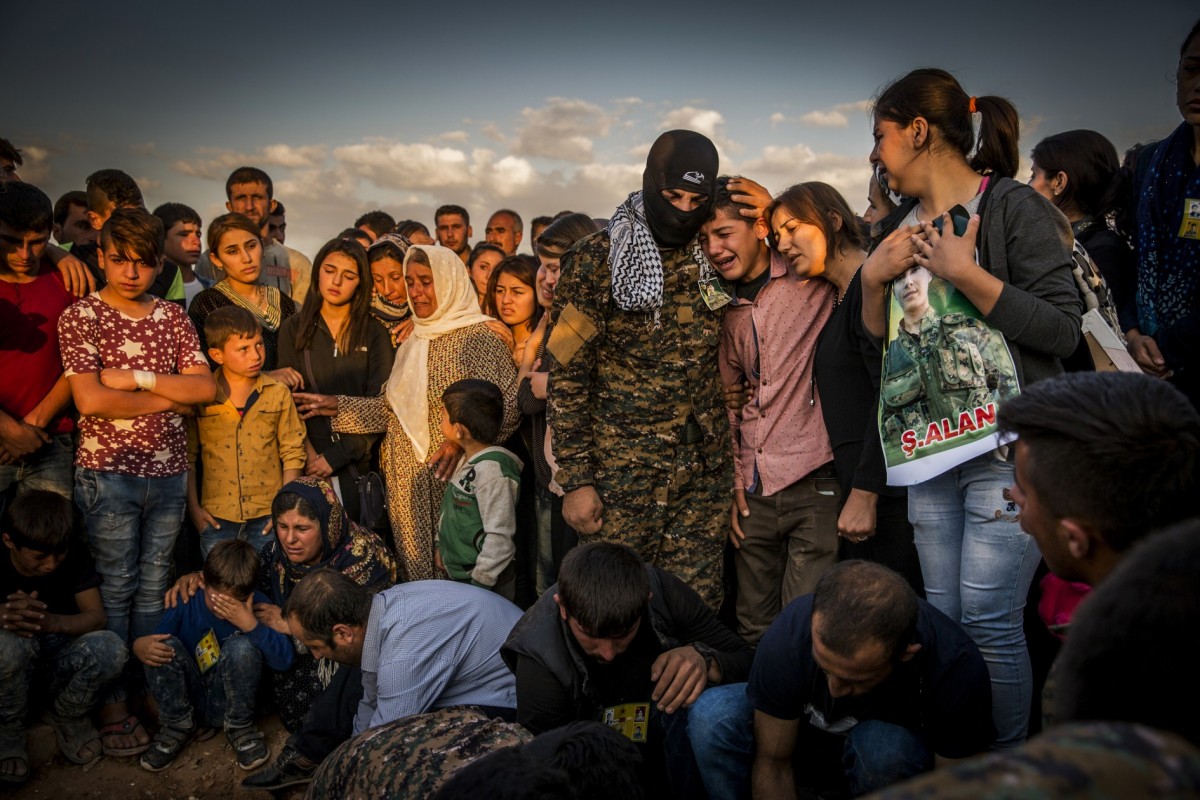
Friends and family mourn a loved one who died in battle for Raqqa, Syria, on Oct. 14, 2017. Three days later, American-backed forces said they had seized the city from the Islamic State, a major blow to the militant group, which had long used the city as the de facto capital of its self-declared caliphate. (October 18, 2017)
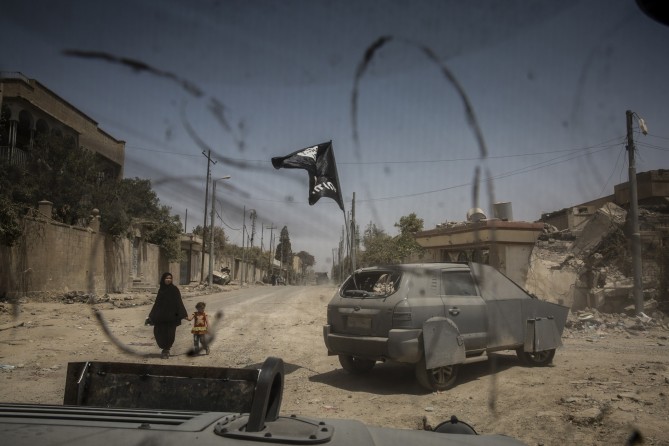
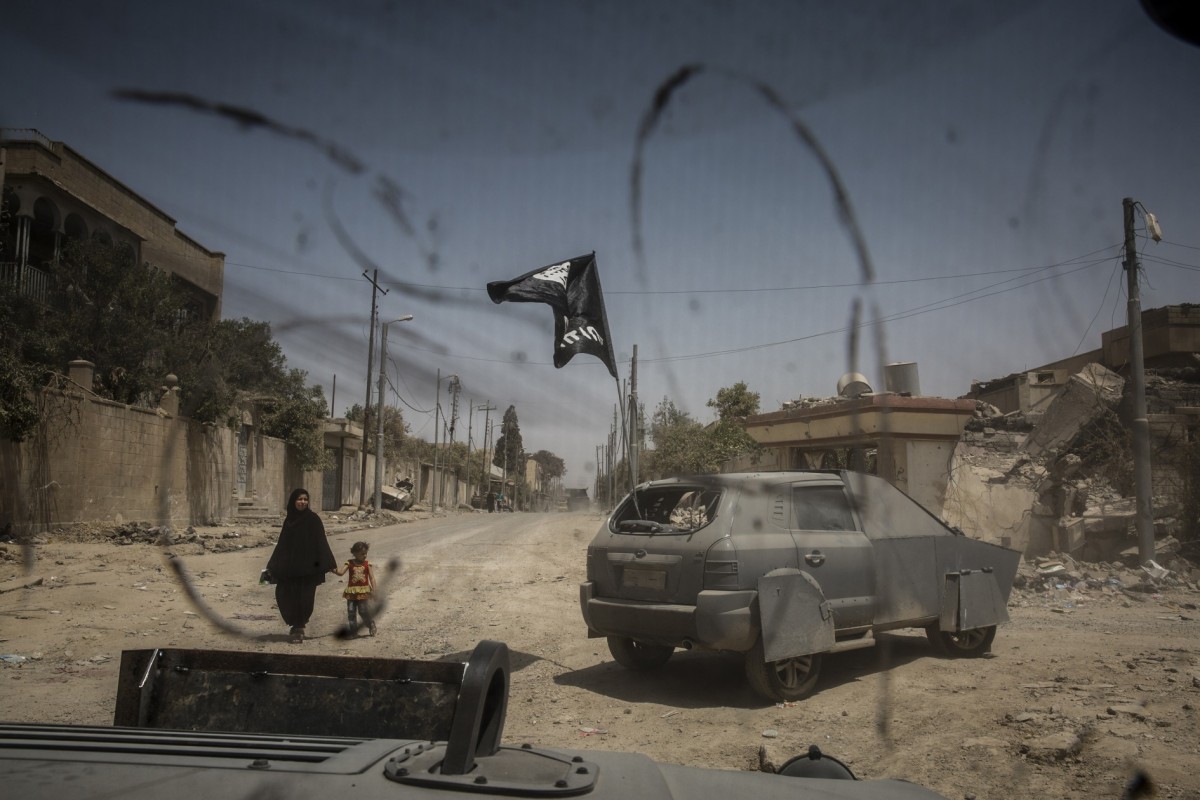
Soldiers drive a captured Islamic State car bomb through Mosul back to their base on July 23, 2017. As Iraqi forces took control of the Old City and searched the area, they seized several of the Islamic State's undetonated car bombs, the heavily armored improvisations that became the most feared weapons in the militants' arsenal. (August 1, 2017)
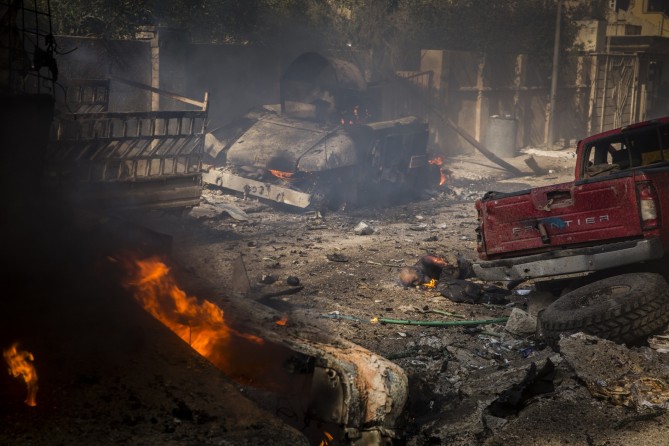
A dead civilian killed by an Islamic State suicide car bomb, in western Mosul on March 25, 2017. The man had gone shopping, and his burning body was found in the street by his son. Prickett was about a thousand yards away and rushed to the scene. (March 28, 2017)
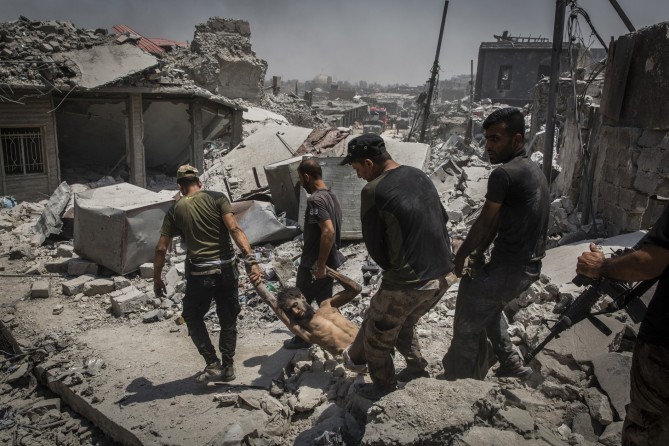
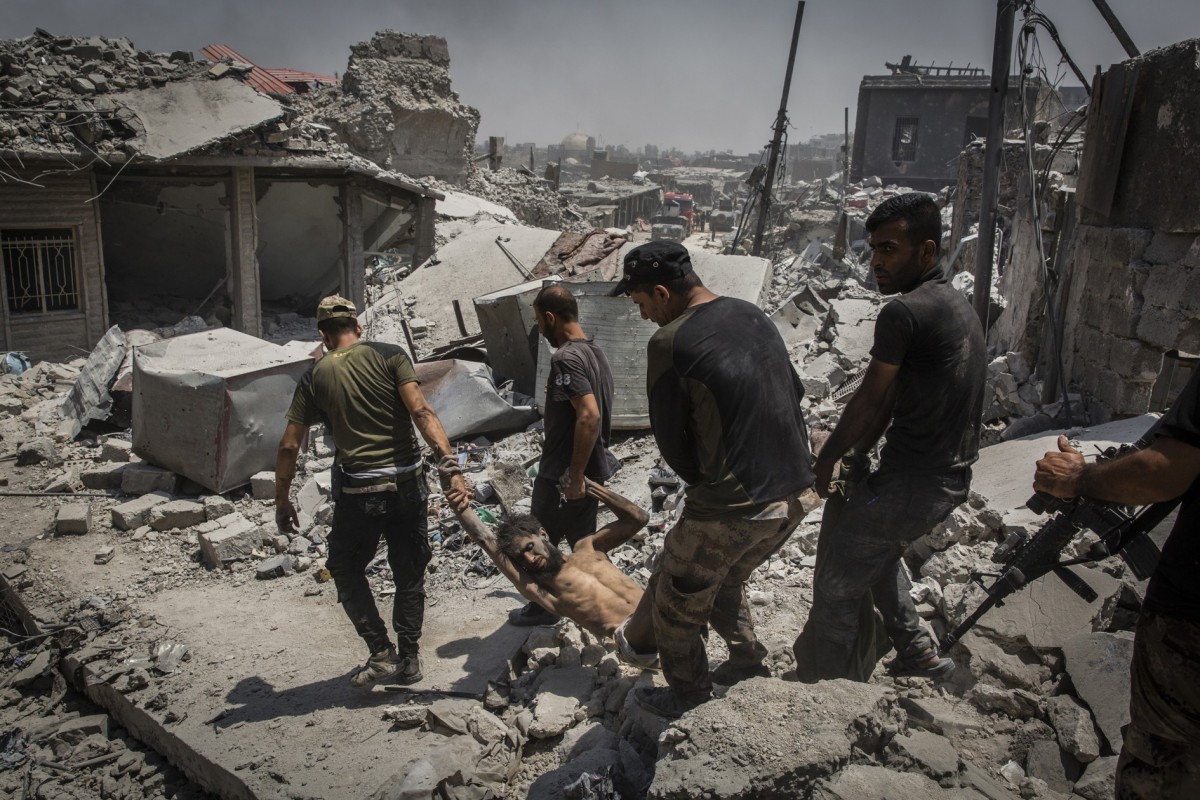
Soldiers drag a wounded Islamic State fighter from a ruined building in the Old City of Mosul on July 10, 2017. (August 1, 2017)
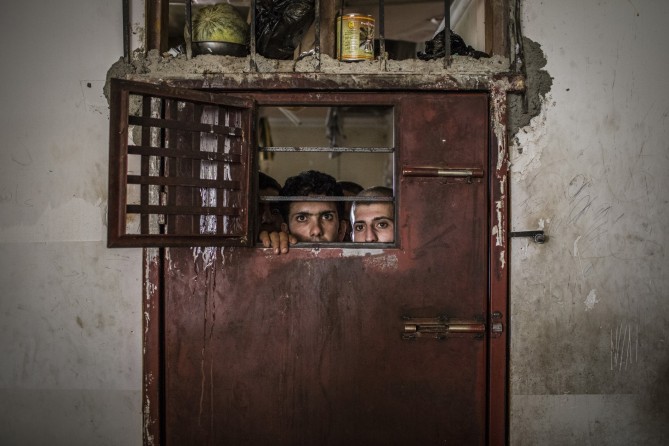
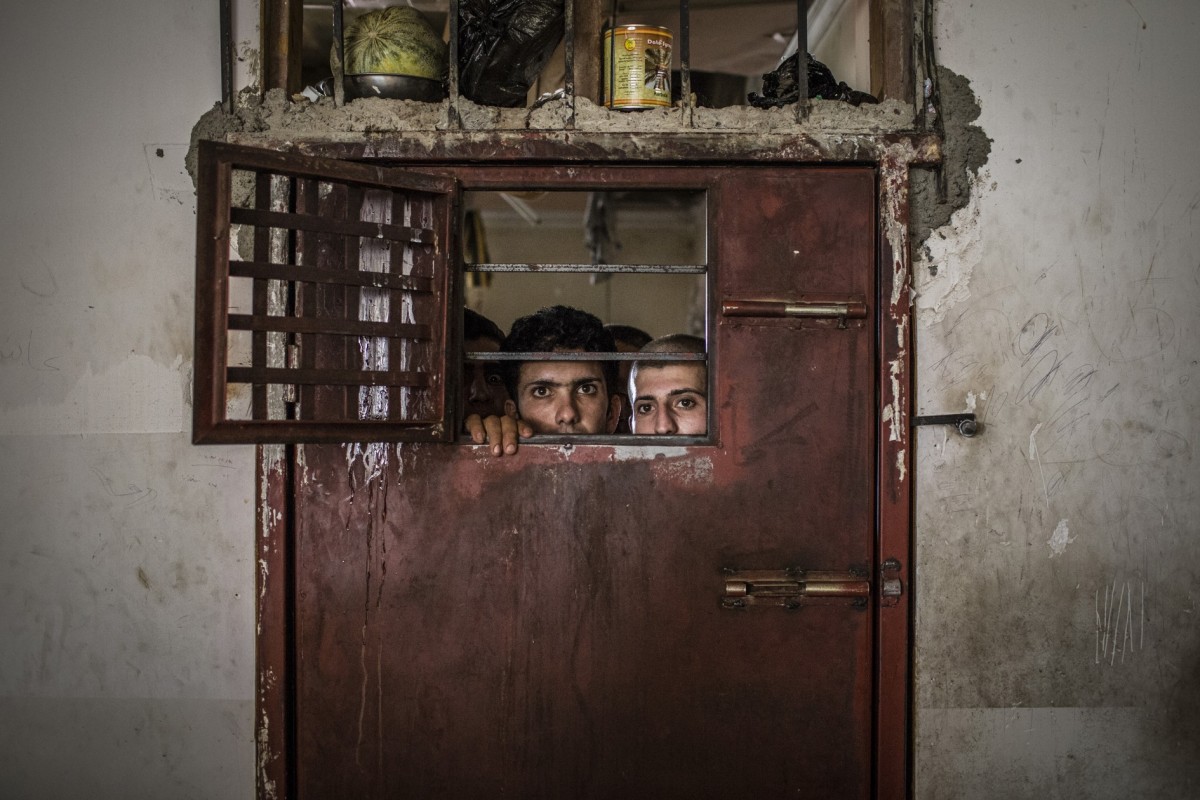
Islamic State prisoners peer from a jail cell south of Mosul on July 22, 2017. On the outskirts of the city, thousands of men accused of joining or helping the Islamic State awaited their fates in sweltering and cramped jails. (August 1, 2017)
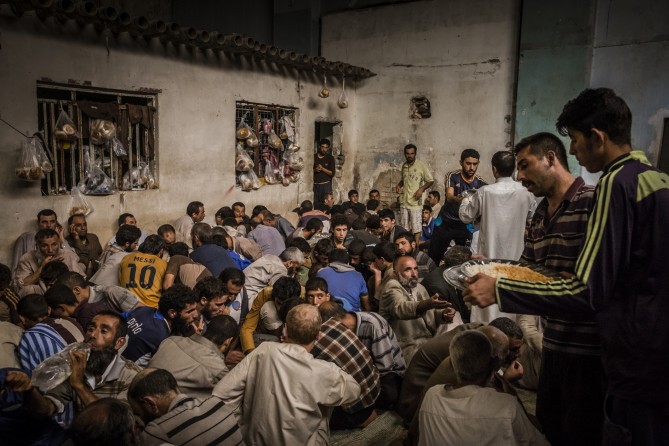
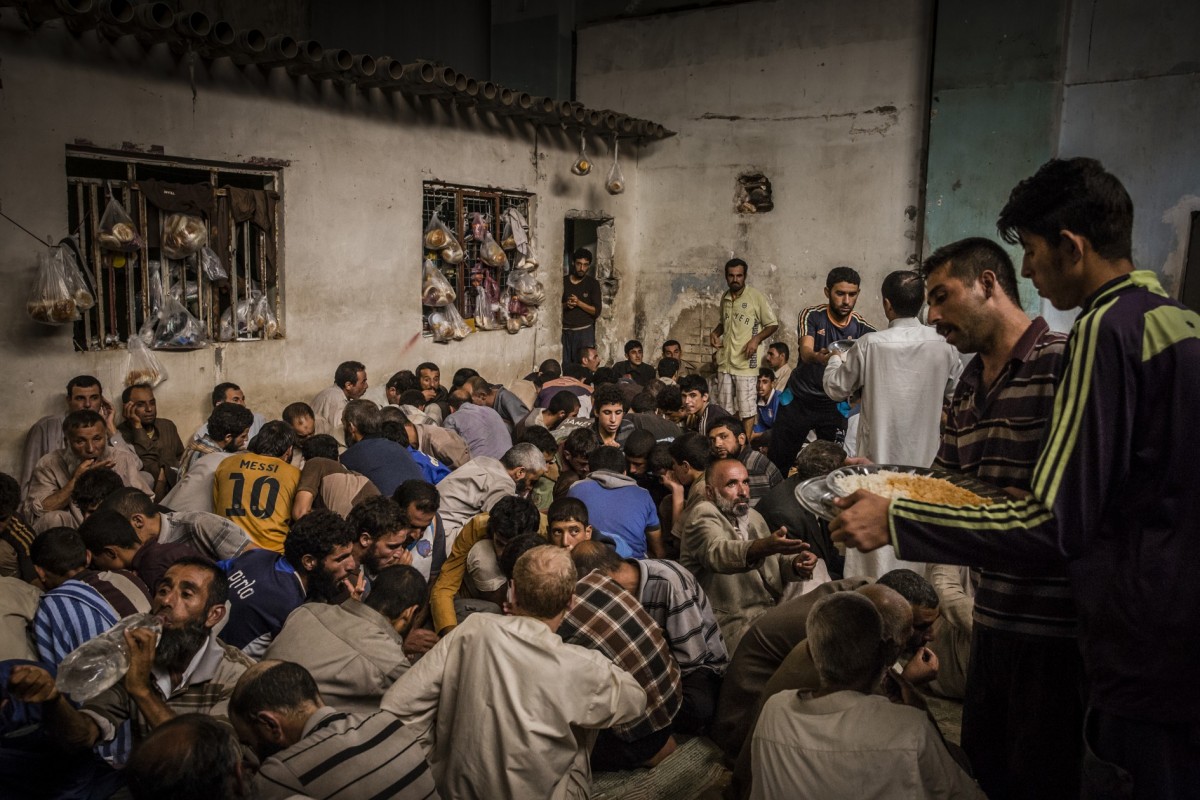
Suspected Islamic State fighters are fed at an interrogation center run by the Kurdish authorities in northern Iraq on Oct. 4, 2017. More than a thousand prisoners accused of being Islamic State fighters passed through the center after they fled their crumbling Iraqi stronghold of Hawija. (October 8, 2017)
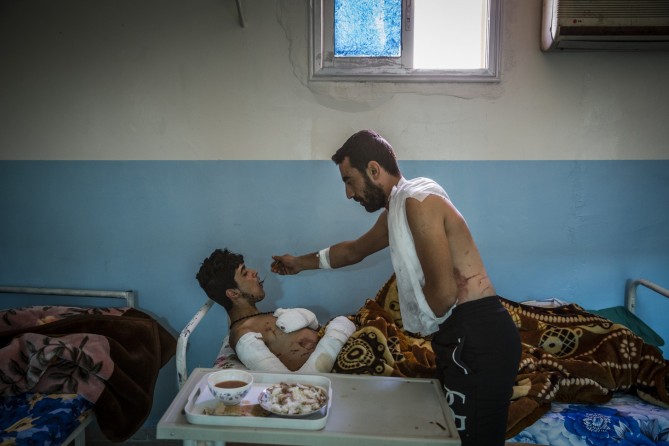
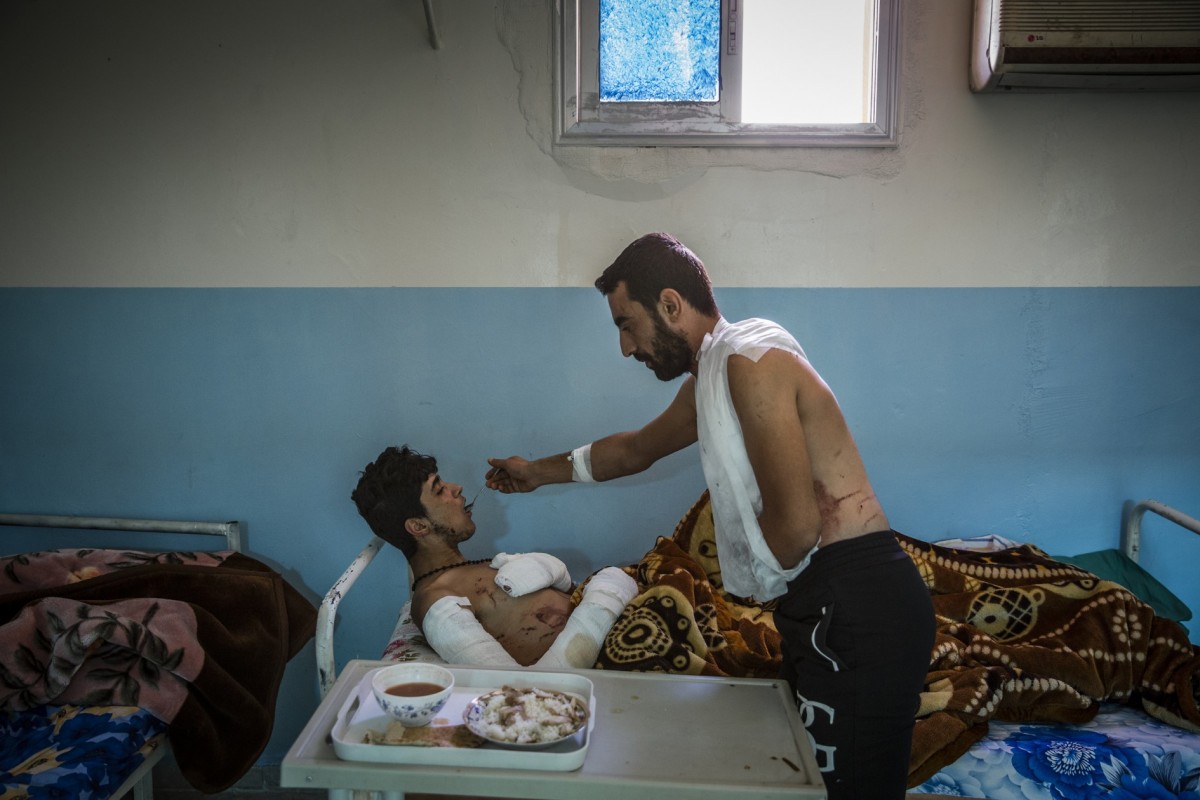
Mohammed Sheko, 25, feeds his friend and comrade, Salah al-Raqawi, 18, at a hospital in Raqqa, Syria, on Oct. 13, 2017. The men fought with a Kurdish-dominated militia that was backed by the United States to assault Raqqa. The city was declared liberated that week. Asked if he felt this was a cause worth being injured for, Mr. Sheko replied: "It is worth more than that. It is worth dying for, for my people." (October 17, 2017)

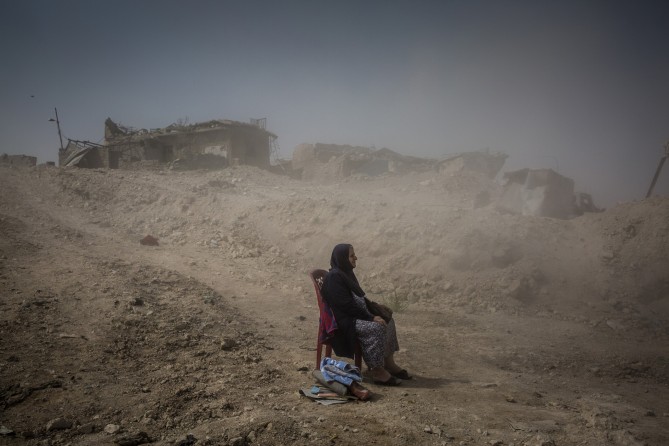
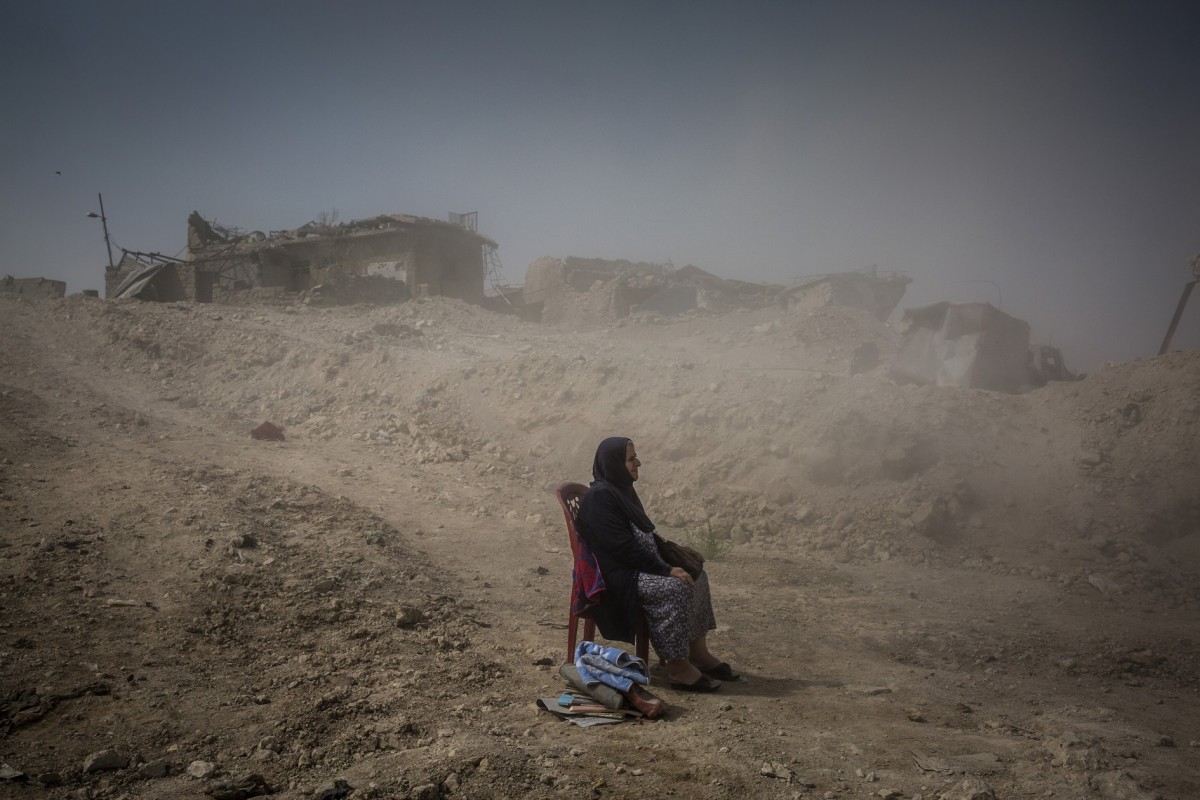
Nadhira Aziz watches as Iraqi Civil Defense recover the bodies of her sister and niece from the ruins of her house in the Old City of Mosul on Sept. 16, 2017. They were killed by an airstrike in June. Mrs. Aziz, in a plastic chair 15 feet from the excavator, was at times engulfed in dust whipped up as the driver dumped mounds of stone and parts of her house beside her, but she refused to move. (October 10, 2017)
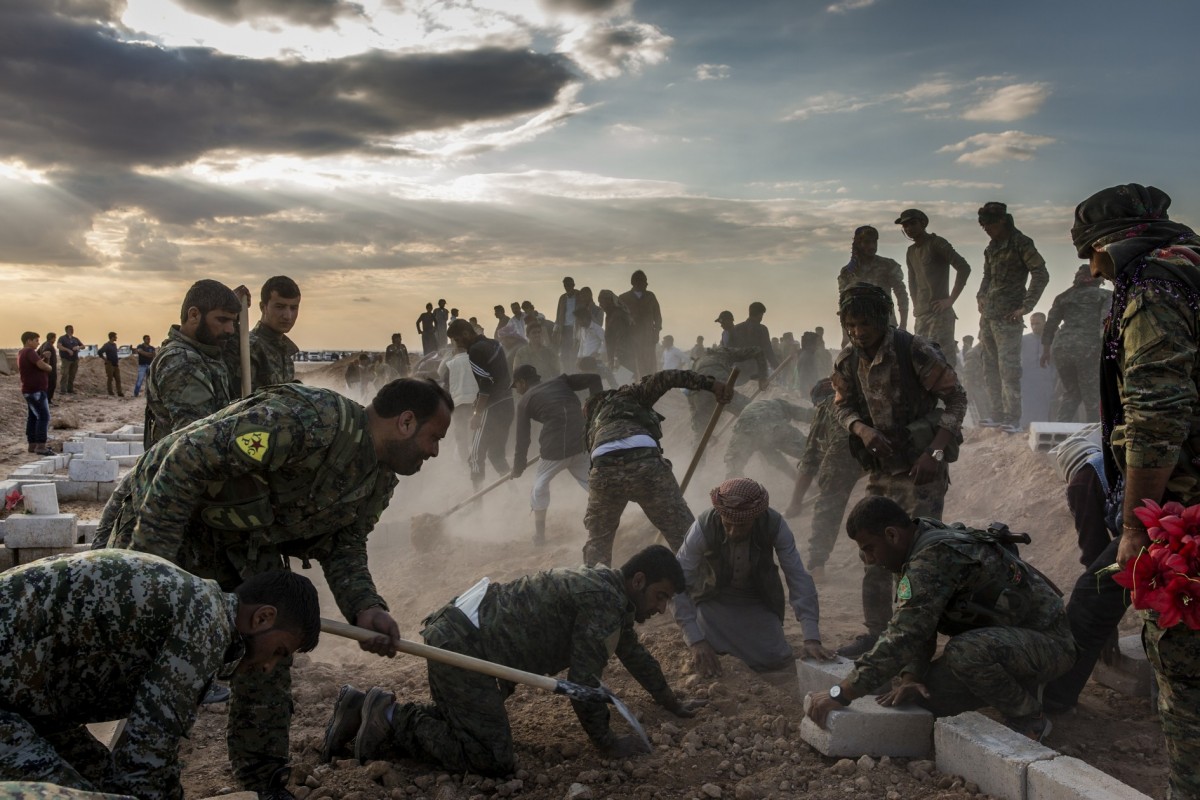
Militiamen men bury a comrade in Hukumya, near Raqqa, Syria, on Oct. 11, 2017. (October 19, 2017)
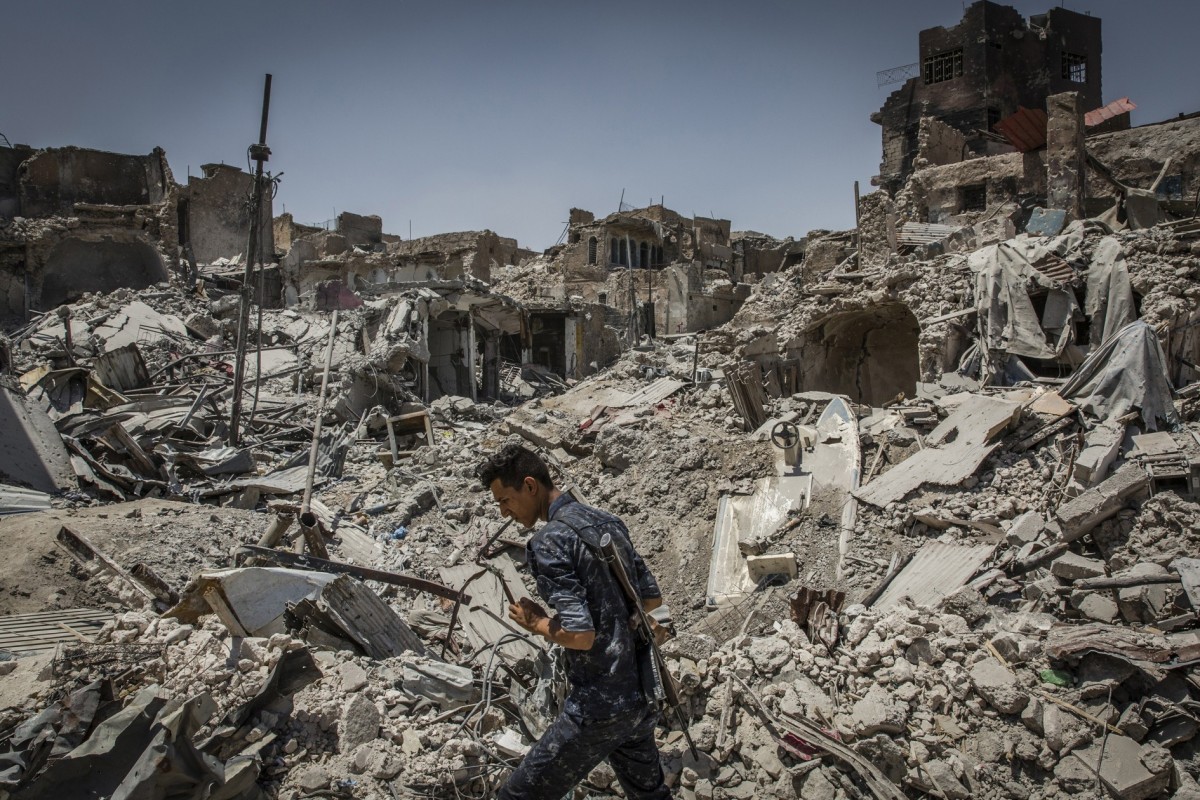
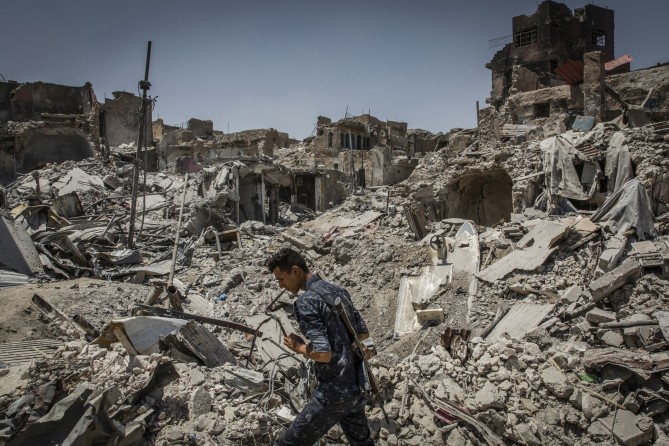
An Iraqi federal police officer in the devastated Old City of west Mosul on July 15, 2017. Days after the Iraqi government officially declared victory over the Islamic State in Mosul that month, the fighting was far from over. (August 1, 2017)

Biography

Ivor Prickett is a freelance photographer for The New York Times.

He’s been based in the Middle East since 2009, where he has documented the Arab Spring uprisings in Egypt and Libya, working simultaneously on editorial assignments and his own projects.

Traveling to more than 10 countries between 2012 and 2015, Mr. Prickett also documented the Syrian refugee crisis.

With a particular interest in the aftermath of war and its humanitarian consequences, his early projects focused on stories of displaced people throughout the Balkans and Caucasus.

Mr. Prickett’s work has been recognized through a number of prestigious awards including POYI, Foam Talent, the Taylor Wessing Portrait Prize and the Ian Parry Scholarship.

His pictures have been exhibited widely at institutions such as the Getty Gallery in London, Foam Gallery in Amsterdam and the National Portrait Gallery in London. He is represented by Panos Pictures in London and holds a degree in documentary photography from the University of Wales Newport.

Winners

Prize Winner in Breaking News Photography in 2018:

Ryan Kelly of The Daily Progress

For a chilling image that reflected the photographer’s reflexes and concentration in capturing the moment of impact of a car attack during a racially charged protest in Charlottesville, Va. Breaking News Photography

The Jury

Sherman Williams(Chair)

Assistant Managing Editor, Visual Journalism

Andrea Bruce

Photographer

Danese Kenon

Deputy Director of Photography for Video/Multimedia

Michele McDonald

Photo Editor

Shazna Nessa

Deputy Managing Editor and Global Head of Visuals

Winners in Breaking News Photography

Daniel Berehulak, freelance photographer

For powerful storytelling through images published in The New York Times showing the callous disregard for human life in the Philippines brought about by a government assault on drug dealers and users. (Moved into this category from Feature Photography by the nominating jury.)

Photography Staff

For powerful images of the despair and anger in Ferguson, MO, stunning photojournalism that served the community while informing the country.

Tyler Hicks

For his compelling pictures that showed skill and bravery in documenting the unfolding terrorist attack at Westgate mall in Kenya.

2018 Prize Winners

Staff of The Washington Post

For purposeful and relentless reporting that changed the course of a Senate race in Alabama by revealing a candidate’s alleged past sexual harassment of teenage girls and subsequent efforts to undermine the journalism that exposed it.