The New York Times, by Tyler Hicks
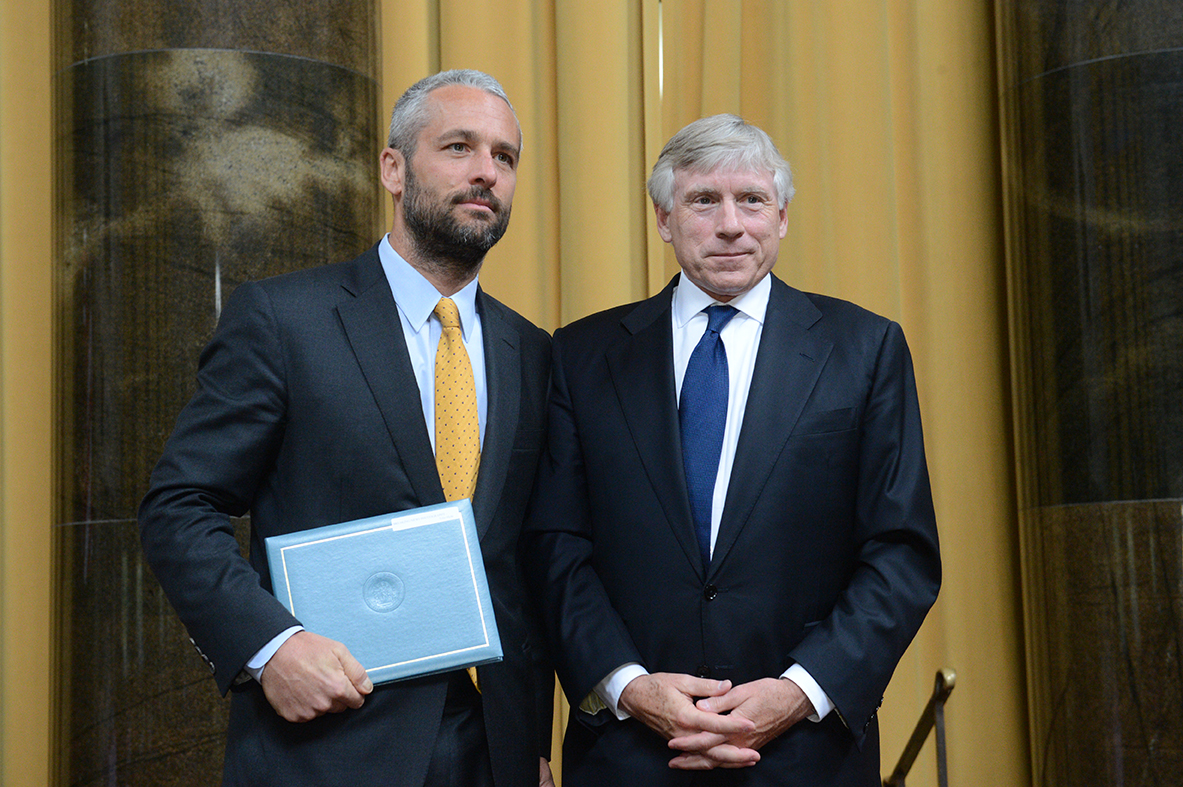
Lee C. Bollinger, President of Columbia University (right), presents the 2014 Breaking News Photography Prize to Tyler Hicks of The New York Times.
Winning Work
The first shots rang out around noon — a long, angry burst of machine-gun fire, from inside an upscale mall in central Nairobi.
Tyler Hicks, staff photographer for The New York Times, had just returned from his own wedding in the States and was picking up some gifts around the corner from the Westgate Shopping Mall when he heard that something was happening. He ran over and saw people streaming from the entrance, and bodies. Using the small camera he always carries, he began shooting until his new wife could arrive with his Kevlar helmet and professional cameras. The Twittersphere was on overdrive. “Stay away from Westgate,” several tweets said. “Bank robbery underway.” But Hicks knew this was no bank robbery.
He ran inside. More dead people — sprawled in the food court, in front of the supermarket, by the cafe. Hicks did what he has done many times before, from Afghanistan and Syria to Libya and Congo. He found a way to navigate an extremely dangerous and confusing situation.
A band of Somali militants had stormed the mall, executing dozens of shoppers, including children, as part of their campaign to spread terror in Kenya. As one of the first photographers to arrive on the scene, Hicks attached himself to a team of plainclothes police officers as well as uniformed police and soldiers who began to comb every inch of the mall, pistols drawn. For all he knew as he took his first frames, ducking in and out of shops smeared with blood, the militants were still inside. In fact, they were.
For several hours Hicks photographed the fear, the death, the bravery and the grief. These photos, replayed countless times, became the images of this tragedy. Everybody in Kenya seemed to know his work. A few days later, after the Kenyan army had blasted the last of the militants out of the mall, Hicks managed to slip inside, past a military checkpoint.
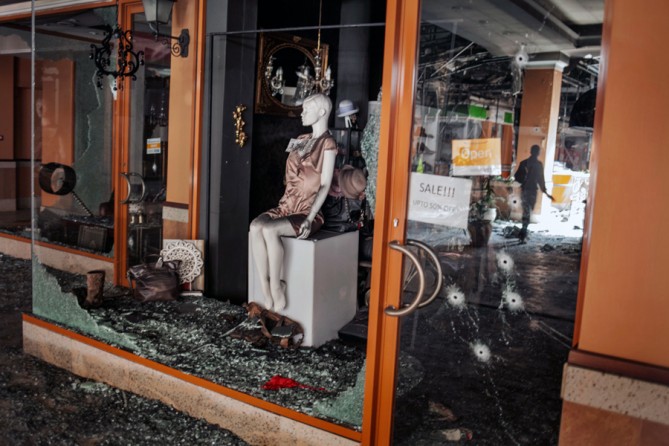
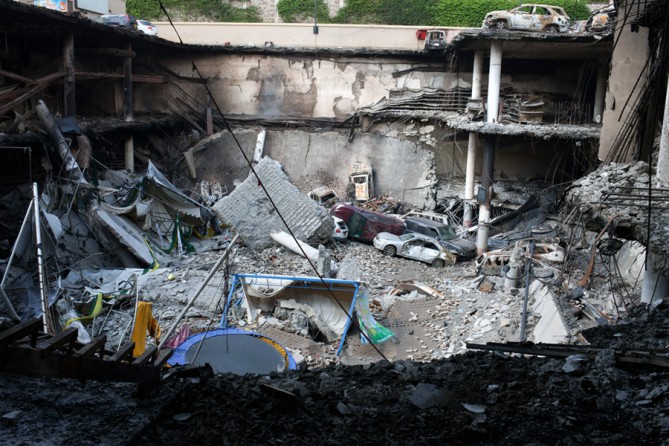
His photos from that visit documented the devastation — the gigantic hole where a parking lot collapsed, the aftermath of fires and explosions. A smartly dressed mannequin, perched in a shattered shop window, bore silent witness to the place where so many people had been hunted down.
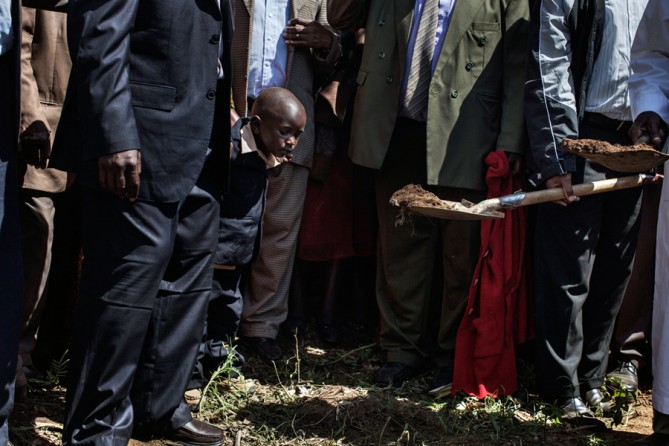
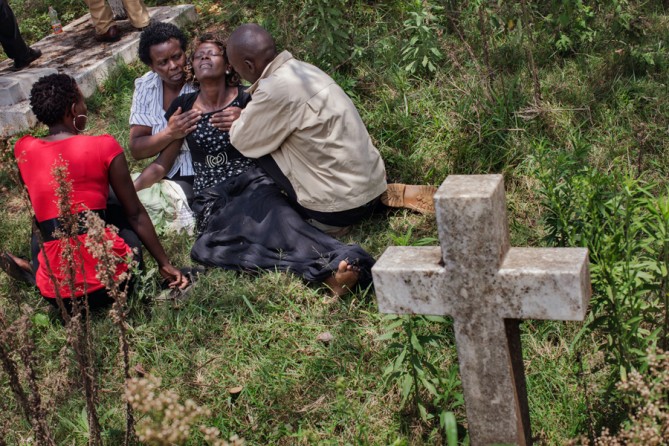
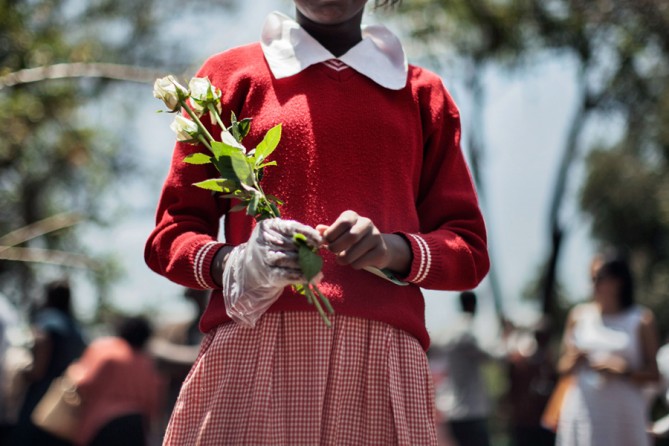
Hicks did not stop there. He tracked down survivors and loved ones. He attended funerals where little boys watched their mothers being slipped into the earth. All of these pictures show his sensitivity, his uncanny ability to know exactly where to be and when to squeeze the shutter to fully capture what people were feeling during the most trying moments of their lives.
Tyler Hicks has been among the most dedicated combat photographers in the world this past decade. He photographed the battlefields of Afghanistan and the war in Sudan. He was kidnapped in Libya; he was bombed in Gaza. He photographed the fighting in Syria.
Hicks’s work from places of mortal peril is unsurpassed. Someday museums will show retrospectives of his photography. We nominated him for the Pulitzer Prize in six of the past seven years. (He has been a Pulitzer finalist twice.) In 2007 and 2013 he earned two entries, from quite different contexts, and we’re doing so again this year: for these photos, and for his pictures a few months later on the aftermath of Typhoon Haiyan in the Philippines.
His photos from the Westgate slaughter show his courageous commitment to getting the picture, no matter where it is, no matter what it takes. We proudly nominate Tyler Hicks for the Pulitzer Prize for Breaking News Photography.
Winning Work
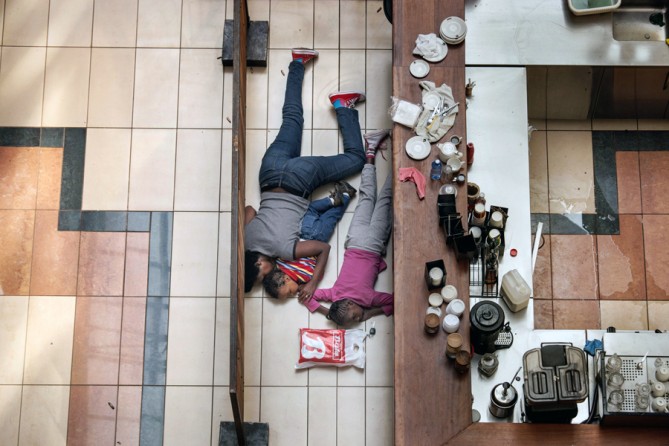
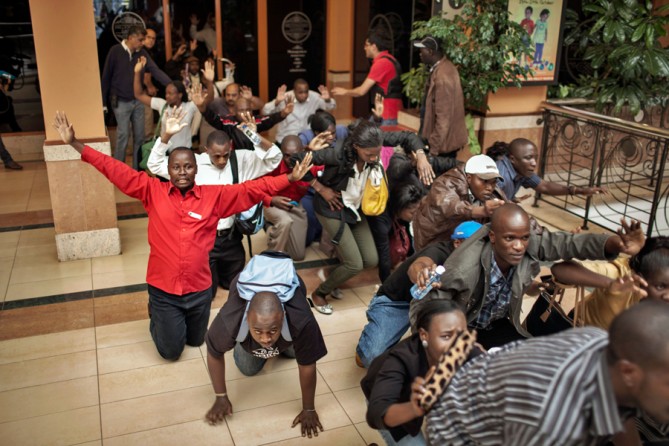
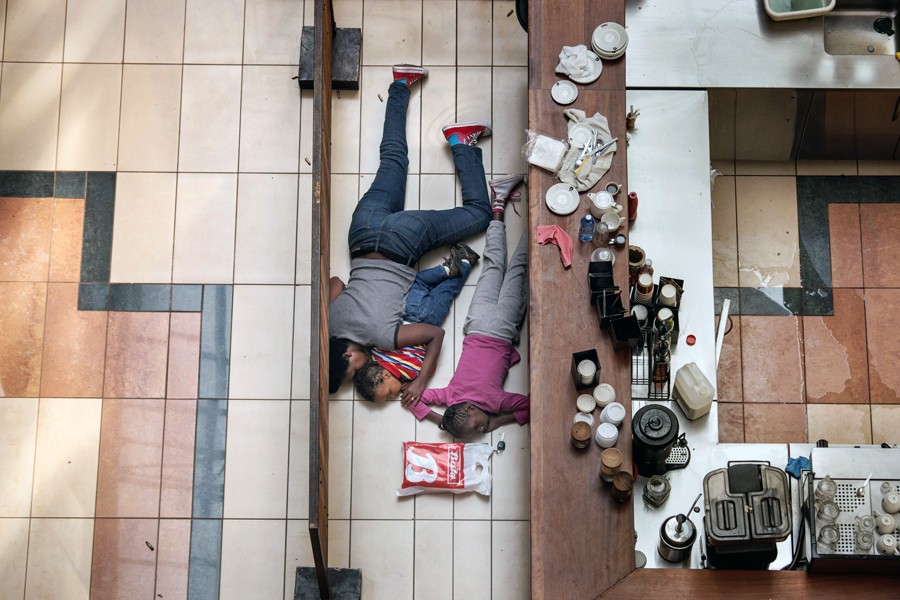
A woman tried to shelter children from gunfire by Somali militants at the Westgate mall in Nairobi, Kenya, in an attack that killed more than 70 people. Tyler Hicks made this photo from a floor above, in an exposed area where the police feared for his safety. (Tyler Hicks, The New York Times - September 23, 2013)
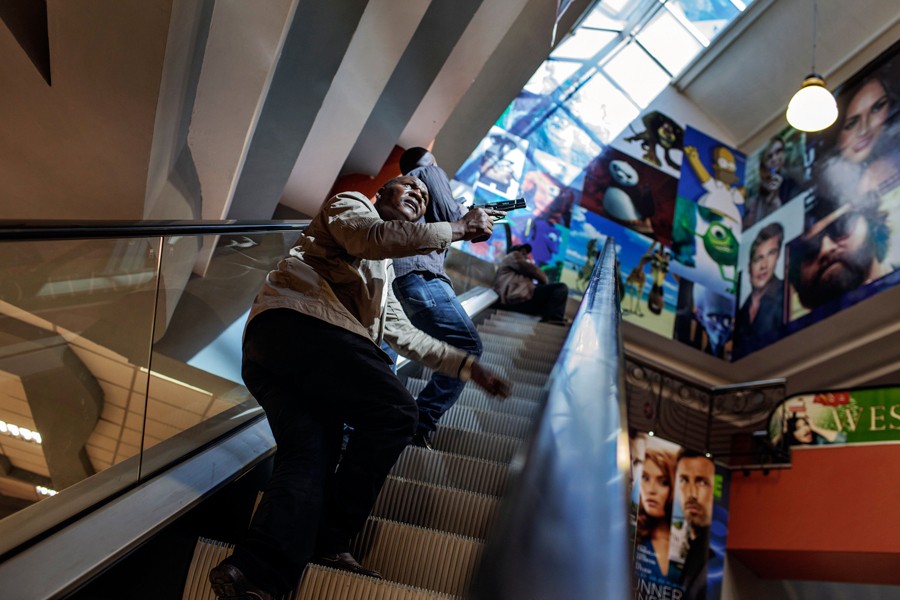
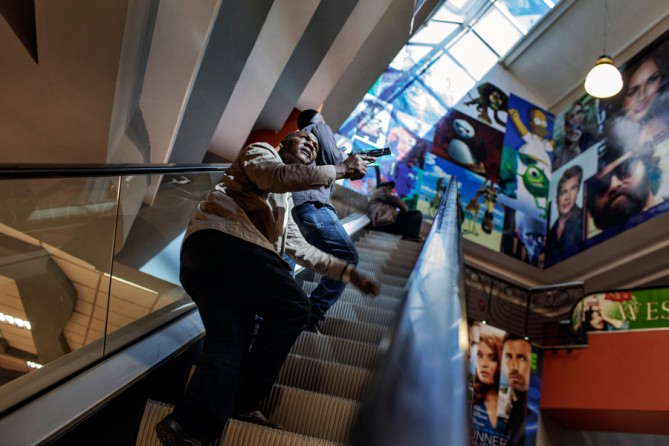
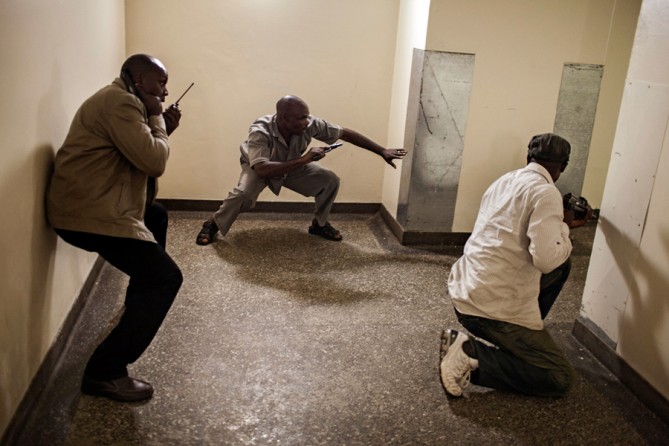
Plainclothes officers rushed into the mall and Hicks accompanied them, knowing well that many terrorists remained inside and fearing not only guns but explosives around every corner. (Tyler Hicks, The New York Times - September 22, 2013)
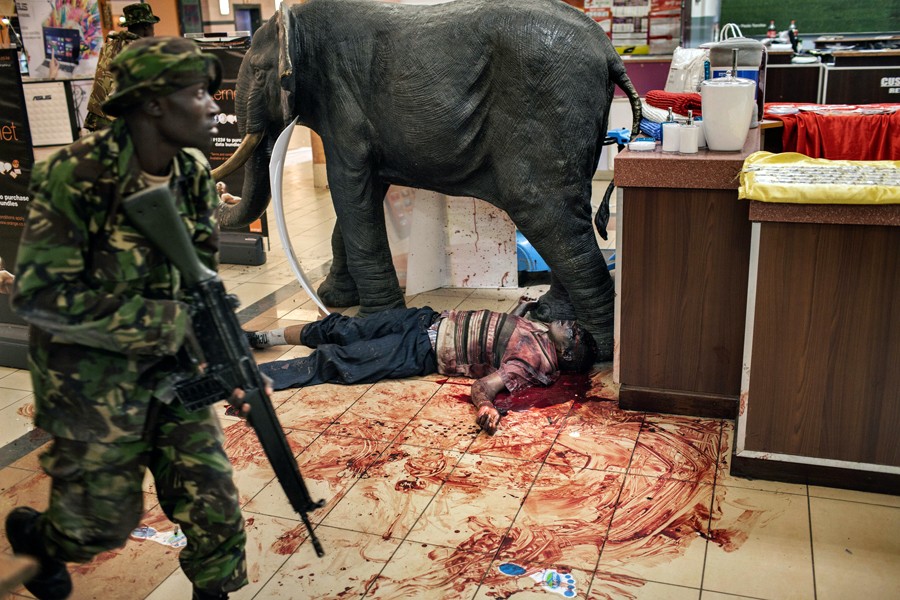
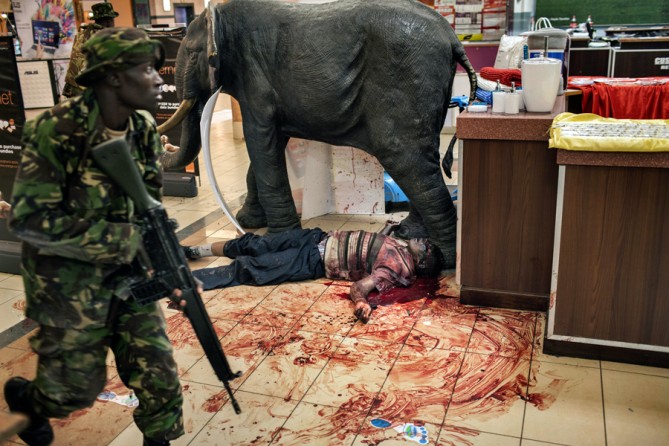
A victim lay at the feet of the statue of an elephant that was the mall's mascot. Hicks managed only a few pictures before being hurried away by the police. (Tyler Hicks, The New York Times - September 21, 2013)
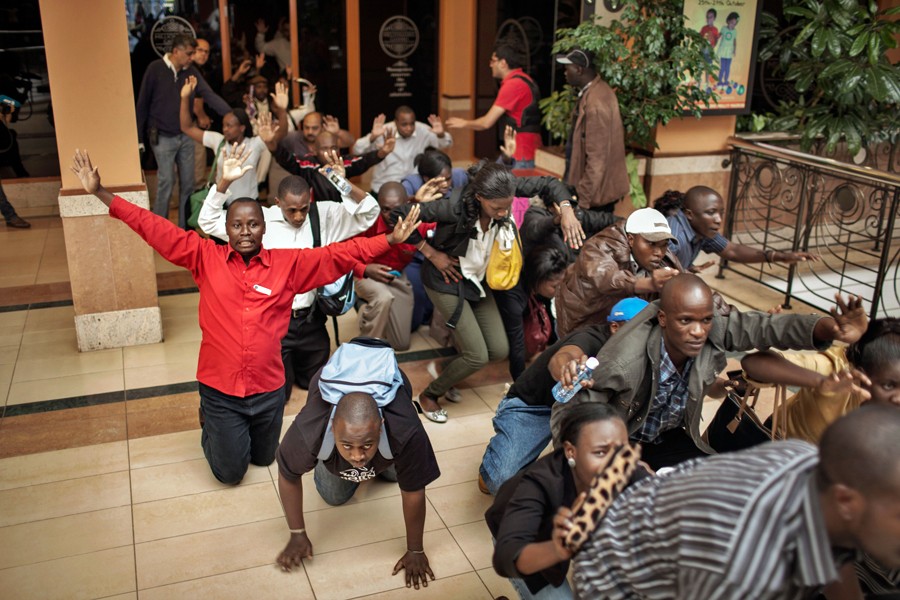
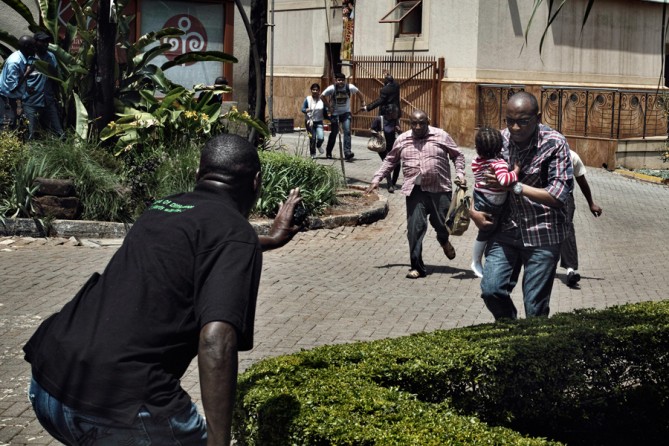
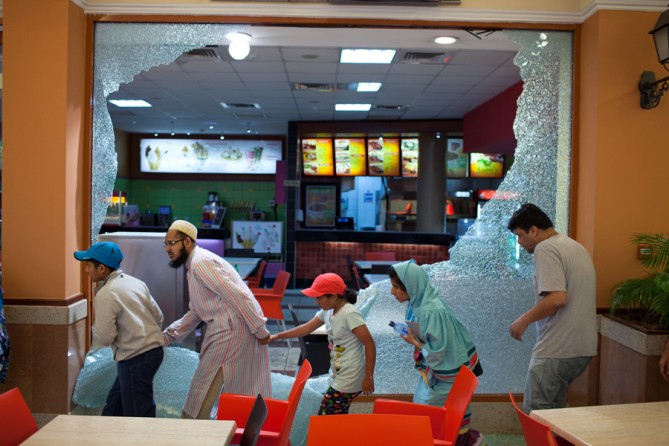
Terrified Saturday-afternoon shoppers rushed from stores and a casino toward the exits. The police feared that escaping attackers had camouflaged themselves among them. (Tyler Hicks, The New York Times - September 21, 2013)
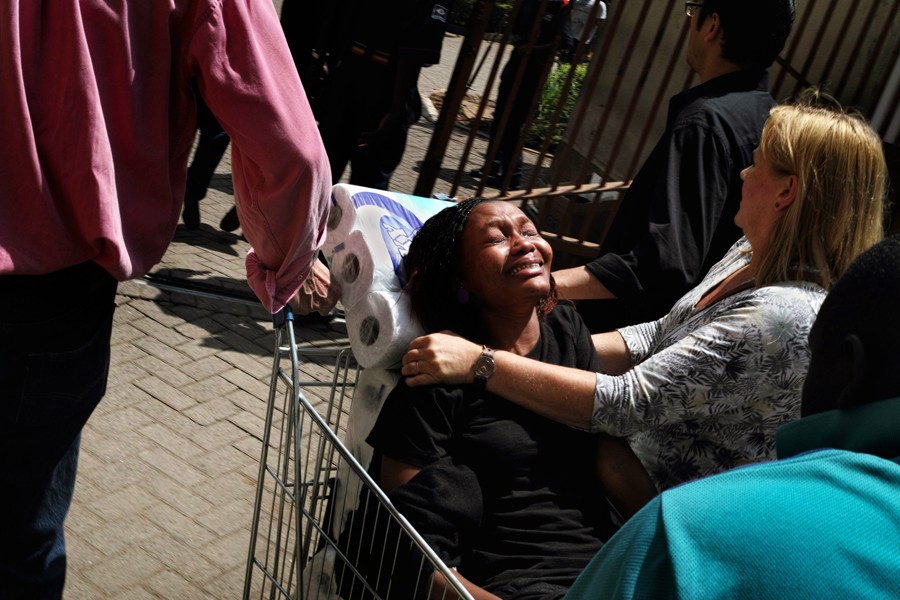
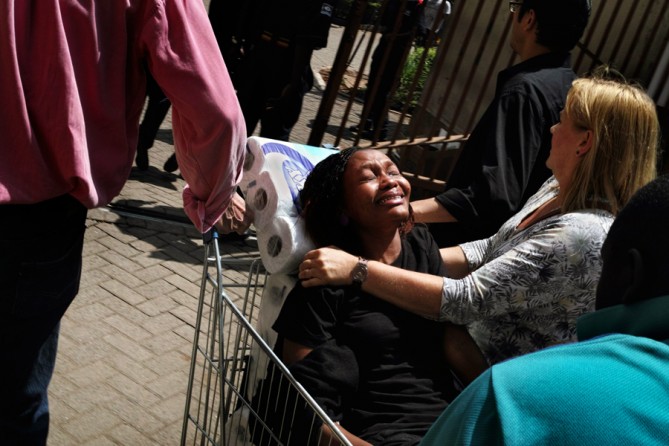
People were treated outside and Hicks raced among them. In this case a shopping cart and rolls of toilet paper served as a stretcher. (Tyler Hicks, The New York Times - September 21, 2013)
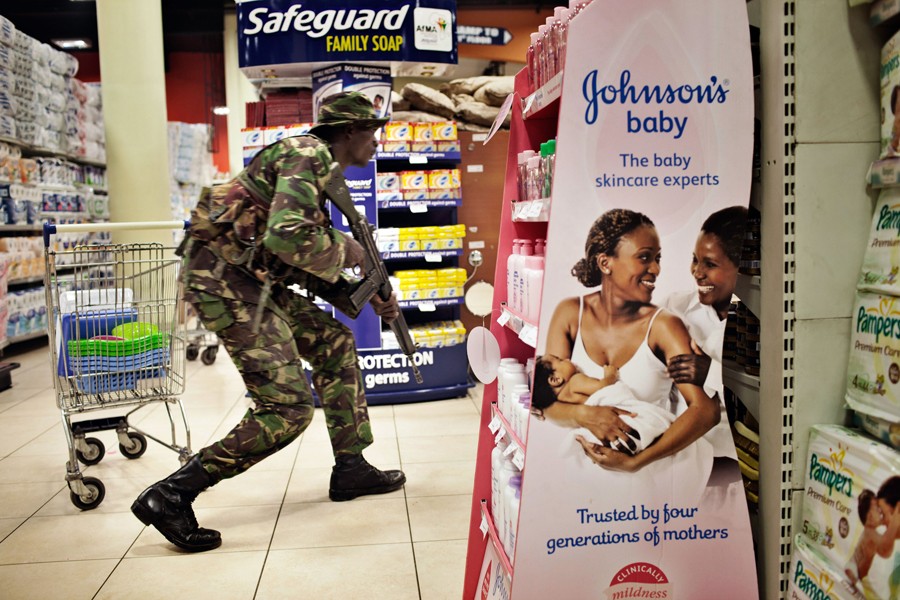
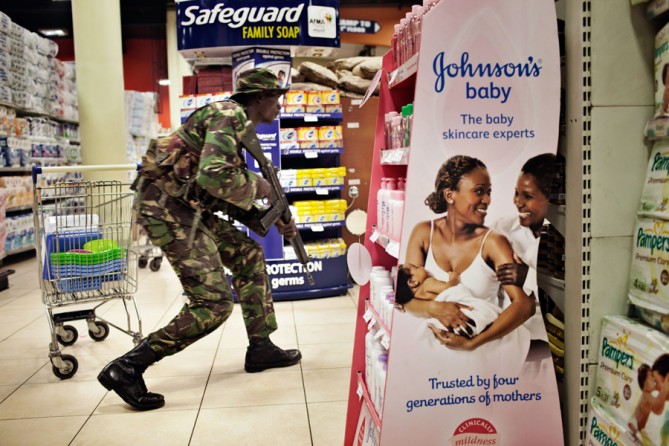
Inside, soldiers searched for militants in stores where Hicks and many other expatriates regularly shopped. (Tyler Hicks, The New York Times - September 27, 2013)
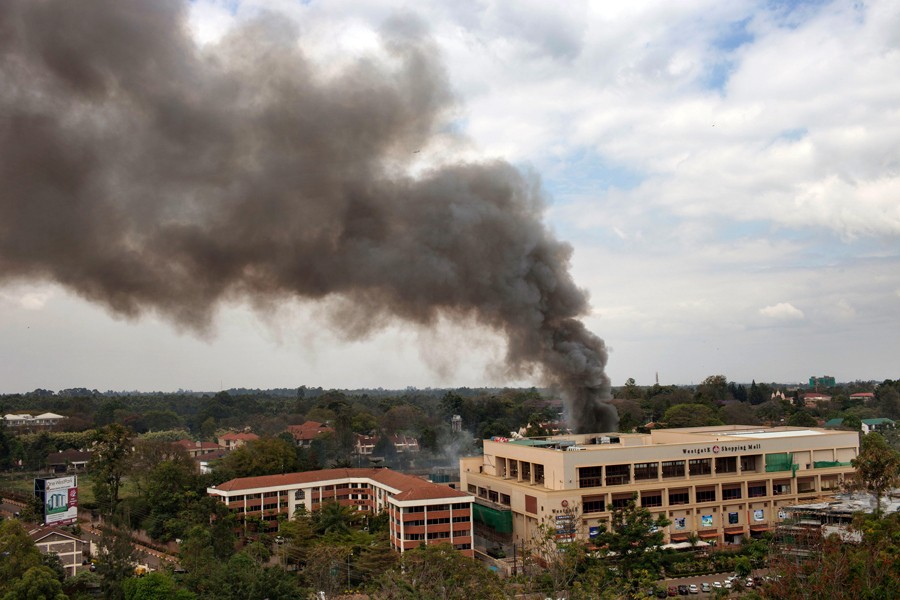
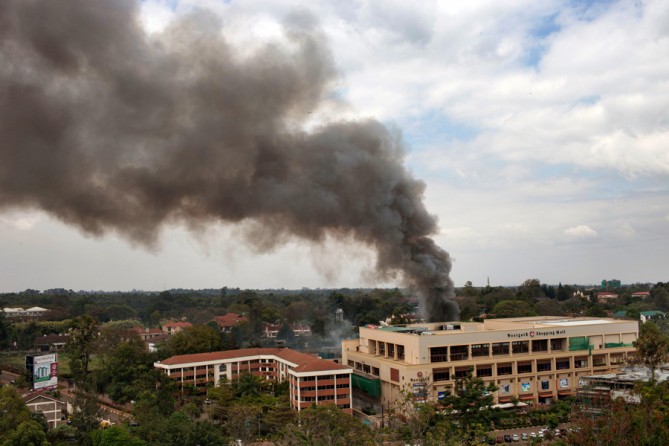
A fire broke out at the mall as the siege went on for several days. Police cordoned off the mall, frustrating Hicks in his attempt to learn the fates of the hostages inside. (Tyler Hicks, The New York Times - September 23, 2013)
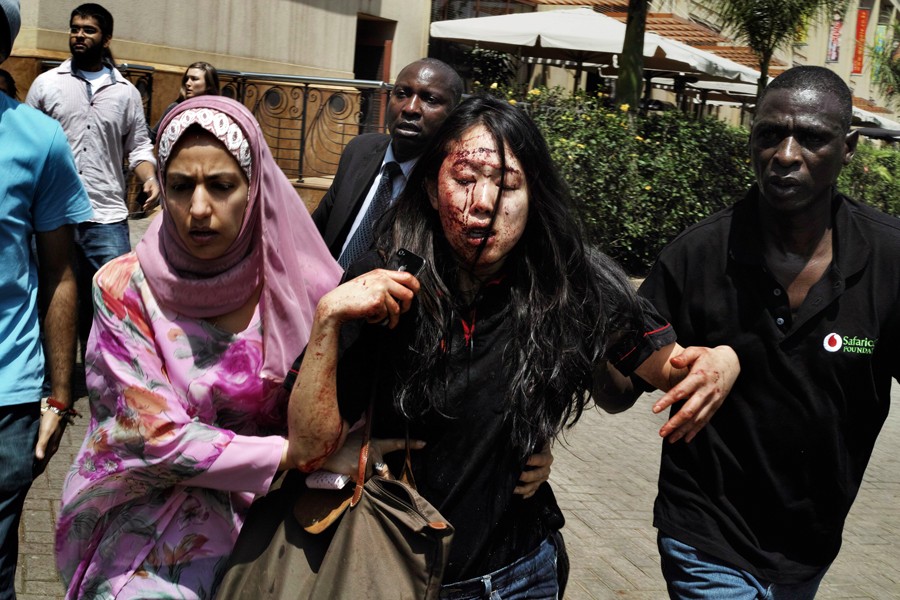
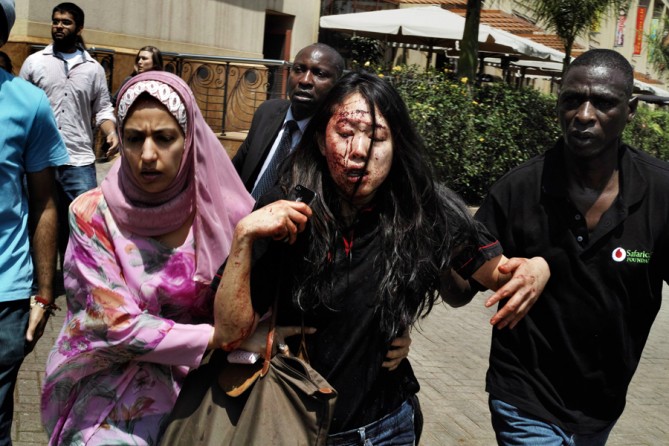
Victims and witnesses of all colors helped each other outside. Hicks is an experienced combat photographer, but said he had never seen anything like this. (Tyler Hicks, The New York Times - September 21, 2013)
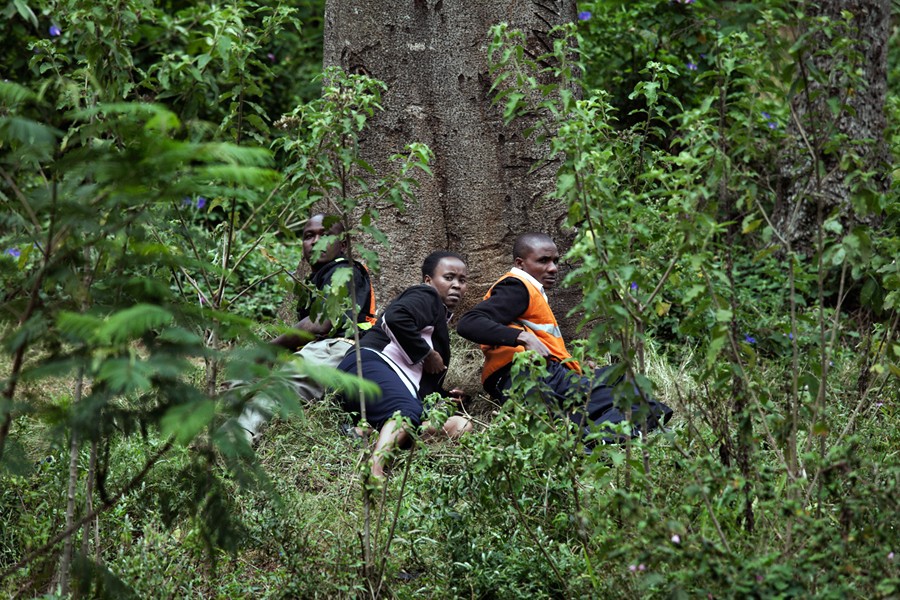
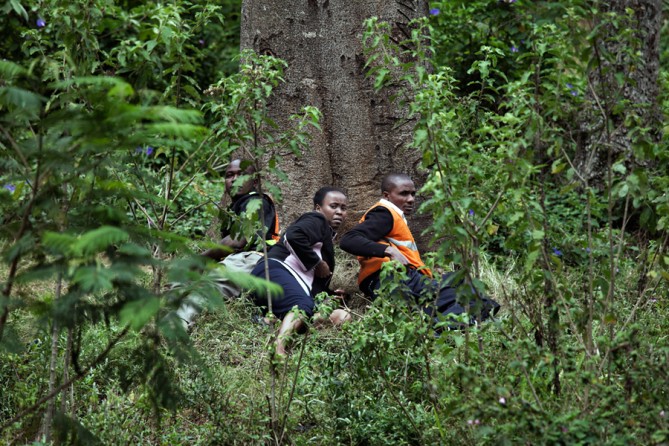
Frightened bystanders took cover in a nearby forest. (Tyler Hicks, The New York Times - September 23, 2013)
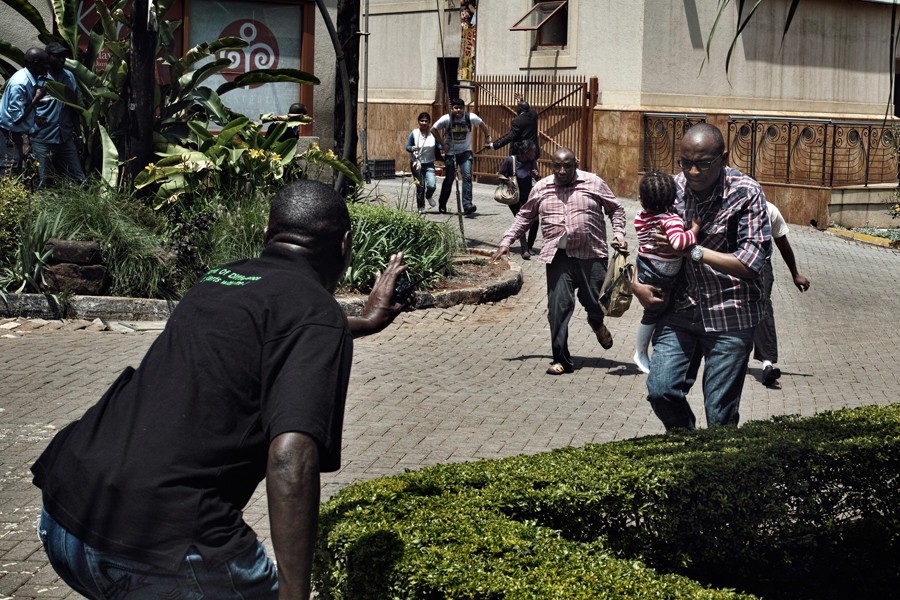
Police and security officers helped civilians escape. The mall had been criticized for lax security. (Tyler Hicks, The New York Times - September 27, 2013)
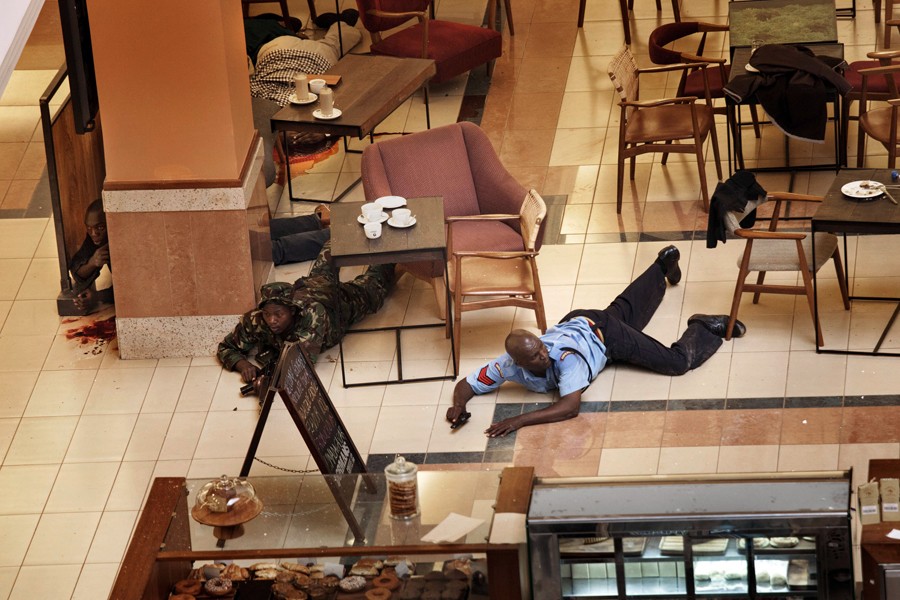
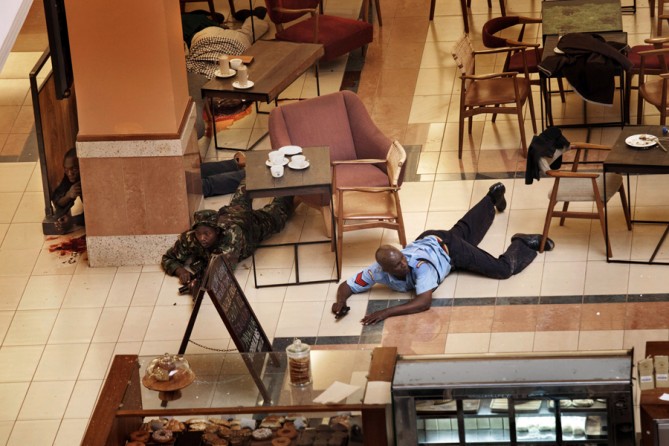
In a hastily abandoned cafe, soldiers and security officers tried to isolate the attackers and herd civilians to safety. They found many bodies in stores. (Tyler Hicks, The New York Times - September 21, 2013)
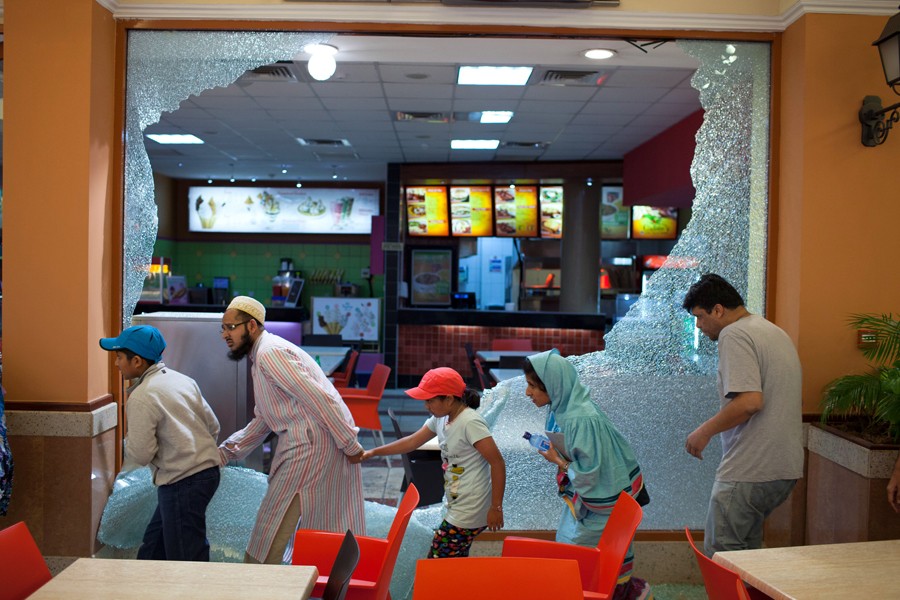
Escaping shoppers had to pass shattered windows and bodies. (Tyler Hicks, The New York Times - September 21, 2013)
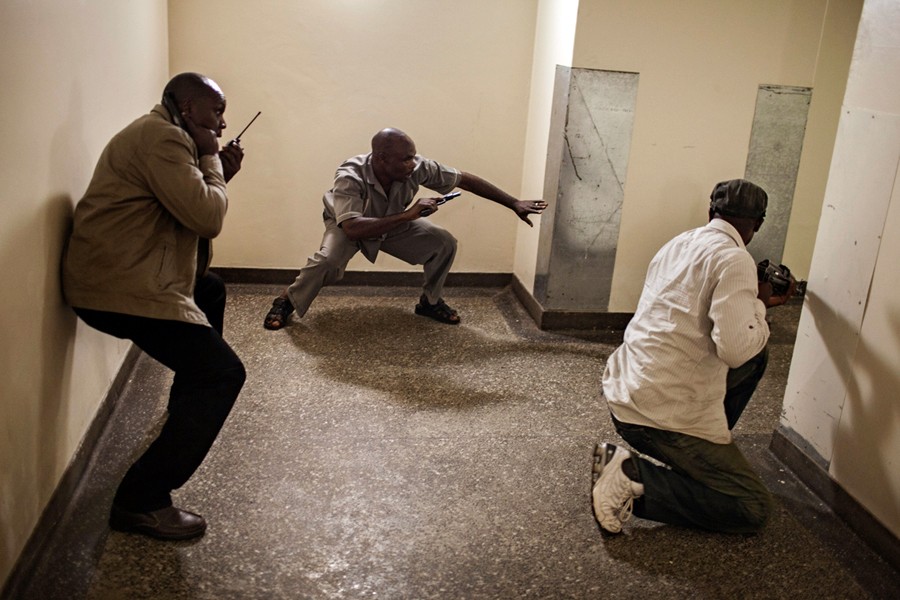
Security forces searched floor by floor for the gunmen. Hicks said the photos could be so honest and true because the subjects 'are not focused on you -- they're just doing their jobs.' (Tyler Hicks, The New York Times - September 21, 2013)
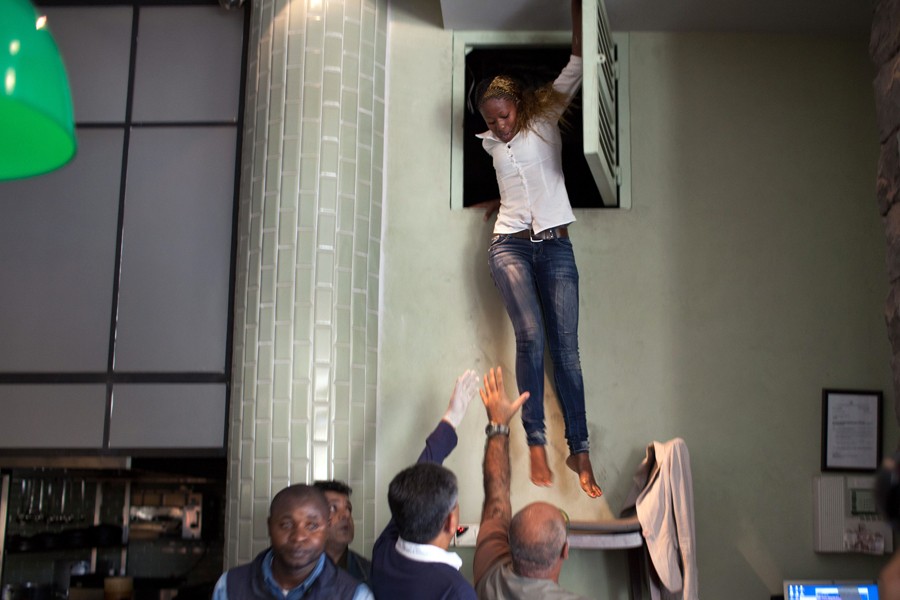
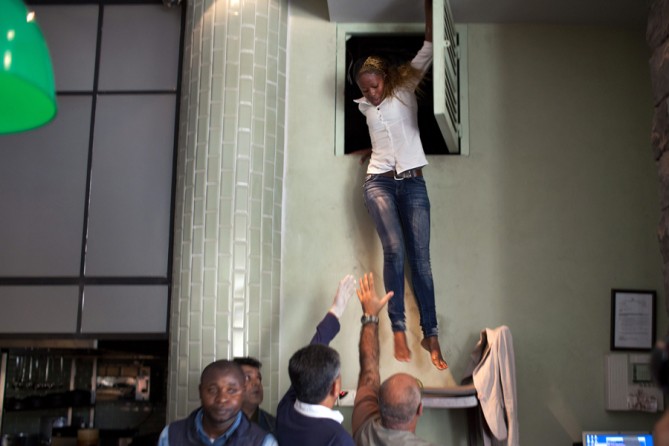
One woman had hidden in an air vent of a sushi restaurant. (Tyler Hicks, The New York Times - September 21, 2013)
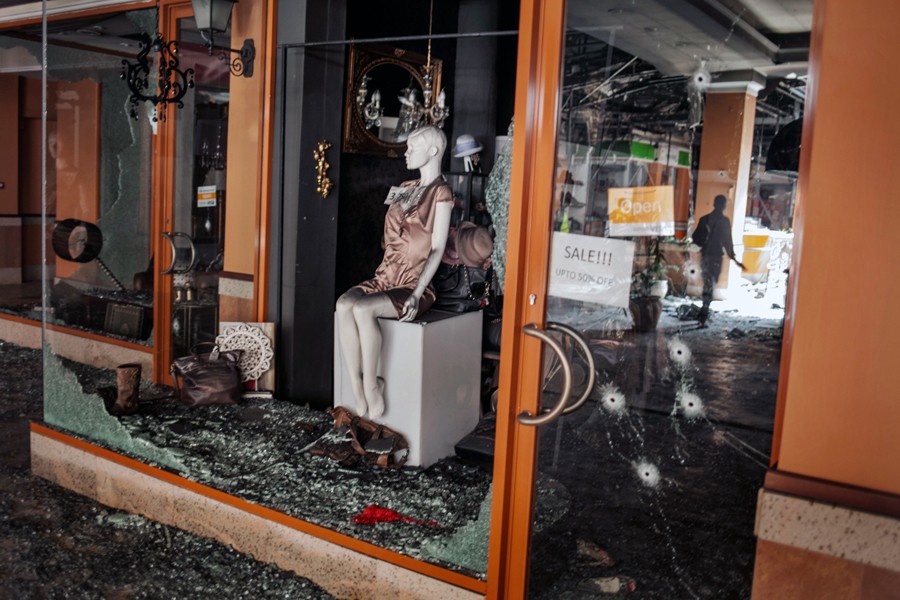
A week after the siege ended, when some shopkeepers were permitted to return, suspicions arose that the Kenyan military had looted the place. Expensive clothing was gone. (Tyler Hicks, The New York Times - September 30, 2013)
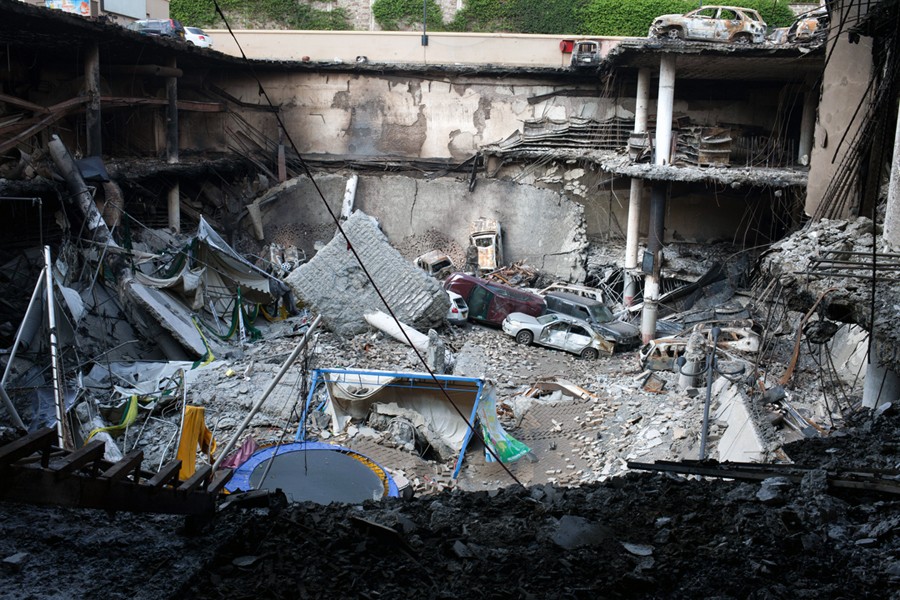
A section of the mall's parking lot crumbled, sending vehicles tumbling into an enormous, smoking pit. (Tyler Hicks, The New York Times - September 30, 2013)
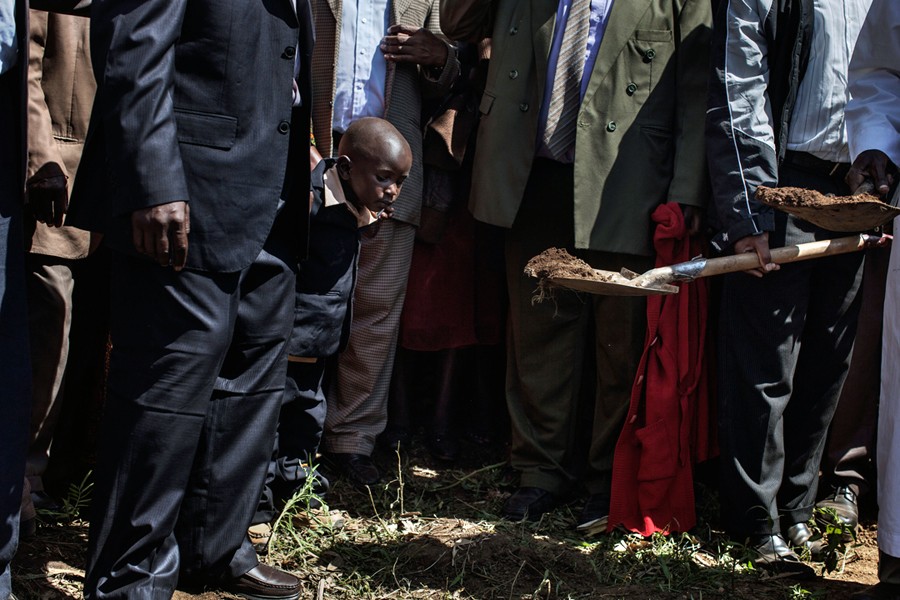
After the siege came the funerals. Simon Kamau, 4 years old, watched as his 26-year-old mother, a cashier at a supermarket in the mall, was buried. (Tyler Hicks, The New York Times - October 2, 2013)
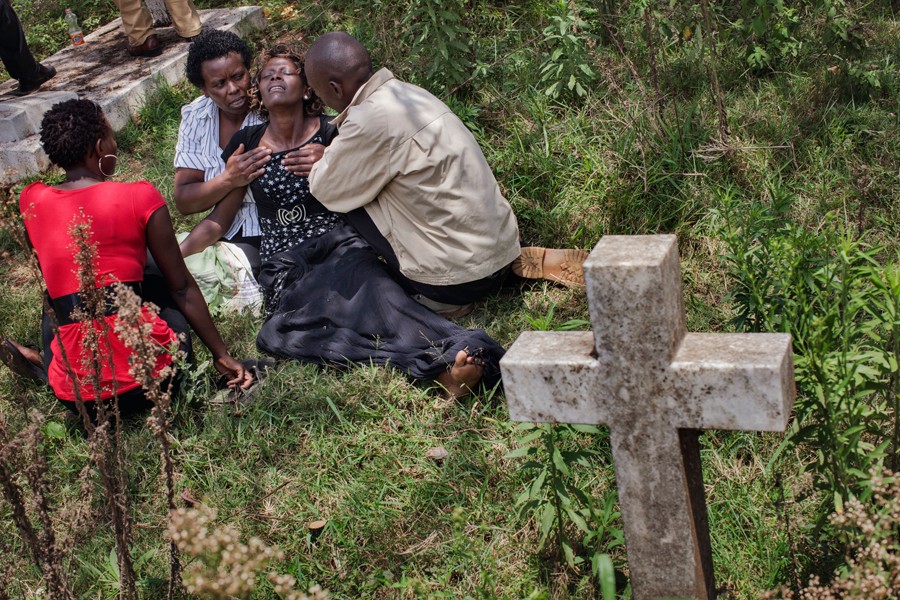
Family, friends and colleagues of Ruth Njeri Macharia, 27, at her funeral. She worked at a restaurant called Urban Gourmet Burgers. (Tyler Hicks, The New York Times - September 27, 2013)
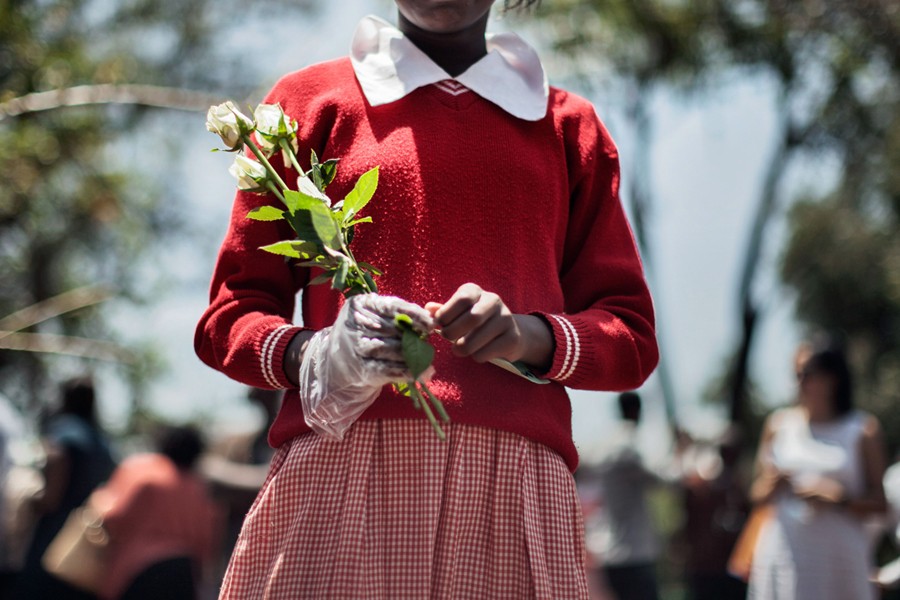
At a memorial service a month after the massacre, trees were planted in memory of those who were killed and a memorial garden was dedicated. (Tyler Hicks, The New York Times - October 22, 2013)
Biography
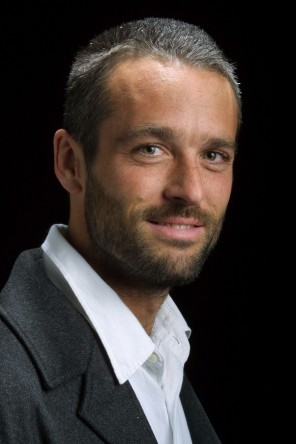
Tyler Hicks is a senior photographer for The New York Times. He came to The Times as a contract photographer in Kenya in 1999, photographing news stories in East and West Africa. After the Sept. 11 terrorist attacks, Mr. Hicks went to Afghanistan for The Times and reached Kabul as the Northern Alliance liberated the city from Taliban control. He has returned to Afghanistan yearly and continues to document the conflict there.
As a freelancer for The Times, Mr. Hicks lived with a Kosovar family while covering the escalating Balkan conflict. Two years later, with an end to the conflict, he went to Africa to cover the escalating war between Eritrea and Ethiopia.
Mr. Hicks moved to North Carolina, where he was a staff photographer for three years at The Wilmington Star-News. During this time, he photographed personal projects in Haiti, Albania and Kosovo. Moved by the atrocities he saw in Kosovo, Mr. Hicks left his job to cover international news.
In 2001, Mr. Hicks received the ICP Infinity Award for Photojournalism for coverage of Afghanistan, as well as other awards, including World Press and Pictures of the Year and Visa Pour L’image in Perpignan, France. In 2009, Mr. Hicks was part of the Times team that won the Pulitzer Prize for International Reporting in Afghanistan and Pakistan. He was named Newspaper Photographer of the Year by Pictures of the Year International for his work in 2006.
On March 16, 2011, Mr. Hicks and three other journalists were taken hostage in Libya, on assignment for The Times covering the revolution. After six days in captivity, Mr. Hicks and his colleagues were released. On Feb. 16, 2012, in Syria, Mr. Hicks was with Anthony Shadid, The Times’s Beirut bureau chief and twice winner of the Pulitzer Prize for International Reporting, when Mr. Shadid died, apparently from asthma. Mr. Hicks carried Mr. Shadid’s body across the border to Turkey.
Mr. Hicks graduated in 1992 with a B.A. in journalism from Boston University. He was born in São Paulo, Brazil. He now lives in Istanbul. But he’s seldom home.