St. Louis Post-Dispatch, by Photography Staff
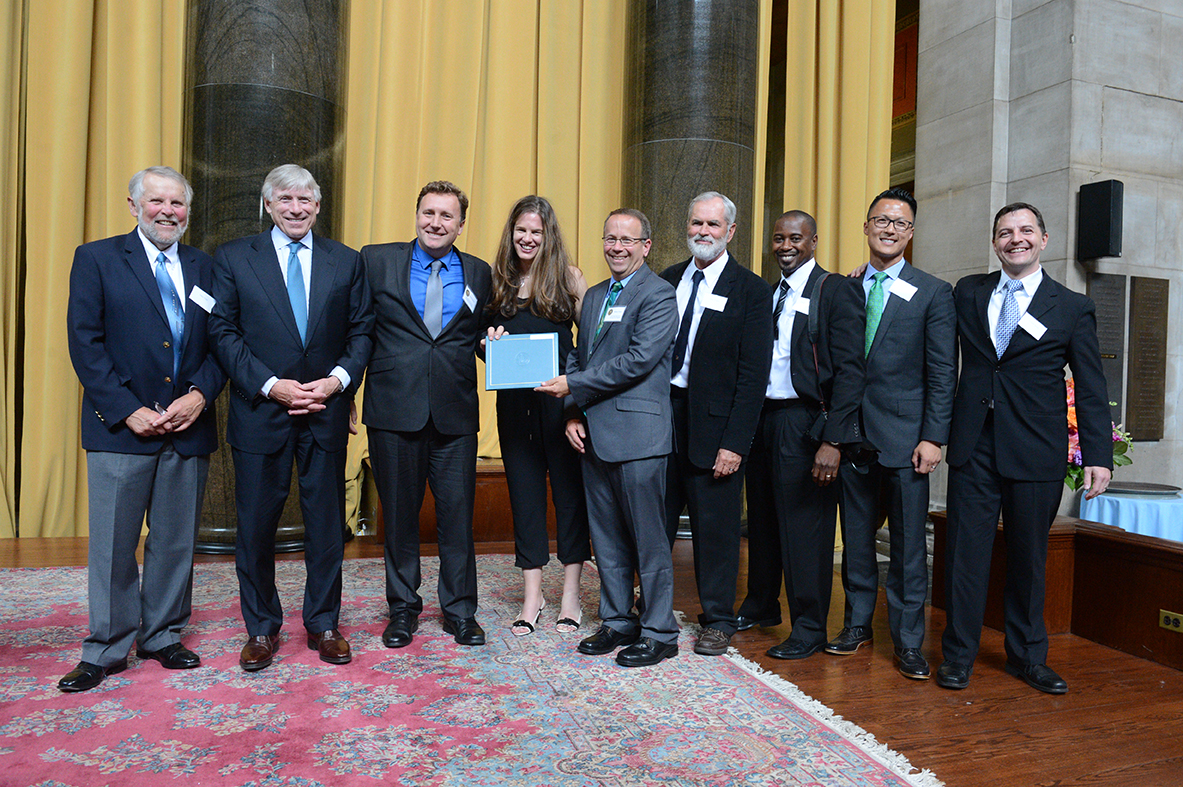
Mike Pride, Pulitzer Prize Administrator (left) and Lee C. Bollinger, President of Columbia University (second from left), present the 2015 Breaking News Photography Prize to David Carson, Laurie Skrivan, Robert Cohen, James Forbes, Christian Gooden, Huy Mach and Lynden Steele (left to right) of the St. Louis Post-Dispatch Photography Staff.
Winning Work
Jan. 26, 2015
To the Judges of the Pulitzer Prize for Breaking News Photography:
On Saturday, Aug. 9, 2014, a tweet was sent to St. Louis Post-Dispatch photographer David Carson. It showed an image of a man holding a cardboard sign with a few scrawled words: "Ferguson police just executed my unarmed son!!!" A message directed to David was also attached, "Here's a story that needs to run in the Post."
Earlier that day, an unarmed African-American 18-year-old, Michael Brown, was shot and killed by white police officer Darren Wilson. As his body was left on a street in Ferguson, Missouri for more than four hours, crowds gathered and tweeted out their anger.
Members of the Post-Dispatch photography staff responded. They covered the story from Day 1 through November's grand jury decision not to indict Wilson. As the protests fueled a debate over race and policing tactics, the staff's compelling images from months of demonstrations, vigils and police actions have made an impact nationally and worldwide.
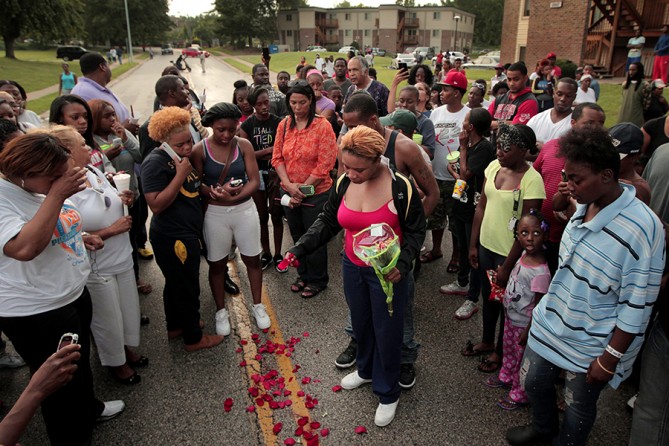
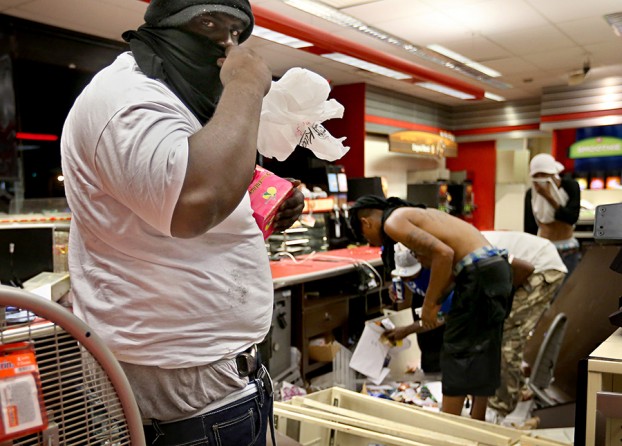
The photo team provided poignant, striking and even shocking photography. From Huy Mach's image of Michael Brown's mother dropping rose petals over the blood stains at the site of her son's shooting just hours after his death to David Carson's uncomfortably close look at an armed looter inside a store, the photographs capture moments of intimacy in a chaotic atmosphere.
Some of the images have become symbolic of the protests. Robert Cohen's picture of a dreadlocked man wearing an American flag T-shirt throwing a flaming tear gas canister can be seen painted on the sides of buildings in Boston and included in a four-story high mural in New Orleans. Some men have tattooed it onto their bodies. This image of an African-American man, not running from tear gas, but taking matters into his own hands resonated deeply. Protesters even gave the photo a name, "The Patriot."
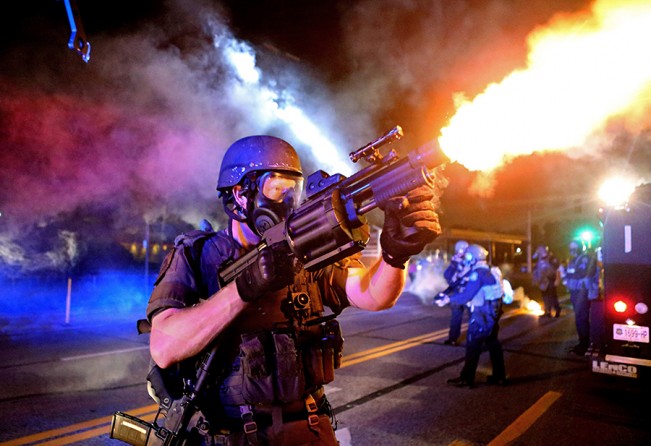
On the other side of the police line, David Carson's provocative image of police firing tear gas while under gunfire illustrates the issue of police militarization that has led to debate across the country.
The many long days and coverage from dangerous or unpredictable circumstances was a grueling challenge for the staff. Post-Dispatch photographers endured physical assaults, tear gas and many threats.
Despite these obstacles, the staff still had to make deadline. The photographers took a page from their sports coverage and used remote wifi technology to transmit photos directly from their cameras. This approach kept photographers mobile and safer than working on laptops in the field. It also gave newsroom editors the ability to post breaking news to our online site and social media for months, in real time.
The photography staff's tireless dedication led the industry in covering the biggest domestic story of the year. I am proud to nominate them for the Pulitzer Prize for Breaking News Photography.
Gilbert Bailon
Editor
St. Louis Post-Dispatch
Winning Work
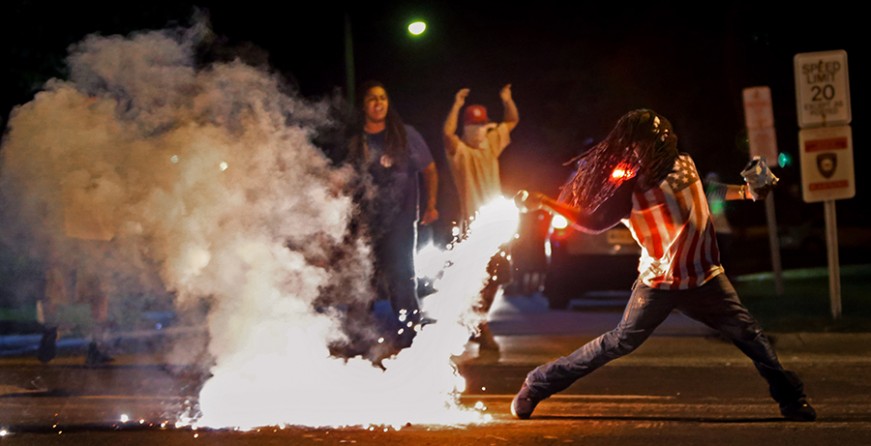
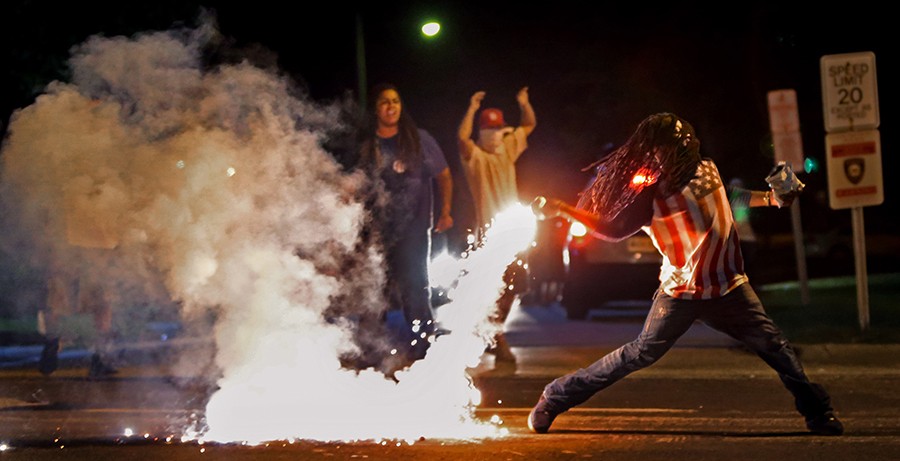
Edward Crawford returns a tear gas canister fired by police who were trying to disperse protesters in Ferguson, Missouri. Four days earlier, unarmed black teenager Michael Brown was shot to death by white police officer Darren Wilson. The killing ignited riots and unrest in the St. Louis area and across the nation. (Robert Cohen, St. Louis Post-Dispatch - August 13, 2014)
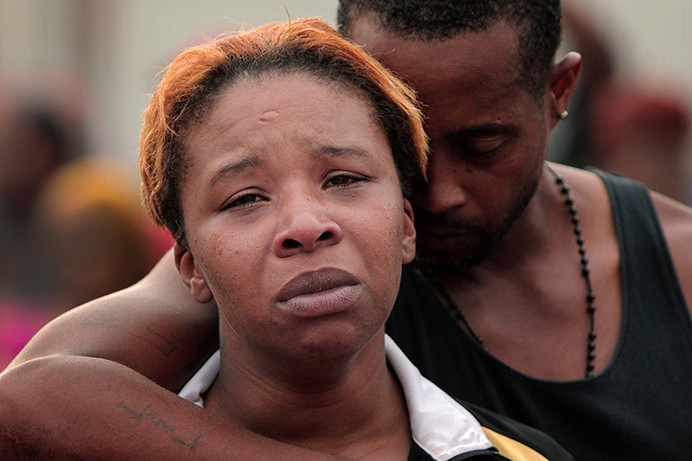
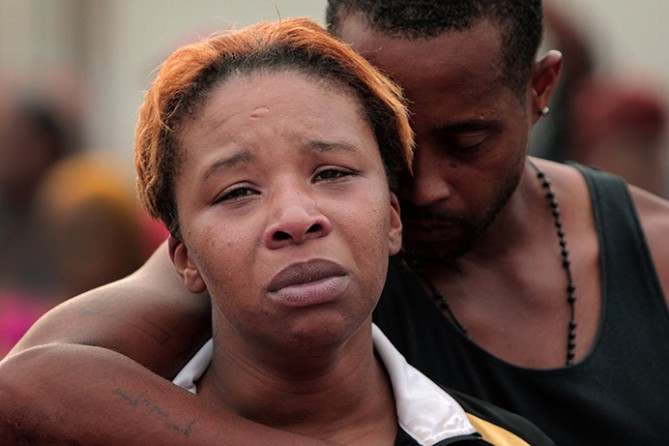
Lesley McSpadden is comforted by her husband, Louis Head, hours after the fatal police shooting of her son Michael Brown in the Canfield Green Apartments in Ferguson. (Huy Mach, St. Louis Post-Dispatch - August 9, 2014)
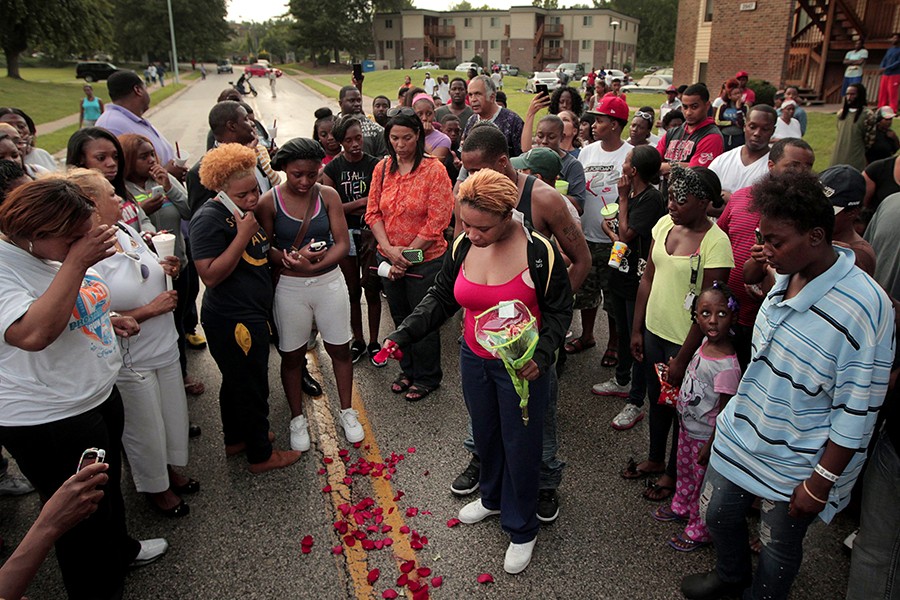
Lesley McSpadden drops rose petals onto the blood-stained street in Ferguson where her son's body was left for more than four hours after he was killed by a police officer. (Huy Mach, St. Louis Post-Dispatch - August 9, 2014)
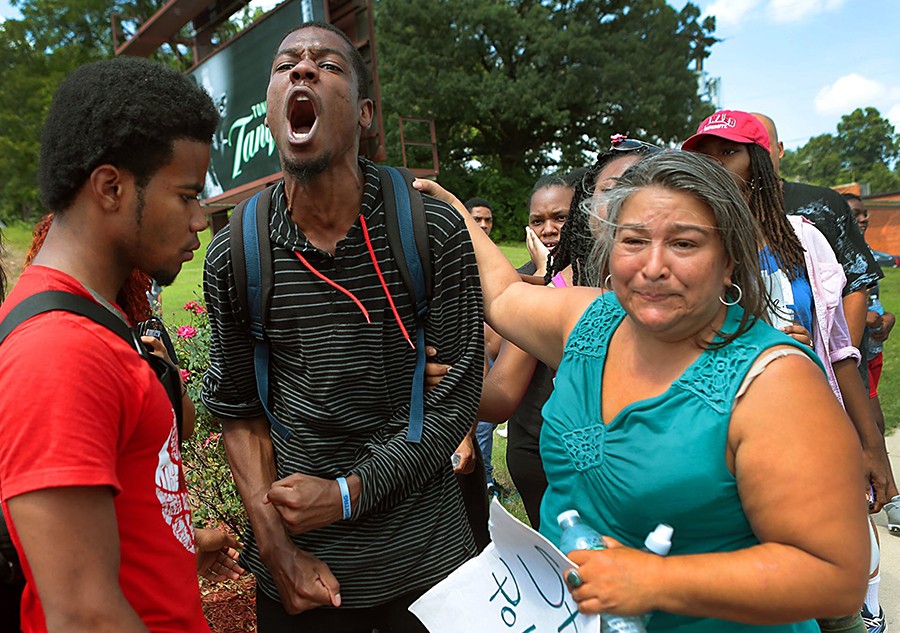
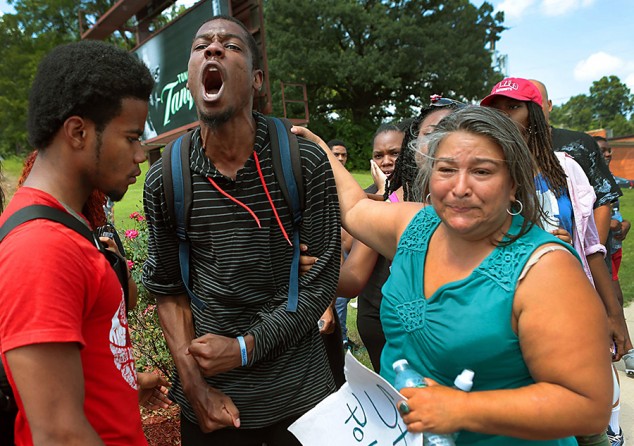
'All of my friends have been killed! I'm sick of it,' yelled protester Jamell Spann at police officers dressed in riot gear who cleared hundreds of demonstrators to prevent them from surrounding the Ferguson Police Department. (Robert Cohen, St. Louis Post-Dispatch - August 11, 2014)
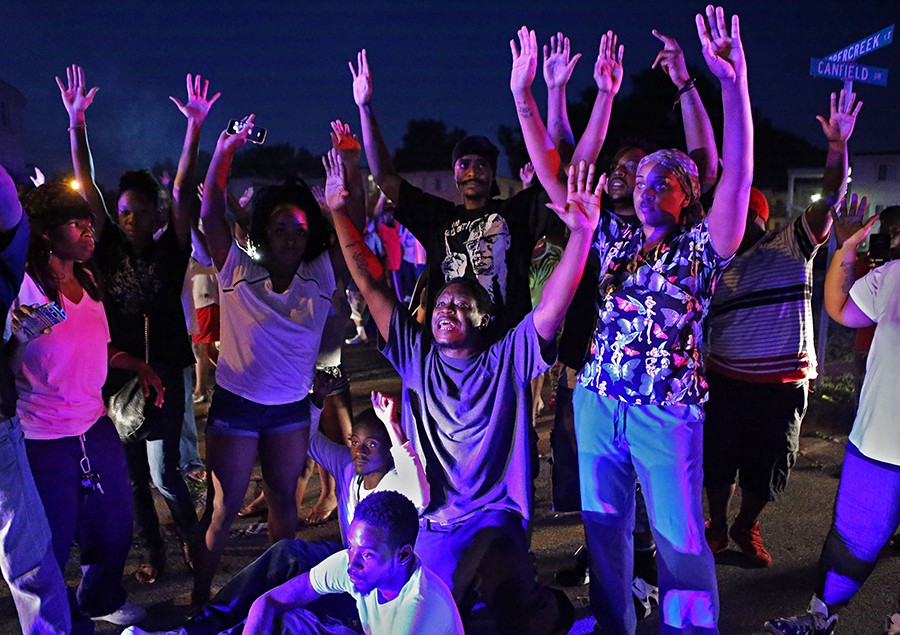
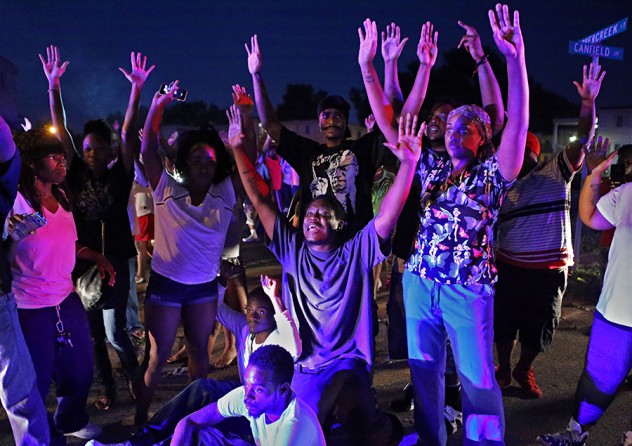
'Don't shoot us!,' yell residents taunting police officers who were arriving to break up an angry crowd on Canfield Drive in Ferguson, hours after an officer killed Michael Brown. Rumors state that Michael Brown had his hands up when he was shot by officer Darren Wilson. The night was the genesis of the 'Hand up, don't shoot!' movement that spread across the country. (David Carson, St. Louis Post-Dispatch - August 9, 2014)
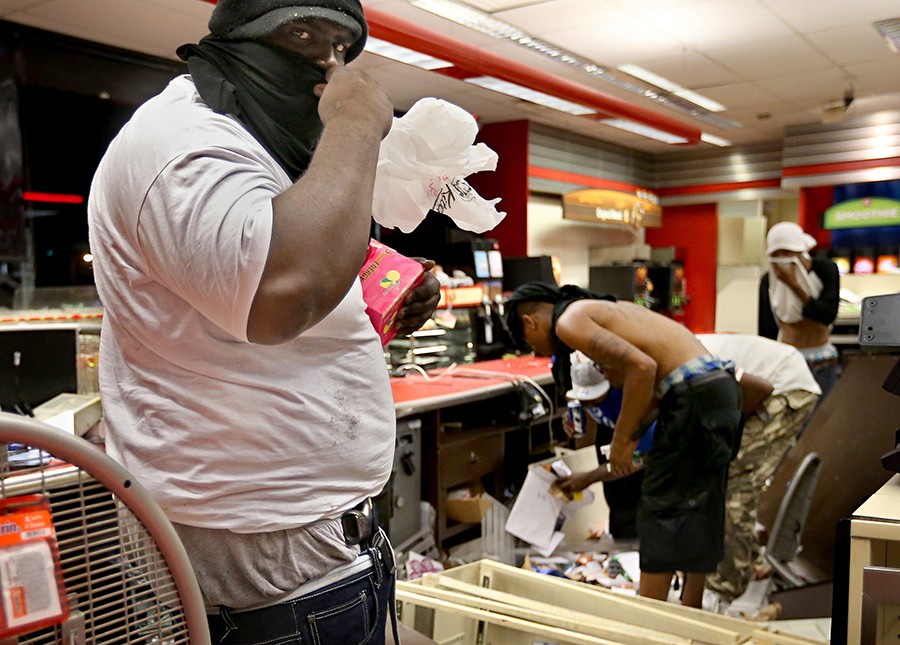
A looter armed with a gun in his waistband steals items from a QuikTrip after riots broke out at the end of a candlelight vigil for Michael Brown. The store was later set afire. (David Carson, St. Louis Post-Dispatch - August 10, 2014)
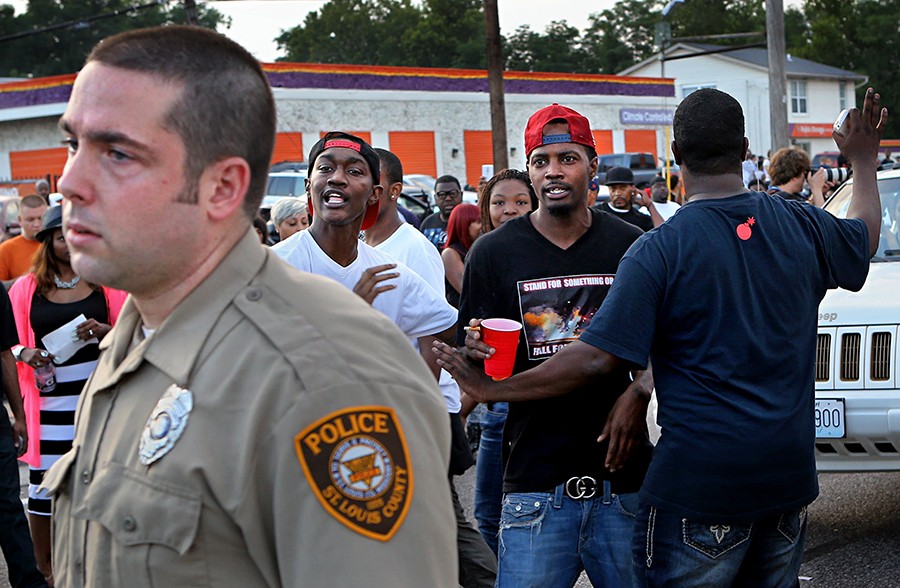
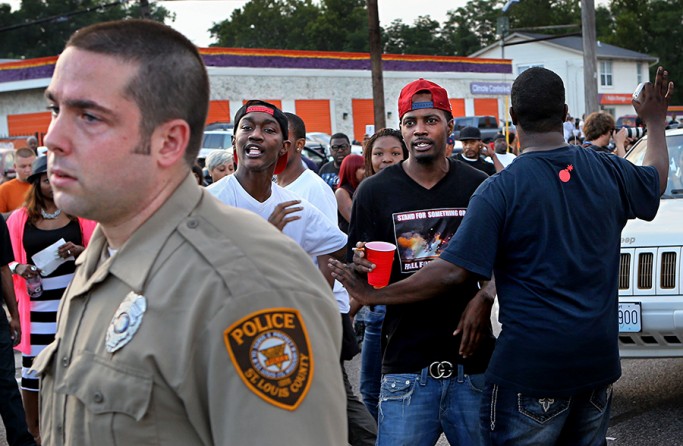
The emotional toll of a week of protesting appears on the face of a St. Louis County police officer as marchers yell profanity at the officers on West Florissant Avenue in Ferguson. (J.B. Forbes, St. Louis Post-Dispatch - August 17, 2014)
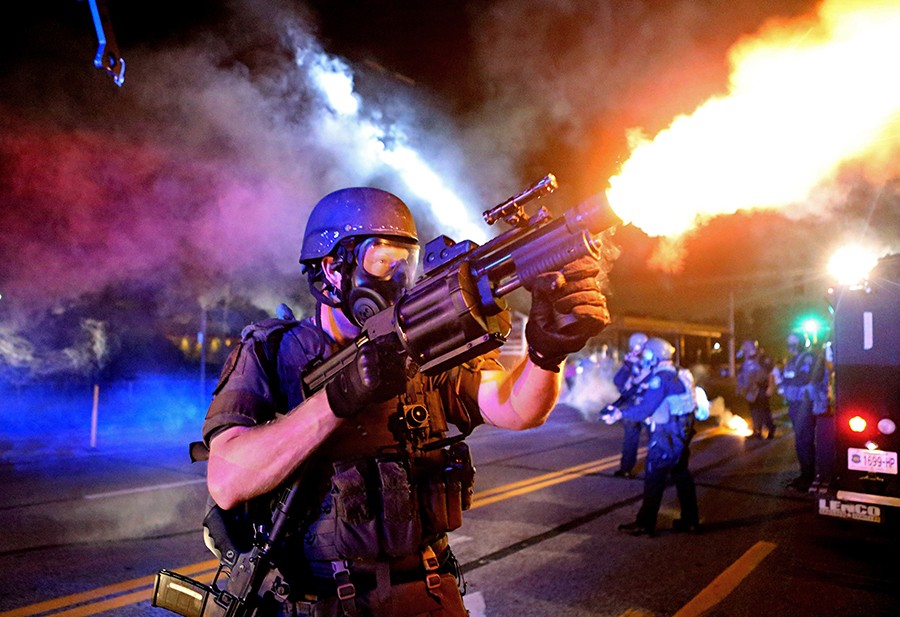
A member of the St. Louis County Police tactical team fires tear gas into a crowd of people in response to a series of gunshots fired at police during demonstrations in Ferguson. For more than two weeks, police and protesters clashed nightly. (David Carson, St. Louis Post-Dispatch - August 18, 2014)
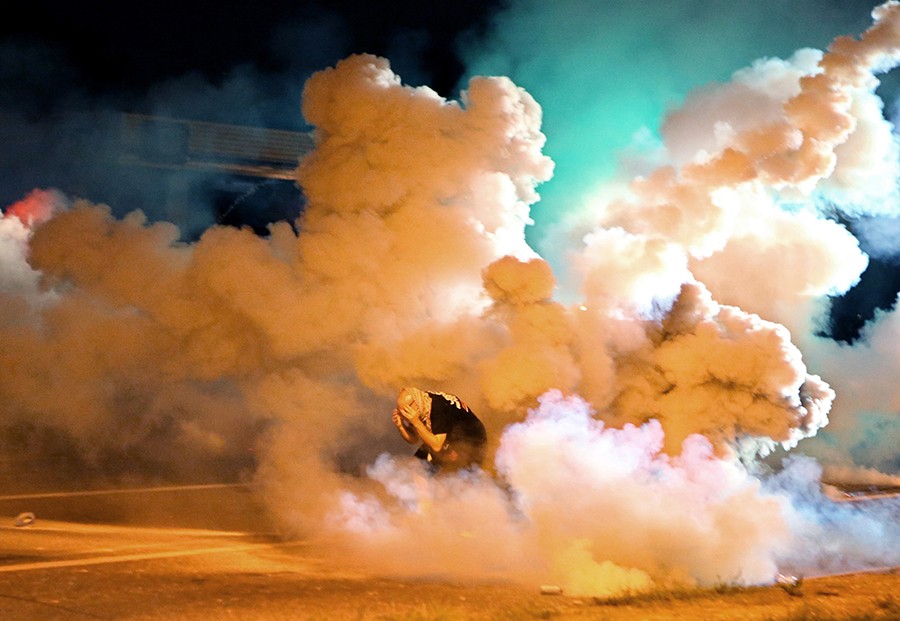
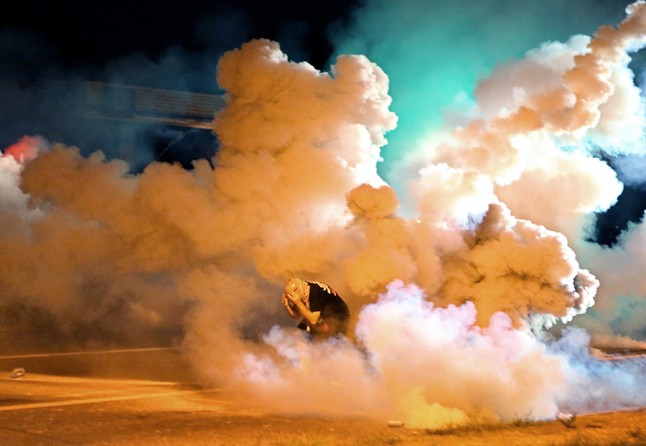
A protester shields himself from exploding tear gas canisters. On this night protesters attempted to throw Molotov cocktails, rocks and bottles at police. It was the fourth consecutive night police used tear gas to disperse the crowd. (David Carson, St. Louis Post-Dispatch - August 13, 2014)
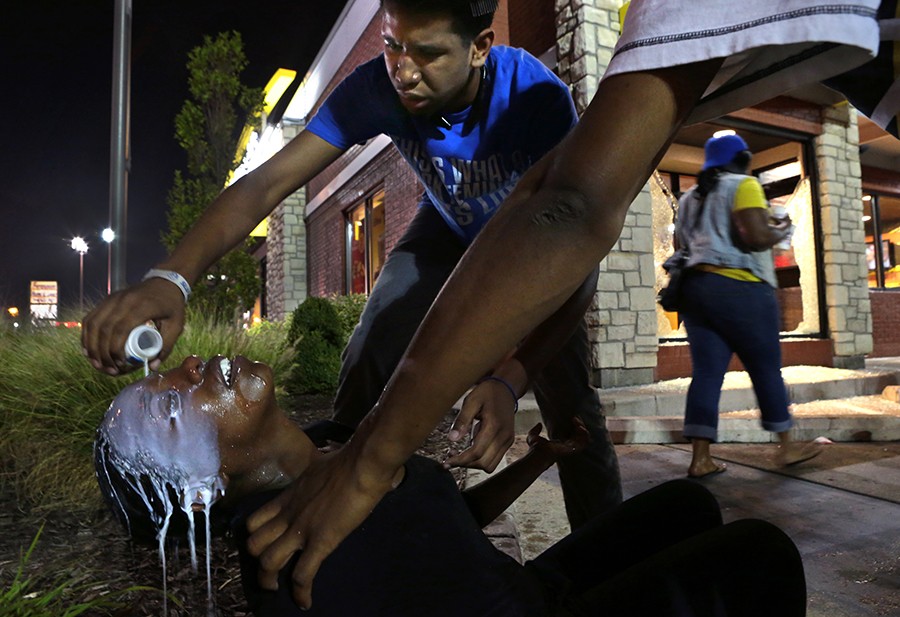
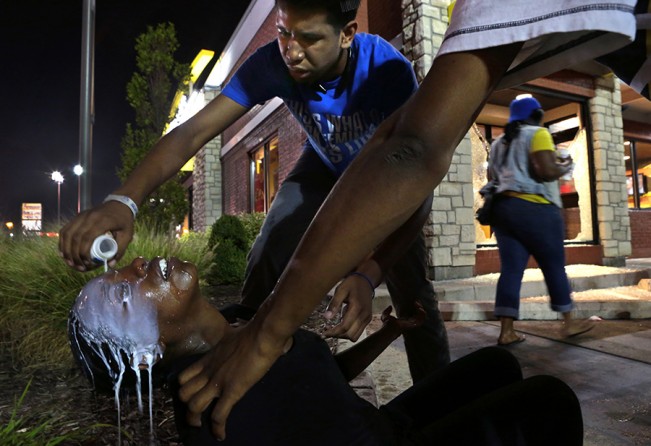
Helped by a stranger, Cassandra Roberts has tear gas cleared from her eyes as she sits outside a McDonald's. "We thought it could be a peaceful night," said Roberts, who was marching in Ferguson for the first time. "What the hell is going on in this world?" (Robert Cohen, St. Louis Post-Dispatch - August 17, 2014)
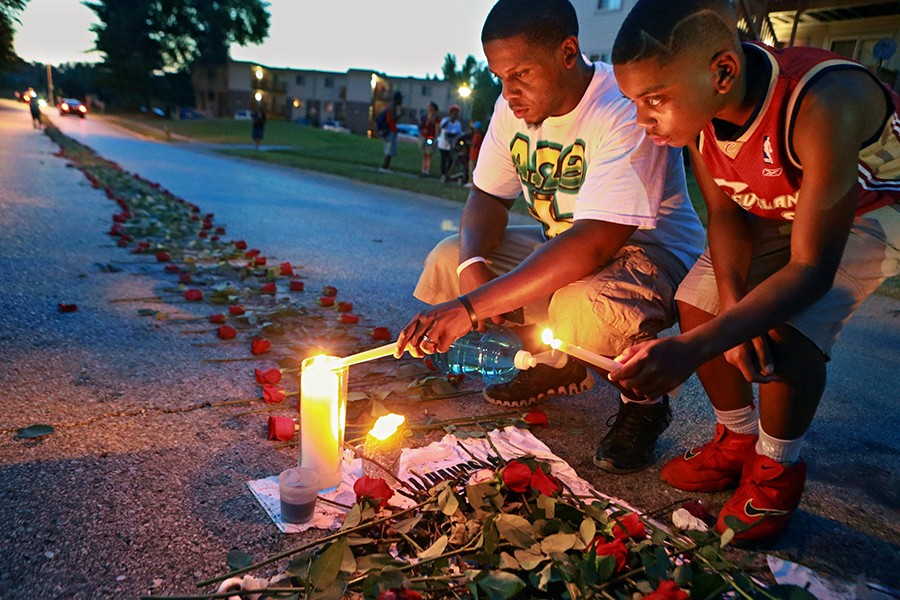
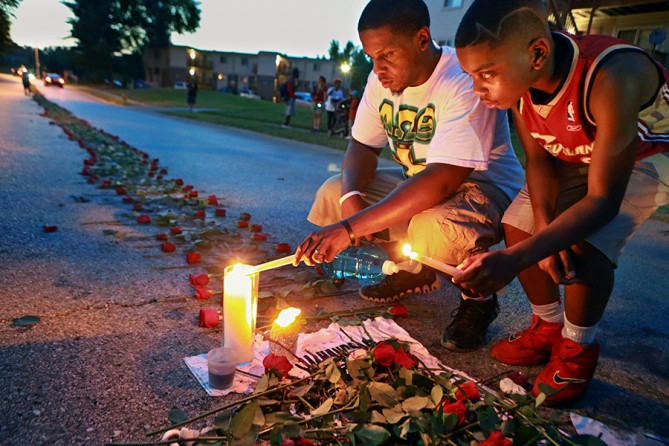
Roses stretch more than 60 yards through the Canfield Green Apartments to the Michael Brown memorial as Theo Murphy and his brother Jordan Marshall light candles. (Christian Gooden, St. Louis Post-Dispatch - August 21, 2014)
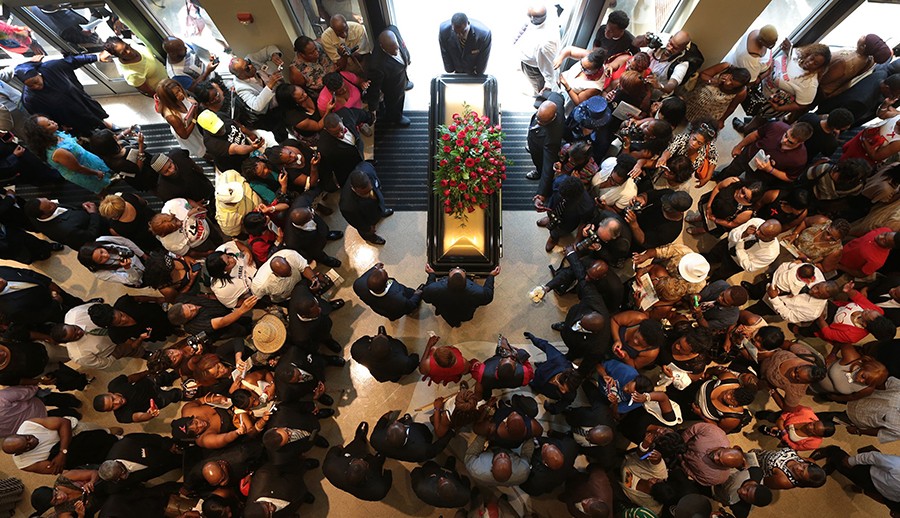
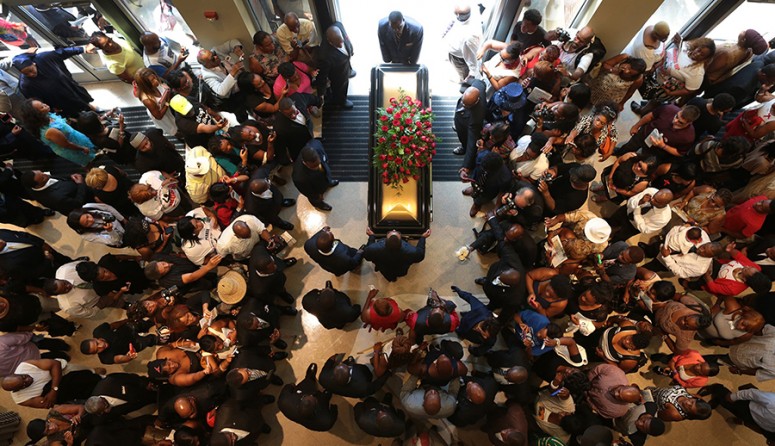
The casket of Michael Brown exits Friendly Temple Missionary Baptist Church at the end of his St. Louis funeral. Thousands of mourners filled the church and lined the streets for Brown's farewell. (Robert Cohen, St. Louis Post-Dispatch - August 25, 2014)
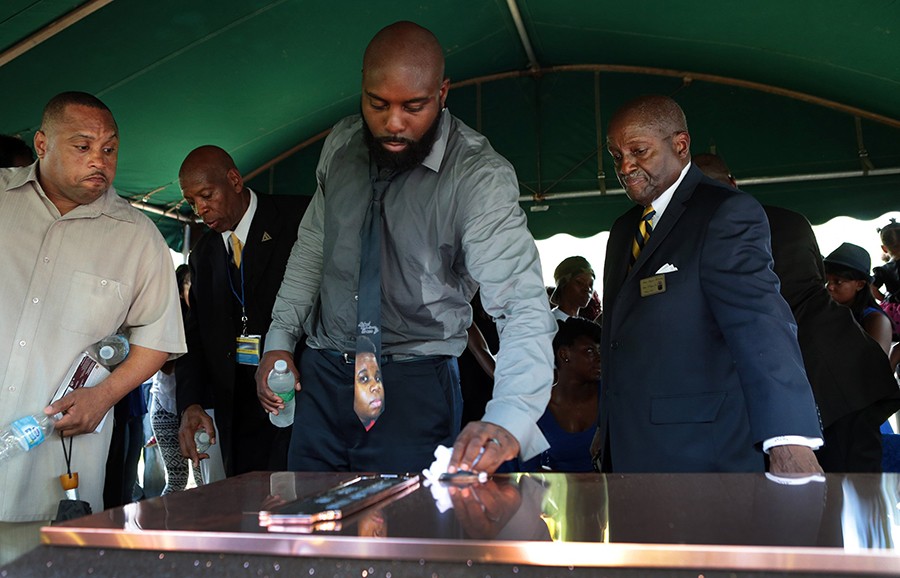
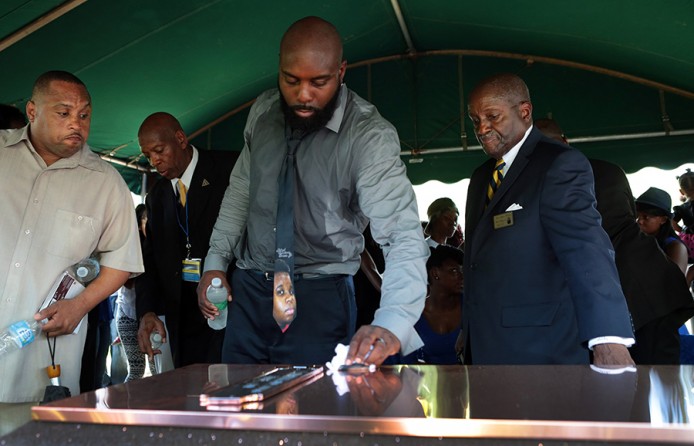
Michael Brown, Sr. wipes fingerprints from the vault containing the casket of his son before it was lowered into the ground at St. Peter's Cemetery. (Robert Cohen, St. Louis Post-Dispatch - August 25, 2014)
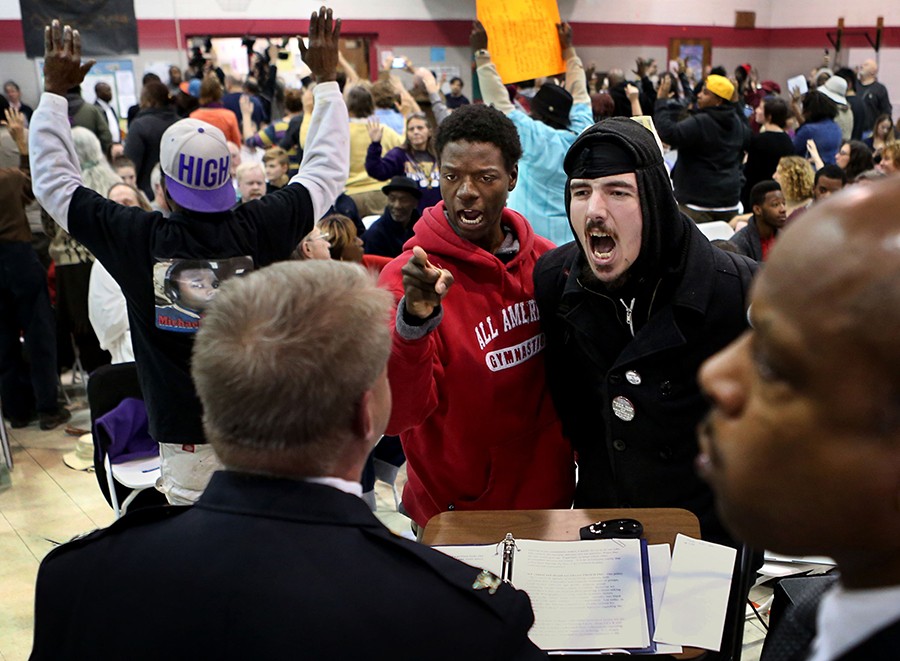
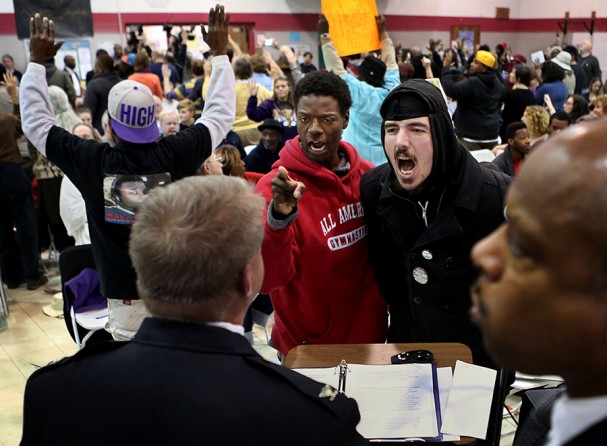
Joshua Williams (center) and Nicholas Austin Jackson shout at St. Louis Police Chief Sam Dotson as he attempts to speak at a meeting of the Ferguson Commission, a special advisory board appointed by Missouri Gov. Jay Nixon to recommend governing solutions. Some in the crowd stood and turned their back on Dotson as he spoke, others heckled him. (David Carson, St. Louis Post-Dispatch - December 8, 2014)
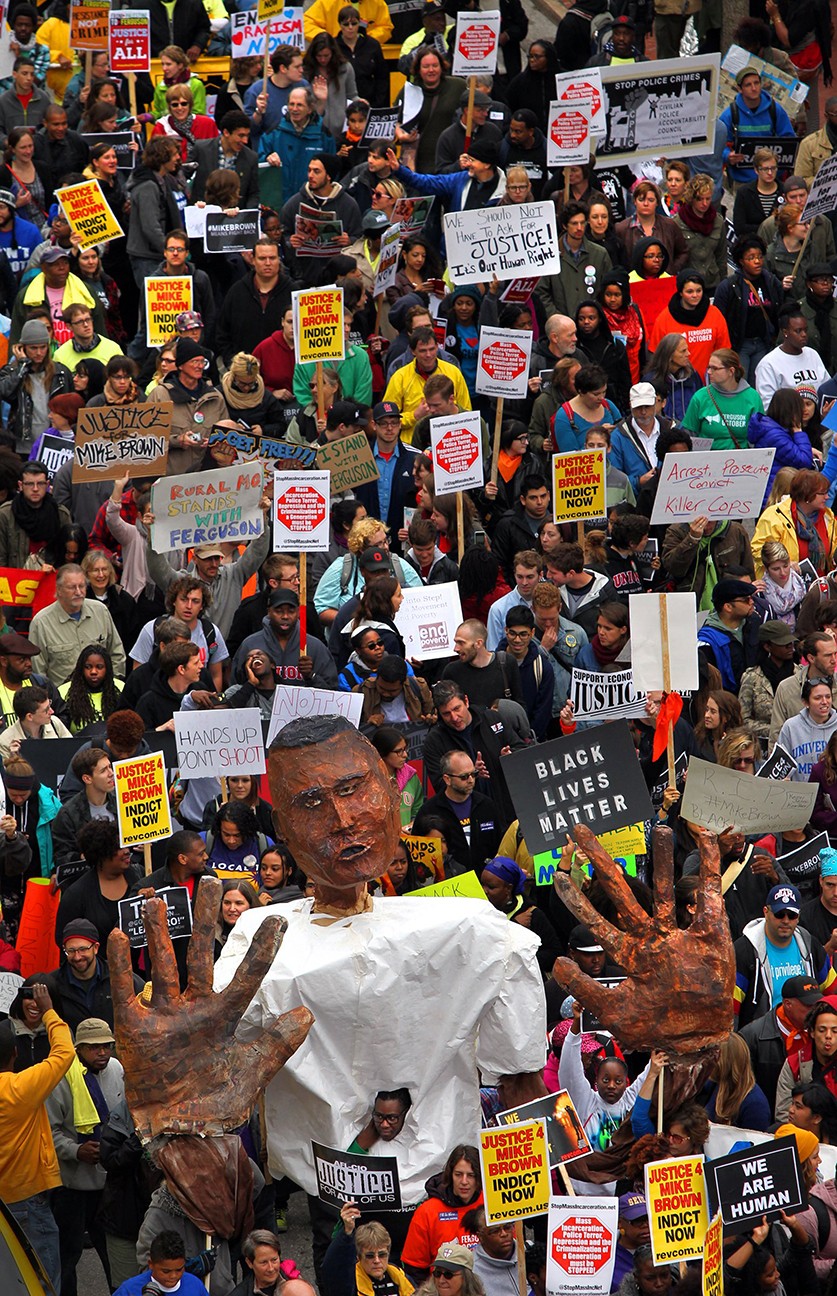
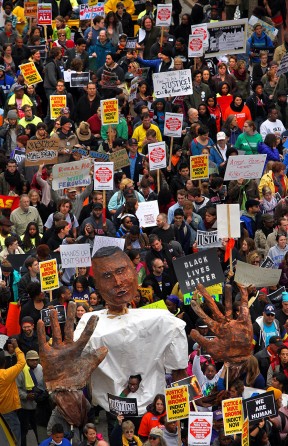
Asher Kolieboi operates a puppet of Michael Brown as thousands of people march against police violence in downtown St. Louis during a weekend series of demonstrations called 'Ferguson October'. (Robert Cohen, St. Louis Post-Dispatch - October 11, 2014)
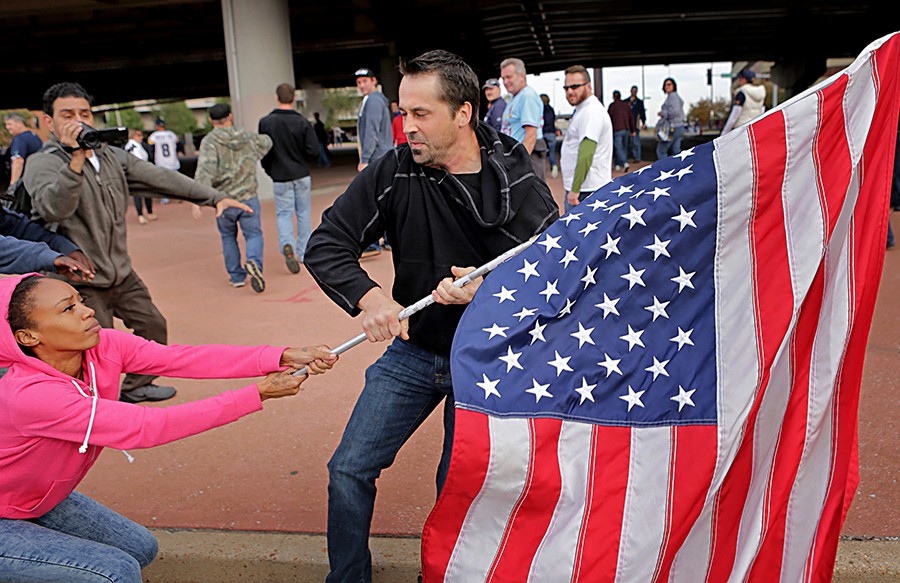
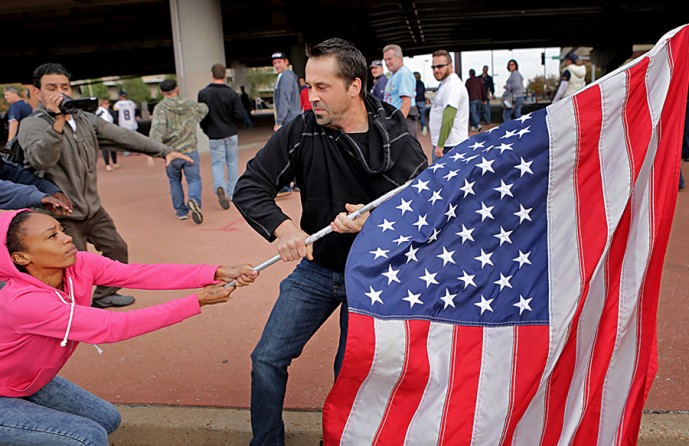
Ferguson protester Cheyenne Green struggles to hold onto an American flag as a football fan makes a grab for it outside the Edward Jones Dome after a St. Louis Rams game. (David Carson, St. Louis Post-Dispatch - October 19, 2014)
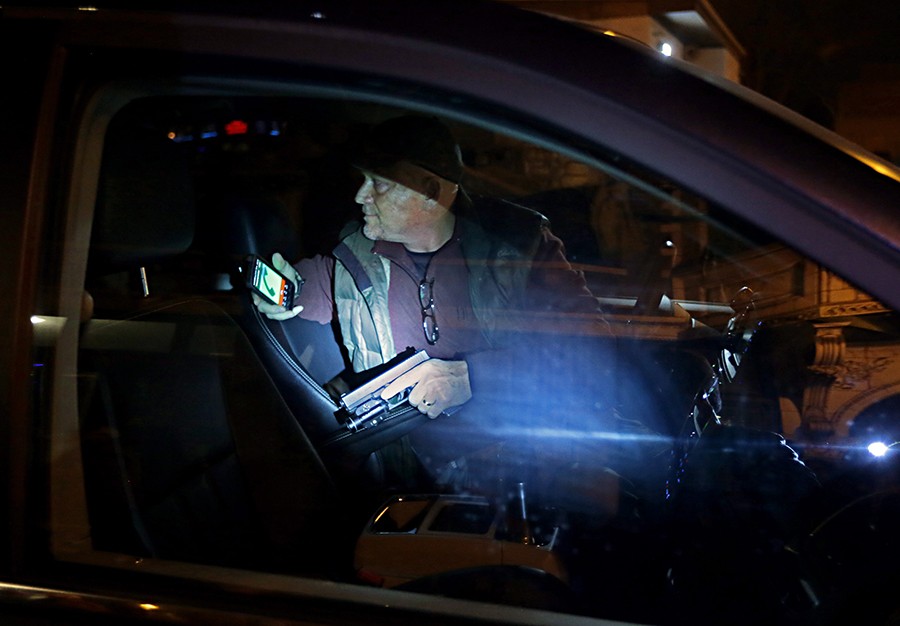
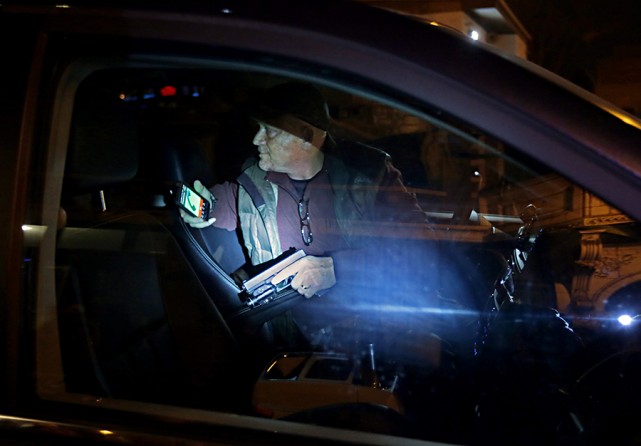
A driver grabs a gun while keeping an eye on protesters who broke out the rear window of his minivan. Moments earlier, the man had struck several protesters who had come from Ferguson to protest in St. Louis. They were blocking an intersection and climbed onto the hood of his car when they were flung off as he drove away. The demonstrators then chased him and surrounded his vehicle, at which point the driver pulled out the gun. Police later arrested the man. (David Carson, St. Louis Post-Dispatch - December 3, 2014)
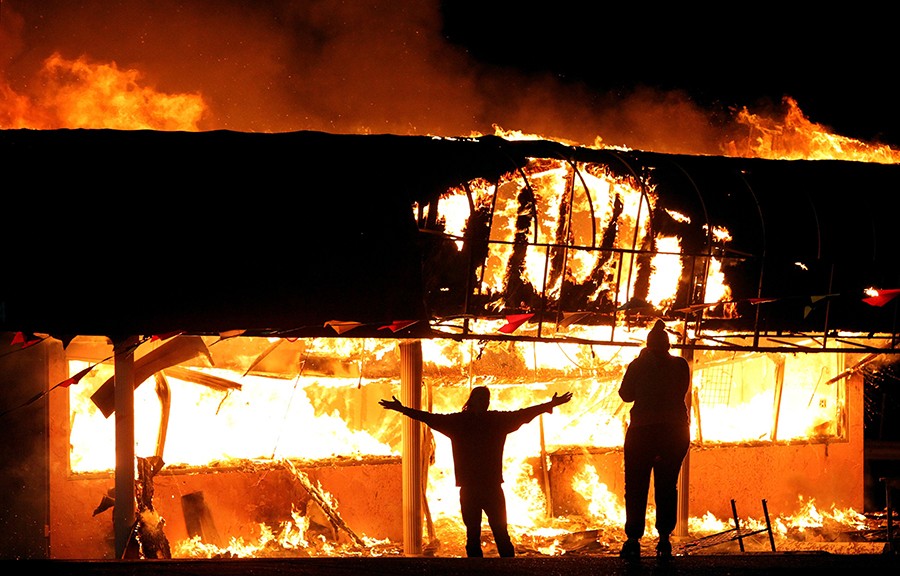
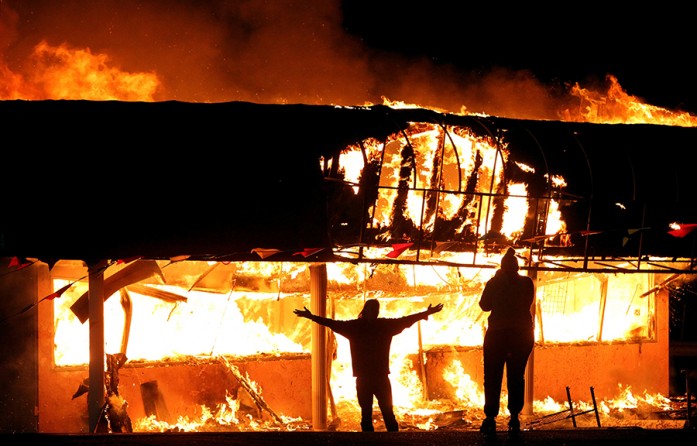
Protesters take pictures in front of Juanita's Fashion R Boutique on West Florissant Avenue in Ferguson, hours after a grand jury declined to indict police officer Darren Wilson in the shooting death of Michael Brown. Twelve businesses along a stretch of roadway more than a mile long were burned to the ground. (Robert Cohen, St. Louis Post-Dispatch - November 14, 2014)
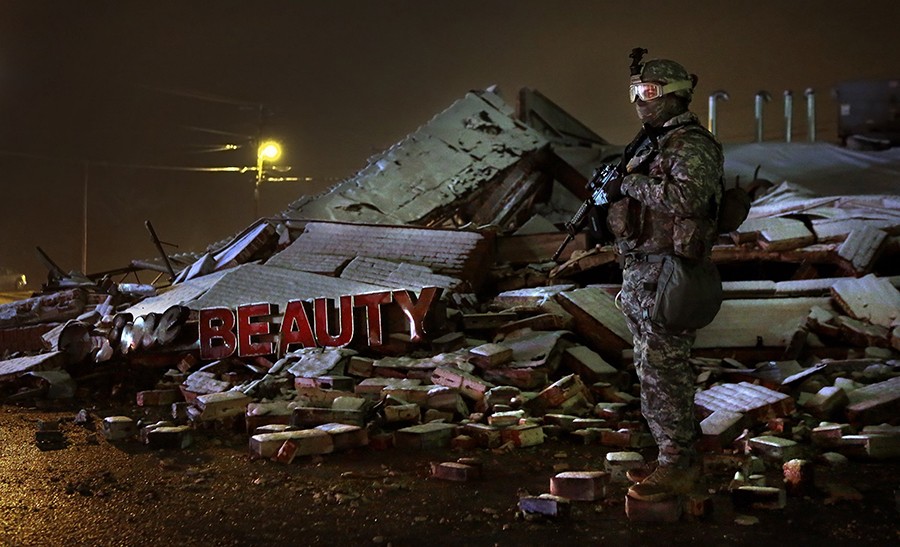
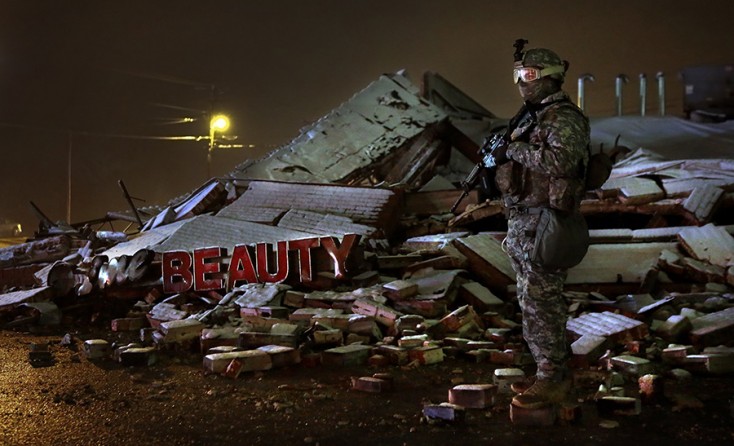
A Missouri National Guardsman stands over the rubble of Prime Beauty Supply in Ferguson. Though Gov. Jay Nixon had activated the guardsmen several days before the grand jury's verdict was announced, they were kept out of Ferguson until the following day. (Robert Cohen, St. Louis Post-Dispatch - November 26 2014)