The New York Times, by Mauricio Lima, Sergey Ponomarev, Tyler Hicks and Daniel Etter
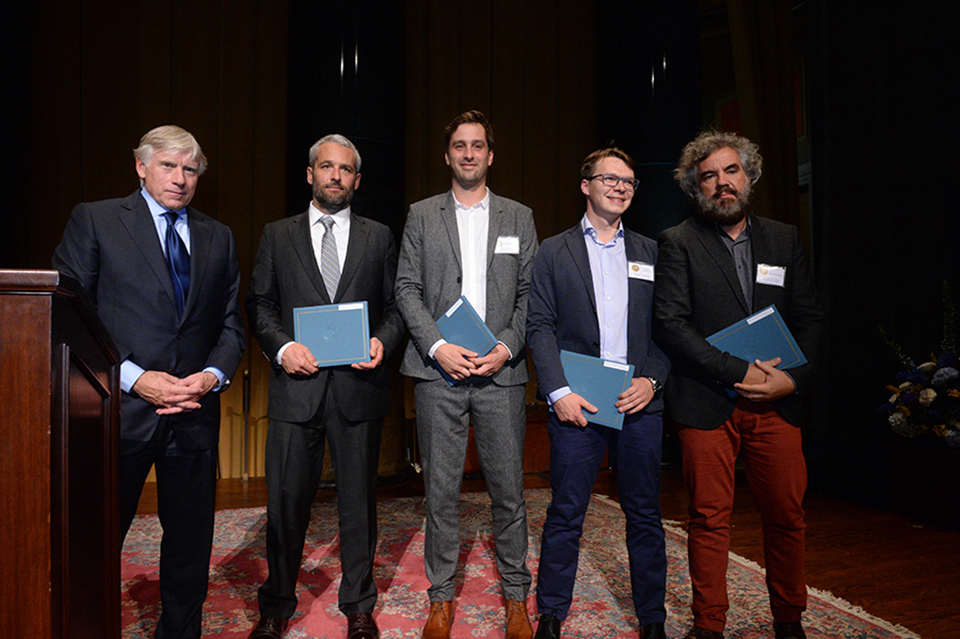
Columbia University President Lee C. Bollinger (left) presents a 2016 Breaking News Photography Prize to (left to right) Tyler Hicks, Daniel Etter, Sergey Ponomarev and Mauricio Lima of The New York Times.
Winning Work
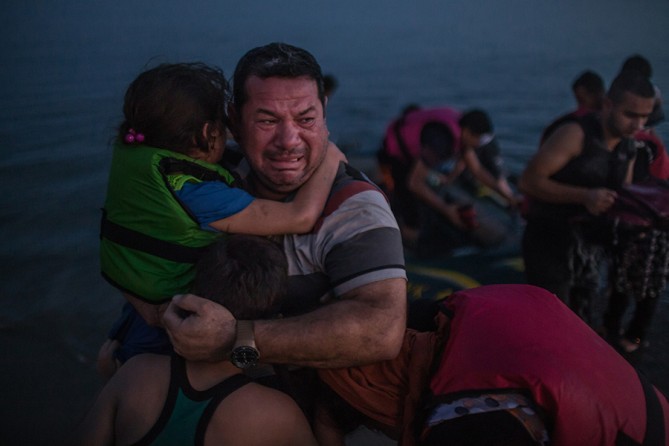
The small rubber dinghy, overloaded with migrants, slowly sinking as it lost air, finally made it to the Greek shore at dawn. Overwhelmed by relief and shattered by the harrowing overnight voyage from Turkey, a burly and seemingly rock-solid father broke down in tears as he hugged his young daughter and son.
That moment, captured by Daniel Etter for The New York Times in the penultimate image in this entry, defined for many the human face of Europe’s biggest population movement since World War II. Indeed, it went viral, republished around the world, as documented in the Supplementary section of this entry.
For months, Etter, who took the picture on the Greek island of Kos, and three fellow Times photographers — Mauricio Lima, Sergey Ponomarev and Tyler Hicks — chronicled what began as a trickle of refugees but swelled into an exodus of biblical proportions. They scrambled across beaches, marched through fields, and clambered over barbed wire as they followed the migrants, step by step, through Europe.
Their searing, intimate images captured the scale and breadth of Europe’s migration crisis, as well as the commonplace, sometimes horrific, travails of individuals lost in a mass of humanity on the move.
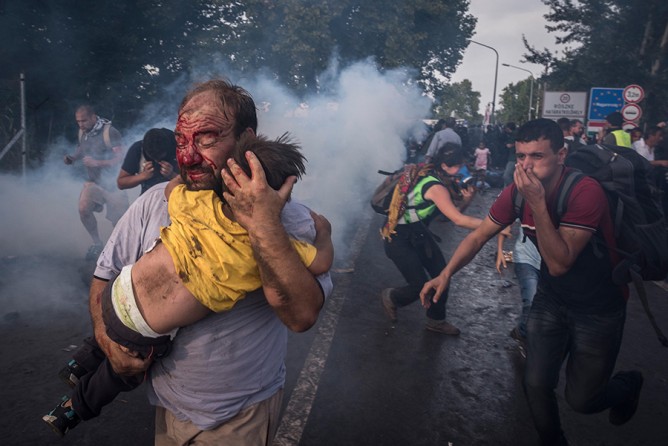
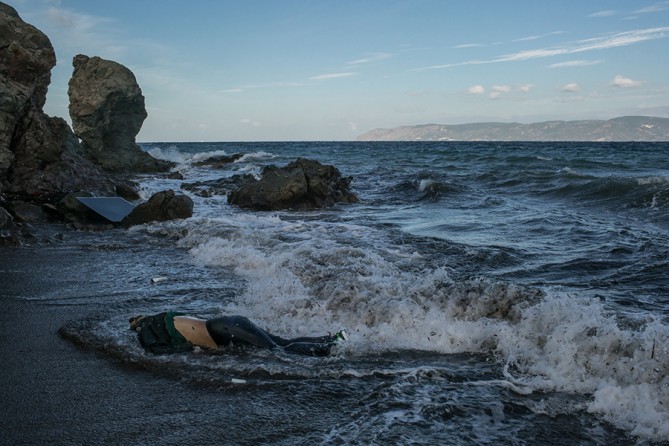
In some cases, like that of a drowned woman photographed by Lima on the Greek island of Lesbos, the journey ended at Europe’s outer edge, just a few feet into what had seemed the promised land. More than 3,700 of the people who tried to make their way to Europe in 2015 lost their lives. But for more than a million others fleeing war or poverty — like the bloodied Afghan man Ponomarev photographed cradling his child during a clash with Hungarian riot police — the journey continued deep into the European Union.
For European leaders, the unstoppable flow of people threatened the Continent’s postwar order. It undercut decades of European integration and security. It stretched welfare systems, undermined their political fortunes, and fed a surge of support for xenophobic politicians.
But Times photographers gave identities to the desperate people at the center of the shrill political debates. While shunning clichés of despair, they captured the human drama of the exodus in fresh, nuanced ways.
To illustrate the daily struggles of a traumatic journey, Lima and Ponomarev attached themselves to a dozen members of an Iraqi family, the Majids, as they made their way by foot, train and bus from Greece to Sweden, more than 1,300 miles. Ponomarev began the journey, and Lima joined them in Serbia and stayed with the family for 40 days, along with a Times reporter.
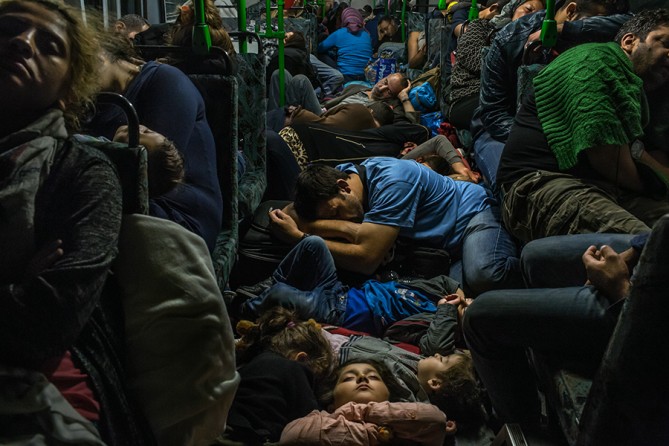
After being stranded for days with the Majids at a train station in Budapest when Hungarian authorities shut down rail traffic, Lima boarded an overnight bus with them to neighboring Austria, staying awake while his fellow passengers slept. His image of sprawling, sleeping bodies displays none of the trite urgency of a typical news photo. It recalls the meticulously composed intimacy of a painting by a Flemish master.
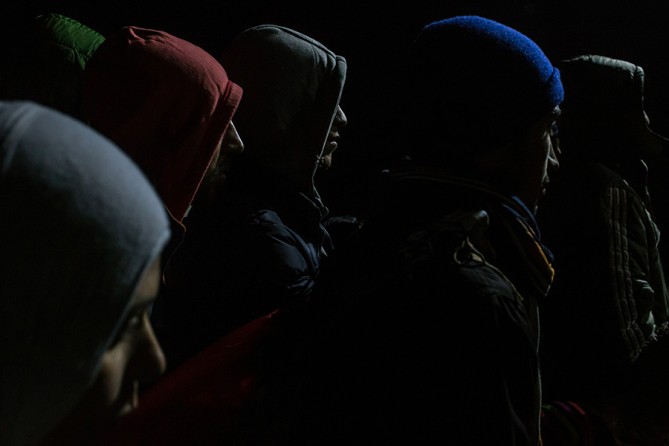
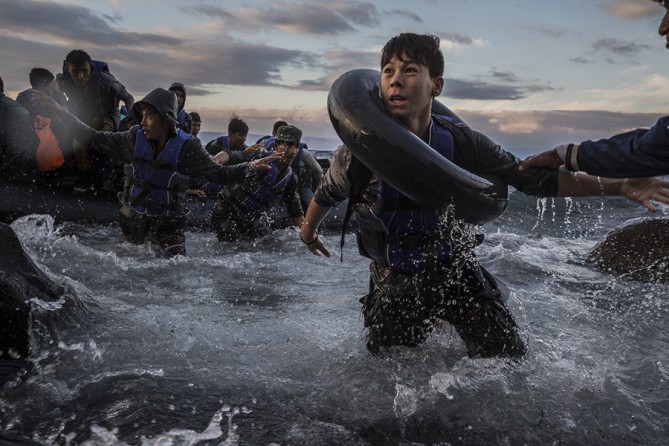
Scorning easy shots of weeping mothers and children, Lima and Ponomarev captured the misery on the migrant trail without being mawkish or predictable. Their images never reduced refugees to abstract victims or inert symbols of hopelessness. They remained vibrant individuals struggling to control their own destiny, like the young boy photographed by Hicks as he waded ashore, stunned but determined, with an inflated inner tube around his neck.
Etter’s image of the tearful father hugging his children after their perilous journey from Turkey went everywhere. The Guardian described it as a “heartbreaking” and overdue reminder that “many of these migrants are people not so different from ‘us.’” Interviewed later, the father, Laith Majid, said he was crying because he was so afraid, thinking “Why did I put my family through this? Why did I choose to face this death?”
Majid then gestured to Etter, the Times photographer, and added: “You should ask Daniel,” he said. “Because when he saw us, he was crying, too.”
Though all are photojournalists with years of experience covering conflict and disaster around the world, none of these hardened photographers were prepared for what they saw. Lima, a veteran of conflict zones from Afghanistan to eastern Ukraine, was shocked by the number of deaths among people simply looking for refuge in a peaceful Europe.
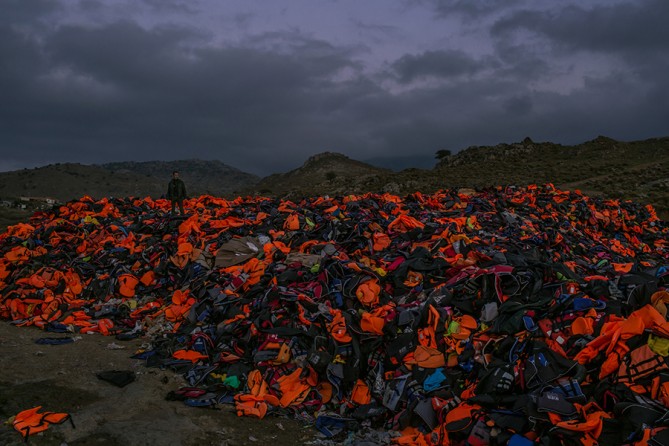
Stumbling on what he described as a “surreal mountain of discarded life vests, inner tubes and rubber dinghies” on a Greek beach, Lima produced a haunting image that, without sensationalism or ghoulishness, gave a chilling glimpse of the perils the migrants face. “How many dreams lie among all that fluorescent orange?” he wondered. “How many children will never see a beautiful beach sunset as purple as grapes? When are we going to stop being selective on our sorrow?”
Lima spent days patrolling a stretch of the Greek coastline that was particularly treacherous. There he photographed the drowned women “because people were dying” and he wanted to “help stop this from happening.”
Ponomarev, another veteran of war photography, followed “hungry, thirsty people who had nothing” on their long trek. Ponomarev recalled that, lacking wood for fires, one group of refugees he followed into a cornfield in Slovenia starting burning their spare clothes for heat. “Everywhere people were in need and needed something I could not provide,” he said. “All I could do was photograph them and hope this might help.”
Ponomarev was shocked by how willing some migrants were to “use their own children as an argument” by parading toddlers in front of riot police officers firing tear gas or waving babies at closed border crossings to try to gain entry. The bloodied man he photographed at the Hungarian border had taken his child into the middle of a pitched battle.
Etter said his encounter with the family on the sinking dinghy overwhelmed him more than anything else in a career that has included photographing war in Syria and Libya.
Daniel Etter, Mauricio Lima, Sergey Ponomarev and Tyler Hicks embraced the migrant experience. They brought to life its agonies, hopes and occasional triumphs. They put a face on the mothers, the fathers, the children, the families, whose desperation created Europe’s biggest political and human drama in decades. For this, we proudly nominate them for the Pulitzer Prize for Breaking News Photography.
Winning Work
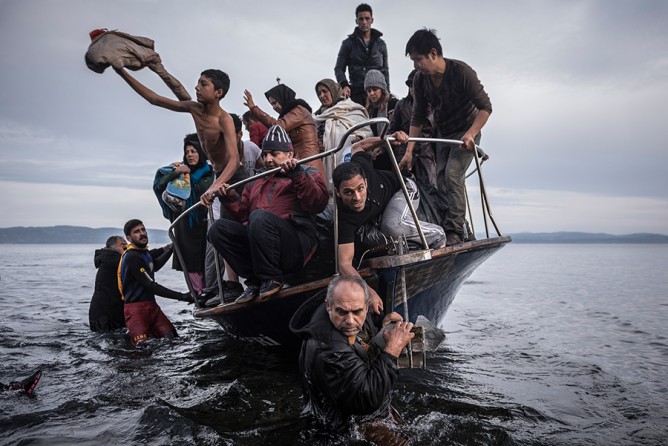
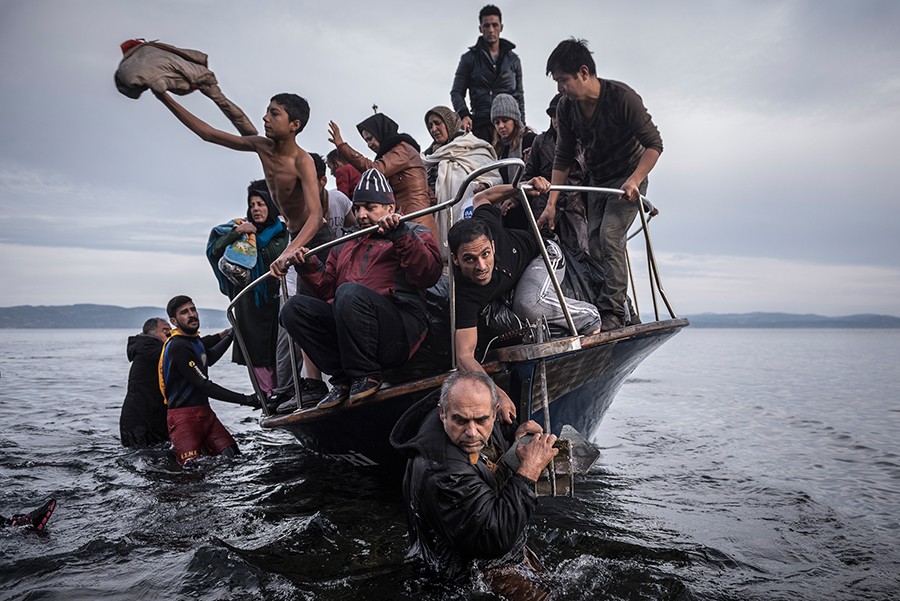
Migrants arrive by a Turkish boat near the village of Skala, on the Greek island of Lesbos. The Turkish boat owner delivered some 150 people to the Greek coast and tried to escape back to Turkey; he was arrested in Turkish waters (Sergey Ponomarev, The New York Times - November 16, 2015).
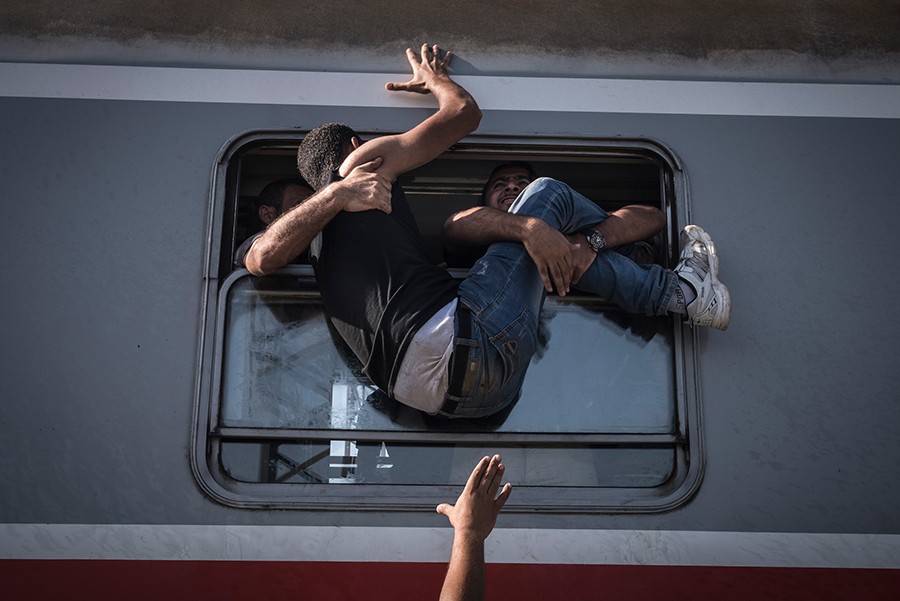
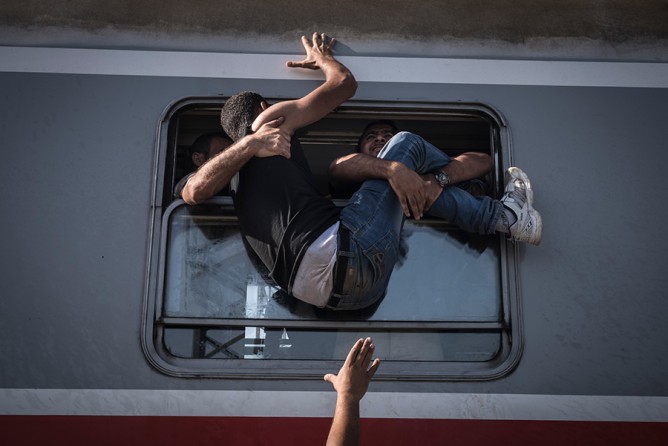
Desperate refugees board the train toward Zagreb at Tovarnik station on the border with Serbia. As key nations tightened their borders, thousands of migrants and asylum seekers were bottled up in the Balkans, placing precarious new burdens on a region of lingering sectarian divisions that was exceptionally ill-prepared to handle the crisis (Sergey Ponomarev, The New York Times - September 18, 2015).
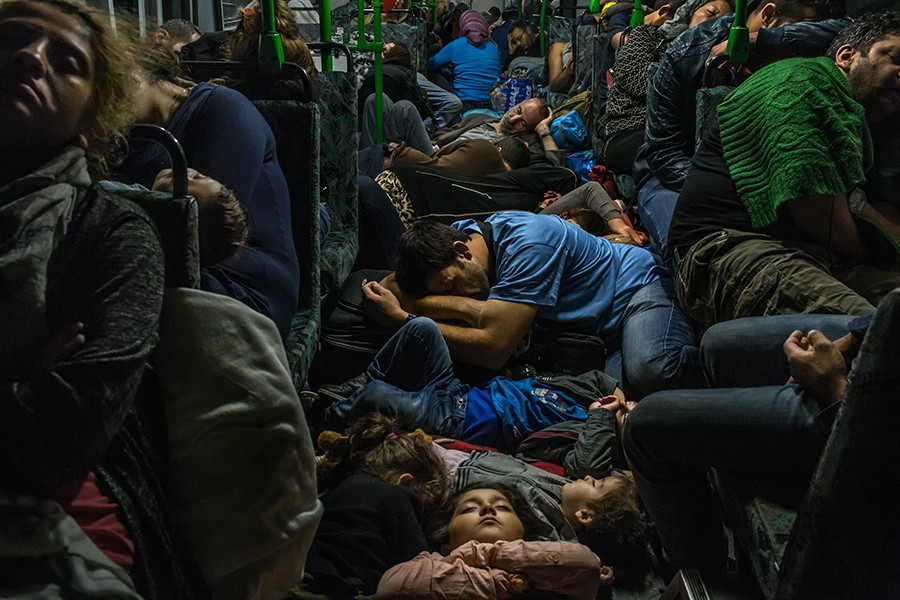
Ahmad Majid, in blue T-shirt at center, sleeps on a bus floor with his children, his brother Farid Majid, in green sweater at right, and other members of their family and dozens of other refugees, after leaving Budapest on the way to Vienna. Hundreds of thousands of refugees, mostly from Afghanistan, Iraq and Syria, fled their homes, risking their lives in dangerous boat trips, illegal border crossings and long bus and train journeys, seeking asylum in Western Europe and Scandinavia (Mauricio Lima, The New York Times - September 5, 2015).
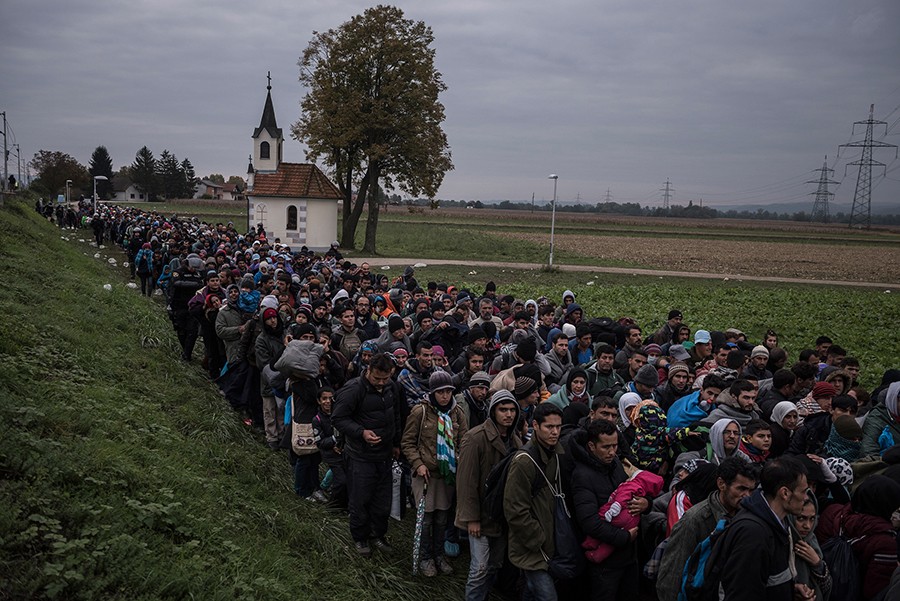
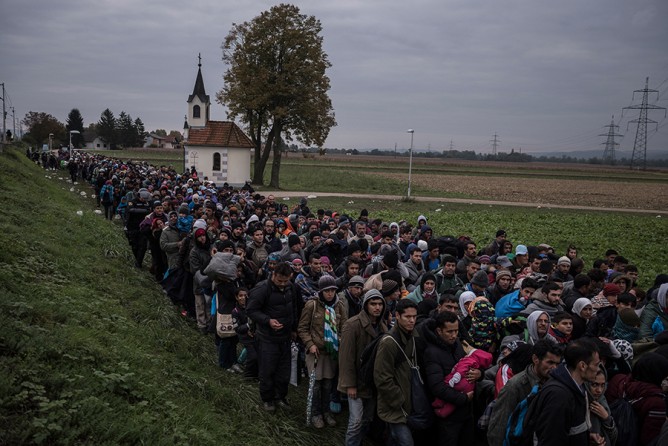
Migrants walking past a church, escorted by Slovenian riot police to a registration camp outside Dobova, Slovenia. The small Balkan nations along the path of the human migration through Europe have seen record numbers of refugees cross their borders, and have been overwhelmed in their ability to manage the human flow (Sergey Ponomarev, The New York Times - October 22, 2015).
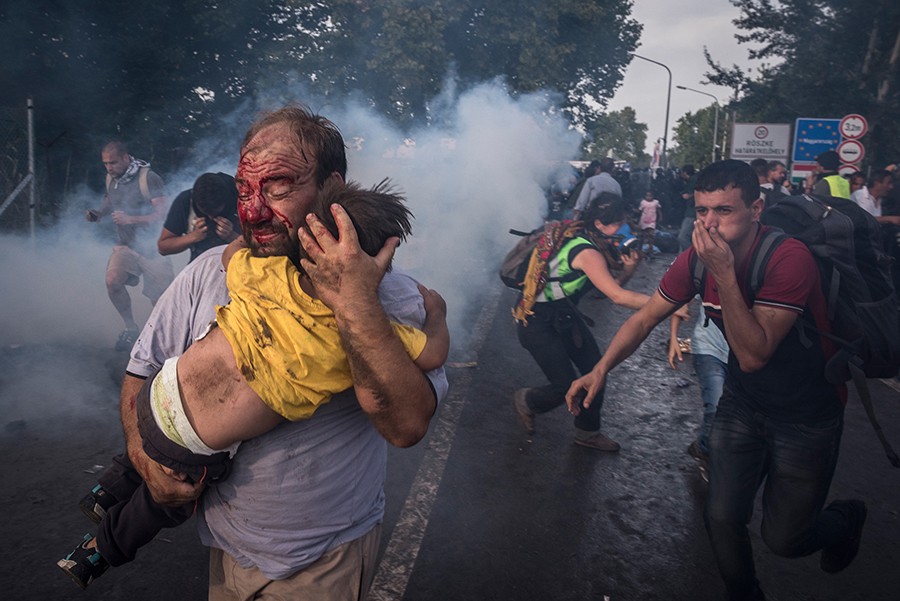
A man tries to shield his child from police beatings and tear gas at the border crossing in Horgos, Serbia. Baton-wielding Hungarian riot police unleashed tear gas and water cannons against hundreds of migrants after they broke through a razor-wire fence and tried to surge into Hungary from Serbia (Sergey Ponomarev, The New York Times - September 16, 2015).
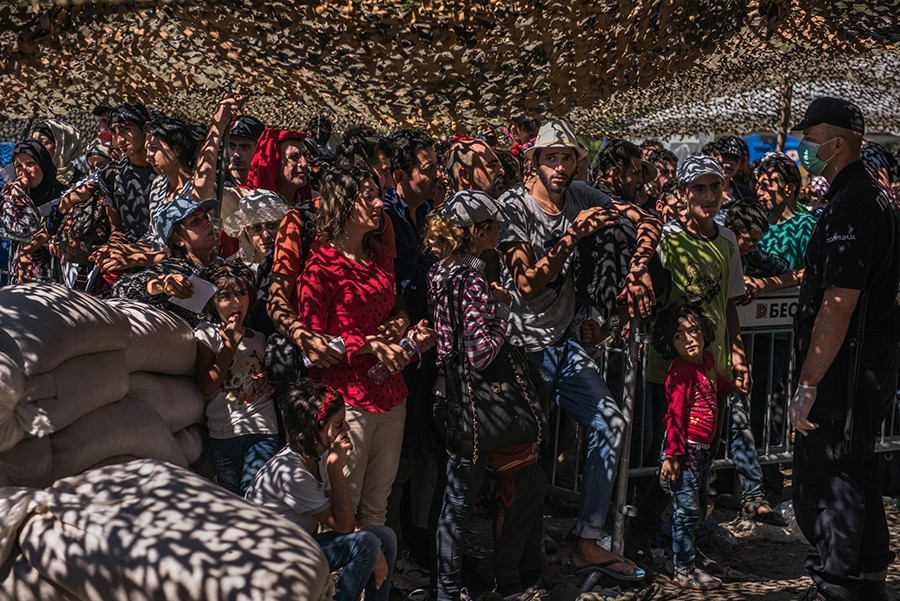
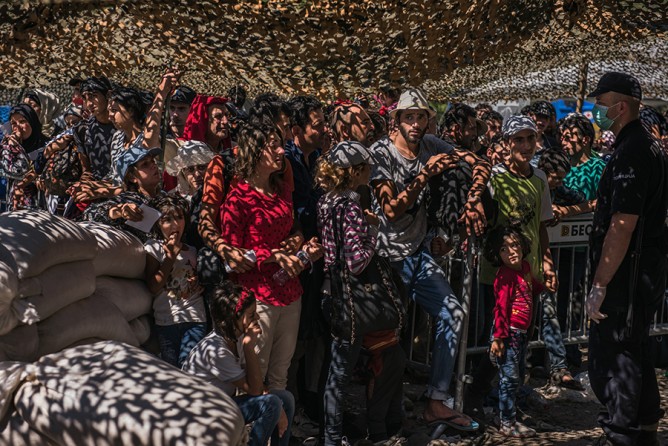
Refugees wait in line for documents at a processing center in Presevo, Serbia. Long lines of people stood in the blistering sun, begging guards to let them into the reception center. Refugees had to register to travel farther through Serbia. In Serbia, refugees could register to stay in the country for 72 hours, gaining the right to travel and even to stay in a hotel (Sergey Ponomarev, The New York Times - August 27, 2015).
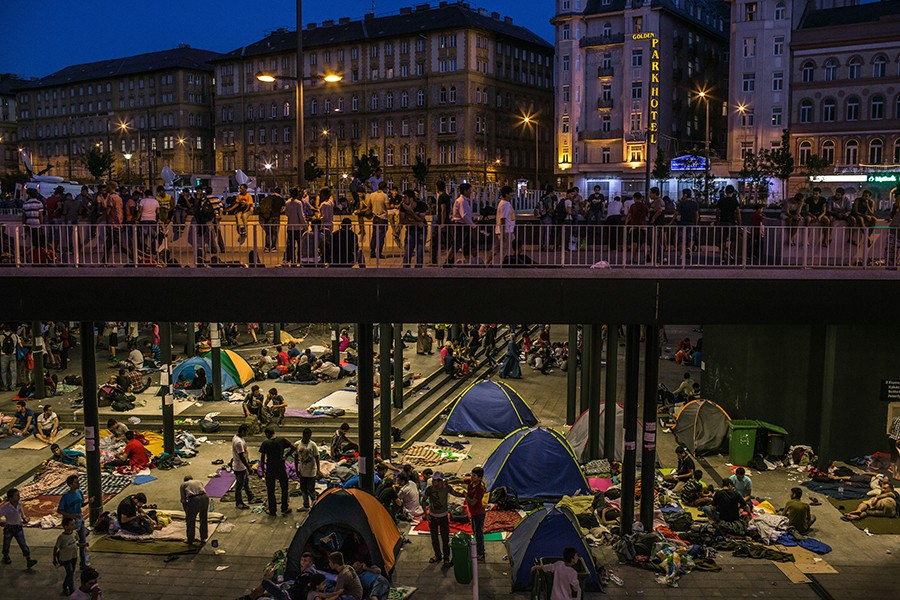
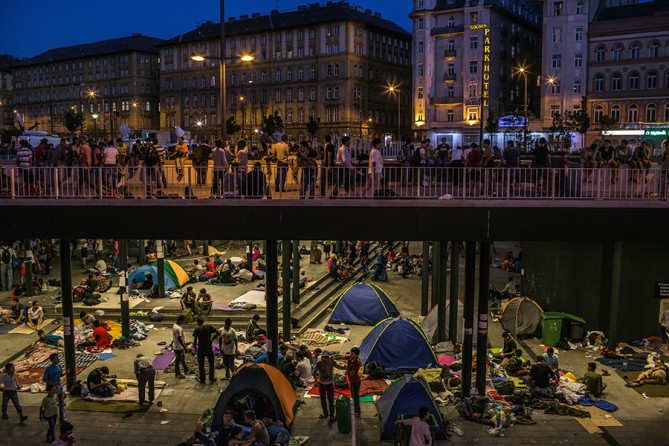
Dozens of refugee families, mostly from Syria, camping underneath the Keleti train station in central Budapest (Mauricio Lima, The New York Times - September 1, 2015).
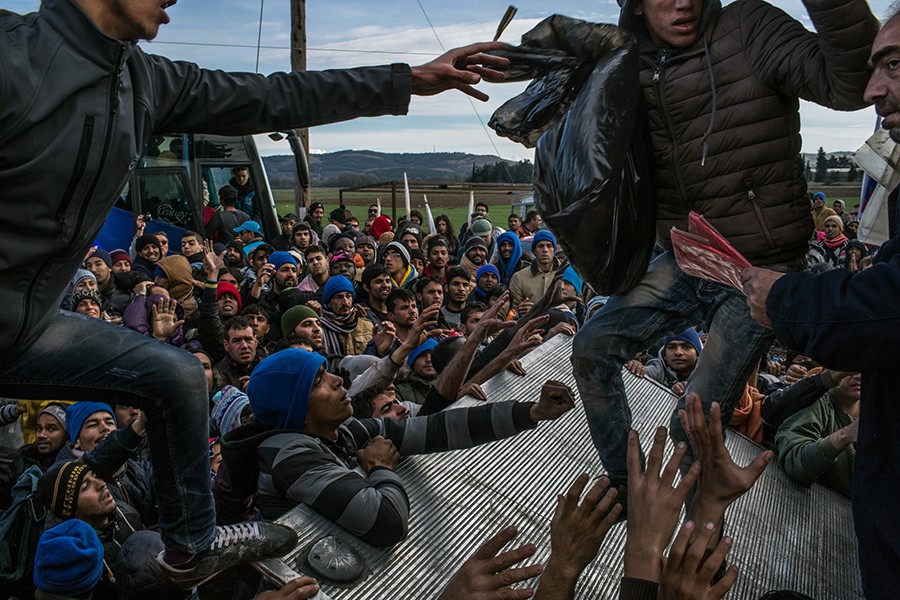
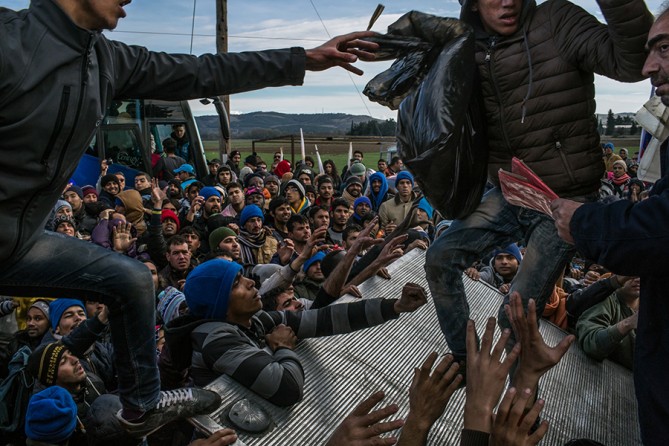
November 28, 2015. Refugees from Pakistan, Bangladesh, Morocco, Algeria and Somalia struggling for donations of water, blankets, diapers and some clothes on their 10th day encamped near the border in Idomeni, Greece. They were not allowed to cross into Macedonia; only refugees from Afghanistan, Iraq and Syria were allowed to cross and continue their journeys (Mauricio Lima, The New York Times - November 28, 2015).
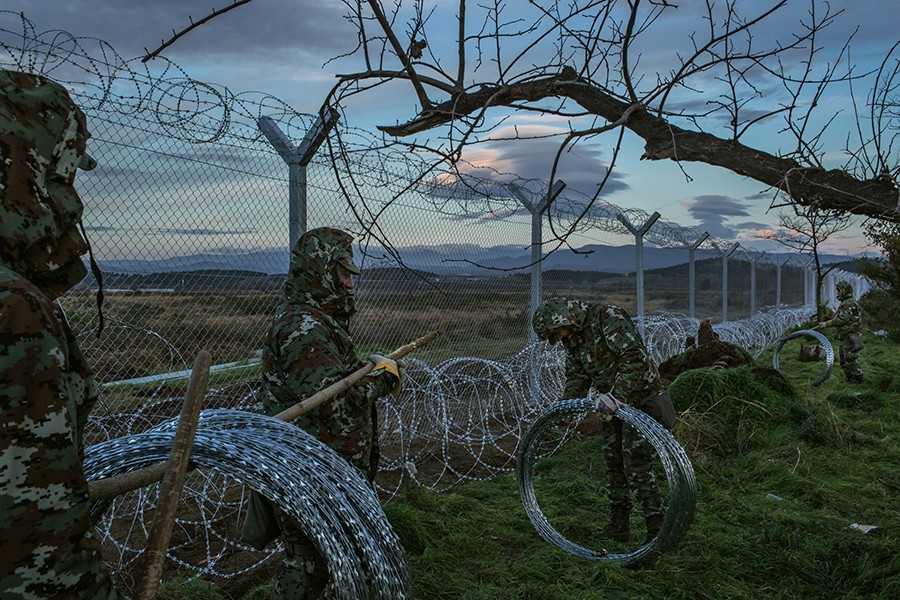
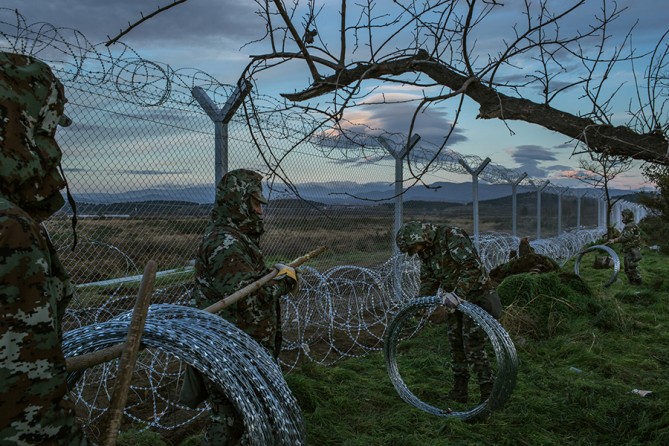
Macedonian soldiers on the Greek side of the border have built a border fence that divides their town of Gevgelija, in the background, from Idomeni, in Greece, where nearly 2,500 refugees were being barred from entering (Mauricio Lima, The New York Times - November 28, 2015).
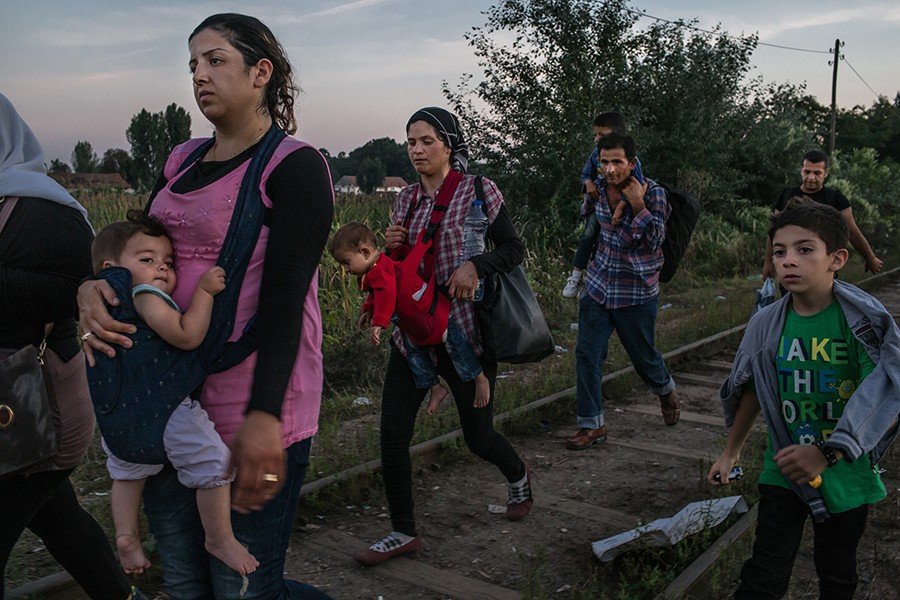
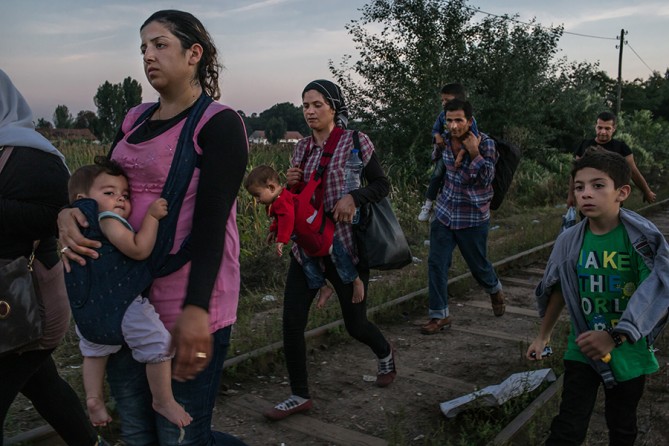
Roujin Sheikho, at left, from Syria, carries her daughter Widad as her son Nabih, at right, walks with her and other Syrian refugees down the railway before crossing into Hungary from Horgos, Serbia (Mauricio Lima, The New York Times - August 30, 2015).
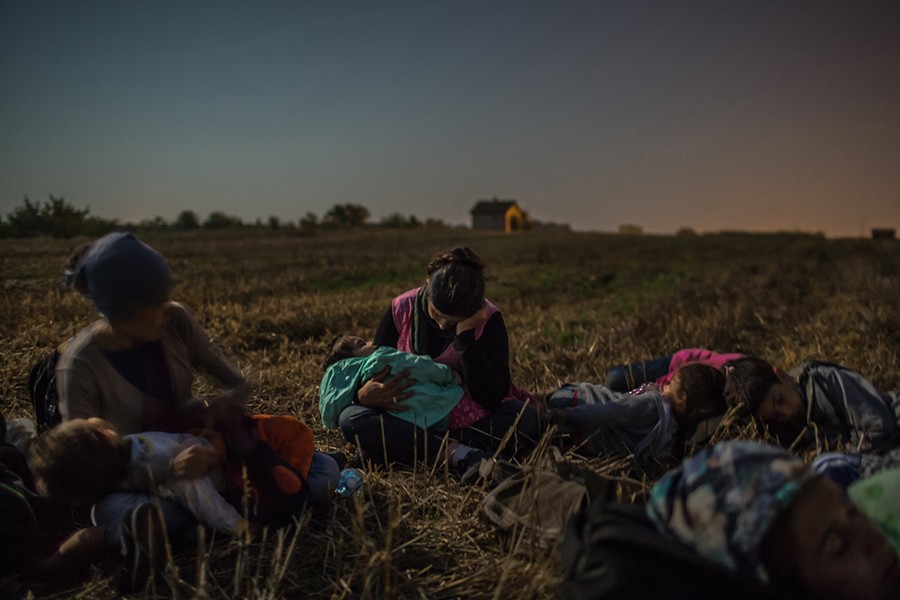
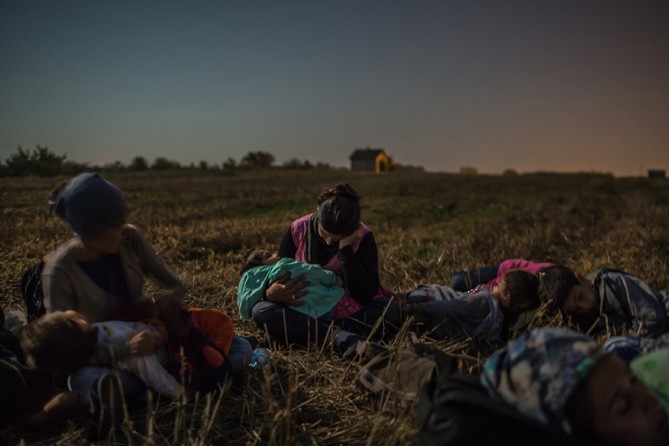
August 31, 2015. Members of the Majid family sleep with their children in their arms in a wheat field as they wait to cross the barbed wire fence at Horgos, Serbia, into Hungary (Mauricio Lima, The New York Times - August 31, 2015).
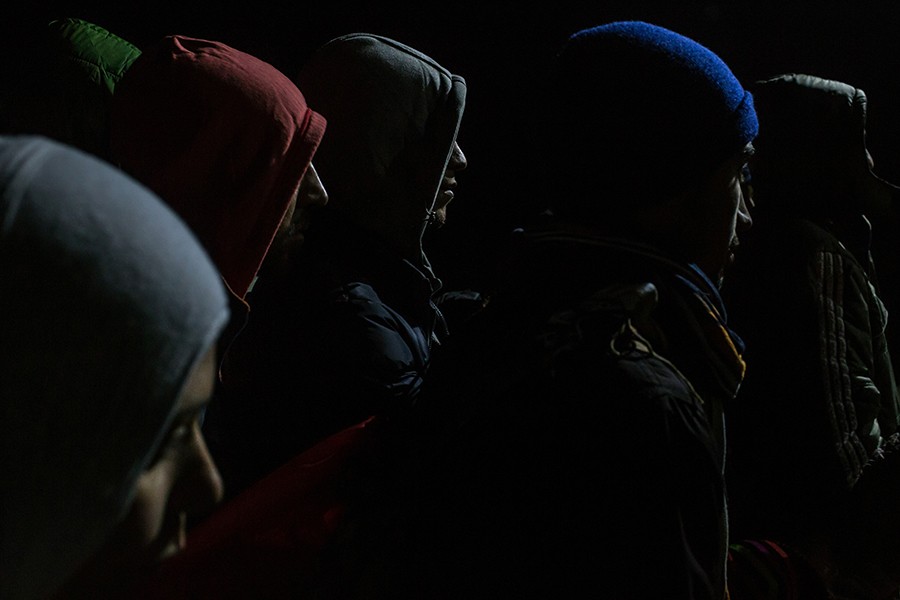
Refugees line up to be registered in a reception camp, in Gevgelija, Macedonia, so they can take a train to Belgrade, Serbia, and continue their journey through the Balkans toward Europe (Mauricio Lima, The New York Times - November 21, 2015).
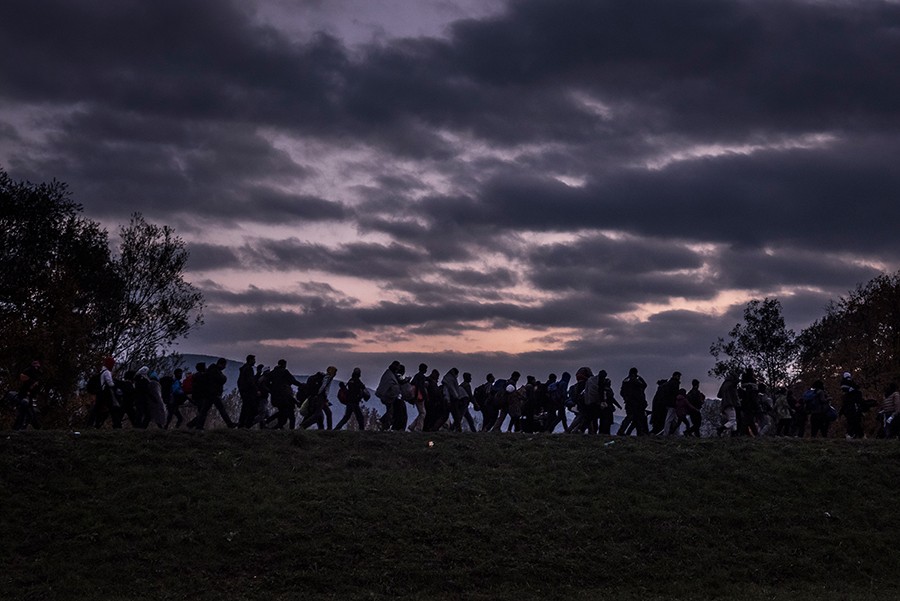
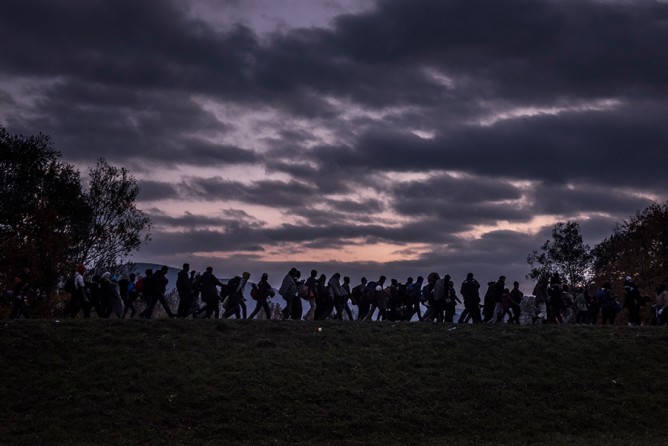
Migrants walking along a dike, escorted by Slovenian riot police, to a registration camp outside Dobova. Despite hopes that falling temperatures and treacherous seas would slow the tide of refugees, fresh fighting in Syria and growing fears of border closings drove more people to undertake the treacherous trek (Sergey Ponomarev, The New York Times - October 23, 2015).
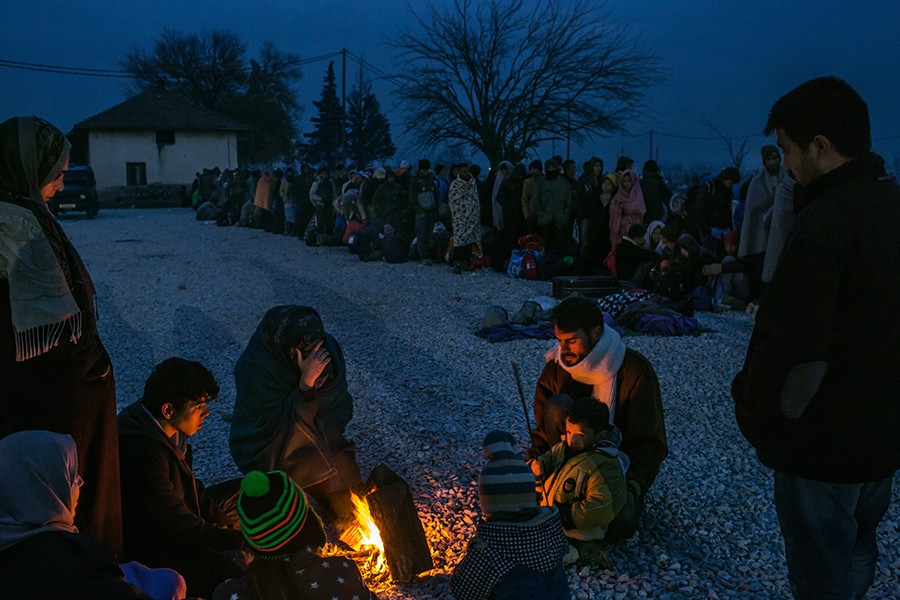
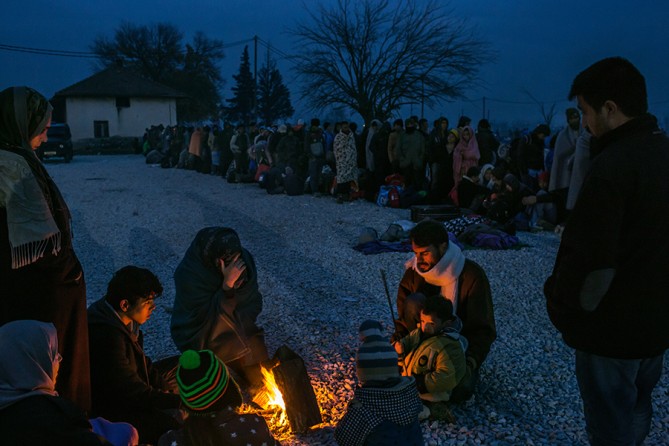
A refugee family from Syria gets warm around a bonfire as others line up to be registered in a reception camp, in Gevgelija, Macedonia (Mauricio Lima, The New York Times - November 21, 2015).
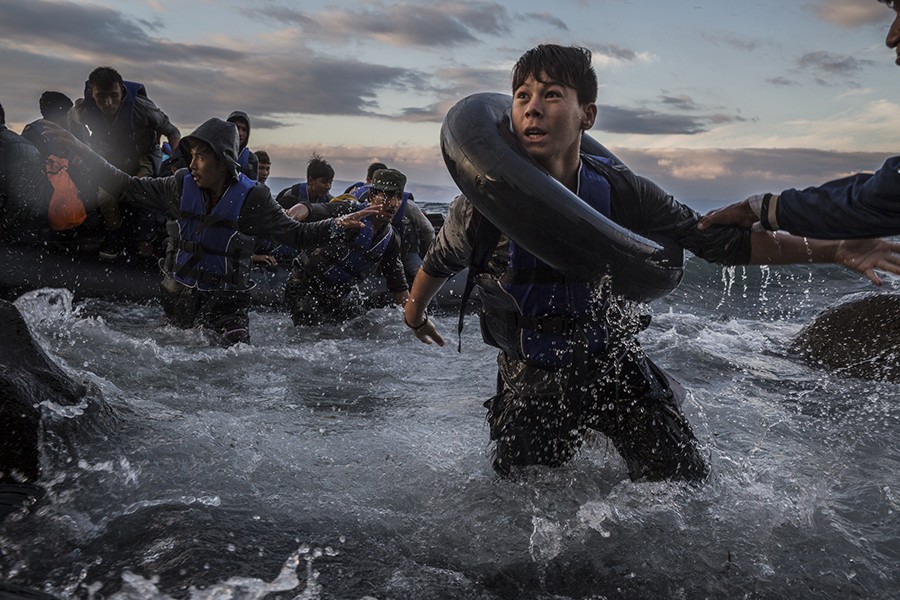
After battling rough seas and high winds from Turkey, migrants arrive by rubber raft on a jagged shoreline of the Greek island of Lesbos. Fearing capsize or puncture, some panicked and jumped into the cold water in desperation to reach land. This young boy made it, unlike hundreds of others (Tyler Hicks, The New York Times - October 1, 2015).
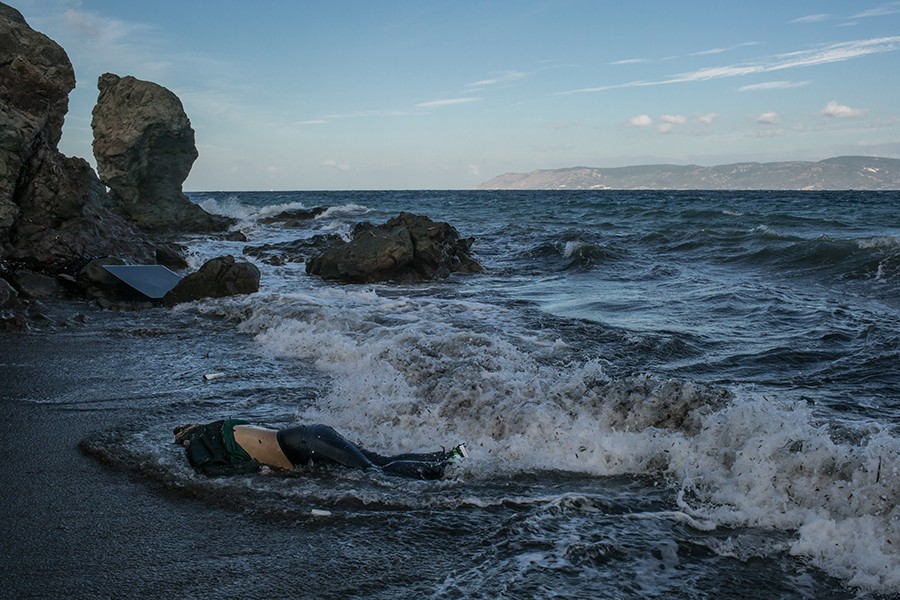
The body of a refugee who attempted to cross the Aegean Sea from Turkey, in the background, on the Greek island of Lesbos. Three other bodies, of a 12-year-old girl, a middle-age man and an elderly man, were also found that morning (Mauricio Lima, The New York Times - November 1, 2015).
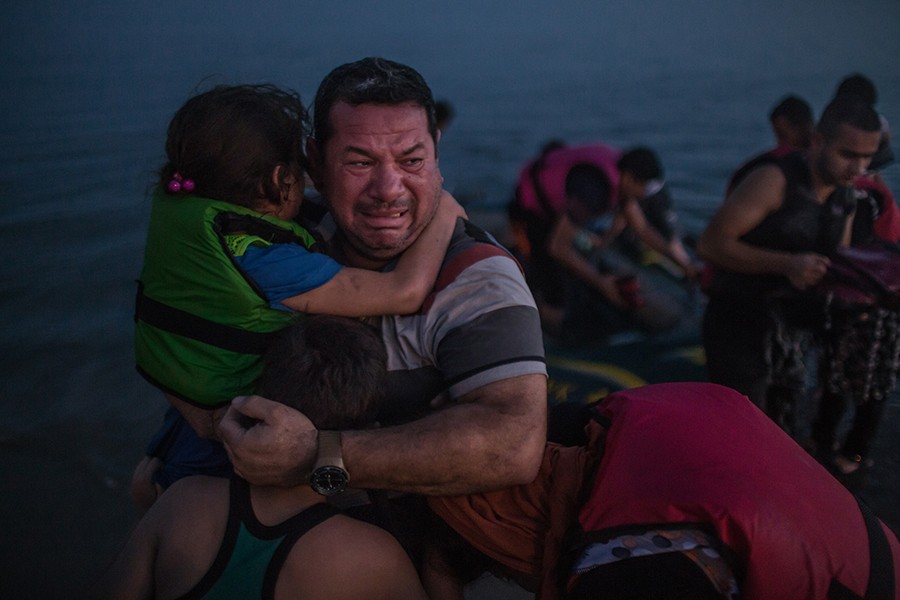
Laith Majid, an Iraqi, broke out in tears, holding his son and daughter after they arrived safely in Kos, Greece, on a flimsy rubber boat (Daniel Etter, The New York Times - August 15, 2015).
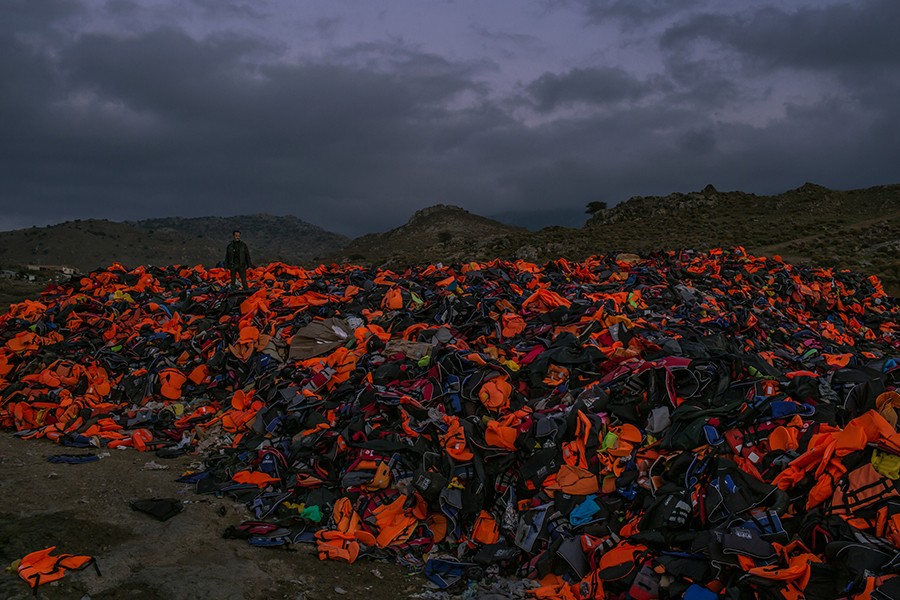
A huge pile of discarded life vests, inner tubes and deflated rubber dinghies, the basic equipment that thousands of refugees have used to cross the Aegean Sea from Turkey, at dusk on the Greek island of Lesbos (Mauricio Lima, The New York Times - November 7, 2015).
Biography
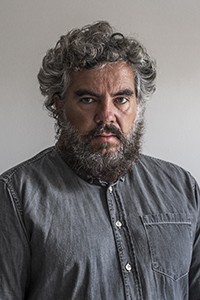
Mauricio Lima is an independent documentary photographer focused on the lives of those affected by social crisis and armed conflict. He has worked in Afghanistan, Brazil, Iraq, Libya, Portugal and Ukraine, and most recently from Syria up to Sweden following the refugees from the Middle East to Europe. His work frequently appears in The New York Times, among other clients worldwide.
He started his career as a trainee photographer in 1999 for a local sports newspaper in São Paulo, before being invited to join Agence France-Presse as a staff-contract for almost 11 years, until early 2011.
In 2015, Mr. Lima was a finalist for the Pulitzer Prize in Breaking News Photography for his series “Fragmented: The Human Cost of War in Ukraine.” He has been awarded Picture of the Year International on several occasions, including a Photographer of the Year recognition on POYLatin America 2015. He also received the China International Press Photo award in 2015 and 2014 and came in third place for the Prix Bayeux Calvados des Correspondants de Guerre in 2006.
Mr. Lima was born and raised in São Paulo, Brazil. He graduated with a degree in communications from PUC University, with an emphasis on art history and photography, in addition to photojournalism studies at Senac Institute.
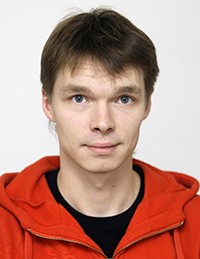
Sergey Ponomarev is a freelance photographer for The New York Times, a position he has held since 2012. Previous to The Times, Mr. Ponomarev photographed for The Associated Press on a staff position in Moscow Bureau.
He was awarded third prize for World Press Photo’s General News category, was both 2015 Pulitzer Prize finalists for Breaking News Photography and received the Award of Excellence in Freelance Photographer of the Year category at the POYi contest in 2014.
His hobbies include snowboarding, history, war movies and spending time with children.
Mr. Ponomarev is based in Moscow and graduated from Moscow State University.
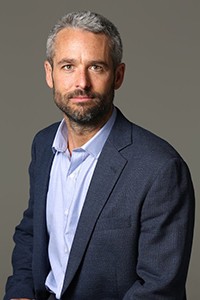
Tyler Hicks is a senior photographer for The New York Times. Mr. Hicks began working for The Times as a contract photographer in Kenya in 1999, photographing news stories in East and West Africa. After the Sept. 11 terrorist attacks, Mr. Hicks traveled to Afghanistan for The Times and arrived in Kabul as the Northern Alliance liberated the city from Taliban control. He has returned to Afghanistan yearly and continues to document the conflict there.
After a year as chief photographer at The Troy, Ohio, Daily News, Mr. Hicks moved to North Carolina, where he was a staff photographer for three years at The Wilmington Star-News. During this time, he photographed personal projects in Haiti, Albania and Kosovo. Moved by the atrocities he saw in Kosovo, Mr. Hicks left his job to pursue a career in international news.
As a freelancer for The Times, Mr. Hicks lived with a Kosovar family while covering the escalating conflict in the Balkans. Two years later, with the arrival of peacekeepers and an end to the conflict, he left to go to Africa to cover the escalating war between Eritrea and Ethiopia.
In 2001, Mr. Hicks was the recipient of the 2001 ICP Infinity Award for Photojournalism for his coverage in Afghanistan, as well as other awards, including World Press and Pictures of the Year and Visa Pour L’image in Perpignan, France. He received the Newspaper Photographer of the Year award from Pictures of the Year International for his work in 2006. In 2009, Mr. Hicks was a member of the team that won the Pulitzer Prize for International Reporting coverage of Afghanistan and Pakistan. In 2013, Mr. Hicks was present during the deadly attack by terrorists on the Westgate shopping center in Nairobi on Sept. 21. For this work he was awarded the 2014 Pulitzer Prize for Breaking News Photography and the Overseas Press Club Robert Capa Gold Medal and his second Visa Pour L’Image in Perpignan.
On March 16, 2011, Mr. Hicks and three other reporters were reported missing in Libya. They were on assignment for The New York Times covering the Libyan revolution. After six days in captivity, Mr. Hicks and his colleagues were released. On Feb. 16, 2012, while on assignment in Syria, Mr. Hicks was with Anthony Shadid, the Beirut bureau chief for The Times, when Mr. Shadid died of an asthma attack. Mr. Hicks helped carry Mr. Shadid’s body across the border to Turkey.
Mr. Hicks graduated in 1992 with a B.A. in journalism from Boston University. Mr. Hicks was born in São Paulo, Brazil. He now lives in Kenya. But he’s seldom home.
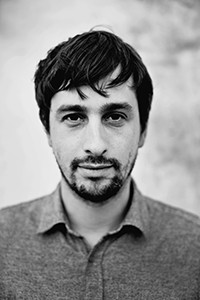
Daniel Etter is a freelance photographer at The New York Times. He also contributes to Time Magazine, Newsweek, Al Jazeera America and Süddeutsche Zeitung Magazin.
Mr. Etter received his master’s degree in political science from the University of Bonn in 2008 and a university diploma in journalism from Ludwig Maximilian University of Munich in 2009.
He received the POY Award of Excellence in 2011, the Kathryn Davis Fellowship for Peace in 2013 and the Axel-Springer-Preis award in 2013 for feature writing.
Mr. Etter currently lives in Barcelona.