Finalist: Andrew Burton, Chip Somodevilla, Patrick Smith and Drew Angerer of Getty Images
Nominated Work
The Baltimore Riots
By Chip Somodevilla, Andrew Burton, Drew Angerer and Patrick Smith, Getty
Images
Entry for the 2016 Pulitzer Prize in Breaking News Photography
On April 12, 2015, a 25-year-old Baltimore man named Freddie Gray died after suffering a severe spinal cord injury while he was under arrest in the back of a police van.
The death outraged communities, igniting protests in Baltimore and across the United States and rallying thousands to march against police brutality. It added to the momentum of the #BlackLivesMatter hashtag and movement, and left a nation grappling with how to manage policing in the 21st century.
As the story unfolded, Getty Images photographers Chip Somodevilla, Drew Angerer, Andrew Burton and Patrick Smith overcame difficult situations and high tensions to provide comprehensive coverage of the unrest in Baltimore.
Somodevilla captured an image of a young woman, deeply and visibly upset, who kissed Gray’s coffin at his burial, and left the print from her lipstick as a last goodbye. Gray’s friends and family attended the peaceful and personal event, together with a many people who came to show their solidarity. Somodevilla described the atmosphere as calm and very respectful, even as Gray was held up as a symbol of police brutality -- or at least mistreatment -- that the residents felt was endemic.
While the burial continued, the riots began at the Mowdamin Mall near the Sandtown neighborhood, a poor section of Baltimore where a tense relationship existed between the police and the community.
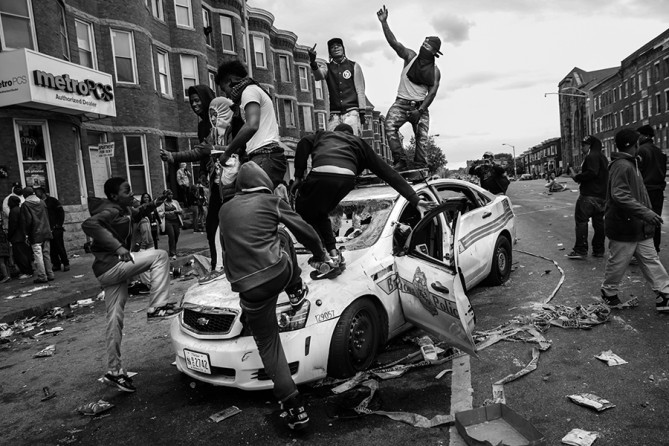
Somodevilla arrived to witness police and protestors in a stand-off, an invisible line drawn at an intersection surrounded by looting and vandalism. The police would advance about 15 feet, then stop, then repeat their advance, Somodevilla said. Meanwhile, protestors danced atop a police car they had vandalized. It was on the wrong side of the invisible line, and, as Somodevilla recalled, was “completely overrun.” Somodevilla’s photo of that moment showed the tension between police and residents, but also reflected the satisfaction protestors found in small victories like this, a break from their infuriation.
As the police drew closer, the demonstrators, who Somodevilla described as peaceful, locked arms in a row. Somodevilla stood right behind them. Then, suddenly, the police were so close that Chip could see a hand come up and shower the protestors with pepper spray. People scattered immediately, and the police were able to re-take the critical intersection. Somodevilla was lucky. Since his camera was in front of his eyes, and he wore his glasses and hat, only his neck was sprayed, and he could continue his work.
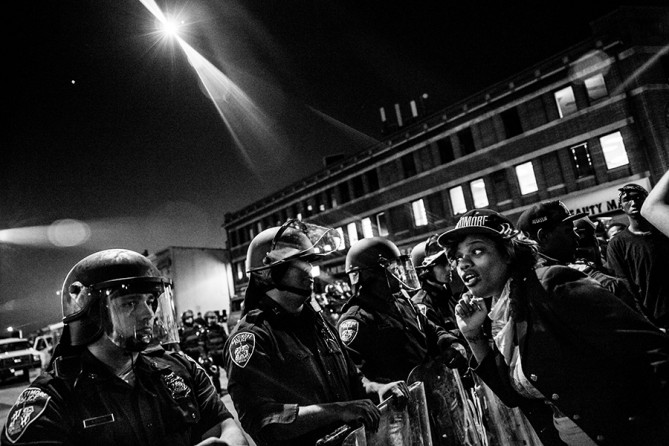
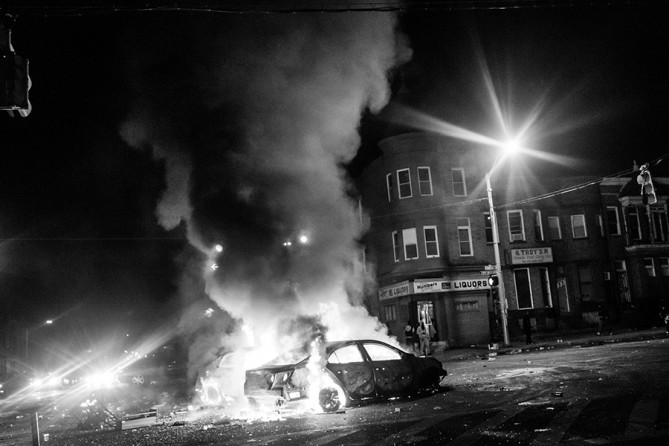
Neither Somodevilla nor Angerer saw police get into any physical altercation with the protestors during the night of the protests. In fact, both reported that the police did little to prevent a lot of the vandalism that occurred — including the burning cars photographed by Andrew Burton. It was as if police had lost control of the situation, they said: As police would gain control of one block, the rioters would break off and loot in another.
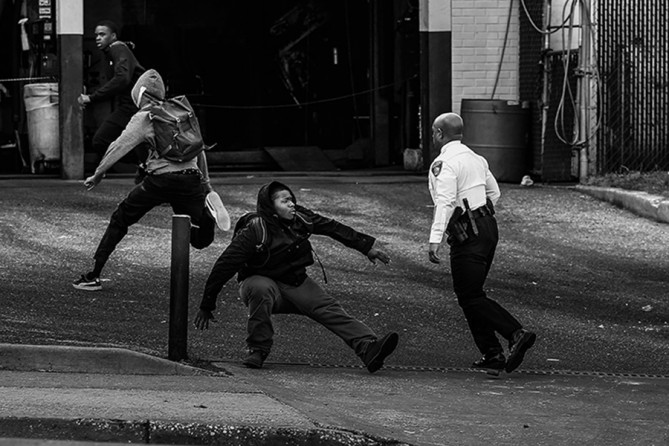
The feeling of frustration on the part of police was documented in the coverage, particularly in Angerer’s photo of Baltimore Police Commissioner Anthony Batts, who personally ran across the median of a road to chase away protestors from a parking lot.
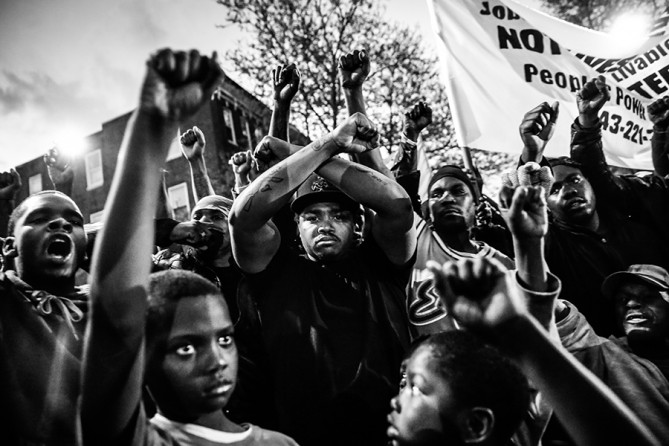
The night of riots in Baltimore stood in contrast to an earlier protest Angerer documented on April 22, where he photographed young men with their fists in the air, children joining them in the crowd, and framing the issue in a multi-generational way. Angerer described that night as entirely peaceful, as protestors marched to the police station outside of the Sandtown neighborhood. They were eventually told to leave, but stood in defiance before they did, in front of media cameras and the police station.
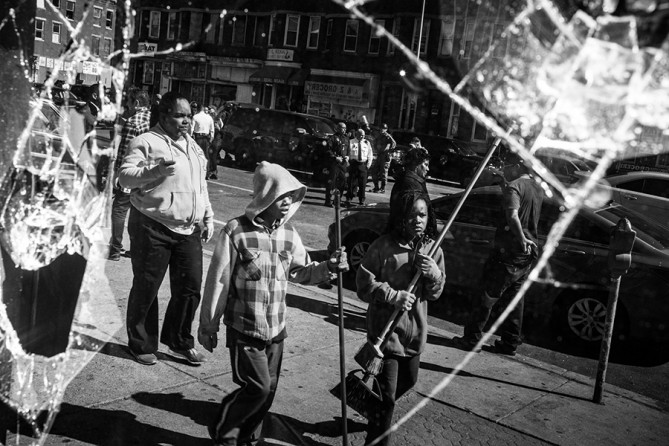
Both Somodevilla and Angerer said there was a deep feeling of pride within the community, illustrated in Burton’s frame of children, seen in the reflection of a partially destroyed window, carrying brooms to assist with cleanup efforts. This image stands out among many photos of the city being pieced back together -- a time of shock, mourning, activism and hope.
Somodevilla said that throughout the ordeal, protestors knew they had a national, if not international, spotlight, and were grateful that people outside the city would finally be made aware of the problems they faced. Despite a multitude of challenges, four photographers did outstanding work to tell this story in a compelling way, for the world to see. For their honest, accurate and human coverage of the Baltimore protests, Getty Images nominates Chip Somodevilla, Drew Angerer, Andrew Burton and Patrick Smith for the 2016 Pulitzer Prize for Breaking News Photography.
Nominated Work
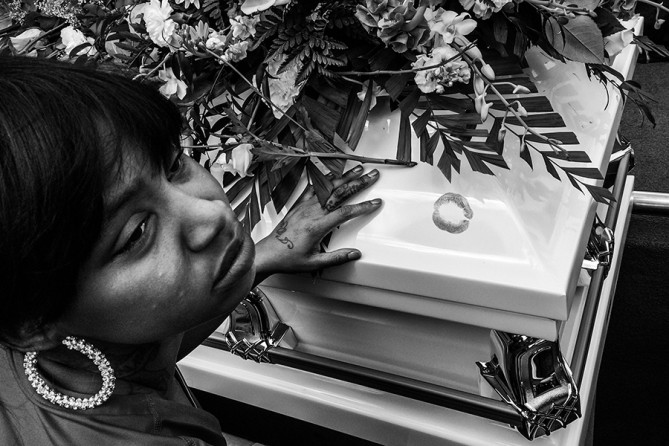
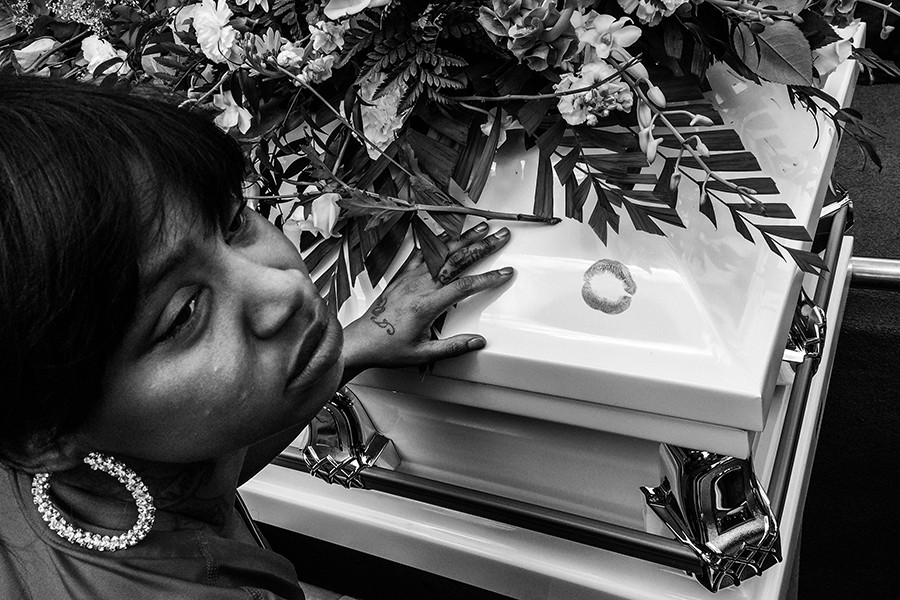
A young woman leaves a lipstick print after kissing Freddie Gray's casket before it is lowered into the ground at Woodlawn Cemetery in Baltimore, Maryland. Gray, 25, was arrested for possessing a switch blade knife April 12 outside the Gilmor Homes housing project on Baltimore's west side. According to his attorney, Gray died a week later in the hospital from a severe spinal cord injury he received while in police custody (Chip Somodevilla, Getty Images - April 27, 2015).
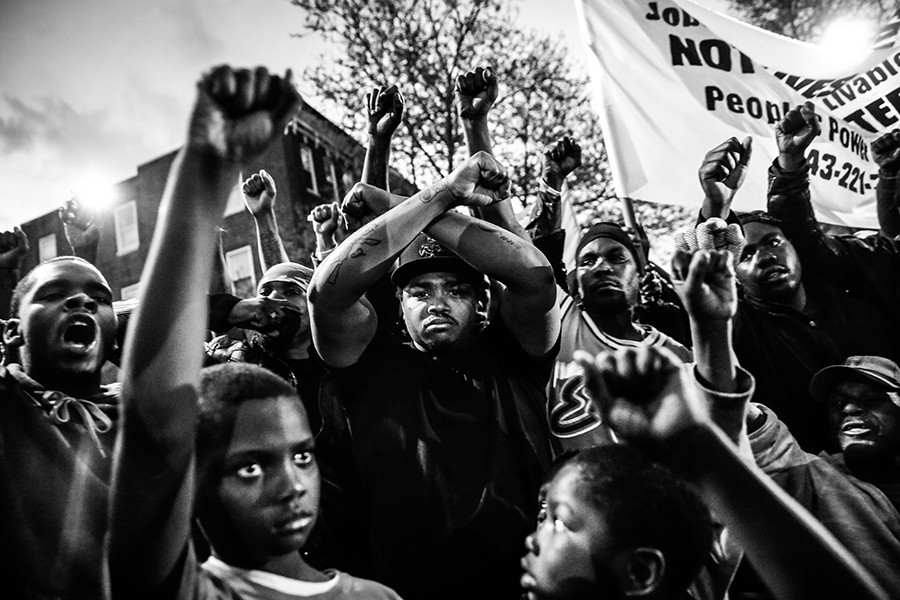
Protestors participate in a vigil for Freddie Gray down the street from the Baltimore Police Department's Western District police station in Baltimore, Maryland. Gray, 25, died from spinal injuries on April 19, one week after being taken into police custody (Drew Angerer, Getty Images – April 21, 2015).
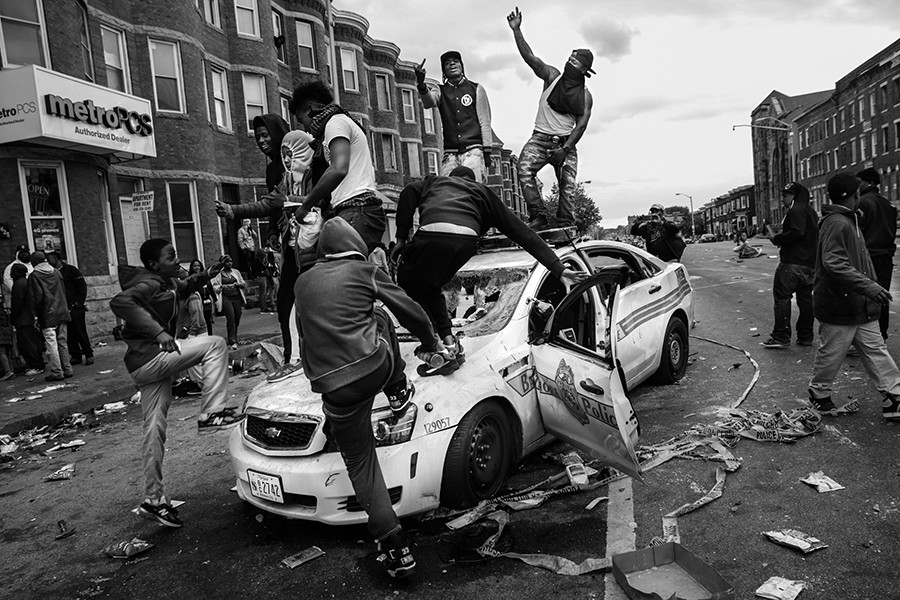
Demonstrators climb on a destroyed Baltimore Police car in the street near the corner of Pennsylvania and North avenues during violent protests following the funeral of Freddie Gray in Baltimore, Maryland. Gray, 25, who was arrested for possessing a switch blade knife April 12 outside the Gilmor Homes housing project on Baltimore's west side. According to his attorney, Gray died a week later in the hospital from a severe spinal cord injury he received while in police custody (Chip Somodevilla, Getty Images - April 27, 2015).
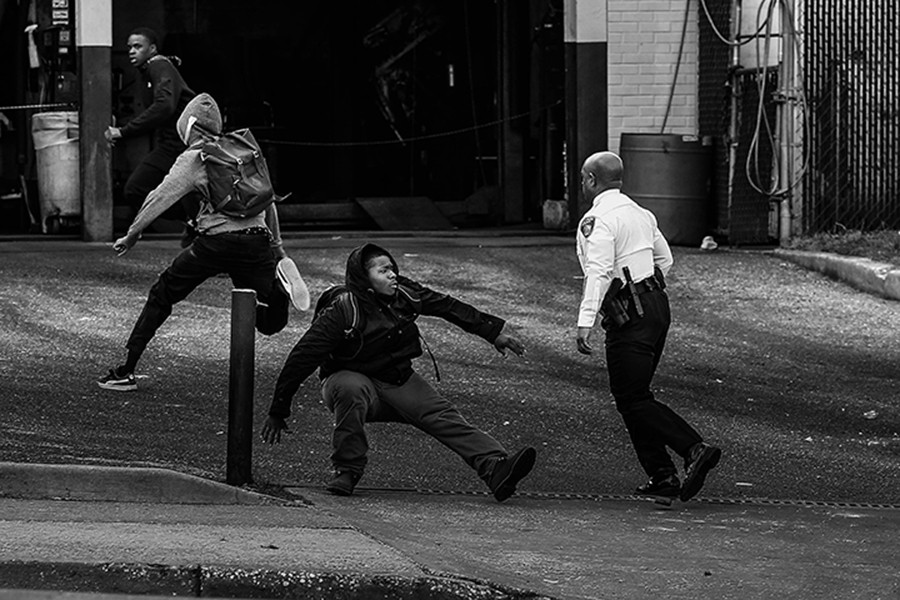
Baltimore Police Commissioner Anthony Batts chases away protestors in a parking lot on Reisterstown Road near Mowdamin Mall in Baltimore, Maryland. The funeral service for Freddie Gray, who died last week while in Baltimore Police custody, was held on Monday morning (Drew Angerer, Getty Images - April 27, 2015).
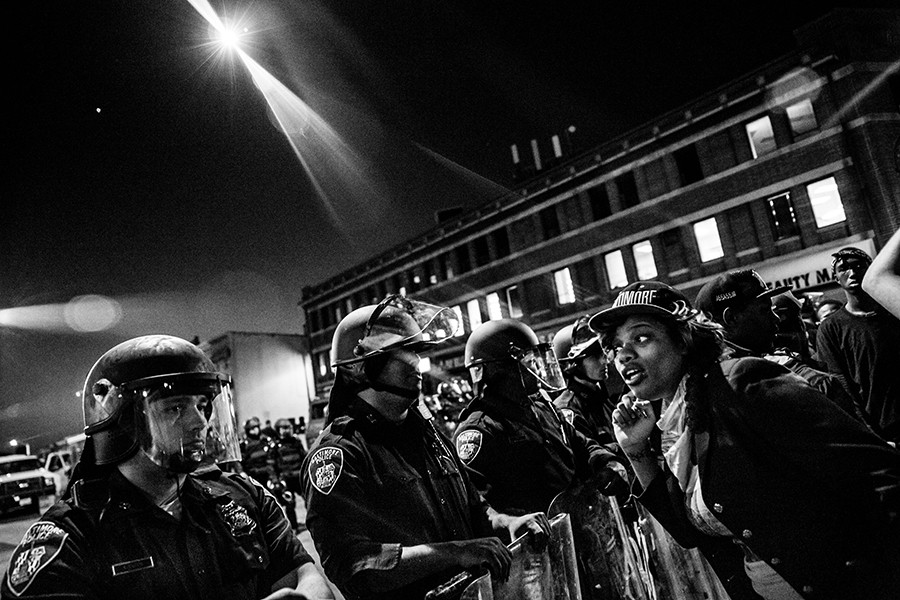
A helicopter with a spot light watches over police and protesters before a mandatory, city-wide curfew of 10 p.m. near the CVS pharmacy that was set on fire yesterday during rioting after the funeral of Freddie Gray in Baltimore, Maryland. Gray, 25, was arrested for possessing a switch blade knife April 12 outside the Gilmor Houses housing project on Baltimore's west side. According to his attorney, Gray died a week later in the hospital from a severe spinal cord injury he received while in police custody (Andrew Burton, Getty Images - April 28, 2015).
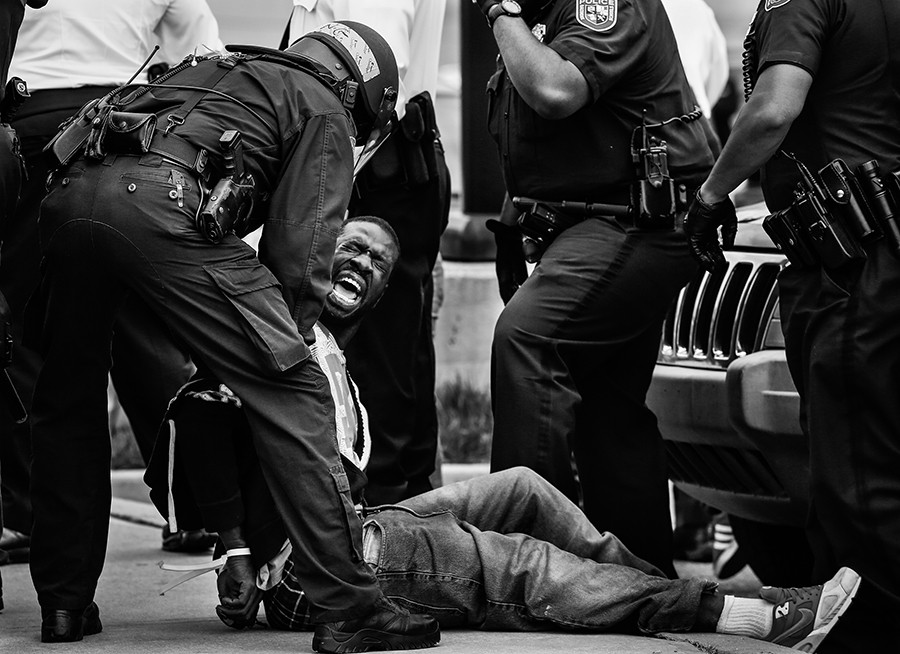
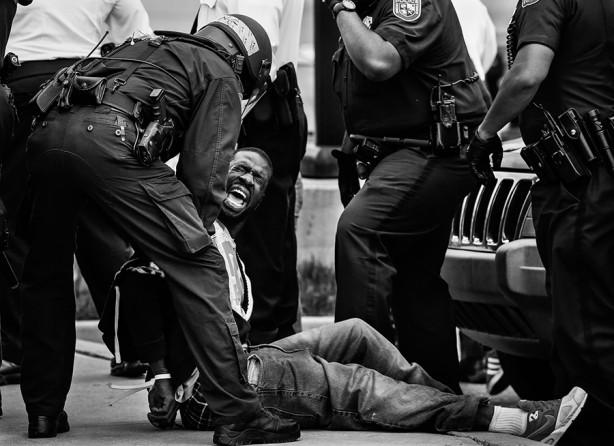
Baltimore Police officers arrest a man near Mowdamin Mall in Baltimore, Maryland. The funeral service for Freddie Gray, who died last week while in Baltimore Police custody, was held on Monday morning (Drew Angerer, Getty Images - April 27, 2015).
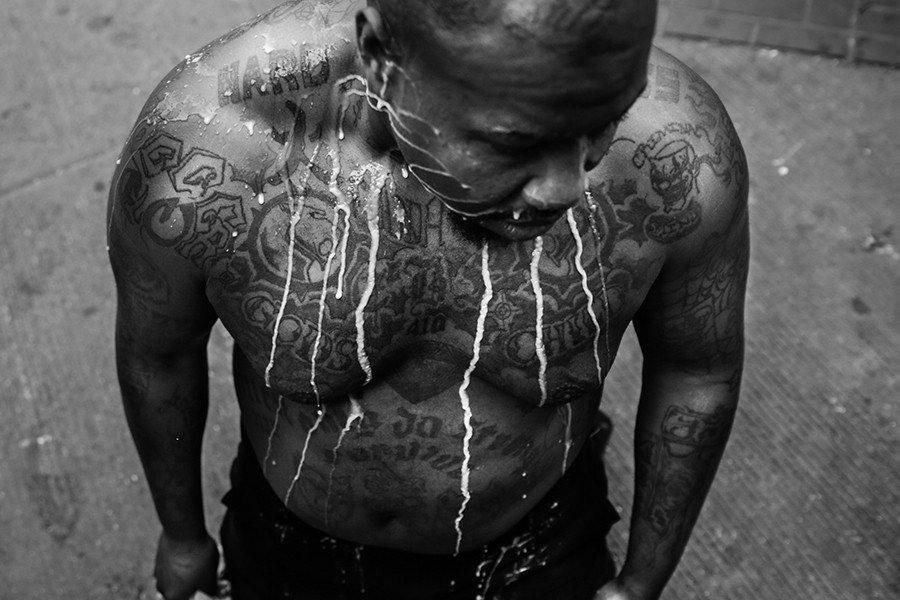
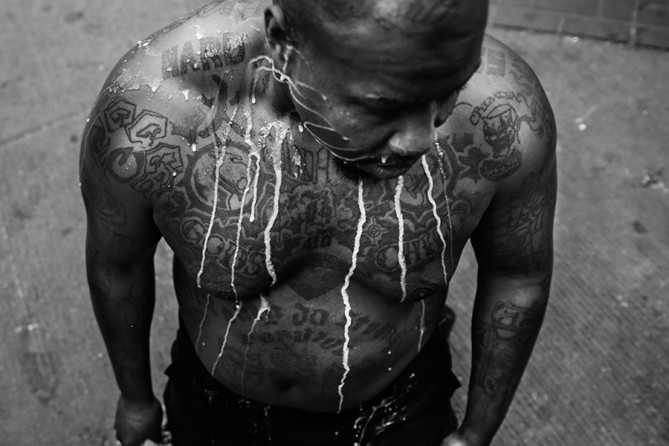
A mixture of milk and water rolls down a man's chest after he was pepper sprayed by the Baltimore Police during violent protests following the funeral of Freddie Gray in Baltimore, Maryland. Gray, 25, who was arrested for possessing a switch blade knife April 12 outside the Gilmor Homes housing project on Baltimore's west side. According to his attorney, Gray died a week later in the hospital from a severe spinal cord injury he received while in police custody (Chip Somodevilla, Getty Images - April 27, 2015).
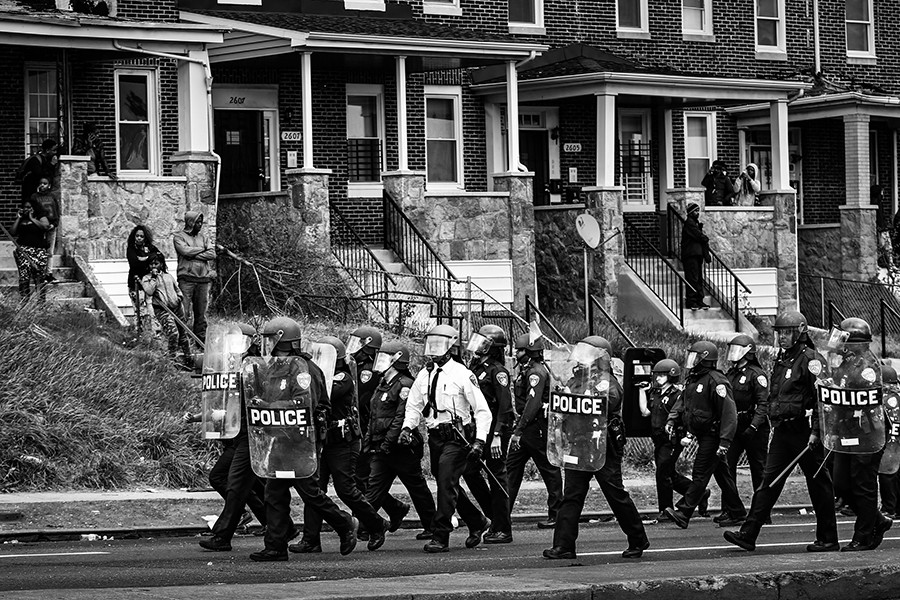
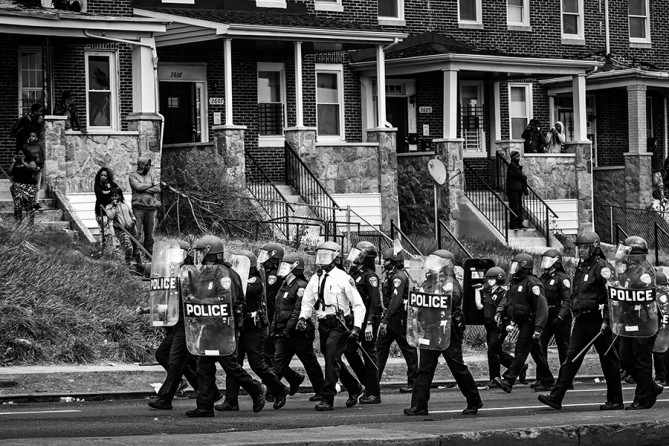
Baltimore Police officers walk in formation on Reisterstown Road near Mowdamin Mall in Baltimore, Maryland. The funeral service for Freddie Gray, who died last week while in Baltimore Police custody, was held on Monday morning (Drew Angerer, Getty Images - April 27, 2015).
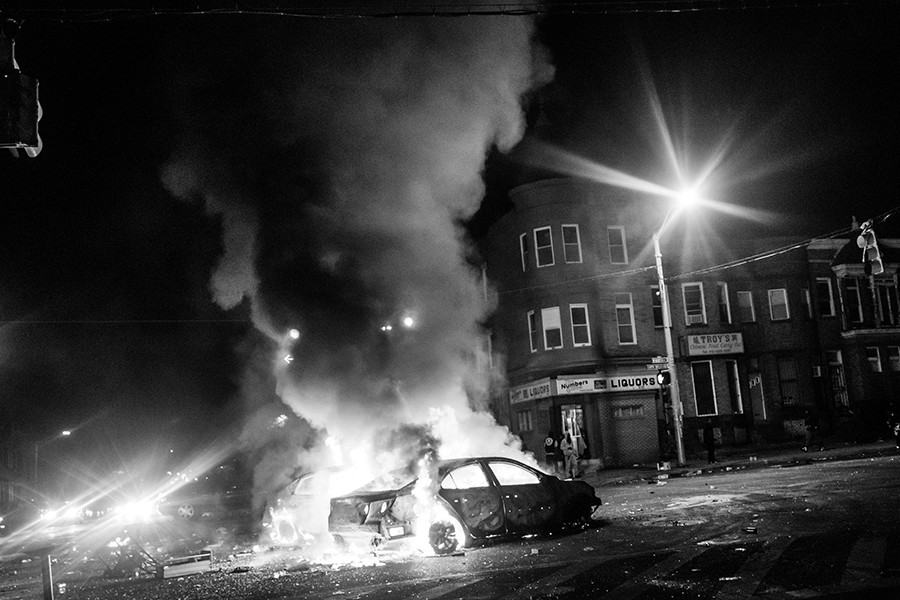
Two cars burn in the middle of an intersection at New Shiloh Baptist Church in Baltimore, Maryland. Riots have erupted in Baltimore following the funeral service for Freddie Gray, who died last week while in Baltimore Police custody (Andrew Burton, Getty Images - April 27, 2015).
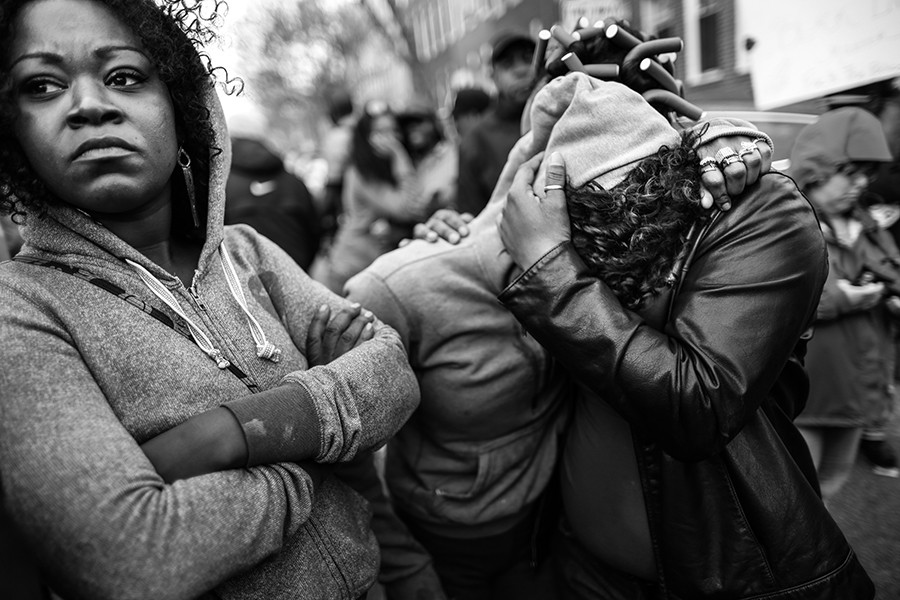
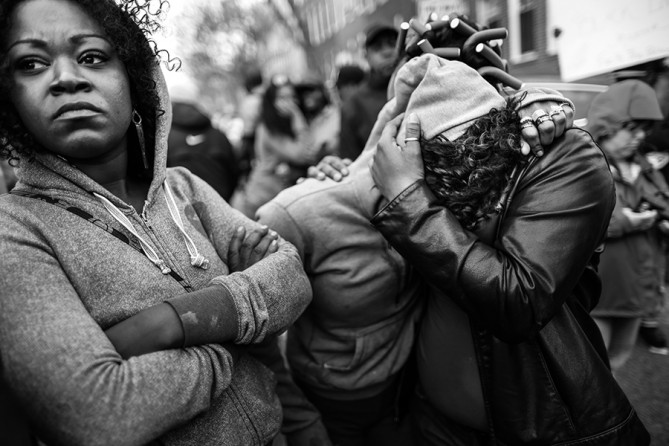
Women comfort each other during a protest against police brutality and the death of Freddie Gray outside the Baltimore Police Western District station in Baltimore, Maryland. Gray, 25, was arrested for possessing a switch blade knife April 12 outside the Gilmor Homes housing project on Baltimore's west side. According to his attorney, Gray died a week later in the hospital from a severe spinal cord injury he received while in police custody (Chip Somodevilla, Getty Images - April 22, 2015).
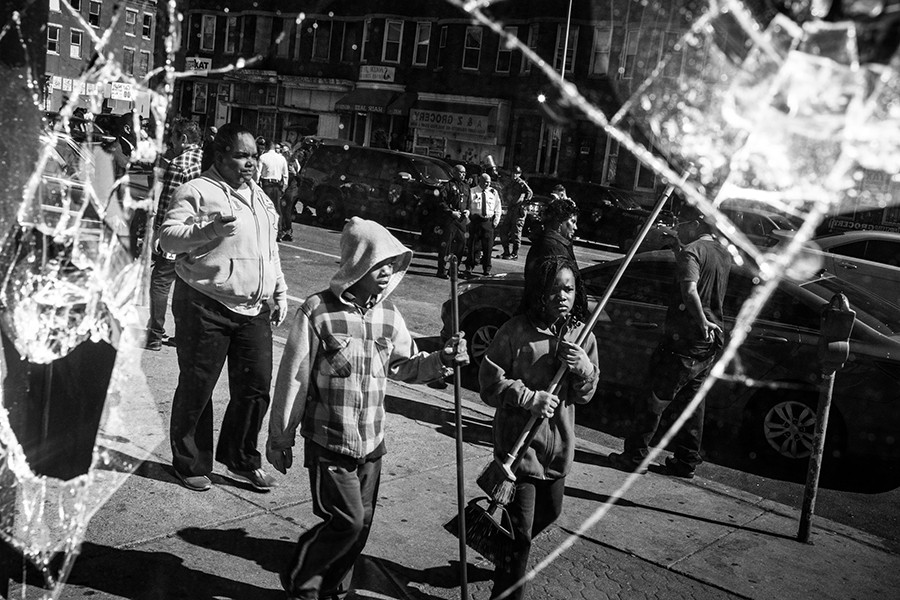
People helping to clean up debris caused by rioting yesterday after the funeral of Freddie Gray are seen in the reflection of a partially destroyed window in Baltimore, Maryland. Gray, 25, was arrested for possessing a switch blade knife April 12 outside the Gilmor Houses housing project on Baltimore's west side. According to his attorney, Gray died a week later in the hospital from a severe spinal cord injury he received while in police custody (Andrew Burton, Getty Images - April 28, 2015).
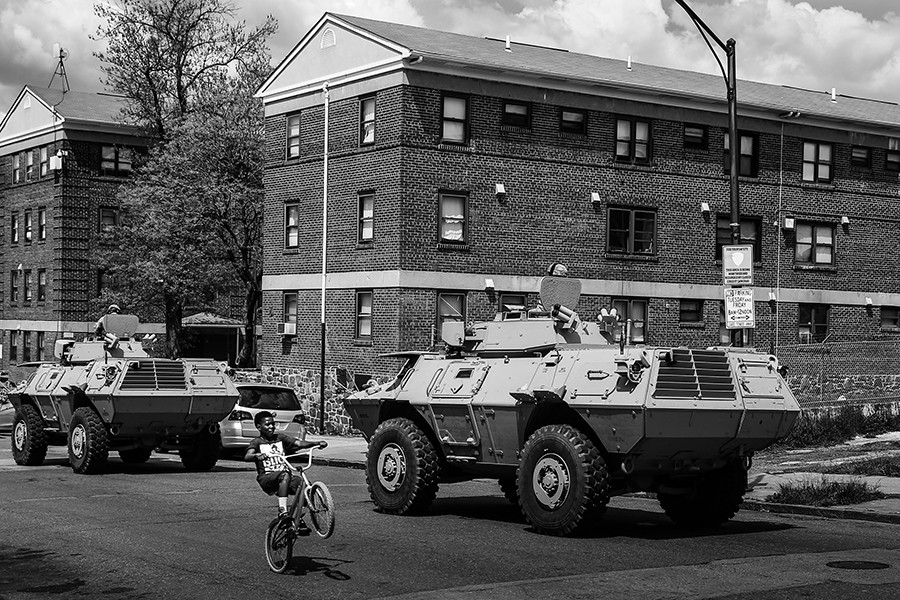
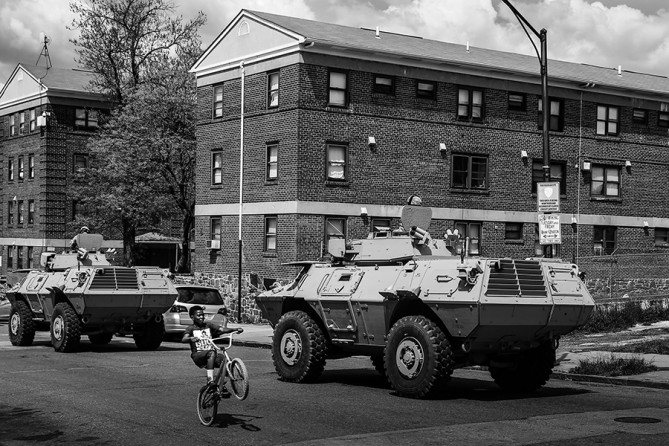
On the street a day after Baltimore authorities released a report on the death of Freddie Gray in Baltimore, Maryland. Marilyn Mosby, Baltimore City state's attorney, ruled the death of Freddie Gray a homicide and that criminal charges will be filed on six Baltimore City Police officers. Gray, 25, was arrested for possessing a switch blade knife April 12 outside the Gilmor Houses housing project on Baltimore's west side. According to his attorney, Gray died a week later in the hospital from a severe spinal cord injury he received while in police custody (Patrick Smith, Getty Images - May 2, 2015).