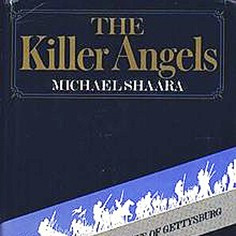
Having read this book, ‘I feel that I understand war itself’
It took a while, but Michael Shaara found his subject – and his A game.
It took a while, but Michael Shaara found his subject – and his A game.
Read Rosenthal’s own story about his picture of six U.S. Marines raising the American flag on Mount Suribachi — perhaps the best-known Pulitzer Prize-winning photograph.
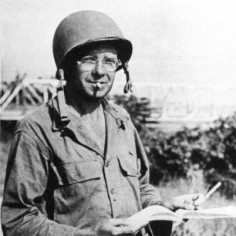
The New York Herald Tribune reporter covered the dropping of the atomic bomb on Hiroshima — and went on to cover Korea and Vietnam as well
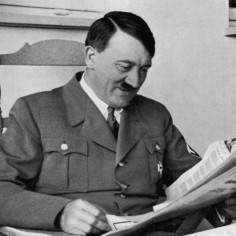
The biggest running international story of the 1930s was the rise to power of Adolf Hitler and his Nazi Party. Today we share the work of four reporters who won Pulitzer Prizes for covering this story.
Some of the details may sound quaint today, but the story conveys the chilling disregard for human life that set the tone for the century to come.
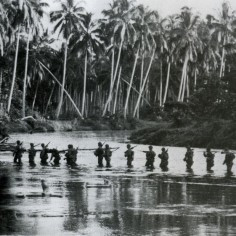
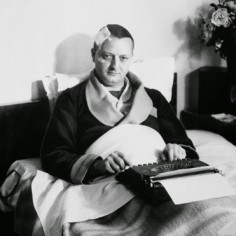
As the United States observes Memorial Day, revisit New York Times correspondent Hanson W. Baldwin's Pulitzer-winning reporting on key World War II battles, including Guadalcanal.
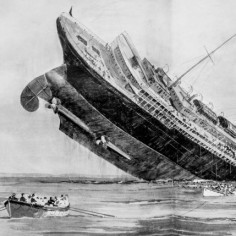
The work that won the New York Tribune the first Pulitzer Prize in editorial writing was published in 1915. Writing on the anniversary of the sinking of the Lusitania, Frank H. Simonds described the 'wanton murder' of 1,198 passengers — including 128 Americans.
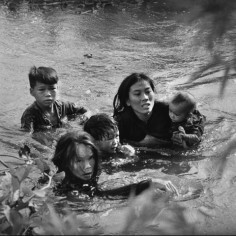
Years before the U.S. pulled out of Vietnam, Robert Lasch of the St. Louis Post-Dispatch wrote about the risks of keeping troops on the ground, and the policy implications of leaving.
Jan. 10, 1942: An Associated Press reporter flees a sinking ship during a World War II sea battle on the Mediterranean, and lives to tell the harrowing tale