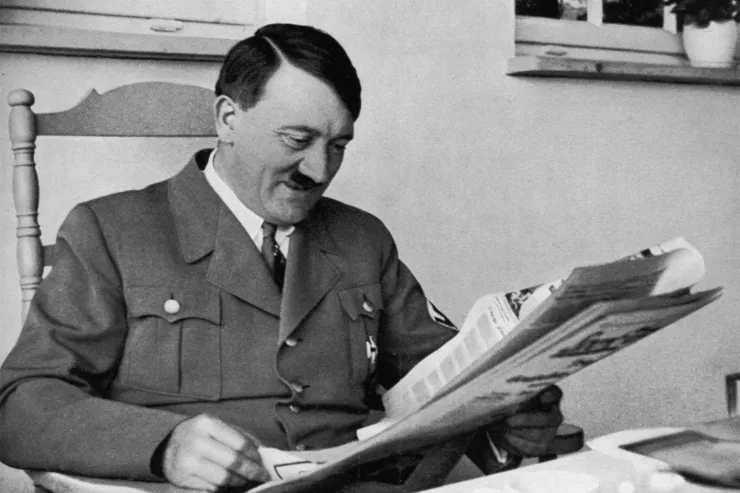
The biggest running international story of the 1930s was the rise to power of Adolf Hitler and his Nazi Party. Today we share the work of four reporters who won Pulitzer Prizes in Correspondence (international reporting) for covering this story.
The 1933 winner was Edgar A. Mowrer of the Chicago Daily News. He is represented here by a story from his winning entry on the German election of 1932, Hitler’s springboard to power. The year Mowrer won, he was forced to leave Berlin after the Nazi leadership claimed it could not protect him from the wrath of the public.
Frederick T. Birchall of The New York Times won the Pulitzer the following year for stories that included his account of the arson that destroyed the Reichstag, the German legislative hall. Birchall was a native of England who ran the Times’ European news service.
In 1921, Anne O’Hare McCormick, who traveled to Europe often with her businessman husband, offered to contribute freelance pieces to The New York Times during these trips. She wound up covering the rise of Mussolini. In 1936, by then on the Times staff, McCormick wrote about the militarization of Germany. Her stories won the 1937 Pulitzer.
Louis P. Lochner, a pacifist early in life, was the longtime Berlin bureau chief of The Associated Press. After winning the 1939 Pulitzer Prize for stories on the Nazi Party leadership during the run-up to war, he accompanied German troops as an AP reporter during the invasions of Poland, The Netherlands, Belgium and France. Germany and the United States declared war on each other four days after Pearl Harbor, and the Nazis arrested Lochner. He served five months in a Nazi prison before being exchanged.
Presented together with brief background where needed, these four stories give a sense in real time of the information available to Americans about the growing crisis in Europe. They are, to use Philip Graham’s famous phrase, the first rough draft of history.
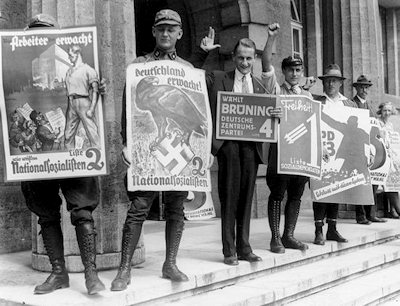
German campaign posters
Germans vote tomorrow on fate of nation
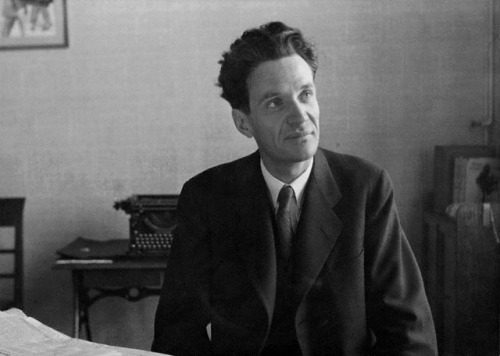
Edgar Mowrer
By EDGAR A. MOWRER, Chicago Daily News, July 30, 1932
Will Adolf Hitler, national socialist hierarch, succeed in becoming dictator of Germany?
Will the present republic be maintained, at least in its present battered contours, or will the pilgrimage into another empire be undertaken by this great, but badly rattled nation?
Will the present group of daring conservative leaders finally succeed in taming the cohorts of Hitlerism and persuade them to accept the status quo?
These are some of the issues which tomorrow’s German election will present to the voters. This is no longer a battle between the right and left. The left has already lost and, partly by ballot, partly by bayonets and partly by the will of President Paul von Hindenburg, has been ousted headlong from power.
The choice is between what might be termed the legitimatist right of Chancellor Franz von Papen and his Reichswehr minister, Maj.-Gen. Kurt von Schleicher, and the radical or Bonapartist right of Adolf Hitler.
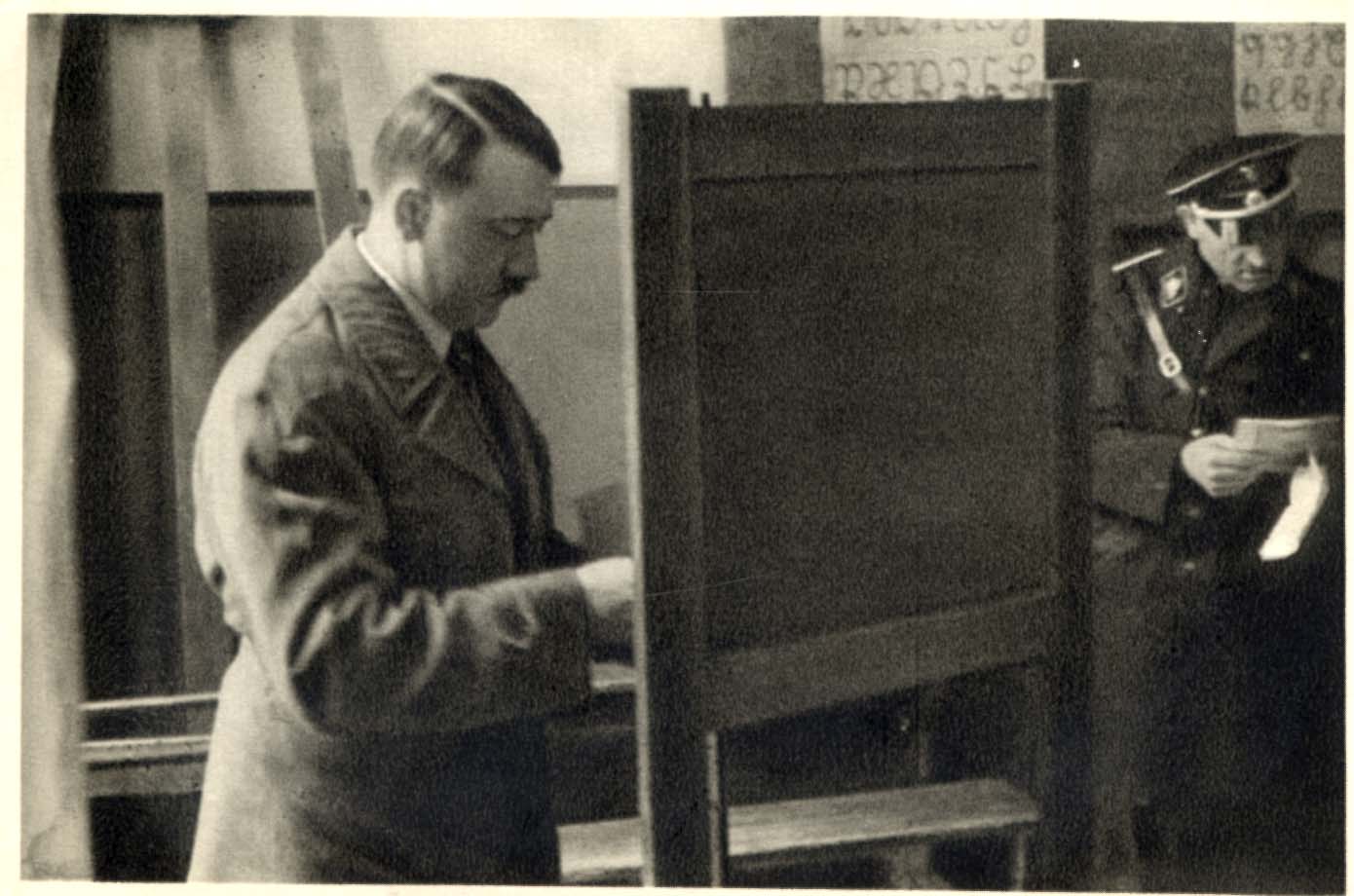
Hitler votes.
Von Papen is a conservative, but being a westerner he wants to maintain capitalism and restore international business and keep Germany turned toward the occident. His foreign policy would be comparatively moderate.
Hitler wishes to install himself as a dictator like Premier Benito Mussolini in Italy — “all power to Adolf Hitler” is the party slogan at this election — and create another empire based on his own mystical knowledge of the superiority of the Germans and the Aryan race.
The Hitlerite program is a plan for dividing women into four classes, of which the first should bear heroes, the second would be for also-rans, the third might marry but bear no children and the fourth would neither marry nor bear children. In this Hitlerite state Jews and “other foreigners” would be deprived of civic rights.
Aside from these fascist theories, Hitler more or less agrees with von Papen. But Hitler wants power in order to give from 300,000 to 400,000 jobs to his followers by the simple expedient of ousting the incumbents.
Moreover, Hitler’s followers are all good burghers in the party — the youths who have never managed to secure jobs in this Germany at all, the down-at-the-heel middle class, the wild syndicalists and former officers are all united by their hatred of capitalism.
Von Papen and his friends and what is called “big business” fear that Hitler with complete power might have to yield to the half-fascist, half-socialist tendencies of the masses. Therefore, they want Hitler to secure part of the power, but not too much. They believe they have just about realized their desire.
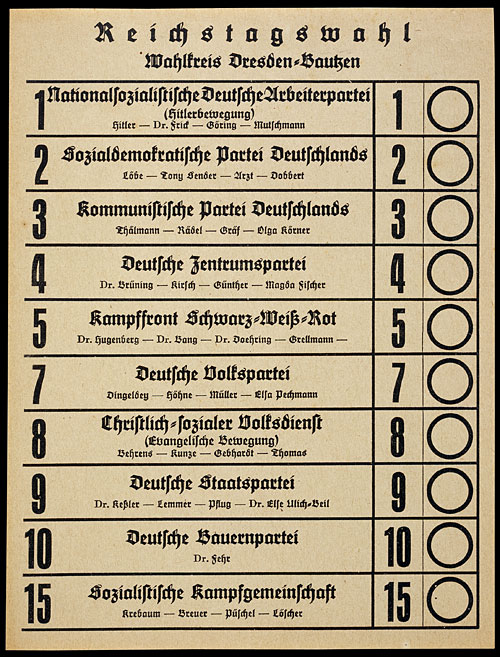
A 1932 ballot
General prognostics are that Hitler will not obtain anything like a complete majority. To rule he will need the support of the German nationalists, who are the secret allies of von Papen, and possibly of the Catholic center party as well.
But Hitler in a coalition would be really powerless to make serious trouble. Hitler might refuse to enter a coalition. But in this case Von Papen and Von Schleicher would by hook or crook continue to rule and wait and pray for the day when world recovery from the depression enables them to get Hitler’s followers back to work — and the “third empire” will be over.
The question is whether they will succeed. Hitler is not an intellectual genius, but he has a formidable instinct for politics. It is just possible that he will outmaneuver the crafty Von Schleicher and somehow take complete control. But that is not likely.
Nonetheless, the Hitlerites have dominated the electoral campaign. Hitler’s airplane trip through the country has been a masterpiece of political energy. His mass meetings, his greetings, badges, salute, banners, armed men have been copied by all the other parties.
Even the somewhat decrepit social democrats have suddenly awakened and, under the leadership of younger men, developed a fairly successful imitation of Hitler. Hitler’s followers raise their hand in Roman fashion and shout “Heil Hitler.” The socialists raise a clenched fist and shout “Freedom!”
Against Hitler’s storm battalions the left pits the “iron front” organization. The Catholics have organized a gang of huskies called the “people’s front.” The Bavarians have a lusty “Bavarian defense organization.”
All these groups are reviving a wave of militarism by the plentiful use of military bands, flags, parades and discipline marches — all good Prussian stuff.
The German government has declared that the ten days following the election is to be a “truce” period. During this time street fighting and stabbing, blackjacking and shooting of political opponents will be illegal.
General belief is that the election will be passionately contested, but comparatively poor in casualties.
(Results: The Nazis drew 13.7 million votes, far outdistancing all other parties. Their representation in the 608-seat Reichstag more than doubled to 230. Hitler seized national power six months later. During the even more violent campaign of early 1933 the Reichstag burned.)
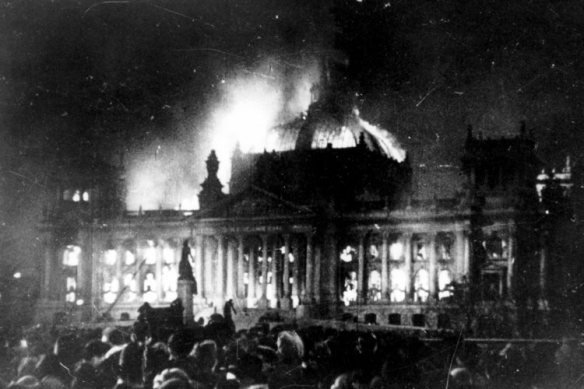
The 1933 fire at the Reichstag.
Fire wrecks Reichstag; 100 Red members ordered seized
By FREDERICK T. BIRCHALL, The New York Times, February 28, 1933
An attempt was made last night to burn the Reichstag building and it almost succeeded.
The great glass-ceilinged chamber in which parliamentary sessions are held was completely burned out, the cupola surmounting the building directly above the glass ceiling of the chamber was burned through and rendered so insecure that it appeared early this morning it might fall at any moment and the velvet-carpeted stairways up which firemen ran their hose lines were discolored by flame and smoke and soaked with water. The library and other rooms in the large building are, however, intact.
The fire was attributed to Communists and the police have in custody a man who, they declare, has confessed he is a Red of Dutch extraction and admits setting fire to many parts of the great chamber. It is also asserted he had confederates who escaped.
Why Communists should desire to burn down the empty Reichstag building on the eve of an election that their opponents declare to be unimportant in that it will not affect their retention of power is one of the mysteries of the present situation. The sole theory that seems plausible is that the perpetrators hoped that the fire would be attributed to the National Socialists and that the odium of it will fall on the party.
A session of the Communist party was held in their committee room in the Reichstag yesterday afternoon and this is regarded as having some significance in the light of the later event.
(Hermann Wilhelm Goring, Minister Without Portfolio, ordered the arrest of the 100 Communist members of the Reichstag early this morning, according to an Associated Press dispatch.)
The fire was discovered soon after 9 o’clock when a patrolling policeman, smelling smoke, hurried toward the parliamentary chamber. He met a group of men who failed to halt on his demand and fired on them but missed. The last fugitive the policeman succeeded in seizing. He is the alleged Communist now in custody. His name is given as van der Lubbe. It is asserted he refuses to reply to questions — he only grins.
Other policemen running to the help of their comrade found the great hall afire in a dozen places, from several of which the flames were making rapid headway. Rugs and chairs had been piled together over bundles of rags and excelsior, and the whole set ablaze.
An alarm was promptly sent, but the firemen were some time in arriving, and meantime the flames spread rapidly despite efforts of the police, who were handicapped by intense smoke. The chamber is paneled in wood, and the benches, chairs, and desks are of wood thirty years old and dry as tinder. These readily caught fire and the blaze, extending to the wooden galleries, soon made the place a veritable furnace.
The glass ceiling quickly crashed down and flames spouted through the gilded cupola bearing the imperial crown. By 10:30 the whole structure seemed doomed. What saved it was the extent of ground it covers, enabling the firemen to isolate the burning chamber and gradually subdue the fire.
The first effort was to save the library, containing thousands of irreplaceable parliamentary documents, and the reading room, with separate valuable records. In this the firemen were wholly successful. Under their united efforts the flames gradually died, and by 11 o’clock only a few smoldering embers in the wrecked cupola indicated to the crowd outside that there had been a fire at all. All approaches to the building were entirely cut off.Until then the assembling fire engines and the flames spouting from the cupola had spread alarm throughout the near-by section of Berlin and at least 10,000 people had crowded behind the police lines. Chancellor Adolf Hitler, Vice Chancellor Franz von Papen and Hermann Wilhelm Goring, Minister Without Portfolio, rushed by motor to the Reichstag and hurriedly conferred, although nothing could be done except await the outcome of the firemen’s efforts and isolate the Reichstag so that any miscreant who might have been unable to escape and been hiding in some recess of the huge building would be trapped there.
Early this morning nobody but policeman was permitted to approach within a block of the building. The damage is impossible to estimate in terms of money. What is important is that the new Reichstag when it is elected will not be able to meet in its own building and probably will be forced to use the Prussian Diet Building, which is unsuitable for so large a body. The Diet Building also is being patrolled and searched.
The government’s activities aimed at silencing all opposition and rendering powerless all foes meantime has taken on an increased pace. If the Communists desired to protest their innocence in the fire they have no means for doing so. Their newspapers have been suppressed, their headquarters closed, their meetings prohibited and they are forbidden to collect money.
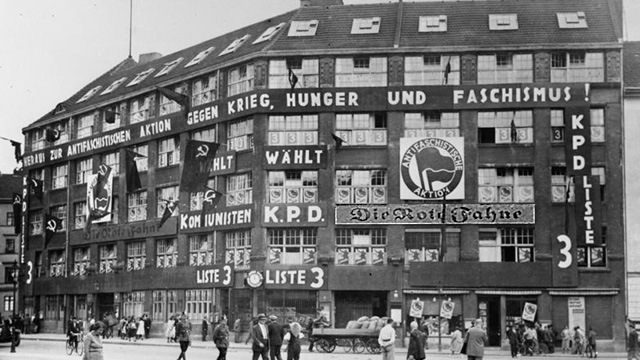
Die Rote Fahne's office at Liebknecht House
Die Rote Fahne, the chief Communist newspaper, has been suspended until April 15. When a previous suspension order expired Sunday, its printing plant in Liebknecht House having meantime been confiscated, it printed an issue in Leipzig and attempted to bring copies to Berlin by truck. The truck was seized by the police and the new suspension order was imposed.
Yesterday other suppressions included all Socialist papers in East Prussia, the Socialist Post in Munich and the Jungdeutsche, organ of the Young German Order, an organization far from “Marxist,” but suspected by the Right of “liberalism.” Under new regulations newspapers in reporting suspensions are forbidden to specify the grounds for suppression or cite the offending passages.
Last night the Socialists attempted to hold a mass meeting at the Sportpalast in commemoration of the fiftieth anniversary of the death of Karl Marx. The meeting was suppressed by the police before it got fairly under way and Artur Crispien, a member of the Reichstag, who had been booked as the chief speaker, was not permitted to open his mouth. Friedrich Stampfer, editor of Volwarts, who stepped into the breach, was muzzled when he essayed to eulogize Marx.
The Cabinet approved last night the draft of a law imposing the death penalty for “treasonous activities” and high treason so far as they involve betrayal of military secrets. The same statute will also be directed against “subversive activities” especially as regard the circulation of false news abroad. The latter provision is aimed at the recent practice of the government’s opponents whereby news items were supplied to the foreign press then cabled back and republished here as privileged matter coming from abroad.
Under this ruling Germans who supply proscribed news to foreign correspondents are liable to penitentiary sentences under charges of carrying on “subversive activities.” As revealed last night the law as drafted also applies to the propagation and dissemination abroad of such news, thus indirectly placing correspondents themselves under penalty.
It is announced that the Cabinet is preparing a pre-election proclamation in the nature of a politician recapitulation of events since 1918 covering the records of the successive governments.
The Cabinet furthermore has adopted a draft decree authorizing reduction of the salaries of leading officials of business concerns that are subsidized by public funds. This is in accord with the demand of the Nazis that officials of private concerns should not be treated better than civil servants so far as salaries are concerned.
(Results: Held five days later, the election further consolidated the power of Hitler and his party. The repression hinted at in this story was only the beginning. Marinus van der Lubbe was tried and convicted of arson and attempting to overthrow the government. His supposed accomplices, arrested later, were acquitted. Van der Lubbe was beheaded in 1934. Who actually started the Reichstag fire remains uncertain. Many historians believe the Nazis themselves did it to create a pretext for cracking down on their opponents.)
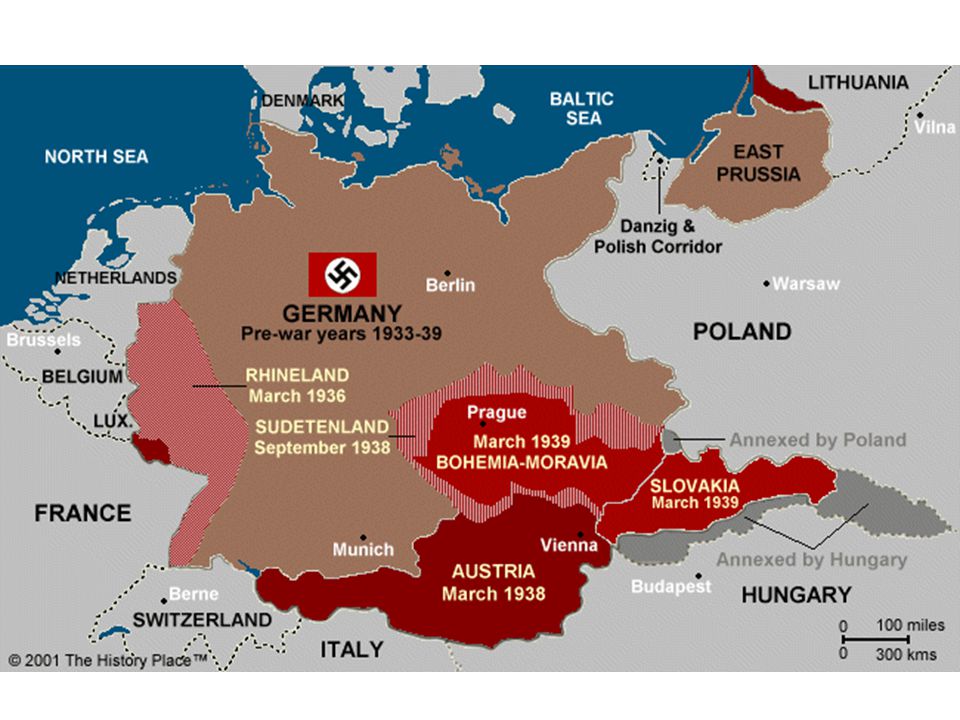
Map showing the German army's move into the Rhineland in 1936
New war fears agitate Belgians
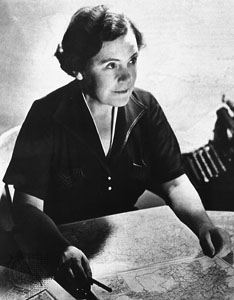
Anne O'Hare McCormick
By ANNE O'HARE McCORMICK, The New York Times, March 26, 1936
(Background: On March 7, the German army moved into the Rhineland, violating the Locarno pact and the Versailles Treaty, which the Germans had signed after their surrender in World War I. The German army occupied the entire 100-mile border with Belgium. Germany had invaded France through Belgium at the start of World War I. Reporter Anne O’Hare McCormick visited Belgium to gauge public reaction to the move and also reported on how Belgium’s allies might respond to the new German threat.)
Here is the frontier most profoundly shaken by the appearance of German troops in the Rhineland demilitarized zone. It is necessary to come to Belgium to realize how real to a people once invaded was the threat represented by Chancellor Adolf Hitler’s “symbolic” army. It is still real.
Within the last several days this correspondent followed the route taken by the invading armies in 1914 from the German border to where they were held up 10 days by the ring of forts encircling Liege. In the shadow of the monument commemorating that historic siege the people of the countryside are wondering with grim humor whether it will be spared to serve as memorial of the next war.
In one village a family was just returning to the house it had abandoned at the sight of German soldiers across the border. The family was one of many in this district, the stationmaster at Verviers reported, that packed bags and fled at the first alarm. They were those who remembered and who were determined not to be trapped again.
Nowhere was Hitler’s reply to the Locarno powers awaited more anxiously than in Belgium. As citizens of a country whose fate depends on the policies and changing moods of powerful neighbors, Belgians quote frequently these days a proverb learned in the Congo: “When elephants fight it is the grass that suffers.”
For Belgium the London agreement has one positive result of vital importance. The promise of British assistance in case of unprovoked attack seems to this country to guarantee security better than the Locarno pact. It almost compensated for the violation of the demilitarized zone, which here had been long expected and in itself was not shocking.
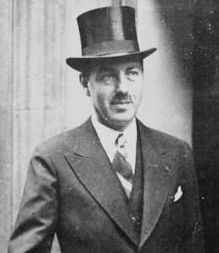
Paul von Zeeland
Explaining the London agreement to the Chamber of Deputies, Premier Paul von Zeeland emphasized the point that the British Government for the first time in history had defined in advance the course it would take in a given emergency. The Belgians believe this unprecedented step was due to the fact that Belgium had given Germany no excuse to break the Locarno pact.
The present situation throws a spotlight on the controversy on national defense that has been dividing Belgium ever since the French began fortifying the Maginot line. The route from the frontier followed by the Germans in 1914 illustrates Belgium’s problem, but does not answer the two questions at the moment occupying the minds of the French and Belgian general staffs.
One question is: Will Belgium again be the route to France if Germany moves West? The second is: Will Belgium put up the same resistance now as in 1914?
One section of Belgian opinion holds the French should have continued the Maginot defense system behind the Franco-Belgian boundary. Francophiles, on the other hand, passionately oppose construction of a fortified wall between two countries irrevocably allied. Plans for a common defense line along the Belgian-German frontier encounter objections from those fearing that Belgium may be reduced thereby to a state of military vassalage under France.
The division of opinion is largely on racial lines between the Walloons, leaning to France, and the Flemings, favoring a policy of neutrality as rigid as that of Switzerland. The question is further complicated by a feeling among Belgians of all political shades that France has made dangerous mistakes in her policy toward Germany and that Belgium is tied like a kite-tail wherever French policy leads.
Recent events sharpen all these differences. They force this widely exposed country into the peacemaking role played so ably in London by Mr. van Zeeland. Seeing herself today as a door either to war or to peace, Belgium is more than ready to back any reasonable compromise with an old enemy. Popular opinion marches with Britain rather than France.
At the same time nobody doubts that if their territory is again invaded the Belgians will resist again to the end. This is amply proved by present defense measures.
Half of the regular army of 63,000 men is maintained on the frontier, both longer and more open than that of France. Railway bridges on the main Paris-Belgian line are mined. The twisting valley of the River Vesdre is dotted with steel cupolas covering machine guns. The slopes of the Ardennes are pierced by dugouts where hidden soldiers keep watch on the border day and night.
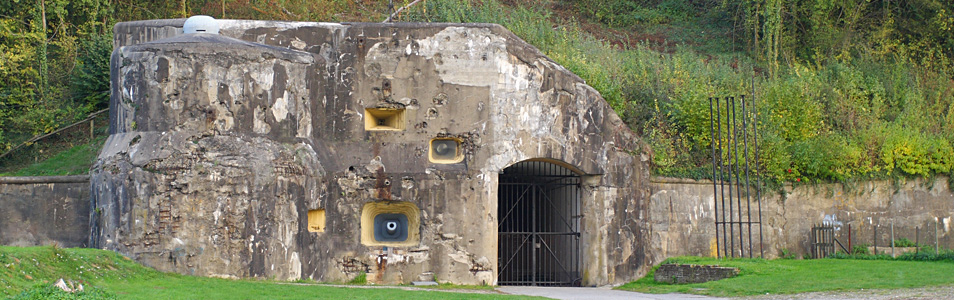
Eben-Emael fortress
The old forts at Liege, once thought impregnable, and terrifying even in ruin, are now graveyards, but three gigantic modern fortresses being completed at Eben, Esmael Batiche and Pepinster guard the approaches to this key city on the Meuse.
The peaceful face of the border is a mask. A traveler along its strategic roads today is always under the eyes of an invisible army and within range of loaded guns. As far as its limited strength and resources permit, the nation is prepared for the worst. Its citizens know too well, however, that Belgium is only a hazard to be blasted aside once a new sweep begins. Hence the zealousness of this countryside to take risks for a new deal in peace.
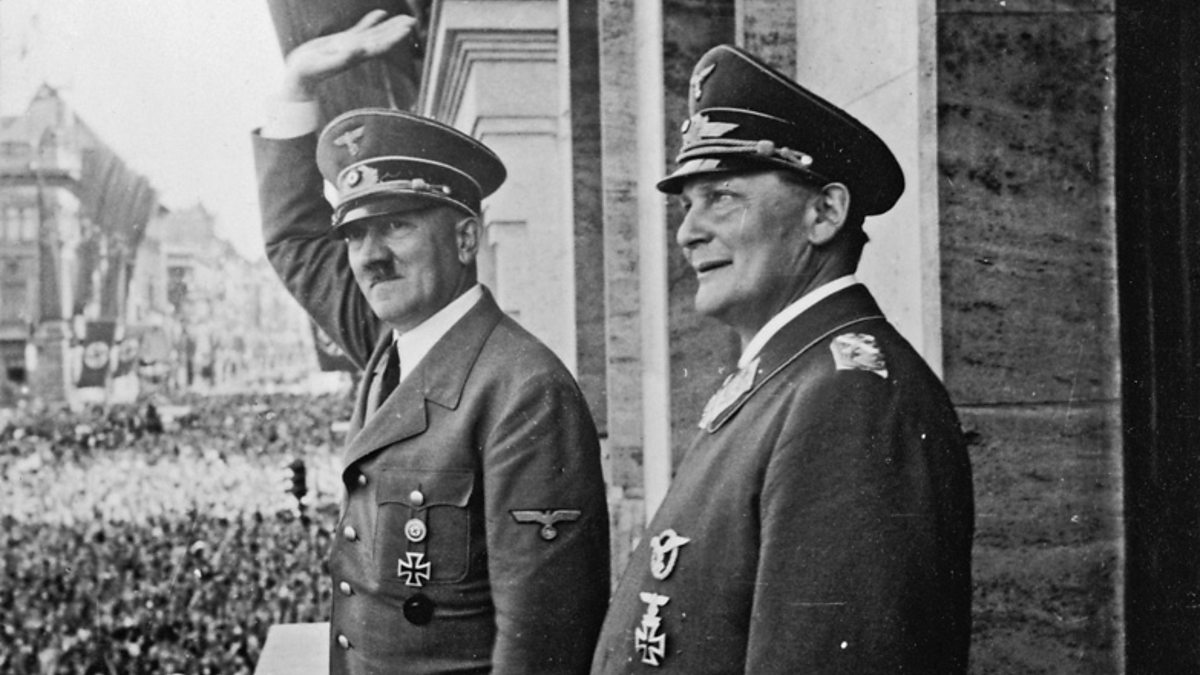
Hitler and Göring
Göring is still No. 2
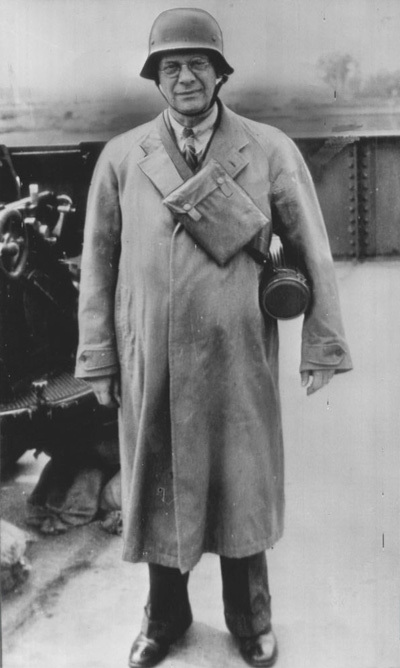
Louis P. Lochner
By LOUIS P. LOCHNER, The Associated Press, December 18, 1938
(Background: In Paris in early November 1938, Herschel Grynszpyn, a 17-year-old Jew, assassinated the German consular official Ernst Eduard vom Rath. The attack became a pretext for Kristallnacht, the Nazis’ coordinated attacks on German and Austrian Jews on Nov. 9 and 10. Reporting in the aftermath of these events, Lochner assessed how Kristallnacht had played out at the highest levels of Nazi leadership.)
For the first time since Adolf Hitler came into power in January 1933, the radicals in the Nazi movement have been able to put something over on Hermann Göring, pillar of the conservative section of the movement.
His signature has been affixed to the decrees of November 12 and 23 whereby German Jews collectively must pay a penalty of $400,000,000 for the murder of vom Rath at Paris by a young Polish Jew, and must repair, at their own expense, the damage done by hoodlums during the orgy of destruction of November 10.
More than that, he has set his name to the reason which was given for these punitive measures.
The Jew must himself pay for the damage to his property, it was said in the decree of November 12, because this damage was “occasioned by the indignation of the people over the incitement of international Jewry against National Socialist Germany.”
Those in the know assert that the doughy, heavy-set, square-jawed field marshal general had to play with the leftists because he was in danger of losing ground as Germany’s No. 2 man.
At a time when nobody else dared advise Hitler against going the whole limit in the Czecho-Slovak crisis during the portentous September days, Göring cautioned against making out-and-out war.
Apparently Göring received small thanks for thus siding with the moderates.
At any rate, the story is generally current in Berlin that Adolf Hitler, when the crisis was over, told his inner circle that only two men had stood unflinchingly behind him throughout in his determination to risk even war to gain his ends with reference to Czecho-Slovakia: Joachim von Ribbentrop, the Foreign Minister, and Heinrich Himmler, chief of the Gestapo or secret service.
Soon thereafter Göring made a public announcement that he was so busy with the four-year plan and its execution that he would not accept invitations to party rallies or social events this winter.
Some observers saw in this gesture a sign that the mighty lion of the movement was sulking in his den.
Others more correctly interpreted this to mean that Hermann Göring, as director of the general economy movement which the execution of the four-year plan involved, considered it a waste of energy that every party big-wig felt he must attend every rally, every demonstration and every appearance of some other top leader.
Göring next showed his independence by having his baby girl, Edda, christened November 4 by the Lutheran Reichsbishop Ludwig Müller, with Adolf Hitler as godfather.
The ideological leaders of the Nazi movement, headed by Alfred Rosenberg, have left no doubt but that the triumph of Nazism must also mean the abdication of Christianity. To them, Göring was not behaving according to Hoyle in giving a Christian baptism to his child.
The neo-pagans, who happen to coincide with the radicals of the Himmler, Ley and Goebbels stripe, were not slow in hitting back. A few days later the German newspaper reader was informed that Rudolf Hess, the Führer’s deputy, had been host during a ceremony of giving a Nordic name to his recently born child.
This ceremony, too, took place in Adolf Hitler’s presence. It was a non-Christian rite.
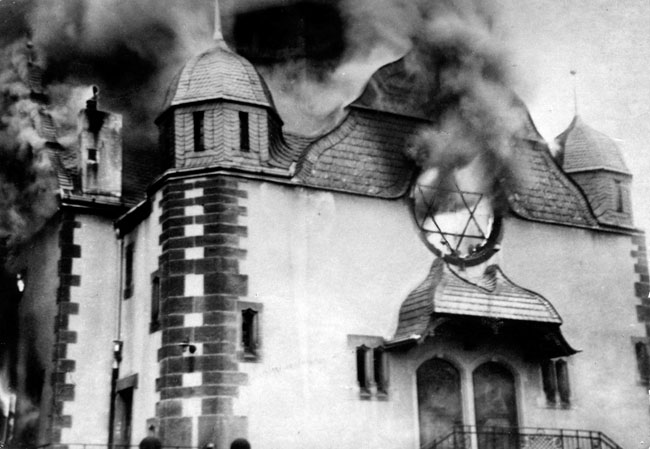
A synogogue set on fire
Then came the “spontaneous” anti-Jewish demonstrations of November 10 with their burning of synagogues, smashing of windows, demolition of furniture and furnishings, and pillaging of shops and even private homes.
Göring, according to reports, was furious.
He — the conservator of every bone, every used metal tube, every rag, every ounce of scrap iron — learned with pained surprise that costly bales of cloth were thrown into the streets and lighted; thousand of marks’ worth of chocolate dumped on the pavement and trampled upon; pottery, glassware and porcelain knocked to bits, and edibles pitched out of the grocery stores and destroyed.
The reports by those who during the ensuing weeks were charged with collecting the bones, tubes, etc., from the various households each week showed that people were no longer eager to save.
The collectors were met again and again with the words, “Why should we take the trouble to save when evidently there’s such a plenty of all necessities that you can afford to throw them on the streets?”
Moreover, the anti-Jewish action came just as Göring was trying to step up the export trade with a view to getting in more foreign exchange wherewith to pay for Germany’s gigantic program of rearmament and the consequent necessary importation of materials like cotton, copper, nickel, et. al.
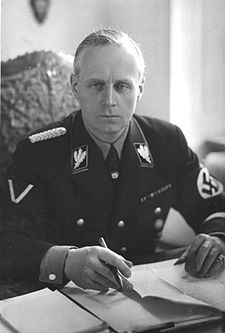
Joachim von Ribbentrop
Meanwhile, Joachim von Ribbentrop has stolen a march on him: The Foreign Minister, rather than the Field Marshal, was appointed by Adolf Hitler to sign the Franco-German accord at Paris.
It was an open secret that Göring, before the anti-Jewish outbursts, had been primed for this solemn act.
At this writing, authentic information is not available whether Göring himself decided to forego the honor of traveling as Hitler’s representative in Paris, or whether the Führer was so disappointed in Göring’s not supporting the anti-Semitic actions wholeheartedly that he commissioned von Ribbentrop to go in his place.
However, that may be, Göring is still Germany’s No. 2 man.